On May 18, 2023, an altercation occurred between a bus driver and a young criminal riding the bus in Charlotte NC. As the altercation escalated, the young criminal produced a pistol from his pocket and approached the driver. Upon seeing the young criminal’s weapon, the driver produced his own pistol and opened fire on the young criminal. The young criminal fired back. Multiple rounds were subsequently exchanged.
ABC News link https://youtu.be/IoRgLsiefdE
Both shooters were wounded in the engagement. The young criminal was hit once in the abdomen and required six days of hospitalization with life threatening injuries. The bus driver was wounded in the arm, treated, and released. The young criminal was arrested and charged with Assault With A Deadly Weapon Inflicting Serious Injuries, Communicating Threats, and Carrying A Concealed Firearm. The bus driver was fired from his job but has not been charged, at least yet.
Issues
There are numerous issues that can be discussed regarding the incident.
- De-escalation
- The driver was fired for not using de-escalation techniques as taught by his employer. At this point, there is no way of knowing whether de-escalation would have been possible.
- Preparation for combat
- Although the young criminal was carrying a weapon and ‘communicated a threat,’ he had to consider the situation after he pulled his pistol out.
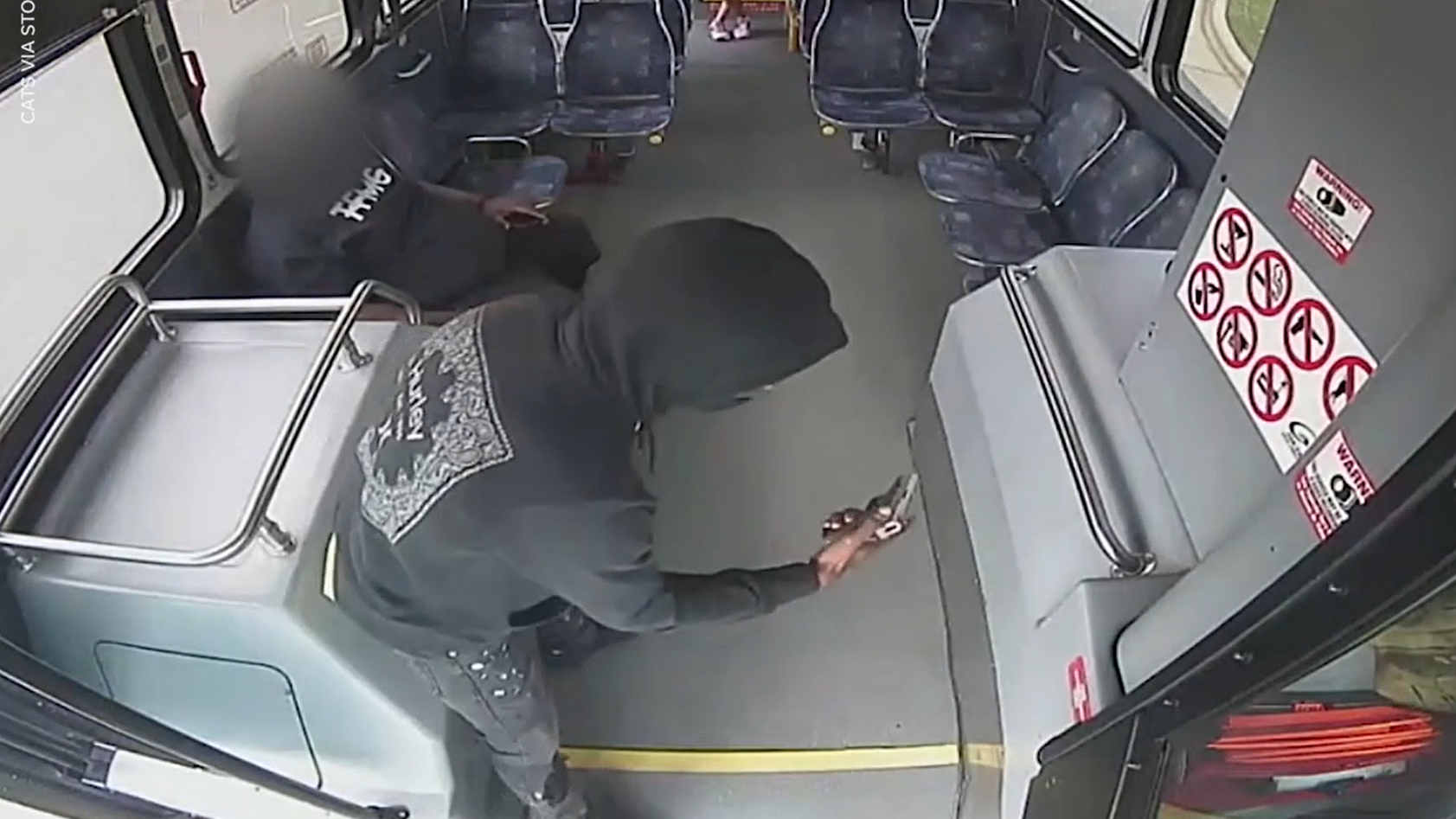
- The bus driver was clearly prepared for the incident because his draw was a one second draw any firearm instructor would be happy with.
- Situational Awareness
- The bus driver, despite having to drive the bus, was immediately aware of the young criminal’s approach after he armed himself.
- Point Shooting
- Distances
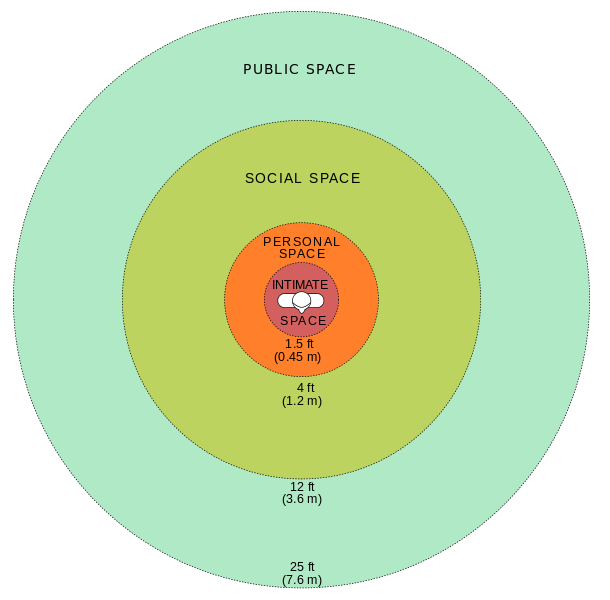
- The initial exchange of gunfire took place at about 4 feet, the boundary between Personal Space and Social Space in Proxemics.
- Distances
- As the shootout continued, the distances increased dramatically with the final shot taking place at seven to 10 yards.
- Both shooters fired one handed. Neither used a Gangsta style shooting stance. The young criminal’s initial stance was a classic point shooting Square stance with weapon just below the eye-target line as described by Fairbairn and Sykes in Shooting to Live.
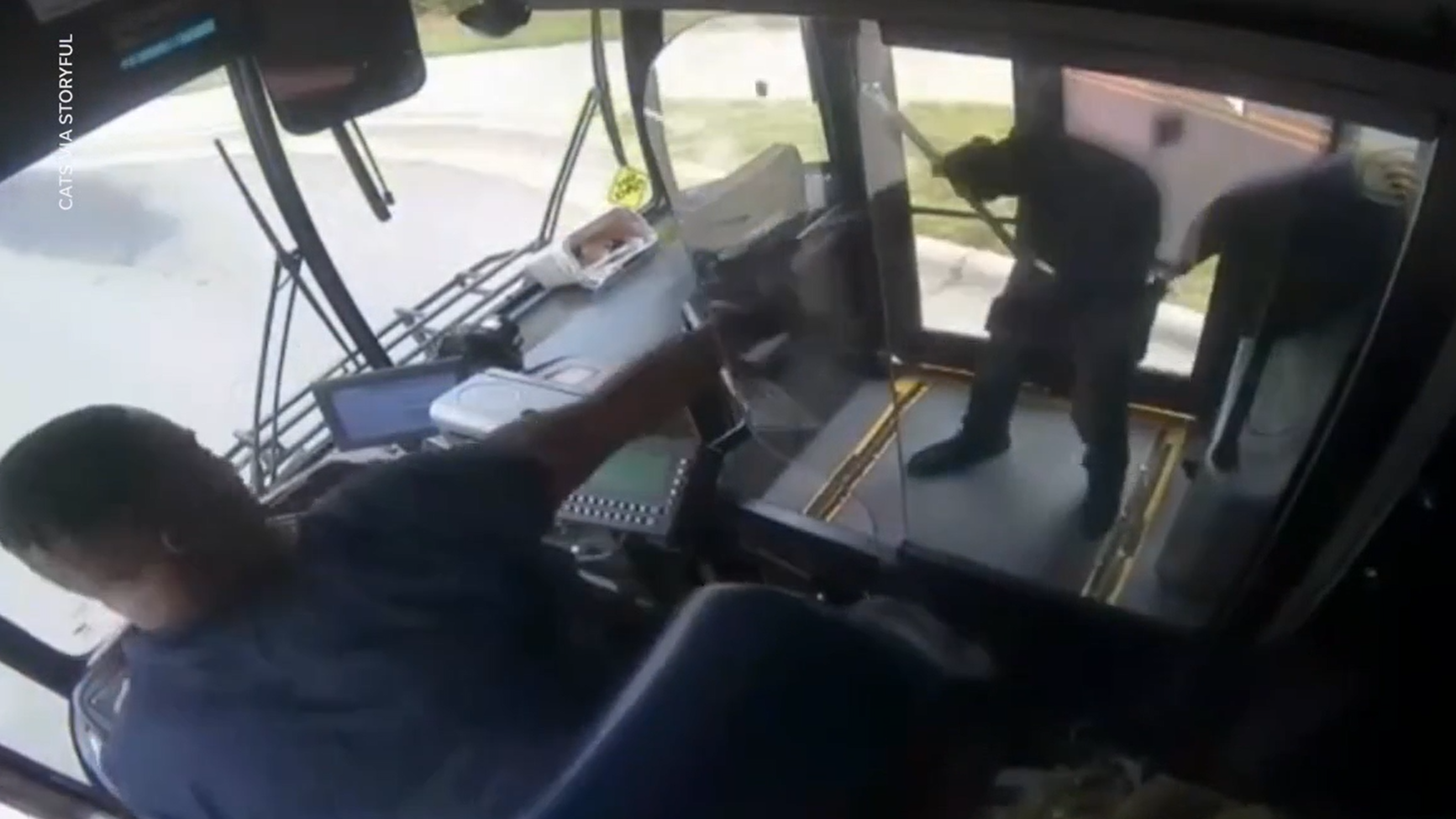
- As the young criminal retreated, the bus driver employed a ‘tactical blind fire’ method of continuing his barrage.
- Hits
- The results were that out of a magazine fired by each shooter, one hit was made by each. The young criminal was hit in the abdomen and the bus driver was hit in the arm. The hit ratio was less than 10 percent. Although the young criminal was seriously wounded, he was still mobile and unneutralized, as is often the case with abdominal wounds.
- Weapons used
- Glock 19
- SCCY
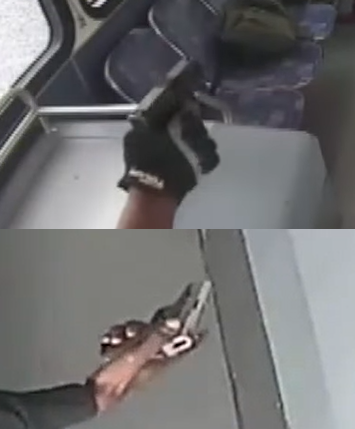
- Neither weapon appears to have malfunctioned.
- Both were equipped with iron sights.
- Anger management
- In Principles of Personal Defense, Jeff Cooper said “Now how do we cultivate an aggressive response? I think the answer is indignation. … Your response, if attacked, must not be fear, it must be anger. The two emotions are very close and you can quite easily turn one into the other. … Anger lets you do this.“ Although it is unlikely that the bus driver has ever read Cooper’s book, it’s very clear that he used Cooper’s philosophy.
- Actions after the initial exchange
- The bus driver fired three volleys.
- The initial exchange at the front of the bus, including the tactical blind fire.
- After the initial exchange of gunfire, the bus driver got up from his seat, opened the partition, had a verbal exchange with the young criminal, and then began shooting again.
- Finally, after the young criminal had exited the bus through the rear door, the bus driver debussed through the front door and fired one more round at the young criminal, who was now in the open seven to 10 yards away. This shot is problematic.
- The bus driver fired three volleys.
- Endangering innocent bystanders
- There were two bystanders on the bus. Both were endangered by the tactical blind fire of Volley 1 and the bus driver’s second volley.
- The second volley was unnecessary and irresponsible. The underlying motive for these shots was vengeance “You shot me!” not self-defense.
- The final round fired in the open as a parting shot menaced the entire area. Cooper’s anger principle is entirely inappropriate at this point.
- Gunhandling
- The bus driver had to switch hands twice. To undo his seat belt and open his partition, he had to switch his pistol to his left hand. After stepping past the partition, he transitioned back to his right hand. He was able to do this without having an Unintentional Discharge.
- Verbal commands
- The bus driver commanded the young criminal to “Get your a** back!” when the young criminal was at the back door. The young criminal refused, fearing he would be shot again.
- Self-aid for wounds
- Both the young criminal and the bus driver were wounded. Neither had any first aid equipment. Note in the video that the bus driver is holding his arm where he was wounded.
- Chasing fleeing criminals
- Getting out of his seat to maintain visual on the young criminal was entirely appropriate. Following the criminal out of the bus was not. We see time and again the chase instinct that occurs when the predator-prey relationship reverses. It’s an instinct that we need to be aware of and not give in to.
My analysis of the Point Shooting aspects are on my Patreon page. I will be going over other aspects of the shootout in more detail in my next few posts there. Click the image below to follow.
 tacticalprofessor
Thank you, sir. Just signed up as a Patreon member.
Wallace Dunn
[…] point shooting drills. Read Claude Werner’s take on the topic as well. Finally, read Claude’s analysis of the Charlotte Bus Shootout to understand how these tactics work in real […]