#throwbackthursday
Trigger Warning! This series of posts has nothing to do with self-defense, hand guns, or Personal Protection.
Some time while I was a teenager, one of the Chicargo newspapers ran a Sunday feature article about what a Soviet thermonuclear attack would have been like. This would have been the period of 1968-1972. The article talked about the effects on the city if a Soviet thermonuclear weapon exploded over the elevated train Loop downtown.

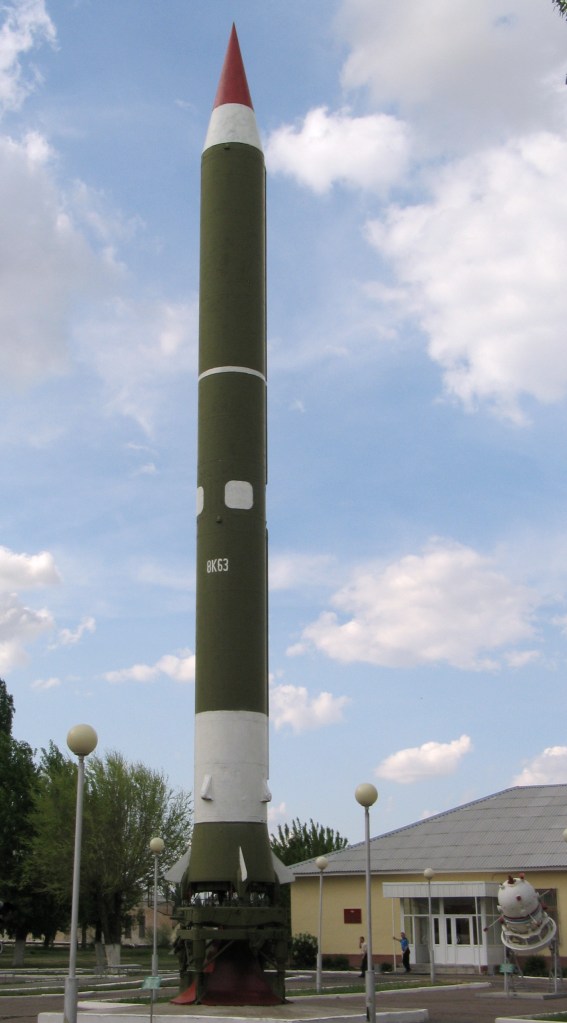
IIRC, the article used a 1 megaton warhead as the weapon. However the most likely candidate during that time period would have been a missile of the R-12/SS-4 type that precipitated the Cuban Missile Crisis https://www.russianspaceweb.com/cuban_missile_crisis.html . It had a maximum yield of 2.3 megatons.
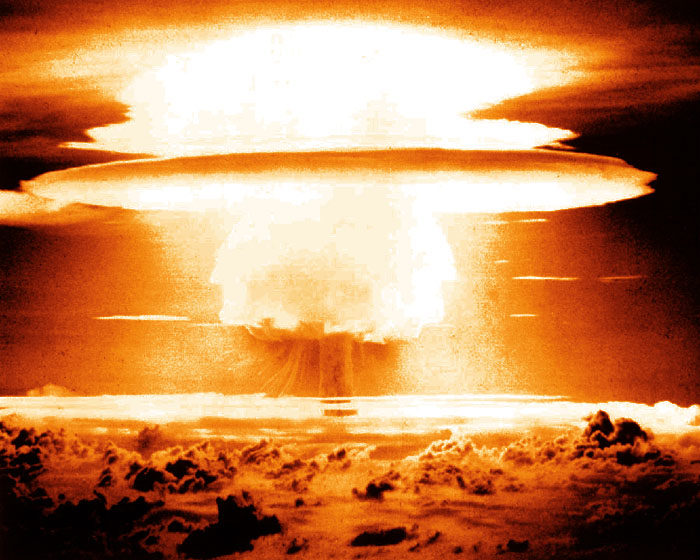
The tactic of thermonuclear combat was to explode a weapon above a city as an airburst to maximize the destruction it caused. Even if the weapon’s fireball didn’t touch the ground, its heat would for a moment be hotter than the surface of the Sun. As a result, everything below the fireball would be vaporized. My memory of the article was that the entire downtown area would be turned into a crater 20 feet deep.
My research for this article uncovered a very informative website called Nuclear Secrecy by Professor Alex Wellerstein. An amazing part of the website is an interactive ability to input weapon and target parameters to generate a map of a weapon’s effects. https://nuclearsecrecy.com/nukemap/ All maps in this article are courtesy of Dr. Wellerstein’s website. Using this website provided even more accurate indicators of the destruction a weapon would have caused. The airburst altitude for the parameters chosen was 4,120 meters (13,596 feet).
The entire downtown area would have been turned into a crater not the 20 feet of my recollection but rather 122 meters (402 feet) deep. The crater would have a diameter of about one kilometer. The fireball would have a diameter of about 7/8ths of a mile. Inside the fireball, everything would have been vaporized. All Starbucks baristas and customers in the area of the fireball would have ceased to exist in a millionth of a second. No further crying about too many customers would occur after that millionth of a second.
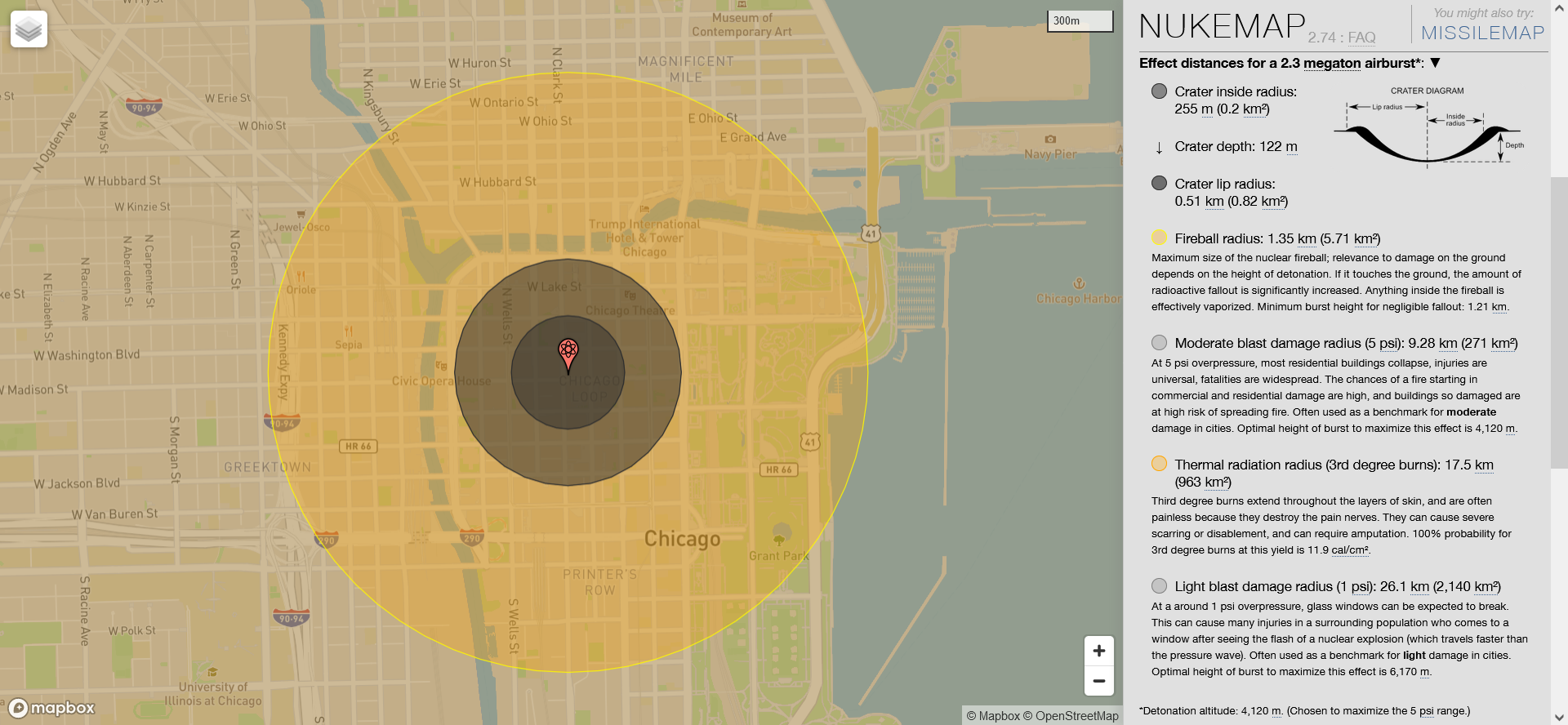
Unfortunately, the high school I attended during this time period was inside the “Moderate blast damage radius” of a weapon. This means the building had a high probability of collapsing but almost certainly would have instantly started burning. All of us would have been injured and many killed immediately.
“Most buildings collapse, Injuries are universal, fatalities are widespread.”
Department of Defense

Fortunately, my neighborhood was only in the “Thermal radiation radius.” Most of the buildings were brick so might not have been knocked down. Someone standing near a window would have been torn to shreds by flying glass though. Anyone outside would have sustained 3rd degree burns over much of their body and died shortly thereafter.

Much of Crook County would have been impacted by the blast.

A bleaker picture emerged during my research. A 1990 Federal Emergency Management Agency document, the Nuclear Attack Planning Base, forecast more than just one weapon would have hit Chicargo. The city’s prominence as a population center and manufacturing base for the military-industrial complex at the time meant that most likely 12 weapons would have been targeted against the area. Probably most of Northern Illinois not only would have been destroyed but would have been completely wiped off the face of the planet. https://nuke.fas.org/guide/usa/napb-90/index.html
No more crying at Starbucks about too many customers there for several centuries at least.

Next post: The Army and the Fulda Gap.
 tacticalprofessor
Claude, Do you figure that Duluth/Lawrenceville is far enough from the Atlanta blast radius? Or should we be moving to Gainesville, possibly even further. Too rural would not have Publix or Kroger. And, I’m fond of Whole Foods. Maybe just plenty of Thermonuclear Sunscreen. The really large tube. Barry G.PS- Good to see you at Kroger recently.
Sent from the all new AOL app for iOS
The ‘manuacturing base’’ is of no importance in a war you intend to only last 24 hours. Command/control installations, communication hubs missile fields, airports capable of receiving surviving bombers returning from their trips to the USSR. Ohare might receive a warhead Indy has runways capable Our Southwest side would get a nuke-the being the location our airport with long, Long B52 capable runways. The advantage being that a nuke there would also destroydamage the big power &light (electricity) plants on the southwest side. No electricity cities would be uninhabitable. Omaha, home then of SAC will take a lot of hits as would DC, NYC, Jacksonville FL, (a carrier port, presumably with a stock of nukes). It does not matter what can be built, the only things of importance are what already exists. The USSR never showed a love of “city busting”- that was us, the Brits and Germans. A nuclear war would be a terrible spasm but there is no point killing cities just to kill them. It is actually a waste of warheads.
Steven Gibbs steven.gibbs1@me.com Ret’d Lt IMPD/MCSD
>