#throwbackthursday
Trigger Warning! This is a series of posts about my personal experiences. It has nothing to do with self-defense, hand guns, or Personal Protection.
Where is the Fulda Gap? The geographic answer is that it is an area in Germany having considerable lowlands flanked by hilly terrain. During the Cold War, it was just west of the border between East and West Germany.
What was its significance during the Cold War? The topography of the Fulda Gap makes it favorable for the movement of armored vehicles. It is strategically close to the Rhine river and other NATO countries. These factors made it the logical location as the primary invasion route of Soviet forces into NATO territory. It was where every US Army infantry and armored soldier of the Cold War period considered we might die in battle.
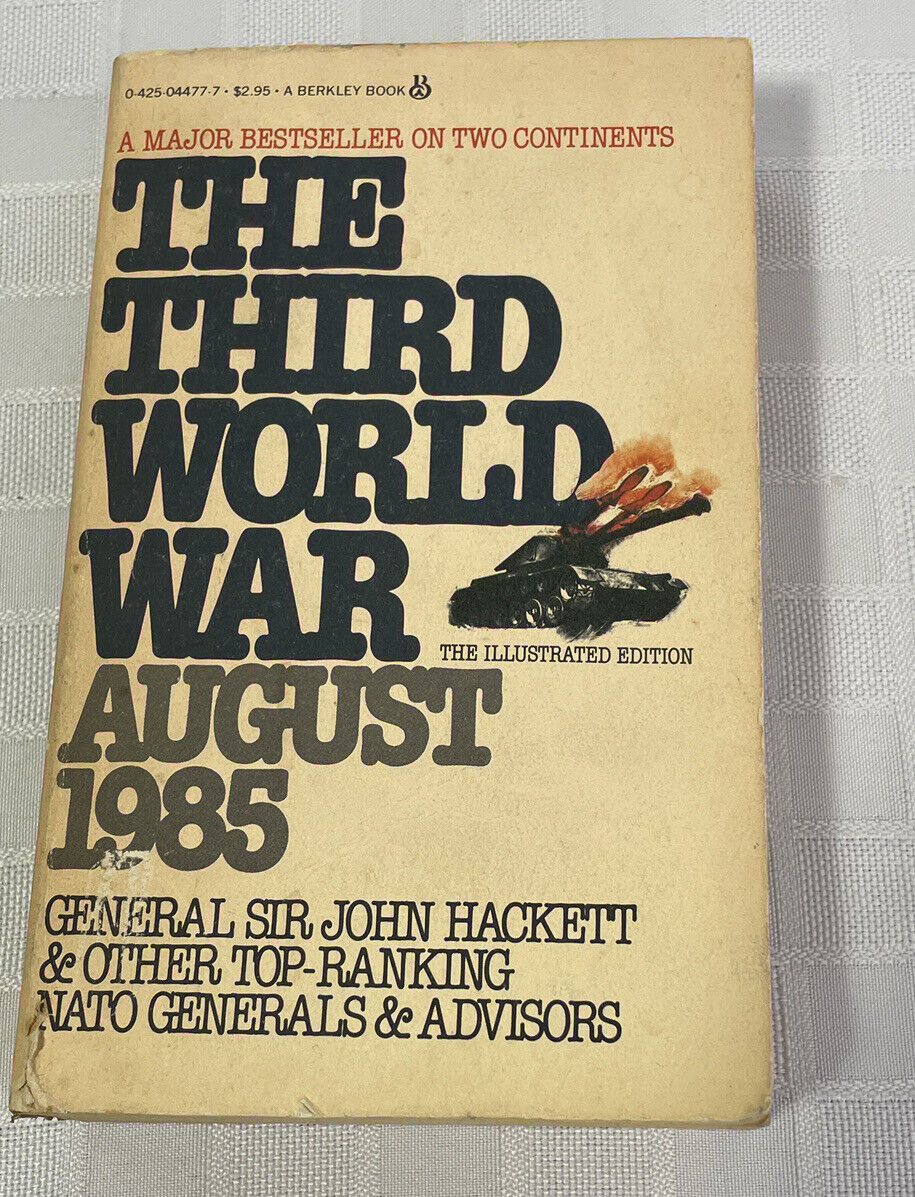
Contrary to foolish current opinions, usually by people who weren’t even alive back then, that the end of the Soviet Union was predictable and inevitable, it was not at all obvious at the time. A review on Amazon of The Third World War August 1985 https://www.amazon.com/dp/B001L1UGPG/ contained this absolutely accurate statement.
“I lived through this era as a U.S. Navy officer, and back in the day NO ONE expected the USSR to collapse when it did, in the way it did. Sir John Hackett accurately captured the built in contradictions of the Soviet Socialist system, and missed only the mode of its collapse, predicting a desperate military lunge instead of the amazingly peaceful self-termination that actually happened.”
The Third World War August 1985 was required reading when I was an ROTC cadet in the early 1980s. We all considered the possibility that we would be assigned to the border as some point in our careers.
Facing each other along the Gap were two powerful and antagonistic armored formations. The US Amy V Corps, comprised of an Armored Cavalry Regiment, a Mechanized Infantry Division, and an Armored Division, along with various aviation units, was on the NATO side of the border. Arrayed against them in East Germany was a Soviet Guards Army of three Motorized Rifle Divisions and one Tank Division plus air assets.
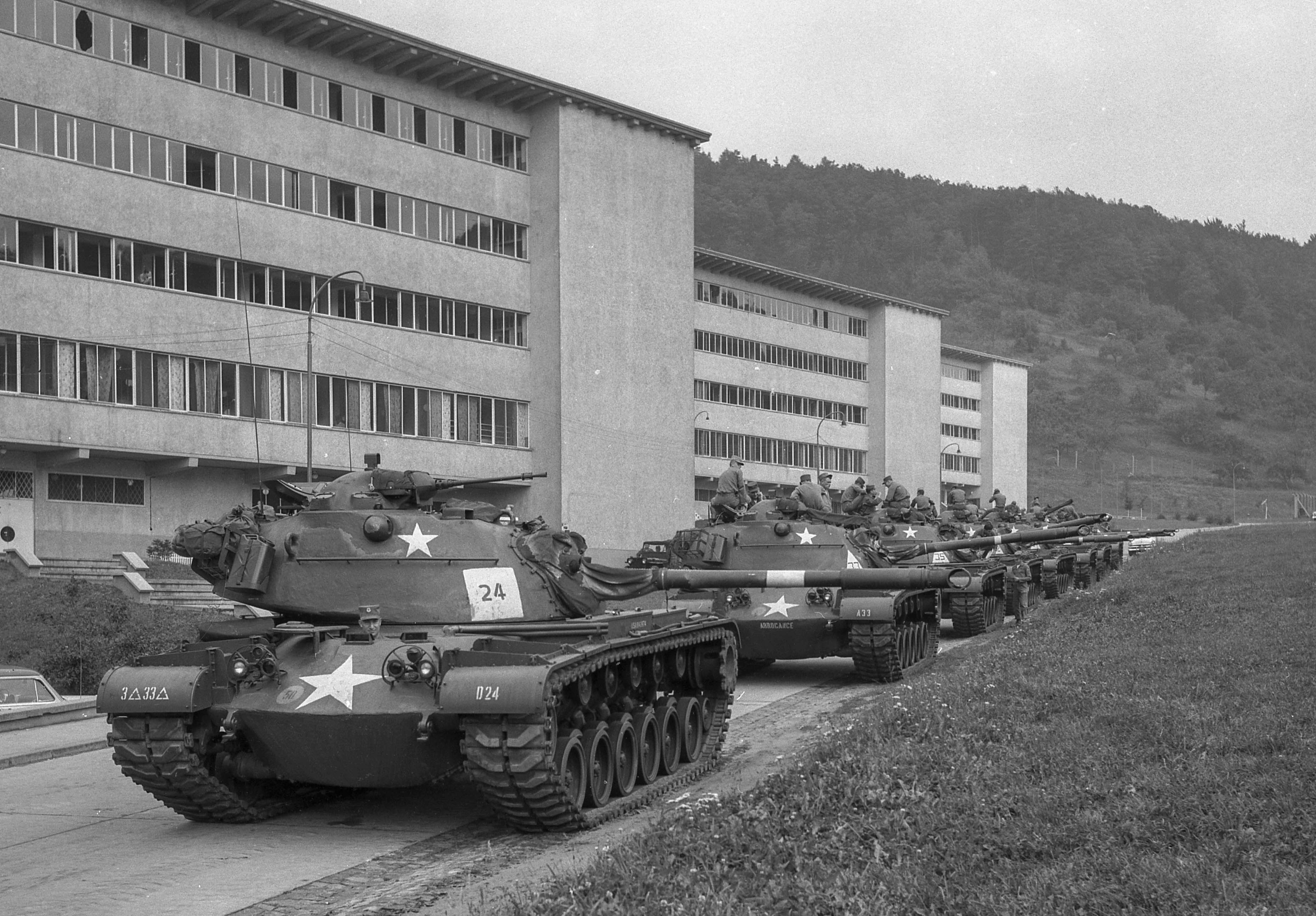
Annually during the Cold War, a massive exercise called Return of Forces to Germany (REFORGER) was conducted by the Army. The purpose was to reinforce Army units already stationed in the event of war or imminent war. An article about REFORGER https://www.ausa.org/articles/we-were-there-reforger-exercises-designed-counter-soviet-threat made this trenchant statement:
“REFORGER was more than an annual exercise, as it became part of the Army’s DNA and connective tissue to the nation’s allies.”
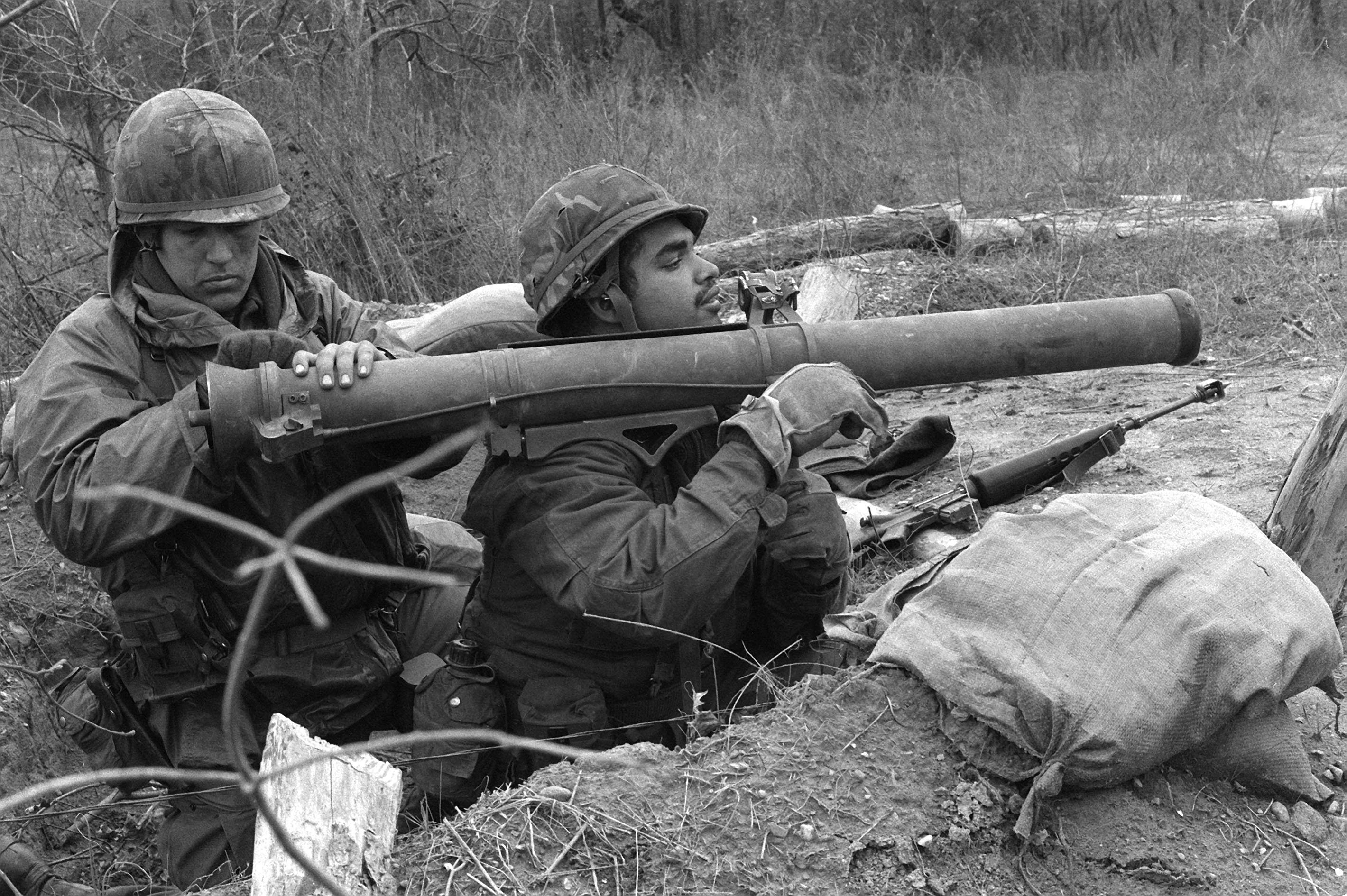
The 1st Ranger Battalion was part of an early REFORGER exercise in 1975 while I was in it. Since Rangers are a Light Infantry Airborne unit, they can be quickly deployed by air in the early stages of a war. We had no illusions that if the invasion actually happened any of us would be coming back. Our pathetic little 90mm Recoilless Rifles would probably only make dents in Soviet T-72 tanks, assuming we weren’t wiped out by massive Soviet artillery concentrations before the tanks ever got to us.
The Los Angeles Times published an interesting article about the Fulda Gap in 1987. It mentions “leftist politicians,” which is an entertaining reference from that newspaper.
https://www.latimes.com/archives/la-xpm-1987-03-01-mn-6926-story.html
Another interesting article about the Fulda Gap is available from The Black Horse (11th Armored Cavalry Regiment) Association. https://www.blackhorse.org/history-of-the-fulda-gap/
Over the course of decades, hundreds of thousands of soldiers served in West Germany and hundreds of thousands more were prepared to give up our lives there. It’s a memory that none of us will ever forget.
 tacticalprofessor
Claude, Thanks much for the memories indeed! I suspect we are semi-contemporaries. Regarding your recent post about Tom Powell, I was honored to work with Tom when he was a civilian intel analyst at JSOC as recently as about 2010. He was still sharp as a tack and, obviously, had plenty of stories. REFORGER: Yep, I was in the USAF on the airlift side planning C-141 missions (including tactical ones). I remember REFORGERs welll, including the amazing ground order of battle plats (on paper charts). Things didn’t look good for the home team. I wonder occassionally, with so much of the logistics and planning on our side and the Wasaw Pact side largely now disclosed, if our modern computers could work through some “how it would have turned out” scenarios for OPLAN XXXX (you know the one!). Sure, it would be allot of woek and highly dependant on the assumtpions made, but coots lke you and I would probably find it interesting. 90mm recoilless rifles: I remember being at North Field for a little exercise in about 1987 when the Rangers brought some “gun jeeps” and other small vehicles with recoiless rifles (90mm? 107mm?). One young gunner opened an ammo can for me and showed me the “onward to victory” morale note inside signed by General Westmoreland. I don’t think folks much younger than we are can appreciate the impact the Cold War had on our generation. Yes, I believed (and still do) that there was nothing pre-ordained or predictable about the outcome. It was hard, serious work for many of us, and I’m thankful things ended as they did. Thanks again for your important contributions—then and now.
Mark Waldron, Dayton, OH
P.S. I own a P32, and like it a lot. I was considering the purchase for a long time (to accompany the Walther PK in .32 I inherited form my dad). I only took the plunge and bought it after seeing you being interviewed by Chris Baker of Lucky Gunner. So, thanks for that, too!
“I don’t think folks much younger than we are can appreciate the impact the Cold War had on our generation.”
So true. Our current pus-head educational system has robbed the younger generations of an understanding of the historical impact the Cold War had. A comment I made on IG about Ronald Reagan winning the Cold War without getting a bunch of us killed went completely over most people’s heads.
Spent a good bit of time there and participated
Thanks for the memories. Spent 1967-68 with 3/14 ACR and 1974-77 with 3/11 ACR both in Bad Hersfeld. It was very real and an important mission. The troopers were terrific and the Russians knew it so they stayed home. Suivez Moi and Allons
Sent from my iPhone
>