#wheelgunwednesday
All discharges of a firearm by LAPD officers must be reported to the LAPD Force Investigation Division. Each discharge is thoroughly investigated, adjudicated by the Board of Police Commissioners (BOPC) for LAPD policy compliance, and a public report posted on the BOPC webpage.
https://www.lapdonline.org/police-commission/categorical-use-of-force
Of particular interest are the off-duty discharges. These usually involve one of two situations. First, situations of self-defense similar to what would be encountered by any non-sworn person who owns a firearm for personal protection. Or, second, Unintentional Discharges due to administrative gunhandling such as: placing or removing the firearm in a storage location, cleaning the firearm, or dry practice “to improve accuracy.” In one rare instance, both situations were involved; a firearm was discharged while being retrieved during a ‘tactical situation.’
In adjudicating Unintentional Discharges cases, the LAPD BOPC subdivides them into two categories.
A. Unintentional Discharge
The definitions for an Unintentional Discharge, both Accidental and Negligent, are as follows:
Accidental Discharge: The unintentional discharge of a firearm as a result of an accident such as a firearm malfunction or other mechanical failure, not the result of operator error.
Negligent Discharge: Finding where it was determined that the unintentional discharge of a firearm resulted from operator error, such as the violation of firearm safety rules.
Administrative Disapproval – Negligent Discharge. Finding where it was determined that the unintentional discharge of a firearm resulted from operator error, such as the violation of a firearm safety rule (Los Angeles Police Department Manual, Volume 3, Section 792.05).
From 2005 to 2023, five Unintentional Discharges of five shot revolvers, which are authorized for backup and off-duty carry, occurred. All five were adjudicated as Negligent Discharges and received Administrative Disapproval. Negligent Discharges are one category of Negative Outcomes https://store.payloadz.com/details/2617872-ebooks-true-crime-serious-mistakes-gunowners-make.html and we obviously want to avoid them.
Four of the five involved preparation for dry practice. The cause of all four was the same. Not all five rounds were ejected from the cylinder when the revolver was unloaded. One round remained in the cylinder when the other four ejected. At some point during the dry practice, a loud noise occurred when a click was expected. That universal cause reinforces my concept of how to prepare for dry practice with a revolver.
https://thetacticalprofessor.net/2020/08/21/dry-practice-safety-part-ii/
Since that article was posted, Zeta6 and I teamed up to create the SafeSnap Training Disc.
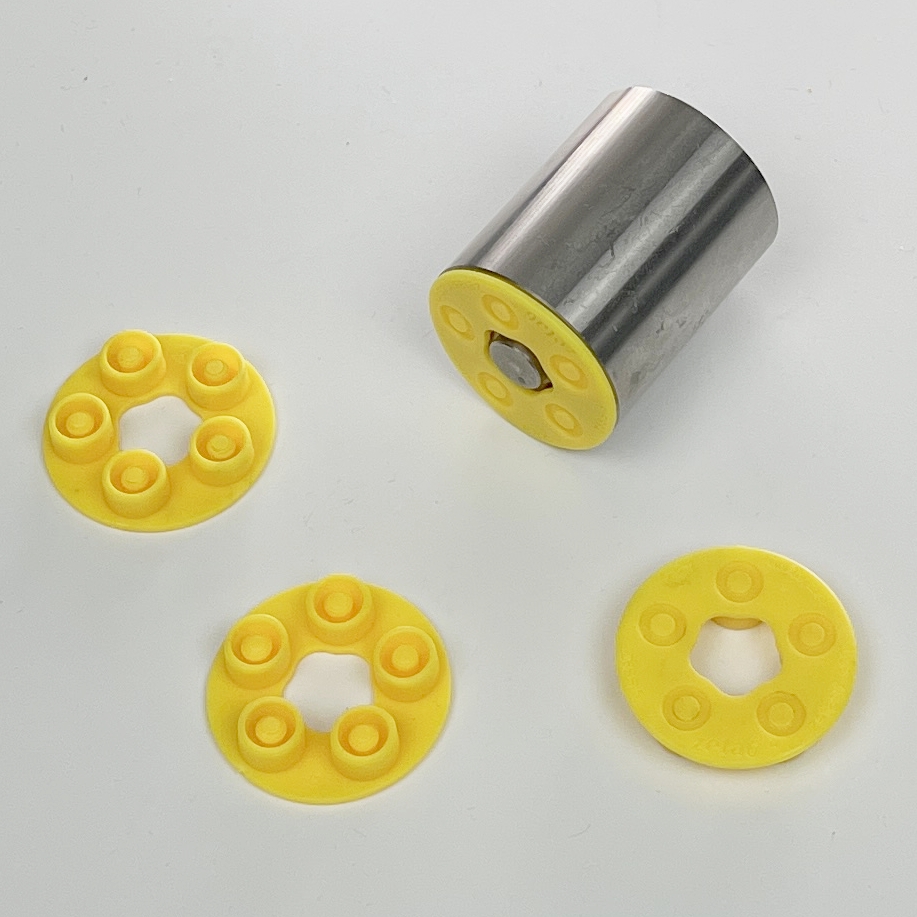
https://zetasix.com/product-category/safesnap
I now keep a SafeSnap Disc in my storage box, along with an empty HKS speedloader, to make my dry practice even safer. Although I don’t carry an HKS, I find it’s the easiest of all speedloaders to put ammunition in.

I rotate the revolver so the muzzle is pointing straight up, eject the live rounds from the snub, place them in the speedloader, and then put the SnapSafe in the revolver. Holding the revolver completely vertical is an important aspect of ejecting the live ammunition. Holding it at angle and catching the rounds in the palm of the other hand is a dangerous technique and is “cruisin’ for a bruisin’.” Sooner or later, doing that will bite you in the ass; hard.
This procedure makes the possibility of having a Negligent Discharge during dry practice fairly remote. I also have a Zeta6 K-PAK2 https://zetasix.com/product/k-pak2/ with dummy rounds for reloading practice in the box. It is set up with a Retention Ring https://retentionring.com/ to mimic my EDC reload.
All the live ammunition stays in the box and the box gets closed while I’m practicing. When I’m finished practicing, I rigidly follow the post-practice safety protocols described in the above linked article.
Dry practice is a key component of learning how to shoot well. When doing it, we want to avoid having the Negative Outcome of “causing damage to equipment or injury to personnel,” which was a graded aspect required to pass the Special Forces Weapons Qualification Course that has stuck with me for the past 44 years. Having the right training aids and following safety protocols in a disciplined manner is how we can avoid those Negative Outcomes.
FTC Note: I have a relationship with Zeta6 and Retention Ring but receive no compensation for mentioning their products.
 tacticalprofessor
I have had only ONE ND in my basement. Wadd cutter bounced off the block wall. Have that ONE round laying here just to remind me that it can and will happen…
[…] Best practice safety considerations for dry fire. You might also like Claude’s article on Snub Dry Practice Training Aids. […]
[…] Best practice safety considerations for dry fire. You might also like Claude’s article on Snub Dry Practice Training Aids. […]
When placing pistols without a manual safety in a lockbox (Glock), it’s worth putting the gun in some sort of holster that covers the trigger guard. The really simple poly holsters that Glock offers are about ideal. The belt loops can be cut off to reduce its size.
Guns should not be loaded/unloaded more than necessary; there’s always a chance of an ND when doing this.
I notice that in many of the off-duty shootouts of the LAPD, the officers keep their pistols holstered even when the gun is off their body.