Intended Victim not ‘Subject’
The man did not know he was being followed according to police and once at the man’s home, [the shootee] allegedly produced a firearm and confronted the subject [sic] as he was trying to get out of his vehicle and go into his home.
https://wfxl.com/news/local/valdosta-shooting-ruled-self-defense
‘Subject,’ in POlice terms, is almost always used in the context of a wrong doer. In current times, the default treatment of anyone who shoots someone else is that the shooter is a criminal who must then prove his or her innocence. While some States provide some legal protection for self-defense, unless you never travel outside the county you live in, those protections cannot be relied on. ‘Stand Your Ground’ should always be viewed as a courtroom strategy not a tactical option. Keep that in mind. Do your best to AVOID or ESCAPE prior to being forced into CONFRONT or RESIST.
Surveillance Detection is a useful skill. Your car mirrors are a tool for you to use frequently, especially at 5AM. It’s beneficial to always take a few turns for Surveillance Detection purposes prior to committing yourself to turning into your driveway or other place you cannot escape from. Once you are Decisively Engaged https://tacticalprofessor.wordpress.com/2014/06/25/situational-awareness-and-positioning-part-i/ because your path is blocked, you are forced to CONFRONT or RESIST.
Note also that “the man was able to retrieve a handgun of his own.” ‘Retrieve’ most likely means that the gun was in the car not on his person. This mention is not intended as commentary about leaving unsecured guns in cars. Rather, it is an observation that many of the incidents in my database involve successfully accessing guns that are stored off-body.
Tactical Professor books (all PDF)
- Thinking Clearly about Self-defense and Personal Protection https://www.payloadz.com/go?id=3377208
- Real Shootouts of the LAPD https://realshootoutsofthelapd.com/
- Serious Mistakes Gunowners Make http://seriousgunownermistakes.com
- Indoor Range Practice Sessions http://indoorrangepracticesessions.com
- Concealed Carry Skills and Drills http://concealedcarryskillsanddrills.com
- Advanced Pistol Practice http://bit.ly/advancedpistolpractice
- Shooting Your Black Rifle http://shootingyourblackrifle.com
- Package deal of Thinking Clearly about Self-defense and Personal Protection, Serious Mistakes, Indoor Sessions, Concealed Carry, and Shooting Your Black Rifle (50% off)
https://store.payloadz.com/details/2644448-ebooks-sports-shooting-drills-package.html
Purchase of any book includes Serious Mistakes Gunowners Make.
The Sandra Ochoa Incident (Shooting Analysis)
Body Worn Video (BWV) not only has value for analysis of Use of Force, it also can be used as a shooting analysis tool. By looking at a BWV in conjunction the results of a subsequent investigation, we can arrive at a more complete picture of the shooting incident.
On May 31, 2020, LAPD officers responded to a radio call of a “murder suspect there now.” Upon arrival, the officers observed the suspect cutting the victim’s throat and an Officer-Involved Shooting (OIS) occurred. The BWV of both officers present was later released by the LAPD. The incident was adjudicated by the LAPD Board of Police Commissioners on May 4, 2021. The shooting was ruled objectively reasonable, necessary, and In Policy. https://www.lapdonline.org/assets/pdf/023-20-ois-pr.pdf
A short edited and annotated video of the shooting portion of the incident is available on my YouTube Channel.
Several points can be derived from the BWV and the subsequent investigation and rulings. The first is that there is a significant difference between a shooting and gunfight. Noted firearms authority Ken Hackathorn mentioned years ago that a Private Citizen is just as likely to be involved in a ‘shooting’ as in a ‘gunfight,’ if not more so. In a shooting, there is sufficient cause to use a firearm (deadly force) in defense against an assailant who is armed with a contact weapon or personal weapons (fists, shod feet, etc.). This incident is a good example. The assailant was armed with a pair of scissors and succeeded in murdering her victim with those scissors.
The cadence of shooting by Officer A is another item we can analyze. The LAPD Force Investigation Division quantified the officer’s splits (time between shots) as follows:
- Shot 2 – 0.340
- Shot 3 – 0.286
- Shot 4 – 0.232
- Shot 5 – 0.247
The average of those splits was 0.276 seconds, with a total time for the first 5 shots of 1.105. The officer was shooting at a cyclic rate for the first five shots. Although he said he ‘assessed’ between those shots, it’s unlikely there was any assessment between shots 1 through 5. Shot number 6 had a split time of 0.711. That’s the more likely point of there being an assessment of bullet damage, i.e., target effect.
Just like Sergeant Tim Gramins in 2013 https://www.police1.com/officer-shootings/articles/why-one-cop-carries-145-rounds-of-ammo-on-the-job-clGBbLYpnqqHxwMq/ , he may have said to himself, “Hey, I need to slow down and aim better.” I.e., shoot better – meaning, achieve an adequate sight picture and perform a smoother trigger press. What likely occurred by the officer was a ‘Bullet damage assessment’ after 5 shots, followed by a marksmanship improvement and a more accurate 6th shot.
Of the 6 shots fired, 2 were hits. There’s no way to say for sure but the likelihood is that of the first 5 shots, 1 was a hit. The 6th shot was likely a hit and perhaps a better hit that got the message across. Viewed this way, there were actually 2 sequences of fire. Sequence 1 consisted of 5 shots resulting in 1 hit, a 20% hit ratio. Sequence 2 consisted of 1 shot, which resulted in 1 hit, a 100% hit ratio.
Nothing in this analysis is intended as a criticism of the officer. Shooting someone who isn’t immediately adjacent to a victim is difficult enough. Shooting with an innocent downrange and right next to the assailant is a very difficult task that is seldom practiced for.
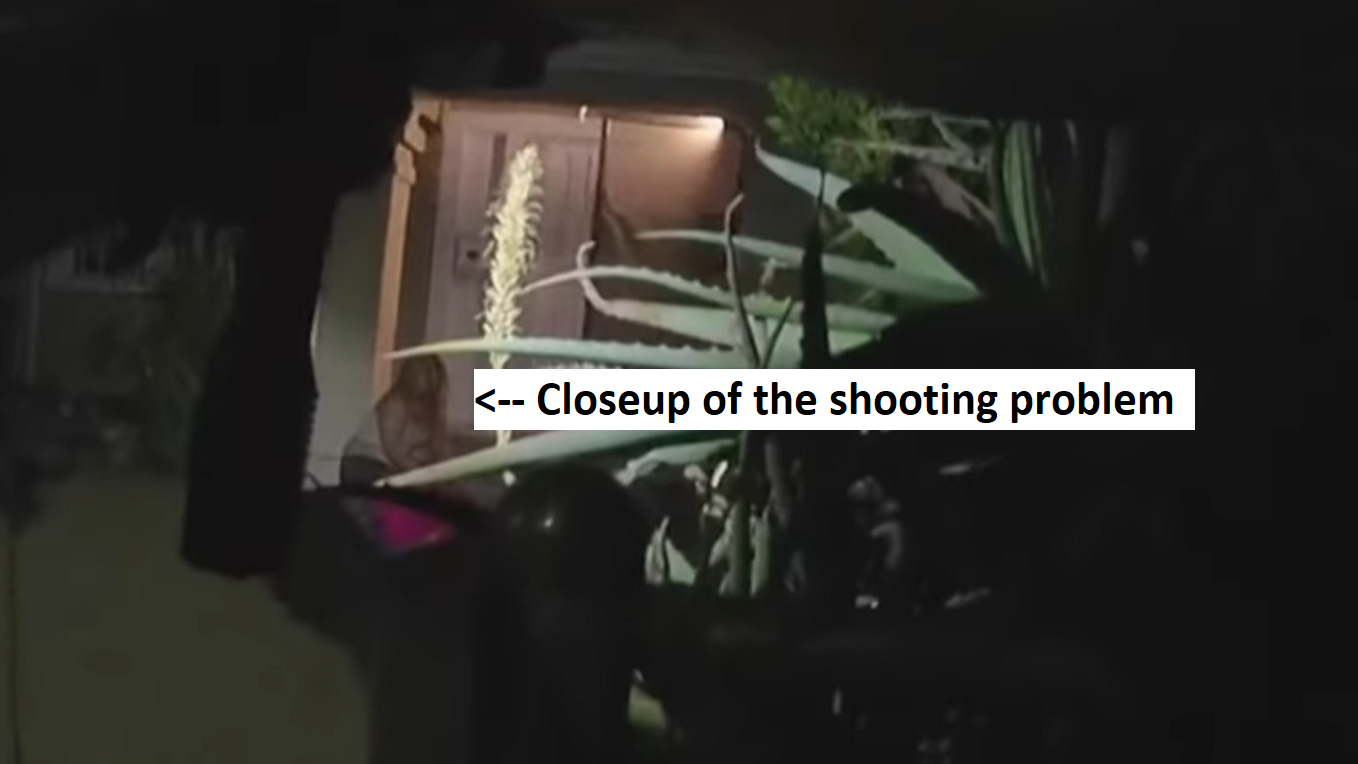
Although the victim in this case died, there’s a good chance she had been fatally wounded prior to the shooting. The officer did the best he could under the circumstances. Not all situations have a Positive Outcome.
Other items of note were that, as is frequently the case, the officer under-estimated the number of shots he fired. There’s nothing uncommon about that. In most of the Categorical Use of Force reports, when more than two shots are fired, the officer undercounts. On the other hand, the officer estimated the distance of the shot quite accurately. He thought it was 20 to 25 feet and the actual distance was 18 feet. Very few people’s eyeballs are calibrated to better than 10% margin of error for distance.
The full LAPD news release video (NRF023-20) is posted on the LAPD YouTube Channel.
Incidents like these, but involving off duty officer incidents, is why I found my work on Real Shootouts of the LAPD https://realshootoutsofthelapd.com/ so worthwhile. The off duty Officer Involved Shootings very much mirrored the thousands of Private Citizen Armed Encountered I have studied. However, there was a great deal more detail available about what led up to the encounter and how it unfolded.
Other Tactical Professor books (all PDF)
- Thinking Clearly about Self-defense and Personal Protection https://www.payloadz.com/go?id=3377208
- Serious Mistakes Gunowners Make http://seriousgunownermistakes.com
- Indoor Range Practice Sessions http://indoorrangepracticesessions.com
- Concealed Carry Skills and Drills http://concealedcarryskillsanddrills.com
- Advanced Pistol Practice http://bit.ly/advancedpistolpractice
- Shooting Your Black Rifle http://shootingyourblackrifle.com
- Package deal of Thinking Clearly about Self-defense and Personal Protection, Serious Mistakes, Indoor Sessions, Concealed Carry, and Shooting Your Black Rifle (50% off) https://store.payloadz.com/details/2644448-ebooks-sports-shooting-drills-package.html
Suspect Held at Gunpoint (temporarily)
https://www.foxnews.com/us/caroline-schollaert-murder-florida-man-charged
Sequence of events
- Perp establishes Line of Business consisting of checking car door handles for unlocked cars to burglarize
- Perp finds gun in unlocked car and steals it
- “The firearm used by the suspect in this murder was found to be stolen from an unlocked vehicle in the same neighborhood just eleven days prior.” –JSO
- Eleven days later, perp is carrying said stolen pistol while burglarizing the car of a USCG Servicemember
- Servicemember detects the burglary in progress
- SM calls 911
- SM gets own pistol and confronts would-be burglar, ordering him to remain in place until POlice arrive
- Perp refuses to comply and instead draws stolen pistol
- Perp fires several shots and hits SM at least once, incapacitating her
- Perp departs
- POlice arrive and ‘attend’ to SM
- SM dies from wounds
- POlice identify perp
- Perp turns himself in
- Family, friends, and fellow SM are heartbroken
- Perp is charged with murder in the second degree
- Family, friends, and fellow SM are still heartbroken
Negative Outcome for everyone involved
“Don’t go looking for trouble not expecting to find it.” –John Farnam https://defense-training.https://defense-training.com/present-tense/com/present-tense/
Possible tactical alternatives
- If you feel compelled to challenge a criminal, do so from a position of cover (concealment does not count as cover). If no cover is available, do not challenge.
- Use a high intensity flashlight to illuminate and blind the perp before issuing the challenge.
- If your car door is locked, illuminate the perp with your flashlight from a considerable distance without issuing a challenge.
- At your own residence, have a large bear-spray type canister of OC close at hand. Spray the perp, without warning, at the maximum range of the container. Be sure to saturate him from the top of his head to the tips of his toes. Then immediately seek cover if you’re not already behind it.
- “Begin to attrit the enemy at the maximum effective range of your weapons.” –Infantry maxim
Facebook link to Sheriff’s Office Press Conference
We strongly recommend citizens lock their vehicles and absolutely remove their firearms when exiting. Please do not provide criminals with easy access to a gun that will only be used in more criminal, and as in this case, violent acts.
Jacksonville Sheriff’s Office
Very sad. RIP Airman Schollaert

Recognition Primed Decision-making (part IV)
RPD in the context of Personal Protection has two components. The first is Recognizing what is happening. The second is making a Decision about what to do about it. That Decision is the result of overlaying our ‘Options’ on ‘People’ and ‘Situations’ to achieve an appropriate response. Our response represents the Confront and Resist components of the Avoid, Escape, Confront, Resist model. The best decisions are made in advance and then implemented in the moment of need.
Part I of the series Recognition Primed Decision-making (part I) discussed the types of people we might encounter.
- Benign person
- Angry person
- Predator or angry person with personal weapons (fists, shod feet, etc.)
- Angry person or predator with a contact weapon
- Predator or angry person with a projectile weapon(s)
Examples of situations were also discussed.
- Area of limited visibility such as a parking deck
- Walking alone in unfamiliar territory
- Being in the presence of a person who makes us uncomfortable
- Having an unknown person approach us
- Being home in a state of Unawareness or Unfocused on personal protection
- Etc.
Part II Recognition Primed Decision-making (part II) listed our Reactions or Options to an attempted predation.
- Freeze
- Submit (at least temporarily)
- Negotiate
- Posture
- Flight
- Fight
- Unarmed
- Non-Lethal
- Lethal
Our Confront and Resist Options are based on our personal situation and value choices. These can change over time or rapidly, even second to second. A person may not be initially comfortable with carrying potentially lethal tools but be perfectly comfortable with unarmed combat or non-lethal tools. As time goes on, they may become more comfortable with a wider range of Options or they may not.
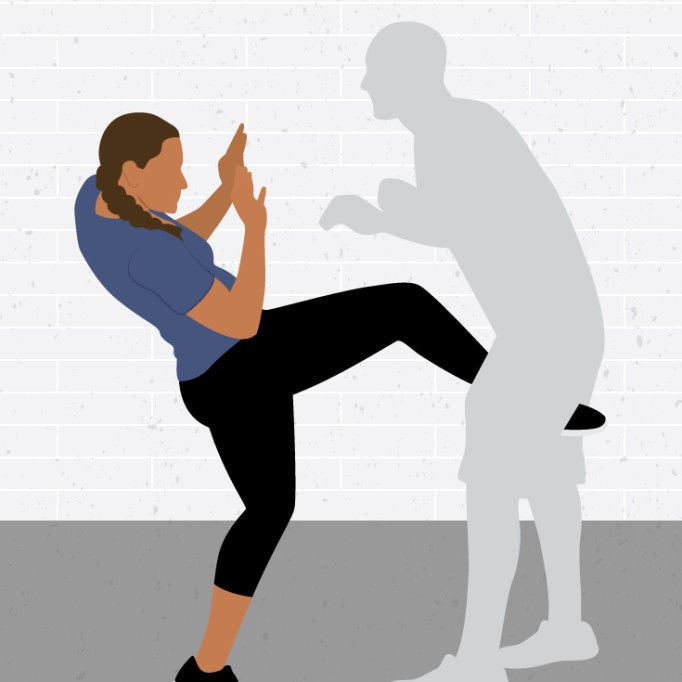
Changes in available tools varies with the situation. For instance, a person may not choose to carry a firearm in their place of employment but instead to lock it in their vehicle while working. During the walk from the business place to the vehicle, they might only be equipped with pepper spray and a flashlight. Immediately upon entering and locking the vehicle, the person may don a handgun and impact tool. During the walk, the person may choose a previously developed response tactic that only involves using the tools on their person. While this may not be the optimal solution, it is the one available at the time. Upon upgrading their Defense Condition https://en.wikipedia.org/wiki/DEFCON with a handgun, the chosen tactic may be different.
It’s useful to view the context of Boyd’s Process as an iterative and interactive model between two parties rather than the single party static model usually described. In a predation, the predator will make the first move, the intended victim will respond with a Reaction or Option, and then the predator will choose or react from his/her range of Options.
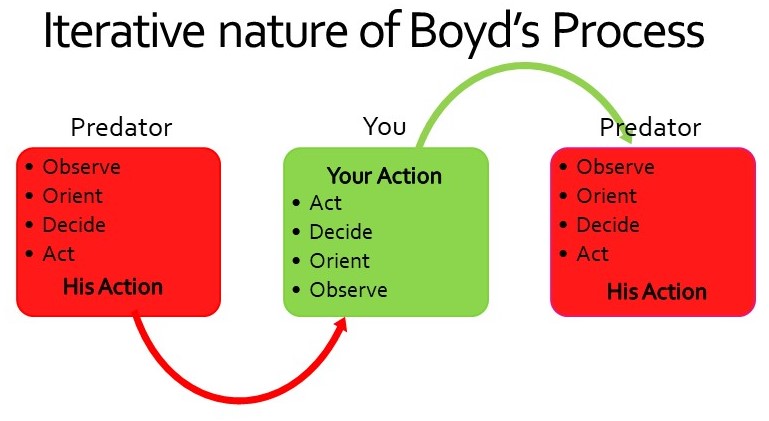
A predator also has a group of Options/Reactions when the intended victim begins to Confront or Resist rather than being caught up in the Victim Mix. Part V will explore what these are and how they affect our Decisions.
Tactical Professor books (all PDF)
- Thinking Clearly about Self-defense and Personal Protection https://www.payloadz.com/go?id=3377208
- Real Shootouts of the LAPD https://realshootoutsofthelapd.com/
- Serious Mistakes Gunowners Make http://seriousgunownermistakes.com
- Indoor Range Practice Sessions http://indoorrangepracticesessions.com
- Concealed Carry Skills and Drills http://concealedcarryskillsanddrills.com
- Advanced Pistol Practice http://bit.ly/advancedpistolpractice
- Shooting Your Black Rifle http://shootingyourblackrifle.com
- Package deal of Thinking Clearly about Self-defense and Personal Protection, Serious Mistakes, Indoor Sessions, Concealed Carry, and Shooting Your Black Rifle (50% off) https://store.payloadz.com/details/2644448-ebooks-sports-shooting-drills-package.html
Low Light Indoor Match
#flashlightfriday
I had the opportunity to attend a low light shooting match at a local indoor range yesterday evening. My goal for the evening was to observe closely so I didn’t shoot it. The format consisted of clearing three rooms and a hallway constructed of plastic sheets. It was done three times with targets moved around each time. The shooters had a look at the layout lighted the first time but subsequent stages were not.
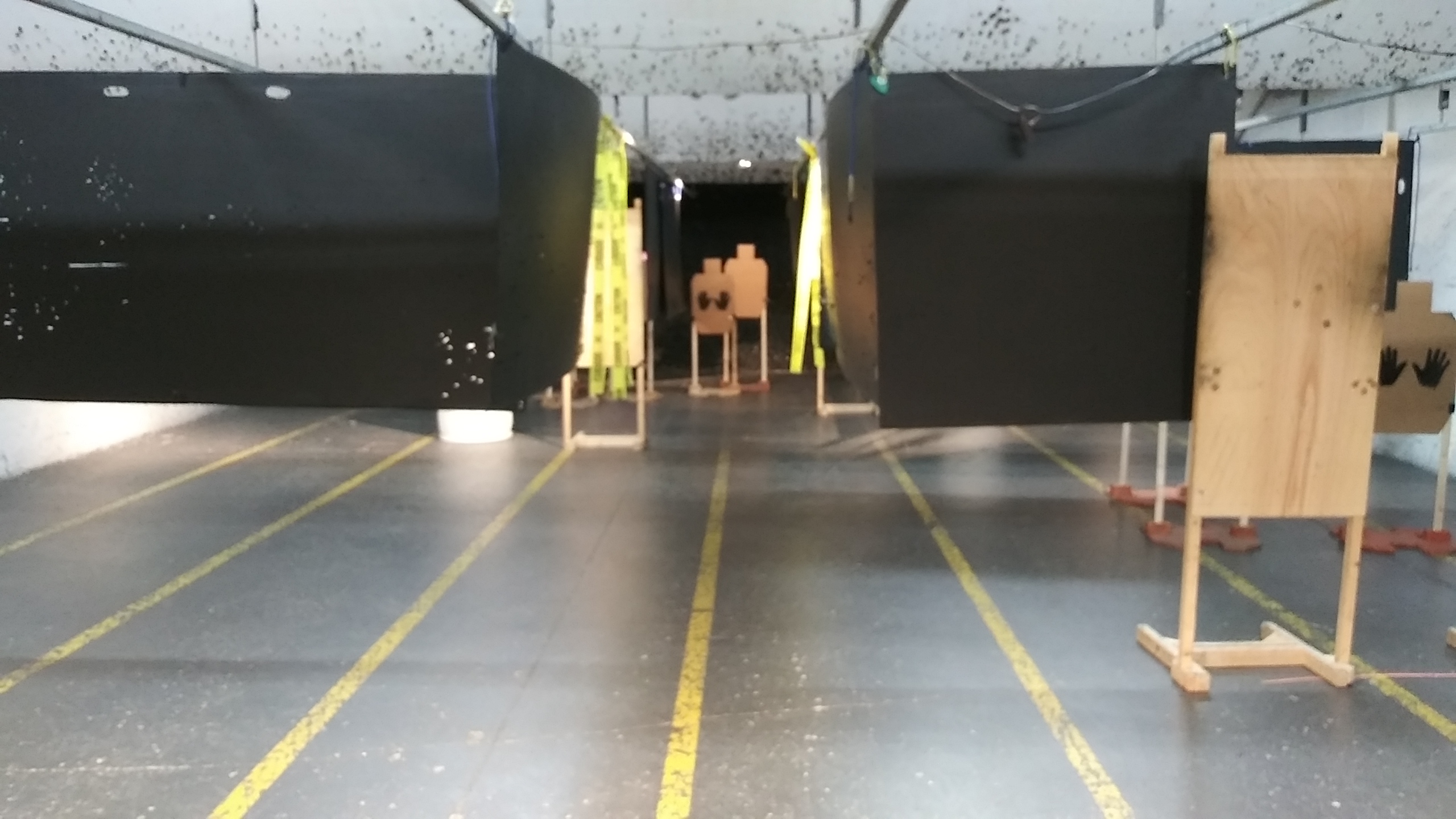
Non-threat targets (Don’t Shoots) were designated with hands painted on them.
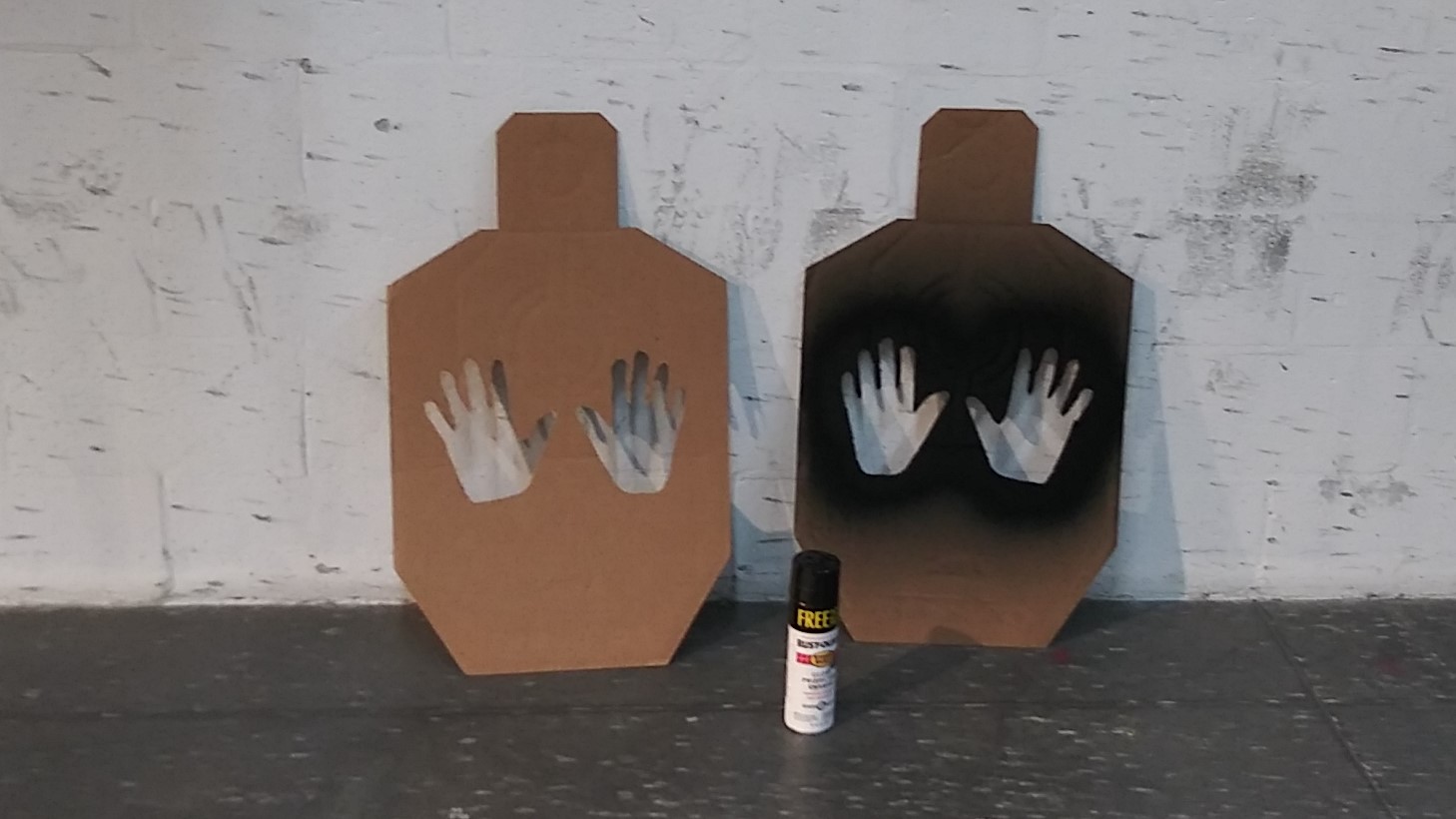
These non-threat targets were interspersed among the threat targets.
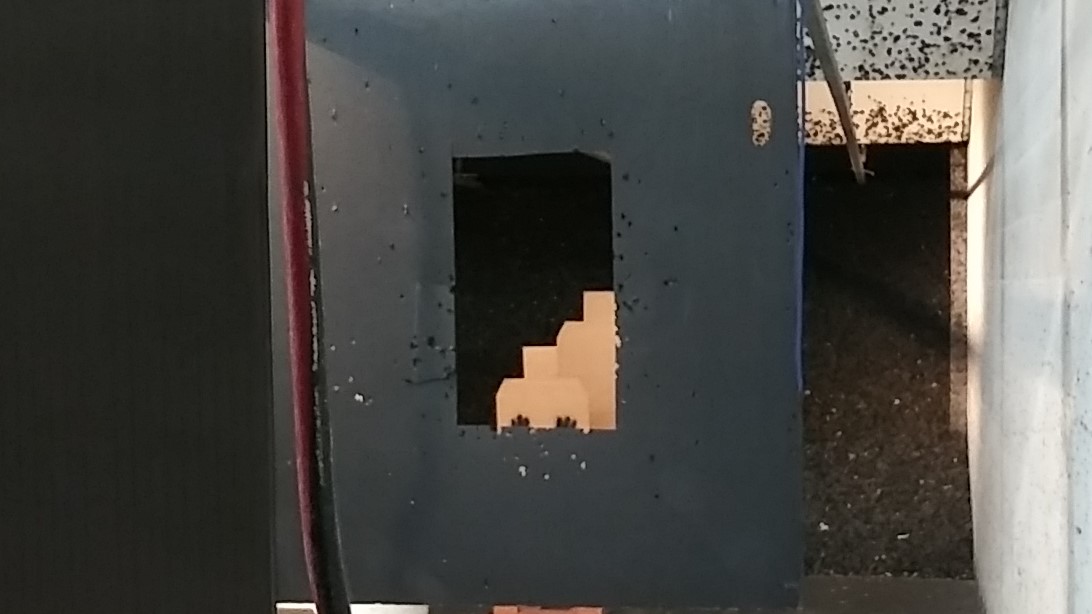
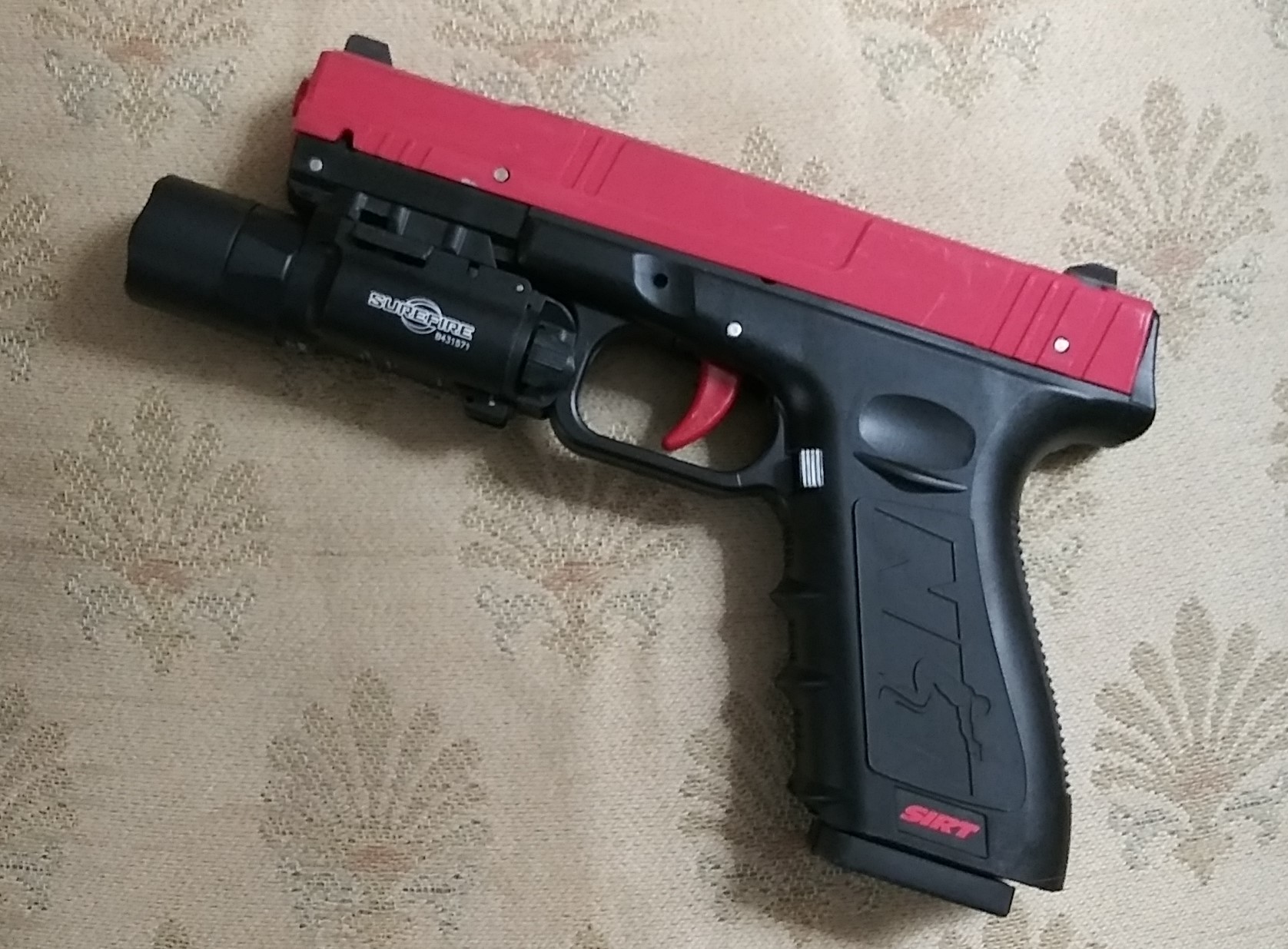
Some of the shooters had weapon mounted lights but many did not.
A few observations:
- Some attendees, although regular shooters, had never shot while using a flashlight.
- Most of the shooters had some familiarity with flashlight technique but mostly on a theoretical basis.
- The cadence of shooting, in terms of splits, transitions, and moving from position to position, really slows down when using a flashlight in low light.
- The difference in light intensity when going from almost no light,
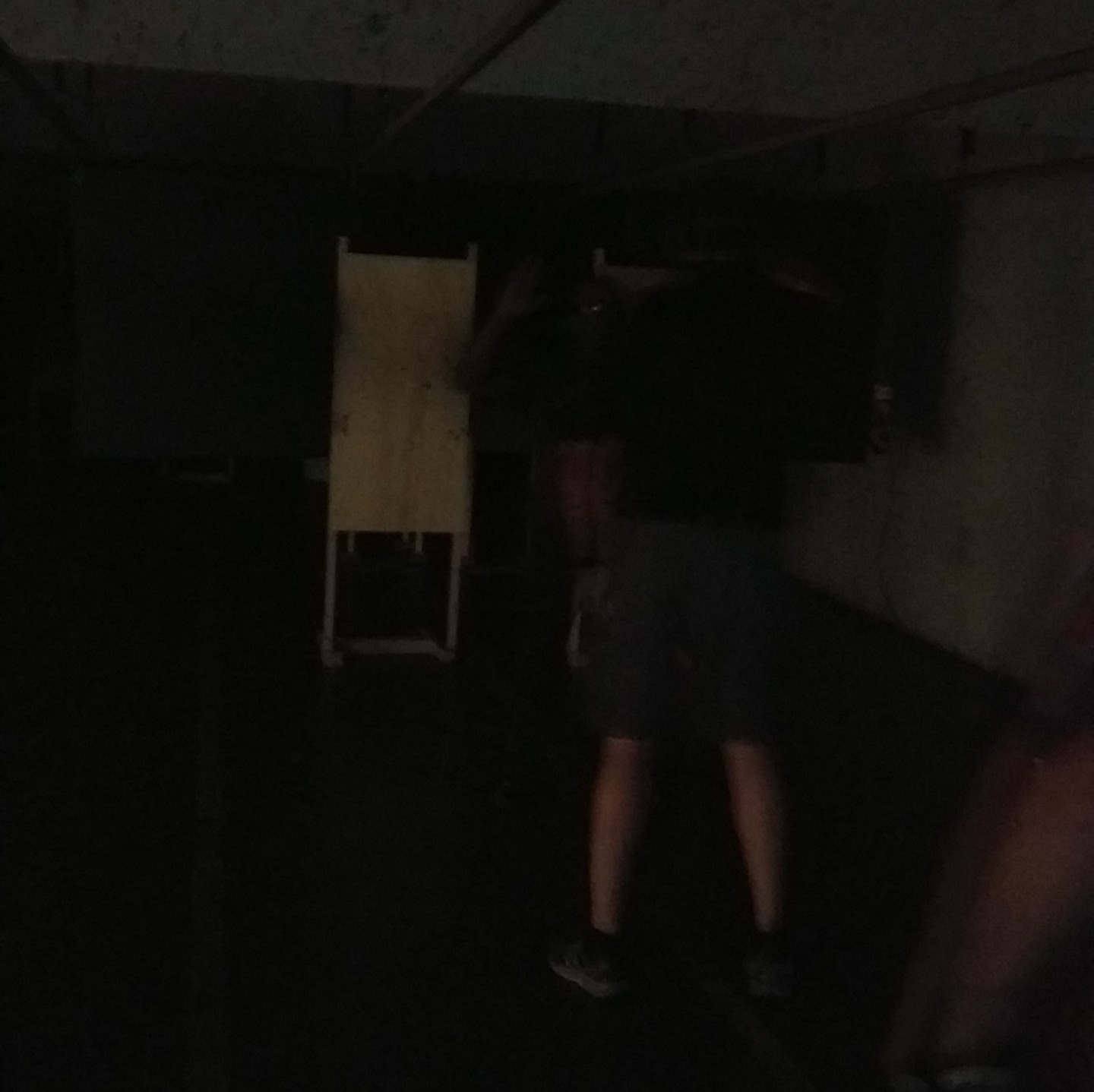
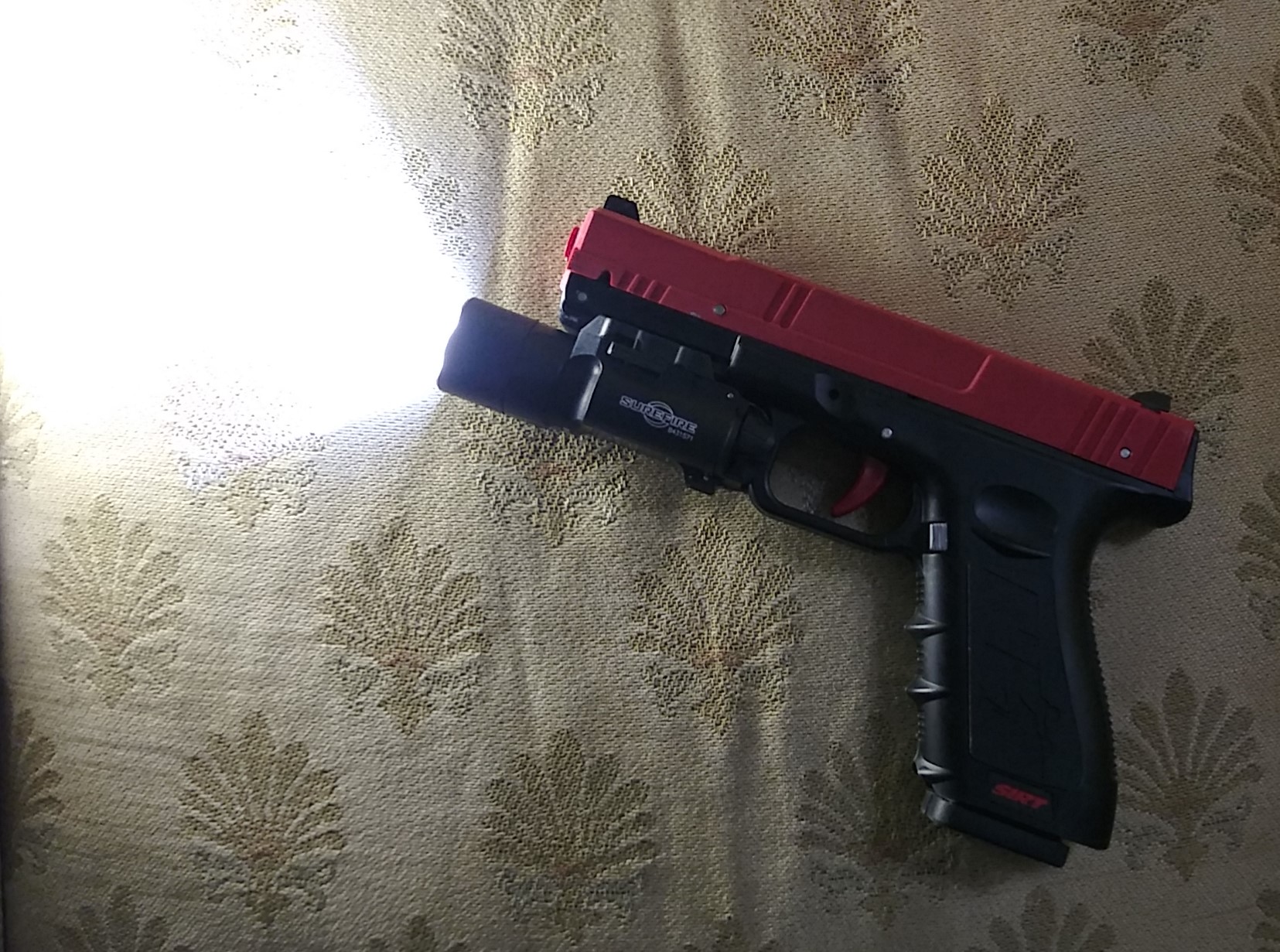
to illuminating with a high intensity light
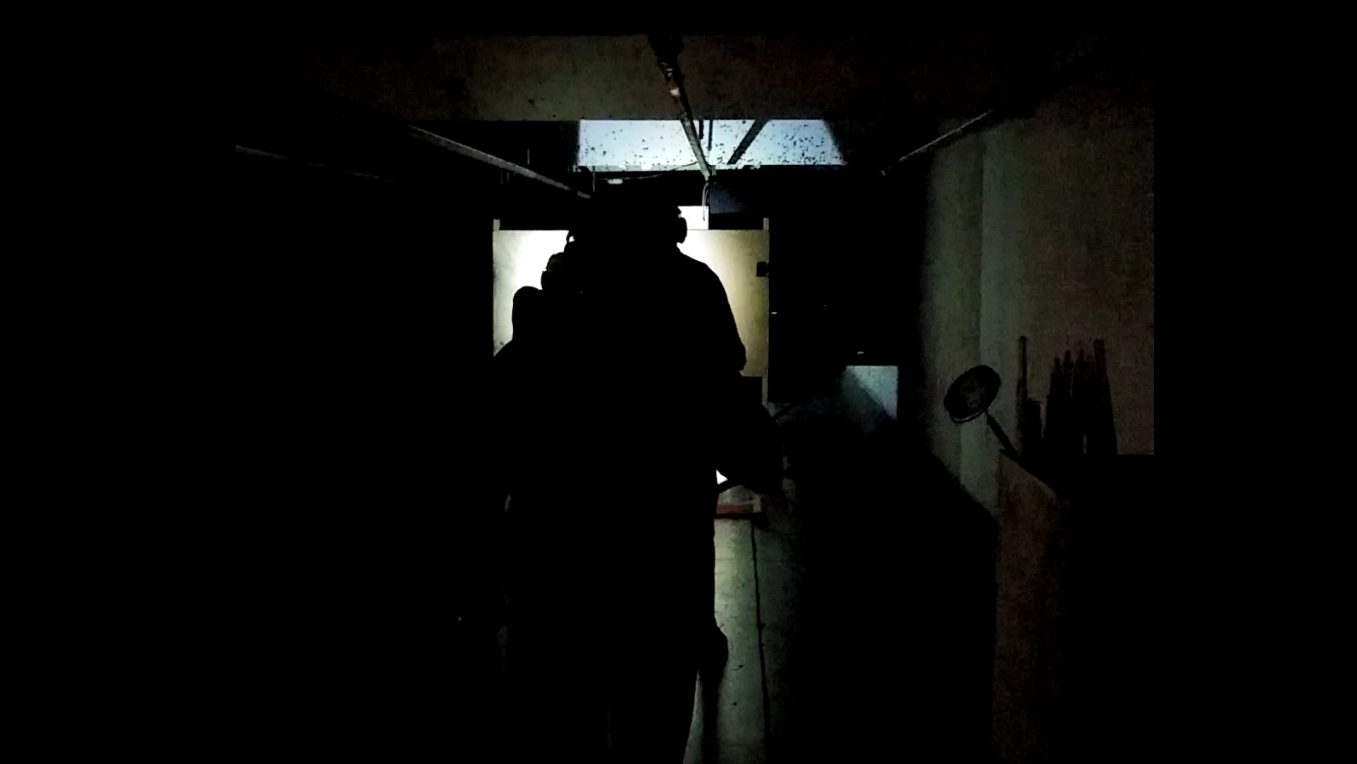
can be momentarily disconcerting, even to the person holding the light.
Matches like these represent the practical application of theoretical techniques. They are a valuable exercise for everyone who participates.
Tactical Professor books (all PDF)
- Thinking Clearly about Self-defense and Personal Protection https://www.payloadz.com/go?id=3377208
- Real Shootouts of the LAPD https://realshootoutsofthelapd.com/
- Serious Mistakes Gunowners Make http://seriousgunownermistakes.com
- Indoor Range Practice Sessions http://indoorrangepracticesessions.com
- Concealed Carry Skills and Drills http://concealedcarryskillsanddrills.com
- Advanced Pistol Practice http://bit.ly/advancedpistolpractice
- Shooting Your Black Rifle http://shootingyourblackrifle.com
- Package deal of Thinking Clearly about Self-defense and Personal Protection, Serious Mistakes, Indoor Sessions, Concealed Carry, and Shooting Your Black Rifle (50% off) https://store.payloadz.com/details/2644448-ebooks-sports-shooting-drills-package.html
Recognition Primed Decision-making (part III)
The Victim Mix

Elements of The Victim Mix
- Lack of Awareness
- Lack of Preparation
- Failure to React

In 2007, the FBI’s Law Enforcement Bulletin described a series of inputs to what the authors called “The Deadly Mix.” https://leb.fbi.gov/file-repository/archives/jan07leb.pdf/view While this article and concept pertains principally to law enforcement officers, it also provides a model for how we can think about enhancing our own safety.
Altering just one element of the deadly mix can provide a multitude of changing circumstances and outcomes with which to challenge each officer.
The Deadly Mix
Our end goal for the Recognition Primed Decision-making process in the context of Personal Protection is to avoid becoming victims. RPD allows us to set ourselves up for SUCCESS instead of FAILURE.
Awareness = Recognition
Preparation = Primed
Decision-making = Action
A key part of that process is to understand our internal processes that lead to failure. The Victim Mix uses the concept of ‘tolerance stackup.’ In that way, it is akin to the Four Rules of Gun Safety. Violating one Rule or Element will rarely lead to problems. Breaking two or more can, and often does, result in failure.
On the other hand, a person who is Aware, Prepared, and Ready to React is very difficult to victimize. The article illustrates its point by summarizing two actual incidents. Part of the analysis of the incidents described the impact of perceptions and assumptions in the encounters.
In the two incidents presented, it was the offender’s perception of both officers’ behaviors and the assumptions that he made that significantly altered his actions and resulted in the attack on the one officer and not on the other.
The Deadly Mix
Understanding the inputs to The Victim Mix allows us to reduce our vulnerabilities. Reducing our vulnerabilities allows us to Avoid and Escape undesirable situation before it becomes necessary to Confront and Resist predators. That is key to setting ourselves up for SUCCESS.
A fight avoided is better than a fight won.
John Farnam
Tactical Professor books (all PDF)
- Thinking Clearly about Self-defense and Personal Protection https://www.payloadz.com/go?id=3377208
- Real Shootouts of the LAPD https://realshootoutsofthelapd.com/
- Serious Mistakes Gunowners Make http://seriousgunownermistakes.com
- Indoor Range Practice Sessions http://indoorrangepracticesessions.com
- Concealed Carry Skills and Drills http://concealedcarryskillsanddrills.com
- Advanced Pistol Practice http://bit.ly/advancedpistolpractice
- Shooting Your Black Rifle http://shootingyourblackrifle.com
- Package deal of Thinking Clearly about Self-defense and Personal Protection, Serious Mistakes, Indoor Sessions, Concealed Carry, and Shooting Your Black Rifle (50% off) https://store.payloadz.com/details/2644448-ebooks-sports-shooting-drills-package.html
SureFire® SideKick® Initial Review
#flashlightfriday
The first of SureFire https://www.surefire.com/ flashlights from the Try-Out Haul to be evaluated was the SideKick® https://www.surefire.com/products/illumination/flashlights/sidekick-a/ It arrived in a battery depleted state but was quickly recharged via the supplied USB cable.
It has proven to be useful and yet relatively unobtrusive on my keychain.

The carabiner attachment has been handy for removing and reattaching the light to the keychain. When setting the light down as an impromptu worklight, the flat shape is much better than a round light, even one with a limited roll aspect.
The switch has two options, which are an improvement over some of the complicated switching patterns often found on tactical lights. Pressing the switch and leaving it puts the light in the High mode. If the switch is pressed a few seconds later the light turns off. The variability of output is controlled by quickly pressing the switch multiple times. Mine cycles from High (300 lumens) to Medium (60 lumens) to Low (5 lumens) and then Off in order. The literature says this is the opposite order of the factory order setting but that’s how it came. The order can be reprogrammed during the recharging process.
Comparing the SideKick to the 6P LED showed some noticeable differences. SureFire’s website says:
MaxVision Beam® floods your boundaries with light; triple output: 300, 60 and 5 lumens
The throw pattern is clearly different than the 6P LED. The 6P has very bright center spot with a less intense spill surrounding it. The SideKick throws a much wider pattern that is much more even throughout.
The Target ID test for it was on a prototype Recognition Primed Decision training target at 10 feet. This showed that both High and Medium modes would provide more than adequate illumination to make the Don’t Shoot/Shoot decision. The Low mode’s usability for this would depend on the user’s eyesight but that’s probably irrelevant for this usage.
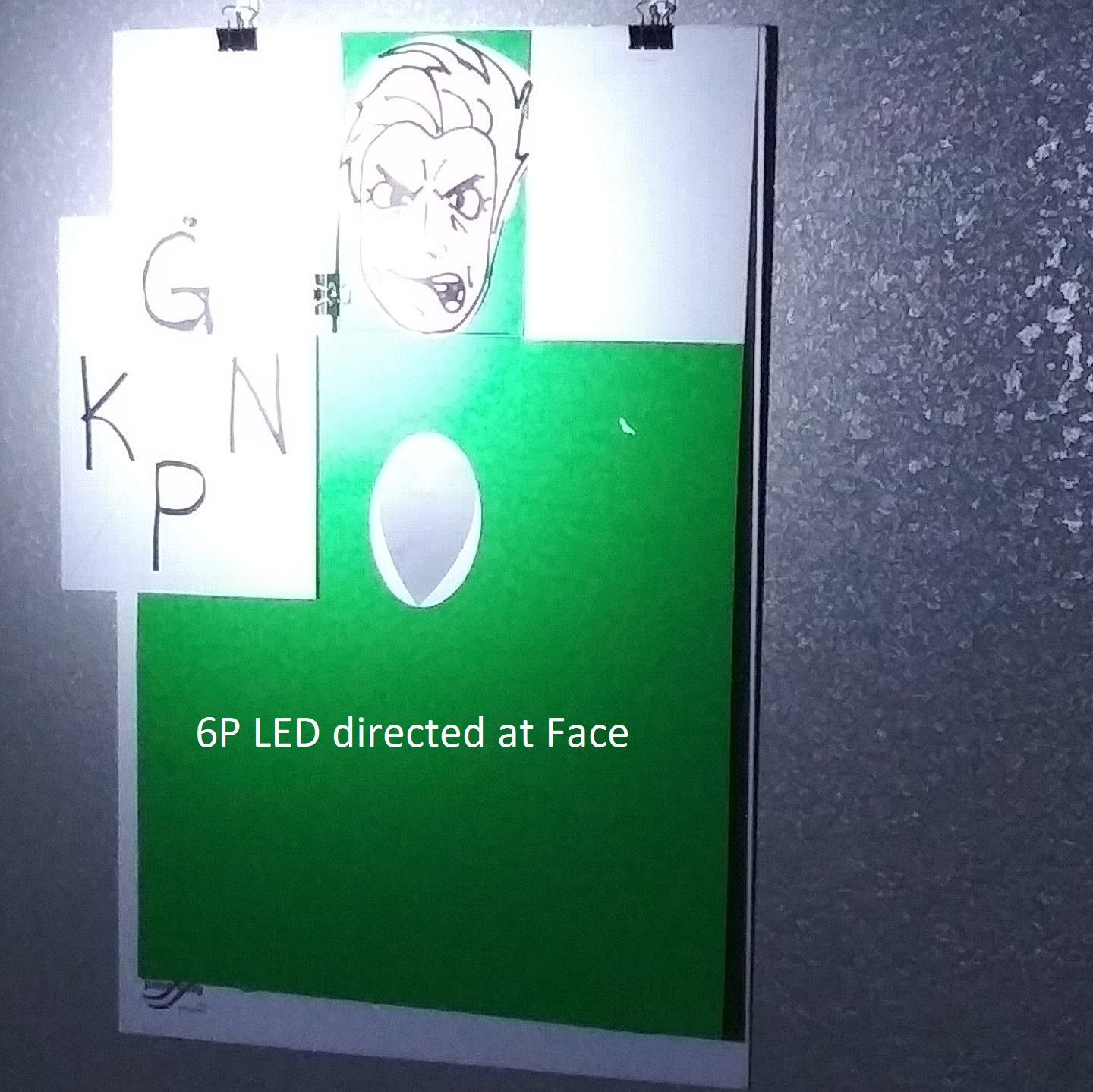
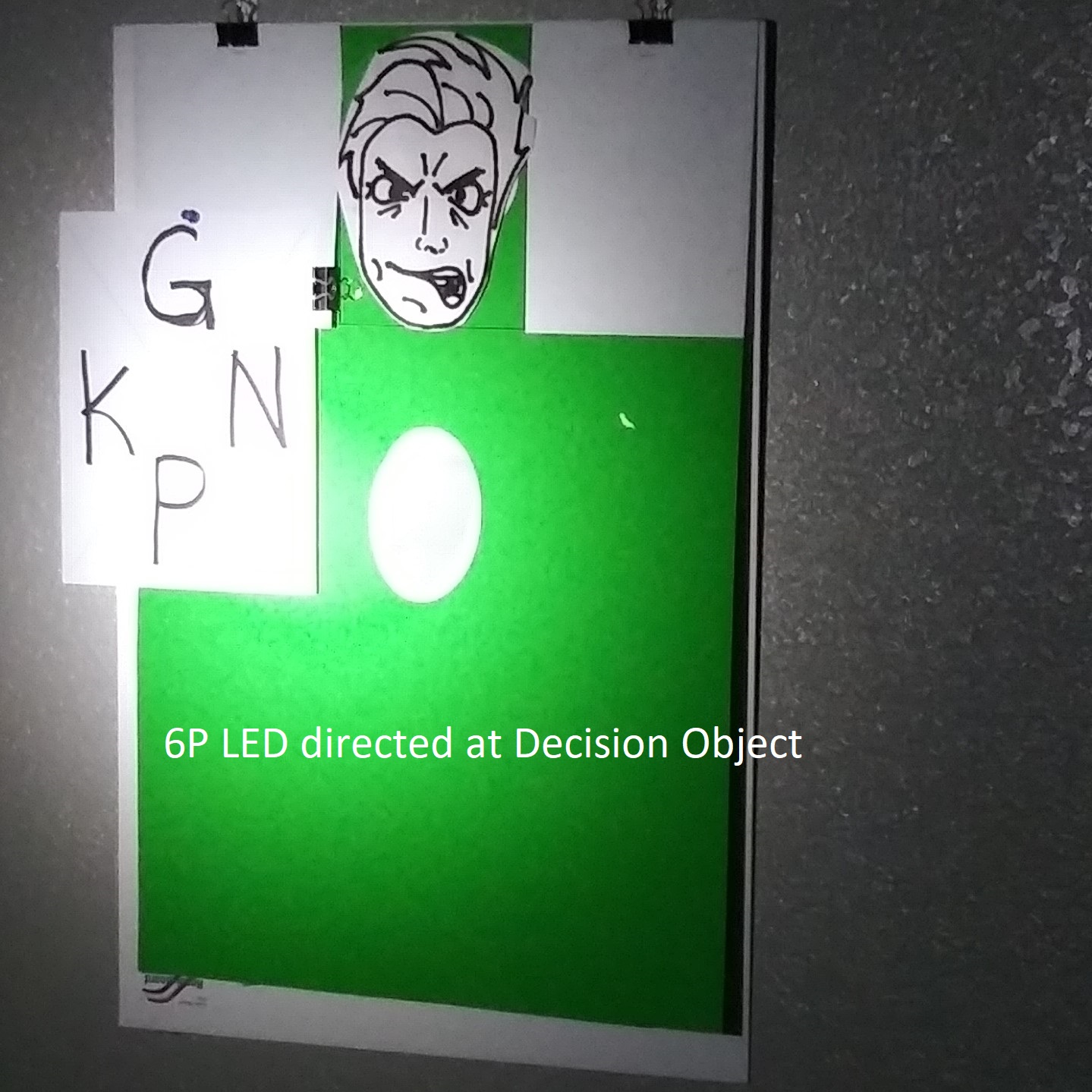
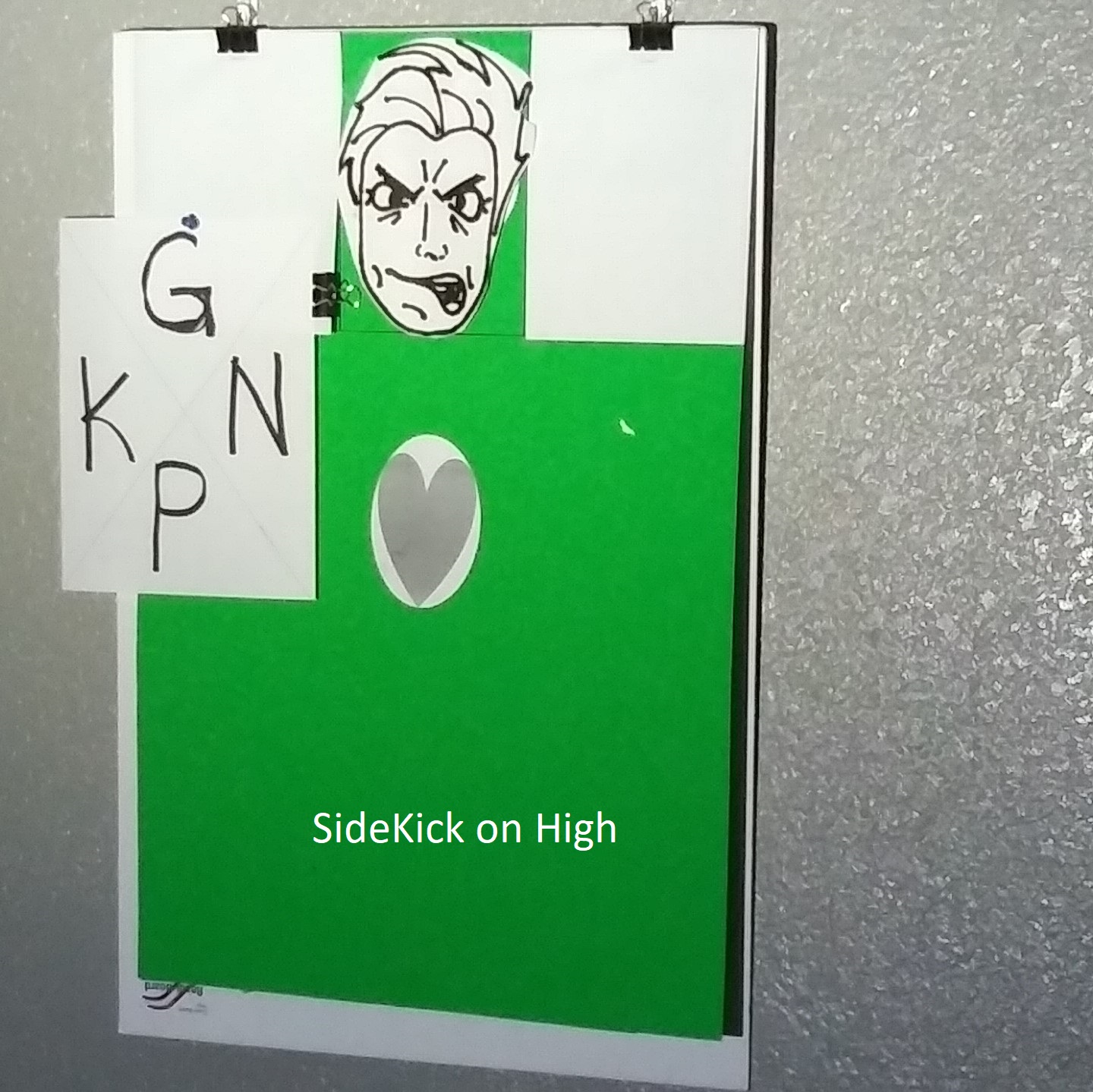
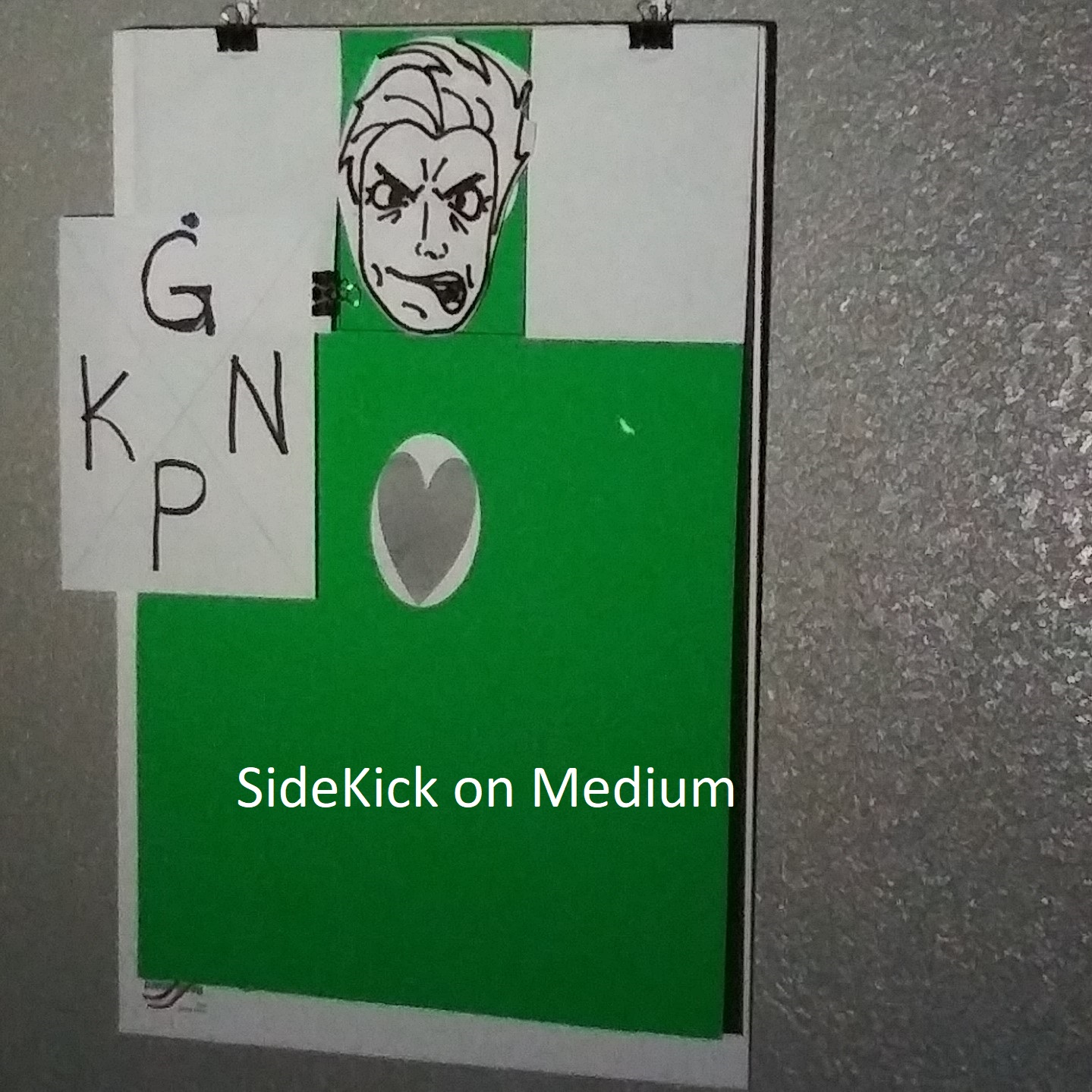
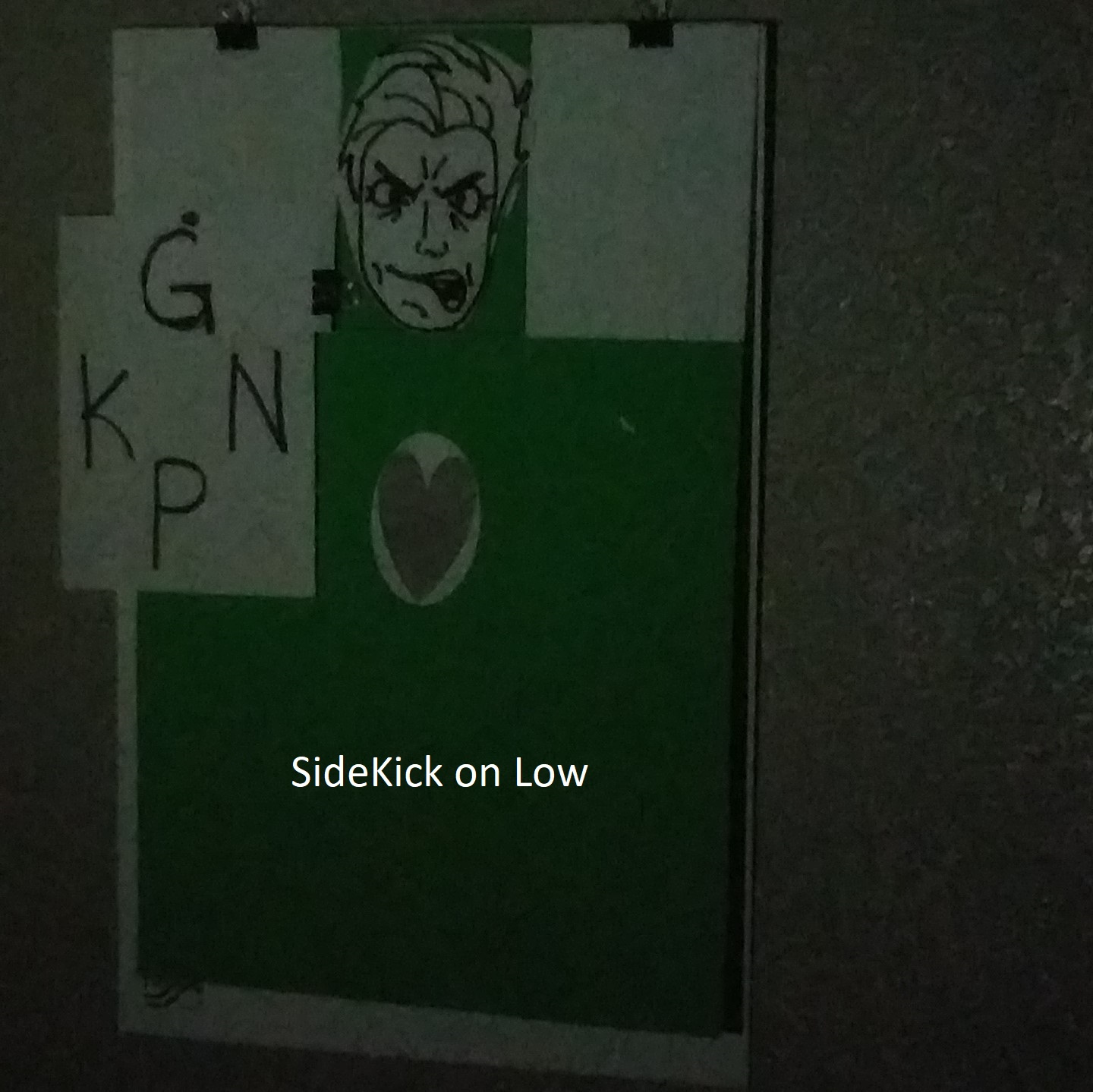
One thing the SideKick doesn’t do as well as the 6P is function as a shooting assist light. Because of its size and switch location, none of the commonly taught flashlight shooting techniques will work with it. That’s not the SideKick’s intended role but if it were pressed into service for that purpose, the user would have to be very careful not to get the hand holding the flashlight in front of the gun muzzle.
When I have the opportunity, I’ll have someone shine the SideKick in my face to see if it’s as blinding as the 6P is. That’s another good testing criterion for a flashlight.
As a reminder, the flashlight shooting chapter of my book Indoor Range Practice Sessions is free to download. If you own a pistol for personal protection, you should know how to use a flashlight along with it. Your flashlight should be as close or closer to your bed as your pistol is.
Flashlight Chapter of Indoor Range Practice Sessions https://store.payloadz.com/details/2505573-ebooks-law-indoor-range-session-11-flashlight.html Free
Indoor Range Practice Sessions https://store.payloadz.com/details/2501143-ebooks-education-indoor-range-practice-sessions.html Not Free
FTC Notice: The SureFire products were sent to me gratis but I receive no compensation for writing about them.
Recognition Primed Decision-making (part II)
Dr. Klein explains gives a brief explanation of his model in this interview about RPD.
Examining our Options
The NRA Guide to Personal Protection Outside the Home (PPOTH) lists these “Psychological Reactions To A Threat” in Chapter 6.
- Freeze
- Submit
- Posture
- Flight
- Fight
We could further subdivide ‘Fight’ into:
- Unarmed
- Non-Lethal
- Lethal
To the ‘Submit’ option, we could include the caveat, ‘at least temporarily.’ Being taken to a 2nd crime scene is generally not a good idea but it might be unavoidable. In one of his student’s incidents recounted by Tom Givens, two stickup men got the drop on the victim in a parking lot and had guns to his head. However, they failed to realize he was carrying a concealed pistol. The stickup men kidnapped him and eventually took him to the 2nd crime scene, his home. There, he waited for his turn in the OODA sequence and killed both the predators.
‘Posture’ could simply mean saying NO! in an unambiguous way.

Another option we should consider is ‘Negotiate,’ a tactic included by The Most Dangerous Man in The World as part of his PARRR system. Even a Sixth Army boxing champion, obviously no slouch with his fists, found this tactic useful in an encounter with Razor Willy, a local prostitute in the Fort Campbell area. She became enraged and threatened him with her EDC, a straight razor, but he managed to talk his way out of the encounter with neither party becoming a casualty.

It’s apparent that our Options extend beyond the simplistic “Fight or Flight” and ‘Gun or None’ possibilities that we usually hear about. Thinking about what our Options are ahead of time gives us the freedom to program an appropriate level of force, or none, when we become concerned for our safety or that of our loved ones.
Part III will go into overlaying our ‘Options’ on ‘People’ and ‘Situations’ to develop a personal Avoid, Escape, Confront, Resist model.
Tactical Professor books (all PDF)
- Thinking Clearly about Self-defense and Personal Protection https://www.payloadz.com/go?id=3377208
- Real Shootouts of the LAPD https://realshootoutsofthelapd.com/
- Serious Mistakes Gunowners Make http://seriousgunownermistakes.com
- Indoor Range Practice Sessions http://indoorrangepracticesessions.com
- Concealed Carry Skills and Drills http://concealedcarryskillsanddrills.com
- Advanced Pistol Practice http://bit.ly/advancedpistolpractice
- Shooting Your Black Rifle http://shootingyourblackrifle.com
- Package deal of Thinking Clearly about Self-defense and Personal Protection, Serious Mistakes, Indoor Sessions, Concealed Carry, and Shooting Your Black Rifle (50% off) https://store.payloadz.com/details/2644448-ebooks-sports-shooting-drills-package.html
Recognition Primed Decision-making (part I)
Recognition Primed Decision-making is a concept developed by Dr. Gary Klein. It has become a widely accepted model for first responders, the military, and in aviation.
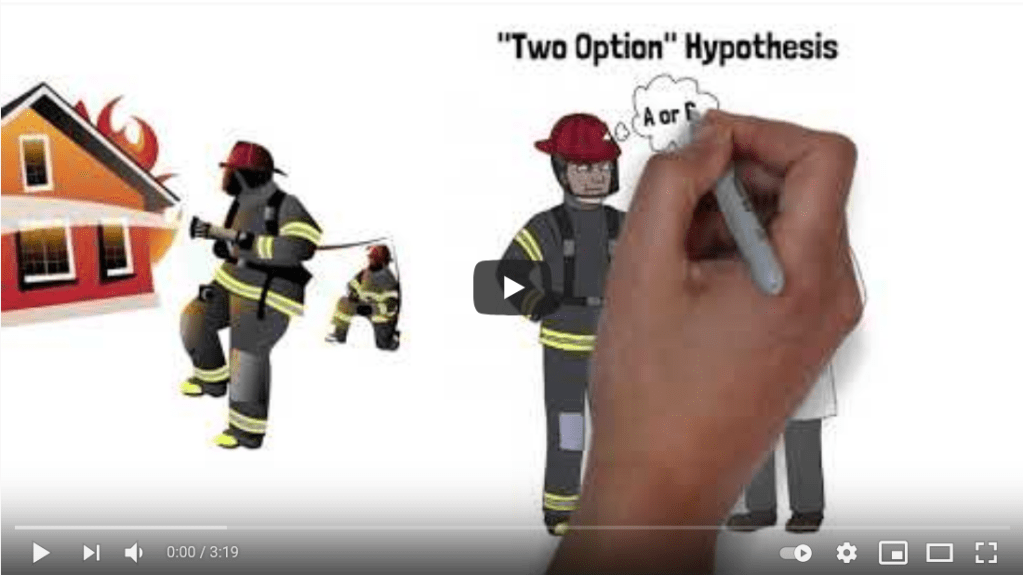
The RPD model is based on the idea that experience allows people to make decisions quickly without having to sort through a series of possibilities. Rather, if a situation appears similar to a past experience, the solution that worked in the previous situation can be applied or modified to provide an adequate solution for the current situation.
Since most people have not been mugged, had their home invaded, or been murdered in a previous experience, the relevant question for an Armed Private Citizen is about acquiring the experience. That is to say, ‘How do we train and practice RPD in the absence of experience?’
In order for us to think clearly about self-defense and personal protection, we need to consider ahead of time the types of people and situations we might encounter. Then we consider what our options are, based on our personal preferences and choices. Finally, we can choose ahead of time which option is best suited to deal with the person and situation.
Types of people we might encounter
- Benign person
- Angry person
- Predator or angry person with personal weapons (fists, shod feet, etc.)
- Angry person or predator with a contact weapon
- Predator or angry person with a projectile weapons
Examples of situations
- Area of limited visibility such as a parking deck
- Walking alone in unfamiliar territory
- Being in the presence of a person who makes us uncomfortable
- Having an unknown person approach us
- Being home in a state of Unawareness or Unfocused on personal protection
- Etc.
What we want to avoid is the Typical, or at least Common, Self-defense Process.

Part II will go into our Options and an interview with Dr. Klein about the model.
Tactical Professor books (all PDF)
- Thinking Clearly about Self-defense and Personal Protection https://www.payloadz.com/go?id=3377208
- Real Shootouts of the LAPD https://realshootoutsofthelapd.com/
- Serious Mistakes Gunowners Make http://seriousgunownermistakes.com
- Indoor Range Practice Sessions http://indoorrangepracticesessions.com
- Concealed Carry Skills and Drills http://concealedcarryskillsanddrills.com
- Advanced Pistol Practice http://bit.ly/advancedpistolpractice
- Shooting Your Black Rifle http://shootingyourblackrifle.com
- Package deal of Thinking Clearly about Self-defense and Personal Protection, Serious Mistakes, Indoor Sessions, Concealed Carry, and Shooting Your Black Rifle (50% off) https://store.payloadz.com/details/2644448-ebooks-sports-shooting-drills-package.html
Package Deal Update
I’m gratified that Thinking Clearly about Self-Defense and Personal Protection has been well received. One reader sent me the following comment, which I found quite gratifying.
I went through the book quickly and my initial impression is that it is superb. Tremendous intellectual effort and incredibly sage and mature counsel on the subject. It’s also incredibly in-depth and thoughtful.
J.T.
I want to spread the word as far as I can so I’ve now included it in the Shooting Drills Package https://www.payloadz.com/go/sip?id=3348053
The Package still includes Serious Mistakes Gunowners Make, also.

I appreciate the loyalty of those who have already purchased the Package, so I will be sending previous purchasers a download link for the book.
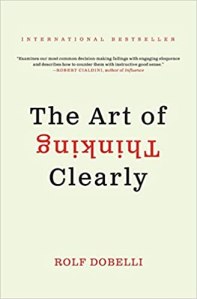
Two non-gun related books heavily influenced me in writing the book. The Art of Thinking Clearly by Rolf Dobelli and Small Data: The Tiny Clues That Uncover Huge Trends by Martin Lindstrom are both very insightful books about topics that aren’t often discussed.
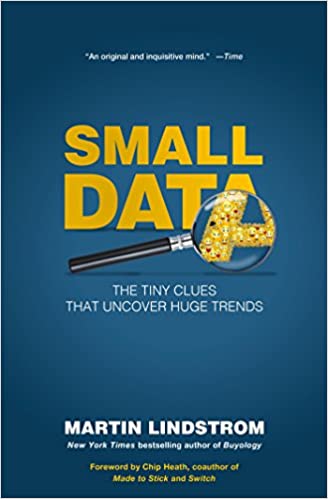
Without knowing a proper name for it, I’ve been working with ‘small data’ for decades. I think Lindstrom would have approved of the Deloitte & Touche Real Estate Capital Markets Database that I created years ago. It started out with a few notes in Word and eventually grew into the broadest analysis of Wall Street’s entry into the commercial real estate finance business that has been done. Even the Wall Street soothsayers were only tracking 20 percent of the data in my database.
Contrary to the popular opinion that “the plural of anecdote is not data,” Lindstrom’s work shows that the opposite is actually true. All of Gary Klein’s work about decision-making is based on small data. Concealed Carry Skills and Drills, one of the books in the Package, is based on the concept of small data.
The collection of books in the Package presents a very comprehensive view of using firearms and other tools for preservation of life. Tools, skills, philosophy, and pitfalls are all covered. Those who are serious about our Art will find them useful reading, I am sure. I hope you will consider purchasing the collection.
 tacticalprofessor
You must be logged in to post a comment.