Small Gun Accuracy
#mousegunmonday
The Washington State Basic Covert Carry/Off-Duty Proficiency Course for Law Enforcement Officers includes shots out to 15 yards. This is perfectly workable with small guns like a Ruger LCP, even though it has a double action trigger.
Here’s my YouTube video of the Course of Fire.
If you would like to read more in-depth information about shooting and personal protection, consider subscribing to my Patreon page.

Man Shot by Deputy after Calling 911
#NegativeOutcome
After a Defensive Gun Use, don’t have your gun in hand when the POlice arrive.
[After the man called 911 saying he had killed someone,] The Ventura County Sheriff’s Office arrived at the man’s home in the 4300 block of Central Avenue in Camarillo around 12:30 p.m. on Thursday, July 31. The 79-year-old man was allegedly armed with a gun and the dispatcher, who was still on the line, had asked the elderly man to step out of the house.
The man was allegedly still armed and behaved in a ‘threatening matter,’ prompting one of the deputies to shoot him, according to the Ventura County Sheriff’s Office.

Most likely after a Defensive Gun Use, a person is going to be very excited. Plan ahead of time to put your gun down before exposing yourself to the POlice. In my first class with John Farnam, he advised us to say “You might want to look over there” and point to your gun that’s in a recognizable place. Probably best for it to be unloaded to preclude the possibility of an Unintentional Discharge.
This type of incident falls into the Negative Outcome category of Undesirable Police Involvement. https://store.payloadz.com/go/?id=2617872
I had a different idea for #fridayfundamentals today but not getting shot is definitely fundamental.
If you are interested in more in-depth commentary about shooting and Personal Protection incident analysis, please consider subscribing to my Patreon page. https://www.patreon.com/TacticalProfessor
My Favorite Pressure Testing Drill
This is an old post of mine on Facebook from 2013. It was reposted today by my friends Phil Wong and Rob Reed. My thanks to them for resurrecting it. The post follows:
The concept of livefire pressure testing one’s shooting skills came up on a forum. This was my contribution.
My favorite drill is simple to set up but complex to administer. It requires comfort with an execution matrix to do correctly.
Conceptually, it’s best done with a group of about 2 dozen people or less. I’ve done it with 3 dozen, but it’s a lot of work.
It’s called ‘Everyone shoots against everyone.’ Using an execution matrix, I have every student shoot a short bout against every other student. Not consecutively, though. It’s not a mystery, I just run down the matrix and pair up names.
Logistically, all that’s required is two pepper poppers and two shoot boxes. The shooting is static. The drill is simple. Two shooters, two poppers, one signal. First to drive his/her popper down is the winner.
Where it gets difficult for the shooters is ramping their focus up and down over the course of an hour or so. Shooters do a lot of standing around and then get quickly called to shoot while the poppers are being reset. I do that timing deliberately.
When I did this for a large police department’s firearms instructors several years ago, their lead firearms instructor was the hands down favorite to win because he was easily the best shot in the department. However, that turned out not to be the case. He became complacent after awhile. The guys that had to shoot against him were jacked up every time. There ended up being no clear cut winner. The guys at the top of the winning curve were all reasonably proficient but not equal to him. Not surprisingly to me, the dedicated point shooters ended up at the bottom of the curve. One even told me he had decided to re-evaluate his philosophy because he got beaten so consistently.
At the end I commented that the amount of time they had to prepare for each bout after being called was similar to the amount of time they had from when they turned on their lights for a ‘routine traffic stop’ until they exited their patrol cars. Some of them do dozens of stops each day because they work traffic on the Interstate.
The psychology of approaching combat is as important as skill. Complacency, among other things, kills. After two years at Rogers, how students dealt with the problem mentally became far more interesting to me than the technique.

One of the difficulties of the Rogers Testing Program is that it requires students to take turns loading magazines, watching/evaluating someone else, and then standing and delivering. It goes on for over an hour, which is psychologically nerve racking. This evening, I was watching some footage of a huge firefight in Afghanistan and was struck at how similar the pacing was to the Testing Program at the School.
Fraternity Picnic Shooting
A précis of the incident:
- Fraternity holds picnic at an Atlanta park
- Uninvited intruder wearing ski mask crashes picnic and starts a confrontation
- Fraternity members try to de-escalate the situation
- Masked intruder pulls out a gun and starts shooting
- A fraternity Brother is shot in the head and dies on scene
- Other fraternity Brothers, who have Weapons Carry Licenses, are armed
- They draw their guns and shoot the masked intruder
- Intruder is neutralized with bullets and later expires in hospital
Sad that carrying a pistol has become a necessity even at a pleasant fellowship event but I’m glad the Brothers had theirs. It could have been much worse. There are a lot of emboldened wackos wandering around. The report indicated that the intruder had been walking down the sidewalk next to the park and just decided to make trouble for an unknown reason.
RIP Mr. Pearson.
Armed Citizen Scenarios
#scenariosunday
I was nostalgic today for older style IDPA Scenarios like we used to shoot in the sport’s early days. Twenty-five years ago, there wasn’t much reloading on the clock and stages often consisted of multiple strings having six shots or less. It’s a different sport now.
My nostalgia caused me to write a new stage and redesign an older one. One is based on an Armed Citizen incident and the other on an actual car burglary and murder. The stages are called the Chicargo Practical Event and Muffler Thieves.

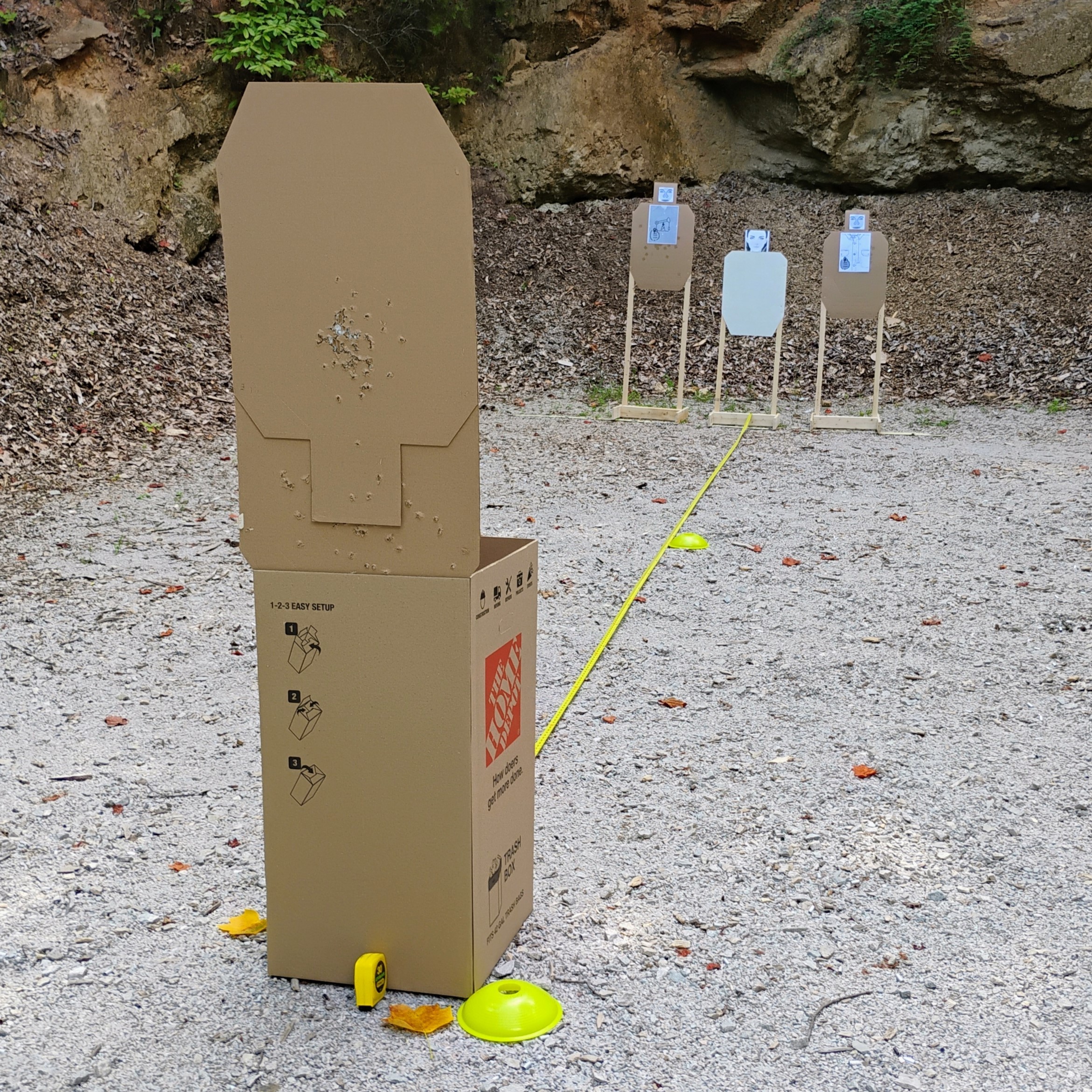
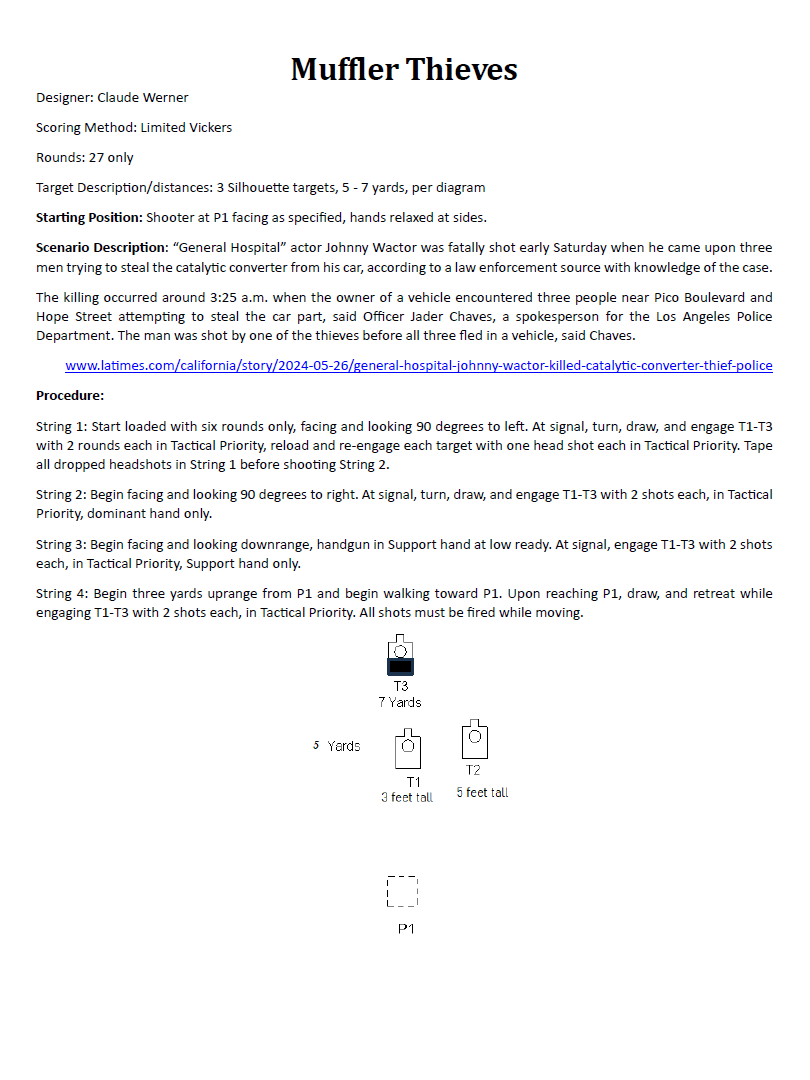
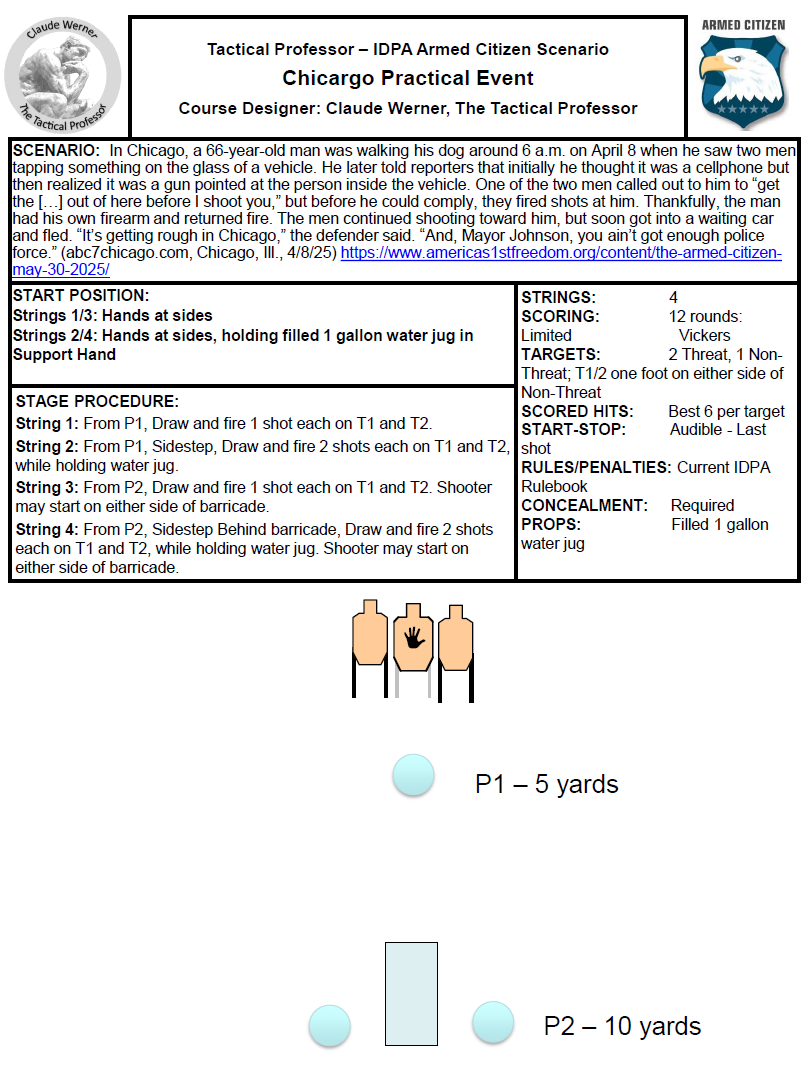
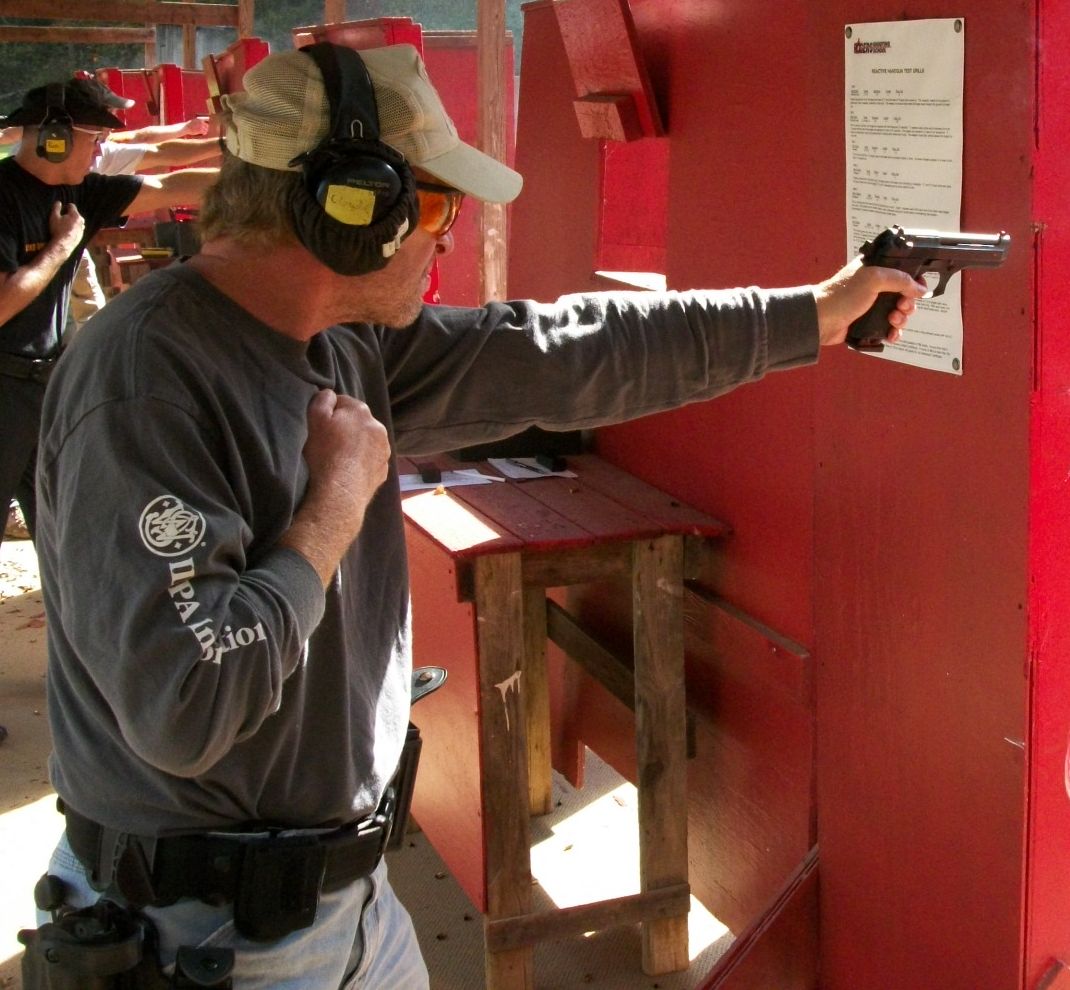
I finished up with the Old West Shootist’s Challenge. My Little Crappy Pistol (LCP) did just fine.
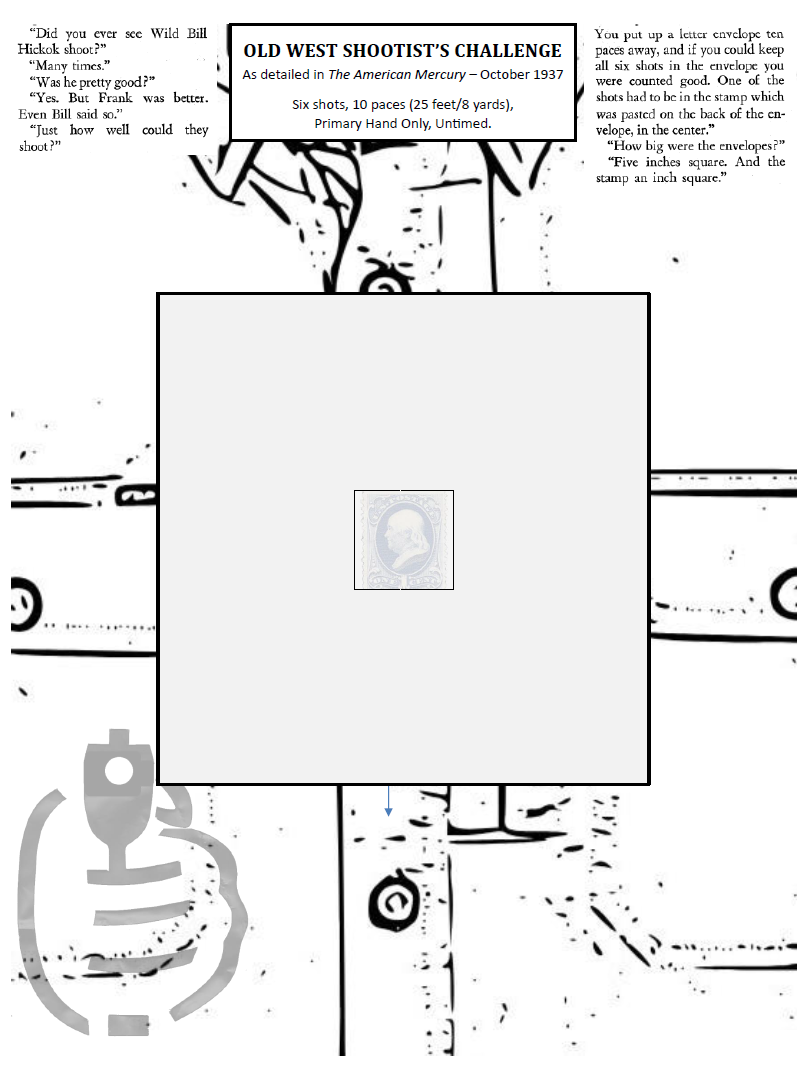
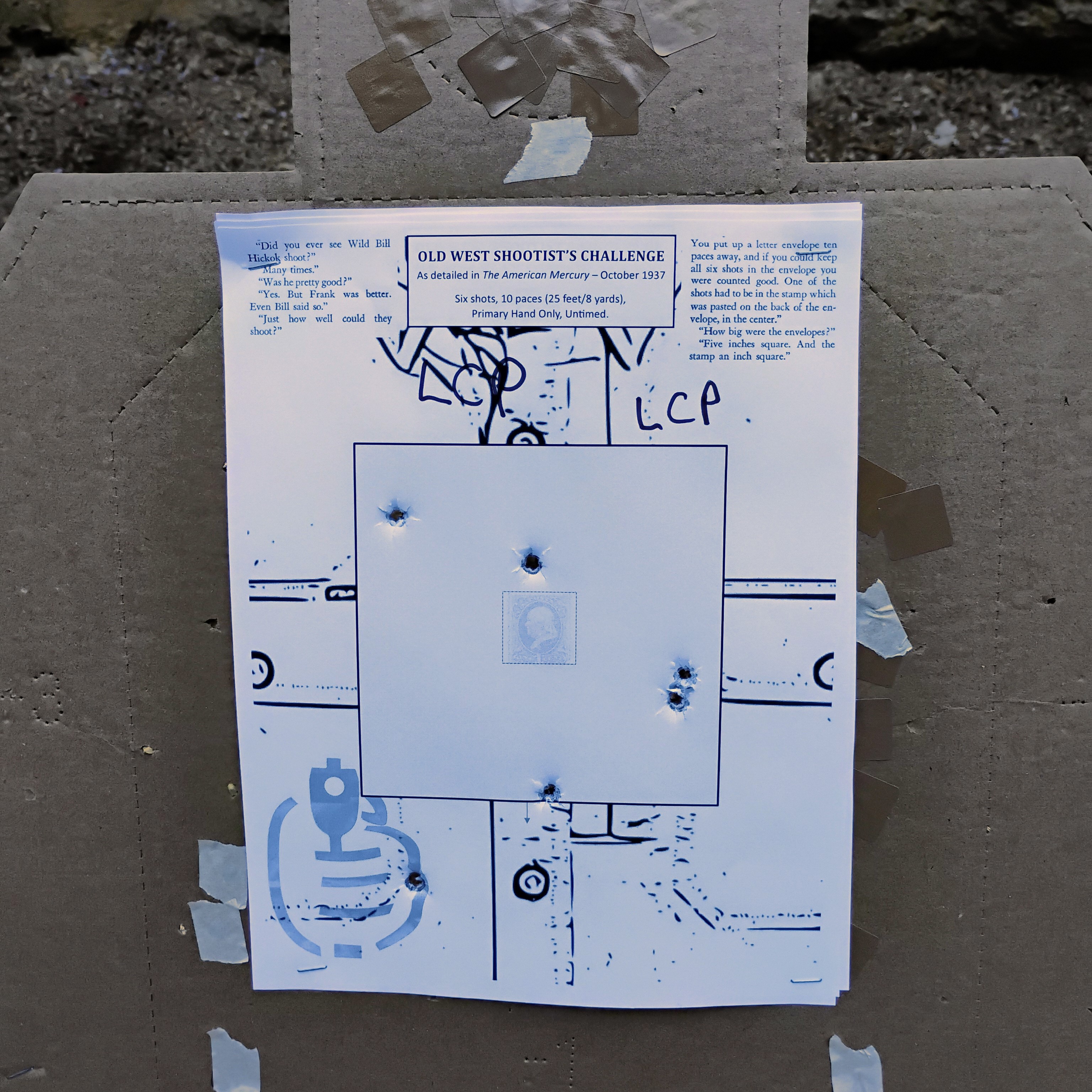
It was a fun afternoon. I’m going to do it every month, as if it was my own private match.
If you are interested in more in-depth commentary about shooting and Personal Protection incident analysis, please consider subscribing to my Patreon page. https://www.patreon.com/c/TacticalProfessor
Preventing Unintentional Discharges with a Revolver
#wheelgunwednesday
In my “Off-duty Shootouts of the LAPD” presentations, one section is devoted to Notable Incidents – Unintentional Discharges. The LAPD still authorizes snub revolvers for backup and off-duty carry. Unintentional Discharges occur to both revolvers and autoloaders, although there are no reported on-duty UDs with revolvers. Off-duty is when they occur. I’ve written about this before. https://thetacticalprofessor.net/2020/08/19/dry-practice-safety/
No doubt someone will comment that the correct term is Negligent Discharge. The LAPD uses the terms Unintentional Discharge, Negligent Discharge, and Accidental Discharge in very specific context, so I will use their terminology here.
A common cause of Unintentional Discharges is Impromptu Dry Practice and faulty unloading procedures. Another is attempting to clean/maintain loaded weapons. Upon conclusion of the investigation, such incidents will be adjudicated by the Board of Police Commissioners as Negligent.
NON-TACTICAL UNINTENTIONAL DISCHARGE – 040-19 UD at home
NON-TACTICAL UNINTENTIONAL DISCHARGE – 076-08 UD at hotel
NON-TACTICAL UNINTENTIONAL DISCHARGE – 014-23 UD at Rampart Station
Example Proximate Cause of UD
Officer A placed his left hand under the open cylinder and used his left index finger to depress the ejector rod, releasing the live rounds into his left hand. Officer A did not count the live rounds and placed them on top of the kitchen counter directly behind him. Officer A then closed the cylinder and pressed the trigger twice.
According to Officer A, believing his revolver was still unloaded, he placed his finger on the trigger and pressed it a third time, which caused the revolver to discharge a single round. No one was injured by the discharge.
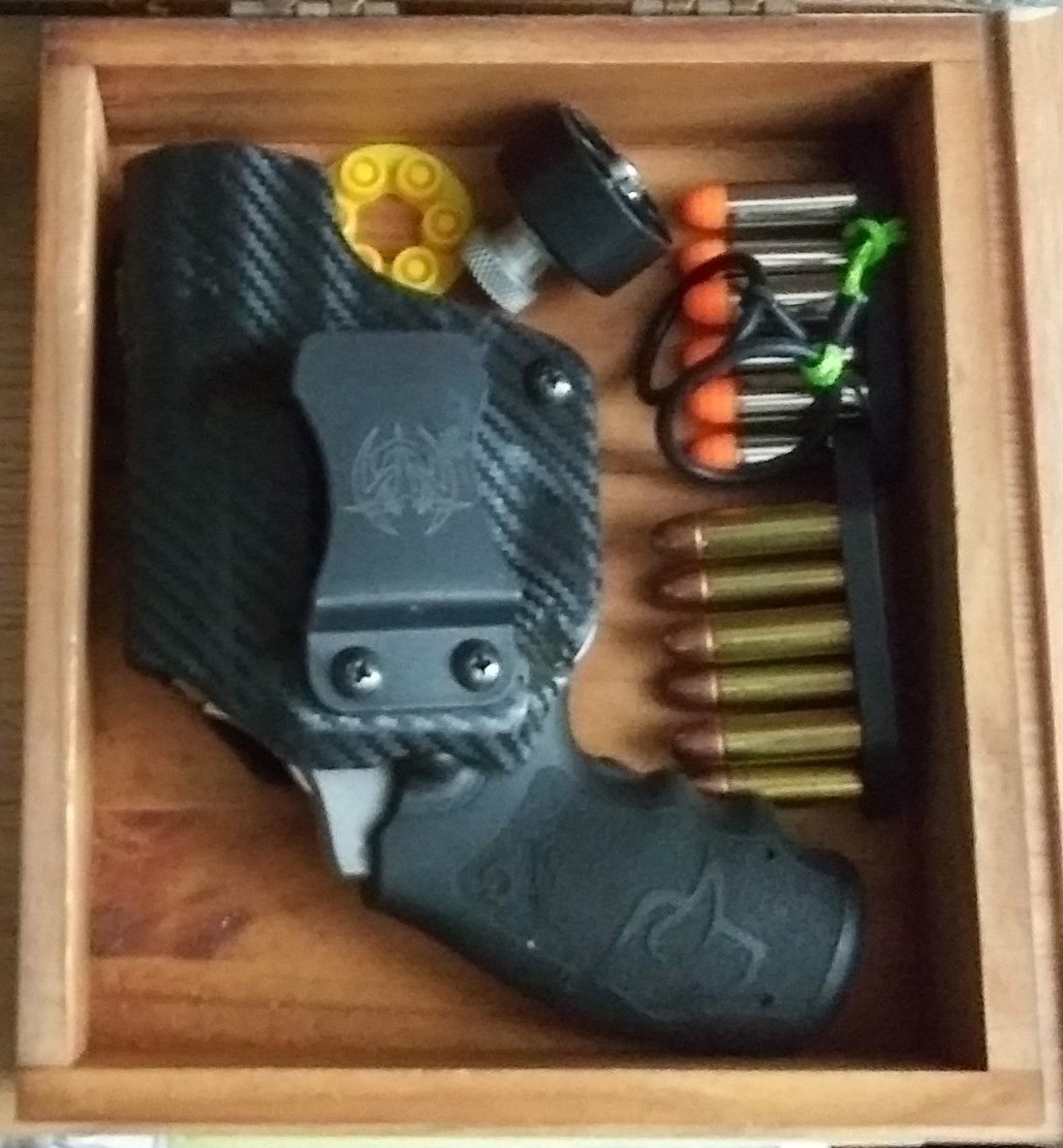
Since my previous post, an even better solution and accompanying procedure has become available. The solution is the SafeSnap™ Training Disc for 5-Shot J-frame Size Revolvers. https://zetasix.com/product/safesnap-5/
Fair disclaimer: I was involved in the development of the SafeSnap™ but I receive no compensation for commenting about it.
The procedure works as follows. Have a SafeSnap and a twist knob speedloader such as HKS, 5 Star, or Lyman of the correct size for your revolver. Keep both of them readily available.
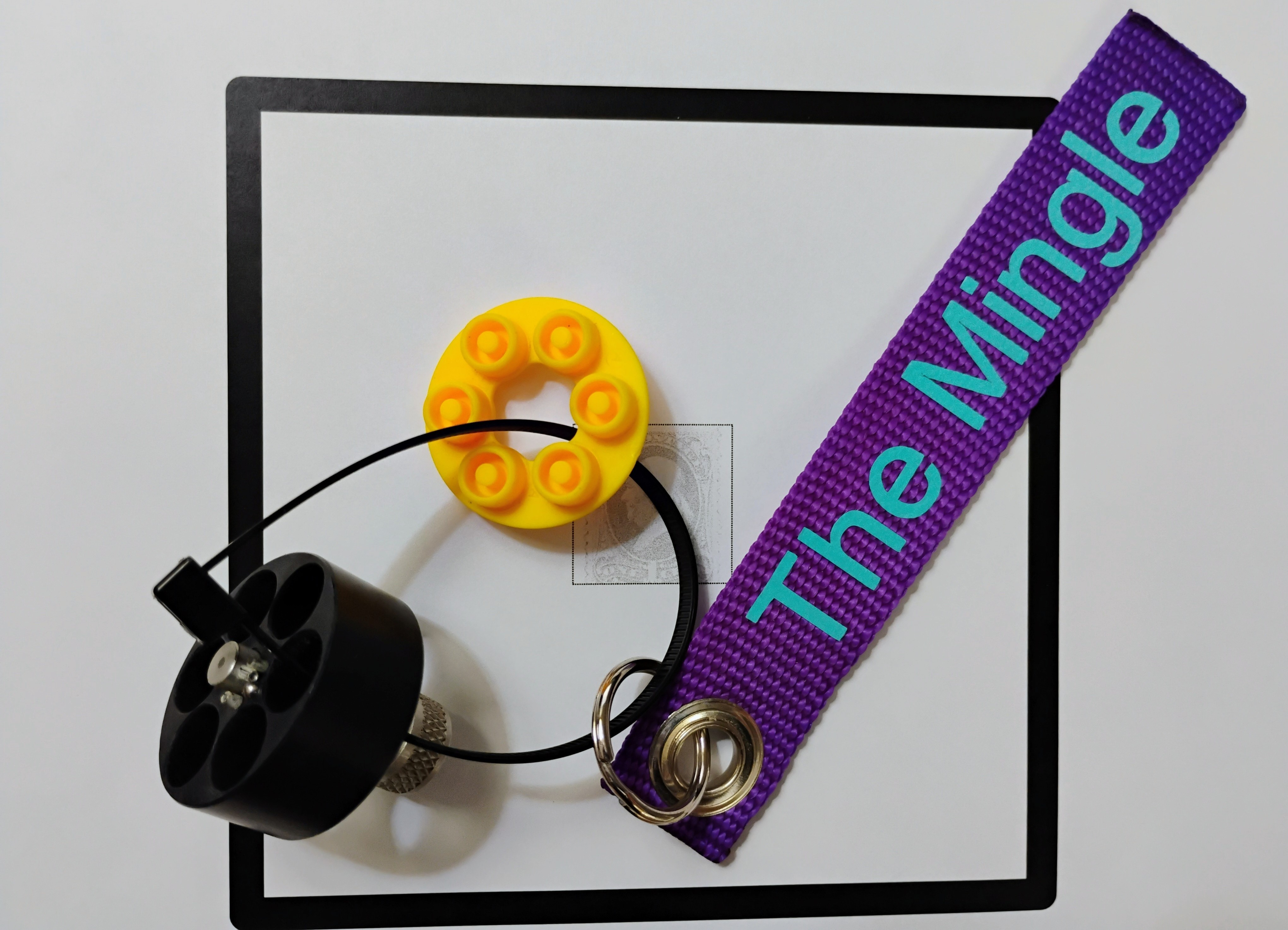
When you decide to dry practice or do maintenance on your revolver, get them before doing anything.
- Take the live cartridges out.
- Count and secure them in the twist knob Speedloader. If there are any empty holes left in the speedloader, the FBI calls that ‘a clue.’
- Put the SafeSnap™ Training Disc in the revolver.
- Do your dry practice or maintenance.
- When finished, don’t reload the gun.
- Do something else to occupy your mind and remove dry practice from your thoughts.
- When you do reload, say “This gun is loaded” out loud three times.
Using such a procedure will go a long way toward preventing Unintentional Discharges. Nevertheless, muzzle direction is still the Primary Safety; always has been, always will be.
The SafeSnap™ is also available for K frames and LCRs. There are other procedures appropriate for autoloaders but this post is specific to revolvers.
Other causes of Unintentional Discharges
- Administratively carrying or handling loaded handguns without a holster
- High stress tactical situations
- Drunkenness
Final note: It’s also inappropriate to dry practice using your girlfriend’s cat as a target.
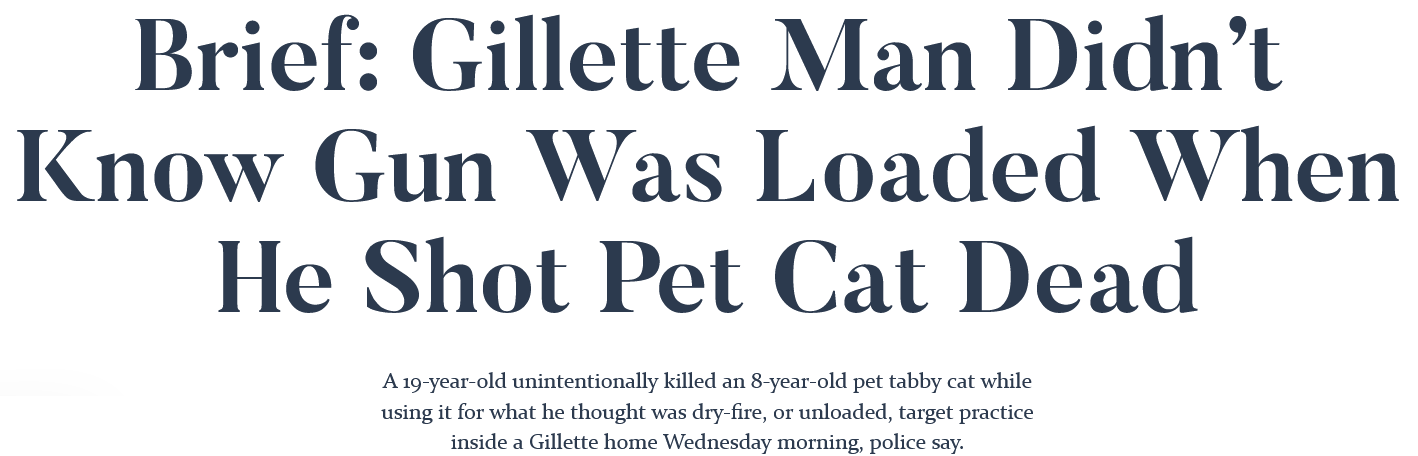
https://cowboystatedaily.com/2025/04/17/brief-gillette-man-didnt-know-gun-was-loaded-when-he-shot-pet-cat-dead/ Not only will it sour your relationship with her but could conceivably lead to Animal Cruelty charges, which are a Felony in most States.
If you are interested in more in-depth commentary about shooting and Personal Protection incident analysis, please consider subscribing to my Patreon page. https://www.patreon.com/TacticalProfessor
Practicing with a Snub Revolver
Favorite Five Shot Snub Revolver Courses of Fire
#wheelgunwednesday
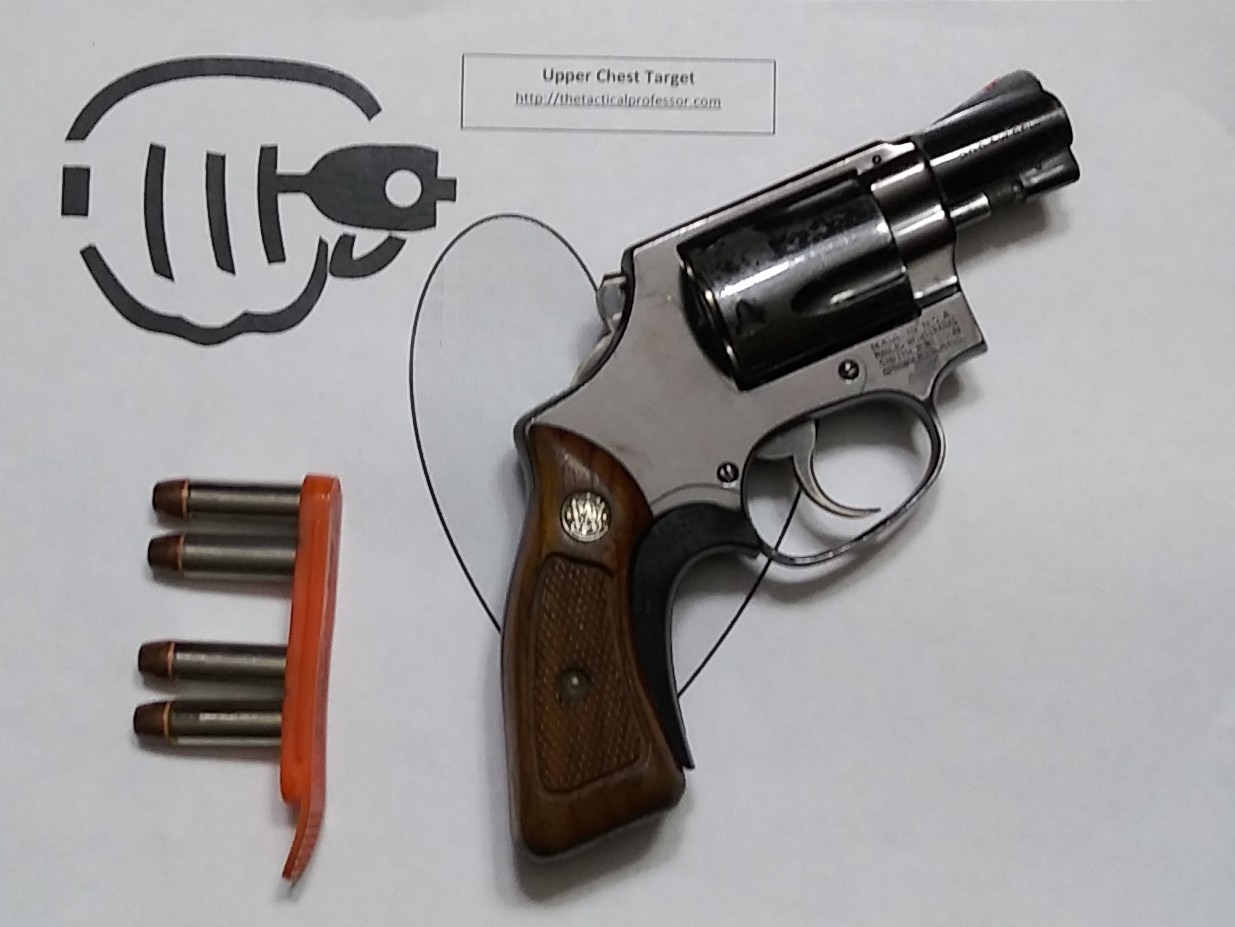
While some consider the five shot snub revolver passé, it is still a common self-defense tool and viable when used correctly. Using a snub correctly does require a bit of familiarity and practice, so here are some practice regimens that are appropriate for snubs and can be used at most indoor ranges. CCW Qualification Courses have value in that they provide structure for practice and a modest measure of skill determination. Note that simply shooting a CCW Qualification Course on your own DOES NOT mean you are authorized to carry a handgun in that area. Check the local laws for carry requirements.
All Courses of Fire are untimed. Any silhouette target can be used. When using the B-27 target, only count hits inside the 8 ring. For those who feel confident of their marksmanship ability, put a sheet of paper on the silhouette and only count hits on it.
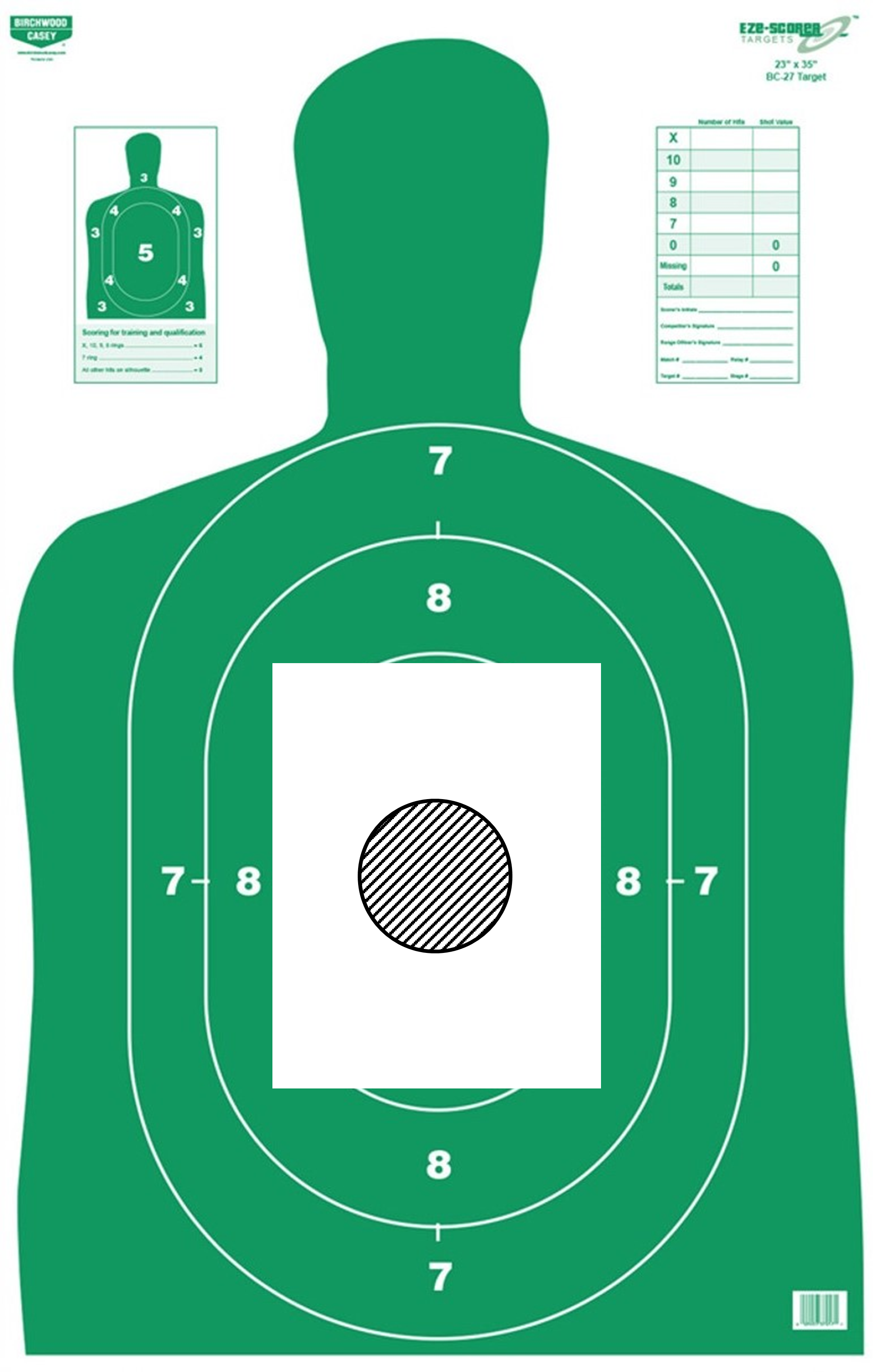
- New York State CCW Qualification Course – 5 rounds
- Silhouette at 4 yards.
- With an unloaded revolver, draw, snap at the target, and safely reholster. Draw the unloaded revolver, load with five rounds, and come to Low Ready. Fire five rounds at the target.
- Four of five rounds must hit the target to successfully qualify.
- Nevada CCW Qualification (5 shot revolver version) – 25 rounds
- Silhouette at 3 yards.
- Load with five rounds, and come to Low Ready. Fire five rounds at the target.
- Move Silhouette to 5 yards.
- Load with five rounds, and come to Low Ready. Fire five rounds at the target, reload, and fire five more rounds at the target.
- Move Silhouette to 7 yards.
- Load with five rounds, and come to Low Ready. Fire five rounds at the target, reload, and fire five more rounds at the target.
- Of the 25 rounds, 18 must hit the target to qualify.
- LAPD Retired Officer Qualification Course – 10 rounds
- Silhouette at 7 yards.
- Load with five rounds and reholster. Draw, shoot five rounds, reload, and shoot five more. If the range does not permit drawing from a holster, start from Low Ready.
- Seven of the 10 rounds must hit for a successful qualification.
- San Diego (California) Sheriff CCW Qualification Course – 15 rounds
- Silhouette at 7 yards.
- Load with five rounds, and come to Low Ready. Fire five rounds at the target.
- Move Silhouette to 5 yards.
- Load with five rounds, and come to Low Ready. Fire five rounds at the target.
- Move Silhouette to 3 yards.
- Load with five rounds, and come to Low Ready, holding the revolver in the Primary Hand Only. Fire three rounds at the target. Transfer the revolver to the Support Hand Only and fire two more rounds at the target.
- Of the 15 rounds, 13 must hit the target to qualify.
- Kansas Concealed Carry License Qualification Test – 25 rounds
- Silhouette at 3 yards.
- Load with five rounds, and come to Low Ready, holding the revolver in the Primary Hand Only. Fire five rounds at the target.
- Move Silhouette to 7 yards.
- Load with five rounds, and come to Low Ready with both hands. Fire five rounds at the target, reload, and fire five more rounds at the target.
- Move Silhouette to 10 yards.
- Load with five rounds, and come to Low Ready with both hands. Fire five rounds at the target, reload, and fire five more rounds at the target.
- Eighteen of the 25 rounds must hit the target to qualify.
Trigger manipulation practice is enhanced if after firing a shot, we open the cylinder, spin it, and then close it without looking at the round placement. Only fire one shot after closing the cylinder and then open and spin it again. As the rounds become fired, we will encounter fired cases as we press the trigger. By watching the sights carefully as we press the trigger, any jerking of the trigger will be obvious. These dummy snaps are where we learn to press the trigger smoothly.
Although reloading can be done with loose ammunition from a box of ammo, it’s more useful to have some kind of loading device. Using a loading device gives some practice at reloading the revolver under some conditions of stress. The snub shooting organization Snub Noir https://snubnoir.com/ uses three devices in their matches. They are looped ammunition carrier, flexible loading strip, and speed loader. Other possibilities are 2x2x2 ammo pouch and dump pouch for loose ammunition.
These Courses of Fire don’t have to be shot all at once. At the point of feeling fatigued or bruised from recoil, pack it up, and call it a day. Have fun with your practice and you’ll be more inclined to do it more often.
ARMED CITIZEN – JUNE 2025
Visualization is a powerful tool for survival. Here are some real life incidents from the Official NRA Journals as food for thought.
In Chicago, a 66-year-old man was walking his dog around 6 a.m. on April 8 when he saw two men tapping something on the glass of a vehicle. He later told reporters that initially he thought it was a cellphone but then realized it was a gun pointed at the person inside the vehicle. One of the two men called out to him to “get the […] out of here before I shoot you,” but before he could comply, they fired shots at him. Thankfully, the man had his own firearm and returned fire. The men continued shooting toward him, but soon got into a waiting car and fled. The legally armed citizen suffered one superficial gunshot wound through his leg but was quickly treated and released. “It’s getting rough in Chicago,” the defender said. “And, Mayor Johnson, you ain’t got enough police force.” (abc7chicago.com, Chicago, Ill., 4/8/25)
https://www.americas1stfreedom.org/content/the-armed-citizen-may-30-2025/
In Tulsa, Okla., a man was working on a car in his driveway on March 24 when a homeless man with a baseball bat approached. The homeowner knew the man approaching and had sometimes bought him meals. The homeless man, however, said he was going to teach the homeowner a lesson and suddenly struck him in the face, breaking the bat in two. The homeowner defended himself by shooting the man twice. He then tried to help the assailant, but the man died of his wounds. Police allowed the armed citizen to return home after reviewing security camera footage. (newson6.com, Tulsa, Okla., 3/26/25)
A man in Hardeeville, S.C., attempted a string of armed assaults the night of March 23. Police received a call about the man attempting to carjack a food-delivery driver, but, as they responded to that call, they heard gunshots nearby. The man who’d attempted the carjacking had reportedly fired several shots near a motel, but police weren’t sure if he was targeting anyone in that incident. The suspect then attempted another carjacking outside another motel, firing at the driver once, but this driver was armed and returned fire, striking the assailant at least three times and killing him. The investigation revealed the carjacker had also been encountered trespassing and also in a drug-related investigation in the days leading up to the armed assaults, but his behavior had not been violent in those incidents. Police indicated this investigation remained open, but they believed the armed citizen had acted in self-defense. (islandpacket.com, Hilton Head, S.C., 3/26/25)
https://www.islandpacket.com/news/local/crime/article303168656.html
https://www.americas1stfreedom.org/content/the-armed-citizen-may-30-2025/
A man in Philadelphia broke into a home around 1:30 a.m. on March 27 and was shot in the chest and killed by the 70-year-old homeowner. Police indicated the investigation was ongoing, but they believed it to be an attempted burglary and lawful self-defense situation. (nbcphiladelphia.com, Philadelphia, Pa., 3/27/25)
https://www.nbcphiladelphia.com/news/local/suspect-arrested-man-killed-point-breeze/4144722/
Several people allegedly forced their way into a home in Los Banos, Calif., around 2 a.m. on March 28. The homeowner heard a commotion and discovered the armed intruders. He ran to get his own firearm, whereupon the suspects and homeowner shot at each other (details are vague in reports). The suspects fled, with some leaving in an unknown vehicle, but two suspects with gunshot wounds were later found and taken to the hospital for treatment. The investigation remains open. (kmph.com, Fresno, Calif., 3/28/25)
https://kmph.com/news/local/homeowner-shoots-two-after-home-invasion
In San Antonio, a 47-year-old man entered a shop on the afternoon of April 1 and confronted an employee because he was dissatisfied with the electronics repair service performed on his phone. The unhappy customer then produced a firearm and shot the 35-yearold clerk. Another employee saw the altercation and attempted to defend the clerk and other employees by shooting and killing the assailant. No other injuries were reported, and the armed citizen is not facing charges. Police told reporters “[The] suspect was actively shooting somebody in the store, so that employee stepped up and took care of that. [He] neutralized the threat.” (ksat.com and foxsanantonio.com, San Antonio, Texas, 4/1/25)
Two people allegedly broke into a home in Chino Hills, Calif., through a glass door on a second-floor balcony around 8:30 p.m. on April 2. A homeowner fired at them, causing them to flee. It was unclear whether either of the suspects were struck. Police were unable to locate them and no arrests were made. (ktla.com, Los Angeles, Calif., 4/3/25)
https://ktla.com/news/local-news/homeowner-fires-at-suspect/
A 40-year-old man in Jackson, Mich., fired one shot at a 47-year-old man who was coming up his stairs after breaking a basement window just before 6 a.m. on April 7, striking the alleged intruder in the neck. The suspect was taken to the hospital in critical condition and reportedly admitted breaking in, thinking no one was in the home. (mlive.com, Grand Rapids, Mich., 4/7/25)
https://www.mlive.com/news/jackson/2025/04/man-shot-in-neck-while-breaking-into-jackson-home.html
Anyone is free to quote or reproduce these accounts.
For bonus features, visit “The Armed Citizen Blog” at americanrifleman.org. Share this column online at nrapublications.org.
Final SCCY Report
Now that SCCY Industries https://sccy.com/ is out of business, it’s probably moot but some thoughts about my experiences with the guns are in order.
My first SCCY was provided to me in 2015 at no cost as a Testing and Evaluation sample. It was produced in 2014, as best I can tell by the serial number. At the time it was furnished, I was doing my second iteration of 1,000 Days of Dry Fire and I used it extensively for dry practice. I also eventually fired about 1,600 live rounds through it. The firing pin broke after about 10,000 dry snaps. During live fire, I had two Failures to Feed between 400 and 500 rounds. No other malfunctions. The ejector broke about the 1200 round mark but it still ejected, just sluggishly and erratically. In both cases, SCCY serviced the pistol and it then ran fine.
Last year (2024), I purchased a SCCY Gen 3 with my own money because I wanted to see what the upgrades had been. This time, it was a disappointment. The gun had a Failure to Chamber every 25 rounds. I traced this to sharp edges around the chamber mouth. SCCY sent me a new barrel and two more magazines, gratis, but the chamber in it had very noticeable machining rings. I didn’t know if it would work but installed it anyway.
A couple of months ago, I purchased an early production used Gen 2, produced in 2013, for $80 at a local range. The trigger on it was much better than my original Gen 2. Whether it has the original mainspring or a replacement, IDK. It had occasional Failures to Eject. The source of those Failures turned out to be a broken ejector. I bought a replacement on eBay and installed it.
For Memorial Day, in remembrance of my Army friends who are dead, I took all three to the range and practiced the destruction of the enemies of our great Nation. Since I’m going to be teaching the NRA Defensive Pistol Course https://www.nrainstructors.org/CatalogInfo.aspx?cid=41 for a Private lesson soon, the Course of Fire I chose was the DP Qualification Course. It consists of 34 rounds fired at distances of 3 to 10 yards. I shot it once with each of them.

All three SCCYs made it through without a malfunction. That’s not a 10,000 round torture test but probably more than 99 out of 100 gunowners will ever fire their handguns. Although they’re not target pistols, they all were sufficiently accurate to group in the eight inch 10 ring of the NRA AP-1.

Bottom line of the whole exercise is that when purchasing a pistol, shoot at least a box of ammo through it to be sure it works. Preferably a structured and measured session. Feeling the trigger and knowing the results it can produce is useful. Inspect the pistol for broken parts after shooting it. My colleague, the late Paul Gomez, was fond of saying “Shoot Yor Guns!” and that’s good advice.
The Demi-Practical Event
#wheelgunwednesday
Caleb Giddings of Taurus inspired me to design a Course of Fire derived from the Bianchi Cup Practical Event. I wanted something that wouldn’t demoralize newer shooters by making them shoot a demanding par time course at a long distance though.
The Bianchi Cup https://thecmp.org/competitions/cmp-pistol-program/cmp-bianchi-cup/ is being shot now at the Green Valley Rifle & Pistol Club in Missouri. The Cup goes back to 1979 and it is one of the most prestigious and lucrative shooting contests in the world. There are four Events at Bianchi, The Practical being one of them. It consists of 48 shots. There are 4 stages, fired at 10, 15, 25, and 50 yards, with 3 series of 2, 4 and 6 shots in each stage. Two targets are set up 1 yard apart, each having a four inch X Ring and a 10 point scoring ring 8 inches in diameter. The target is much larger overall but a competitor who sends more than one or two hits of the 48 outside the 10 ring doesn’t have a chance. The X Ring is to break ties.
Three series are shot at each distance. One shot on each of the targets, two shot on each target, and three shots on each target. At 10 yards, the three shot series is fired with the Support hand after drawing and transferring the pistol from the Primary hand to the Support hand. A nice thing about Bianchi is that it is six shot revolver neutral and there is no reloading on the clock.
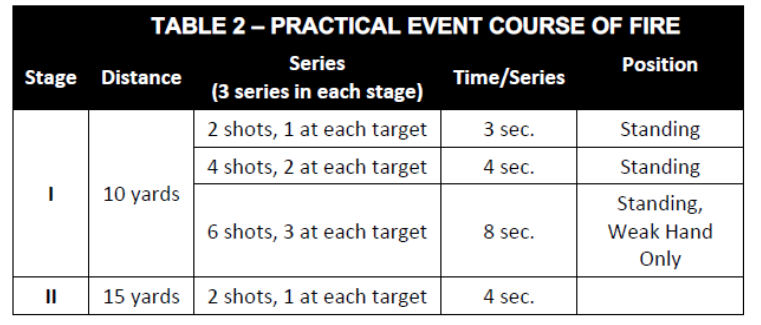
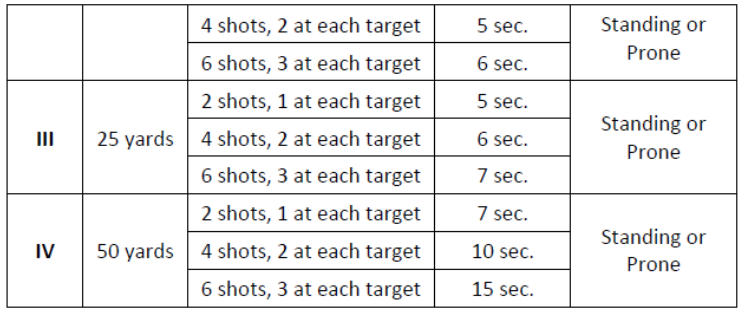
Since shooting a pistol at 50 yards would be soul crushing to most shooters, the Event I created is called the Demi-Practical, demi- meaning half https://www.merriam-webster.com/dictionary/demi-. The 50 yard stage is eliminated and the other distances are halved. This gives us a 36 round Event shot at 5 yards, 7 yards, and 12 yards. The Support hand shooting is changed to Primary hand only shooting with a time change to 6 seconds since there is no hand transfer. All shooting is done from the Standing position.
Since the AP1 is not a common target commercially, I substituted the IDPA target. Points down scoring works fine as a practical marksmanship metric. Par timing makes it easier to administer and score.
Today was a beautiful day so I took the opportunity to go shooting. My Taurus 856 snub was one of the test subjects.
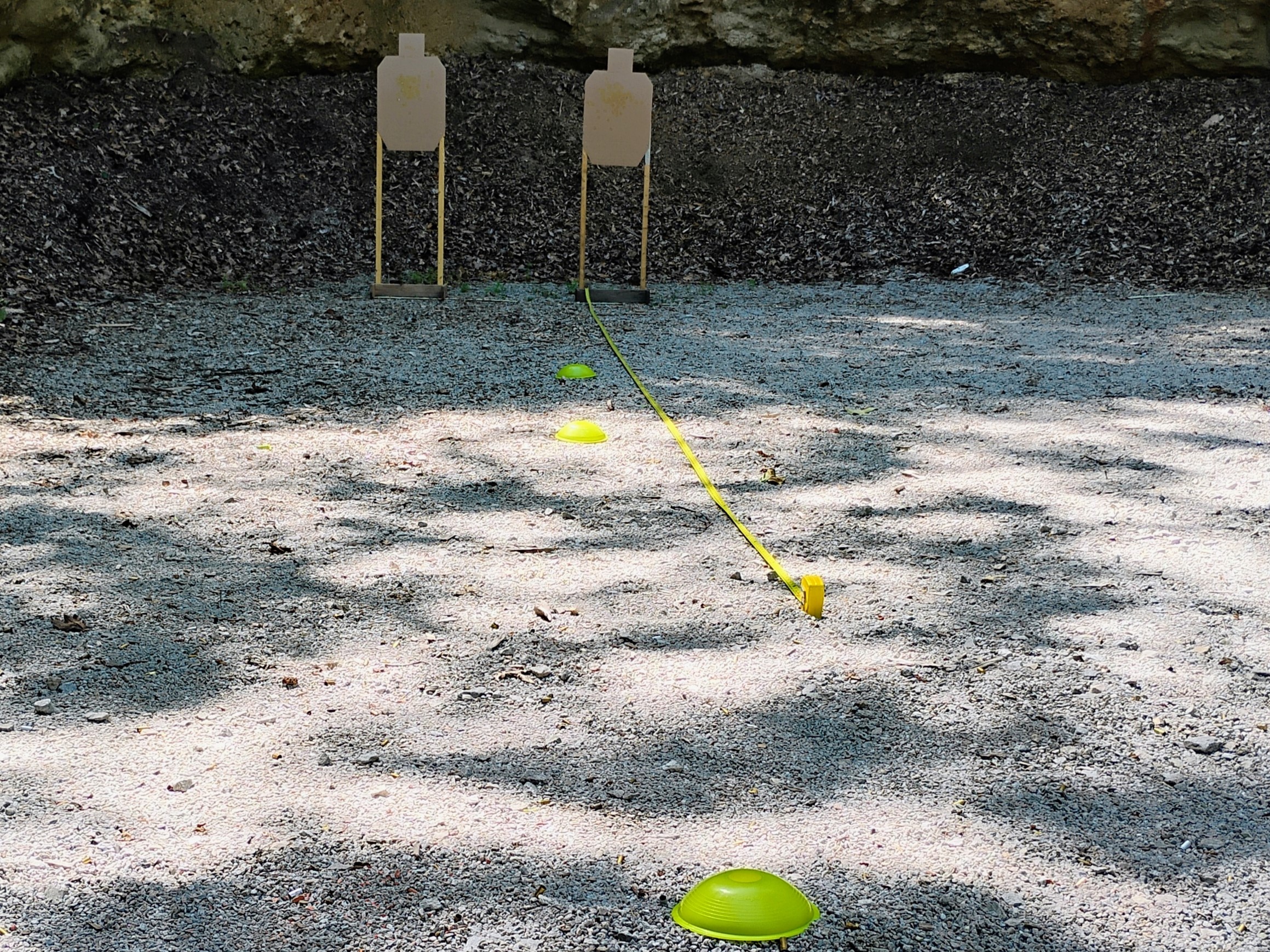
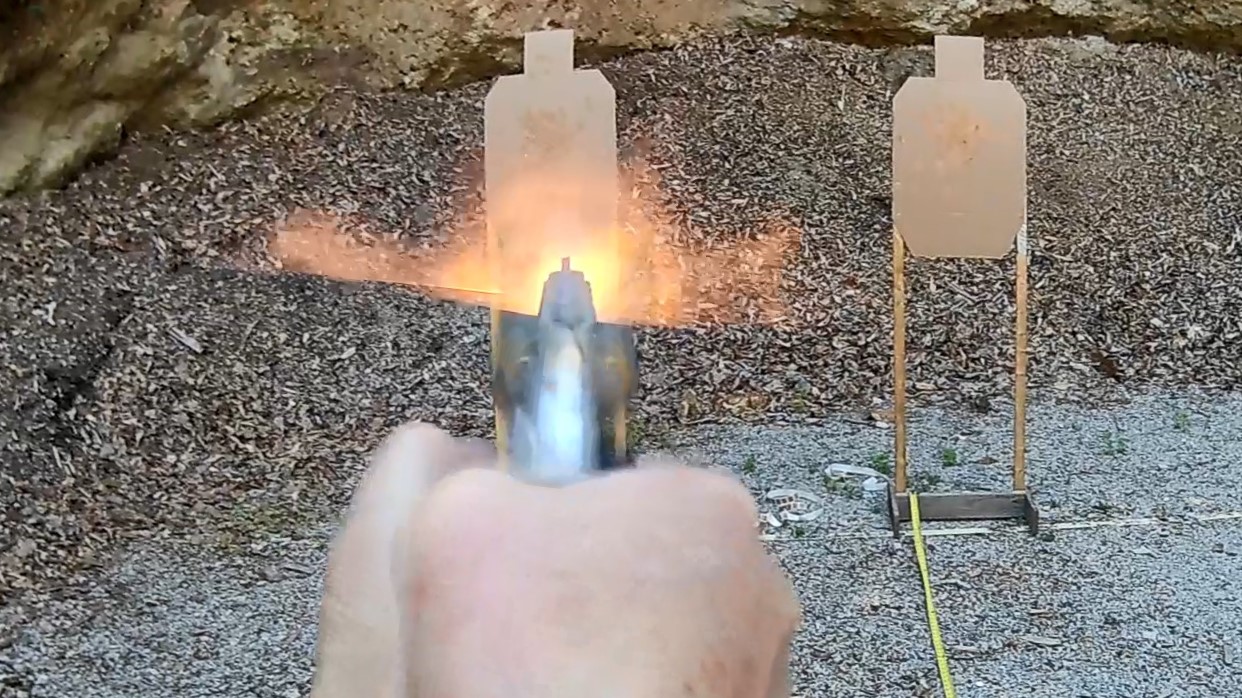
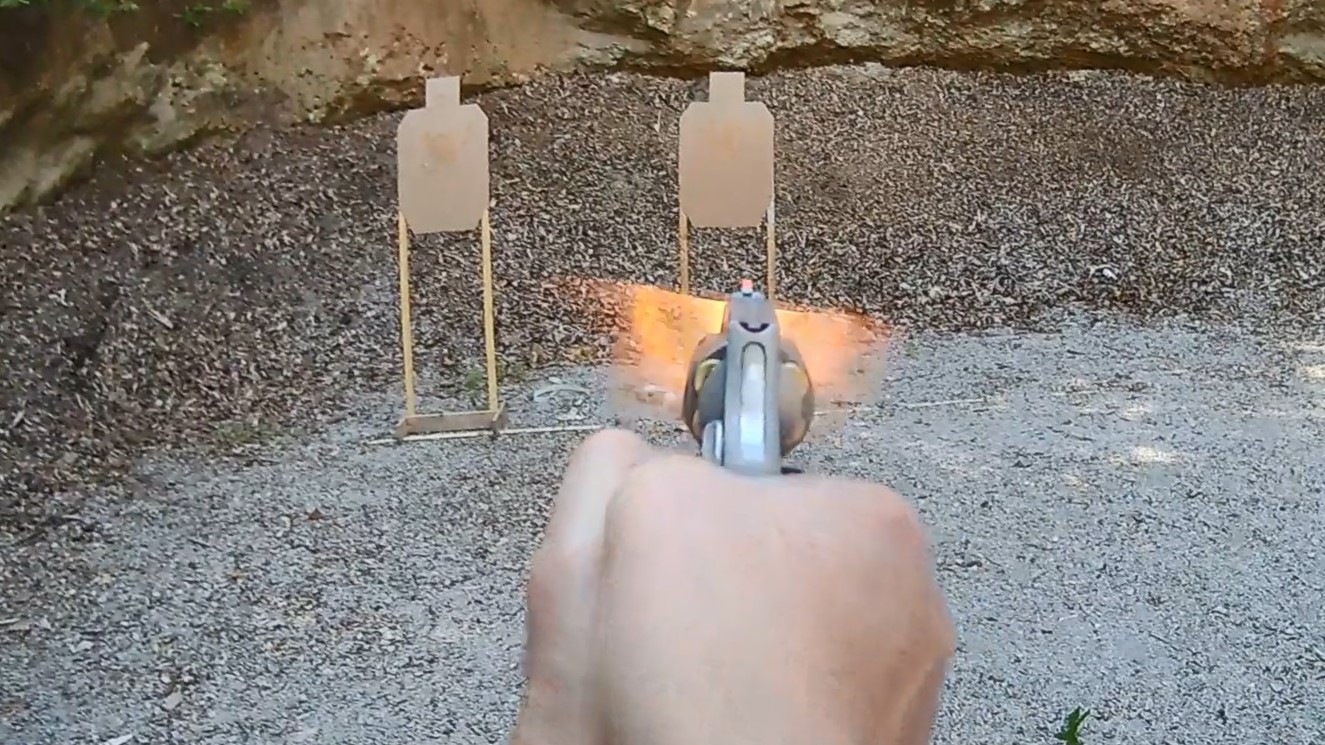
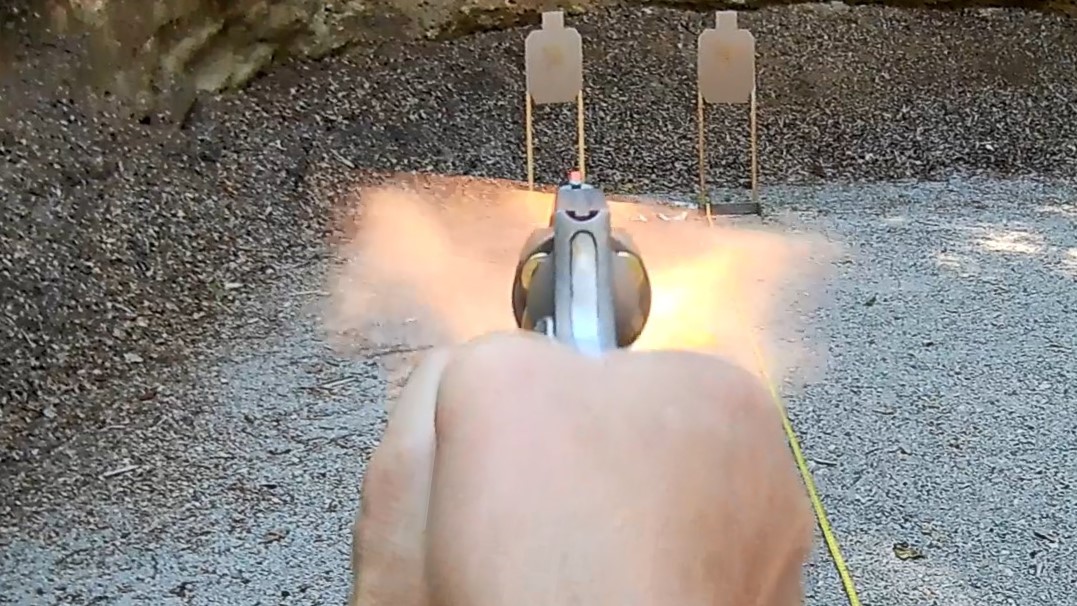
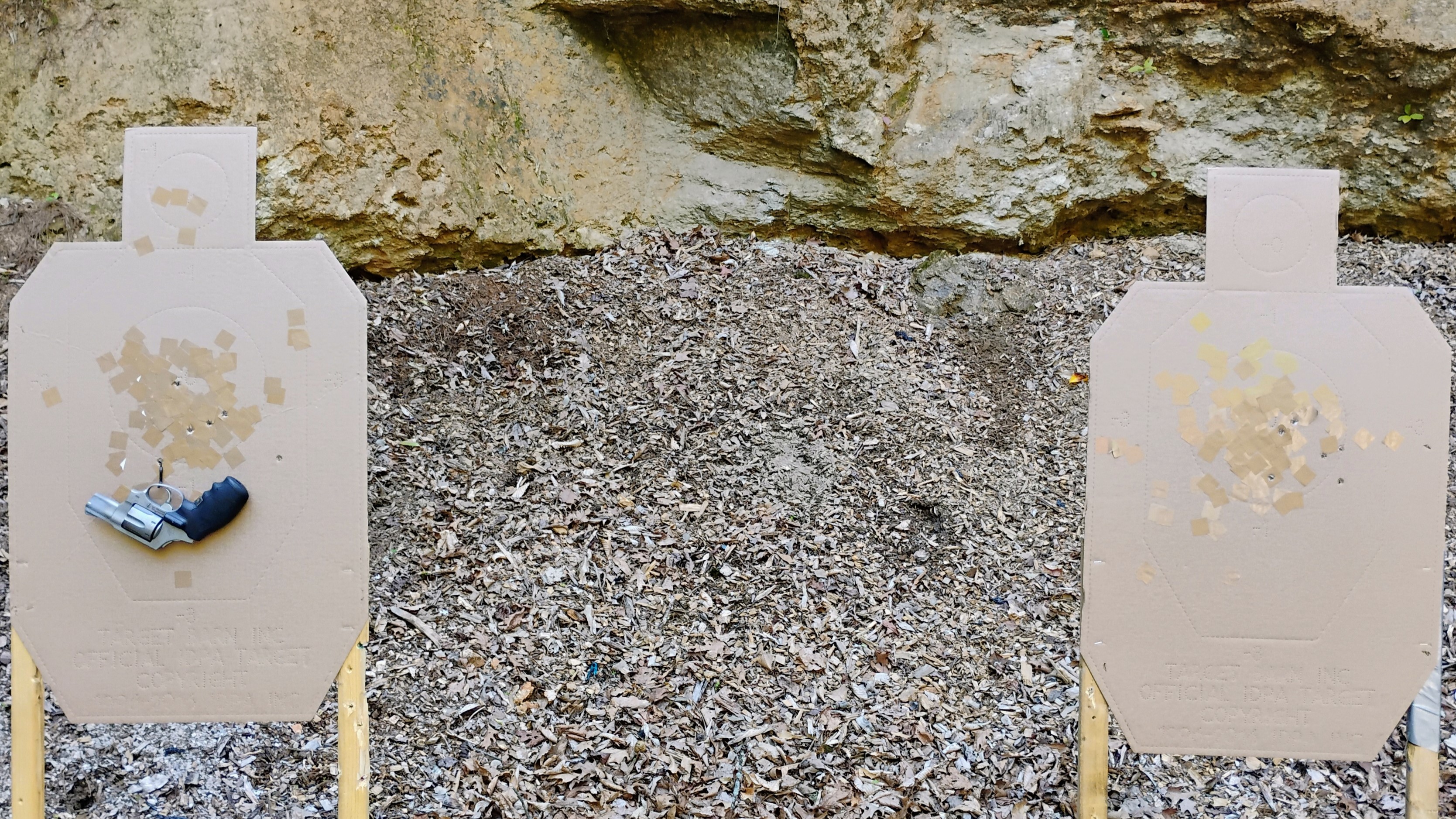
At 5 yards, I was 2 points down on the right target. At 7 yards, I was able to shoot both clean. At 12 yards, I was 1 point down on each target.
I had a good time shooting it. You might enjoy shooting it, too.
 tacticalprofessor
You must be logged in to post a comment.