Los Angeles Citizen’s CCW Taken Away
L.A. homeowner who fired on armed robbers has concealed carry permit suspended
https://news.yahoo.com/l-homeowner-fired-armed-robbers-055345708.html
It’s as plain as the nose on your face that this is retaliation. For what, you may ask?
Embarrassing the authorities on public media. Just that simple. His incident demonstrated that he was capable of protecting himself and his family at the moment of crisis and the authorities were not. By talking to the media, i.e., the local news and Colion Noir, he rubbed that fact in the faces of the Law Enforcement Agencies responsible for his and his family’s protection.
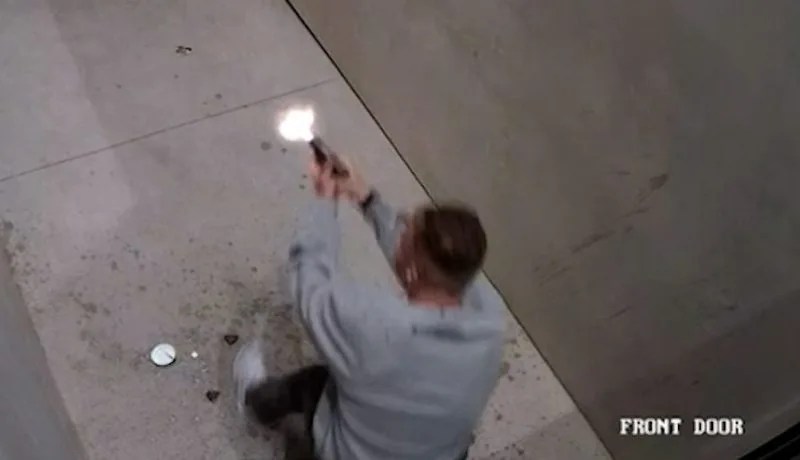
One of the benefits of belonging to a self-defense legal organization such as the Armed Citizens’ Legal Defense Network https://armedcitizensnetwork.org/ is getting to talk to someone about the incident in a confidential manner. Regardless of what organization or attorney you contact, they will undoubtedly advise against giving statements to the media. They are going to tell you to not make public statements.
After any such incident, it’s a natural desire to want to talk about it to decompress. Doing so is probably emotionally healthy. What we want to do is accomplish our decompression in a format that won’t hurt us. Talking to a lawyer is a non-harmful format. Talking to the media, even if they are neutral or well-intentioned, is fraught with hazard.
Couching your criticism with comments like “the LAPD is understaffed” or the like is equivalent to “Bless their hearts.” Then saying you’ve hired a private detective to investigate, which is tantamount to saying the authorities are incompetent, is only throwing more fuel on the fire of their future discontent. And please don’t publicly say that the investigation was sloppy, even if that’s true. NO BENEFIT. That’s just venting. Vent to your attorney not the local news.
As we can see in this incident, the authorities are not going to take kindly to a gunowner publicly proclaiming that it was the Second Amendment and not the authorities that protected them. In States that only issue Licenses To Carry because of Bruen, they’re going to look for some way to get even. Law Enforcement administrators in those States are not your friends. Don’t poke them in the eye by publicly exposing their inability to protect you.
Having to interact with the authorities after an incident is a Negative Outcome.
In its statement to KTLA, the sheriff’s department did say that Ricci’s CCW may immediately be reinstated as long as he has followed all the required policies, such as “proper notifications” and “use of [a] properly documented weapon.”
The Sheriff’s Office’s definition of “immediately” may be somewhat different than ours. Having to jump through a bunch of bureaucratic hoops to reinstate your Right to protect yourself is an undesirable interaction. Don’t put yourself in that situation, regardless of how righteous your incident was. In this case, his attackers are still out there and I wish he could carry his piece.
Calling the Shot
#Fridayfundamentals
Last week, I shot the IDPA Match at my gun club. Oddly enough, the shot I was happiest with the whole day was one I missed.
The lighting in one bay illuminated the smoke and cloudiness of each shot during the shooting. This added to the difficulty of transitioning between targets and immediately establishing a sight picture.

When I transitioned to the far left target, my view was still obscured by the smoke from the previous shot.
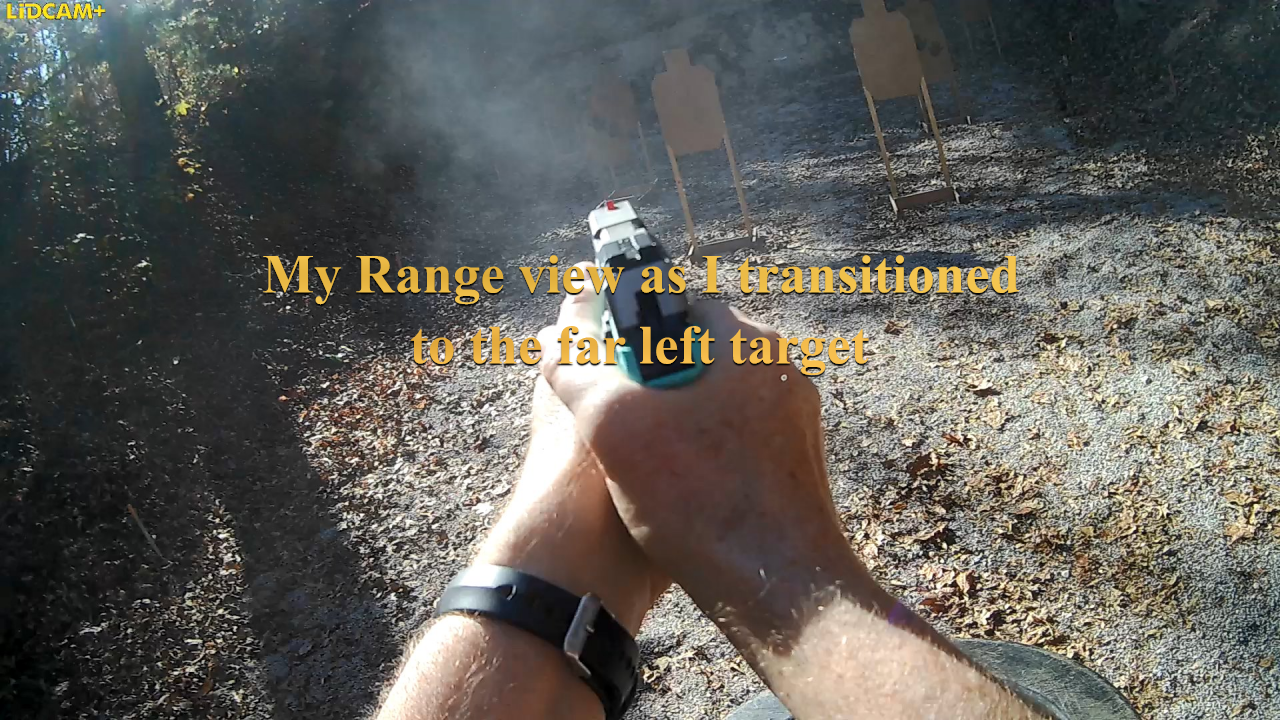
But at the moment the shot fired, the smoke had cleared and I had a decent view of my sight picture in relation to the target. I called it low and moved on.
When the targets were scored, sure enough there it was, low in the -3 Zone.

Calling that shot correctly during a challenging stage was the single best aspect of the match to me. It occurred to me later that in competition we only fire one, two, or three shots per target. Because of that, we have the opportunity to evaluate our shot calling for most of our shots. It’s an advantage competitive shooting has that never occurred to me before.
Shot calling with iron sights is an important skill to work on. When you can do it, it means you’re seeing your sight alignment and its relation to the target at the moment of the shot. That is sight picture in the moment and leads to good marksmanship.
Gunsite Glock Service Pistol
I find this development entertaining beyond measure.
A Commander style 9mm Glock with Optical sight and various other enhancements specified by Gunsite instructors.
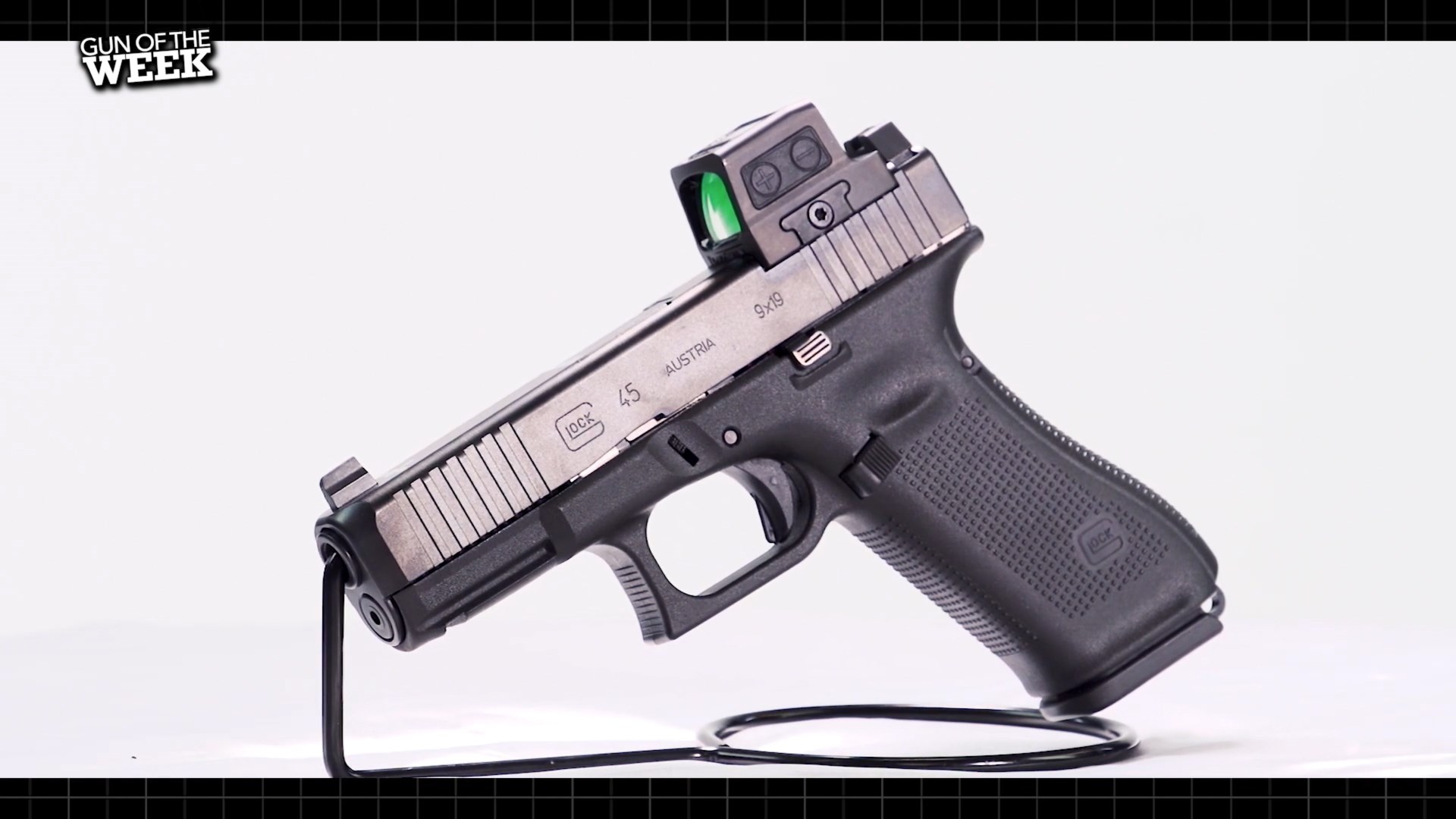
The question in my mind is whether Jeff Cooper would have embraced this concept or viewed it as a “Rooney Gun.”
But as a lady was quoted in this article about Jews taking up arms in response to anti-Semitism:
“I’ve seen the way the world is changing,” she explained. “I need to change with the world.”
I hope her training includes some commentary about Serious Mistakes Gunowners Make.
https://store.payloadz.com/details/2617872-ebooks-true-crime-serious-mistakes-gunowners-make.html
Fuddzilla
#throwbackthursday
Just missed Halloween.

I’m not wearing sweatpants, though.

I will be at TacCon next year. My topic is “Off-duty Shootouts of the LAPD.”
Empty Chamber Carry – II
#fridayfundamentals
As mentioned last week, the discussions of Empty Chamber Carry rarely include any commentary about what to do after the pistol is loaded during an incident. A simplistic explanation of what the person will do often reduces to this.
“If I don’t have to shoot, I’ll immediately download the chamber when I get back to my car.”
There are several contextual issues with this.
- The car may be some distance away. Is the person going to walk to the car with gun in hand? Or are they going to holster a loaded pistol, something that they’re not used to doing, before they walk to the car?
- Once they reach the car, are they going to unload outside or inside the car?
- What procedure will be used to unload the pistol? Doing it standing outside the car? If so, is the pistol pointing at the car or away from the car? If the idea is to unload after entering the car, is the pistol in hand when getting in, placed on the seat before entering, or holstered?
- What direction is the pistol pointed inside the car during the unload process? There is no direction inside the car that doesn’t violate Rule #2 “Never point your pistol at anything you’re not prepared to destroy.” However, pointing it at yourself is the worst possible direction.
- Has the person ever practiced their unloading procedure with dummy ammunition?
If the incident occurs while the defender is in the car, the situation becomes even more complicated. The February 2022 Armed Citizen page
of the official NRA publications contains this incident in which a woman foiled a carjacking attempt. https://www.americas1stfreedom.org/content/the-armed-citizen-january-24-2022/
Woman With Concealed Carry License Fires At Would-Be Carjackers
https://www.cbsnews.com/chicago/news/ccw-holder-fires-gun-attempted-carjacker-roseland/
“I had just come out of the bank and was sitting in my car about to lock my door to pull off [and] leave, and he opened my door and put a gun in my face”
In a situation like this, both loading the gun and later unloading it come into play. Complicating the issue is that ‘workspace’ behind the steering wheel of a car is extremely limited.
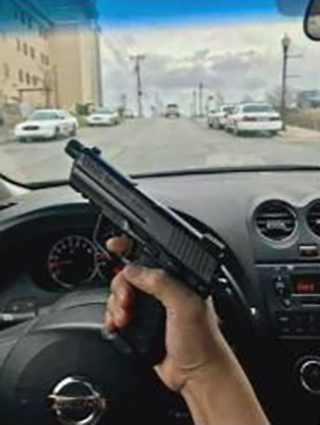
If she hadn’t fired at the carjacker and had carried Empty Chamber, she would have then had to unload her pistol. However, she fired and then went for help.
“She reversed her Nissan Versa, and pulled up right outside the Chase Bank – then ran inside for help.”
If there was no malfunction, the chamber was now loaded. She then chose to go to a place of safety, the bank she just left. Obviously, running into a bank with a gun in hand wouldn’t be a great idea. Her choices at that point were:
- Holster the loaded gun or put it back in her purse. Her carry method wasn’t specified so it’s possible she just leaves the gun in the car in general. In that case, she would only have options 3 or 4.
- Unload the gun while sitting in the car, secure it somewhere on her person, and then go into the bank.
- Run into the bank and leave the gun in the car loaded.
- Unload the gun, leave it in the car, and run into the bank.
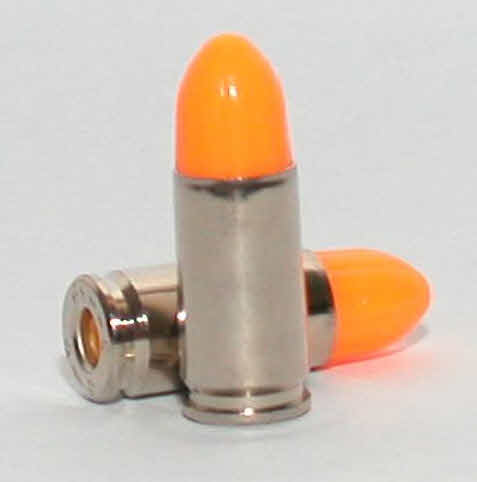
For those who choose to carry with an Empty Chamber, practice at gun manipulation is vital. Dummy rounds are a very useful training aid and every gunowner should have some. Empty Chamber carriers in particular should use them regularly to practice loading and unloading under realistic conditions.
Empty Chamber Carry – I
https://thetacticalprofessor.net/2023/10/13/empty-chamber-carry-i/
Shoot Yor Guns
#wheelgunwednesday
Before he passed away, the late Paul Gomez made a post about “Shoot Yor …. Guns.” This story is an example of why shooting your guns is important.
A couple of years ago, a colleague brought me her friend’s gun to fix. The friend said she had tried to shoot a coyote in her backyard one afternoon and the gun wouldn’t fire. It was a moderately used Model 64 Smith & Wesson revolver that had been gifted to her by a relative.

When I unloaded it and snapped it, everything seemed okay. There were three different kinds of ammo in it but none of them had a primer strike. The hammer nose protruded through the recoil shield properly so I took it to the range and fired it. It worked fine.
As it turns out, she had never fired it and didn’t realize a revolver has a heavy trigger pull. Her assumption was that the trigger pull was so heavy because the gun was broken. I cleaned it, put some proper ammo in it, and gave it back.
Just as well it didn’t fire because she lives inside the city limits of a municipality where shooting is prohibited. Unloading a cylinder of .38s probably would have brought the POlice, along with at least a citation. Also, although Georgia allows coyote hunting year-round, a hunting license is required. So it might have become a Department of Natural Resources game hunting issue. Coyotes can only be shot on your property without a license if they are attacking, which this one was not.
Moral of the story: don’t assume your gun works or that it will work for you until you’ve fired it. It’s also good to know the law about shooting animals, which is not as simple as people think. That’s true regardless of whether the animal has four legs or two.
Click on the image below for more information about shooting two legged animals.
Empty Chamber Carry – I
#fridayfundamentals
Empty Chamber Carry is strongly opposed by the US private sector training community and the ‘cognoscenti’ of the firearms community. However, carrying with the chamber empty is still a very common practice by large swathes of gun owners. Regardless of opposition to the concept, it is what it is. Some discussion beyond “Don’t Do It” is in order.
This is the first in a series of Fridayfundamentals posts about carrying with an empty chamber. The series is intended neither to advocate nor oppose empty chamber carry but rather to discuss aspects of it not typically examined. A sidenote is that many aspects of the discussion also apply to hammer down carry (Condition Two) with 1911 pistols but that is for another time.
First consider the advocates of carrying with an empty chamber.
- Fairbairn/Sykes in Shooting To Live.
- Israeli military/POlice, although it’s reported that this has relaxed in the past decade.
- Many foreign militaries and POlice forces.
- The US Army until the publication of the May 2017 version of TC 3-23.35 Pistol.
As one commentator noted when the May 2017 TC was published:

Since many people do carry with an empty chamber, let’s work with what we’ve got from the standpoint of instruction.
The single biggest problem with the method is the technique that new gunowners usually employ to load the chamber. The most common technique seen is to hold the pistol in the shooter’s workspace and pull the slide inward toward the body and out of the workspace. Most often the slide is held during the entire operation, retarding the strength of the recoil spring.
This is exactly opposite of what needs to occur. Pulling the slide inward significantly increases the possibility of not fully loading the chamber. This could be a disaster. At least one surveillance video shows an armed robber whose pistol didn’t load completely, which led to his demise.
Here’s a graphic from TC 3-23.35 that illustrates the workspace and its relationship to pistol operation.

Both Shooting To Live and the classic Israeli technique advocate holding the pistol in the workspace and then pushing the pistol forward to the outer limit of the workspace. The slide is held in place while the pistol is pushed outward.
Here’s a series of updated sketches from Chapter 3 of the edited and annotated edition of Shooting To Live that I will be publishing this year. A number of the original Shooting To Live sketches had to be redone due to finger in the trigger guard violations.


Similarly, the classical Israeli technique is to hold the pistol parallel to the ground in the workspace. The slide is held stationary and the pistol is pushed forward toward the enemy and fired.
Note that both Shooting To Live and classic Israeli use the slingshot method of grasping the slide rather than hand over the top of the slide.
The discussions of Empty Chamber Carry rarely include any commentary about what to do after the pistol is loaded, regardless of whether it is fired or not. One of the few comments ever seen was “If I don’t have to shoot, I’ll immediately download the chamber when I get back to my car.” Downloading or unloading afterward is an important enough topic for Shooting To Live to include it as part of the initial 30 round Recruit Training Program. Chapter IV states:
“In all practices at surprise targets, opportunity must be found for the performance of two very essential operations. In order of importance, these are:—
1. Making safe after firing only a portion of the contents of the magazine.
2. Inserting a second magazine after totally expending the contents of the first and continuing to fire without delay.
In the first instance, after firing one or two shots from a fully charged magazine, the instructor should give the order to cease fire. The shooter should then come to the ‘ready,’ remove the magazine, eject the live round from the breech, work the slide back and forth several times and finally pull the trigger, all as described [in] (Figs. 9 and 10).”
Note the order of importance Shooting To Live placed on unloading and reloading. Making the pistol safe after an incident was considered of greater importance than reloading during an incident. It’s probable to assume this priority came from their observation of hundreds of gunfights. Concerns and technique for After Contact actions will be covered in the next post.
Wedding officiant accidentally shoots grandson
#safetySaturday
“It was a blank,” Houchin said in response to a question from a local reporter. “What it was is: it was a .45 Colt ammunition. What he did was put black powder into the casing and then glued it. And what we believe is the glue is what injured the child.”
Actors Brandon Lee and Jon-Eric Hexum both died from blanks fired while filming.
After Alec Baldwin shot and killed his cinematographer on set, Hollywood weapons expert Larry Zanoff commented about blanks.
“[T]here is a minimum safety distance of 20 feet in front of the muzzle because even with a blank, smoke and burning embers can get propelled out of the gun. There should be nothing in front of it when filming is occurring with firearms.”
It was reported that the weapon fired at the wedding was a Pietta 1860 snub nose revolver with a .45 Colt conversion cylinder.
“When he decided to cock back the hammer of this revolver it slipped and it shot his grandson in the left shoulder, causing an injury,” authorities said.
Firearms are relentlessly unforgiving of the slightest lapse in attention or competence. The shooter has probably been ‘shooting for years.’ Unfortunately, as is sometimes said of the law enforcement profession:
“Some people have 20 years of experience and some people have one year of experience 20 times.”
This happening was eerily similar to an incident several years ago in which a father accidentally killed his teenage son at an indoor range. https://www.cnn.com/2016/07/04/us/florida-father-shoots-son/index.html Fortunately, the consequences of the Texas misadventure were not quite as tragic.
If you would like to learn more about Serious Mistakes Gunowners Make and the Negative Outcomes that result, please buy my ebook.
Follow through – Practical Application
#Fridayfundamentals
An excellent article was recently published on the Shooting Illustrated website about follow‑through. https://www.shootingillustrated.com/content/head-down-follow-through/?utm_source=newsletter It’s well written and worth reading.
Two practical demonstrations appear in LAPD Incident NRF 032-23 https://youtu.be/zydZUuqQahI?si=-6a3KLf00_rvn7x2 The amount of video in the LAPD’s YouTube Critical Incident Community Briefing allows us to observe the marksmanship aspects in depth.
Two officers were actually involved in the shooting. The officers were armed with two different weapon systems. The first to engage had a 40mm Less-Lethal (Blue Dildo) Launcher. The second officer used his Glock service pistol.
It’s unclear if the first 40mm foam round hit the perpetrator but it is clear that the second round fired went low and hit the hostage the assailant was holding down.

One possibility for the low hit is lack of follow through. A 40mm round has a muzzle velocity of 235-260 feet per second, far lower than a firearm. The Launcher has a barrel length of 14 inches. And the munition is visible in flight. This combination makes the Launcher more susceptible than a firearm to being pulled low off the target if the shooter doesn’t use good follow through.”
Corresponding with the author of the Follow-through article, he opined:
“the officer with the 40mm [may have] made the critical error of lifting his head to look for the impact/result before he even fired.”
This is a better elaboration of the “munition visible in flight” aspect than I had originally made in my Patreon posts about the incident. The author also felt the officer may have failed to account for the difference of point of impact from using the Red Dot Sight at close range. If the first shot also went low that would likely be true. If the first shot hit and the second shot missed it wouldn’t necessarily be true. Unfortunately that’s hard to tell from the video available.

The single shot aspect of the Launcher could also have been a factor. Desire to get a single shot weapon reloaded does not enhance our execution of follow-through.
The second officer demonstrated good follow-through while shooting his Glock. When his first shot missed, he was able to assess and fire a second shot without hesitation because he was still on target.
Whether shooting a long gun or a pistol, follow-through is extremely important. Pistol shooters often immediately drop their guns below the line of sight to see where the bullet impacted. This is a bad habit to be scrupulously avoided.
If you would like to read more extensive analysis of this and other incidents, or if you would like to become a real shooter with aim, please follow my Patreon page. https://www.patreon.com/TacticalProfessor
Taurus 856 Iron Sights v. Laser Comparison
#wheelgunwednesday
Taurus had a screaming deal for 856 revolvers on its website last month. The deal was a Viridian Laser Stock (Grip), Boltaron (Kydex) holster, and two HKS speedloaders for $139. I’m a believer in laser stocks for snub revolvers so I decided to take advantage of the deal and purchased it. I also purchased an Ameriglo front night sight but haven’t installed it yet. FTC note: I made this purchase with my own money, no manufacturer giveaway.
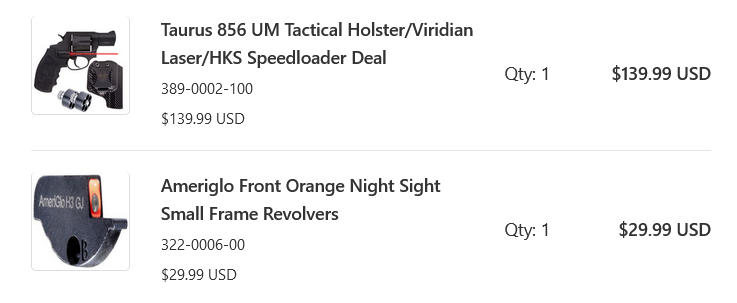
This Viridian laser has the activation button on the front of the stock so when the revolver is gripped, it comes on. This is a far superior system to having to manually press a button to turn the laser on. The stock is also slightly longer than the factory stock so it provides a full three finger grip.
Installing it requires driving out the roll pin that holds the factory stock in place. Once the pin is out, the laser stock is secured via three screws. Pro-Tip: put the bottom screw that goes through the roll pin hole in the frame first. It was relatively well zeroed as it arrived but I later zeroed it at 7 yards when I got to the range.
The UM Tactical Holster was much better than I had anticipated. I thought ‘UM’ meant it was an offshoot of Uncle Mike’s but that assumption is incorrect. It fits the 856 well and the clip holds it securely on the belt. I loosened the tension slightly so that when the holster is held upside down the gun doesn’t come out but it draws easily.
The HKS Speedloaders were the Model 10 developed for the K frame S&W revolver many years ago. Two were included.
To make a comparison of the capabilities of the laser vis-à-vis the iron sights, I did a range trip. The evaluation protocol was the Nevada Concealed Handgun Permit Qualification Course, which is one of my favorite practice structures. It consists of 30 rounds fired at 3 yards (6 rounds), 5 yards (12 rounds), and 7 yards (12 rounds). The evaluation consisted of splitting it in half, shooting one half (15 rounds) with the laser on and one half (15 rounds) with the laser off. I broke the course into several strings for each distance and timed each string.
3 yards – 1 shot from the Holster, 1 shot from Low Ready, and 1 shot from Retention. Three rounds for each sighting system.
5 yards – 2 shots from the Holster, 2 shots from Low Ready, 2 shots from the Holster Primary Hand Only. Six rounds for each sighting system.
7 yards – Repeat the 5 yard sequence at 7 yards.
It was a cloudy afternoon not bright sunlight. I had no trouble seeing the laser dot at 7 yards on the USPSA Metric targets I used. Each system had a separate target.
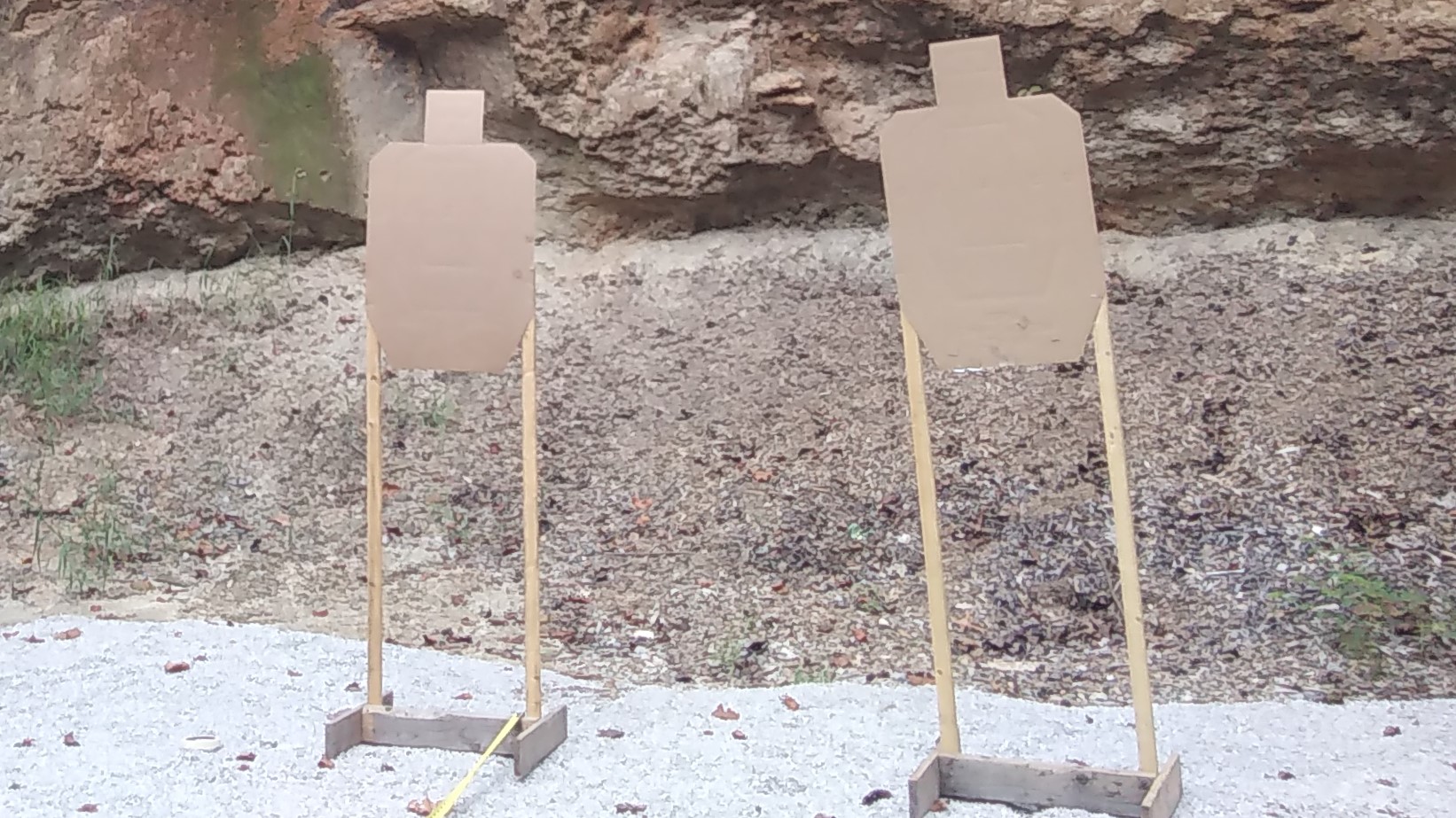
For scoring, I divided the A zone in half. This gave an A zone of 6 inches wide by 5.5 inches long. Hits in the lower part were counted as B hits. This is a scoring system the late Todd Louis Green https://pistol-forum.com/ suggested and I like it. It’s more rigorous than the IDPA -0 zone. The time for each string was recorded.
The results of both sighting systems were then overall Comstock scored. https://www.ssusa.org/content/understanding-uspsa-comstock-and-virginia-count/ This means points achieved divided by shooting time. The results were interesting. The Iron sights had a Comstock score of 4.33, while the Laser had a score of 4.29. Not a significant difference and the laser was not nearly the disadvantage in daylight that’s popularly assumed.
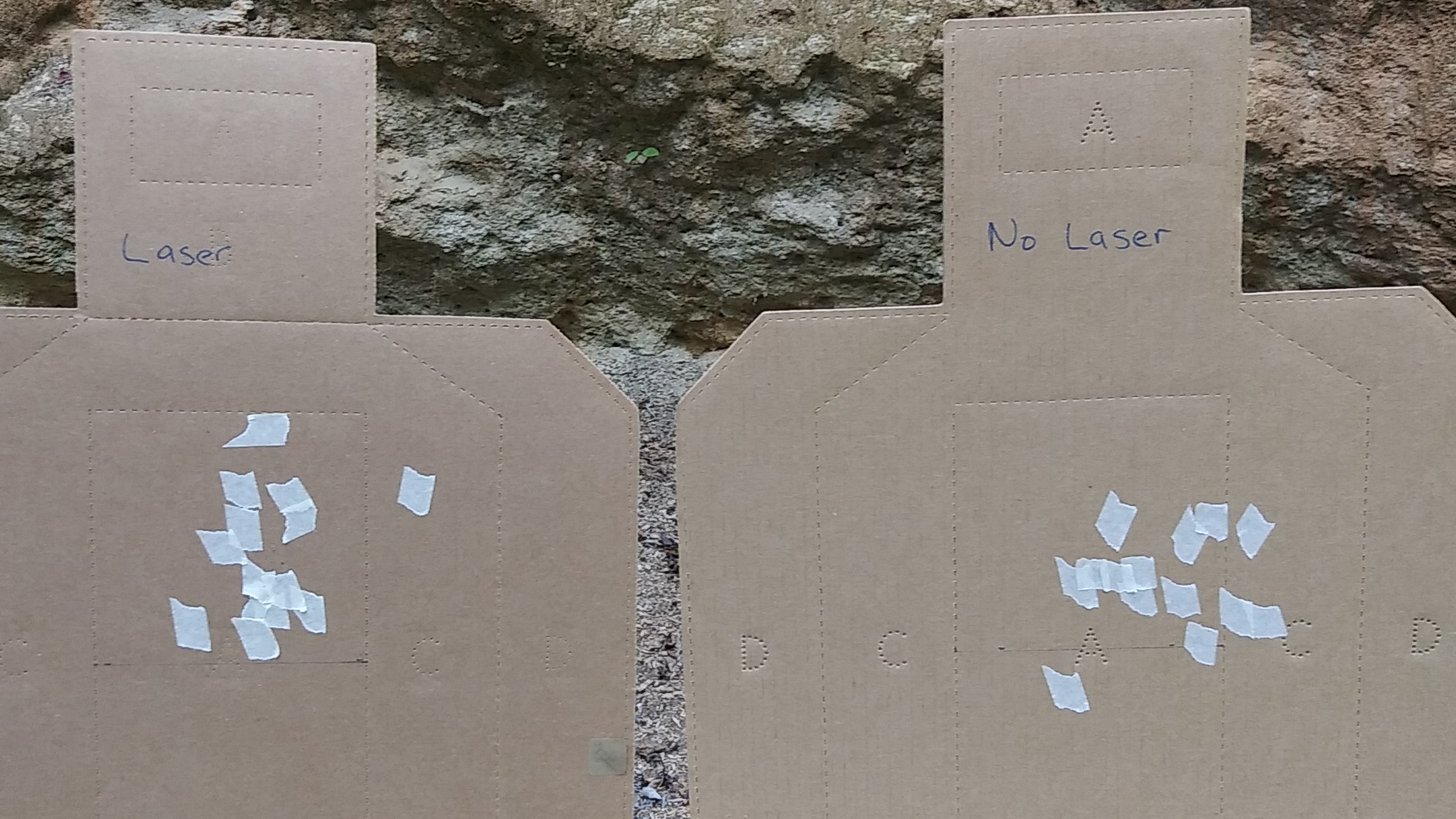
The next phase of my evaluation will be to shoot the same protocol in bright sunlight and at dusk. Those results should provide some interesting contrast.
With regard to the holster, I found it to be quite satisfactory. My only observation is that because the gun and holster is so short, the butt of the gun tends to droop forward and reduce my concealment. On the way home, I stopped at Arbol de Dolares to purchase La Chancla https://www.npr.org/sections/codeswitch/2014/11/04/361205792/la-chancla-flip-flops-as-a-tool-of-discipline . I’ll cut a piece of the flip-flop off to glue onto the back of the holster as a pad, a la Keepers Concealment. https://keepersconcealment.com/
Overall, I very pleased with the results. This makes about 700 rounds through the 856 with no issues. The laser worked well and the holster is satisfactory. A good EDC that I’m comfortable with.
 tacticalprofessor
You must be logged in to post a comment.