Testing A New Gun
#wheelgunwednesday
As I work on the updated Second Edition of Serious Mistakes Gunowners Make, a chapter I’m adding is ‘Not Testing Your Gun.’ Several industry surveys indicate that the average gun purchaser fires less than a box of ammunition through it, perhaps only a cylinder or magazine. However, this is an average and many people never fire their guns at all. Legacy guns, i.e., inheritances and passed down guns, are probably even worse. Not knowing if your gun works or if you can make it work is a Serious Mistake.
One client of mine thought her gun, a S&W revolver, was broken because she couldn’t pull the trigger. When I examined it, there was nothing wrong with it. She just didn’t have the hand strength to pull the trigger. This was fortunate because she found out when she tried to do some shooting that would have been unlawful. Not knowing the laws about shooting is another Serious Mistake but that’s for another post.
Two other clients had revolvers, one cheap and one a nice S&W snub, that wouldn’t fire when they came to the range with me. This was a bit of a shock to them. They shot my revolver adequately but both had to get their revolvers repaired before they were serviceable. Yet another client had a nice S&W Model 36 but had never gotten around in four years to purchasing any ammunition for it. After an attempted burglary, her boyfriend called me to ask if I ‘had any spare bullets.’
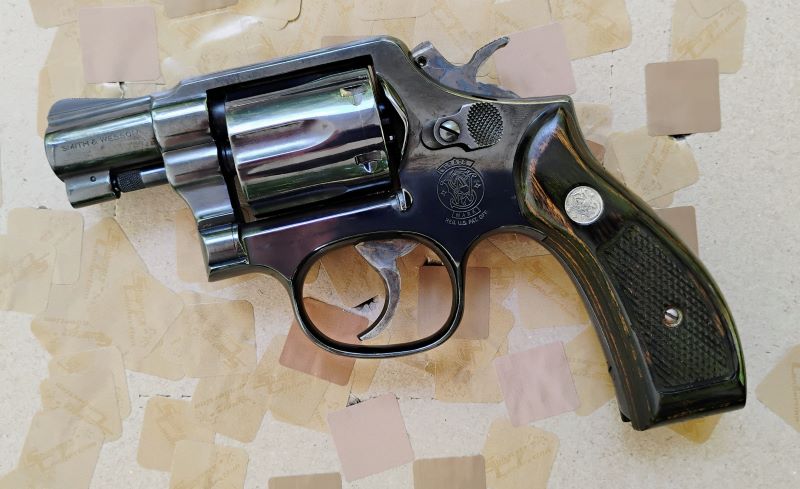
Yesterday, I was able to acquire in a trade a nice S&W Model 10-7 snub. The first thing I did was to head to my gun club to test it. Not only for functionality but also to find where various loads hit because it is a fixed sighted gun. Different bullet weights and velocities can result in a gun hitting at very different points of impact. If the only thing someone is concerned with is hitting a full size Q target at four yards, e.g., the New York State Concealed Carry License Live Fire Proficiency Assessment, https://troopers.ny.gov/minimum-standards-new-york-state-concealed-carry-firearm-safety-training it’s not a big deal. If the target is obscured behind a car 17 yards away and is shooting at you https://www.patreon.com/posts/armed-citizen-132185205, where the bullets hit becomes more important.
There were three loads that I tested; 158 grain Fiocchi FMJ, 130 grain Remington UMC FMJ, and the last of my 148 grain lead Winchester SuperMatch wadcutters. The test protocol was my Old West Shootist’s Challenge. https://thetacticalprofessor.net/2025/02/05/shootists-challenge-the-final-word/ To it, I’ve added a second string inspired by Marty Robbins’ song Big Iron. “There was 40 feet between them when they stopped to make their play.”
The Shootist’s Challenge now consist of two strings, one at 25 feet and the other at 40 feet.
1) Six shots, 10 paces (25 feet/8 yards), Primary Hand Only, Untimed.
2) Six shots, 40 feet/13 yards, Two Hands, Untimed.
All shots must hit in the large (5 inch) square, one must hit the center (1 inch) stamp.
The Remington 130 FMJ seemed to give the best results.
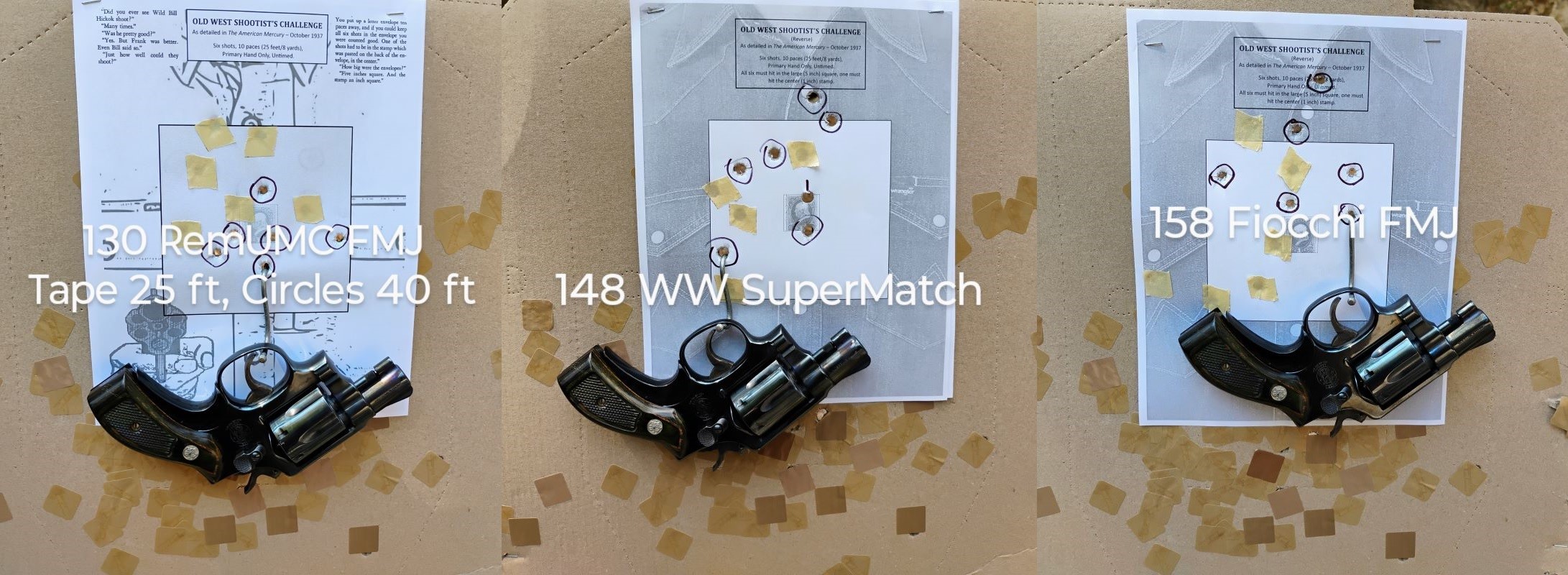
As I texted to my colleague Chuck Haggard https://agiletactical.com/, “I care a lot less about Magic Bullets than I do about hitting right.”
An interesting thing occurred while shooting the Winchester SuperMatch. One of the rounds had a high primer and simply would not come under the recoil shield. This is why czeching ammo that’s intended for serious social purposes is so important. SuperMatch was considered to be a very high quality ammo in its day but here was a round that couldn’t be made to fire.
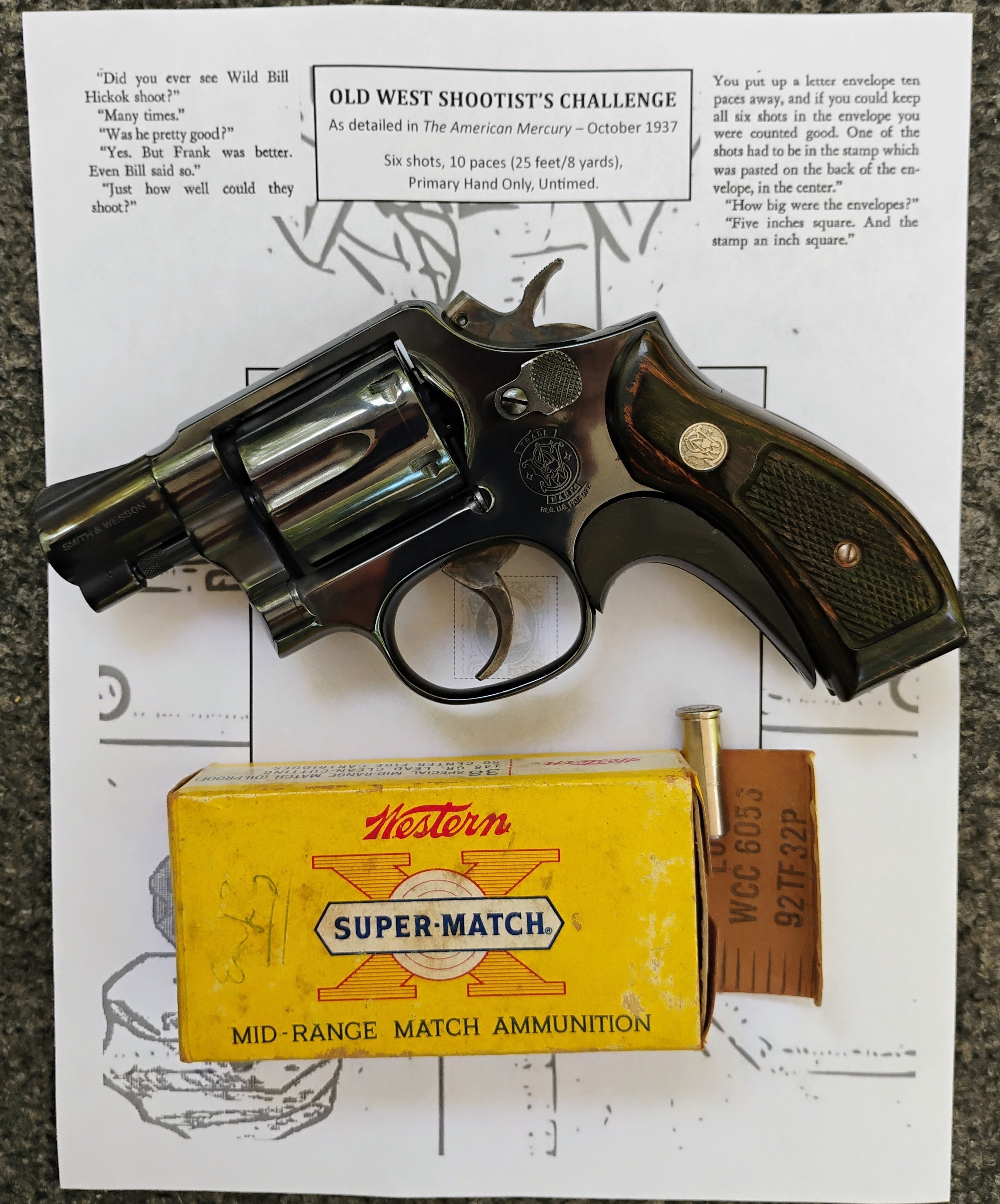
The next test was the Washington State Basic Covert Carry/Off-Duty Proficiency Course.
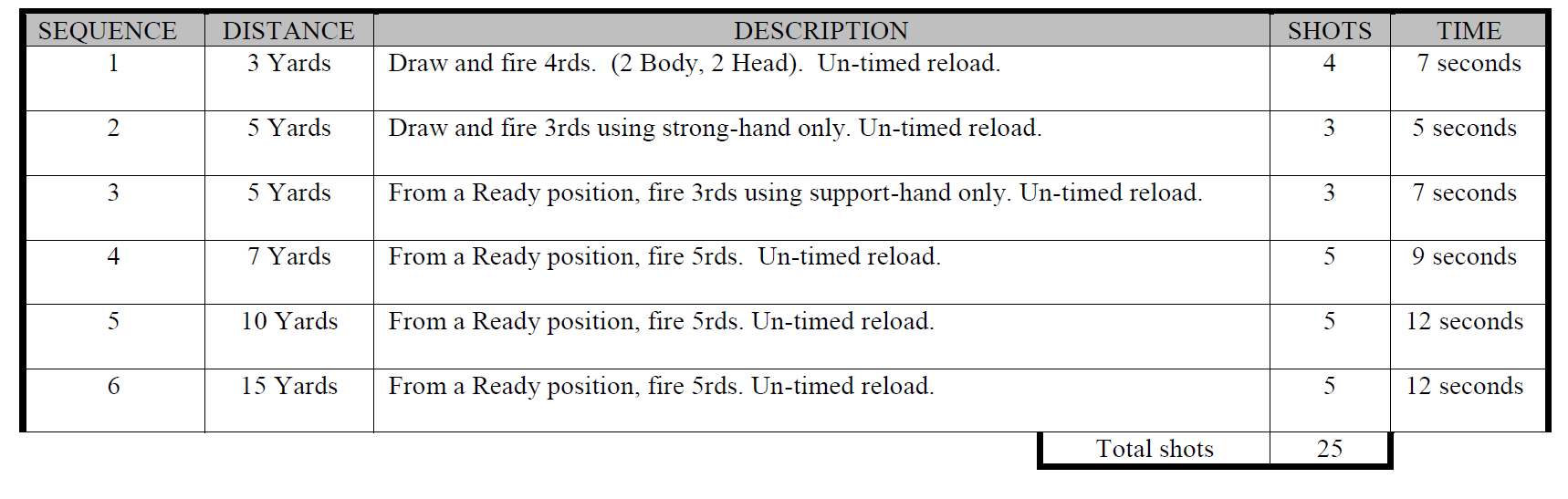
This is a good course for carry revolvers and is 5 shot friendly. The times aren’t particularly demanding but they’re not a total piece of cake either. A good aspect is that it requires shooting with Primary Hand Only and Support Hand Only. I’ve had a client who couldn’t pull the trigger of her revolver with her Support Hand. That’s a problem.
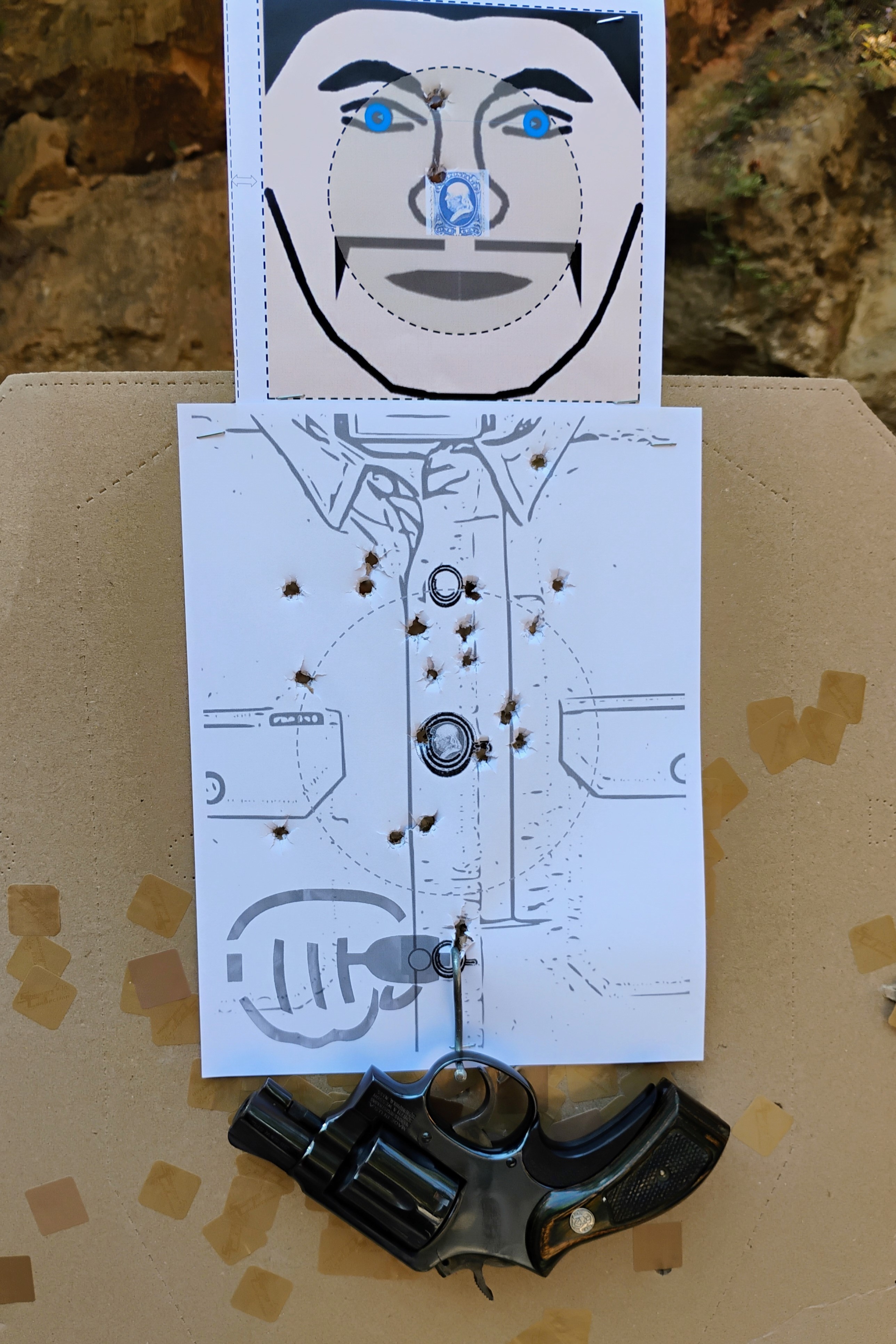
Finally, I shot the IDPA 5X5 Classifier.
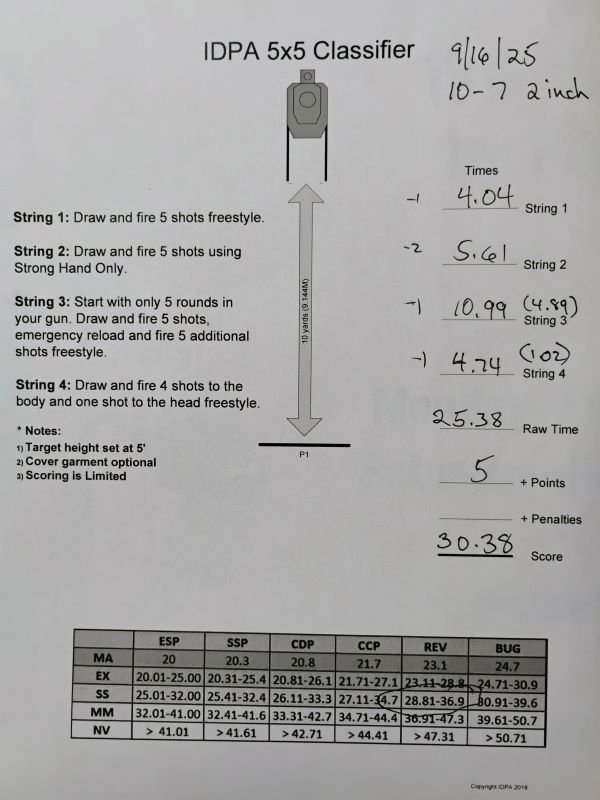
The light was changing and as can happen, it affected where my rounds impacted. This is because it changes the sight picture.
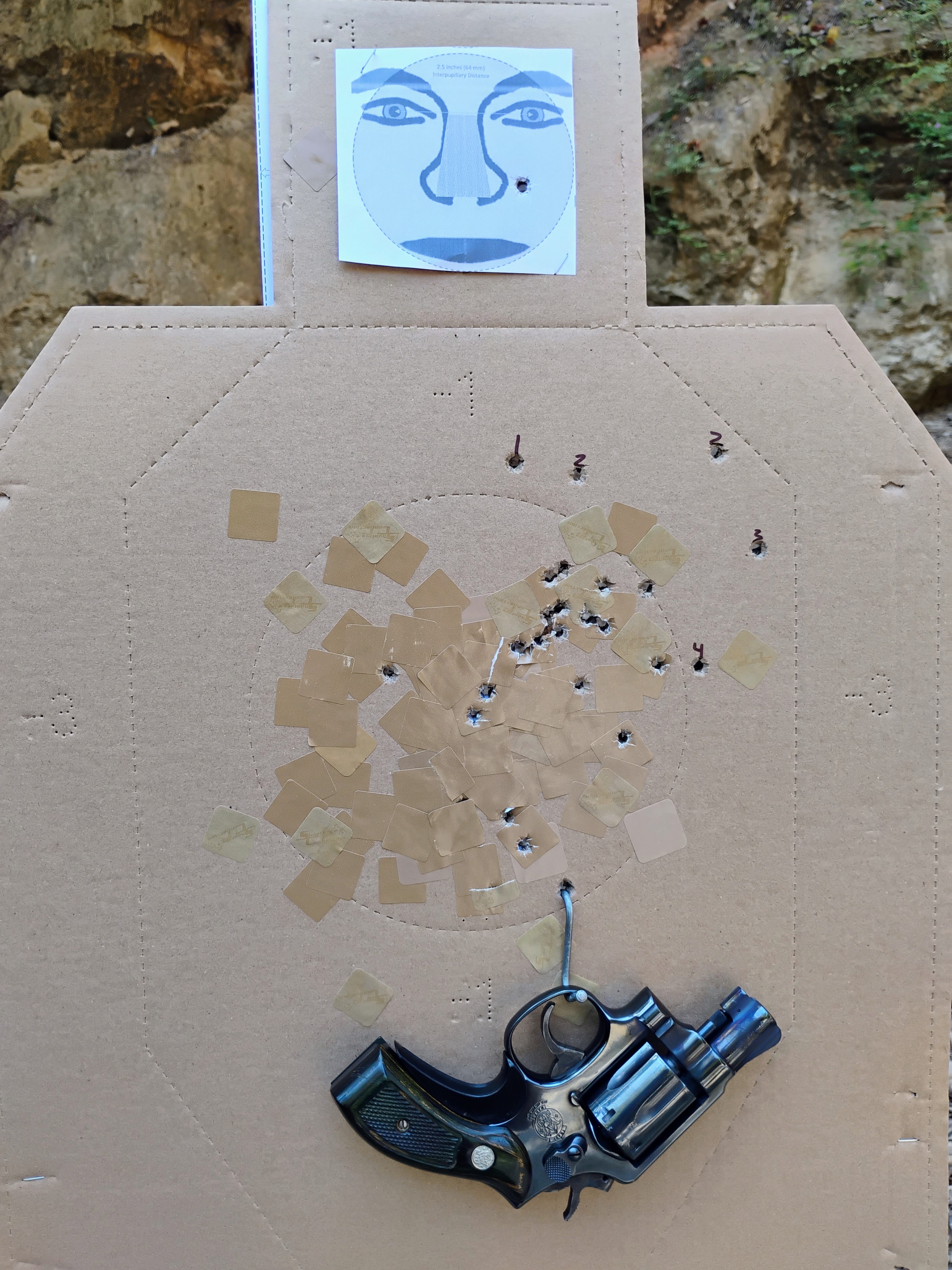
It’s probably not necessary to test fire a gun to this extent but at least knowing it will fire is a worthwhile exercise. It’s also important to know what the recoil is like. An incident occurred in Florida years ago in which a woman had a revolver she had never fired. When she fired it, it flew out of her hand. Things didn’t go that well for her after that. I’ve had a similar experience when a friend’s wife wanted to shoot my Charter Arms .44 Bulldog. It flew out of her hands and knocked her back. If I hadn’t caught her, she would have fallen flat on her back.
As the late Paul Gomez was fond of saying, “Shoot Yor Guns!”
If you would like to read more in-depth information about shooting and personal protection, consider subscribing to my Patreon page.

Close Quarters Handgun Training
My latest Shooting Illustrated article is posted.
https://www.shootingillustrated.com/content/close-quarters-handgun-training/
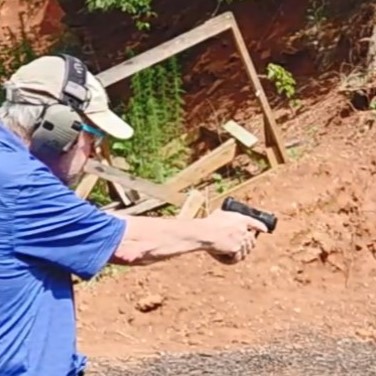
The topic is the ‘Close Quarters Handgun’ class I attended last month. It was taught by Chuck Haggard of Agile Training https://agiletactical.com/ and hosted by The Complete Combatant https://www.thecompletecombatant.com/.
Fair disclaimers up front: Chuck, Shelley, and Brian are all dear friends of mine and I didn’t pay for the class; in fact, Chuck picked up my range fee. Furthermore, I shot the class with the HK CC9 https://hk-usa.com/cc9/ that HK gave me. Chuck called it my “stubby gun,” which it is. Almost everybody else was shooting full size service pistols, most with Red Dot Sights. That said, nobody is paying me for my comments.
If you are interested in more in-depth commentary about shooting and Personal Protection incident analysis, please consider subscribing to my Patreon page. https://www.patreon.com/c/TacticalProfessor
Final SCCY Report
Now that SCCY Industries https://sccy.com/ is out of business, it’s probably moot but some thoughts about my experiences with the guns are in order.
My first SCCY was provided to me in 2015 at no cost as a Testing and Evaluation sample. It was produced in 2014, as best I can tell by the serial number. At the time it was furnished, I was doing my second iteration of 1,000 Days of Dry Fire and I used it extensively for dry practice. I also eventually fired about 1,600 live rounds through it. The firing pin broke after about 10,000 dry snaps. During live fire, I had two Failures to Feed between 400 and 500 rounds. No other malfunctions. The ejector broke about the 1200 round mark but it still ejected, just sluggishly and erratically. In both cases, SCCY serviced the pistol and it then ran fine.
Last year (2024), I purchased a SCCY Gen 3 with my own money because I wanted to see what the upgrades had been. This time, it was a disappointment. The gun had a Failure to Chamber every 25 rounds. I traced this to sharp edges around the chamber mouth. SCCY sent me a new barrel and two more magazines, gratis, but the chamber in it had very noticeable machining rings. I didn’t know if it would work but installed it anyway.
A couple of months ago, I purchased an early production used Gen 2, produced in 2013, for $80 at a local range. The trigger on it was much better than my original Gen 2. Whether it has the original mainspring or a replacement, IDK. It had occasional Failures to Eject. The source of those Failures turned out to be a broken ejector. I bought a replacement on eBay and installed it.
For Memorial Day, in remembrance of my Army friends who are dead, I took all three to the range and practiced the destruction of the enemies of our great Nation. Since I’m going to be teaching the NRA Defensive Pistol Course https://www.nrainstructors.org/CatalogInfo.aspx?cid=41 for a Private lesson soon, the Course of Fire I chose was the DP Qualification Course. It consists of 34 rounds fired at distances of 3 to 10 yards. I shot it once with each of them.

All three SCCYs made it through without a malfunction. That’s not a 10,000 round torture test but probably more than 99 out of 100 gunowners will ever fire their handguns. Although they’re not target pistols, they all were sufficiently accurate to group in the eight inch 10 ring of the NRA AP-1.

Bottom line of the whole exercise is that when purchasing a pistol, shoot at least a box of ammo through it to be sure it works. Preferably a structured and measured session. Feeling the trigger and knowing the results it can produce is useful. Inspect the pistol for broken parts after shooting it. My colleague, the late Paul Gomez, was fond of saying “Shoot Yor Guns!” and that’s good advice.
Open Carry v. Doofus Carry
A video is circulating on the Interwebz now about an unfortunate situation in which a man’s gun was snatched from him in a gas station. He chased the thief and was subsequently shot with his own gun.
Although I am not a fan of Open Carry, let’s analyze the situation in a little more depth. The proximate cause of the snatch was that he simply stuck his gun in his back pocket unconcealed and then walked into a crowded environment where a bunch of lowlifes were coming and going.
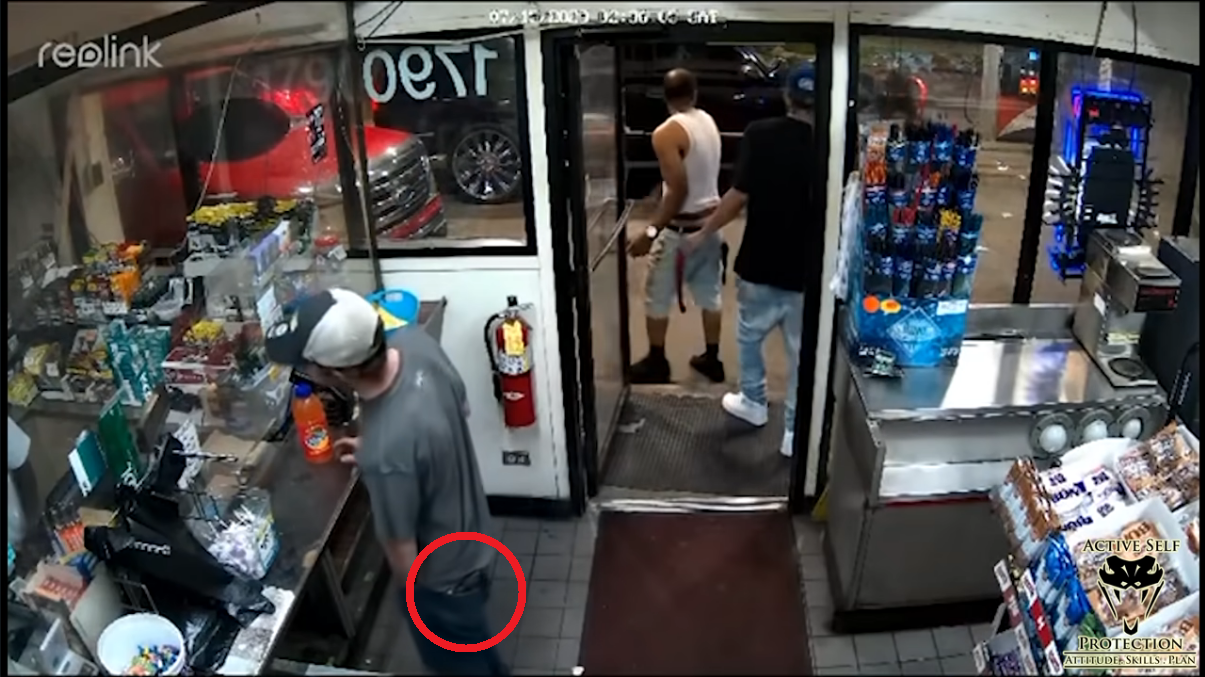
As a result, a ne’er-do-well nonchalantly walked up behind him and simply grabbed the gun out of his pocket.
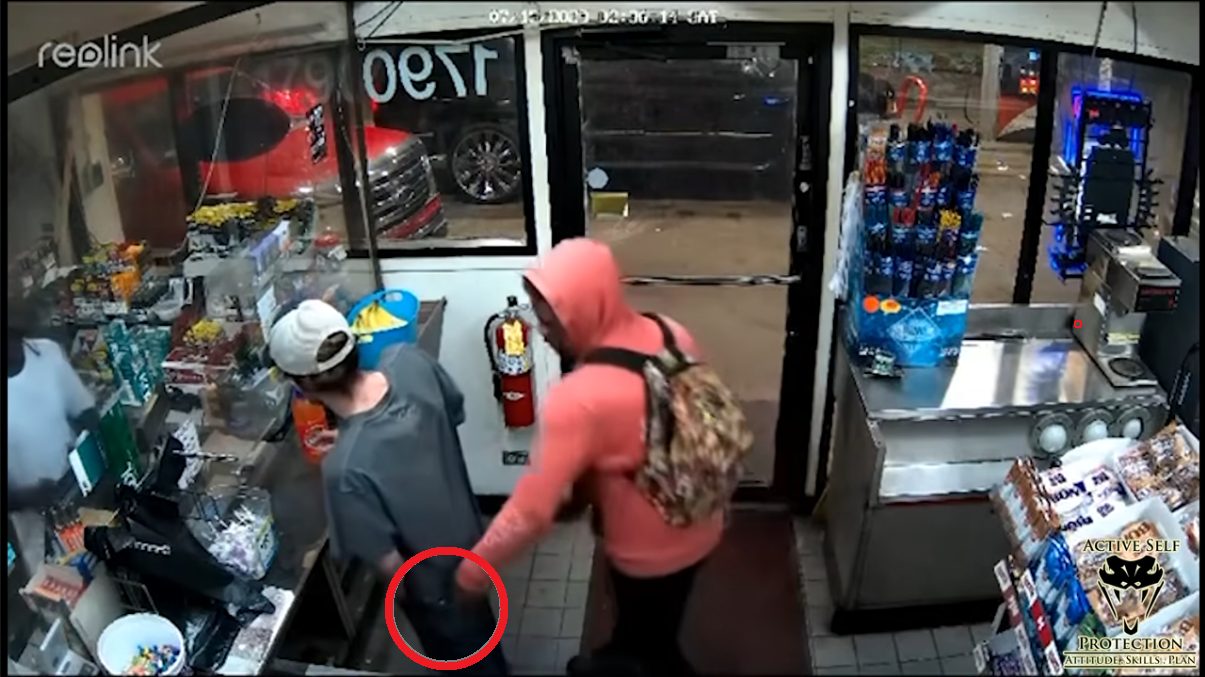
The carry technique the man was using is more correctly described as “Doofus Carry,” having two parts. There’s no back story to the incident but it wouldn’t be surprising to find that his usual carry technique is in the side door pocket of his car. If so, then when he pulled into the gas station and saw a bunch of lowlifes going in and out, he decided to stick his gun in his pocket when he went in. He probably didn’t stick it in the front of his waistband because he had a striker fired gun and was concerned about ‘shooting his junk off.’
Sticking a gun in a back pocket is not the same thing as having it in a proper holster attached to the belt.
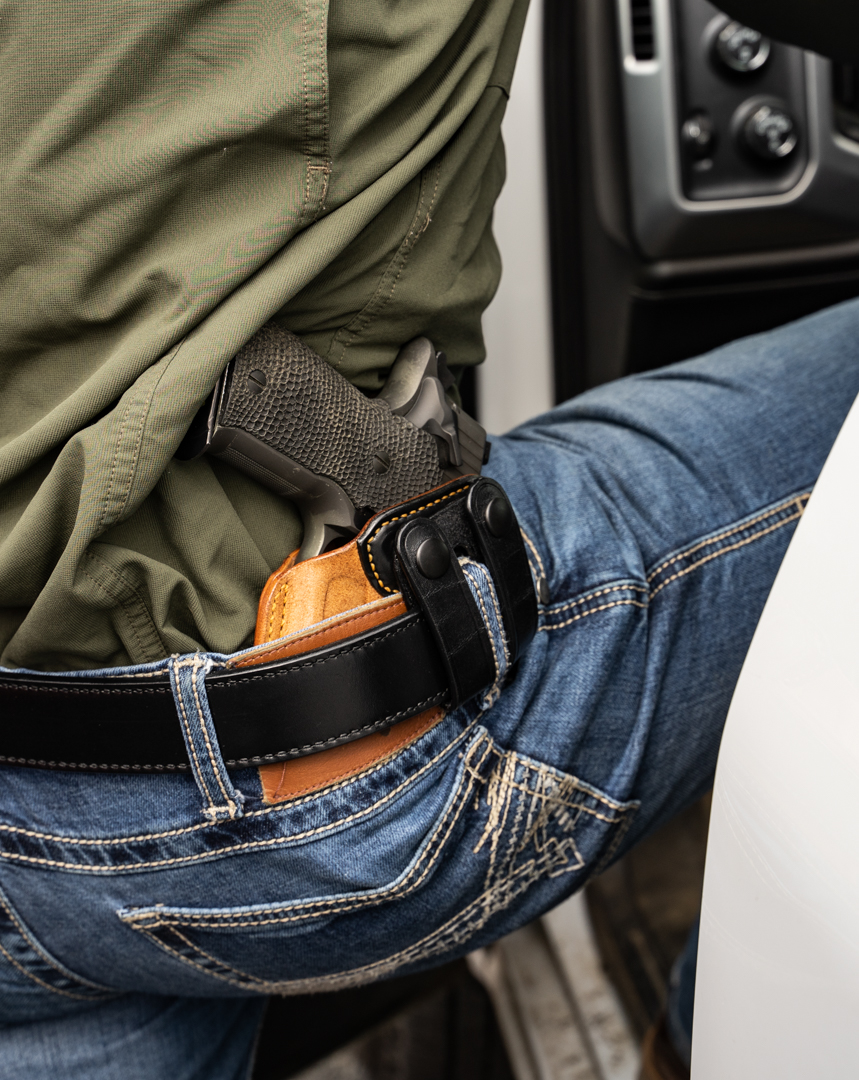
If my hypothesis is correct, it leads more credence to something the late Pat Rogers often said:
“Your car is not a holster.”
To reiterate, I’m not advocating Open Carry. But, if you’re going to carry a gun, at do it right. Have a decent holster and belt. Use it all the time when you leave home. If it’s uncomfortable and you don’t like wearing it, get a better holster or consider getting a more comfortable gun. “Your gun should be comforting not comfortable” is possibly the most ridiculous statement that’s ever been made about firearms.
The one good piece of advice in these retellings is that if your gun does get taken from you, Let it go. https://www.patreon.com/posts/let-it-go-107811846 The thief is now armed and you’re not. Chasing the felon means you’re going unarmed to a potential shooting. That’s a Serious Mistake. Don’t be foolish and assume the thief isn’t familiar and experienced with guns. As this incident shows, that’s the formula for a Negative Outcome.
If you like my work, join me on Patreon where I post more in-depth articles about shooting, marksmanship, and incident analysis.
Home Defense Pistol Skills
My latest Shooting Illustrated article is up.
“In the process of defending one’s home with a pistol, several additional skills beyond marksmanship are useful and necessary. In particular, the ability to move through the home while holding a handgun and techniques to inform the all-important DON’T SHOOT/SHOOT decision are critical.”
https://www.shootingillustrated.com/content/home-defense-pistol-skills
Flashlight skills at home are important enough that the flashlight chapter of Indoor Range Practice Sessions is a free download on my ebook store.
https://store.payloadz.com/go/?id=2505573
Keep Your Hand Away From the Muzzle
A friend of mine sent this link to me today.
Instagram video of Serious Mistake followed by Negative Outcome. https://www.instagram.com/reel/C4LsHBArwtl
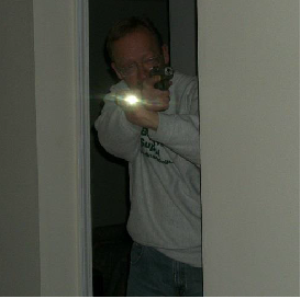
In the video, the person holding the gun is trying to get the laser to come on and repeatedly muzzles his own hand looking for the laser dot. Shortly after this frame, the gun discharges and shoots a hole in his hand, which was a definite Negative Outcome.
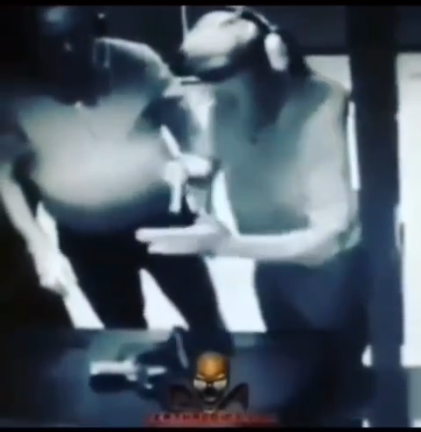
Sadly, the examples of dangerous gunhandling that gunowners and new shooters see while watching TV and movies are horrific. In the latest debacle by the ATF’s “expert” on the talking head TV show Face The Nation, he muzzles his own hand repeatedly. https://www.cbsnews.com/video/atf-director-and-firearms-expert-show-some-of-the-weapons-being-found-on-the-streets/

The ‘unboxing’ shows on YouTube by so-called wannabe gun ‘influencers’ are universally heinous, too. And before we get to feeling all righteous and self-congratulatory, even people we in the industry would consider legitimate Subject Matter Experts muzzle their own hands regularly when doing demonstrations on YouTube.
Probably the best firearm safety device that could be produced would be an extremely sharp Fairbairn Sykes British Commando Dagger with a 3 inch long 9mm diameter tang and no handle. If any knife producer wants to use this idea, feel free, no license or royalty required.

The 9mm tang could then be inserted all the way into the muzzle of a pistol so the dagger blade would be directly in front of the muzzle. It would teach the importance of keeping one’s hand away from the muzzle. In an emergency, it could also serve as a bayonet. 😊
Keep your hand away from the muzzle, PERIOD. It doesn’t matter if you think the gun is unloaded, keep your hand away from the muzzle. Rule 1: “All guns are always loaded” is a philosophical rule unlike Rules 2 through 4, which are operational rules. Not many people really understand this distinction.
Fundamentals and Training Aids (Part 1)
#fridayfundamentals
Revisiting the series about the Fundamentals of Pistol Shooting https://tacticalprofessor.wordpress.com/2021/11/05/fundamentals-of-pistol-shooting-part-1/ brings to mind the subject of training aids. Training aids are other pieces of equipment you will find useful for marksmanship and gunhandling practice. Your pistol shouldn’t be your only practice tool. There are a wide variety of readily available and inexpensive training aids.
An Inert pistol replica is the most valuable training aid you can own. Having a replica of your real gun is the best but it’s not absolutely necessary. This picture shows a small portion of my collection of inert pistols. No trainer worth his or her salt lacks at least one inert pistol for demonstration purposes.
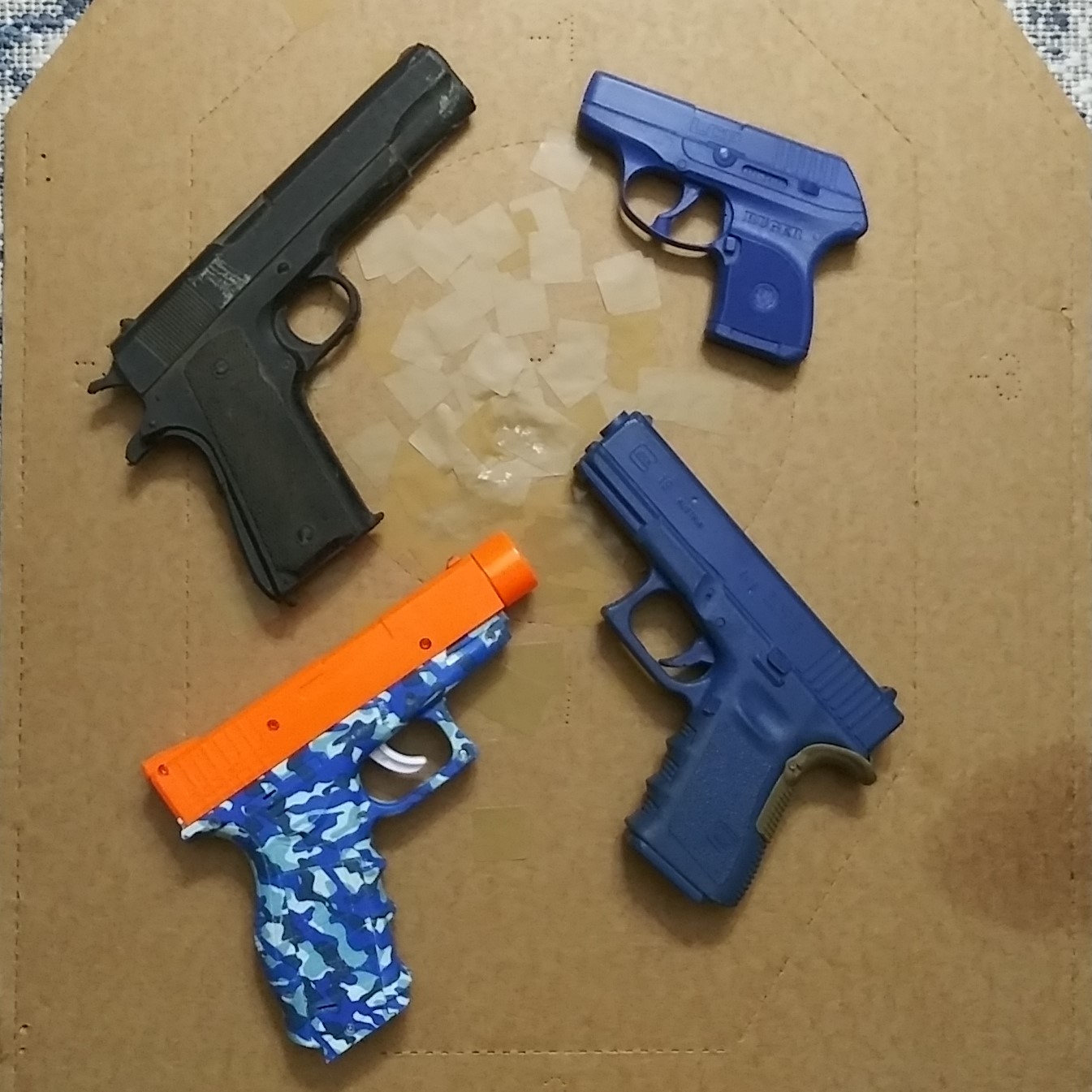
The rubber 1911 is the first training aid I ever acquired. I carried it on field exercises when I was a 90mm M67 Recoilless Rifle Gunner in the Army and didn’t want to clean two weapons every time I came back from the field. I’ve had it for 50 years now.
The orange and blue camo inert pistol was purchased from WalMart for less than $10. If no replica of your personal pistol is readily available, at least there’s something that can be used. It also makes a satisfying pew-pew noise when the trigger is pressed.
A SIRT Pistol is a useful option but expensive. Only three models are available; Glock 17, S&W M&P, and a generic subcompact model that reportedly only fits a holster for a Springfield XD-S.
An inert pistol can be used in a variety of ways. Among other things:
- Draw practice, especially for those who are reluctant to practice with their real pistol at home.
- Checking the solidity of your grip by having a partner hold the front of the slide and try to move it around.
- Practice getting your pistol out of its safe storage location quickly.
- Introducing others to holding a pistol without intimidating them.
- Doing demonstrations without endangering others.
There are also a number of other training aids that can improve your shooting.
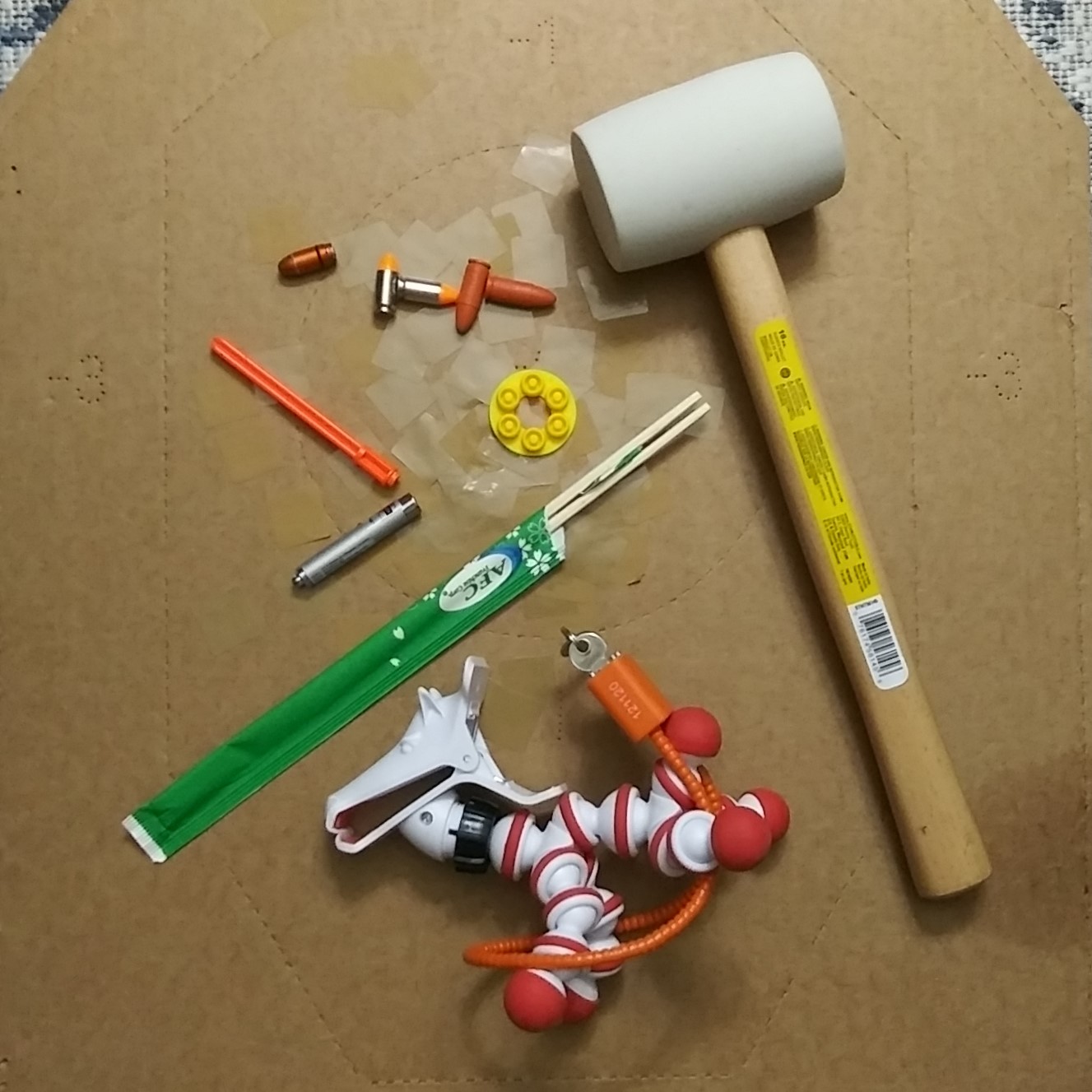
How to use these other training aids will be covered in future installments of this series.
Tactical Professor books (all PDF)
https://store.payloadz.com/results/337896-tactical-professor

Firearms are relentlessly unforgiving
Firearms are relentlessly unforgiving of the smallest lapse in attention or good judgement.
The shooting of a special police officer during a training exercise at a D.C. library came as the group of trainees had gathered to take a picture and were ‘joking around,’ according to court documents.
[The shooter, a retired POlice lieutenant], who conducted the training as a private contractor, was arrested Friday and has now been charged with involuntary manslaughter in Manyan’s death.
Before, during, and after training or dry practice, there’s no room for “joking around.”
One of the very first things I learned in the Army from the men who had just returned from Vietnam was:
F8ck around, f8ck around, get yourself or someone else killed.

It’s a lesson I’ve kept in mind for 50 years. RIP Officer Manyan.
A conversation I’m glad I will never have to have
“Mommy, where’s Daddy?”
“I’m sorry, sweetie, you killed him with his own gun when you were just a little boy because he didn’t believe in securing firearms.”
A conversation I’m glad I will never have to have with a child.
BOGO on Tactical Professor books
I’m grateful to my subscribers who send me news reports about the Negative Outcomes gunowners encounter. The ones about children gaining unauthorized access to guns really make me sad, especially because some folks defend practices that lead to those tragedies. Consequently, the purchase of any Tactical Professor book now includes a free copy of Serious Mistakes Gunowners Make.
In addition, I have reduced the price of Serious Mistakes by itself to $4.99. I’d make it free except that people only value things they pay for.
If anyone who has purchased any of my books would like a free copy of Serious Mistakes, email me through the About section above and I will send you one.
Tactical Professor books (all PDF)
- Real Shootouts of the LAPD https://realshootoutsofthelapd.com
- Serious Mistakes Gunowners Make http://seriousgunownermistakes.com
- Indoor Range Practice Sessions http://indoorrangepracticesessions.com
- Concealed Carry Skills and Drills http://concealedcarryskillsanddrills.com
- Advanced Pistol Practice http://bit.ly/advancedpistolpractice
- Shooting Your Black Rifle http://shootingyourblackrifle.com
- Package deal of Serious Mistakes, Indoor Sessions, Concealed Carry, and Shooting Your Black Rifle (20% off) https://store.payloadz.com/details/2644448-ebooks-sports-shooting-drills-package.html
 tacticalprofessor
You must be logged in to post a comment.