Friday Fundamentals: Know the law
At least as much as it can be known.
John Farnam once quipped that if he was read his rights and then asked if he understood them, his reply would be:
The Supreme Court hasn’t yet decided what my rights are; how am I supposed to understand them!
That being said, the level of willful ignorance many people are comfortable with regarding the guns they own is disturbing. Would any of us consider driving a car without having at least some cursory knowledge of the Rules of the Road? I certainly hope not.
Unfortunately, this sometimes leads to another of John’s quips:
You’re innocent until indigent.
Legal problems tend to be very expensive, even when ultimately resolved in the gunowner’s favor. The instructor of the Nevada Concealed Handgun Class I took had an interesting take on it. If you shoot someone, or even threaten them with a weapon, and then get arrested, you’re probably going to want to get bonded out as quickly as possible. Unless you have a large amount of cash, say $50K-100K, readily available, you’re going to require the services of a bail bondsman. The bondsman will typically charge 10-15 percent of the bond set by the judge as the bond fee. You don’t get that back, ever. It’s just $15,000 you threw into the financial incinerator of the legal system. It might be a good idea to figure how to avoid that ahead of time.
Firearm and self-defense laws tend to be arcane and frequently illogical. For certain, they vary widely from place to place, even city to city. For instance, a New York State License to Carry is no good in New York City, nor is any other Weapons Carry License. And yet, people periodically volunteer to the police at the entrance of the Statue of Liberty that they are carrying a gun because they have a License from somewhere else. The officer’s response is always the same: “Let me have it and put your hands behind your back. You’re under arrest.”
Usually, after three years of legal wrangling and a lot of burned up cash, the charges will be dropped down to something where the person doesn’t become a felon and doesn’t have to serve time. But you never get the gun back. A little research would have prevented that problem.
Handgunlaw.us is a wonderful online resource to start your research. As Steve and Gary, the curators, say though, verify independently what you find there. If you find value in it, donations are appreciated. I don’t get any cut of that, I just recognize that maintaining such a website is a big and expensive job.
Stay out of as much trouble as you can. Negative Outcomes are definitely possible with firearms. Five of the Serious Mistakes Gunowners Make relate to legal issues. And they’re usually avoidable.
Friday Fundamentals – Biases and Changes
My colleague Grant Cunningham posed two interesting questions on his blog, which led to a lengthy Facebook discussion.
Question #1: “what are your biases or preconceptions?”
Question #2: “what have you changed your mind about in the last year?”
I gave a brief answer to #2 but I think they both deserve some elaboration.
Question #1: “what are your biases or preconceptions?”
I am very reluctant to design training for myself or others that is rooted purely in hypothesis or conjecture. I.e., I am very biased toward following the scientific method, as much as possible, when developing training paradigms.
The overall process of the scientific method involves making conjectures (hypotheses), deriving predictions from them as logical consequences, and then carrying out experiments based on those predictions. — https://en.wikipedia.org/wiki/Scientific_method

It’s important to note that testing is an inherent part of the scientific method. Testing implies some form of measurement. As a result, I believe that having performance standards is an important part of training. I think of training as ‘outcomes based’ rather than ‘input based.’
We have at our fingertips, via the Internet, an enormous amount of data available to us. At the top of this blog are links to a number of sources that I regularly read to gather information about armed encounters, shootings, gunfights, and gunbattles. I use each of those terms in a very defined way because I consider many terms used in the training community to be fuzzy and ill-defined. Fuzzy and ill-defined terminology does not fit particularly well in the scientific method.
One of the often parroted phrases I hear about gathering information from the Internet is “The plural of anecdote is not data.” I rebut this with the words of one of my accounting professors, “Accounting information is expensive to gather and is sometimes not worth it.” What he meant was that, at some point, you have to accept whatever information you have been able to collect and work with it to form an opinion.
Something I try to avoid is ‘cherry picking’ data that supports my hypotheses. Cherry picking is not always an intentional process, either; it can require a significant amount of intellectual rigor to avoid. I learned this years ago when I was Research Director of a large commercial real estate brokerage company. The brokers all worked specific geographical areas and the Vice President asked me to analyze the Zip Codes of their contact lists. As it turned out, only about 20 percent of the brokers actually had the majority of their contacts in their assigned areas, even though they thought they did. That was when I became a believer in writing things down and checking them periodically to eliminate unconscious errors. A while later, I created a database of five years of data from the Armed Citizen and found some patterns and trends I hadn’t anticipated.
To sum up my bias, I might say:
I’m not interested in conjecture. Tell me where your hypothesis originated, what data supports it, and how you measure the outcome(s) you expect your students to achieve as a result of this training.
Question #2: “what have you changed your mind about in the last year?”
My short answer to this question on Facebook was “The importance of manipulation skills vis–à–vis decision-making.”
I’ve been thinking about this for many years. In 2011, my presentation at the Rangemaster Tactical Conference was entitled The Myth of the Lone Gunman: Working with Family, Friends, and Significant Others.
At the Conference in 2014, my colleague Craig Douglas made the suggestion that I do a presentation about ‘Bad Shootings’ for the 2015 Conference. The results of my research changed me forever.
As many people know, I was part of the Rogers Shooting School for ten years, culminating with being Chief Instructor for five years. Rogers is the most elite and difficult shooting school in the world. Many police and military special units go there to train every year and get to eat a piece of Humble Pie every day of the five day Course. “We’re the best shooters in our Department, by far. Then we come here and find out we suck!” The Handgun Testing Program has no peer for difficulty in the entire training community. It is training on a level that only a select few shooters will ever get to experience. I am enormously proud of my association with the School and maintain a relationship to Bill and Ronnie to this day.
That being said, once I started doing my research on ‘Bad Shootings,’ which eventually morphed into ‘Negative Outcomes,’ I saw a vastly different set of priorities were important. Although I still believe performance standards are important, the level of those standards has changed in my mind. The NRA Defensive Pistol standards, probably at the Sharpshooter level, will suffice to solve almost every confrontation I have been able to find between an Armed Private Citizen and a marauding criminal. Truth be told, those standards would work for most police shootings also. The kicker about the NRA standards is twofold; 1) competence must be demonstrated repetitively and 2) the standard is 100 percent hits.
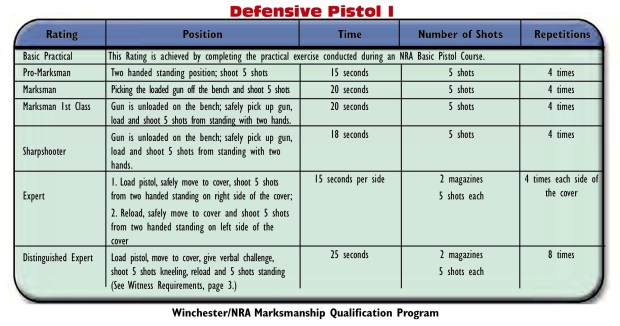
Once a person can shoot a pistol to a reasonable standard, it’s time to move on to thinking about the circumstances of personal protection and becoming proficient at decision making in that context. Decision making can be a very difficult task, especially when we are armed. Lack of proficiency, not just at marksmanship, but at gunhandling under stress, complicates this. Persons who are not Unconsciously Competent can easily become focused on the firearm rather the situation. Focusing on the wrong thing can lead to Bad Decisions, which in turn can result in Negative Outcomes.
These are the Negative Outcome categories I identified in my research. There are probably more.
- Brandishing/showing
- Chasing and shooting
- Downrange failures (shot an innocent while shooting at a threat)
- Intervention
- Lost/stolen guns
- Mistaken identity shootings
- Negligent discharges
- Self-inflicted GSW
- Unintentional shootings
- Police Involvement (arrests for non-shooting related incidents)
- Poor judgement
- Unauthorized access (generally by small children)
- Unjustifiable shootings
- Warning shots
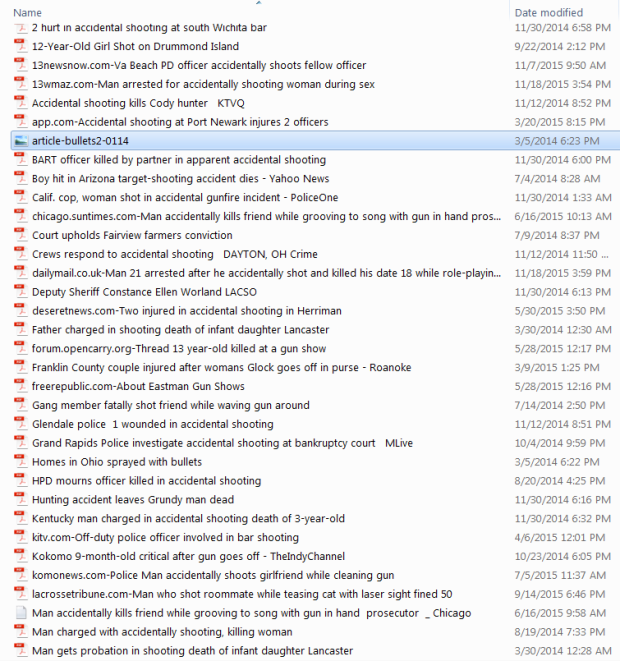
As an example of one category, Unintentional Shootings, here’s a screencap of some of the stories I have collected.
Bad decisions have serious consequences and end up being punished in a variety of ways, some legal and some social. The legal consequences are obvious; the shooter goes to court and sometimes thence to prison. The social consequences of Negative Outcomes are less obvious. If a person accidentally shoots a family member, whether the criminal justice system gets involved or not, I doubt that family relationship will ever be the same. The particular incident I am thinking of occurred when a police officer shot his daughter, thinking she was an intruder.
Decision making has many aspects to it that people don’t often consider. Where you point a gun anytime you handle it is a decision that has to be made. Consider that the next time you’re in a gun shop; where are you going to point the gun as you pick it up to ensure that you don’t muzzle anyone? This relates to another reason I am not fond of the overhand method of slide manipulation. During administrative gunhandling, which happens far more than shooting, the overhand method simply does not give the same level of muzzle control that the slingshot method does. I regularly have to correct students about muzzling themselves when using the overhand method. Using the slingshot technique, not at all.
Note that the Decision Making Process starts long before an incident. For instance, having a flashlight and then practicing with it is a decision. Not having one and/or not practicing with it is a Bad Decision. There are many other possibilities too. Failing to devise emergency plans and then discuss them with your family is a Bad Decision.
Look at the list of Negative Outcomes. The category ‘Downrange Failures’ is the only one that is marksmanship driven. All the rest relate to Decision Making and gunhandling. That’s why I changed my mind.
Friday Fundamentals (Segment 4) Shooting with a flashlight
Several Negative Outcomes were brought to my attention this week. One was yet another incident of someone shooting their spouse, thinking it was a burglar. She died as a result of one shot to the chest.
The husband told police it was an accident. He told officers he woke up around 4:15 Saturday morning and heard noises in his house … He told investigators he grabbed his gun and when he saw a light on and someone standing in the distance, he took a shot. He said the person he ended up hitting once in the chest was his wife.
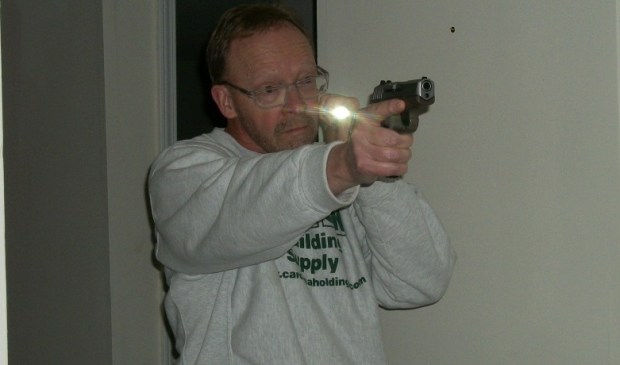
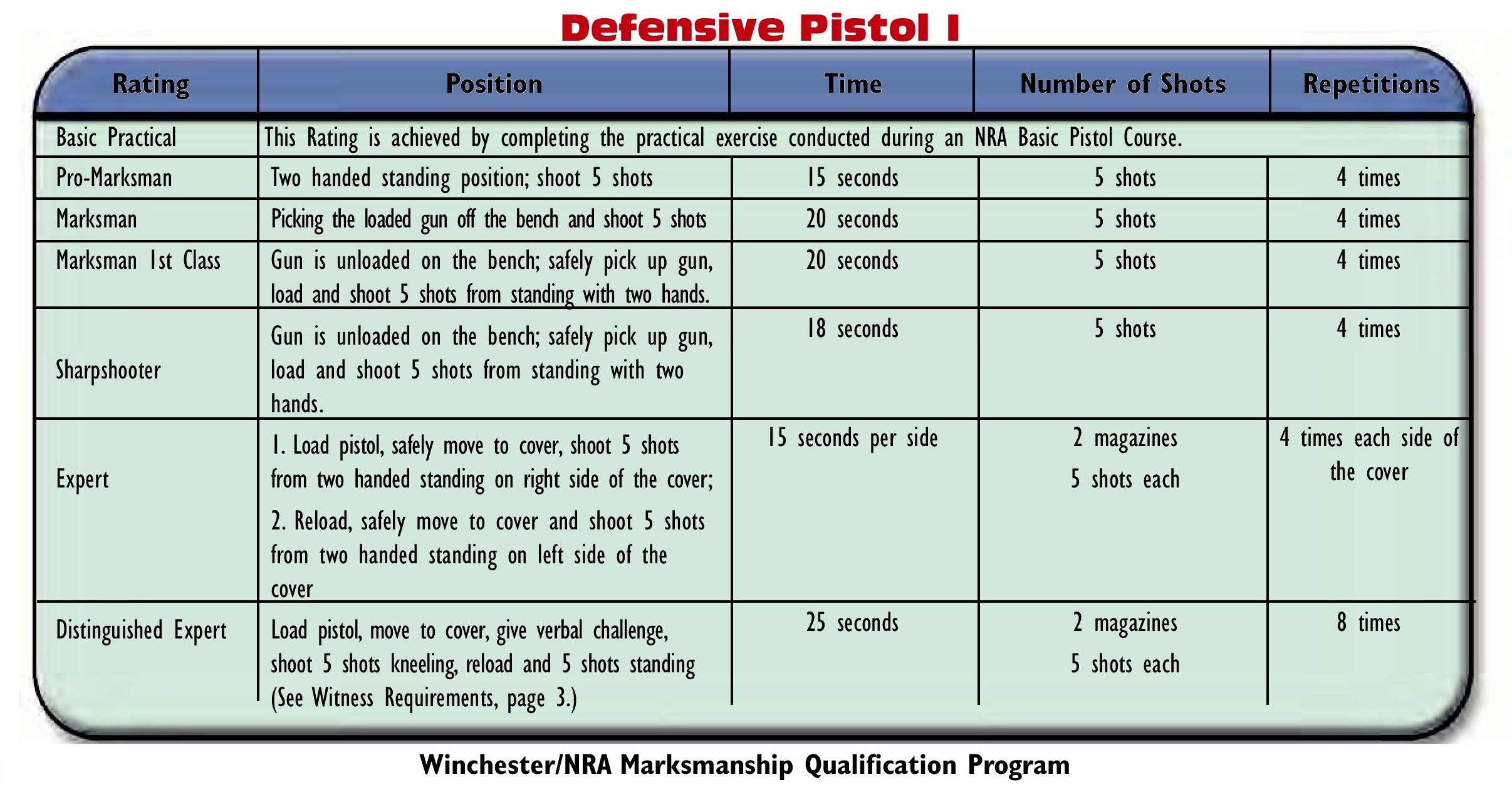
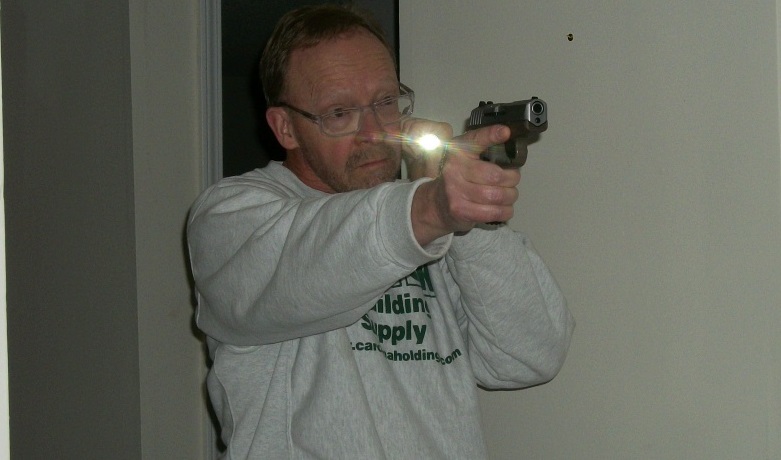
This sad situation bolsters my contention that when we pick up a pistol at home, we have to pick up a flashlight at the same time. That’s why I made flashlight shooting an integral part of The Tactical Professor’s Pistol Practice Program. To get some repetitions in and reinforce the habit for myself, I went to the range this week and shot the entire NRA Defensive Pistol I marksmanship program using a flashlight.
 As a curiosity, I also used a timer instead of going by the PAR times in the program. The pistol I used was a Beretta Jaguar in .22 Long Rifle. Many in the industry poo-poo the .22 as a defensive tool but .22s have worked for me. An aspect of .22s I like in the practice context is that shooting several hundred rounds in one session isn’t punishing, either physically or financially. I shot it at my gun club but the way Defensive Pistol I is structured, it can be shot at just about any indoor range. That’s an aspect of the program I really like.
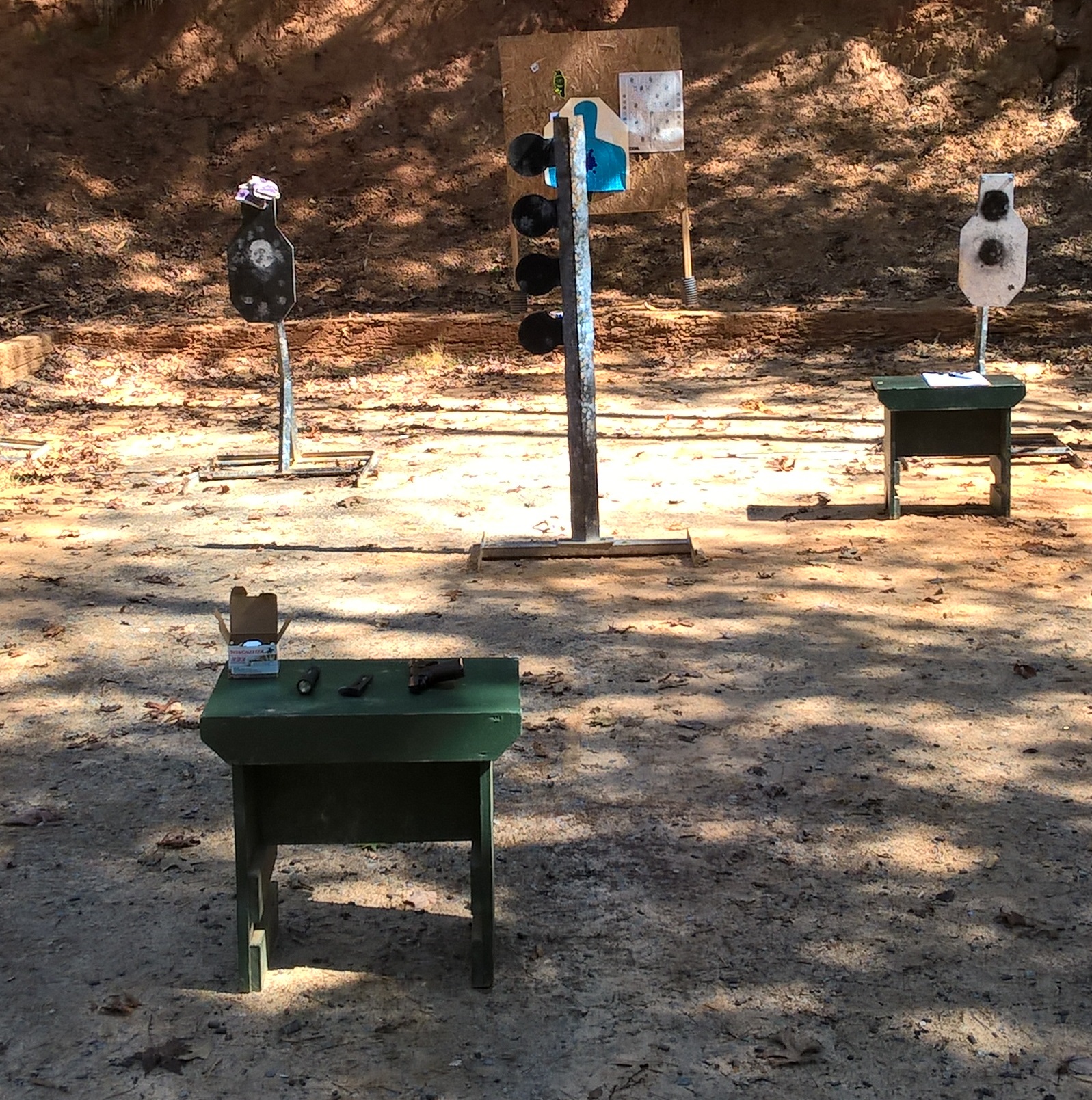
What I did was to have my pistol, my flashlight, and the timer on a stool in front of me. The target was downrange at the specified seven yards.
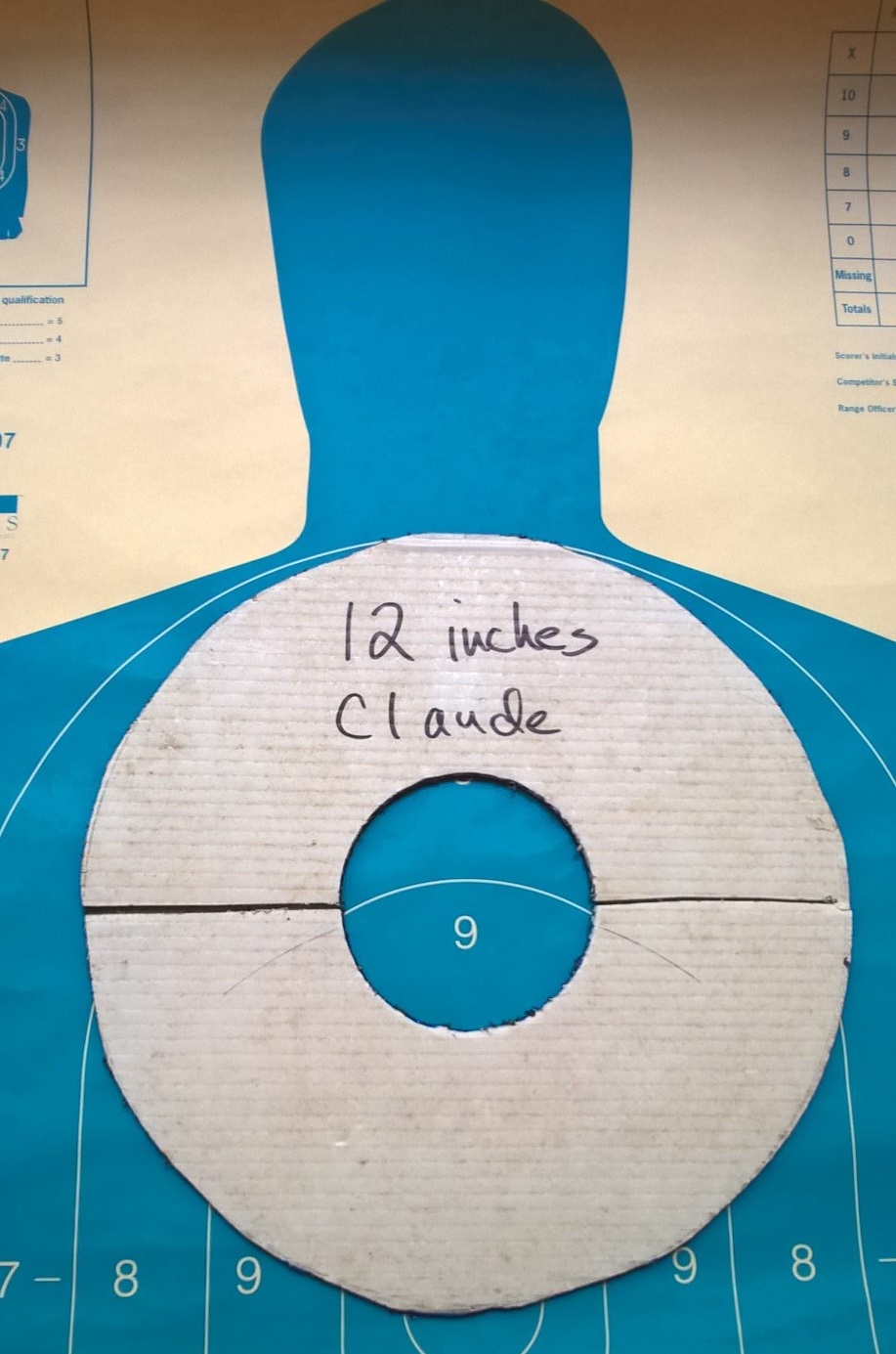
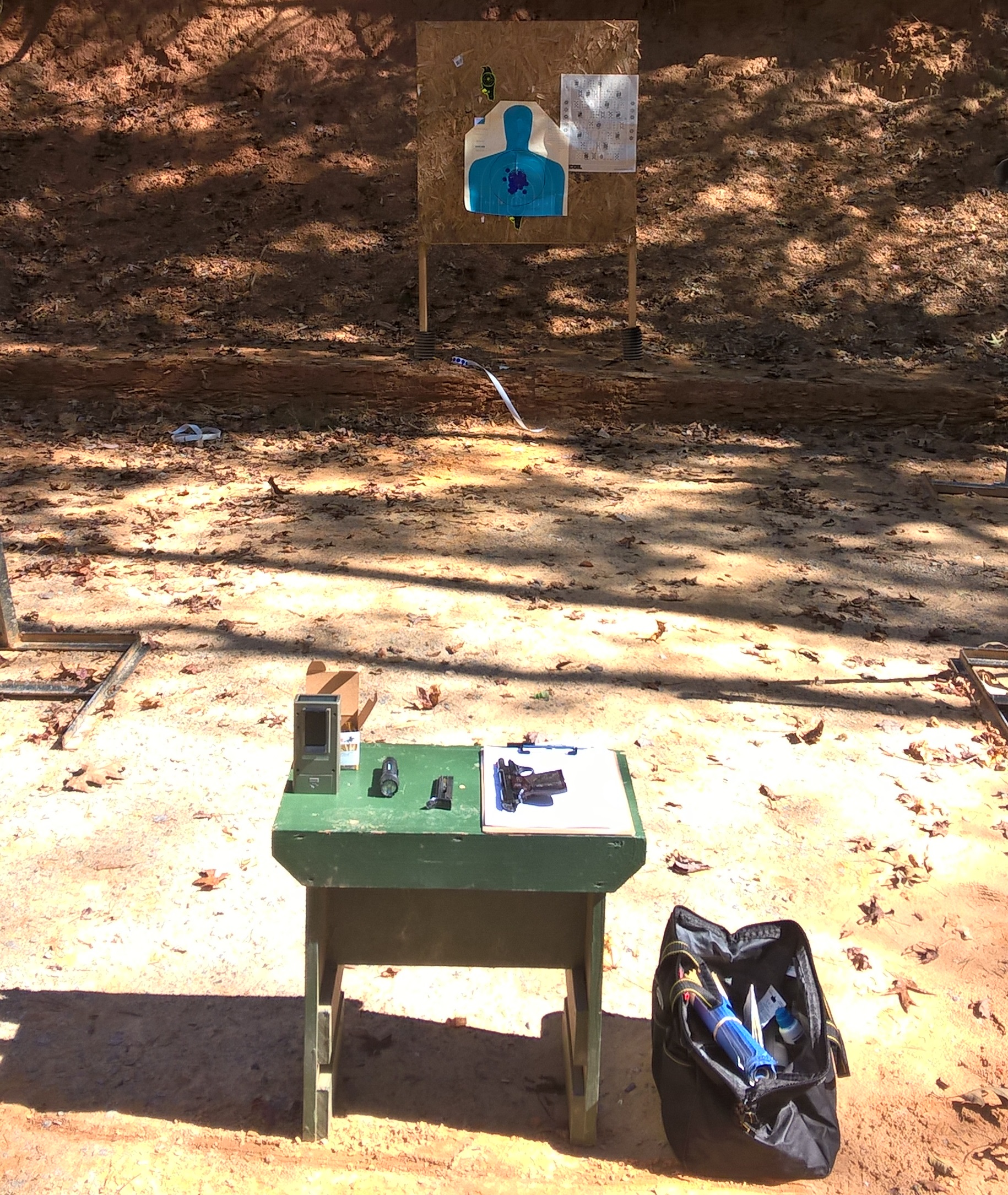 The target was a B-27 with the NRA AP-1 8 ring and X ring marked on it with a template.
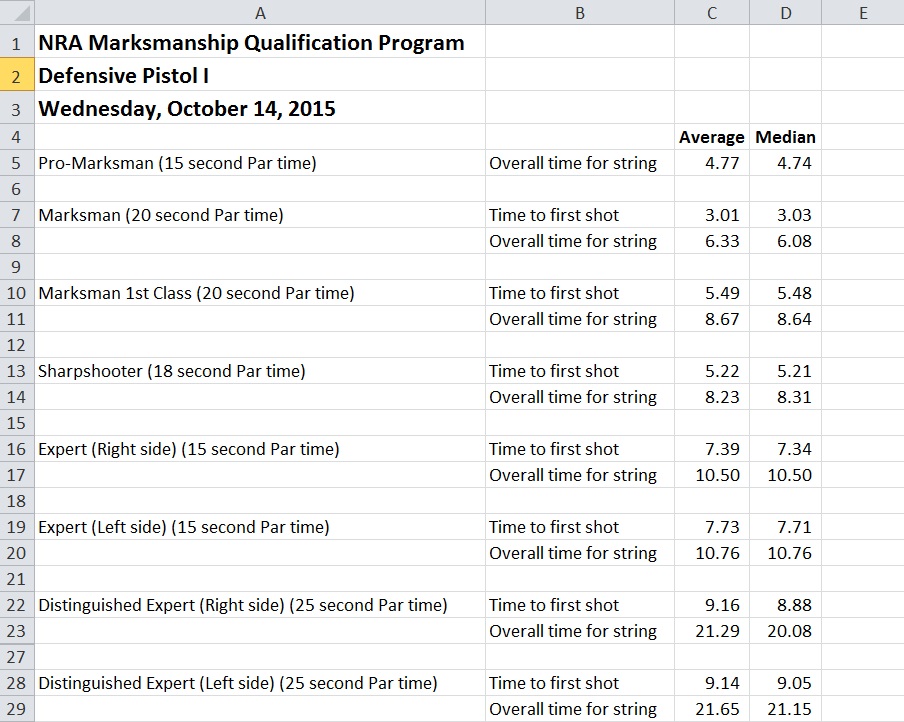
 When the timer went off, I would pick up my pistol and flashlight simultaneously, assume the cheek position, and then shoot the specified string of fire. For the phases requiring loading the pistol on the clock, I picked up the pistol and magazine, loaded it, and then picked up the flashlight. After each string, I recorded my times. The NRA provides a scoresheet but it is set up for Pass/fail scoring, so I made my own scoring matrix.
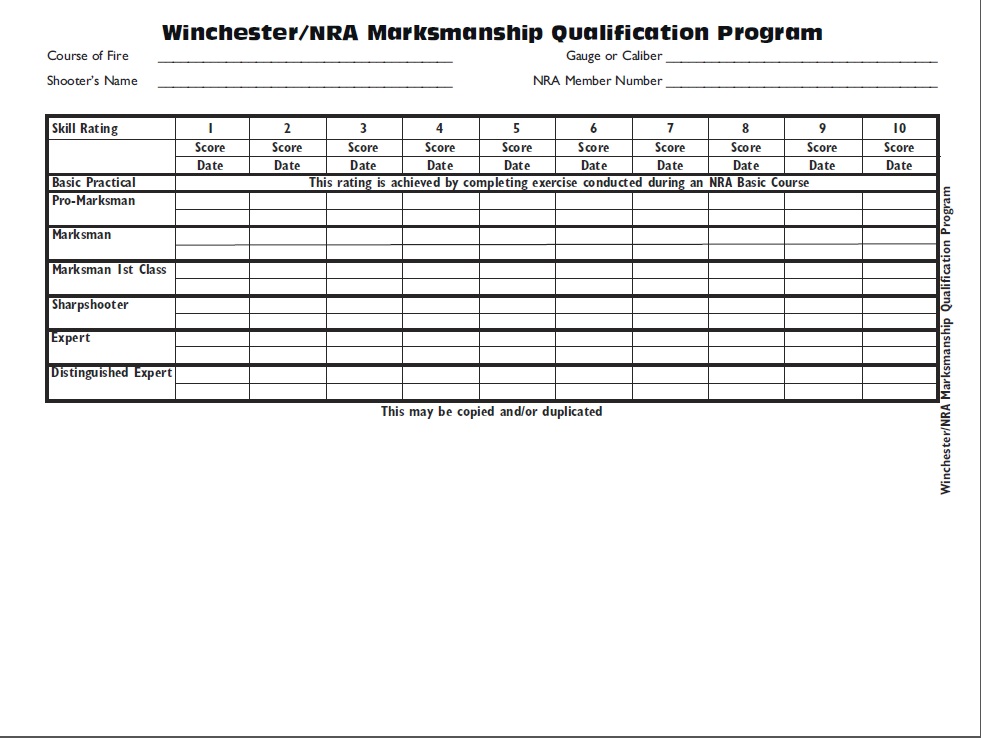 I checked the target after each string to make sure that I had the required 100 percent hits. At the end of each phase; Pro-Marksman, Marksman, etc., I marked the target with blue dots to cover my hits.
For most of the program, I used the cheek technique.
 The Expert and Distinguished Expert phases require shooting from behind cover. There weren’t any barricades readily available so I used the dueling tree in the bay to simulate cover.
 The Expert phase requires shooting around both sides of the cover. When shooting around the left side, I continued to use the cheek technique. When shooting around the right side, I used the Harries technique.
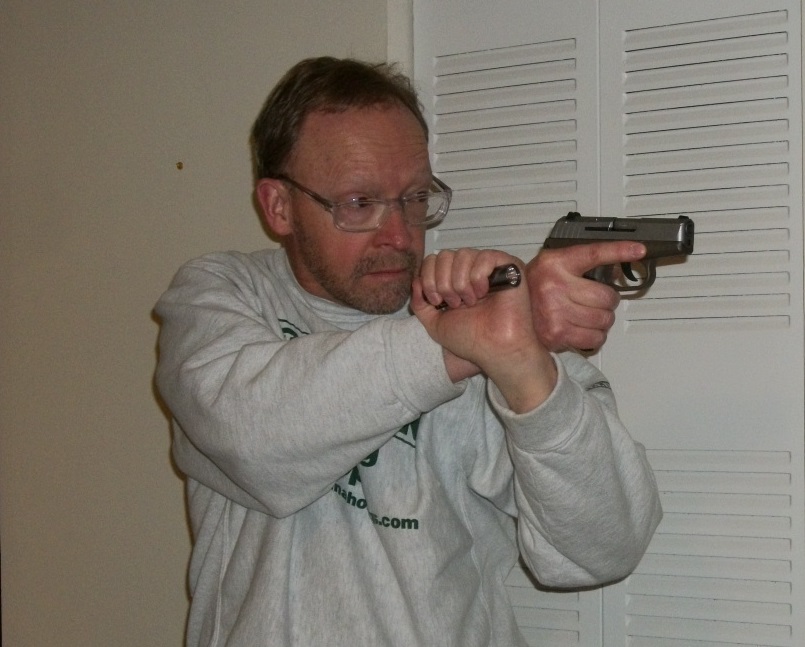 The Distinguished Expert phase doesn’t specify shooting around both sides of the cover. However, it does requires eight runs instead of four, so I shot four around the right side and four around the left side.
I was able to maintain the 100 percent standard and got a good idea of my times to accomplish each Phase.
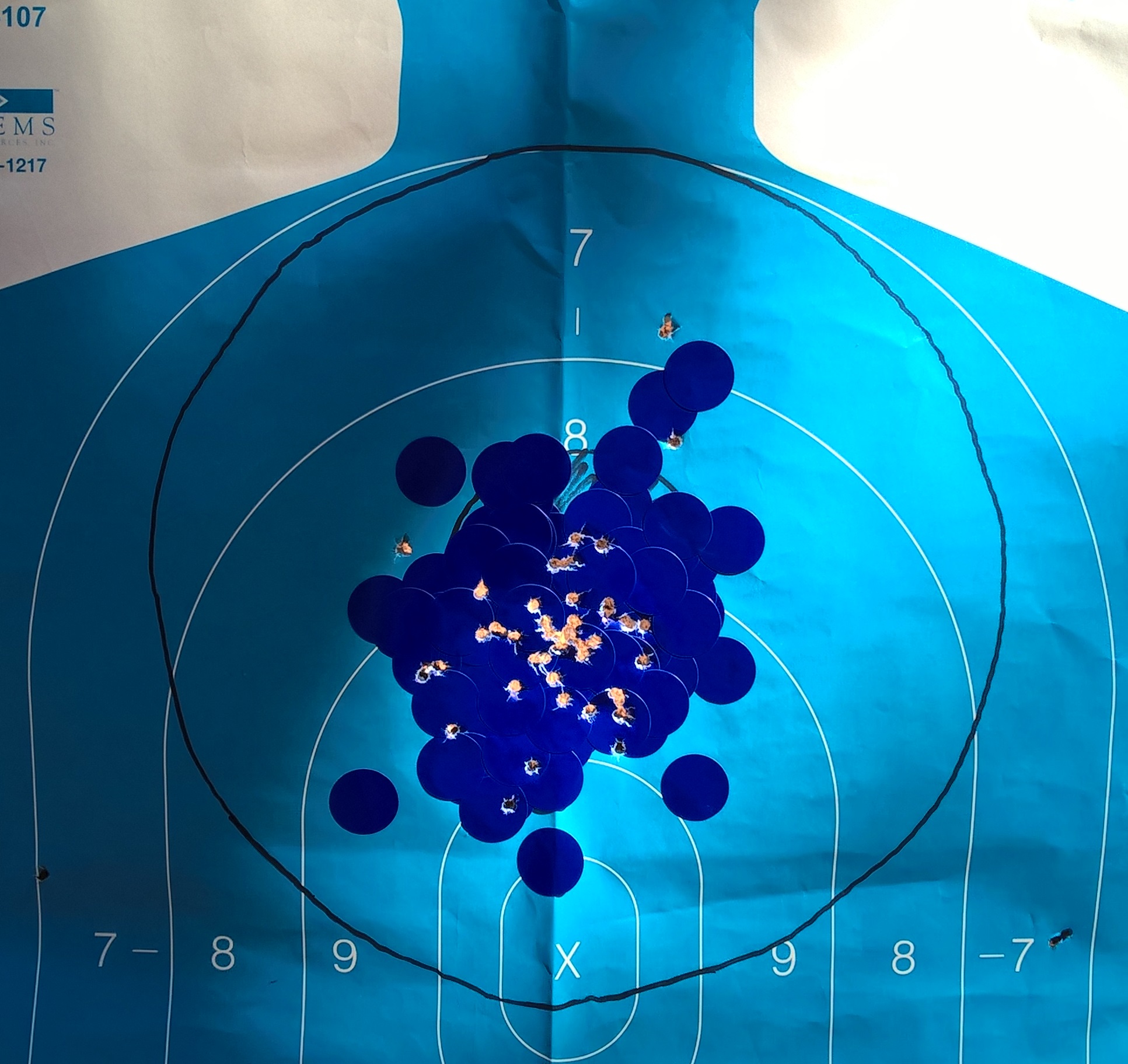
 To finish off the day, I used the dots to create some eyes on the target. Then I shot a couple of groups at five yards.
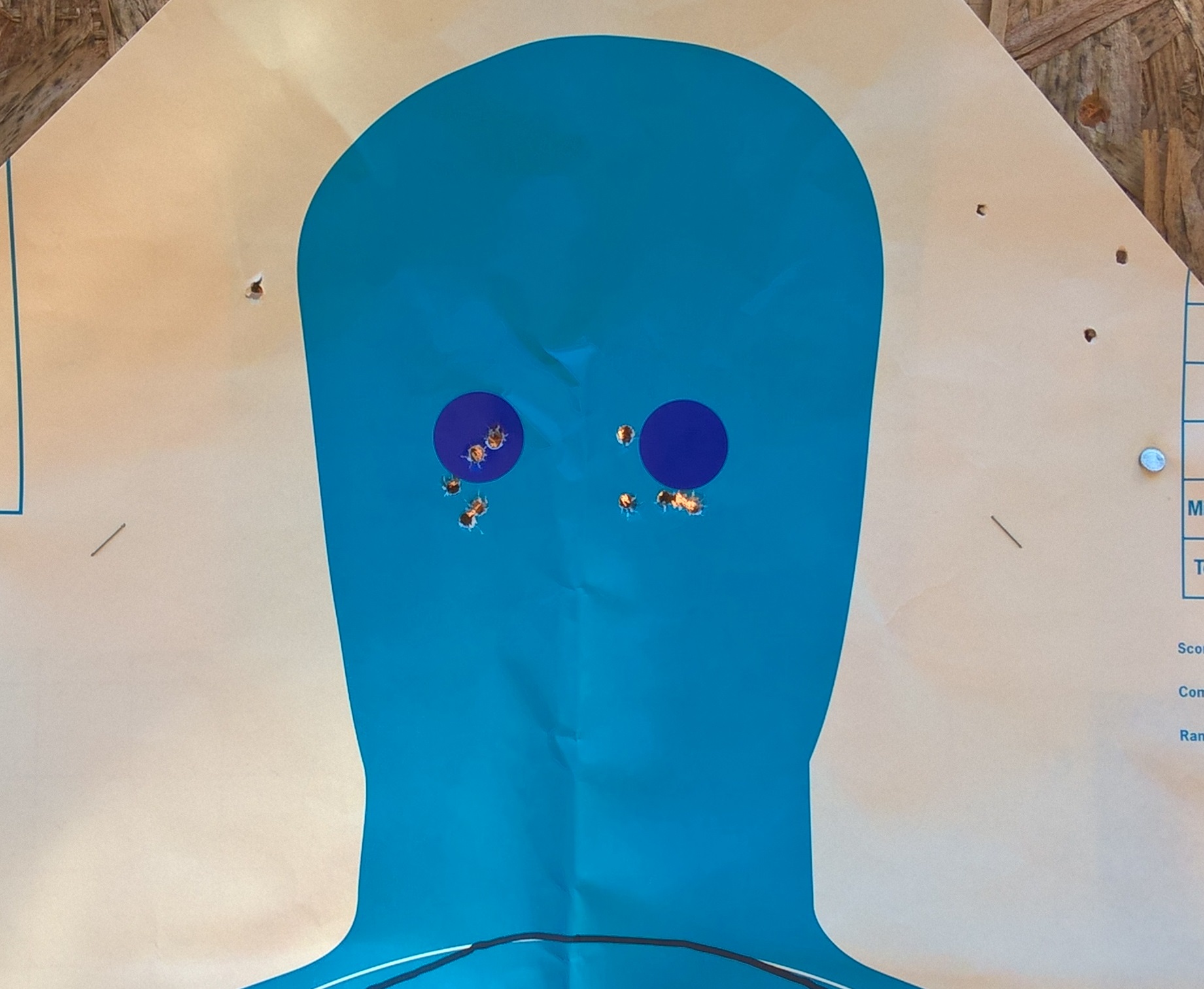 Getting in relevant practice isn’t necessarily hard; it just requires a little creativity and forethought.
Common sense
Isn’t it just common sense to ensure you know what you’re shooting at?
That question was posted on my Claude Werner, Researcher and Analyst page.
It’s an important question that we need to put in perspective.
Not intending to be pejorative but there is no such thing as ‘common sense.’ What we refer to as ‘common sense’ is actually learned behavior based on our past experience.
For instance, as adults, we consider it ‘common sense’ to not stick our hand in a fire. When we were three years old, we didn’t know it would hurt and probably found it out the hard way.
Similarly, we as gun people would consider it ‘common sense’ to not look down the bore of a firearm. If you gave a pistol to an Australian Aborigine, one of the first things they would do is look down the bore because in their worldview, knowing what’s in a hole is really important. Even Al Gore did it when he was searching for the Internet in Viet Nam. That was before he realized he had to invent it.
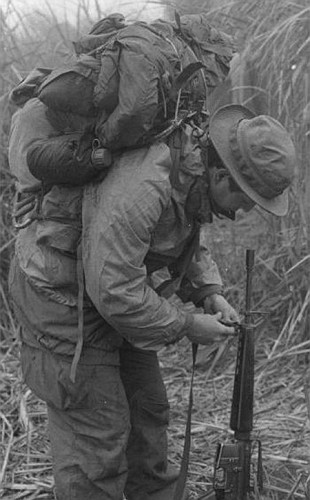
Al Gore looks down bore.
Ninety-nine percent of what most people know about firearms usage they learned from TV and the movies. In those media, there is never any ambiguity about the shoot/no shoot decision. As a result, when people get placed in a real set of circumstances, they do indeed default to their ‘training,’ which is the media programming. So they tend to make mistakes and shoot, even if it’s not appropriate. I once bemoaned to a colleague that my Threat Management classes didn’t sell. His response was “Nobody buys a gun with the idea that they’re not going to use it.” His comment put it in perspective for me.
Securing pistols in cars
“The 3-year-old located a handgun that was in the vehicle and discharged a round which resulted in the striking of the 1-year-old,” said Sarasota Sheriff’s Office Lt. Vince Mayer.
This morning, yet another Negative Outcome was brought to my attention. In this incident, a young boy gained unauthorized access to his mother’s pistol, which was unsecured in her car, and accidentally shot his little sister. I use the term ‘accidentally’ because from the little boy’s perspective, it was utterly accidental. In the broader context, it was a training and doctrine failure. Fortunately, her injuries are not life threatening, but I bet they will be life changing for all involved.
Informally, a number of people in our community are starting to include an addition to the cardinal Four Rules of Safe Gunhandling. ‘Rule 5’ tends to be worded something like “In addition to the Four Rules of Safe Gunhandling, always store weapons where they are not accessible to unauthorized persons.” It’s about time we break with tradition and make Rule 5 a formal part of our doctrine.
I don’t know if her pistol was in her purse, in the glove box, or somewhere else in the car. Whichever was the case is irrelevant. The little boy got hold of it and touched off a round. It’s inexcusable and irresponsible. More than getting stolen, I consider this kind of occurrence to be the major downside of off body carry. And when I say ‘off body carry,’ I’m not just talking about purses and briefcases.
The incident demonstrates yet another reason I am totally opposed to glove box carry, console carry, door pocket carry, etc. that are commonly used in vehicles These foolish methods people use to secure pistols almost always result from having a pistol that’s too big to carry on them or with them consistently. It’s a downside of the ‘carry enough gun’ doctrine espoused by the training community.
In that sense, I think the community needs to take some responsibility for recommending equipment that simply doesn’t fit into the totality of our students’ lifestyles. With regard to understanding the lifestyles of normal people, our ‘square range’ mentality is complete.
Many trainers tend to view their students in the military or law enforcement model where the students are molded into something new and different, as a result of the training. Sorry folks, that’s just not the case. What we’re doing is the equivalent of teaching people how to paint, not turning them into painters. Sometimes, it seems to me that the training community’s approach to ‘walk a mile in someone else’s moccasins’ turns into ‘put a load of buckshot into someone, then take their moccasins and walk off in them.’
When I first started writing this post, I had in mind talking about lockboxes for securing pistols in cars, which I still think is a necessary idea. But, as I began writing, I realized I was on the wrong track. In this case, trying to secure the pistol in a lockbox would most likely have entailed repeated instances during the trip of gunhandling in the car to secure the pistol. That’s dangerous and unrealistic. The less we handle guns in vehicles, the better. It’s a target rich environment with too much potential for a Negative Outcome.
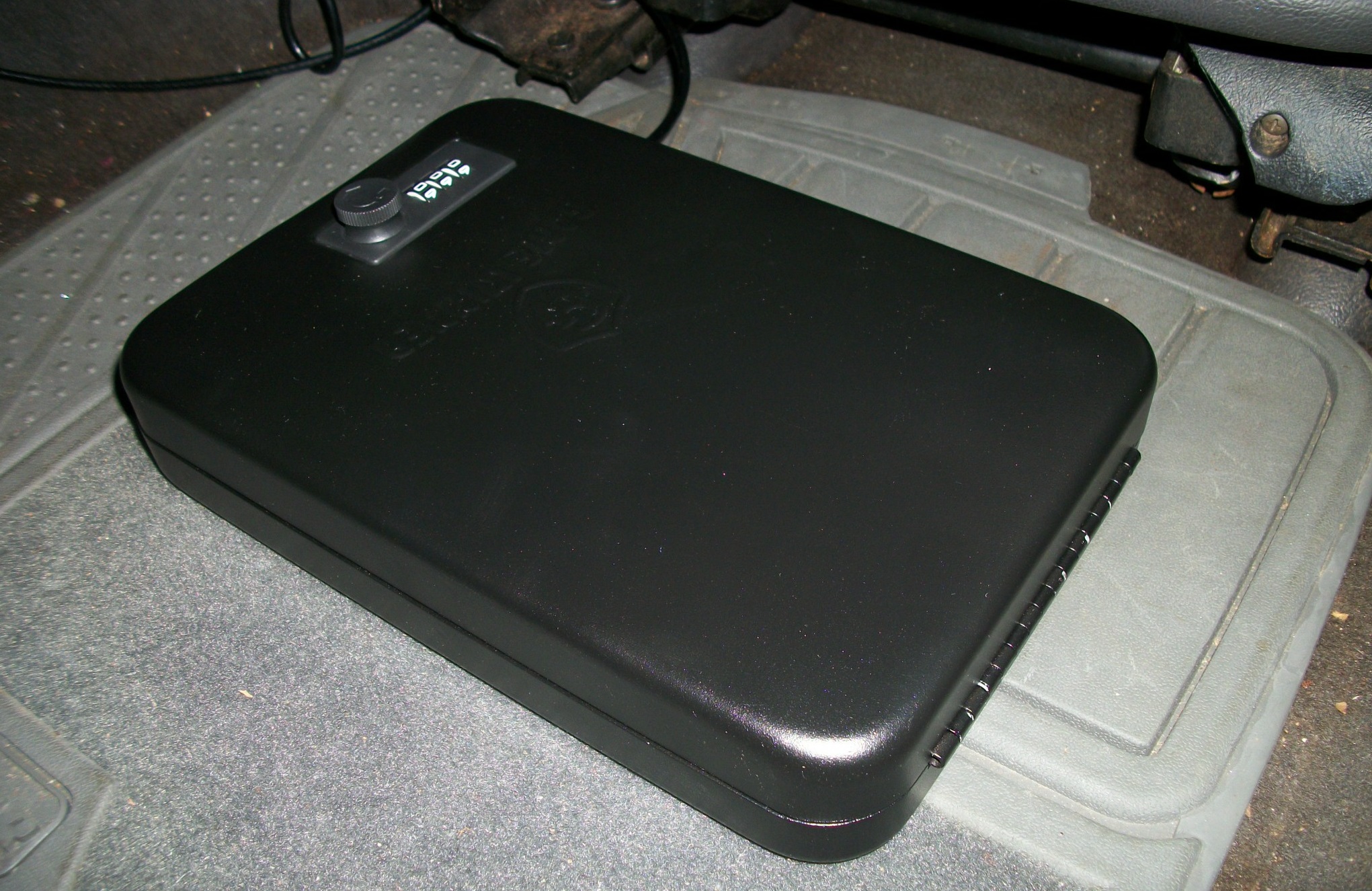
As the number of people who carry guns continues to increase, we trainers are going to have to focus more on ‘Living with Guns,’ as John Farnam put it years ago, rather than just ‘shooting guns.’ Shooting guns is fun and provides immediate gratification; we can see when our students get it. Teaching people about Living with Guns provides no gratification whatsoever because it happens after they leave our class. Are we performers or teachers?
Let’s consider a variant of my question “What’s the ‘worst possible case’?” Is it encountering a really determined criminal who soaks up whole magazines of bullets or having a family member accidentally shoot another family member? I’d really like to hear a definitive answer to that question.
Living with Guns is the tedious drudgery of the armed lifestyle that we, both trainers and gunowners, tend to ignore. It’s easy to focus on marksmanship, ballistics, legalistics, and equipment because those things are obvious and we’re reminded of them regularly. The hard part will be re-directing our attention toward the less obvious but just as important lifestyle aspects. That change in focus needs to happen quickly if we really want to consider ourselves responsible.
Perhaps a criterion we need to add to our selection list when talking about purchasing a pistol is something like “How convenient is it for this purchaser to carry, and secure, this particular pistol 18/7?” If it fails that criterion, that might be a deal breaker.
 tacticalprofessor
You must be logged in to post a comment.