Empty Chamber Carry – I
#fridayfundamentals
Empty Chamber Carry is strongly opposed by the US private sector training community and the ‘cognoscenti’ of the firearms community. However, carrying with the chamber empty is still a very common practice by large swathes of gun owners. Regardless of opposition to the concept, it is what it is. Some discussion beyond “Don’t Do It” is in order.
This is the first in a series of Fridayfundamentals posts about carrying with an empty chamber. The series is intended neither to advocate nor oppose empty chamber carry but rather to discuss aspects of it not typically examined. A sidenote is that many aspects of the discussion also apply to hammer down carry (Condition Two) with 1911 pistols but that is for another time.
First consider the advocates of carrying with an empty chamber.
- Fairbairn/Sykes in Shooting To Live.
- Israeli military/POlice, although it’s reported that this has relaxed in the past decade.
- Many foreign militaries and POlice forces.
- The US Army until the publication of the May 2017 version of TC 3-23.35 Pistol.
As one commentator noted when the May 2017 TC was published:

Since many people do carry with an empty chamber, let’s work with what we’ve got from the standpoint of instruction.
The single biggest problem with the method is the technique that new gunowners usually employ to load the chamber. The most common technique seen is to hold the pistol in the shooter’s workspace and pull the slide inward toward the body and out of the workspace. Most often the slide is held during the entire operation, retarding the strength of the recoil spring.
This is exactly opposite of what needs to occur. Pulling the slide inward significantly increases the possibility of not fully loading the chamber. This could be a disaster. At least one surveillance video shows an armed robber whose pistol didn’t load completely, which led to his demise.
Here’s a graphic from TC 3-23.35 that illustrates the workspace and its relationship to pistol operation.

Both Shooting To Live and the classic Israeli technique advocate holding the pistol in the workspace and then pushing the pistol forward to the outer limit of the workspace. The slide is held in place while the pistol is pushed outward.
Here’s a series of updated sketches from Chapter 3 of the edited and annotated edition of Shooting To Live that I will be publishing this year. A number of the original Shooting To Live sketches had to be redone due to finger in the trigger guard violations.


Similarly, the classical Israeli technique is to hold the pistol parallel to the ground in the workspace. The slide is held stationary and the pistol is pushed forward toward the enemy and fired.
Note that both Shooting To Live and classic Israeli use the slingshot method of grasping the slide rather than hand over the top of the slide.
The discussions of Empty Chamber Carry rarely include any commentary about what to do after the pistol is loaded, regardless of whether it is fired or not. One of the few comments ever seen was “If I don’t have to shoot, I’ll immediately download the chamber when I get back to my car.” Downloading or unloading afterward is an important enough topic for Shooting To Live to include it as part of the initial 30 round Recruit Training Program. Chapter IV states:
“In all practices at surprise targets, opportunity must be found for the performance of two very essential operations. In order of importance, these are:—
1. Making safe after firing only a portion of the contents of the magazine.
2. Inserting a second magazine after totally expending the contents of the first and continuing to fire without delay.
In the first instance, after firing one or two shots from a fully charged magazine, the instructor should give the order to cease fire. The shooter should then come to the ‘ready,’ remove the magazine, eject the live round from the breech, work the slide back and forth several times and finally pull the trigger, all as described [in] (Figs. 9 and 10).”
Note the order of importance Shooting To Live placed on unloading and reloading. Making the pistol safe after an incident was considered of greater importance than reloading during an incident. It’s probable to assume this priority came from their observation of hundreds of gunfights. Concerns and technique for After Contact actions will be covered in the next post.
Taurus 856 Iron Sights v. Laser Comparison
#wheelgunwednesday
Taurus had a screaming deal for 856 revolvers on its website last month. The deal was a Viridian Laser Stock (Grip), Boltaron (Kydex) holster, and two HKS speedloaders for $139. I’m a believer in laser stocks for snub revolvers so I decided to take advantage of the deal and purchased it. I also purchased an Ameriglo front night sight but haven’t installed it yet. FTC note: I made this purchase with my own money, no manufacturer giveaway.
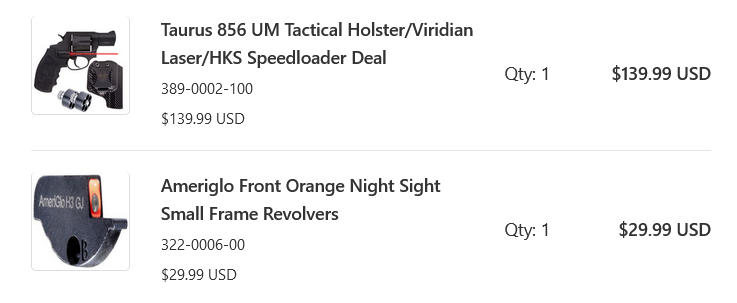
This Viridian laser has the activation button on the front of the stock so when the revolver is gripped, it comes on. This is a far superior system to having to manually press a button to turn the laser on. The stock is also slightly longer than the factory stock so it provides a full three finger grip.
Installing it requires driving out the roll pin that holds the factory stock in place. Once the pin is out, the laser stock is secured via three screws. Pro-Tip: put the bottom screw that goes through the roll pin hole in the frame first. It was relatively well zeroed as it arrived but I later zeroed it at 7 yards when I got to the range.
The UM Tactical Holster was much better than I had anticipated. I thought ‘UM’ meant it was an offshoot of Uncle Mike’s but that assumption is incorrect. It fits the 856 well and the clip holds it securely on the belt. I loosened the tension slightly so that when the holster is held upside down the gun doesn’t come out but it draws easily.
The HKS Speedloaders were the Model 10 developed for the K frame S&W revolver many years ago. Two were included.
To make a comparison of the capabilities of the laser vis-à-vis the iron sights, I did a range trip. The evaluation protocol was the Nevada Concealed Handgun Permit Qualification Course, which is one of my favorite practice structures. It consists of 30 rounds fired at 3 yards (6 rounds), 5 yards (12 rounds), and 7 yards (12 rounds). The evaluation consisted of splitting it in half, shooting one half (15 rounds) with the laser on and one half (15 rounds) with the laser off. I broke the course into several strings for each distance and timed each string.
3 yards – 1 shot from the Holster, 1 shot from Low Ready, and 1 shot from Retention. Three rounds for each sighting system.
5 yards – 2 shots from the Holster, 2 shots from Low Ready, 2 shots from the Holster Primary Hand Only. Six rounds for each sighting system.
7 yards – Repeat the 5 yard sequence at 7 yards.
It was a cloudy afternoon not bright sunlight. I had no trouble seeing the laser dot at 7 yards on the USPSA Metric targets I used. Each system had a separate target.
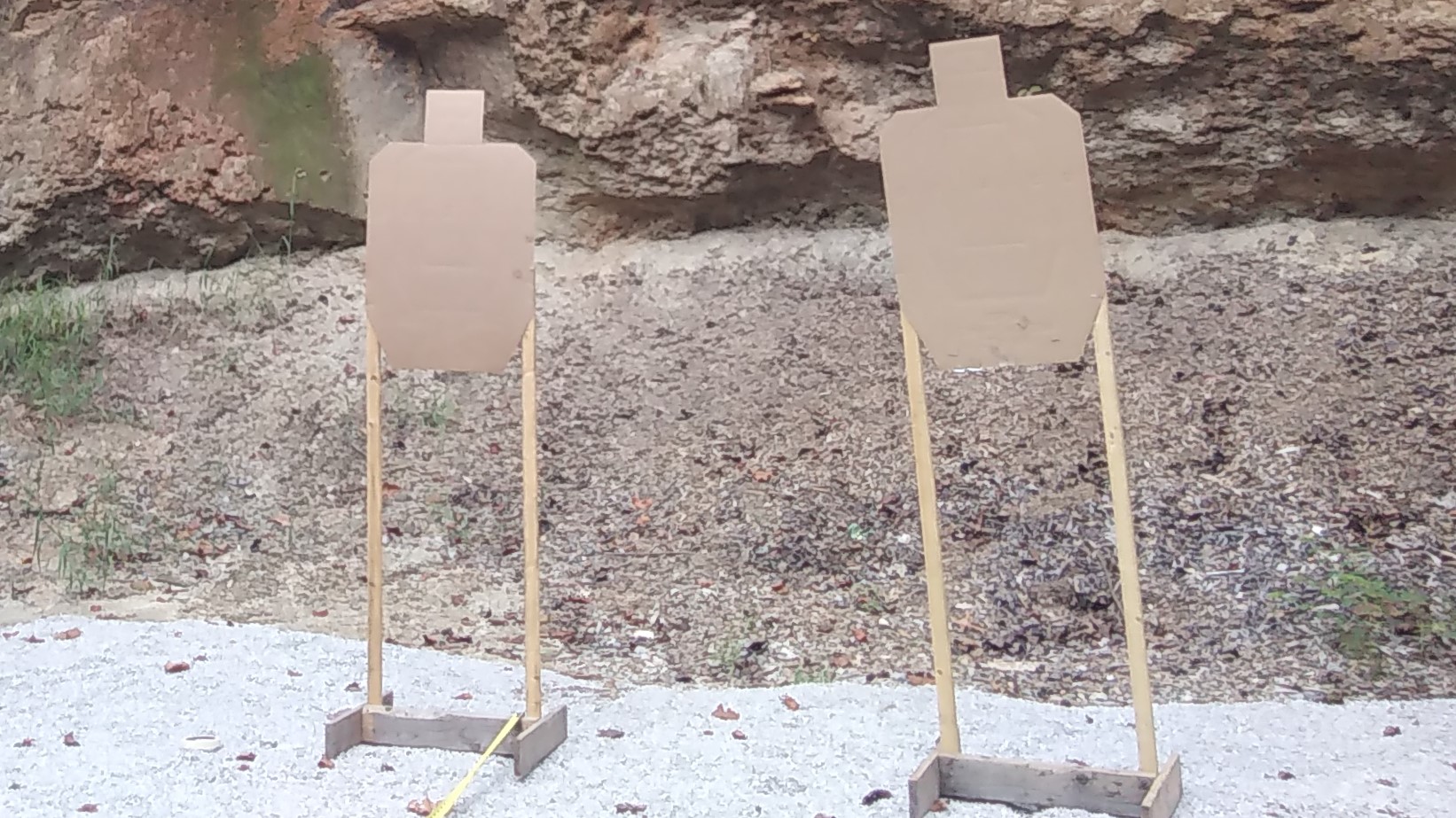
For scoring, I divided the A zone in half. This gave an A zone of 6 inches wide by 5.5 inches long. Hits in the lower part were counted as B hits. This is a scoring system the late Todd Louis Green https://pistol-forum.com/ suggested and I like it. It’s more rigorous than the IDPA -0 zone. The time for each string was recorded.
The results of both sighting systems were then overall Comstock scored. https://www.ssusa.org/content/understanding-uspsa-comstock-and-virginia-count/ This means points achieved divided by shooting time. The results were interesting. The Iron sights had a Comstock score of 4.33, while the Laser had a score of 4.29. Not a significant difference and the laser was not nearly the disadvantage in daylight that’s popularly assumed.
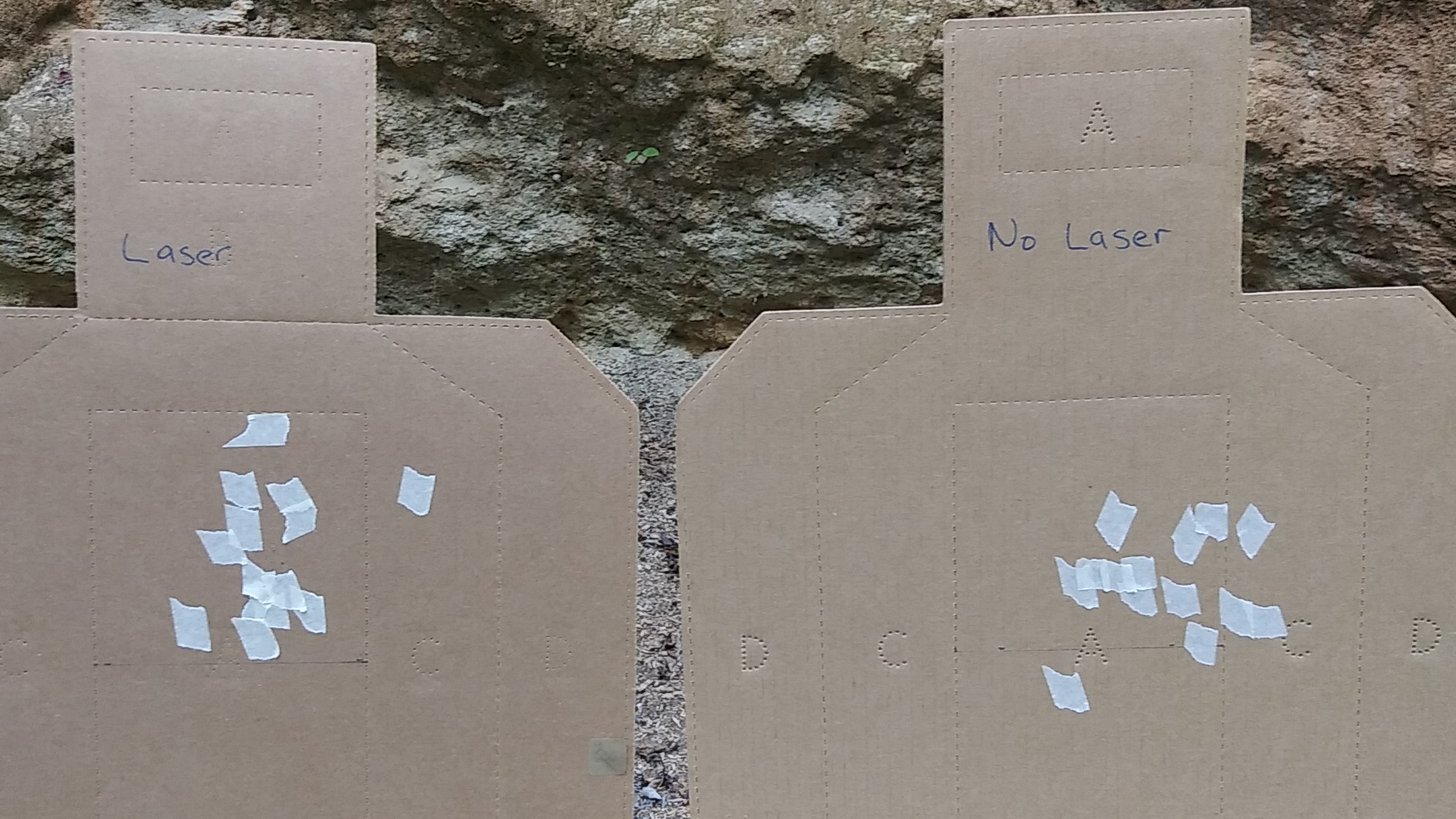
The next phase of my evaluation will be to shoot the same protocol in bright sunlight and at dusk. Those results should provide some interesting contrast.
With regard to the holster, I found it to be quite satisfactory. My only observation is that because the gun and holster is so short, the butt of the gun tends to droop forward and reduce my concealment. On the way home, I stopped at Arbol de Dolares to purchase La Chancla https://www.npr.org/sections/codeswitch/2014/11/04/361205792/la-chancla-flip-flops-as-a-tool-of-discipline . I’ll cut a piece of the flip-flop off to glue onto the back of the holster as a pad, a la Keepers Concealment. https://keepersconcealment.com/
Overall, I very pleased with the results. This makes about 700 rounds through the 856 with no issues. The laser worked well and the holster is satisfactory. A good EDC that I’m comfortable with.
Better Aim – Shooting From a Vehicle
#fridayfundamentals
Let’s learn something from the recent Yahoo story about “Chicago rideshare driver with concealed carry license shoots 2 robbers who stole his cellphone, fired at him” https://thetacticalprofessor.net/2023/08/13/needs-to-have-better-aim-redux/
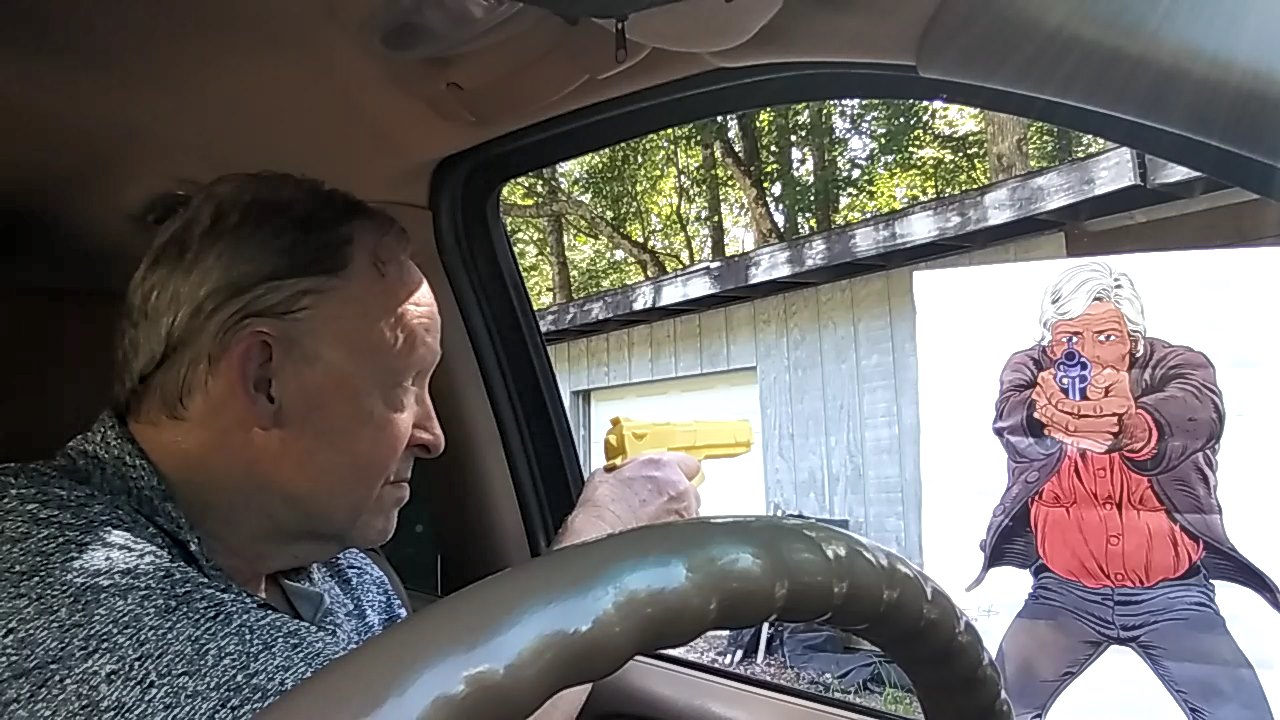
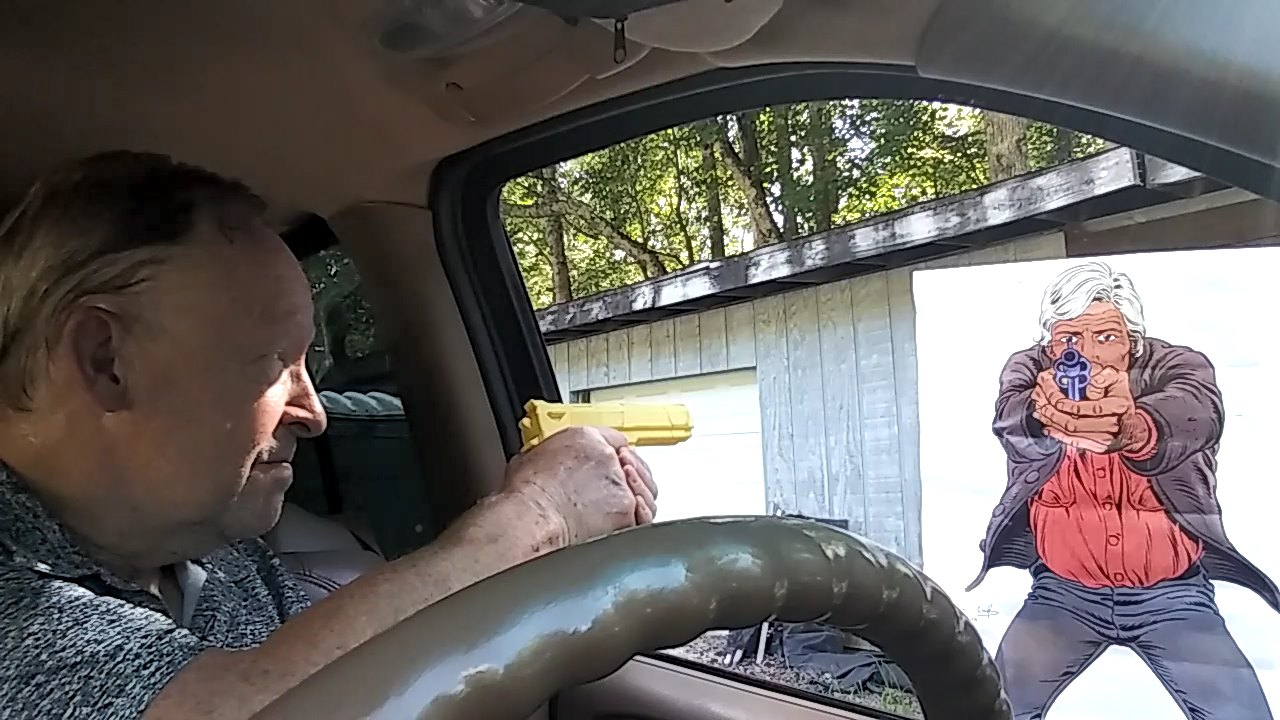
Shooting from the driver’s seat of a vehicle at a carjacker less than two yards away requires a different technique to be successful at making good hits. Using an inert pistol is a good way to try it out. They’re available for $20 or less at martial arts stores or online. Even if it doesn’t fit your holster, you can just put it on your lap.
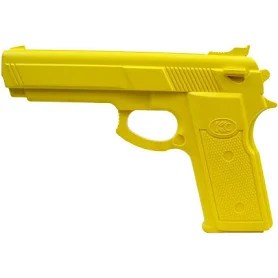
Using the inert gun, you can practice indexing on a target. You’ll probably see that one handed and two handed presentations yield different forms of target index. Neither of them will look like either a usual sight picture or classic point shooting.
One handed presents almost vertical.
A two handed presentation will produce an index much more canted to the side than one handed. It takes a little getting used to place the muzzle accurately on the target.
Anyone who considers themselves a serious student of the Art should have an inert pistol of some sort. You can use it to practice things you can’t safely do with a real pistol. A SIRT gun is an ideal tool for this but not everyone is willing to spring that kind of cash. For less than the cost of a box of ammo, you can get a training aid that can be used in many different ways.
FBI Double Action Course
#wheelgunwednesday
Prior to the FBI adoption of the Wheaties cereal box sized S&W Model 1076 in 1990, revolvers were the Bureau’s sidearm for well over half a century. After the FBI switched to the S&W Model 13 revolver in 1981, it created a publication, FBI Revolver Courses and Techniques, for using the gun with the Weaver technique.

“Sight Alignment: During close-in shooting (five to seven yards), the shooter does not have time to acquire perfect sight alignment. The shooter is, therefore, instructed to fire with both eyes open and to bring the sights up to eye level, seeing the front sight in the secondary vision. As distances increase, the need for better sight alignment increases and trigger pull should be slower.”
One of the Courses in the publication is the Double Action Course. It is intended as a practice regimen for double action shooting. The par times are short as is the allotted time for the one reload included. All strings are fired from the holster except one string at 15 yards.
DOUBLE ACTION COURSE (DAC)
The entire course is fired using the Weaver Position.
5 Yards
6 rounds -2 rounds on each whistle (in 3 seconds)
4 rounds -2 rounds on each whistle (in 3 seconds)
7 Yards
6 rounds -2 rounds on each whistle (in 3 seconds)
4 rounds -2 rounds on each whistle (in 3 seconds)
10 rounds -Load 6 rounds, on whistle, fire 6, reload 4 rounds, fire 4, all in 20 seconds.
15 Yards
6 rounds -2 rounds on each whistle (in 3 seconds). Fired from Weaver Ready.

4 rounds -All 4 rounds in 6 seconds
25 Yards
5 rounds -All 5 rounds in 10 seconds kneeling position
5 rounds -Repeat
Scoring: 2 points each for hits in either the KS or K4 area.
100 points possible.
Firing at an indoor range where drawing from the holster isn’t permitted can be done by using a table start.

Par times can be used via ear buds underneath hearing protection muffs and a par timer app on one’s cell phone. The phone’s Bluetooth connection will transmit the start and stop beeps to the ear buds.

Although it was shot by FBI Agents on the huge B-21 target, any silhouette will do.

It’s a fun course and very practical for those who carry a weapon.

Note to indoor range owners and operators. Granted that OSHA regulations can be onerous to work downrange maintenance with. But having inoperative carriers, targets left downrange on carriers and on the floor, thousands of fired brass cases in front of the booths, etc. presents a very unappealing scenario to the public. This is not a new phenomenon. In 1919, Walter Winans devoted an entire chapter WHY PISTOL SHOOTING IS UNPOPULAR in his book The Modern Pistol and How to Shoot It about the unpleasantness of this experience.
Reliability Testing
A colleague asked me a few days ago:
“How many rounds would you say make up a legitimate ‘reliability test’ for a pistol?”
My response was 100 because that’s more than 99.9% of people will ever fire a pistol they buy. He was surprised about this answer because he thought it would be considerably more.
There’s a very detailed discussion about it in a post I wrote years ago. Most of the cognoscenti who were responded to the question then felt that 1000 rounds was the minimum desirable number. There were certain aspects of their analyses leading to that conclusion that I felt weren’t explored with enough depth.
https://thetacticalprofessor.net/2017/04/21/reliability/
Numerous justifications for 1000 round torture tests were presented to me by the cognoscenti. One of the mathematical analyses presented in the original Facebook discussion was that 5 malfunctions per 1000 meant more than one malfunction in a 17 round magazine (8.72%). My belief about that obtuse analysis remains the same.
“If I’m going to have at least one malfunction per magazine, I’ll just keep carrying a revolver.”
I’ll write a bit more about my latest revolver work for #wheelgunwednesday next week.

Hahaha. Alt Text autogenerated by Microsoft Word for the above picture:
“A board game with brown squares”
The Value of Historical Methods
A viewer of my Shooting to Live Advanced Methods demo YouTube video asked an interesting question.
“Do you think that there is any value added by practicing the WWII Combatives shooting methods beyond learning historical training firsthand?”
In a conversation with him, he further elaborated that he was asking from his perspective as a competent shooter who practices regularly using demanding time and accuracy standards. From that perspective, my answer was NO. The only value to him would be for historical academic interest. There is nothing that will be learned of practical value for someone with his level of proficiency.
However, I continued on by saying that to the millions of first time gun buyers of the past few years, MAYBE. Only a miniscule fraction of those people will ever take a class on gun safety and learn how to shoot to some standard, whatever that standard might be.
For those millions of first time gun buyers, studying actual WWII shooting combatives, such as Shooting to Live and Field Manual 23-35 Pistols and Revolvers (1946), could have some value. Shooting to Live and its immediately successor, US Army Combat Firing, at least provide some structure and standards for brand new pistol shooters. Any system based on real combat is preferable to going to an indoor range and randomly blasting away based on what’s shown on TV.
I began the long term series about ‘Unsighted Fire’ aka Point Shooting on Patreon for a very specific reason. It is that obviously the vast majority of people who write about point shooting or make YouTube videos on “Fairbairn Method” shooting have never really read or studied any of the literature about it, including Shooting to Live. From the perspective of an historian and researcher, this lack of fact based information is both annoying and disturbing.
The gunhandling and safety aspects of WWII pistol combatives alone have a great deal of merit. Gripping the pistol properly. A strong emphasis on practical gunhandling in addition to marksmanship. Including malfunction clearance in early stages of Live Fire. Equal weight on Dry Practice as Live Fire, especially prior to the initial firing practice. Highlighting the concept of treating a pistol as always loaded. Emphasizing the importance of muzzle direction when handling a pistol. Practicing clearing and making the pistol safe when less than a magazine has been fired. Those are all highly useful skills, probably even more so than the marksmanship standards, which were not very high.
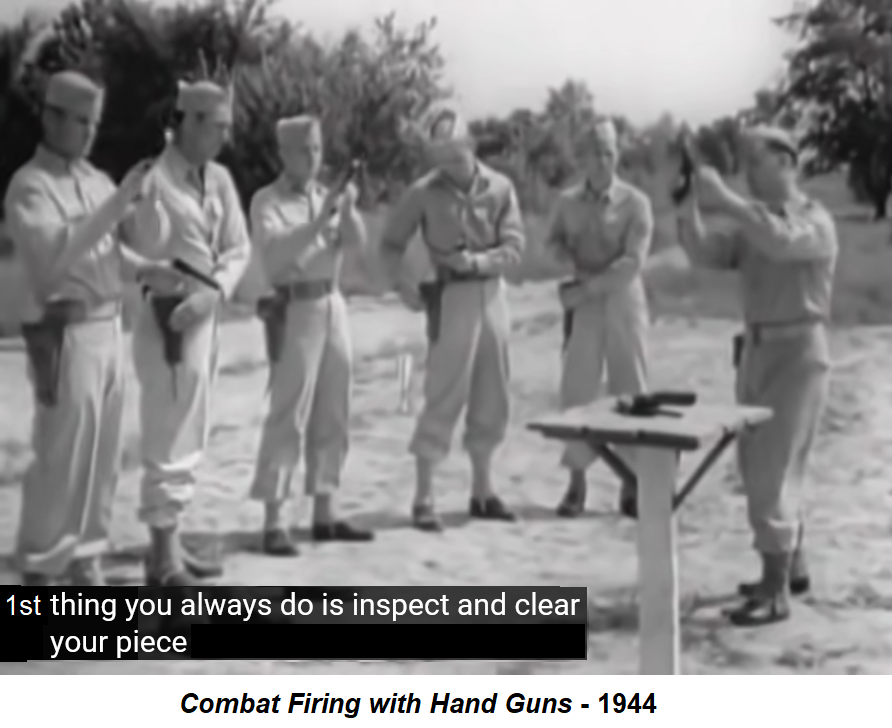
But please avoid muzzling your instructors. We won’t be happy about that. We will try to keep away from putting ourselves in a position where you can.
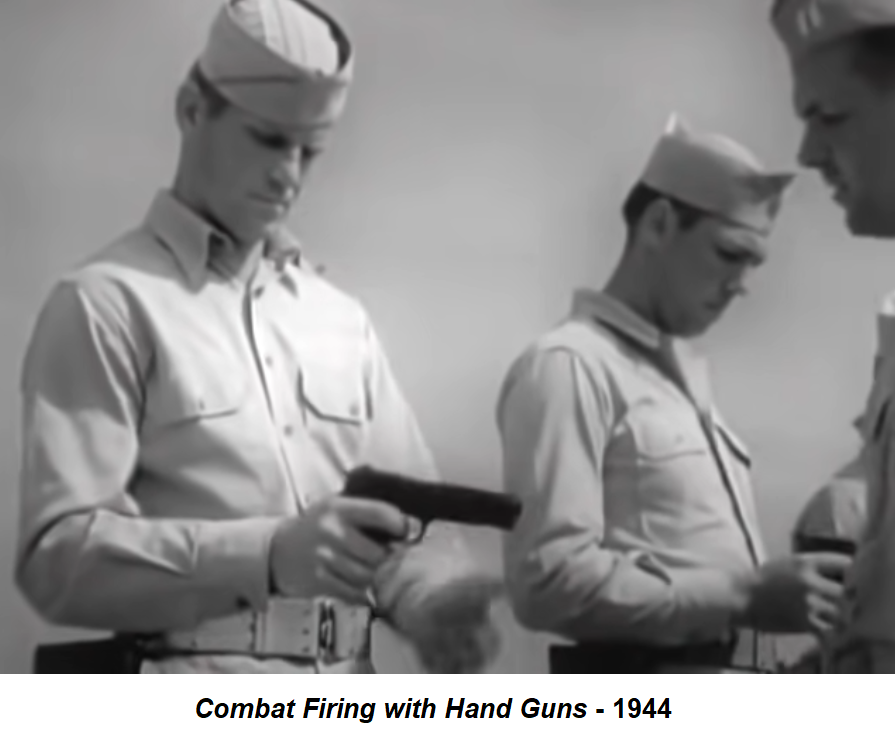
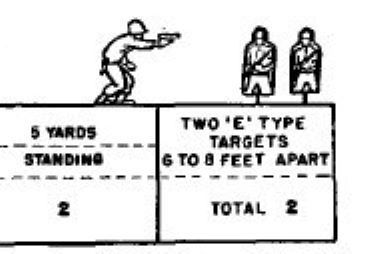
While the hit standards Shooting to Live and Field Manual 23-35 Pistols and Revolvers (1946) establish are rudimentary, they do give new shooters an idea that they’re supposed to actually hit something when shooting. The standard in Shooting to Live is 50 percent hits on a silhouette for single presentations within Social Space (4 yards). The 1946 US Army standard was 100 percent hits for single presentations on an E Silhouette at 5 yards.
Although most proficient shooters today would consider the techniques obsolete and the standards mediocre, at best, they’re still better than practicing what’s seen on TV and in movies. TV and movies are where most gunowners’ training takes place and that’s bad news.
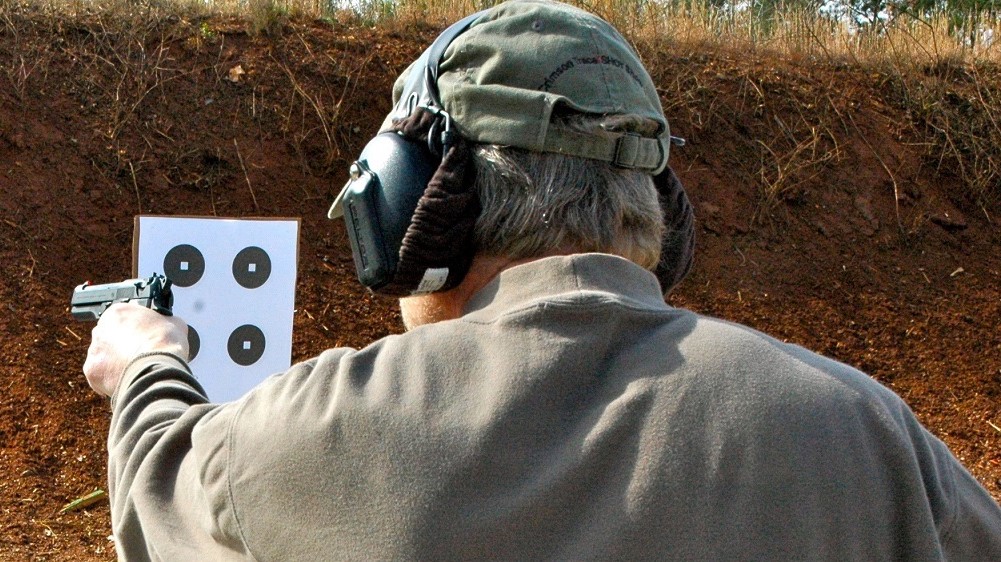
If you would like to follow my Patreon page to go into more depth about point shooting and personal protection incidents, click on the image below.
Subcompact Pistol (LCP) Progress Evaluation
This is a short course I devised for my Patreon snub revolver and subcompact pistol programs. It’s based on the Nevada Concealed Firearms Permit Qualification Course. Instead of just shooting three long untimed strings (3, 5, and 7 yards), the timing is based on Lt. Frank McGee’s 3 shots, 3 seconds, 3 yards paradigm. Several additional start positions are also included.
It has some cool music too. Somewhat reminiscent of the soundtrack from the TV series Lex.
LAPD Shooting Re-enactment
An LAPD officer, using a Red Dot Sighted pistol, was forced to shoot a hostage taker at a range of five feet in July of 2021. The Board of Police Commissioners number for the incident is Categorical Use Of Force number 041-21. Tactics, Drawing and Exhibiting, and Use of Deadly Force by Officer A in the incident were all adjudicated as In Policy by the BOPC.
This video re-creates the marksmanship problem faced by the officer. The target was moving for the officer, which this video does not re-create. The pistol used in the video is a Glock 42 supplied by Glock for my Subcompact Pistol Training Tier on Patreon.
In keeping with the LAPD theme of the video, the second part of the video contains a demonstration of a permissible variation of the LAPD Retired Officer Qualification Course, also shot with the Glock 42. This Course has value to the Armed Private Citizen as a self-evaluation of some good to have marksmanship skills for concealed carry.
Firearms are relentlessly unforgiving
Firearms are relentlessly unforgiving of the smallest lapse in attention or good judgement.
The shooting of a special police officer during a training exercise at a D.C. library came as the group of trainees had gathered to take a picture and were ‘joking around,’ according to court documents.
[The shooter, a retired POlice lieutenant], who conducted the training as a private contractor, was arrested Friday and has now been charged with involuntary manslaughter in Manyan’s death.
Before, during, and after training or dry practice, there’s no room for “joking around.”
One of the very first things I learned in the Army from the men who had just returned from Vietnam was:
F8ck around, f8ck around, get yourself or someone else killed.
It’s a lesson I’ve kept in mind for 50 years. RIP Officer Manyan.
 tacticalprofessor
You must be logged in to post a comment.