The LCP Project – Ill-Annoy CCL Qualification
The Ruger LCP is a far more capable gun than it’s given credit for. The LCP Project is intended to show what the gun is capable of and some modifications and equipment that are useful when carrying and shooting it.
This video shows the 10 yard stage of the Illinois (Ill-Annoy) Concealed Carry License Qualification shot with a Ruger LCP. The target was a standard B-27 with the addition of a legal size sheet of paper. The sheet of paper is the size of the scoring area of the Illinois POlice qualification that the CCL Qual is derived from. The score on the legal sized sheet was 100%. Note that when the Course is shot to obtain a CCL, hits anywhere on the silhouette count and only 21 hits (70%) are required to pass.
Ammo for the LCP Project was furnished by Ammoman https://www.ammoman.com/
Tactical Professor books (all PDF)
- Thinking Clearly about Self-defense and Personal Protection https://www.payloadz.com/go?id=3377208
- Real Shootouts of the LAPD https://realshootoutsofthelapd.com/
- Serious Mistakes Gunowners Make http://seriousgunownermistakes.com
- Indoor Range Practice Sessions http://indoorrangepracticesessions.com
- Concealed Carry Skills and Drills http://concealedcarryskillsanddrills.com
- Advanced Pistol Practice http://bit.ly/advancedpistolpractice
- Shooting Your Black Rifle http://shootingyourblackrifle.com
- Package deal of Thinking Clearly about Self-defense and Personal Protection, Serious Mistakes, Indoor Sessions, Concealed Carry, and Shooting Your Black Rifle (50% off) https://store.payloadz.com/details/2644448-ebooks-sports-shooting-drills-package.html
Purchase of any book includes Serious Mistakes Gunowners Make.
STOPP Presentation at Rangemaster Tactical Conference
Defense of Others
#fridayfundamentals
‘Self-defense’ is only one subset of Personal Protection. Defense of Others is the other subset. September’s Armed Citizen column of the NRA Journals Shooting Illustrated – September 2021 has two incidents involving Defense of Others. Both occurred in public places outside the home. One was successful, the other Not So Much. Defense of Others situations often do not fall in the 3 shots, 3 seconds, 3 yards paradigm.
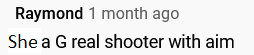
In the successful incident, a man and woman were in a Madera, California Wal-Mart parking lot. The man was attacked, the woman pulled out her pistol from her car, fired one round, and dropped the attacker in his tracks at 10 yards. In the words of commentator Raymond:
In the Not So Much successful incident, Calvin ‘Mad Dog’ Gonnigan shot at three people in Chicargo who were celebrating Independence Day. A nearby Concealed Carry Licensee shot at ‘Mad Dog’ but only peripherally wounded him several times. ‘Mad Dog’ left but then came back to murder one of his victims by shooting her in the face and even further seriously wounding the other two victims. Eventually, the POlice arrived from the District Headquarters, which was a block away, and took ‘Mad Dog’ into custody.

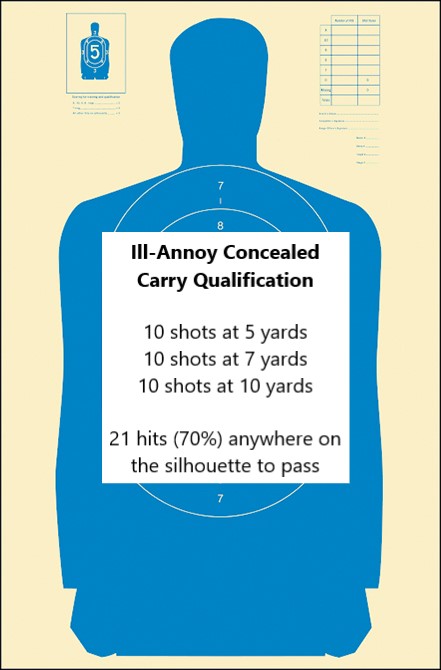
Madera County is largely rural. It’s a likely bet that the woman had practiced her aim before. Chicargo, being an urban area, is unlikely to result in much practice. That’s probably why ‘Mad Dog’ did most of his shooting at close range and probably why the CCL was not particularly successful. The Illinois qualification course can be passed by only hitting one shot out of 10 at 10 yards and that only has to hit an arm of the silhouette target.
For those who carry a gun not only to protect themselves but also to protect their loved ones and friends, getting in a little structured practice can be useful, maybe even life saving. Indoor Range Practice Sessions http://indoorrangepracticesessions.com has a series of drills that could be done even in Chicargoland. And Serious Mistakes Gunowners Make is included with your purchase.

Tactical Professor books (all PDF)
- Thinking Clearly about Self-defense and Personal Protection https://www.payloadz.com/go?id=3377208
- Real Shootouts of the LAPD https://realshootoutsofthelapd.com/
- Serious Mistakes Gunowners Make http://seriousgunownermistakes.com
- Indoor Range Practice Sessions http://indoorrangepracticesessions.com
- Concealed Carry Skills and Drills http://concealedcarryskillsanddrills.com
- Advanced Pistol Practice http://bit.ly/advancedpistolpractice
- Shooting Your Black Rifle http://shootingyourblackrifle.com
- Package deal of Thinking Clearly about Self-defense and Personal Protection, Serious Mistakes, Indoor Sessions, Concealed Carry, and Shooting Your Black Rifle (50% off) https://store.payloadz.com/details/2644448-ebooks-sports-shooting-drills-package.html
Purchase of any book includes Serious Mistakes Gunowners Make.
STOPP Presentation at Rangemaster Tactical Conference
https://tacticalprofessor.wordpress.com/2021/09/14/stopp-presentation-now-available/ https://www.payloadz.com/go?id=3381307
Recognition Primed Decision-making (part V)
As stated in Part IV https://tacticalprofessor.wordpress.com/2021/07/31/recognition-primed-decision-making-part-iv/ of the series:
A predator also has a group of Options/Reactions when the intended victim begins to Confront or Resist rather than being caught up in the Victim Mix.
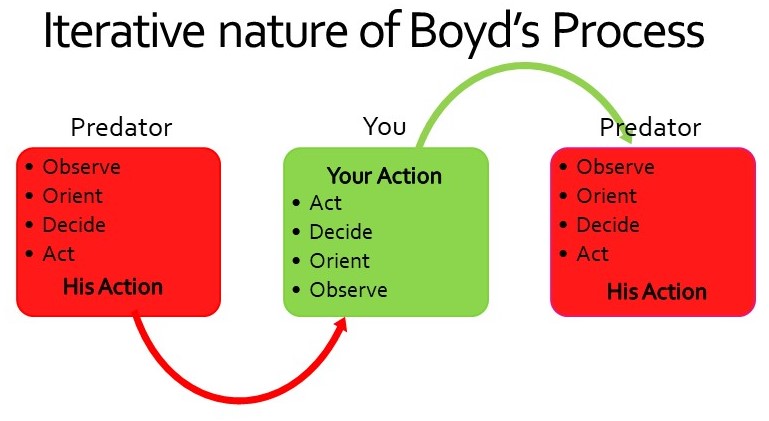
Since Boyd’s Process is iterative and interactive rather than static, a predator takes a ‘turn’ in the process after the intended victim’s response. If the intended victim Freezes or Complies, the predator will exploit the opportunity. Even if the intended victim chooses to Confront or Resist, the predator still has a group of Options/Reactions available, unless he has been instantly put out of action by the intended victim’s Resist choice. These options are similar, but not identical, to the intended victim’s list.
- Fight
- Flight
- Comply
- Freeze
- Increment
An example of the criminal’s possibilities would be if an Armed Citizen responded to an armed predator by shooting the predator. If the predator was incapacitated by the shot, it would be a version of Comply because they are no longer threatening the Citizen. If the predator wasn’t incapacitated, he could also choose Flight, which is probably the most common response to armed resistance. In either case, the incident is no longer a gunfight. The Citizen must choose a different response than if the predator chose to Fight.
The sad case of Caroline Schollaert https://tacticalprofessor.wordpress.com/2021/08/12/suspect-held-at-gunpoint-temporarily/ makes clear that sometimes predators do choose the Fight option. Fight and Flight are not mutually exclusive. The unfortunate incident involving Lieutenant Williams in Chicargo https://tacticalprofessor.wordpress.com/2021/02/26/using-cover-effectively/ makes this abundantly evident. The lack of mutual exclusivity is another reason why chasing a predator who has taken flight can be dangerous.
Another possibility to consider is that youthful or first time predators may simply Freeze in response to an Armed Citizen Confronting or Resisting. When this happens, it’s neither Fighting nor Failing to Comply but rather simply becoming overwhelmed mentally when the predation doesn’t go according to plan. Initially, this may look like Compliance, say, to a command of “Don’t Move” or “Freeze,” but then when further commands are given, there is no response. We need to recognize the possibility that predators may not be completely in control of their own bodies once actual conflict begins. The attempted home invader in Hesperia, California https://www.foxla.com/news/shocking-video-captures-shootout-between-suspect-who-tried-to-break-into-home-homeowner-in-hesperia probably did not intend to pee in his pants during the gunfight. Even though he had enough presence of mind to use cover and to recover ammunition he had ejected on the ground, he wasn’t completely in control of his body.
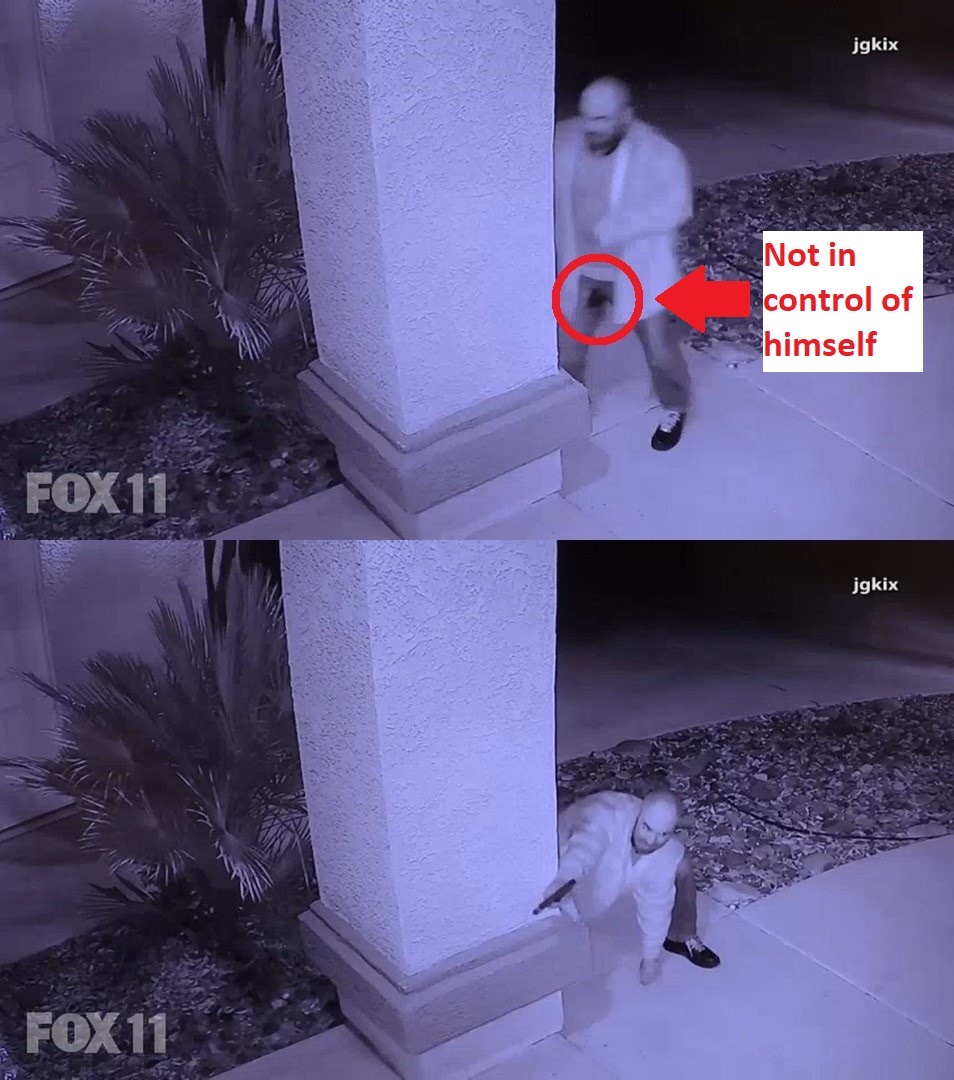
Consequently, commands like “Get on the Ground” or “Hands up, Manos Arriba!” may not result in the predator doing what he’s told to do even if he wants to. The predator may not be able to do what he’s being told to. One of the best commands may be “Get out of here.” The idea that a predator will then intentionally flee to ‘a position of cover’ or ‘circle around’ to continue the fight is probably a figbar of gunwriter imagination. We can also give the “Get out of here” command to ourselves, if only mentally.
An experienced predator may choose the Increment response when Confronted. This is a dangerous situation for those Armed Citizens who lack experience at dealing with predators. It is the predator’s equivalent of the Negotiate response by a defender. However, the predator’s intent is to close the distance to the defender and gain a more advantageous position for a takedown or weapon takeaway. Two tactics can help prevent a Negative Outcome from such a situation. The first is that a verbal Confrontation must be forcefully delivered. Most people need to practice delivering commands before they actually need to. The saying “He who hesitates is lost” applies here. Hesitation is not necessarily in terms of time but also to being tentative when delivering a command. The second tactic is to have a ‘line in the sand.’ The concept of a line in the sand is the real utility of the Tueller Principle https://www.armedcitizensnetwork.org/44-our-journal/86-the-tueller-drill-revisited.
It’s also worthy of note that at any time after the beginning of the predation, third parties can and do inject themselves into the action. The recent case of an Armed Citizen who stopped an Active Killer event but then was shot by a responding Officer is an excellent, although unfortunate, example. Boyd’s Process is far more involved than the simplistic circular diagram usually depicted. Rather, the process then becomes an intricate flowchart that can be very hard to navigate.
Predators have their own array of options that are similar, but not identical, to the Armed Citizen’s. We need to bear in mind what those options are before we initiate our response to the initial predation. Knowing the predator’s possible reactions then allows us to be prepared for their response to Confrontation or Resistance. That response may not be what we want it to be and we will have to either counter it or take advantage of it.
Tactical Professor Information Products
STOPP Presentation at Rangemaster Tactical Conference
https://tacticalprofessor.wordpress.com/2021/09/14/stopp-presentation-now-available/
https://www.payloadz.com/go?id=3381307
Books (all PDF)
- Thinking Clearly about Self-defense and Personal Protection https://www.payloadz.com/go?id=3377208
- Real Shootouts of the LAPD https://realshootoutsofthelapd.com/
- Serious Mistakes Gunowners Make (included with the purchase of any other product) or available separately http://seriousgunownermistakes.com
- Indoor Range Practice Sessions http://indoorrangepracticesessions.com
- Concealed Carry Skills and Drills http://concealedcarryskillsanddrills.com
- Advanced Pistol Practice http://bit.ly/advancedpistolpractice
- Shooting Your Black Rifle http://shootingyourblackrifle.com
- Package deal of Thinking Clearly about Self-defense and Personal Protection, Serious Mistakes, Indoor Sessions, Concealed Carry, and Shooting Your Black Rifle (50% off) https://store.payloadz.com/details/2644448-ebooks-sports-shooting-drills-package.html
Friday Fundamentals – Ball and Dummy
My last post about shooting Dots https://tacticalprofessor.wordpress.com/2021/09/24/marksmanship-practice-shooting-dots/ generated a few questions about whether my ammo was bad. No, I incorporated random Ball and Dummy into the Dot Drill, just as I do in most of my practice sessions. Ball and Dummy, both random and alternating, is an excellent method for evaluating how smooth your trigger press is and if you are refining your sight picture adequately. This is not the same as practicing malfunction clearance, as mentioned in the article.
Highly recommended. My favorite dummies are from ST ACTION PRO. They are inexpensive, highly visible, and don’t get lost on the range as much as others do.
Tactical Professor Information Products
STOPP Presentation at Rangemaster Tactical Conference
https://tacticalprofessor.wordpress.com/2021/09/14/stopp-presentation-now-available/https://www.payloadz.com/go?id=3381307
Books (all PDF)
- Thinking Clearly about Self-defense and Personal Protection https://www.payloadz.com/go?id=3377208
- Real Shootouts of the LAPD https://realshootoutsofthelapd.com/
- Serious Mistakes Gunowners Make http://seriousgunownermistakes.com
- Indoor Range Practice Sessions http://indoorrangepracticesessions.com
- Concealed Carry Skills and Drills http://concealedcarryskillsanddrills.com
- Advanced Pistol Practice http://bit.ly/advancedpistolpractice
- Shooting Your Black Rifle http://shootingyourblackrifle.com
- Package deal of Thinking Clearly about Self-defense and Personal Protection, Serious Mistakes, Indoor Sessions, Concealed Carry, and Shooting Your Black Rifle (50% off) https://store.payloadz.com/details/2644448-ebooks-sports-shooting-drills-package.html

What is ball and dummy?
Sometimes, we instructors take our subject matter knowledge for granted. A friend posted that she was pulling a few of her shots low and left. She’s right handed. My reply was ‘ball and dummy.’ She then asked me what that meant.
Ball and dummy means interspersing dummy (inert) ammunition among your live ammunition during a practice session. It’s a key training tool at the elite Rogers Shooting School. The dummies can be random, e.g., three or four dummies in a 15-17 round magazine. They can also be alternating; i.e., live, dummy, live, dummy, live, dummy, etc. for the entire magazine.
The purpose of ball and dummy is to watch the sights when the dummy round is clicked on to learn how smoothly, or not, you are pressing the trigger. Ball and dummy for marksmanship training is NOT the same as an Immediate Action Drill…
View original post 277 more words
Marksmanship practice – shooting dots
#fridayfundamentals
I’ve written about shooting dots and the history of dot shooting in a previous post. https://tacticalprofessor.wordpress.com/2018/07/27/the-origin-and-evolution-of-dot-torture/
This is a video I made a decade ago about how to shoot dots. The Course of Fire details are in my previous post.
Tactical Professor Information Products
STOPP Presentation at Rangemaster Tactical Conference
https://tacticalprofessor.wordpress.com/2021/09/14/stopp-presentation-now-available/
https://www.payloadz.com/go?id=3381307
Books (all PDF)
- Thinking Clearly about Self-defense and Personal Protection https://www.payloadz.com/go?id=3377208
- Real Shootouts of the LAPD https://realshootoutsofthelapd.com/
- Serious Mistakes Gunowners Make http://seriousgunownermistakes.com
- Indoor Range Practice Sessions http://indoorrangepracticesessions.com
- Concealed Carry Skills and Drills http://concealedcarryskillsanddrills.com
- Advanced Pistol Practice http://bit.ly/advancedpistolpractice
- Shooting Your Black Rifle http://shootingyourblackrifle.com
- Package deal of Thinking Clearly about Self-defense and Personal Protection, Serious Mistakes, Indoor Sessions, Concealed Carry, and Shooting Your Black Rifle (50% off) https://store.payloadz.com/details/2644448-ebooks-sports-shooting-drills-package.html
Intended Victim not ‘Subject’
The man did not know he was being followed according to police and once at the man’s home, [the shootee] allegedly produced a firearm and confronted the subject [sic] as he was trying to get out of his vehicle and go into his home.
https://wfxl.com/news/local/valdosta-shooting-ruled-self-defense
‘Subject,’ in POlice terms, is almost always used in the context of a wrong doer. In current times, the default treatment of anyone who shoots someone else is that the shooter is a criminal who must then prove his or her innocence. While some States provide some legal protection for self-defense, unless you never travel outside the county you live in, those protections cannot be relied on. ‘Stand Your Ground’ should always be viewed as a courtroom strategy not a tactical option. Keep that in mind. Do your best to AVOID or ESCAPE prior to being forced into CONFRONT or RESIST.
Surveillance Detection is a useful skill. Your car mirrors are a tool for you to use frequently, especially at 5AM. It’s beneficial to always take a few turns for Surveillance Detection purposes prior to committing yourself to turning into your driveway or other place you cannot escape from. Once you are Decisively Engaged https://tacticalprofessor.wordpress.com/2014/06/25/situational-awareness-and-positioning-part-i/ because your path is blocked, you are forced to CONFRONT or RESIST.
Note also that “the man was able to retrieve a handgun of his own.” ‘Retrieve’ most likely means that the gun was in the car not on his person. This mention is not intended as commentary about leaving unsecured guns in cars. Rather, it is an observation that many of the incidents in my database involve successfully accessing guns that are stored off-body.
Tactical Professor books (all PDF)
- Thinking Clearly about Self-defense and Personal Protection https://www.payloadz.com/go?id=3377208
- Real Shootouts of the LAPD https://realshootoutsofthelapd.com/
- Serious Mistakes Gunowners Make http://seriousgunownermistakes.com
- Indoor Range Practice Sessions http://indoorrangepracticesessions.com
- Concealed Carry Skills and Drills http://concealedcarryskillsanddrills.com
- Advanced Pistol Practice http://bit.ly/advancedpistolpractice
- Shooting Your Black Rifle http://shootingyourblackrifle.com
- Package deal of Thinking Clearly about Self-defense and Personal Protection, Serious Mistakes, Indoor Sessions, Concealed Carry, and Shooting Your Black Rifle (50% off)
https://store.payloadz.com/details/2644448-ebooks-sports-shooting-drills-package.html
Purchase of any book includes Serious Mistakes Gunowners Make.
Trigger Press or Alignment on Target?
#fridayfundamentals
In the context of Three Shots, Three Seconds, Three Yards https://tacticalprofessor.wordpress.com/2021/05/08/3x3x3-level-one/, which is more important, trigger press or alignment on target? The conventional wisdom is that trigger press is the important factor in making hit in a self-defense situation. I’m always cautious about the metrics that underlie assumptions and doctrine, though.
Certainly, when shooting a B-8 target, trigger press is an important skill. However, if the gun isn’t in line with the target, does a smooth trigger press have any value? While this may seem like an advocacy of point shooting, it’s not, but that discussion is for another post.
This video is a preliminary experiment of aligning the gun on the target and then yanking/jerking the trigger. The pistol used is the gun with the trigger everyone loves to hate, a KelTec P32.
At this point, it’s just an experiment to me. What I’d like to have is more input from other shooters because I’m no longer neurologically equipped to yank/jerk the trigger.
Doing the experiment is fairly simple and only requires five rounds. A target is attached to this post.
At 3 yards, aim at the heart on the target, touch the trigger face, and then fire 1 shot with a trigger jerk. Repeat 4 times for 5 shots total. Email me, tacticalprofessor@gmail.com, a picture of your results. I’ll randomly award a package of my books to one person who sends me their results.
Tactical Professor books (all PDF)
- Thinking Clearly about Self-defense and Personal Protection https://www.payloadz.com/go?id=3377208
- Real Shootouts of the LAPD https://realshootoutsofthelapd.com/
- Serious Mistakes Gunowners Make http://seriousgunownermistakes.com
- Indoor Range Practice Sessions http://indoorrangepracticesessions.com
- Concealed Carry Skills and Drills http://concealedcarryskillsanddrills.com
- Advanced Pistol Practice http://bit.ly/advancedpistolpractice
- Shooting Your Black Rifle http://shootingyourblackrifle.com
- Package deal of Thinking Clearly about Self-defense and Personal Protection, Serious Mistakes, Indoor Sessions, Concealed Carry, and Shooting Your Black Rifle (50% off) https://store.payloadz.com/details/2644448-ebooks-sports-shooting-drills-package.html
Purchase of any book includes Serious Mistakes Gunowners Make.
The Sandra Ochoa Incident (Shooting Analysis II)
In a previous post https://tacticalprofessor.wordpress.com/2021/08/17/the-sandra-ochoa-incident-shooting-analysis/, I discussed Officer A’s shooting performance during the incident. The weapon system manipulation aspects also bear discussion.
This incident forced Officer A to manipulate two different flashlights in rapid succession. He approached the scene with a hand held light, which most industry professionals would consider a best practice. At the gate, he immediately had to make a SHOOT decision and held onto his handheld light while shooting using his weapon mounted light. His shooting grip was compromised as a result. This image capture is from immediately after his sixth shot.
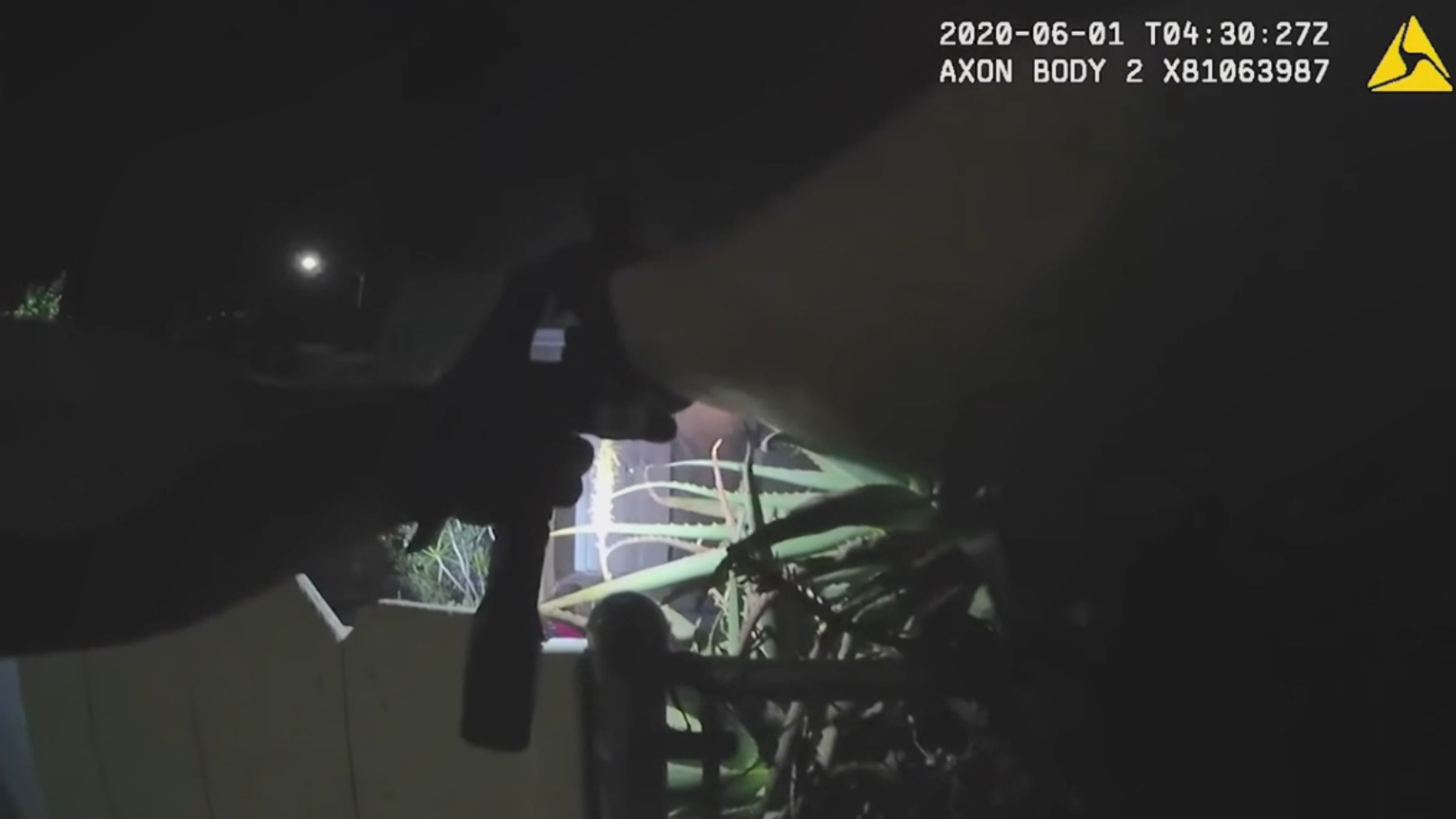
It’s apparent he is holding onto his handheld light with the ring and little fingers of his Support (left) Hand and trying to wrap his index and middle fingers around his pistol. The compromised grip may have been part of the reason for his low hit rate with the first five shots. This observation is not a criticism of Officer A, rather it’s a recognition of the complexity of the manipulation problem he encountered. Having and rapidly using two different types of flashlight in succession is not a training drill we often practice, myself included.
As is often the case, technology has advanced more rapidly than practical doctrine for using it. Several possibilities arise for using the two lights.
- Simply do the best you can with what you’ve got, as Officer A was forced to do.
- Shoot one handed, while maintaining control of the handheld light in the Support Hand.
- Drop the handheld, shoot with the weapon mounted light, and then retrieve the handheld light when necessary or feasible.
- Have the handheld on a large flexible ring that allows it to be dropped without losing total control of it. This is the approach I am currently experimenting with.
It’s worth noting that one incident in Real Shootouts of the LAPD involved the use of a flashlight. Also, some of the tragedies referenced in Serious Mistakes Gunowners Make could have been averted by the use of a flashlight. The Ochoa Incident gives us some food for thought about the need for doctrine and practice with flashlights.
Other Tactical Professor books (all PDF)
- Thinking Clearly about Self-defense and Personal Protection https://www.payloadz.com/go?id=3377208
- Serious Mistakes Gunowners Make http://seriousgunownermistakes.com
- Indoor Range Practice Sessions http://indoorrangepracticesessions.com
- Concealed Carry Skills and Drills http://concealedcarryskillsanddrills.com
- Advanced Pistol Practice http://bit.ly/advancedpistolpractice
- Shooting Your Black Rifle http://shootingyourblackrifle.com
- Package deal of Thinking Clearly about Self-defense and Personal Protection, Serious Mistakes, Indoor Sessions, Concealed Carry, and Shooting Your Black Rifle (50% off) https://store.payloadz.com/details/2644448-ebooks-sports-shooting-drills-package.html
How useful are sights on a pistol?
Since I’ve gathered some data on the topic in the past, I am going to link to a Lucky Gunner article about using the sights on a pistol.
I did an experiment years ago in which 10 different experienced shooters tried point shooting a single round at a silhouette starting at one yard. Then the distance was increased one yard at a time for the group. To test whether some form of visual indexing to the pistol was necessary, each shooter had a piece of cardboard placed horizontally in front of him at neck level so there was absolutely no visual reference to the pistol’s orientation. There was no time limit, the shooters were free to adjust their pointing until they thought they were on target.
The bullets starting hitting the ground at two yards. Only one shooter was able to make a hit anywhere on the silhouette at 5 yards and that was a peripheral hit. I discontinued the experiment at that point.
I figured out everything I needed to know about hitting a target without visual reference to the gun and with the gun below the eye-target line from that experiment.
Using the sights (i.e., getting the pistol into the eye-target line) is how we learn to kinesthetically index the handgun. Ask someone to point their finger at any object. Notice they don’t do it outside of their ‘workspace’ the more or less basketball sized space in front of the chest, properly called the ‘ipsilateral visual field.’
We may not always use the sights in a fight but training with them is how we learn to correctly index the pistol kinesthetically.

Training the trigger finger
#fridayfundamentals
The trigger finger should move back as parallel to the bore as possible when pressing the trigger. Here’s a little exercise I designed at the elite Rogers Shooting School to help our clients practice moving the finger correctly. It requires no equipment and gives biofeedback on your performance. It is also the safest form of dry practice, other than from quizzical looks by others.
For revolver shooters, this is a powerful learning exercise.
I enjoy wearing my NRA Certified Instructor cap when I’m teaching, even when it’s not an NRA class. 🙂


You must be logged in to post a comment.