Downrange Incident During Home Invasion
From the Armed Citizen http://graphics.nra.org/ac/ac-138.html this month.
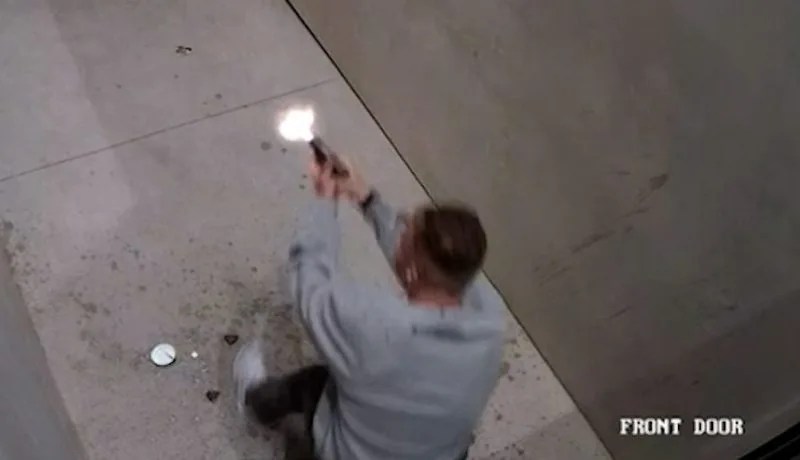
Authorities say a man opened fire on a suspected burglar who attacked his wife at their home
Deputies said [the intruder] encountered a 74-year-old woman inside the residence and ‘began to struggle with her physically.’ Her husband heard her screams and saw her struggling with Jackson. The man then retrieved his firearm and shot Jackson in the right shoulder.
This is what I call a ‘downrange incident.’ I.e., there’s an innocent party downrange and in close proximity to the attacker. Incidents where close range precision is required are more common than is realized.
A downrange drill is part of all my private sessions above the beginner level. The shooter has only one round in the pistol. Two IDPA targets downrange with one placed directly to the side of the -0 zone. The shooter can advance to any distance they feel they can make a -0 hit, either head or body, on the first shot without hitting the hostage. Even experienced shooters tend to get somewhere within Social Space (4-12 feet).
It doesn’t have to be an IDPA match scenario
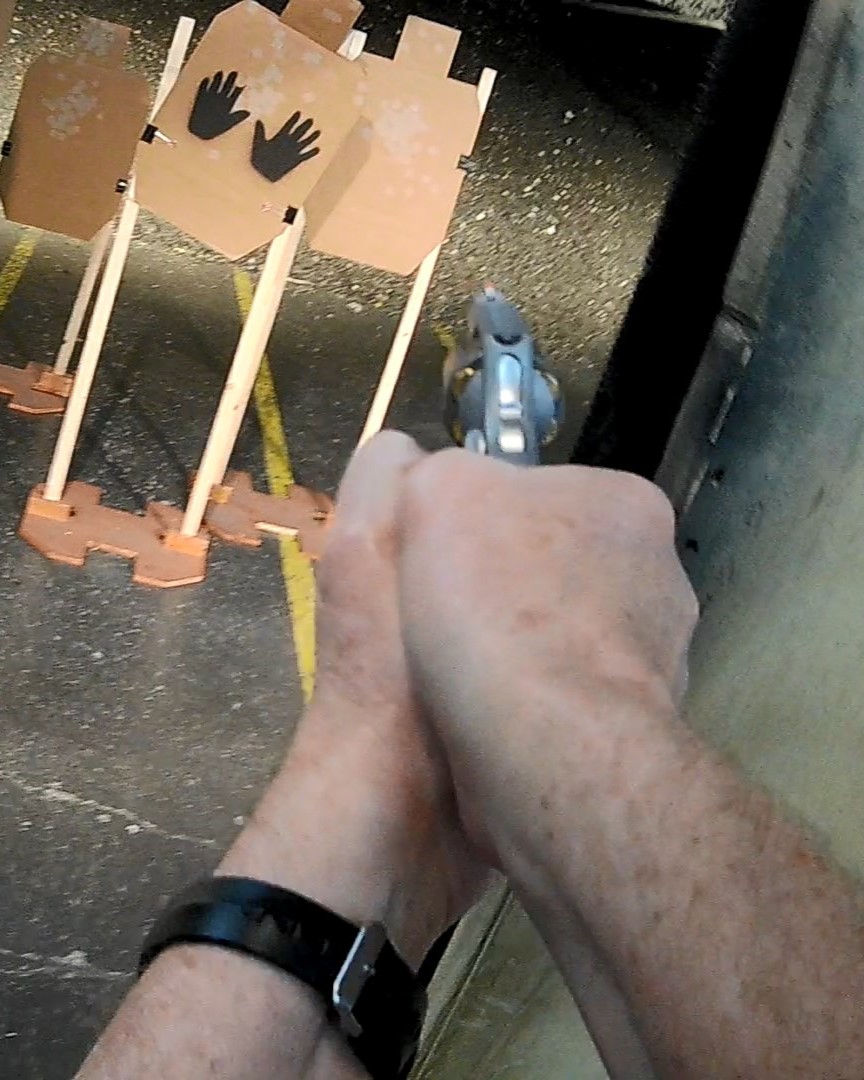
but practicing the ‘downrange shot’ occasionally is worthwhile.
The Cost of Killing Redux
#fridayfundamentals
I’ve written about the Cost of Killing several times. https://thetacticalprofessor.net/2016/07/24/the-cost-of-killing/ Even to someone who is involved but not the shooter, it’s incredibly hard on people.
Here’s yet another sad example.
I-Team: St. Louis family demands answers after double homicide case went from murder to self-defense
Note that the story begins with “Eric and Arron Smith were gunned down following a domestic violence incident,” as if they were innocent victims of a senseless shooting.
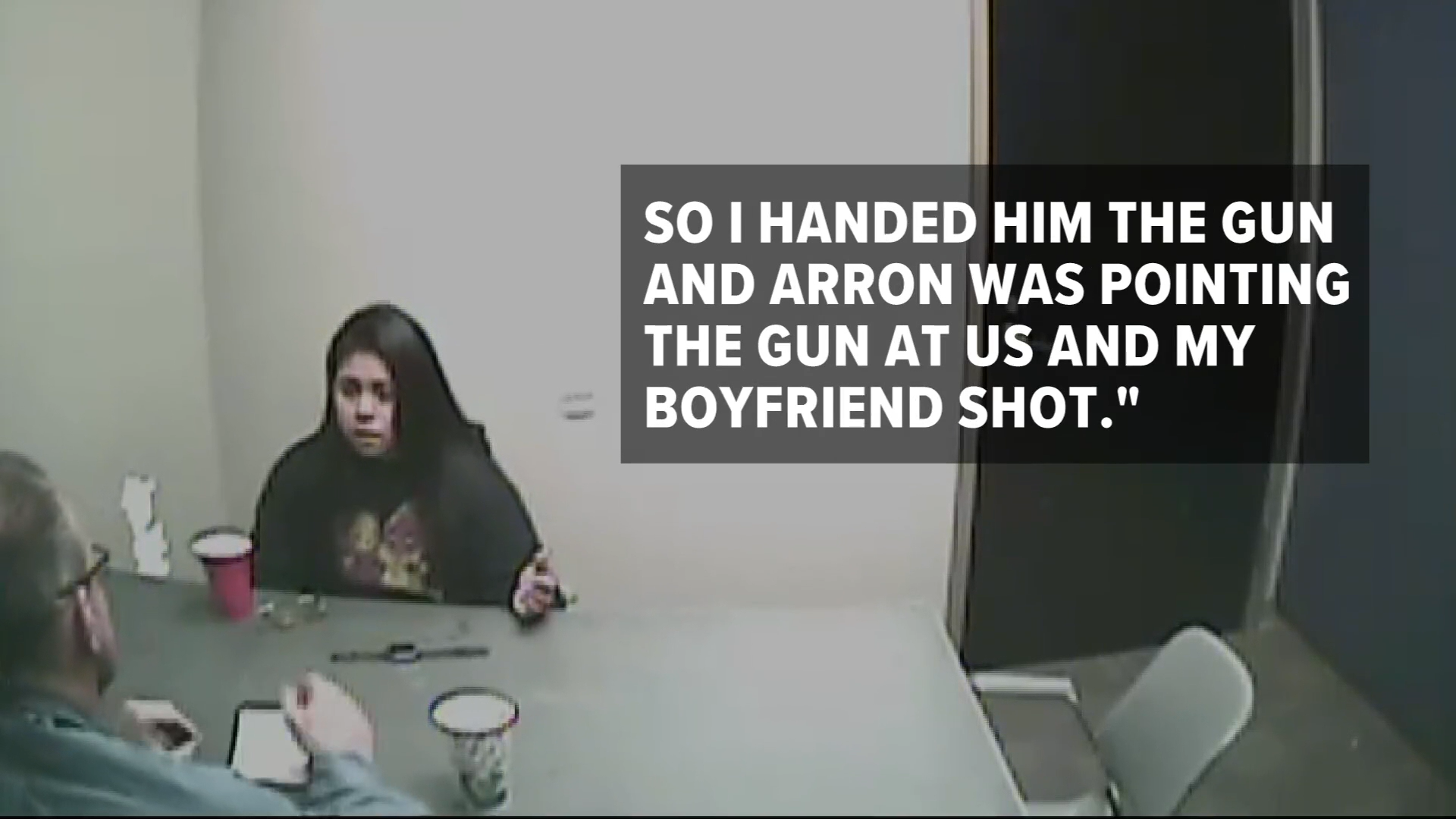
A précis of the incident is that a violent domestic abuser and his violent brother, Eric and Arron Smith, were shot and killed in self-defense by the victim’s sister’s boyfriend. The sister had stashed the abuser’s pistol in her purse when the rescue party arrived. The abuser’s brother arrived with his own pistol, beat one of the party with it, and gunpointed the rescuers. At that point, the victim’s sister took the abuser’s pistol out of her purse and gave it to her boyfriend. The boyfriend then shot and killed both the abuser and his gunpointing brother. The boyfriend was arrested, charged with Murder, and placed in Jail with no bond.
The prosecutor subsequently hid evidence from the shooter’s defense attorney. When this was uncovered by a Grand Jury and judge, the charges were reduced to Manslaughter, and the shooter was released on bond. Fourteen months later, shortly before trial, all charges were dropped.
The saddest part of the entire affair is that a few days before the trial was to begin, the sister who gave the gun to her boyfriend to protect the rescuers committed suicide. The shooter’s defense attorney didn’t want to speculate why she did that.
“We don’t know what occurred that led her to take her own life.”
Having been a party to the killing of two men she knew and then having to recount all the details in court is a good guess as to why.
“We weren’t trying to start any problems, we were just trying to help my sister,” she told the POlice.
RIP Kaylee Castro
Surveillance Detection Principles
#walkbackwednesday
In the April 1996 edition of the FBI Law Enforcement Bulletin https://leb.fbi.gov/file-repository/archives/april-1996.pdf/view , Supervisory Special Agent John C. Hall wrote:
“Realistic training does not state general platitudes and then leave officers to figure the rest out for themselves. It provides clear principles to govern the application of deadly force and then illustrates appropriate application through practical examples.” – p25
This could be paraphrased for Private Citizens as:
Realistic [education] does not state general platitudes and then leave [Citizens] to figure the rest out for themselves. It provides clear principles to govern [personal protection] and then illustrates appropriate application through practical examples.
Therefore, let’s consider Surveillance Detection. Surveillance Detection is a preemptive action that we can take to prevent getting into ugly situations at all. The following story is a reminder of its value.
Woman shot in the face in ambush as she’s followed home from store
https://news.yahoo.com/woman-shot-face-ambush-she-153809301.html
“Investigators say the women were driving home from a neighborhood market, and as they pulled into the driveway, they noticed a vehicle had followed them , KTRK reported.
A man got out of the vehicle and fired a single shot, striking the woman in the face, police told the outlet.”

There’s more to this story than stated in the article but that’s irrelevant in the educational context. These are some ‘clear principles’ and ‘practical examples’ of how to perform surveillance detection.
Principle 1
The time to notice that someone is following you is NOT when you turn into your driveway/parking spot as you a sitting duck. You should be aware of their presence long before then.

Look in your mirrors at least three times during turns as you drive home. All three times should be before you make the last turn onto your final approach, i.e., the street you live on. If you see the same vehicle behind you three times, you may have a problem.
Principle 2
If someone is following you, DON’T GO HOME. Or any other place where you will be a sitting duck either. One comment on the article was to go to a POlice station. Especially in the days of officer shortage and defunding the POlice, this isn’t a good idea. Call 911 and keep driving. If you’re in a ‘Hands-free’ State, maybe a POlice will pull you over and then you can explain why you’re on your phone. That should solve the problem right now. Other ideas are in this post. https://thetacticalprofessor.net/2023/09/29/surveillance-detection-after-a-confrontation/
As this poor woman found out, “Just because you’re paranoid doesn’t mean they are NOT out to get you.”
If you like my work, please consider supporting me on Patreon. https://www.patreon.com/TacticalProfessor I post a lot of content there that doesn’t go on my blog.
Pocket Carry
Now that cold weather is upon us, pocket carry in an overcoat pocket has some advantages. Pocket carry has both upsides and downsides.
Upsides
- It’s far easier to access a gun in a coat pocket than to undo the coat and draw a holstered pistol. This is especially true when you’re seated in a vehicle with a seat belt on.
- You can put your hand on your gun as soon as you perceive trouble or even walk around with your hand on your gun in general.
- A draw from the pocket, starting with hand on gun, is faster for most people than drawing from a concealed holster.
Downsides
- Pocket carry usually requires a smaller and more compact handgun.
- A separate pocket holster is advisable.
- You may be wearing gloves.
- If you come in from outside and have to hang up your coat in an unsecured area, you’ll need to do something with the pocket pistol to secure it.
- The pocket draw is a little different than drawing from a belt holster.
- Said smaller and more compact handgun will probably become your primary tool in an incident.
Most people don’t practice as much with their smaller guns as they do larger ones. Pocketable pistols are usually both ego challenging and uncomfortable to shoot. Nonetheless, some familiarization is a good idea.
The CCW Practical Exercise from Switzerland is short and uncomplicated familiarization drill. The Swiss are a very practical people.
All shooting is done wearing a concealment garment with a holstered weapon.
- 2 shots at 7 meters in 4 seconds. 3 times.
- 2 shots at 5 meters in 3.5 seconds. 3 times
- 2 shots at 3 meters in 3.0 seconds. 3 times.
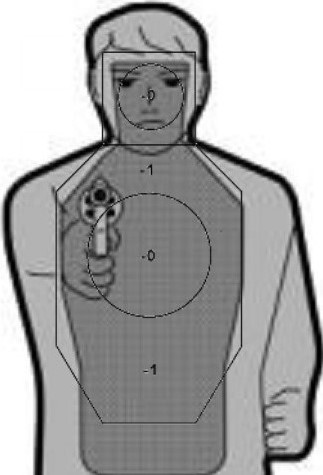
18 rounds total. 14 hits required to pass. The hit area (dark area) of their target is roughly equivalent to the IDPA -1 zone. Hits on the silhouette outside the hit area don’t count. They penalize 1 hit for any impacts outside the silhouette.
If you decide to pocket carry, it’s worth doing at least a short tuneup with your pocket pistol. A dry practice session for your draw is a must. A short live fire session to get the lint out of your gun and be sure it works is also in order.
P-Press the Trigger Smoothly
My friend and colleague Greg Ellifritz kindly mentioned this post in his Weekly Knowledge Dump https://www.activeresponsetraining.net/weekend-knowledge-dump-december-1-2023 and it is worth repeating.
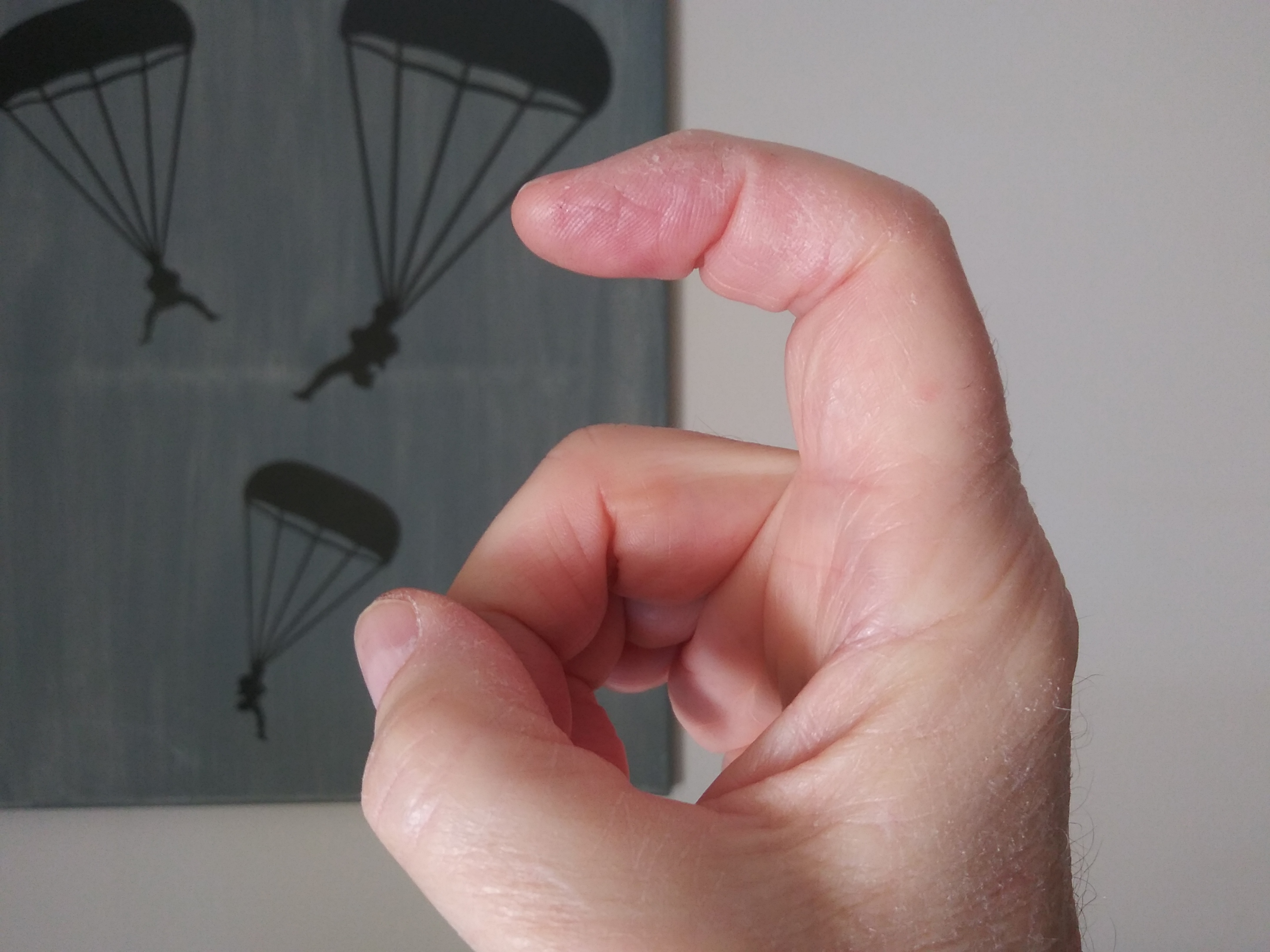
https://thetacticalprofessor.net/2018/11/16/press-the-trigger-smoothly/
Los Angeles Citizen’s CCW Taken Away
L.A. homeowner who fired on armed robbers has concealed carry permit suspended
https://news.yahoo.com/l-homeowner-fired-armed-robbers-055345708.html
It’s as plain as the nose on your face that this is retaliation. For what, you may ask?
Embarrassing the authorities on public media. Just that simple. His incident demonstrated that he was capable of protecting himself and his family at the moment of crisis and the authorities were not. By talking to the media, i.e., the local news and Colion Noir, he rubbed that fact in the faces of the Law Enforcement Agencies responsible for his and his family’s protection.
One of the benefits of belonging to a self-defense legal organization such as the Armed Citizens’ Legal Defense Network https://armedcitizensnetwork.org/ is getting to talk to someone about the incident in a confidential manner. Regardless of what organization or attorney you contact, they will undoubtedly advise against giving statements to the media. They are going to tell you to not make public statements.
After any such incident, it’s a natural desire to want to talk about it to decompress. Doing so is probably emotionally healthy. What we want to do is accomplish our decompression in a format that won’t hurt us. Talking to a lawyer is a non-harmful format. Talking to the media, even if they are neutral or well-intentioned, is fraught with hazard.
Couching your criticism with comments like “the LAPD is understaffed” or the like is equivalent to “Bless their hearts.” Then saying you’ve hired a private detective to investigate, which is tantamount to saying the authorities are incompetent, is only throwing more fuel on the fire of their future discontent. And please don’t publicly say that the investigation was sloppy, even if that’s true. NO BENEFIT. That’s just venting. Vent to your attorney not the local news.
As we can see in this incident, the authorities are not going to take kindly to a gunowner publicly proclaiming that it was the Second Amendment and not the authorities that protected them. In States that only issue Licenses To Carry because of Bruen, they’re going to look for some way to get even. Law Enforcement administrators in those States are not your friends. Don’t poke them in the eye by publicly exposing their inability to protect you.
Having to interact with the authorities after an incident is a Negative Outcome.
In its statement to KTLA, the sheriff’s department did say that Ricci’s CCW may immediately be reinstated as long as he has followed all the required policies, such as “proper notifications” and “use of [a] properly documented weapon.”
The Sheriff’s Office’s definition of “immediately” may be somewhat different than ours. Having to jump through a bunch of bureaucratic hoops to reinstate your Right to protect yourself is an undesirable interaction. Don’t put yourself in that situation, regardless of how righteous your incident was. In this case, his attackers are still out there and I wish he could carry his piece.
Attempted Home Invasion in LA
https://abc7.com/los-angeles-homeowner-fights-back-armed-robbery-home-invasion-ccw/14016199/
As reported in The Armed Citizen blog http://graphics.nra.org/armed_citizen/ac_136.html from the NRA, which is well worth subscribing to.
The surveillance video is instructive. Note the ‘chase instinct’ in play. After the homeowner gains the upper hand by pulling his gun and firing, he chases after the intruders instead of going inside, locking the door, establishing a blocking position, and then calling the POlice.
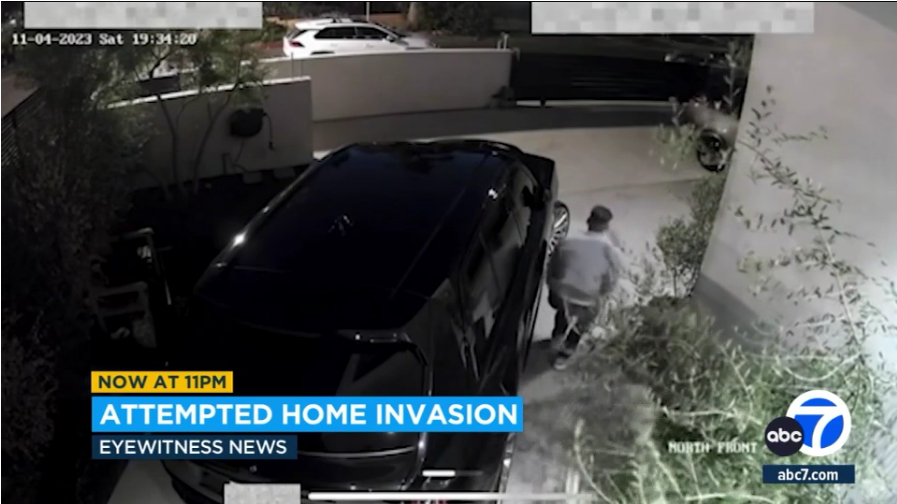
This incident demonstrates a worthy addition to Don’t Go Outside http://modernserviceweapons.com/?p=18502 to our Personal Protection pre-planning. Get Inside As Soon As Possible is the flip side tactic.
Calling the Shot
#Fridayfundamentals
Last week, I shot the IDPA Match at my gun club. Oddly enough, the shot I was happiest with the whole day was one I missed.
The lighting in one bay illuminated the smoke and cloudiness of each shot during the shooting. This added to the difficulty of transitioning between targets and immediately establishing a sight picture.

When I transitioned to the far left target, my view was still obscured by the smoke from the previous shot.
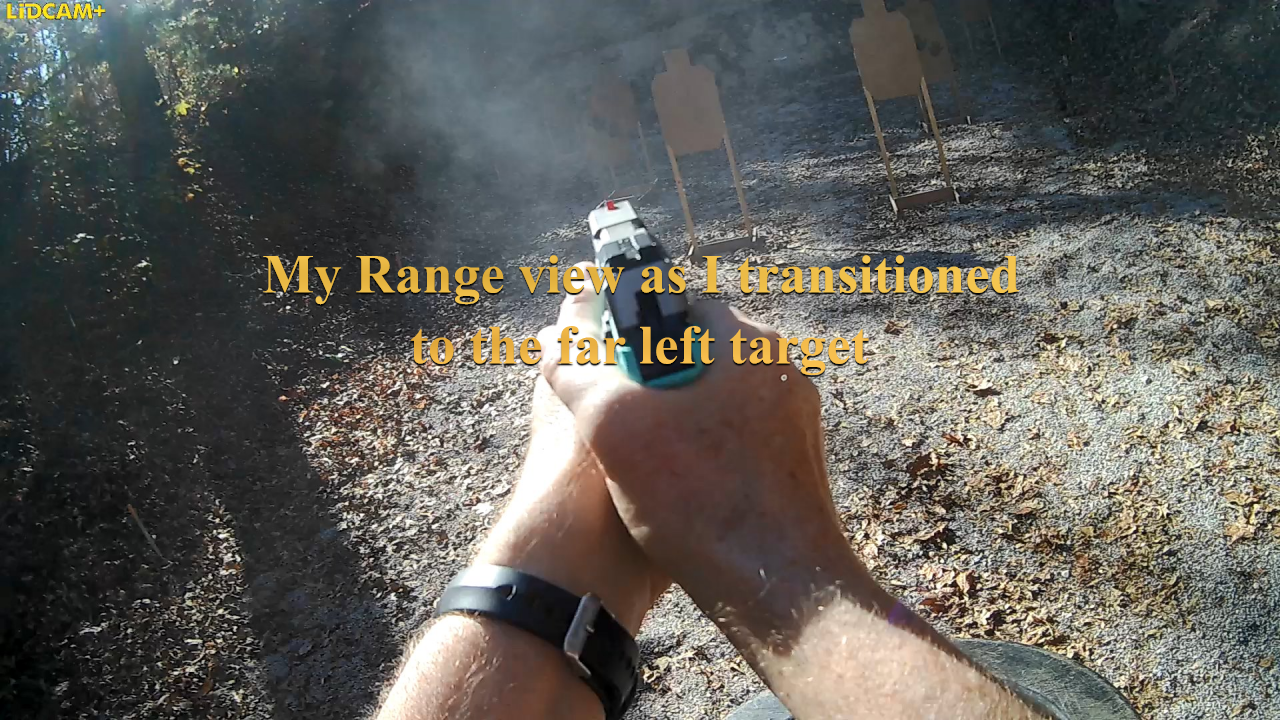
But at the moment the shot fired, the smoke had cleared and I had a decent view of my sight picture in relation to the target. I called it low and moved on.
When the targets were scored, sure enough there it was, low in the -3 Zone.

Calling that shot correctly during a challenging stage was the single best aspect of the match to me. It occurred to me later that in competition we only fire one, two, or three shots per target. Because of that, we have the opportunity to evaluate our shot calling for most of our shots. It’s an advantage competitive shooting has that never occurred to me before.
Shot calling with iron sights is an important skill to work on. When you can do it, it means you’re seeing your sight alignment and its relation to the target at the moment of the shot. That is sight picture in the moment and leads to good marksmanship.
Fall of the Wall Day
#throwbackthursday
Trigger Warning! This is a series of posts about my personal experiences. It has nothing to do with self-defense, hand guns, or Personal Protection.
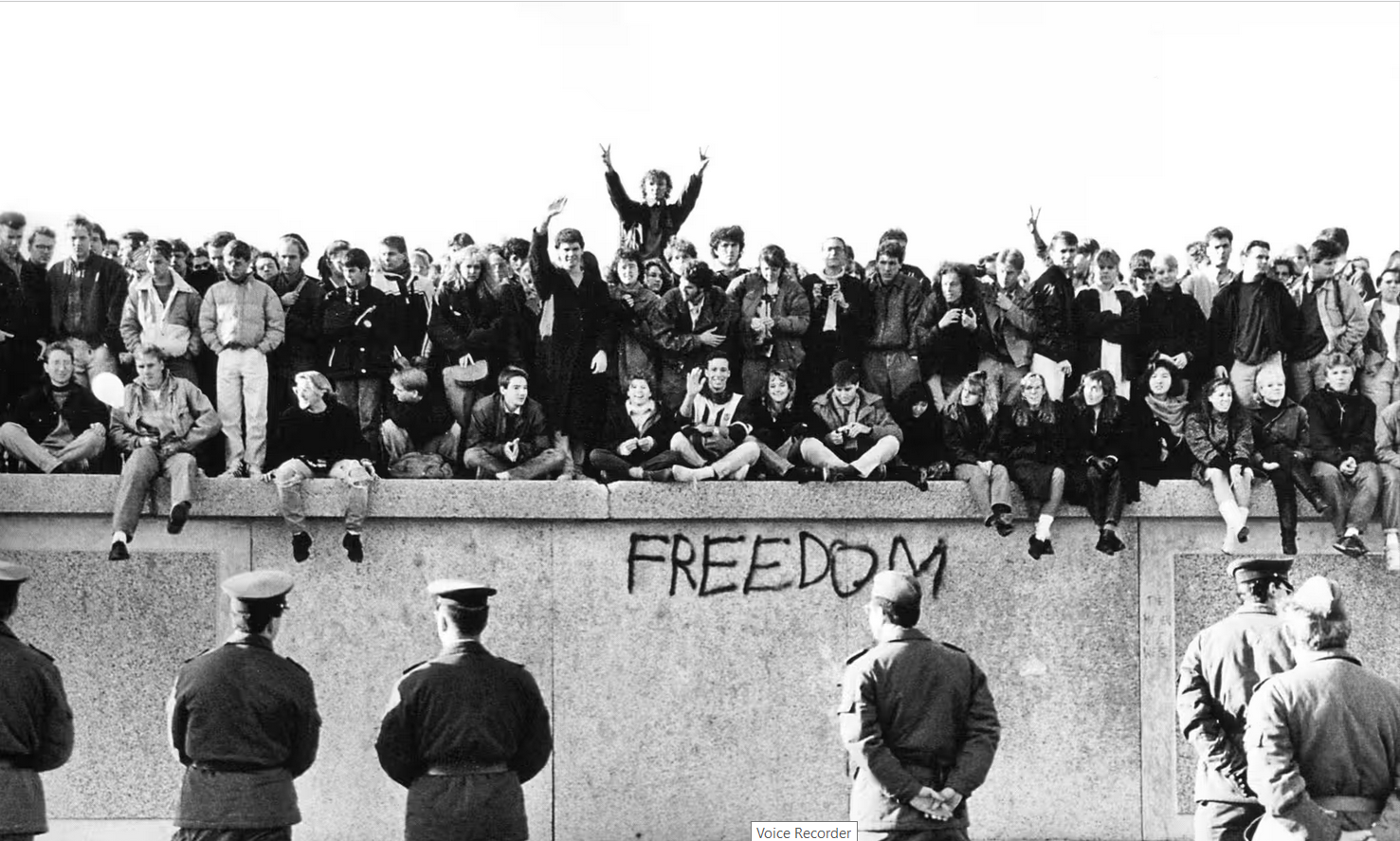
On November 9, 1989, the Berlin Wall started to be torn down. It is sometimes called Fall of the Wall Day. The tearing down of the Wall was one of the most momentous days in human history. Those who didn’t live through the Cold War can’t imagine the emotional impact it had on those of us who did.
The Wall wasn’t demolished by governments. People broke through en masse and then started to tear it down. Even the border guards, who had killed over 140 escapees over the years, were no longer willing to enforce the rules against crossing.
The German experience of the event was different from ours here in the United States. East German people wanted freedom; they no longer believed in their government. It could almost be said that the Communist governments no longer believed in themselves.
A young woman was driven across the border the next day. Then, “she opened the door, stuck her leg out, and touched the floor with her foot. Then she smiled triumphantly.
‘It was like the moon landing,’ recalled [the man who drove her], ‘a kind of Neil Armstrong moment.’
Later, back in the East, she had called her parents and said, ‘Guess what, I was in the West.’ ”
To Americans it was somewhat different. I remember it as if it was yesterday. I was standing next to a friend’s cube while he was listening to the radio. When the broadcast said the Wall was being torn down, my knees got weak. If there hadn’t been a short wall for me to support myself on, I would have fallen down.
The Wall was the most visible symbol of the Cold War. Tearing it down meant the Cold War was over. The Sword of Damocles of thermonuclear annihilation was no longer hanging over our heads. Thermonuclear effects Soldiers didn’t have to wonder about dying in the Fulda Gap Memories of the Fulda Gap or undertaking one-way missions into Soviet occupied territory. The feeling was stupendous.
A series of events led to the Wall’s destruction. People who had lived under Communism for their entire lives realized it didn’t work.
https://blogs.loc.gov/international-collections/2019/11/the-rise-and-fall-of-the-berlin-wall/
“It was on 9 November 1989, five days after half a million people gathered in East Berlin in a mass protest, that the Berlin Wall dividing communist East Germany from West Germany crumbled.”
Gunsite Glock Service Pistol
I find this development entertaining beyond measure.
A Commander style 9mm Glock with Optical sight and various other enhancements specified by Gunsite instructors.
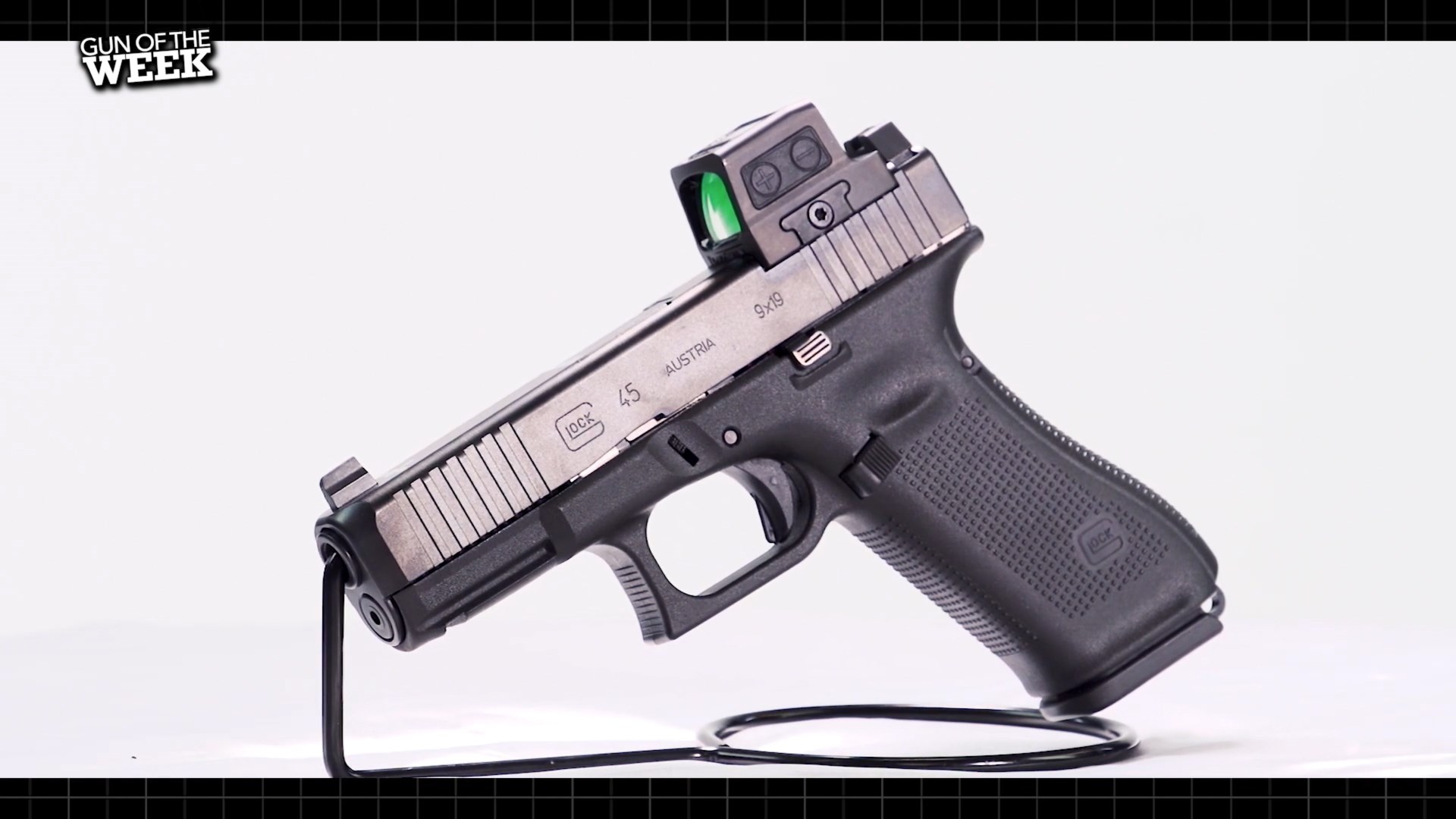
The question in my mind is whether Jeff Cooper would have embraced this concept or viewed it as a “Rooney Gun.”
But as a lady was quoted in this article about Jews taking up arms in response to anti-Semitism:
“I’ve seen the way the world is changing,” she explained. “I need to change with the world.”
I hope her training includes some commentary about Serious Mistakes Gunowners Make.
https://store.payloadz.com/details/2617872-ebooks-true-crime-serious-mistakes-gunowners-make.html
 tacticalprofessor
You must be logged in to post a comment.