Final SCCY Report
Now that SCCY Industries https://sccy.com/ is out of business, it’s probably moot but some thoughts about my experiences with the guns are in order.
My first SCCY was provided to me in 2015 at no cost as a Testing and Evaluation sample. It was produced in 2014, as best I can tell by the serial number. At the time it was furnished, I was doing my second iteration of 1,000 Days of Dry Fire and I used it extensively for dry practice. I also eventually fired about 1,600 live rounds through it. The firing pin broke after about 10,000 dry snaps. During live fire, I had two Failures to Feed between 400 and 500 rounds. No other malfunctions. The ejector broke about the 1200 round mark but it still ejected, just sluggishly and erratically. In both cases, SCCY serviced the pistol and it then ran fine.
Last year (2024), I purchased a SCCY Gen 3 with my own money because I wanted to see what the upgrades had been. This time, it was a disappointment. The gun had a Failure to Chamber every 25 rounds. I traced this to sharp edges around the chamber mouth. SCCY sent me a new barrel and two more magazines, gratis, but the chamber in it had very noticeable machining rings. I didn’t know if it would work but installed it anyway.
A couple of months ago, I purchased an early production used Gen 2, produced in 2013, for $80 at a local range. The trigger on it was much better than my original Gen 2. Whether it has the original mainspring or a replacement, IDK. It had occasional Failures to Eject. The source of those Failures turned out to be a broken ejector. I bought a replacement on eBay and installed it.
For Memorial Day, in remembrance of my Army friends who are dead, I took all three to the range and practiced the destruction of the enemies of our great Nation. Since I’m going to be teaching the NRA Defensive Pistol Course https://www.nrainstructors.org/CatalogInfo.aspx?cid=41 for a Private lesson soon, the Course of Fire I chose was the DP Qualification Course. It consists of 34 rounds fired at distances of 3 to 10 yards. I shot it once with each of them.

All three SCCYs made it through without a malfunction. That’s not a 10,000 round torture test but probably more than 99 out of 100 gunowners will ever fire their handguns. Although they’re not target pistols, they all were sufficiently accurate to group in the eight inch 10 ring of the NRA AP-1.

Bottom line of the whole exercise is that when purchasing a pistol, shoot at least a box of ammo through it to be sure it works. Preferably a structured and measured session. Feeling the trigger and knowing the results it can produce is useful. Inspect the pistol for broken parts after shooting it. My colleague, the late Paul Gomez, was fond of saying “Shoot Yor Guns!” and that’s good advice.
The Demi-Practical Event
#wheelgunwednesday
Caleb Giddings of Taurus inspired me to design a Course of Fire derived from the Bianchi Cup Practical Event. I wanted something that wouldn’t demoralize newer shooters by making them shoot a demanding par time course at a long distance though.
The Bianchi Cup https://thecmp.org/competitions/cmp-pistol-program/cmp-bianchi-cup/ is being shot now at the Green Valley Rifle & Pistol Club in Missouri. The Cup goes back to 1979 and it is one of the most prestigious and lucrative shooting contests in the world. There are four Events at Bianchi, The Practical being one of them. It consists of 48 shots. There are 4 stages, fired at 10, 15, 25, and 50 yards, with 3 series of 2, 4 and 6 shots in each stage. Two targets are set up 1 yard apart, each having a four inch X Ring and a 10 point scoring ring 8 inches in diameter. The target is much larger overall but a competitor who sends more than one or two hits of the 48 outside the 10 ring doesn’t have a chance. The X Ring is to break ties.
Three series are shot at each distance. One shot on each of the targets, two shot on each target, and three shots on each target. At 10 yards, the three shot series is fired with the Support hand after drawing and transferring the pistol from the Primary hand to the Support hand. A nice thing about Bianchi is that it is six shot revolver neutral and there is no reloading on the clock.
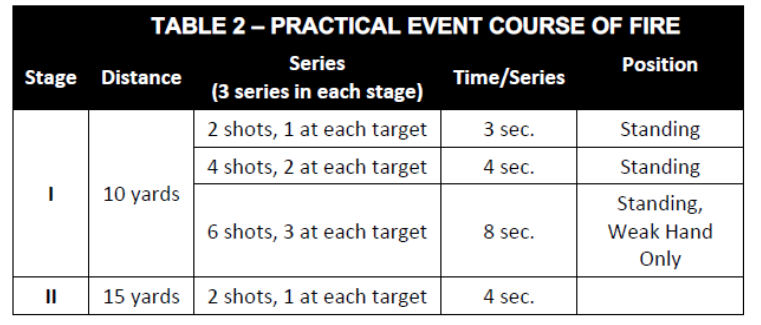
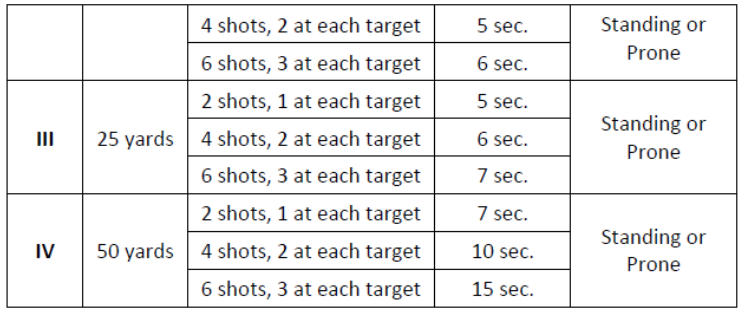
Since shooting a pistol at 50 yards would be soul crushing to most shooters, the Event I created is called the Demi-Practical, demi- meaning half https://www.merriam-webster.com/dictionary/demi-. The 50 yard stage is eliminated and the other distances are halved. This gives us a 36 round Event shot at 5 yards, 7 yards, and 12 yards. The Support hand shooting is changed to Primary hand only shooting with a time change to 6 seconds since there is no hand transfer. All shooting is done from the Standing position.
Since the AP1 is not a common target commercially, I substituted the IDPA target. Points down scoring works fine as a practical marksmanship metric. Par timing makes it easier to administer and score.
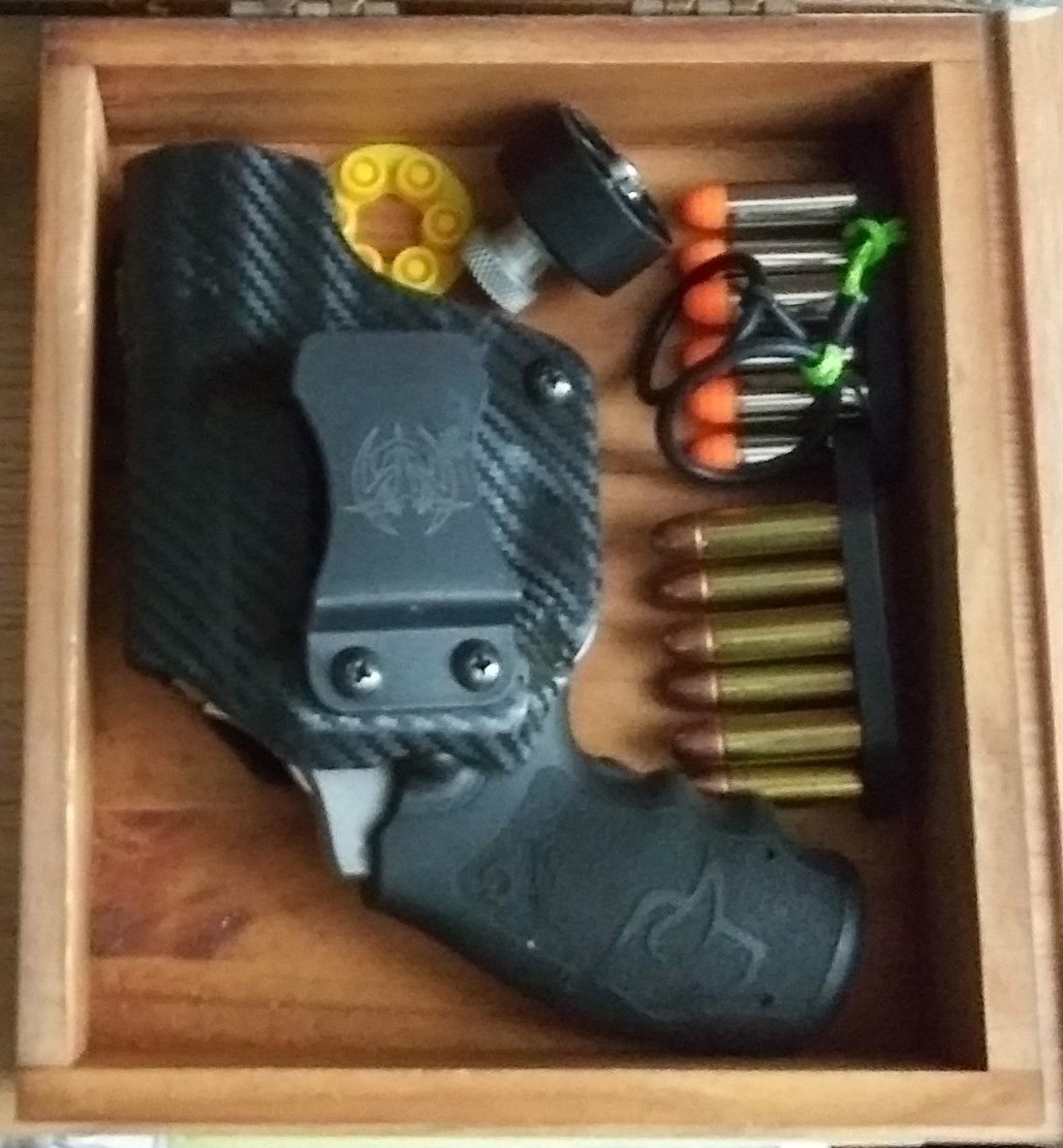
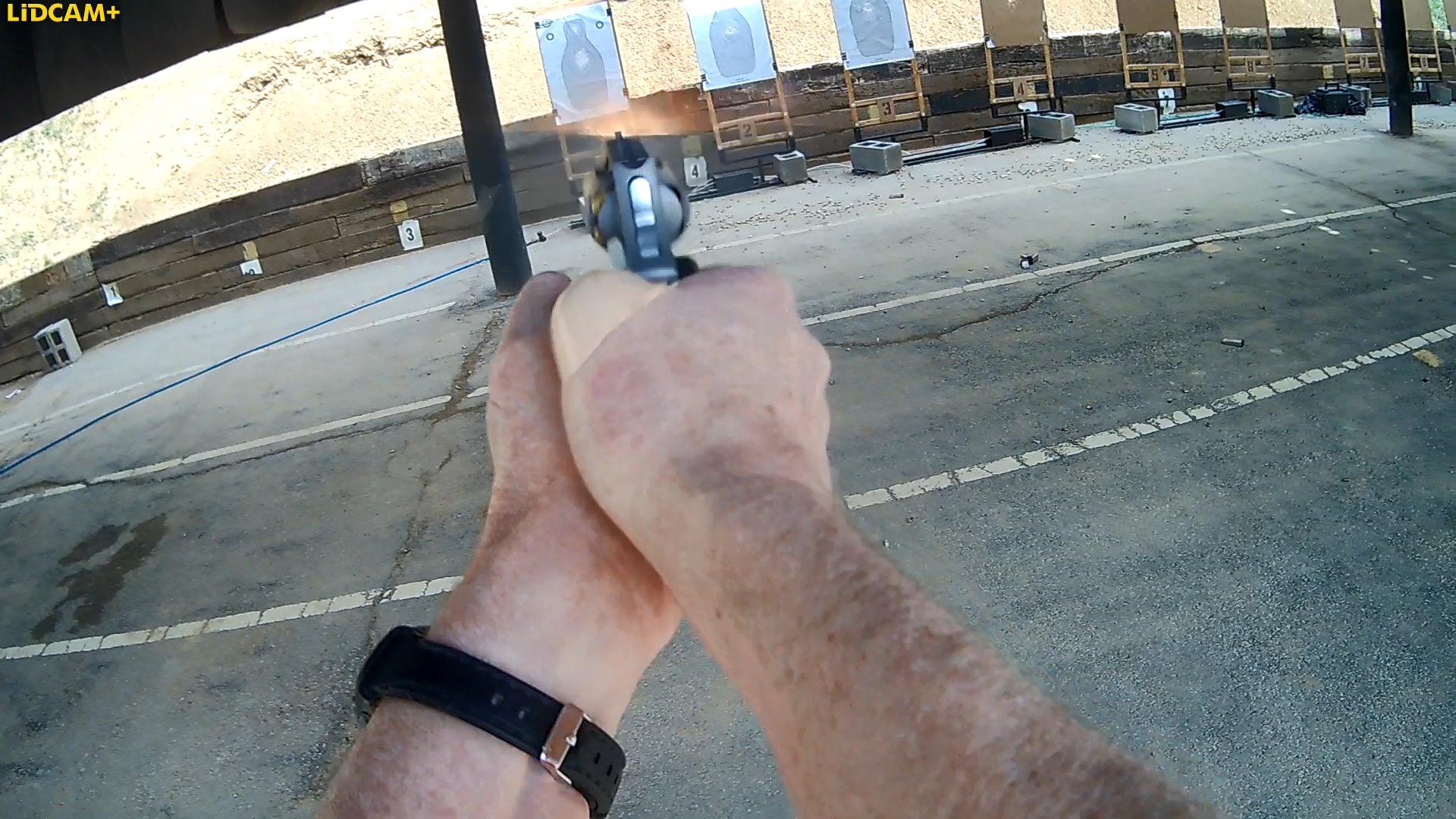
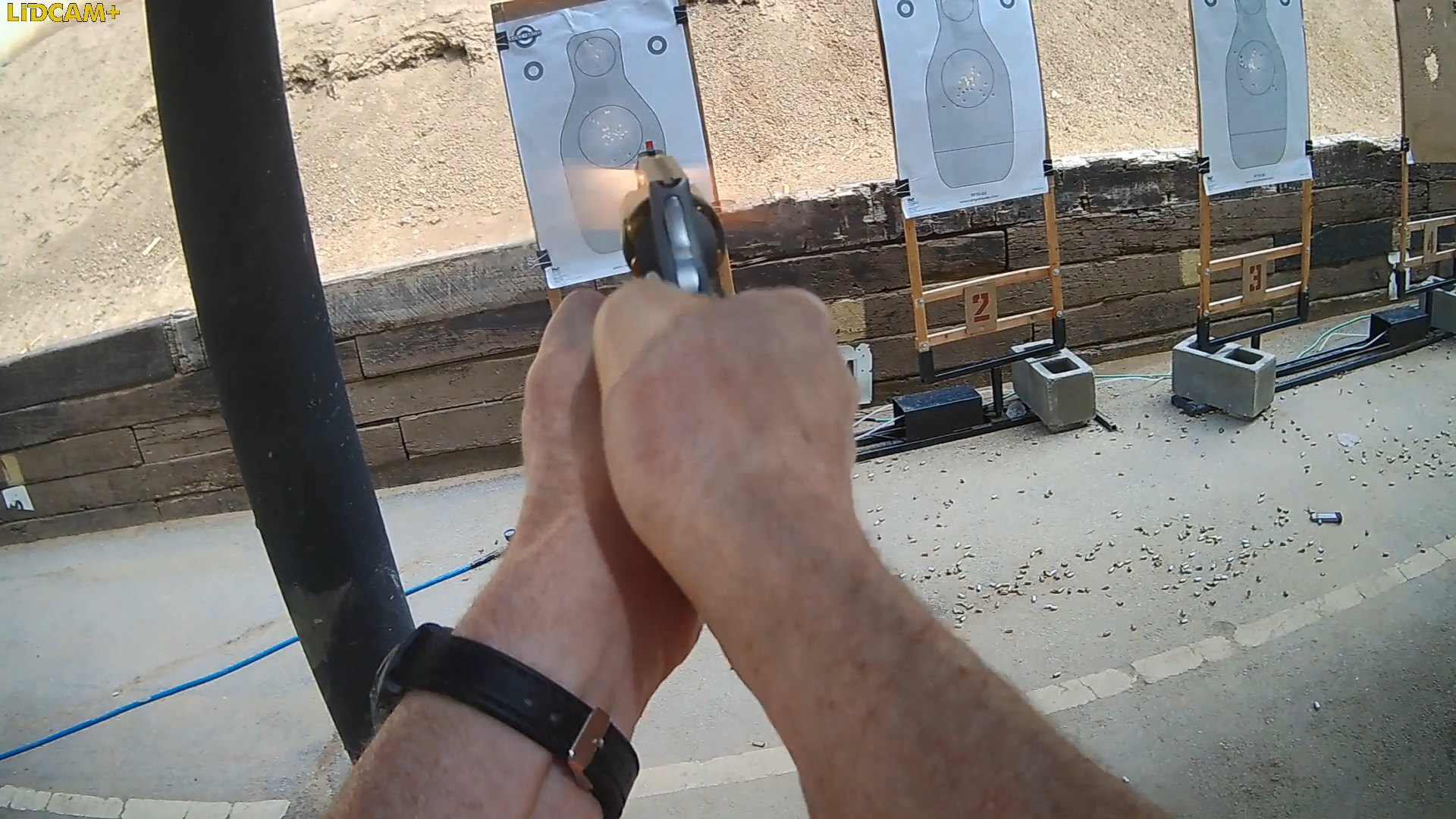
Today was a beautiful day so I took the opportunity to go shooting. My Taurus 856 snub was one of the test subjects.
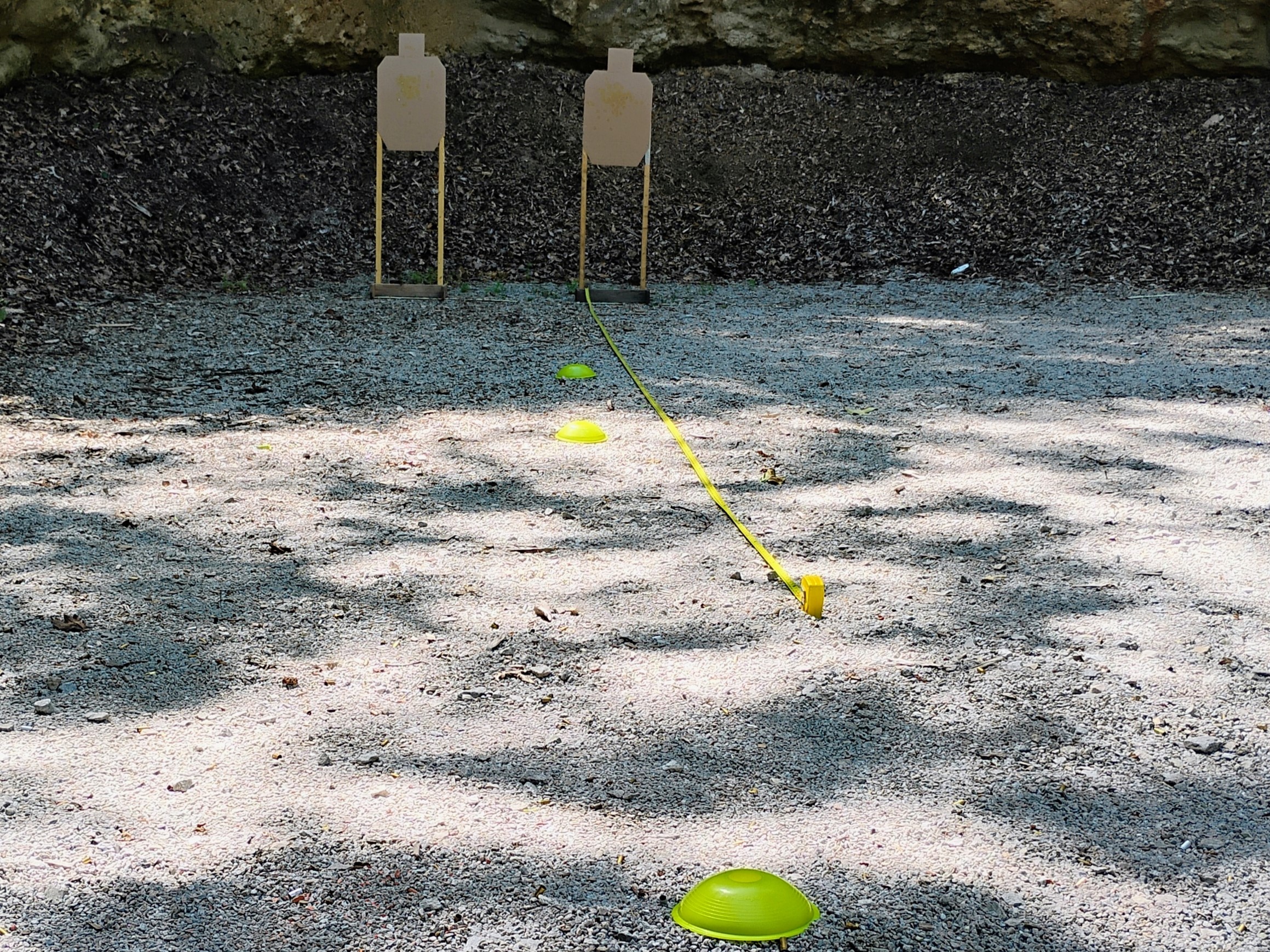
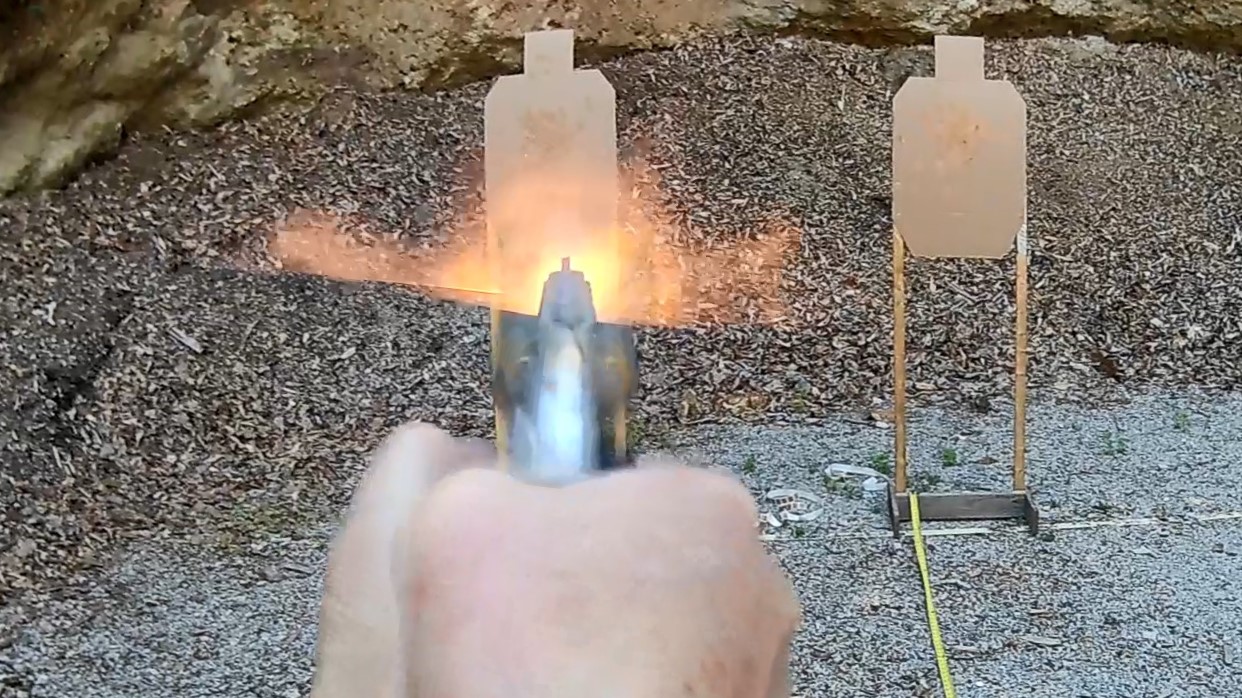
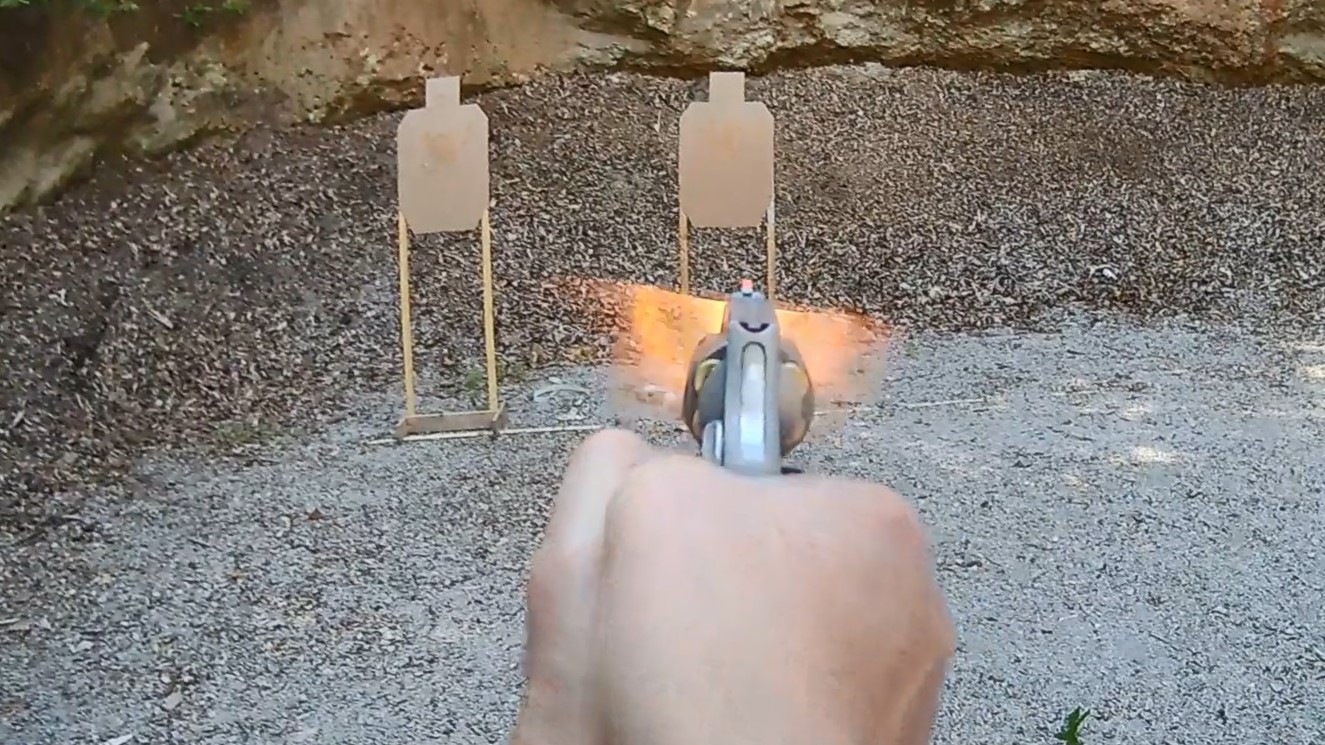
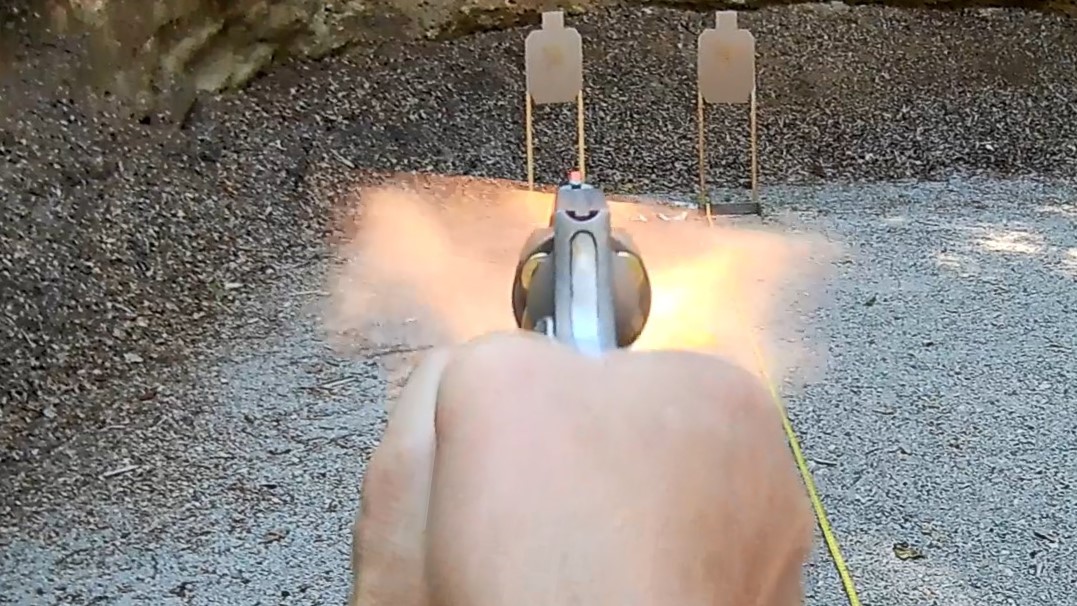
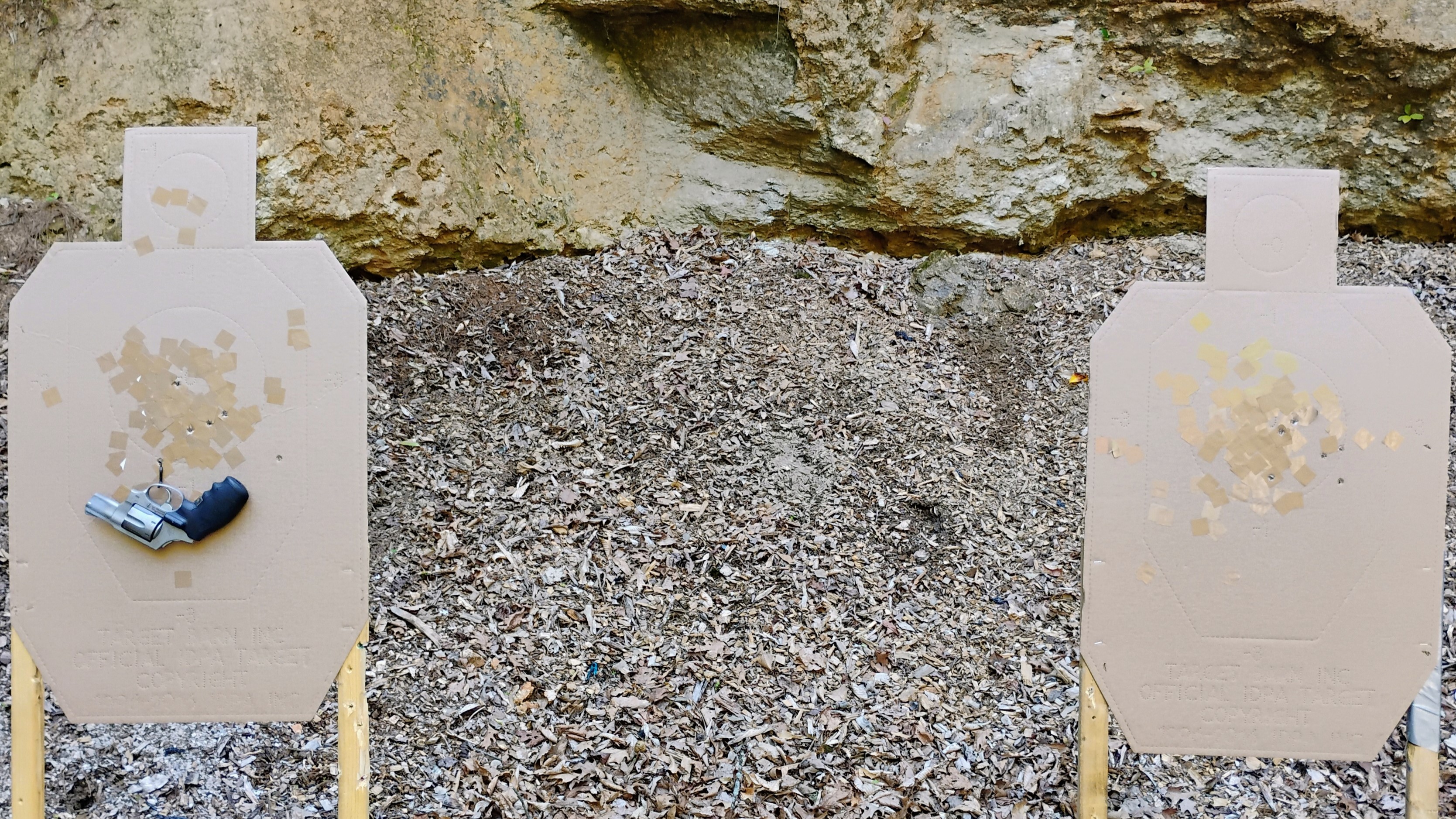
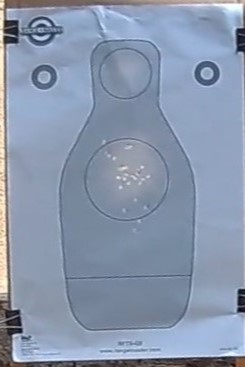
At 5 yards, I was 2 points down on the right target. At 7 yards, I was able to shoot both clean. At 12 yards, I was 1 point down on each target.
I had a good time shooting it. You might enjoy shooting it, too.
NRA 2025 Annual Meeting
The NRA Annual Meeting is being held in Atlanta this year. The NRAAM shares some things in common with the SHOT Show but is oriented toward the individual gunowner instead of the industry. The Exhibit Hall Map proclaims “14 Acres of Guns & Gear.” “All the Firearms Industry’s Leading Brands Under One Roof!”

Day 1 – Friday
I visited some gear oriented booths, attended a seminar, had lunch with some industry folks, and went to a gun collector display.
The Virginia Gun Collectors Association had an interesting display regarding one of the earliest snub revolvers, the Webley Mk III Pocket. The Webleys were used by the Royal Irish Constabulary as far back as the late 19th Century. The ‘Black and Tans,’ as they were called, were notorious for their ill treatment of the Irish people. After the partition of Ireland, some of them emigrated to Canada, which is where this particular example came from.
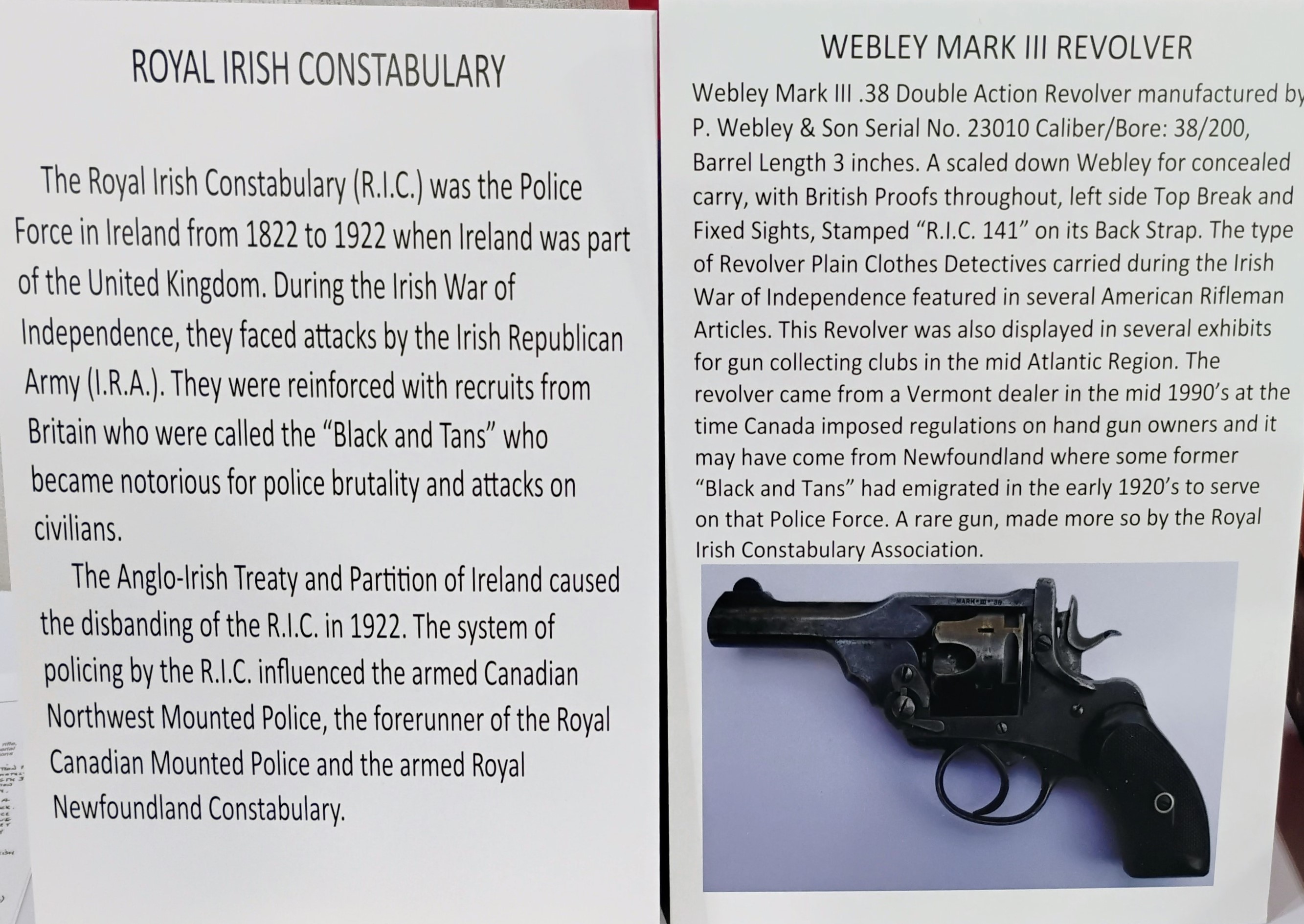
This shows the Black and Tans in action.
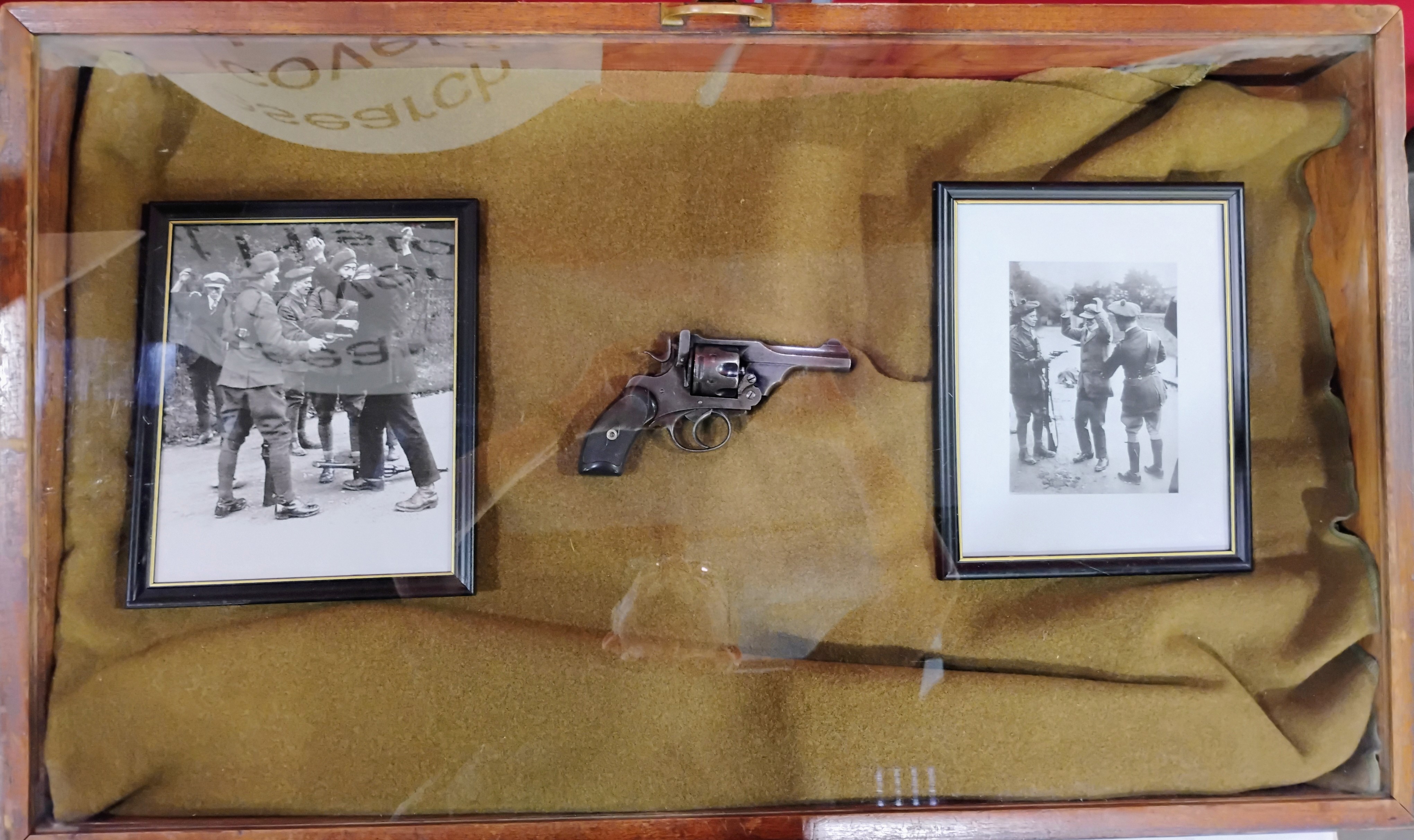
A piece of gear that could be useful was at the Lyman booth. Ammo Checkers™ Multiple Calibers has a Handgun Gauge – 380 Auto, 9mm Luger, 38 Super, 40 S&W, 45 ACP, 38/357, 44 Mag/Spl, 45 Colt that allows a shooter to chamber czech ammo without disassembling your gun. An example of why this is useful is given in a recent Tactical Wire article. https://www.thetacticalwire.com/features/3fe2ede6-09e3-4b32-8fec-b12737186e5f
https://www.lymanproducts.com/ammo-checkers

Walking around, I wasn’t really looking for guns Friday. However, the Charter Arms Undercoverette .32 H&R Magnum https://charterfirearms.com/collections/undercoverette/products/73220-undercoverette-ss-std caught my eye. The Undercoverette has been around for a long time, although originally in .32 S&W Long, not .32 H&R Magnum. All the Charters I’ve owned have beaten themselves to death within 600 rounds but maybe a .32 wouldn’t.
At lunch, I was introduced to an NRA publication I wasn’t familiar with, Concealed Carry for Women. I was told that NRA Women https://www.nrapublications.org/news/nra-women/ publishes one hard copy per year and this is the 2025 edition. It is available as a digital download also. https://www.nxtbook.com/nxtbooks/nra/ccw_2025/
At the Smith & Wesson booth, I looked at the new Model 10 and new Model 36. Frankly, they leave me cold. Although lockless, they have the new style frame and old style half moon sights. I don’t get it. They have decent triggers though.
The class/seminar I attended was about Every Day Carry by Matt Mallory, a POlice officer in New York State and NY Concealed Carry License instructor. His style is very interactive and entertaining. One of the things he mentioned was the ability to communicate with potential attackers to determine their intent. Using the STOP! Hand Signal and your voice can be very useful. I concur completely.
More about the Meeting tomorrow.
TacCon 2025 Match
The Rangemaster 2025 Tactical Conference is a wrap. For the Match, 251 participants (63%) of approximately 400 shows for the Conference chose to shoot the Match. It consisted of 30 rounds for the Four Second Standards and five rounds for the Tiebreaker that was shot immediately after the Standards. The target was the Rangemaster Q and more specifically the eight inch circle in the upper chest. All equipment had to be completely concealed.
I chose to shoot it with my Taurus 856 snub with Viridian LaserGrips. The laser dot was visible at all distances involved. To reload, I used a pocket full of Zeta6 K Pak2 loading strips.
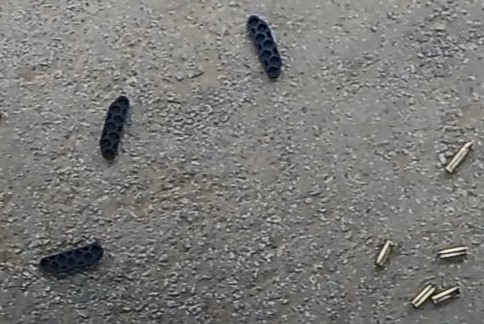
FOUR SECOND STANDARDS
- 3 yards – Draw and fire 6 shots
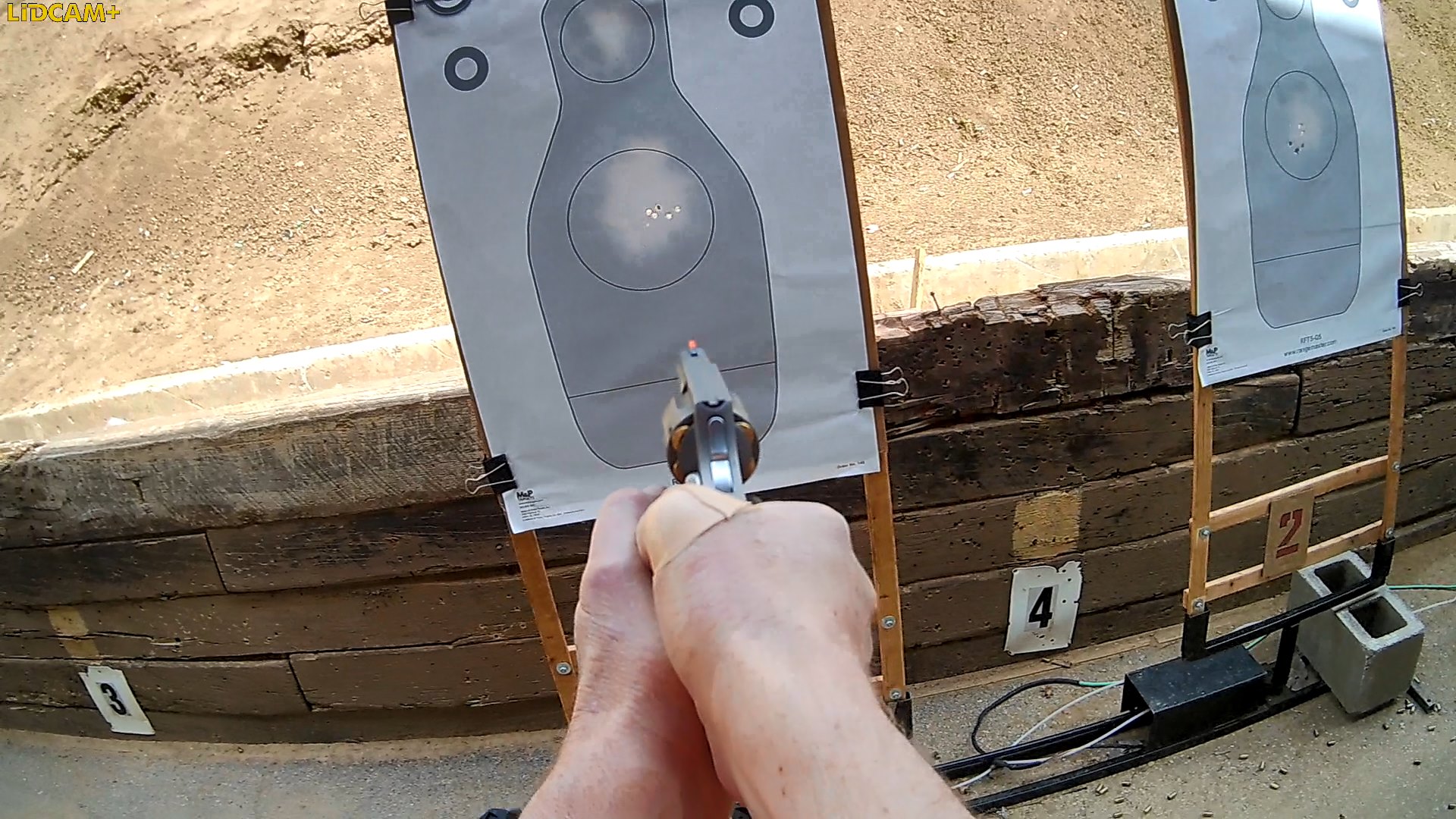
- 5 yards – Draw and fire 5 shots
- 5 yards – Draw and fire 5 shots
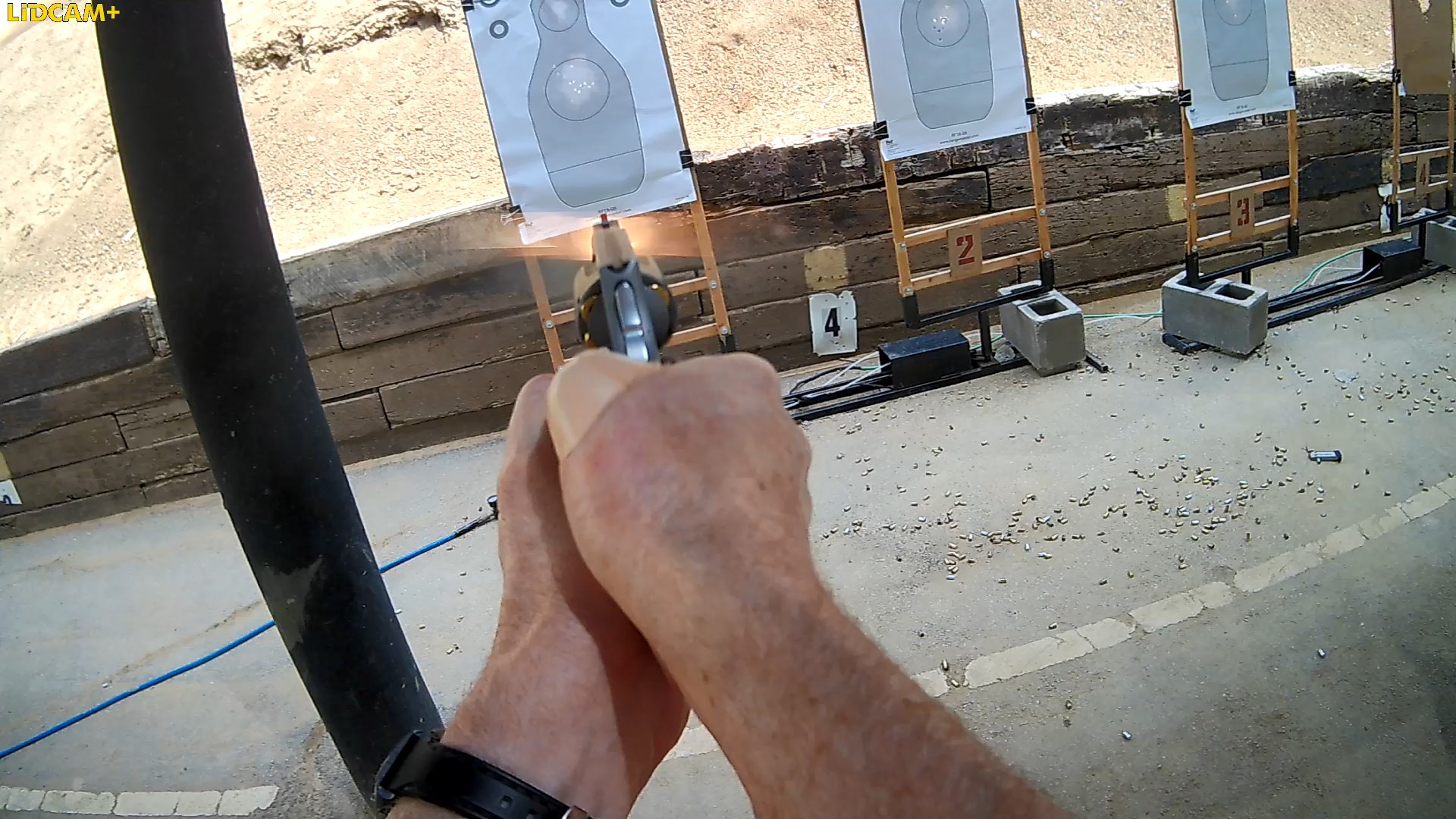
4. 5 yards – From Low Ready, Present and fire 4 shots, Primary Hand Only
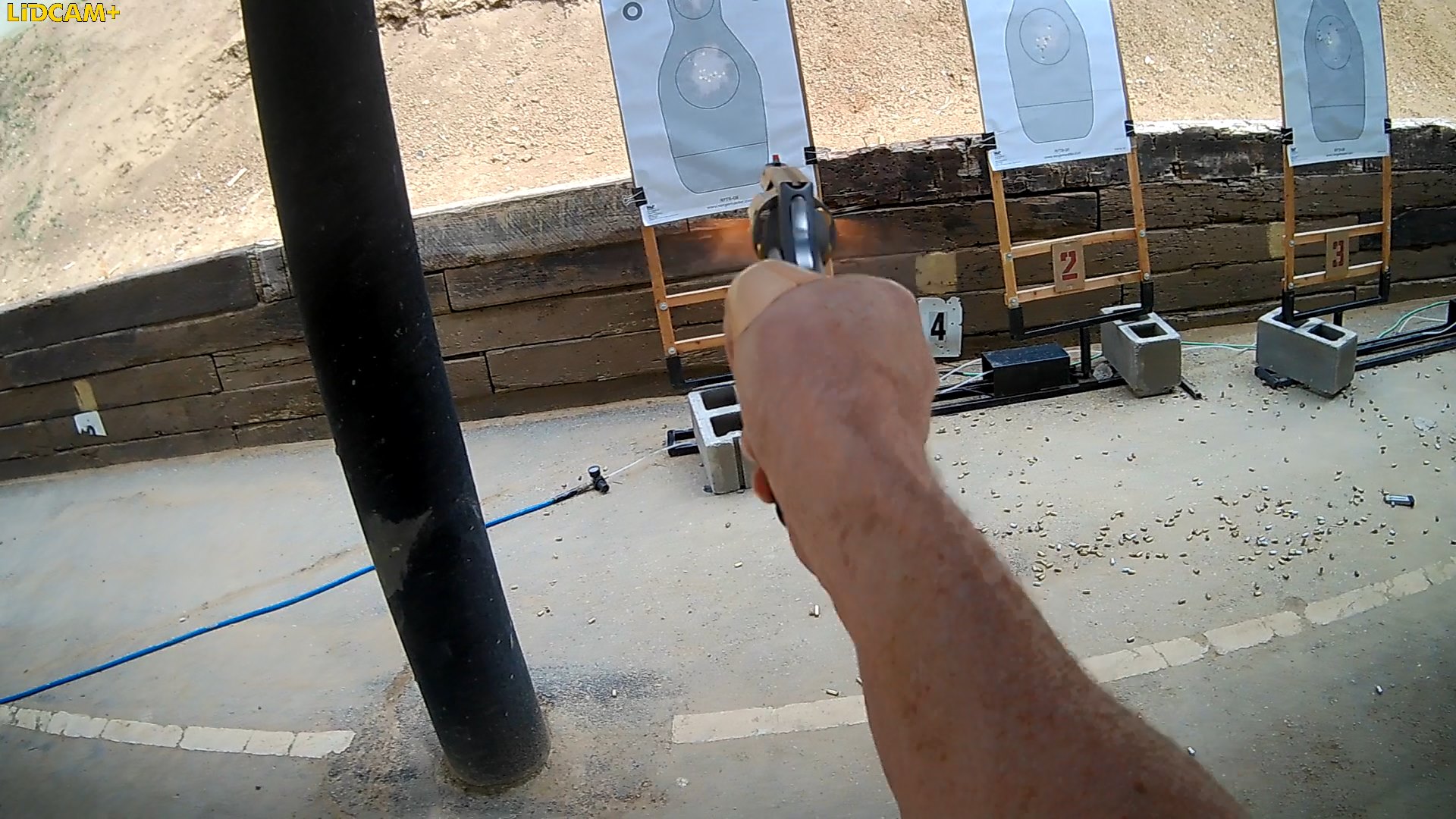
5. 5 yards – From Low Ready, Present and fire 3 shots, Support Hand Only
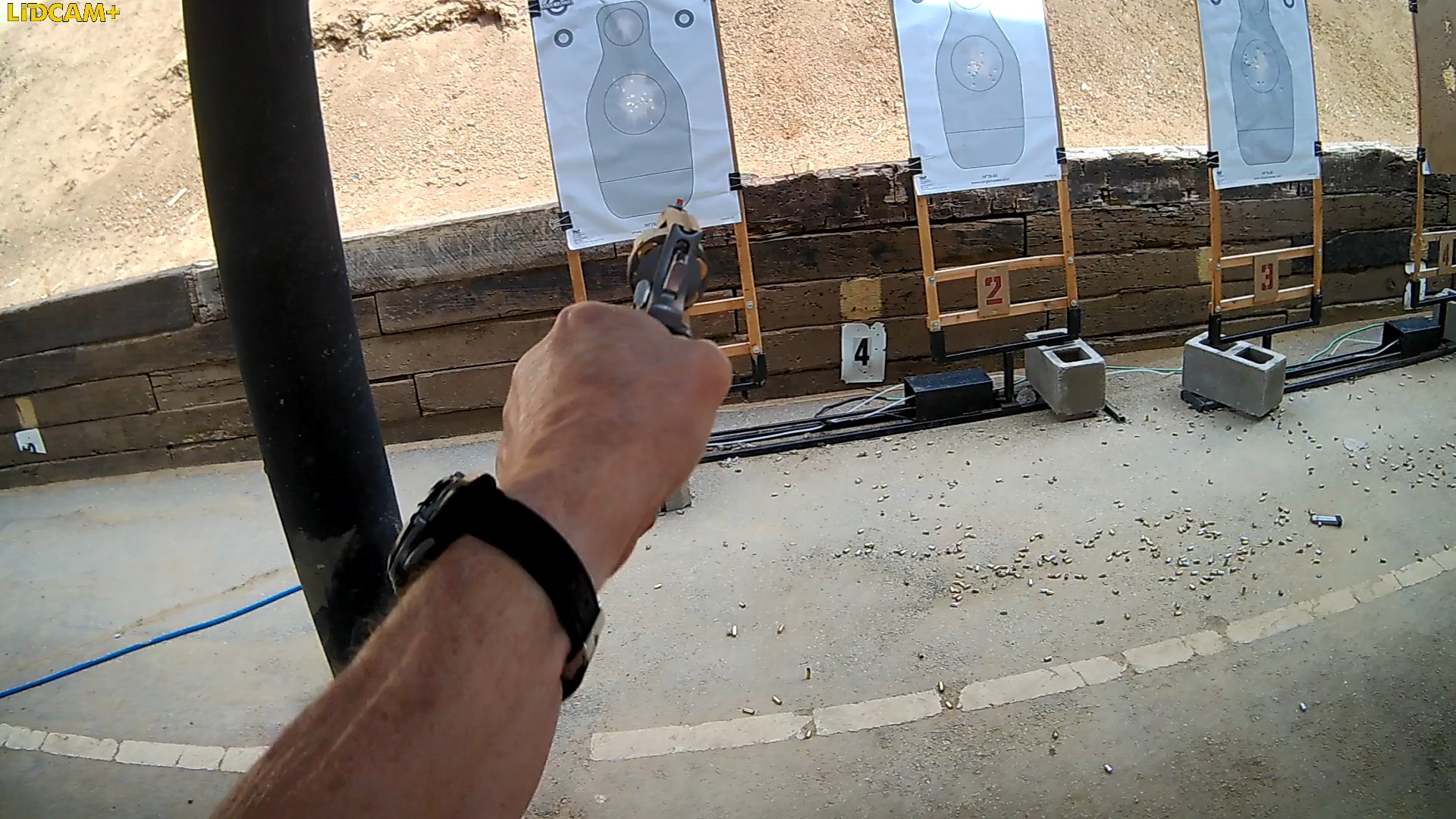
6. 7 yards – Draw and fire 4 shots
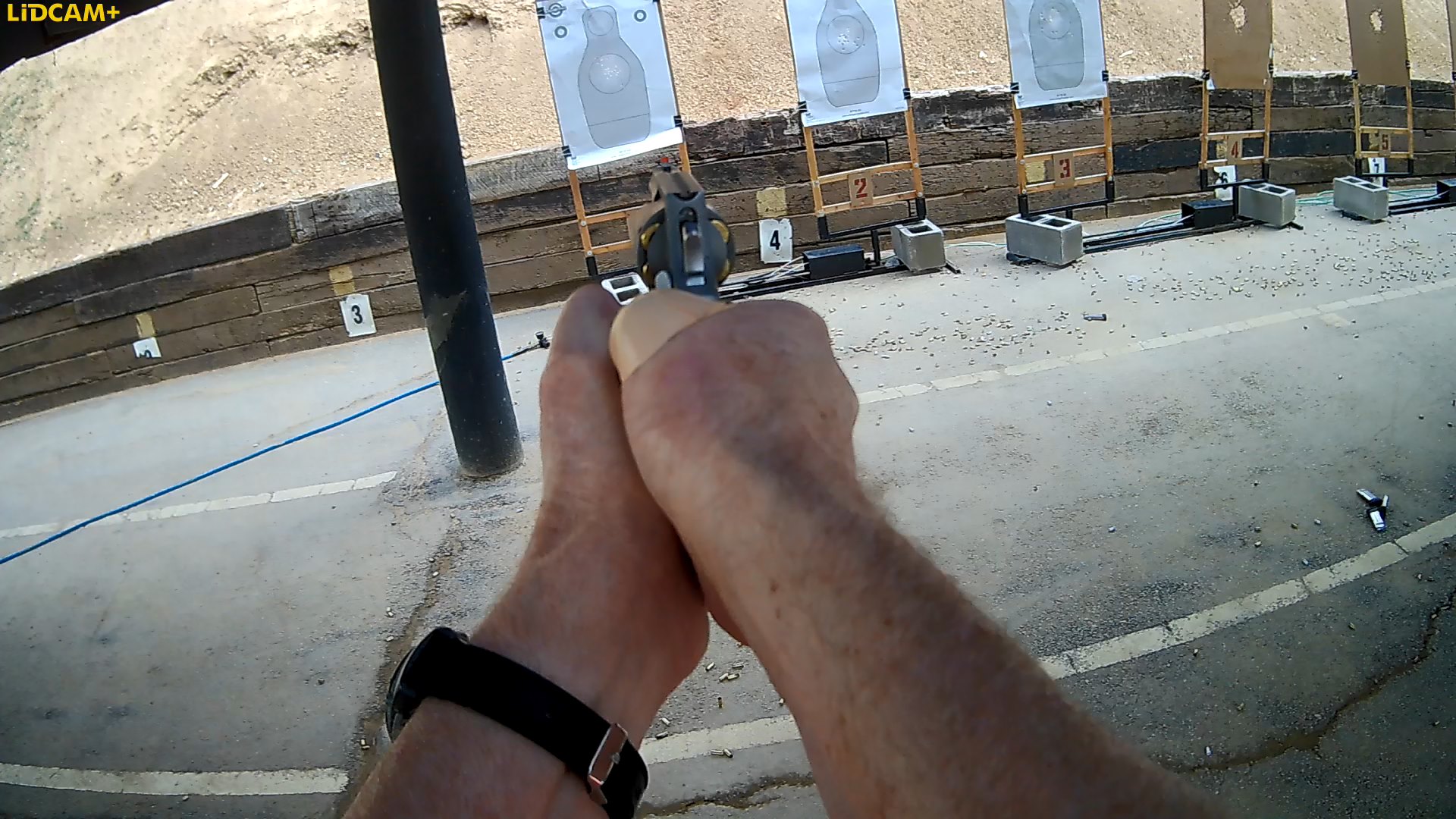
7. 10 yards – Draw and fire 3 shots
30 rounds subtotal for the Standards
TIEBREAKER
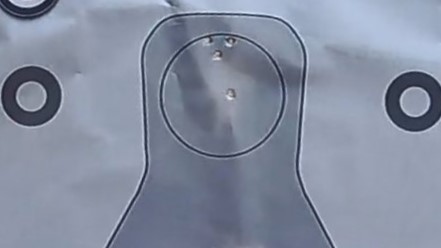
• 5 yards – From Low Ready, fire 5 shots to the head, individually timed and scored.
5 hits – 3.01 seconds
35 rounds total for the Match
My final place was 167 out of the 251 participants. Considering only one other shooter used a revolver and that was a 686 Plus, I’m happy with how I did.
Trigger Press Casualty
A post is circulating on Facebook about a fellow whose hand became a casualty when the chambered round in his Glock 44 (.22 Long Rifle caliber) failed to eject. He then pressed the trigger and a loud noise occurred instead of the ‘click’ he expected. Unfortunately for him, his hand was over the muzzle and the bullet injured his hand.

Many, in fact most, of the comments involve some version of Rule 2 “Never let your muzzle cover anything you’re not prepared to destroy.” This is true. While that statement tells you what NOT to do, it doesn’t cover what the correct thing you SHOULD do is.
The correct thing to do is always establish a proper grip and deliberately take a sight picture whenever you press the trigger. It doesn’t matter when, do it at all times. When clearing your pistol at the range, take a sight picture on some particular target and observe what the sights do when you press the trigger. When you have to press the trigger to disassemble the pistol, aim at something that will involve the least amount of “damage to property and/or injury to personnel.” Aim at a door frame or something else solid that is more likely to stop a bullet than an interior wall made of Sheetrock.
“Avoid damage to property and/or injury to personnel”, was repeated to us daily during the Weapons phase of the Special Forces Qualification Course. We spent all day handling and working on small arms so the instructors drummed it into our heads regularly. It was my first exposure to the concept of Negative Outcomes and set the concept firmly in my mind.
Establishing grip and taking a sight picture even when you don’t expect the pistol to fire reinforces good marksmanship principles and mitigates safety risks simultaneously. It’s a total WIN WIN.
Negative Outcome – Chasing and Shooting

“Constable Deputies have an adult male suspect in custody following a shooting in the 5400 block of Monteith Drive.
Investigation revealed that the male observed an unknown male breaking into his vehicle and discharged his firearm, causing no injuries.
The unknown male fled the scene and the vehicle owner chased after him for almost a block. Once he caught up to him he discharged his firearm multiple times, striking the male in the torso.”
I find the fact that the shooter was in camo interesting. Purely speculation on my part but if he was waiting in ambush for the car thief it will make the situation even worse.
It’s very galling to have someone steal your property but spending time in prison for reacting to the theft is even worse. Every situation we face has at least two alternatives; sometimes we have to pick the one that’s least worst.
Car Gun – Negative Outcome
Firearms are relentlessly unforgiving of even the slightest moment of carelessness.
4-year-old dies after accidentally shooting self
“Chosen was excited about the family outing and detectives believe he entered the vehicle to wait for the rest of the family, when he found the handgun under the driver’s seat.”
Davenport police news release Sunday, Feb. 23, 2025 (excerpt)
What a beautiful little boy. Gone due to a moment’s carelessness.

Chief: Davenport father forgot to store gun ahead of accidental shooting death of 4-year old
“’Normally he will take the firearm out from underneath the seat and go secure it in his bedroom and he forgot. He just simply forgot,’ said Chief Parker. ”
Your car is not a holster. –Pat Rogers
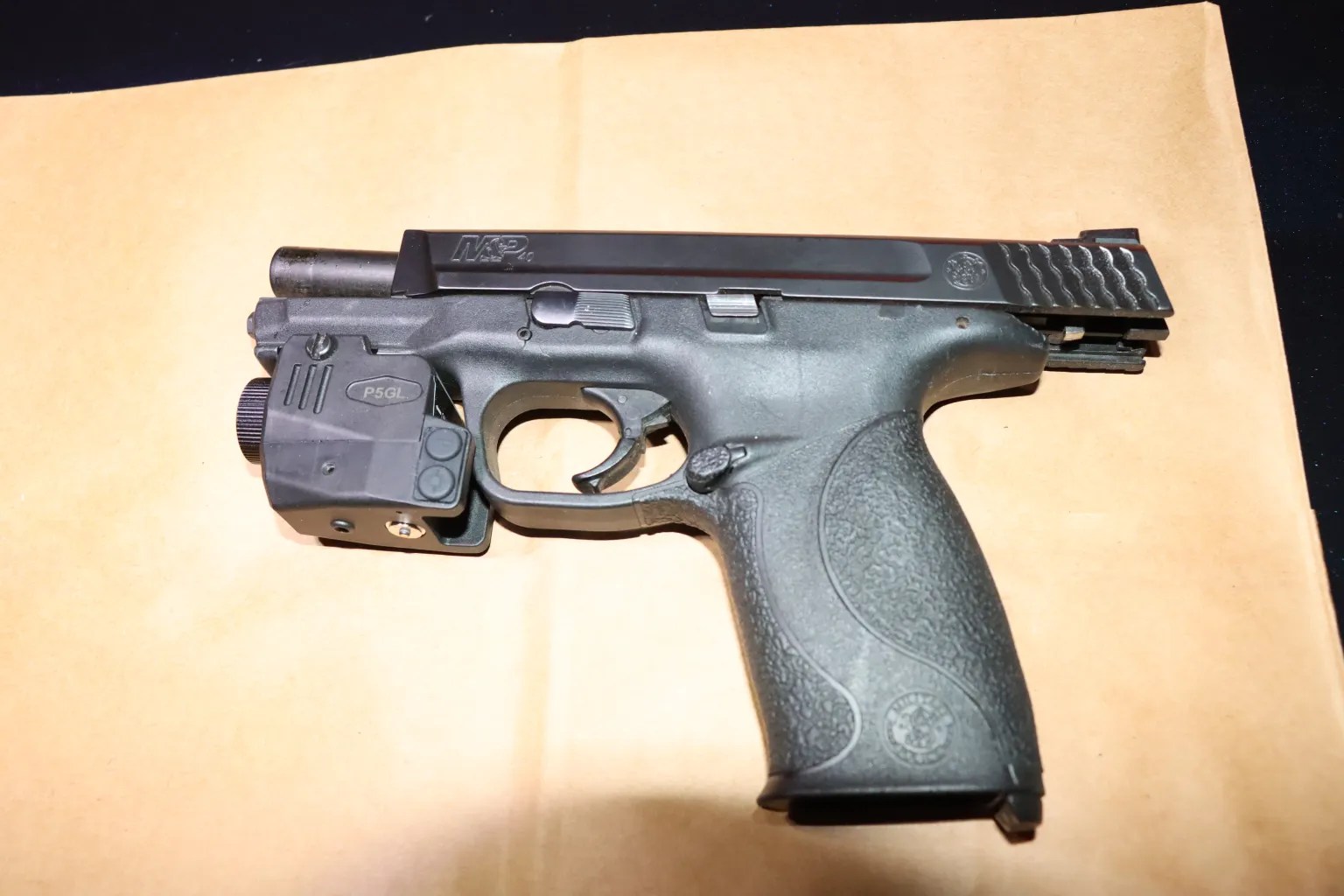
This is the second incident this year in Polk County of a toddler gaining access to a pistol in a car and shooting himself. https://www.wfla.com/news/polk-county/6-year-old-rushed-to-lakeland-hospital-after-self-inflicted-gunshot-to-head-police/
“Officials remind residents to remain vigilant with firearm safety and to never leave a firearm unattended and unsecured in a vehicle.”
The friend who brought this sad incident to my attention shared some related information.
“On a related note, we baby sat our two grandchildren 1.5 & almost 3 years old boys, and while playing with his cordless drill I was amazed at the interest & ability of the 1-1/2 YO in putting the drill chuck in his mouth and manipulating the trigger to activate the drill. The drill looks a lot like a handgun profile, just no trigger guard….there were several other innocuous toys like that as well. Clear to understand how a small toddler could find a gun and place it on the floor to push the trigger while muzzle directed at their head.”
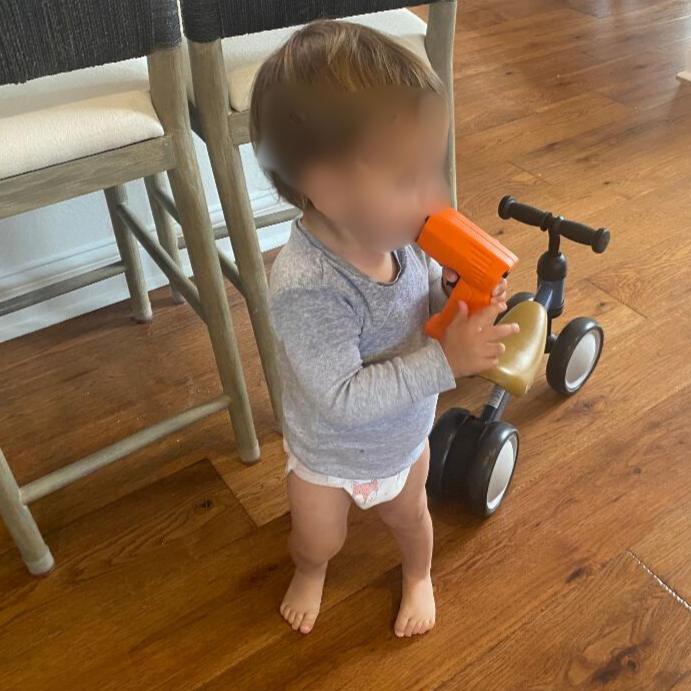
Don’t let this happen to you, your loved ones, or your friends. Firearms are relentlessly unforgiving of even the slightest moment of carelessness as Chief Parker mentioned. Firearms CANNOT be ‘hidden’ from children; they WILL find them.
We all need to have a way to constantly secure our firearms. Holstering it on your person is the best way. If your gun is too big, too heavy, or has too much tactical crap hanging off of it to keep constantly holstered, then you need to make better decisions about your choice of pistol. A Little Crappy Pistol on your person is better than a .40 S&W with WML in a child’s mouth. And for those times when you can’t holster it, get some kind of safe or lockable container that’s easy to use. Practice using it until it’s as second nature to you as shooting your pistol.
Sorry for being preachy but that little boy’s picture brings tears to my eyes.
Taking the First Steps Pistol Orientation
My latest article on Shooting Illustrated is posted.
https://www.shootingillustrated.com/content/taking-the-first-steps/
Wisely, the NRA Education & Training Division resurrected the First Steps Pistol Orientation after dropping it for a few years. Most people who purchase their first gun aren’t particularly interested in learning a lot about guns in general. They want to know how to operate their gun. First Steps is an excellent format to learn about it.
First Steps isn’t a tactical course nor does it need to be. The phrase Crawl, Walk, Run is frequently forgotten in our community and it shouldn’t be.
More (Again) about Boyd and OODA
Since my coffee hadn’t set in yet this morning, I unwisely became involved in another discussion about O O-D-A and Colonel John Boyd. What most people refer to as the O-O-D-A Loop, I refer to as Boyd’s Process because it’s much more involved than some simplistic circular diagram. Since I typed the whole reply out, I may as well reproduce it.
The foundation of O-O-D-A is Boyd’s Aerial Attack Study. The premise of the AAS is diametrically opposite of what 99% of people think about O-O-D-A. The common interpretation of O-O-D-A is that it somehow involves ‘thinking faster,’ which is physiologically impossible.
O-O-D-A is an analytical concept that Boyd spoke about and mentioned in passing late in his career. The neat extensive diagram sometimes seen was developed by one of Boyd’s acolytes, not Boyd, although he did approve it while he was in the throes of prostate cancer. This is Boyd’s original hand drawn sketch of the process. It is rather complex and doesn’t look anything like the circular models seen in current discussions.

The simplistic circular bastardized diagram that is commonly seen was not part of Boyd’s repertoire and is not even worth mentioning in relation to any serious discussion of O-O-D-A.
The concept of O-O-D-A Loops is mentioned only briefly a few times in Boyd’s multi-hour presentations. Even then he mentioned it in relation to strategy not tactics.
The AAS describes an operational tactical concept that Boyd developed during his time as an instructor at the USAF Fighter Weapons School. He was known as ‘Forty Second Boyd’ because of his ability to defeat any aerial opponent in 40 seconds or less.
However, this ability came from an understanding of possible attack and defense patterns and the capabilities of his aircraft’s weapons systems. He had pre-planned his counters to every move his opponent might make and then vigorously executed the counter faster than his opponent could avoid it.
Because Boyd was a talker and not a writer (he dictated the entire AAS to his boss’s secretary), whether he placed any value on ‘O-O-D-A Loops’ as anything other than a descriptive metaphor is unclear. Nothing in his presentations leads to the conclusion that he thought of it as a tactical decision making template.
Here is an example of Boyd’s thinking in the AAS.
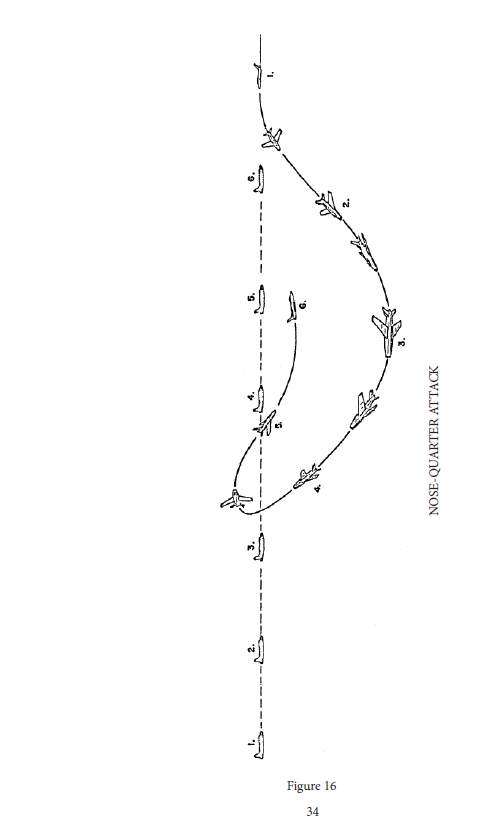
This is the kind of tactical and weapon analysis that was the foundation for tactical execution in the AAS.

Another aspect of Forty Second Boyd is that he was willing to push his aircraft, the F-100, to limits no one else would. He brutalized his plane so badly that at times it required significant rebuilding after he landed.
The Aerial Attack Study is readily available on the Internet. It’s essential reading for anyone who wants to talk about Boyd’s Process from an informed perspective.
Open Carry v. Doofus Carry
A video is circulating on the Interwebz now about an unfortunate situation in which a man’s gun was snatched from him in a gas station. He chased the thief and was subsequently shot with his own gun.
Although I am not a fan of Open Carry, let’s analyze the situation in a little more depth. The proximate cause of the snatch was that he simply stuck his gun in his back pocket unconcealed and then walked into a crowded environment where a bunch of lowlifes were coming and going.
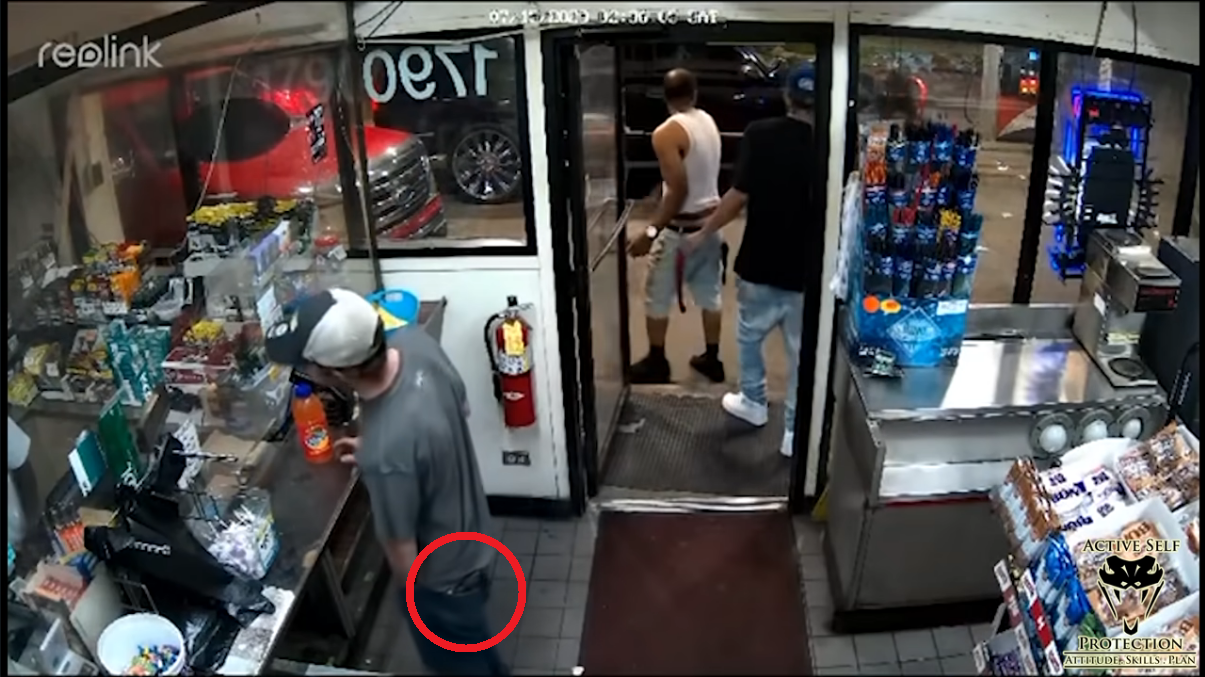
As a result, a ne’er-do-well nonchalantly walked up behind him and simply grabbed the gun out of his pocket.
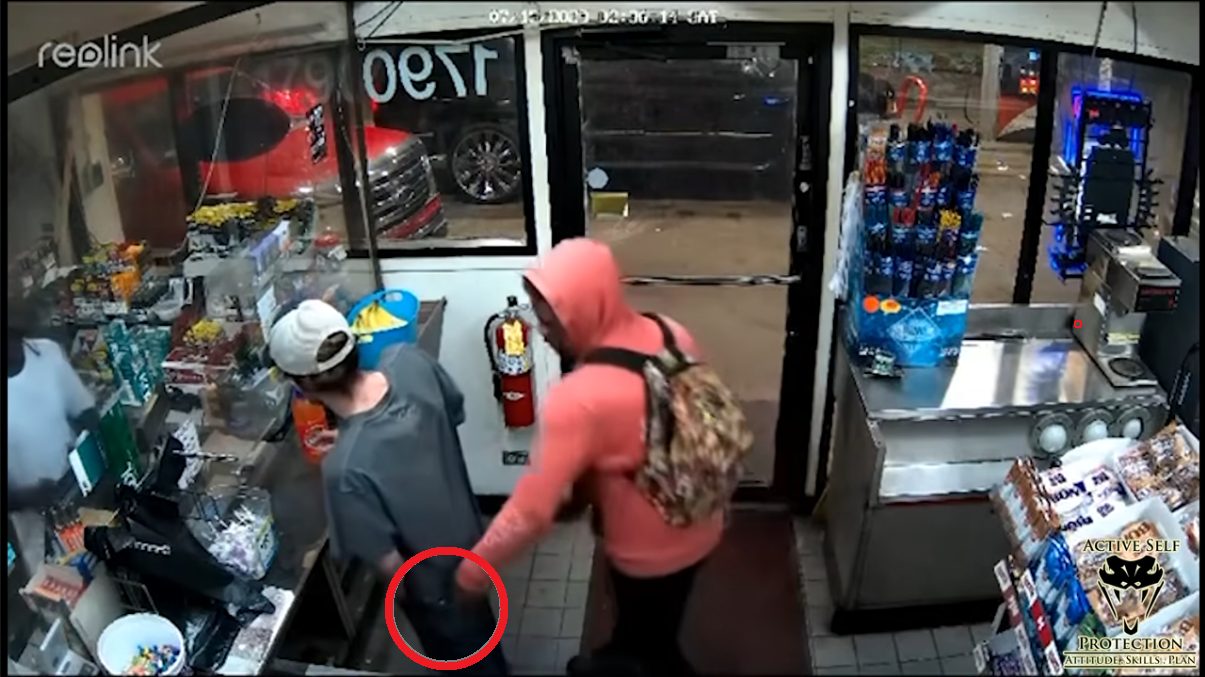
The carry technique the man was using is more correctly described as “Doofus Carry,” having two parts. There’s no back story to the incident but it wouldn’t be surprising to find that his usual carry technique is in the side door pocket of his car. If so, then when he pulled into the gas station and saw a bunch of lowlifes going in and out, he decided to stick his gun in his pocket when he went in. He probably didn’t stick it in the front of his waistband because he had a striker fired gun and was concerned about ‘shooting his junk off.’
Sticking a gun in a back pocket is not the same thing as having it in a proper holster attached to the belt.
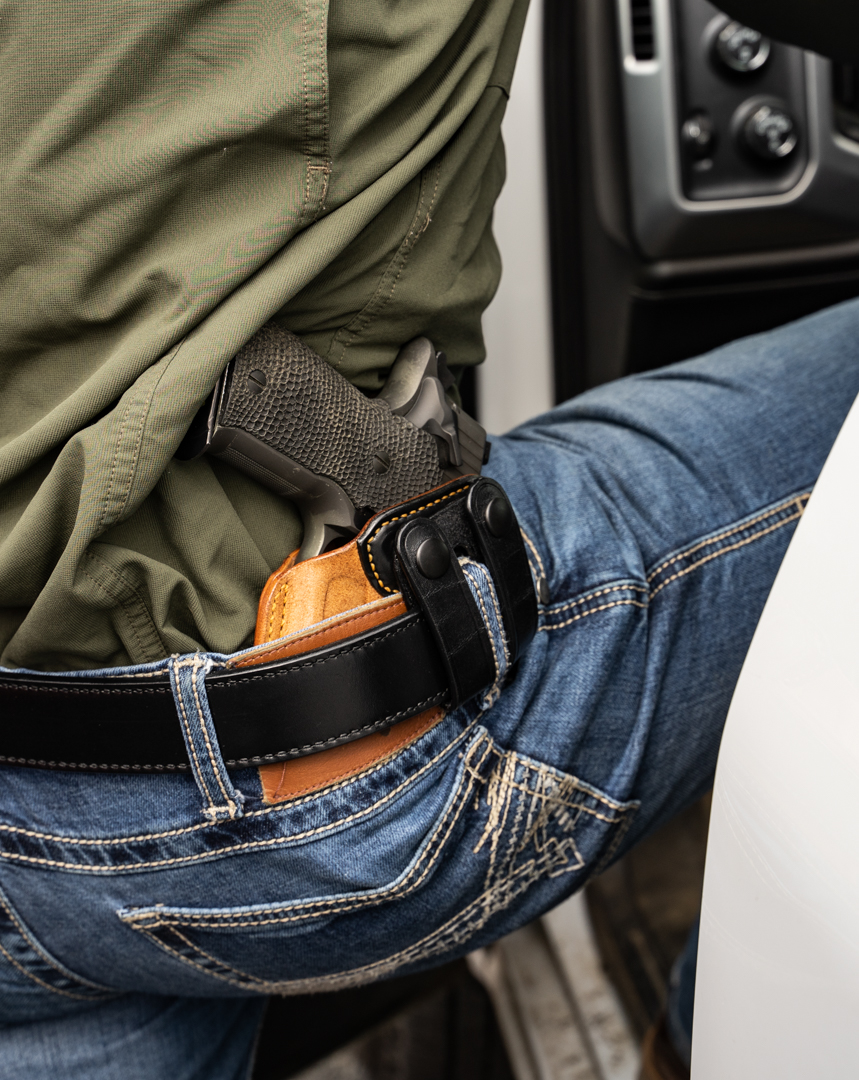
If my hypothesis is correct, it leads more credence to something the late Pat Rogers often said:
“Your car is not a holster.”
To reiterate, I’m not advocating Open Carry. But, if you’re going to carry a gun, at do it right. Have a decent holster and belt. Use it all the time when you leave home. If it’s uncomfortable and you don’t like wearing it, get a better holster or consider getting a more comfortable gun. “Your gun should be comforting not comfortable” is possibly the most ridiculous statement that’s ever been made about firearms.
The one good piece of advice in these retellings is that if your gun does get taken from you, Let it go. https://www.patreon.com/posts/let-it-go-107811846 The thief is now armed and you’re not. Chasing the felon means you’re going unarmed to a potential shooting. That’s a Serious Mistake. Don’t be foolish and assume the thief isn’t familiar and experienced with guns. As this incident shows, that’s the formula for a Negative Outcome.
If you like my work, join me on Patreon where I post more in-depth articles about shooting, marksmanship, and incident analysis.
 tacticalprofessor
You must be logged in to post a comment.