Serious Gunowner Mistakes – Unintentional Discharges (Part I)
One of the categories of Serious Mistakes Gunowners Make http://seriousgunownermistakes.com is ‘Unintentional Discharges.’ A colleague texted me this question.
Would it be fair to say that most of the negligent shootings on ranges are when people are re‑holstering too quickly?
There are some definitional issues involved in answering the question. First, are we talking about ‘Shootings,’ i.e., an injury occurs, or ‘Discharges,’ where an unplanned discharge occurs that may or may not involve injury?
So far, I haven’t done a statistical analysis about Shootings, per se. However, my collection of images of extremity (hands and feet) injuries that are the result of self-inflicted gun shot wounds is many times larger than my collection of images relating to holster related injuries. It is worthy of note how gory the shotgun wounds through the foot are as a result of using those toe popper shoe attachments that are popular in the clay target sports. The injuries are similar to those caused by the M14 Toepopper Anti-Personnel Mine.
It’s sometimes difficult to tell in either case whether the injury occurred at the range or somewhere else. Whether the discharge occurred at the range or elsewhere may or may not be important, depending on your point of view.
My opinion is that, regardless of where they occur, holster related injuries are not the majority but they are the most publicized. The reasons are simple. First, they tend to be graphic injuries that lend themselves well to being posted and viralized on social media. Second, they are the most likely to occur where someone will capture an image or video. However, a video recently surfaced of a party in an underdeveloped part of the world at which an attendee shot himself in the hand. Nothing good comes of placing the muzzle of a pistol against the palm of your hand and pulling the trigger. His friend was very angry about the copious amount of blood that went all over his sandals.
Another definitional issue is the distinction between Unintentional Discharges (UD), Accidental Discharges (AD), and Negligent Discharges (ND). The Los Angeles Police Department Board of Police Commissioners https://www.lapdonline.org/police_commission draws a distinction between AD and ND as concerns LAPD Officers and considers each type to be a separate subset of UD. AD are caused by equipment failure, i.e., the mechanism of the firearm itself malfunctioned, which caused the Discharge. While this is rare, it does occur. By contrast, the BOPC defines ND as the result an operator error of a fully functional firearm. This distinction was made explicit in Categorical Use of Force Report 045-09 NON-TACTICAL UNINTENTIONAL DISCHARGE https://www.lapdonline.org/assets/pdf/045-09_Outside%20City-NTUD.pdf. This report was in regard to an Unintentional Discharge by an officer while Outside the City.
A. Unintentional Discharge
The definitions for an Unintentional Discharge, both Accidental and Negligent, are as follows:
Accidental Discharge: The unintentional discharge of a firearm as a result of an accident such as a firearm malfunction or other mechanical failure, not the result of operator error.
Negligent Discharge: Finding where it was determined that the unintentional discharge of a firearm resulted from operator error, such as the violation of firearm safety rules.
LAPD Board of Police Commissioners
A third definitional issue has been raised by Marty Hayes, President of the Armed Citizens’ Legal Defense Network. https://armedcitizensnetwork.org/ He commented that the circumstances of most Unintentional Discharges do not fit the legal definition of ‘Negligent.’ Given the firearms community’s preoccupation with the distinction between ‘clip’ and ‘magazine,’ his comment is particularly cogent. The possibility exists that a ‘Negligent’ Discharge might have to be defined in the context of Intentional but Undesirable Discharges (resulting in a Negative Outcome) rather than Unintentional Discharges.
Getting back to the original question, it is easy to make a simple numerical contrast relating to ‘Discharges.’ Observe the number of bullet impacts on the ceiling and floor of an indoor range. Almost every one of those was a Discharge that was unplanned and went somewhere other than it was intended.
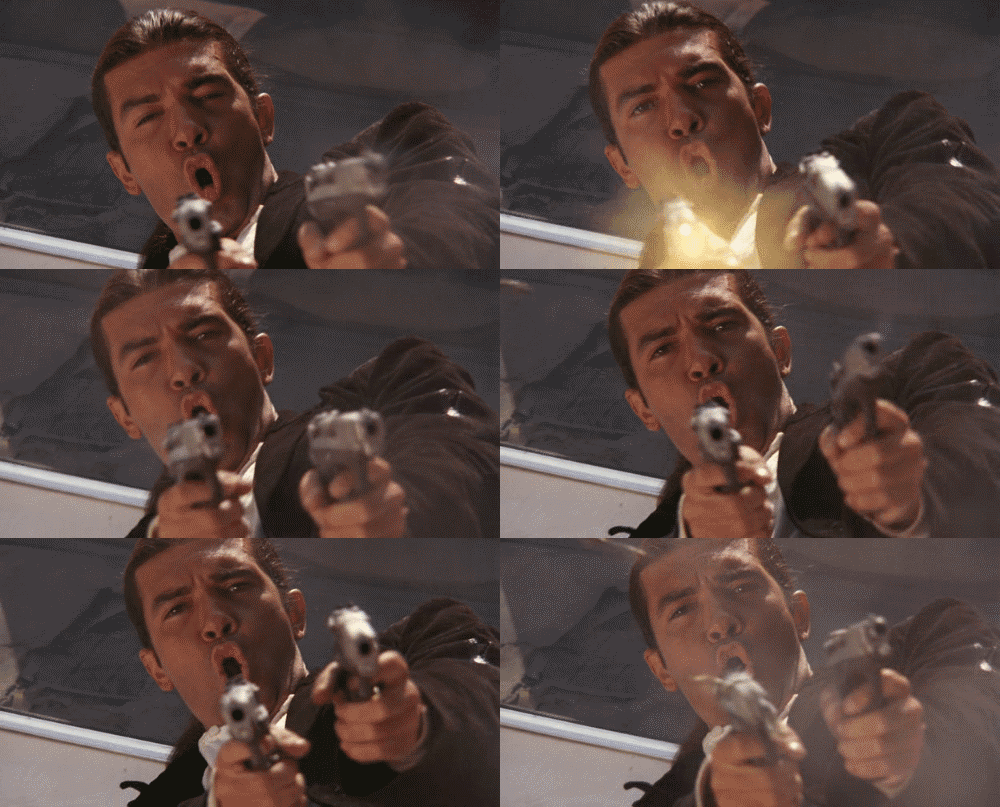
I say ‘almost,’ because I was once asked to give a private lesson to a lady who literally shot her revolver like Antonio Banderas in Desperado. Most likely several rounds of each cylinder hit the ceiling. While the shots were Planned, they did not impact anywhere near the target.
There are something like 4,000 shooting facilities in the US, according to the National Shooting Sports Foundation. https://www.nssf.org/shooting/where-to-shoot/ Given the number of unplanned impacts at Atlanta area ranges alone, it’s likely that Unplanned Discharges occur thousands of times daily throughout the US. However, almost all of those cause only property damage or no damage at all. So, while we can probably safely say that Unplanned Discharges are relatively common, Unplanned Shootings are relatively rare.
Part II of this series will explore the types of UDs in Serious Mistakes, discuss definitional issues further, and make some observations about preventing this undesirable phenomenon.
Tactical Professor books (all PDF)
- Thinking Clearly about Self-defense and Personal Protection https://www.payloadz.com/go?id=3377208
- Real Shootouts of the LAPD https://realshootoutsofthelapd.com/
- Serious Mistakes Gunowners Make http://seriousgunownermistakes.com
- Indoor Range Practice Sessions http://indoorrangepracticesessions.com
- Concealed Carry Skills and Drills http://concealedcarryskillsanddrills.com
- Advanced Pistol Practice http://bit.ly/advancedpistolpractice
- Shooting Your Black Rifle http://shootingyourblackrifle.com
- Package deal of Thinking Clearly about Self-defense and Personal Protection, Serious Mistakes, Indoor Sessions, Concealed Carry, and Shooting Your Black Rifle (50% off) https://store.payloadz.com/details/2644448-ebooks-sports-shooting-drills-package.html
Note that Serious Mistakes Gunowners Make is included with the purchase of any other book.
SureFire® SideKick® Initial Review
#flashlightfriday
The first of SureFire https://www.surefire.com/ flashlights from the Try-Out Haul to be evaluated was the SideKick® https://www.surefire.com/products/illumination/flashlights/sidekick-a/ It arrived in a battery depleted state but was quickly recharged via the supplied USB cable.
It has proven to be useful and yet relatively unobtrusive on my keychain.

The carabiner attachment has been handy for removing and reattaching the light to the keychain. When setting the light down as an impromptu worklight, the flat shape is much better than a round light, even one with a limited roll aspect.
The switch has two options, which are an improvement over some of the complicated switching patterns often found on tactical lights. Pressing the switch and leaving it puts the light in the High mode. If the switch is pressed a few seconds later the light turns off. The variability of output is controlled by quickly pressing the switch multiple times. Mine cycles from High (300 lumens) to Medium (60 lumens) to Low (5 lumens) and then Off in order. The literature says this is the opposite order of the factory order setting but that’s how it came. The order can be reprogrammed during the recharging process.
Comparing the SideKick to the 6P LED showed some noticeable differences. SureFire’s website says:
MaxVision Beam® floods your boundaries with light; triple output: 300, 60 and 5 lumens
The throw pattern is clearly different than the 6P LED. The 6P has very bright center spot with a less intense spill surrounding it. The SideKick throws a much wider pattern that is much more even throughout.
The Target ID test for it was on a prototype Recognition Primed Decision training target at 10 feet. This showed that both High and Medium modes would provide more than adequate illumination to make the Don’t Shoot/Shoot decision. The Low mode’s usability for this would depend on the user’s eyesight but that’s probably irrelevant for this usage.
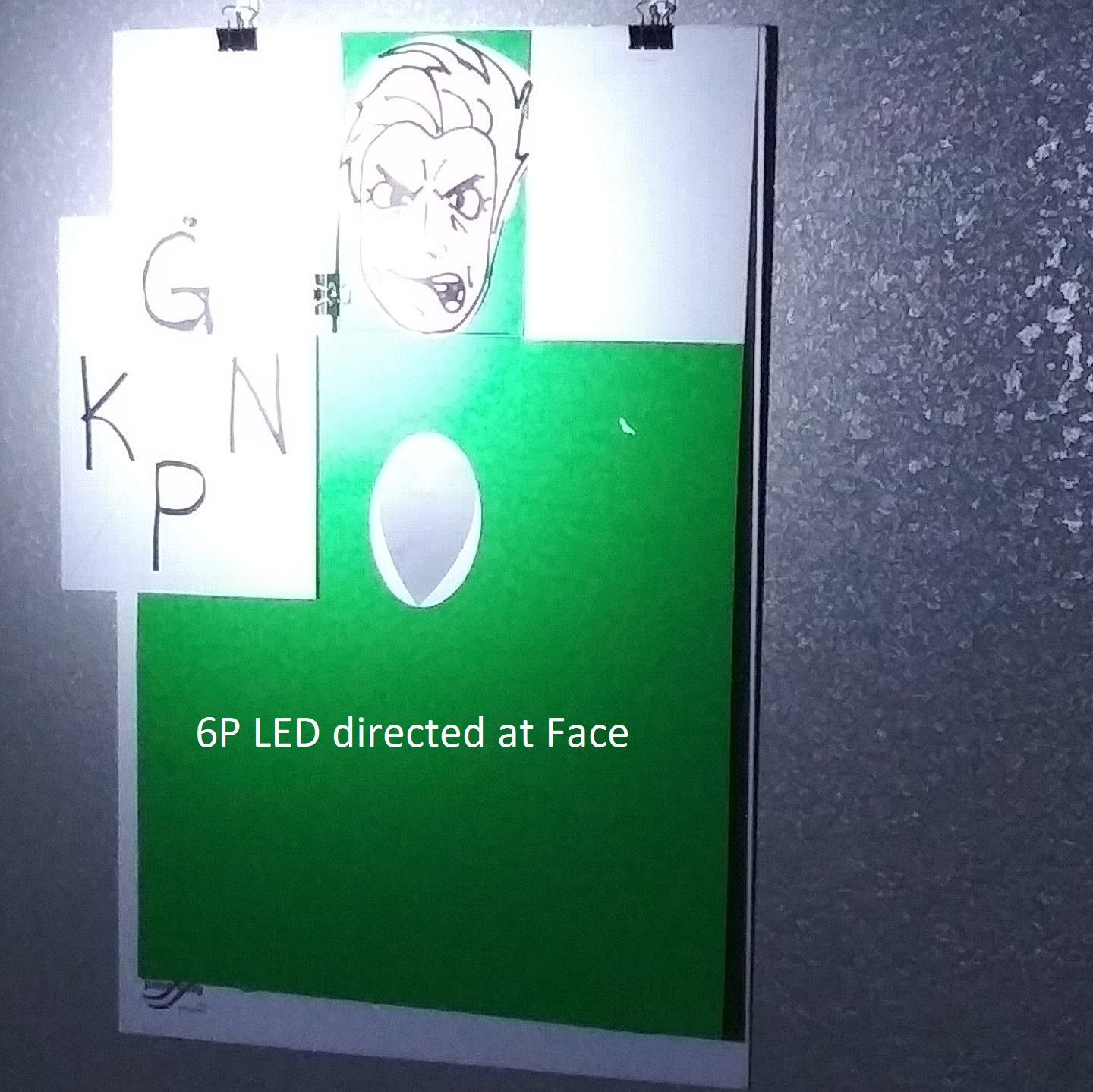
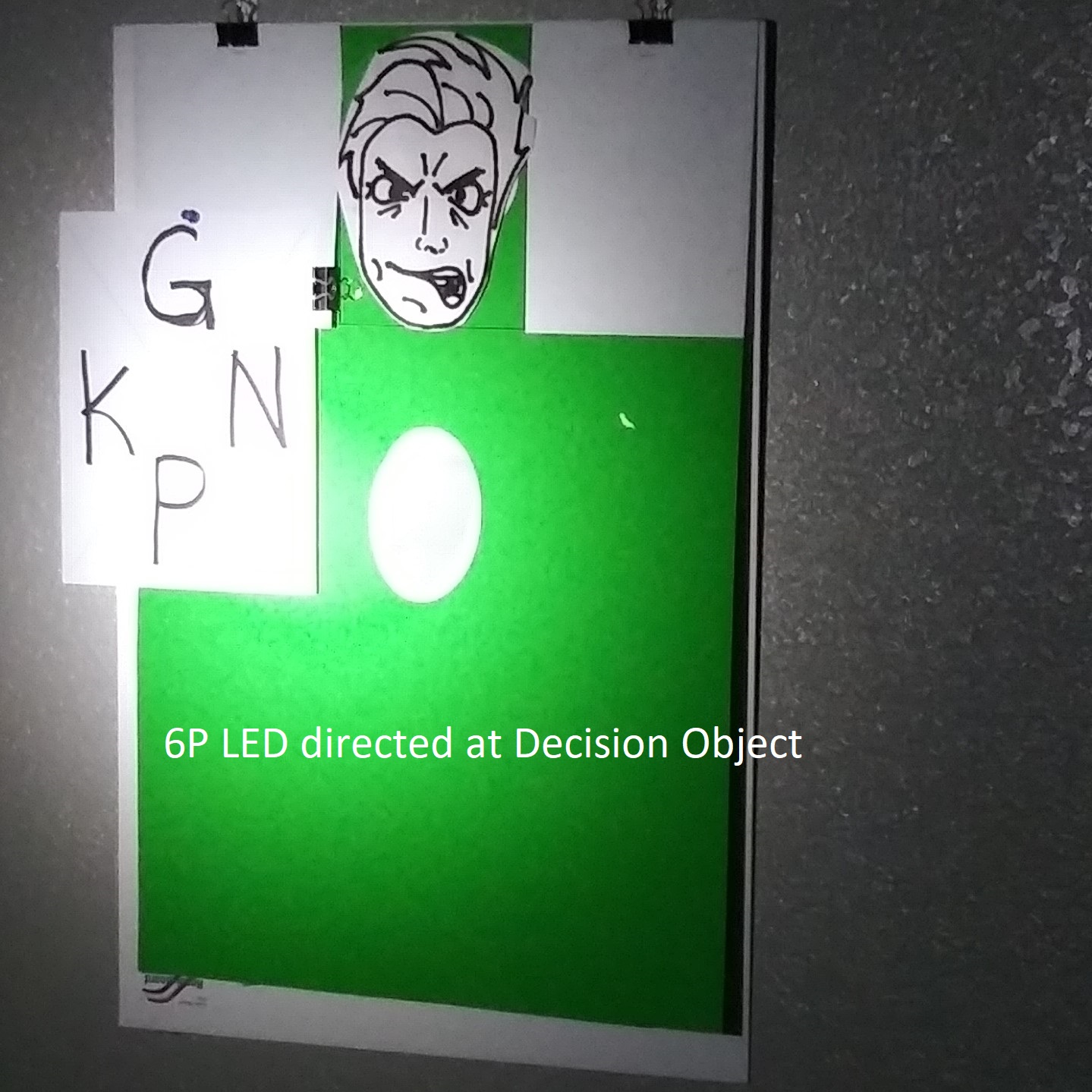
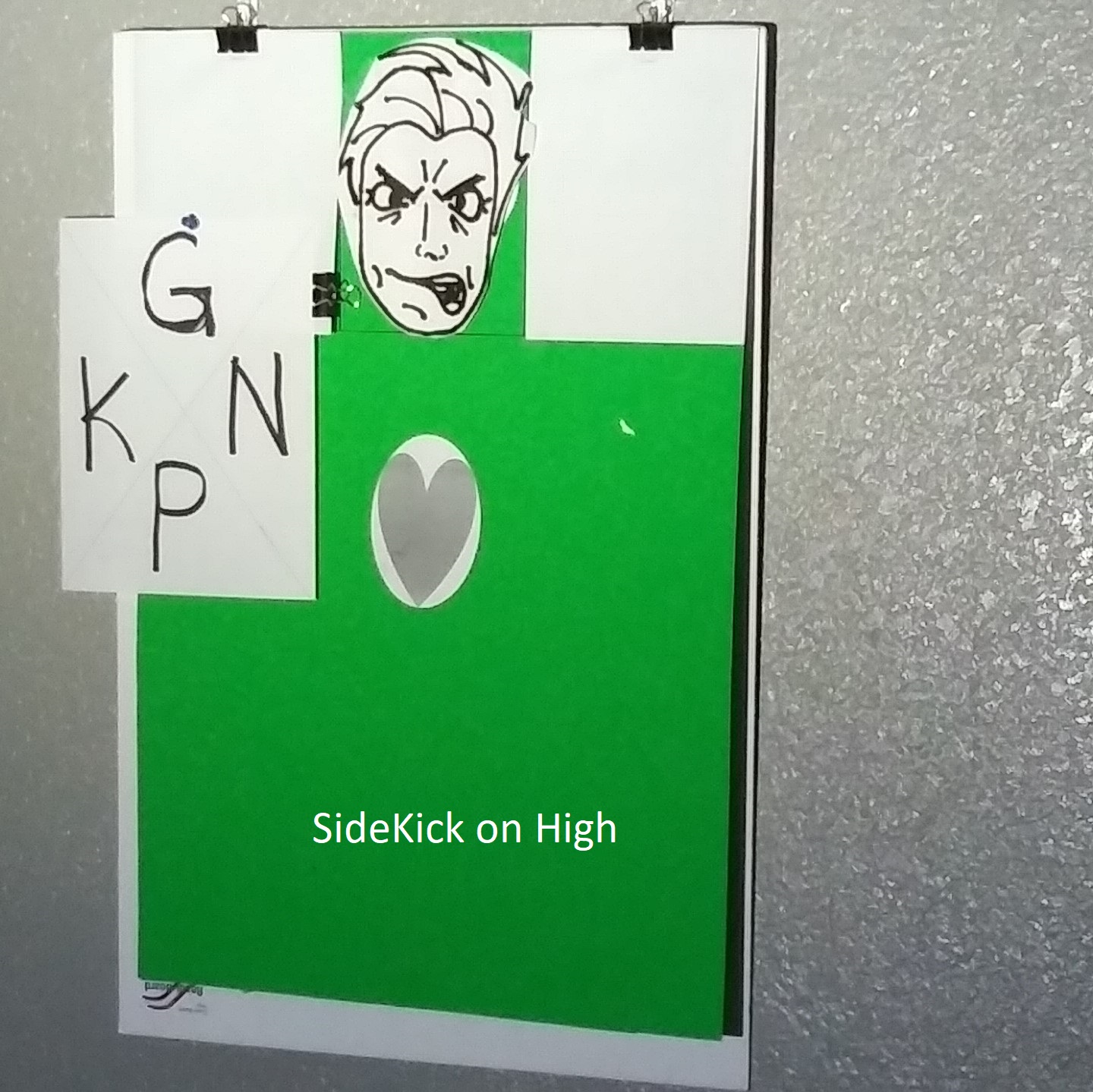
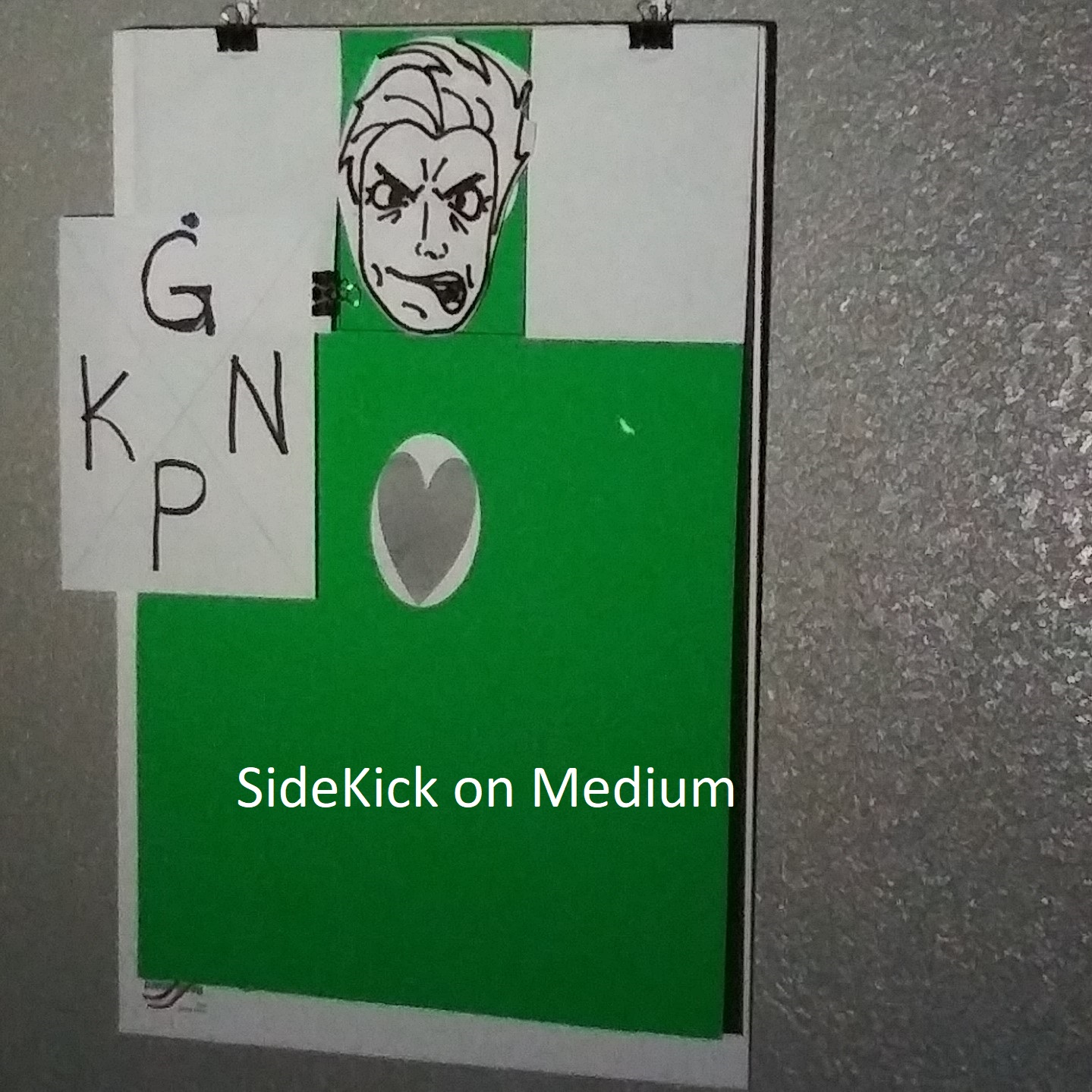
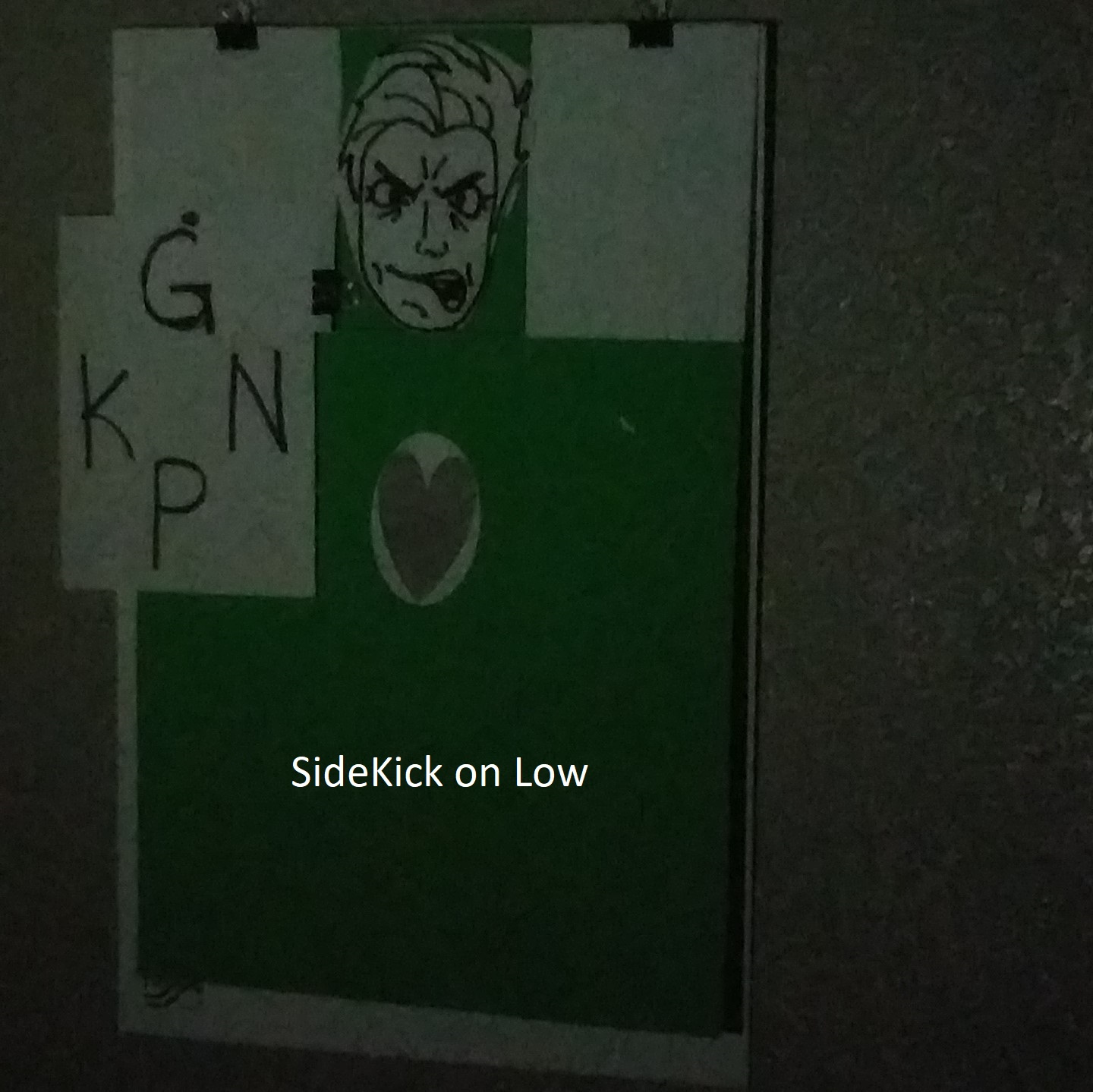
One thing the SideKick doesn’t do as well as the 6P is function as a shooting assist light. Because of its size and switch location, none of the commonly taught flashlight shooting techniques will work with it. That’s not the SideKick’s intended role but if it were pressed into service for that purpose, the user would have to be very careful not to get the hand holding the flashlight in front of the gun muzzle.
When I have the opportunity, I’ll have someone shine the SideKick in my face to see if it’s as blinding as the 6P is. That’s another good testing criterion for a flashlight.
As a reminder, the flashlight shooting chapter of my book Indoor Range Practice Sessions is free to download. If you own a pistol for personal protection, you should know how to use a flashlight along with it. Your flashlight should be as close or closer to your bed as your pistol is.
Flashlight Chapter of Indoor Range Practice Sessions https://store.payloadz.com/details/2505573-ebooks-law-indoor-range-session-11-flashlight.html Free
Indoor Range Practice Sessions https://store.payloadz.com/details/2501143-ebooks-education-indoor-range-practice-sessions.html Not Free
FTC Notice: The SureFire products were sent to me gratis but I receive no compensation for writing about them.
The opposite of Breaking Contact
The group took the dog and began walking away, when Drake returned with a firearm and fired four shots in their direction, according to Murphy. No one was struck, and the three men tried to run away.
WTTW-TV
Attempted Dognapping Precipitated Fatal Shooting on Lower West Side: Prosecutors
A prime example of the sequential nature of ‘OODA Loops.’
- Group of men chases man walking dog
- He runs home and gets inside without the dog
- Group takes dog
- Man comes out with a gun and shoots at them
- The group decides the dog isn’t worth getting shot for so they drop it and run away
- One of them falls down
- Original victim’s girlfriend comes out and gets violent with the downed malefactor
- Original victim joins his gf in doing the Irish jig on the malefactor
- Unsatisfied with this level of violence, he pulls out his gun and shoots the malefactor in the head
- Original victim, now Executioner, and his gf decide to exfiltrate from the crime scene
- A friend of the now deceased malefactor shoots and wounds both Executioner and gf
- First responders arrive to take wounded Executioner and gf to hospital
- Executioner charged with First Degree Murder, while still in hospital
- Unwounded Dognappers escape, most likely never to be found

Don’t let your emotions control your actions. No one wants their dog to be napped but legally dogs are property, not people. You can only use the level of force necessary to protect property in their defense. Shooting someone who is down is also a bad idea. Review the Jerome Ersland incident for further study.
Bottom Line: If the Executioner’s lawyer is clever, the charges will get pleaded down but odds are, he’s going away for some time.
Tactical Professor books (all PDF)
- Thinking Clearly about Self-defense and Personal Protection https://www.payloadz.com/go?id=3377208
- Real Shootouts of the LAPD https://realshootoutsofthelapd.com/
- Serious Mistakes Gunowners Make http://seriousgunownermistakes.com
- Indoor Range Practice Sessions http://indoorrangepracticesessions.com
- Concealed Carry Skills and Drills http://concealedcarryskillsanddrills.com
- Advanced Pistol Practice http://bit.ly/advancedpistolpractice
- Shooting Your Black Rifle http://shootingyourblackrifle.com
- Package deal of Thinking Clearly about Self-defense and Personal Protection, Serious Mistakes, Indoor Sessions, Concealed Carry, and Shooting Your Black Rifle (50% off) https://store.payloadz.com/details/2644448-ebooks-sports-shooting-drills-package.html
Recognition Primed Decision-making (part II)
Dr. Klein explains gives a brief explanation of his model in this interview about RPD.
Examining our Options
The NRA Guide to Personal Protection Outside the Home (PPOTH) lists these “Psychological Reactions To A Threat” in Chapter 6.
- Freeze
- Submit
- Posture
- Flight
- Fight
We could further subdivide ‘Fight’ into:
- Unarmed
- Non-Lethal
- Lethal
To the ‘Submit’ option, we could include the caveat, ‘at least temporarily.’ Being taken to a 2nd crime scene is generally not a good idea but it might be unavoidable. In one of his student’s incidents recounted by Tom Givens, two stickup men got the drop on the victim in a parking lot and had guns to his head. However, they failed to realize he was carrying a concealed pistol. The stickup men kidnapped him and eventually took him to the 2nd crime scene, his home. There, he waited for his turn in the OODA sequence and killed both the predators.
‘Posture’ could simply mean saying NO! in an unambiguous way.

Another option we should consider is ‘Negotiate,’ a tactic included by The Most Dangerous Man in The World as part of his PARRR system. Even a Sixth Army boxing champion, obviously no slouch with his fists, found this tactic useful in an encounter with Razor Willy, a local prostitute in the Fort Campbell area. She became enraged and threatened him with her EDC, a straight razor, but he managed to talk his way out of the encounter with neither party becoming a casualty.

It’s apparent that our Options extend beyond the simplistic “Fight or Flight” and ‘Gun or None’ possibilities that we usually hear about. Thinking about what our Options are ahead of time gives us the freedom to program an appropriate level of force, or none, when we become concerned for our safety or that of our loved ones.
Part III will go into overlaying our ‘Options’ on ‘People’ and ‘Situations’ to develop a personal Avoid, Escape, Confront, Resist model.
Tactical Professor books (all PDF)
- Thinking Clearly about Self-defense and Personal Protection https://www.payloadz.com/go?id=3377208
- Real Shootouts of the LAPD https://realshootoutsofthelapd.com/
- Serious Mistakes Gunowners Make http://seriousgunownermistakes.com
- Indoor Range Practice Sessions http://indoorrangepracticesessions.com
- Concealed Carry Skills and Drills http://concealedcarryskillsanddrills.com
- Advanced Pistol Practice http://bit.ly/advancedpistolpractice
- Shooting Your Black Rifle http://shootingyourblackrifle.com
- Package deal of Thinking Clearly about Self-defense and Personal Protection, Serious Mistakes, Indoor Sessions, Concealed Carry, and Shooting Your Black Rifle (50% off) https://store.payloadz.com/details/2644448-ebooks-sports-shooting-drills-package.html
Recognition Primed Decision-making (part I)
Recognition Primed Decision-making is a concept developed by Dr. Gary Klein. It has become a widely accepted model for first responders, the military, and in aviation.
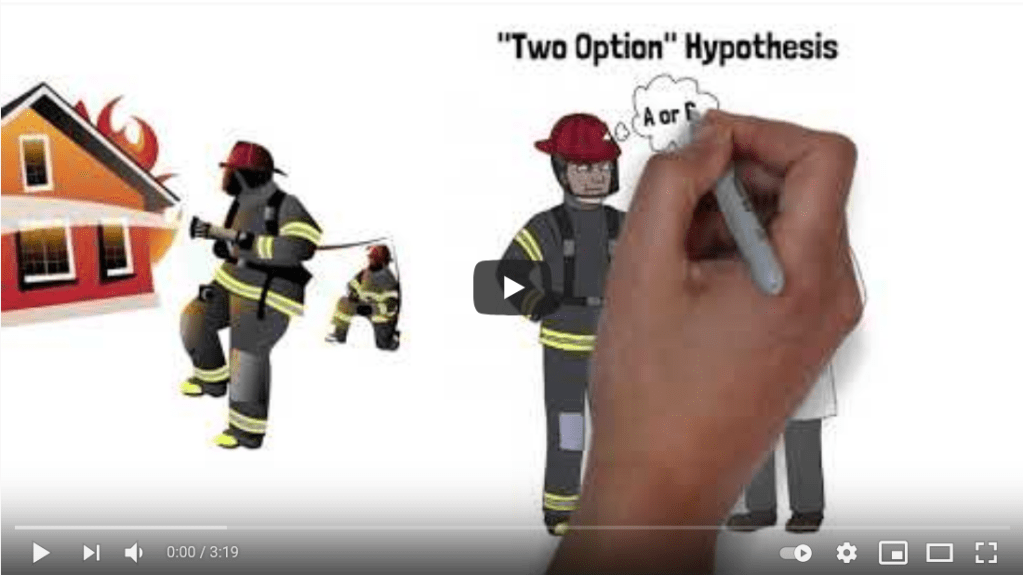
The RPD model is based on the idea that experience allows people to make decisions quickly without having to sort through a series of possibilities. Rather, if a situation appears similar to a past experience, the solution that worked in the previous situation can be applied or modified to provide an adequate solution for the current situation.
Since most people have not been mugged, had their home invaded, or been murdered in a previous experience, the relevant question for an Armed Private Citizen is about acquiring the experience. That is to say, ‘How do we train and practice RPD in the absence of experience?’
In order for us to think clearly about self-defense and personal protection, we need to consider ahead of time the types of people and situations we might encounter. Then we consider what our options are, based on our personal preferences and choices. Finally, we can choose ahead of time which option is best suited to deal with the person and situation.
Types of people we might encounter
- Benign person
- Angry person
- Predator or angry person with personal weapons (fists, shod feet, etc.)
- Angry person or predator with a contact weapon
- Predator or angry person with a projectile weapons
Examples of situations
- Area of limited visibility such as a parking deck
- Walking alone in unfamiliar territory
- Being in the presence of a person who makes us uncomfortable
- Having an unknown person approach us
- Being home in a state of Unawareness or Unfocused on personal protection
- Etc.
What we want to avoid is the Typical, or at least Common, Self-defense Process.

Part II will go into our Options and an interview with Dr. Klein about the model.
Tactical Professor books (all PDF)
- Thinking Clearly about Self-defense and Personal Protection https://www.payloadz.com/go?id=3377208
- Real Shootouts of the LAPD https://realshootoutsofthelapd.com/
- Serious Mistakes Gunowners Make http://seriousgunownermistakes.com
- Indoor Range Practice Sessions http://indoorrangepracticesessions.com
- Concealed Carry Skills and Drills http://concealedcarryskillsanddrills.com
- Advanced Pistol Practice http://bit.ly/advancedpistolpractice
- Shooting Your Black Rifle http://shootingyourblackrifle.com
- Package deal of Thinking Clearly about Self-defense and Personal Protection, Serious Mistakes, Indoor Sessions, Concealed Carry, and Shooting Your Black Rifle (50% off) https://store.payloadz.com/details/2644448-ebooks-sports-shooting-drills-package.html
Shiny! – Surefire Try-Out Haul
A friend at Surefire https://www.surefire.com/ sent me a large box of swag as a present. A number of flashlights were in the package, as well as some batteries and CDs.
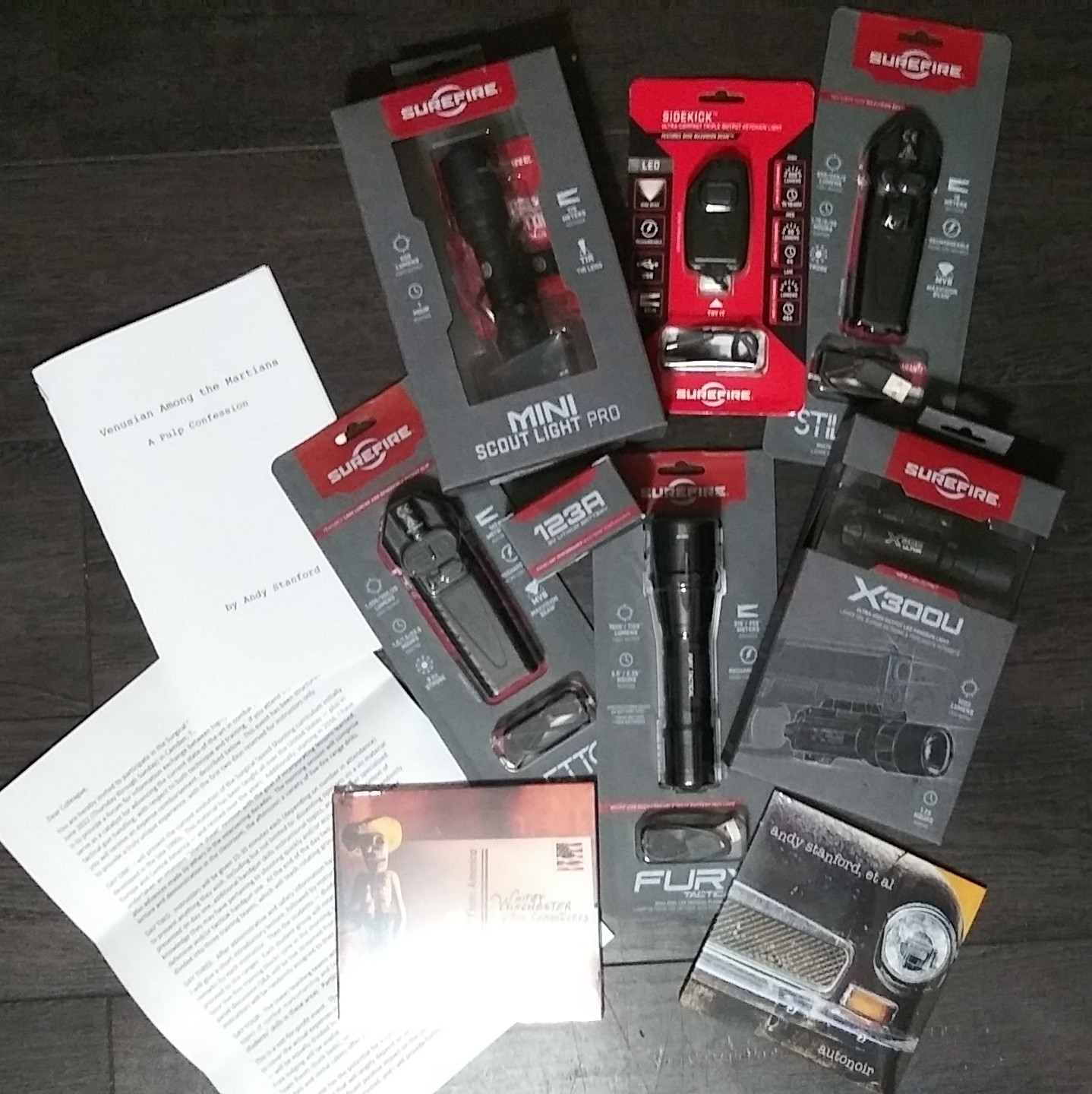
As much as I advocate using flashlights to avoid Negative Outcomes, I should talk more about the particulars of those tools. So, for several weeks I’ll be writing a series of #flashlightfriday posts. It will be a ‘Try-Out Haul’ as the YouTube models say.

The Surefire 6P LED has been my bedside light for years. It’s a tried and true product and well regarded in the industry. A Streamlight Microstream I received from HK-USA https://hk-usa.com/ has been on my keychain for a couple of years now. It’s been useful and convenient to carry.
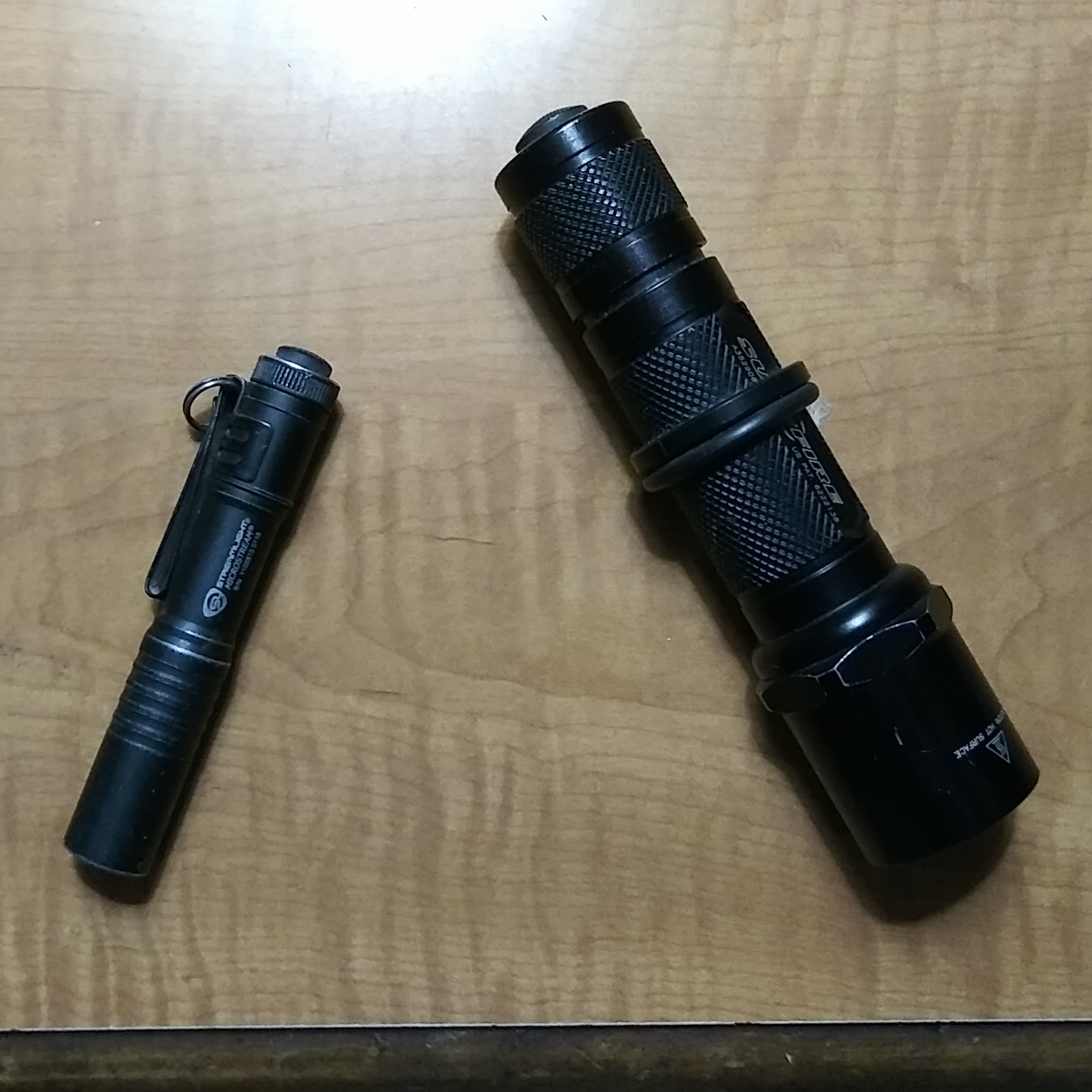
I’m going to try out the new gear from Surefire to see what I think of it as an upgrade for my current setup. On Friday, I’ll be reviewing the Sidekick, which will take the place of the Microstream on my keychain.

Also included in the package was an invitation to attend the Inaugural Surgical Speed Shooting Summit. The event will be held in Tennessee in June of 2022. It’s still in the planning stages but as more information becomes available, I will post it.
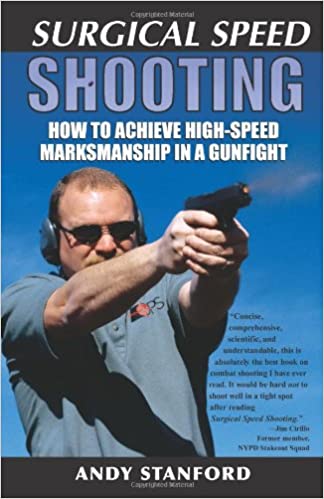
FTC Notice: These products were sent to me gratis but I receive no compensation for writing about them.
Consistency (again)
In my book, consistency does not mean 70%, it means 100%. I’ve written about it before https://wordpress.com/post/tacticalprofessor.wordpress.com/173323 but it’s worth mentioning again.
That’s the reason I prefer evaluation protocols that involve short 100% standards that are done repetitively. I would rather someone know exactly what they can do to a 100% standard and stay within those boundaries than have two rounds out of six going into someone else’s house.
Two NRA standards come to mind.
- the Red, White, and Blue Levels of the NRA Basics of Pistol Shooting
- the NRA Marksmanship Qualification Program – Defensive Pistol I
Naturally, I love the 5^5 standard I developed, based on Gila Hayes‘ original 5 times 4 idea.
Work on learning to do one thing consistently well, then move on to more Cool Kid Cosplay stuff.
Package Deal Update
I’m gratified that Thinking Clearly about Self-Defense and Personal Protection has been well received. One reader sent me the following comment, which I found quite gratifying.
I went through the book quickly and my initial impression is that it is superb. Tremendous intellectual effort and incredibly sage and mature counsel on the subject. It’s also incredibly in-depth and thoughtful.
J.T.
I want to spread the word as far as I can so I’ve now included it in the Shooting Drills Package https://www.payloadz.com/go/sip?id=3348053
The Package still includes Serious Mistakes Gunowners Make, also.

I appreciate the loyalty of those who have already purchased the Package, so I will be sending previous purchasers a download link for the book.
Two non-gun related books heavily influenced me in writing the book. The Art of Thinking Clearly by Rolf Dobelli and Small Data: The Tiny Clues That Uncover Huge Trends by Martin Lindstrom are both very insightful books about topics that aren’t often discussed.
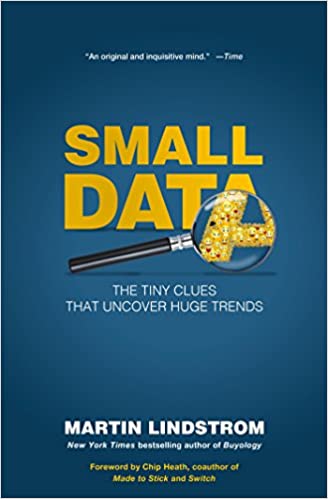
Without knowing a proper name for it, I’ve been working with ‘small data’ for decades. I think Lindstrom would have approved of the Deloitte & Touche Real Estate Capital Markets Database that I created years ago. It started out with a few notes in Word and eventually grew into the broadest analysis of Wall Street’s entry into the commercial real estate finance business that has been done. Even the Wall Street soothsayers were only tracking 20 percent of the data in my database.
Contrary to the popular opinion that “the plural of anecdote is not data,” Lindstrom’s work shows that the opposite is actually true. All of Gary Klein’s work about decision-making is based on small data. Concealed Carry Skills and Drills, one of the books in the Package, is based on the concept of small data.
The collection of books in the Package presents a very comprehensive view of using firearms and other tools for preservation of life. Tools, skills, philosophy, and pitfalls are all covered. Those who are serious about our Art will find them useful reading, I am sure. I hope you will consider purchasing the collection.
How useful are sights on a pistol?
Since I’ve gathered some data on the topic in the past, I am going to link to a Lucky Gunner article about using the sights on a pistol.
I did an experiment years ago in which 10 different experienced shooters tried point shooting a single round at a silhouette starting at one yard. Then the distance was increased one yard at a time for the group. To test whether some form of visual indexing to the pistol was necessary, each shooter had a piece of cardboard placed horizontally in front of him at neck level so there was absolutely no visual reference to the pistol’s orientation. There was no time limit, the shooters were free to adjust their pointing until they thought they were on target.
The bullets starting hitting the ground at two yards. Only one shooter was able to make a hit anywhere on the silhouette at 5 yards and that was a peripheral hit. I discontinued the experiment at that point.
I figured out everything I needed to know about hitting a target without visual reference to the gun and with the gun below the eye-target line from that experiment.
Using the sights (i.e., getting the pistol into the eye-target line) is how we learn to kinesthetically index the handgun. Ask someone to point their finger at any object. Notice they don’t do it outside of their ‘workspace’ the more or less basketball sized space in front of the chest, properly called the ‘ipsilateral visual field.’
We may not always use the sights in a fight but training with them is how we learn to correctly index the pistol kinesthetically.

Surveillance Detection
#fridayfundamentals
I had an encounter yesterday with some unpleasant people while grocery shopping. When I got back to my car, they pulled up nearby at a somewhat odd angle in the parking lot. Since I wasn’t sure if they planned to initiate a confrontation, I quickly drove out of the lot.
After such an encounter, it’s prudent to take a Surveillance Detection Route that does not lead directly home afterward. Doing so isn’t particularly difficult but it does require a little thought at the time. You also need to use your rear view and side mirrors regularly during the process. And have a safe place to go if it turns out you are being followed.
First of all, turn out of the parking lot in the opposite direction that you would take to go home. As you drive, look for signalized intersections to turn onto non-arterial through streets. If possible, hit the red light. Sitting at the red light for a minute will allow you to scan the cars behind you without being an inattentive driver. Make at least three turns watching your mirrors after you turn. Contrary to popular opinion, they don’t all have to be Right Turns. Sitting in the Left Turn lane at a signal will frequently give you a better scan of the cars behind you by using your driver’s side mirror than you can get through the rear view mirror. You’ll also have a slightly longer view of the traffic behind you as they turn.
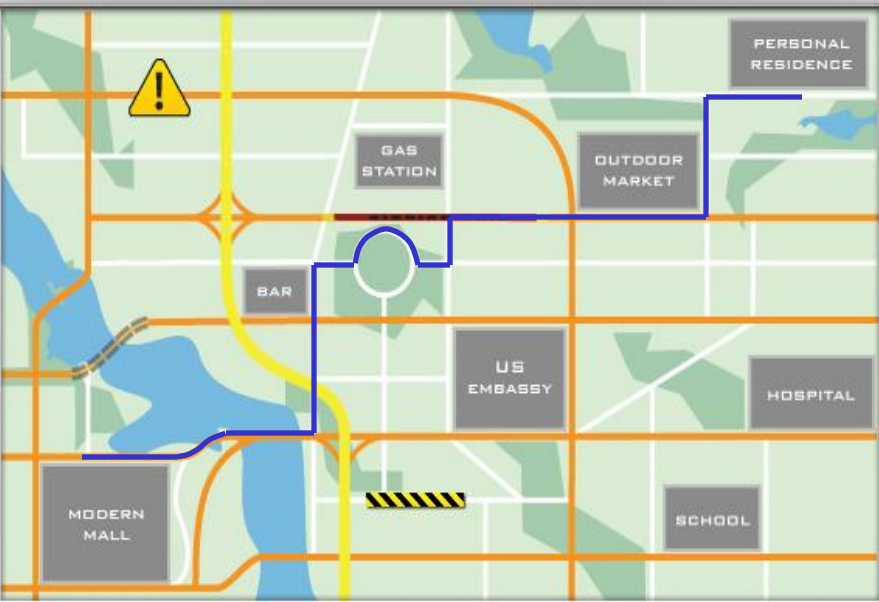
What you are looking for is vehicles that repeatedly make the same turns as you do. It doesn’t have to be the same vehicle that was involved in the initial encounter. Pairs of people often have two cars and the other vehicle might be the one following you.
Once you go into the Surveillance Detection mode, make a conscious determination you aren’t being followed before you decide to head back in the direction of your home. If you are being followed, don’t go home. Go to a safe place. POlice stations are overrated as safe refuges because they are often unmanned after shift change. Even Atlanta Zone Headquarters in the middle of the afternoon are sometime completely locked up. A woman was murdered in the lobby of an unmanned small town POlice station a few years ago by her estranged husband who was following her.
A better choice is someplace that is usually occupied by some kind of First Responders. Fire stations are one example and hospital Emergency Rooms are another. Even these aren’t fool proof but they are generally a better bet than going to the POlice. Think about several possibilities ahead of time and have them in mind as contingencies if you do need to go into the Surveillance Detection mode.
You could also call 911 but that requires you to able to link up with a patrolling POlice car or go to some place you’re directed to by the dispatcher to wait for help. Waiting for help in a stationary location when you’re being followed is an invitation to disaster. Driving to a safe place is probably a better idea.
Sound your horn even before you get into the safe refuge. Turn on your flashers and, if possible, activate the car alarm. If you have any kind of defensive tool, think ahead about how you might employ it should the situation require. That’s another good reason not to have a pistol stashed under the front seat or some other place it might have shifted around from.
Usually, when someone following you realizes that you are aware they are following, they will break off the pursuit. Don’t count on it though. You want to be prepared to play the game completely to the end. Just because you’re paranoid doesn’t mean they’re NOT out to get you.
On a separate note, a reader of Thinking Clearly about Self-Defense and Personal Protection sent me the following note. It is spot on so I am reproducing it verbatim.
Hi Claude,
You might want to put a notice at the beginning of your book to make sure you have an Internet connection when reading the book, because a lot of the text won’t make sense until the reader reads the article at the hyperlink. And there are a lot of them.
Good thought. Thinking Clearly about Self-Defense and Personal Protection contains numerous references to incidents in The Real World™ to provide context for the concepts in my articles. For copyright reasons, I can’t reproduce the articles in the book, so I link to them. An internet connection will be invaluable for understanding the context behind many of the concepts.
Thanks for the tip. Winner, winner, he receives the complete package of my books with my compliments for his suggestion.
 tacticalprofessor
You must be logged in to post a comment.