The LCP Project – Ill-Annoy CCL Qualification (5 yard stage)
Continuing The LCP Project, this video shows the 5 yard stage of the Illinois (Ill-Annoy) Concealed Carry License Qualification shot with a Ruger LCP. This stage was shot by drawing from a concealed holster, although a concealed draw is not required when shooting the Qualification to obtain a CCL. The 10 required shots were fired as 3 shots in 3 seconds 3 times. The 10th shot was a shot to the face in 3 seconds.
The 5 yard face shot reminds me of something my Dad once said to a would be robber, “Do you want it in the belly or the teeth?” The robber suddenly remembered an appointment he was late for and left. No shooting was necessary in that incident. My shot placement on the Qual was unintentional but brought back a memory.
Ammo for the LCP Project was furnished by Ammoman https://www.ammoman.com/
The 10 yard stage video can be seen at https://youtu.be/3EKAoExWDE0
Tactical Professor books (all PDF)
- Thinking Clearly about Self-defense and Personal Protection https://www.payloadz.com/go?id=3377208
- Real Shootouts of the LAPD https://realshootoutsofthelapd.com/
- Serious Mistakes Gunowners Make http://seriousgunownermistakes.com
- Indoor Range Practice Sessions http://indoorrangepracticesessions.com
- Concealed Carry Skills and Drills http://concealedcarryskillsanddrills.com
- Advanced Pistol Practice http://bit.ly/advancedpistolpractice
- Shooting Your Black Rifle http://shootingyourblackrifle.com
- Package deal of Thinking Clearly about Self-defense and Personal Protection, Serious Mistakes, Indoor Sessions, Concealed Carry, and Shooting Your Black Rifle (50% off) https://store.payloadz.com/details/2644448-ebooks-sports-shooting-drills-package.html
Purchase of any book includes Serious Mistakes Gunowners Make.
STOPP Presentation at Rangemaster Tactical Conference
The LCP Project – Ill-Annoy CCL Qualification
The Ruger LCP is a far more capable gun than it’s given credit for. The LCP Project is intended to show what the gun is capable of and some modifications and equipment that are useful when carrying and shooting it.
This video shows the 10 yard stage of the Illinois (Ill-Annoy) Concealed Carry License Qualification shot with a Ruger LCP. The target was a standard B-27 with the addition of a legal size sheet of paper. The sheet of paper is the size of the scoring area of the Illinois POlice qualification that the CCL Qual is derived from. The score on the legal sized sheet was 100%. Note that when the Course is shot to obtain a CCL, hits anywhere on the silhouette count and only 21 hits (70%) are required to pass.
Ammo for the LCP Project was furnished by Ammoman https://www.ammoman.com/
Tactical Professor books (all PDF)
- Thinking Clearly about Self-defense and Personal Protection https://www.payloadz.com/go?id=3377208
- Real Shootouts of the LAPD https://realshootoutsofthelapd.com/
- Serious Mistakes Gunowners Make http://seriousgunownermistakes.com
- Indoor Range Practice Sessions http://indoorrangepracticesessions.com
- Concealed Carry Skills and Drills http://concealedcarryskillsanddrills.com
- Advanced Pistol Practice http://bit.ly/advancedpistolpractice
- Shooting Your Black Rifle http://shootingyourblackrifle.com
- Package deal of Thinking Clearly about Self-defense and Personal Protection, Serious Mistakes, Indoor Sessions, Concealed Carry, and Shooting Your Black Rifle (50% off) https://store.payloadz.com/details/2644448-ebooks-sports-shooting-drills-package.html
Purchase of any book includes Serious Mistakes Gunowners Make.
STOPP Presentation at Rangemaster Tactical Conference
Defense of Others
#fridayfundamentals
‘Self-defense’ is only one subset of Personal Protection. Defense of Others is the other subset. September’s Armed Citizen column of the NRA Journals Shooting Illustrated – September 2021 has two incidents involving Defense of Others. Both occurred in public places outside the home. One was successful, the other Not So Much. Defense of Others situations often do not fall in the 3 shots, 3 seconds, 3 yards paradigm.
In the successful incident, a man and woman were in a Madera, California Wal-Mart parking lot. The man was attacked, the woman pulled out her pistol from her car, fired one round, and dropped the attacker in his tracks at 10 yards. In the words of commentator Raymond:
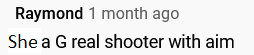
In the Not So Much successful incident, Calvin ‘Mad Dog’ Gonnigan shot at three people in Chicargo who were celebrating Independence Day. A nearby Concealed Carry Licensee shot at ‘Mad Dog’ but only peripherally wounded him several times. ‘Mad Dog’ left but then came back to murder one of his victims by shooting her in the face and even further seriously wounding the other two victims. Eventually, the POlice arrived from the District Headquarters, which was a block away, and took ‘Mad Dog’ into custody.

Madera County is largely rural. It’s a likely bet that the woman had practiced her aim before. Chicargo, being an urban area, is unlikely to result in much practice. That’s probably why ‘Mad Dog’ did most of his shooting at close range and probably why the CCL was not particularly successful. The Illinois qualification course can be passed by only hitting one shot out of 10 at 10 yards and that only has to hit an arm of the silhouette target.
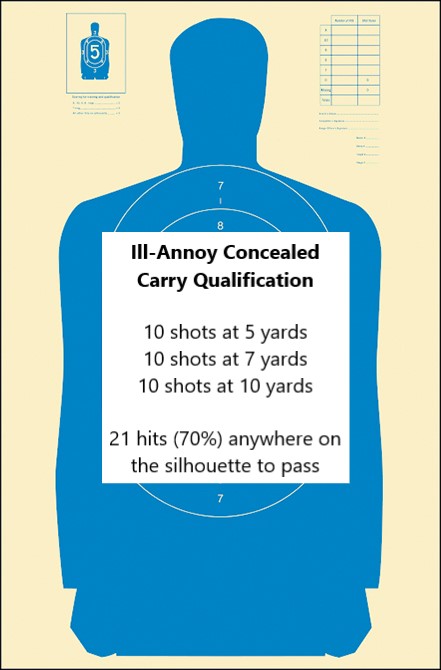
For those who carry a gun not only to protect themselves but also to protect their loved ones and friends, getting in a little structured practice can be useful, maybe even life saving. Indoor Range Practice Sessions http://indoorrangepracticesessions.com has a series of drills that could be done even in Chicargoland. And Serious Mistakes Gunowners Make is included with your purchase.

Tactical Professor books (all PDF)
- Thinking Clearly about Self-defense and Personal Protection https://www.payloadz.com/go?id=3377208
- Real Shootouts of the LAPD https://realshootoutsofthelapd.com/
- Serious Mistakes Gunowners Make http://seriousgunownermistakes.com
- Indoor Range Practice Sessions http://indoorrangepracticesessions.com
- Concealed Carry Skills and Drills http://concealedcarryskillsanddrills.com
- Advanced Pistol Practice http://bit.ly/advancedpistolpractice
- Shooting Your Black Rifle http://shootingyourblackrifle.com
- Package deal of Thinking Clearly about Self-defense and Personal Protection, Serious Mistakes, Indoor Sessions, Concealed Carry, and Shooting Your Black Rifle (50% off) https://store.payloadz.com/details/2644448-ebooks-sports-shooting-drills-package.html
Purchase of any book includes Serious Mistakes Gunowners Make.
STOPP Presentation at Rangemaster Tactical Conference
https://tacticalprofessor.wordpress.com/2021/09/14/stopp-presentation-now-available/ https://www.payloadz.com/go?id=3381307
Recognition Primed Decision-making (part II)
Dr. Klein explains gives a brief explanation of his model in this interview about RPD.
Examining our Options
The NRA Guide to Personal Protection Outside the Home (PPOTH) lists these “Psychological Reactions To A Threat” in Chapter 6.
- Freeze
- Submit
- Posture
- Flight
- Fight
We could further subdivide ‘Fight’ into:
- Unarmed
- Non-Lethal
- Lethal
To the ‘Submit’ option, we could include the caveat, ‘at least temporarily.’ Being taken to a 2nd crime scene is generally not a good idea but it might be unavoidable. In one of his student’s incidents recounted by Tom Givens, two stickup men got the drop on the victim in a parking lot and had guns to his head. However, they failed to realize he was carrying a concealed pistol. The stickup men kidnapped him and eventually took him to the 2nd crime scene, his home. There, he waited for his turn in the OODA sequence and killed both the predators.
‘Posture’ could simply mean saying NO! in an unambiguous way.

Another option we should consider is ‘Negotiate,’ a tactic included by The Most Dangerous Man in The World as part of his PARRR system. Even a Sixth Army boxing champion, obviously no slouch with his fists, found this tactic useful in an encounter with Razor Willy, a local prostitute in the Fort Campbell area. She became enraged and threatened him with her EDC, a straight razor, but he managed to talk his way out of the encounter with neither party becoming a casualty.

It’s apparent that our Options extend beyond the simplistic “Fight or Flight” and ‘Gun or None’ possibilities that we usually hear about. Thinking about what our Options are ahead of time gives us the freedom to program an appropriate level of force, or none, when we become concerned for our safety or that of our loved ones.
Part III will go into overlaying our ‘Options’ on ‘People’ and ‘Situations’ to develop a personal Avoid, Escape, Confront, Resist model.
Tactical Professor books (all PDF)
- Thinking Clearly about Self-defense and Personal Protection https://www.payloadz.com/go?id=3377208
- Real Shootouts of the LAPD https://realshootoutsofthelapd.com/
- Serious Mistakes Gunowners Make http://seriousgunownermistakes.com
- Indoor Range Practice Sessions http://indoorrangepracticesessions.com
- Concealed Carry Skills and Drills http://concealedcarryskillsanddrills.com
- Advanced Pistol Practice http://bit.ly/advancedpistolpractice
- Shooting Your Black Rifle http://shootingyourblackrifle.com
- Package deal of Thinking Clearly about Self-defense and Personal Protection, Serious Mistakes, Indoor Sessions, Concealed Carry, and Shooting Your Black Rifle (50% off) https://store.payloadz.com/details/2644448-ebooks-sports-shooting-drills-package.html
Package Deal Update
I’m gratified that Thinking Clearly about Self-Defense and Personal Protection has been well received. One reader sent me the following comment, which I found quite gratifying.
I went through the book quickly and my initial impression is that it is superb. Tremendous intellectual effort and incredibly sage and mature counsel on the subject. It’s also incredibly in-depth and thoughtful.
J.T.
I want to spread the word as far as I can so I’ve now included it in the Shooting Drills Package https://www.payloadz.com/go/sip?id=3348053
The Package still includes Serious Mistakes Gunowners Make, also.

I appreciate the loyalty of those who have already purchased the Package, so I will be sending previous purchasers a download link for the book.
Two non-gun related books heavily influenced me in writing the book. The Art of Thinking Clearly by Rolf Dobelli and Small Data: The Tiny Clues That Uncover Huge Trends by Martin Lindstrom are both very insightful books about topics that aren’t often discussed.
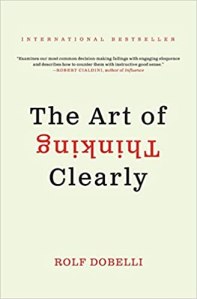
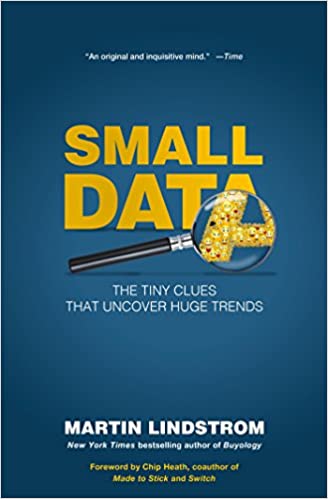
Without knowing a proper name for it, I’ve been working with ‘small data’ for decades. I think Lindstrom would have approved of the Deloitte & Touche Real Estate Capital Markets Database that I created years ago. It started out with a few notes in Word and eventually grew into the broadest analysis of Wall Street’s entry into the commercial real estate finance business that has been done. Even the Wall Street soothsayers were only tracking 20 percent of the data in my database.
Contrary to the popular opinion that “the plural of anecdote is not data,” Lindstrom’s work shows that the opposite is actually true. All of Gary Klein’s work about decision-making is based on small data. Concealed Carry Skills and Drills, one of the books in the Package, is based on the concept of small data.
The collection of books in the Package presents a very comprehensive view of using firearms and other tools for preservation of life. Tools, skills, philosophy, and pitfalls are all covered. Those who are serious about our Art will find them useful reading, I am sure. I hope you will consider purchasing the collection.
BOGO on Tactical Professor books
I’m grateful to my subscribers who send me news reports about the Negative Outcomes gunowners encounter. The ones about children gaining unauthorized access to guns really make me sad, especially because some folks defend practices that lead to those tragedies. Consequently, the purchase of any Tactical Professor book now includes a free copy of Serious Mistakes Gunowners Make.
In addition, I have reduced the price of Serious Mistakes by itself to $4.99. I’d make it free except that people only value things they pay for.
If anyone who has purchased any of my books would like a free copy of Serious Mistakes, email me through the About section above and I will send you one.
Tactical Professor books (all PDF)
- Real Shootouts of the LAPD https://realshootoutsofthelapd.com
- Serious Mistakes Gunowners Make http://seriousgunownermistakes.com
- Indoor Range Practice Sessions http://indoorrangepracticesessions.com
- Concealed Carry Skills and Drills http://concealedcarryskillsanddrills.com
- Advanced Pistol Practice http://bit.ly/advancedpistolpractice
- Shooting Your Black Rifle http://shootingyourblackrifle.com
- Package deal of Serious Mistakes, Indoor Sessions, Concealed Carry, and Shooting Your Black Rifle (20% off) https://store.payloadz.com/details/2644448-ebooks-sports-shooting-drills-package.html
Breaking Contact (Part 5)
#mindsetmonday
Our goal in personal protection is to force a break in contact. We want them to go away, or we want to go away. One or the other.
The final segment of the CCW Safe Series about my concept of Breaking Contact is posted.
https://ccwsafe.com/blog/breaking-contact-pt-5
This edition focuses on success stories. I like those.
[W]hen a concealed carrier enters a self-defense situation with the goal of breaking contact — as opposed to a goal of killing or disabling an attacker — the defender has a substantially higher likelihood of avoiding a deadly shooting or making a successful self-defense claim when all else fails.
Shawn Vincent
Breaking Contact (Part 3)
#fridayfundamentals
The CCW Safe https://ccwsafe.com/ series about my concept of Breaking Contact continues with Part 3.
https://ccwsafe.com/blog/34532
Part 2 of the series focused on situations where the concealed carrier initiated contact. Part 3 focuses on incidents where the carrier was initially approached and failed to take the opportunity to Break Contact.
I hate platitudes when they’re used in an attempt to simplify a complex topic into a sound bite. “Better to be tried by twelve than carried by six” is one of the most commonly parroted sayings in the firearms community. While many times we are presented with the optometrist’s question, “Which is better, A or B?,” decisions that are made in advance and are going to affect the rest of our lives seldom are binary. I like to think we’re smarter than parrots that have been trained to say one or two things.

As Shawn points out, the decision process has several more options.
When the goal is not necessarily to kill or disable a would-be attacker, a defender is open to other options that carry less legal risk and may produce more positive outcomes.
When breaking contact is the goal, sometimes it is better to disengage rather than attempt to de-escalate.
My personal paradigm is:
- Avoid
- Escape
- Confront
- Resist
Any attempt at de-escalation, even when benign, is a part of Confront. Disengage is part of Escape. Escaping is higher on my priority list than Confronting.
Similarly, in the Gerald Strebendt incident, he unnecessarily moved up the paradigm from Escape to Confront. A confrontation inherently carries more risk associated with it than an escape. As John Hall, former head of the FBI Firearms Training Unit put it:
Any encounter carries with it an element of chance.
My initial post about Breaking Contact (Part I) is located here:
The second is here.
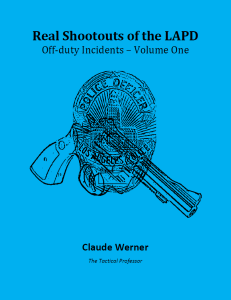
If you would like to purchase my book, click on the image below. The detailed investigations and reports of incidents involving off-duty LAPD officers are very instructional for understanding the differences between Avoiding, Escaping, and Confronting.
The Magic of Knowing that You Can Shoot Quick and Straight
#mindsetmonday
J. Henry Fitzgerald’s book Shooting was published in 1930. Some things in it are dated but most of the book is still very worthwhile. The entire book is available online, courtesy of Sportsman’s Vintage Press.
http://sportsmansvintagepress.com/read-free/shooting-table-contents/
The chapter on The Magic of Knowing that You Can Shoot Quick and Straight is an example of practical mindset. Many times, explanations of ‘mindset’ are vague and nebulous but Fitzgerald’s is straightforward and actionable.
http://sportsmansvintagepress.com/read-free/shooting-table-contents/shoot-quick-and-straight/
Some things related to human nature and performance haven’t changed one bit. Fitzgerald’s commentary on the Dunning-Kruger Effect https://en.wikipedia.org/wiki/Dunning%E2%80%93Kruger_effect is a hilarious example.
I have listened to many officers explaining how good they could shoot and when they got on the firing line they couldn’t hit a cow in the head with a snow shovel.
J. Henry Fitzgerald
It’s not necessary to be a great shot to defend yourself but having a degree of demonstrated competence is a valuable asset to your mindset. Drills like 3x3x3 are one way to demonstrate your competence to yourself. Shooting some of the drills from Indoor Range Practice Sessions and Concealed Carry Skills and Drills are another. Click on the images to purchase either or both books.


FTC notice: I am not affiliated with Sportsman’s Vintage Press and receive no commissions from them.
The Importance of the First Shot
#fridayfundamentals
Some principles are just as fundamental as is technique. One of the unintentional themes of the 2021 Tactical Conference was the importance of the first shot. One class even had that as its title. Several other instructors touched on it as part of their classes and presentations.
Rolf Penzel and Mike Treat titled their class Making the First Shot Count.
John Murphy made the comment “It’s not a ‘one shot drill,’ it’s a ‘first shot drill’” in his class.
During his presentation Secrets of Highly Successful Gunfighters, Darryl Bolke stated “training efficiency means using the sights.”
Chuck Haggard used the term “Target Picture” to illustrate the concept of placing the sight picture on the part of the target we want to hit initially.
In his AIWB Skills class, John Daub instructed his clients to “think about where you want the muzzle to end up” at the conclusion of the draw.
Scott Jedlinski’s comment “The original 1911 sights were suggestions” in his class was a humorous illustration of why point shooting was so common in days gone by. Tom Givens has also written about the dismal quality of factory sights on pistols and revolvers of yesteryear and how that affected technique training of a century ago.
One of trends that is apparent in the Categorical Use of Force Reports by the LAPD is how often one or two shots solve the problem. This is true through the entire database of over 1,000 incidents, not just the off-duty incidents chronicled in my first book about LAPD Shootouts. LAPD’s emphasis on marksmanship and frequent scored qualification is no doubt responsible for this difference from other large departments that have minimal standards.
In a gunfight, the shooter who first scores a hit above the diaphragm of his opponent is the one who seizes the initiative in the incident. Making a good hit with the FIRST SHOT fired is key to seizing the initiative and then retaining it until the incident is over. No one’s performance improves after he gets shot in a vital area.
In terms of operationalizing this principle, the fact that most common autoloaders don’t have a second strike capability during dry practice becomes irrelevant to the fundamental of making a good hit with the first shot. Your dry practice should mostly focus on the first shot anyway.
During live fire, the majority of our practice should be ‘first shot drills.’ Do a little recoil management practice but don’t overestimate its priority relative to the first shot in the real world. As John Farnam put it, “Our desired range product is victory.”
If you would like to purchase my book, click on the image below.
 tacticalprofessor
You must be logged in to post a comment.