The Armed Citizen
A writer from Gun Digest contacted me about the Five Year Armed Citizen study TAC 5 year w tables I did a while back. He asked if I would give him a quote about it, so this was my reply.
“Analyzing incidents involving Armed Private Citizens, rather than LE/MIL situations, leads to different conclusions. Common discussion topics among Armed Private Citizens, such as equipment and caliber issues, rarely are the cause of Negative Outcomes. Negative Outcomes result from 1) lack of conceptual understanding leading to poor decision-making, and 2) lack of appropriate and necessary skills, techniques, and tactics.
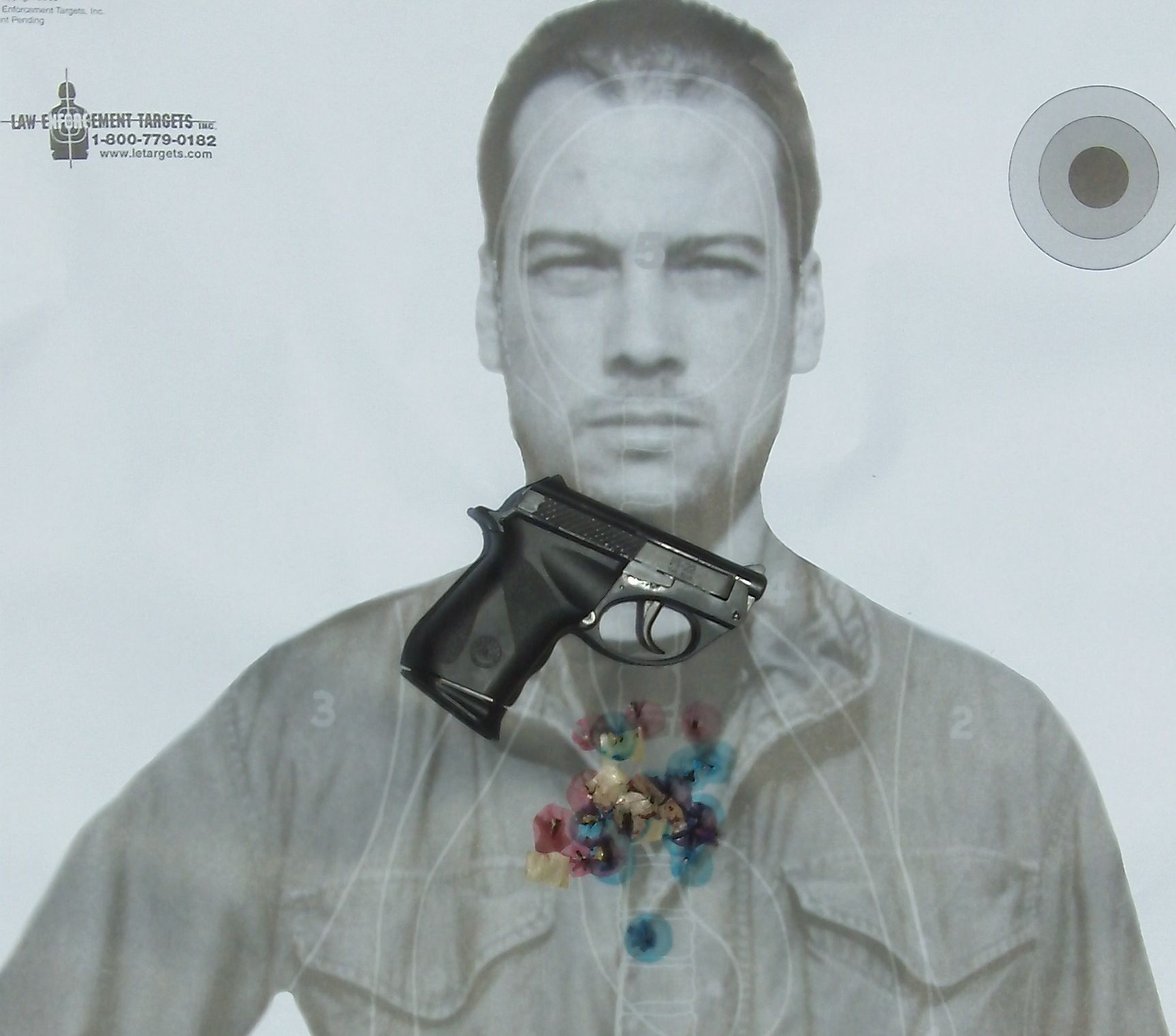
Carrying and being capable of using a small gun adequately will yield much better results than owning a large pistol that isn’t carried or shot well. More criminals have been planted in the ground by .22s that hit than by .45s that miss.”
Legal defense plans
Periodically, I am asked to opine about the various plans available to cover the expenses of a legal defense after a personal protection incident. This article by Marty Hayes covers it in much better detail than I could explain.
The [plans] can be categorized into four types:
1) Insurance
2) Insurance backed
3) Pre-paid legal services
4) The Armed Citizens’ Legal Defense Network, Inc., a membership organization.
http://www.armedcitizensnetwork.org/buyersguide
Fair disclaimer: I am a member of ACLDN and have a relationship with them.
Rule 4 violations
Firearms Safety Rule #4 – ‘Know your target and what is beyond it.’
Oklahoma City police say a husband accidentally shot and killed his wife thinking she was a home invader early Wednesday morning. There’s no other way to describe this other than a tragedy. It should be noted that their child was in the house, as well. The story is that the child did not witness the incident; I certainly hope that is true.
Sadly, this is not the only incident of this nature in my database. It’s essential that we know what we are shooting at; absolutely essential. There are two possible reasons for this kind of tragic occurrence; 1) lack of forethought and preparation and 2) training scars. I don’t know which one was at fault here but given the small number of people who take any kind of training, my guess is that it’s the former.
Lack of forethought and preparation means when this type of incident occurs, the shooter hadn’t given any thought to the possibility that someone else was home or that a family member might be moving around the house at night. People do get out of bed at night to have a snack, go to the bathroom, or just because they can’t sleep. Anyone who has other people living in their home needs to consider that as a very real possibility. The shooter might not have had a flashlight next to their firearm, either. It’s amazing how many people don’t have any flashlight at all in their home.
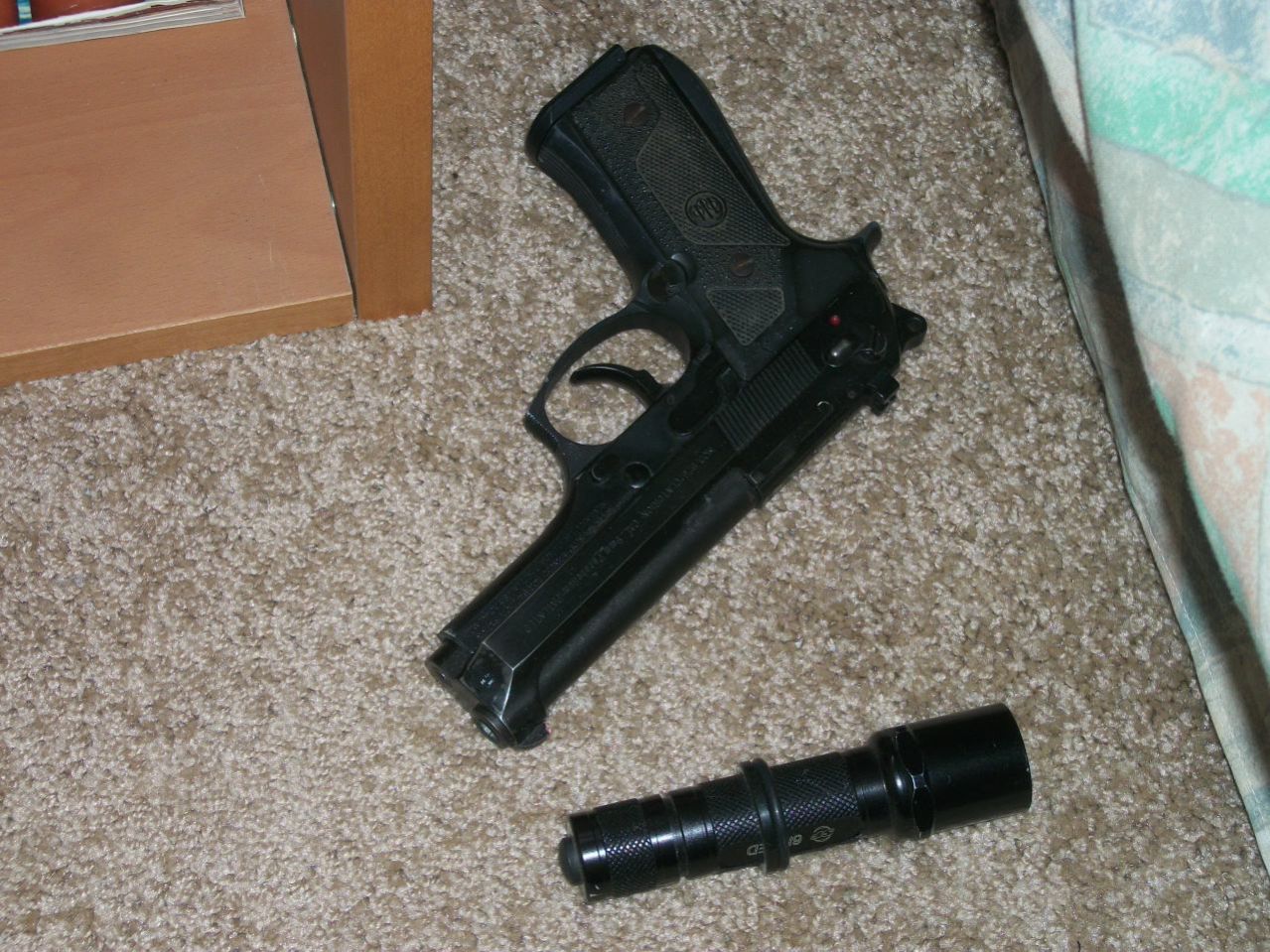
The training scar aspect was made apparent to me by a friend recently. He trains and practices quite a bit. When I mentioned about using a flashlight to identify someone at night, he said something that really disturbed me. “I don’t like to do that because whenever we do it in Force on Force exercises, the light draws enemy fire.” That may be a viable concern in military operations. But in the context of Armed Private Citizens and Law Enforcement Officers, we have an absolute obligation to know who we are shooting. My reply to him was “Show me the incidents where that has happened to an Armed Private Citizen because I can show you several incidents where using a flashlight would have prevented the wrong person from getting shot.”
From the practice standpoint, it means that you have to know how to work a flashlight and a pistol simultaneously. It also means you have to learn to verbalize and challenge an unknown person before shooting. In almost every incident of this type, a simple challenge such as “Who’s there?” would have prevented a tragedy. You don’t have to be in the Bureau to recognize a response like “It’s me, Daddy” as a clue.
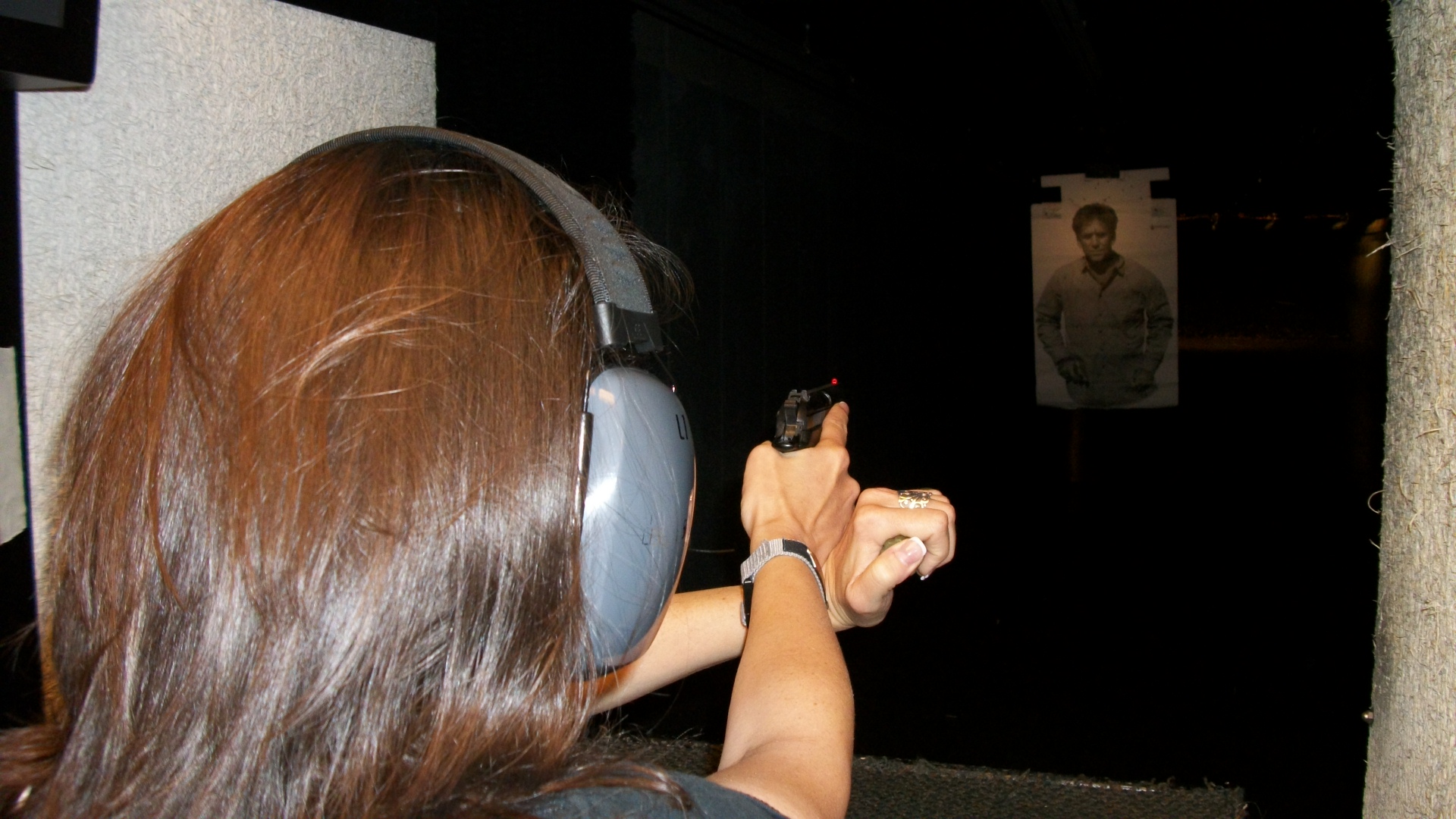
Get a flashlight. Decent ones are available for less than 10 dollars. Keep it next to your pistol at night. Don’t pick one up without the other, period. Incorporate a challenge into your range practice, along with learning to operate the flashlight and pistol simultaneously. The life you save might be someone very important to you.
What is the value of training?
Firearms instructors are periodically asked the question “Why should I take training?” The answer often comes in the form of a list of skills that are taught or the reasoning behind using a certain technique. However, these do not address the underlying fundamental reasons for taking firearms training at all.
- You don’t know what you don’t know.
- Much of what you know is wrong.
- It’s good to have some of the answers to the test before taking it.
These issues relate to both technical competency with using a firearm (gun safety and marksmanship) and the ability to use the firearm correctly in a personal protection situation (legal and tactical).
You don’t know what you don’t know.
Shooters who only take their gun to an indoor range once a year “to sight it in” generally have a highly ‘cocooned’ knowledge of firearms. They know how to operate a firearm in a very restricted set of conditions. As soon as they leave that set of conditions, the stage is set for bad things to happen. Although ‘bad things’ can include unintentional and negligent gunshot wounds, it doesn’t have to be anything that newsworthy. A fellow NRA Instructor was once asked by a long time shooter why the shooter should take the NRA Basic Pistol course. The Instructor responded “Do you wear safety glasses when you’re cleaning your firearms? You do know, of course, that most cleaning fluids can irritate or even damage your eyes, don’t you?” The longtime shooter decided to take the class, after all.
Much of what you know is wrong.
Training can mitigate the Dunning–Kruger effect, which is rampant among the shooting community.
The Dunning–Kruger effect is a cognitive bias in which unskilled individuals suffer from illusory superiority, mistakenly rating their ability much higher than average. This bias is attributed to a metacognitive inability of the unskilled to recognize their mistakes.
–Wikipedia
Almost every firearms instructor has had numerous students who think they are “good” with a firearm but are not. Among these misinformed shooters are most police officers and, even many SWAT units. Typical longtime gunowners are too. When subjected to a standardized skills evaluation, most of these “good” shooters receive a rude awakening.
We’re the best shooters in our department, by far. That’s why we’re the firearms instructors. Then we come here and find out that we suck.
— A police officer attending the elite Rogers Shooting School
Many of these skills evaluations are not even particularly difficult. In one class I taught, the test was to shoot, starting from a ready position, five shots into a 12 inch circle at seven yards in 15 seconds four times in a row. Only one student out of ten was able to do it. And none of those shooters were beginners; most of them were longtime shooters. This test is the baseline level of the NRA Defensive Pistol I Marksmanship Qualification Program.
More advanced, yet still not terribly difficult, competency standards are beyond the ability of 99 percent of self trained shooters, in my experience., For example, the ability to shoot five shots into a five inch circle in five seconds at five yards five times in a row, a drill I call 5^5.
When a friendly competition was held on a local gun forum for the 5^5 drill, no one was able to do it. Several dozen people thought this test would be easy but even after multiple, in some cases, attempts they found out otherwise.
Every round that doesn’t hit is heading straight for a busload of nuns and orphans being followed by a limousine full of personal injury lawyers on a conference call with the District Attorney. At least, that’s the assumption I make and teach. It’s the reason I make my students account for every round they fire in my classes. And I point out the misses as seen in the cover photo of my blog.
It’s good to have some of the answers to the test before taking it.
Any decent class on the legalities of using deadly force will counsel students about things to do and not to do. An example of things not to do would include chasing a fleeing intruder down an alley and shooting at him while he is running away. In that particular incident, the shooter was lucky to only receive 60 days in jail.
The most significant value of training is that it places someone else, the instructor, in control of the flow of events, either physically or mentally. A criminal encounter will not be initiated in the time sequence desired by the would-be victim, which would be NONE. Nor will the skills required to solve the incident be dictated by the defender. However, by definition, self trained individuals control the flow of their actions when they practice, assuming they practice. This is exactly the opposite of criminal encounters. That’s not how it happens in real life. Good instruction will provoke thinking and questions beyond the student’s own expectations and experience. This helps prepare students to make decisions that can and will affect them for the rest of their lives, either positively or negatively.
The conscious mind does not function particularly well under stress. It tends to revert to subconscious background information and patterns, some of which are primeval. Many of these patterns are counterproductive in personal protection situations and require re-programming. Training helps replace them with background knowledge and patterns that are appropriate. Having appropriate knowledge helps avoid negative outcomes.
You don’t fire guns at people’s houses,” [Judge] Ludy said. “You kept saying you really didn’t know what was going on. If that’s the truth, why in the world would you fire a gun? … It really doesn’t matter if it was (at) Mr. Bailey or the mayor of Dunkirk. You just can’t do that.
— Judge Max Ludy Jr.
Shockingly, some people thought this case should not have come to trial. I know I wouldn’t have been too happy had I been the homeowner down the alley who had bullets launched in my direction. “Judge Max Ludy said he found McLaughlin’s firing of a gunshot in the direction of a neighbor’s home especially reprehensible.”
Instructors, as a group, are constantly looking for examples of situations and incidents that went both right and wrong. And other students in the class ask questions about situations that concern them. Inevitably these discussions become class material, either formally or as side conversations. Because training is our vocation, we tend to analyze those incidents in greater detail than does the average gunowner. Our analysis may not necessarily be what the student wants to hear, or even correct, but relating the analysis provides food for thought that merely reading about an incident in the news will not.
The value of training is to make you think and perform outside of the cocoon that most gunowners are in, the same way real life frequently does. It’s not so much that we instructors have all the answers, because we don’t. However, most of us have a good idea of the questions to ask and that’s a strong start.
Negative Outcomes: Self-Inflicted Gunshot Wounds (Part I)
This is the second installment of my Negative Outcomes series. I’ve already been taken to task for commenting about imprecise language and I understand where he’s coming from. The fact of the matter is, however, that we, in the instructional community, take a lot of our subject matter knowledge for granted.
Frequently, I hear comments to the effect that NRA courses go too much into depth about things like the individual components of ammunition, etc. I disagree with that completely. The influx of new gunowners requires that we educate them thoroughly. Many of the new owners have never operated any hand held device more complicated than an electric toothbrush.
As I commented to a student last night, I previously had a student in a class who was using a Sig pistol. He had owned and been shooting it regularly for almost two years. When I told him to ‘decock,’ he looked at me and said “What does that mean?” He had never used the decocking lever before and didn’t understand what its function was. He was actually a good shot, too. But elements of the pistol’s manual of arms had never been explained to him.
When dealing with deadly weapons, we can leave nothing to chance, including our vocabulary and students’ understanding thereof.
Negative outcomes (part I)
It’s easy to ignore the potential negative outcomes of having a firearm for personal protection. The topic is easily overlooked or put on the back burner. I think that’s a mistake. This is the first of a series of articles I’m writing for The Tactical Wire about it.
Claude Werner begins his exploration of the ‘software’ component of defensive firearms with this piece on negative outcomes. This begins a multi-part series that disposes of trite sayings from instructors and gunshop commandos, pushes aside the common trends, and brings serious thought to preparation, planning, and what we should avoid. Fighting is a “game” of minds.
A lesson from Jimmy Cirillo and the Stakeout Squad
I don’t want to burst any bubbles among the broad public but I have a different take on a very unfortunate incident than the family and the news reporter do.
A little background is in order. The NYPD Stakeout Unit, unofficially called the Stakeout Squad, was formed in 1968 and existed until 1973. Its formation was due to the large number of retail robberies occurring in New York City at the time, many of which resulted in the brutalization or murder of shopkeepers. The Squad was disbanded in 1973, allegedly for ‘efficiency’ reasons but the members generally conceded that it was because the Squad shot so many robbers, whom they caught red-handed and who decided to shoot it out rather than surrender. Jimmy Cirillo was one of the founding members and a good friend of mine. Jimmy died in a motor vehicle accident in 2007. His wit and wisdom will always be remembered by those of us who knew him.
Here is an incident synopsis from the full article:
Hero mom dies protecting her baby daughter
She was young, beautiful and tragically killed by her daughter’s father early Sunday morning. Now, Jessica Arrendale, 33, is being hailed by her family as a hero for saving her six-month old daughter’s life, even as she died from a bullet to the head.
It began Saturday night when Jessica and Cobie’s father, 30-year old Antoine Davis, went out for the evening. At some point, Ionniello said, Davis, a former Marine who served in Iraq, became belligerently drunk and abusive. It had happened many times, Ionniello said, but her daughter did not seem able to turn Davis away no matter how often he abused her.
Davis chased Arrendale up the stairs of her three-story townhome in the Oakdale Bluffs subdivision sometime around midnight, she said….
Arrendale locked herself in a bathroom. Davis got his gun, an assault rifle outfitted with a suppressor. He burst into the bathroom and, while Arrendale was still holding Cobie in her arms, shot the young mother in the head, Ionniello said…..
“He shot her and they (police) don’t know how she was able to twist her body and fall literally in the opposite direction,” Ionniello said. Instead of falling onto the floor, Ionniello said her daughter fell over the toilet, dropping little Cobie into the water-filled bowl….
The baby remained in the toilet, covered by her mother’s body, for 13-hours before officers finally stormed the townhouse and rescued her. She was cradled in the arms of an officer who rushed her outside to a waiting ambulance.
No one ‘makes decisions’ when they’ve been shot in the head, probably brain, with a 5.56mm bullet at point blank range. That’s an instant shutoff. In a macabre way, I would like to see the coroner’s report as to the extent of the damage to her brain. However, this immediately brought to mind something Jimmy Cirillo told me about his experiences in the Stakeout Squad shootings.
He observed that every time a perpetrator was instantly killed by Stakeout Squad gunfire, they fell where they stood and their legs were crossed as they fell. Usually, they were facing the opposite direction from the way they had been standing. Jimmy’s hypothesis was that one side of the brain shut off before the other causing one side of the body to collapse before the other, resulting in the turning of the body and the crossing of the legs.
He didn’t indicate he had any medical basis for his opinion. Therefore, I regard it as a hypothesis based on his observations of the numerous men he and the other members of the Stakeout Squad had killed.
My opinion is that the same thing happened to this poor young woman; her brain shut off sequentially, which caused her body to twist as it fell. It was random chance that protected her infant son from the crazed father. While I would like to accord her ‘hero’ status, I don’t see it that way. No offense to her is intended, I am sure she would have protected her child any way she could, had she been capable.
The lesson is this: be cautious about approaching predators after they’ve been shot; they might not be completely disabled. With handguns, the mechanism causing the opponent to stop is largely exsanguination, meaning blood loss. When someone falls after being shot and bleeding profusely, they may regain consciousness when the brain comes level with the heart. Central Nervous System (CNS) stops, such as this unfortunate young lady experienced, are the only really sure anchors.
For those interested in reading more about the Stakeout Squad, I recommend Paul Kirchner’s excellent book, Jim Cirillo’s Tales of the Stakeout Squad.
Challenging human predators
Pointing guns at people you have no intention of shooting to force compliance with your demands is poor business.
–Ed Head in his article Pistol Provocation
I agree with this statement and feel it can be even further amplified from the perspective of training people how to Control a Confrontation. The statement can be, and has been, misconstrued by the inexperienced into “I believe that the first time any bad guy should know you are armed is when he sees the muzzle flash.” As a philosophy, reluctance to display a firearm without firing is a mistake. The majority of criminals are looking for a victimization not a fight. The display of a firearm by the intended victim, along with the obvious intent to use it if necessary, is an indicator that the victimization has the potential to turn into a fight. That’s not what economic predators are looking for.
Let’s consider the Policy (556.80) of the Los Angeles Police Department for DRAWING OR EXHIBITING FIREARMS.
Officers shall not draw or exhibit a firearm unless the circumstances surrounding the incident create a reasonable belief that it may be necessary to use the firearm in conformance with this policy on the use of firearms.
Stated as a positive action when adjudicating Use of Force incidents, the LAPD Board of Police Commissioners generally uses language similar to the following, when the Drawing/Exhibiting was ruled justifiable.
The BOPC determined that all personnel had sufficient information to believe the situation might escalate to the point where deadly force may become necessary. Therefore drawing the weapon was in policy.
Armed Citizens need to practice two Presentations; 1) Challenge and 2) Shoot. I use the term Presentation in a broad sense because the pistol might be in a container other than a holster, for instance, someone at home may have a pistol in a container or safe. The principle still applies. While some trainers would say this violates Hick’s Law, the fact is that the effect of Hick’s Law has been proven to dissipate when training in the various options has been undertaken.
Challenging should be done from a Ready position that does not involve pointing the pistol at the aggressor, just as Ed states. If the necessity to shoot arises, the pistol is then brought on target and fired.
Contrary to popular opinion, there is no time difference between bringing the weapon onto target to fire vis-à-vis having the weapon already aimed at the target. Nor is there any demonstrable difference of starting out with the finger on the trigger v. off the trigger.
My experience is that very few gunowners practice the Presentation to Challenge nor firing beginning from a Challenge position. This is a major weakness in their skill sets. Challenging can easily be practiced at home with an inert (blue) gun. Anyone who is serious about improving their skillset should own a bluegun of their real defensive gun.
There is a caveat to this doctrine. A friend of mine lives and works in Central America as a security consultant and trainer. His counsel to me is that, in his experience over the past three decades, Latins rarely find the presence of a pistol unsettling “unless they are looking down the bore.” With the heavy influx of Central Americans into the United States lately, this may be a consideration.
Wargaming v. brainstorming (Part II)
Thinking ‘I’ll solve it when I get there’ has gotten a lot of people killed.
My friend and I had a serious disagreement over his tactics. “The cops, Gunsite grads and others, who’ve contacted me over it agreed with what I did.” Contrary to the feedback my friend received, the comments I received were universally negative toward his post-escape actions.
This then leads to a further issue involving his friend, who was in the car with him. What do you do when someone else makes a tactical decision that involves you? I frequently mention that anytime we are with another person, the complexity of decision making goes up seriously.
You, as a passenger or bystander, can be put in a situation by someone else quite easily. Sometimes, it is a situation with possibly severe negative outcomes. Many times in ten years of Force on Force exercises, I saw how easy it is to get dragged into situations and Courses of Action not of your choosing. Not to mention the many times I have personally gotten sucked into situations that I later thought “Wow, I’m glad I got out of that one in one piece.” Other people can get you killed, without asking your permission.
Let’s examine some of the possible options. Even when we are with friends and family, our options remain. Some of them are Flight, Withdraw, Fight, Submit, and Negotiate. We are conscious beings and capable of making our own decisions. Just because someone else makes a decision to place themselves in jeopardy, doesn’t mean we have to go along with it. Nor does it mean that even if we choose to participate we necessarily have to do it in a way that entails maximum risk.
Let’s examine a case from the LAPD files as an example.
Officer Involved Shooting 030-05.
Officer A was watching television when he heard his wife shout that someone was out front. Officer A’s wife also believed she told her husband the people outside were vandalizing the family vehicle.
Officer A, with his pistol held alongside his leg, moved across the front lawn of his residence to obtain a view of the individuals [he suspected of vandalizing his car] in the street. Unknown to Officer A, his wife had followed him from the residence to the curb of the street.
Two things occurred here. 1) Officer A elected to go outside to Confront the vandals. It is unknown whether this was habit as a Police Officer [LAPD discourages its Officers from taking enforcement action off-duty unless life is at risk] or because he felt compelled by the presence of his family. 2) His wife followed in into the Danger Zone, perhaps due to family bonding aspects or because she felt it was appropriate for her to confront the vandals herself.
Officer A directed his wife to return to the residence and to call the police.
Once inside the residence, Officer A’s wife instructed another nephew to call 911. She then returned to the street with her husband [.]
The wife continued to be sucked in the dynamic of the situation, perhaps because of her husband’s presence outside. If he had remained inside and called the police himself, it is less likely she would have gone outside, especially the second time.
Eventually, a scuffle between the vandal and Officer A’s wife ensued and Officer A separated them. The vandal then approached with an ambiguous weapon and Officer A fired a warning shot into the ground. This resulted in the vandal fleeing.
Here’s what the Board of Police Commissioners ruled.
Findings
- Tactics
The BOPC found Officer A’s tactics deficient warranting administrative disapproval.
Basis for Findings
- Tactics
…Officer A elected to confront the subjects… The BOPC observed that Officer A’s tactical decisions left him with few tactical options and placed him at a tactical disadvantage… The BOPC would have preferred that Officer A had remained inside his residence, stayed with his family, [and] personally notified the local law enforcement agency … The BOPC was also concerned that when Officer A exited his residence, his wife accompanied him outside.
The BOPC determined that Officer A’s tactics were seriously deficient warranting administrative disapproval.
The evidence later disclosed that the vandal was ‘armed’ with a dinner fork. While Officer A received only ‘administrative disapproval’ for firing the warning shot, I have little doubt that an Armed Citizen in the same circumstances would have been charged with Aggravated Assault.
Let’s now return to the brainstorming v. wargaming issue. Brainstorming by Officer A gave a rudimentary Course of Action of going outside and Confronting the vandal. I’m not sure that any brainstorming by his wife was involved, other than to accompany him. Wargaming might have resulted considering alternate Courses of Action for either or both of them. He might have elected to Remain In Place and call the police. Even if he went out to Confront, she might have elected to RIP. Even during the Confrontation, after considering all her options, she might have decided to RIP after she had returned to the house, instead of re-inserting herself into the situation.
If my friend’s friend had done some wargaming, he might have considered, and perhaps chosen, some different options. It would be presumptuous of me to say what he was thinking when he chose to join the Pursuit. However, his options were: Pursue, Submit, Withdraw, Flight, and ultimately Fight using deadly force. If he agreed with following the criminals, then the option he chose was Pursue. Fortunately, the situation did not escalate to the Fight option but this has to be considered as a consequence of the Pursuit. If he did not agree with the decision to Pursue, then he chose the Submit option, only he was submitting to my friend’s choice. ‘To take no action is to take an action,’ as the saying goes.
He could have said “I’m not going with you over to their vehicle. Let me out of the car.” That would be the Withdraw option. If the car got into motion before he could say anything, he could have gotten out of the car when it stopped behind the criminals and then he could have moved off. That would be Flight. And if the criminals produced guns, he would have been forced into the Fight using deadly force Course of Action, which at that point is not an option but a necessity. The military term would be Decisively Engaged. Decisive Engagement means we have no other options left, which is never a good position to be in.
All those options have consequences. Withdraw or Flight could have serious repercussions on their friendship. Pursuit, under the wrong set of actions and reactions, could result in an unpleasant encounter with Law Enforcement. Fight using deadly force carries the possible consequence of death, which would affect not only him but all his loved ones and associates.
The choices we make are based on our personal moral values and ties to others. But they should be made with a clear understanding of what our options are and also the possible consequences thereof.
I would have said “I’m not going with you over to their vehicle. Let me out of the car.” But that’s just my choice, you’ll make your own.
Wargaming v. brainstorming
In every encounter, there is an element of chance.
–John Hall, head of the FBI Firearms Training Unit during the Miami Massacre timeframe.
A friend of mine had an encounter with some apparent criminals a few days ago. Fortunately, he was able to escape the initial encounter. However, he then made the all too common mistake of initiating a pursuit of said criminals ‘until the police arrived.’ In fact, he pulled in right behind their car in the parking lot after the initial incident had concluded and the criminal had walked away from him. Then the criminals began their withdrawal by driving away and he followed them. Fortunately, the police eventually arrived and placed the criminals under arrest. It all worked out OK; this time.
However, I think the incident bears some analysis. The format used by the LAPD Board of Police Commissioners is a good model for our purposes here.
In every case, the BOPC makes specific findings in three areas: [A] Tactics of the involved officer(s); [B] Drawing/Exhibiting of a firearm by any involved officer(s); and the [C] Use of Force by any involved officer(s).
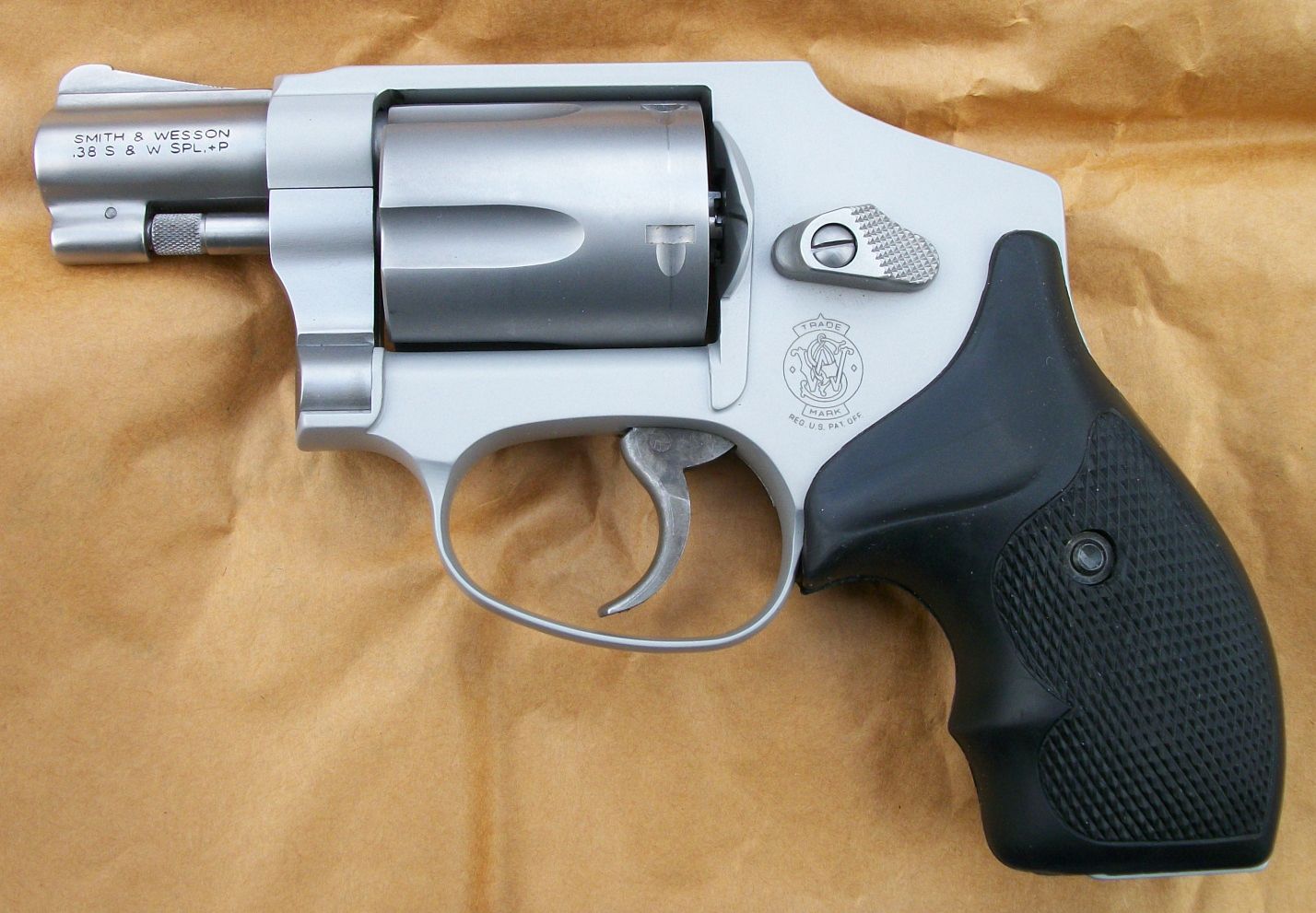
The initial incident was resolved without any Use of Force by my friend so [C] does not apply. During the initial encounter, he was approached by the criminal with an impact weapon, to wit: a tire iron. In response, my friend drew a J frame revolver that he kept below the line of sight of the criminal. I think that was a perfectly appropriate [B] response.
Let’s look at [A] Tactics.
Pulling in right behind them means he turned the initiative over to them voluntarily. I.e., he placed himself into the reactive phase (Observe, Orient, Decide) of their OODA cycle rather than them being in the reactive phase of his OODA cycle as was the case during the initial encounter. That’s BAD tactics.
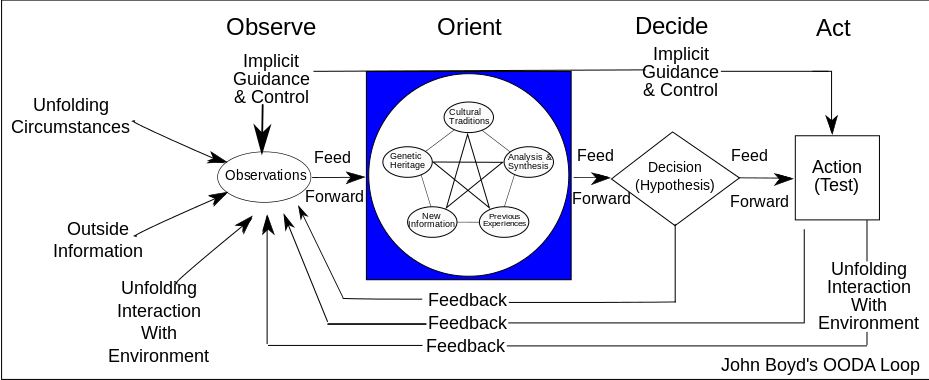
We can use this situation as an example of the difference between brainstorming and wargaming. Brainstorming means my friend developed a rudimentary Course of Action. He stated: “If I roll down this window, I’m going to have to shoot him.” Eventually, he chose to move his vehicle as an alternative. In other words, he considered what two of his options were and that’s about all. That’s brainstorming.
Wargaming the incident means we include the adversary’s options, your response to their options, and the possible consequences.
Some of the options available to the criminals upon my friend pulling up behind them were:
- Flight
- Withdraw, which is what they chose
- Confront
- Fight, either using deadly force or a lesser force level
Let’s wargame those criminal options:
If they had chosen Flight, meaning at high speed, does one then continue the Pursuit? You wouldn’t think so but there is an instinctive reaction to pursue upon an adversary’s Flight. I have observed this many times and the pursuers denied they did it until shown the video. If that happens unconsciously, then you also become a lawbreaker; speeding, reckless driving, etc.
The criminals chose to Withdraw, which then resulted in a low level pursuit, entailing no legal violations. I think this illustrates the point I made about Flight, we may choose the Pursuit option unconsciously.
What about Confront? Up to this point of the pursuit, the criminals had not committed any chargeable offense that would stand up at trial. There was enough reason for the police to initiate a Probable Cause stop, which then resulted in arrests for unrelated offenses. Prior to the arrival of the police, the criminals stopped several times and my friend stopped behind them at some distance. What if the criminals had chosen to Confront my friend about following them? Say one of them had gotten out of the car and walked purposefully toward my friend’s vehicle.
At that point, he would have had to make a decision about how to react. He could have driven away, remained in place, drawn and displayed his weapon, or perhaps used deadly force. All of those possible reactions have possible unpleasant consequences. Let’s say he tried to drive away and the individual got in front of his vehicle. That’s a potential vehicular homicide and would be very hard to defend. Say he draws his weapon and the criminal calls the police for Man With A Gun threatening me. Aggravated Assault is a felony charge. Even if you beat it, it’s unpleasant, lengthy, and expensive. You don’t get to carry a gun during the entire course of the legal proceedings and may have to surrender all your firearms until the conclusion.
Shooting the individual could easily turn into a total mess.
- “Why did you shoot the man?”
- “He did something suspicious in a parking lot a distance away, so I followed him.”
- “But why did you shoot him?”
- “Well, he stopped his car, so I stopped my car behind him. Then he got out and walked purposefully up to my car window. I felt threatened at that point, so I shot him.”
That’s going to be a very expensive and lengthy trial. I think the prospect of doing time would be high but I’ll let legal experts such as Andrew Branca or Marty Hayes chime in, if they want to.
Let’s say the criminals chose to Fight, using lethal force. My friend assumes these people were ‘gangbangers.’ Worst case scenario is that both of them pile out of their car with AK rifles and start hosing down his car. A Springfield .45 pistol and J frame revolver aren’t going to be terribly useful in that situation. And he would have been in the reactive phase of the OODA cycle, so there would probably be a lag about even moving the car to Escape. Even during the Escape, the car would have to pass by, at close distance, two individuals shooting at it with autoloading rifles. The potential for becoming a casualty, along with the friend who was in the car with him, in such a situation is very high.
So that is the difference between brainstorming and wargaming. As you can see, the wargaming process can be quite involved. It’s easier to do it ahead of time based on the experiences of others. Then if you have to do some wargaming on the spot, you already have some models to choose from rather than develop them on the ground at the time.
My feeling about the situation he encountered is rather different than his. My reaction to the initial encounter probably would have been similar to his. However, once I have escaped from a criminal, I am not reinserting myself into the situation. If I do choose to keep an eye on the situation, it will most certainly not be within the effective range of gunfire.
 tacticalprofessor
You must be logged in to post a comment.