Keep Your Hand Away From the Muzzle
A friend of mine sent this link to me today.
Instagram video of Serious Mistake followed by Negative Outcome. https://www.instagram.com/reel/C4LsHBArwtl
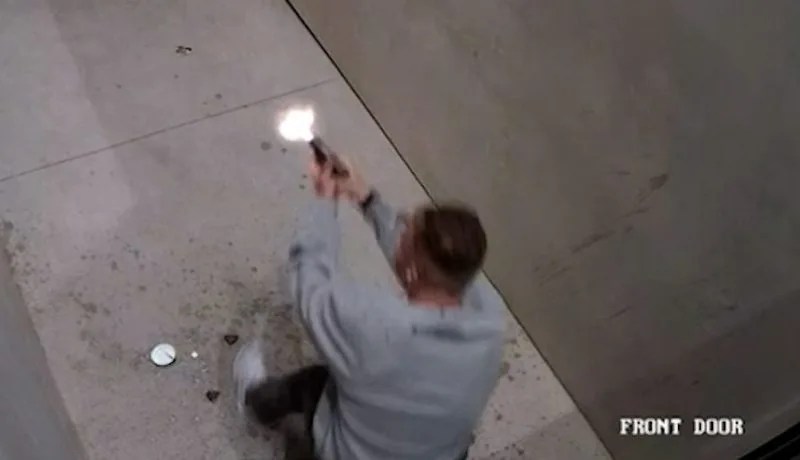
In the video, the person holding the gun is trying to get the laser to come on and repeatedly muzzles his own hand looking for the laser dot. Shortly after this frame, the gun discharges and shoots a hole in his hand, which was a definite Negative Outcome.
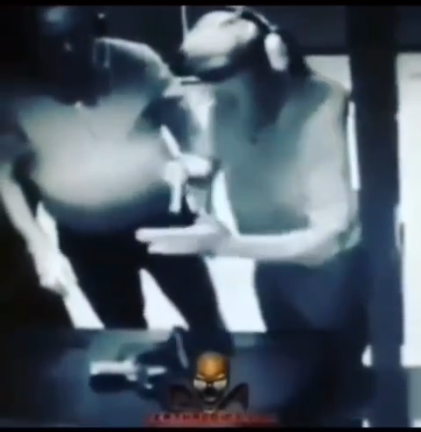
Sadly, the examples of dangerous gunhandling that gunowners and new shooters see while watching TV and movies are horrific. In the latest debacle by the ATF’s “expert” on the talking head TV show Face The Nation, he muzzles his own hand repeatedly. https://www.cbsnews.com/video/atf-director-and-firearms-expert-show-some-of-the-weapons-being-found-on-the-streets/

The ‘unboxing’ shows on YouTube by so-called wannabe gun ‘influencers’ are universally heinous, too. And before we get to feeling all righteous and self-congratulatory, even people we in the industry would consider legitimate Subject Matter Experts muzzle their own hands regularly when doing demonstrations on YouTube.
Probably the best firearm safety device that could be produced would be an extremely sharp Fairbairn Sykes British Commando Dagger with a 3 inch long 9mm diameter tang and no handle. If any knife producer wants to use this idea, feel free, no license or royalty required.
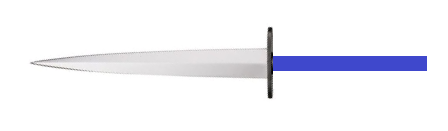
The 9mm tang could then be inserted all the way into the muzzle of a pistol so the dagger blade would be directly in front of the muzzle. It would teach the importance of keeping one’s hand away from the muzzle. In an emergency, it could also serve as a bayonet. 😊
Keep your hand away from the muzzle, PERIOD. It doesn’t matter if you think the gun is unloaded, keep your hand away from the muzzle. Rule 1: “All guns are always loaded” is a philosophical rule unlike Rules 2 through 4, which are operational rules. Not many people really understand this distinction.
The Good, the Bad, and the Ugly – January 2024

The Good, the Bad, and the Ugly is an iconic movie in American cinema and arguably the best of the ‘Spaghetti Westerns.’ Rather than my usual boring rants about Serious Mistakes, Negative Outcomes, http://seriousgunownermistakes.net and excruciatingly detailed analyses of Armed Citizen incidents, I’m creating a short collection of a Good, Bad, and Ugly incident each month. Here’s the January 2024 issue.
https://www.patreon.com/posts/good-bad-and-97498558
My Patrons get first look at it on the last day of each month. The following month I unlock the Patreon post on the last Monday and link it here for my blog Followers. Today’s the day to unlock the January 2024 edition.
My hope is that it will be both educational and entertaining. The movie soundtrack is outstanding so a snippet from the soundtrack is part of each month’s post also.
The Good, the Bad, and the Ugly – January 2024
The Good
Shooting Death of Rodney Yancey in Manchester, New Hampshire ruled legally justified.
The Bad
Security footage shows gun discharge and injure man at Duran’s Central Pharmacy
The Ugly
Argument over ex-girlfriend leads to fight, shooting at Black Jack [Missouri] apartment
Enjoy!
The GBU isn’t drawn from The Armed Citizen column of the official NRA Journals but the January edition of The Armed Citizen is attached. Rather than an obsessive interest in ‘the worst case scenario,’ it shows what the vast majority of Defensive Gun Uses really look like.
Negative Outcome from Opening the Door
Bottom Line Up Front
Do not open (nor even unlock) your [exterior] door[s] until you’re confident this person does not represent a threat.
John Farnam
Excellent advice on many items in John’s post.
Also read this post about ‘Castle Defense.’
http://modernserviceweapons.com/?p=18502
Forewarned is forearmed.
The Good, the Bad, and the Ugly – December 2023

Rather than my usual boring rants about Serious Mistakes, Negative Outcomes, and excruciatingly detailed analyses of Armed Citizen incidents, I’ve decided to do something different for 2024.
The Good, the Bad, and the Ugly is an iconic movie in American cinema and arguably the best of the ‘Spaghetti Westerns.’ A new feature in 2024 for my Patreon page is a monthly post based on this theme; the Good, the Bad, and the Ugly. It will feature a Good incident by an armed citizen, a Bad incident resulting in a Negative Outcome, and a stupid and unbelievable Ugly happening.
My Patrons get first look at it on the last day of each month. The following month I’ll unlock the Patreon post on the last Monday and link it here for my blog Followers. Today’s the day to unlock the December 2023 edition.
My hope is to make it both educational and entertaining. I’m very excited about the idea and hope you enjoy it as much as I’ve enjoyed researching and writing it. The movie soundtrack is outstanding so a snippet from the soundtrack will be part of each month’s post also.
https://www.patreon.com/posts/good-bad-and-95600517
Enjoy!
The GBU isn’t drawn from The Armed Citizen column of the official NRA Journals but the December edition of The Armed Citizen is attached. Rather than an obsessive interest in ‘the worst case scenario,’ it shows what the vast majority of Defensive Gun Uses really look like.

Downrange Incident During Home Invasion
From the Armed Citizen http://graphics.nra.org/ac/ac-138.html this month.
Authorities say a man opened fire on a suspected burglar who attacked his wife at their home
Deputies said [the intruder] encountered a 74-year-old woman inside the residence and ‘began to struggle with her physically.’ Her husband heard her screams and saw her struggling with Jackson. The man then retrieved his firearm and shot Jackson in the right shoulder.
This is what I call a ‘downrange incident.’ I.e., there’s an innocent party downrange and in close proximity to the attacker. Incidents where close range precision is required are more common than is realized.
A downrange drill is part of all my private sessions above the beginner level. The shooter has only one round in the pistol. Two IDPA targets downrange with one placed directly to the side of the -0 zone. The shooter can advance to any distance they feel they can make a -0 hit, either head or body, on the first shot without hitting the hostage. Even experienced shooters tend to get somewhere within Social Space (4-12 feet).
It doesn’t have to be an IDPA match scenario
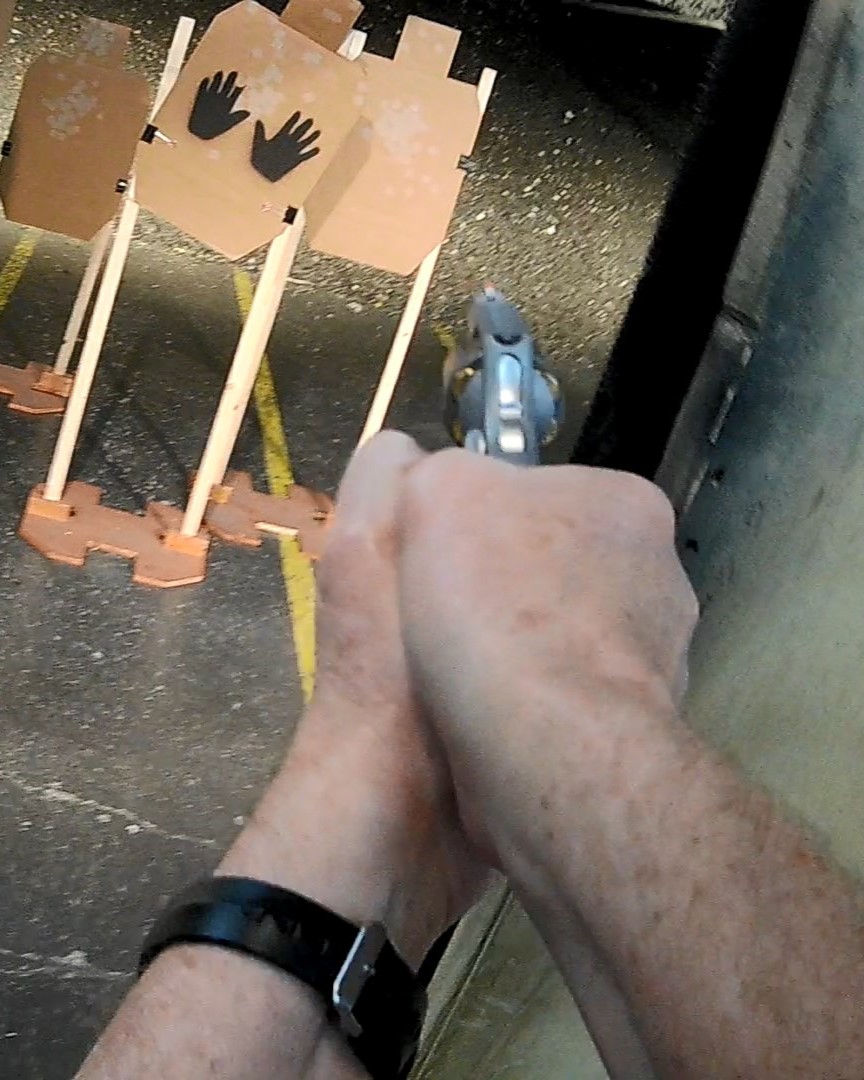
but practicing the ‘downrange shot’ occasionally is worthwhile.
The Cost of Killing Redux
#fridayfundamentals
I’ve written about the Cost of Killing several times. https://thetacticalprofessor.net/2016/07/24/the-cost-of-killing/ Even to someone who is involved but not the shooter, it’s incredibly hard on people.
Here’s yet another sad example.
I-Team: St. Louis family demands answers after double homicide case went from murder to self-defense
Note that the story begins with “Eric and Arron Smith were gunned down following a domestic violence incident,” as if they were innocent victims of a senseless shooting.
A précis of the incident is that a violent domestic abuser and his violent brother, Eric and Arron Smith, were shot and killed in self-defense by the victim’s sister’s boyfriend. The sister had stashed the abuser’s pistol in her purse when the rescue party arrived. The abuser’s brother arrived with his own pistol, beat one of the party with it, and gunpointed the rescuers. At that point, the victim’s sister took the abuser’s pistol out of her purse and gave it to her boyfriend. The boyfriend then shot and killed both the abuser and his gunpointing brother. The boyfriend was arrested, charged with Murder, and placed in Jail with no bond.
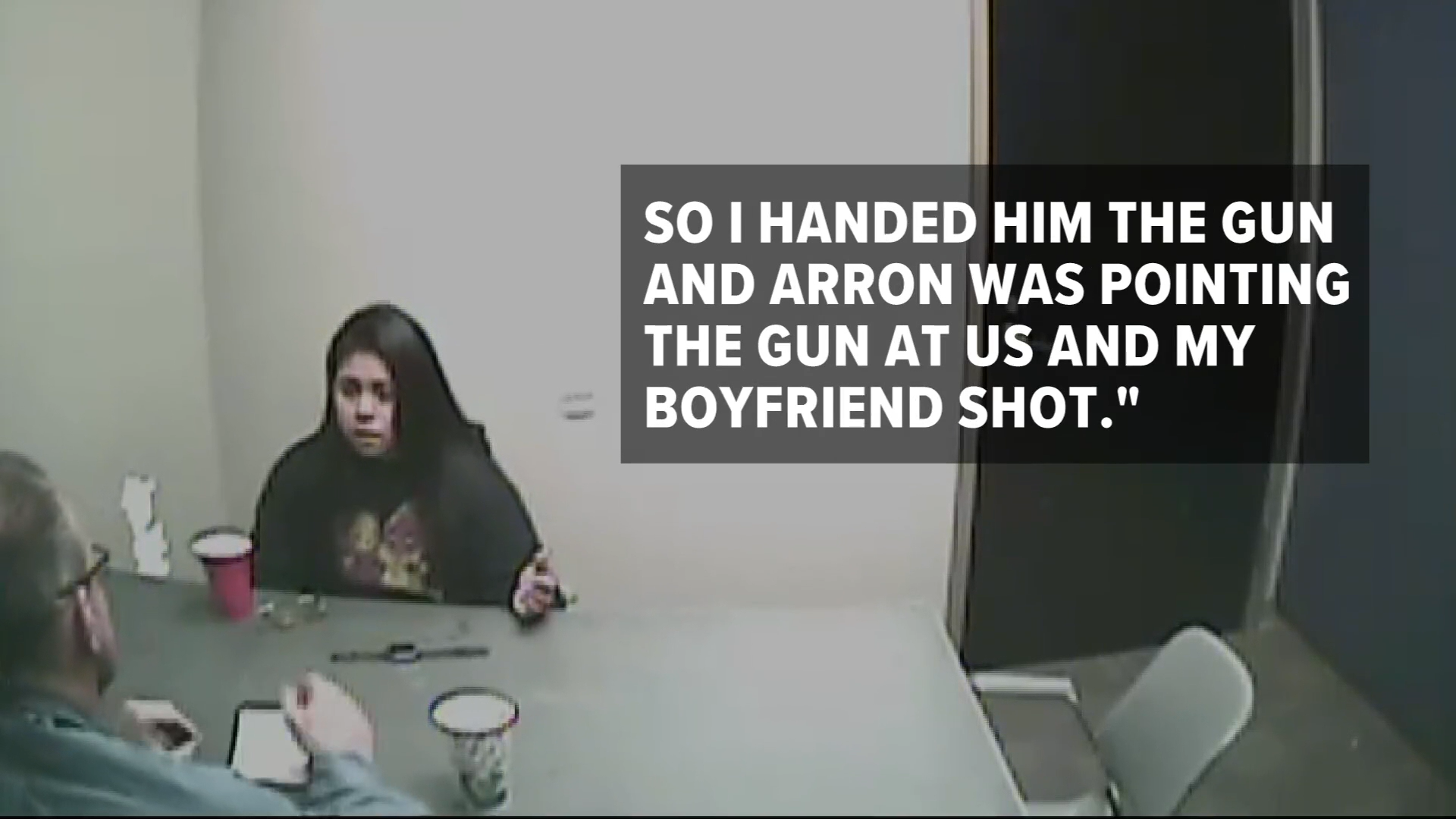
The prosecutor subsequently hid evidence from the shooter’s defense attorney. When this was uncovered by a Grand Jury and judge, the charges were reduced to Manslaughter, and the shooter was released on bond. Fourteen months later, shortly before trial, all charges were dropped.
The saddest part of the entire affair is that a few days before the trial was to begin, the sister who gave the gun to her boyfriend to protect the rescuers committed suicide. The shooter’s defense attorney didn’t want to speculate why she did that.
“We don’t know what occurred that led her to take her own life.”
Having been a party to the killing of two men she knew and then having to recount all the details in court is a good guess as to why.
“We weren’t trying to start any problems, we were just trying to help my sister,” she told the POlice.
RIP Kaylee Castro
Surveillance Detection Principles
#walkbackwednesday
In the April 1996 edition of the FBI Law Enforcement Bulletin https://leb.fbi.gov/file-repository/archives/april-1996.pdf/view , Supervisory Special Agent John C. Hall wrote:
“Realistic training does not state general platitudes and then leave officers to figure the rest out for themselves. It provides clear principles to govern the application of deadly force and then illustrates appropriate application through practical examples.” – p25
This could be paraphrased for Private Citizens as:
Realistic [education] does not state general platitudes and then leave [Citizens] to figure the rest out for themselves. It provides clear principles to govern [personal protection] and then illustrates appropriate application through practical examples.
Therefore, let’s consider Surveillance Detection. Surveillance Detection is a preemptive action that we can take to prevent getting into ugly situations at all. The following story is a reminder of its value.
Woman shot in the face in ambush as she’s followed home from store
https://news.yahoo.com/woman-shot-face-ambush-she-153809301.html
“Investigators say the women were driving home from a neighborhood market, and as they pulled into the driveway, they noticed a vehicle had followed them , KTRK reported.
A man got out of the vehicle and fired a single shot, striking the woman in the face, police told the outlet.”

There’s more to this story than stated in the article but that’s irrelevant in the educational context. These are some ‘clear principles’ and ‘practical examples’ of how to perform surveillance detection.
Principle 1
The time to notice that someone is following you is NOT when you turn into your driveway/parking spot as you a sitting duck. You should be aware of their presence long before then.

Look in your mirrors at least three times during turns as you drive home. All three times should be before you make the last turn onto your final approach, i.e., the street you live on. If you see the same vehicle behind you three times, you may have a problem.
Principle 2
If someone is following you, DON’T GO HOME. Or any other place where you will be a sitting duck either. One comment on the article was to go to a POlice station. Especially in the days of officer shortage and defunding the POlice, this isn’t a good idea. Call 911 and keep driving. If you’re in a ‘Hands-free’ State, maybe a POlice will pull you over and then you can explain why you’re on your phone. That should solve the problem right now. Other ideas are in this post. https://thetacticalprofessor.net/2023/09/29/surveillance-detection-after-a-confrontation/
As this poor woman found out, “Just because you’re paranoid doesn’t mean they are NOT out to get you.”
If you like my work, please consider supporting me on Patreon. https://www.patreon.com/TacticalProfessor I post a lot of content there that doesn’t go on my blog.
Los Angeles Citizen’s CCW Taken Away
L.A. homeowner who fired on armed robbers has concealed carry permit suspended
https://news.yahoo.com/l-homeowner-fired-armed-robbers-055345708.html
It’s as plain as the nose on your face that this is retaliation. For what, you may ask?
Embarrassing the authorities on public media. Just that simple. His incident demonstrated that he was capable of protecting himself and his family at the moment of crisis and the authorities were not. By talking to the media, i.e., the local news and Colion Noir, he rubbed that fact in the faces of the Law Enforcement Agencies responsible for his and his family’s protection.
One of the benefits of belonging to a self-defense legal organization such as the Armed Citizens’ Legal Defense Network https://armedcitizensnetwork.org/ is getting to talk to someone about the incident in a confidential manner. Regardless of what organization or attorney you contact, they will undoubtedly advise against giving statements to the media. They are going to tell you to not make public statements.
After any such incident, it’s a natural desire to want to talk about it to decompress. Doing so is probably emotionally healthy. What we want to do is accomplish our decompression in a format that won’t hurt us. Talking to a lawyer is a non-harmful format. Talking to the media, even if they are neutral or well-intentioned, is fraught with hazard.
Couching your criticism with comments like “the LAPD is understaffed” or the like is equivalent to “Bless their hearts.” Then saying you’ve hired a private detective to investigate, which is tantamount to saying the authorities are incompetent, is only throwing more fuel on the fire of their future discontent. And please don’t publicly say that the investigation was sloppy, even if that’s true. NO BENEFIT. That’s just venting. Vent to your attorney not the local news.
As we can see in this incident, the authorities are not going to take kindly to a gunowner publicly proclaiming that it was the Second Amendment and not the authorities that protected them. In States that only issue Licenses To Carry because of Bruen, they’re going to look for some way to get even. Law Enforcement administrators in those States are not your friends. Don’t poke them in the eye by publicly exposing their inability to protect you.
Having to interact with the authorities after an incident is a Negative Outcome.
In its statement to KTLA, the sheriff’s department did say that Ricci’s CCW may immediately be reinstated as long as he has followed all the required policies, such as “proper notifications” and “use of [a] properly documented weapon.”
The Sheriff’s Office’s definition of “immediately” may be somewhat different than ours. Having to jump through a bunch of bureaucratic hoops to reinstate your Right to protect yourself is an undesirable interaction. Don’t put yourself in that situation, regardless of how righteous your incident was. In this case, his attackers are still out there and I wish he could carry his piece.
Attempted Home Invasion in LA
https://abc7.com/los-angeles-homeowner-fights-back-armed-robbery-home-invasion-ccw/14016199/
As reported in The Armed Citizen blog http://graphics.nra.org/armed_citizen/ac_136.html from the NRA, which is well worth subscribing to.
The surveillance video is instructive. Note the ‘chase instinct’ in play. After the homeowner gains the upper hand by pulling his gun and firing, he chases after the intruders instead of going inside, locking the door, establishing a blocking position, and then calling the POlice.
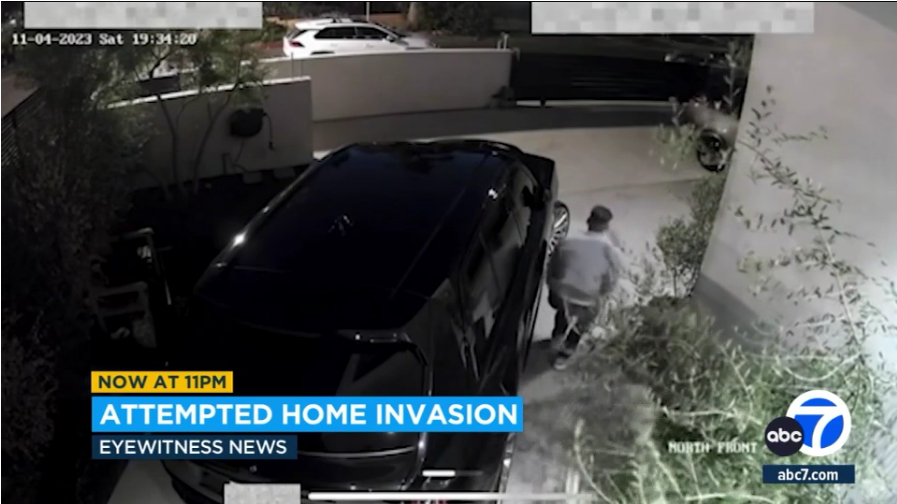
This incident demonstrates a worthy addition to Don’t Go Outside http://modernserviceweapons.com/?p=18502 to our Personal Protection pre-planning. Get Inside As Soon As Possible is the flip side tactic.
Tend To Your Own Business
#fridayfundamentals
Tend to your own business
the Assassin
That’s a sage comment the Assassin made while he and I were talking years ago. His comment was about the perils of intervention. I had my own experience with it a couple of days ago and learned some important lessons about the entire concept.
While at a large retailer, I observed a low level criminal teaching his son how to be a vandal. The criminal was not merely watching but was actively guiding his son through the process of how to vandalize the inside of the store. The boy was about ten years old. It was clear that he was being groomed in a similar way to the youth who tried to rob one of my University professors many years ago was being taught the trade of robbery by his uncle.
The criminal and his son were right next to me and the brazenness of the criminality surprised me so I reflexively asked them to stop. The criminal immediately threatened me for saying something about their criminal act. At that point, I realized he was a seasoned criminal and my conscious mind took over so I withdrew.
Upon reporting the incident to the store’s management, they asked me if he was still in the store and if I could point him out. The criminal and his entire family were only two aisles away so I indicated who he was. The manager and a security person asked me to step away and then they went over to speak to the criminal.
A few minutes later, they came back to me and said there was nothing they could do even though he admitted committing the vandalism. Further, they said they were not even going to ask him to leave the store. I pointed out that he had threatened me, to which they said since it hadn’t been a physical battery they wouldn’t be able to do anything about it and the local POlice wouldn’t even respond to a call.
Rather than choosing to stick my head further in the lion’s mouth, I immediately left the store. As a precautionary measure, I took a Surveillance Detection route [Surveillance Detection post] home. Although a remote possibility, I didn’t want to a take a chance on the criminal deciding to follow me to escalate the situation.
Lessons from the incident
First lesson. It takes two or three seconds to make a conscious decision. As soon as things began to escalate, my conscious mind kicked in and I decided to withdraw. Before that, I had been acting reflexively as most decent people would; i.e., “Please don’t commit crimes in my presence.” I said it despite the fact that I have been preaching about the perils of intervention in criminal acts not involving ourselves for well over a decade.
Second Lesson. The incident was clear example that Boyd’s Process [link to OODA category] is not about making decisions in the moment. Boyd’s best work, the Aerial Attack Study [link] is about not only making decisions in advance but also formulating a plan for how to implement the decision. My plan now is to immediately turn on my heel and walk away from such a situation. This replaces my previous and more nebulous idea of “don’t get involved.”
Third Lesson. It is extremely unlikely that the benefactor of an intervention will appreciate it or even support the intervention. It’s just not worth it. As a fellow student commented to me years ago:
“What is the benefit? NO BENEFIT!”
Falah Al-Mutairi


You must be logged in to post a comment.