The Importance of Target Identification
Deputies found a 32-year-old man who said that he and his wife were sleeping when they heard a noise in the kitchen.
The husband took his handgun and walked in the kitchen area, where he shot the victim.
After the shooting the husband recognized the victim as his younger teenage brother.
Man shoots, kills brother thinking he was burglarizing home
Yet another tragic example of why I stress target identification so much. These situations are absolutely preventable. As I’ve said before, if you live with anyone else, my analysis is that there is a 97 percent probability that the ‘bump in the night’ is a member of your own household. With those kinds of numbers, gunowners cannot take the risk of shooting someone at home without establishing a positive ID.
This kind of situation is a further example of why I say we have to be very cautious of what we take of from our training, and even more so, what we read. Much of the good training available is conducted by former law enforcement or military personnel. Just as much as any of us, they are subject to unconscious biases resulting from their experiences and training. Since most reading now is done on the Internet, you have to assume everything you read is wrong because most of it IS wrong.
Responding with a firearm to a noise at night in the home absolutely requires that you visually verify your target before shooting. You probably will need a flashlight for that. And stealth is not your friend, it is your enemy. Therein lies a major divergence from the law enforcement officer or soldier, to whom stealth is an ally. The notions that ‘the light draws fire’ or that criminals will wait in ambush for you if they hear you coming are nonsensical. Those are bad paradigms for us to insert in our thinking. If your background is such that having assassins waiting in ambush for you in your own home is a concern, you need to work on some serious hardening of access points to your home.
If you keep a gun at home, put a flashlight next to your gun; no ifs, ands, or buts about it.
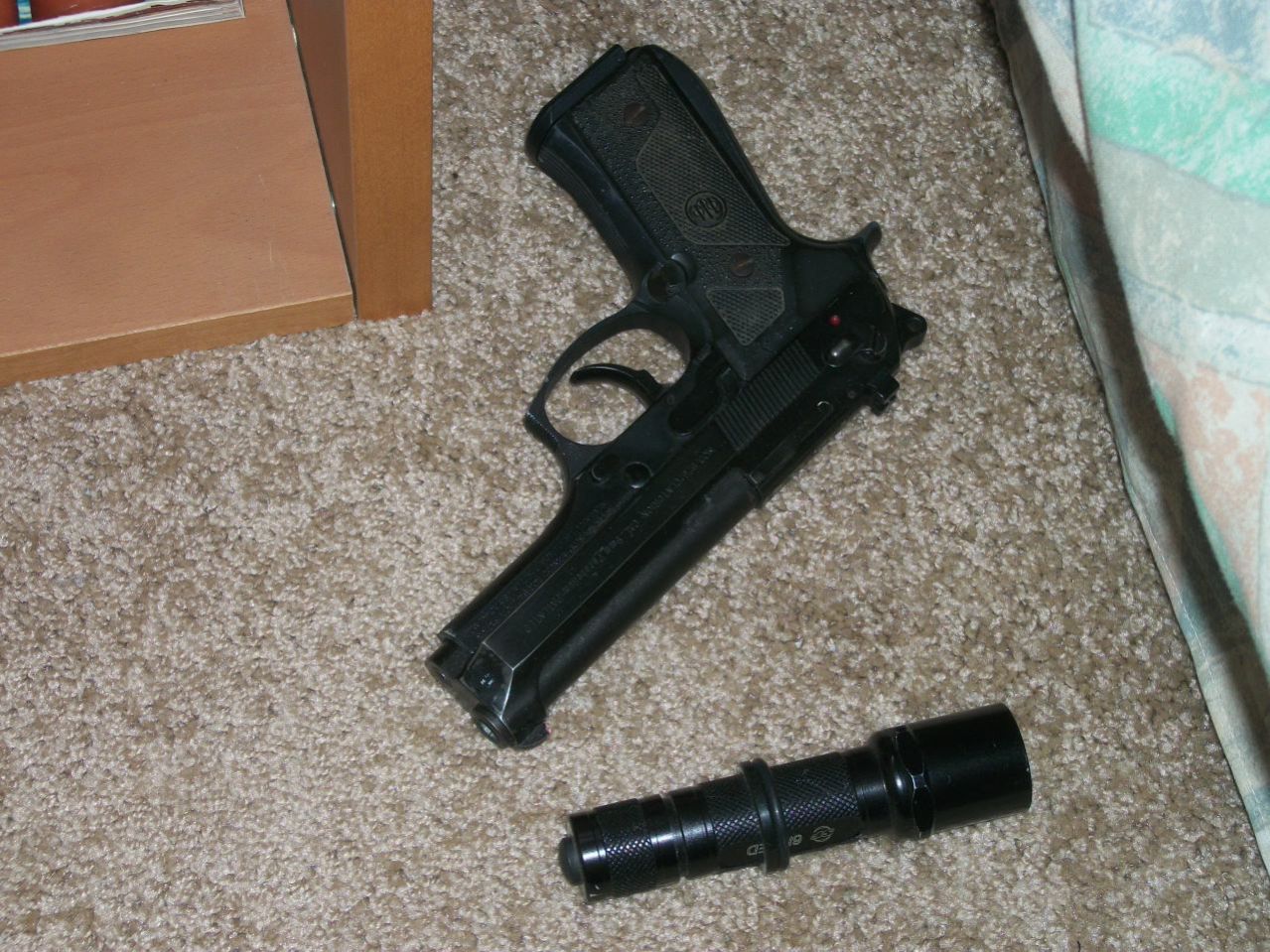
Next time you go to the range, take the flashlight with you. Instead of just blasting 50 holes in a silhouette, shoot two shots at the silhouette 25 times. Sequence is very important in how you do this.
- Have your gun in your shooting hand and your flashlight in your support hand. The gun is not pointing at the target and the light is off.
- Before each two shot string, say out loud “Who’s there?”
- Wait to listen for an answer. If you go to the range with someone, have them stand behind you and sometimes respond with “it’s me, Daddy” or something similar.
- If they say that, immediately put your gun down on the bench and abort that sequence.
- Then illuminate the target without pointing the gun at it.
- Finally, bring the gun up and fire the two shots.
One of the things you will find when using this sequence is that the worthwhile two handed shooting techniques don’t work well for it. Harries is both clumsy and dangerous to assume when you already have the light on the target and are keeping it illuminated while presenting the pistol. The Rogers/Surefire technique takes some time and manipulation skill to assume. What you will discover is that only the Cheek Technique or the FBI Technique work well in this context.
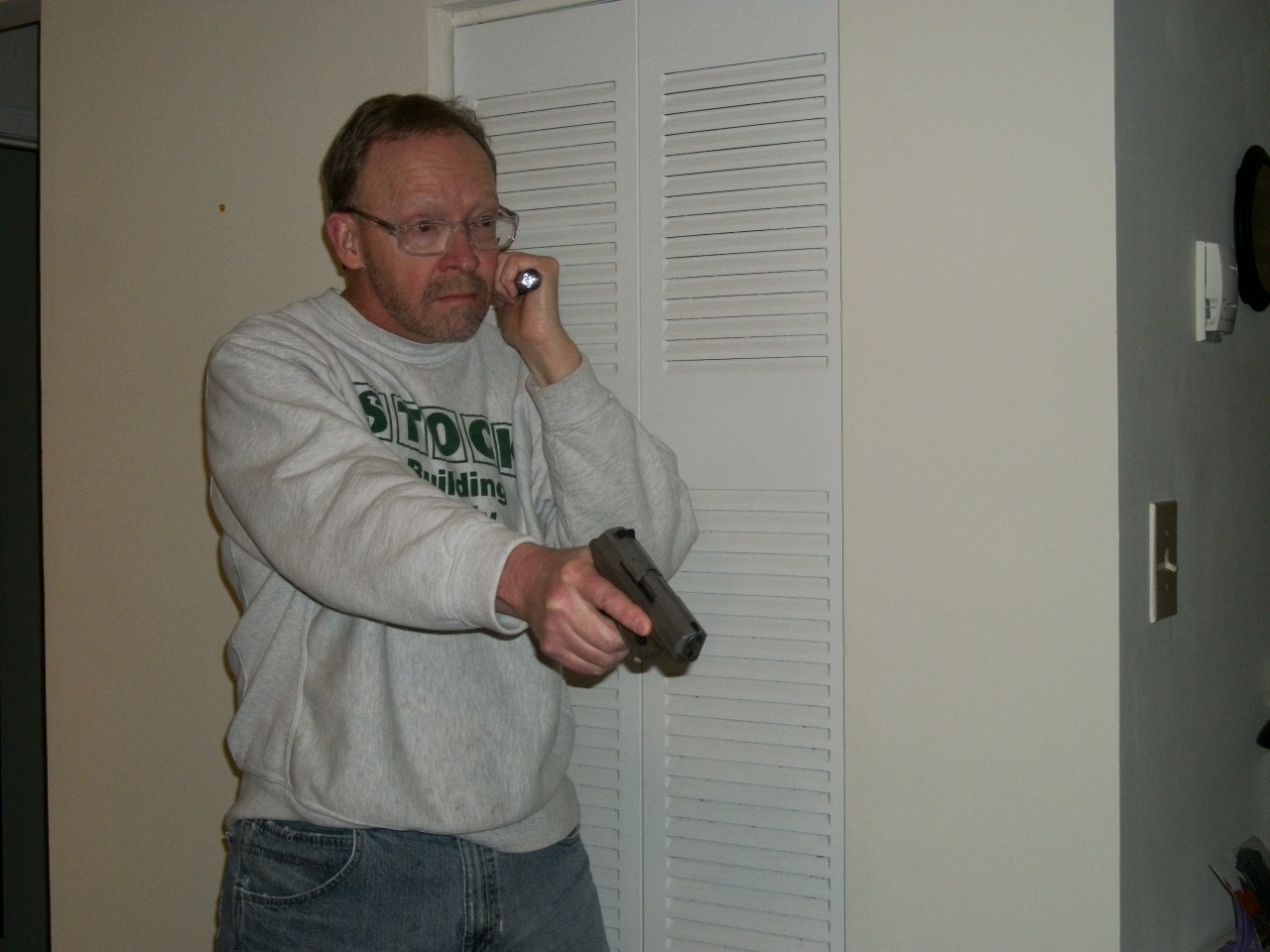
That means you have to learn to:
- Speak while holding your gun.
- Abort the shooting sequence if there is not a threat.
- Do a dissimilar task with the other hand, i.e., orient the flashlight and work the switch, while keeping your gun off target and your finger off the trigger.
- Shoot with one hand only while continuing to perform the dissimilar task.
- Manipulate the safety or decocker of your weapon with one hand while holding something in the other.
For the final 5 repetitions (10 rounds), put up a clean silhouette target and shoot the LAPD Retired Officer Course (10 rounds at seven yards). Measure how well you do. You’re going to find it’s a lot harder than you think.
That sequence is obviously rather involved; practice it before you have to do it for real or you’ll forget to do it or get it wrong. Forgetting to do it is what leads to tragedies.
Securing pistols in cars
“The 3-year-old located a handgun that was in the vehicle and discharged a round which resulted in the striking of the 1-year-old,” said Sarasota Sheriff’s Office Lt. Vince Mayer.
This morning, yet another Negative Outcome was brought to my attention. In this incident, a young boy gained unauthorized access to his mother’s pistol, which was unsecured in her car, and accidentally shot his little sister. I use the term ‘accidentally’ because from the little boy’s perspective, it was utterly accidental. In the broader context, it was a training and doctrine failure. Fortunately, her injuries are not life threatening, but I bet they will be life changing for all involved.
Informally, a number of people in our community are starting to include an addition to the cardinal Four Rules of Safe Gunhandling. ‘Rule 5’ tends to be worded something like “In addition to the Four Rules of Safe Gunhandling, always store weapons where they are not accessible to unauthorized persons.” It’s about time we break with tradition and make Rule 5 a formal part of our doctrine.
I don’t know if her pistol was in her purse, in the glove box, or somewhere else in the car. Whichever was the case is irrelevant. The little boy got hold of it and touched off a round. It’s inexcusable and irresponsible. More than getting stolen, I consider this kind of occurrence to be the major downside of off body carry. And when I say ‘off body carry,’ I’m not just talking about purses and briefcases.
The incident demonstrates yet another reason I am totally opposed to glove box carry, console carry, door pocket carry, etc. that are commonly used in vehicles These foolish methods people use to secure pistols almost always result from having a pistol that’s too big to carry on them or with them consistently. It’s a downside of the ‘carry enough gun’ doctrine espoused by the training community.
In that sense, I think the community needs to take some responsibility for recommending equipment that simply doesn’t fit into the totality of our students’ lifestyles. With regard to understanding the lifestyles of normal people, our ‘square range’ mentality is complete.
Many trainers tend to view their students in the military or law enforcement model where the students are molded into something new and different, as a result of the training. Sorry folks, that’s just not the case. What we’re doing is the equivalent of teaching people how to paint, not turning them into painters. Sometimes, it seems to me that the training community’s approach to ‘walk a mile in someone else’s moccasins’ turns into ‘put a load of buckshot into someone, then take their moccasins and walk off in them.’
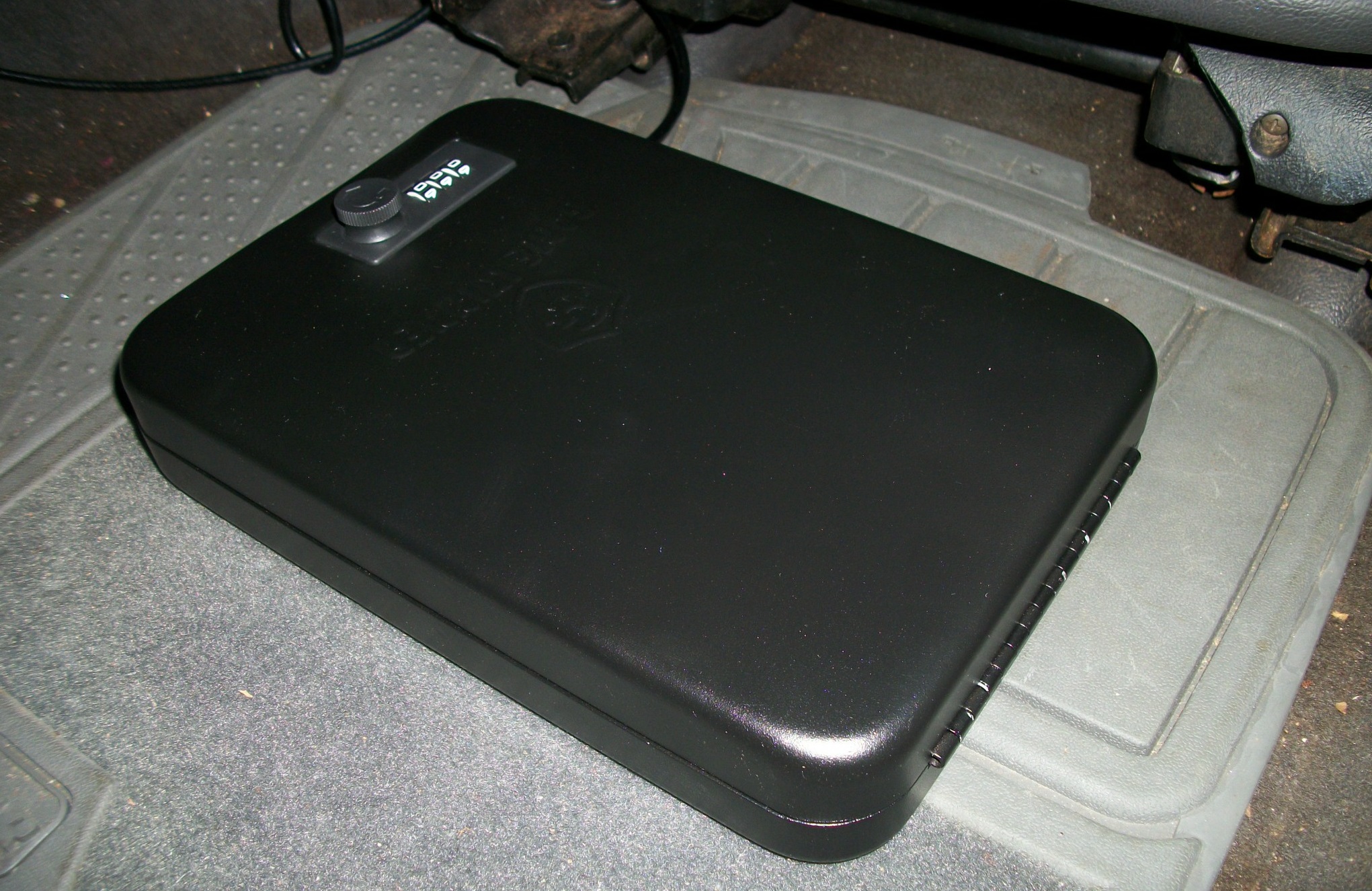
When I first started writing this post, I had in mind talking about lockboxes for securing pistols in cars, which I still think is a necessary idea. But, as I began writing, I realized I was on the wrong track. In this case, trying to secure the pistol in a lockbox would most likely have entailed repeated instances during the trip of gunhandling in the car to secure the pistol. That’s dangerous and unrealistic. The less we handle guns in vehicles, the better. It’s a target rich environment with too much potential for a Negative Outcome.
As the number of people who carry guns continues to increase, we trainers are going to have to focus more on ‘Living with Guns,’ as John Farnam put it years ago, rather than just ‘shooting guns.’ Shooting guns is fun and provides immediate gratification; we can see when our students get it. Teaching people about Living with Guns provides no gratification whatsoever because it happens after they leave our class. Are we performers or teachers?
Let’s consider a variant of my question “What’s the ‘worst possible case’?” Is it encountering a really determined criminal who soaks up whole magazines of bullets or having a family member accidentally shoot another family member? I’d really like to hear a definitive answer to that question.
Living with Guns is the tedious drudgery of the armed lifestyle that we, both trainers and gunowners, tend to ignore. It’s easy to focus on marksmanship, ballistics, legalistics, and equipment because those things are obvious and we’re reminded of them regularly. The hard part will be re-directing our attention toward the less obvious but just as important lifestyle aspects. That change in focus needs to happen quickly if we really want to consider ourselves responsible.
Perhaps a criterion we need to add to our selection list when talking about purchasing a pistol is something like “How convenient is it for this purchaser to carry, and secure, this particular pistol 18/7?” If it fails that criterion, that might be a deal breaker.
 tacticalprofessor
You must be logged in to post a comment.