McGee’s Paradigm

“Three shots in three seconds at three yards.” That was Lt. Frank McGee’s iconic summation (McGee’s Paradigm) of the typical gunfight of New York City police officers in the 1970s. Lt. McGee was the head of the NYPD Firearms and Tactics Section at that time. His analysis came from the Department’s SOP-9 report, which began compiling statistics about the gunfights of its officers in 1969. Although the scope and name of the report has evolved over time, it is still published by the NYPD and available online. McGee’s Paradigm hasn’t changed much over the past 50 years.
Since most gunowners are limited to shooting at indoor ranges, learning to shoot against a time standard has always been an issue. Shot timers usually work by tracking the noise from each shot and are therefore not always useful in the indoor-range environment because of adjacent shooters. Besides this, casual shooters are generally unwilling to spend over $100 for a shot timer.
The widespread nature of smartphones and Bluetooth earbuds have given us a solution to this problem. There are several timing apps for Smartphones available online. Used in conjunction with Bluetooth earbuds underneath earmuff-based hearing protection, practicing marksmanship with a par time is now easily accomplished.
https://www.shootingillustrated.com/content/three-shots-in-three-seconds
A demonstration video is available at https://youtu.be/8kL0bUQWsfI
Here’s a target for the final 20 rounds of the 50 round session.
Snub Dry Practice Training Aids
#wheelgunwednesday
All discharges of a firearm by LAPD officers must be reported to the LAPD Force Investigation Division. Each discharge is thoroughly investigated, adjudicated by the Board of Police Commissioners (BOPC) for LAPD policy compliance, and a public report posted on the BOPC webpage.
https://www.lapdonline.org/police-commission/categorical-use-of-force
Of particular interest are the off-duty discharges. These usually involve one of two situations. First, situations of self-defense similar to what would be encountered by any non-sworn person who owns a firearm for personal protection. Or, second, Unintentional Discharges due to administrative gunhandling such as: placing or removing the firearm in a storage location, cleaning the firearm, or dry practice “to improve accuracy.” In one rare instance, both situations were involved; a firearm was discharged while being retrieved during a ‘tactical situation.’
In adjudicating Unintentional Discharges cases, the LAPD BOPC subdivides them into two categories.
A. Unintentional Discharge
The definitions for an Unintentional Discharge, both Accidental and Negligent, are as follows:
Accidental Discharge: The unintentional discharge of a firearm as a result of an accident such as a firearm malfunction or other mechanical failure, not the result of operator error.
Negligent Discharge: Finding where it was determined that the unintentional discharge of a firearm resulted from operator error, such as the violation of firearm safety rules.
Administrative Disapproval – Negligent Discharge. Finding where it was determined that the unintentional discharge of a firearm resulted from operator error, such as the violation of a firearm safety rule (Los Angeles Police Department Manual, Volume 3, Section 792.05).
From 2005 to 2023, five Unintentional Discharges of five shot revolvers, which are authorized for backup and off-duty carry, occurred. All five were adjudicated as Negligent Discharges and received Administrative Disapproval. Negligent Discharges are one category of Negative Outcomes https://store.payloadz.com/details/2617872-ebooks-true-crime-serious-mistakes-gunowners-make.html and we obviously want to avoid them.
Four of the five involved preparation for dry practice. The cause of all four was the same. Not all five rounds were ejected from the cylinder when the revolver was unloaded. One round remained in the cylinder when the other four ejected. At some point during the dry practice, a loud noise occurred when a click was expected. That universal cause reinforces my concept of how to prepare for dry practice with a revolver.
https://thetacticalprofessor.net/2020/08/21/dry-practice-safety-part-ii/
Since that article was posted, Zeta6 and I teamed up to create the SafeSnap Training Disc.
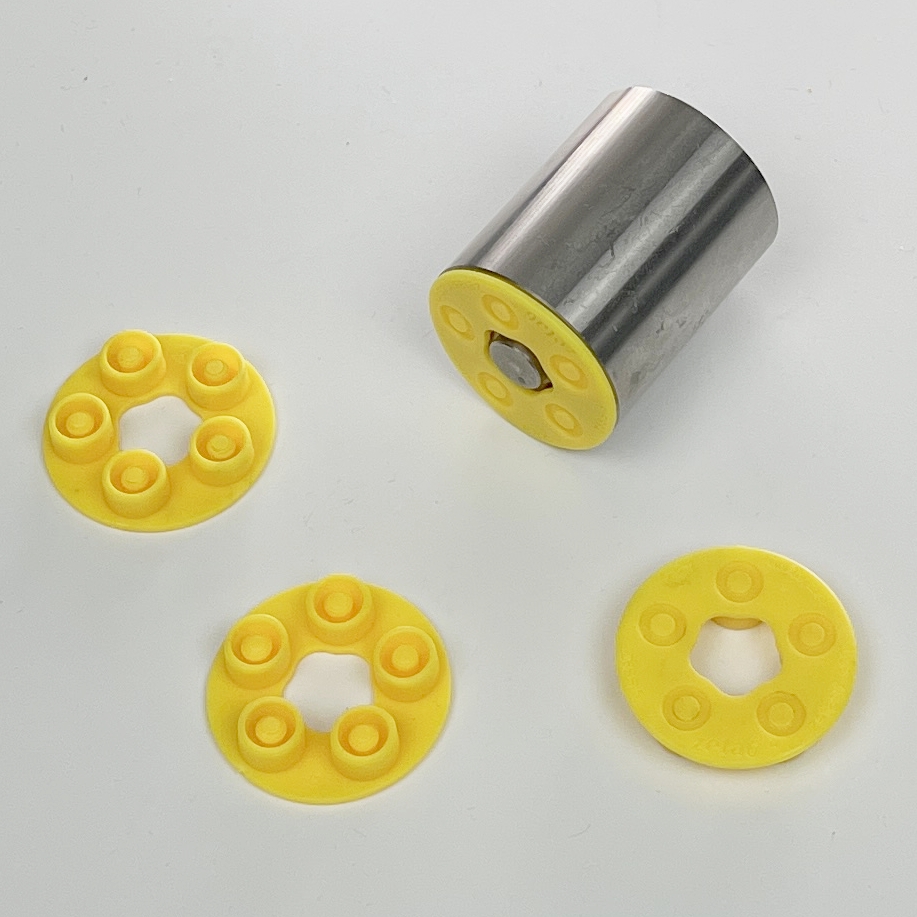
https://zetasix.com/product-category/safesnap
I now keep a SafeSnap Disc in my storage box, along with an empty HKS speedloader, to make my dry practice even safer. Although I don’t carry an HKS, I find it’s the easiest of all speedloaders to put ammunition in.

I rotate the revolver so the muzzle is pointing straight up, eject the live rounds from the snub, place them in the speedloader, and then put the SnapSafe in the revolver. Holding the revolver completely vertical is an important aspect of ejecting the live ammunition. Holding it at angle and catching the rounds in the palm of the other hand is a dangerous technique and is “cruisin’ for a bruisin’.” Sooner or later, doing that will bite you in the ass; hard.
This procedure makes the possibility of having a Negligent Discharge during dry practice fairly remote. I also have a Zeta6 K-PAK2 https://zetasix.com/product/k-pak2/ with dummy rounds for reloading practice in the box. It is set up with a Retention Ring https://retentionring.com/ to mimic my EDC reload.
All the live ammunition stays in the box and the box gets closed while I’m practicing. When I’m finished practicing, I rigidly follow the post-practice safety protocols described in the above linked article.
Dry practice is a key component of learning how to shoot well. When doing it, we want to avoid having the Negative Outcome of “causing damage to equipment or injury to personnel,” which was a graded aspect required to pass the Special Forces Weapons Qualification Course that has stuck with me for the past 44 years. Having the right training aids and following safety protocols in a disciplined manner is how we can avoid those Negative Outcomes.
FTC Note: I have a relationship with Zeta6 and Retention Ring but receive no compensation for mentioning their products.
Shooting Practice for a Criminal Encounter
The second installment of my Shooting Illustrated series about organizing your shooting practice is now online.
https://www.shootingillustrated.com/content/shooting-practice-for-a-criminal-encounter

I always include more photos with my article submissions than can be used. After this paragraph in the article, I included what is possibly my favorite shooting photo of all time.
Shooters often blast an entire box of ammunition at the target without checking and then marking it consistently. This is one of the worst mistakes that can be made when practicing for marksmanship development and self-defense.
Sadly, along with several others, it was cut for space reasons. The photo is of a target that was left up at my gun club years ago. Every time I look at it, I literally Laugh Out Loud. I call it the ‘goober target.’
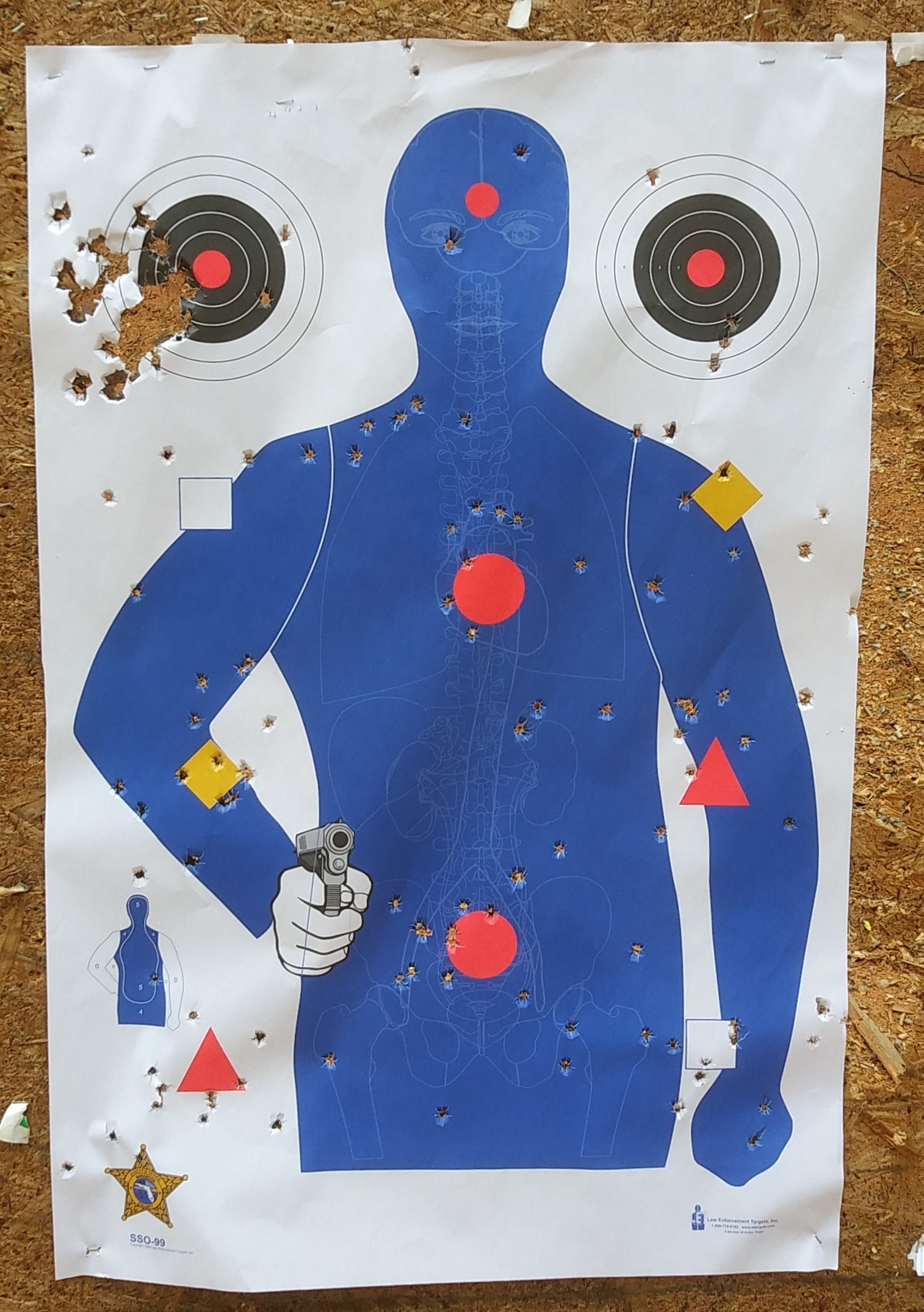
That is not the way to learn how to shoot to hit anything. Another photo that was cut shows how to mark your target with masking tape every few shots.

As mentioned in the article, checking and marking your target regularly will help you improve your marksmanship. Blasting away and creating a goober target will not.
Here is the Pump target. No one can say you’re practicing to shoot unarmed people if you have a representation of a gun on your target.
It’s getting to be a wild world out there; be ready.
A Way of the Wheelgun
#wheelgunwednesday
In 2022, I created a four month Patreon series for developing shooting and gunhandling skills with snub nosed revolvers. There are a total of 65 articles in the series and it is the online equivalent of a book. All the articles are now available as a Collection on my Patreon page. Unlike a book, you can read it at your leisure on your Smartphone.
The basis for the Series is the principles and techniques of the Snub Nose classes I taught for decades and the two DVDs I made about snubs. Also included are examples of what went right and wrong in several real life incidents involving snubs.
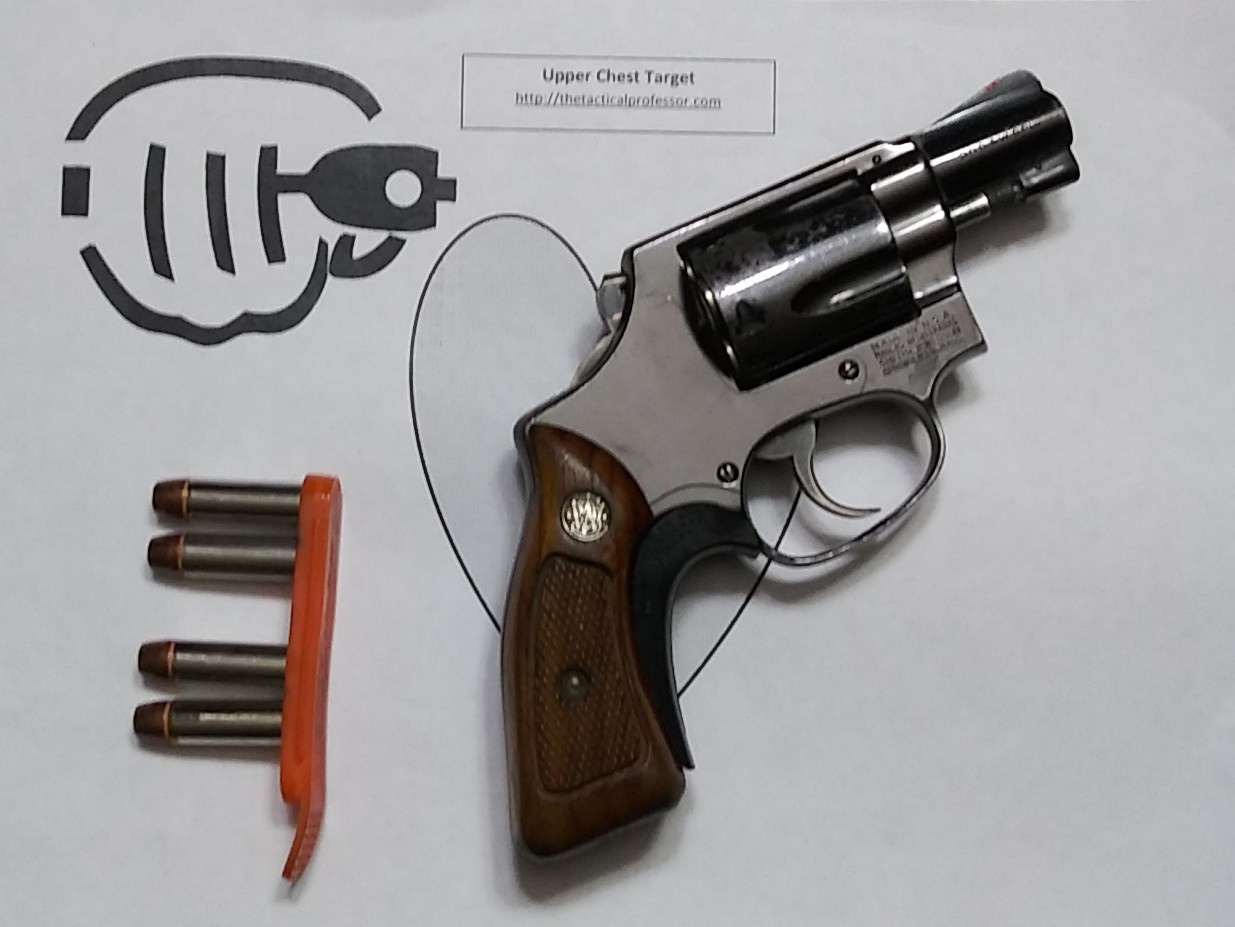
There is a great deal of emphasis in the Series on ‘dry practice,’ i.e., practice without ammunition. There is also periodic live fire (originally monthly) of no more than 50 rounds. The live fire is compatible with either indoor or outdoor ranges because the vast majority (999/1000 by my calculation) of gunowners only have access to indoor ranges.
The first three posts in the Collection are unlocked and available for anyone to read. These initial posts describe Safety Protocols during dry practice to avoid putting bullet holes in people, places, and things where they are undesirable. Tragedies can and do take place during dry practice and we want to avoid those at all costs.
For anyone who owns and/or carries a snub, this is a good program. Anyone who does any dry practice, whether with a revolver or autoloader, will benefit from at least reading the first three posts about Safety Protocols.
https://www.patreon.com/posts/snub-revolver-97045992
Subscribers to my Concealed Carry Skills Tier ($3/month) https://www.patreon.com/TacticalProfessor have access to all the articles in the Collection plus all the articles I write on Patreon about marksmanship and gunhandling. In the financial industry, we’d say the Return On Investment (ROI) is very high.
Downrange Incident During Home Invasion
From the Armed Citizen http://graphics.nra.org/ac/ac-138.html this month.
Authorities say a man opened fire on a suspected burglar who attacked his wife at their home
Deputies said [the intruder] encountered a 74-year-old woman inside the residence and ‘began to struggle with her physically.’ Her husband heard her screams and saw her struggling with Jackson. The man then retrieved his firearm and shot Jackson in the right shoulder.
This is what I call a ‘downrange incident.’ I.e., there’s an innocent party downrange and in close proximity to the attacker. Incidents where close range precision is required are more common than is realized.
A downrange drill is part of all my private sessions above the beginner level. The shooter has only one round in the pistol. Two IDPA targets downrange with one placed directly to the side of the -0 zone. The shooter can advance to any distance they feel they can make a -0 hit, either head or body, on the first shot without hitting the hostage. Even experienced shooters tend to get somewhere within Social Space (4-12 feet).
It doesn’t have to be an IDPA match scenario
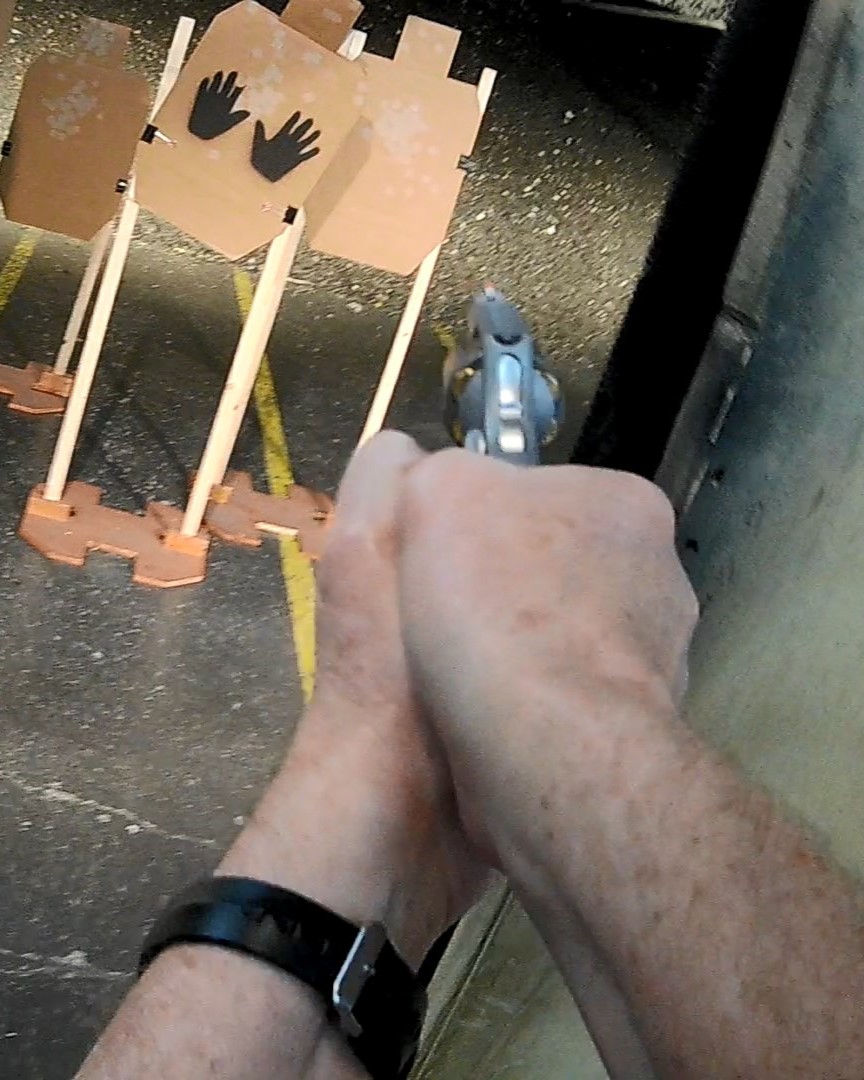
but practicing the ‘downrange shot’ occasionally is worthwhile.
Pocket Carry
Now that cold weather is upon us, pocket carry in an overcoat pocket has some advantages. Pocket carry has both upsides and downsides.
Upsides
- It’s far easier to access a gun in a coat pocket than to undo the coat and draw a holstered pistol. This is especially true when you’re seated in a vehicle with a seat belt on.
- You can put your hand on your gun as soon as you perceive trouble or even walk around with your hand on your gun in general.
- A draw from the pocket, starting with hand on gun, is faster for most people than drawing from a concealed holster.
Downsides
- Pocket carry usually requires a smaller and more compact handgun.
- A separate pocket holster is advisable.
- You may be wearing gloves.
- If you come in from outside and have to hang up your coat in an unsecured area, you’ll need to do something with the pocket pistol to secure it.
- The pocket draw is a little different than drawing from a belt holster.
- Said smaller and more compact handgun will probably become your primary tool in an incident.
Most people don’t practice as much with their smaller guns as they do larger ones. Pocketable pistols are usually both ego challenging and uncomfortable to shoot. Nonetheless, some familiarization is a good idea.
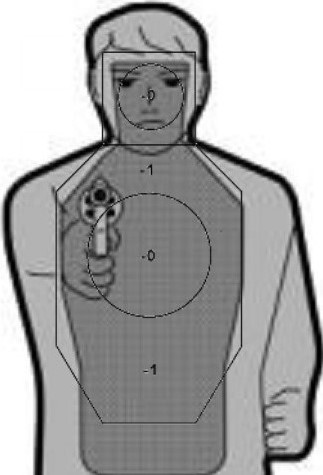
The CCW Practical Exercise from Switzerland is short and uncomplicated familiarization drill. The Swiss are a very practical people.
All shooting is done wearing a concealment garment with a holstered weapon.
- 2 shots at 7 meters in 4 seconds. 3 times.
- 2 shots at 5 meters in 3.5 seconds. 3 times
- 2 shots at 3 meters in 3.0 seconds. 3 times.
18 rounds total. 14 hits required to pass. The hit area (dark area) of their target is roughly equivalent to the IDPA -1 zone. Hits on the silhouette outside the hit area don’t count. They penalize 1 hit for any impacts outside the silhouette.
If you decide to pocket carry, it’s worth doing at least a short tuneup with your pocket pistol. A dry practice session for your draw is a must. A short live fire session to get the lint out of your gun and be sure it works is also in order.
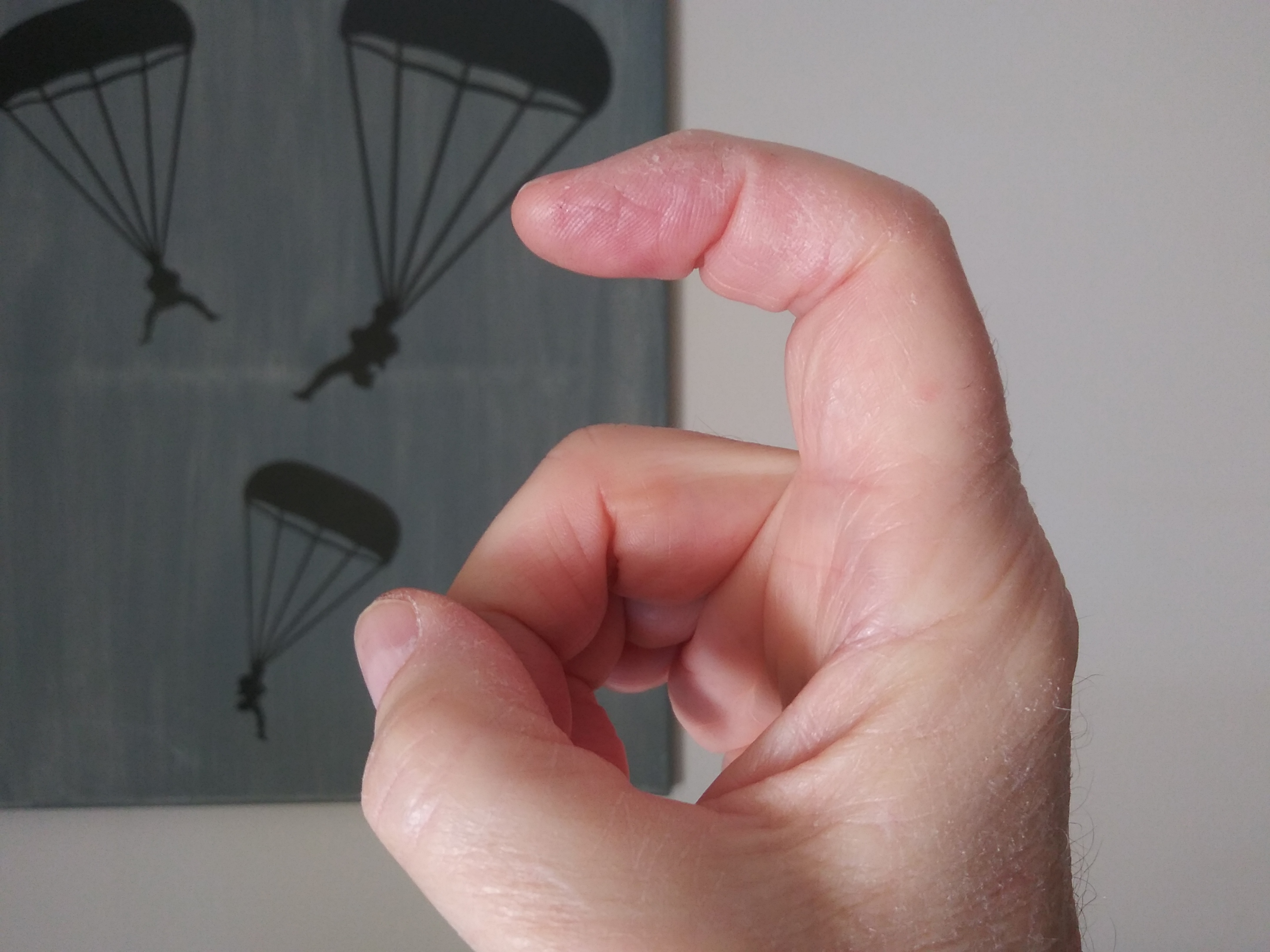
P-Press the Trigger Smoothly
My friend and colleague Greg Ellifritz kindly mentioned this post in his Weekly Knowledge Dump https://www.activeresponsetraining.net/weekend-knowledge-dump-december-1-2023 and it is worth repeating.
https://thetacticalprofessor.net/2018/11/16/press-the-trigger-smoothly/
Calling the Shot
#Fridayfundamentals
Last week, I shot the IDPA Match at my gun club. Oddly enough, the shot I was happiest with the whole day was one I missed.
The lighting in one bay illuminated the smoke and cloudiness of each shot during the shooting. This added to the difficulty of transitioning between targets and immediately establishing a sight picture.

When I transitioned to the far left target, my view was still obscured by the smoke from the previous shot.
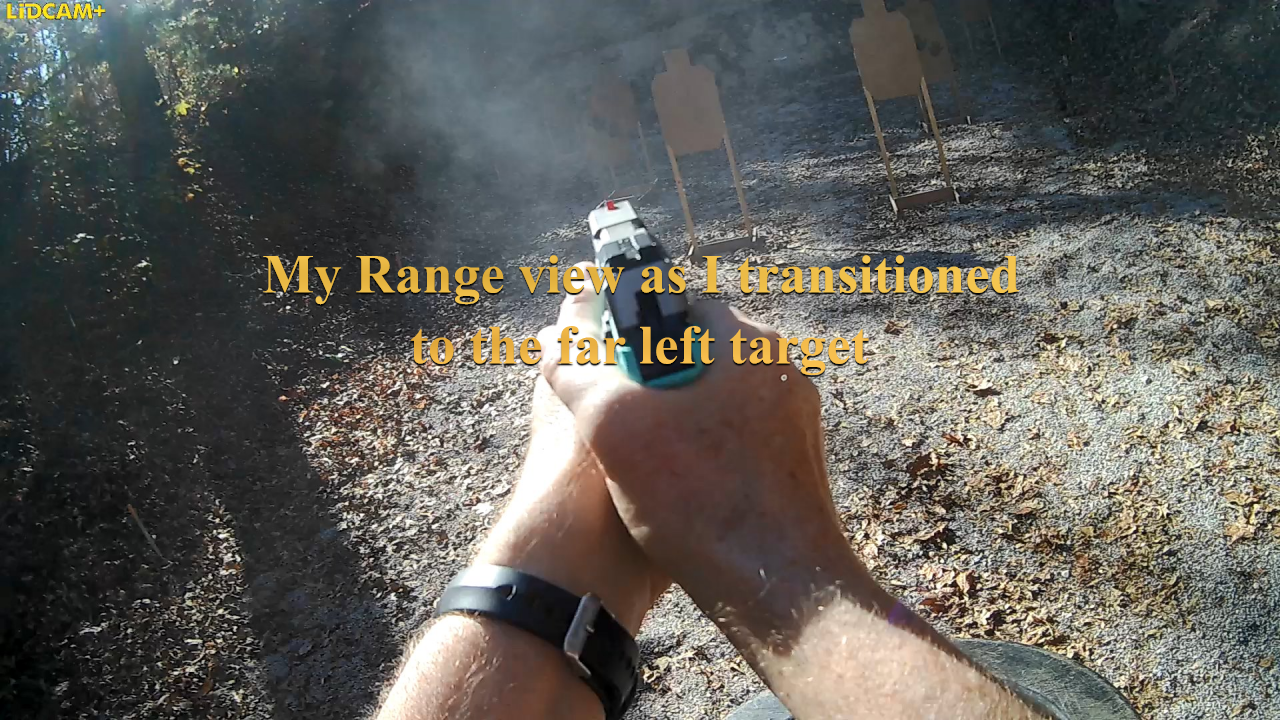
But at the moment the shot fired, the smoke had cleared and I had a decent view of my sight picture in relation to the target. I called it low and moved on.
When the targets were scored, sure enough there it was, low in the -3 Zone.

Calling that shot correctly during a challenging stage was the single best aspect of the match to me. It occurred to me later that in competition we only fire one, two, or three shots per target. Because of that, we have the opportunity to evaluate our shot calling for most of our shots. It’s an advantage competitive shooting has that never occurred to me before.
Shot calling with iron sights is an important skill to work on. When you can do it, it means you’re seeing your sight alignment and its relation to the target at the moment of the shot. That is sight picture in the moment and leads to good marksmanship.
Follow through – Practical Application
#Fridayfundamentals
An excellent article was recently published on the Shooting Illustrated website about follow‑through. https://www.shootingillustrated.com/content/head-down-follow-through/?utm_source=newsletter It’s well written and worth reading.
Two practical demonstrations appear in LAPD Incident NRF 032-23 https://youtu.be/zydZUuqQahI?si=-6a3KLf00_rvn7x2 The amount of video in the LAPD’s YouTube Critical Incident Community Briefing allows us to observe the marksmanship aspects in depth.
Two officers were actually involved in the shooting. The officers were armed with two different weapon systems. The first to engage had a 40mm Less-Lethal (Blue Dildo) Launcher. The second officer used his Glock service pistol.
It’s unclear if the first 40mm foam round hit the perpetrator but it is clear that the second round fired went low and hit the hostage the assailant was holding down.

One possibility for the low hit is lack of follow through. A 40mm round has a muzzle velocity of 235-260 feet per second, far lower than a firearm. The Launcher has a barrel length of 14 inches. And the munition is visible in flight. This combination makes the Launcher more susceptible than a firearm to being pulled low off the target if the shooter doesn’t use good follow through.”
Corresponding with the author of the Follow-through article, he opined:
“the officer with the 40mm [may have] made the critical error of lifting his head to look for the impact/result before he even fired.”
This is a better elaboration of the “munition visible in flight” aspect than I had originally made in my Patreon posts about the incident. The author also felt the officer may have failed to account for the difference of point of impact from using the Red Dot Sight at close range. If the first shot also went low that would likely be true. If the first shot hit and the second shot missed it wouldn’t necessarily be true. Unfortunately that’s hard to tell from the video available.

The single shot aspect of the Launcher could also have been a factor. Desire to get a single shot weapon reloaded does not enhance our execution of follow-through.
The second officer demonstrated good follow-through while shooting his Glock. When his first shot missed, he was able to assess and fire a second shot without hesitation because he was still on target.
Whether shooting a long gun or a pistol, follow-through is extremely important. Pistol shooters often immediately drop their guns below the line of sight to see where the bullet impacted. This is a bad habit to be scrupulously avoided.
If you would like to read more extensive analysis of this and other incidents, or if you would like to become a real shooter with aim, please follow my Patreon page. https://www.patreon.com/TacticalProfessor
Back Up Gun Match
#fridayfundamentals
Johns Creek IDPA held a Back Up Gun match last night. It was fun to be able to shoot a match with my LCP. I was able to acquit myself well and finished 7th even though I had the smallest gun there and made a couple of boo-boos. There were three snub revolvers in the match also.
Folks who were using fanny packs and chest packs got a chance to test them out, which in one case didn’t work out well. Carrying a gun with such a system also means practicing being able to access it efficiently and safely.
There will be more in-depth coverage on the Shooting and Marksmanship Tier of my Patreon page. https://www.patreon.com/TacticalProfessor


You must be logged in to post a comment.