Parking Lot Tactics
Greg Ellifritz recently wrote an excellent article about mitigating the risks we encounter every time we go into a parking lot. https://www.activeresponsetraining.net/five-parking-lot-precautions It’s great advice; much like my own protocols that I developed after LCDR Schaufelberger was assassinated in his car in El Salvador. https://thetacticalprofessor.net/2018/05/25/in-memoriam-albert-schaufelberger/
Two points in particular resonated with me. First,
Walk against traffic going to and from your car. … You may also be able to detect the driver distracted by texting or scrolling the internet on his phone before he runs you down as well.
Every time you go into a parking lot, you will see people who simply cannot put their cell phones down for ONE Minute between their cars and the store. As soon as they get out of the car, they start texting or talking, completely obvious to the two ton homicide machines moving all around them. When they leave the store, they continue blabbing even while they’re backing out of their parking space and driving down the lane.
The title of Colonel Rex Applegate’s most famous book Kill Or Be Killed comes to mind. Such people are ready and willing to kill you as they distractedly put their manslaughter machines in motion or they’re ready to be killed while yapping about something of no importance.
By walking against the traffic, you’ll have more chance to see the distracted driver before they run you down and then say “I’m so sorry” while you’re leaking and being loaded in the ambulance aka ‘amber lamps.’ https://youtu.be/53Bx5PLrOIk?si=zCk8BcJyDLOVFUS0&t=173 Note: in the first part of the video there “may be strong language used by those shown in the video. Viewer discretion is advised, especially for young children and sensitive viewers.”
The second point that resonated with me was:
If I do carry a shopping bag, I always carry it in my non-dominant hand. I like to keep my gun hand free for a faster draw should I decide I want to respond with my weapon.
I disagree with Greg about this. My comment on his Patreon page https://www.patreon.com/posts/five-parking-lot-138083166 was:
One point of difference. I carry the bag in my Primary Hand. During 10 years (around 400 iterations) as a role player in Force on Force scenarios, we never saw any clients drop something in their Support Hand when they were forced by the scenario into shooting. Even Rogers Advanced Level shooters would shoot Primary Hand Only. Same thing for less skilled shooters. That observation changed my mind about how to set myself up for success.
Parking lots are spaces in-between other places of relatively greater safety. Ramp up your level of awareness for two minutes when you drive into the parking lot and when you leave the store to exit the parking lot.
If you would like to read more in-depth information about shooting and personal protection, consider subscribing to my Patreon page.

More (Again) about Boyd and OODA
Since my coffee hadn’t set in yet this morning, I unwisely became involved in another discussion about O O-D-A and Colonel John Boyd. What most people refer to as the O-O-D-A Loop, I refer to as Boyd’s Process because it’s much more involved than some simplistic circular diagram. Since I typed the whole reply out, I may as well reproduce it.
The foundation of O-O-D-A is Boyd’s Aerial Attack Study. The premise of the AAS is diametrically opposite of what 99% of people think about O-O-D-A. The common interpretation of O-O-D-A is that it somehow involves ‘thinking faster,’ which is physiologically impossible.
O-O-D-A is an analytical concept that Boyd spoke about and mentioned in passing late in his career. The neat extensive diagram sometimes seen was developed by one of Boyd’s acolytes, not Boyd, although he did approve it while he was in the throes of prostate cancer. This is Boyd’s original hand drawn sketch of the process. It is rather complex and doesn’t look anything like the circular models seen in current discussions.

The simplistic circular bastardized diagram that is commonly seen was not part of Boyd’s repertoire and is not even worth mentioning in relation to any serious discussion of O-O-D-A.
The concept of O-O-D-A Loops is mentioned only briefly a few times in Boyd’s multi-hour presentations. Even then he mentioned it in relation to strategy not tactics.
The AAS describes an operational tactical concept that Boyd developed during his time as an instructor at the USAF Fighter Weapons School. He was known as ‘Forty Second Boyd’ because of his ability to defeat any aerial opponent in 40 seconds or less.
However, this ability came from an understanding of possible attack and defense patterns and the capabilities of his aircraft’s weapons systems. He had pre-planned his counters to every move his opponent might make and then vigorously executed the counter faster than his opponent could avoid it.
Because Boyd was a talker and not a writer (he dictated the entire AAS to his boss’s secretary), whether he placed any value on ‘O-O-D-A Loops’ as anything other than a descriptive metaphor is unclear. Nothing in his presentations leads to the conclusion that he thought of it as a tactical decision making template.
Here is an example of Boyd’s thinking in the AAS.
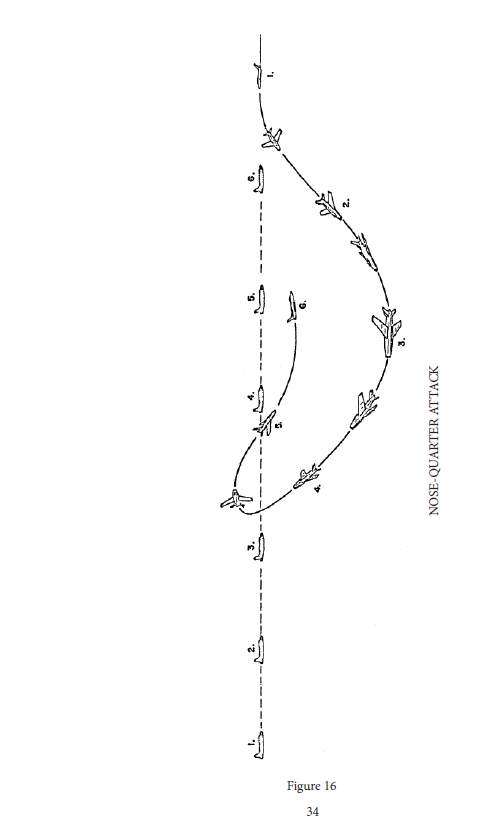
This is the kind of tactical and weapon analysis that was the foundation for tactical execution in the AAS.

Another aspect of Forty Second Boyd is that he was willing to push his aircraft, the F-100, to limits no one else would. He brutalized his plane so badly that at times it required significant rebuilding after he landed.
The Aerial Attack Study is readily available on the Internet. It’s essential reading for anyone who wants to talk about Boyd’s Process from an informed perspective.
Situational Awareness and Positioning (part VI)
Greg Ellifritz included an article I wrote ten years ago in this week’s edition of his Weekend Knowledge Dump. https://www.activeresponsetraining.net/weekend-knowledge-dump-november-15-2024 This afternoon, the concept was revisited for me as I went to lunch.
I walked to the neighborhood Burger King to use a coupon I had for lunch. As I rounded the corner of the building, a somewhat disreputable looking individual came into view. First red flag: he had one pants leg pulled up and tucked in a sock, which I always assume means some kind of affiliation, although now it may merely be stylistic. The more important red flag was that he was wearing a backpack that had a large black rod sticking out straight up behind his head. It looked very much like a weapon to me. I did a quick mental rehearsal and headed toward the door.
There was a bicycle and cup of ice cream by the door, which I assumed were his. He was standing off to the side, so I went in. After receiving my food, I sat where I could keep an eye on him. Shortly after I sat down, he had drawn the rod and was flipping it in the air. It appeared to be a piece of one inch electrical conduit about the size of a Baltimore POlice espantoon https://baltimorepolicemuseum.com/en/what-makes-an-espantoon-an-espantoon, i.e., 22 and 25 inches in length. One end was wrapped with what appeared to be electrical tape. That’s the end I had seen sticking up above his backpack.
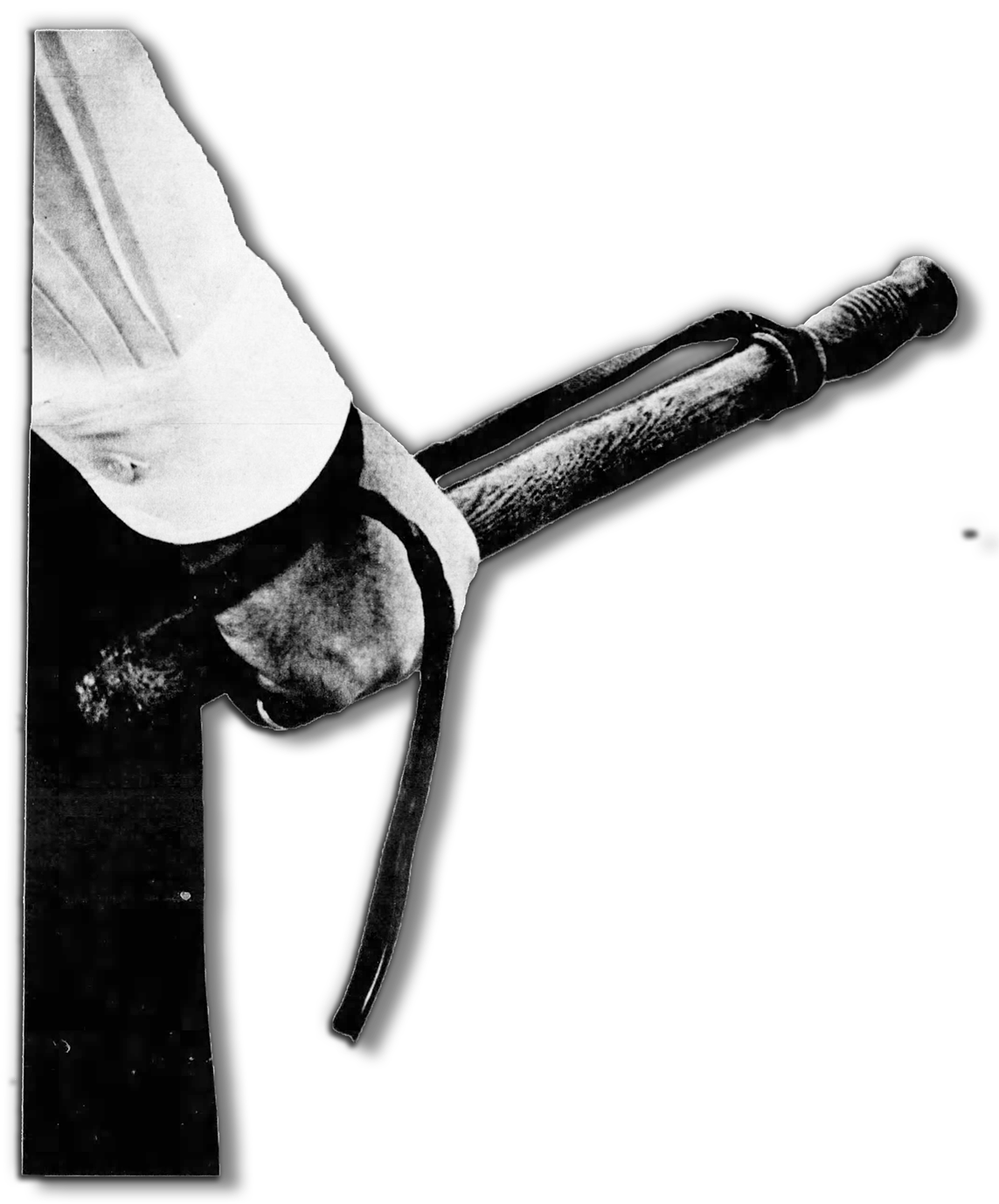
Since he had his impact tool in hand, I decided I was not going to leave the place until he was gone. Fortunately, he shortly afterward got on his bicycle and took off. Since I was planning to take a walk after lunch, I went in the opposite direction when I left.
It was an interesting reminder of the concept of synchronicity. https://iaap.org/jung-analytical-psychology/short-articles-on-analytical-psychology/synchronicity-an-acausal-connecting-principle/
For those who would interested in the series about Awareness and Positioning, these are the links.
https://thetacticalprofessor.net/2014/06/25/situational-awareness-and-positioning-part-i/
https://thetacticalprofessor.net/2014/10/16/situational-awareness-and-positioning-part-iii/
https://thetacticalprofessor.net/2014/10/18/situational-awareness-and-positioning-part-iv/
https://thetacticalprofessor.net/2015/04/01/situational-awareness-and-positioning-part-v/
In a related post, https://thetacticalprofessor.net/2016/08/05/practicing-awareness-part-iii/ I wrote:
“I don’t mind walking past low-lifes but it’s important to be mentally prepared to deal with them and fail the interview. Someone once said that I give my students permission to be rude; that’s totally true. There’s a difference between rude and mean, though. In my vernacular, being rude relates to enforcing my boundaries. Being mean is encroaching on someone else’s boundaries. That can set you up for trouble.”
Be aware but don’t be a jerk.
Trump Assassination Attempt and DEI
Here’s an opinion that will no doubt annoy many people who have been common-tating about the attempted assassination of President Trump.
A female Secret Service Agent muzzling the crowd and having difficulty re-holstering has exactly zero relationship to the fact that an attempted assassination took place. Sorry folks, a low level field agent’s lack of competence in non-shooting tasks with her issue weapon has nothing to do with the planning and execution failures that took place prior to the shots being fired.
The investigation into the attempt need to focus at a much higher level; all the way up to the head of the Secret Service, her immediate subordinates, and the Supervisory Agents who were responsible for planning the protection of the President. If the planning and execution had been done right, the female Agent in question would never have needed to draw her pistol and none of us would have been the wiser.
Focusing on DEI at the USSS will only distract from much larger issues. Simply the fact that her issue holster is so obviously inappropriate for female agents in the field is an example of bureaucratic incompetence and the allowance of POlice cosplay during training.
Whether this whistleblower’s comments are addressed, one way or another, in the upcoming hearings will be of much more importance than the USSS hiring practices. This EP operation was planned by people who were hired long before Cheatle became Director.
https://www.yahoo.com/news/majority-trump-security-detail-were-171218007.html
The Good, the Bad, and the Ugly – February 2024
The Good, the Bad, and the Ugly is an iconic movie in American cinema and arguably the best of the ‘Spaghetti Westerns.’ Rather than my usual boring rants about Serious Mistakes, Negative Outcomes, http://seriousgunownermistakes.net and excruciatingly detailed analyses of Armed Citizen incidents, I’m creating a short collection of a Good, Bad, and Ugly incident each month. Here’s the February 2024 issue.
https://www.patreon.com/posts/good-bad-and-99377217
My Patrons get first look at it on the last day of each month. The following month I unlock the Patreon post on the last Monday and link it here for my blog Followers. Today’s the day to unlock the February 2024 edition.
My hope is that it will be both educational and entertaining. The movie soundtrack is outstanding so a snippet from the soundtrack is part of each month’s post also.
The Good, the Bad, and the Ugly – February 2024
The Good
RCSD: Fatal Columbia shooting determined to be self-defense
The Bad
Man arrested by police after TSA stops him with loaded gun at Pittsburgh International Airport
The Ugly
Two Men Charged with Murder in Kansas City Chiefs Super Bowl Parade Shooting
Enjoy!
The GBU isn’t drawn from The Armed Citizen column of the official NRA Journals but the February edition of The Armed Citizen is attached. Rather than an obsessive interest in ‘the worst case scenario,’ it shows what the vast majority of Defensive Gun Uses really look like.
Tend To Your Own Business
#fridayfundamentals
Tend to your own business
the Assassin
That’s a sage comment the Assassin made while he and I were talking years ago. His comment was about the perils of intervention. I had my own experience with it a couple of days ago and learned some important lessons about the entire concept.
While at a large retailer, I observed a low level criminal teaching his son how to be a vandal. The criminal was not merely watching but was actively guiding his son through the process of how to vandalize the inside of the store. The boy was about ten years old. It was clear that he was being groomed in a similar way to the youth who tried to rob one of my University professors many years ago was being taught the trade of robbery by his uncle.
The criminal and his son were right next to me and the brazenness of the criminality surprised me so I reflexively asked them to stop. The criminal immediately threatened me for saying something about their criminal act. At that point, I realized he was a seasoned criminal and my conscious mind took over so I withdrew.
Upon reporting the incident to the store’s management, they asked me if he was still in the store and if I could point him out. The criminal and his entire family were only two aisles away so I indicated who he was. The manager and a security person asked me to step away and then they went over to speak to the criminal.
A few minutes later, they came back to me and said there was nothing they could do even though he admitted committing the vandalism. Further, they said they were not even going to ask him to leave the store. I pointed out that he had threatened me, to which they said since it hadn’t been a physical battery they wouldn’t be able to do anything about it and the local POlice wouldn’t even respond to a call.
Rather than choosing to stick my head further in the lion’s mouth, I immediately left the store. As a precautionary measure, I took a Surveillance Detection route [Surveillance Detection post] home. Although a remote possibility, I didn’t want to a take a chance on the criminal deciding to follow me to escalate the situation.
Lessons from the incident
First lesson. It takes two or three seconds to make a conscious decision. As soon as things began to escalate, my conscious mind kicked in and I decided to withdraw. Before that, I had been acting reflexively as most decent people would; i.e., “Please don’t commit crimes in my presence.” I said it despite the fact that I have been preaching about the perils of intervention in criminal acts not involving ourselves for well over a decade.
Second Lesson. The incident was clear example that Boyd’s Process [link to OODA category] is not about making decisions in the moment. Boyd’s best work, the Aerial Attack Study [link] is about not only making decisions in advance but also formulating a plan for how to implement the decision. My plan now is to immediately turn on my heel and walk away from such a situation. This replaces my previous and more nebulous idea of “don’t get involved.”
Third Lesson. It is extremely unlikely that the benefactor of an intervention will appreciate it or even support the intervention. It’s just not worth it. As a fellow student commented to me years ago:
“What is the benefit? NO BENEFIT!”
Falah Al-Mutairi
Surveillance Detection After a Confrontation
My friend Annette Evans https://onherown.life/ brought this incident to my attention on Facebook.
“A 26-year-old singer and model is in critical condition following a double shooting near a Home Depot parking lot in Brooklyn that appears to have stemmed from a dispute over a parking spot.”
https://abc7ny.com/model-shot-brooklyn-parking-lot-dispute/13767615/
She was shot in the head and her boyfriend was shot in the leg. She was removed from life support and died five days later. A convicted felon was arrested and charged with Murder.
As the saying about the opera goes:
“It’s not over until the fat lady sings.”
I never assume that just because the parties to a confrontation have separated that one side doesn’t harbor ill feelings and intends a follow-up. Having been in similar situations, I have plans to Escape and Evade any cuckoos who follow me afterward.
This is an excellent book on the subject. It deals mostly with targeted surveillance, e.g., stalkers, crazy ex‑partners, and the like, but even when dealing with randos, it has good advice. FTC Note: I have no affiliation with the authors or publishers and receive no commissions from any sales.
Setting Ourselves Up for Failure
Chicago TV news crew robbed at gunpoint while filming a story on robberies
https://www.yahoo.com/entertainment/chicago-tv-news-crew-robbed-020000583.html
“Common sense is not a flower that grows in everyone’s garden.”
A friend’s comment about many people’s critical thinking skills

When I lived in Chicargo, several of my friends moved to the Wicker Park neighborhood because it was both trendy and convenient. One of the first things they did when I went to visit was to show me the guns they had bought. The guns were all pistol grip shotguns because at that time Chicargo didn’t allow any new handguns to be registered. Citizens who wanted to be armed just bought shotguns instead; so much for the efficacy of gun control.
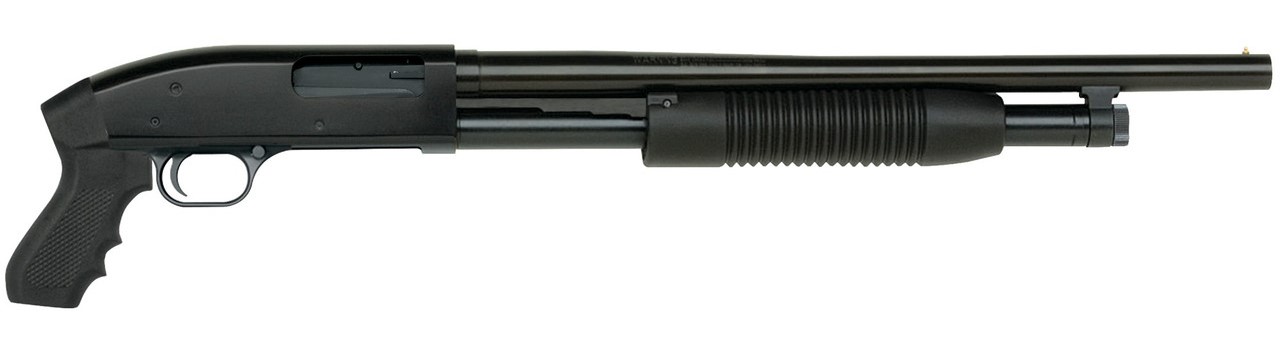
Although it’s easy to poke fun at folks like the news crew that was robbed, they are far from the only people who are oblivious to dangers they place themselves in. People unthinkingly do it every single day.
While talking at The Home Depot with a friend who is an Assistant Manager there, she spotted two men walk out the door while carrying something but didn’t stop at the cashier. Her reaction was to run out the door after them. It turned out that they had legitimately done an exchange at the Service Desk and weren’t stealing. When she returned to where we were talking, I was nowhere to be found.
She looked around and saw me standing behind a display wall. When we started talking again, the conversation changed to a different subject.
Her: “I thought I had pissed you off while we were talking.”
Me: “No, I was just taking cover in case they started shooting when you chased them.”
Her: “I never thought of it but I guess that was a possibility.”
Me: “There are more killings and shootings at Home Depot than is generally known.”
I mentioned to her about the recent killing in the Florida Home Depot of a young woman by the father of her child. https://www.fox35orlando.com/news/escambia-county-home-depot-shooting Two bystander employees were wounded during the murder. She hadn’t even heard about it. Not long before that an Asset Protection officer was shot and killed at a California Home Depot while chasing a thief. https://abc7news.com/pleasanton-home-depot-shooting-blake-mohs-worker-killed-suspect/13161846/
“It’s not the bullet with my name on it that I’m worried about, it’s the one marked ‘To Whom It May Concern’ that scares me most.“
Army saying
Charlotte Bus Shootout
On May 18, 2023, an altercation occurred between a bus driver and a young criminal riding the bus in Charlotte NC. As the altercation escalated, the young criminal produced a pistol from his pocket and approached the driver. Upon seeing the young criminal’s weapon, the driver produced his own pistol and opened fire on the young criminal. The young criminal fired back. Multiple rounds were subsequently exchanged.
ABC News link https://youtu.be/IoRgLsiefdE
Both shooters were wounded in the engagement. The young criminal was hit once in the abdomen and required six days of hospitalization with life threatening injuries. The bus driver was wounded in the arm, treated, and released. The young criminal was arrested and charged with Assault With A Deadly Weapon Inflicting Serious Injuries, Communicating Threats, and Carrying A Concealed Firearm. The bus driver was fired from his job but has not been charged, at least yet.
Issues
There are numerous issues that can be discussed regarding the incident.
- De-escalation
- The driver was fired for not using de-escalation techniques as taught by his employer. At this point, there is no way of knowing whether de-escalation would have been possible.
- Preparation for combat
- Although the young criminal was carrying a weapon and ‘communicated a threat,’ he had to consider the situation after he pulled his pistol out.
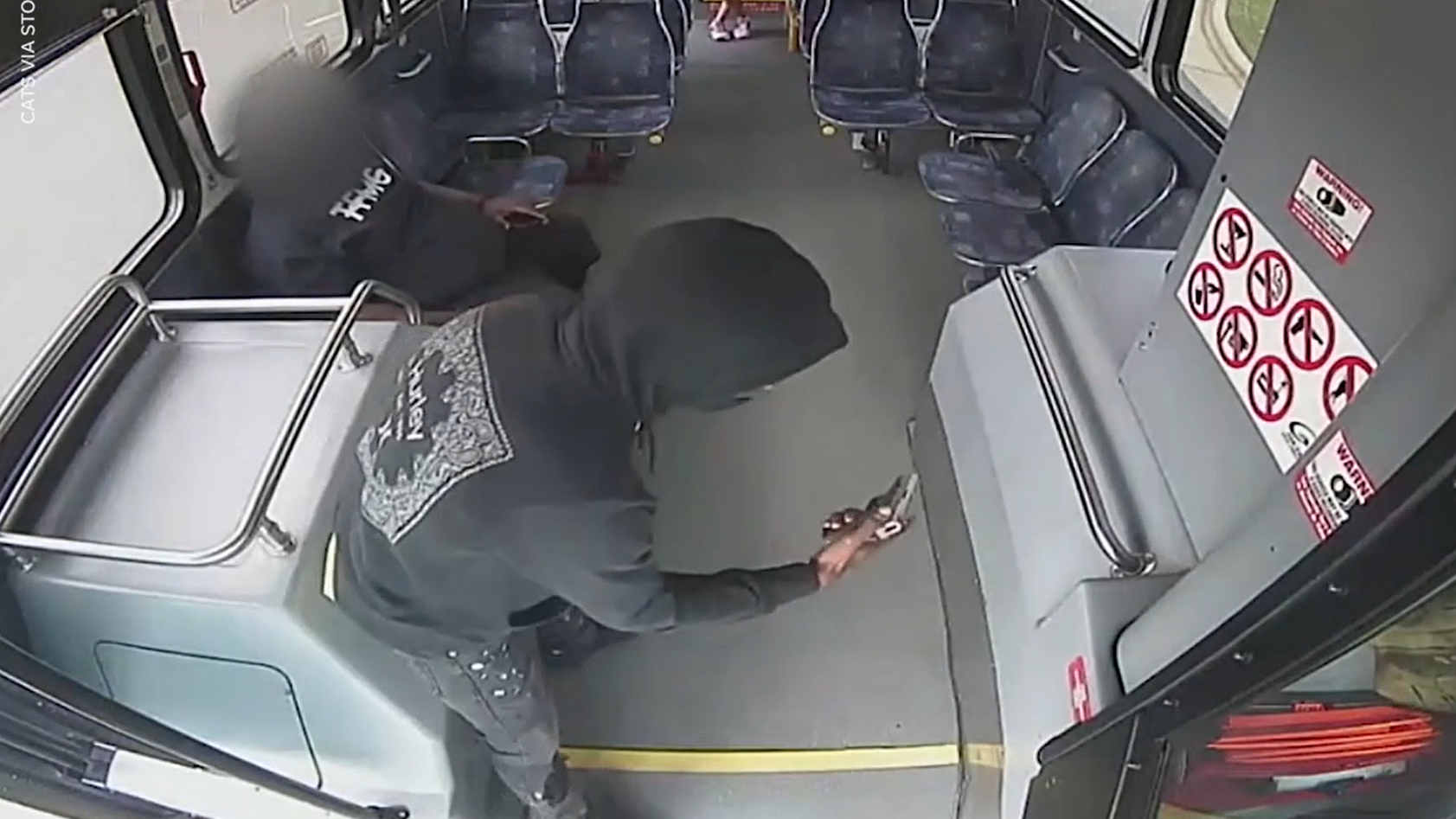
- The bus driver was clearly prepared for the incident because his draw was a one second draw any firearm instructor would be happy with.
- Situational Awareness
- The bus driver, despite having to drive the bus, was immediately aware of the young criminal’s approach after he armed himself.
- Point Shooting
- Distances
- The initial exchange of gunfire took place at about 4 feet, the boundary between Personal Space and Social Space in Proxemics.
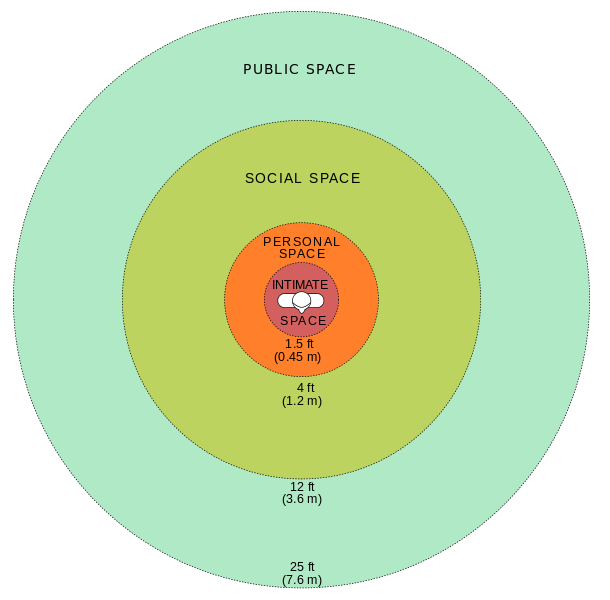
- Distances
- As the shootout continued, the distances increased dramatically with the final shot taking place at seven to 10 yards.
- Both shooters fired one handed. Neither used a Gangsta style shooting stance. The young criminal’s initial stance was a classic point shooting Square stance with weapon just below the eye-target line as described by Fairbairn and Sykes in Shooting to Live.
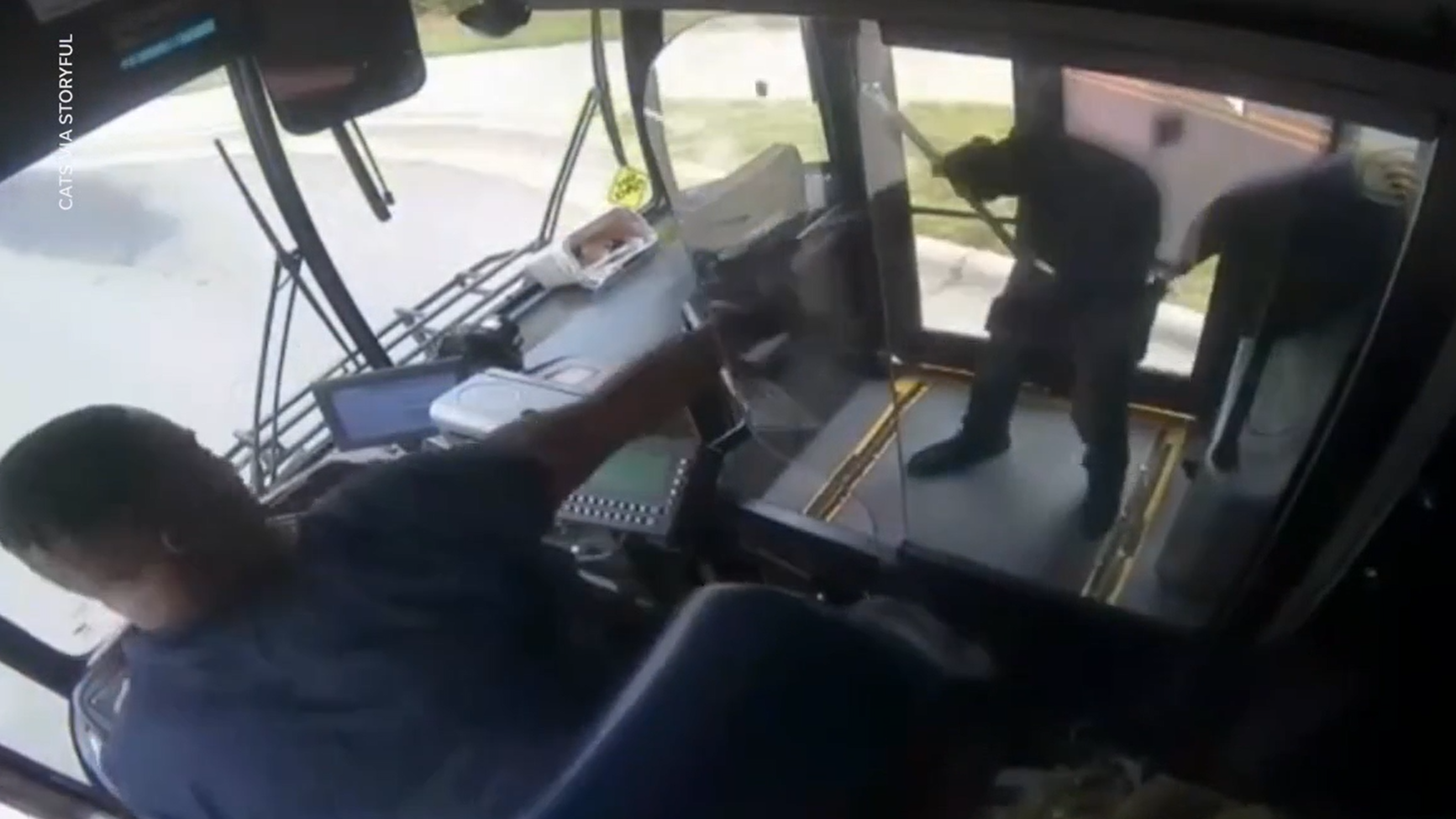
- As the young criminal retreated, the bus driver employed a ‘tactical blind fire’ method of continuing his barrage.
- Hits
- The results were that out of a magazine fired by each shooter, one hit was made by each. The young criminal was hit in the abdomen and the bus driver was hit in the arm. The hit ratio was less than 10 percent. Although the young criminal was seriously wounded, he was still mobile and unneutralized, as is often the case with abdominal wounds.
- Weapons used
- Glock 19
- SCCY
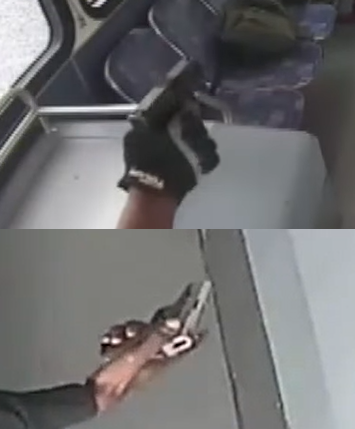
- Neither weapon appears to have malfunctioned.
- Both were equipped with iron sights.
- Anger management
- In Principles of Personal Defense, Jeff Cooper said “Now how do we cultivate an aggressive response? I think the answer is indignation. … Your response, if attacked, must not be fear, it must be anger. The two emotions are very close and you can quite easily turn one into the other. … Anger lets you do this.“ Although it is unlikely that the bus driver has ever read Cooper’s book, it’s very clear that he used Cooper’s philosophy.
- Actions after the initial exchange
- The bus driver fired three volleys.
- The initial exchange at the front of the bus, including the tactical blind fire.
- After the initial exchange of gunfire, the bus driver got up from his seat, opened the partition, had a verbal exchange with the young criminal, and then began shooting again.
- Finally, after the young criminal had exited the bus through the rear door, the bus driver debussed through the front door and fired one more round at the young criminal, who was now in the open seven to 10 yards away. This shot is problematic.
- The bus driver fired three volleys.
- Endangering innocent bystanders
- There were two bystanders on the bus. Both were endangered by the tactical blind fire of Volley 1 and the bus driver’s second volley.
- The second volley was unnecessary and irresponsible. The underlying motive for these shots was vengeance “You shot me!” not self-defense.
- The final round fired in the open as a parting shot menaced the entire area. Cooper’s anger principle is entirely inappropriate at this point.
- Gunhandling
- The bus driver had to switch hands twice. To undo his seat belt and open his partition, he had to switch his pistol to his left hand. After stepping past the partition, he transitioned back to his right hand. He was able to do this without having an Unintentional Discharge.
- Verbal commands
- The bus driver commanded the young criminal to “Get your a** back!” when the young criminal was at the back door. The young criminal refused, fearing he would be shot again.
- Self-aid for wounds
- Both the young criminal and the bus driver were wounded. Neither had any first aid equipment. Note in the video that the bus driver is holding his arm where he was wounded.
- Chasing fleeing criminals
- Getting out of his seat to maintain visual on the young criminal was entirely appropriate. Following the criminal out of the bus was not. We see time and again the chase instinct that occurs when the predator-prey relationship reverses. It’s an instinct that we need to be aware of and not give in to.
My analysis of the Point Shooting aspects are on my Patreon page. I will be going over other aspects of the shootout in more detail in my next few posts there. Click the image below to follow.
Mindset Beyond Platitudes
My friend and colleague Shelley Hill wrote two articles about mindset that are well worth reading.
“We hear that term quite often in the self defense world, but what does it really mean?”
https://www.shootingillustrated.com/content/what-does-mindset-actually-mean-part-1/
https://www.shootingillustrated.com/content/what-does-mindset-actually-mean-part-2/
Here are few other short explanations about mindset.
From Chapter III of the classic 1942 text Shooting to Live by Fairbairn and Sykes:
“The instructor will be well advised to give his pupils short ‘rest’ periods at fairly frequent intervals and to utilise such intervals to impress upon them the conditions under which they may be called upon to use their pistols eventually. … [W]hen obliged to shoot, they will have to do so with all the aggressiveness of which they are capable.”
From a presentation to the International Association of Chiefs of Police (IACP) about Violent Encounters – A Study of Felonious Assaults on Our Nation’s Law Enforcement Officers (An FBI publication):
Mind-set
“Thirty-six of the 50 officers in the study had ‘experienced hazardous situations where they had the legal authority’ to use deadly force ‘but chose not to shoot.’ They averaged 4 such prior incidents before the encounters that the researchers investigated. ‘It appeared clear that none of these officers were willing to use deadly force against an offender if other options were available,’ the researchers concluded.
The offenders were of a different mind-set entirely. In fact, [one of the researchers] said the study team ‘did not realize how cold blooded the younger generation of offender is. They have been exposed to killing after killing, they fully expect to get killed and they don’t hesitate to shoot anybody, including a police officer. They can go from riding down the street saying what a beautiful day it is to killing in the next instant.’
‘Offenders typically displayed no moral or ethical restraints in using firearms,’ the report states. ‘In fact, the street combat veterans survived by developing a shoot-first mentality.’
‘Officers never can assume that a criminal is unarmed until they have thoroughly searched the person and the surroundings themselves.’ Nor, in the interest of personal safety, can officers ‘let their guards down in any type of law enforcement situation.’”
From the late William T. Aprill:
“They are not like you.”
 tacticalprofessor
You must be logged in to post a comment.