Friday Fundamentals – Getting Started
#Fridayfundamentals
Shooting To Live for the 21st Century – Concealed Carry Skills and Drills
Session 1
This session derives from two contemporary Courses of Fire, the original Michigan Council On Law Enforcement Standards Basic Pistol Safety Training Assessment and the New York State Concealed Carry License Live-Fire Proficiency Assessment https://troopers.ny.gov/minimum-standards-new-york-state-concealed-carry-firearm-safety-training to mimic and expand on the Recruit Training Programme described by Fairbairn and Sykes in their classic text Shooting To Live. Together the Assessments mimic the first live fire Practices of the RTP. To expand on it, the distance is increased from two yards used by F&S to 4 yards, the boundary in Proxemics between Social Space and Public Space.
The target consists of three sheets of printer paper stacked vertically in landscape mode. Fold one in half and use it as the top sheet. Put this array on whatever target backer is convenient. The Shoot-N-C is an optional addition on the middle sheet, used as the ‘aiming mark’ mentioned in STL.

This session can be done either at an outdoor range or almost all indoor ranges. The draw for the NYS Assessment is dry, i.e., no ammo in the gun, and most indoor ranges will permit it. There is no time limit so even ranges that require shooting no faster than one shot every three seconds can be placated.
Part I – MCOLES Safety Training Assessment
- String 1
- Load five rounds in the pistol and come to Low Ready.
- Bring the pistol to eye level, acquire a sight picture, and fire one shot.
- Return to Low Ready.
- Repeat four more times for a total of five shots.
- String 2
- Repeat String 1 for another five individual shots.
- String 3
- Load five rounds in the pistol and come to Low Ready
- Bring the pistol to eye level, acquire a sight picture, and fire two shots.
- Return to Low Ready.
- Bring the pistol to eye level, acquire a sight picture, and fire three shots.
The passing standard established by MCOLES was hybrid. Of the three strings, two had to have all five shots hit anywhere on all three sheets of paper. So it’s basically a 100% standard but you get to throw out your worst String.
The second part of this session is the New York State Concealed Carry License Live-Fire Proficiency Assessment. It uses the same target as the MCOLES Assessment. The distance is also four yards.
Part II – NYS CCL Live-Fire Proficiency Assessment
- Verify that the pistol is unloaded.
- Safely holster without loading.
- Draw the unloaded pistol, acquire a sight picture on the target, and dry snap one time.
- Safely holster without loading
- Draw the pistol and load with five rounds.
- To load, use the push method of loading as described by Fairbairn and Sykes.
- “To load the pistol, turn it over, grasping the slide firmly with the thumb and forefinger of the left hand.”
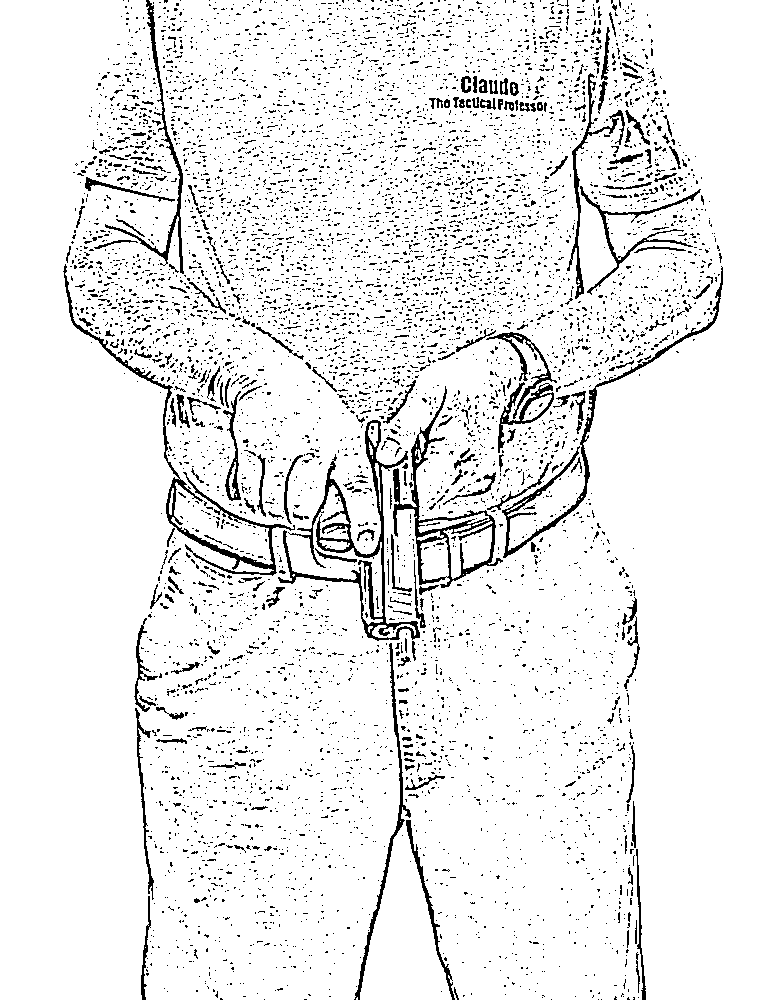
“Push forward with the right hand until the slide is felt to be open to its fullest extent.”

“Immediately that point is reached, release the hold with the left hand. The slide flies forward, taking with it and forcing into the breech, the topmost cartridge of the magazine, the pistol pointing to the ground meanwhile.”

- Achieve a proper firing grip and come to Low Ready.
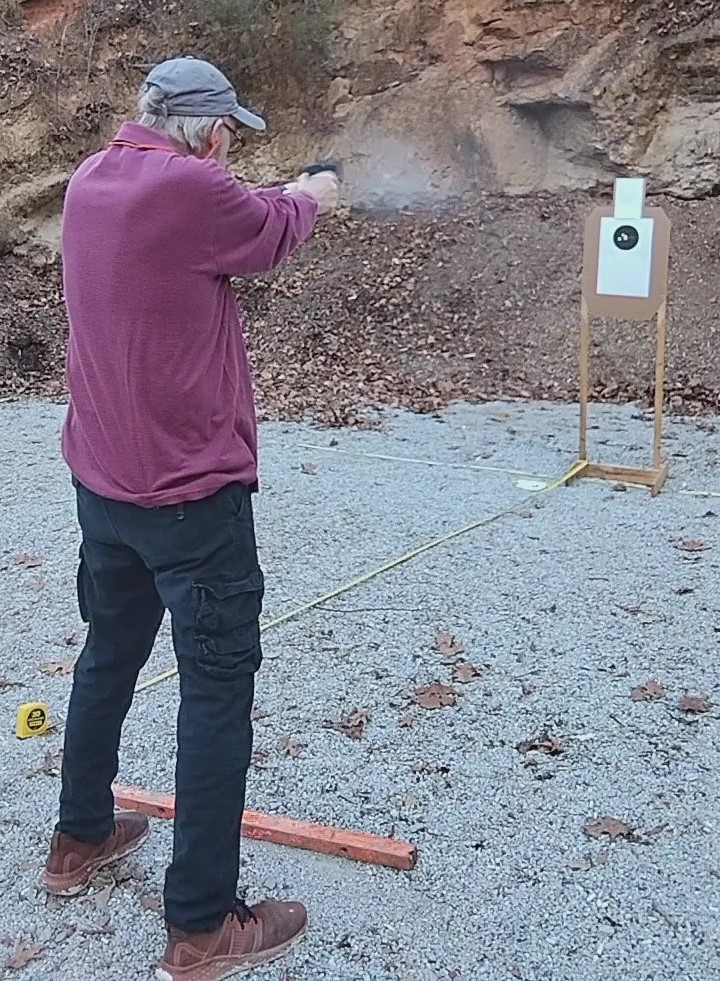
- Bring the pistol to eye level, acquire a sight picture, and fire five shots.
- Verify that the pistol is unloaded.
- Safely holster
The passing standard for the NY State Proficiency Assessment is that 4 of the 5 shots (80%) must hit somewhere on the three sheets of paper.
The total round count for this session is twenty rounds. While that may seem low by some people’s standard, it is as much as many owners of snub nose revolvers and small pistols like the Ruger LCP will want to fire at one session. As a beginning, shooting this session provides some familiarity with shooting the pistol, what its concussion and recoil feel like, and an indicator of the shooter’s capability within a distance envelope that most criminal victimizations take place in.
Friday Fundamentals for 2026
#fridayfundamentals
Over 10 years ago, I began writing a series called #fridayfundamentals. https://thetacticalprofessor.net/2015/09/25/friday-fundamentals-01-establishing-your-baseline/ It started with ideas from a couple of my friends, Mark Luell and Cecil Burch.
“My friend Mark Luell, the author of Growing Up Guns suggested I provide a ‘Friday Fundamentals’ post weekly. We got the idea from my colleague Cecil Burch who wrote a blog post about Fundamentals. It’s a great idea to stay in touch with the basics.”
The #fridayfundamentals series has continued intermittently ever since. An opportunity has arisen to continue to expand it. As the saying goes, “In the middle of difficulty lies opportunity.” https://quoteinvestigator.com/2021/10/07/difficulty/
For the past two years, I’ve been writing a monthly column for the digital edition of the NRA magazine Shooting Illustrated. https://www.shootingillustrated.com/ Sadly, we authors have been notified that both the digital and print editions of the magazine will cease to be published at the end of this year.
My 2024 monthly columns were about practice sessions derived from Concealed Carry License Qualification Courses. The sessions were focused on a theme and mostly limited to 50 rounds or less. While highly skilled shooters consider qualification courses to be ‘sobriety tests,’ that’s not true for the majority of gunowners. Especially when a person buys their first pistol, actually having to prove they can shoot it at even an elementary baseline level is intimidating. And because qual courses are designed for ease of administration rather than to have any training or feedback value, they can be segmented into smaller sections that actually do have some training and feedback worth.
First and foremost in my mind when I wrote the series was the Resource Constrained Environment that most gunowners have to practice in. Only a tiny minority of gunowners have access to an outdoor range where movement is possible and shot timers are workable. Almost all gunowners are limited to a booth at an indoor range where universally they can’t move, drawing from a holster isn’t allowed, and a shot timer is useless. Sometimes shooting faster than one shot every three seconds is prohibited. One of the benefits of qual courses is that they are mostly designed with this limitation in mind, so I capitalized on that benefit for the series.
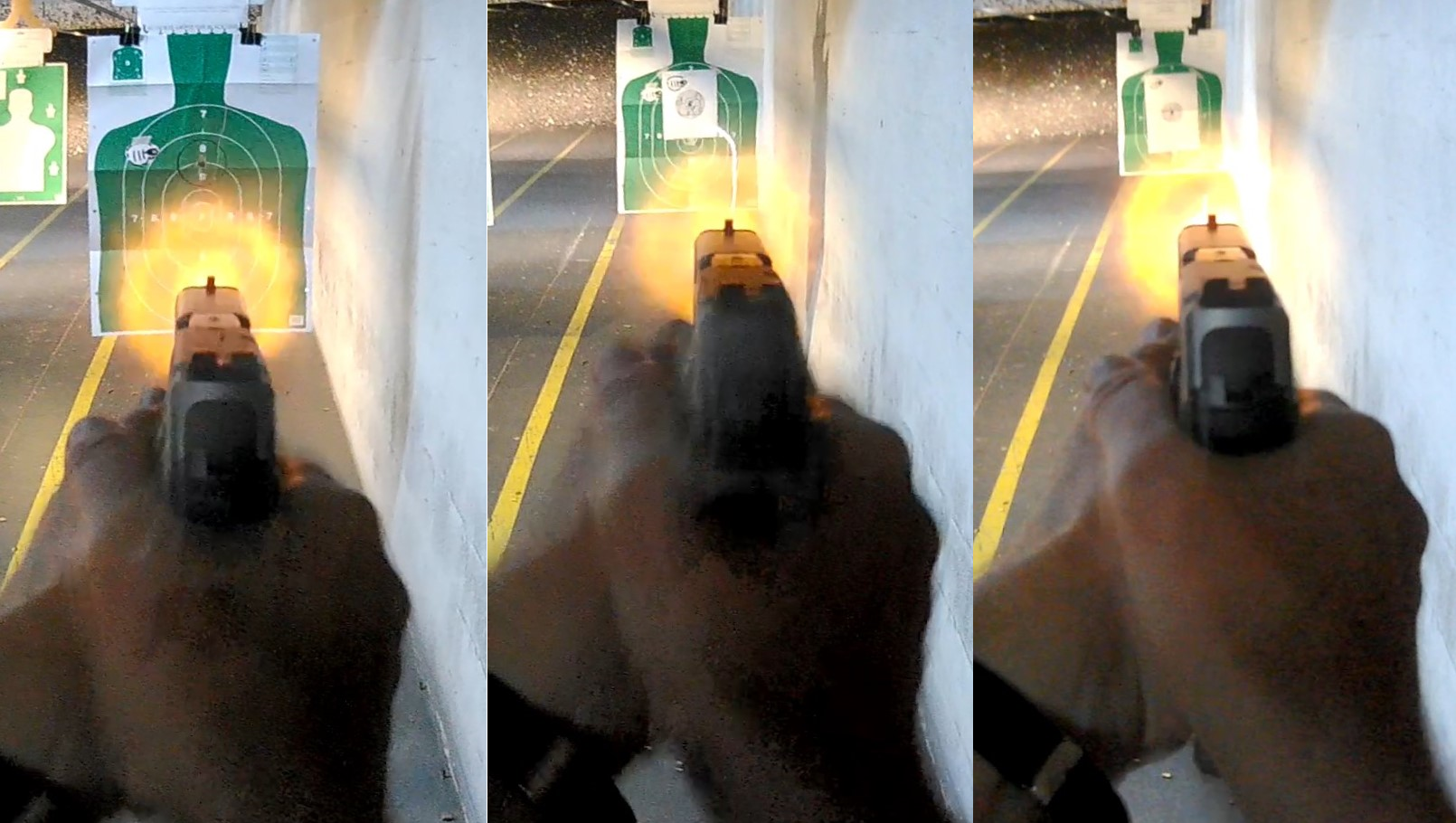
Since Shooting Illustrated is going away, I’ll be re-publishing the series on a weekly basis here on my blog. In addition to the articles, I’ll be creating videos of what each session looks like from a third person POV and the shooter’s POV. YouTube has been taking down some of my videos for vague reasons unspecified other than:
“We think your content violated our firearms policy.
Content that facilitates the sale of certain regulated goods, like firearms, ammunition, or prohibited firearm accessories, isn’t allowed on YouTube.”
As a workaround, I’ll just post a Short of the specified qualification course on YouTube. Then the video of the course with the training enhancements will go up on my Patreon page https://www.patreon.com/TacticalProfessor as a free post because Patreon does not give me a hard time about them.
It’s my hope that gunowners who want to increase their proficiency will find the series useful as practice regimens. There are no shortage of incidents where gunowners find out that the gun they’re depending on doesn’t work or they can’t work it. In the context of personal protection, just knowing you can make the gun go off https://thetacticalprofessor.net/2025/09/17/testing-a-new-gun/ has a lot of value. Being able to hit something with it is even better.
Small Gun Accuracy
#mousegunmonday
The Washington State Basic Covert Carry/Off-Duty Proficiency Course for Law Enforcement Officers includes shots out to 15 yards. This is perfectly workable with small guns like a Ruger LCP, even though it has a double action trigger.
Here’s my YouTube video of the Course of Fire.
If you would like to read more in-depth information about shooting and personal protection, consider subscribing to my Patreon page.

Armed Citizen Scenarios
#scenariosunday
I was nostalgic today for older style IDPA Scenarios like we used to shoot in the sport’s early days. Twenty-five years ago, there wasn’t much reloading on the clock and stages often consisted of multiple strings having six shots or less. It’s a different sport now.
My nostalgia caused me to write a new stage and redesign an older one. One is based on an Armed Citizen incident and the other on an actual car burglary and murder. The stages are called the Chicargo Practical Event and Muffler Thieves.

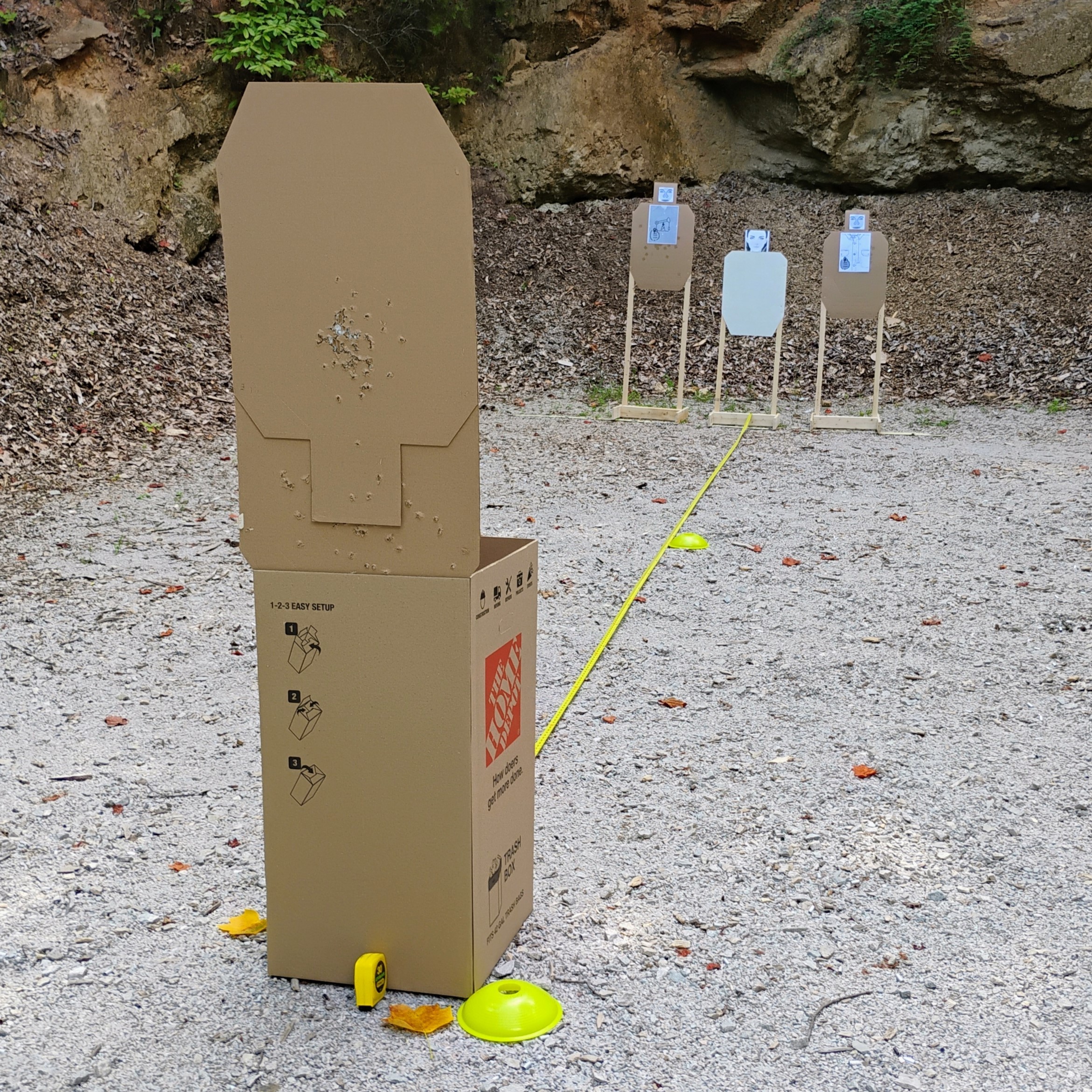
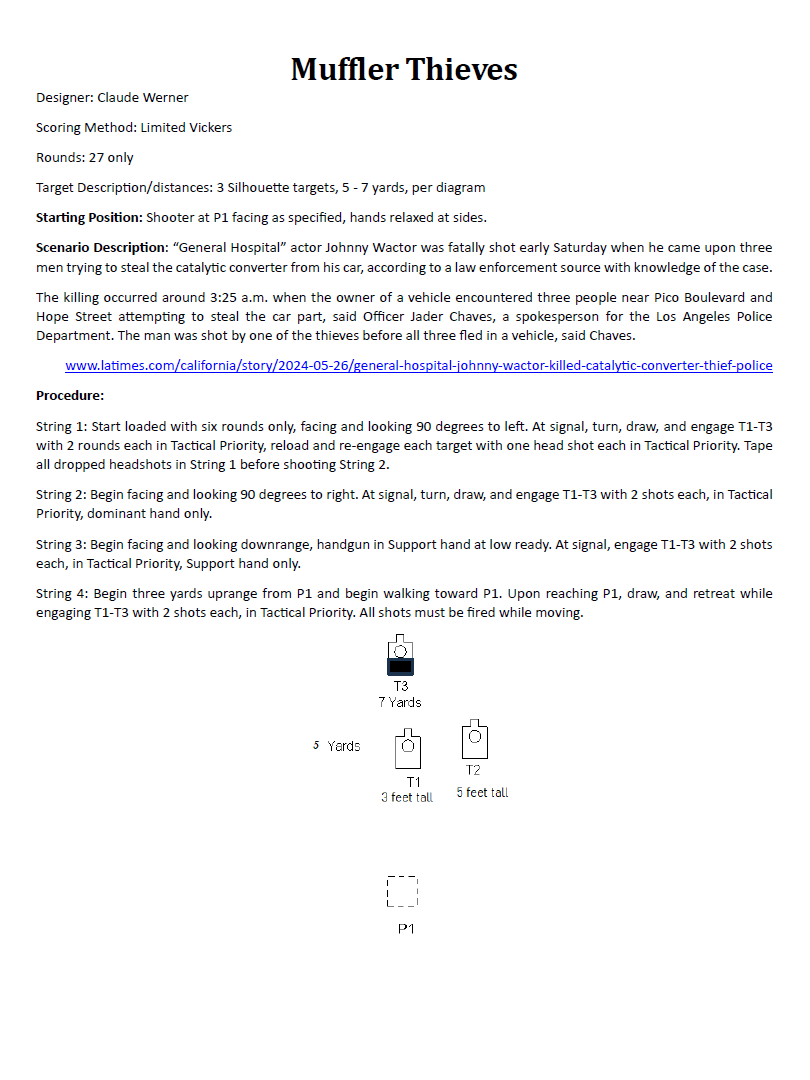
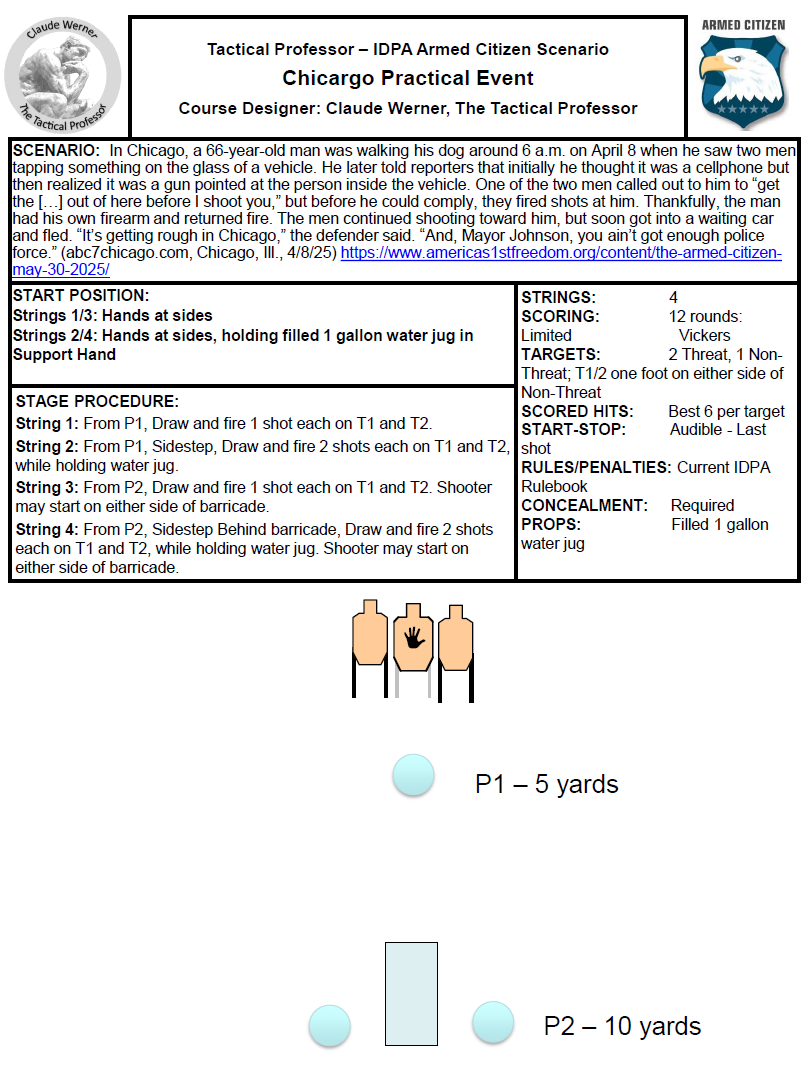
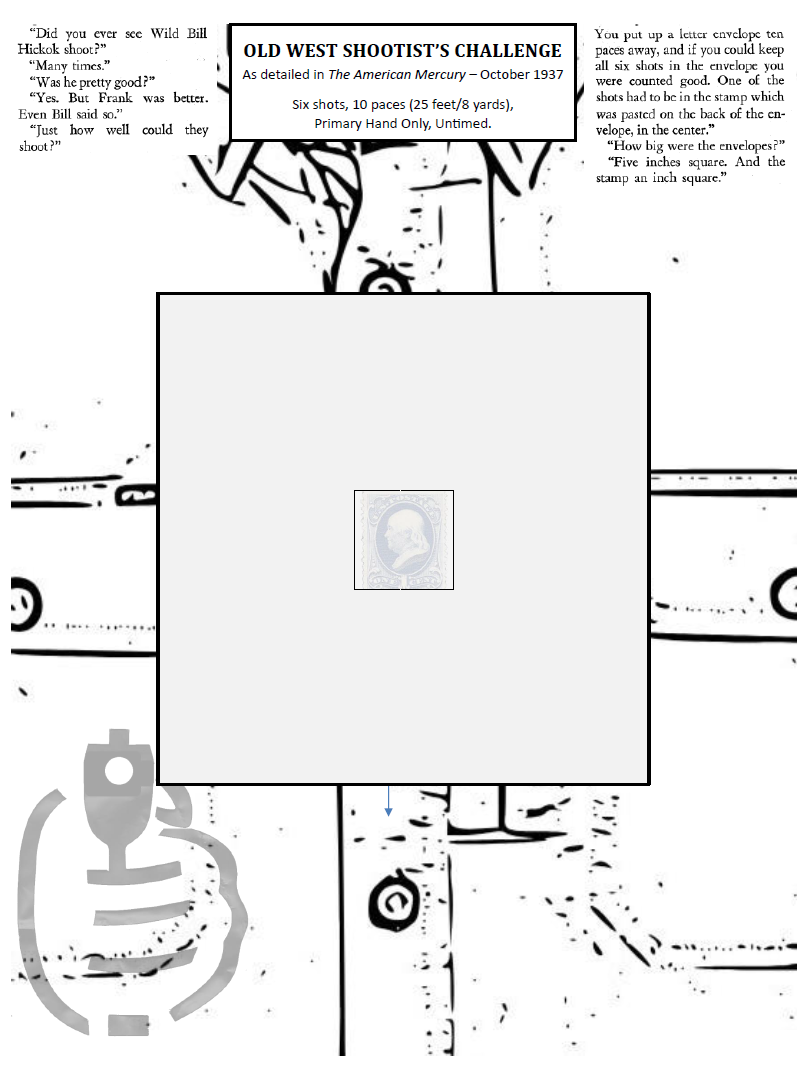
I finished up with the Old West Shootist’s Challenge. My Little Crappy Pistol (LCP) did just fine.
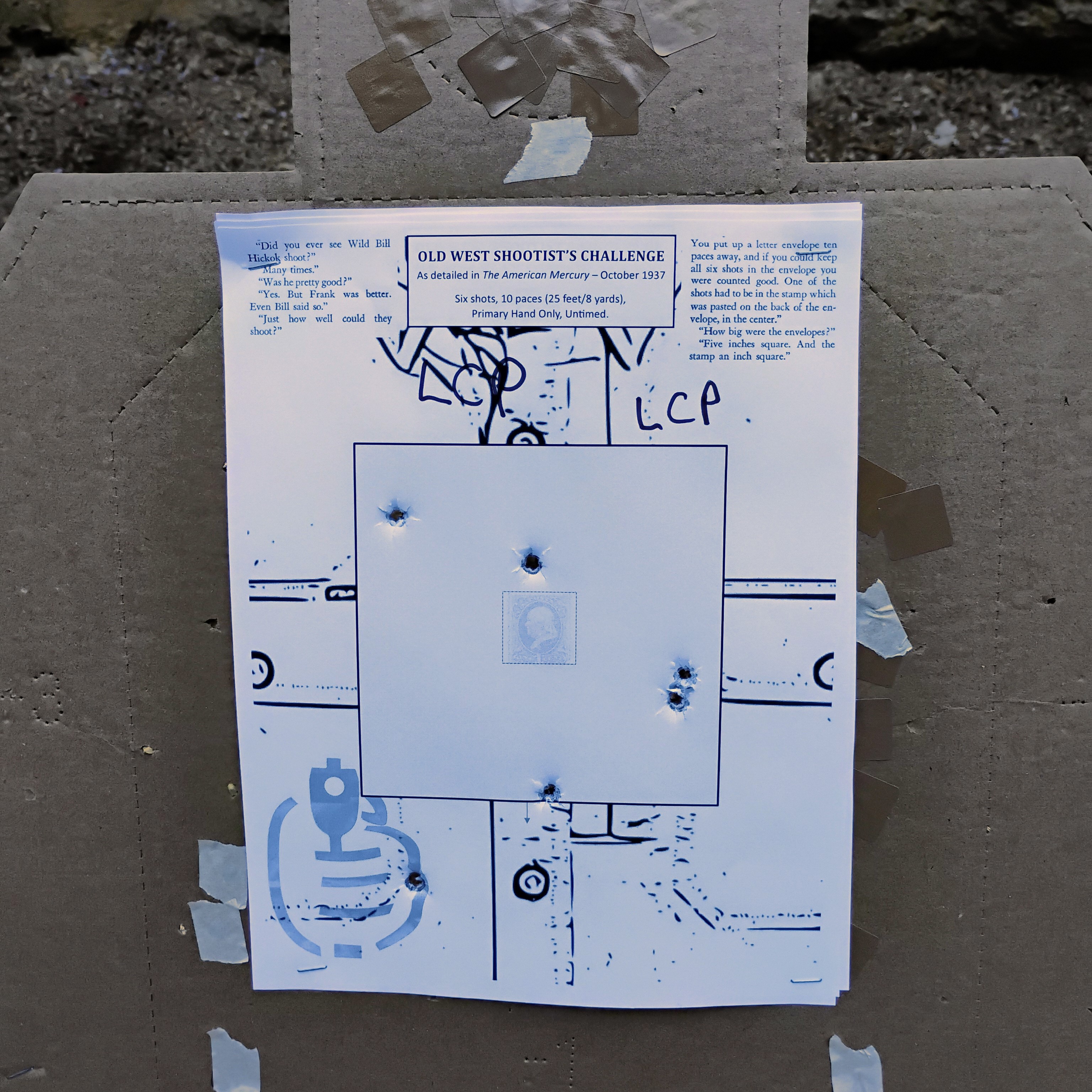
It was a fun afternoon. I’m going to do it every month, as if it was my own private match.
If you are interested in more in-depth commentary about shooting and Personal Protection incident analysis, please consider subscribing to my Patreon page. https://www.patreon.com/c/TacticalProfessor
Preventing Unintentional Discharges with a Revolver
#wheelgunwednesday
In my “Off-duty Shootouts of the LAPD” presentations, one section is devoted to Notable Incidents – Unintentional Discharges. The LAPD still authorizes snub revolvers for backup and off-duty carry. Unintentional Discharges occur to both revolvers and autoloaders, although there are no reported on-duty UDs with revolvers. Off-duty is when they occur. I’ve written about this before. https://thetacticalprofessor.net/2020/08/19/dry-practice-safety/
No doubt someone will comment that the correct term is Negligent Discharge. The LAPD uses the terms Unintentional Discharge, Negligent Discharge, and Accidental Discharge in very specific context, so I will use their terminology here.
A common cause of Unintentional Discharges is Impromptu Dry Practice and faulty unloading procedures. Another is attempting to clean/maintain loaded weapons. Upon conclusion of the investigation, such incidents will be adjudicated by the Board of Police Commissioners as Negligent.
NON-TACTICAL UNINTENTIONAL DISCHARGE – 040-19 UD at home
NON-TACTICAL UNINTENTIONAL DISCHARGE – 076-08 UD at hotel
NON-TACTICAL UNINTENTIONAL DISCHARGE – 014-23 UD at Rampart Station
Example Proximate Cause of UD
Officer A placed his left hand under the open cylinder and used his left index finger to depress the ejector rod, releasing the live rounds into his left hand. Officer A did not count the live rounds and placed them on top of the kitchen counter directly behind him. Officer A then closed the cylinder and pressed the trigger twice.
According to Officer A, believing his revolver was still unloaded, he placed his finger on the trigger and pressed it a third time, which caused the revolver to discharge a single round. No one was injured by the discharge.
Since my previous post, an even better solution and accompanying procedure has become available. The solution is the SafeSnap™ Training Disc for 5-Shot J-frame Size Revolvers. https://zetasix.com/product/safesnap-5/
Fair disclaimer: I was involved in the development of the SafeSnap™ but I receive no compensation for commenting about it.
The procedure works as follows. Have a SafeSnap and a twist knob speedloader such as HKS, 5 Star, or Lyman of the correct size for your revolver. Keep both of them readily available.
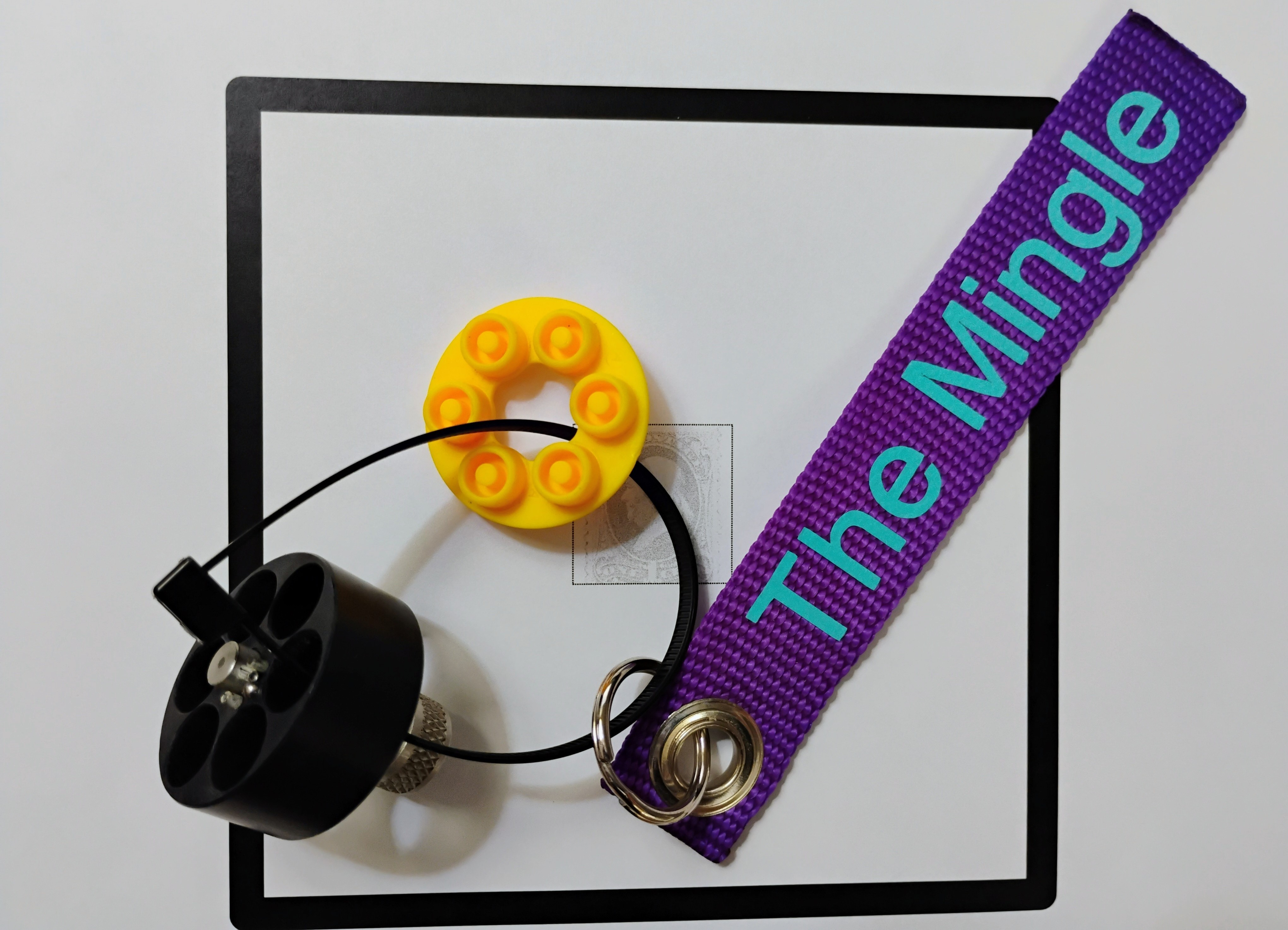
When you decide to dry practice or do maintenance on your revolver, get them before doing anything.
- Take the live cartridges out.
- Count and secure them in the twist knob Speedloader. If there are any empty holes left in the speedloader, the FBI calls that ‘a clue.’
- Put the SafeSnap™ Training Disc in the revolver.
- Do your dry practice or maintenance.
- When finished, don’t reload the gun.
- Do something else to occupy your mind and remove dry practice from your thoughts.
- When you do reload, say “This gun is loaded” out loud three times.
Using such a procedure will go a long way toward preventing Unintentional Discharges. Nevertheless, muzzle direction is still the Primary Safety; always has been, always will be.
The SafeSnap™ is also available for K frames and LCRs. There are other procedures appropriate for autoloaders but this post is specific to revolvers.
Other causes of Unintentional Discharges
- Administratively carrying or handling loaded handguns without a holster
- High stress tactical situations
- Drunkenness
Final note: It’s also inappropriate to dry practice using your girlfriend’s cat as a target.
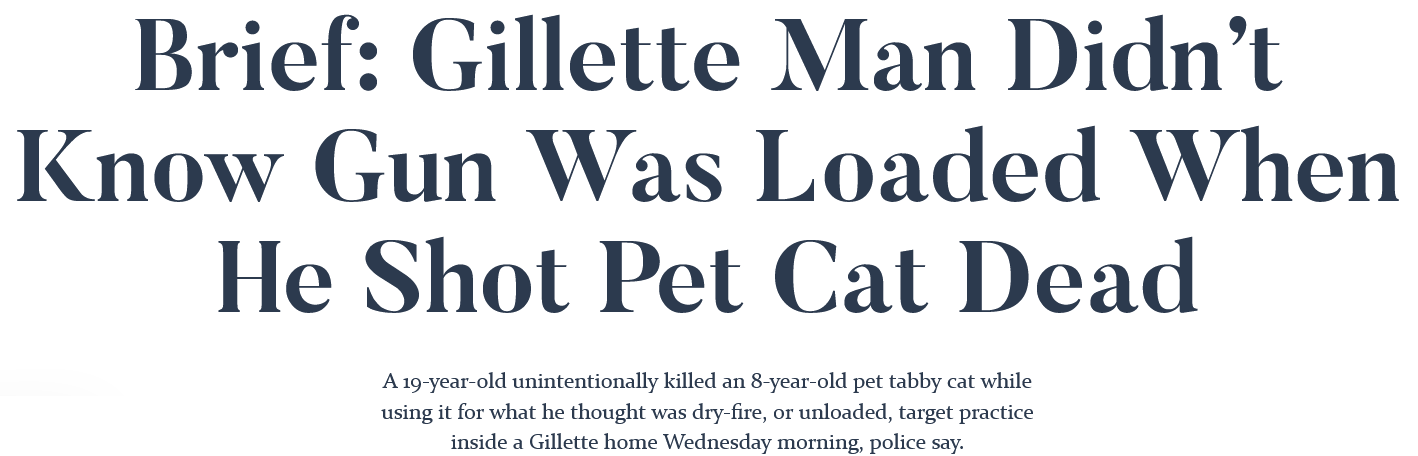
https://cowboystatedaily.com/2025/04/17/brief-gillette-man-didnt-know-gun-was-loaded-when-he-shot-pet-cat-dead/ Not only will it sour your relationship with her but could conceivably lead to Animal Cruelty charges, which are a Felony in most States.
If you are interested in more in-depth commentary about shooting and Personal Protection incident analysis, please consider subscribing to my Patreon page. https://www.patreon.com/TacticalProfessor
Practicing with a Snub Revolver
Favorite Five Shot Snub Revolver Courses of Fire
#wheelgunwednesday
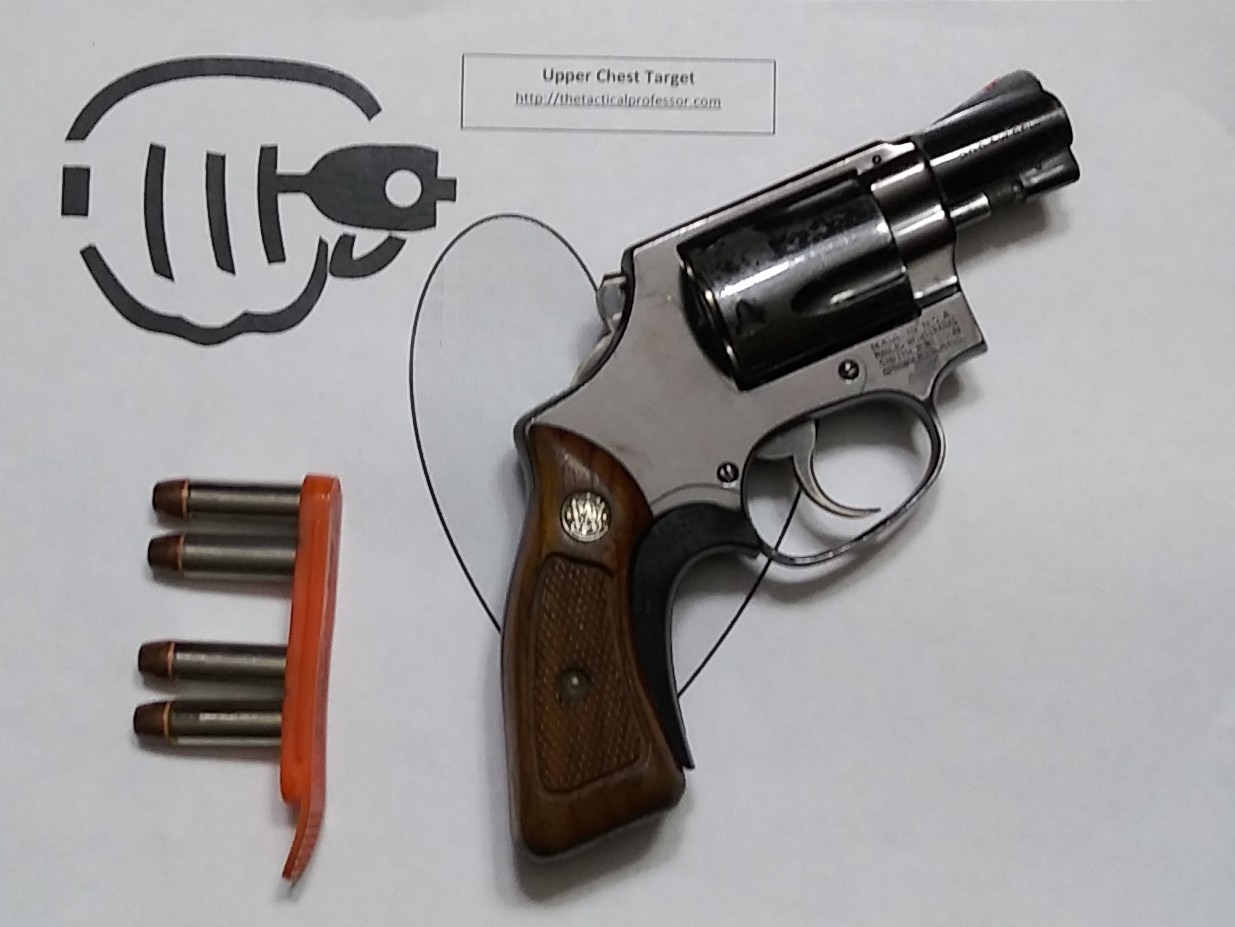
While some consider the five shot snub revolver passé, it is still a common self-defense tool and viable when used correctly. Using a snub correctly does require a bit of familiarity and practice, so here are some practice regimens that are appropriate for snubs and can be used at most indoor ranges. CCW Qualification Courses have value in that they provide structure for practice and a modest measure of skill determination. Note that simply shooting a CCW Qualification Course on your own DOES NOT mean you are authorized to carry a handgun in that area. Check the local laws for carry requirements.
All Courses of Fire are untimed. Any silhouette target can be used. When using the B-27 target, only count hits inside the 8 ring. For those who feel confident of their marksmanship ability, put a sheet of paper on the silhouette and only count hits on it.
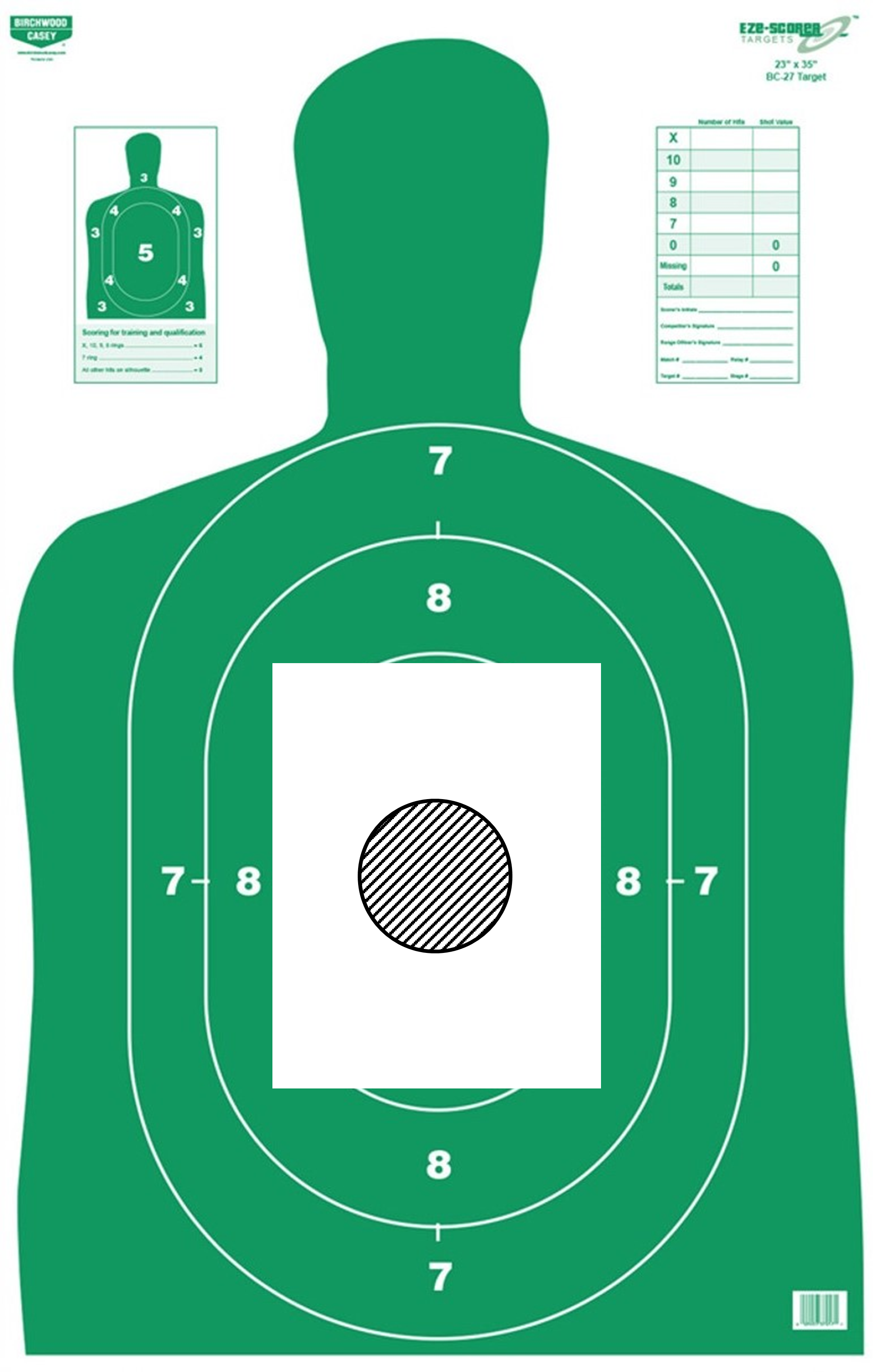
- New York State CCW Qualification Course – 5 rounds
- Silhouette at 4 yards.
- With an unloaded revolver, draw, snap at the target, and safely reholster. Draw the unloaded revolver, load with five rounds, and come to Low Ready. Fire five rounds at the target.
- Four of five rounds must hit the target to successfully qualify.
- Nevada CCW Qualification (5 shot revolver version) – 25 rounds
- Silhouette at 3 yards.
- Load with five rounds, and come to Low Ready. Fire five rounds at the target.
- Move Silhouette to 5 yards.
- Load with five rounds, and come to Low Ready. Fire five rounds at the target, reload, and fire five more rounds at the target.
- Move Silhouette to 7 yards.
- Load with five rounds, and come to Low Ready. Fire five rounds at the target, reload, and fire five more rounds at the target.
- Of the 25 rounds, 18 must hit the target to qualify.
- LAPD Retired Officer Qualification Course – 10 rounds
- Silhouette at 7 yards.
- Load with five rounds and reholster. Draw, shoot five rounds, reload, and shoot five more. If the range does not permit drawing from a holster, start from Low Ready.
- Seven of the 10 rounds must hit for a successful qualification.
- San Diego (California) Sheriff CCW Qualification Course – 15 rounds
- Silhouette at 7 yards.
- Load with five rounds, and come to Low Ready. Fire five rounds at the target.
- Move Silhouette to 5 yards.
- Load with five rounds, and come to Low Ready. Fire five rounds at the target.
- Move Silhouette to 3 yards.
- Load with five rounds, and come to Low Ready, holding the revolver in the Primary Hand Only. Fire three rounds at the target. Transfer the revolver to the Support Hand Only and fire two more rounds at the target.
- Of the 15 rounds, 13 must hit the target to qualify.
- Kansas Concealed Carry License Qualification Test – 25 rounds
- Silhouette at 3 yards.
- Load with five rounds, and come to Low Ready, holding the revolver in the Primary Hand Only. Fire five rounds at the target.
- Move Silhouette to 7 yards.
- Load with five rounds, and come to Low Ready with both hands. Fire five rounds at the target, reload, and fire five more rounds at the target.
- Move Silhouette to 10 yards.
- Load with five rounds, and come to Low Ready with both hands. Fire five rounds at the target, reload, and fire five more rounds at the target.
- Eighteen of the 25 rounds must hit the target to qualify.
Trigger manipulation practice is enhanced if after firing a shot, we open the cylinder, spin it, and then close it without looking at the round placement. Only fire one shot after closing the cylinder and then open and spin it again. As the rounds become fired, we will encounter fired cases as we press the trigger. By watching the sights carefully as we press the trigger, any jerking of the trigger will be obvious. These dummy snaps are where we learn to press the trigger smoothly.
Although reloading can be done with loose ammunition from a box of ammo, it’s more useful to have some kind of loading device. Using a loading device gives some practice at reloading the revolver under some conditions of stress. The snub shooting organization Snub Noir https://snubnoir.com/ uses three devices in their matches. They are looped ammunition carrier, flexible loading strip, and speed loader. Other possibilities are 2x2x2 ammo pouch and dump pouch for loose ammunition.
These Courses of Fire don’t have to be shot all at once. At the point of feeling fatigued or bruised from recoil, pack it up, and call it a day. Have fun with your practice and you’ll be more inclined to do it more often.
Final SCCY Report
Now that SCCY Industries https://sccy.com/ is out of business, it’s probably moot but some thoughts about my experiences with the guns are in order.
My first SCCY was provided to me in 2015 at no cost as a Testing and Evaluation sample. It was produced in 2014, as best I can tell by the serial number. At the time it was furnished, I was doing my second iteration of 1,000 Days of Dry Fire and I used it extensively for dry practice. I also eventually fired about 1,600 live rounds through it. The firing pin broke after about 10,000 dry snaps. During live fire, I had two Failures to Feed between 400 and 500 rounds. No other malfunctions. The ejector broke about the 1200 round mark but it still ejected, just sluggishly and erratically. In both cases, SCCY serviced the pistol and it then ran fine.
Last year (2024), I purchased a SCCY Gen 3 with my own money because I wanted to see what the upgrades had been. This time, it was a disappointment. The gun had a Failure to Chamber every 25 rounds. I traced this to sharp edges around the chamber mouth. SCCY sent me a new barrel and two more magazines, gratis, but the chamber in it had very noticeable machining rings. I didn’t know if it would work but installed it anyway.
A couple of months ago, I purchased an early production used Gen 2, produced in 2013, for $80 at a local range. The trigger on it was much better than my original Gen 2. Whether it has the original mainspring or a replacement, IDK. It had occasional Failures to Eject. The source of those Failures turned out to be a broken ejector. I bought a replacement on eBay and installed it.
For Memorial Day, in remembrance of my Army friends who are dead, I took all three to the range and practiced the destruction of the enemies of our great Nation. Since I’m going to be teaching the NRA Defensive Pistol Course https://www.nrainstructors.org/CatalogInfo.aspx?cid=41 for a Private lesson soon, the Course of Fire I chose was the DP Qualification Course. It consists of 34 rounds fired at distances of 3 to 10 yards. I shot it once with each of them.

All three SCCYs made it through without a malfunction. That’s not a 10,000 round torture test but probably more than 99 out of 100 gunowners will ever fire their handguns. Although they’re not target pistols, they all were sufficiently accurate to group in the eight inch 10 ring of the NRA AP-1.

Bottom line of the whole exercise is that when purchasing a pistol, shoot at least a box of ammo through it to be sure it works. Preferably a structured and measured session. Feeling the trigger and knowing the results it can produce is useful. Inspect the pistol for broken parts after shooting it. My colleague, the late Paul Gomez, was fond of saying “Shoot Yor Guns!” and that’s good advice.
Shootist’s Challenge – The Final Word
Ever since I published the Shootist’s Challenge, https://thetacticalprofessor.net/2024/10/25/shootists-challenge-target/, the question has arisen, “How far is ’10 paces’?” There is finally a definitive answer.
Although Wild Bill Hickok didn’t have access to the CIA World Factbook definitions of Weights and Measures Appendix G :: Weights and Measures, I think that tome has supplied the answer.
paces (US) – inches 30
Wikipedia provides us with a prose rendering and background of this measurement. “In the United States the pace is an uncommon customary unit of length denoting a brisk single step and equal to 2 1/2 feet or 30.0 inches.” It also provides the link to the CIA World Factbook for which I am grateful.
I accept that definition, which would make the distance for the Shootist’s Challenge 25 feet. The updated target is attached.
My thanks to Mr. David Fortini whose question led me to the final answer. He receives whichever of my books he would like with my compliments.
If you like my work, join me on Patreon where I post more in-depth articles about shooting, marksmanship, and incident analysis.
Periodic Personal Evaluation
#saturdayskillsczech
My December article for Shooting Illustrated is entitled Near to Far Marksmanship Practice.
https://www.shootingillustrated.com/content/near-to-far-marksmanship-practice/
Although New Jersey made a strong try to keep people from getting their License To Carry, the qualification course itself is a decent practice regimen. It’s also a useful metric for measuring your skill periodically.
Try shooting it on an IALEFI-Q and score it by the rings. Center ring gets 5 points, next ring get 4 points, balance of the Q receives 3 points. Hits inside the face circle score 5 points. Anything outside the Q scores 0. A Possible would be 250 points (5 x50 shots). If you don’t have an IALEFI target, just trace around a paper plate in approximately the same place on your silhouette. Your scoring is then 5 points for the circle and 3 points for the rest of the silhouette.
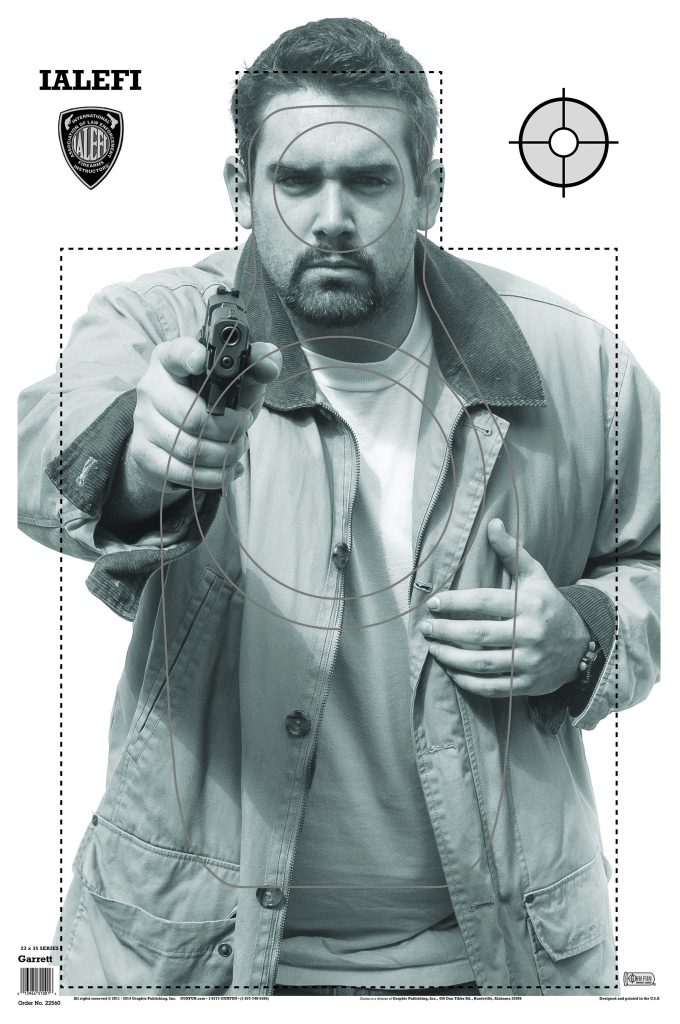
To make it a good tune-up and personal evaluation, shoot the course as a version of Jimmy Cirillo’s 1-2-3-6 drill. Instead of 6, fire 4 shots for the final string. Start loaded with 6 rounds only. Draw and fire 1 shot, reholster, draw and fire 2 shots, reholster, draw and fire 3 shots, reload, and immediately fire 4 shots. Bear in mind that the second most missed shot in shooting is the shot immediately following clearing a stoppage. The reality of transitioning back to trigger control after doing a gross motor manipulation can be tricky.
Since CCARE starts at 3 yards, at that distance shoot all face shots. Repeat the same sequence at 5 yards, 7 yards, 10 yards, and 15 yards but shoot for the 8 inch circle. After shooting each distance, tape your hits before moving to the next distance. At the end of the course of fire, place your pistol in whatever condition you wish to when you leave the range.
Although the CCARE is rather stringent for a CCW qualification, it has value as a practice regimen. It includes a minimum of 10 presentations to the target or 15 if you use the 1-2-3-4 sequence. There are multiple opportunities to practice reloading, and it’s highly manageable with wheelguns. Even J-Frames can work, just reload in a slightly different sequence. It’s a good use for a box of practice ammo.
Practicing With Small Handguns
My latest article for Shooting Illustrated is up. This one has a good 50 round practice session for small guns such as the LCP and J frames.

https://www.shootingillustrated.com/content/practicing-with-small-handguns/
If you like my work, join me on Patreon where I post more in-depth articles about shooting, marksmanship, and incident analysis.
 tacticalprofessor
You must be logged in to post a comment.