Practicing the First Shot
This really should be #fridayfundamentals but I feel compelled by some recent conversations to send it.
As I mentioned previously https://tacticalprofessor.wordpress.com/2021/04/09/the-importance-of-the-first-shot/, the importance of the first shot shouldn’t be underestimated. How to practice that remains a bit of mystery when people are shooting. Shooting multiple shot, often full magazine, strings of fire is the most common way people practice. Unfortunately, that masks the result of the first sight picture and trigger press.
For new shooters, we also need to keep in mind the concept of ‘progression,’ which is a fundamental concept of two of the world’s elite shooting schools, the Rogers Shooting School https://rogersshootingschool.com/ and the Mid-South Institute of Self-Defense Shooting https://weaponstraining.com/ .
The concepts of First Shot Drill and progression can be easily combined. Consider a series of Levels for hitting with the first shot. Start out at the 3 yard distance.
- Level 1 – hit a silhouette consistently
- Level 2 – hit a sheet of paper consistently
- Level 3 – hit a half sheet of paper consistently
- Level 4 – hit a quarter sheet of paper consistently
Shoot each Level using a progressively difficult start position; Low Ready, Midpoint of the drawstroke, and from the Holster.
You can use any silhouette you like. Having a face, a weapon, and an aiming point is more important than the type of silhouette used.

For those who don’t have access to or don’t wish to purchase a silhouette, a perfectly acceptable substitute can be made out of posterboard.

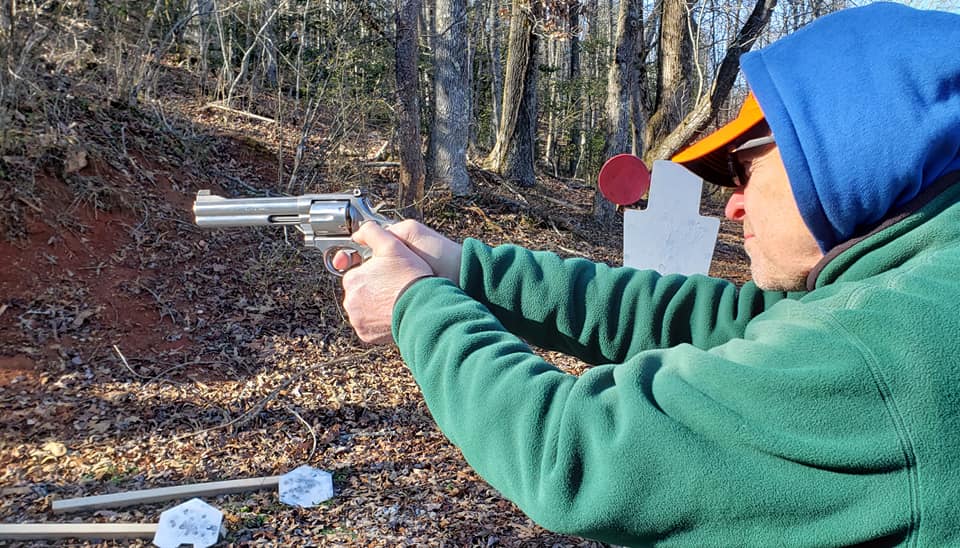
Start by doing dry practice. Level 1 would look like this.
My colleague Lee Weems https://thatweemsguy.com/ made an incisive comment at the Tactical Conference.
Enough Force used soon enough means less force used later.
Lee Weems
That could also be paraphrased as ‘a good enough hit with the first shot means less shooting later.’
If you would like to purchase my book about actual shootouts that are not a figbar of someone’s imagination, click on the image below.
The Importance of the First Shot
#fridayfundamentals
Some principles are just as fundamental as is technique. One of the unintentional themes of the 2021 Tactical Conference was the importance of the first shot. One class even had that as its title. Several other instructors touched on it as part of their classes and presentations.
Rolf Penzel and Mike Treat titled their class Making the First Shot Count.
John Murphy made the comment “It’s not a ‘one shot drill,’ it’s a ‘first shot drill’” in his class.
During his presentation Secrets of Highly Successful Gunfighters, Darryl Bolke stated “training efficiency means using the sights.”
Chuck Haggard used the term “Target Picture” to illustrate the concept of placing the sight picture on the part of the target we want to hit initially.
In his AIWB Skills class, John Daub instructed his clients to “think about where you want the muzzle to end up” at the conclusion of the draw.
Scott Jedlinski’s comment “The original 1911 sights were suggestions” in his class was a humorous illustration of why point shooting was so common in days gone by. Tom Givens has also written about the dismal quality of factory sights on pistols and revolvers of yesteryear and how that affected technique training of a century ago.
One of trends that is apparent in the Categorical Use of Force Reports by the LAPD is how often one or two shots solve the problem. This is true through the entire database of over 1,000 incidents, not just the off-duty incidents chronicled in my first book about LAPD Shootouts. LAPD’s emphasis on marksmanship and frequent scored qualification is no doubt responsible for this difference from other large departments that have minimal standards.
In a gunfight, the shooter who first scores a hit above the diaphragm of his opponent is the one who seizes the initiative in the incident. Making a good hit with the FIRST SHOT fired is key to seizing the initiative and then retaining it until the incident is over. No one’s performance improves after he gets shot in a vital area.
In terms of operationalizing this principle, the fact that most common autoloaders don’t have a second strike capability during dry practice becomes irrelevant to the fundamental of making a good hit with the first shot. Your dry practice should mostly focus on the first shot anyway.
During live fire, the majority of our practice should be ‘first shot drills.’ Do a little recoil management practice but don’t overestimate its priority relative to the first shot in the real world. As John Farnam put it, “Our desired range product is victory.”
If you would like to purchase my book, click on the image below.
Tactical Conference 2021 Shootoff
The Shootoff at the Tactical Conference saw some great shooters competing on a simple but challenging Course of Fire. It was well worth watching.
Most people, including gunowners, really don’t understand the capabilities of the handgun. The Shootoff is a good demonstration of what can be done when you know how.
If you would like to read about some real shootouts and learn from them, please click the image below to purchase my book.
Rangemaster Course of Fire
This is the Course of Fire for the Rangemaster Tactical Conference 2018. It’ somewhat different each year but usually has similar elements to this.
It’s not complicated yet is a good test of marksmanship ability.
Decisions and experience
Good decisions come from experience. Experience comes from bad decisions.
Although incorrectly attributed to Will Rogers, the concept of learning from other peoples’ experience rather than our own still has value. We can use the Intelligence community’s technique of ‘walking back the cat’ to de-construct an incident. This allows us to visualize it and learn from the experience of someone else.
The concept of ‘Decision points’ has been emphasized by both Gary Klein, PhD., a noted expert on the decision-making process, and President George W. Bush. Any drama contains not just one, but a sequence of decisions and decision points we can study.
The Don’t Shoot/Shoot decision is the one most commonly focused on the training and firearms communities. However, any Defensive Gun Use, whether shots are fired or not, contains a plethora of decisions and decision points. These occur before, during, and after the shooting or display of a firearm takes place.
A rich source for walking back the cat is the Categorical Use of Force reports by the LAPD Board of Police Commissioners. The following is an analysis of one incident by an off-duty LAPD officer. The analysis will use the phases of an incident as described in my book Real Shootouts of the LAPD. http://realshootoutsofthelapd.com
The incident began as an Aggravated Assault on an LAPD off-duty officer. The full report by the Board of Police Commissioners, including its Findings about Tactics, Drawing and Exhibiting of a Firearm, and Use of Lethal Force can be found here. http://www.lapdonline.org/assets/pdf/011-11_Harbor-OIS.pdf
Incident Summary
The Situation
Officer A, who was off-duty, walked to his vehicle parked in the driveway of a residence. He did not see anyone around at the time. His duty weapon was in the right front pocket of his pants. After driving out of the driveway, he backed his vehicle up and left the lights on. He then walked back to the gate to close it.
- Decision point — Leave home armed with his weapon on his person or at least accessible? Even for POlice officers, this is not as absolute a decision as it would seem, as can be seen in other LAPD off-duty incidents.
- Decision point — Close gate (initial entry barrier to home) or not? As mundane as this decision seems, many people leave their garage doors open when they drive away from their home.
The Buildup
Officer A saw the Subject walking on the sidewalk coming toward him. The Subject then began to run toward Officer A. As the distance to the Subject became closer, Officer A saw the Subject had a handgun in his hand. The Subject pointed the handgun at Officer A.
- Decision point — Maintain awareness of surroundings or focus on telephone or other attention divider?
- Decision point — Maintain surveillance on the suspect or not?
- Decision point — Recognize and accept that an armed attack is imminent or not?
Drawing and Exhibiting
Officer A drew his service pistol from his pocket.
- Decision point — Draw own pistol or not?
The Gunfight
Immediately after drawing his pistol, Officer A fired one round at the Subject.
- Decision point — Don’t Shoot or Shoot?
- Decision point — Fire in place or Shoot on the Move?
- Decision point — Obtain an adequate sight picture to make a hit or fire without visual reference?
The Subject seemed unaffected, so Officer A fired a second round at the Subject.
- Decision point — Don’t Shoot or Shoot a second time?
- Decision point — Fire in place or Shoot on the Move?
- Decision point — Obtain an adequate sight picture to make a hit or fire without visual reference?
After running past Officer’s A car, the subject collapsed on the sidewalk behind a short block wall.
Post Gunfight Actions
Because he could not see him and wanted to wait for responding officers to arrive, Officer A did not approach the Subject.
- Decision point — Approach the suspect or not?
Officer A retreated to cover at the house and called 911.
- Decision point — Hold position or retreat to cover?
- Decision point — Call 9-1-1 or do something else?
While he was calling 911, Officer A observed another male come over to the Subject, squat down, then stand up and adjust his shirt. The second male then walked away.
- Decision point — Interact with/challenge the secondary suspect or not?
Two other males walked to the fallen Subject, leaned over to look at him, and then walked away.
- Decision point — Interact with/challenge the tertiary suspects or not?
There are also implied decision points subsequent in the drama but were not elaborated on by the BOPC.
- Actions on approach of responding officers.
- What statements, if any, should be made to responding officers and then to detectives.
- Whom else to notify about the incident; Significant Other, etc.
- Retain an attorney or call pre-paid legal assistance plan.
At least 21 decisions/decision points are readily discernible in this incident. There are perhaps even more, despite this being a relatively uncomplicated DGU. Also note that of the 21, only six (Don’t Shoot or Shoot [X2]), (Fire in place or Shoot on the Move [X2]), and (Obtain an adequate sight picture to make a hit or fire without visual reference [X2]) can be readily practiced with live fire. Those and another, (Draw own pistol or not) can be practiced dry. The other two-thirds of the decisions are more in the nature of ‘soft skills’ that are best decided upon in advance and then practiced away from the range.
“Best decided upon in advance and practiced away from the range” represents our opportunities during the current ammo shortage. Rather than sit on our hands because ammo has become so precious, we can begin developing and practicing a more complete repertoire of the skills we need for Personal Protection. If you would like to read my analyses of the rest of the incidents described in the book, please subscribe to me on Patreon. Patreon link I will be posting the rest of them there.
Scenario Development from Real Life Incidents
#scenariosunday
Reading about Real Life incidents, such the LAPD Categorical Use of Force reports, is interesting but what good is it if we don’t put some of the lessons learned into practice? One way to make that knowledge actionable is to translate the incident report into a Course of Fire that we could actually shoot. The various action shooting sports, such as IDPA, USPSA, etc., call this Stage Design.
Here’s an example based on one of the incidents in Real Shootouts of the LAPD.
Categorical Use of Force Incident – 011-11
Aggravated Assault
http://www.lapdonline.org/assets/pdf/011-11_Harbor-OIS.pdf
(full original report linked above)
The Board of Police Commissioners Incident summarized the incident as follows:
Off-duty Officer A was leaving a residence. Officer A walked out to his vehicle, which was parked in the driveway. Officer A did not see anybody as he walked to his vehicle. Officer A had his duty weapon in his right front pants pocket at the time.
Officer A backed his vehicle up, leaving the vehicle running with the lights on, while he walked back to close the driveway gate. Officer A saw the Subject walking toward him on the sidewalk. The Subject then started to run in his direction. As the Subject got closer, Officer A saw a handgun in the Subject’s hand. The Subject then pointed it at Officer A. Officer A drew his pistol from his pocket and fired one round at the Subject.
The Subject continued to point the gun at Officer A, so Officer A fired a second round. The Subject passed in front of Officer A’s vehicle before collapsing on the sidewalk, behind a short block wall. Officer A believed the Subject had been shot but could not see him, so Officer A did not try and approach the Subject, pending the arrival of assistance.
Officer A ran toward the back door of the home, while covering the Subject’s last known position. Officer A called 9-1-1. While speaking to the Operator and waiting for the first unit to arrive, Officer A saw a male approach the Subject. The male squatted down near the Subject and Officer A lost sight of him. The male then stood back up, adjusted his shirt, and walked away. Officer A saw two other males walk over to the Subject, lean over him momentarily, then stand back up and walk away. Upon the arrival of assisting officers, the officers were unable to locate the Subject’s weapon.
LAPD Board of Police Commissioners
To design a Stage from this Summary, we would extract Officer A’s actions, step by step. For clarity, each step is italicized in the above report.
Sequence of events for scenario development of 011-11
- While standing at P1, draw pistol from concealment and fire one round at T1 (7 yards).
- Fire one round at T2 (5 yards).
- Retreat to cover at P2 and point pistol at P3.
- Call 911, giving your location, while continuing to maintain pistol pointed at P3.
We can then create a diagram of what that would look like. Someone who was going to shoot it would know step by step what they had to do.
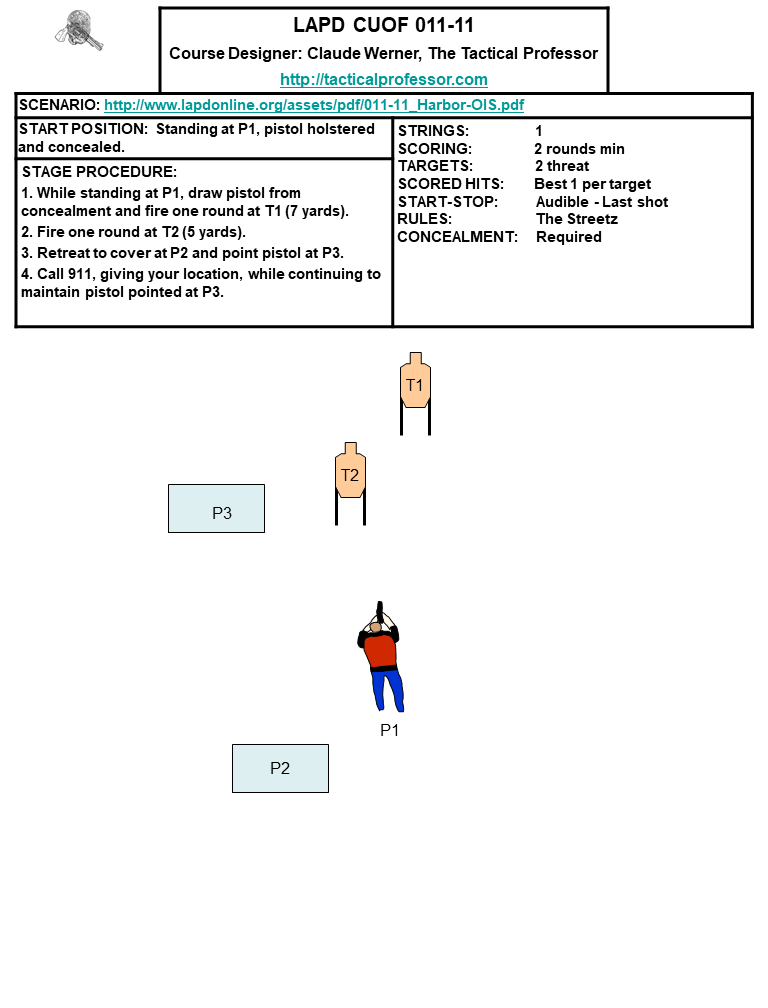
Based on the diagram, we can then replicate what Officer A had to do to keep from getting victimized or killed. While Stages created based on ‘Real Life’ tend to be much less lurid than the Stages shot in organized competition, they do give us an idea of what we might need to do to keep ourselves from being victimized or killed.
The LAPD Board of Police Commissioners made the following Findings about the actions of this Officer A.
- Tactics
The BOPC found Officer A’s tactics to warrant a Tactical Debrief. (This is required after any Officer Involved Shooting.) - Drawing and Exhibiting
The BOPC found Officer A’s drawing and exhibiting a firearm to be In policy. - Lethal Use of Force
The BOPC found Officer A’s use of lethal force to be In policy.
If you would like to read the book and create your own Courses of Fire from it, simply click on the book cover below.
Working with .22s
#ttptuesday
Yesterday’s post mentioned the M&P 22 Compact pistol. It’s an excellent pistol and worked well on the range. Once we found the ammo it liked, it worked flawlessly. I suspect it may have had a dirty chamber that caused the initial functioning issues.
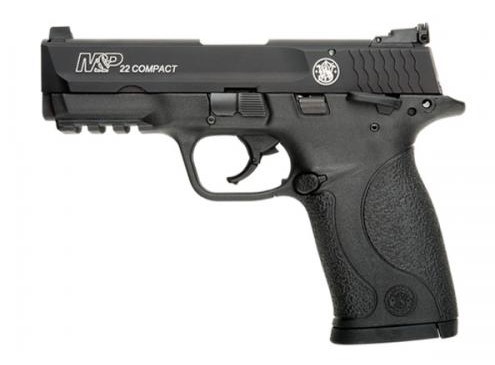
Here are some tips about working with .22 caliber pistols, in general.
First of all, keep them clean. The .22 Long Rifle round is dirty. The small size of the ammunition and guns make the gun’s tolerances more critical and dirt in the process isn’t helpful. The gun doesn’t need to be as clean as a dinner plate but gobs of goo certainly don’t help functioning.
Helpful accessories when shooting .22 LR firearms
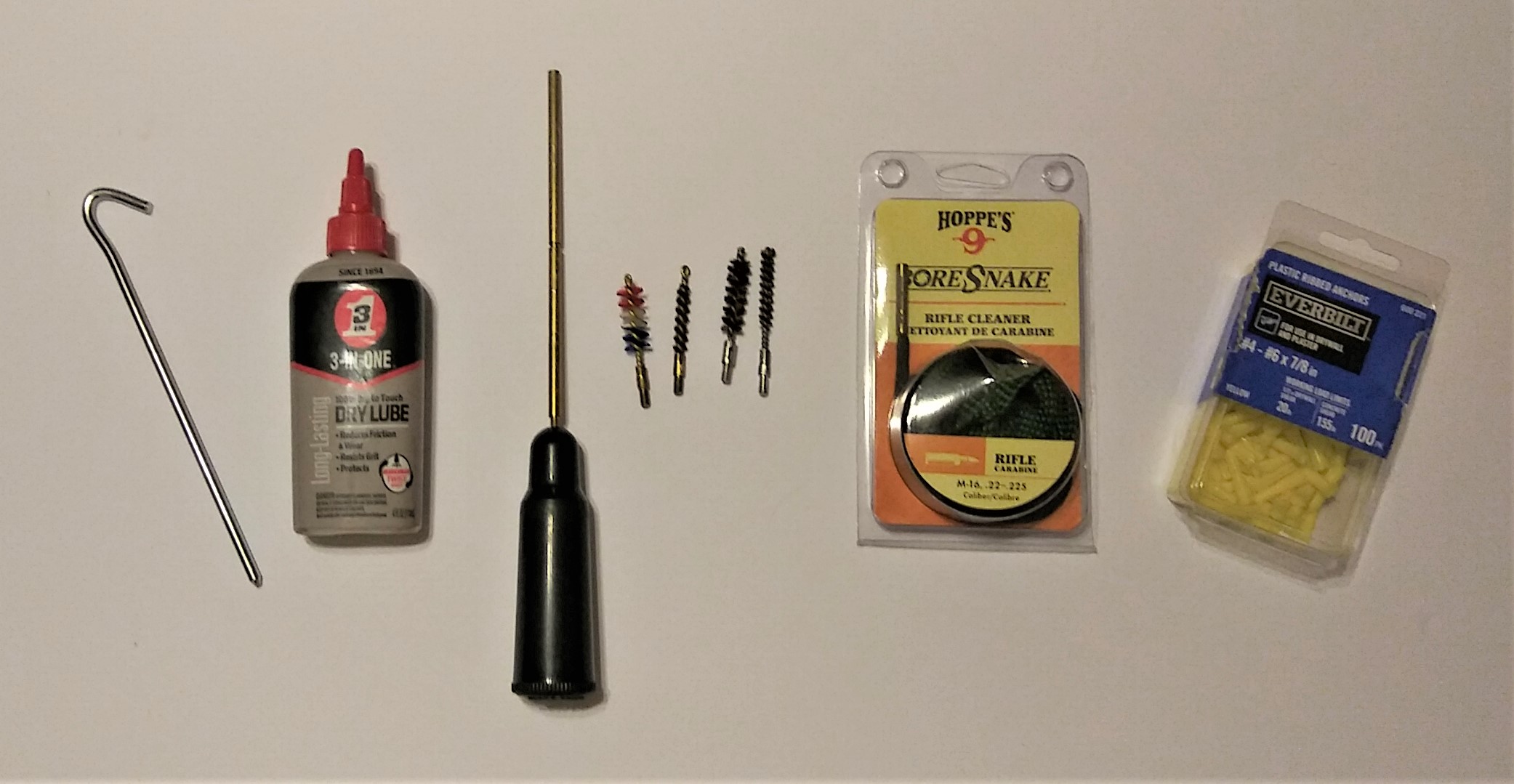
- Coghlan’s Aluminum Hooked Tent Peg, 7 inch (69 cents at Walmart)
- Dry lube
- Portable cleaning rod and brushes
- Bore snake
- #4 drywall anchors ($3.99 at Home Despot)
The tent peg is for pushing out cases or rounds that don’t eject and the extractor won’t pull out. You could use the cleaning rod but the tent peg is stiffer. It’s aluminum so it’s not going to harm your bore. Until you find the ammo your gun prefers or you’re shooting cheap bulk ammo for practice, this is a good tool for clearing stuck cases. Make sure you lock the gun open before inserting it in the bore.
Using a dry lube for .22 firearms goes a long way to keeping them from getting so dirty. The carbon and unburnt powder doesn’t stick to the dry lube the way they do to oil. .22 firearms don’t get very hot so the extra lubrication provided by oil is unnecessary.
When you get finished shooting, run a brush through the bore and chamber a few strokes. Follow up by pulling the bore snake through. Even if you don’t clean the rest of the gun, doing those two things will keep it running for quite a while.
The #4 drywall anchors are to protect the firing pin and breech face when dry practicing. Most .22s need this protection. Snap caps of the centerfire type are not desirable for dry practicing with .22s, they’re for czeching feeding and extraction. Use a new drywall anchor each session and then throw it away. Rotate it slightly in the chamber periodically during each session.
There are magazine loading tools for .22 magazines that make the task of loading the magazine much less of a thumb buster. I don’t have one for the 22 Compact yet but there are two different types I will be trying in the near future.
Test different types of ammo to see which functions best in your gun. Guns will usually work better with some brands than others. CCI Mini-Mags are a good all-purpose ammunition but even they need to be tested in your gun. If you, or someone you know, keeps a .22 for Personal Defense, use good quality ammo in it for that purpose. Don’t use the cheapest bulk ammo you can find and then say the gun is unreliable.
The pros and cons of using a .22 for Personal Defense have been endlessly debated, so let’s not do that here. The fact is that people do, so let’s do it right. Keep the gun clean, lube it, and use good ammo. Odds are that if the ammo comes in a plastic box with individual rounds separated it will work. Ammo that comes in paper boxes tends to be suspect. That’s okay for practice but use good ammo for Defense.
Shooting a .22 can be a lot of fun. If you have a few accessories; it will be even easier. For some segments of the population, they’re the only viable choice.
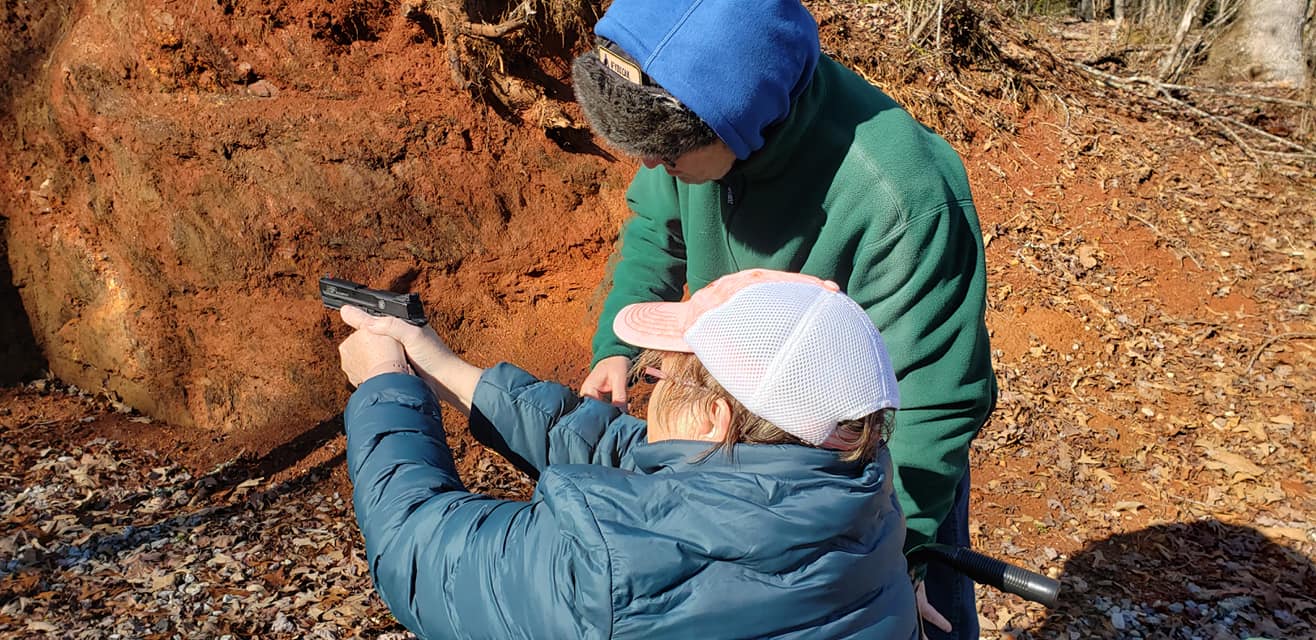
FTC Notice: all the products in this article were purchased and no compensation is received for mentioning them.
Positive people are a joy to be around
#mindsetmonday
Saturday, I went to a range dedication. Without going into a lot of detail, Corky’s Day, which was the inaugural event for the Hamilton Steel Range in Dahlonega, was a great example to me of how nice it is to be in the company of positive people. In the troubled times that are coming, we all will need to surround ourselves with positive people as much as possible.
The rest is on my Patreon page for Public viewing.
https://www.patreon.com/posts/46101857
Goal Setting for 2021
The book The Practicing Mind https://www.amazon.com/dp/B007C8NRSA/ was written by an accomplished musician and concert piano renovator. It contains the following story about when he started playing golf as an adult. The lesson in the story is well worth considering.
even though they had played golf weekly for many years, they still couldn’t accomplish basic things, such as getting the ball up in the air.
…
What I learned from golf was that all my failures in music had stemmed from my lack of understanding the proper mechanics of practicing, of the process of picking a goal, whatever that may be, and applying a steady effort toward achieving it.

The passage about ‘picking a goal, whatever that may be’ is particularly important in developing competency with firearms. The ‘whatever that may be’ part should be well considered as part of the goal setting process. It’s not uncommon for gunowners to place a high priority on marksmanship tasks. However, in the context of using firearms for Personal Protection, there are many implied tasks that complement or even surpass marksmanship in importance.
- Being aware
- Verbalization
- Accessing a weapon
- Moving from place to place safely (e.g. without having an Unintentional Discharge)
- Making reasonable and appropriate decisions
- Coordinating with friends and loved ones
- Etc.
The ammunition deficit will give us all time to work on non-shooting tasks and skills that are, or at least should be, an integral part of our Personal Protection plan. For those who place a priority on their safety and their loved ones’ safety, range time can be re-prioritized to time to practice other skills. Some of those complementary skills do not even involve handling firearms. Others are easily accomplished with an inert or even toy gun.
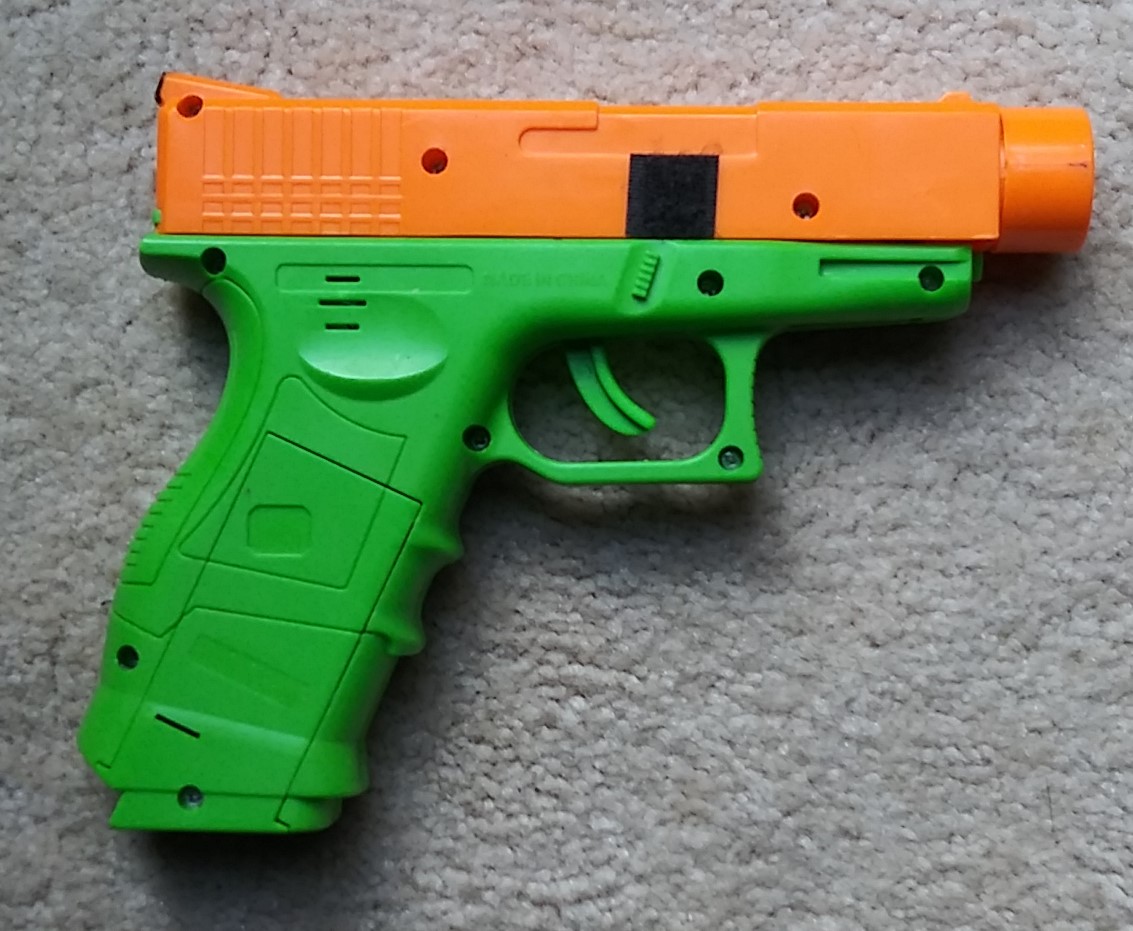
The enjoyment aspect of the shooting sports is another worthwhile goal. My shooting goal this year is to achieve my Distinguished Expert rating in Shotgun from the NRA. Since I already hold two DE ratings, I will become one of the few Triple Distinguished Experts. My gun club is rebuilding our rimfire range, so I’ll also be able to get back into smallbore rifle shooting, a highly disciplined activity.

On the other hand, my interest in ‘Boyd’s Process,’ of which the ‘O-O-D-A Loop’ is part, has been rekindled. I am going to make a concerted effort to delve deeply into the entire process and produce a written piece and presentation for my Patrons about integrating all the parts of Boyd’s thinking into a cohesive paradigm. That falls into the ‘making reasonable and appropriate decisions’ and is only peripherally concerned with firearms, other than as a backup tool.
Think about what your goals are for 2021 for firearms and Personal Protection. Decide what a measurable indicator for reaching each of your goals would be and then make a plan for getting there. That is a different process than ‘New Year’s resolutions,’ which generally are ephemeral and therefore more easily dismissed than a goal with a concrete plan.
FTC notice: I receive no commission for any links mentioned in this post.
What does effective Dry Practice actually look like?
#fridayfundamentals
Since many people have never seen a structured Dry Practice session, here’s an example.
This session uses a State’s (Louisiana) Concealed Handgun Permit Qualification Course as the basis for structuring the session. Having a structured Dry Practice session accomplishes several objectives. Among them are safety, avoiding “grabasstic gun clicking,” and effective time management, among others.
Although the session seems simplistic, the way it is structured provides multiple repetitions of at least 10 different skills that are common in Defensive Gun Uses. In his groundbreaking book How to Win Friends and Influence People, https://www.amazon.com/gp/product/B003WEAI4E/ Dale Carnegie wrote,
“Remember that the use of these principles can be made habitual only by a constant and vigorous campaign of review and application.”
Those words are every bit as true for physical skills as they are for human relations skills. The way we learn to do things competently by practicing them repetitively. As an aside, human relation skills can be very useful in defusing bad situations and Carnegie’s book is well worth reading for general interest.
Skills practiced in the session
- 36 Good First Round Hits.
- Good, for my purposes, means creating a serious enough wound that the shootee has to go to a hospital to seek medical treatment. At that point, the POlice will start asking those uncomfortable questions about how he got the wound. More about that definition in the next #mindsetmonday.
- There are several subsets of getting ‘Good First Round Hits’.
- 36 Presentations into the Eye-Target line
- 36 Sight Acquisitions
- 36 Smooth enough trigger presses
- 36 Follow-throughs
- 33 repetitions of Forming the Grip quickly
- 36 repetitions of Racking the slide in a safe (muzzle downrange) manner.
- 3 Draws to Ready
- 3 ‘Draw but DON’T SHOOT YET’ Decisions
- 3 Safe Re-holsters
- 33 repetitions of Return to Ready
- 3 magazine exchanges
- 1 Reload with Retention
- 2 Tactical Reloads
- 36 Deliberate SHOOT Decisions
- 36 Shot Analyses (Read the Sights)
- 3 Spatial Analyses (6 feet is in the Close Phase of Social space, 10 feet is in the Far Phase of Social space, and 15 feet is in the Close Phase of Public space) https://en.wikipedia.org/wiki/Proxemics and how they affect your shooting.
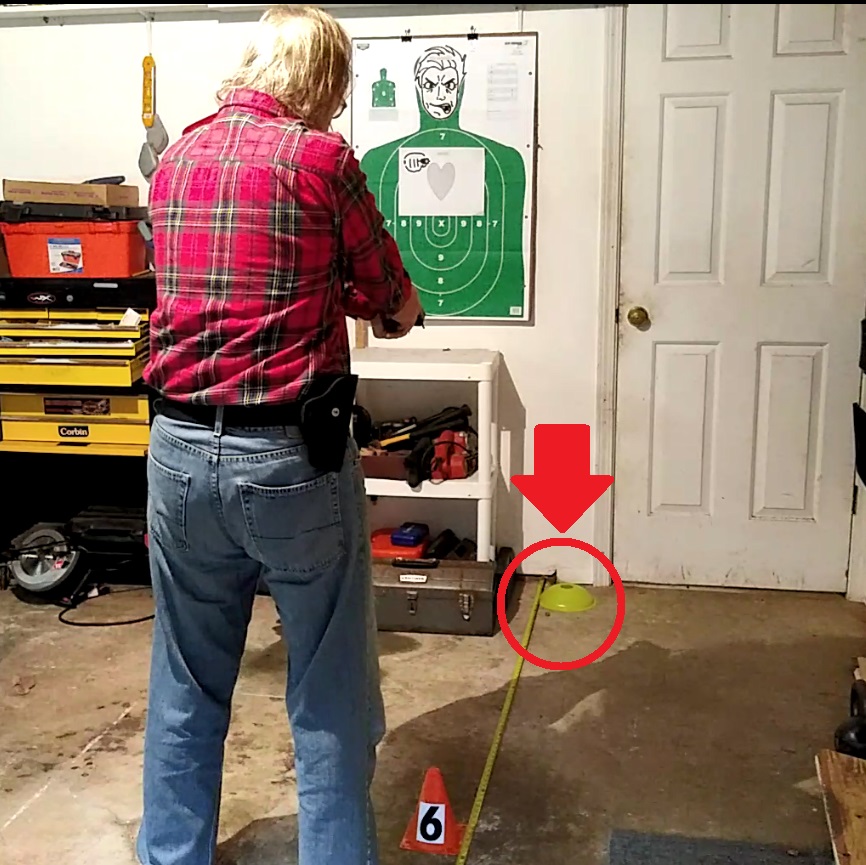
The TRT (Tap-Rack-Training aid) mentioned is available on Amazon https://www.amazon.com/Pack-Safety-Training-Pistol-Magazine/dp/B07CNBDHSB Using it is much easier the making the UN (inert and doesn’t work) magazines that were its inspiration.
Image Based Decisional Drills https://www.imagebaseddecisionaldrills.com/ provided the face on the target. A face is available for download in the Downloadables section of their website.
Using a Qualification Course as the basis for a Dry Practice Session and Regimen is an effective way of maximizing the value of your effort. For those who plan to obtain a Weapons Carry License in a State that has a Qualification requirement, it is also useful as an introduction to the structure of pistol qualification, even if the Course used is not the same.
Today’s Patreon https://www.patreon.com/TacticalProfessor post will go into more detail about structuring Dry Practice for maximum effectiveness.
FTC note: I receive no compensation for the product links in this post.


You must be logged in to post a comment.