Tactical Conference 2024 – Loot and Looted
At every Conference, Seminar, or industry gathering, the attendees always return with items given away by Presenters and other attendees. TacCon 2024 was no exception; I call this ‘Loot’ and I returned with some good items.
Loot
Books
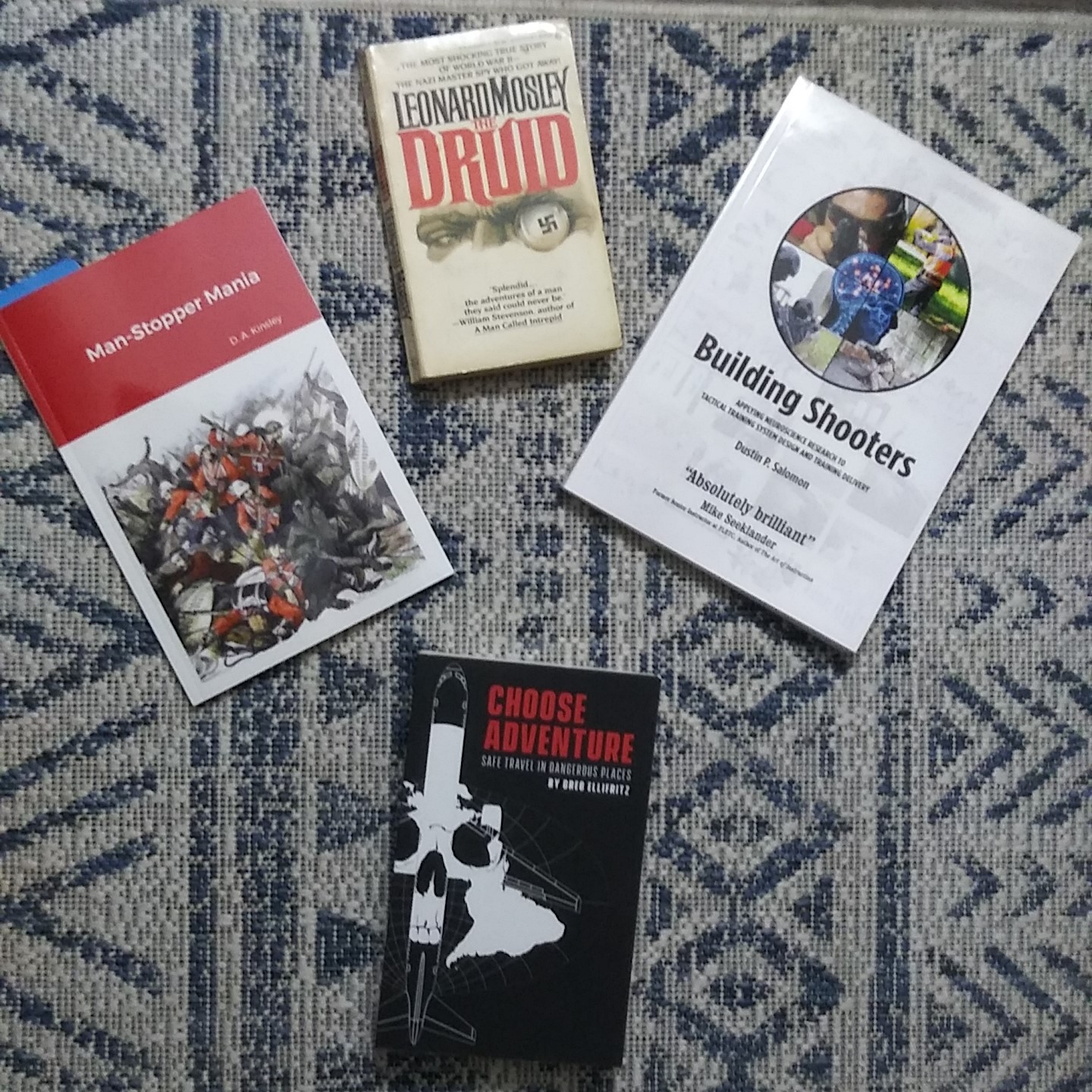
Good reading material courtesy of Chuck Haggard, my hostess for the weekend, Andy Stanford, and Greg Ellifritz.
Targets and Drills
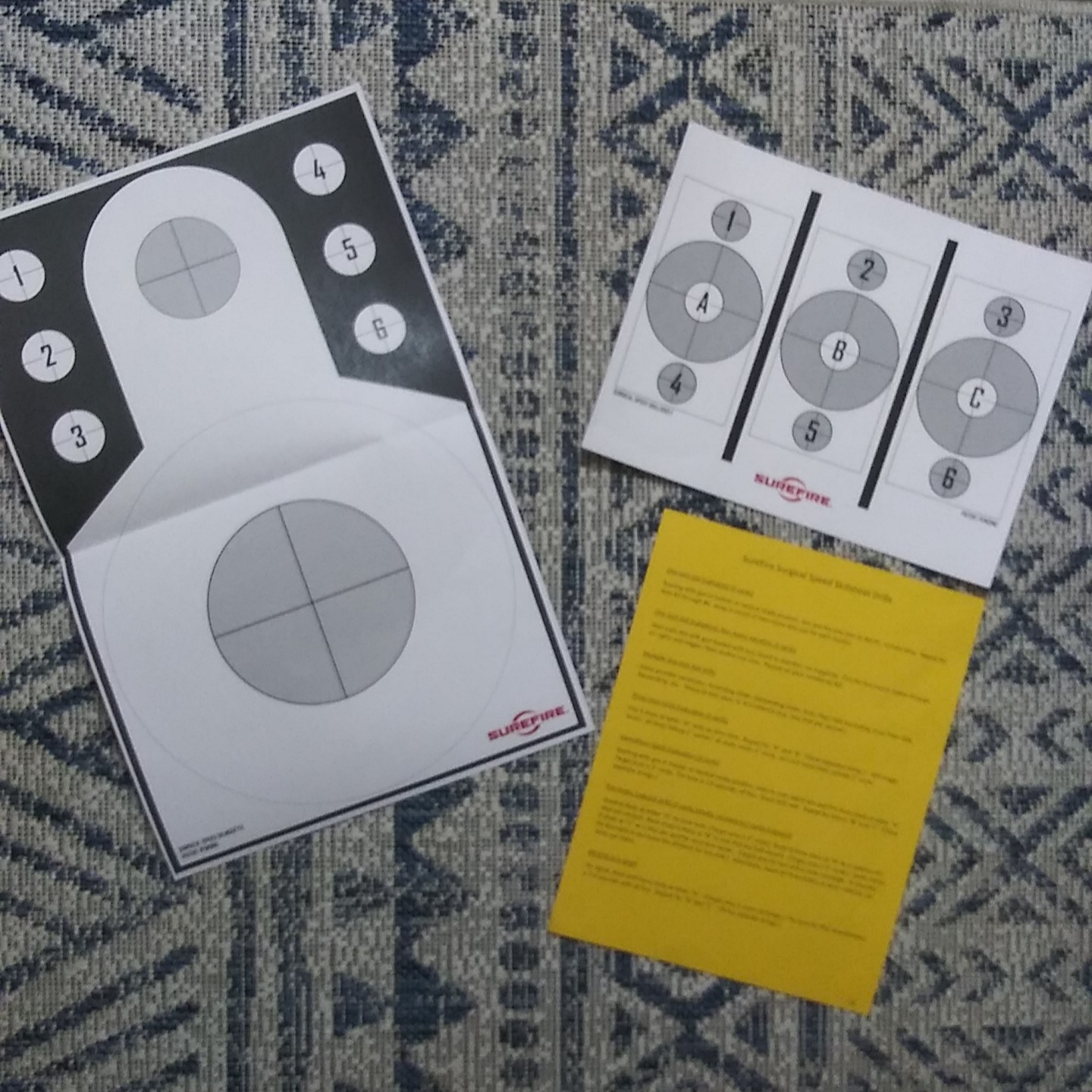
At the end of Andy Stanford’s Practical Handgun Drills class, he gave us laminated copies of the Surefire targets and a double sided sheet of drills for using them.
Cool Stuff

Yet another doubloon from Andy Stanford was a Surefire Stiletto flashlight, given to all the trainers at the event. Retention Ring gave me a nice laminated card as an aid for adjusting pistol and rifle optics. A friend in the Air Marshal Service presented me with a cool pin and Chuck gave me a unique and apparently one off revolver inert gun.
Looted
Notice that there is no picture of the package of Narcan gifted to me by Greg Ellifritz. That’s because it was ‘liberated’ from my suitcase while in the custody of Frontier Airlines on the trip home. Whether a sticky fingered baggage handler got it or it was ‘seized’ without notice or an inspection tag by the TSA is unknown to me. Sunny Hostin might think the Total Eclipse disintegrated it while in the aircraft’s hold. When I opened the suitcase, I thought things were arranged a little differently. A bit later I realized that the Narcan had taken a walk.
That’s the last time I’ll ever fail to secure my suitcase with a TSA lock and a zip tie. I didn’t feel it was necessary this time because I didn’t have a pistol in my suitcase but it’s a lesson learned.
Many thanks to my friends for their generosity. Whether presenting or attending, there’s always interesting stuff given out at conferences. I’m looking forward to duplicating the Surefire targets and shooting Andy’s drills for them.
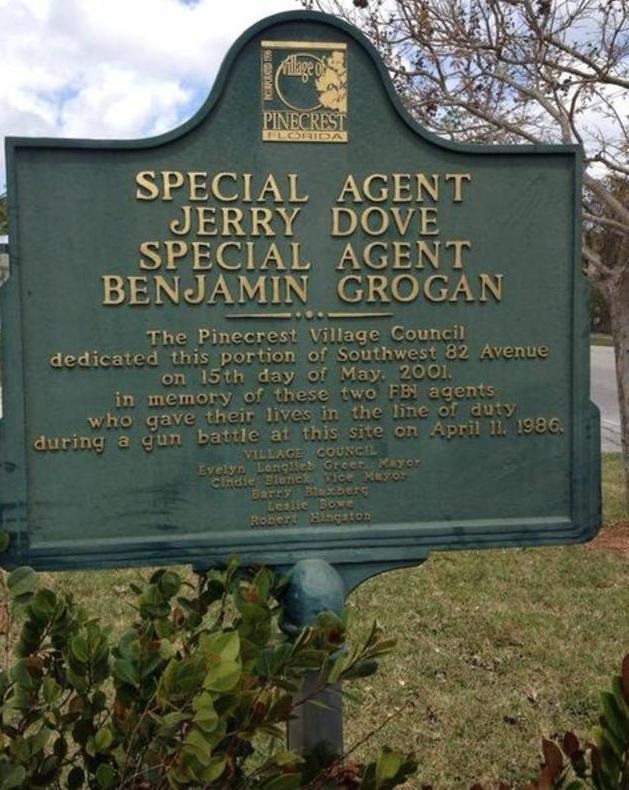
In Memoriam to all the heroes of the Miami Massacre, April 11, 1986. https://en.wikipedia.org/wiki/1986_FBI_Miami_shootout
Tactical Conference 2024 Pistol Match
#wheelgunwednesday
I shot the match with my Taurus 856 snub.

Here’s a video short of the Pistol Match https://youtube.com/shorts/uFh9EogmeAY?feature=share
Course of fire
All strings were shot at turning targets in 4 seconds.
3 yards
- 6 shots from concealed holster (6/6)
5 yards
- 5 shots from concealed holster (5/11)
- 5 shots from concealed holster (5/16)
- 4 shots Primary Hand Only from Low Ready (4/20)
- 3 shots Support Hand Only from Low Ready (3/23)
7 yards
- 4 shots from concealed holster (4/27)
- 4 shots from concealed holster(4/31)
10 yards
- 2 shots from concealed holster (2/33)
- 2 shots from concealed holster (2/35)
5 yards
- 5 timed {3.53} face shots from Low Ready (5/40) These shot were scored with Comstock scoring.
This was my final target score. I pulled a few out of the circle but none below the belt or off the silhouette.

McGee’s Paradigm

“Three shots in three seconds at three yards.” That was Lt. Frank McGee’s iconic summation (McGee’s Paradigm) of the typical gunfight of New York City police officers in the 1970s. Lt. McGee was the head of the NYPD Firearms and Tactics Section at that time. His analysis came from the Department’s SOP-9 report, which began compiling statistics about the gunfights of its officers in 1969. Although the scope and name of the report has evolved over time, it is still published by the NYPD and available online. McGee’s Paradigm hasn’t changed much over the past 50 years.
Since most gunowners are limited to shooting at indoor ranges, learning to shoot against a time standard has always been an issue. Shot timers usually work by tracking the noise from each shot and are therefore not always useful in the indoor-range environment because of adjacent shooters. Besides this, casual shooters are generally unwilling to spend over $100 for a shot timer.
The widespread nature of smartphones and Bluetooth earbuds have given us a solution to this problem. There are several timing apps for Smartphones available online. Used in conjunction with Bluetooth earbuds underneath earmuff-based hearing protection, practicing marksmanship with a par time is now easily accomplished.
https://www.shootingillustrated.com/content/three-shots-in-three-seconds
A demonstration video is available at https://youtu.be/8kL0bUQWsfI
Here’s a target for the final 20 rounds of the 50 round session.
SixFerShur 2nd Day
The first day of SixFerShur sold out faster than I expected. My host, The Complete Combatant, has kindly offered to host a second class on the following Sunday. If you weren’t able to register for Saturday, now you still have a chance to learn how to spin your wheels.
Sunday, May 5, Dahlonega, Georgia – Home Range of The Complete Combatant
https://www.shootingclasses.com/thecompletecombatant/course/?courseId=4493
One Day – $199 plus $20 Range fee
Important: Although a few exercises will be shot with small (J Frame ish) revolvers, this is NOT a J Frame course. You will need a full size (K frame or equivalent) revolver to attend. Shooting 300 rounds in a day through an Airweight J Frame only teaches one thing; how to flinch.
I was asked if a Ruger SP101 would be workable for the course. My answer is:
“If you can shoot 300 rounds through it in a day without developing a flinch, that’s the object of the exercise.”
Please be sure you can do that. What I want to avoid is teaching someone how to massively flinch.
https://www.shootingclasses.com/thecompletecombatant/course/?courseId=4493
SixFerShur
I will be conducting the 2024 Revolver Operator Course this May in North Georgia.
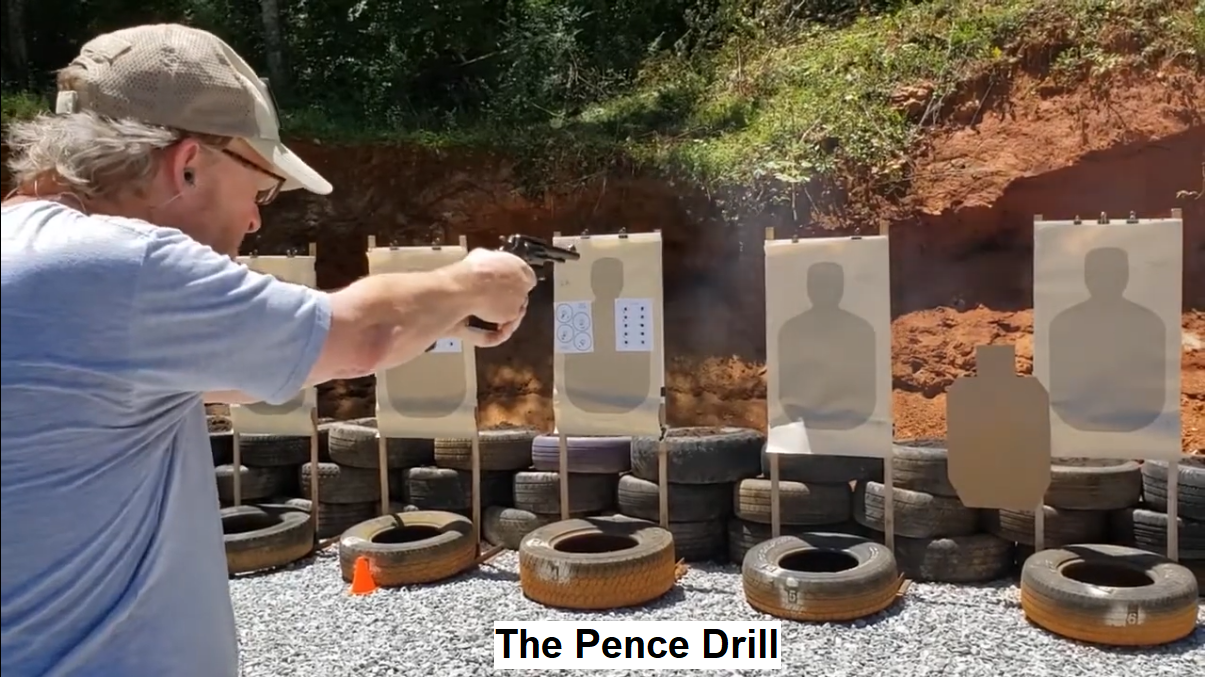
May 4, Dahlonega, Georgia – Home Range of The Complete Combatant
One Day – $199 plus $20 Range fee
Important: Although a few exercises will be shot with small (J Frame ish) revolvers, this is NOT a J Frame course. You will need a full size (K frame or equivalent) revolver to attend. Shooting 300 rounds in a day through an Airweight J Frame only teaches one thing; how to flinch.
https://www.shootingclasses.com/thecompletecombatant/course/?courseId=4493
The Pence Drill is one of the two keystone drills of the Revolver Operator Course.
Fair attribution: I liberated the SixFerShur title from Tamara Keel’s blog post because it’s hilarious.
https://booksbikesboomsticks.blogspot.com/2024/03/narrow-focus-cartridge.html
That’s probably what I’ll call the class from now on because “Revolver Operator Course” sounds so mundane by comparison.
Shooting Practice for a Criminal Encounter
The second installment of my Shooting Illustrated series about organizing your shooting practice is now online.
https://www.shootingillustrated.com/content/shooting-practice-for-a-criminal-encounter

I always include more photos with my article submissions than can be used. After this paragraph in the article, I included what is possibly my favorite shooting photo of all time.
Shooters often blast an entire box of ammunition at the target without checking and then marking it consistently. This is one of the worst mistakes that can be made when practicing for marksmanship development and self-defense.
Sadly, along with several others, it was cut for space reasons. The photo is of a target that was left up at my gun club years ago. Every time I look at it, I literally Laugh Out Loud. I call it the ‘goober target.’
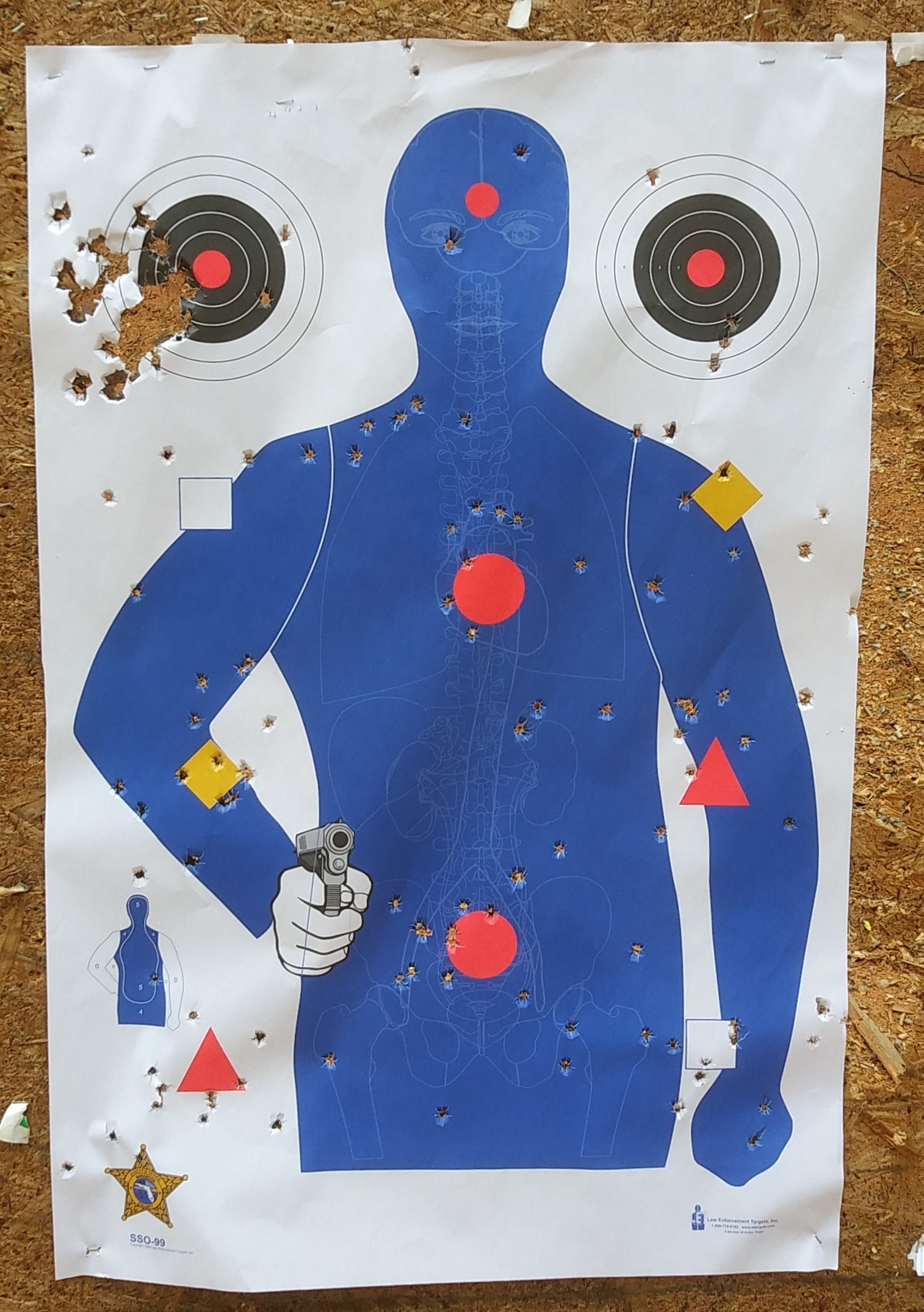
That is not the way to learn how to shoot to hit anything. Another photo that was cut shows how to mark your target with masking tape every few shots.

As mentioned in the article, checking and marking your target regularly will help you improve your marksmanship. Blasting away and creating a goober target will not.
Here is the Pump target. No one can say you’re practicing to shoot unarmed people if you have a representation of a gun on your target.
It’s getting to be a wild world out there; be ready.
Pocket Carry
Now that cold weather is upon us, pocket carry in an overcoat pocket has some advantages. Pocket carry has both upsides and downsides.
Upsides
- It’s far easier to access a gun in a coat pocket than to undo the coat and draw a holstered pistol. This is especially true when you’re seated in a vehicle with a seat belt on.
- You can put your hand on your gun as soon as you perceive trouble or even walk around with your hand on your gun in general.
- A draw from the pocket, starting with hand on gun, is faster for most people than drawing from a concealed holster.
Downsides
- Pocket carry usually requires a smaller and more compact handgun.
- A separate pocket holster is advisable.
- You may be wearing gloves.
- If you come in from outside and have to hang up your coat in an unsecured area, you’ll need to do something with the pocket pistol to secure it.
- The pocket draw is a little different than drawing from a belt holster.
- Said smaller and more compact handgun will probably become your primary tool in an incident.
Most people don’t practice as much with their smaller guns as they do larger ones. Pocketable pistols are usually both ego challenging and uncomfortable to shoot. Nonetheless, some familiarization is a good idea.
The CCW Practical Exercise from Switzerland is short and uncomplicated familiarization drill. The Swiss are a very practical people.
All shooting is done wearing a concealment garment with a holstered weapon.
- 2 shots at 7 meters in 4 seconds. 3 times.
- 2 shots at 5 meters in 3.5 seconds. 3 times
- 2 shots at 3 meters in 3.0 seconds. 3 times.
18 rounds total. 14 hits required to pass. The hit area (dark area) of their target is roughly equivalent to the IDPA -1 zone. Hits on the silhouette outside the hit area don’t count. They penalize 1 hit for any impacts outside the silhouette.
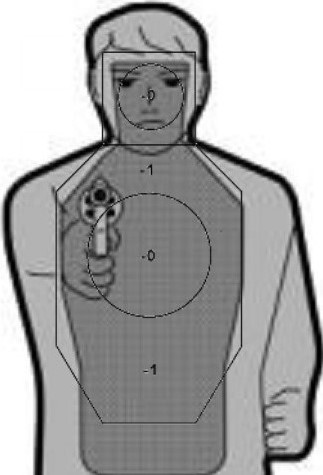
If you decide to pocket carry, it’s worth doing at least a short tuneup with your pocket pistol. A dry practice session for your draw is a must. A short live fire session to get the lint out of your gun and be sure it works is also in order.
P-Press the Trigger Smoothly
My friend and colleague Greg Ellifritz kindly mentioned this post in his Weekly Knowledge Dump https://www.activeresponsetraining.net/weekend-knowledge-dump-december-1-2023 and it is worth repeating.
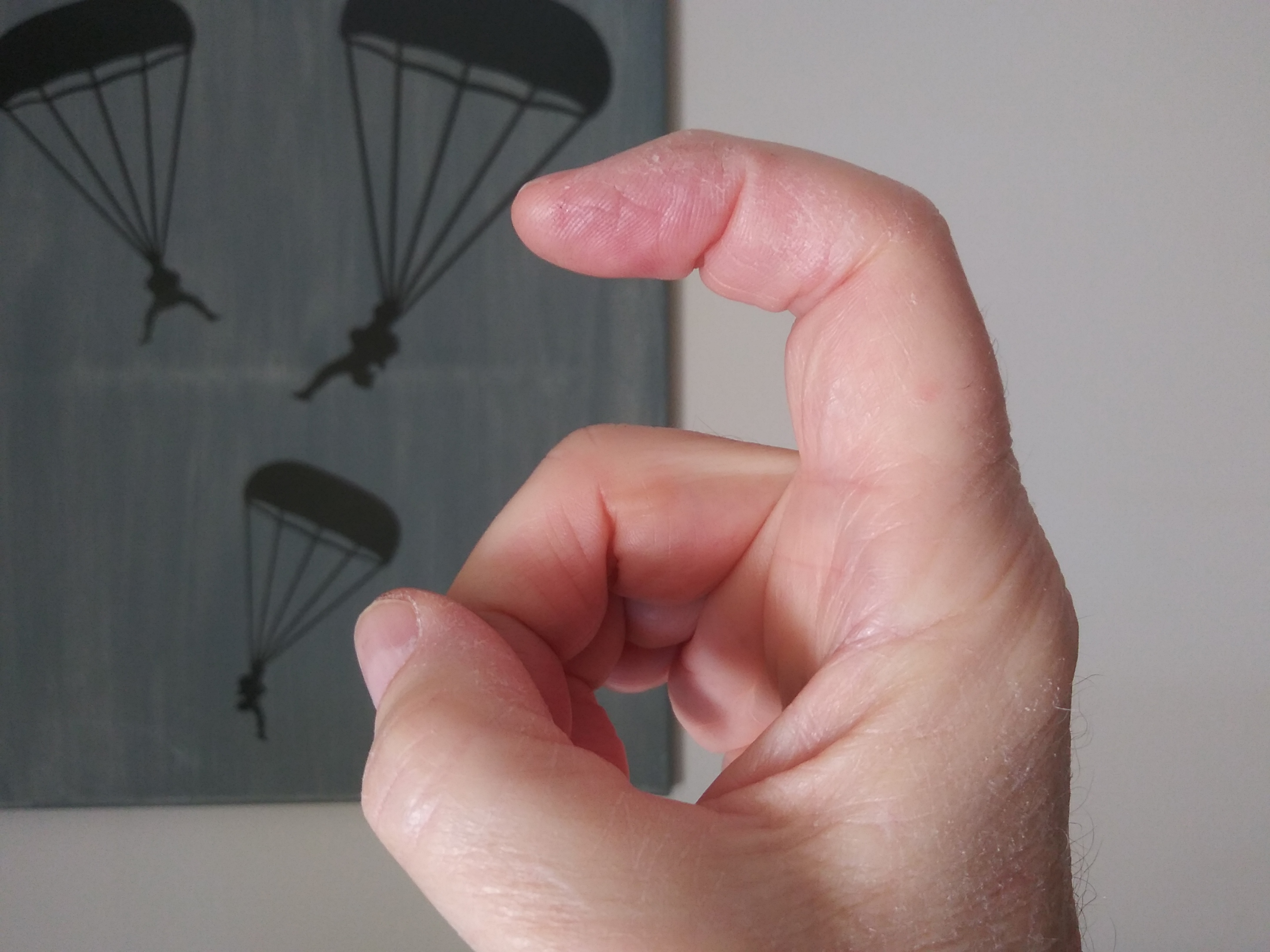
https://thetacticalprofessor.net/2018/11/16/press-the-trigger-smoothly/
Calling the Shot
#Fridayfundamentals
Last week, I shot the IDPA Match at my gun club. Oddly enough, the shot I was happiest with the whole day was one I missed.
The lighting in one bay illuminated the smoke and cloudiness of each shot during the shooting. This added to the difficulty of transitioning between targets and immediately establishing a sight picture.

When I transitioned to the far left target, my view was still obscured by the smoke from the previous shot.
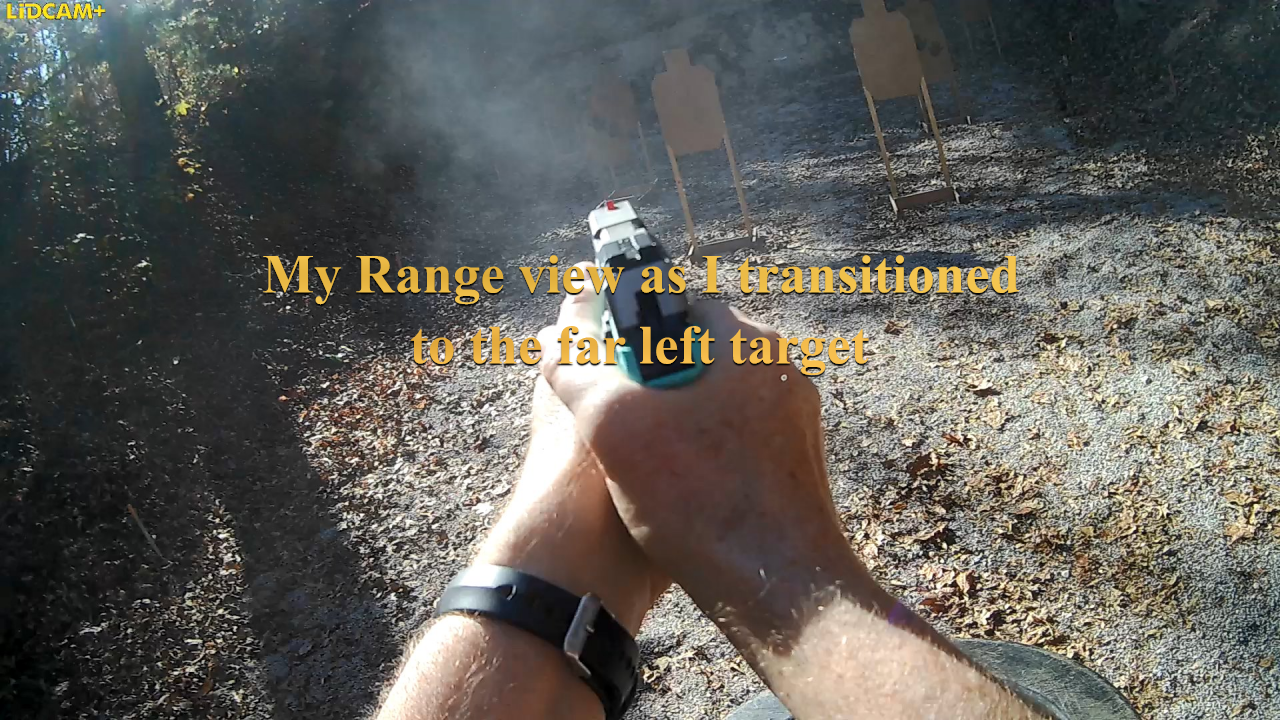
But at the moment the shot fired, the smoke had cleared and I had a decent view of my sight picture in relation to the target. I called it low and moved on.
When the targets were scored, sure enough there it was, low in the -3 Zone.

Calling that shot correctly during a challenging stage was the single best aspect of the match to me. It occurred to me later that in competition we only fire one, two, or three shots per target. Because of that, we have the opportunity to evaluate our shot calling for most of our shots. It’s an advantage competitive shooting has that never occurred to me before.
Shot calling with iron sights is an important skill to work on. When you can do it, it means you’re seeing your sight alignment and its relation to the target at the moment of the shot. That is sight picture in the moment and leads to good marksmanship.
Back Up Gun Match
#fridayfundamentals
Johns Creek IDPA held a Back Up Gun match last night. It was fun to be able to shoot a match with my LCP. I was able to acquit myself well and finished 7th even though I had the smallest gun there and made a couple of boo-boos. There were three snub revolvers in the match also.
Folks who were using fanny packs and chest packs got a chance to test them out, which in one case didn’t work out well. Carrying a gun with such a system also means practicing being able to access it efficiently and safely.
There will be more in-depth coverage on the Shooting and Marksmanship Tier of my Patreon page. https://www.patreon.com/TacticalProfessor
 tacticalprofessor
You must be logged in to post a comment.