Shooting Practice for a Criminal Encounter
The second installment of my Shooting Illustrated series about organizing your shooting practice is now online.
https://www.shootingillustrated.com/content/shooting-practice-for-a-criminal-encounter

I always include more photos with my article submissions than can be used. After this paragraph in the article, I included what is possibly my favorite shooting photo of all time.
Shooters often blast an entire box of ammunition at the target without checking and then marking it consistently. This is one of the worst mistakes that can be made when practicing for marksmanship development and self-defense.
Sadly, along with several others, it was cut for space reasons. The photo is of a target that was left up at my gun club years ago. Every time I look at it, I literally Laugh Out Loud. I call it the ‘goober target.’
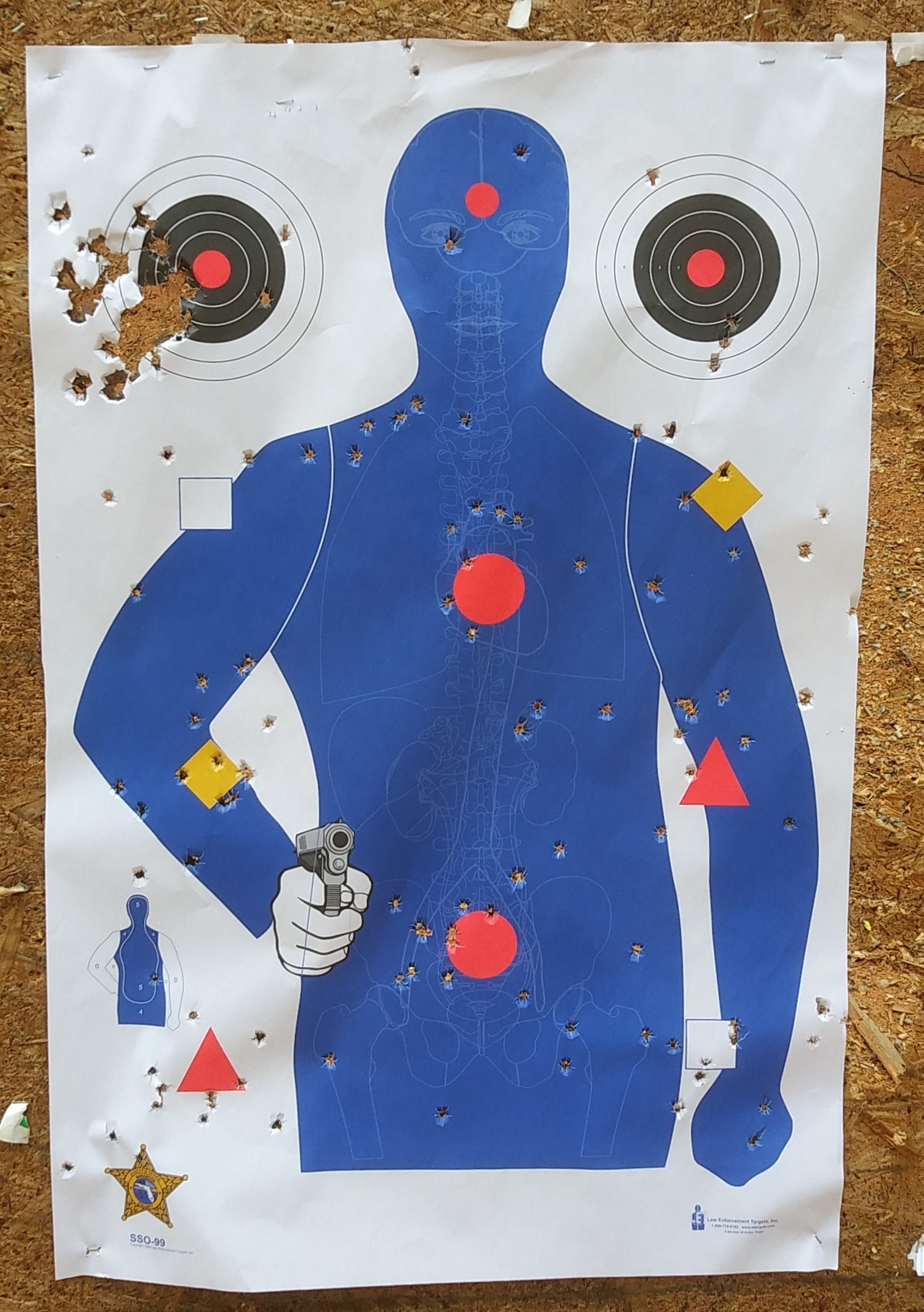
That is not the way to learn how to shoot to hit anything. Another photo that was cut shows how to mark your target with masking tape every few shots.

As mentioned in the article, checking and marking your target regularly will help you improve your marksmanship. Blasting away and creating a goober target will not.
Here is the Pump target. No one can say you’re practicing to shoot unarmed people if you have a representation of a gun on your target.
It’s getting to be a wild world out there; be ready.
Taurus 856 Iron Sights v. Laser Comparison
#wheelgunwednesday
Taurus had a screaming deal for 856 revolvers on its website last month. The deal was a Viridian Laser Stock (Grip), Boltaron (Kydex) holster, and two HKS speedloaders for $139. I’m a believer in laser stocks for snub revolvers so I decided to take advantage of the deal and purchased it. I also purchased an Ameriglo front night sight but haven’t installed it yet. FTC note: I made this purchase with my own money, no manufacturer giveaway.
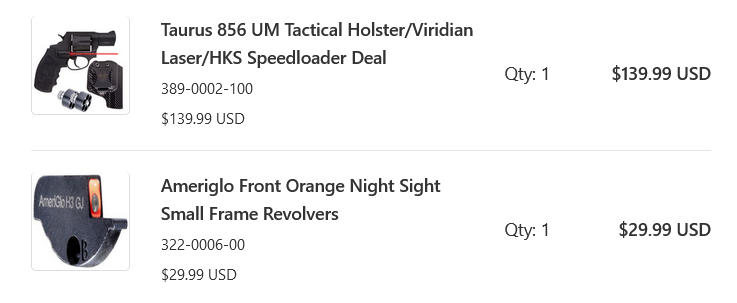
This Viridian laser has the activation button on the front of the stock so when the revolver is gripped, it comes on. This is a far superior system to having to manually press a button to turn the laser on. The stock is also slightly longer than the factory stock so it provides a full three finger grip.
Installing it requires driving out the roll pin that holds the factory stock in place. Once the pin is out, the laser stock is secured via three screws. Pro-Tip: put the bottom screw that goes through the roll pin hole in the frame first. It was relatively well zeroed as it arrived but I later zeroed it at 7 yards when I got to the range.
The UM Tactical Holster was much better than I had anticipated. I thought ‘UM’ meant it was an offshoot of Uncle Mike’s but that assumption is incorrect. It fits the 856 well and the clip holds it securely on the belt. I loosened the tension slightly so that when the holster is held upside down the gun doesn’t come out but it draws easily.
The HKS Speedloaders were the Model 10 developed for the K frame S&W revolver many years ago. Two were included.
To make a comparison of the capabilities of the laser vis-à-vis the iron sights, I did a range trip. The evaluation protocol was the Nevada Concealed Handgun Permit Qualification Course, which is one of my favorite practice structures. It consists of 30 rounds fired at 3 yards (6 rounds), 5 yards (12 rounds), and 7 yards (12 rounds). The evaluation consisted of splitting it in half, shooting one half (15 rounds) with the laser on and one half (15 rounds) with the laser off. I broke the course into several strings for each distance and timed each string.
3 yards – 1 shot from the Holster, 1 shot from Low Ready, and 1 shot from Retention. Three rounds for each sighting system.
5 yards – 2 shots from the Holster, 2 shots from Low Ready, 2 shots from the Holster Primary Hand Only. Six rounds for each sighting system.
7 yards – Repeat the 5 yard sequence at 7 yards.
It was a cloudy afternoon not bright sunlight. I had no trouble seeing the laser dot at 7 yards on the USPSA Metric targets I used. Each system had a separate target.
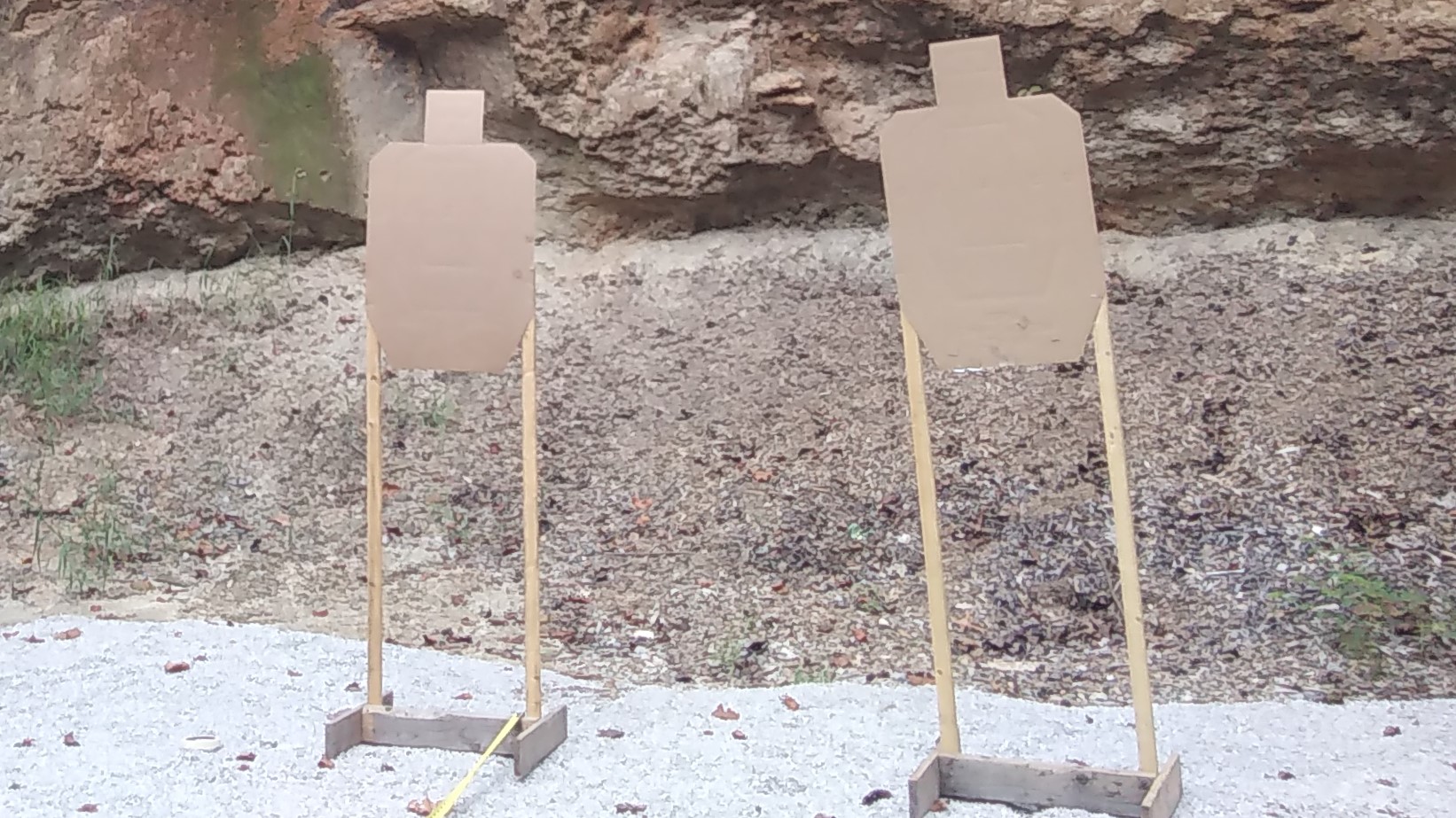
For scoring, I divided the A zone in half. This gave an A zone of 6 inches wide by 5.5 inches long. Hits in the lower part were counted as B hits. This is a scoring system the late Todd Louis Green https://pistol-forum.com/ suggested and I like it. It’s more rigorous than the IDPA -0 zone. The time for each string was recorded.
The results of both sighting systems were then overall Comstock scored. https://www.ssusa.org/content/understanding-uspsa-comstock-and-virginia-count/ This means points achieved divided by shooting time. The results were interesting. The Iron sights had a Comstock score of 4.33, while the Laser had a score of 4.29. Not a significant difference and the laser was not nearly the disadvantage in daylight that’s popularly assumed.
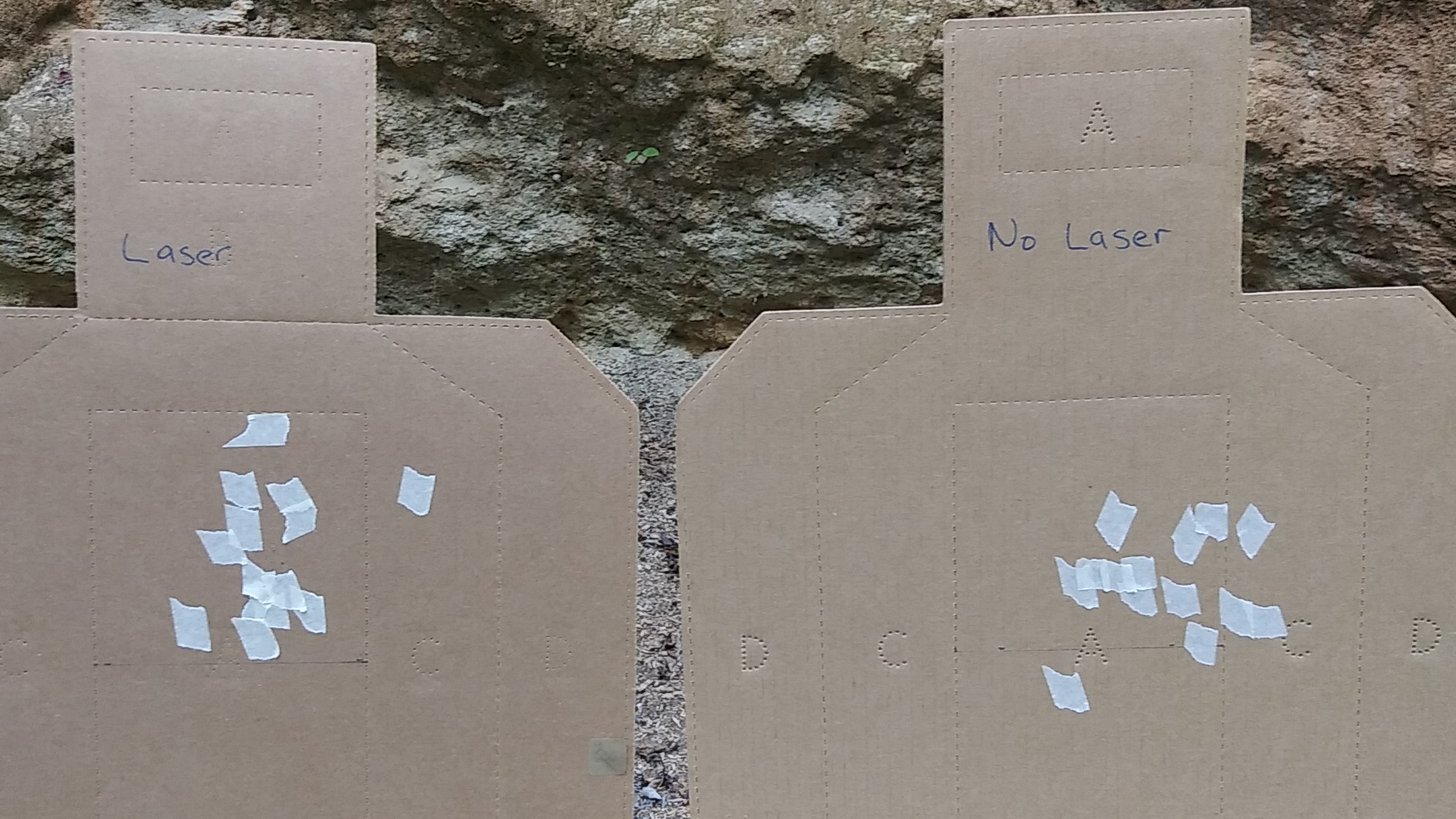
The next phase of my evaluation will be to shoot the same protocol in bright sunlight and at dusk. Those results should provide some interesting contrast.
With regard to the holster, I found it to be quite satisfactory. My only observation is that because the gun and holster is so short, the butt of the gun tends to droop forward and reduce my concealment. On the way home, I stopped at Arbol de Dolares to purchase La Chancla https://www.npr.org/sections/codeswitch/2014/11/04/361205792/la-chancla-flip-flops-as-a-tool-of-discipline . I’ll cut a piece of the flip-flop off to glue onto the back of the holster as a pad, a la Keepers Concealment. https://keepersconcealment.com/
Overall, I very pleased with the results. This makes about 700 rounds through the 856 with no issues. The laser worked well and the holster is satisfactory. A good EDC that I’m comfortable with.
FBI Double Action Course
#wheelgunwednesday
Prior to the FBI adoption of the Wheaties cereal box sized S&W Model 1076 in 1990, revolvers were the Bureau’s sidearm for well over half a century. After the FBI switched to the S&W Model 13 revolver in 1981, it created a publication, FBI Revolver Courses and Techniques, for using the gun with the Weaver technique.

“Sight Alignment: During close-in shooting (five to seven yards), the shooter does not have time to acquire perfect sight alignment. The shooter is, therefore, instructed to fire with both eyes open and to bring the sights up to eye level, seeing the front sight in the secondary vision. As distances increase, the need for better sight alignment increases and trigger pull should be slower.”
One of the Courses in the publication is the Double Action Course. It is intended as a practice regimen for double action shooting. The par times are short as is the allotted time for the one reload included. All strings are fired from the holster except one string at 15 yards.
DOUBLE ACTION COURSE (DAC)
The entire course is fired using the Weaver Position.
5 Yards
6 rounds -2 rounds on each whistle (in 3 seconds)
4 rounds -2 rounds on each whistle (in 3 seconds)
7 Yards
6 rounds -2 rounds on each whistle (in 3 seconds)
4 rounds -2 rounds on each whistle (in 3 seconds)
10 rounds -Load 6 rounds, on whistle, fire 6, reload 4 rounds, fire 4, all in 20 seconds.
15 Yards
6 rounds -2 rounds on each whistle (in 3 seconds). Fired from Weaver Ready.

4 rounds -All 4 rounds in 6 seconds
25 Yards
5 rounds -All 5 rounds in 10 seconds kneeling position
5 rounds -Repeat
Scoring: 2 points each for hits in either the KS or K4 area.
100 points possible.
Firing at an indoor range where drawing from the holster isn’t permitted can be done by using a table start.

Par times can be used via ear buds underneath hearing protection muffs and a par timer app on one’s cell phone. The phone’s Bluetooth connection will transmit the start and stop beeps to the ear buds.

Although it was shot by FBI Agents on the huge B-21 target, any silhouette will do.

It’s a fun course and very practical for those who carry a weapon.

Note to indoor range owners and operators. Granted that OSHA regulations can be onerous to work downrange maintenance with. But having inoperative carriers, targets left downrange on carriers and on the floor, thousands of fired brass cases in front of the booths, etc. presents a very unappealing scenario to the public. This is not a new phenomenon. In 1919, Walter Winans devoted an entire chapter WHY PISTOL SHOOTING IS UNPOPULAR in his book The Modern Pistol and How to Shoot It about the unpleasantness of this experience.
The Value of Historical Methods
A viewer of my Shooting to Live Advanced Methods demo YouTube video asked an interesting question.
“Do you think that there is any value added by practicing the WWII Combatives shooting methods beyond learning historical training firsthand?”
In a conversation with him, he further elaborated that he was asking from his perspective as a competent shooter who practices regularly using demanding time and accuracy standards. From that perspective, my answer was NO. The only value to him would be for historical academic interest. There is nothing that will be learned of practical value for someone with his level of proficiency.
However, I continued on by saying that to the millions of first time gun buyers of the past few years, MAYBE. Only a miniscule fraction of those people will ever take a class on gun safety and learn how to shoot to some standard, whatever that standard might be.
For those millions of first time gun buyers, studying actual WWII shooting combatives, such as Shooting to Live and Field Manual 23-35 Pistols and Revolvers (1946), could have some value. Shooting to Live and its immediately successor, US Army Combat Firing, at least provide some structure and standards for brand new pistol shooters. Any system based on real combat is preferable to going to an indoor range and randomly blasting away based on what’s shown on TV.
I began the long term series about ‘Unsighted Fire’ aka Point Shooting on Patreon for a very specific reason. It is that obviously the vast majority of people who write about point shooting or make YouTube videos on “Fairbairn Method” shooting have never really read or studied any of the literature about it, including Shooting to Live. From the perspective of an historian and researcher, this lack of fact based information is both annoying and disturbing.
The gunhandling and safety aspects of WWII pistol combatives alone have a great deal of merit. Gripping the pistol properly. A strong emphasis on practical gunhandling in addition to marksmanship. Including malfunction clearance in early stages of Live Fire. Equal weight on Dry Practice as Live Fire, especially prior to the initial firing practice. Highlighting the concept of treating a pistol as always loaded. Emphasizing the importance of muzzle direction when handling a pistol. Practicing clearing and making the pistol safe when less than a magazine has been fired. Those are all highly useful skills, probably even more so than the marksmanship standards, which were not very high.
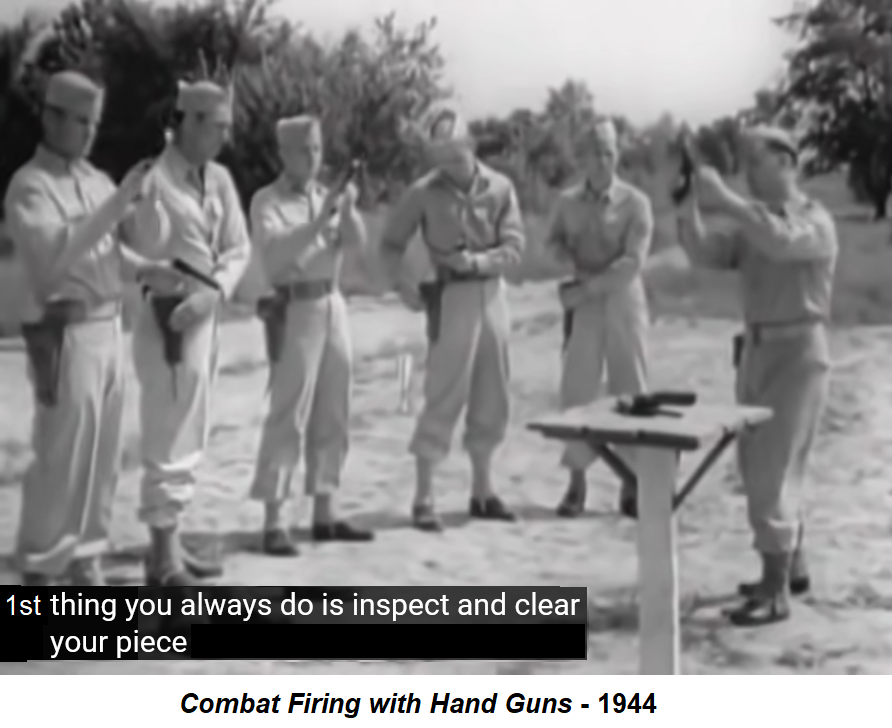
But please avoid muzzling your instructors. We won’t be happy about that. We will try to keep away from putting ourselves in a position where you can.
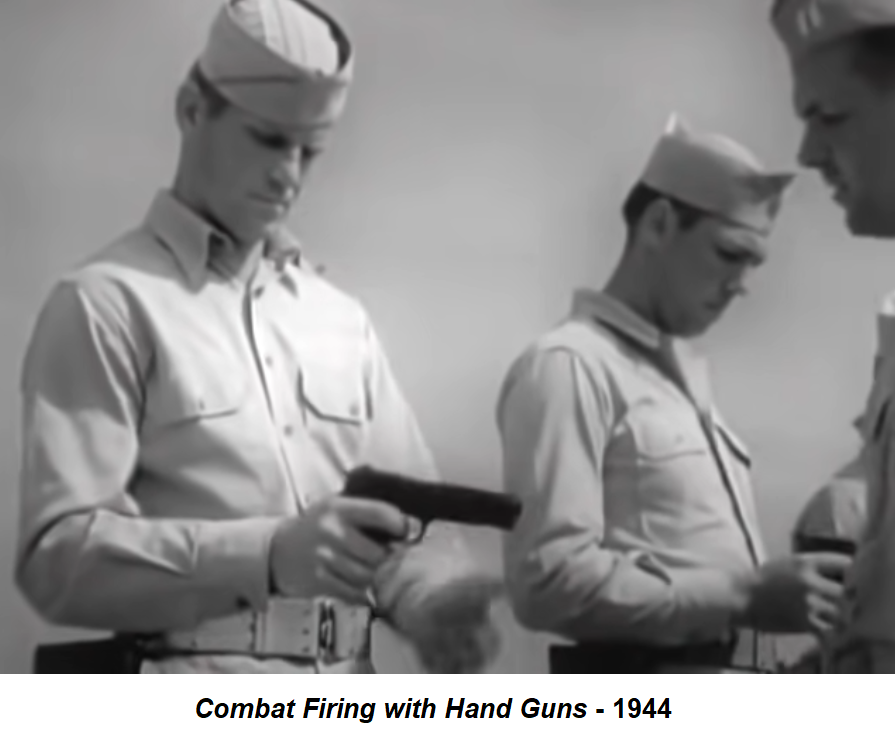
While the hit standards Shooting to Live and Field Manual 23-35 Pistols and Revolvers (1946) establish are rudimentary, they do give new shooters an idea that they’re supposed to actually hit something when shooting. The standard in Shooting to Live is 50 percent hits on a silhouette for single presentations within Social Space (4 yards). The 1946 US Army standard was 100 percent hits for single presentations on an E Silhouette at 5 yards.
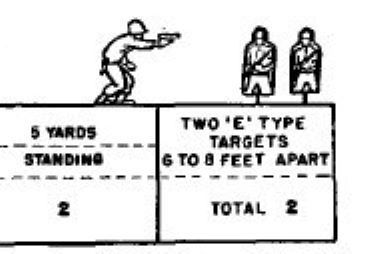
Although most proficient shooters today would consider the techniques obsolete and the standards mediocre, at best, they’re still better than practicing what’s seen on TV and in movies. TV and movies are where most gunowners’ training takes place and that’s bad news.
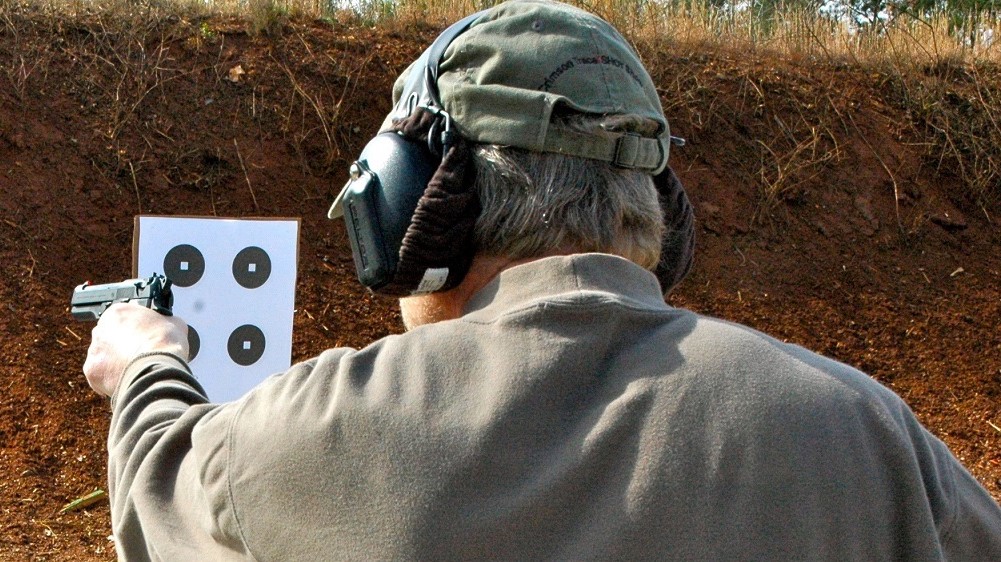
If you would like to follow my Patreon page to go into more depth about point shooting and personal protection incidents, click on the image below.
Shooting to Live Methods and Results
#Fridayfundamentals
Shooting to Live by Captains Fairbairn and Sykes is one of the most mentioned books ever in the shooting community. Or at least a caricature of what the book actually said. The reality of what Fairbairn and Sykes taught in reality is much different, both in method and results, than is usually understood.
Clarifying what the two men wrote and trained other to do is not hard. Their “Recruit Training Program” is a grand total of 35 pages, which are heavily illustrated. There are 4660 words in total so it should take an average person 23 minutes to read it. That reading just doesn’t seem to be done by many who talk about their system.
One of the first demonstrations the Recruits received was of the “Extreme Speed” that a pistol without a round in the chamber could be fired at. This is a live fire demonstration of what the Recruits were shown in Dry Practice.
Note that in one iteration, I forgot to chamber the round despite being set up for the drill. Contrary to popular belief, while Fairbairn and Sykes may have “practiced their draws thousands of times” their Recruits did not. In fact, there is very little draw practice in the Recruit Training Programme other than as incidental to the drills fired from Ready and Three-quarter Hip.
The first live fire the Recruits had is demonstrated in this video. It’s quite rudimentary and most likely could be successfully taught to anyone who wasn’t afraid of gunfire with a dozen or so iterations of dry practice. Using a .22 would make it a piece of cake.
Let’s skip to “Advanced Methods.” Note where the hits are on the target. Hits in areas that are likely to have rapid debilitating effect are highlighted. The geometry of the position, being crouched down, forearm even with the stomach, and bore parallel to the ground is almost guaranteed to cause the bullets to impact below the diaphragm.
As Tom Givens likes to quip:
“What do people do when you shoot them below the diaphragm? Pretty much the same thing they were doing before you shot them.”
We need to keep in mind what Fairbairn and Sykes wrote their system was capable of, i.e., their performance standards. The hits had to be somewhere on the entire silhouette target; whether the legs were included is not explicitly stated but neither was it disavowed. The shooting distance of their Programme did not exceed 4 yards at any point and nearly half took place at 2 yards.
“The qualification we require before the recruit’s course can be successfully passed is 50 per cent. of hits anywhere on the man-sized targets employed. Time has shown this to be adequate for the purpose in view.”
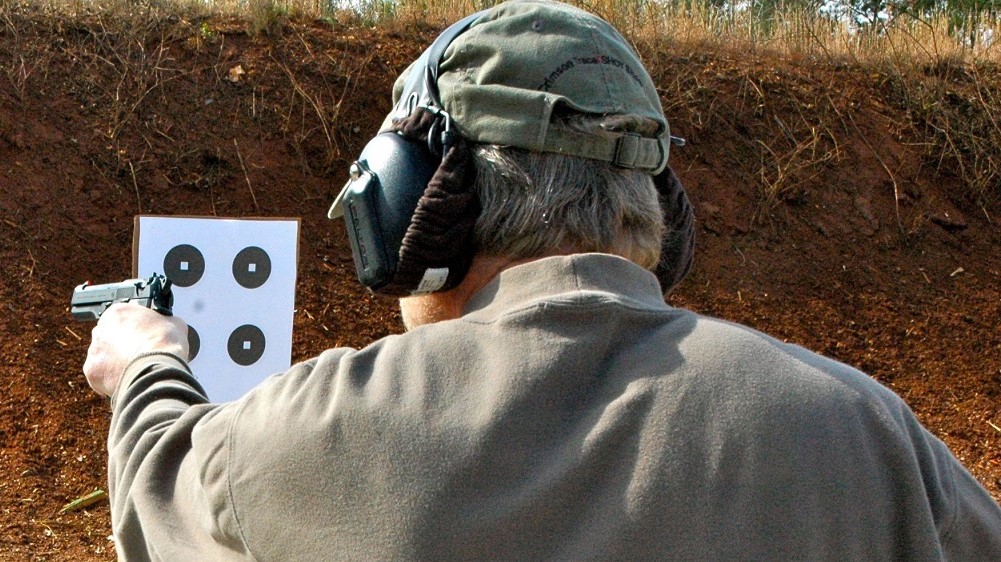
Explaining what Shooting to Live was the first segment of my Patreon series on Unsighted Fire. The next segment being addressed is US Army Handgun Marksmanship Training Evolution of WWII and Beyond. It’s very interesting to leave The Telephone Game The Telephone Game and the Training Industry behind and go to the source itself. If you would like to learn more about point shooting and personal protection incidents, click on the image below.
Subcompact Pistol (LCP) Progress Evaluation
This is a short course I devised for my Patreon snub revolver and subcompact pistol programs. It’s based on the Nevada Concealed Firearms Permit Qualification Course. Instead of just shooting three long untimed strings (3, 5, and 7 yards), the timing is based on Lt. Frank McGee’s 3 shots, 3 seconds, 3 yards paradigm. Several additional start positions are also included.
It has some cool music too. Somewhat reminiscent of the soundtrack from the TV series Lex.
Surgical Speed Shooting Summit 2022 – An Overview
Twenty-one years ago, Andy Stanford researched and wrote the book Surgical Speed Shooting https://www.amazon.com/Surgical-Speed-Shooting-High-Speed-Marksmanship/dp/1581601433 about combat shooting technique. He began teaching classes based on what his research had found. A number of people in the industry, myself included, became part of a group Andy formed to spread his knowledge.

Fast forward to June 2022. Andy organized a four day event, the Surgical Speed Shooting Summit, https://www.tacticalresponse.com/products/surgical-speed-shooting-summit to further update what he learned subsequent to writing his book. The event was held at the classroom and range of Tactical Response https://www.tacticalresponse.com/ in Western Tennessee. The purpose of the Summit was not only to update Surgical Speed Shooting but also to bring together a group of some of the top trainers in the industry, many of whom were not SSS related, to add their expertise to the knowledgebase. The final group of instructors was:
- John Holschen
- John Hearne
- Greg Ellifritz
- Michael Green
- Claude Werner
- Michael DeBethencourt
- Allan McBee
- John Johnston
- Karl Rehn
- Don Redl
- Lee Weems
- Melody Lauer
The first day started with a half day update of what Andy has gleaned about combat pistol shooting since the book’s publication. For the second half of the day, the group went to the range to shoot a few drills and see some targets Andy has developed for Surefire https://www.surefire.com/.
Day Two was spent at the Tactical Response classroom with each trainer giving a presentation of his or her own choosing. The topics all related to personal defense but did not have to be specifically on Surgical Speed Shooting.
On the third day, 47 students arrived at the Tactical Response range to begin training with the 12 instructors who had been divided into three different groups of four instructors each. The students were divided into equal sized groups based on an initial skill evaluation by shooting one of the Surefire drills. The student groups received 2 hours of training each by each instructor group. The instructors divided their two hour time frames among themselves to that the students received 12 total short blocks of instruction.
The final day’s range activities for the students were similar to the third day’s but the instructor groups were reorganized and the instructors had the option to present different material than they had on the previous day.
Finally, everyone returned to the Tactical Response classroom for a wrap-up of the Summit’s events. The instructors and students invidually gave examples of two things that they had personally taken away from the Summit’s training and presentations. As each person gave their take-aways, they were presented with a certificate testifying to their attendance at this historic event.
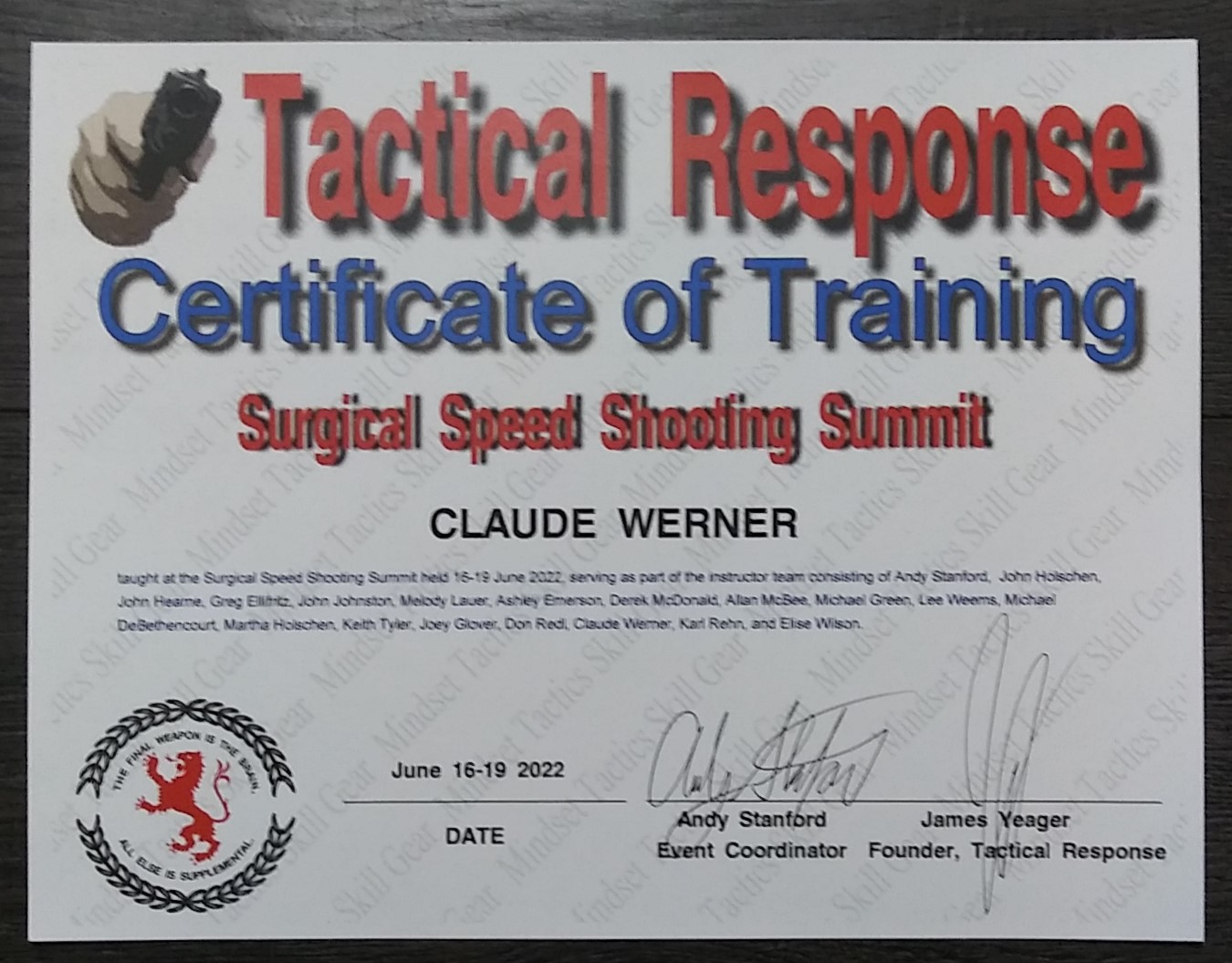
More about each day’s activities in the next few posts.
Why I Like to Measure Things
#measurementmonday
Why do I like to measure things? Because until I do, I don’t really know what’s inside.

I dislike soupy oatmeal. Although I followed the package instructions, it still turned out like soup. When I used the package measurement, it didn’t. Measuring the actual amount of water from the package’s marker doesn’t hold as much water as it says and which the directions specify. One half a cup is quite a bit less than two-thirds of a cup.
What does soupy oatmeal have to do with personal protection? How would we know whether we’re “good shooters” https://youtu.be/qB7NKXEKewM?t=599 unless we measure our own level of competency?
There has been debate within the training community for a long time about standards of competency. Those arguments will probably never be settled. One possible starting point could be the level of marksmanship necessary to pass the NRA Basics of Pistol Shooting Course. To pass the Course, a shooter needs to be able to make five hits inside a 4 inch circle four times at 10 feet, no time limit.
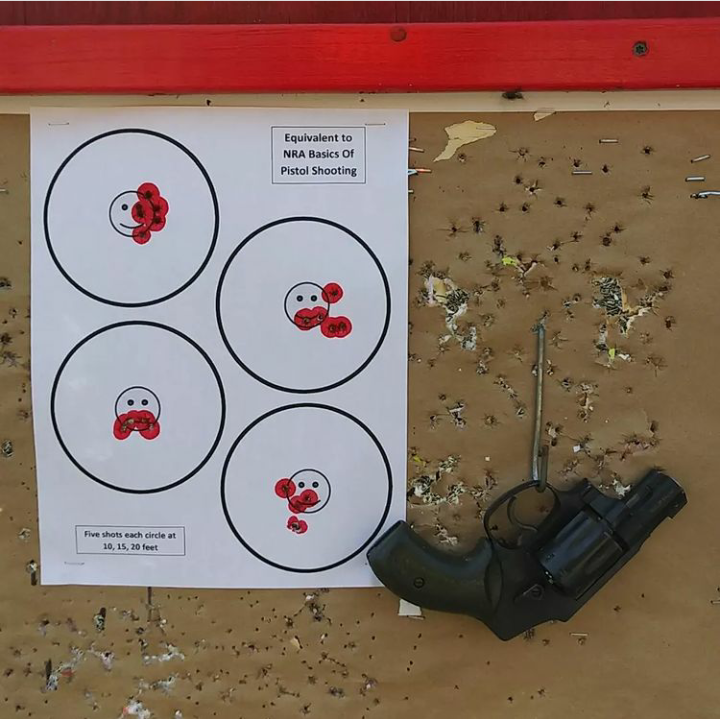
The NRA doesn’t require that a shooter make the standard in four consecutive attempts. Someone keeping or carrying a pistol for personal protection probably should consider being able to do it every single time. Shooting the BOPS test would at least give you an idea of where your competency is. Here is a target for you to use.
My Fundamentals of Pistol Shooting Tier https://www.patreon.com/TacticalProfessor?fan_landing=true is $1 a month on Patreon. The kickoff post, Dry Practice Circle Drill, is available to the public without subscribing. https://www.patreon.com/posts/64582173
100 percent standards
‘Tragic’: Teen apparently killed by stray police bullet in LA Burlington dressing room identified
https://abcnews.go.com/US/14-year-girl-dressing-room-killed-stray-bullet/story?id=81919639
This is an example of why I believe in 100 percent standards, not 70, 80, or anything less. My guess is that those officers will not last long on the LAPD and it’s not because they will get fired.
They will leave because the overwhelming majority of cops are decent people who want to do the right thing in life. That poor girl’s killing will haunt those officers forever. Whenever they put on their duty weapons, it will remind them of the consequences of the incident. No decent person wants to be reminded of that every day.
I’ll be following the investigation of this one closely.
Fundamentals of Pistol Shooting (Part 6)
#fridayfundamentals

How do we know we’re doing the Fundamental of Pistol Shooting correctly? That’s where Standards and measurement come in. The term ‘Standards’ is intimidating to many people so if it makes you more comfortable, say ‘baseline’ instead.
The most important thing is to have a Standard, any standard. As the saying goes, “If you don’t know where you’re going, there’s no road that will get you there.” Even the gurus of 20th Century ‘point shooting,’ Fairbairn and Sykes, had standards their officers had to meet.
Another aspect of the situation is that Standards introduce pressure. Pressure brings about failures, both human and mechanical. The book Holloway’s Raiders https://www.amazon.com/Holloways-Raiders-Captain-R-Walt-ebook/dp/B01LWMDZ4D has an excellent example of a pistol that worked fine at the range but malfunctioned when the officer got into a gunfight. The gun was no different, it was how the officer handled it under the pressure of a gunfight that changed the pistol’s performance. Chuck Haggard https://agiletactical.com/ and I have both observed that malfunctions are far more common in POlice gunfights than is generally acknowledged. This phenomenon is well documented in the LAPD Categorical Use of Force reports. https://www.lapdonline.org/police-commission/categorical-use-of-force/
When shooters enter competitions, it’s very common for malfunctions in their pistols to show up. “I don’t understand it, my gun never malfunctions when I practice but here I’m having a lot of problems” is a frequent comment by new competitors. Consequently, the Standard you choose is less important than simply having one, and the pressure it brings about, in the first place.
The most relevant shooting task for those who want a CCW is to pass the Qualification Course, if their State requires one. Millions of people who obtain Licenses to Carry have had to qualify with their pistol to get the license. Only a few thousand, a tiny fraction, will ever fire a pistol for Personal Protection.
Experienced shooters often tell new shooters “It’s easy; blah, blah, blah” with regard to shooting a Qualification. No, it’s not. For someone who’s never fired a pistol before, it’s a daunting task. Most people have not taken any test at all, even one on pen and paper, since high school. Testing of any kind is a process that is usually hated and feared. Add in the presence of a deadly weapon and the test becomes a huge psychological obstacle.
Time is an aspect of any deadly force encounter. The saying “There are no timers in a gunfight” is foolish. The most important timer, your life clock, is running the whole time. It can be stopped if you don’t react in time. One POlice who was involved in an extended gunfight said to himself, “Hey, I need to slow down and aim better.” What he meant was ‘I need to apply the Fundamentals, shoot better, and start neutralizing my opponent with bullets.’ He came to realize the concept that time matters.
If you don’t take the time do it something right in the first place, how are you going to get the time to do it over?
My mother
Until the invention of electronic timers, there was no way to accurately time individual shots. Timers didn’t exist in the Fairbairn/Sykes/Applegate era, only stopwatches. And yet, even Shooting to Live mentions that an observer with a stopwatch can be a tremendous aid to improving performance.
Pick a Standard, any standard, and see how well you can meet it. If your State requires a Qualification Course, that’s a good place to start. If not, pick some Standard, they’re readily available on the Internet, and use that. Then, over time, improve your performance against the Standard. For instance, using 100% as your goal on the Qualification instead of the minimum passing score. You’ll be better prepared if you do have to defend yourself and you’ll feel more confident in general.
The final two parts of this series will feature guest articles about the Decisions aspect of the Fundamentals paradigm.
Part I https://tacticalprofessor.wordpress.com/2021/11/05/fundamentals-of-pistol-shooting-part-1/
Part 2 https://tacticalprofessor.wordpress.com/2021/11/12/fundamentals-of-pistol-shooting-part-2/
Part 3 https://tacticalprofessor.wordpress.com/2021/11/22/fundamentals-of-pistol-shooting-part-3/
Part 4 https://tacticalprofessor.wordpress.com/2021/12/03/fundamentals-of-pistol-shooting-part-4/
Part 5 https://tacticalprofessor.wordpress.com/2021/12/10/fundamentals-of-pistol-shooting-part-5/
Tactical Professor books (all PDF)
- Indoor Range Practice Sessions http://indoorrangepracticesessions.com
- Concealed Carry Skills and Drills http://concealedcarryskillsanddrills.com
- Advanced Pistol Practice http://bit.ly/advancedpistolpractice
- Real Shootouts of the LAPD https://realshootoutsofthelapd.com/
- Thinking Clearly about Self-defense and Personal Protection https://www.payloadz.com/go?id=3377208
- Serious Mistakes Gunowners Make http://seriousgunownermistakes.com
- Shooting Your Black Rifle http://shootingyourblackrifle.com
- Package deal of Thinking Clearly about Self-defense and Personal Protection, Serious Mistakes, Indoor Sessions, Concealed Carry, and Shooting Your Black Rifle (50% off) https://store.payloadz.com/details/2644448-ebooks-sports-shooting-drills-package.html
Purchase of any book includes Serious Mistakes Gunowners Make.
 tacticalprofessor
You must be logged in to post a comment.