Responsibly Armed Radio Podcast
We had a great inaugural episode of Responsibly Armed Radio. Lou Ann Hamblin and I were the guests. Tatiana Whitlock and Judi Wells were the hosts with Special Guest Appearance by Dave Stall.
Our topics were definitions of Use of Force, Critical Decision-Making, Reasonableness, and Next Steps for those new to our Art.
Here is the link to the show: https://responsiblyarmedradio.libsyn.com/responsibly-armed-radio-season-1-episode-1
I wasn’t nearly as serious as the picture looks. 🙂
Tactical Professor books (all PDF)
- Serious Mistakes Gunowners Make http://seriousgunownermistakes.com
- Indoor Range Practice Sessions http://indoorrangepracticesessions.com
- Concealed Carry Skills and Drills http://concealedcarryskillsanddrills.com
- Advanced Pistol Practice http://bit.ly/advancedpistolpractice
- Shooting Your Black Rifle http://shootingyourblackrifle.com
- Package deal of Serious Mistakes, Indoor Sessions, Concealed Carry, and Shooting Your Black Rifle (20% off) https://store.payloadz.com/details/2644448-ebooks-sports-shooting-drills-package.html
Crawl, Walk, Run
A discussion came up on a Firearms Instructor group that decried the fact that many indoor ranges only allow NRA training https://firearmtraining.nra.org/ and don’t teach ‘Concealed Carry’ classes. Let’s bear in mind that 999 out of 1,000 gunowners only have access to an indoor range. That’s a calculated number, not a SWAG.
More people don’t carry than do. According to John Lott, the current figure for those having some kind of weapons carry license is 18.66 million people. https://papers.ssrn.com/sol3/papers.cfm?abstract_id=3463357 The Gallup Poll indicates the 43% of US households have a gun. https://news.gallup.com/poll/264932/percentage-americans-own-guns.aspx That would be 51.4 million people, which is probably underreported as compared to licenses. My personal experience is that the demographic with the economic means to afford training is most likely to NOT have a carry license.
When we teach people, either formally or informally, we do ourselves and the gun owning public in general a disservice when we place so much emphasis on the techniques for carrying a gun. It’s unfortunate that the NRA’s philosophy of Personal Protection training is buried in the Instructor manual for the Personal Protection Outside The Home course.
A synopsis of the NRA concept as excerpted from that manual is as follows:
The NRA Basic Personal Protection Series is based on the building-block approach, moving from the simple to the complex.
The first course in this series is the NRA Basics of Pistol Shooting Course, which develops in your students the basic skills of handling, shooting, and cleaning the firearm, as well as a thorough grounding in firearm safety.
The second course in this series is the NRA Basics of Personal Protection In The Home Course, (which builds on the skills already learned in the NRA Basics of Pistol Shooting Course). In this second course, participants learn to use a defensive or flash sight picture, …
The third course in the series is the NRA Basics of Personal Protection Outside The Home (which builds on the knowledge, skills, and attitudes learned in the NRA Basics of Personal Protection In The Home Course).
A very intelligent female friend explained to me her personal journey to carrying a gun. It involved five phases over the course of three years for her to consistently carry a gun and feel comfortable with it. That’s far more common than most people who teach, either as formal instructors or just friends giving guidance, seem to realize.
The NRA philosophy has a great deal of logic behind its structure. It pains me when our training community ignores it. We spend a fair amount of time talking about the ‘Crawl, Walk, Run’ approach to training but what we actually teach is ‘Run and then Run some more,’ period. Maybe it would be a good idea if we tried to guide people through a process one step at a time instead of ‘feeding them with a firehose.’ There’s a reason I wrote Indoor Range Practice Sessions before I wrote Concealed Carry Skills and Drills.

Tactical Professor books (all PDF)
- Serious Mistakes Gunowners Make http://seriousgunownermistakes.com
- Indoor Range Practice Sessions http://indoorrangepracticesessions.com
- Concealed Carry Skills and Drills http://concealedcarryskillsanddrills.com
- Advanced Pistol Practice http://bit.ly/advancedpistolpractice
- Shooting Your Black Rifle http://shootingyourblackrifle.com
- Package deal of Serious Mistakes, Indoor Sessions, Concealed Carry, and Shooting Your Black Rifle (20% off) https://store.payloadz.com/details/2644448-ebooks-sports-shooting-drills-package.html
Teaching children about guns
I recently had the opportunity to overhear a friend helping home school her grandchildren via telelearning while we’re under House Arrest during the Beer Plague. It was obvious that the lesson involved firearms. I was fascinated because I said to myself “Whoever wrote that lesson (I didn’t realize it was a book) actually knows something about guns.” When the lesson was finished, I asked what the source of the lesson was. It was Julie Golob’s book Toys, Tools, Guns & Rules: A Children’s Book About Gun Safety. https://www.amazon.com/dp/B078TB9RJB
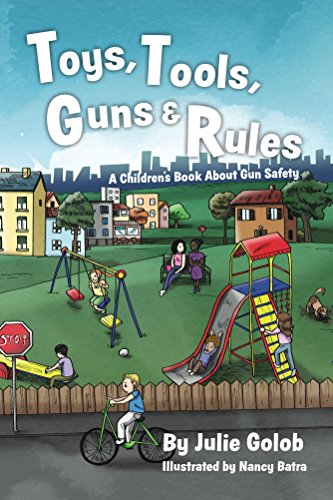
My thought was “Well duh, Tactical Professor, yes indeed Julie Golob knows something about guns.” The meat of her bio is
Julie Golob is one of the most accomplished professional shooters in the world with more than 150 championship titles and top scores in international, national and regional marksmanship competitions in 7 different shooting disciplines.
https://www.juliegolob.com/press
For new gunowners who have children in the house, this book is highly recommended. Long time gunowners will find it useful also. I was impressed by how it explained very fundamental safety rules that kids need to know. Be aware that because it is a color picture book, the Kindle version is not compatible with all Kindle devices. A list of compatible devices is on the Amazon page for the book.
https://www.amazon.com/dp/B078TB9RJB
FTC Notice: I don’t receive any compensation for mentioning Julie’s book. I just think it’s an excellent resource for gun owners, new or long time.
The Newhall Incident anniversary
At 11:55 p.m., April 5, 1970, two Officers of the California Highway Patrol stopped a car for brandishing a firearm at another vehicle hours earlier. Minutes later, they and two other CHP Officers would lie dead in the parking lot of the restaurant where the stop took place. Their murderers would escape into the night, virtually unscathed in the gunfire.
https://tacticalprofessor.wordpress.com/2018/04/06/the-newhall-incident-april-1970/
RIP, Officers Frago, Gore, Alleyn, and Pence.
Upcoming Class Announcements
Personal Performance – May 3, 2020 (Dahlonega, Georgia)
$99 class fee, payable in advance. $20 range fee, payable day of class.
This Course is designed to give clients a clear measure of where their skills are at and what they need to do to improve their current skill level. It is based on the NRA Marksmanship Qualification Program and all shooters will receive NRA awards, based on their achievement during the Course. Shooters do not need to be NRA members to receive their awards. Clients will receive a take home program to maintain and improve the skills exercised during the Course.
The Course is taught in conjunction with Brian and Shelley Hill of The Complete Combatant.
To register, visit: https://www.eventbrite.com/e/may-2020-personal-performance-tickets-86377997917
Pocket Pistol 101 and Strategies, Tactics, and Options for Personal Protection (A weekend with the Tactical Professor) – May 30 – 31, 2020 (Weatherford, Texas near Forth Worth)
$300
Join us for two full days of practical skill development, theoretical concepts, and realistic application of both skill and theory to Personal Protection Problem Solving with Claude Werner, AKA “The Tactical Professor”. All instruction is based on twenty years of research and analysis of over 5,000 actual incidents involving Armed Citizens rather than the Police.
Pocket Pistol 101 (Day One): Learn the skills needed to effectively use SMALL handguns for Personal Protection. Pocket Pistols, such as snubnose revolvers and .380 and small 9mm autoloaders, have manuals of arms and performance limitations that differ significantly from service-size handguns. They are very frequently carried for Personal Protection but often not trained with. This course is designed to teach students proven gunhandling techniques unique to Pocket Rockets, increase the students’ understanding of the shooting characteristics associated with handguns that are smaller, shorter, lighter, and often equipped with sub-optimal sights, and how to enhance their ability to make timely and accurate hits. Both firing line drills and scenario-based exercises (NOTE: Man v. Man Drills) are used as skill builders in the course.
Strategy, Tactics, and Options for Personal Protection (STOPP) (Day Two – Morning): This classroom segment focuses on helping clients define the Strategies, Options, and Tactics that are appropriate for them personally in the area of Personal Protection. By defining personal Strategies and being aware of possible Options, the Tactics appropriate to a person’s goals and lifestyle can be chosen. These are unique to each person and no one size fits all. Being aware of a range of possibilities in advance of criminal encounters helps the client avoid Serious Mistakes and achieve Positive Outcomes. All clients taking the class will receive a copy of the book Serious Mistakes and Negative Outcomes by the Tactical Professor.
Scenario Based Live Fire Exercises (Day Two – Afternoon): The ability to perform effectively on an individual basis is a fundamental aspect of Personal Protection. Each client will have the opportunity to individually examine their performance envelope in re-creations of actual incidents that involved Armed Citizens. The re-creations will mirror the conditions and difficulties that Armed Citizens face when protecting themselves and their families from the criminal element.
To register, visit: https://www.ptgtrainingllc.com/store/p48/A_Weekend_with_the_Tactical_Professor.html
Revolver Operator Course – July 11, 2020 (Dahlonega, Georgia)
$149 class fee, payable in advance. $20 range fee
Small revolvers are often carried for Personal Protection. However, their size and light weight make training and practice difficult. This class uses service size revolvers as the principal training tools for learning the general principles of trigger manipulation, reloading, and gunhandling with revolvers.
After learning the general principles for Revolver Operators with service revolvers, small revolvers will be introduced into the curriculum. The differences between using service revolvers and small revolvers will be explained and practiced. An evaluation test will be shot at the end of the course to allow clients to establish a baseline for their own future performance evaluations. Clients will be given a handbook to guide their practice efforts after the course.
To register: email tacticalprofessor@gmail.com You will be invoiced for the class fee. Once the payment is received, your spot is reserved. The range fee will be collected in cash the day of the class.
Can we be a little less judgmental?
(First in a series)
There’s a picture of a woman carrying a pistol non-doctrinally (i.e., a lot of people are unhappy with the way she’s doing it) circulating on the Internet now. The pistol is in a holster attached to her yoga pants and despite being a small pistol, it’s pulling her pants down some on that side. I’m not going to post the picture because it’s unnecessary to my point. The picture has generated almost universal criticism, the following being typical.
The freedom to carry a gun is a great thing.
But you will never, EVER convince me that carrying a gun without training is smart decision. If you’re untrained[,] you do stupid things like this, which actually puts you and those around you in more danger than if you were unarmed.
Carry a gun. But don’t be an untrained fool about it.
My comment about the picture is:
At least she has a gun and her holster has a safety strap.
“Get some training” is a meme in the industry. Unfortunately, both the size and the availability of the training base are very small. This is true even if every NRA and State certified CCW instructor is included in the number. There’s also the issue in my mind of those who make statements like this but got their training from the government while in the pay of the government. That generates an ethical issue you can ponder some time.
Here’s an infographic about the availability of training to gunowners. The concept of ‘the training base’ is something that people who haven’t had to regularly conduct resource intensive training for a lot of people simply don’t understand. Once again, it’s the Tactical Professor with those pesky little numbery things again.
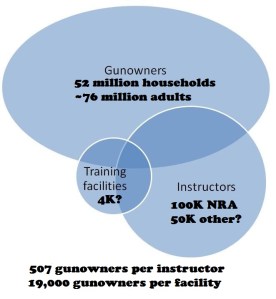
That tiny triangle where the three circles overlap is the real availability of ‘training’
And my estimate of training facilities is based on those capable of supporting at least NRA Basic Pistol not any kind of ‘meaningful’ training for carrying a weapon. Basic Pistol or its equivalent is as far as most facilities are prepared to go, for various reasons. I wouldn’t be surprised if the number where holster oriented training is allowed is less than 1,000. The good news is that the NRA Instructor base has grown to over 120,000 so we’re probably under 500 students per instructor now. Other good news is that the NRA Training Department has created a CCW course. However, that will take years to generate any significant number of CCW Certified Instructors.
Here’s my first question:
Did the person who took the picture approach the woman and offer to help her out with her knowledgebase, either personally or by referring her to someone who is a trainer?
As a community, we need to do a better job of the way we interact with beginners and novices instead of just being socially maladroit jackwagons and calling them fools.
More in the next installment.
BTW, my Concealed Carry Skills and Drills eBook would have been a nice reference to point her to or maybe even buy for her if the observer actually really cared about her welfare. Or was finger pointing, ego stroking, and shaming the real object of the exercise?
Tactical Professor books (all downloadable PDF files)
Serious Mistakes Gunowners Make http://seriousgunownermistakes.com
Indoor Range Practice Sessions http://indoorrangepracticesessions.com
Concealed Carry Skills and Drills http://concealedcarryskillsanddrills.com
Advanced Pistol Practice http://bit.ly/advancedpistolpractice
Shooting Your Black Rifle http://shootingyourblackrifle.com
Updated version of Boyd’s Aerial Attack Study
The link for the updated version of the AAS changed slightly but is now correct.
Boyd’s Aerial Attack Study is the most useful of all his documents in terms of tactical theory. Hardly anyone has read it, though.

Thanks to Rob Pincus, I have found a cleaner copy of Colonel John Boyd’s Aerial Attack Study (AAS). It was recreated by Mr. Mark Hart from the declassified 1964 version. The recreation is much easier on the eyes than the reproductions of the original mimeographed edition that are generally available.
Prior to Colonel Boyd’s AAS, fighter combat was viewed by the majority of fighter pilots as an intuitive skill rather than one that could be codified. Some conceptual principles had been developed along with elementary tactics such as the Thach Weave, but Boyd was the one who wrote the definitive book. Only Major General Frederick “Boots” Blesse had preceded Colonel Boyd in writing a book, No Guts No Glory, about jet fighter combat. Major General Blesse’s book wasn’t the exhaustive treatise on the subject that the AAS was.
View original post 90 more words
Factors relevant to church shootings
After my initial thoughts about the White Settlement church shooting, a list of other relevant factors came to mind. The conversation about the incident mostly has centered around the ability to make a 12-15 yard head shot. The tactical factors have largely been ignored or overlooked. That’s a Strategic Mistake.
Here’s my list for those wishing to do their own research and METT-TC analysis.
Requisite level of skill (part II)
This morning there was a murder in a church in Texas. A few seconds later, further murders were prevented by the quick action of a counter-murderer who protected the congregation. In the incident, it appears that someone tried to draw a pistol but was unsuccessful and got shot for his trouble. It is possible he was trying to get his cell phone to call for help, though. The footage is not very clear.
What was the requisite level of skill to end this situation? The shot would appear to be two aisles plus the width of a pew.
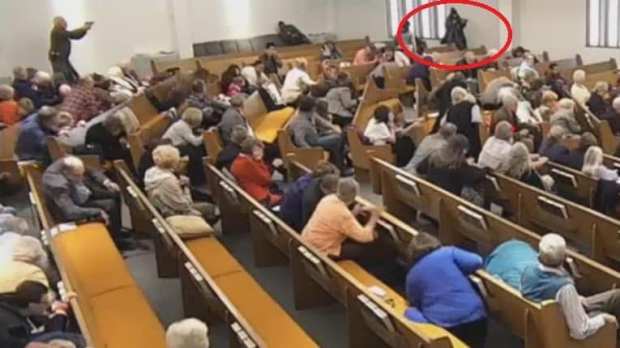
At the recommended 24 inches per person for 12 people (4 hymnal racks per pew with 3 per), that would be 24 feet for the pew plus 10 feet (two 5 foot aisles). https://www.lifeway.com/en/articles/church-architecture-rules-thumb-space-dimensions
Claude Werner’s Revolver Operator Class
I like revolvers and I like teaching people how to use them well. It’s only an “arm’s length gun” if you’re incompetent.

The trap of specialization is rampant in martial training, whether it is empty hands or tools. The belief that a narrow focus is the path to mastery will often lead to the problem of “functional fixedness”.
In David Epistien’s book “Range: Why Generalists Triumph in a Specialized World” uses the 2008 financial collapse as an example of over specialization. He says “legions of specialized groups optimizing risk for their own tiny pieces of the big picture created a catastrophic whole.”
Many believe learning to be linear, in other words a modular progression, and some favor the circular, a continuing cycle of review and depth, both are important, nevertheless a holistic approach, or the master key has the benefit of a quick prioritization of important information allowing adaptation to a new skill. Therefore I am constantly seeking new learning experiences in shooting, and when Claude Werner offered me the…
View original post 542 more words
 tacticalprofessor
You must be logged in to post a comment.