Friday Fundamentals – Getting Started
#Fridayfundamentals
Shooting To Live for the 21st Century – Concealed Carry Skills and Drills
Session 1
This session derives from two contemporary Courses of Fire, the original Michigan Council On Law Enforcement Standards Basic Pistol Safety Training Assessment and the New York State Concealed Carry License Live-Fire Proficiency Assessment https://troopers.ny.gov/minimum-standards-new-york-state-concealed-carry-firearm-safety-training to mimic and expand on the Recruit Training Programme described by Fairbairn and Sykes in their classic text Shooting To Live. Together the Assessments mimic the first live fire Practices of the RTP. To expand on it, the distance is increased from two yards used by F&S to 4 yards, the boundary in Proxemics between Social Space and Public Space.
The target consists of three sheets of printer paper stacked vertically in landscape mode. Fold one in half and use it as the top sheet. Put this array on whatever target backer is convenient. The Shoot-N-C is an optional addition on the middle sheet, used as the ‘aiming mark’ mentioned in STL.

This session can be done either at an outdoor range or almost all indoor ranges. The draw for the NYS Assessment is dry, i.e., no ammo in the gun, and most indoor ranges will permit it. There is no time limit so even ranges that require shooting no faster than one shot every three seconds can be placated.
Part I – MCOLES Safety Training Assessment
- String 1
- Load five rounds in the pistol and come to Low Ready.
- Bring the pistol to eye level, acquire a sight picture, and fire one shot.
- Return to Low Ready.
- Repeat four more times for a total of five shots.
- String 2
- Repeat String 1 for another five individual shots.
- String 3
- Load five rounds in the pistol and come to Low Ready
- Bring the pistol to eye level, acquire a sight picture, and fire two shots.
- Return to Low Ready.
- Bring the pistol to eye level, acquire a sight picture, and fire three shots.
The passing standard established by MCOLES was hybrid. Of the three strings, two had to have all five shots hit anywhere on all three sheets of paper. So it’s basically a 100% standard but you get to throw out your worst String.
The second part of this session is the New York State Concealed Carry License Live-Fire Proficiency Assessment. It uses the same target as the MCOLES Assessment. The distance is also four yards.
Part II – NYS CCL Live-Fire Proficiency Assessment
- Verify that the pistol is unloaded.
- Safely holster without loading.
- Draw the unloaded pistol, acquire a sight picture on the target, and dry snap one time.
- Safely holster without loading
- Draw the pistol and load with five rounds.
- To load, use the push method of loading as described by Fairbairn and Sykes.
- “To load the pistol, turn it over, grasping the slide firmly with the thumb and forefinger of the left hand.”
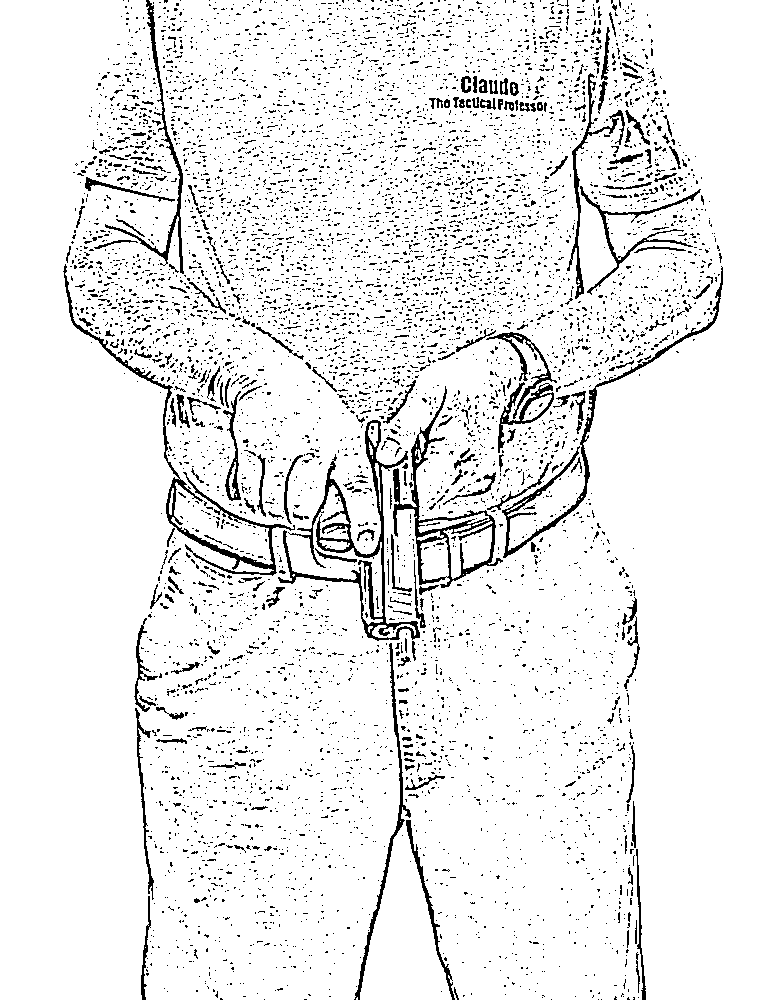
“Push forward with the right hand until the slide is felt to be open to its fullest extent.”

“Immediately that point is reached, release the hold with the left hand. The slide flies forward, taking with it and forcing into the breech, the topmost cartridge of the magazine, the pistol pointing to the ground meanwhile.”

- Achieve a proper firing grip and come to Low Ready.
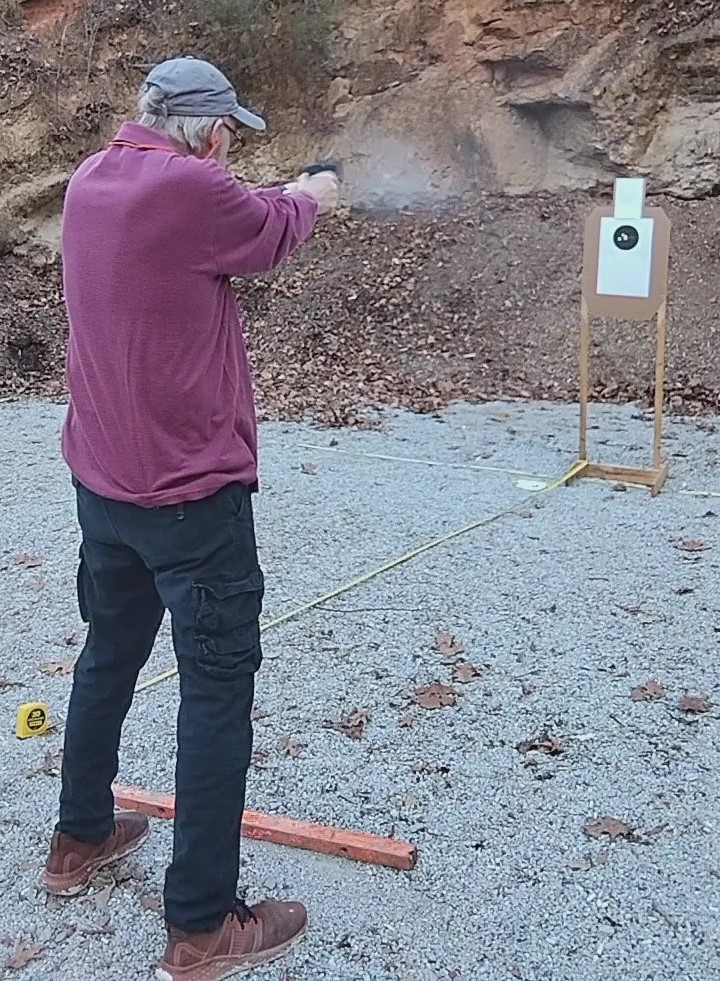
- Bring the pistol to eye level, acquire a sight picture, and fire five shots.
- Verify that the pistol is unloaded.
- Safely holster
The passing standard for the NY State Proficiency Assessment is that 4 of the 5 shots (80%) must hit somewhere on the three sheets of paper.
The total round count for this session is twenty rounds. While that may seem low by some people’s standard, it is as much as many owners of snub nose revolvers and small pistols like the Ruger LCP will want to fire at one session. As a beginning, shooting this session provides some familiarity with shooting the pistol, what its concussion and recoil feel like, and an indicator of the shooter’s capability within a distance envelope that most criminal victimizations take place in.
My Favorite Pressure Testing Drill
This is an old post of mine on Facebook from 2013. It was reposted today by my friends Phil Wong and Rob Reed. My thanks to them for resurrecting it. The post follows:
The concept of livefire pressure testing one’s shooting skills came up on a forum. This was my contribution.
My favorite drill is simple to set up but complex to administer. It requires comfort with an execution matrix to do correctly.
Conceptually, it’s best done with a group of about 2 dozen people or less. I’ve done it with 3 dozen, but it’s a lot of work.
It’s called ‘Everyone shoots against everyone.’ Using an execution matrix, I have every student shoot a short bout against every other student. Not consecutively, though. It’s not a mystery, I just run down the matrix and pair up names.
Logistically, all that’s required is two pepper poppers and two shoot boxes. The shooting is static. The drill is simple. Two shooters, two poppers, one signal. First to drive his/her popper down is the winner.
Where it gets difficult for the shooters is ramping their focus up and down over the course of an hour or so. Shooters do a lot of standing around and then get quickly called to shoot while the poppers are being reset. I do that timing deliberately.
When I did this for a large police department’s firearms instructors several years ago, their lead firearms instructor was the hands down favorite to win because he was easily the best shot in the department. However, that turned out not to be the case. He became complacent after awhile. The guys that had to shoot against him were jacked up every time. There ended up being no clear cut winner. The guys at the top of the winning curve were all reasonably proficient but not equal to him. Not surprisingly to me, the dedicated point shooters ended up at the bottom of the curve. One even told me he had decided to re-evaluate his philosophy because he got beaten so consistently.
At the end I commented that the amount of time they had to prepare for each bout after being called was similar to the amount of time they had from when they turned on their lights for a ‘routine traffic stop’ until they exited their patrol cars. Some of them do dozens of stops each day because they work traffic on the Interstate.
The psychology of approaching combat is as important as skill. Complacency, among other things, kills. After two years at Rogers, how students dealt with the problem mentally became far more interesting to me than the technique.

One of the difficulties of the Rogers Testing Program is that it requires students to take turns loading magazines, watching/evaluating someone else, and then standing and delivering. It goes on for over an hour, which is psychologically nerve racking. This evening, I was watching some footage of a huge firefight in Afghanistan and was struck at how similar the pacing was to the Testing Program at the School.
The Demi-Practical Event
#wheelgunwednesday
Caleb Giddings of Taurus inspired me to design a Course of Fire derived from the Bianchi Cup Practical Event. I wanted something that wouldn’t demoralize newer shooters by making them shoot a demanding par time course at a long distance though.
The Bianchi Cup https://thecmp.org/competitions/cmp-pistol-program/cmp-bianchi-cup/ is being shot now at the Green Valley Rifle & Pistol Club in Missouri. The Cup goes back to 1979 and it is one of the most prestigious and lucrative shooting contests in the world. There are four Events at Bianchi, The Practical being one of them. It consists of 48 shots. There are 4 stages, fired at 10, 15, 25, and 50 yards, with 3 series of 2, 4 and 6 shots in each stage. Two targets are set up 1 yard apart, each having a four inch X Ring and a 10 point scoring ring 8 inches in diameter. The target is much larger overall but a competitor who sends more than one or two hits of the 48 outside the 10 ring doesn’t have a chance. The X Ring is to break ties.
Three series are shot at each distance. One shot on each of the targets, two shot on each target, and three shots on each target. At 10 yards, the three shot series is fired with the Support hand after drawing and transferring the pistol from the Primary hand to the Support hand. A nice thing about Bianchi is that it is six shot revolver neutral and there is no reloading on the clock.
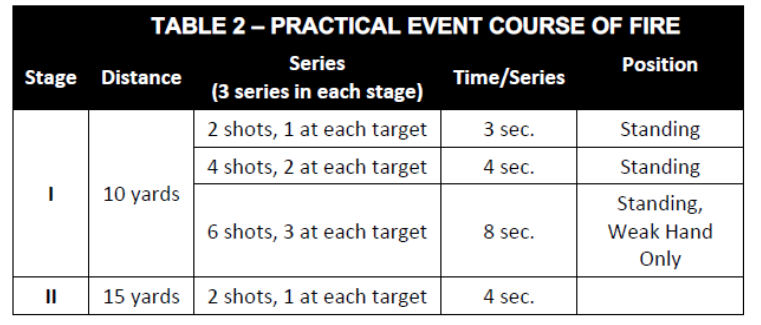
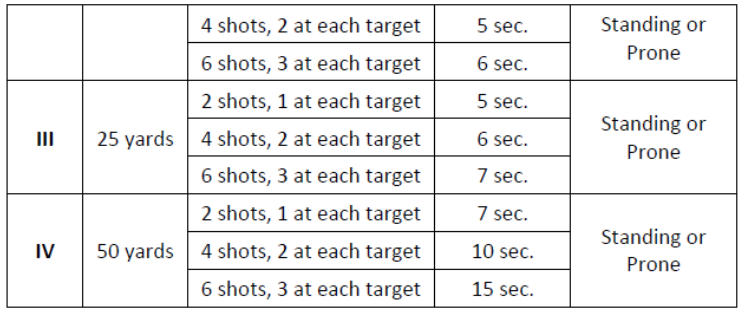
Since shooting a pistol at 50 yards would be soul crushing to most shooters, the Event I created is called the Demi-Practical, demi- meaning half https://www.merriam-webster.com/dictionary/demi-. The 50 yard stage is eliminated and the other distances are halved. This gives us a 36 round Event shot at 5 yards, 7 yards, and 12 yards. The Support hand shooting is changed to Primary hand only shooting with a time change to 6 seconds since there is no hand transfer. All shooting is done from the Standing position.
Since the AP1 is not a common target commercially, I substituted the IDPA target. Points down scoring works fine as a practical marksmanship metric. Par timing makes it easier to administer and score.
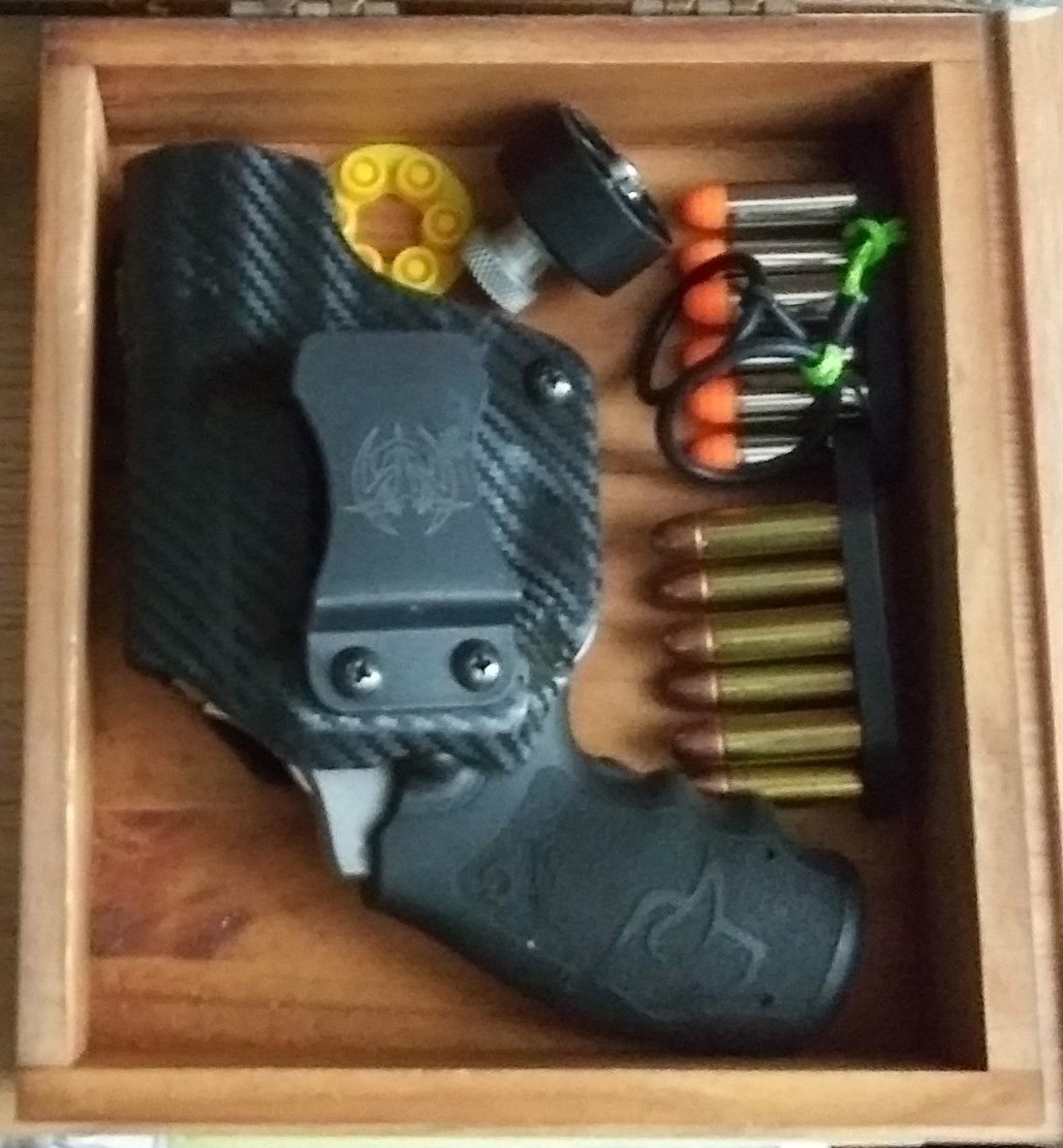
Today was a beautiful day so I took the opportunity to go shooting. My Taurus 856 snub was one of the test subjects.
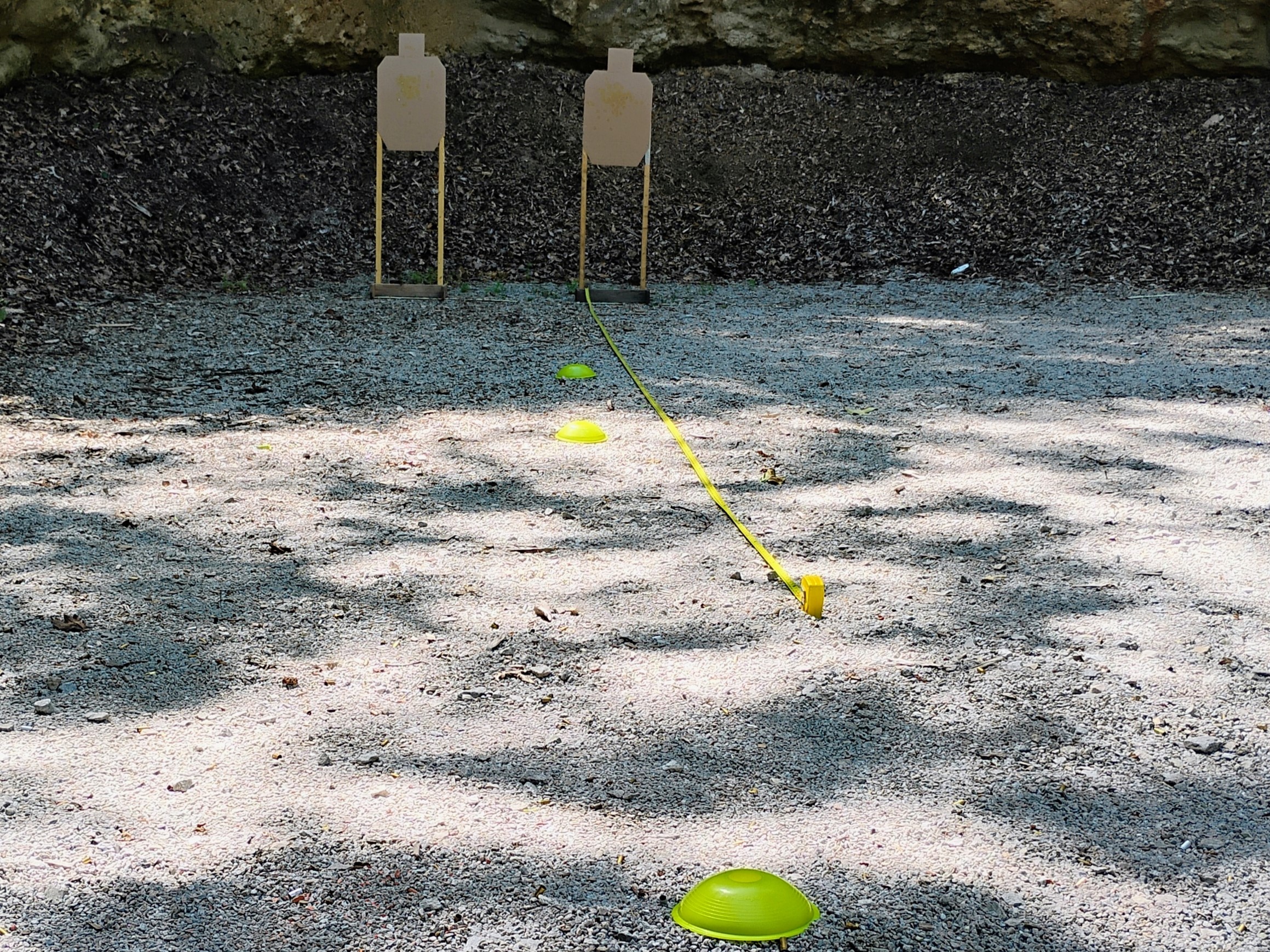
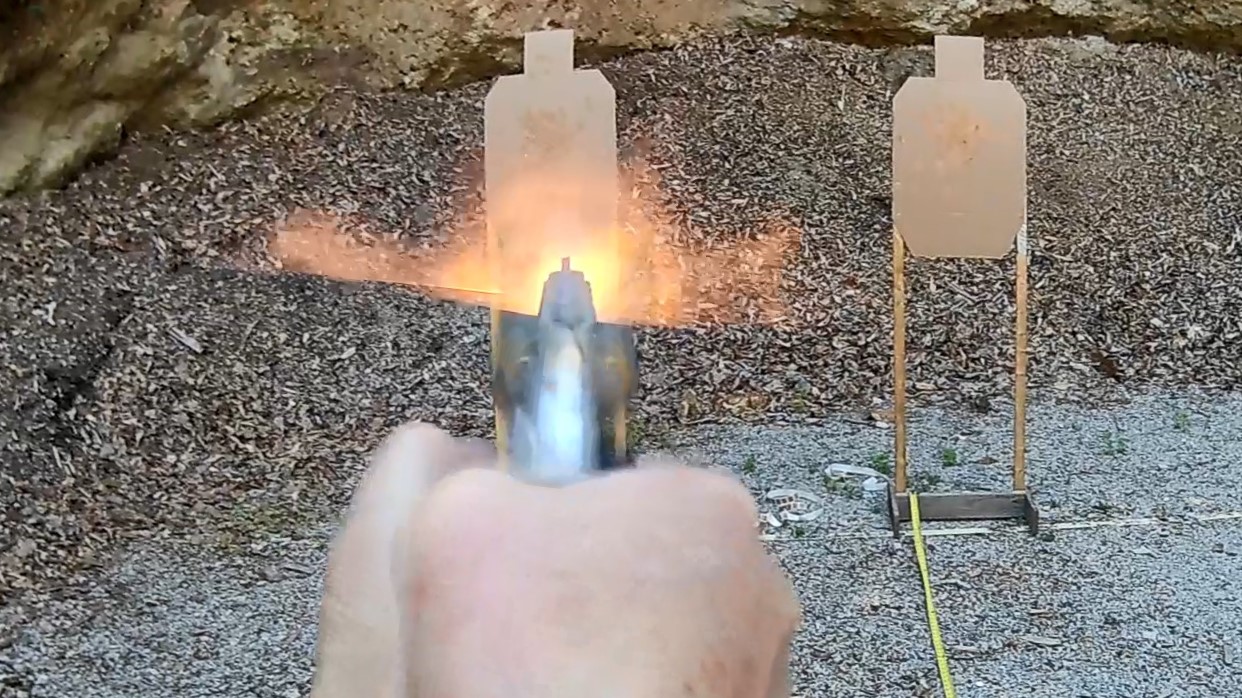
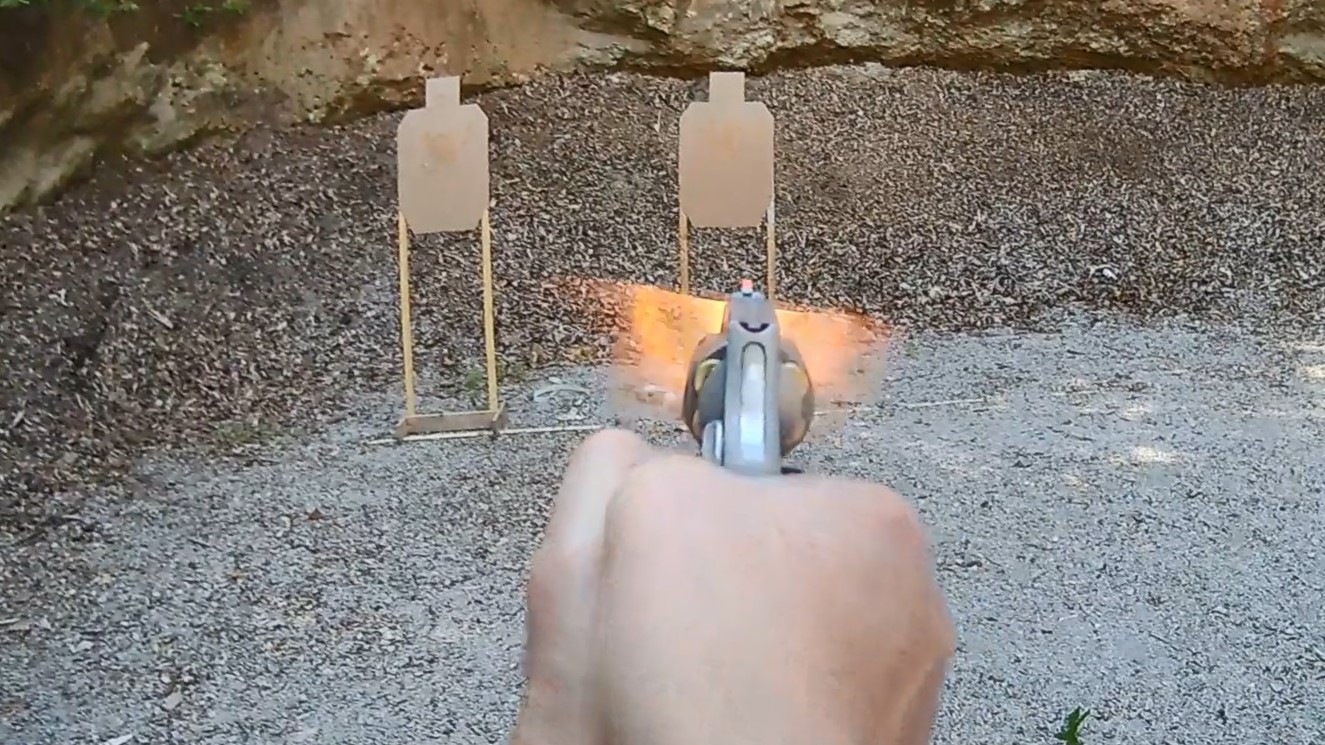
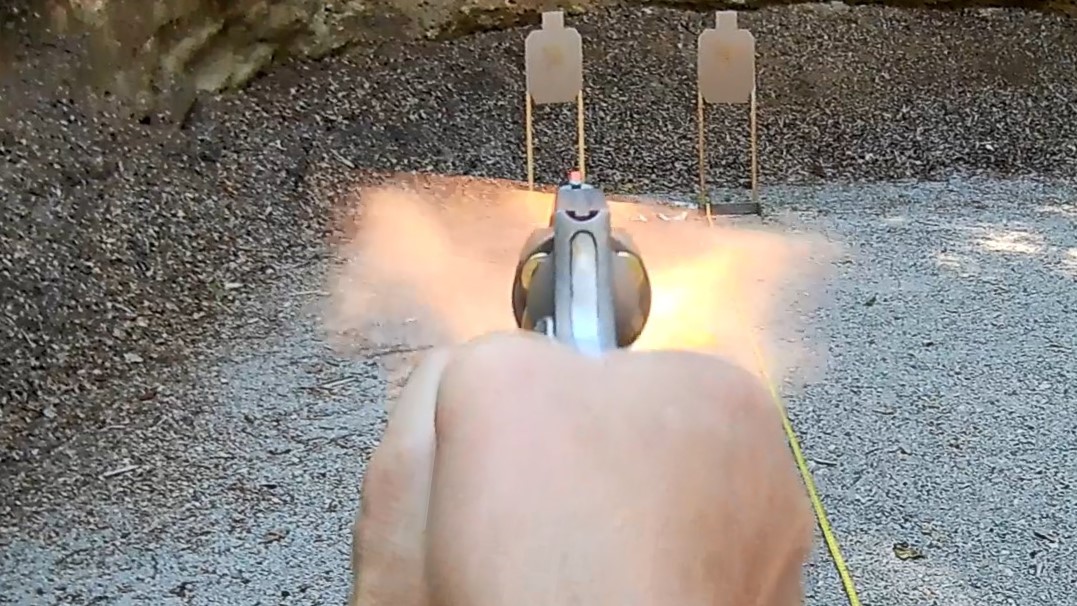
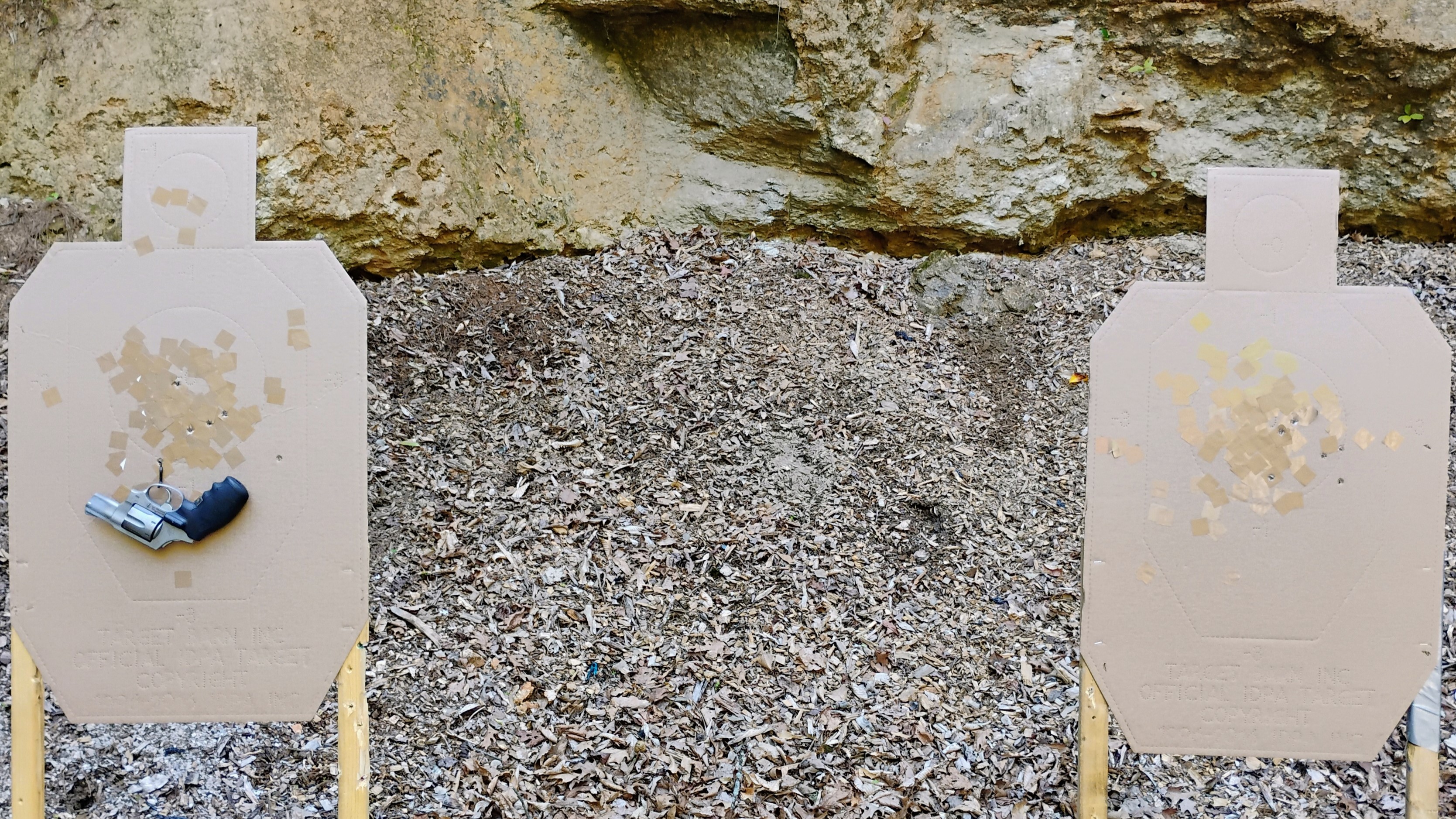
At 5 yards, I was 2 points down on the right target. At 7 yards, I was able to shoot both clean. At 12 yards, I was 1 point down on each target.
I had a good time shooting it. You might enjoy shooting it, too.
Periodic Personal Evaluation
#saturdayskillsczech
My December article for Shooting Illustrated is entitled Near to Far Marksmanship Practice.
https://www.shootingillustrated.com/content/near-to-far-marksmanship-practice/
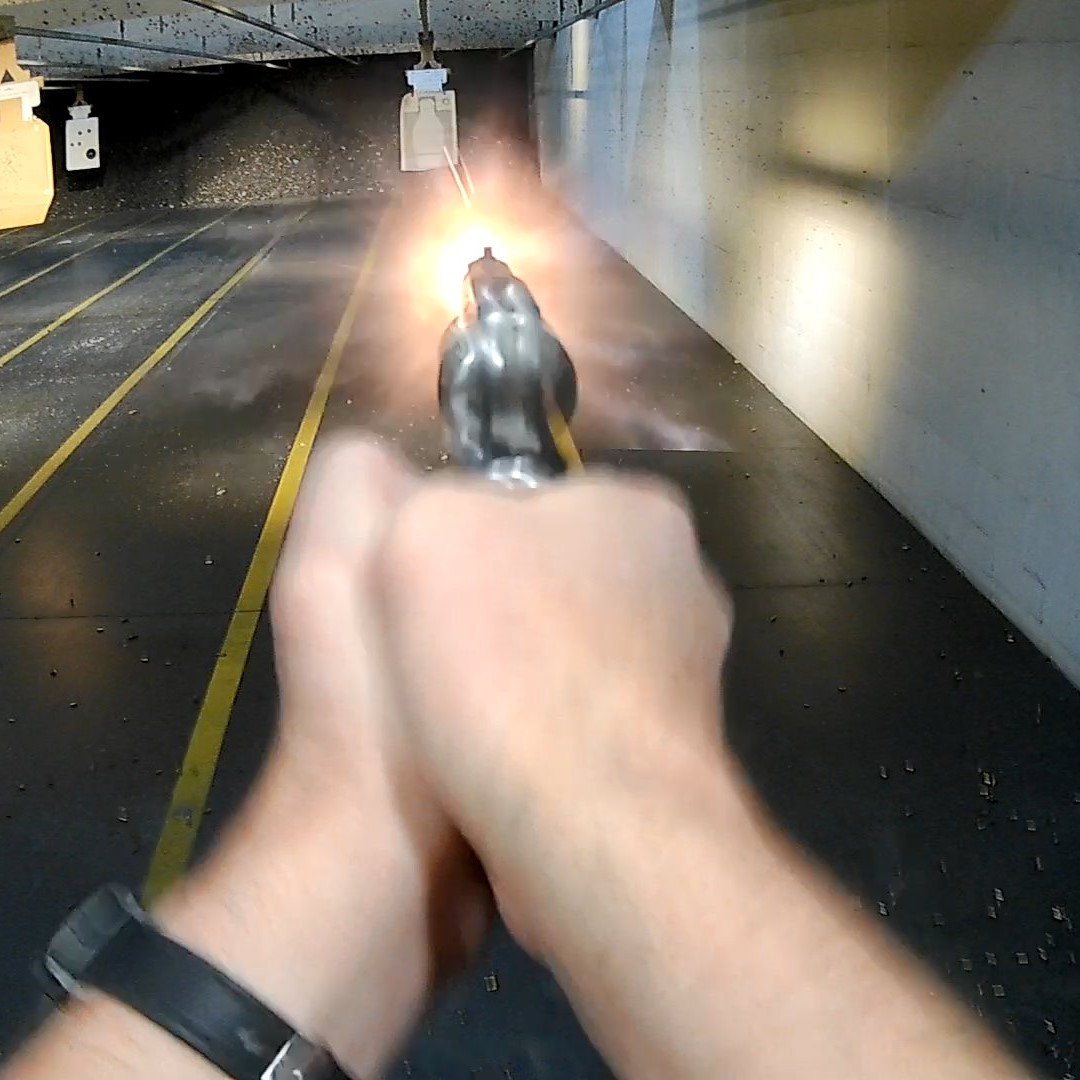
Although New Jersey made a strong try to keep people from getting their License To Carry, the qualification course itself is a decent practice regimen. It’s also a useful metric for measuring your skill periodically.
Try shooting it on an IALEFI-Q and score it by the rings. Center ring gets 5 points, next ring get 4 points, balance of the Q receives 3 points. Hits inside the face circle score 5 points. Anything outside the Q scores 0. A Possible would be 250 points (5 x50 shots). If you don’t have an IALEFI target, just trace around a paper plate in approximately the same place on your silhouette. Your scoring is then 5 points for the circle and 3 points for the rest of the silhouette.
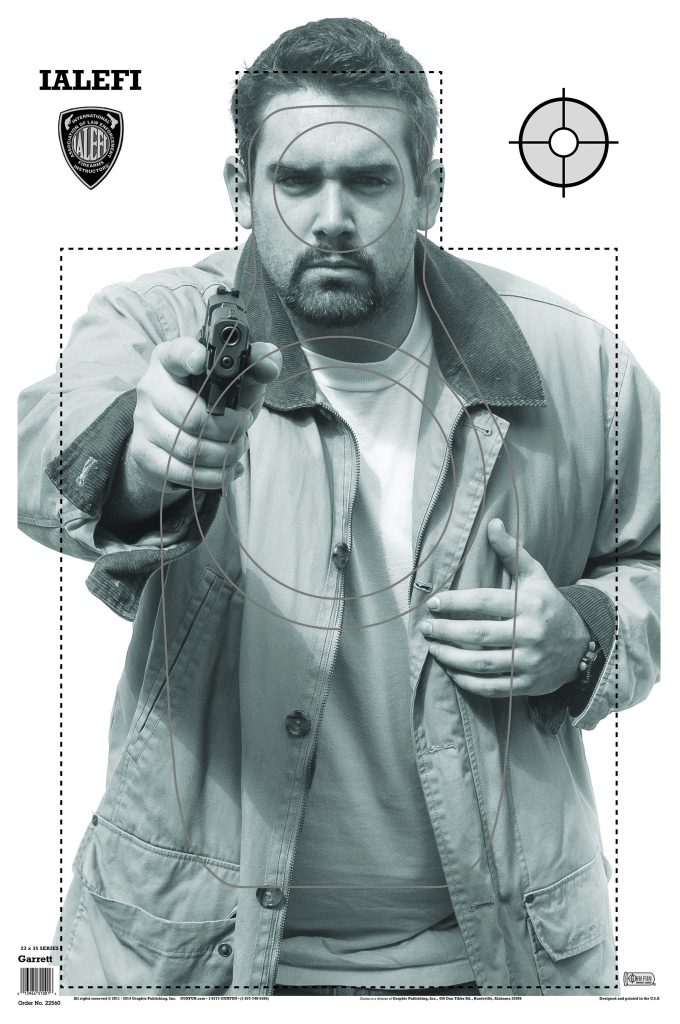
To make it a good tune-up and personal evaluation, shoot the course as a version of Jimmy Cirillo’s 1-2-3-6 drill. Instead of 6, fire 4 shots for the final string. Start loaded with 6 rounds only. Draw and fire 1 shot, reholster, draw and fire 2 shots, reholster, draw and fire 3 shots, reload, and immediately fire 4 shots. Bear in mind that the second most missed shot in shooting is the shot immediately following clearing a stoppage. The reality of transitioning back to trigger control after doing a gross motor manipulation can be tricky.
Since CCARE starts at 3 yards, at that distance shoot all face shots. Repeat the same sequence at 5 yards, 7 yards, 10 yards, and 15 yards but shoot for the 8 inch circle. After shooting each distance, tape your hits before moving to the next distance. At the end of the course of fire, place your pistol in whatever condition you wish to when you leave the range.
Although the CCARE is rather stringent for a CCW qualification, it has value as a practice regimen. It includes a minimum of 10 presentations to the target or 15 if you use the 1-2-3-4 sequence. There are multiple opportunities to practice reloading, and it’s highly manageable with wheelguns. Even J-Frames can work, just reload in a slightly different sequence. It’s a good use for a box of practice ammo.
Advanced Pistol Practice announcement
Because I’ve been asked for it so often, I’ve created a Skill Development practice program that goes far beyond my first two books, Concealed Carry Skills and Drills and Indoor Range Practice Sessions. CCSD and IRPS were intended for newer or inexperienced shooters.
The new Program is called Advanced Pistol Practice. It is intended for those shooters who are familiar with their handguns and are serious about taking their skills, both Technical and Decisional, to a much higher level. Although many people would like to take a high level training course, that’s often difficult or impossible because of resource constraints. While it can’t provide the practiced eye of a good instructor, Advanced Pistol Practice provides shooters with a practice approach similar to those used by many good trainers. It uses an integrated approach to Skills Development incorporating both Live Fire and Dry Practice that is found in many high level training courses.
The Live Fire component consists of Technical Drills, Decisional Drills, and Scenarios. While numerous technical shooting drills are widely available, drills that develop the skill of ‘thinking with a gun in hand’ are much less common. The Decisional Drills included in APP are intended to fill this gap. They consist of both Don’t Shoot/Shoot exercises and target identification/follow-up hit assessment exercises. Scenario shooting should be a part of every shooter’s practice but creating realistic scenarios isn’t always easy. The Live Fire Scenarios in APP are based on actual shootings, gunfights, and gunbattles involving both Private Citizens and Law Enforcement Officers, especially off-duty LE incidents.
Snub revolvers continue to maintain a healthy presence as backup and hideout gun among knowledgeable guncarriers. The Snub Revolver Program Of Instruction that I developed and used for many years is included in APP. Snubs are neither “arm’s length guns” nor “one-shot close range shotguns.” Given a structured practice regimen, shooters can learn to accomplish good work with a snub revolver. Dry Practice exercises for the snub are included in the Program, as well.
Dry Practice is often the most challenging practice component of Skill Development because it tends to be unstructured and boring, leading to unproductive “grabasstic gun-clicking.” To combat this, APP includes a series of different structured audio programs in different voices with different sound effects to keep dry practice focused and interesting. Since the space available for dry practice is usually limited, APP also includes reduced scale targets to facilitate the dry practice.
Proficient shooters are frequently asked by new or prospective gunowners to provide an introduction to shooting. To assist the proficient shooter in setting up a new shooter for success, APP includes a short training outline suitable for those with little experience with firearms. Setting up a new shooter for a productive and enjoyable session is an important part of growing our community. The New Shooter Outline can help a proficient shooter do that.
Recognizing that firearms are periodically involved in unfortunate situations, Advanced Pistol Practice also includes the entire Serious Mistakes and Negative Outcomes recording as MP3 files. The potential personal disasters that can result from poor decision-making and not thinking ahead are often overlooked among firearms owners. Serious Mistakes and Negative Outcomes challenges the gunowner to think ahead and avoid the pitfalls that can occur during ownership and incidents.
Advanced Pistol Practice is more than a book and contains many audio files and graphics. Consequently, it’s not feasible to offer it as a download. It’s available on my webstore in two formats; CD and USB flash drive. The CD version is $19.95, shipped. There’s a $3 additional charge for the USB flash drive option.
https://tacticalprofessor.my-online.store
The Program is about the price of one box of ammunition and will pay for itself many times over by saving time, ammunition, and perhaps even lives.
The Importance of Target Identification
Deputies found a 32-year-old man who said that he and his wife were sleeping when they heard a noise in the kitchen.
The husband took his handgun and walked in the kitchen area, where he shot the victim.
After the shooting the husband recognized the victim as his younger teenage brother.
Man shoots, kills brother thinking he was burglarizing home
Yet another tragic example of why I stress target identification so much. These situations are absolutely preventable. As I’ve said before, if you live with anyone else, my analysis is that there is a 97 percent probability that the ‘bump in the night’ is a member of your own household. With those kinds of numbers, gunowners cannot take the risk of shooting someone at home without establishing a positive ID.
This kind of situation is a further example of why I say we have to be very cautious of what we take of from our training, and even more so, what we read. Much of the good training available is conducted by former law enforcement or military personnel. Just as much as any of us, they are subject to unconscious biases resulting from their experiences and training. Since most reading now is done on the Internet, you have to assume everything you read is wrong because most of it IS wrong.
Responding with a firearm to a noise at night in the home absolutely requires that you visually verify your target before shooting. You probably will need a flashlight for that. And stealth is not your friend, it is your enemy. Therein lies a major divergence from the law enforcement officer or soldier, to whom stealth is an ally. The notions that ‘the light draws fire’ or that criminals will wait in ambush for you if they hear you coming are nonsensical. Those are bad paradigms for us to insert in our thinking. If your background is such that having assassins waiting in ambush for you in your own home is a concern, you need to work on some serious hardening of access points to your home.
If you keep a gun at home, put a flashlight next to your gun; no ifs, ands, or buts about it.
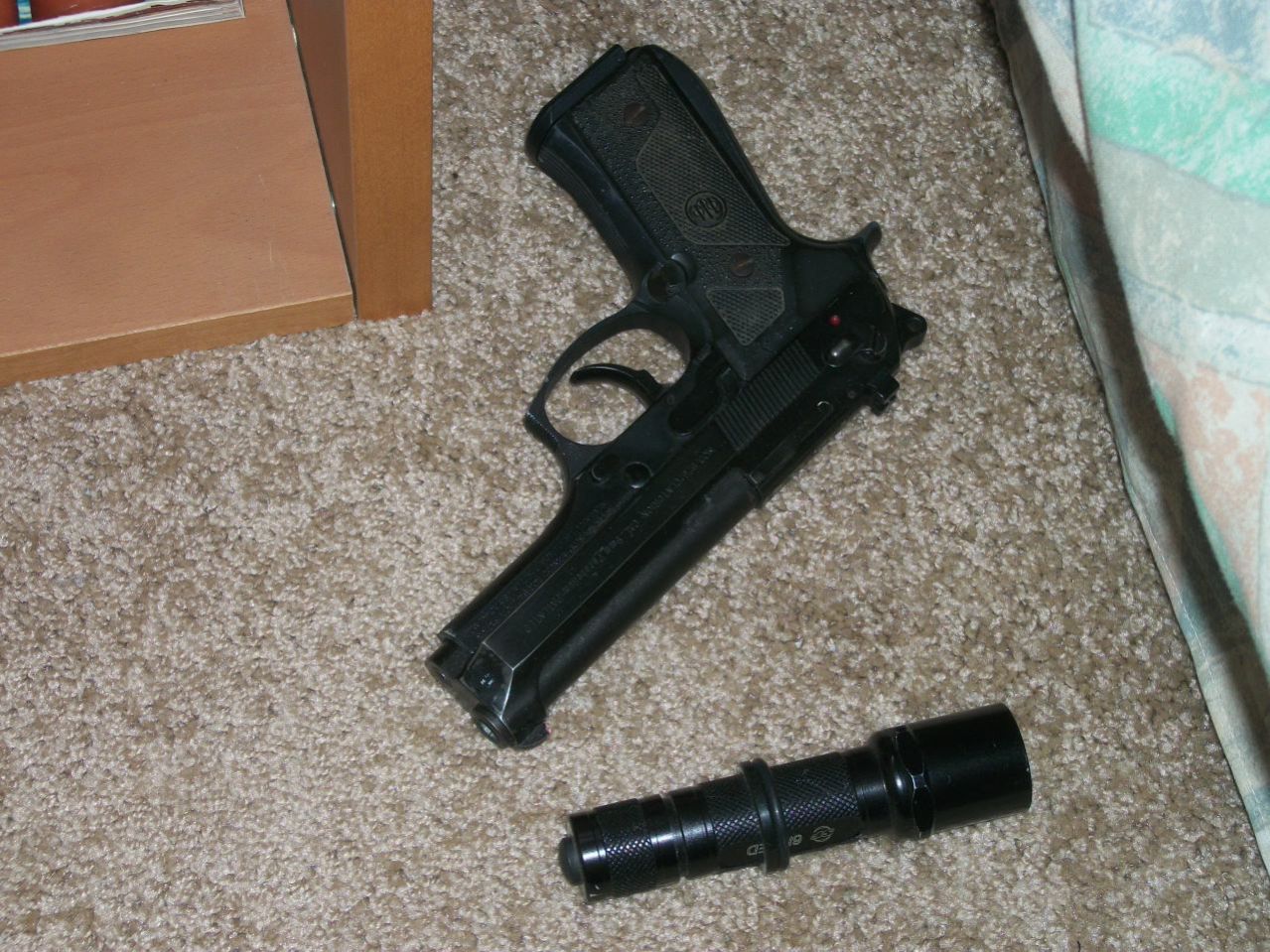
Next time you go to the range, take the flashlight with you. Instead of just blasting 50 holes in a silhouette, shoot two shots at the silhouette 25 times. Sequence is very important in how you do this.
- Have your gun in your shooting hand and your flashlight in your support hand. The gun is not pointing at the target and the light is off.
- Before each two shot string, say out loud “Who’s there?”
- Wait to listen for an answer. If you go to the range with someone, have them stand behind you and sometimes respond with “it’s me, Daddy” or something similar.
- If they say that, immediately put your gun down on the bench and abort that sequence.
- Then illuminate the target without pointing the gun at it.
- Finally, bring the gun up and fire the two shots.
One of the things you will find when using this sequence is that the worthwhile two handed shooting techniques don’t work well for it. Harries is both clumsy and dangerous to assume when you already have the light on the target and are keeping it illuminated while presenting the pistol. The Rogers/Surefire technique takes some time and manipulation skill to assume. What you will discover is that only the Cheek Technique or the FBI Technique work well in this context.
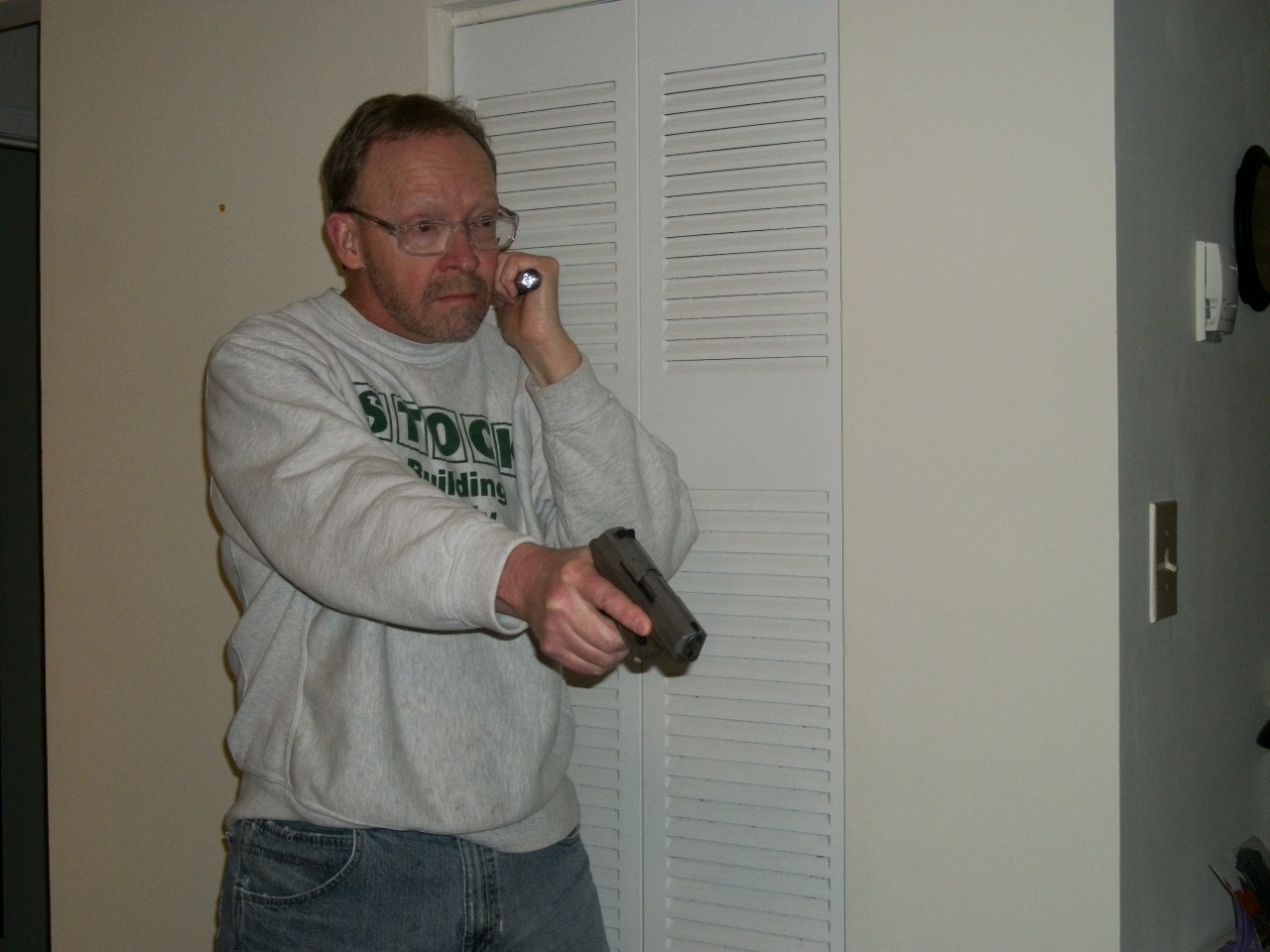
That means you have to learn to:
- Speak while holding your gun.
- Abort the shooting sequence if there is not a threat.
- Do a dissimilar task with the other hand, i.e., orient the flashlight and work the switch, while keeping your gun off target and your finger off the trigger.
- Shoot with one hand only while continuing to perform the dissimilar task.
- Manipulate the safety or decocker of your weapon with one hand while holding something in the other.
For the final 5 repetitions (10 rounds), put up a clean silhouette target and shoot the LAPD Retired Officer Course (10 rounds at seven yards). Measure how well you do. You’re going to find it’s a lot harder than you think.
That sequence is obviously rather involved; practice it before you have to do it for real or you’ll forget to do it or get it wrong. Forgetting to do it is what leads to tragedies.
 tacticalprofessor
You must be logged in to post a comment.