Cold War Memories – The Missile Batteries
#throwbackthursday
Trigger Warning! This series of posts has nothing to do with self-defense, hand guns, or Personal Protection.
My memories in Chicargo
The Missile Batteries

Another of my memories is the Nike-Hercules batteries that ringed the City of Chicargo during the Cold War. There were a lot of them. Probably the ones I remember seeing were in Jackson Park on the South Side because I loved going to the Museum of Science and Industry nearby.

In the early days, the batteries were equipped with Nike-Ajax, a relatively short ranged missile equipped with a conventional warhead to shoot down individual bombers. Later on, they were upgraded to the Nike-Hercules, which was nuclear capable.
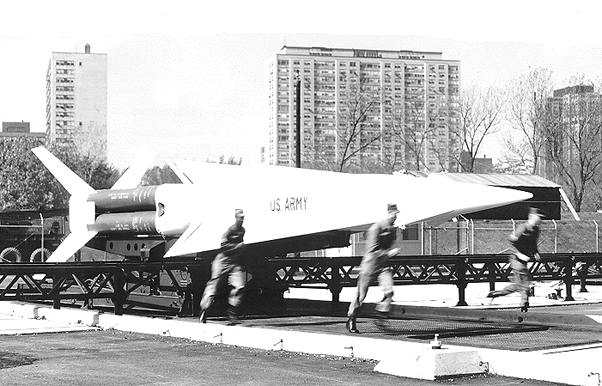
Nike-Hercules was intended to shoot down whole fleets of Soviet bombers by using a nuclear explosion. Although which batteries in the US were actually equipped with nuclear warheads wasn’t publicly released, the general consensus was that at least some of the Chicargo batteries were. The warheads were switchable from 2 kilotons, a tac nuke, to 40 kilotons, larger than the bombs dropped on Japan.
Here’s an Army informational film about Nike Hercules.
Next week: The effects on the City in the event of a successful Soviet thermonuclear attack.
Memories of the Cold War – The Sirens
#throwbackthursday
Trigger Warning! This is a series of posts about my personal experiences. It has nothing to do with self-defense, hand guns, or Personal Protection.
I recently watched an entertaining video by Joey B Toonz, an Idiocracy commentator on YouTube. It is titled Starbucks Employee Crying Over Having to Work. The young fella was upset about having so many customers and having to work a full 8 hours.
https://youtube.com/clip/UgkxyTKxPH-MPuYQ01wF8lTlXRYExkYwjUoY
It got me to thinking about the things that concerned me while I was his age growing up in Chicargo. Unlike the Greatest Generation, I didn’t have to walk seven miles through the snow to school, only one. However, one of the things we Boomers did grow up with was The Cold War https://en.wikipedia.org/wiki/Cold_War and the accompanying specter of thermonuclear annihilation.
My Cold War memories in Chicargo
The Air Raid Sirens

My earliest memories of the thermonuclear specter are the air raid sirens that were tested mid-morning the first Tuesday of each month. I remember beginning to hear them around the time President Kennedy was assassinated when I was in Third Grade. Chicargo had many sirens, reportedly over 100, scattered throughout the city. The monthly tests continued long past when I joined the Army after I graduated from high school.
Probably once a year we would have an ‘Air Raid Drill’ at my elementary school. Because our classrooms had ‘cloak rooms’ where we hung our winter coats, we didn’t do “Duck and Cover.” We just all got up and went into the cloak room for a couple of minutes. In the case of an actual thermonuclear attack, we would have waited there for the building to be destroyed or completely set on fire by one or more 2.2 megaton thermonuclear explosions. More about the actual effects of what such an attack would have done to the city in a later post.
The loudest sirens were the Chrysler Victory sirens. They were marvels of engineering. https://en.wikipedia.org/wiki/Chrysler_Air-Raid_Siren Power for the siren was supplied by a Chrysler Hemi 180 horsepower engine and it produced a wail of 138 decibels, which is similar to the sound of gunfire. Hearing protection was required to operate them just like shooting a gun. They were mounted atop tall buildings, fire stations, and other such places that would allow them to be heard for miles.
A marvelous website called Victory Siren http://stall.net/victorysiren/ has a great deal of information about the Chrysler sirens. There is a recording on it http://stall.net/victorysiren/wav/sound.htm that sounds eerily similar to what I recall of those days. It is Sound Clip #10 – Warning Signal.
“This is a recording of Harry Barry’s Detroit siren as heard five miles away. Although the siren was pointed in Harry’s direction, it was not visible over a ridge between the two distant points. The siren was mounted on a trailer and not at optimum height for sound coverage. At this distance it takes the siren sound about twenty-four seconds (same length of time as this clip) to travel from the siren to the listener. The siren volume was estimated to be 55 to 58 dB at this distance!”
Next week: The nuclear armed anti-aircraft missile batteries surrounding the City of Chicargo back then.
The entire Joey B Starbucks boi video is here. https://youtu.be/KYf8HLDwNhs
Home Invasion – Part II
and that’s the first time I realized how difficult it was to try and remove somebody’s testicles by hand.
The gentleman was very angry that his wife and homestead had been attacked and he had been shot at.
He used a 6 inch revolver to shoot back. No results, unfortunately.

And with that I went back to retrieve my own firearm. So I went to the vehicle. I had a handgun, a 38 special with a 6 inch barrel.
Quite an amazing and educational story.
Part I https://thetacticalprofessor.net/2023/06/17/home-invasion-part-i/
Home Invasion – Part I
It’s not often that we are able to listen to such a detailed narrative of how a home invasion went down. Having the victim tell the story makes it even more remarkable. This is a very brave woman and family. The overhead view of the property and accompanying explanation of the movements are invaluable.
My thanks to the creator of the video. More about the story in the next post.
RIP Sheriff Gene Matthews

Subscribe to continue reading
Subscribe to get access to the rest of this post and other subscriber-only content.
Charlotte Bus Shootout
On May 18, 2023, an altercation occurred between a bus driver and a young criminal riding the bus in Charlotte NC. As the altercation escalated, the young criminal produced a pistol from his pocket and approached the driver. Upon seeing the young criminal’s weapon, the driver produced his own pistol and opened fire on the young criminal. The young criminal fired back. Multiple rounds were subsequently exchanged.
ABC News link https://youtu.be/IoRgLsiefdE
Both shooters were wounded in the engagement. The young criminal was hit once in the abdomen and required six days of hospitalization with life threatening injuries. The bus driver was wounded in the arm, treated, and released. The young criminal was arrested and charged with Assault With A Deadly Weapon Inflicting Serious Injuries, Communicating Threats, and Carrying A Concealed Firearm. The bus driver was fired from his job but has not been charged, at least yet.
Issues
There are numerous issues that can be discussed regarding the incident.
- De-escalation
- The driver was fired for not using de-escalation techniques as taught by his employer. At this point, there is no way of knowing whether de-escalation would have been possible.
- Preparation for combat
- Although the young criminal was carrying a weapon and ‘communicated a threat,’ he had to consider the situation after he pulled his pistol out.
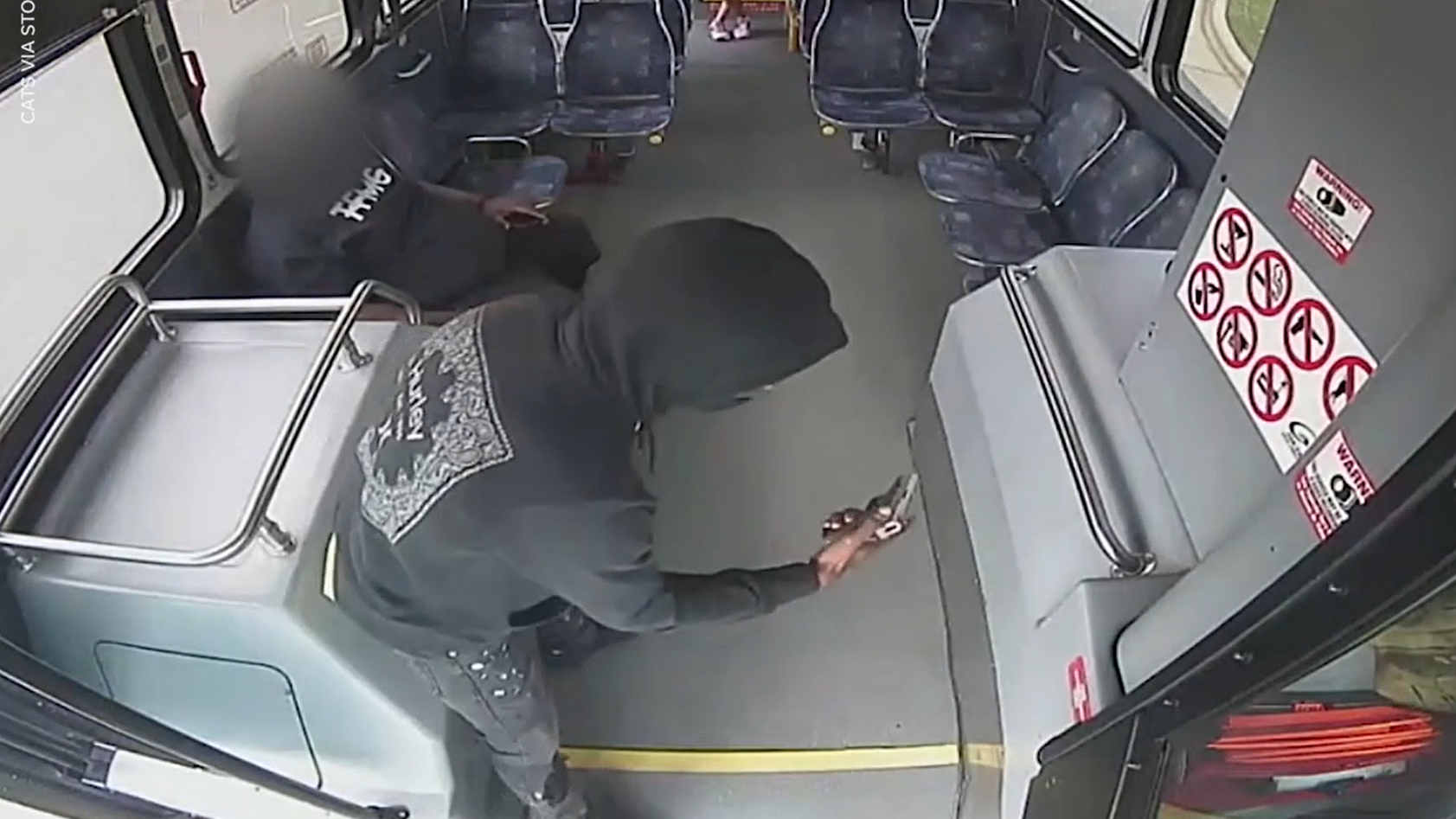
- The bus driver was clearly prepared for the incident because his draw was a one second draw any firearm instructor would be happy with.
- Situational Awareness
- The bus driver, despite having to drive the bus, was immediately aware of the young criminal’s approach after he armed himself.
- Point Shooting
- Distances
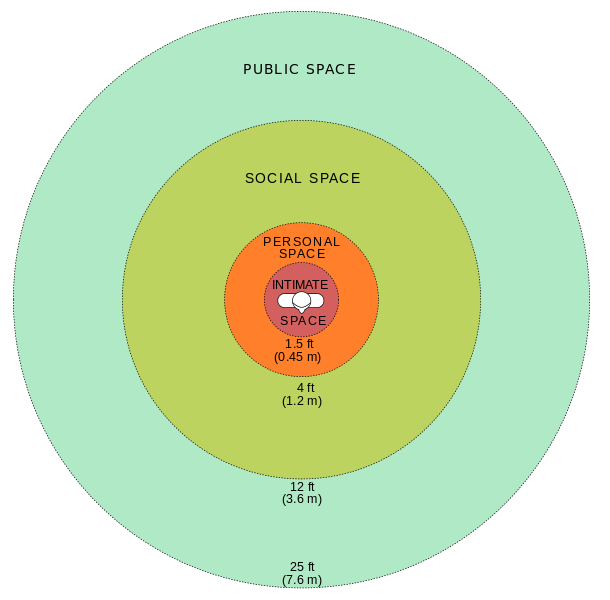
- The initial exchange of gunfire took place at about 4 feet, the boundary between Personal Space and Social Space in Proxemics.
- Distances
- As the shootout continued, the distances increased dramatically with the final shot taking place at seven to 10 yards.
- Both shooters fired one handed. Neither used a Gangsta style shooting stance. The young criminal’s initial stance was a classic point shooting Square stance with weapon just below the eye-target line as described by Fairbairn and Sykes in Shooting to Live.
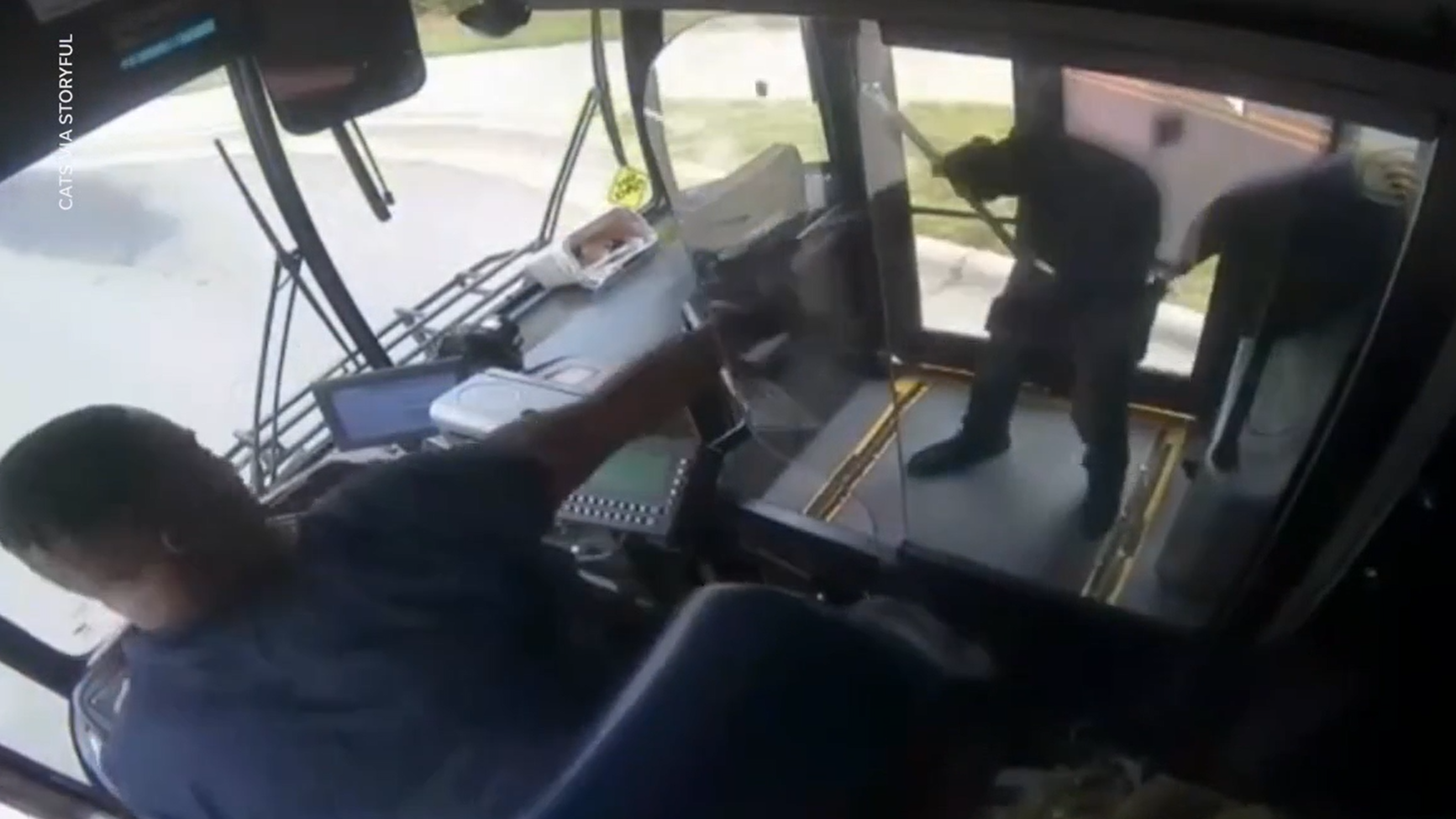
- As the young criminal retreated, the bus driver employed a ‘tactical blind fire’ method of continuing his barrage.
- Hits
- The results were that out of a magazine fired by each shooter, one hit was made by each. The young criminal was hit in the abdomen and the bus driver was hit in the arm. The hit ratio was less than 10 percent. Although the young criminal was seriously wounded, he was still mobile and unneutralized, as is often the case with abdominal wounds.
- Weapons used
- Glock 19
- SCCY
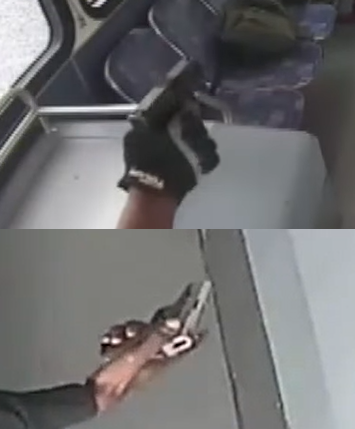
- Neither weapon appears to have malfunctioned.
- Both were equipped with iron sights.
- Anger management
- In Principles of Personal Defense, Jeff Cooper said “Now how do we cultivate an aggressive response? I think the answer is indignation. … Your response, if attacked, must not be fear, it must be anger. The two emotions are very close and you can quite easily turn one into the other. … Anger lets you do this.“ Although it is unlikely that the bus driver has ever read Cooper’s book, it’s very clear that he used Cooper’s philosophy.
- Actions after the initial exchange
- The bus driver fired three volleys.
- The initial exchange at the front of the bus, including the tactical blind fire.
- After the initial exchange of gunfire, the bus driver got up from his seat, opened the partition, had a verbal exchange with the young criminal, and then began shooting again.
- Finally, after the young criminal had exited the bus through the rear door, the bus driver debussed through the front door and fired one more round at the young criminal, who was now in the open seven to 10 yards away. This shot is problematic.
- The bus driver fired three volleys.
- Endangering innocent bystanders
- There were two bystanders on the bus. Both were endangered by the tactical blind fire of Volley 1 and the bus driver’s second volley.
- The second volley was unnecessary and irresponsible. The underlying motive for these shots was vengeance “You shot me!” not self-defense.
- The final round fired in the open as a parting shot menaced the entire area. Cooper’s anger principle is entirely inappropriate at this point.
- Gunhandling
- The bus driver had to switch hands twice. To undo his seat belt and open his partition, he had to switch his pistol to his left hand. After stepping past the partition, he transitioned back to his right hand. He was able to do this without having an Unintentional Discharge.
- Verbal commands
- The bus driver commanded the young criminal to “Get your a** back!” when the young criminal was at the back door. The young criminal refused, fearing he would be shot again.
- Self-aid for wounds
- Both the young criminal and the bus driver were wounded. Neither had any first aid equipment. Note in the video that the bus driver is holding his arm where he was wounded.
- Chasing fleeing criminals
- Getting out of his seat to maintain visual on the young criminal was entirely appropriate. Following the criminal out of the bus was not. We see time and again the chase instinct that occurs when the predator-prey relationship reverses. It’s an instinct that we need to be aware of and not give in to.
My analysis of the Point Shooting aspects are on my Patreon page. I will be going over other aspects of the shootout in more detail in my next few posts there. Click the image below to follow.
The Value of Historical Methods
A viewer of my Shooting to Live Advanced Methods demo YouTube video asked an interesting question.
“Do you think that there is any value added by practicing the WWII Combatives shooting methods beyond learning historical training firsthand?”
In a conversation with him, he further elaborated that he was asking from his perspective as a competent shooter who practices regularly using demanding time and accuracy standards. From that perspective, my answer was NO. The only value to him would be for historical academic interest. There is nothing that will be learned of practical value for someone with his level of proficiency.
However, I continued on by saying that to the millions of first time gun buyers of the past few years, MAYBE. Only a miniscule fraction of those people will ever take a class on gun safety and learn how to shoot to some standard, whatever that standard might be.
For those millions of first time gun buyers, studying actual WWII shooting combatives, such as Shooting to Live and Field Manual 23-35 Pistols and Revolvers (1946), could have some value. Shooting to Live and its immediately successor, US Army Combat Firing, at least provide some structure and standards for brand new pistol shooters. Any system based on real combat is preferable to going to an indoor range and randomly blasting away based on what’s shown on TV.
I began the long term series about ‘Unsighted Fire’ aka Point Shooting on Patreon for a very specific reason. It is that obviously the vast majority of people who write about point shooting or make YouTube videos on “Fairbairn Method” shooting have never really read or studied any of the literature about it, including Shooting to Live. From the perspective of an historian and researcher, this lack of fact based information is both annoying and disturbing.
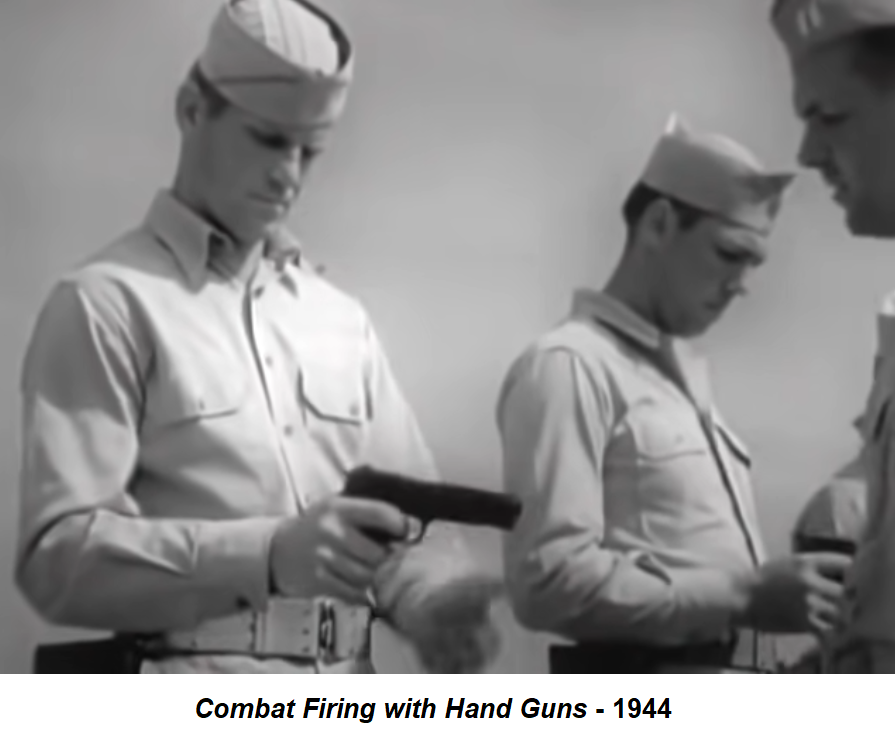
The gunhandling and safety aspects of WWII pistol combatives alone have a great deal of merit. Gripping the pistol properly. A strong emphasis on practical gunhandling in addition to marksmanship. Including malfunction clearance in early stages of Live Fire. Equal weight on Dry Practice as Live Fire, especially prior to the initial firing practice. Highlighting the concept of treating a pistol as always loaded. Emphasizing the importance of muzzle direction when handling a pistol. Practicing clearing and making the pistol safe when less than a magazine has been fired. Those are all highly useful skills, probably even more so than the marksmanship standards, which were not very high.
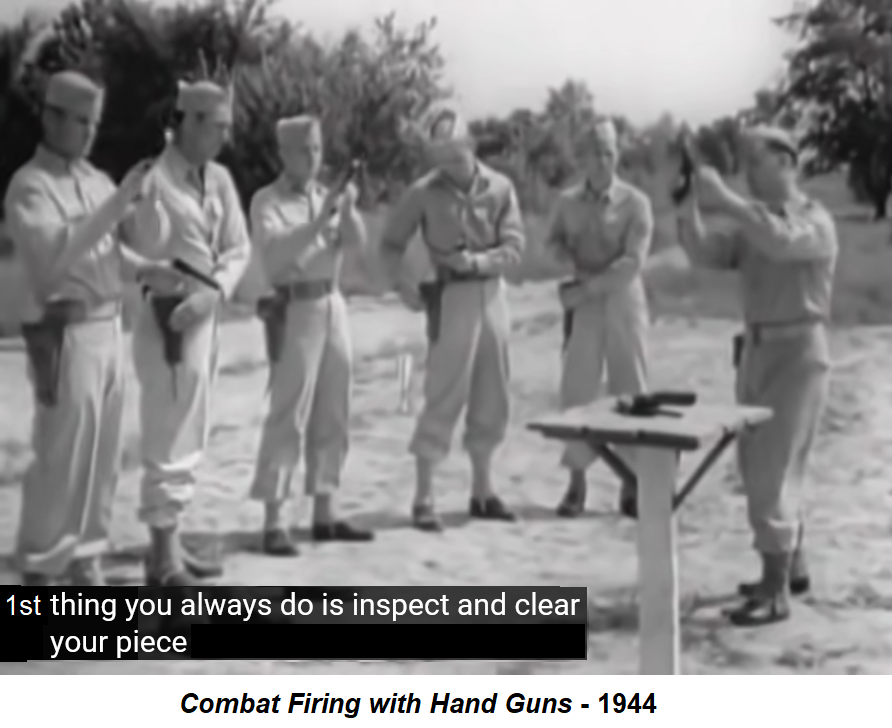
But please avoid muzzling your instructors. We won’t be happy about that. We will try to keep away from putting ourselves in a position where you can.
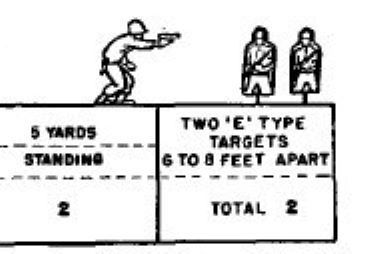
While the hit standards Shooting to Live and Field Manual 23-35 Pistols and Revolvers (1946) establish are rudimentary, they do give new shooters an idea that they’re supposed to actually hit something when shooting. The standard in Shooting to Live is 50 percent hits on a silhouette for single presentations within Social Space (4 yards). The 1946 US Army standard was 100 percent hits for single presentations on an E Silhouette at 5 yards.
Although most proficient shooters today would consider the techniques obsolete and the standards mediocre, at best, they’re still better than practicing what’s seen on TV and in movies. TV and movies are where most gunowners’ training takes place and that’s bad news.
If you would like to follow my Patreon page to go into more depth about point shooting and personal protection incidents, click on the image below.
Shooting to Live Methods and Results
#Fridayfundamentals
Shooting to Live by Captains Fairbairn and Sykes is one of the most mentioned books ever in the shooting community. Or at least a caricature of what the book actually said. The reality of what Fairbairn and Sykes taught in reality is much different, both in method and results, than is usually understood.
Clarifying what the two men wrote and trained other to do is not hard. Their “Recruit Training Program” is a grand total of 35 pages, which are heavily illustrated. There are 4660 words in total so it should take an average person 23 minutes to read it. That reading just doesn’t seem to be done by many who talk about their system.
One of the first demonstrations the Recruits received was of the “Extreme Speed” that a pistol without a round in the chamber could be fired at. This is a live fire demonstration of what the Recruits were shown in Dry Practice.
Note that in one iteration, I forgot to chamber the round despite being set up for the drill. Contrary to popular belief, while Fairbairn and Sykes may have “practiced their draws thousands of times” their Recruits did not. In fact, there is very little draw practice in the Recruit Training Programme other than as incidental to the drills fired from Ready and Three-quarter Hip.
The first live fire the Recruits had is demonstrated in this video. It’s quite rudimentary and most likely could be successfully taught to anyone who wasn’t afraid of gunfire with a dozen or so iterations of dry practice. Using a .22 would make it a piece of cake.
Let’s skip to “Advanced Methods.” Note where the hits are on the target. Hits in areas that are likely to have rapid debilitating effect are highlighted. The geometry of the position, being crouched down, forearm even with the stomach, and bore parallel to the ground is almost guaranteed to cause the bullets to impact below the diaphragm.
As Tom Givens likes to quip:
“What do people do when you shoot them below the diaphragm? Pretty much the same thing they were doing before you shot them.”
We need to keep in mind what Fairbairn and Sykes wrote their system was capable of, i.e., their performance standards. The hits had to be somewhere on the entire silhouette target; whether the legs were included is not explicitly stated but neither was it disavowed. The shooting distance of their Programme did not exceed 4 yards at any point and nearly half took place at 2 yards.
“The qualification we require before the recruit’s course can be successfully passed is 50 per cent. of hits anywhere on the man-sized targets employed. Time has shown this to be adequate for the purpose in view.”
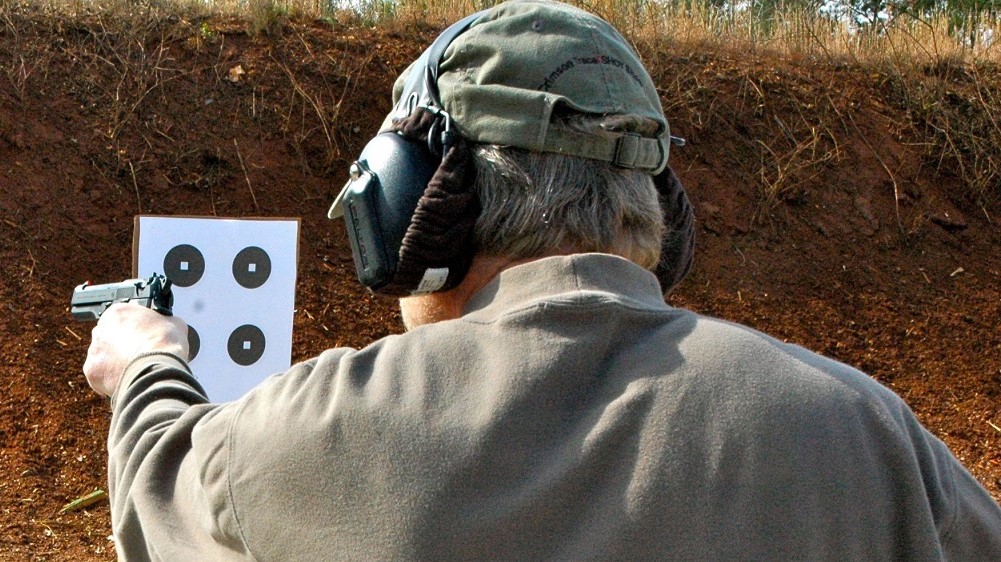
Explaining what Shooting to Live was the first segment of my Patreon series on Unsighted Fire. The next segment being addressed is US Army Handgun Marksmanship Training Evolution of WWII and Beyond. It’s very interesting to leave The Telephone Game The Telephone Game and the Training Industry behind and go to the source itself. If you would like to learn more about point shooting and personal protection incidents, click on the image below.
Safety Notes
Don’t shoot yourself in the leg when drawing your pistol.
According to authorities, Officer Charles Hamilton was responding to a potential burglary in progress at a residence on Lind Ave. around 10:06 AM. As he approached the scene on foot, Hamilton drew his service weapon, which subsequently discharged and struck him in the right leg.
On the same page, there’s an interesting display of handguns seized during a drug raid.

And another Revolver Handgun to the Rescue. Revolver Handgun To the Rescue
Jones went into her room to get her revolver for protection. When Jones exited her bedroom, Turner advanced towards her and she fired on[e] shot out of fear for her life. Turner was pronounced dead at the scene.
I don’t understand how can anyone possibly defend themselves with a revolver handgun and kill someone with only one shot but apparently it happens.
If you are interested in more in-depth writing about Point Shooting or Personal Defense Incidents and Analysis, please subscribe to my Patreon page by clicking on the image below.
Revolver Handgun To the Rescue
From The Armed Citizen column of the May 2023 NRA Official Journals
#wheelgunwednesday
“A 71-year-old man was walking home from a takeout restaurant on March 2 when two men reportedly emerged from an alley and attempted to rob him at gunpoint. The man pulled out a revolver and exchanged fire with the suspects, who then fled. The armed citizen unfortunately sustained a wound to his ankle but was otherwise unhurt. The suspects had not yet been apprehended at the time of our reporting. (fox29.com, Philadelphia, Pa., 3/3/23)” https://www.fox29.com/news/victim-shoots-at-robbery-suspects-north-philadelphia
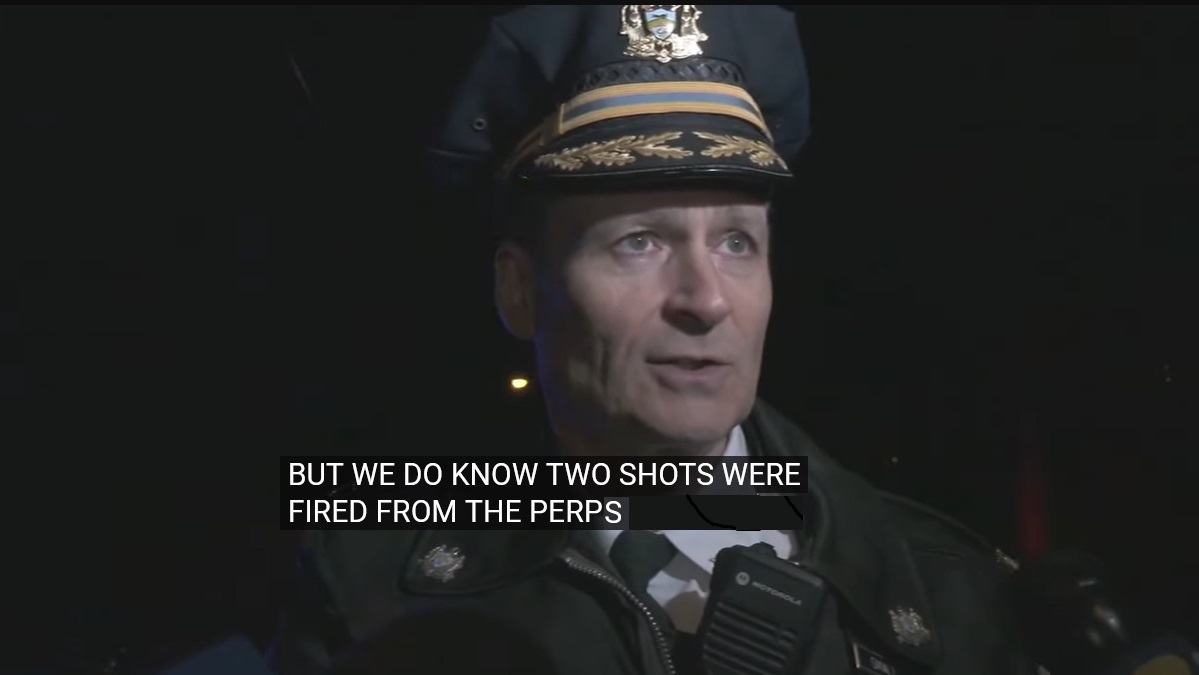
According to 6abc Philadelphia https://6abc.com/philadelphia-shootout-north-phillly-shooting-10th-street-cumberland/12907827/ , “The 71-year-old pulled out his revolver handgun and exchanged gunfire with the suspects”. The defender ‘emptied’ his revolver handgun at the robbers; one story indicated he had fired five shots. POlice spokesperson Chief Inspector Scott Small indicated that victim fired multiple shots and the perpetrators had fired two shots at the intended victim.
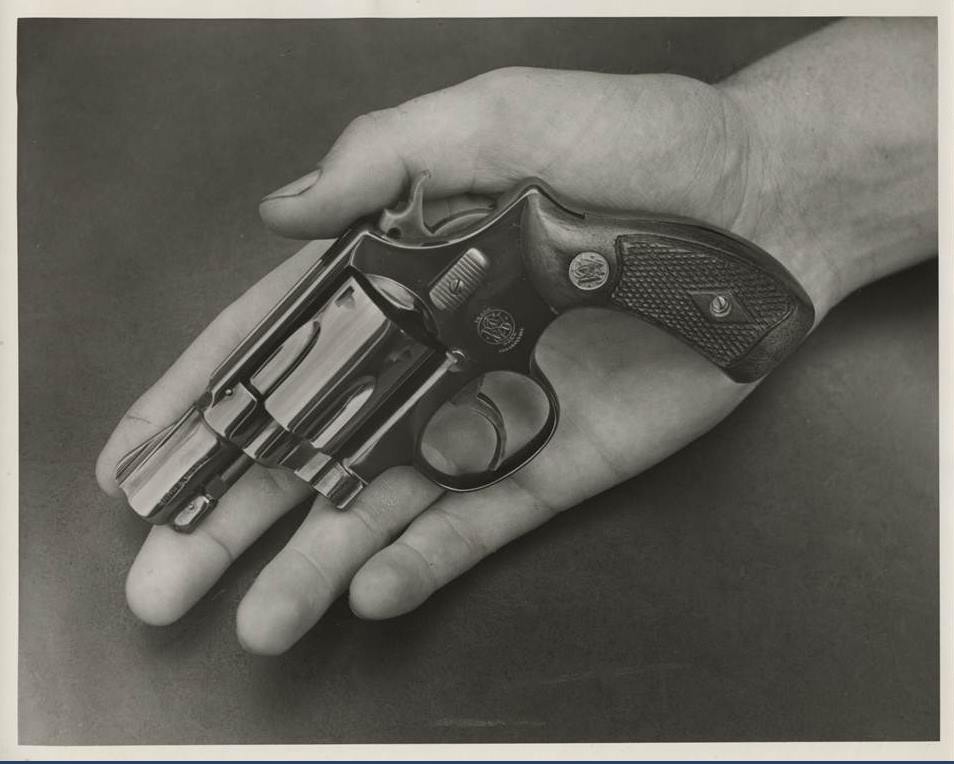
In an interview from his hospital bed with Fox News, the would-be victim said, “At night, I would keep my hand on my [revolver handgun] in my pocket in case I have to pull it out”. https://youtu.be/fs0RTJJTuOA He has a license to carry.
The Bottom Line was that he was armed and forced the robbers to Break Contact by shooting at them with his revolver handgun. Breaking Contact (Part I)
 tacticalprofessor
You must be logged in to post a comment.