Boyd’s Process In Application Not Theory
From a post on my personal Facebook page.
I avoid Stop and Robs in general. One of my men was murdered in one while working an evening part time. It scarred me forever. The hardest thing I ever had to do in the Army was sit with his mother while he was dying in the hospital and listen to her tell me how that POS had killed her son. It was heart breaking.
Many years ago, Evan Marshall, a long time Detroit policeman, wrote a column in Combat Handguns magazine. One month he described his plan if he was caught up in a convenience store robbery.
As long as all they’re doing is robbing the till (register), I’m going to act like a CPA from Akron and be a good witness. But if they start searching people, making people get down on their knees, or herding people into a back room, my wife knows to get away from me because I’m going to start shooting.
My soldier’s murder was captured on grainy surveillance video. He did everything the robbers wanted and opened the safe. They made him get down on his knees and then one of them shot him in the head. He survived for two weeks in hospital before he passed away.
When I went to visit him, his mother took me into an unoccupied waiting room and told me the story of what happened. I will never forget it as long as I live. Evan’s words came to mind and I decided then and there it would never happen to me.
This is Boyd’s Process; know ahead of time what your capabilities are and what you are going to do when the time comes. Then execute your plan without hesitation.
“He threatened me, and said he was gonna slice my head off, and that’s when I tried to call the police. He started throwing things at me, came behind the counter. I tried to run off, but he grabbed his hands around my neck, and pushed me out of the counter space, and that’s when I pulled out my gun and I shot him.”
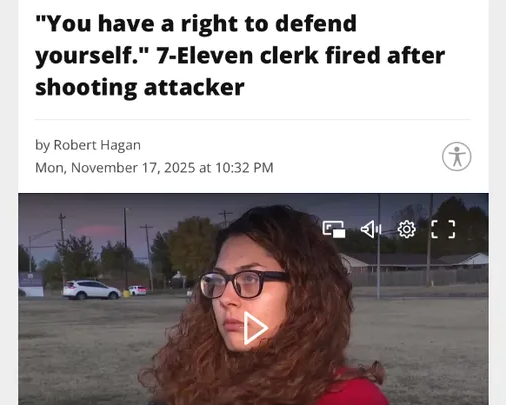
https://okcfox.com/news/local/7-eleven-clerk-fired-after-shooting-attacker-in-self-defense
The 1950 Assassination Attempt on President Truman
This post and article are dedicated to the memories and heroics of Officer Leslie Coffelt, who made the ultimate sacrifice, and Special Agent Floyd Boring, who kept his cool under fire.
In the afternoon of November 1, 1950, two Puerto Rican Nationalists made an assassination attempt on President Truman. It’s been described as the biggest gunfight in Secret Service history. Before the assassins were able to enter Truman’s temporary residence on Pennsylvania Avenue across from the White House, their attack was stopped by the White House Police and the Secret Service.
https://www.thetacticalwire.com/features/546e4b74-c821-4f5c-a59d-8ddbbb64aba7
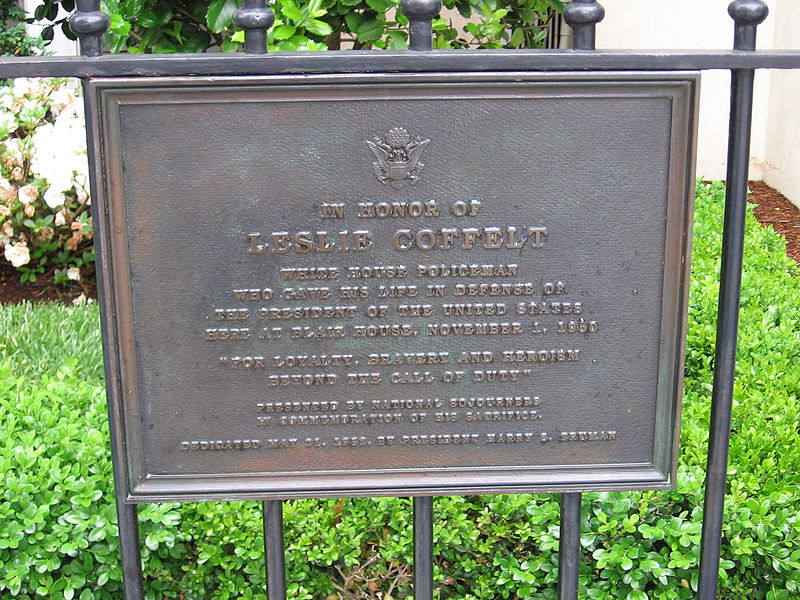
It’s worth noting that the assassins were stopped by two shots by two men armed with revolvers, who knew how to shoot them well.
If you would like to read more in-depth information about shooting and personal protection, consider subscribing to my Patreon page.
Accessories for the Small Frame Revolver
#wheelgunwednesday
Buying a serviceable handgun and then purchasing low grade accoutrements is a major mistake that people often make. My latest article on Shooting Illustrated digital discusses this.
https://www.shootingillustrated.com/content/accessorizing-the-small-frame-revolver/
Carrying your snub with the right gear makes it more comfortable, accessible, and concealable. Good accoutrements are a worthwhile investment.
The second part of Optimizing the Small Frame EDC Revolver https://www.shootingillustrated.com/content/upgrading-the-small-frame-edc-revolver/ is to use appropriate accessories for carrying it. This includes holster, belt, reloading device, and training aids. Concealed carry is a system of handgun, accessories, and shooter. Get the gear that makes them all work together.
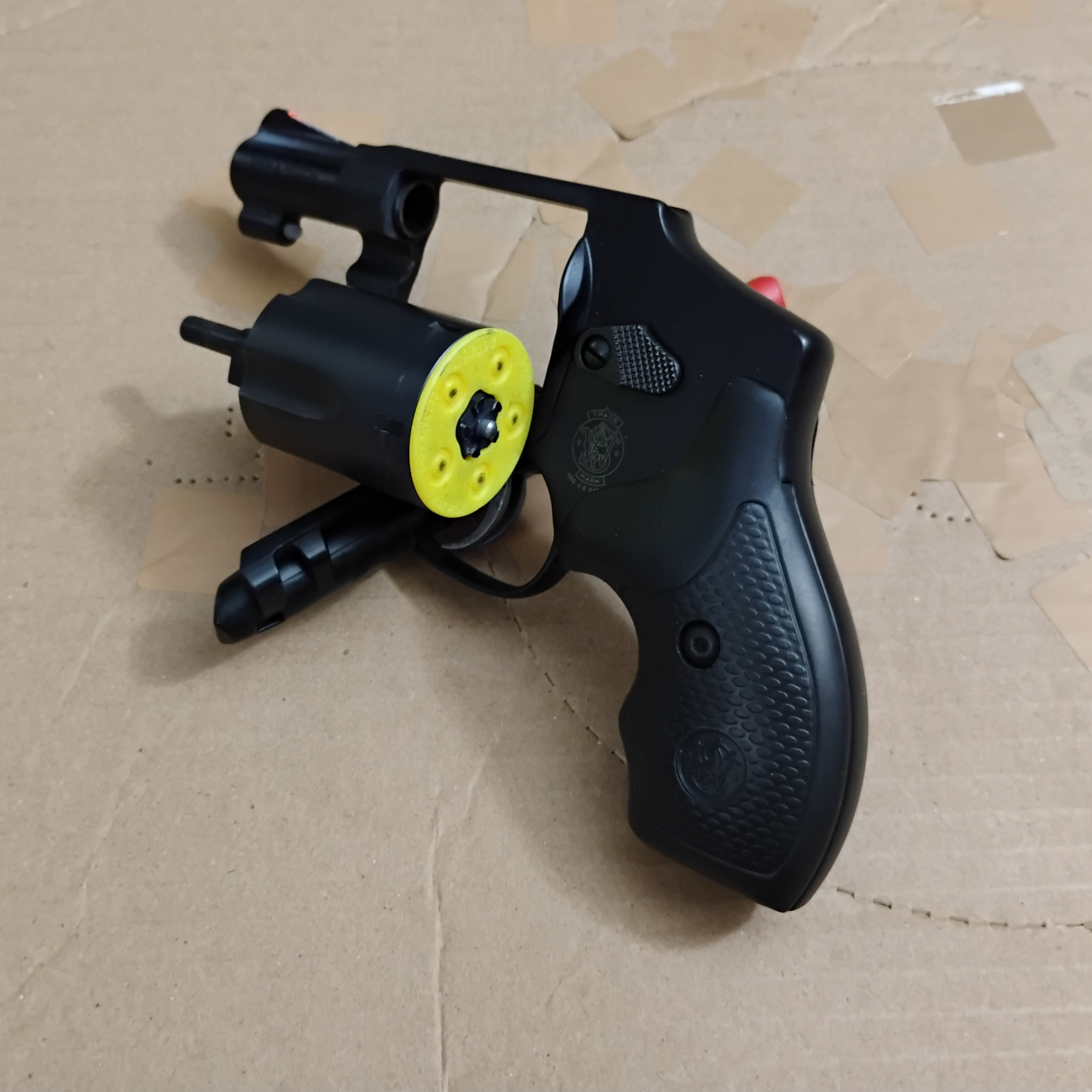
One image that didn’t make it in for space reasons was how the SafeSnap™ fits in a J frame. Since two bodies cannot occupy the same space at the same time (impenetrability), the SafeSnap™ makes it very difficult to have an Unintentional Discharge when it is installed. FTC Notice: I was involved in the development of the SafeSnap™ but I receive no compensation for mentioning it.
If you would like to read more in-depth information about shooting and personal protection, consider subscribing to my Patreon page.

Another Mistaken Identity Shooting and Killing
Odds are that the ‘bump in the night,’ has no more than a 3% possibility of being an intruder. The other 97+% is either a family member, friend, or some harmless dumbass.
I calculated this based on information in the National Crime Victims Survey overlaid on several other authoritative sources. The analysis is slightly fuzzy but I stand by the general numbers.
CSU professor accidentally shot by roommate who mistook her for intruder
[Muscogee County Coroner] Bryan said [Professor] Anderson’s roommate had been receiving terrorist threats from her son, including threats of bodily harm and to burn down the house. When the roommate heard a noise while sleeping, she grabbed her pistol and walked into the hallway.
‘She fired one shot and then fired another one and hit her roommate,’ Bryan said.
Calling out “WHO’S THERE” would save many a life. The concept that using a flashlight and/or issuing a verbal challenge will ‘draw the intruder’s fire’ is foolish and unsupportable.
Flashlight skills at home are important enough that I made the flashlight chapter of Indoor Range Practice Sessions a free download on my ebook store.
https://store.payloadz.com/go/?id=2505573
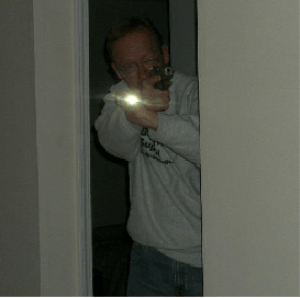
Note also that she was killed by one hit; this is not uncommon when a shooting victim is not highly adrenalized. Modern bullets are very lethal.
If you would like to read more in-depth information about shooting and personal protection, including making good decisions, consider subscribing to my Patreon page.
Thoughts On ‘The Distance Issue’
#mousegunmonday
Rich Grassi of The Tactical Wire recently posted an article about distances at which Defensive Gun Uses can be successfully resolved. https://www.thetacticalwire.com/features/a45b09c4-5997-4cd2-b959-a15df74293ac
One of his comments is well put and bears remembering in all cases of personal protection. It applies regardless of the implement used, whether personal weapons, impact tools, or firearms.
“Anyone who tells you that ‘if you shoot beyond (whatever) distance, you’ll have a lot to explain,’ forgets to add, ‘if you ever use deadly force to stop an immediate deadly threat, you’ll have a lot to explain.’”
This is an interesting topic and bears some further testing. Here’s my unlocked Patreon post about it.
https://www.patreon.com/posts/thoughts-on-140908907
To quantify his questions a little further for myself, the LCP II .22 provided a good platform. The standard I chose was well established and very basic, no pun intended. The NRA Basics of Pistol Shooting standard is to put five hits out of five shots into a four inch circle. Coincidentally, four inches is also the size of the -0 head zone on the IDPA target. To apply this standard to the question of ‘maximum effective range,’ two circles were shot at 10, 15, 20, 25, and 30 feet. The question was at what distance did I fail to meet the standard.

If you would like to read more in-depth information about shooting and personal protection, consider subscribing to my Patreon page.
ARMED CITIZEN – OCTOBER 2025
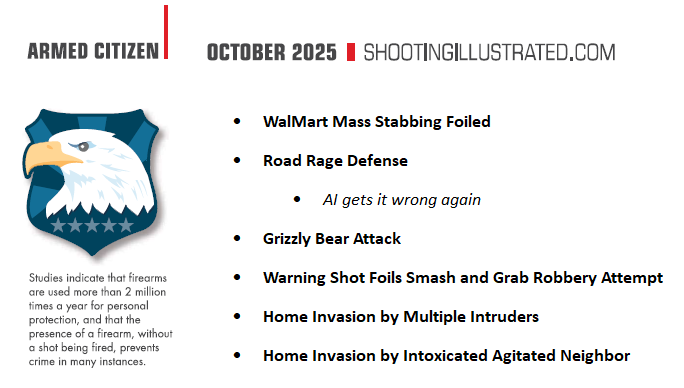
Anyone is free to quote or reproduce these accounts.
WalMart Mass Stabbing Foiled
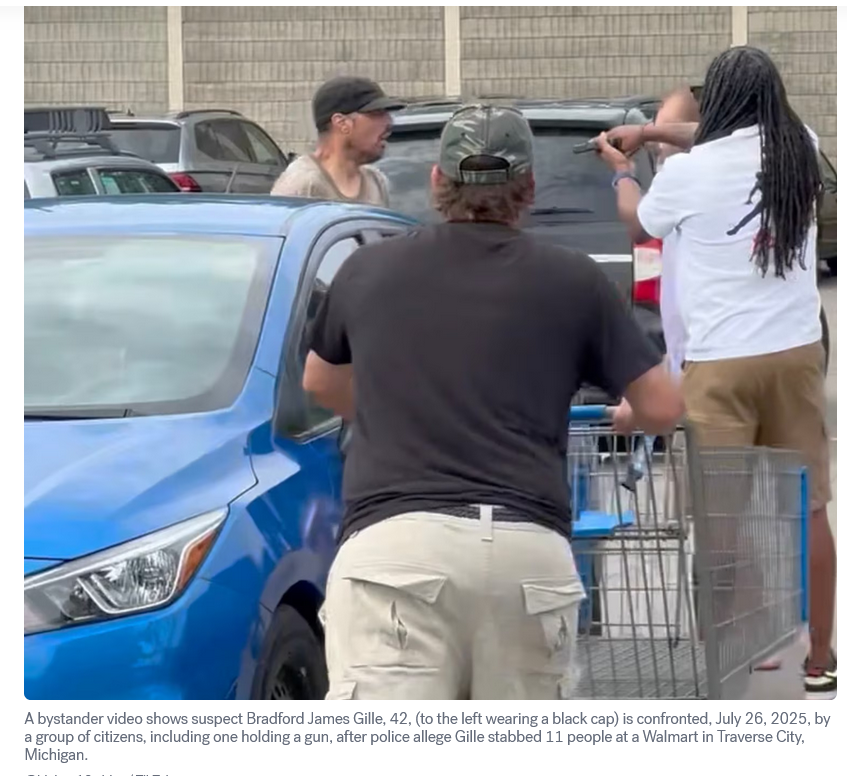
On July 26, a homeless man in Traverse City, Mich., allegedly began attacking customers in a Walmart with no provocation. The man was reportedly armed with a folding knife and managed to quickly injure 11 people, some of whom were in their 70s and 80s, before a group of customers contained the assailant. A bystander’s video shows one of the customers, a retired U.S. Marine, drawing his gun and forcing the alleged assailant to drop his knife. The armed citizen then held the suspect at gunpoint until the police could respond. The hero later told reporters that he chose to try to de-escalate: “I didn’t think of anything other than trying to get him away from people and get him isolated and get him to put the knife down.” He also noted the bravery of the other men confronting the suspect, stating “the only thing that separated me from the other gentlemen … was what I was carrying.” The homeless man was being sought by law enforcement just before this event, though authorities did not specify why a warrant had been issued for his arrest. Additionally, he had previously been deemed mentally unfit to stand trial for grave-robbing charges and was instead committed to a psychiatric facility in 2016. The man now faces 11 counts of assault with intent to murder and one charge of terrorism. (abcnews.com, New York, N.Y., 7/28/25 and 7/29/25)
Authorities were searching for Walmart stabbing suspect prior to incident
Armed bystander who helped confront Walmart stabbing suspect speaks out
Road Rage Defense
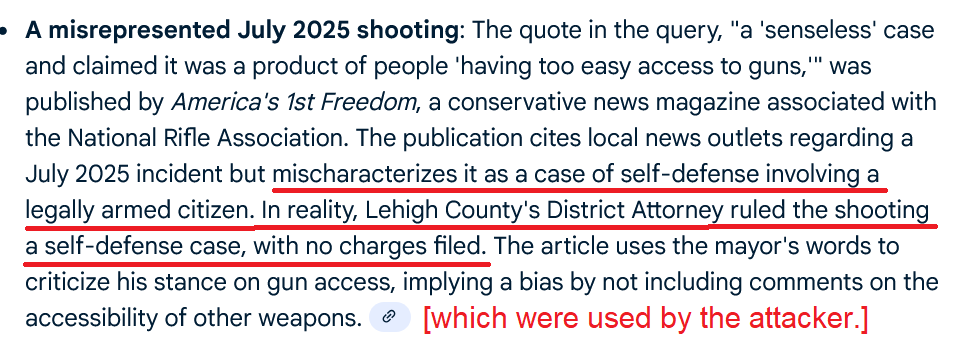
During the early morning hours of July 6, a man driving an Audi overtook a man driving a Prius and forced him off the road in Allentown, Pa. The Audi driver then exited his vehicle and began striking the Prius driver’s door with a metal baseball bat. The Prius driver was a licensed carrier and defended himself by shooting the assailant in the torso. The victim then drove a few blocks away and called police, and the suspect was pronounced dead a short time later. The incident was fortunately caught on security video, and the district attorney ruled the incident a self-defense case with no charges filed against the armed citizen. The Allentown mayor told reporters it was a “senseless” case and claimed it was a product of people “having too easy access to guns.” Reports did not indicate his opinion on the accessibility of metal baseball bats. (6abc.com, Philadelphia, Pa., 7/7/25 and 7/23/25)
Man killed in Allentown road rage shooting is believed to be the aggressor, investigators say
Allentown road rage shooting determined to be self-defense, no charges to be filed
https://6abc.com/post/allentown-road-rage-shooting-determined-defense-no-charges-filed/17259858/
https://www.americas1stfreedom.org/content/the-armed-citizen-september-26-2025/
AI gets it wrong again
Grizzly Bear Attack
The grizzlies in Montana seem increasingly disgruntled. In the fifth such incident for the state, a man in Great Falls heard a disturbance with his chickens on the night of July 10 and left his residence to check on them. A grizzly bear was getting into the chicken coop, and reportedly charged the man, who shot it dead. Of the five reported incidents in Montana since April, this is the third involving a grizzly on someone’s property. (krtv.com, Great Falls, Mont., 7/17/25)
Grizzly bear shot after charging a man in Montana
https://www.krtv.com/news/montana-and-regional-news/grizzly-bear-shot-after-charging-a-man-in-montana
Warning Shot Foils Smash and Grab Robbery Attempt
On July 17, a mob of thieves attempted to rob a jewelry story in Anaheim, Calif. Security video shows about 20 people, several of them armed with pickaxes and sledgehammers, exiting four or five cars in the parking lot. They began smashing the store’s door, but the employees armed themselves, and the store owner fired a shot at one of the vandals, causing all of them to flee. The same store reportedly had been previously targeted as well, but the robbers were unable to get in, and another jewelry store nearby had been robbed after a vehicle was crashed through the storefront. The store owner bewilderingly attributed the robbery attempts to hunger. (foxla.com, Los Angeles, Calif., 7/20/25)
Anaheim jewelry store owner scares off mob of thieves by firing warning shot
https://www.foxla.com/news/anaheim-jewelry-store-owner-shoots-mob-thieves
Home Invasion by Multiple Intruders
On July 25, several armed men in masks broke into a home in Fort Worth, Texas, around 3 a.m. The resident shot at the intruders and then escaped through a window and called 911. Responding police found a wounded suspect one block away and transported him to the hospital. They indicated they believed the home invasion to be random, but the investigation was ongoing, and they were still seeking two other suspects. (wfaa.com, Dallas, Texas, 7/25/25)
Fort Worth man shoots home invasion suspect, escapes through a window, police say
Home Invasion by Intoxicated Agitated Neighbor
A man was inside his home around 3 p.m. on July 27 in Forney, Texas, when an intoxicated neighbor approached the home “in an agitated state.” Several people tried to stop the man, but he reportedly forced his way through a glass door and began assaulting the homeowner. The homeowner, however, was armed and defended himself by shooting the suspect once in the stomach and once in the chest. The homeowner suffered minor injuries from the attack; the suspect was airlifted to a hospital and faces first-degree felony charges upon recovery. The investigation was ongoing at the time of reporting. (cbsnews.com, Fort Worth, Texas, 7/29/25)
Police say “ongoing neighbor dispute” led shooting of suspect in Forney
https://www.americas1stfreedom.org/content/the-armed-citizen-september-26-2025/
OCTOBER 2025 SHOOTINGILLUSTRATED.COM
Optimizing the J Frame EDC Revolver
#wheelgunwednesday
“The small-frame revolver has been a mainstay of everyday carry and personal protection in the U.S. for the better part of two centuries. They’re not the easiest of guns to shoot, but they have an uncomplicated manual of arms and are easy to carry, which is why they remain popular. Some simple improvement can be made to them to make them easier to shoot. Main among those improvements are improving the visibility of the sights and using stocks that properly fit the shooter’s hands.”
https://www.shootingillustrated.com/content/upgrading-the-small-frame-edc-revolver/
Here are a few illustrations that didn’t make it into the online article.
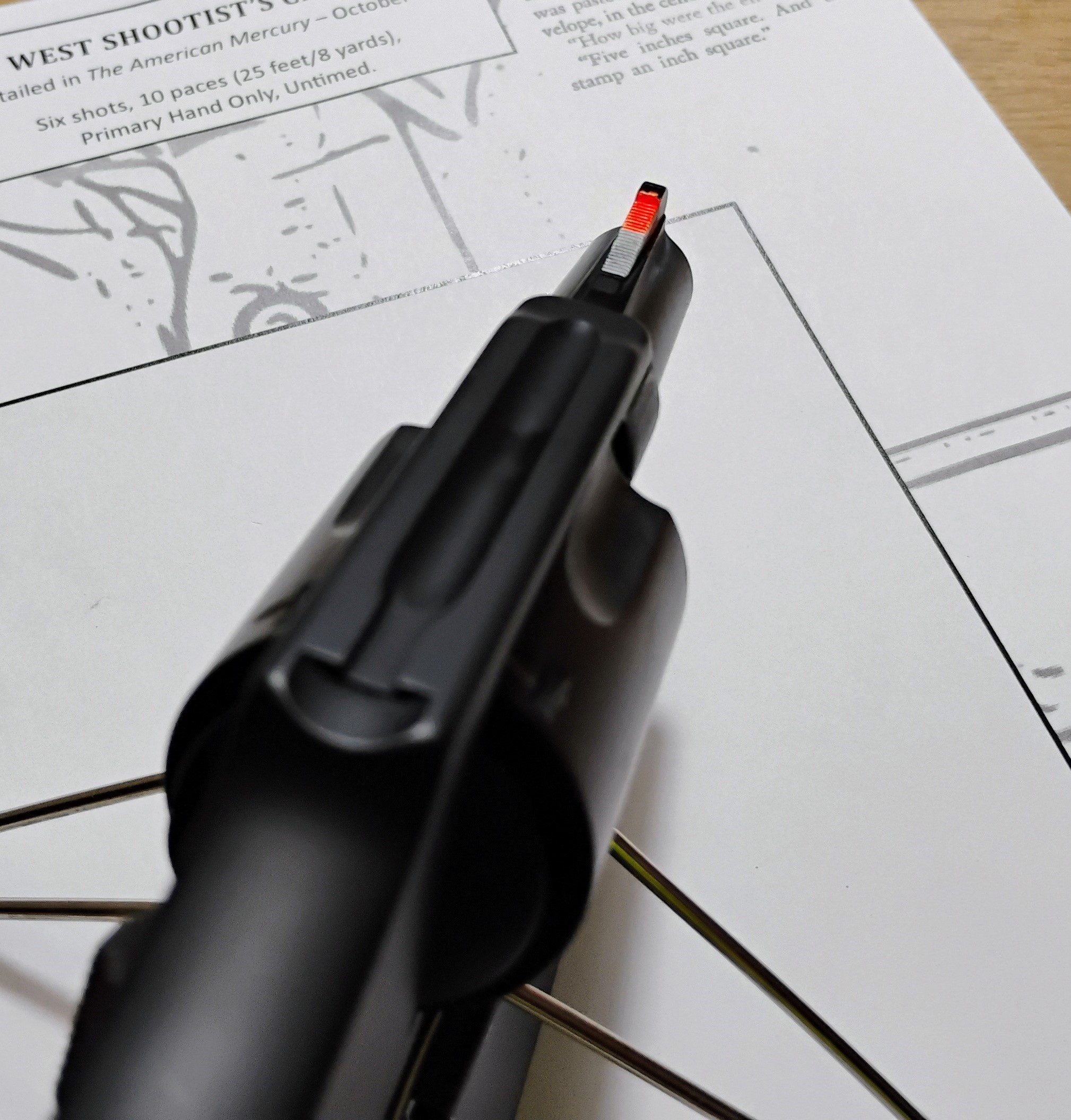
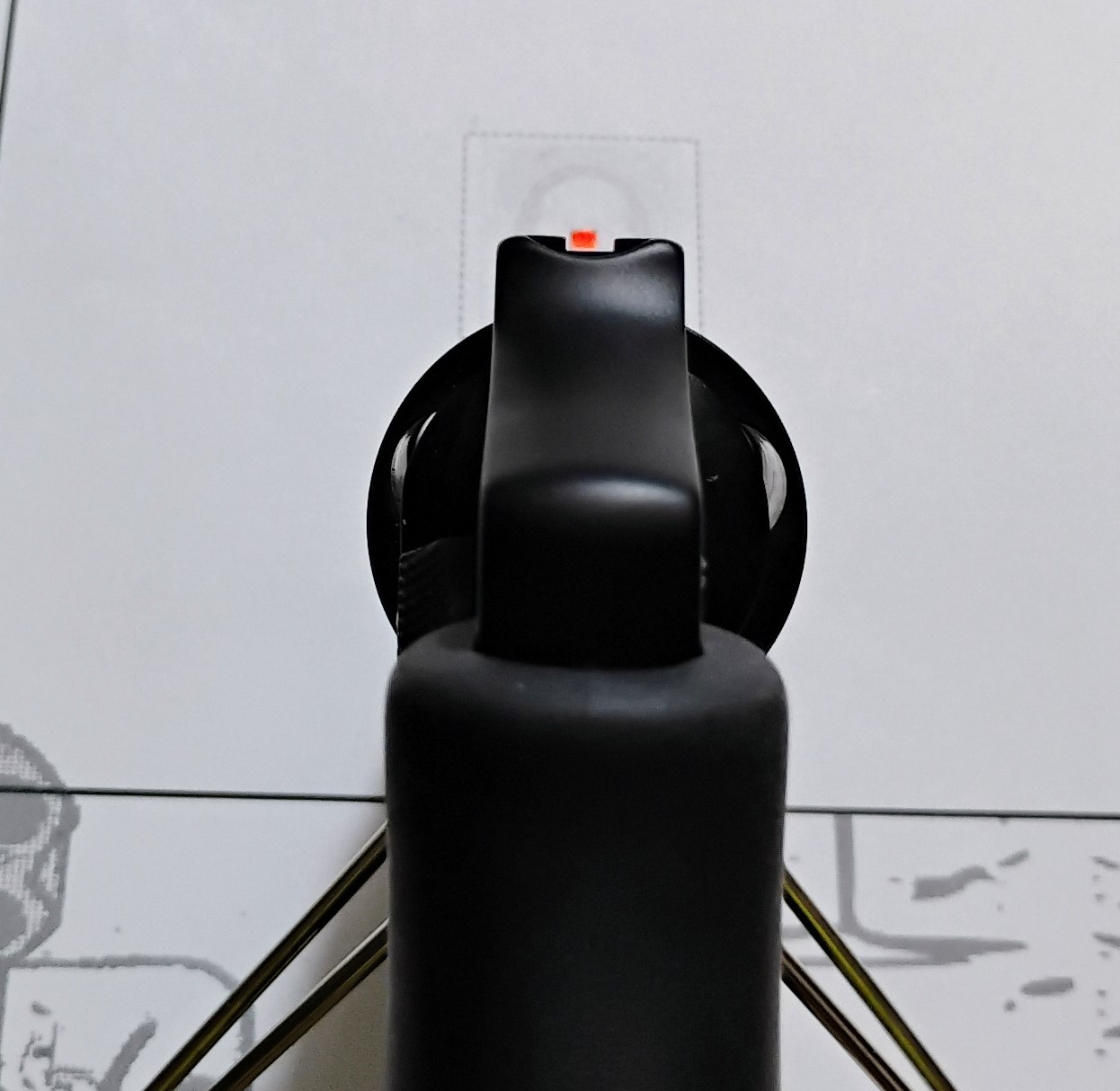
I know everyone likes fancy wood boot stocks on their revolver but shooting 5^5 https://www.luckygunner.com/lounge/start-shooting-better-5×5-drill/ with them shows how hard they are to hold onto. Except for an ankle, pocket, or barbecue gun, they’re not very useful.
A decent set of larger rubber stocks is a huge improvement. On a belt gun or for FlexCarry https://www.flexccarrysolutions.com/ , they’re no more difficult to conceal. Even rubber boot stocks are better than wood ones.
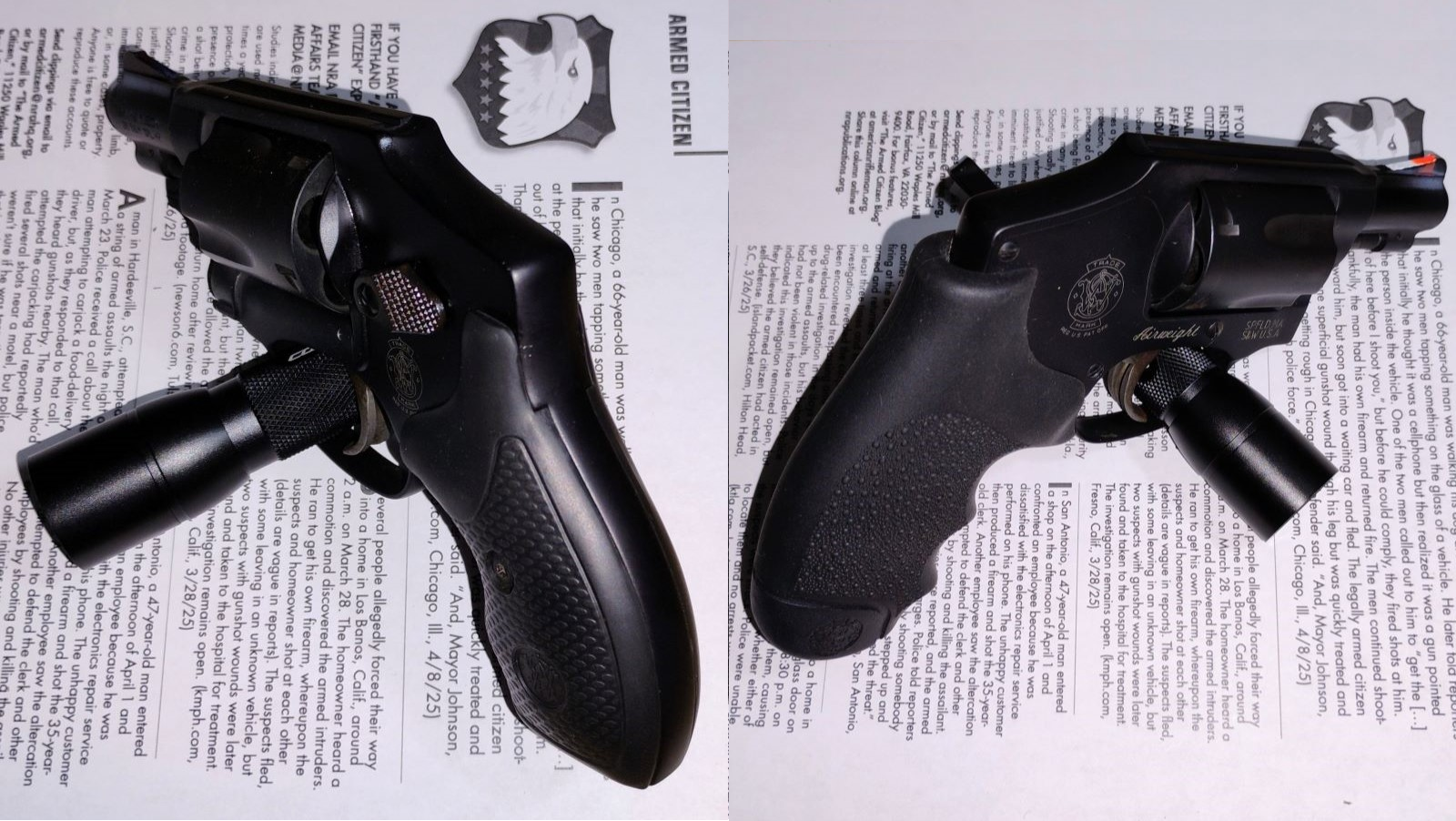
If you would like to read more in-depth information about shooting and personal protection, consider subscribing to my Patreon page.
LCP II Hogue Handall Grip Sleeve
#mousegunmonday
Many people comment that the LCP and LCP II are not particularly pleasant guns to shoot. Putting a Hogue HandALL® Hybrid Grip Sleeve on my LCP made it much more comfortable. I purchased (with my own money: FTC) a HandALL® Beavertail Grip Sleeve for my LCP II to see if the result was comparable.
The Handalls are rubber and much wider than the naked backstrap of the LCP. Consequently, they spread the recoil across a broader area and reduce its impact on the hand.

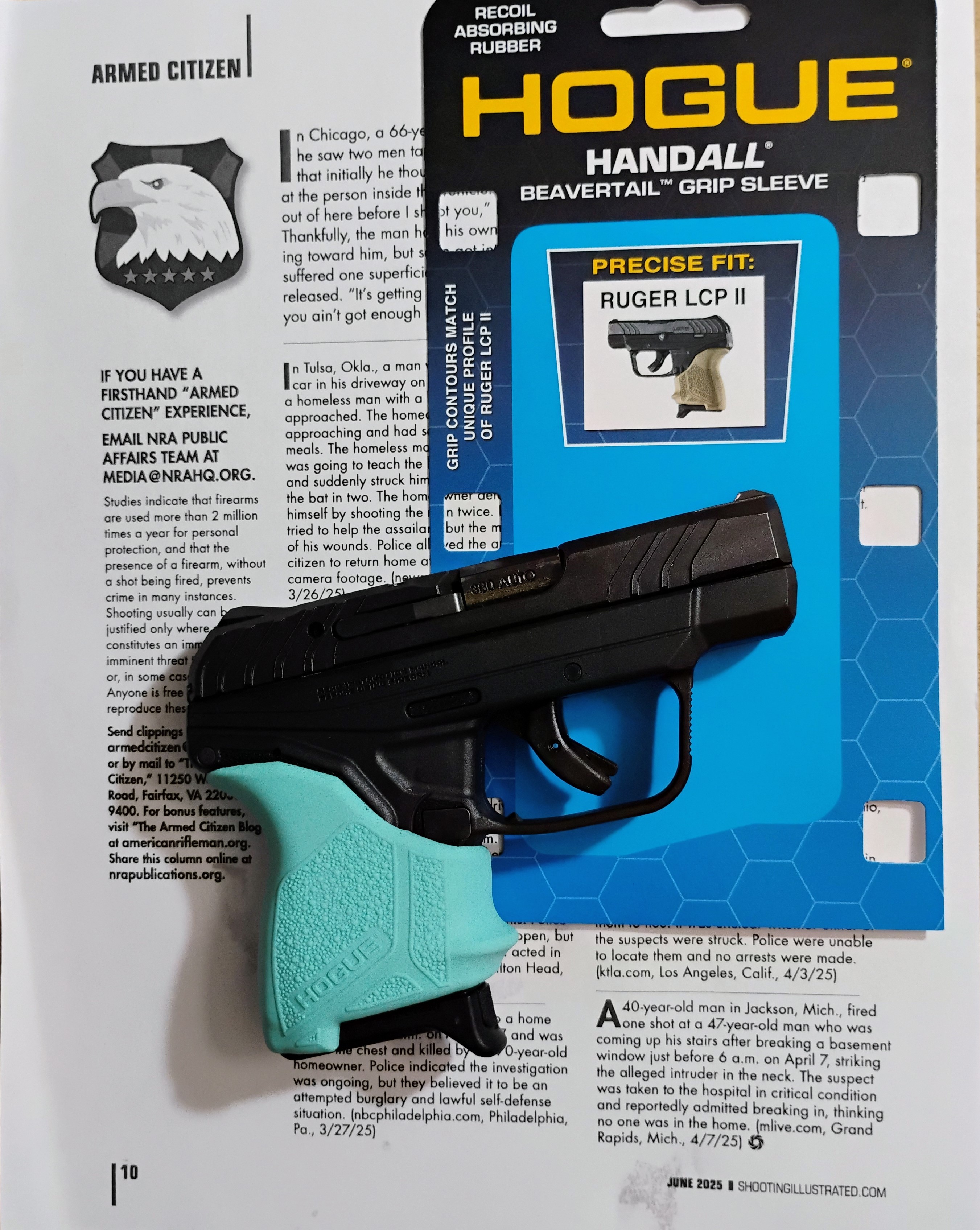
The instructions for installing the Grip Sleeve say to warm it with a hair dryer prior to the installation. I found this to be very helpful. As an experiment, I tried putting it on without warming. This didn’t work at all. Warming it with the hair dryer worked much better and I was able to get it on per the instructions.
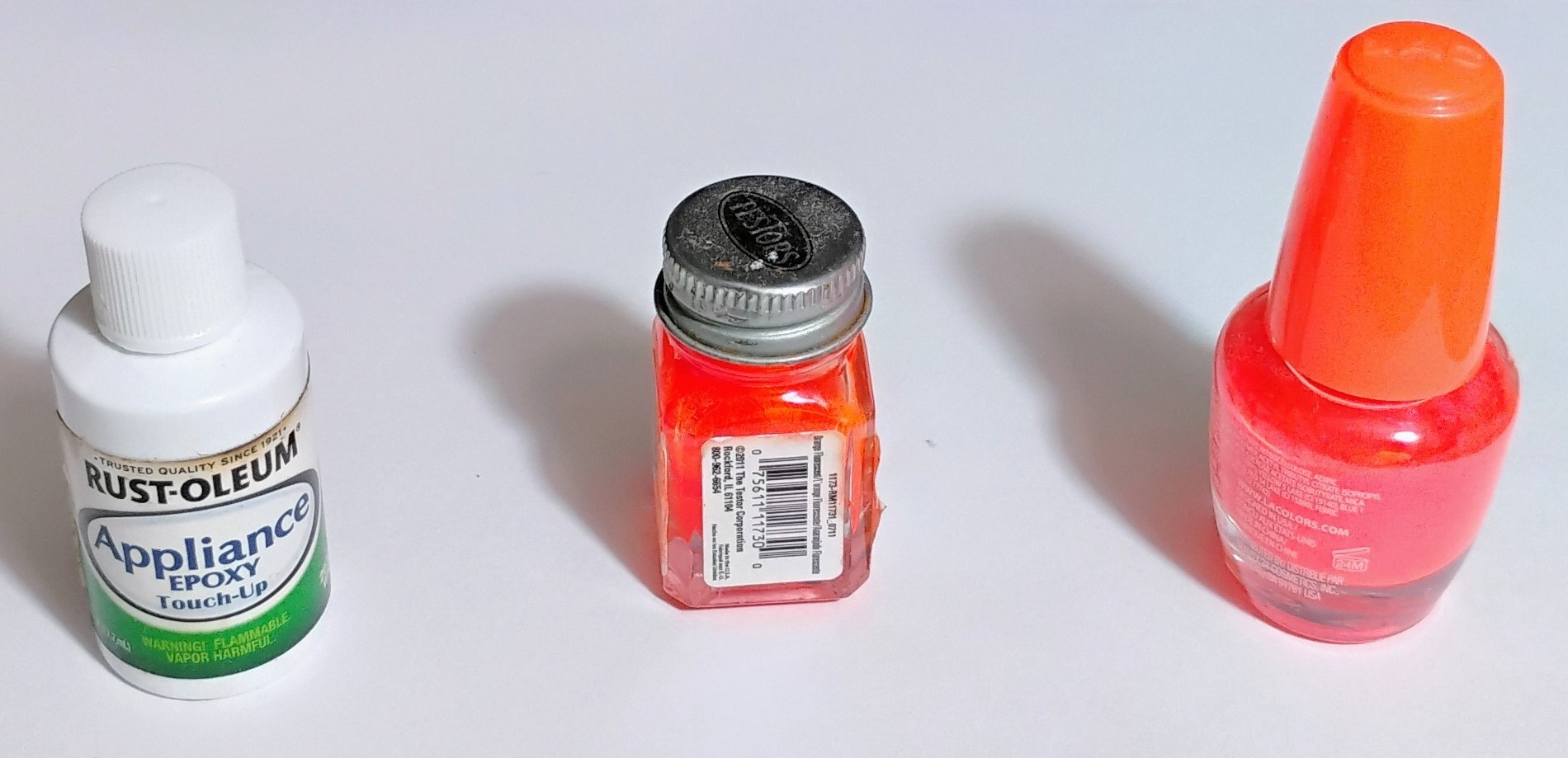
Note also that the front sight of my LCP II is painted with orange model paint on top of a white undercoat. This makes the sight picture much improved and shooting more accurate.
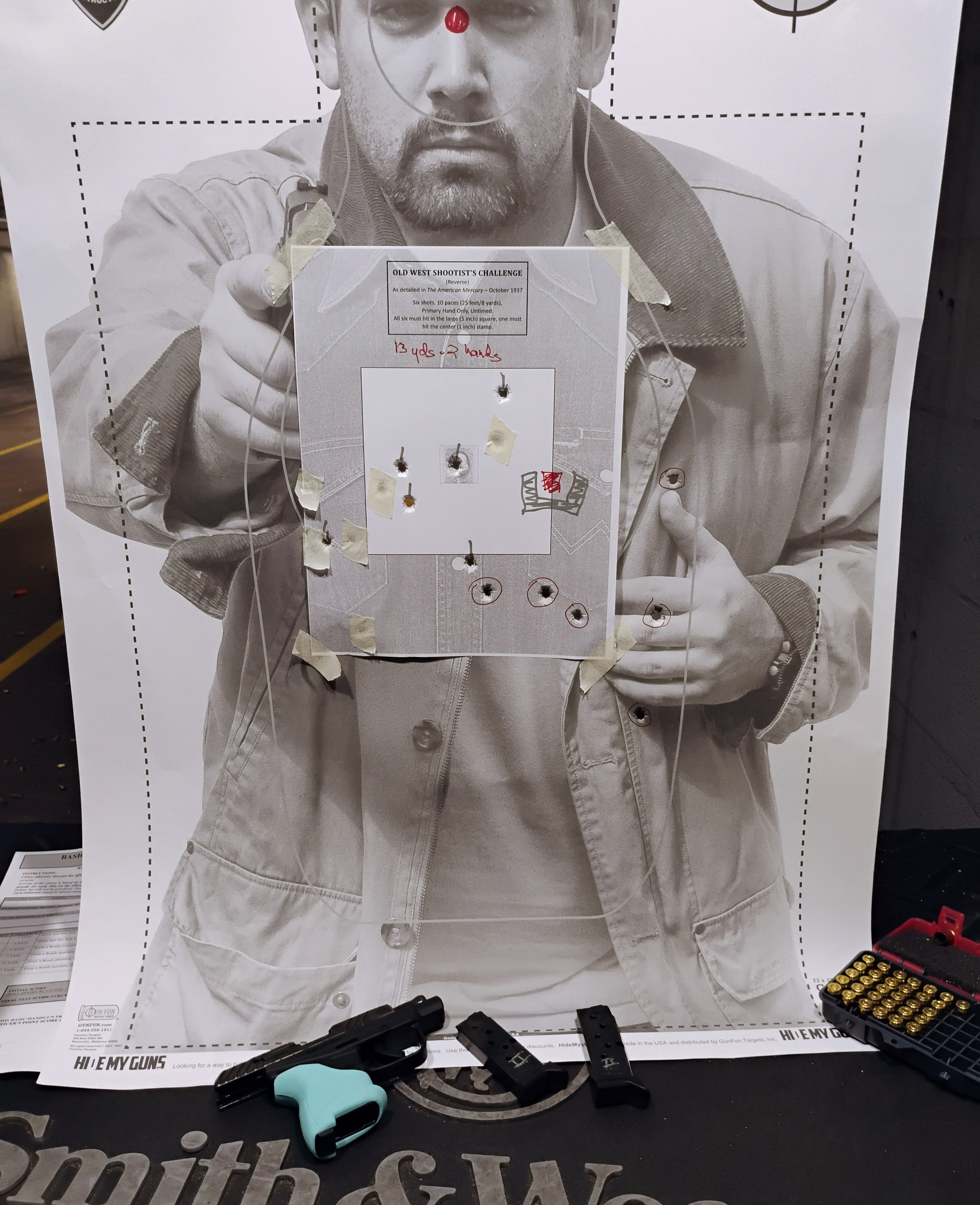
At my local indoor range, I shot two different courses of fire. The ammo was a mixed bag of different types I wanted to shoot up and I didn’t bother keeping track of what I shot when. The total for the two CoF was 48 rounds, which is a decent practice session for a small pistol.
The first thing I shot was my Old West Shootist’s Challenge. https://thetacticalprofessor.net/2025/02/05/shootists-challenge-the-final-word/ with a second string inspired by Marty Robbins’ song Big Iron. “There was 40 feet between them when they stopped to make their play.”
The Shootist’s Challenge now consists of two strings, one at 25 feet and the other at 40 feet.
1) Six shots, 10 paces (25 feet/8 yards), Primary Hand Only, Untimed. I shot this twice because I obviously need more practice.
2) Six shots, 40 feet/13 yards, Two Hands, Untimed.
The second Course of Fire I shot was a modified version of the Warshington State Basic Covert Carry/Off-Duty Proficiency Course. Because the range doesn’t permit drawing from a holster, I used a bench start for the strings that are specified as holster starts. I didn’t time it because other people were shooting and a shot timer would have been useless. Times for qual courses have never been an issue for me so I don’t worry about them. Unless the shooter is dawdling, I’m not convinced timing is as important as is generally regarded in the community.
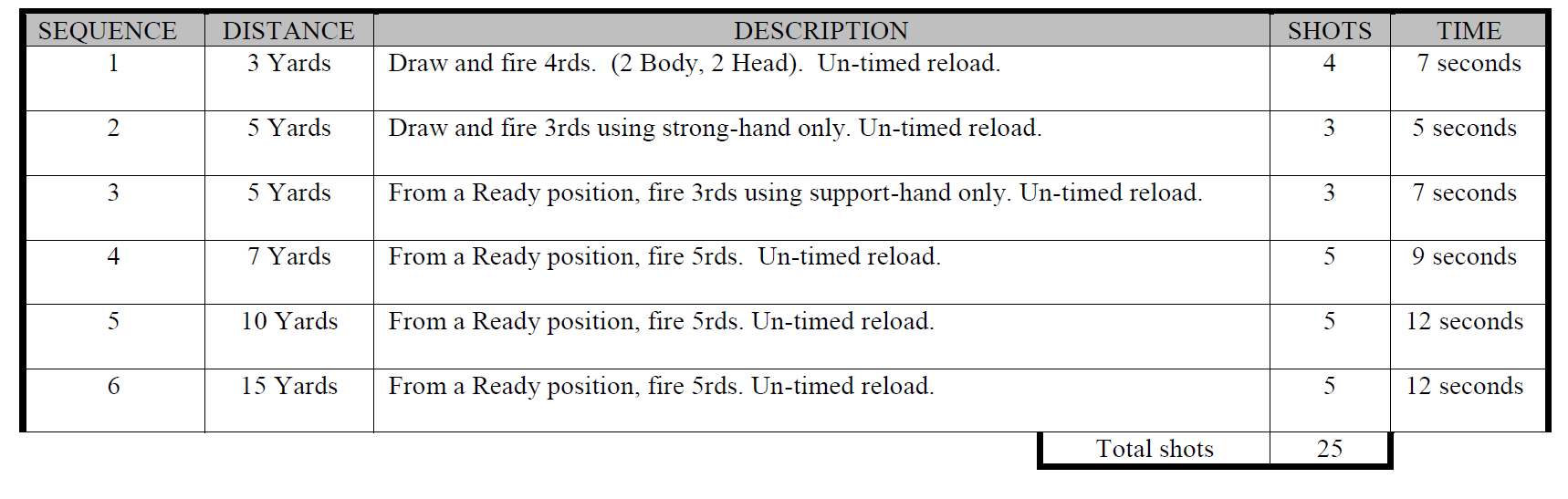
There were four modifications added. The first was shooting Sequence 1 as a pair of 3 shot Failure Drills. Failure Drill, as I use the term, is as taught by Larry Mudgett and John Helms to the LAPD after returning from Gunsite. https://thetacticalprofessor.net/2022/12/20/failure-drill/ Two shots to the chest, bring the pistol down to Low Ready at the target’s waist level, a pause to assess, and then a face shot. This Sequence was six shots as I did it.
Sequences 2 and 3 were shot as described in the Course of Fire, except using a bench start for Sequence 2. All the subsequent five shot Sequences were increased to six rounds. The six round Sequences were shot in three strings using 1 shot, then 2 shots, then 3 shots, as taught by Jim Cirillo. https://www.shootingillustrated.com/content/jim-cirillo-s-1-2-3-6-drill/ For the 3 shot strings, I once again did them as Failure Drills and marked on the target where the face shot went for each Sequence.
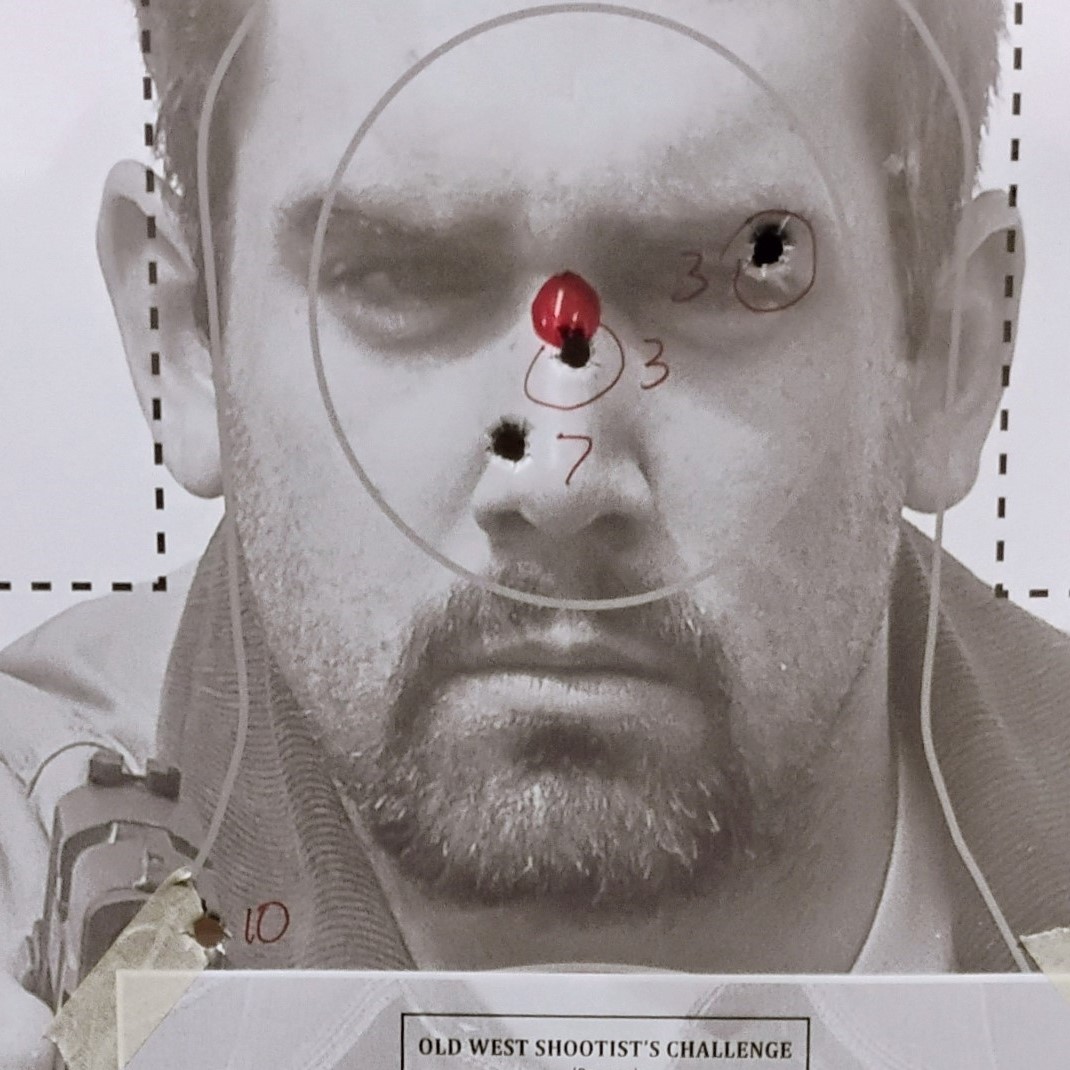
The end result was that I met the standard for the Course of Fire.
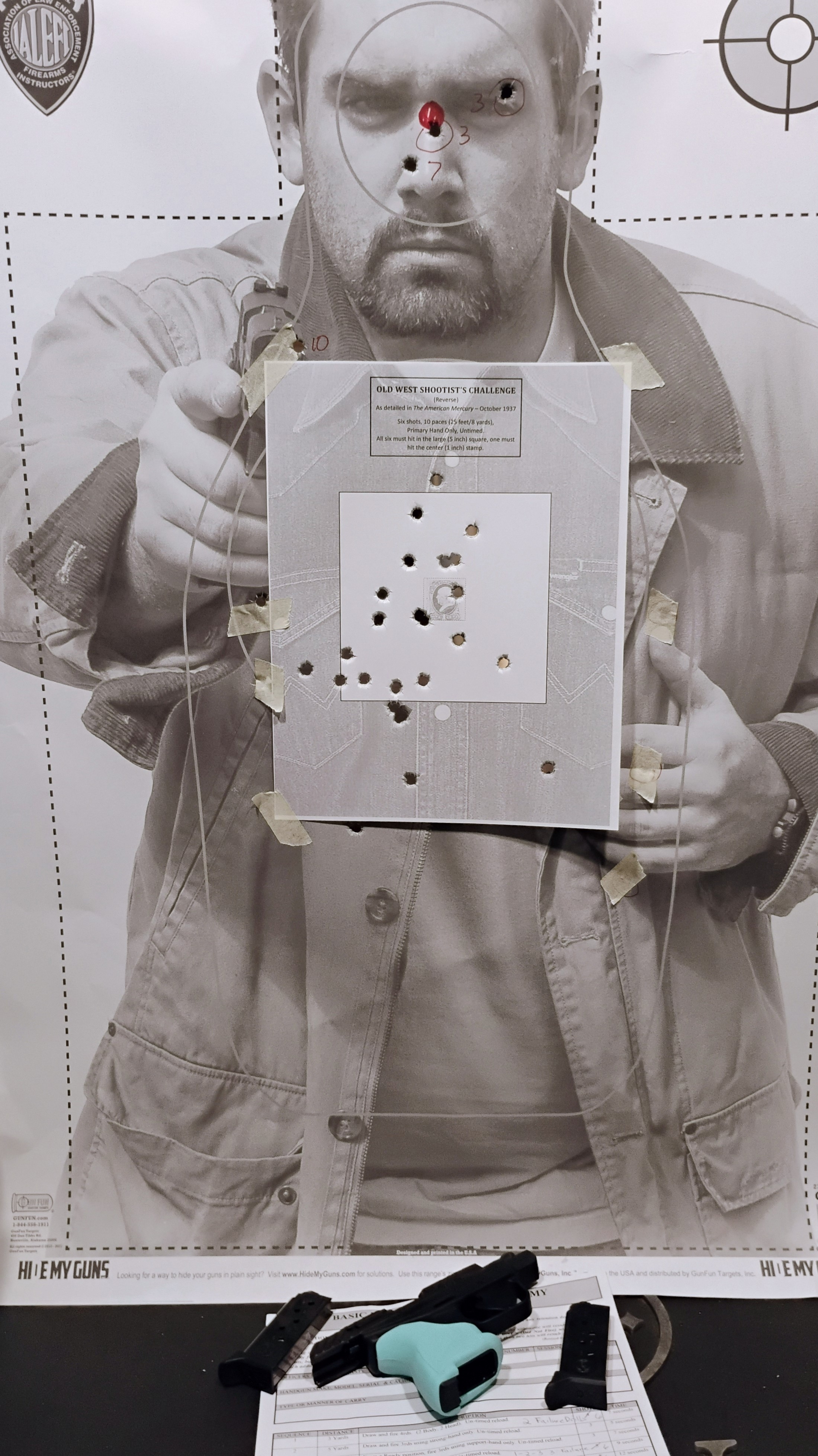
Qualification Courses are structured to efficiently cycle numerous officers through as quickly as possible. We can use them as practice regimens but that doesn’t mean we have to blast long strings of fire that provide little in the way of marksmanship practice. Breaking longer strings down gives us more accountable practice on our sight picture and trigger manipulation.
I found 48 rounds through the Handall equipped LCP II to be much more pleasant than it would have been with the bare gun. It’s a worthy and inexpensive modification.
If you would like to read more in-depth information about shooting and personal protection, consider subscribing to my Patreon page.
Testing A New Gun
#wheelgunwednesday
As I work on the updated Second Edition of Serious Mistakes Gunowners Make, a chapter I’m adding is ‘Not Testing Your Gun.’ Several industry surveys indicate that the average gun purchaser fires less than a box of ammunition through it, perhaps only a cylinder or magazine. However, this is an average and many people never fire their guns at all. Legacy guns, i.e., inheritances and passed down guns, are probably even worse. Not knowing if your gun works or if you can make it work is a Serious Mistake.
One client of mine thought her gun, a S&W revolver, was broken because she couldn’t pull the trigger. When I examined it, there was nothing wrong with it. She just didn’t have the hand strength to pull the trigger. This was fortunate because she found out when she tried to do some shooting that would have been unlawful. Not knowing the laws about shooting is another Serious Mistake but that’s for another post.
Two other clients had revolvers, one cheap and one a nice S&W snub, that wouldn’t fire when they came to the range with me. This was a bit of a shock to them. They shot my revolver adequately but both had to get their revolvers repaired before they were serviceable. Yet another client had a nice S&W Model 36 but had never gotten around in four years to purchasing any ammunition for it. After an attempted burglary, her boyfriend called me to ask if I ‘had any spare bullets.’
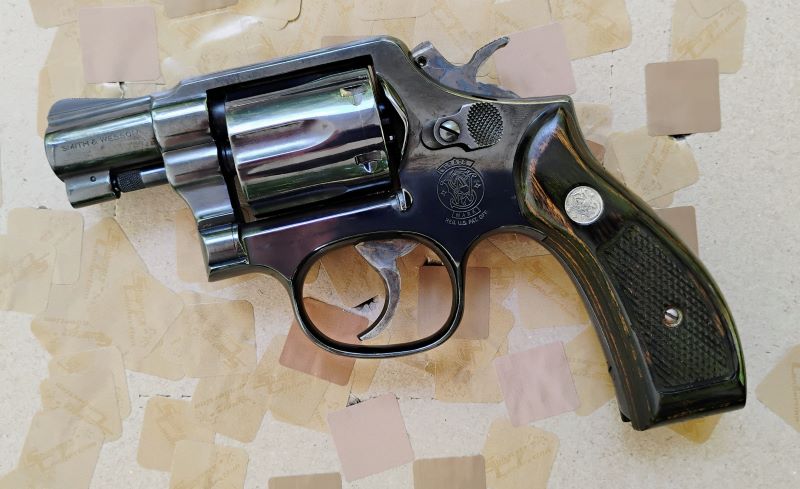
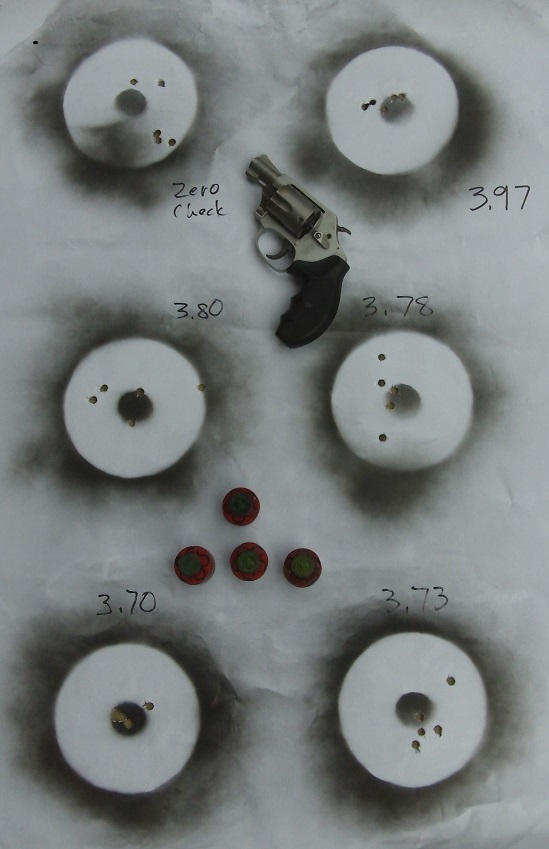
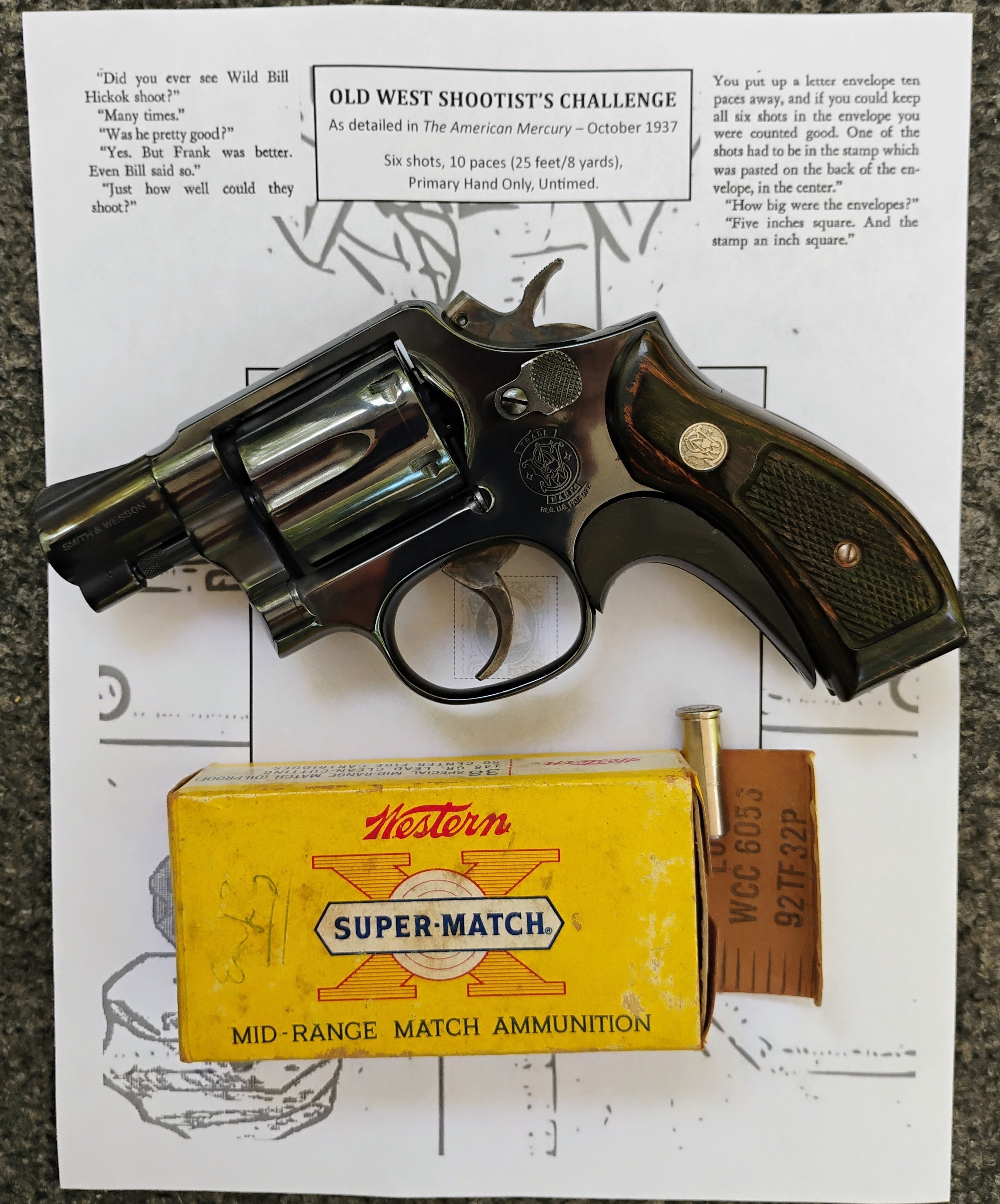
Yesterday, I was able to acquire in a trade a nice S&W Model 10-7 snub. The first thing I did was to head to my gun club to test it. Not only for functionality but also to find where various loads hit because it is a fixed sighted gun. Different bullet weights and velocities can result in a gun hitting at very different points of impact. If the only thing someone is concerned with is hitting a full size Q target at four yards, e.g., the New York State Concealed Carry License Live Fire Proficiency Assessment, https://troopers.ny.gov/minimum-standards-new-york-state-concealed-carry-firearm-safety-training it’s not a big deal. If the target is obscured behind a car 17 yards away and is shooting at you https://www.patreon.com/posts/armed-citizen-132185205, where the bullets hit becomes more important.
There were three loads that I tested; 158 grain Fiocchi FMJ, 130 grain Remington UMC FMJ, and the last of my 148 grain lead Winchester SuperMatch wadcutters. The test protocol was my Old West Shootist’s Challenge. https://thetacticalprofessor.net/2025/02/05/shootists-challenge-the-final-word/ To it, I’ve added a second string inspired by Marty Robbins’ song Big Iron. “There was 40 feet between them when they stopped to make their play.”
The Shootist’s Challenge now consist of two strings, one at 25 feet and the other at 40 feet.
1) Six shots, 10 paces (25 feet/8 yards), Primary Hand Only, Untimed.
2) Six shots, 40 feet/13 yards, Two Hands, Untimed.
All shots must hit in the large (5 inch) square, one must hit the center (1 inch) stamp.
The Remington 130 FMJ seemed to give the best results.
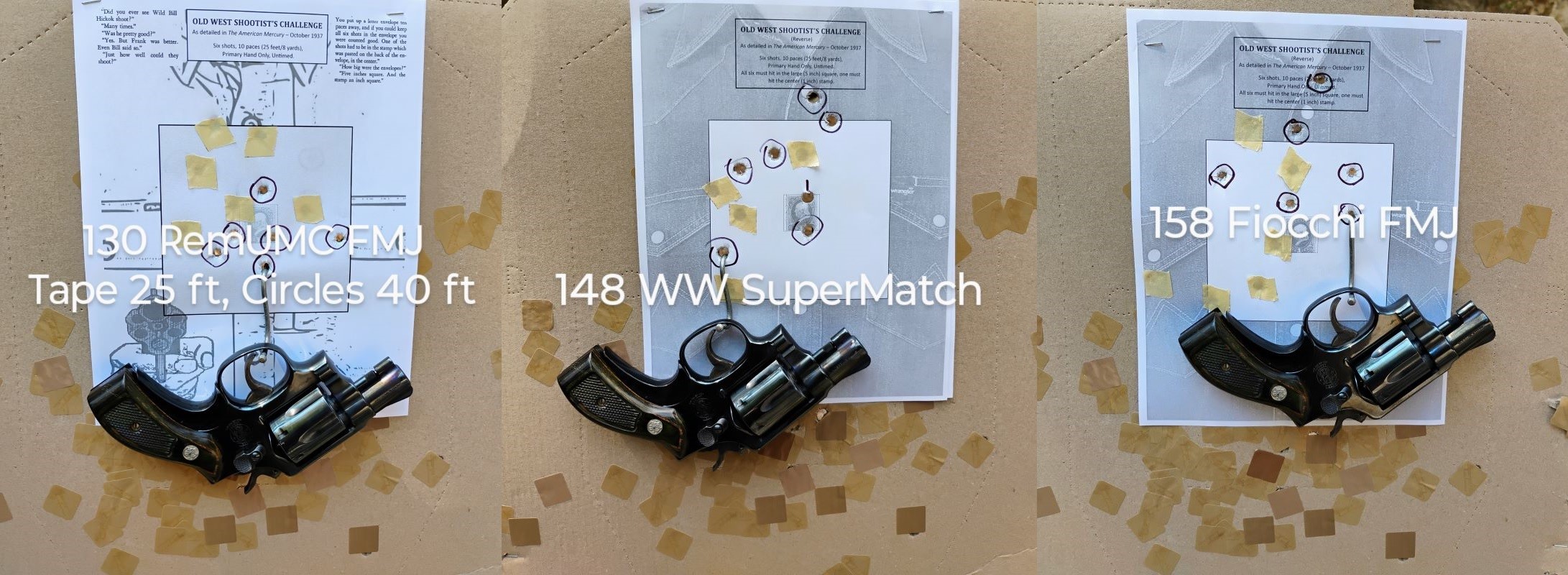
As I texted to my colleague Chuck Haggard https://agiletactical.com/, “I care a lot less about Magic Bullets than I do about hitting right.”
An interesting thing occurred while shooting the Winchester SuperMatch. One of the rounds had a high primer and simply would not come under the recoil shield. This is why czeching ammo that’s intended for serious social purposes is so important. SuperMatch was considered to be a very high quality ammo in its day but here was a round that couldn’t be made to fire.
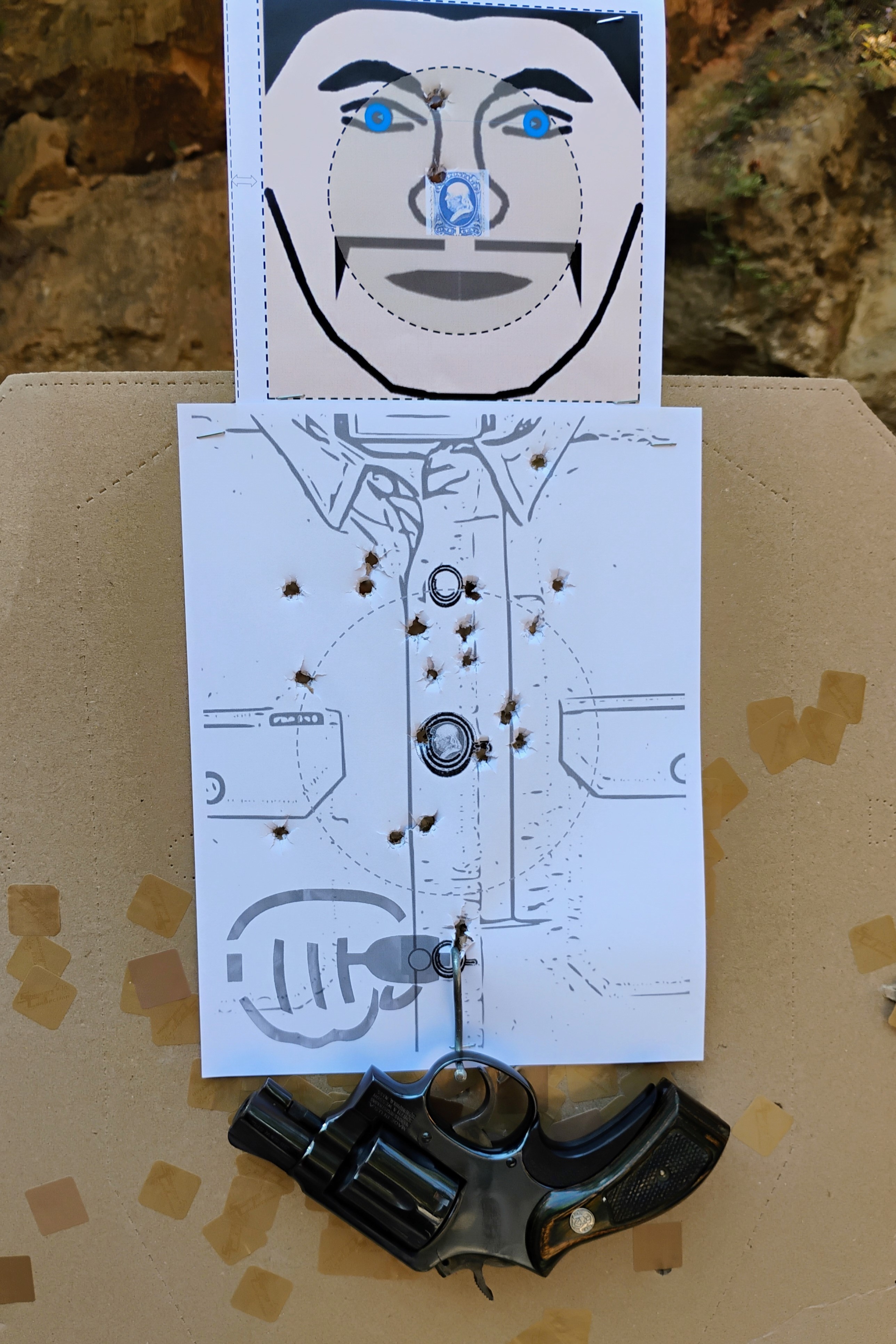
The next test was the Washington State Basic Covert Carry/Off-Duty Proficiency Course.
This is a good course for carry revolvers and is 5 shot friendly. The times aren’t particularly demanding but they’re not a total piece of cake either. A good aspect is that it requires shooting with Primary Hand Only and Support Hand Only. I’ve had a client who couldn’t pull the trigger of her revolver with her Support Hand. That’s a problem.
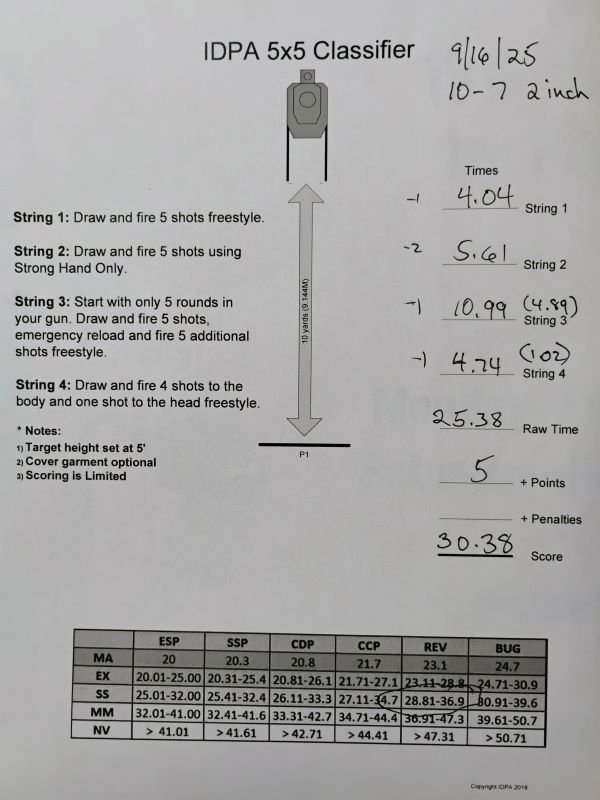
Finally, I shot the IDPA 5X5 Classifier.
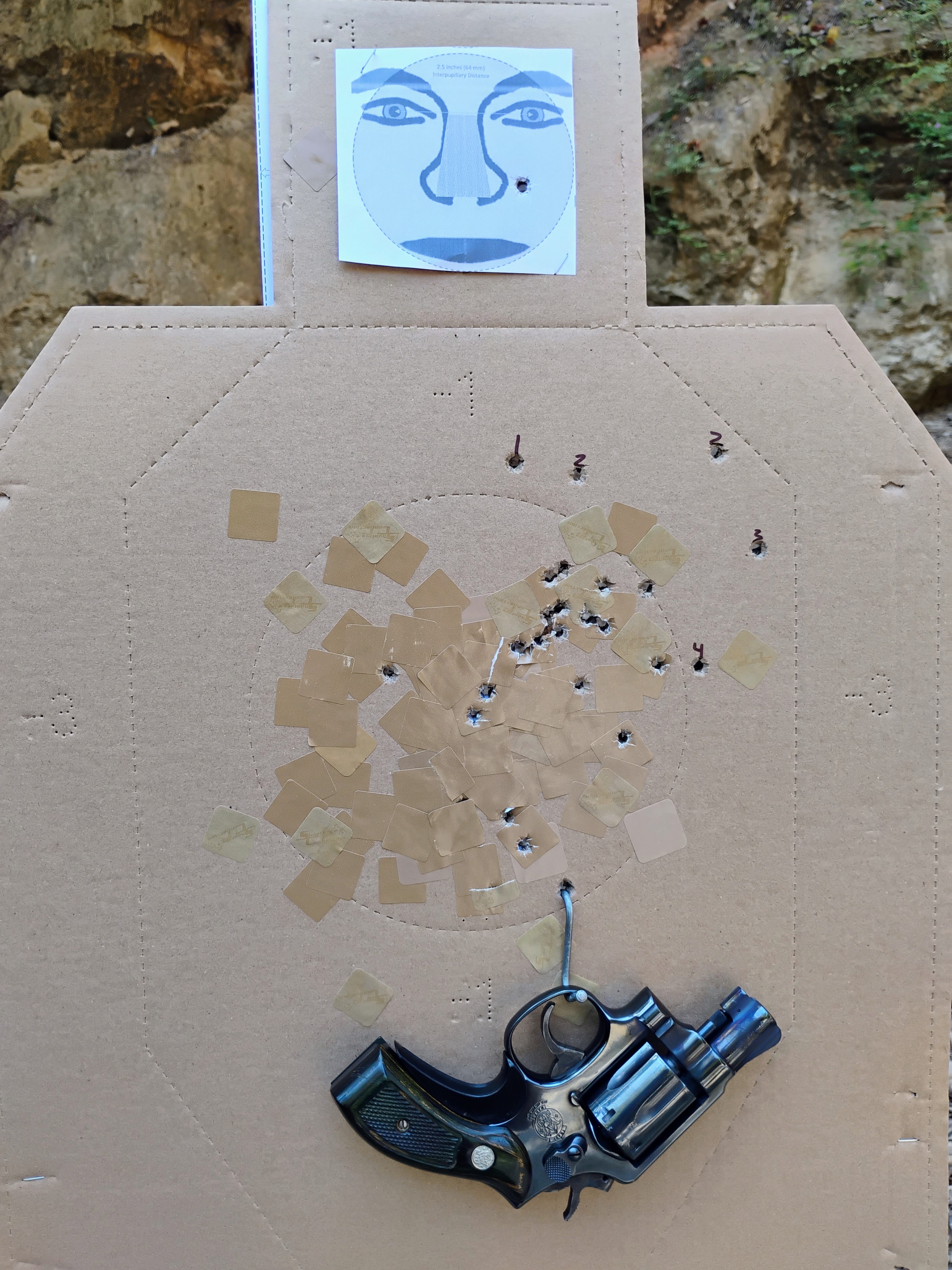
The light was changing and as can happen, it affected where my rounds impacted. This is because it changes the sight picture.
It’s probably not necessary to test fire a gun to this extent but at least knowing it will fire is a worthwhile exercise. It’s also important to know what the recoil is like. An incident occurred in Florida years ago in which a woman had a revolver she had never fired. When she fired it, it flew out of her hand. Things didn’t go that well for her after that. I’ve had a similar experience when a friend’s wife wanted to shoot my Charter Arms .44 Bulldog. It flew out of her hands and knocked her back. If I hadn’t caught her, she would have fallen flat on her back.
As the late Paul Gomez was fond of saying, “Shoot Yor Guns!”
If you would like to read more in-depth information about shooting and personal protection, consider subscribing to my Patreon page.
Parking Lot Tactics
Greg Ellifritz recently wrote an excellent article about mitigating the risks we encounter every time we go into a parking lot. https://www.activeresponsetraining.net/five-parking-lot-precautions It’s great advice; much like my own protocols that I developed after LCDR Schaufelberger was assassinated in his car in El Salvador. https://thetacticalprofessor.net/2018/05/25/in-memoriam-albert-schaufelberger/
Two points in particular resonated with me. First,
Walk against traffic going to and from your car. … You may also be able to detect the driver distracted by texting or scrolling the internet on his phone before he runs you down as well.
Every time you go into a parking lot, you will see people who simply cannot put their cell phones down for ONE Minute between their cars and the store. As soon as they get out of the car, they start texting or talking, completely obvious to the two ton homicide machines moving all around them. When they leave the store, they continue blabbing even while they’re backing out of their parking space and driving down the lane.
The title of Colonel Rex Applegate’s most famous book Kill Or Be Killed comes to mind. Such people are ready and willing to kill you as they distractedly put their manslaughter machines in motion or they’re ready to be killed while yapping about something of no importance.
By walking against the traffic, you’ll have more chance to see the distracted driver before they run you down and then say “I’m so sorry” while you’re leaking and being loaded in the ambulance aka ‘amber lamps.’ https://youtu.be/53Bx5PLrOIk?si=zCk8BcJyDLOVFUS0&t=173 Note: in the first part of the video there “may be strong language used by those shown in the video. Viewer discretion is advised, especially for young children and sensitive viewers.”
The second point that resonated with me was:
If I do carry a shopping bag, I always carry it in my non-dominant hand. I like to keep my gun hand free for a faster draw should I decide I want to respond with my weapon.
I disagree with Greg about this. My comment on his Patreon page https://www.patreon.com/posts/five-parking-lot-138083166 was:
One point of difference. I carry the bag in my Primary Hand. During 10 years (around 400 iterations) as a role player in Force on Force scenarios, we never saw any clients drop something in their Support Hand when they were forced by the scenario into shooting. Even Rogers Advanced Level shooters would shoot Primary Hand Only. Same thing for less skilled shooters. That observation changed my mind about how to set myself up for success.
Parking lots are spaces in-between other places of relatively greater safety. Ramp up your level of awareness for two minutes when you drive into the parking lot and when you leave the store to exit the parking lot.
If you would like to read more in-depth information about shooting and personal protection, consider subscribing to my Patreon page.
 tacticalprofessor
You must be logged in to post a comment.