Tactical and Operational Relativism
Fortunately, over the course of my life, I have been around and been associated with some of the most dangerous men in the world. Early on, I came to the conclusion that compared to them, I am a Boy Scout. There are no illusions on my part about where I stand in relation to the really focused and competent among them. All of them, in some way, serve as inspirations and examples to me.
The principle in this is that no matter how good a shooter, fighter, or trainer you might think you are, there’s somebody, perhaps a lot of somebodies, better than you. Competency and capability are always relative.
In addition, as SSA John Hall, former head of the FBI Firearms Training Unit put it: “In every encounter, there’s an element of chance involved.”
Situational Awareness and Positioning (part II) The Tueller Principle
place yourself in the best tactical position.
Positioning
In 1983, Dennis Tueller wrote a groundbreaking article entitled How Close is Too Close? As a result, the terms the “Tueller Drill” and the “21 Foot Rule” have become well known. The Tueller Drill is even incorporated into the NRA Personal Protection In The Home Course.
However, in a 2008 interview, Dennis notes that he doesn’t use those terms, instead referring to it as the Tueller Principle. His original article relates the concept of a ”Danger Zone” and the need to “place yourself in the best tactical position.” The revolutionary, for the time, concept he came up with was to measure Distance/Time Relationships of Armed Encounters. By doing so, he brought about a much greater understanding of the concept that distance is your friend.
The article also emphasized using cover and placing obstacles between yourself and an attacker. The context used in the article is what I think of as ‘reactive positioning.’ I.e., you see something that puts you in an alert status and then initiate movement to place an obstacle between you and the attacker. By thinking ahead, we can achieve ‘proactive positioning,’ where the attacker is already at a disadvantage when the encounter begins.
Granted, proactive positioning is not always possible. As a friend of mine put it:
I’m always amused by the ‘I’m never in condition White and never let anyone get within 6 feet of me!’ types. I guess they never wait in line at fast food joints or grocery stores, go to malls or other crowded places, etc.
What we want to do is to minimize our exposure to situations where we have no advantage. This is especially true when our situational awareness is likely to be lowered. Our mental processing power is finite; we need to be aware of the inverse correlation between situational awareness and positioning. When SA is likely to go down, proactive positioning needs to go up.
How does this tie into the LVMPD murders in Cici’s? Since I had never been in a Cici’s, I visited one near my home and took a picture from the back of the room. If the location in Las Vegas is anything like it, it is a positioning nightmare. Like most fast food places, it has a distinctly linear orientation. Sorry folks, but a linear orientation is the most efficient use of space and most real estate is therefore designed that way. The concept of ‘moving off the line of attack’ by ‘buttonhooking,’ maneuvering to an oblique flank, or sidestepping is not viable in a place like that. It’s a ‘square range’ concept, for the most part. Forward or backward, those are your options in most interior spaces and a lot of urban spaces, in general. There also was no option with regard to ‘sitting with your back to the wall.’ The only wall seat available backed up to the restrooms. Anyone wanting to nail you only need go to the restroom door, turn around, and within two steps would have the oblique back of your head for a target.
Moreover, because it was a buffet, people were constantly moving along every aisle in the store. Try maintaining your situational awareness for 20 minutes when someone is going by you every 15 seconds while you’re trying to stuff you piehole. Good luck with that. I counted over 20 people who approached me from three different directions in the first five minutes I sat down. The radar system on an F-35 would have a hard time keeping track of that. I’m not that good and no one else is either.
And then periodically I had to go to the pizza bar and make observations about what was there, what was the staff in the process of bringing out, and then decide what did I want to put on my plate. All the while, people are milling around me doing the exact same thing I was. My situational awareness was non-existent and I was specifically there to test it as an exercise.
One the biggest tragedies of incidents like the Lakewood murders is not critically analyzing the event, its prelude, and its aftermath. Statements like “In reviewing this incident there was not any one thing that we found could have been done that would have prevented the murders” are all too common. Brian McKenna did an analysis of the Lakewood incident that is definitely worth reading. The video reenactment is stark and provides a good visual depiction of how situational awareness can only go so far to make up for being in a position of disadvantage. That incident took place in Lakewood, Washington on November 29, 2009 and echoed in Las Vegas, Nevada on June 8, 2014.
In the next installment of this series, we’ll discuss the military concepts of Terrain Analysis and Intelligence Preparation of the Battlespace and how they relate to positioning.
Situational Awareness and Positioning (part I)
“Son, always park the car so the rear end is facing the sun. Then you won’t have to sit on a hotseat when you get back in.”
That was one of my father’s dictums to me, while spending the summers in Phoenix with him. It was my earliest instruction about the value of positioning. The dictionary gives several relevant definitions for the noun form of the word position:
• a place occupied or to be occupied; site: a fortified position.
• the proper, appropriate, or usual place.
• situation or condition, especially with relation to favorable or unfavorable circumstances.
Now that emotions and internet commentary have quieted down about the recent Las Vegas murders of two police officers and a private citizen with a concealed weapon, it’s useful to discuss the relationship between ‘situational awareness’ and positioning. The two concepts are interrelated and complementary but not identical. Unfortunately, the concept of ‘situational awareness’ receives much more attention. This is probably due to the popularization of ‘The color codes’ by Jeff Cooper.
Unfortunately, situational awareness will not make up for poor positioning. If a person, group, or unit occupies an indefensible position, no amount of situational awareness will overcome that weakness, other than to become aware that the enemy is about to or has overwhelmed them. Military history is replete with examples of untenable positions, Ðiên Biên Phú being one of the most famous.
The relationship between positioning and situational awareness for the individual or small group involves time and distance. Proper positioning allows us to use situational awareness to react to a threat in time. Improper positioning makes situational awareness useless because there is no time to formulate and execute a defense or counter to the attack. Is it useful to be aware that my partner has just been shot in the head and a gun is pointed at my throat across the width of a table? Not really.
Our best option for avoiding or prevailing in any threat situation is to avoid becoming decisively engaged. Joint Publication 1-02, The DOD Dictionary of Military and Associated Terms, defines decisive engagement as follows:
In land and naval warfare, an engagement in which a unit is considered fully committed and cannot maneuver or extricate itself. In the absence of outside assistance, the action must be fought to a conclusion and either won or lost with the forces at hand.
Note that maneuver is an integral part of the definition. Maneuver takes time; if we don’t position ourselves adequately, there won’t be time. The problem the Metro police officers faced was that when the attack occurred, their position was such that they were decisively engaged.
In the next installment of this series, we’ll discuss some principles and examine their implications in the Las Vegas incident.
Ballistic Radio interview
Last Sunday, I was interviewed about Incident Analysis on Ballistic Radio. A podcast of the broadcast is available here. It’s about 45 minutes long.
A broad outline of the discussion was:
- What is it?
- Why do it?
- Gathering information.
- What are the sources? There is a lot of open source information available now that simply wasn’t available just a few years ago.
- Framework for thinking about it.
- Vetting the information.
- Applying the conclusions to one’s own situation.
It was an interesting discussion that I really enjoyed.
Practicing Awareness – Part II
“An ounce of prevention is worth a pound of cure.”
A few of the things I noticed yesterday morning on my walk:
1999, which has only had a For Sale sign up for about two weeks, no longer has the sign up and their vehicles are gone. There are several bags of trash out a day early, along with packing material, so they most likely have already sold it. One of the packing items left out with the trash was four unused mirror boxes. These will make good target backers for my next outdoor class, so I policed them up on my way home. That bit of information had a practical use.
They had trimmed back some of the foliage around the house and I noticed that there is a backyard pool. I had never seen that before. Checking backyards is good practice for rapid recognition because unlike the front area of the house, I only get a short glimpse and have to process the visual information quickly.
1977 had both of the SUVs gone, which is unusual. There was a young man walking out to the Mercedes, which is the third car usually parked there. He was slim, dark hair, wearing dark pants, a white shirt, and a skinny black tie. I’ve never seen him before, so that was interesting. On my way back, the Mercedes was gone and a gray Maza had just parked. Another young man got out and walked into the house. He was stockier than the other, dark hair, and wearing a gray sweatshirt.
There are a few houses in the neighborhood that I think of as ‘unusual.’ Nothing wrong with them but their patterns are out of the ordinary. One of them had a different car in the driveway today. All the vehicles that are usually parked there are brightly colored but this one was gray.
Atlanta Gas Light is building a gas transfer station at the end of the street. I like to keep track of what they’re doing. They don’t work on it every day. Whenever there aren’t workers, there is one vehicle sitting somewhere in the work area. I assume it’s an off duty police officer hired as site security. There are several different places they park, so I like to notice where they are and what kind of car they’re driving. When it’s dark, that can be a challenging exercise because they’re away from the street lights.
One of the houses has acquired a dog. It’s big and barked at me from the backyard on my first leg. It wasn’t barking on the way back so I assumed they had brought it in. However, I spied it along the back fence, interested in something on the other side of the property. Catching sight of it was one of those glimpses that I had to be prepared to see.
A man I hadn’t seen before was walking his dog. I always look to see if a dog is on a leash, which it was. He was about my height, curly hair, wearing slides, and when he spoke to the dog, did not sound like a native speaker of English.
I’ve been bitten by dogs before and don’t care to have that happen again. Whenever a dog on the street or in a front yard is acting aggressively, I get my pepper spray in hand. If an unsecured dog charges me, it’s going to get sprayed, unless it’s a rat dog. So awareness is not only an observational exercise, it is also tied to my DEFCON.
There are several houses near the other end of the loop that have numerous children’s toys and playsets in the front yard. One of the houses has a plastic ‘children playing’ figure intended for putting in the street to slow traffic down. I always look to see where they’ve stashed it because they put it in various places. The kids have some kind of foam dart launcher, so I look in the street for the darts that they sometimes miss.
Something I really like about my neighborhood is the flowering of the trees and bushes that starts in the Spring. Several species have already come and gone but others are just starting. I’m sure it’s Hell for the allergy sufferers but I really enjoy the view and look for which plants are flowering this time of year. In a week or two, it will be a riot of color for a couple of weeks. That will be really nice.
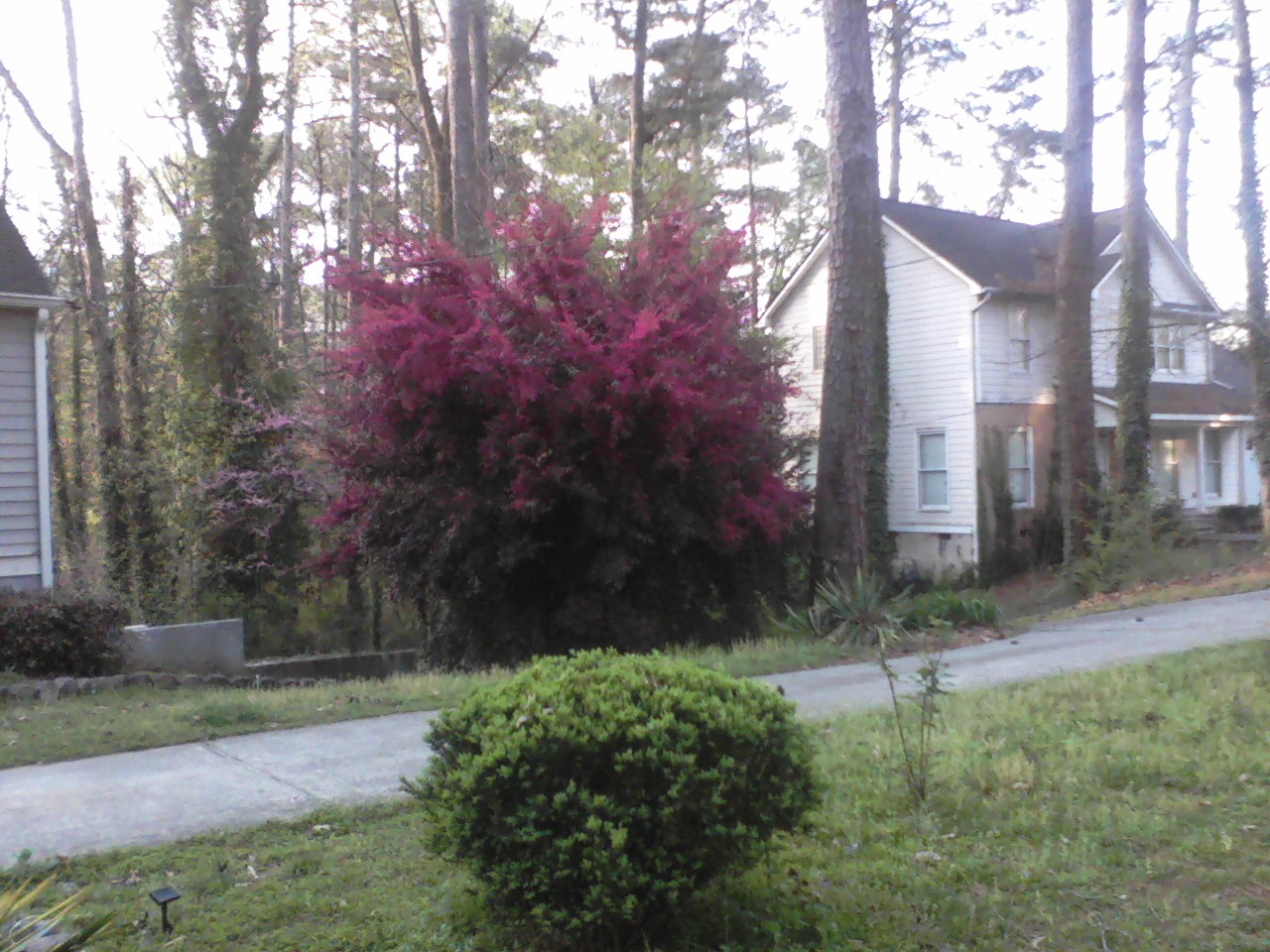
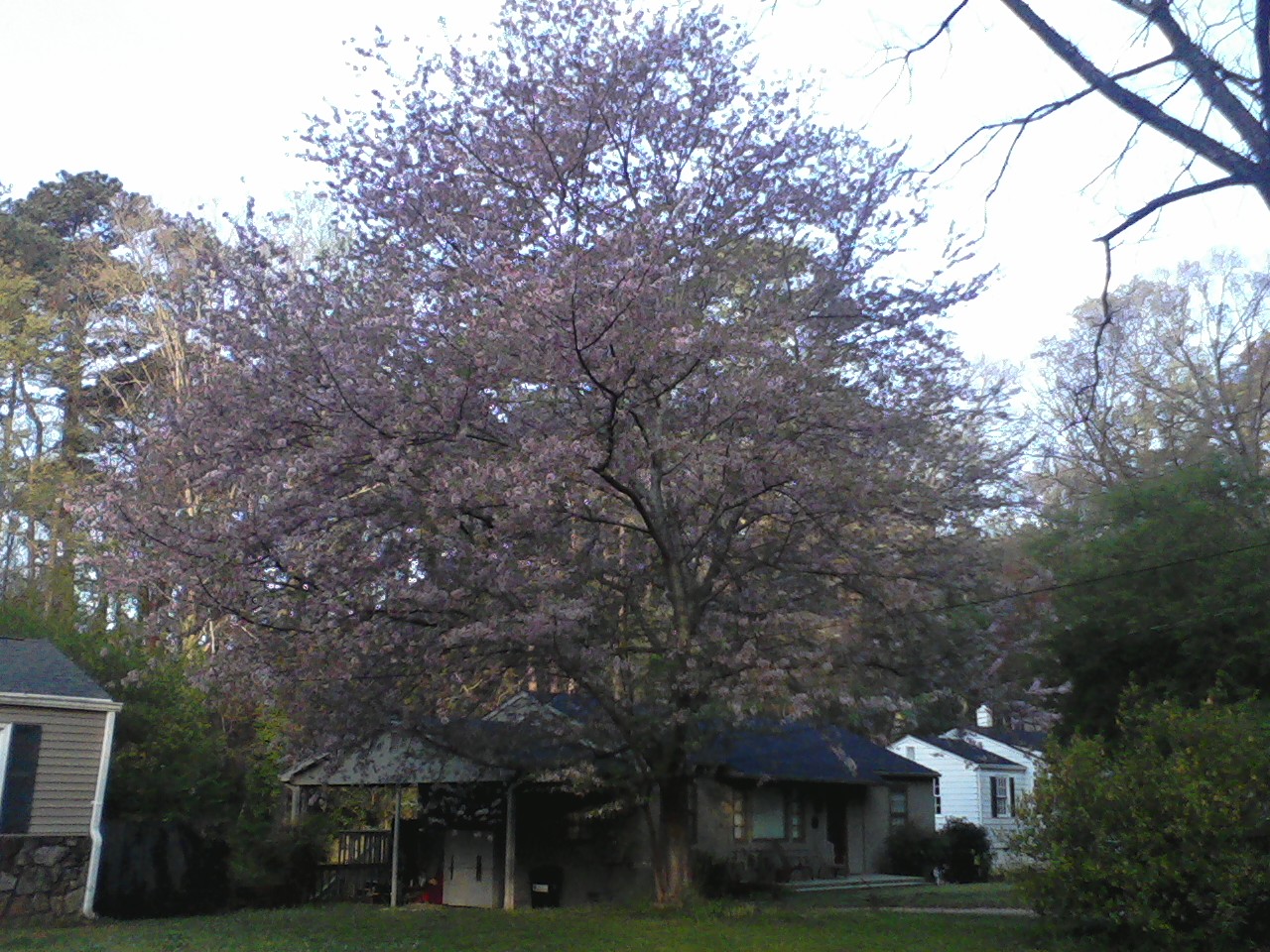
There were many more things I noticed, but I think you get the idea. This is a fun exercise for me and helps keep me in the habit of keeping my eyes moving and being in the moment.
Practicing Awareness
“An ounce of prevention is worth a pound of cure.”
Awareness – noun – Dictionary.com
“The state or condition of being aware; having knowledge; consciousness.”
One of the topics often stressed in the self-defense community is having ‘situational awareness.’ As my friend Craig Douglas says: “You can’t DO a noun.” Therein lies the core of the problem; we don’t teach people how to do it, so talking about it is mostly lip service.
When you want to learn to do something, you have to practice it. Once again, the dictionary defines practice as something done repeatedly or habitually. So if we want to learn to be aware, we need to work at it repeatedly. There are a number of ways that I practice my awareness and I do them every day, sometimes repeatedly.
In terms of awareness, one of my friends describes it as “what is wrong in my right world?” That’s one way of looking at it. A variant of that is “what is different or out of place?” That can be from the perspective of either what was before or what should be.
When I wake up, one of the first things I do is look out my front window. Is there anything different outside my home? Are there different cars there? Does the neighbor across the street have the porch light on, as it usually is? Is there anything different in my driveway or front yard? If not, then on with the day. If so, does it bear further investigation or do I just file that bit of information away? The essence of what I’m doing is checking for surveillance or an ambush. Having dealt with stalkers and possible attackers, both for clients and personally, I consider that very important in my daily routine.
I take a brisk walk around the neighborhood on a four day on, one day off schedule. The route I follow is the same so I can track my time to various checkpoints I’ve established. I don’t wear headphones, although occasionally I will have my phone playing John 00 Fleming Global Trance Grooves at a low level.
As I’m walking, I check out the houses, cars, and yards. I know them fairly well because I’ve been doing this regimen for almost two years. Which houses have been put up for sale and which have been taken off the market are obvious things that I look for. And there a lot of other things that I try to notice, such as cars, people, animals, etc.
Next post, I will list some of the things I observed and cataloged on today’s walk.
 tacticalprofessor
You must be logged in to post a comment.