RIP Sheriff Gene Matthews

Subscribe to continue reading
Subscribe to get access to the rest of this post and other subscriber-only content.
Charlotte Bus Shootout
On May 18, 2023, an altercation occurred between a bus driver and a young criminal riding the bus in Charlotte NC. As the altercation escalated, the young criminal produced a pistol from his pocket and approached the driver. Upon seeing the young criminal’s weapon, the driver produced his own pistol and opened fire on the young criminal. The young criminal fired back. Multiple rounds were subsequently exchanged.
ABC News link https://youtu.be/IoRgLsiefdE
Both shooters were wounded in the engagement. The young criminal was hit once in the abdomen and required six days of hospitalization with life threatening injuries. The bus driver was wounded in the arm, treated, and released. The young criminal was arrested and charged with Assault With A Deadly Weapon Inflicting Serious Injuries, Communicating Threats, and Carrying A Concealed Firearm. The bus driver was fired from his job but has not been charged, at least yet.
Issues
There are numerous issues that can be discussed regarding the incident.
- De-escalation
- The driver was fired for not using de-escalation techniques as taught by his employer. At this point, there is no way of knowing whether de-escalation would have been possible.
- Preparation for combat
- Although the young criminal was carrying a weapon and ‘communicated a threat,’ he had to consider the situation after he pulled his pistol out.
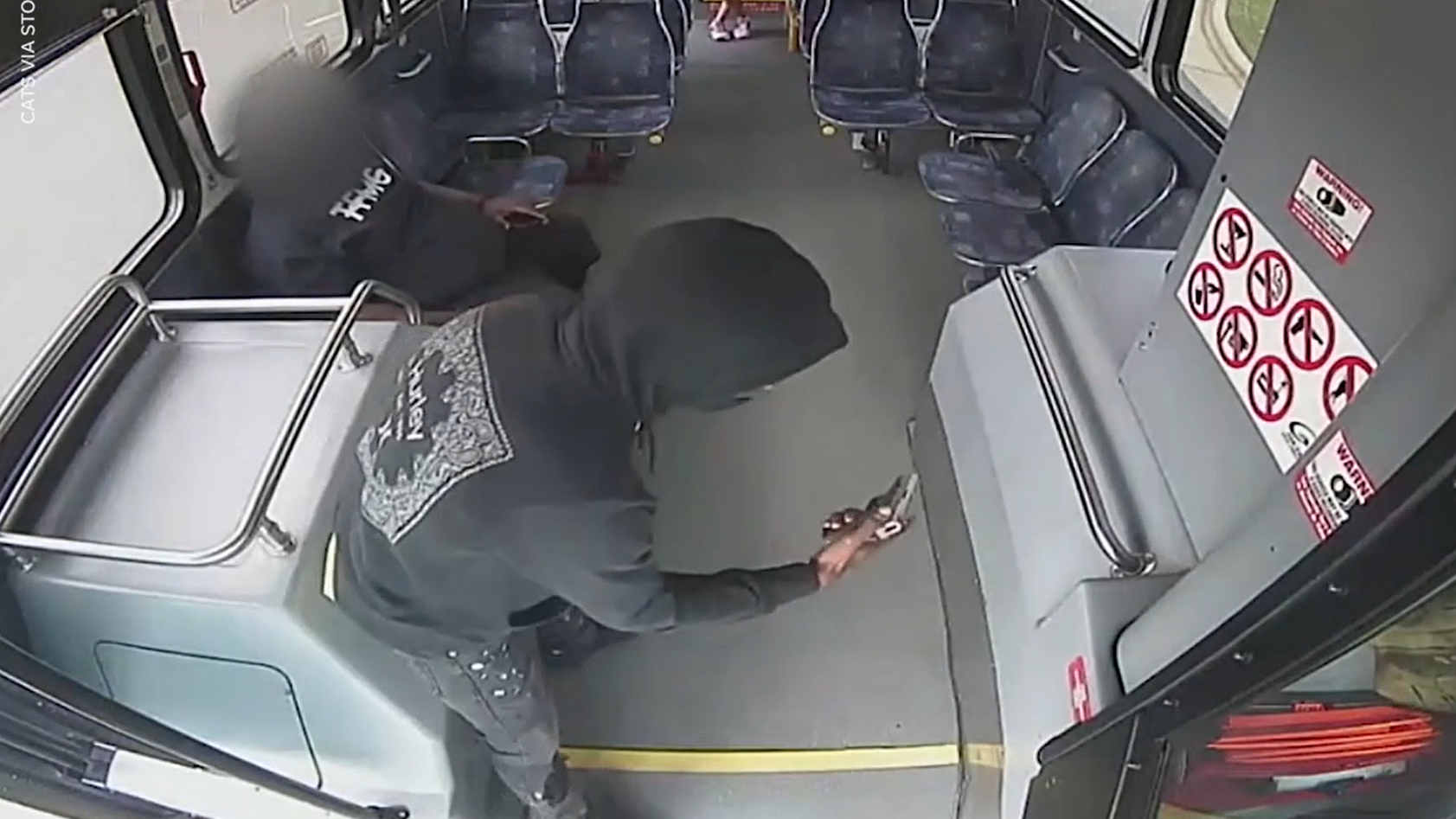
- The bus driver was clearly prepared for the incident because his draw was a one second draw any firearm instructor would be happy with.
- Situational Awareness
- The bus driver, despite having to drive the bus, was immediately aware of the young criminal’s approach after he armed himself.
- Point Shooting
- Distances
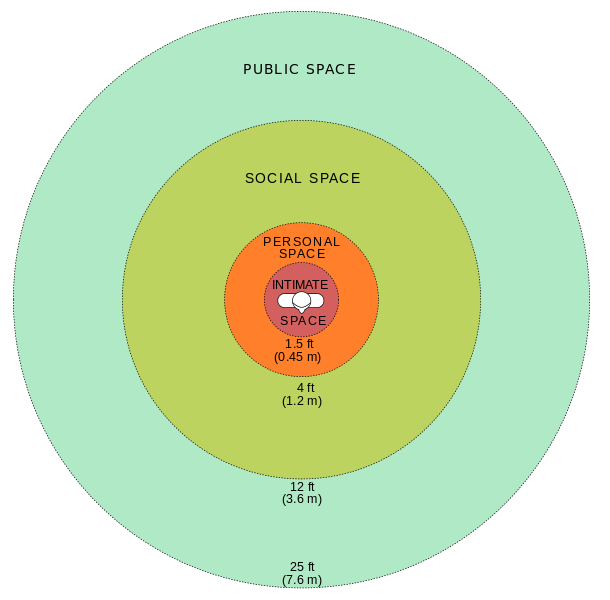
- The initial exchange of gunfire took place at about 4 feet, the boundary between Personal Space and Social Space in Proxemics.
- Distances
- As the shootout continued, the distances increased dramatically with the final shot taking place at seven to 10 yards.
- Both shooters fired one handed. Neither used a Gangsta style shooting stance. The young criminal’s initial stance was a classic point shooting Square stance with weapon just below the eye-target line as described by Fairbairn and Sykes in Shooting to Live.
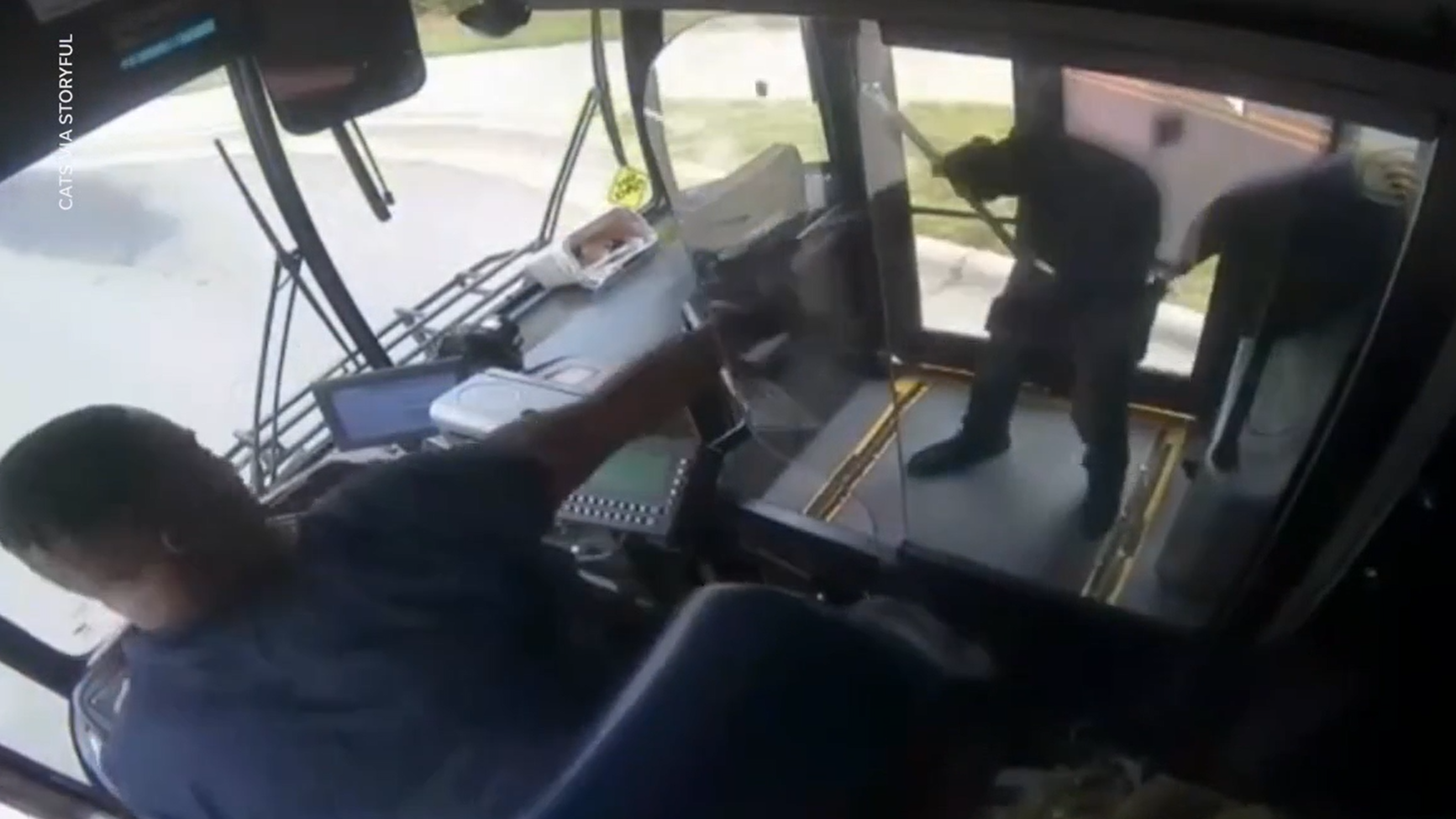
- As the young criminal retreated, the bus driver employed a ‘tactical blind fire’ method of continuing his barrage.
- Hits
- The results were that out of a magazine fired by each shooter, one hit was made by each. The young criminal was hit in the abdomen and the bus driver was hit in the arm. The hit ratio was less than 10 percent. Although the young criminal was seriously wounded, he was still mobile and unneutralized, as is often the case with abdominal wounds.
- Weapons used
- Glock 19
- SCCY
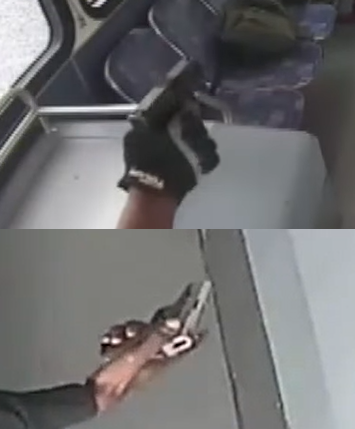
- Neither weapon appears to have malfunctioned.
- Both were equipped with iron sights.
- Anger management
- In Principles of Personal Defense, Jeff Cooper said “Now how do we cultivate an aggressive response? I think the answer is indignation. … Your response, if attacked, must not be fear, it must be anger. The two emotions are very close and you can quite easily turn one into the other. … Anger lets you do this.“ Although it is unlikely that the bus driver has ever read Cooper’s book, it’s very clear that he used Cooper’s philosophy.
- Actions after the initial exchange
- The bus driver fired three volleys.
- The initial exchange at the front of the bus, including the tactical blind fire.
- After the initial exchange of gunfire, the bus driver got up from his seat, opened the partition, had a verbal exchange with the young criminal, and then began shooting again.
- Finally, after the young criminal had exited the bus through the rear door, the bus driver debussed through the front door and fired one more round at the young criminal, who was now in the open seven to 10 yards away. This shot is problematic.
- The bus driver fired three volleys.
- Endangering innocent bystanders
- There were two bystanders on the bus. Both were endangered by the tactical blind fire of Volley 1 and the bus driver’s second volley.
- The second volley was unnecessary and irresponsible. The underlying motive for these shots was vengeance “You shot me!” not self-defense.
- The final round fired in the open as a parting shot menaced the entire area. Cooper’s anger principle is entirely inappropriate at this point.
- Gunhandling
- The bus driver had to switch hands twice. To undo his seat belt and open his partition, he had to switch his pistol to his left hand. After stepping past the partition, he transitioned back to his right hand. He was able to do this without having an Unintentional Discharge.
- Verbal commands
- The bus driver commanded the young criminal to “Get your a** back!” when the young criminal was at the back door. The young criminal refused, fearing he would be shot again.
- Self-aid for wounds
- Both the young criminal and the bus driver were wounded. Neither had any first aid equipment. Note in the video that the bus driver is holding his arm where he was wounded.
- Chasing fleeing criminals
- Getting out of his seat to maintain visual on the young criminal was entirely appropriate. Following the criminal out of the bus was not. We see time and again the chase instinct that occurs when the predator-prey relationship reverses. It’s an instinct that we need to be aware of and not give in to.
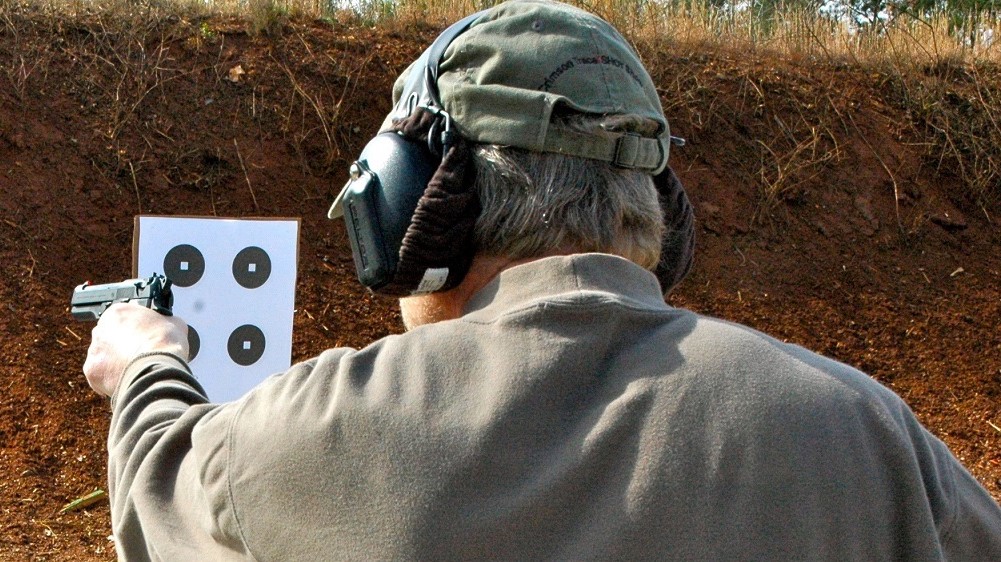
My analysis of the Point Shooting aspects are on my Patreon page. I will be going over other aspects of the shootout in more detail in my next few posts there. Click the image below to follow.
The Value of Historical Methods
A viewer of my Shooting to Live Advanced Methods demo YouTube video asked an interesting question.
“Do you think that there is any value added by practicing the WWII Combatives shooting methods beyond learning historical training firsthand?”
In a conversation with him, he further elaborated that he was asking from his perspective as a competent shooter who practices regularly using demanding time and accuracy standards. From that perspective, my answer was NO. The only value to him would be for historical academic interest. There is nothing that will be learned of practical value for someone with his level of proficiency.
However, I continued on by saying that to the millions of first time gun buyers of the past few years, MAYBE. Only a miniscule fraction of those people will ever take a class on gun safety and learn how to shoot to some standard, whatever that standard might be.
For those millions of first time gun buyers, studying actual WWII shooting combatives, such as Shooting to Live and Field Manual 23-35 Pistols and Revolvers (1946), could have some value. Shooting to Live and its immediately successor, US Army Combat Firing, at least provide some structure and standards for brand new pistol shooters. Any system based on real combat is preferable to going to an indoor range and randomly blasting away based on what’s shown on TV.
I began the long term series about ‘Unsighted Fire’ aka Point Shooting on Patreon for a very specific reason. It is that obviously the vast majority of people who write about point shooting or make YouTube videos on “Fairbairn Method” shooting have never really read or studied any of the literature about it, including Shooting to Live. From the perspective of an historian and researcher, this lack of fact based information is both annoying and disturbing.
The gunhandling and safety aspects of WWII pistol combatives alone have a great deal of merit. Gripping the pistol properly. A strong emphasis on practical gunhandling in addition to marksmanship. Including malfunction clearance in early stages of Live Fire. Equal weight on Dry Practice as Live Fire, especially prior to the initial firing practice. Highlighting the concept of treating a pistol as always loaded. Emphasizing the importance of muzzle direction when handling a pistol. Practicing clearing and making the pistol safe when less than a magazine has been fired. Those are all highly useful skills, probably even more so than the marksmanship standards, which were not very high.
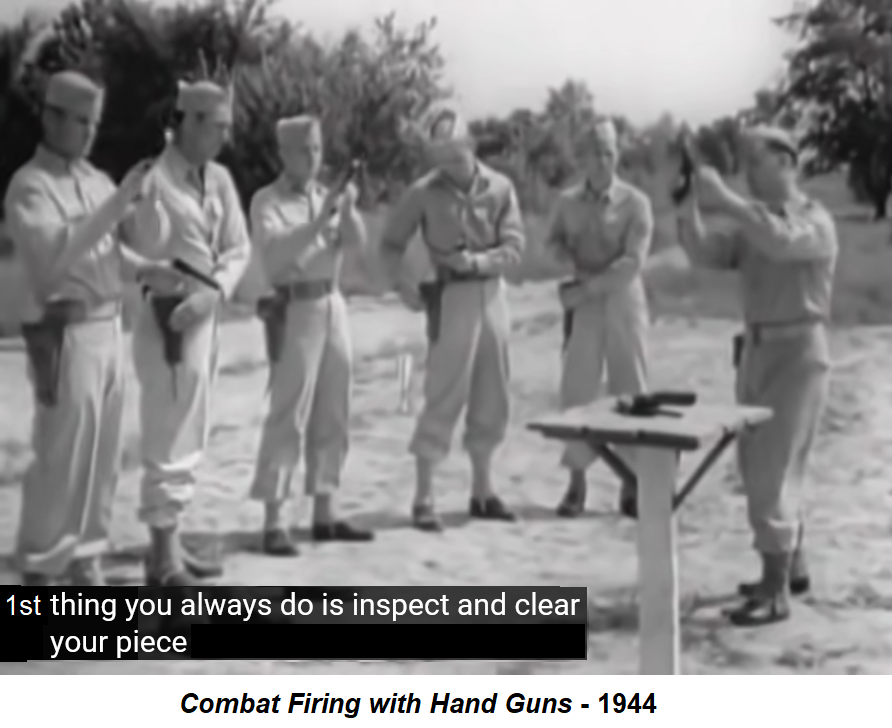
But please avoid muzzling your instructors. We won’t be happy about that. We will try to keep away from putting ourselves in a position where you can.
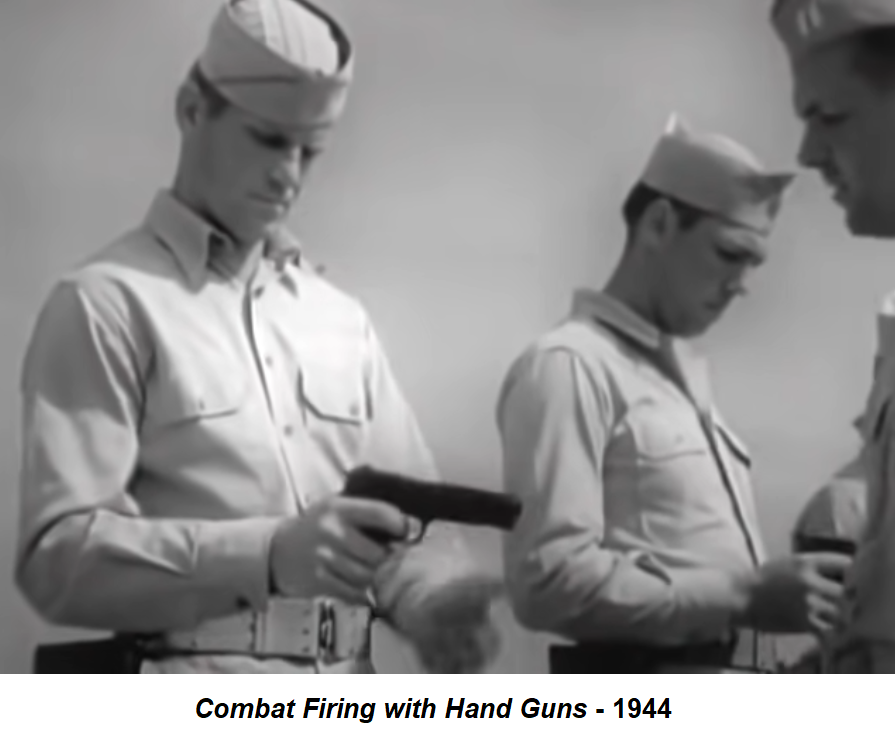
While the hit standards Shooting to Live and Field Manual 23-35 Pistols and Revolvers (1946) establish are rudimentary, they do give new shooters an idea that they’re supposed to actually hit something when shooting. The standard in Shooting to Live is 50 percent hits on a silhouette for single presentations within Social Space (4 yards). The 1946 US Army standard was 100 percent hits for single presentations on an E Silhouette at 5 yards.
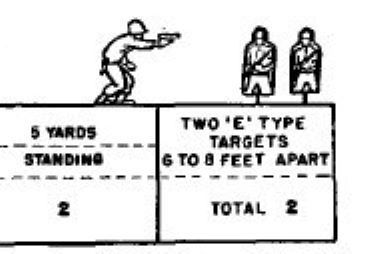
Although most proficient shooters today would consider the techniques obsolete and the standards mediocre, at best, they’re still better than practicing what’s seen on TV and in movies. TV and movies are where most gunowners’ training takes place and that’s bad news.
If you would like to follow my Patreon page to go into more depth about point shooting and personal protection incidents, click on the image below.
Shooting to Live Methods and Results
#Fridayfundamentals
Shooting to Live by Captains Fairbairn and Sykes is one of the most mentioned books ever in the shooting community. Or at least a caricature of what the book actually said. The reality of what Fairbairn and Sykes taught in reality is much different, both in method and results, than is usually understood.
Clarifying what the two men wrote and trained other to do is not hard. Their “Recruit Training Program” is a grand total of 35 pages, which are heavily illustrated. There are 4660 words in total so it should take an average person 23 minutes to read it. That reading just doesn’t seem to be done by many who talk about their system.
One of the first demonstrations the Recruits received was of the “Extreme Speed” that a pistol without a round in the chamber could be fired at. This is a live fire demonstration of what the Recruits were shown in Dry Practice.
Note that in one iteration, I forgot to chamber the round despite being set up for the drill. Contrary to popular belief, while Fairbairn and Sykes may have “practiced their draws thousands of times” their Recruits did not. In fact, there is very little draw practice in the Recruit Training Programme other than as incidental to the drills fired from Ready and Three-quarter Hip.
The first live fire the Recruits had is demonstrated in this video. It’s quite rudimentary and most likely could be successfully taught to anyone who wasn’t afraid of gunfire with a dozen or so iterations of dry practice. Using a .22 would make it a piece of cake.
Let’s skip to “Advanced Methods.” Note where the hits are on the target. Hits in areas that are likely to have rapid debilitating effect are highlighted. The geometry of the position, being crouched down, forearm even with the stomach, and bore parallel to the ground is almost guaranteed to cause the bullets to impact below the diaphragm.
As Tom Givens likes to quip:
“What do people do when you shoot them below the diaphragm? Pretty much the same thing they were doing before you shot them.”
We need to keep in mind what Fairbairn and Sykes wrote their system was capable of, i.e., their performance standards. The hits had to be somewhere on the entire silhouette target; whether the legs were included is not explicitly stated but neither was it disavowed. The shooting distance of their Programme did not exceed 4 yards at any point and nearly half took place at 2 yards.
“The qualification we require before the recruit’s course can be successfully passed is 50 per cent. of hits anywhere on the man-sized targets employed. Time has shown this to be adequate for the purpose in view.”
Explaining what Shooting to Live was the first segment of my Patreon series on Unsighted Fire. The next segment being addressed is US Army Handgun Marksmanship Training Evolution of WWII and Beyond. It’s very interesting to leave The Telephone Game The Telephone Game and the Training Industry behind and go to the source itself. If you would like to learn more about point shooting and personal protection incidents, click on the image below.
Revolver Handgun To the Rescue
From The Armed Citizen column of the May 2023 NRA Official Journals
#wheelgunwednesday
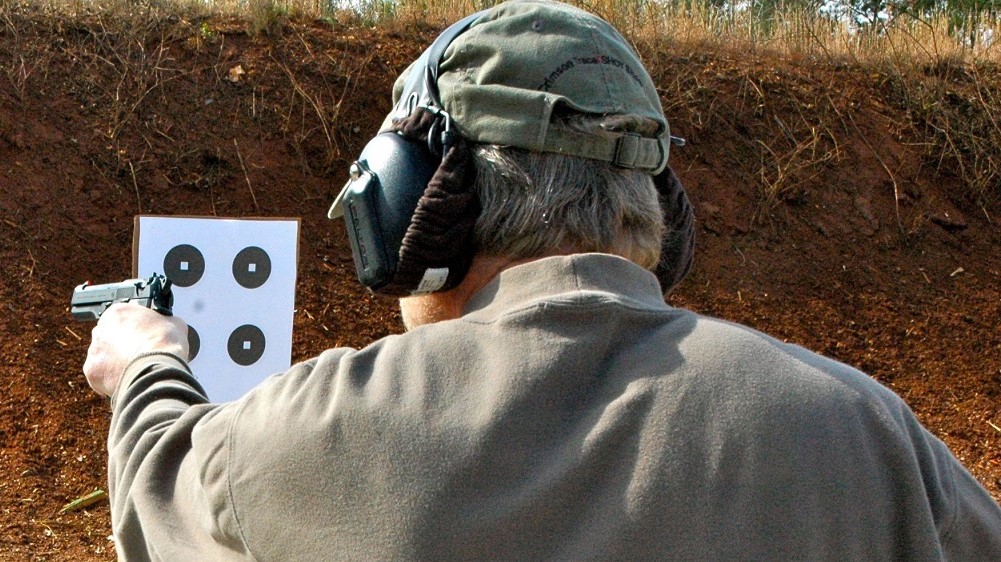
“A 71-year-old man was walking home from a takeout restaurant on March 2 when two men reportedly emerged from an alley and attempted to rob him at gunpoint. The man pulled out a revolver and exchanged fire with the suspects, who then fled. The armed citizen unfortunately sustained a wound to his ankle but was otherwise unhurt. The suspects had not yet been apprehended at the time of our reporting. (fox29.com, Philadelphia, Pa., 3/3/23)” https://www.fox29.com/news/victim-shoots-at-robbery-suspects-north-philadelphia
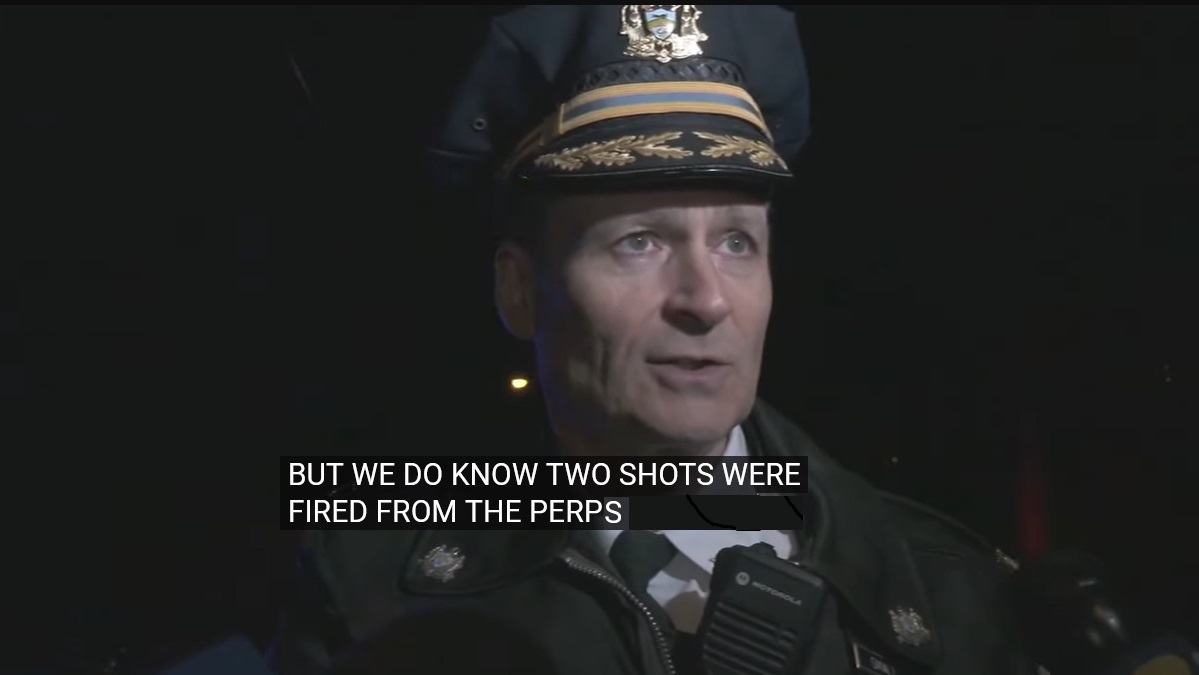
According to 6abc Philadelphia https://6abc.com/philadelphia-shootout-north-phillly-shooting-10th-street-cumberland/12907827/ , “The 71-year-old pulled out his revolver handgun and exchanged gunfire with the suspects”. The defender ‘emptied’ his revolver handgun at the robbers; one story indicated he had fired five shots. POlice spokesperson Chief Inspector Scott Small indicated that victim fired multiple shots and the perpetrators had fired two shots at the intended victim.
In an interview from his hospital bed with Fox News, the would-be victim said, “At night, I would keep my hand on my [revolver handgun] in my pocket in case I have to pull it out”. https://youtu.be/fs0RTJJTuOA He has a license to carry.
The Bottom Line was that he was armed and forced the robbers to Break Contact by shooting at them with his revolver handgun. Breaking Contact (Part I)
Unsighted Pistol Shooting
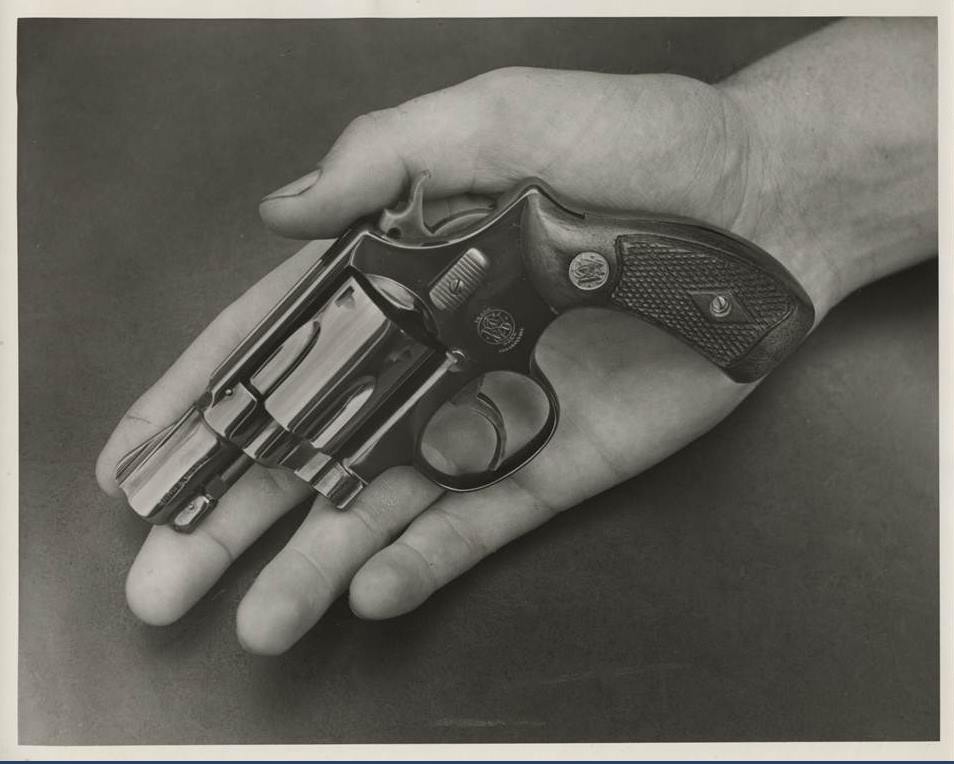
“You have a large target in front of you and the natural qualification of being able to point your finger at a certain object; by handling your revolver a short time you will be able to point the barrel of the revolver as you would your finger, pulling the trigger double action as the barrel swings into line with the target. When you have accomplished this you have the principle of quick shooting at short range and quick draw will be taken up later.” —
One of the early pioneers of defensive pistol shooting, J. Henry FitzGerald, wrote that in his book Shooting in 1930. Beginning in May, I will begin a four month series on my Patreon page about Unsighted Pistol Shooting.
https://www.patreon.com/TacticalProfessor
The concept is variously described as ‘point shooting,’ ‘reflexive shooting,’ ‘instinctive shooting,’ and several other terms. They all refer to the concept of firing a pistol without reference to the sights. Some systems call for the pistol to be brought into the eye-target line and others do not.

Although the historical documents are readily available, much Internet commentary about unsighted firing is not well researched or documented. The standards of what the founders of the various systems said could be accomplished, marksmanship-wise, are almost always ignored.
To shed more light on the subject, my Patreon series will be a survey of the actual historical literature with regard to technique, training methods, and standards. There are four distinct periods that the literature can be divided into. They are the Great War and Interwar Period, World War II and its Post War Period, the Vietnam War Era, and the Post Vietnam Era. Delph (Jelly) Bryce and other famous point shooters who didn’t write about training will not be included because they produced no literature.
The cost of the Unsighted Fire Tier will be three dollars ($3) monthly. You can unsubscribe at any time and not be charged for future months.
Most widely known of the unsighted systems is Fairbairn and Sykes Shooting to Live along with US Army doctrine developed during WWII. Those will be the topic for May’s Unsighted Tier.
The second component of the series will be a separate Tier concentrating on current incidents and how unsighted fire would or would not help solve the occurrence. Integrating actual incidents into training and practice has been something I’ve focused on since the early days of IDPA, when I was a Match Director.
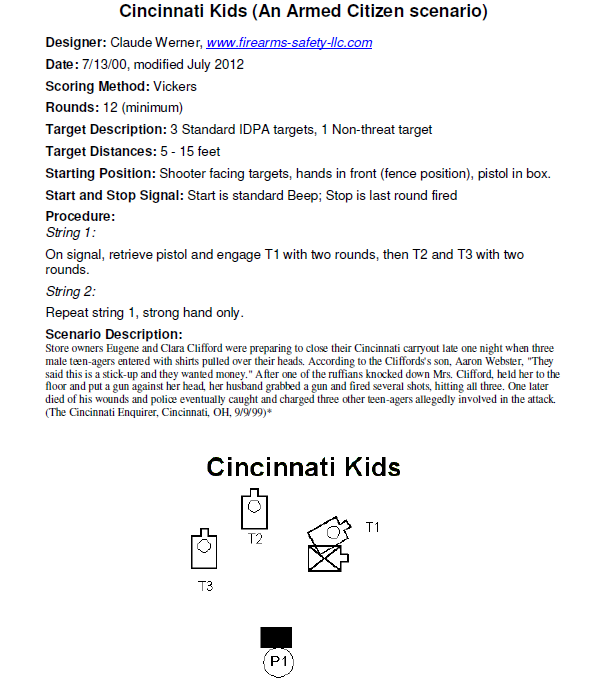
Each week the Incident Analysis Tier will feature an incident from the current Armed Citizen column of the NRA Journals. Many people are not familiar with The Armed Citizen column, which is a very useful start point for doing Incident Analysis pertaining to Private Citizens instead of the POlice. Part of my Analysis will be the marksmanship problem posed and what was needed to solve it.

The cost of the Incident Analysis Tier will be Five dollars ($5) monthly. It will also include all the posts of the Unsighted Fire Tier. You can unsubscribe at any time and not be charged for future months.
This will be a new type of education and instruction available to my readers. I am excited about the series and I hope you will join me for it.
Subcompact Pistol (LCP) Progress Evaluation
This is a short course I devised for my Patreon snub revolver and subcompact pistol programs. It’s based on the Nevada Concealed Firearms Permit Qualification Course. Instead of just shooting three long untimed strings (3, 5, and 7 yards), the timing is based on Lt. Frank McGee’s 3 shots, 3 seconds, 3 yards paradigm. Several additional start positions are also included.
It has some cool music too. Somewhat reminiscent of the soundtrack from the TV series Lex.
NRA Annual Meeting 2023 – Day 1
The NRA Annual Meeting was held this year on April 14-16, 2023 In Indianapolis. There is no cost to attend for NRA members. Approximately 70,000 NRA members were expected to attend. The venue was the Indiana Convention Center, a large and well-appointed facility. Midway USA was the official sponsor of the Annual Meeting. There was a wide variety of educational opportunities in addition to the “14 acres of Guns and Gear” on display. Despite being attended by many thousands of people carrying firearms both concealed and openly, there were no mass shootings at the event.

Before even entering the venue, a truck was observed with large LED signs on its sides was seen circling the building. The signs were various anti-NRA disinformation slogans targeted at both the general public and NRA members. This truck circled the Convention Center continuously all three days of the Meeting.
Day 1
Interesting items observed on Friday were:
- AimCam, a new integrated camera and shooting glasses system that allows video of what the shooter sees through the master eye vis-à-vis images captured from slightly off-center.
- The Savage Arms Stance, a microcompact 9mm pistol for concealed carry.
- A Kel-tec slimline 9mm pistol.
- Wilderness Tactical renovation of the Renegade ankle holster. WT also had an in the pocket double pouch, which could be used for two spare magazines or a magazine and small flashlight.
- A wide variety of offerings by Taurus USA. Caleb Giddings, the Taurus Marketing Manager and “degenerate revolver enthusiast,” stated that he has fired over 1,000 rounds through several Taurus Model 82s in practice and competition without failures. One of the improvements Taurus has made to the 82 is to capture the trigger return spring and eliminate the rebound slide. This removes one frictional component of the trigger action and improves the feel and weight of the trigger press. Taurus also had compact and full size versions of the TX22, new .22 Long Rifle pistol that Taurus states can be dry fired without damage.
In addition to the displays of guns and gear, there were continuous educational offerings on all three days of the meeting. https://s15.a2zinc.net/clients/NRA/nraam2023/Public/Sessions.aspx?ID=4750 The topics ranged from generally gun related topics, Dr. John R. Lott’s Gun Control Myths as an example, to theme focused classes such as Lessons Learned From Analyzing 40,000+ Real Gunfights by John Correia of Active Self Protection.
“Lessons Learned from Analyzing 40,000+ Real Gunfights [delved] into the top lessons gleaned from analyzing tens of thousands of actual defensive incidents caught on surveillance video by the national SME in that arena. Real-life incidents will be viewed and analyzed in class to highlight these lessons learned.” was the program description.
An overview of Lessons Learned from Analyzing 40,000+ Real Gunfights will be my next post.
LAPD Shooting Re-enactment
An LAPD officer, using a Red Dot Sighted pistol, was forced to shoot a hostage taker at a range of five feet in July of 2021. The Board of Police Commissioners number for the incident is Categorical Use Of Force number 041-21. Tactics, Drawing and Exhibiting, and Use of Deadly Force by Officer A in the incident were all adjudicated as In Policy by the BOPC.
This video re-creates the marksmanship problem faced by the officer. The target was moving for the officer, which this video does not re-create. The pistol used in the video is a Glock 42 supplied by Glock for my Subcompact Pistol Training Tier on Patreon.
In keeping with the LAPD theme of the video, the second part of the video contains a demonstration of a permissible variation of the LAPD Retired Officer Qualification Course, also shot with the Glock 42. This Course has value to the Armed Private Citizen as a self-evaluation of some good to have marksmanship skills for concealed carry.
The Covert Draw
Someone in my Patreon Subcompact Autoloader Tier https://www.patreon.com/TacticalProfessor/membership asked the question,
“Could you offer some insight and technique to the surreptitious, covert, or stealth draw?”
That’s a question worth exploring because of the tradeoffs involved. As Thomas Sowell has said, everything involves comparisons and costs.
There are two aspects to the drawstroke; 1) Access and Grip and 2) Present to target. Access and Grip is the most time consuming part of the drawstroke but not the most difficult. Getting the gun well indexed on the target is the hardest part. Missing the first shot is far more common than not being able to get the gun out.
A covert draw facilitates Access and Grip but complicates Present. Once the draw is complete, the gun is positioned out of the path of your normal drawstroke. If shooting is required, the first shot might actually be slower if we Comstock a bad hit.
The gun is also probably pointing at your own body in the process. While holding it at a concealed Ready, you may have to engage in dialogue or movement and remember to not shoot yourself at the same time. Given the light triggers that many people favor, that’s an unpleasant prospect.
Even if the gun isn’t visible to a potential attacker, it may be noticeable to someone at a different angle. That person may not be a hostile. A covert draw could end up as an Aggravated Assault on an uninvolved party.
And if no shooting is required, a covert re-holstering will be necessary. Some deep concealment holsters can be difficult to re‑holster without making a big production out of it.
Being able to Access and Grip in a low profile way might be a more useful way of addressing the problem. With Access and Grip accomplished, if we get the ‘Go Signal,’ we have the most time consuming part of the drawstroke out of the way. We can then use our normal Presentation, at which we hopefully have many repetitions and can execute well.
Although the Covert Draw concept sounds appealing, the tradeoffs need to be considered. The costs may be found to outweigh any potential benefit.


You must be logged in to post a comment.