The Top 5 Missed Shots in Handgun Shooting

- The first shot.
- The last shot.
- The first shot after reducing a stoppage (which includes a reload).
- The shot after an Unintentional Discharge (it’s missed because it’s not fired).
- The first shot after the transition to another target.
The first shot is easily the most missed shot of all. Walking rounds into the target is a very common exercise. However, as Theodore Roosevelt wrote in his 1893 book Ranch Life and the Hunting Trail https://www.amazon.com/Ranch-Hunting-Trail-Theodore-Roosevelt/dp/1414505108 :
No possible rapidity of fire can atone for habitual carelessness of aim with the first shot.
If the gun isn’t indexed into the eye-target line with adequate precision, relative to the distance involved, the first shot is likely to miss. Brian Enos called the necessary personal characteristic “visual patience.” Get the gun adequately aligned prior to pressing the trigger.
The last shot is often missed due to lack of follow-through. There always needs to be one more sight picture than rounds fired. Follow-through may be the least understood of all the Fundamentals of Pistol Shooting. https://thetacticalprofessor.net/2021/11/05/fundamentals-of-pistol-shooting-part-1/
A stoppage is any unintended interruption in the cycle of operation. Whether that’s a malfunction or simply running out of ammo is irrelevant. Any stoppage reduction is a complex motor skill. That means a combination of gross and fine motor skills. Once the stoppage is reduced, we need to transition back into the fine motor skill only (trigger manipulation) mode before we fire the next shot.
After an Unintentional Discharge, the next shot is frequently not fired at all, which is why it’s missed. Periodically, a POlice dashcam or badgecam will record an officer firing one shot, then clearly displaying some type of startle response, and then immediately reholstering. That means it was an Unintentional Discharge, even if shooting was Justifiable under the circumstances. In competition, shooters will occasionally have a UD and then look at the pistol in a dumbfounded way. If they’re not Disqualified by the Range Officer, they will eventually get back to shooting but it’s often several seconds later.
Transitioning from one target to another and then making a good hit with the first shot is difficult. Very few people ever practice it, which increases the difficulty. It’s a sacrilegious view, but my observation is that when someone who isn’t a highly experienced and capable shooter (GM, M, A, Expert) moves their eyes to another target ahead of the sights, the first shot is going to be a miss. If the target is in an unexpected location, this is even more true.
Understanding the Top 5 Missed Shots makes them easier to avoid and shoot gooder.
The following isn’t related to the 5, but it’s an interesting comment from a previous post on my blog.
If you can’t be bothered to expend fifteen minutes a week in dry practice, two extra magazines on your person are most likely meaningless.
Surgical Speed Shooting Summit 2022 – An Overview
Twenty-one years ago, Andy Stanford researched and wrote the book Surgical Speed Shooting https://www.amazon.com/Surgical-Speed-Shooting-High-Speed-Marksmanship/dp/1581601433 about combat shooting technique. He began teaching classes based on what his research had found. A number of people in the industry, myself included, became part of a group Andy formed to spread his knowledge.

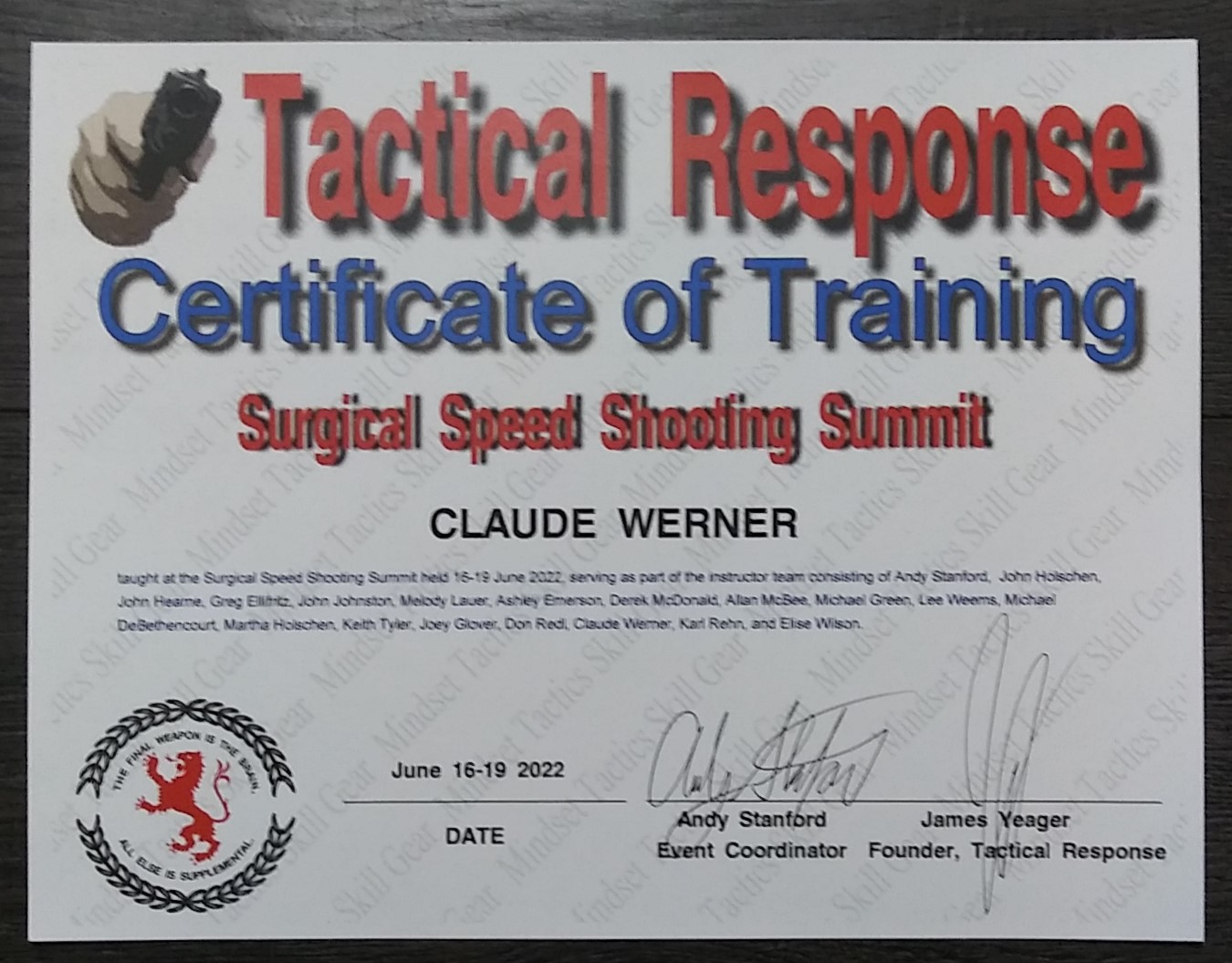
Fast forward to June 2022. Andy organized a four day event, the Surgical Speed Shooting Summit, https://www.tacticalresponse.com/products/surgical-speed-shooting-summit to further update what he learned subsequent to writing his book. The event was held at the classroom and range of Tactical Response https://www.tacticalresponse.com/ in Western Tennessee. The purpose of the Summit was not only to update Surgical Speed Shooting but also to bring together a group of some of the top trainers in the industry, many of whom were not SSS related, to add their expertise to the knowledgebase. The final group of instructors was:
- John Holschen
- John Hearne
- Greg Ellifritz
- Michael Green
- Claude Werner
- Michael DeBethencourt
- Allan McBee
- John Johnston
- Karl Rehn
- Don Redl
- Lee Weems
- Melody Lauer
The first day started with a half day update of what Andy has gleaned about combat pistol shooting since the book’s publication. For the second half of the day, the group went to the range to shoot a few drills and see some targets Andy has developed for Surefire https://www.surefire.com/.
Day Two was spent at the Tactical Response classroom with each trainer giving a presentation of his or her own choosing. The topics all related to personal defense but did not have to be specifically on Surgical Speed Shooting.
On the third day, 47 students arrived at the Tactical Response range to begin training with the 12 instructors who had been divided into three different groups of four instructors each. The students were divided into equal sized groups based on an initial skill evaluation by shooting one of the Surefire drills. The student groups received 2 hours of training each by each instructor group. The instructors divided their two hour time frames among themselves to that the students received 12 total short blocks of instruction.
The final day’s range activities for the students were similar to the third day’s but the instructor groups were reorganized and the instructors had the option to present different material than they had on the previous day.
Finally, everyone returned to the Tactical Response classroom for a wrap-up of the Summit’s events. The instructors and students invidually gave examples of two things that they had personally taken away from the Summit’s training and presentations. As each person gave their take-aways, they were presented with a certificate testifying to their attendance at this historic event.
More about each day’s activities in the next few posts.
Revolver History – Merwin & Hulbert
#wheelgunwednesday
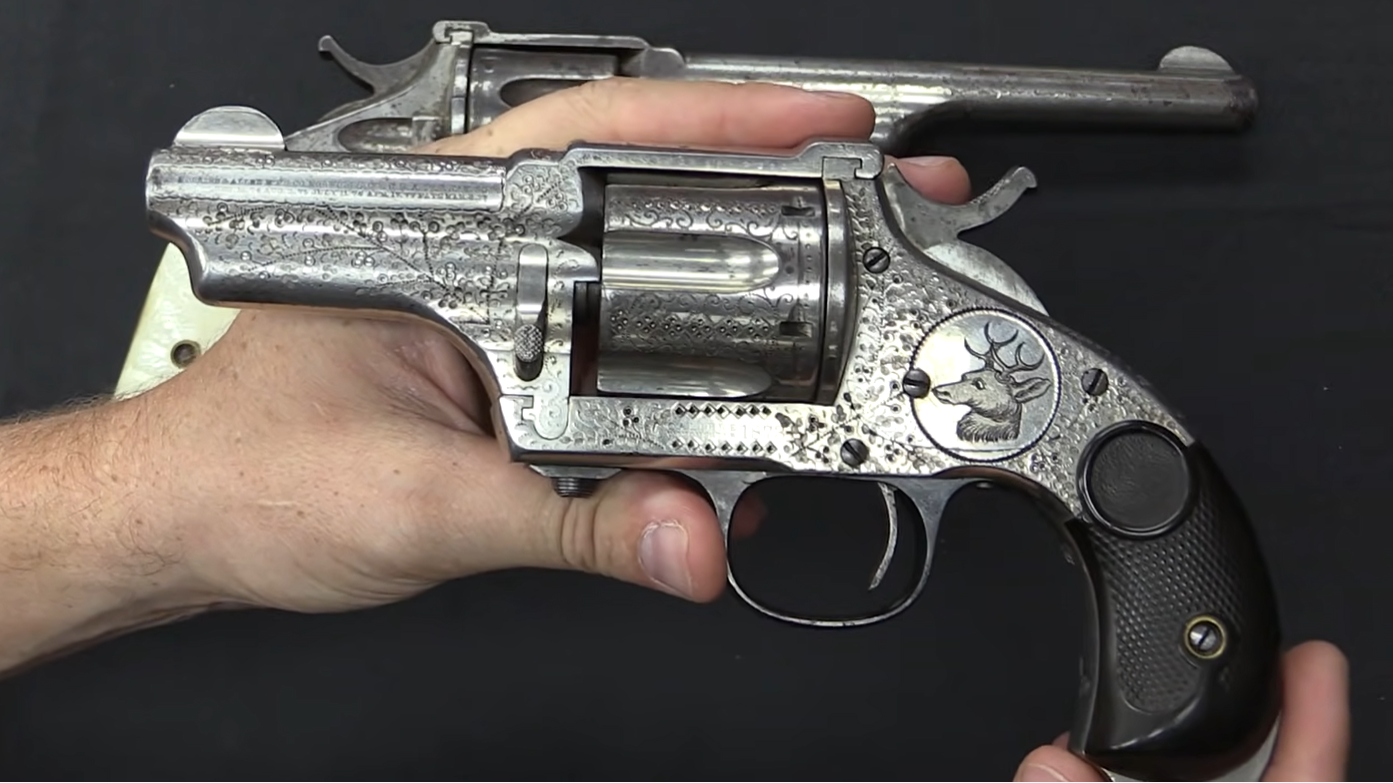
The Merwin & Hulbert revolvers of the Old West period aren’t very well known today. Forgotten Weapons has an excellent video about them.
The innovative engraving style and extensive use of nickel plating were unique features of their revolvers. Being able to eject the empty cases while keeping unfired rounds to do a tactical reload made them an excellent choice for gunfighting.
Why we shoot pistols one-handed
A very interesting article is available on the NRA Sporting Sports USA website. There are some relevant historical details about the development of pistol technique in it.
https://www.ssusa.org/content/a-short-history-of-american-target-development-and-evolution/
U.S. Cavalry troops were required to shoot dismounted on the Army Target “L”. Even though they carried sabers and carbines, revolvers and pistols were the primary arms of the cavalry. Just as foretop men aloft in the rigging during the days of sail was [sic] admonished, “One hand for yourself and one for the ship,” so it was with the cavalryman, one hand for the horse and one for the pistol and that is why conventional pistol shooting is a one handed affair. After qualifying on foot, troops were required to repeat the course of fire while on their horse.
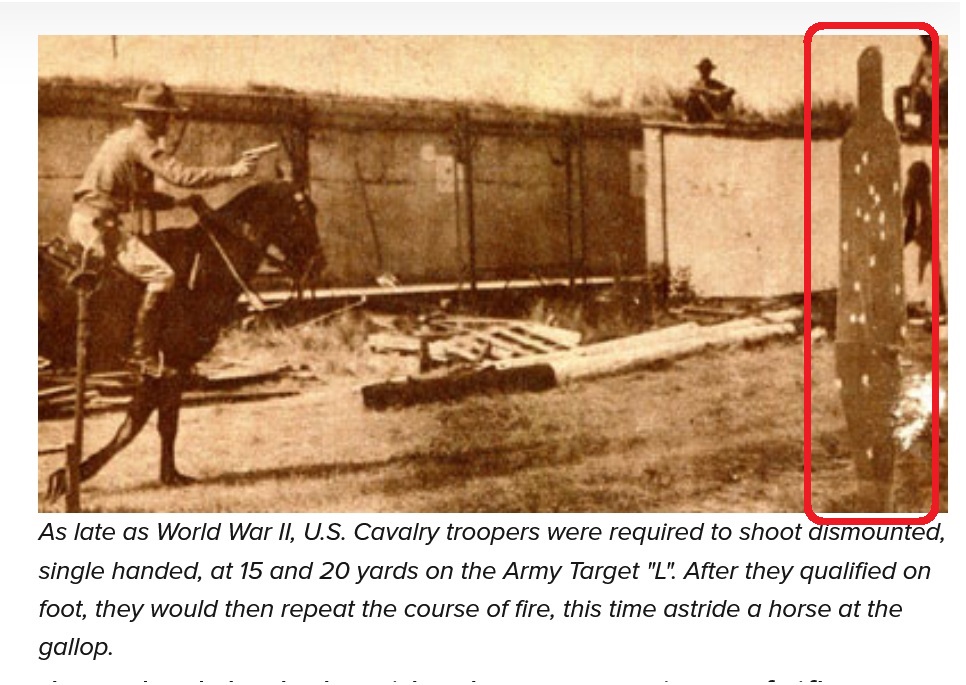
The Army Target “L” was pretty big, six feet tall and four feet wide. A five-inch aiming black, worth ten points was surrounded by seven concentric circles at intervals of 8.5 inches, 12 inches, 15.5 inches, 19 inches, 22.5 inches, 26 inches, and 46 inches and of descending value nine through three points. Any hits on the remainder of the frame were worth two points. On the left side were large numbers, five through two, from top to bottom, and six through nine on the right for scoring purposes.

The influence of the US Army Cavalry on the use of the handgun in our country cannot be underestimated, although mostly forgotten a century later. The Cavalry was the branch of the Army that led the development effort for the 1911 pistol. Cavalry doctrine of that time is the reason the 1911 has a spur hammer, manual safety, and grip safety. Those are details for another time, though. Teaser: the 1911 was NOT designed to be carried ‘cocked and locked,’ contrary to popular opinion.
Gun Safety 2022 – Part V
#mindsetmonday
In addition to the Four Rules, store firearms and other weapons where they are not accessible to unauthorized persons. Guns are not boxes of Kleenex and require a higher level of security for their storage.
My personal ongoing data gathering indicates that every single day, on average, a child gains access to an improperly stored firearm and then incurs or causes a gunshot wound. While this is small number compared to some other types of ‘accidents,’ the other types don’t generally result in large amounts of blood that has to be cleaned up. The level of psychological trauma to the responsible parties cannot be imagined by the rest of us.
The saddest aspect of these incidents is how preventable they are. Numerous easy and inexpensive ways to secure firearms either at home or in a vehicle are readily available. There’s no excuse for not using them.
The balance of the post is on my Patreon page and is publicly available.
Why I Like to Measure Things
#measurementmonday
Why do I like to measure things? Because until I do, I don’t really know what’s inside.

I dislike soupy oatmeal. Although I followed the package instructions, it still turned out like soup. When I used the package measurement, it didn’t. Measuring the actual amount of water from the package’s marker doesn’t hold as much water as it says and which the directions specify. One half a cup is quite a bit less than two-thirds of a cup.
What does soupy oatmeal have to do with personal protection? How would we know whether we’re “good shooters” https://youtu.be/qB7NKXEKewM?t=599 unless we measure our own level of competency?
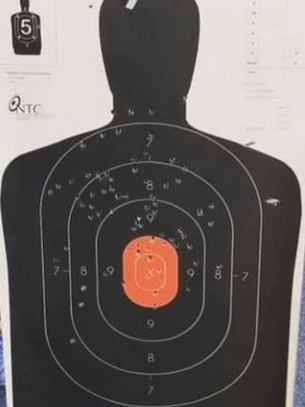
There has been debate within the training community for a long time about standards of competency. Those arguments will probably never be settled. One possible starting point could be the level of marksmanship necessary to pass the NRA Basics of Pistol Shooting Course. To pass the Course, a shooter needs to be able to make five hits inside a 4 inch circle four times at 10 feet, no time limit.
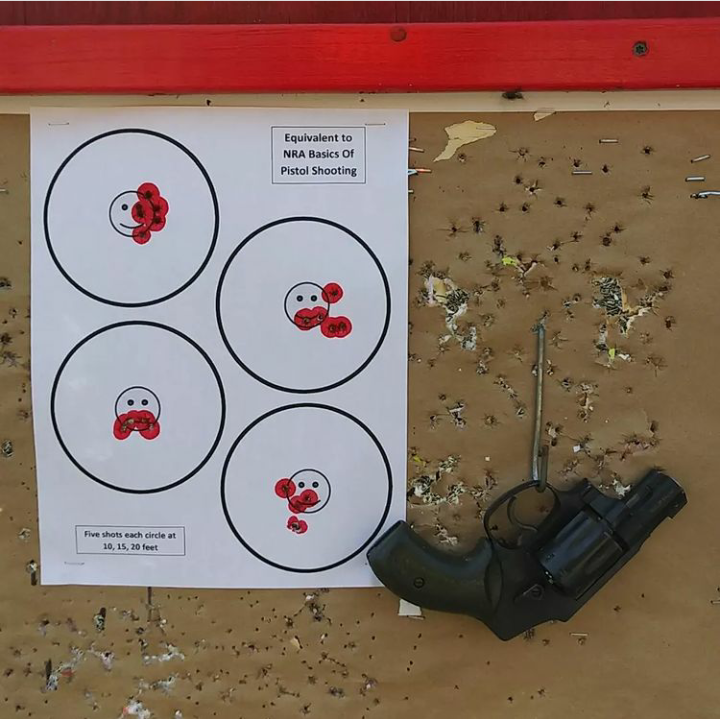
The NRA doesn’t require that a shooter make the standard in four consecutive attempts. Someone keeping or carrying a pistol for personal protection probably should consider being able to do it every single time. Shooting the BOPS test would at least give you an idea of where your competency is. Here is a target for you to use.
My Fundamentals of Pistol Shooting Tier https://www.patreon.com/TacticalProfessor?fan_landing=true is $1 a month on Patreon. The kickoff post, Dry Practice Circle Drill, is available to the public without subscribing. https://www.patreon.com/posts/64582173
Friday Fundamentals
To kick off my new Fundamentals of Pistol Shooting Tier https://www.patreon.com/TacticalProfessor?fan_landing=true on Patreon, I’ve chosen to use the Dry Practice Circle Drill.
The kickoff post is available to the public without subscribing. https://www.patreon.com/posts/64582173
I’m excited to offer this Tier so that for $1 a month people can learn how to shoot better than this and it won’t take years to do.
Armed Citizen® Podcast – February 2022
Incident #1
Defense related tasks
- Retrieve from Storage (handgun)
- Shoot with handgun
- Engage multiple adversaries
Original news reports
sandiegouniontribune.com, https://www.sandiegouniontribune.com/news/public-safety/story/2021-08-06/police-searching-for-two-burglars-involved-in-la-mesa-home-invasion
timesofsandiego.com, https://timesofsandiego.com/crime/2021/11/10/one-person-dead-another-wounded-in-early-morning-shooting-in-oceanside/
Incident #2
Defense related tasks
- Retrieve from Storage (handgun)
- Shoot with handgun
- Shoot in midst of others
- Shoot with non-threats downrange
- Engage multiple adversaries
Original news reports
komonews.com, https://komonews.com/news/local/employee-reportedly-shoots-suspects-in-armed-robbery-at-cannabis-store-in-spanaway
thenewstribune.com, https://www.thenewstribune.com/news/local/crime/article255990047.html
Incident #3
Defense related tasks
- Retrieve from Storage (handgun) or
- Draw to Challenge (verbalize)
- Hold at gunpoint until POlice arrive
- Maintain trigger finger discipline to preclude Unintentional Discharge during gunpoint
- Comply with POlice commands
Original news reports
humboldtgov.org, https://humboldtgov.org/CivicAlerts.aspx?AID=4341
Incident #4
Defense related tasks
- Draw from seated position (car)
- Shoot from seated position (car)
- Reholster safely
Original news reports
chicago.cbslocal.com, https://chicago.cbslocal.com/2021/11/29/ccw-holder-fires-gun-attempted-carjacker-roseland/
abc7chicago.com, https://abc7chicago.com/chicago-shooting-roseland-foid-card-concealed-carry-license/11284993/
Incident #5
Defense related tasks
- Retrieve from Storage (handgun)
- Shoot with handgun
- Shoot in midst of others
Original news reports
newstalkkzrg.com; https://newstalkkzrg.com/2021/11/30/homeowner-shoots-wounds-alleged-intruder-in-baxter/
Incident #6
Defense related tasks
- Retrieve from Storage (handgun)
- Shoot with handgun
- Shoot in midst of others
- Engage multiple adversaries
Original news report
q13fox.com, https://www.q13fox.com/news/deputies-homeowner-shoots-kills-intruder-in-spanaway
Historical Lessons – Gunpointing
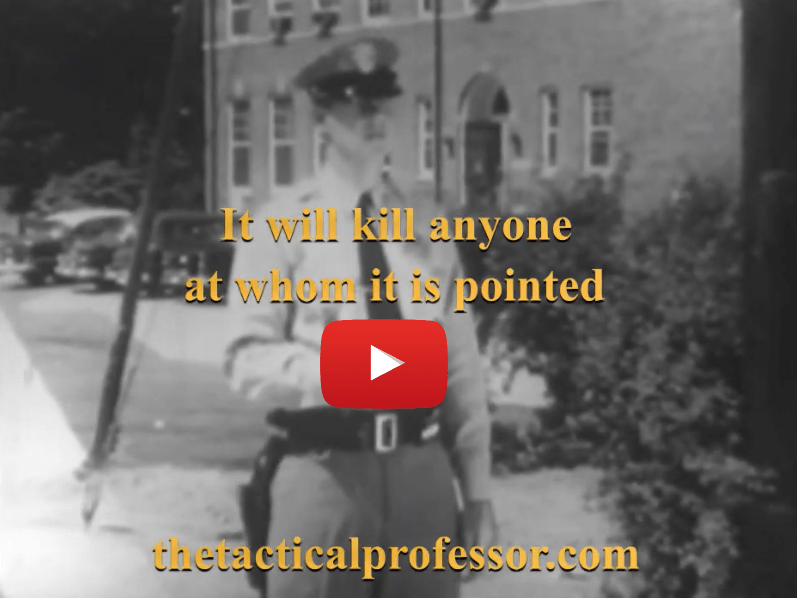
Some lessons stand the test of time. Being prudent about whom guns are pointed at is one.
This is the first in a series of short videos that recall worthy lessons from historical films.
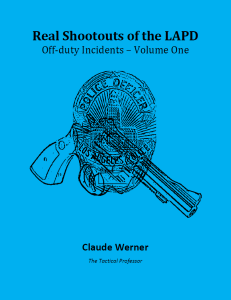
If you would like to purchase my ebook Real Shootouts of the LAPD, click on the image below.
ETA: This was posted on my Facebook page and it’s too good to not share.
 tacticalprofessor
You must be logged in to post a comment.