Recognition Primed Decision-making (part IV)
RPD in the context of Personal Protection has two components. The first is Recognizing what is happening. The second is making a Decision about what to do about it. That Decision is the result of overlaying our ‘Options’ on ‘People’ and ‘Situations’ to achieve an appropriate response. Our response represents the Confront and Resist components of the Avoid, Escape, Confront, Resist model. The best decisions are made in advance and then implemented in the moment of need.
Part I of the series Recognition Primed Decision-making (part I) discussed the types of people we might encounter.
- Benign person
- Angry person
- Predator or angry person with personal weapons (fists, shod feet, etc.)
- Angry person or predator with a contact weapon
- Predator or angry person with a projectile weapon(s)
Examples of situations were also discussed.
- Area of limited visibility such as a parking deck
- Walking alone in unfamiliar territory
- Being in the presence of a person who makes us uncomfortable
- Having an unknown person approach us
- Being home in a state of Unawareness or Unfocused on personal protection
- Etc.
Part II Recognition Primed Decision-making (part II) listed our Reactions or Options to an attempted predation.
- Freeze
- Submit (at least temporarily)
- Negotiate
- Posture
- Flight
- Fight
- Unarmed
- Non-Lethal
- Lethal
Our Confront and Resist Options are based on our personal situation and value choices. These can change over time or rapidly, even second to second. A person may not be initially comfortable with carrying potentially lethal tools but be perfectly comfortable with unarmed combat or non-lethal tools. As time goes on, they may become more comfortable with a wider range of Options or they may not.
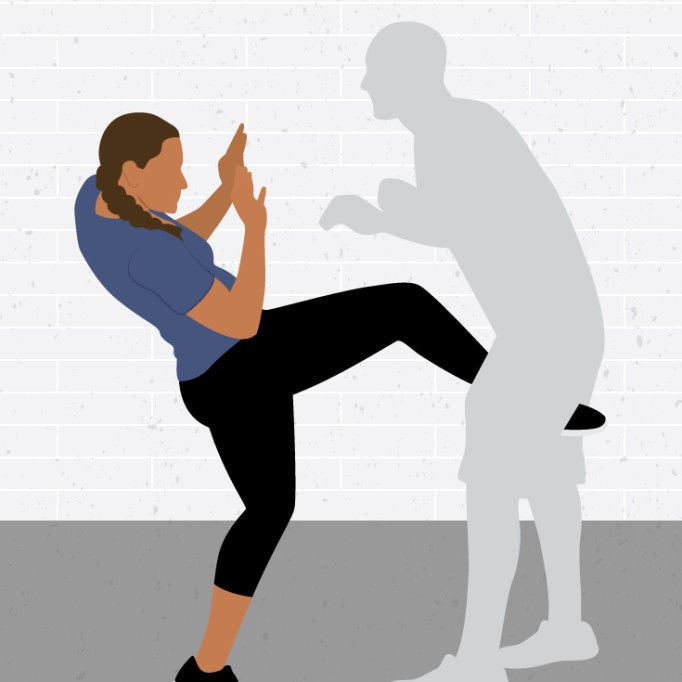
Changes in available tools varies with the situation. For instance, a person may not choose to carry a firearm in their place of employment but instead to lock it in their vehicle while working. During the walk from the business place to the vehicle, they might only be equipped with pepper spray and a flashlight. Immediately upon entering and locking the vehicle, the person may don a handgun and impact tool. During the walk, the person may choose a previously developed response tactic that only involves using the tools on their person. While this may not be the optimal solution, it is the one available at the time. Upon upgrading their Defense Condition https://en.wikipedia.org/wiki/DEFCON with a handgun, the chosen tactic may be different.
It’s useful to view the context of Boyd’s Process as an iterative and interactive model between two parties rather than the single party static model usually described. In a predation, the predator will make the first move, the intended victim will respond with a Reaction or Option, and then the predator will choose or react from his/her range of Options.
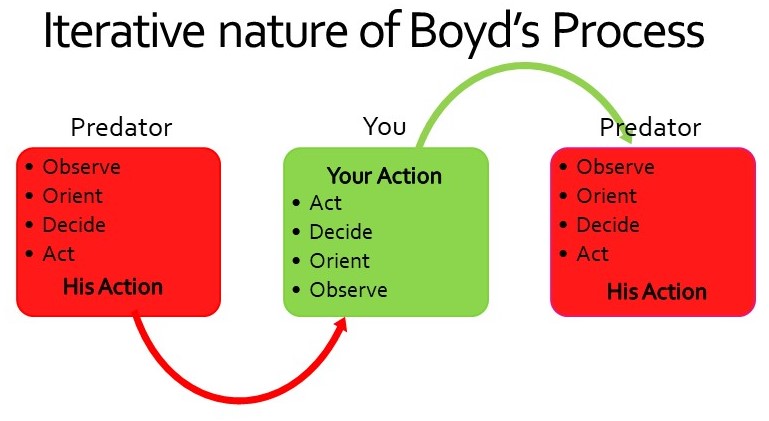
A predator also has a group of Options/Reactions when the intended victim begins to Confront or Resist rather than being caught up in the Victim Mix. Part V will explore what these are and how they affect our Decisions.
Tactical Professor books (all PDF)
- Thinking Clearly about Self-defense and Personal Protection https://www.payloadz.com/go?id=3377208
- Real Shootouts of the LAPD https://realshootoutsofthelapd.com/
- Serious Mistakes Gunowners Make http://seriousgunownermistakes.com
- Indoor Range Practice Sessions http://indoorrangepracticesessions.com
- Concealed Carry Skills and Drills http://concealedcarryskillsanddrills.com
- Advanced Pistol Practice http://bit.ly/advancedpistolpractice
- Shooting Your Black Rifle http://shootingyourblackrifle.com
- Package deal of Thinking Clearly about Self-defense and Personal Protection, Serious Mistakes, Indoor Sessions, Concealed Carry, and Shooting Your Black Rifle (50% off) https://store.payloadz.com/details/2644448-ebooks-sports-shooting-drills-package.html
Serious Gunowner Mistakes – Unintentional Discharges (Part I)
One of the categories of Serious Mistakes Gunowners Make http://seriousgunownermistakes.com is ‘Unintentional Discharges.’ A colleague texted me this question.
Would it be fair to say that most of the negligent shootings on ranges are when people are re‑holstering too quickly?
There are some definitional issues involved in answering the question. First, are we talking about ‘Shootings,’ i.e., an injury occurs, or ‘Discharges,’ where an unplanned discharge occurs that may or may not involve injury?
So far, I haven’t done a statistical analysis about Shootings, per se. However, my collection of images of extremity (hands and feet) injuries that are the result of self-inflicted gun shot wounds is many times larger than my collection of images relating to holster related injuries. It is worthy of note how gory the shotgun wounds through the foot are as a result of using those toe popper shoe attachments that are popular in the clay target sports. The injuries are similar to those caused by the M14 Toepopper Anti-Personnel Mine.
It’s sometimes difficult to tell in either case whether the injury occurred at the range or somewhere else. Whether the discharge occurred at the range or elsewhere may or may not be important, depending on your point of view.
My opinion is that, regardless of where they occur, holster related injuries are not the majority but they are the most publicized. The reasons are simple. First, they tend to be graphic injuries that lend themselves well to being posted and viralized on social media. Second, they are the most likely to occur where someone will capture an image or video. However, a video recently surfaced of a party in an underdeveloped part of the world at which an attendee shot himself in the hand. Nothing good comes of placing the muzzle of a pistol against the palm of your hand and pulling the trigger. His friend was very angry about the copious amount of blood that went all over his sandals.
Another definitional issue is the distinction between Unintentional Discharges (UD), Accidental Discharges (AD), and Negligent Discharges (ND). The Los Angeles Police Department Board of Police Commissioners https://www.lapdonline.org/police_commission draws a distinction between AD and ND as concerns LAPD Officers and considers each type to be a separate subset of UD. AD are caused by equipment failure, i.e., the mechanism of the firearm itself malfunctioned, which caused the Discharge. While this is rare, it does occur. By contrast, the BOPC defines ND as the result an operator error of a fully functional firearm. This distinction was made explicit in Categorical Use of Force Report 045-09 NON-TACTICAL UNINTENTIONAL DISCHARGE https://www.lapdonline.org/assets/pdf/045-09_Outside%20City-NTUD.pdf. This report was in regard to an Unintentional Discharge by an officer while Outside the City.
A. Unintentional Discharge
The definitions for an Unintentional Discharge, both Accidental and Negligent, are as follows:
Accidental Discharge: The unintentional discharge of a firearm as a result of an accident such as a firearm malfunction or other mechanical failure, not the result of operator error.
Negligent Discharge: Finding where it was determined that the unintentional discharge of a firearm resulted from operator error, such as the violation of firearm safety rules.
LAPD Board of Police Commissioners
A third definitional issue has been raised by Marty Hayes, President of the Armed Citizens’ Legal Defense Network. https://armedcitizensnetwork.org/ He commented that the circumstances of most Unintentional Discharges do not fit the legal definition of ‘Negligent.’ Given the firearms community’s preoccupation with the distinction between ‘clip’ and ‘magazine,’ his comment is particularly cogent. The possibility exists that a ‘Negligent’ Discharge might have to be defined in the context of Intentional but Undesirable Discharges (resulting in a Negative Outcome) rather than Unintentional Discharges.
Getting back to the original question, it is easy to make a simple numerical contrast relating to ‘Discharges.’ Observe the number of bullet impacts on the ceiling and floor of an indoor range. Almost every one of those was a Discharge that was unplanned and went somewhere other than it was intended.
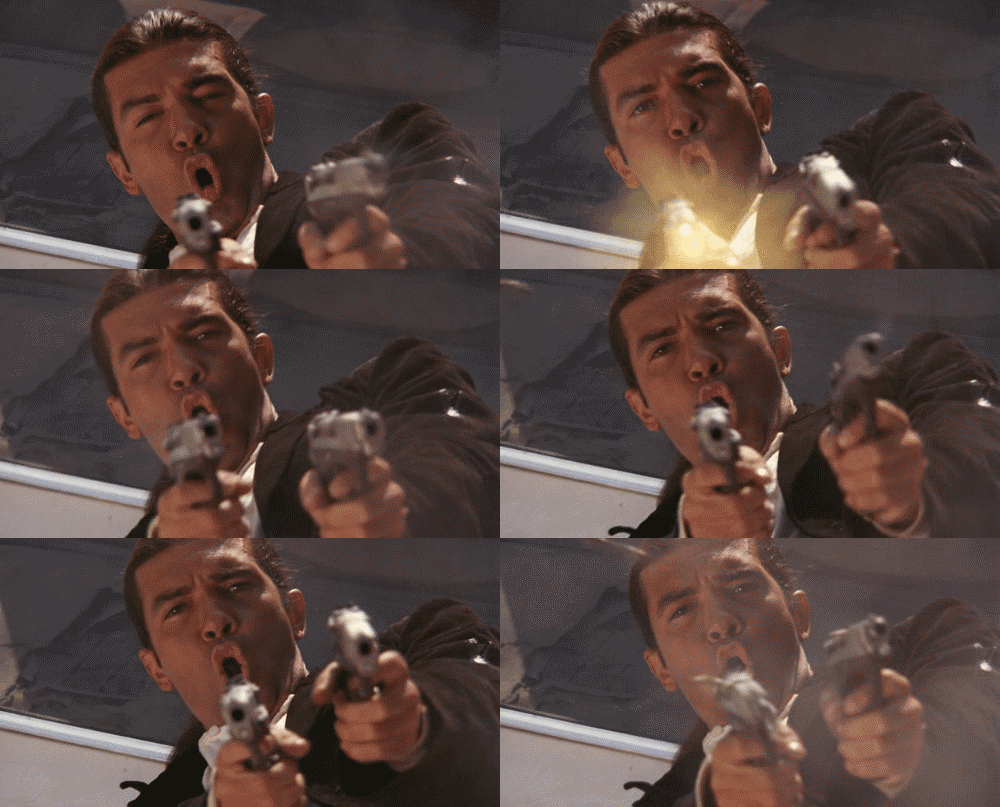
I say ‘almost,’ because I was once asked to give a private lesson to a lady who literally shot her revolver like Antonio Banderas in Desperado. Most likely several rounds of each cylinder hit the ceiling. While the shots were Planned, they did not impact anywhere near the target.
There are something like 4,000 shooting facilities in the US, according to the National Shooting Sports Foundation. https://www.nssf.org/shooting/where-to-shoot/ Given the number of unplanned impacts at Atlanta area ranges alone, it’s likely that Unplanned Discharges occur thousands of times daily throughout the US. However, almost all of those cause only property damage or no damage at all. So, while we can probably safely say that Unplanned Discharges are relatively common, Unplanned Shootings are relatively rare.
Part II of this series will explore the types of UDs in Serious Mistakes, discuss definitional issues further, and make some observations about preventing this undesirable phenomenon.
Tactical Professor books (all PDF)
- Thinking Clearly about Self-defense and Personal Protection https://www.payloadz.com/go?id=3377208
- Real Shootouts of the LAPD https://realshootoutsofthelapd.com/
- Serious Mistakes Gunowners Make http://seriousgunownermistakes.com
- Indoor Range Practice Sessions http://indoorrangepracticesessions.com
- Concealed Carry Skills and Drills http://concealedcarryskillsanddrills.com
- Advanced Pistol Practice http://bit.ly/advancedpistolpractice
- Shooting Your Black Rifle http://shootingyourblackrifle.com
- Package deal of Thinking Clearly about Self-defense and Personal Protection, Serious Mistakes, Indoor Sessions, Concealed Carry, and Shooting Your Black Rifle (50% off) https://store.payloadz.com/details/2644448-ebooks-sports-shooting-drills-package.html
Note that Serious Mistakes Gunowners Make is included with the purchase of any other book.
Consistency (again)
In my book, consistency does not mean 70%, it means 100%. I’ve written about it before https://wordpress.com/post/tacticalprofessor.wordpress.com/173323 but it’s worth mentioning again.
That’s the reason I prefer evaluation protocols that involve short 100% standards that are done repetitively. I would rather someone know exactly what they can do to a 100% standard and stay within those boundaries than have two rounds out of six going into someone else’s house.
Two NRA standards come to mind.
- the Red, White, and Blue Levels of the NRA Basics of Pistol Shooting
- the NRA Marksmanship Qualification Program – Defensive Pistol I
Naturally, I love the 5^5 standard I developed, based on Gila Hayes‘ original 5 times 4 idea.
Work on learning to do one thing consistently well, then move on to more Cool Kid Cosplay stuff.
Package Deal Update
I’m gratified that Thinking Clearly about Self-Defense and Personal Protection has been well received. One reader sent me the following comment, which I found quite gratifying.
I went through the book quickly and my initial impression is that it is superb. Tremendous intellectual effort and incredibly sage and mature counsel on the subject. It’s also incredibly in-depth and thoughtful.
J.T.
I want to spread the word as far as I can so I’ve now included it in the Shooting Drills Package https://www.payloadz.com/go/sip?id=3348053
The Package still includes Serious Mistakes Gunowners Make, also.

I appreciate the loyalty of those who have already purchased the Package, so I will be sending previous purchasers a download link for the book.
Two non-gun related books heavily influenced me in writing the book. The Art of Thinking Clearly by Rolf Dobelli and Small Data: The Tiny Clues That Uncover Huge Trends by Martin Lindstrom are both very insightful books about topics that aren’t often discussed.
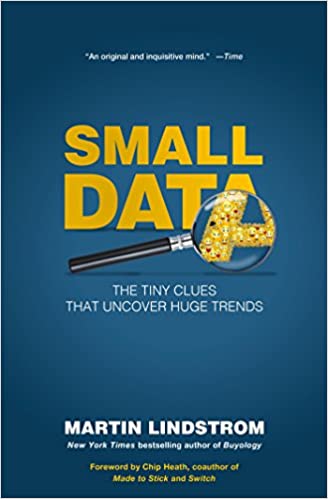
Without knowing a proper name for it, I’ve been working with ‘small data’ for decades. I think Lindstrom would have approved of the Deloitte & Touche Real Estate Capital Markets Database that I created years ago. It started out with a few notes in Word and eventually grew into the broadest analysis of Wall Street’s entry into the commercial real estate finance business that has been done. Even the Wall Street soothsayers were only tracking 20 percent of the data in my database.
Contrary to the popular opinion that “the plural of anecdote is not data,” Lindstrom’s work shows that the opposite is actually true. All of Gary Klein’s work about decision-making is based on small data. Concealed Carry Skills and Drills, one of the books in the Package, is based on the concept of small data.
The collection of books in the Package presents a very comprehensive view of using firearms and other tools for preservation of life. Tools, skills, philosophy, and pitfalls are all covered. Those who are serious about our Art will find them useful reading, I am sure. I hope you will consider purchasing the collection.
How useful are sights on a pistol?
Since I’ve gathered some data on the topic in the past, I am going to link to a Lucky Gunner article about using the sights on a pistol.
I did an experiment years ago in which 10 different experienced shooters tried point shooting a single round at a silhouette starting at one yard. Then the distance was increased one yard at a time for the group. To test whether some form of visual indexing to the pistol was necessary, each shooter had a piece of cardboard placed horizontally in front of him at neck level so there was absolutely no visual reference to the pistol’s orientation. There was no time limit, the shooters were free to adjust their pointing until they thought they were on target.
The bullets starting hitting the ground at two yards. Only one shooter was able to make a hit anywhere on the silhouette at 5 yards and that was a peripheral hit. I discontinued the experiment at that point.
I figured out everything I needed to know about hitting a target without visual reference to the gun and with the gun below the eye-target line from that experiment.
Using the sights (i.e., getting the pistol into the eye-target line) is how we learn to kinesthetically index the handgun. Ask someone to point their finger at any object. Notice they don’t do it outside of their ‘workspace’ the more or less basketball sized space in front of the chest, properly called the ‘ipsilateral visual field.’
We may not always use the sights in a fight but training with them is how we learn to correctly index the pistol kinesthetically.

Training the trigger finger
#fridayfundamentals
The trigger finger should move back as parallel to the bore as possible when pressing the trigger. Here’s a little exercise I designed at the elite Rogers Shooting School to help our clients practice moving the finger correctly. It requires no equipment and gives biofeedback on your performance. It is also the safest form of dry practice, other than from quizzical looks by others.
For revolver shooters, this is a powerful learning exercise.
I enjoy wearing my NRA Certified Instructor cap when I’m teaching, even when it’s not an NRA class. 🙂
BOGO on Tactical Professor books
I’m grateful to my subscribers who send me news reports about the Negative Outcomes gunowners encounter. The ones about children gaining unauthorized access to guns really make me sad, especially because some folks defend practices that lead to those tragedies. Consequently, the purchase of any Tactical Professor book now includes a free copy of Serious Mistakes Gunowners Make.
In addition, I have reduced the price of Serious Mistakes by itself to $4.99. I’d make it free except that people only value things they pay for.
If anyone who has purchased any of my books would like a free copy of Serious Mistakes, email me through the About section above and I will send you one.
Tactical Professor books (all PDF)
- Real Shootouts of the LAPD https://realshootoutsofthelapd.com
- Serious Mistakes Gunowners Make http://seriousgunownermistakes.com
- Indoor Range Practice Sessions http://indoorrangepracticesessions.com
- Concealed Carry Skills and Drills http://concealedcarryskillsanddrills.com
- Advanced Pistol Practice http://bit.ly/advancedpistolpractice
- Shooting Your Black Rifle http://shootingyourblackrifle.com
- Package deal of Serious Mistakes, Indoor Sessions, Concealed Carry, and Shooting Your Black Rifle (20% off) https://store.payloadz.com/details/2644448-ebooks-sports-shooting-drills-package.html
Weight transfer and stance

A good stance helps us minimize the effect of recoil on our ability to deliver multiple shots quickly. It also prepares us to rapidly move to another position, should that be necessary.
The entire post and YouTube link is available on my Patreon page.
https://www.patreon.com/posts/52312807

Tactical Professor books (all PDF)
- Real Shootouts of the LAPD https://realshootoutsofthelapd.com/
- Serious Mistakes Gunowners Make http://seriousgunownermistakes.com
- Indoor Range Practice Sessions http://indoorrangepracticesessions.com
- Concealed Carry Skills and Drills http://concealedcarryskillsanddrills.com
- Advanced Pistol Practice http://bit.ly/advancedpistolpractice
- Shooting Your Black Rifle http://shootingyourblackrifle.com
- Package deal of Serious Mistakes, Indoor Sessions, Concealed Carry, and Shooting Your Black Rifle (20% off) https://store.payloadz.com/details/2644448-ebooks-sports-shooting-drills-package.html
Deadly Conduct and Attempted Murder
Those are the charges in two incidents where Negative Outcomes resulted from gunfire. Both situations occurred when people thought they were making good decisions about employing a firearm for Personal Protection but the legal system doesn’t agree. Unfortunately, both incidents are material for the updated and expanded Second Edition of Serious Mistakes Gunowners Make http://seriousgunownermistakes.com that will be published later this year.
Mom charged [with Deadly Conduct] after shooting her 5-year-old son while trying to target loose dog, H[ouston]PD says
A mother [who was riding a bike down the street] has been charged after accidentally shooting her 5-year-old son [who was also riding his bike down the street] while trying to shoot a dog that was running across the street in north Houston, according to Houston police.
FBI agent charged [with Attempted Murder and other crimes] in off-duty shooting of man on subway
https://abcnews.go.com/US/wireStory/fbi-agent-charged-off-duty-shooting-man-subway-78019158
Valdivia shot and wounded the man from a distance of roughly 2 to 3 feet (0.6 to 0.9 meters) after repeatedly telling the man to back up, county prosecutor Robert Hill said in court.
The man had approached Valdivia on a train, sat across from him and asked the agent for money, Hill said. The man muttered expletives and began to walk away when the agent said he didn’t have any money to give, the prosecutor added.
‘Watch your mouth,’ the agent told the man, according to Hill.
After the man turned and approached him again, Valdivia pulled a gun from a holster and shot him, the prosecutor said. Another passenger was in the agent’s line of fire, about 15 feet (4.6 meters) away, [which resulted in an additional charge of Reckless Endangerment] but wasn’t harmed, Hill added.
Note that getting the last word in, e.g., “Watch your mouth,” is not the way to Break Contact. Breaking Contact (Part I) The moment a criminal, or in this case undesirable, breaks contact, let it go. If possible, increase your distance by going in the opposite direction. Moving away from an adversary is a good skill to practice, probably far more useful in everyday life than practicing shooting on the move.
Guns are not general purpose tools for Personal Protection. They are special purpose tools that are useful only in a very limited set of circumstances. The legal system did not believe either of these incidents fell within that set of circumstances. Probably both persons charged will end up pleading to lesser offenses. Whether those will be felonies or not remains to be seen.
The mother’s relationship with her son is unlikely to ever be the same and she may lose her right to own a firearm forever. The FBI Agent’s once promising career is over, even if he is acquitted on all the charges, which is unlikely. At best, he can hope to keep his job as an FBI Agent, if he wins acquittal. The chances he will ever advance or get a good assignment again are minuscule.
If you carry a gun, carry pepper spray, PERIOD. Lacking a non-lethal force option implies that all you are willing and capable of doing to defend yourself and your loved ones is to kill someone. That’s not a rational decision.
Whether it was necessary to do anything in the dog incident at all is questionable but using pepper spray as a defensive tool would have had less consequences. Also try to avoid or deal with having irrational fears about dogs.
The important thing in viewing these stories is not to harsh on the persons involved because that’s easy but non-productive. Rather, try to learn something from their misfortunes.
- Do you consistently carry a non-lethal force option?
- Have you practiced with your NL force option using an inert version?

- If you have irrational fears, have you confronted them and programmed yourself with a rational response to the trigger?
- Have you mentally and physically practiced breaking contact?
Gaining knowledge from others’ experiences is one of the useful legs of Will Rogers’ learning triad. https://www.goodreads.com/quotes/116468-there-are-three-kinds-of-men-the-ones-that-learn
Tactical Professor books (all PDF)
- Real Shootouts of the LAPD https://realshootoutsofthelapd.com
- Serious Mistakes Gunowners Make http://seriousgunownermistakes.com
- Indoor Range Practice Sessions http://indoorrangepracticesessions.com
- Concealed Carry Skills and Drills http://concealedcarryskillsanddrills.com
- Advanced Pistol Practice http://bit.ly/advancedpistolpractice
- Shooting Your Black Rifle http://shootingyourblackrifle.com
- Package deal of Serious Mistakes, Indoor Sessions, Concealed Carry, and Shooting Your Black Rifle (20% off) https://store.payloadz.com/details/2644448-ebooks-sports-shooting-drills-package.html
Breaking Contact (Part 5)
#mindsetmonday
Our goal in personal protection is to force a break in contact. We want them to go away, or we want to go away. One or the other.
The final segment of the CCW Safe Series about my concept of Breaking Contact is posted.
https://ccwsafe.com/blog/breaking-contact-pt-5
This edition focuses on success stories. I like those.
[W]hen a concealed carrier enters a self-defense situation with the goal of breaking contact — as opposed to a goal of killing or disabling an attacker — the defender has a substantially higher likelihood of avoiding a deadly shooting or making a successful self-defense claim when all else fails.
Shawn Vincent
 tacticalprofessor
You must be logged in to post a comment.