Defense of a Third Person Incident
Two years ago today, an Atlanta mother shot her daughter’s ex-boyfriend when he showed up at their home, threatened them, and fired a pistol in the air.
https://www.goodguywithagun.online/p/good-guy-with-a-gun-120-atlanta-ga
Often, Defensive Gun Uses can be described as ‘Defense of a Third Person/Party,’ rather than Defense of Self, per se. That’s why I generally use the term ‘Personal Protection’ rather than ‘Self Defense.’
“A person is justified in threatening or using force against another when and to the extent that he or she reasonably believes that such threat or force is necessary to defend himself or herself or a third person [emphasis mine] against such other’s imminent use of unlawful force”
–Official Code of Georgia Annotated Section 16-3-21 https://law.justia.com/codes/georgia/title-16/chapter-3/article-2/section-16-3-21/
Defenders need to be aware of the fact that innocent parties may be downrange in addition to the assailant. Whether that was the case in this incident is unclear but it is a possibility. Defense of a third person by an armed citizen often does not involve the classic hostage rescue shot.
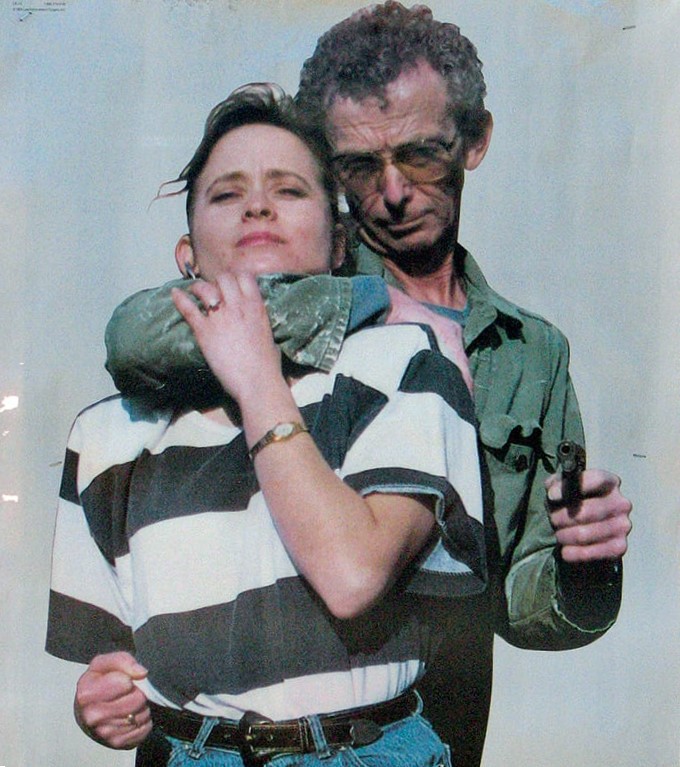
Nonetheless, when others are downrange, spraying and praying isn’t a good tactic. This was a counter-point article I wrote about the subject years ago.
Being a successful defender doesn’t mean you have to be a Delta Force sniper but you do need to know where your bullets are likely to go. Meghan Brown’s incident is a good example of having patience and making a good decision.
If you would like to read more in-depth information about shooting and personal protection, consider subscribing to my Patreon page.

He Saved My Life!
#mousegunmonday #win
The victim of the robbery wouldn’t go on camera but said, “He saved my life!” Customer’s mousegun comes to the rescue. The surveillance video of this incident shows a customer in a Michigan convenience store react to an armed robbery of the store clerk.
The customer draws a pocket carried, probably laser equipped, mousegun from his pocket, activate the laser, and fire seven shots in three volleys at the robber. His initial volley of three shots is taken at the closer end of the Near Phase of Public Space, probably about 12-15 feet. He made at least three hits for the seven shots; a minimum of a 43% hit rate. The firing solution required him to shoot past the clerk who is downrange and in close proximity to the robber. He was able to do this despite shooting with his Primary Hand Only.
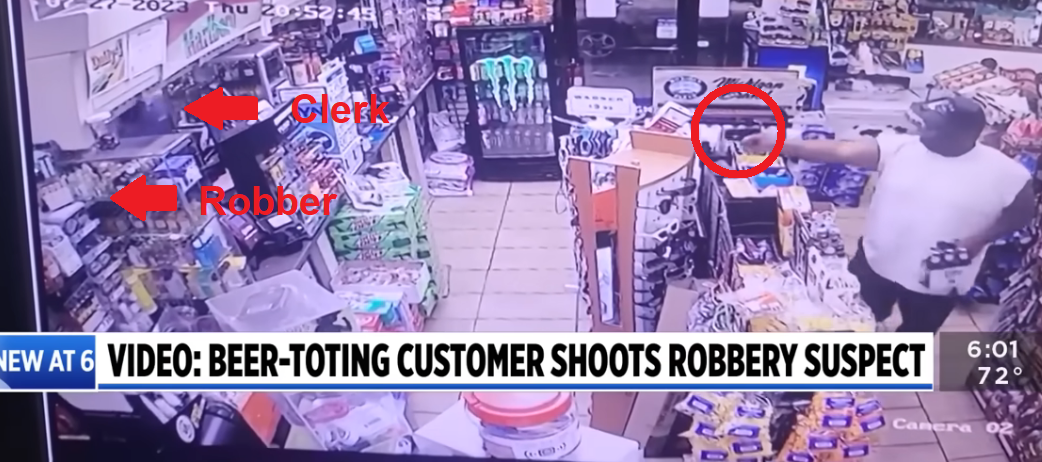
The robber was neutralized by the customer’s bullets and the clerk was unharmed. #WIN It wasn’t a 25 yard headshot but it was beyond “arm’s length.”
Legal post-mortem: The District Attorney ruled that the shooting was Justified as a Defense of Another Individual.
SELF-DEFENSE ACT (EXCERPT)
Act 309 of 2006
780.972 Use of deadly force by individual not engaged in commission of crime; conditions.
Sec. 2.
(1) An individual who has not or is not engaged in the commission of a crime at the time he or she uses deadly force may use deadly force against another individual anywhere he or she has the legal right to be with no duty to retreat if either of the following applies:
(a) The individual honestly and reasonably believes that the use of deadly force is necessary to prevent the imminent death of or imminent great bodily harm to himself or herself or to another individual.
Note that some common taters to the video were outraged that charges would even be considered. In any use of deadly force against someone, a decision will have to be made about the legality of the use of force. The news story was published three weeks after the shooting and the decision had not yet been made, pending the completion of the POlice investigation. Anyone who shoots at someone else for any reason is going to have a period of sweating it out waiting for the decision about prosecution. Be ready for that.
The robber was arraigned for three charges including armed robbery. He could face up to life imprisonment because he’s a three-time loser.
I’ll do a more in-depth analysis of this incident on the Incidents and Walkbacks Tier of my Patreon page in a day or two.
Shooting To Live for the 21st Century – Session 2
Shooting Practice for a Criminal Encounter
#fridayfundamentals a little late
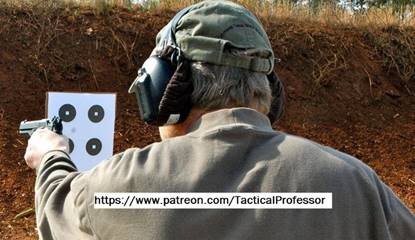
I think of my year long series about practicing on Shooting Illustrated as an update to Shooting To Live. Fairbairn and Sykes didn’t talk about followon training and practice at all. This is understandable given their time and resource constraints but won’t lead to as good results as periodic practice will.
This is the February 2024 article. https://www.shootingillustrated.com/content/shooting-practice-for-a-criminal-encounter/ It’s unclear how long the Shooting Illustrated website will be up since the publication was discontinued, so here’s a reprint of the entire article.
The second installment of this series will use the Louisiana Concealed Handgun Permit Qualification Course as the basis for structuring a Live Fire Practice Session. The Louisiana Course itself is fairly simple, as most CCW Qual Courses are. Some variations are included in this article to increase the Course’s value as practice for self-defense and personal protection.
The basic Louisiana requirements are to shoot a live range fire session of a minimum of 12 rounds each at 6 feet, 10 feet, and 15 feet for a total of 36 rounds. The shooter must complete at least one safe reload of the handgun at each distance. The target is the NRA B-27 and the shooter must score 100 percent hits within the silhouette portion. Having a 100 percent standard is what makes the Louisiana Course a little different from most States’ qualification courses. Typically, other States require a 70 to 80 percent hit standard.
The Louisiana Concealed Handgun Permit Laws And Administrative Rules are available at https://www.lsp.org/media/e04occ5m/chrulebook.pdf .
To use the Course as practice for self-defense, include some variations that go beyond the bare minimum requirements. The B-27 target is extremely large. To make it more challenging, accept only hits inside the 8 ring. An even more difficult variation would be to use a sheet of paper on the B-27 target as your acceptable hit zone.
Additional variations are to break the 12 shots into shorter strings and include some one-hand shooting during the six feet phase. Hold something in your non-dominant hand to simulate a situation in which you are carrying something valuable and have to shoot with one hand only.
Six feet Phase
- Load with 6 rounds
- Two hand shooting
- Come to Low Ready. Any time you come to Low Ready, the pistol should point completely below the target.
- String 1 – Fire 1 shot. Return to Low Ready.
- String 2 – Fire 2 shots. Return to Low Ready.
- String 3 – Fire 3 shots.
- Check the hits on your target and cover your hits with masking tape.
Checking your hits regularly and then covering them with masking tape or pasters is a crucial part of marksmanship development. A target should have no more than 12 unmarked hits at a time.
Shooters often blast an entire box of ammunition at the target without checking and then marking it consistently. This is one of the worst mistakes that can be made when practicing for marksmanship development and self-defense.
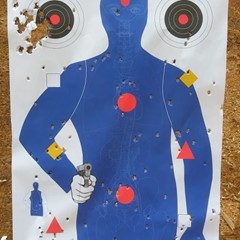
Best practice is to check and mark your target after every string. When shooting this practice session, check and mark the target after every six shots.
- Reload with 7 rounds
- Primary hand shooting
- Place the pistol in the Primary Hand only. This is the hand you write with. Hold something like a briefcase or range bag in your other hand. Come to Low Ready.
- String 1 – Fire 1 shot. Return to Low Ready.
- String 2 – Fire 2 shots. Return to Low Ready.
- String 3 – Fire 3 shots.
- Unload
- Remove the magazine.
- Work the slide at least 3 times.
- Visually and physically check that the pistol is clear of all ammunition.
- Check the hits on your target and cover your hits with masking tape.
Ten feet Phase
At this distance, continue shooting shorter strings and include a malfunction clearance practice.
- Load with 6 rounds
- Begin at Low Ready
- String 1 – Fire 1 shot. Return to Low Ready.
- String 2 – Fire 2 shots. Return to Low Ready.
- String 3 – 3 shots.
- Check the hits on your target and cover your hits with masking tape.
- Remove the empty magazine.
- Let the slide go forward but do not press the trigger. Leave the pistol cocked.
- Reload with 7 rounds
- Begin at the MidPoint of the Drawstroke. At the MidPoint, the pistol is at chest level, the line of the sights is underneath the dominant eye, and the bore is parallel to the ground.
- String 4 – Aim at the target.
- Press the trigger to get a click. Work the slide to put a round in the chamber. This simulates either Empty Chamber Carry or having a malfunction. At the click, notice if the sights bounce around when encountering the empty chamber. If they do, it’s a sign of flinching.
- Fire 1 shot.
- Return to the MidPoint.
- String 5 – Fire 2 shots. Return to the MidPoint.
- String 6 – Fire 3 shots.
- Unload
- Remove the magazine.
- Work the slide at least 3 times.
- Visually and physically check that the pistol is clear of all ammunition.
- Check the hits on your target and cover your hits with masking tape.
Fifteen feet Phase
- Load with 6 rounds
- Begin at Low Ready
- String 1 – Fire 1 shot. Return to Low Ready.
- String 2 – Fire 2 shots. Return to Low Ready.
- String 3 – 3 shots.
- Check the hits on your target and cover your hits with masking tape.
- Remove the empty magazine
- Let the slide go forward but do not press the trigger. Leave the pistol cocked.
- Reload with 7 rounds
- Begin at the MidPoint of the Drawstroke.
- String 4 – Aim at the target.
- Press the trigger to get a click. Clear the malfunction just as you did at 10 feet.
- Fire 1 shot.
- Return to the MidPoint.
- String 5 – Fire 2 shots. Return to the MidPoint.
- String 6 – Fire 3 shots.
- Unload
- Remove the magazine.
- Work the slide at least 3 times.
- Visually and physically check that the pistol is clear of all ammunition.
- Check the hits on your target and cover your hits with masking tape.
Additional Practice
At 10 feet
- Load with 6 rounds
- Aim at a specific spot on the target
- Shoot the smallest group you can at the spot.
- Unload and check that the pistol is clear.
- Check the hits on your target and cover your hits with masking tape.
At 15 feet
- Load with 6 rounds
- Aim at a specific spot on the target
- Shoot the smallest group you can at the spot.
- Unload and check that the pistol is clear.
- Check the hits on your target.
Total – 48 rounds for the session.
In this session, you will have fired almost a box of ammunition and included several additional tasks relevant to self-defense. Firing short strings of fire and marking your target regularly will accelerate your marksmanship development. The MidPoint starting position is acceptable at ranges that do not permit drawing from a holster but starting from the MidPoint builds the skill of acquiring the sights as early as possible in the drawstroke. Beginning the strings from different positions and practicing clearing malfunctions are important self-defense skills that go beyond basic marksmanship. You will also have practiced unloading your pistol with a round in the chamber and ensuring that it is clear. The one sheet pump target is available at https://thetacticalprofessor.net/ . The sheet has the image of a gun on it, so no one can say you’re practicing to shoot unarmed people.
Friday Fundamentals – Getting Started
#Fridayfundamentals
Shooting To Live for the 21st Century – Concealed Carry Skills and Drills
Session 1
This session derives from two contemporary Courses of Fire, the original Michigan Council On Law Enforcement Standards Basic Pistol Safety Training Assessment and the New York State Concealed Carry License Live-Fire Proficiency Assessment https://troopers.ny.gov/minimum-standards-new-york-state-concealed-carry-firearm-safety-training to mimic and expand on the Recruit Training Programme described by Fairbairn and Sykes in their classic text Shooting To Live. Together the Assessments mimic the first live fire Practices of the RTP. To expand on it, the distance is increased from two yards used by F&S to 4 yards, the boundary in Proxemics between Social Space and Public Space.
The target consists of three sheets of printer paper stacked vertically in landscape mode. Fold one in half and use it as the top sheet. Put this array on whatever target backer is convenient. The Shoot-N-C is an optional addition on the middle sheet, used as the ‘aiming mark’ mentioned in STL.

This session can be done either at an outdoor range or almost all indoor ranges. The draw for the NYS Assessment is dry, i.e., no ammo in the gun, and most indoor ranges will permit it. There is no time limit so even ranges that require shooting no faster than one shot every three seconds can be placated.
Part I – MCOLES Safety Training Assessment
- String 1
- Load five rounds in the pistol and come to Low Ready.
- Bring the pistol to eye level, acquire a sight picture, and fire one shot.
- Return to Low Ready.
- Repeat four more times for a total of five shots.
- String 2
- Repeat String 1 for another five individual shots.
- String 3
- Load five rounds in the pistol and come to Low Ready
- Bring the pistol to eye level, acquire a sight picture, and fire two shots.
- Return to Low Ready.
- Bring the pistol to eye level, acquire a sight picture, and fire three shots.
The passing standard established by MCOLES was hybrid. Of the three strings, two had to have all five shots hit anywhere on all three sheets of paper. So it’s basically a 100% standard but you get to throw out your worst String.
The second part of this session is the New York State Concealed Carry License Live-Fire Proficiency Assessment. It uses the same target as the MCOLES Assessment. The distance is also four yards.
Part II – NYS CCL Live-Fire Proficiency Assessment
- Verify that the pistol is unloaded.
- Safely holster without loading.
- Draw the unloaded pistol, acquire a sight picture on the target, and dry snap one time.
- Safely holster without loading
- Draw the pistol and load with five rounds.
- To load, use the push method of loading as described by Fairbairn and Sykes.
- “To load the pistol, turn it over, grasping the slide firmly with the thumb and forefinger of the left hand.”
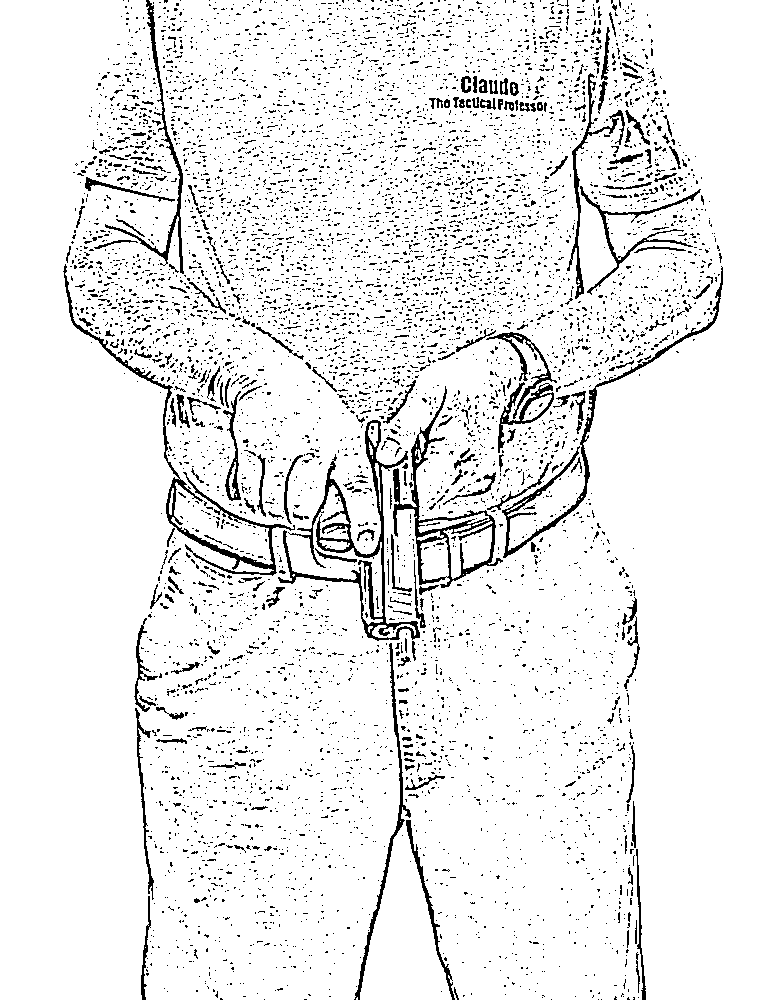
“Push forward with the right hand until the slide is felt to be open to its fullest extent.”

“Immediately that point is reached, release the hold with the left hand. The slide flies forward, taking with it and forcing into the breech, the topmost cartridge of the magazine, the pistol pointing to the ground meanwhile.”

- Achieve a proper firing grip and come to Low Ready.
- Bring the pistol to eye level, acquire a sight picture, and fire five shots.
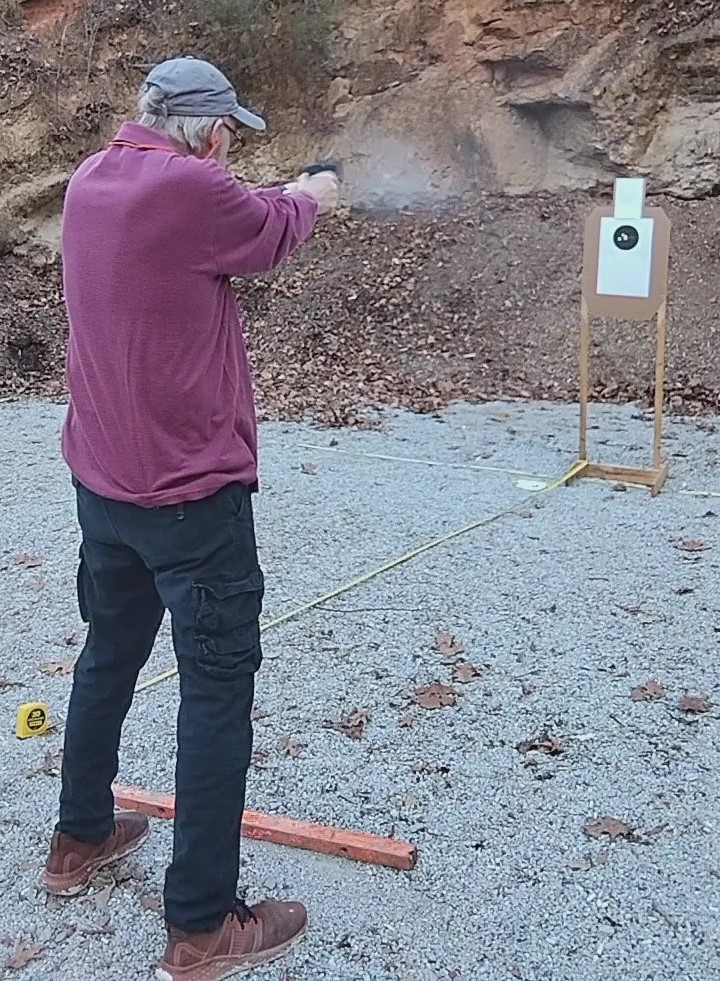
- Verify that the pistol is unloaded.
- Safely holster
The passing standard for the NY State Proficiency Assessment is that 4 of the 5 shots (80%) must hit somewhere on the three sheets of paper.
The total round count for this session is twenty rounds. While that may seem low by some people’s standard, it is as much as many owners of snub nose revolvers and small pistols like the Ruger LCP will want to fire at one session. As a beginning, shooting this session provides some familiarity with shooting the pistol, what its concussion and recoil feel like, and an indicator of the shooter’s capability within a distance envelope that most criminal victimizations take place in.
Friday Fundamentals for 2026
#fridayfundamentals
Over 10 years ago, I began writing a series called #fridayfundamentals. https://thetacticalprofessor.net/2015/09/25/friday-fundamentals-01-establishing-your-baseline/ It started with ideas from a couple of my friends, Mark Luell and Cecil Burch.
“My friend Mark Luell, the author of Growing Up Guns suggested I provide a ‘Friday Fundamentals’ post weekly. We got the idea from my colleague Cecil Burch who wrote a blog post about Fundamentals. It’s a great idea to stay in touch with the basics.”
The #fridayfundamentals series has continued intermittently ever since. An opportunity has arisen to continue to expand it. As the saying goes, “In the middle of difficulty lies opportunity.” https://quoteinvestigator.com/2021/10/07/difficulty/
For the past two years, I’ve been writing a monthly column for the digital edition of the NRA magazine Shooting Illustrated. https://www.shootingillustrated.com/ Sadly, we authors have been notified that both the digital and print editions of the magazine will cease to be published at the end of this year.
My 2024 monthly columns were about practice sessions derived from Concealed Carry License Qualification Courses. The sessions were focused on a theme and mostly limited to 50 rounds or less. While highly skilled shooters consider qualification courses to be ‘sobriety tests,’ that’s not true for the majority of gunowners. Especially when a person buys their first pistol, actually having to prove they can shoot it at even an elementary baseline level is intimidating. And because qual courses are designed for ease of administration rather than to have any training or feedback value, they can be segmented into smaller sections that actually do have some training and feedback worth.
First and foremost in my mind when I wrote the series was the Resource Constrained Environment that most gunowners have to practice in. Only a tiny minority of gunowners have access to an outdoor range where movement is possible and shot timers are workable. Almost all gunowners are limited to a booth at an indoor range where universally they can’t move, drawing from a holster isn’t allowed, and a shot timer is useless. Sometimes shooting faster than one shot every three seconds is prohibited. One of the benefits of qual courses is that they are mostly designed with this limitation in mind, so I capitalized on that benefit for the series.
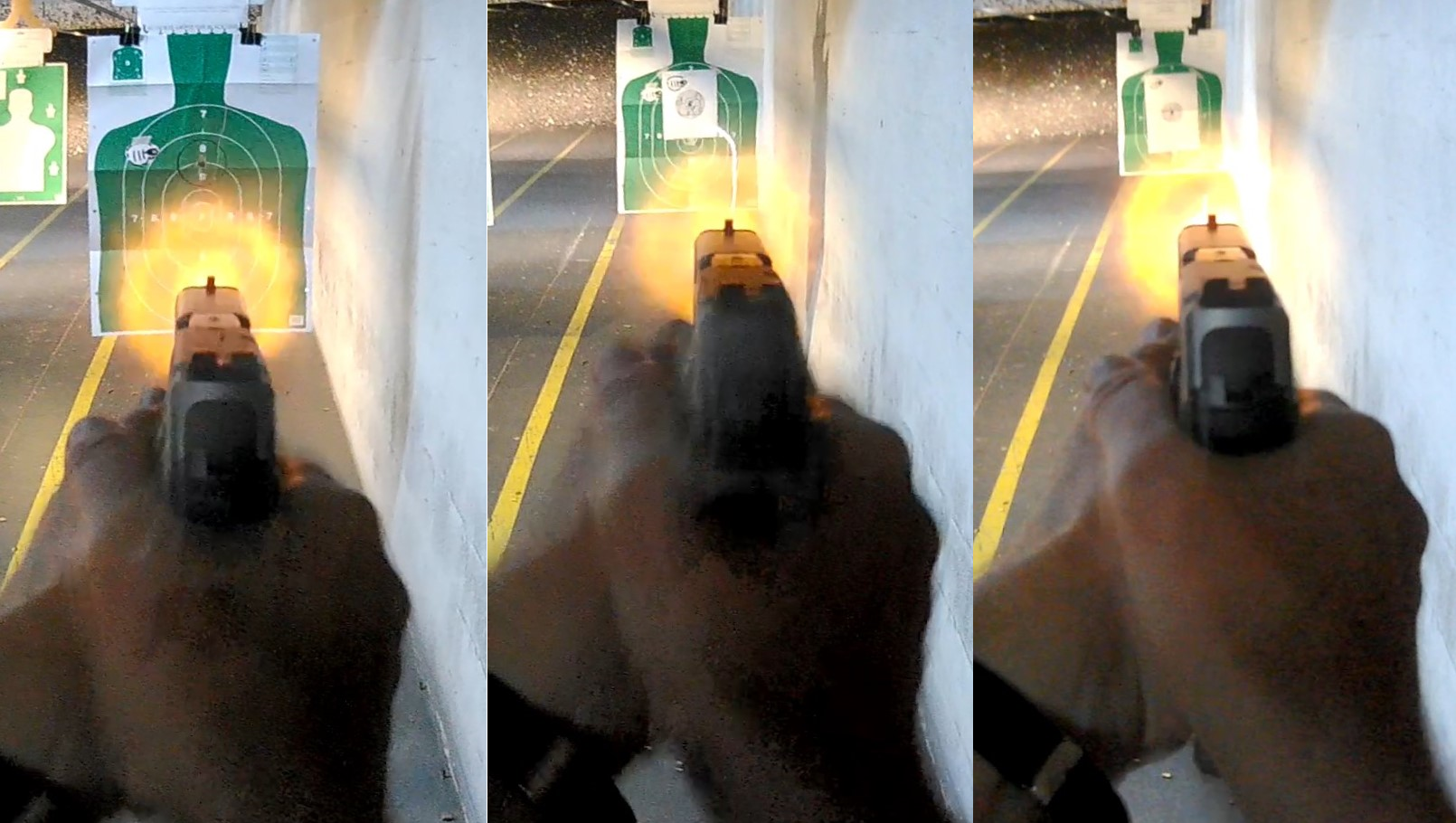
Since Shooting Illustrated is going away, I’ll be re-publishing the series on a weekly basis here on my blog. In addition to the articles, I’ll be creating videos of what each session looks like from a third person POV and the shooter’s POV. YouTube has been taking down some of my videos for vague reasons unspecified other than:
“We think your content violated our firearms policy.
Content that facilitates the sale of certain regulated goods, like firearms, ammunition, or prohibited firearm accessories, isn’t allowed on YouTube.”
As a workaround, I’ll just post a Short of the specified qualification course on YouTube. Then the video of the course with the training enhancements will go up on my Patreon page https://www.patreon.com/TacticalProfessor as a free post because Patreon does not give me a hard time about them.
It’s my hope that gunowners who want to increase their proficiency will find the series useful as practice regimens. There are no shortage of incidents where gunowners find out that the gun they’re depending on doesn’t work or they can’t work it. In the context of personal protection, just knowing you can make the gun go off https://thetacticalprofessor.net/2025/09/17/testing-a-new-gun/ has a lot of value. Being able to hit something with it is even better.
Thoughts On ‘The Distance Issue’
#mousegunmonday
Rich Grassi of The Tactical Wire recently posted an article about distances at which Defensive Gun Uses can be successfully resolved. https://www.thetacticalwire.com/features/a45b09c4-5997-4cd2-b959-a15df74293ac
One of his comments is well put and bears remembering in all cases of personal protection. It applies regardless of the implement used, whether personal weapons, impact tools, or firearms.
“Anyone who tells you that ‘if you shoot beyond (whatever) distance, you’ll have a lot to explain,’ forgets to add, ‘if you ever use deadly force to stop an immediate deadly threat, you’ll have a lot to explain.’”
This is an interesting topic and bears some further testing. Here’s my unlocked Patreon post about it.
https://www.patreon.com/posts/thoughts-on-140908907
To quantify his questions a little further for myself, the LCP II .22 provided a good platform. The standard I chose was well established and very basic, no pun intended. The NRA Basics of Pistol Shooting standard is to put five hits out of five shots into a four inch circle. Coincidentally, four inches is also the size of the -0 head zone on the IDPA target. To apply this standard to the question of ‘maximum effective range,’ two circles were shot at 10, 15, 20, 25, and 30 feet. The question was at what distance did I fail to meet the standard.

If you would like to read more in-depth information about shooting and personal protection, consider subscribing to my Patreon page.
LCP II Hogue Handall Grip Sleeve
#mousegunmonday
Many people comment that the LCP and LCP II are not particularly pleasant guns to shoot. Putting a Hogue HandALL® Hybrid Grip Sleeve on my LCP made it much more comfortable. I purchased (with my own money: FTC) a HandALL® Beavertail Grip Sleeve for my LCP II to see if the result was comparable.
The Handalls are rubber and much wider than the naked backstrap of the LCP. Consequently, they spread the recoil across a broader area and reduce its impact on the hand.

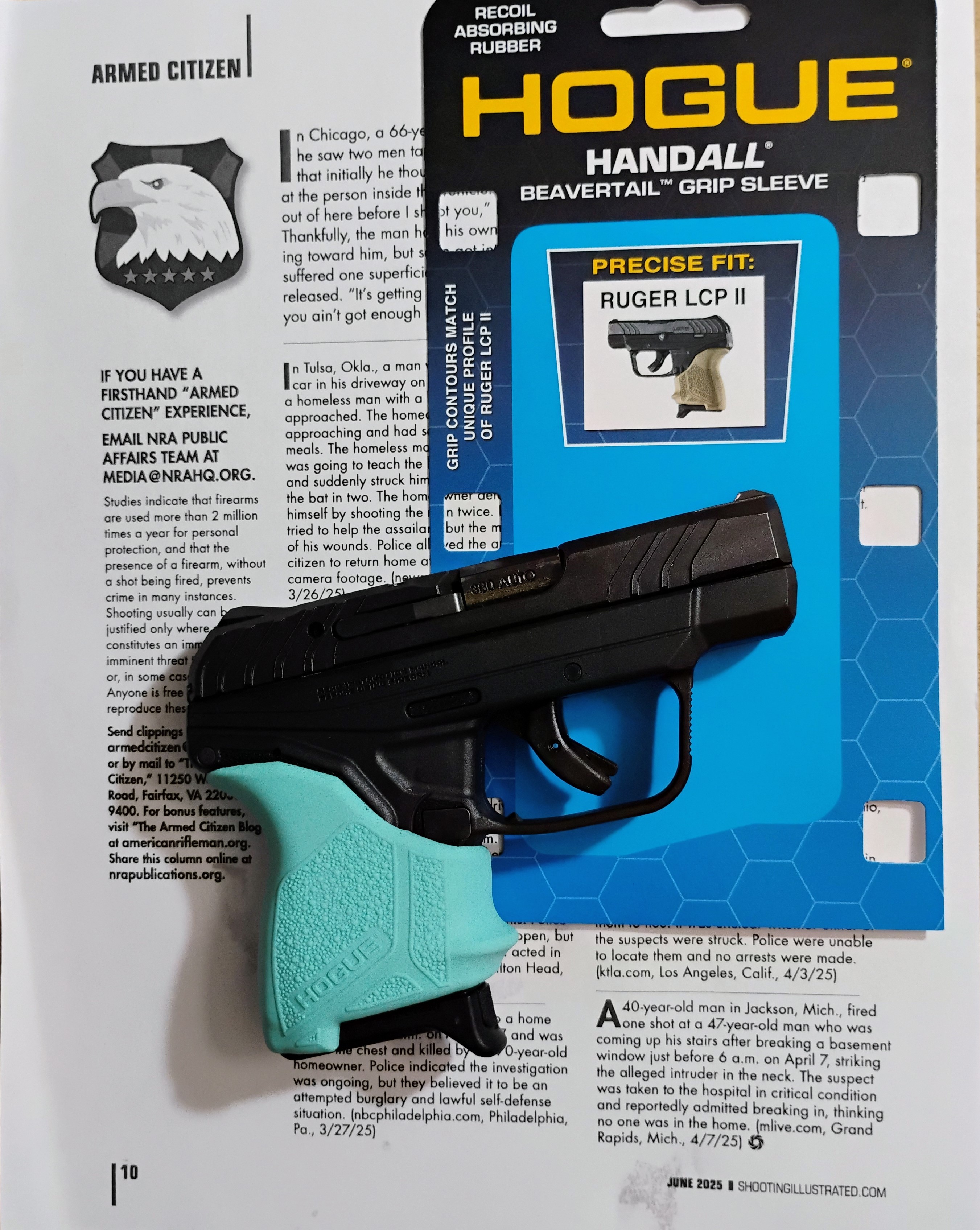
The instructions for installing the Grip Sleeve say to warm it with a hair dryer prior to the installation. I found this to be very helpful. As an experiment, I tried putting it on without warming. This didn’t work at all. Warming it with the hair dryer worked much better and I was able to get it on per the instructions.
Note also that the front sight of my LCP II is painted with orange model paint on top of a white undercoat. This makes the sight picture much improved and shooting more accurate.
At my local indoor range, I shot two different courses of fire. The ammo was a mixed bag of different types I wanted to shoot up and I didn’t bother keeping track of what I shot when. The total for the two CoF was 48 rounds, which is a decent practice session for a small pistol.
The first thing I shot was my Old West Shootist’s Challenge. https://thetacticalprofessor.net/2025/02/05/shootists-challenge-the-final-word/ with a second string inspired by Marty Robbins’ song Big Iron. “There was 40 feet between them when they stopped to make their play.”
The Shootist’s Challenge now consists of two strings, one at 25 feet and the other at 40 feet.
1) Six shots, 10 paces (25 feet/8 yards), Primary Hand Only, Untimed. I shot this twice because I obviously need more practice.
2) Six shots, 40 feet/13 yards, Two Hands, Untimed.
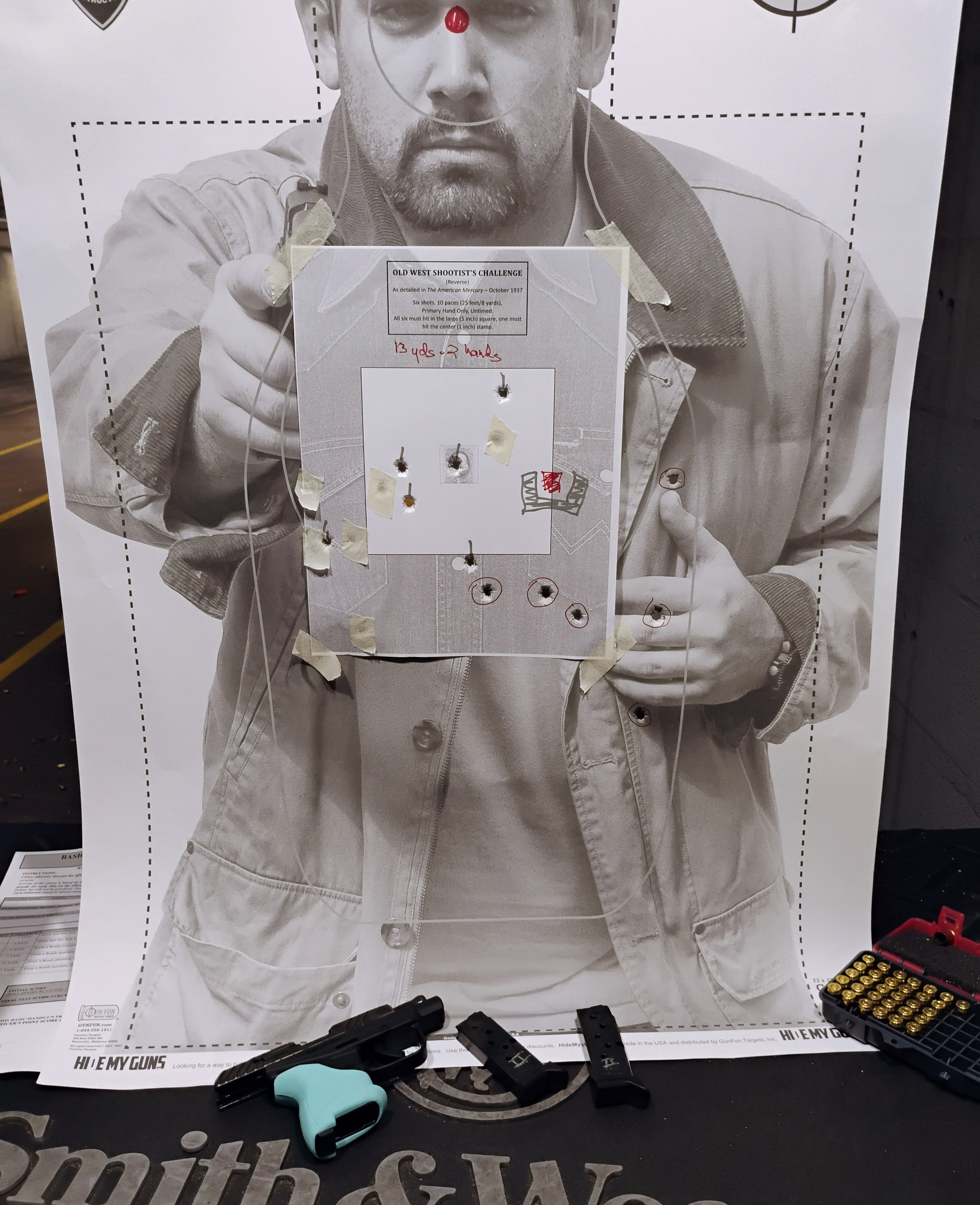
The second Course of Fire I shot was a modified version of the Warshington State Basic Covert Carry/Off-Duty Proficiency Course. Because the range doesn’t permit drawing from a holster, I used a bench start for the strings that are specified as holster starts. I didn’t time it because other people were shooting and a shot timer would have been useless. Times for qual courses have never been an issue for me so I don’t worry about them. Unless the shooter is dawdling, I’m not convinced timing is as important as is generally regarded in the community.
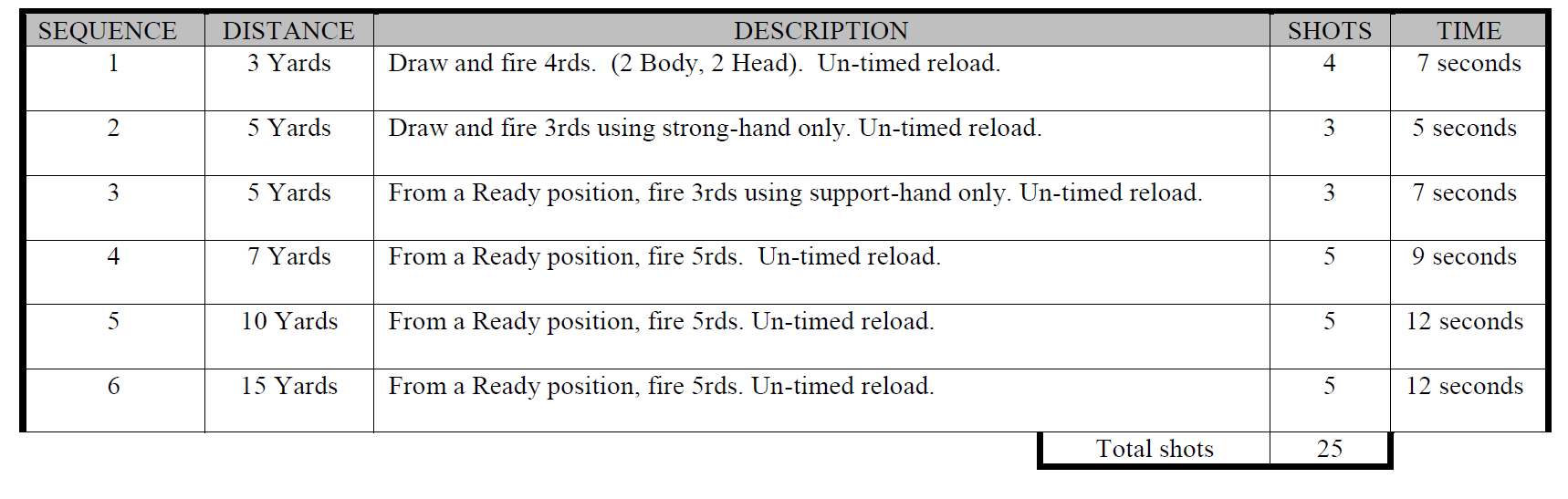
There were four modifications added. The first was shooting Sequence 1 as a pair of 3 shot Failure Drills. Failure Drill, as I use the term, is as taught by Larry Mudgett and John Helms to the LAPD after returning from Gunsite. https://thetacticalprofessor.net/2022/12/20/failure-drill/ Two shots to the chest, bring the pistol down to Low Ready at the target’s waist level, a pause to assess, and then a face shot. This Sequence was six shots as I did it.
Sequences 2 and 3 were shot as described in the Course of Fire, except using a bench start for Sequence 2. All the subsequent five shot Sequences were increased to six rounds. The six round Sequences were shot in three strings using 1 shot, then 2 shots, then 3 shots, as taught by Jim Cirillo. https://www.shootingillustrated.com/content/jim-cirillo-s-1-2-3-6-drill/ For the 3 shot strings, I once again did them as Failure Drills and marked on the target where the face shot went for each Sequence.
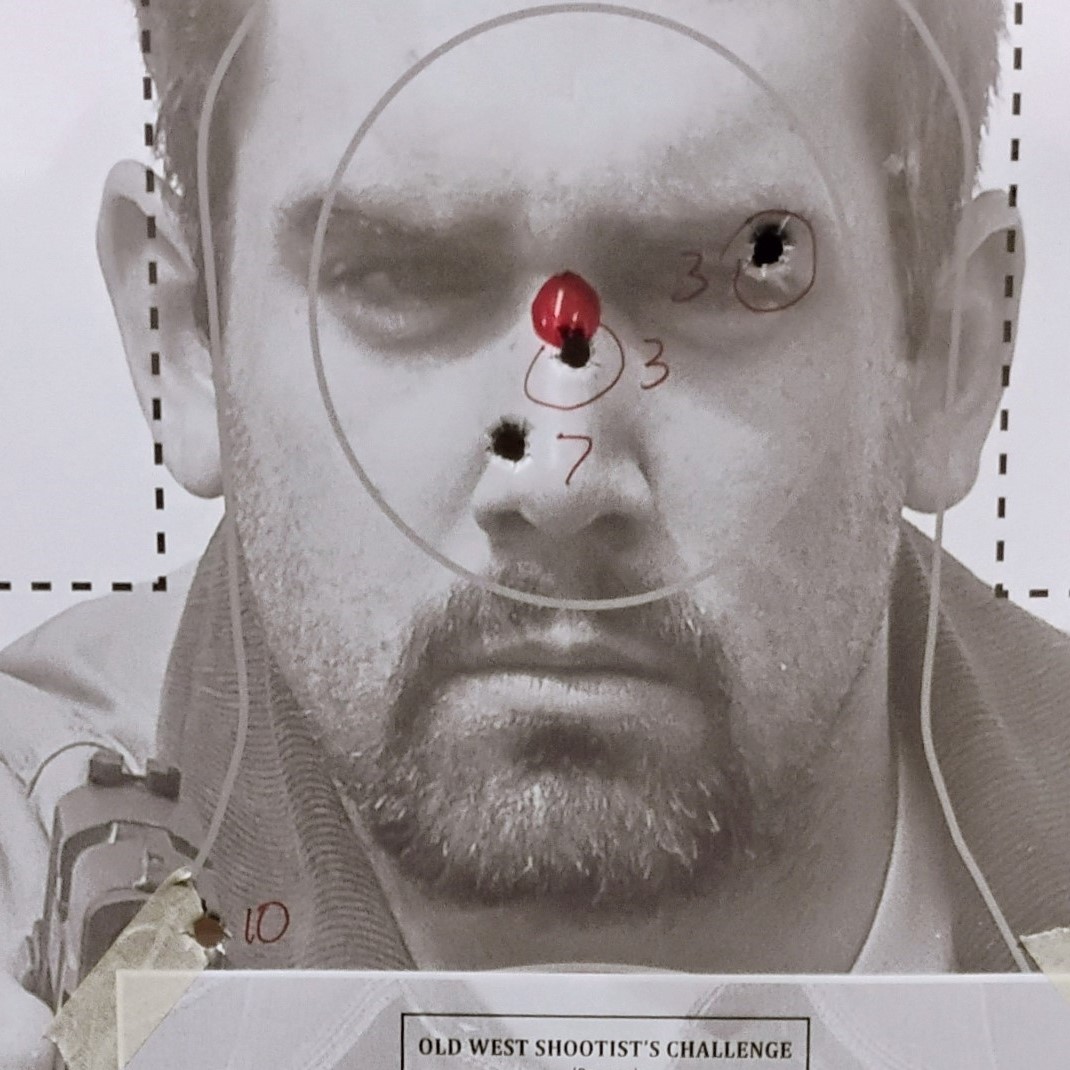
The end result was that I met the standard for the Course of Fire.
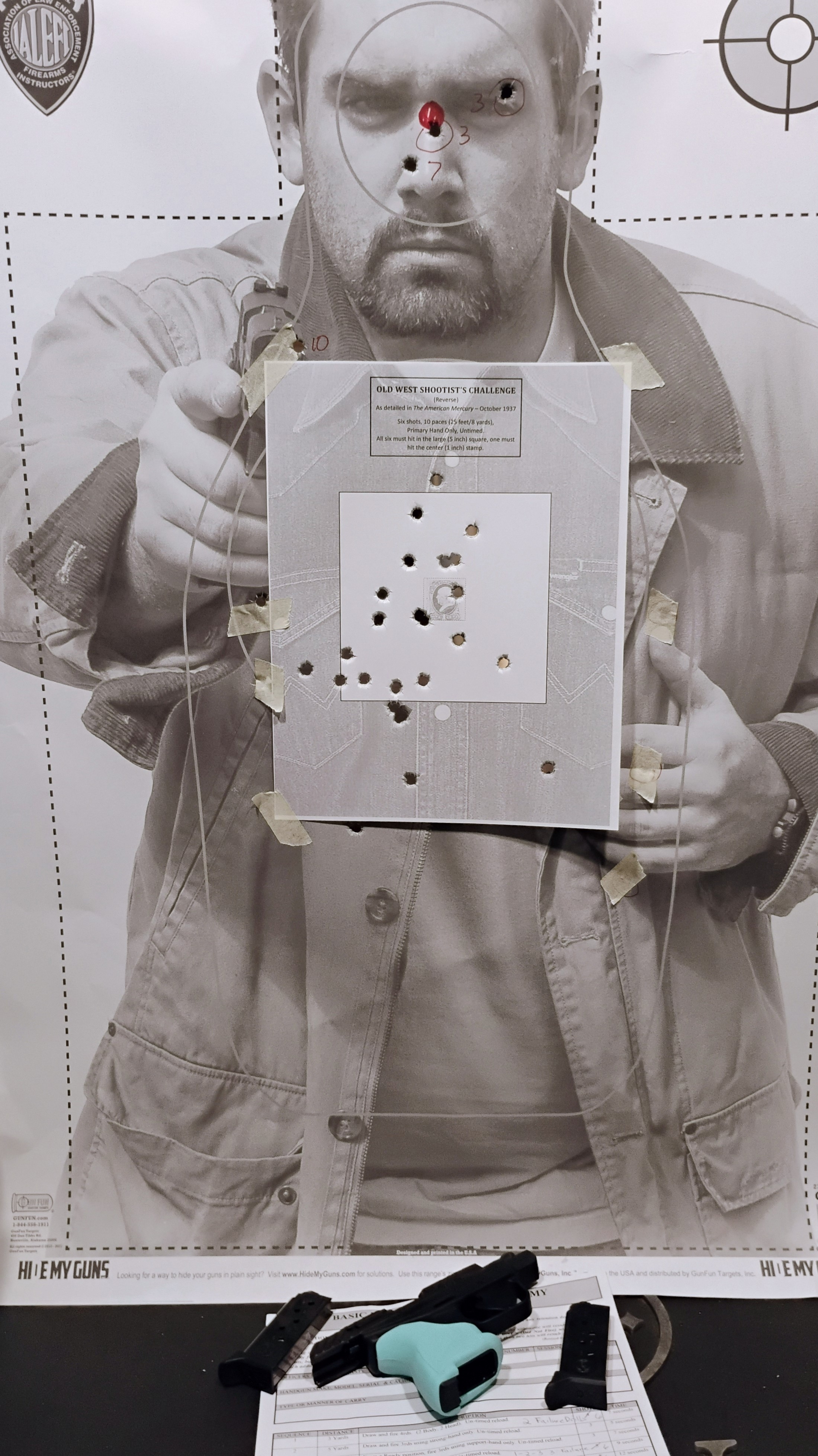
Qualification Courses are structured to efficiently cycle numerous officers through as quickly as possible. We can use them as practice regimens but that doesn’t mean we have to blast long strings of fire that provide little in the way of marksmanship practice. Breaking longer strings down gives us more accountable practice on our sight picture and trigger manipulation.
I found 48 rounds through the Handall equipped LCP II to be much more pleasant than it would have been with the bare gun. It’s a worthy and inexpensive modification.
If you would like to read more in-depth information about shooting and personal protection, consider subscribing to my Patreon page.
The Evolution of Police Revolver Training
#wheelgunwednesday
Looking at the history of POlice training and how it began ….
Police revolver training goes back to the 19th Century and President Theodore Roosevelt. Before he was President of the United States, he was President of the New York City Police Commission from 1895 to 1897. When he began that position, New York policemen furnished their own revolvers for duty. Roosevelt was impressed by the .32 Colt New Police revolver and ordered 4500 to be issued to the New York police. Being dismayed by the lack of proficiency of the officers, Roosevelt instituted a school of pistol practice. He required officers, or ‘roundsmen,’ as they were called, to practice and qualify with their issued revolvers.
https://www.shootingillustrated.com/content/the-evolution-of-law-enforcement-revolver-training/
Small Gun Accuracy
#mousegunmonday
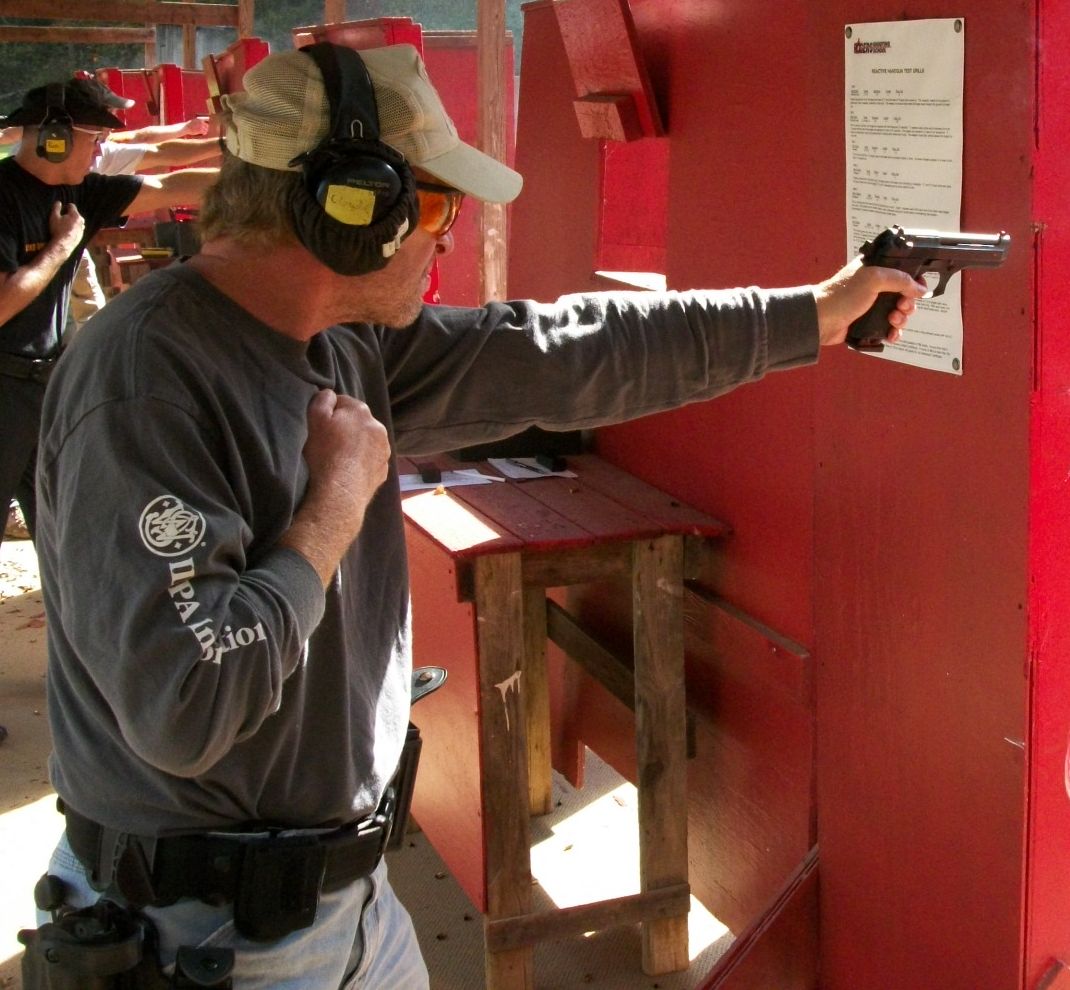
The Washington State Basic Covert Carry/Off-Duty Proficiency Course for Law Enforcement Officers includes shots out to 15 yards. This is perfectly workable with small guns like a Ruger LCP, even though it has a double action trigger.
Here’s my YouTube video of the Course of Fire.
If you would like to read more in-depth information about shooting and personal protection, consider subscribing to my Patreon page.

My Favorite Pressure Testing Drill
This is an old post of mine on Facebook from 2013. It was reposted today by my friends Phil Wong and Rob Reed. My thanks to them for resurrecting it. The post follows:
The concept of livefire pressure testing one’s shooting skills came up on a forum. This was my contribution.
My favorite drill is simple to set up but complex to administer. It requires comfort with an execution matrix to do correctly.
Conceptually, it’s best done with a group of about 2 dozen people or less. I’ve done it with 3 dozen, but it’s a lot of work.
It’s called ‘Everyone shoots against everyone.’ Using an execution matrix, I have every student shoot a short bout against every other student. Not consecutively, though. It’s not a mystery, I just run down the matrix and pair up names.
Logistically, all that’s required is two pepper poppers and two shoot boxes. The shooting is static. The drill is simple. Two shooters, two poppers, one signal. First to drive his/her popper down is the winner.
Where it gets difficult for the shooters is ramping their focus up and down over the course of an hour or so. Shooters do a lot of standing around and then get quickly called to shoot while the poppers are being reset. I do that timing deliberately.
When I did this for a large police department’s firearms instructors several years ago, their lead firearms instructor was the hands down favorite to win because he was easily the best shot in the department. However, that turned out not to be the case. He became complacent after awhile. The guys that had to shoot against him were jacked up every time. There ended up being no clear cut winner. The guys at the top of the winning curve were all reasonably proficient but not equal to him. Not surprisingly to me, the dedicated point shooters ended up at the bottom of the curve. One even told me he had decided to re-evaluate his philosophy because he got beaten so consistently.
At the end I commented that the amount of time they had to prepare for each bout after being called was similar to the amount of time they had from when they turned on their lights for a ‘routine traffic stop’ until they exited their patrol cars. Some of them do dozens of stops each day because they work traffic on the Interstate.
The psychology of approaching combat is as important as skill. Complacency, among other things, kills. After two years at Rogers, how students dealt with the problem mentally became far more interesting to me than the technique.

One of the difficulties of the Rogers Testing Program is that it requires students to take turns loading magazines, watching/evaluating someone else, and then standing and delivering. It goes on for over an hour, which is psychologically nerve racking. This evening, I was watching some footage of a huge firefight in Afghanistan and was struck at how similar the pacing was to the Testing Program at the School.
 tacticalprofessor
You must be logged in to post a comment.