Shoot Yor Guns
#wheelgunwednesday
Before he passed away, the late Paul Gomez made a post about “Shoot Yor …. Guns.” This story is an example of why shooting your guns is important.
A couple of years ago, a colleague brought me her friend’s gun to fix. The friend said she had tried to shoot a coyote in her backyard one afternoon and the gun wouldn’t fire. It was a moderately used Model 64 Smith & Wesson revolver that had been gifted to her by a relative.

When I unloaded it and snapped it, everything seemed okay. There were three different kinds of ammo in it but none of them had a primer strike. The hammer nose protruded through the recoil shield properly so I took it to the range and fired it. It worked fine.
As it turns out, she had never fired it and didn’t realize a revolver has a heavy trigger pull. Her assumption was that the trigger pull was so heavy because the gun was broken. I cleaned it, put some proper ammo in it, and gave it back.
Just as well it didn’t fire because she lives inside the city limits of a municipality where shooting is prohibited. Unloading a cylinder of .38s probably would have brought the POlice, along with at least a citation. Also, although Georgia allows coyote hunting year-round, a hunting license is required. So it might have become a Department of Natural Resources game hunting issue. Coyotes can only be shot on your property without a license if they are attacking, which this one was not.
Moral of the story: don’t assume your gun works or that it will work for you until you’ve fired it. It’s also good to know the law about shooting animals, which is not as simple as people think. That’s true regardless of whether the animal has four legs or two.
Click on the image below for more information about shooting two legged animals.
Taurus 856 Iron Sights v. Laser Comparison
#wheelgunwednesday
Taurus had a screaming deal for 856 revolvers on its website last month. The deal was a Viridian Laser Stock (Grip), Boltaron (Kydex) holster, and two HKS speedloaders for $139. I’m a believer in laser stocks for snub revolvers so I decided to take advantage of the deal and purchased it. I also purchased an Ameriglo front night sight but haven’t installed it yet. FTC note: I made this purchase with my own money, no manufacturer giveaway.
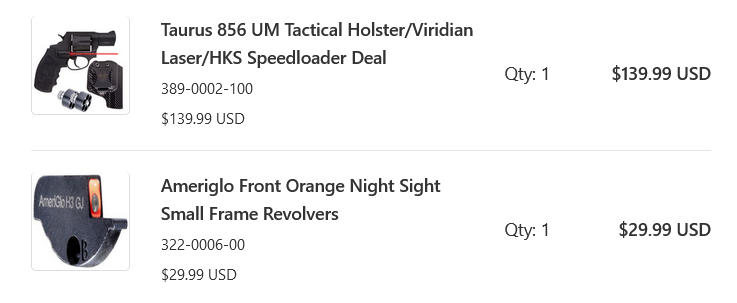
This Viridian laser has the activation button on the front of the stock so when the revolver is gripped, it comes on. This is a far superior system to having to manually press a button to turn the laser on. The stock is also slightly longer than the factory stock so it provides a full three finger grip.
Installing it requires driving out the roll pin that holds the factory stock in place. Once the pin is out, the laser stock is secured via three screws. Pro-Tip: put the bottom screw that goes through the roll pin hole in the frame first. It was relatively well zeroed as it arrived but I later zeroed it at 7 yards when I got to the range.
The UM Tactical Holster was much better than I had anticipated. I thought ‘UM’ meant it was an offshoot of Uncle Mike’s but that assumption is incorrect. It fits the 856 well and the clip holds it securely on the belt. I loosened the tension slightly so that when the holster is held upside down the gun doesn’t come out but it draws easily.
The HKS Speedloaders were the Model 10 developed for the K frame S&W revolver many years ago. Two were included.
To make a comparison of the capabilities of the laser vis-à-vis the iron sights, I did a range trip. The evaluation protocol was the Nevada Concealed Handgun Permit Qualification Course, which is one of my favorite practice structures. It consists of 30 rounds fired at 3 yards (6 rounds), 5 yards (12 rounds), and 7 yards (12 rounds). The evaluation consisted of splitting it in half, shooting one half (15 rounds) with the laser on and one half (15 rounds) with the laser off. I broke the course into several strings for each distance and timed each string.
3 yards – 1 shot from the Holster, 1 shot from Low Ready, and 1 shot from Retention. Three rounds for each sighting system.
5 yards – 2 shots from the Holster, 2 shots from Low Ready, 2 shots from the Holster Primary Hand Only. Six rounds for each sighting system.
7 yards – Repeat the 5 yard sequence at 7 yards.
It was a cloudy afternoon not bright sunlight. I had no trouble seeing the laser dot at 7 yards on the USPSA Metric targets I used. Each system had a separate target.
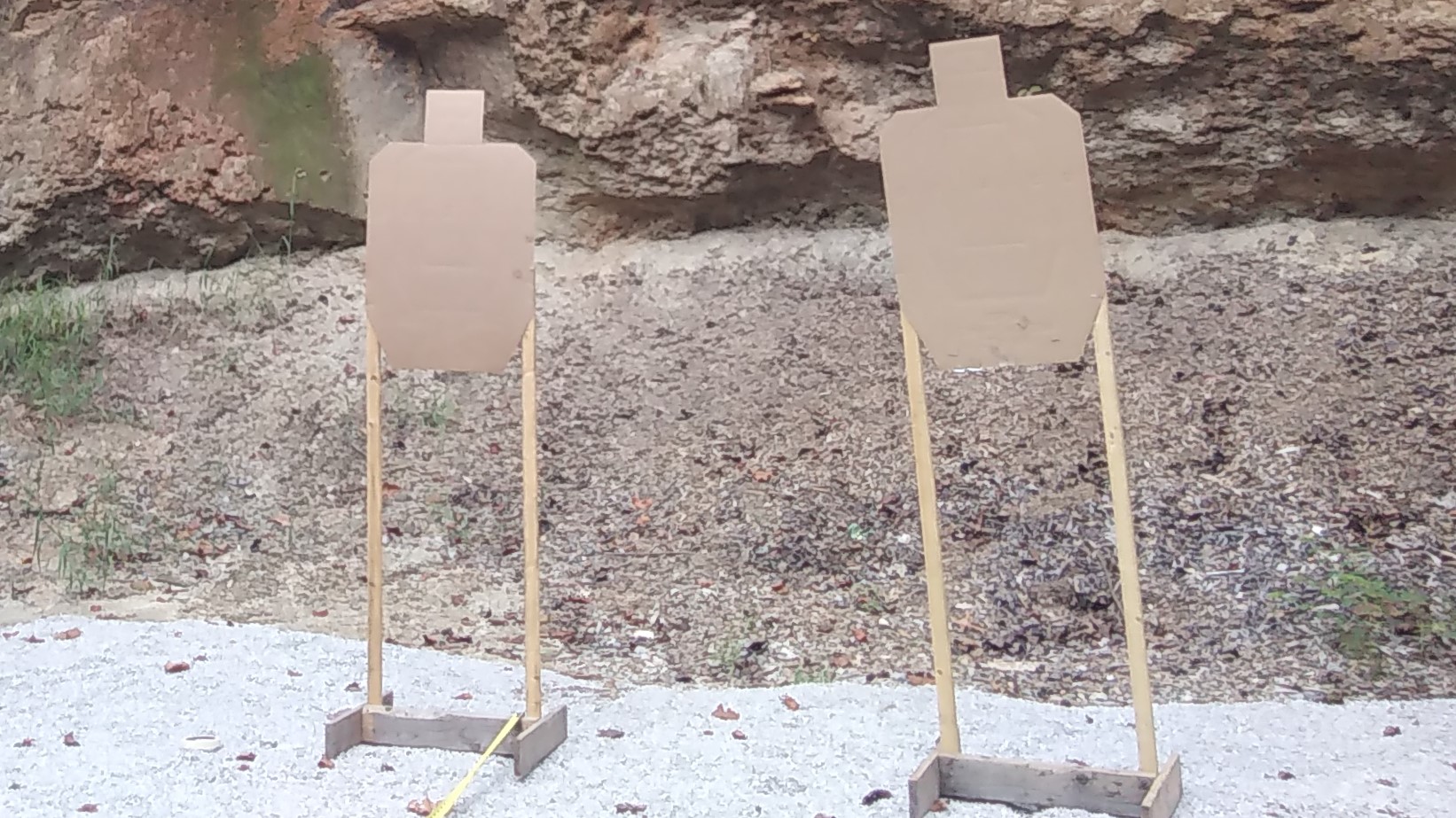
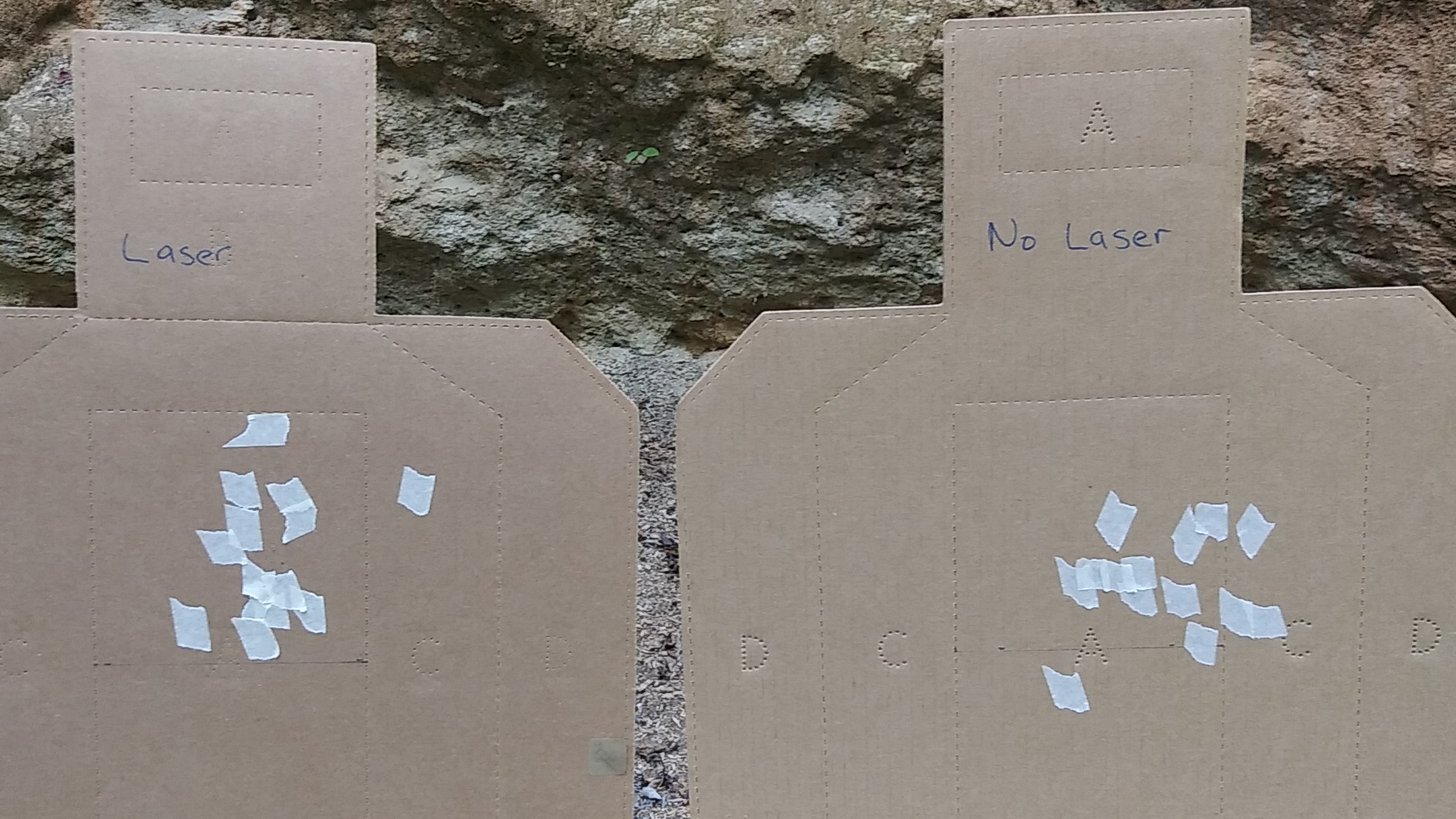
For scoring, I divided the A zone in half. This gave an A zone of 6 inches wide by 5.5 inches long. Hits in the lower part were counted as B hits. This is a scoring system the late Todd Louis Green https://pistol-forum.com/ suggested and I like it. It’s more rigorous than the IDPA -0 zone. The time for each string was recorded.
The results of both sighting systems were then overall Comstock scored. https://www.ssusa.org/content/understanding-uspsa-comstock-and-virginia-count/ This means points achieved divided by shooting time. The results were interesting. The Iron sights had a Comstock score of 4.33, while the Laser had a score of 4.29. Not a significant difference and the laser was not nearly the disadvantage in daylight that’s popularly assumed.
The next phase of my evaluation will be to shoot the same protocol in bright sunlight and at dusk. Those results should provide some interesting contrast.
With regard to the holster, I found it to be quite satisfactory. My only observation is that because the gun and holster is so short, the butt of the gun tends to droop forward and reduce my concealment. On the way home, I stopped at Arbol de Dolares to purchase La Chancla https://www.npr.org/sections/codeswitch/2014/11/04/361205792/la-chancla-flip-flops-as-a-tool-of-discipline . I’ll cut a piece of the flip-flop off to glue onto the back of the holster as a pad, a la Keepers Concealment. https://keepersconcealment.com/
Overall, I very pleased with the results. This makes about 700 rounds through the 856 with no issues. The laser worked well and the holster is satisfactory. A good EDC that I’m comfortable with.
Back Up Gun Match
#fridayfundamentals
Johns Creek IDPA held a Back Up Gun match last night. It was fun to be able to shoot a match with my LCP. I was able to acquit myself well and finished 7th even though I had the smallest gun there and made a couple of boo-boos. There were three snub revolvers in the match also.
Folks who were using fanny packs and chest packs got a chance to test them out, which in one case didn’t work out well. Carrying a gun with such a system also means practicing being able to access it efficiently and safely.
There will be more in-depth coverage on the Shooting and Marksmanship Tier of my Patreon page. https://www.patreon.com/TacticalProfessor
FBI Double Action Course
#wheelgunwednesday
Prior to the FBI adoption of the Wheaties cereal box sized S&W Model 1076 in 1990, revolvers were the Bureau’s sidearm for well over half a century. After the FBI switched to the S&W Model 13 revolver in 1981, it created a publication, FBI Revolver Courses and Techniques, for using the gun with the Weaver technique.

“Sight Alignment: During close-in shooting (five to seven yards), the shooter does not have time to acquire perfect sight alignment. The shooter is, therefore, instructed to fire with both eyes open and to bring the sights up to eye level, seeing the front sight in the secondary vision. As distances increase, the need for better sight alignment increases and trigger pull should be slower.”
One of the Courses in the publication is the Double Action Course. It is intended as a practice regimen for double action shooting. The par times are short as is the allotted time for the one reload included. All strings are fired from the holster except one string at 15 yards.
DOUBLE ACTION COURSE (DAC)
The entire course is fired using the Weaver Position.
5 Yards
6 rounds -2 rounds on each whistle (in 3 seconds)
4 rounds -2 rounds on each whistle (in 3 seconds)
7 Yards
6 rounds -2 rounds on each whistle (in 3 seconds)
4 rounds -2 rounds on each whistle (in 3 seconds)
10 rounds -Load 6 rounds, on whistle, fire 6, reload 4 rounds, fire 4, all in 20 seconds.
15 Yards
6 rounds -2 rounds on each whistle (in 3 seconds). Fired from Weaver Ready.

4 rounds -All 4 rounds in 6 seconds
25 Yards
5 rounds -All 5 rounds in 10 seconds kneeling position
5 rounds -Repeat
Scoring: 2 points each for hits in either the KS or K4 area.
100 points possible.
Firing at an indoor range where drawing from the holster isn’t permitted can be done by using a table start.

Par times can be used via ear buds underneath hearing protection muffs and a par timer app on one’s cell phone. The phone’s Bluetooth connection will transmit the start and stop beeps to the ear buds.

Although it was shot by FBI Agents on the huge B-21 target, any silhouette will do.

It’s a fun course and very practical for those who carry a weapon.

Note to indoor range owners and operators. Granted that OSHA regulations can be onerous to work downrange maintenance with. But having inoperative carriers, targets left downrange on carriers and on the floor, thousands of fired brass cases in front of the booths, etc. presents a very unappealing scenario to the public. This is not a new phenomenon. In 1919, Walter Winans devoted an entire chapter WHY PISTOL SHOOTING IS UNPOPULAR in his book The Modern Pistol and How to Shoot It about the unpleasantness of this experience.
Reliability Testing
A colleague asked me a few days ago:
“How many rounds would you say make up a legitimate ‘reliability test’ for a pistol?”
My response was 100 because that’s more than 99.9% of people will ever fire a pistol they buy. He was surprised about this answer because he thought it would be considerably more.
There’s a very detailed discussion about it in a post I wrote years ago. Most of the cognoscenti who were responded to the question then felt that 1000 rounds was the minimum desirable number. There were certain aspects of their analyses leading to that conclusion that I felt weren’t explored with enough depth.
https://thetacticalprofessor.net/2017/04/21/reliability/
Numerous justifications for 1000 round torture tests were presented to me by the cognoscenti. One of the mathematical analyses presented in the original Facebook discussion was that 5 malfunctions per 1000 meant more than one malfunction in a 17 round magazine (8.72%). My belief about that obtuse analysis remains the same.
“If I’m going to have at least one malfunction per magazine, I’ll just keep carrying a revolver.”
I’ll write a bit more about my latest revolver work for #wheelgunwednesday next week.

Hahaha. Alt Text autogenerated by Microsoft Word for the above picture:
“A board game with brown squares”
Home Invasion – Part II
and that’s the first time I realized how difficult it was to try and remove somebody’s testicles by hand.
The gentleman was very angry that his wife and homestead had been attacked and he had been shot at.
He used a 6 inch revolver to shoot back. No results, unfortunately.

And with that I went back to retrieve my own firearm. So I went to the vehicle. I had a handgun, a 38 special with a 6 inch barrel.
Quite an amazing and educational story.
Part I https://thetacticalprofessor.net/2023/06/17/home-invasion-part-i/
Home Invasion – Part I
It’s not often that we are able to listen to such a detailed narrative of how a home invasion went down. Having the victim tell the story makes it even more remarkable. This is a very brave woman and family. The overhead view of the property and accompanying explanation of the movements are invaluable.
My thanks to the creator of the video. More about the story in the next post.
Safety Notes
Don’t shoot yourself in the leg when drawing your pistol.
According to authorities, Officer Charles Hamilton was responding to a potential burglary in progress at a residence on Lind Ave. around 10:06 AM. As he approached the scene on foot, Hamilton drew his service weapon, which subsequently discharged and struck him in the right leg.
On the same page, there’s an interesting display of handguns seized during a drug raid.

And another Revolver Handgun to the Rescue. Revolver Handgun To the Rescue
Jones went into her room to get her revolver for protection. When Jones exited her bedroom, Turner advanced towards her and she fired on[e] shot out of fear for her life. Turner was pronounced dead at the scene.
I don’t understand how can anyone possibly defend themselves with a revolver handgun and kill someone with only one shot but apparently it happens.
If you are interested in more in-depth writing about Point Shooting or Personal Defense Incidents and Analysis, please subscribe to my Patreon page by clicking on the image below.
Revolver Handgun To the Rescue
From The Armed Citizen column of the May 2023 NRA Official Journals
#wheelgunwednesday
“A 71-year-old man was walking home from a takeout restaurant on March 2 when two men reportedly emerged from an alley and attempted to rob him at gunpoint. The man pulled out a revolver and exchanged fire with the suspects, who then fled. The armed citizen unfortunately sustained a wound to his ankle but was otherwise unhurt. The suspects had not yet been apprehended at the time of our reporting. (fox29.com, Philadelphia, Pa., 3/3/23)” https://www.fox29.com/news/victim-shoots-at-robbery-suspects-north-philadelphia
According to 6abc Philadelphia https://6abc.com/philadelphia-shootout-north-phillly-shooting-10th-street-cumberland/12907827/ , “The 71-year-old pulled out his revolver handgun and exchanged gunfire with the suspects”. The defender ‘emptied’ his revolver handgun at the robbers; one story indicated he had fired five shots. POlice spokesperson Chief Inspector Scott Small indicated that victim fired multiple shots and the perpetrators had fired two shots at the intended victim.
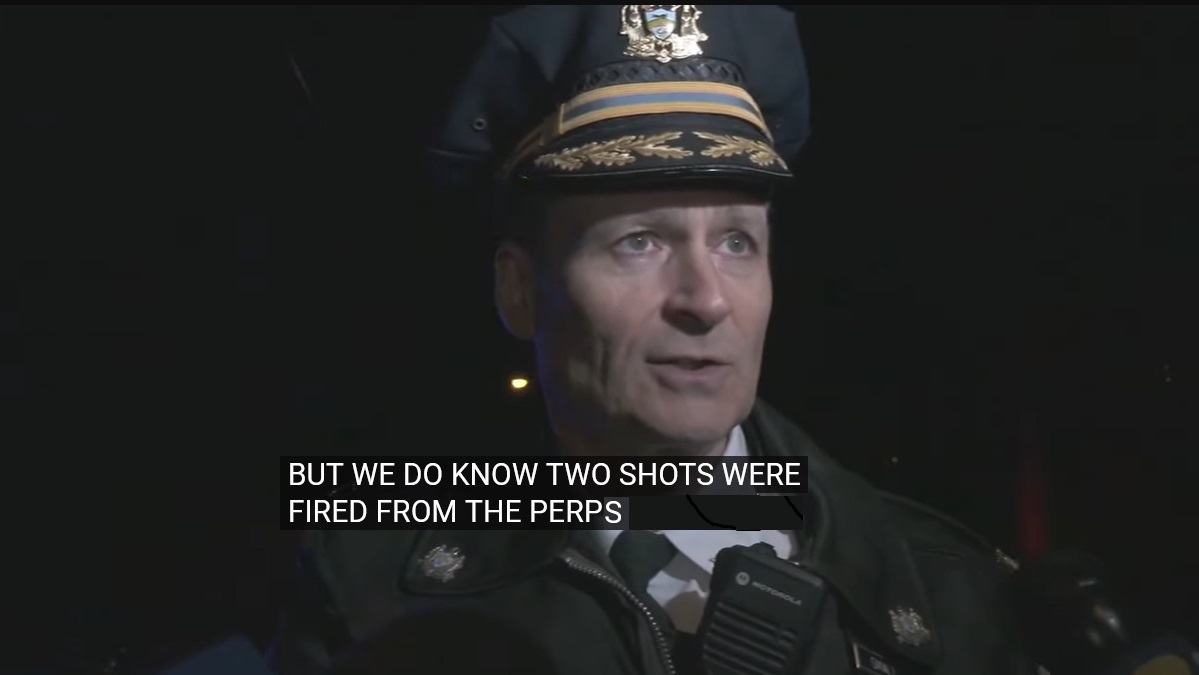
In an interview from his hospital bed with Fox News, the would-be victim said, “At night, I would keep my hand on my [revolver handgun] in my pocket in case I have to pull it out”. https://youtu.be/fs0RTJJTuOA He has a license to carry.
The Bottom Line was that he was armed and forced the robbers to Break Contact by shooting at them with his revolver handgun. Breaking Contact (Part I)
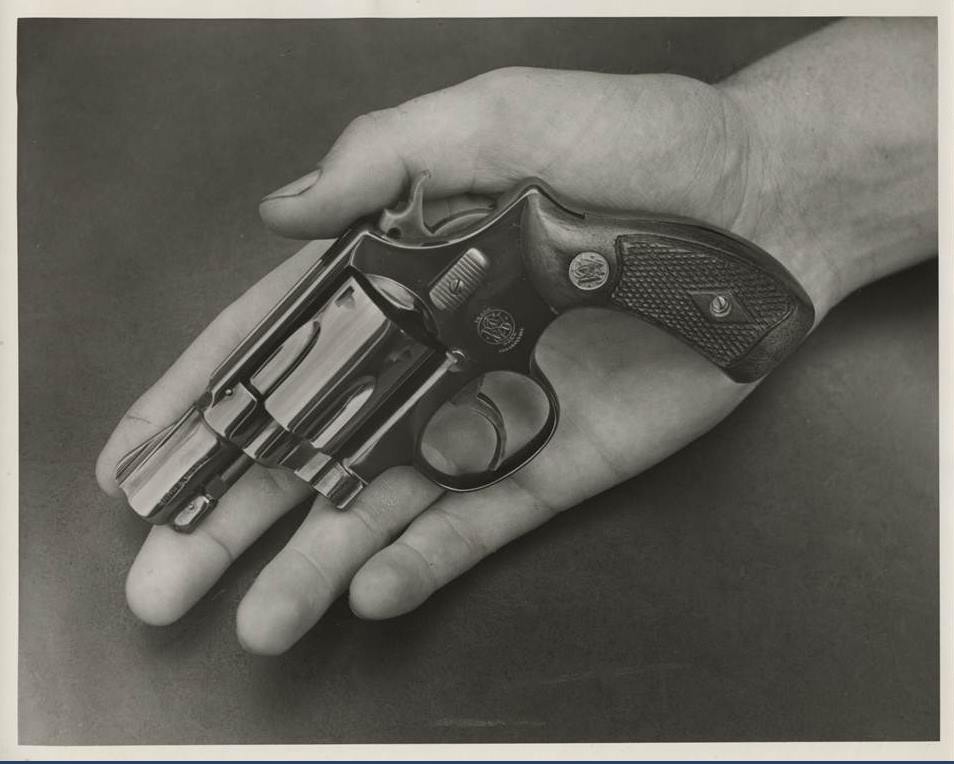
How Do I Choose Which Carry Gun?
One of my Patrons https://www.patreon.com/TacticalProfessor?fan_landing=true&view_as=public sent me the following message. With his permission, I’m going to answer it for a broad audience.
My question for you is how do you decide which gun you carry most often. … I know from following you over the years that you carry various pistols and revolvers from time to time. I’m just curious how you decide which gun you carry most often.
That’s a pertinent and insightful question.
The short answer is that I don’t change guns very often. My EDC handguns all are sufficient to deal with what I consider my most likely threat profile. Because that’s so, I don’t feel the need to scale my armament up and down.
I will change my gun to fit different mission profiles. As a professional trainer, my mission profile is based on what I’m teaching not a varying threat profile. For instance, when I was working on my LCP Project, I carried an LCP for almost a year. When I began the Snub Nose Revolvers – Hands-on Shooting program on Patreon, I switched back to carrying a J frame. During the program, I would occasionally alternate between a S&W 317 and Taurus 856 to evaluate their differences, but that was about all.
When I end the Snub Nose Revolvers program at the end of this year, I will start the Subcompact Pistols – Hands-on Shooting program. For that program, I’ll switch from a J Frame to a Glock 42 that Glock sent me for evaluation in the program. The LCP will also go back into service as another example of subcompacts.
Handguns have different triggers, index onto the target at different points, and even draw differently. The difference between where the Glock 42 indexes onto the face of a target vis-à-vis the 317 is quite noticeable. Obviously, the triggers are different, even with the NY1 trigger spring I installed in the 42.
For simplicity sake, I prefer to stay with the same system day to day. When I do change, I do an hour’s worth of dry practice before venturing out with a new carry piece. How I can make the gun perform is much more important to me than aspects of caliber and ‘firepower.’ It’s just a handgun, folks. As John Farnam says, in the end they’re all just pathetic popguns. I’m a firm believer that “It’s the ‘finest light cavalryman in the world,’ not the arrow,” even when one arrow isn’t quite as pointy as the other.
 tacticalprofessor
You must be logged in to post a comment.