S&W Revolver Frame Sizes (part I)
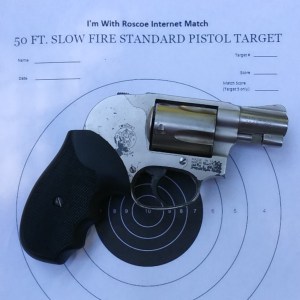
#Smith&WessonSunday
First in an ongoing series. This series owes much to the Standard Catalog of Smith & Wesson. The book is a valuable resource for anyone interested in S&W products and especially the revolvers.
Broadly speaking, Smith & Wesson swing out cylinder (Hand Ejector) revolvers come in nine frame sizes. In order of increasing size, they are: M, I, Improved I, J, J Magnum, K, L, N, and X frame. The factory uses a separate system for lettering stainless steel frames but they are seldom used outside the factory so will not be used here. The most commonly encountered frame sizes today are the J and J Magnum. In the 20th Century, the K frame in various permutations became the dominant POlice revolver in the USA and many people can recognize it on sight. Prior to 1957, their revolvers were named. In 1957, the firm switched to a numbering system that is still in use today.
In the named models, evolutions of a particular model were referred to as 2nd Model, 3rd Model, etc. or 1st Change, 2nd Change, etc. Numbered models have the model number stamped on the frame inside the yoke. In the numbered models, a dash and numeral following the model number is part of the model designation, e.g., 38-2.
The M frame, the original Ladysmith, is a truly tiny revolver that was in production only until 1921. It was made in .22 Long (not Long Rifle) caliber and weighed 9.5 ounces. There is a rumor that it was discontinued because it was a favorite weapon of Ladies of the evening but this is unlikely. An enterprising manufacturer could probably reproduce this revolver with a dual firing pin of the sort used in the original Henry rimfire rifle and enjoy brisk sales.
The I frame was the original S&W swing out frame sized for the .32 caliber cartridge. The I frame was the first S&W revolver with a swing out cylinder; it was introduced in 1896 and became the first Hand Ejector purchased by a US POlice department, Jersey City, New Jersey. They were referred to as ‘Hand Ejectors’ because previous S&W revolvers were top breaks and ejected the cases automatically. Swing out cylinder revolvers require the user to manually eject the cases by pushing on the ejector rod, hence the name Hand Ejector.
Improved I frames have a very slightly larger frame opening than the I frame. The most noticeable feature of the Improved I frame was an engineering change from using a leaf type mainspring to a coil mainspring. The Improved I can be easily distinguished from the I because the Improved I lacks a screw (strain screw) at the bottom of the grip frame. Both the I and Improved I frame openings are too small for the .38 Special cartridge.
S&W developed the J frame in order to allow the use of the .38 Special in a revolver significantly smaller than the K frame, which had been in service for many years. The J frame continued the use of the coil mainspring of the Improved I frame but has an increased frame opening of 1.645 inches compared to the 1.515 frame opening of the Improved I frame.
The larger frame sizes will be covered in the next installment.
Tactical Professor books available for download.
Indoor Range Practice Sessions downloadable eBook. http://indoorrangepracticesessions.com
Concealed Carry Skills and Drills downloadable eBook. http://concealedcarryskillsanddrills.com
Advanced Pistol Practice http://store.payloadz.com/go?id=2613612
Shooting Your Black Rifle http://shootingyourblackrifle.com/
Serious Mistakes Gunowners Make http://seriousgunownermistakes.com
Note that all Tactical Professor eBooks can easily be automatically converted for your Kindle. https://www.amazon.com/gp/sendtokindle/email
Avoiding Mistaken Identity Shootings
Another Mistaken Identity shooting occurred last week. A teenage girl came home from college to surprise her mother with a visit and got shot instead.
https://www.wkbn.com/news/local-news/police-report-mom-mistakenly-shoots-daughter-in-girard/
The teen’s mother told police that she was in her bedroom when she heard a commotion inside the house. She said the noise scared her and that she was not expecting anyone.
The mother said someone came running into her bedroom and that’s when she fired one round from her handgun. She then realized that she had shot her daughter, the report stated.
Obviously, in between hearing the commotion and firing the shot, the woman armed herself. It’s unlikely that she said anything in the process or her daughter probably would have said something back. The ‘surprise visit’ was most likely a bout of homesickness.
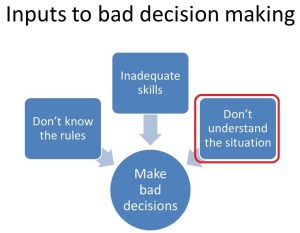
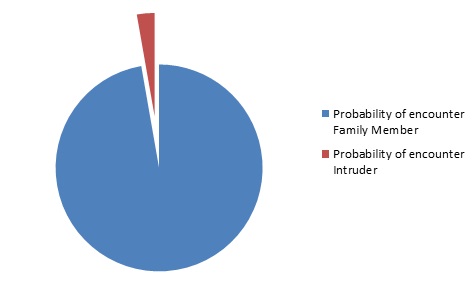
As I mention in my book Serious Mistakes Gunowners Make, any ‘bump in the night,’ or in this case “commotion inside the house,” carries with it a set of competing probabilities. It could be an intruder, which is the assumption most people make when they hear it, or it could be a member of their household. The member of the household is the most likely scenario. Why is this true? Simply because they live in the same house as you do and they are not constantly updating you on their location. Where teenagers, such as the unfortunate shootee in this incident, are present, the chances of them leaving the house and returning without informing their parents is extremely high. This fact has to be figured into the home defense plan of any parent or adult in the household.
Security Exception fixed
My apologies to everyone who tried to order Serious Mistakes Gunowners Make and got a security exception. I incorrectly formatted the forwarding URL and that’s what resulted in the error message.
It’s fixed now and there should be no more problems or error messages.
http://seriousgunownermistakes.com
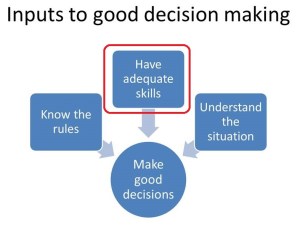
I should follow my own advice and Have adequate skills.
To everyone who already ordered, I appreciate your business and interest in my research.
Serious Mistakes Gunowners Make – The Book
So many people asked me for a book version of my Serious Mistakes CD that I sat down and wrote it.
It’s available for download at http://seriousgunownermistakes.com
This book is not about techniques of shooting firearms; it is about Decision Making, specifically what leads to Bad Decision Making.
Our Mindset leads to our Decisions. Our Decisions lead to our Actions. Our Actions lead to our Outcomes. This sequence controls our destiny in everything we do, including using a firearm for Personal Protection. Unfortunately, decision making in the firearms community tends to focus on the tool, the firearm, instead of the desired outcome for owning it. Endless debate goes on about caliber, action type, ammunition capacity, and other material oriented aspects of ownership. In the broad context, these are extremely minor considerations as long as the owner can operate the firearm adequately.
Where the discussions don’t go nearly enough is the circumstances involving the usage of firearms and the decisions about our internal software that we have to make. “Usage” doesn’t always mean shooting the gun, either. There are a host of other issues, such as storage, legalities of carrying, and even possession, that aren’t often discussed. But those internal software issues are much more likely to determine the difference between a Positive Outcome and a Negative Outcome than hardware issues like type of gun and caliber. The amount of misinformation that runs rampant within the gun community leads many new owners down the wrong path in their Mindset and potential Decision Making.
This book provides some insight about how to avoid the Serious Mistakes.
It’s available for download at http://seriousgunownermistakes.com
https://store.payloadz.com/go/?id=2617872
It is a PDF document. If you want, you can send it to your Kindle or Kindle app on your SmartPhone. PDFs can be converted to the Kindle format so you can take advantage of functionality such as variable font size, annotations, and Whispersync.
To have a document converted to Kindle format (.azw), the subject line should be “convert” when e-mailing a personal document to your Send-to-Kindle address. Instructions for sending documents to Kindle and Kindle apps are available on Amazon’s website.
https://www.amazon.com/gp/sendtokindle/email
How to send a document to your Kindle:
To find your Send-to-Kindle e-mail address, visit the Manage your Devices page at Manage Your Kindle.
Documents can only be sent to your Kindle devices or apps from e-mail accounts that you added to your Approved Personal Document E-mail List. To add an e-mail account, visit the Personal Document Settings page at Manage Your Kindle.
To send a document to your Kindle device or app, simply attach it to an e-mail addressed to your Send-to-Kindle e-mail.
It is not necessary to include a subject in the email.
Straight talk about Incident Research
Mickey Schuch, of Carry Trainer, was kind enough to do an interview with me. We talked quite a bit about incident research, among other things.
We also talked a little about my My eBooks.
Indoor Range Practice Sessions http://indoorrangepracticesessions.com
Concealed Carry Skills and Drills http://concealedcarryskillsanddrills.com
Shooting Your Black Rifle http://shootingyourblackrifle.com
Figbars of the Imagination
My latest Ballistic Radio interview is up on the BR website.
What I like to do is to think about what works for normal people in their daily lives.
Because let’s face it, you and I and the rest of the training industry are not normal people.
Evaluating handguns for YOU
Before you buy a gun, you should go to a range that rents guns and try different ones out to see which one is best for you.
What does “try them out” mean? How do we measure “which one is best for you?” Here is a list of worthwhile items to evaluate for you to make an informed decision about an autoloading pistol. For those who are helping a prospective purchaser, demonstrate the technique but then place the pistol in a sterile (unloaded with slide forward) condition and let them do their own evaluation without comment or coaching. You won’t be there to coach them if they need to use the pistol for real; that’s part of the evaluation.
- Load the pistol. This has two components.
- Load a magazine to full capacity.
- Load the fully charged magazine into the pistol and chamber a round.
- Manipulate the controls of the pistol.
- If the pistol has a decocker, decock the pistol after loading it.
- If the pistol has a safety, engage it, and then disengage it.
- Remove the loaded magazine from the pistol.
- Engage the slide stop while safely ejecting the round from the chamber. The muzzle must remain pointed downrange during the unload sequence.
- Inspect the chamber visually and physically (with a finger) to be sure it is unloaded.
- Let the slide go forward.
- Shoot the pistol.
- For new shooters or prospective purchasers, use a standard silhouette target.
- Experienced shooters should use a more meaningful target.
- An 8 inch circle at 3 yards.
- A sheet of paper in landscape orientation at 5 yards.
- Two sheets of paper stacked one above the other in landscape orientation at 7 yards and 10 yards.
- A suitable target can be downloaded here. Printable Silhouette drawn face
- Fire six shots at each of four distances (Stages); 3 yards, 5 yards, 7 yards, and 10 yards. This will replicate the difficulty level of most States’ Carry License Qualification Courses of Fire. A Carry License Qualification is the most likely shooting task the average purchaser will use their handgun for so you may as well evaluate the ability to pass it. This shooting evaluation consists of 24 rounds so two different pistols could be evaluated with one fifty round box of ammo.
- The six shots for each Stage should be fired in three Strings of Fire. The magazine should be loaded with six rounds only except when evaluating stoppage clearance.
- Fire One shot
- Fire Two shots
- Fire Three shots
- If the pistol has a decocker, decock the pistol after each string and then disengage the decocker.
- If the pistol has a safety, start each string with the safety engaged.
- After shooting at each distance, czech to make sure the pistol is unloaded, let the slide go forward, and decock, if the pistol has a decocker.
- Record how many hits were made on the target and then cover them with masking tape. You should bring a roll of masking tape with you to the range.
- Start the next distance’s shooting by loading the pistol from a sterile condition.
- The 3 yard string should be fired with the Primary Hand Only, i.e., One Handed.
- The six shots for each Stage should be fired in three Strings of Fire. The magazine should be loaded with six rounds only except when evaluating stoppage clearance.
- Evaluate your ability to reduce stoppages of the pistol.
- When shooting the 5 yard Stage, start with the chamber empty and a six round magazine inserted. Attempt to fire the first shot on an empty chamber. After the click, tap the base of the magazine, cycle the slide, and then fire one shot (Tap-Rack-Bang). This is a simulation of clearing a bad round or a partially unseated magazine.
- When shooting the 7 yard Stage, start with the slide locked open and a six round magazine in the pistol. Eject the magazine onto the table, pick it up, insert it into the pistol, release the slide, and then fire three shots. This is a simulation of an Emergency Reload because most rental pistols will only come with one magazine. After the three shot sequence, fire the two shot String and then the one shot String.
- When shooting the 10 yard Stage, start with the chamber empty and a six round magazine inserted. Attempt to fire the first shot on an empty chamber. After the click, remove the magazine, cycle the slide three times, re-insert the magazine, and then fire three shots. This simulates clearing a double feed. After the three shot sequence, fire the two shot String and then the one shot String.
This evaluation procedure will give you a good idea of two different aspects of how well the gun works for you or a prospective purchaser. The ability to shoot the gun to pass a possible standard for obtaining a Carry License and also manipulation tasks that are frequently overlooked.
Here is a downloadable checklist you can take to the range with you. Autoloading Pistol Suitability Checklist
Practicing for your real world
What is YOUR real world like? It’s different from everyone else’s real world, for sure.
My eBooks
Indoor Range Practice Sessions http://indoorrangepracticesessions.com
Concealed Carry Skills and Drills http://concealedcarryskillsanddrills.com
Advanced Pistol Practice http://store.payloadz.com/go?id=2613612
Shooting Your Black Rifle http://shootingyourblackrifle.com

This morning, I had an opportunity to do some work on putting my money where my mouth is. I’ve been haranguing about Negative Outcomes and wanted to come up with some actionable practice. If you’re not part of the solution, you’re part of the problem, as the saying goes.
Around 5 a.m., someone was loading a pickup in the parking lot outside my apartment. There was quite a bit of ‘bumping,’ which woke me up. Everything was still dark and otherwise quiet. I was satisfied that it was indeed a truck being loaded and what was being loaded wasn’t mine. While lying in bed, I realized I had been awakened by a ‘bump in the night.’ So, I decided to clear my apartment as a dry run.
First, I cleared my pistol and put an orange dummy round in the chamber. I then dryfired it once. If I hadn’t…
View original post 604 more words
Let’s Get Real About Active Shooters
It’s all hype by the media to boost their ratings. The active shooter possibility is so small it wouldn’t even be worth talking about if the media didn’t stir up such a (you-know-what) storm about it. Look at the breakout for 2017, the latest year exact numbers are available. Note that the mass shootings number for 2017 includes the Las Vegas concert incident so it’s higher than other years.
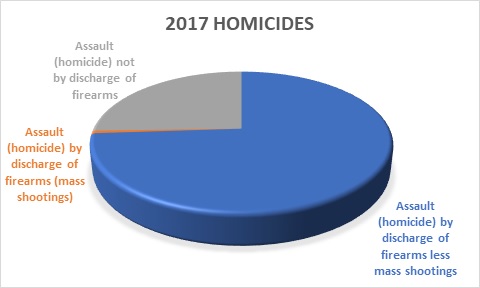
Source: CDC and Time
In comparison, how often do you hear about multiple fatality car crashes on the news? They rate one minute, once. Then they’re out of sight and out of mind. In 2017, the CDC figure for car fatalities is 40,231. Dead is dead, period. Run an internet search for “multiple fatality car crash” and limit the search period to the past month. The number you’ll find is shocking.
We’ve got to do something!
No, we don’t.
A rare editorial commentary.
In the wake of the recent ‘mass shootings,’ an amazing amount of rhetoric has arisen on both sides of the political spectrum and from the Venn diagram of those who bridge the continuum. Both sides are wrong. I’ll probably annoy some people with this commentary and lose some subscribers but so be it.
On one side, commonly referred to as the Left, we hear renewed call for various forms of gun control, ranging from Universal Background Checks to outright banning of ‘assault weapons.’ These calls are the continued extension of a propaganda campaign that would have made Nazi propaganda Minister Joseph Goebbels proud. In numerical terms, the probability of being involved in a ‘mass shooting’ is so small a possibility that it’s not even worth considering in our daily lives much less for making public policy. There were more one-on-one homicide victims last year than in all the so-called ‘mass shootings’ of the 20th and 21st Centuries combined. I feel sorry for the victims of active killers but no more so than for the Dekalb County murder victims who annually outnumber ‘active killer’ victims but who get about one minute of news coverage every few days.
The whole ‘mass shooting’ thing is an invention of the mass media elites to boost their ratings and push forward the topic of gun control. Anyone who thinks that media personalities making millions of dollars a year care one whit about the plight of the average person is seriously naïve. What they care about is their ratings and how much money and power they can accumulate.
 tacticalprofessor
You must be logged in to post a comment.