Situational Awareness in Social Settings
Hey Professor, I’m doing a security gig at [a large function] for an event involving [a number of people]. [Some dignitaries] will probably be there. The night before they want me to give a quick security briefing on awareness and what to do if Big Sarge needs to handle the threat. U got any bullet points or words of wisdom I could share that they will remember?
–A retired Army buddy of mine who now works high end security details
Use the same skills as in any social setting (looking for contacts) with an additional focus. Does someone or something seem out of place? “What’s wrong in my right world?” Have some faith in your intuition.
Practice surveillance detection, especially when leaving. Remember that ordinary crime occurs around events, as well. Identify safe areas along your route in advance. Ask for security assistance if you’re uncomfortable with the situation. Have some faith in your intuition.
Watch for targeting indicators; paralleling, hard focus, forces surrounding, etc.
Stay aware of exit locations. If you will be in a fixed position for a while, e.g., seated at dinner, identify the nearest exit to you, just as on an airliner. Note exits near restrooms immediately upon entering the venue. We tend to be distracted when we need to visit the restroom so it’s best to identify these in advance. Consider non-traditional exits, such as through kitchens or maintenance areas, if necessary.
Beware of the possibility of secondary devices; clear the area completely if there’s an incident. Go back to your hotel or residence immediately, don’t hang around the venue.
Discard unattended drinks. Once it’s been out of your control, get a new one.
If someone makes you feel uncomfortable, don’t ignore it, explore it. Alert others, preferably security, about issues. Have some faith in your intuition.
Increase and decrease awareness as the situation requires. E.g., increase awareness when going to or leaving the venue since there will be less security presence outside. Don’t try to be on ‘red alert’ all the time. It’s neither possible nor mentally healthy.
Ditch high heels if you have to move quickly.
Fleeing is preferable to hiding under a table if an incident involving small arms occurs. Gunshot wounds from a distance tend to be survivable. Close range executions are usually fatal. Determine a nearby point that offers cover or concealment and move quickly to it. Assess the situation and then repeat the process to escape.
Note locations of fire extinguishers. They are useful in case someone is on fire following a bomb and also as an improvised weapon. If you are on fire, drop and roll to put it out before running.
Sidenote on using improvised weapons:
There is no need to challenge or warn an active killer! That is only for TV and the movies.
Get behind him [her], focus your attention on the back of the head and,
without warning, smash it as hard as you can with the fire extinguisher
or whatever you have. Continue to nail them until they stop moving.
Then run away to safety.
If there is an incident, accept being separated from your party. Leaving the area and finding shelter should be your primary emphasis, not looking for others, unless they are small children.
Look for things or people that you may enjoy, as well. The object of terrorism is to change our society for the worse. Don’t let it do that to us.
Here is a PDF of these comments for anyone who would like to use them. Situational Awareness in Social Settings handout
Mindset and Decision Making
Then I guess it will just be time for him and me to be with Jesus.
Caleb Causey of Lone Star Medics related a mind-boggling story recently about one form of mindset. He posed questions to some friends in the context of encountering two burglars in their home. The concept of giving scenarios and asking people questions about their anticipated reactions is often far more effective than pontificating about what they ‘need’ to do.
The friends are a couple who have a 10 year old son. The wife is a petite woman who is a practitioner of boxing; good for her. What Caleb did was to posit a scenario of initial violence and asked her what she would do. She replied she would fight them. Since the scenario was two burglars whose combined weight was three to four times hers, he continued escalating the scenario in his questions. In the event her resistance was overcome by the two burglars, the sequence of escalation he gave was:
- her being badly beaten in the fight,
- her being raped,
- her child being raped,
- both of them being murdered.
The lady’s reply to the escalation of murder was the above quote about ‘being with Jesus.’ She apparently had accepted that as an outcome. However, her husband, who was listening to the conversation, did not find that acceptable. At the time of the conversation, they owned no weapons, other than perhaps a butcher knife. While butcher knives can be used to defend one’s family, especially when wasp spray doesn’t work, it’s unpleasant and quite messy. The questions and subsequent conversations led to a better understanding of their options and possible decisions for defending themselves.
A few days later, I related the story at dinner to another friend. His comment was “people with that kind of mindset really don’t understand what the events leading up to ‘being with Jesus’ are going to be like.” The beginning (assault) and end (being with Jesus) can be grasped but the process in the middle is much harder for people to understand. The Petit family murders are an example of just how horrible the process can be. I’m not sure if Caleb had the Petit murders in mind as he was talking to the couple but his sequence of events was very similar to the horrors the Petits were subjected to.
It’s hard for good people to understand the depravity that exists inside many criminals. That’s the main reason I teamed up with William Aprill for our Violent Criminals and YOU course. The more decent a person is, the harder it is for them to grasp just how evil and FITH some criminals are. A mental health professional is in a better position to describe that than a trainer who teaches physical skills. It’s also why we’re offering a discount when bringing a family member; family members are part of the decision process.
My friend at dinner also made the comment “Two days sitting in a classroom is a long time and might be tiresome.” That’s understandable, which is why William and I are teaching in alternating two hour blocks of instruction. I’ve taken many many weekend classes and I know hearing the same voice continually for 16-20 hours can be a chore, regardless of how engaging the instructor is. Splitting it up will help keep things from being monotonous in our class.
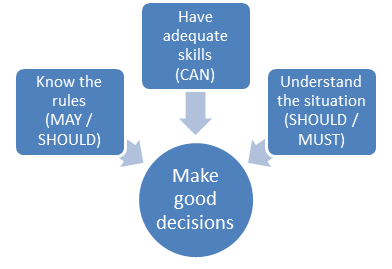
He and I also talked about teaching decision-making. For a long time, I have had reservations about how the industry teaches decision-making. He’s been to a Force on Force class I was a role player in for many years, so I asked him “In the crawl/walk/run training progression paradigm, where does Force on Force fit?” “Run” “How many repetitions of decision-making did you get in those eight hours of training?” “Six or seven”
His answers reflect my reservations about our current methodology. Giving students a few ‘Runs’ with a simulated gun in a FATS machine or with live role players does not represent a particularly effective adult teaching methodology, in my opinion. What we essentially do is throw someone in the deep end of the pool a couple of times and then call them a combat swimmer. ‘What’s wrong with that picture?’ as the saying goes.
To improve on this, I have devised a process where students will get dozens of repetitions of decision-making with the full range of the personal protection options available to them in a few hours. The patent application for the process is not yet complete, so I’m not at liberty to disclose more than that. I can say it will be an experience unlike anything else in the industry. Because the full range of options will be available, the process is NOT limited to gun owners. Excluding the full range of options is a major weakness in our current methodologies and my process corrects that. Family members may have a different opinion about what the appropriate options and decisions are, at least for them.
Mindset and decision-making; think about them hard, regardless of what training you choose or choose not to take. My research into Negative Outcomes has made me realize how much more important they are than the weapon or caliber debates the gun community loves to indulge in.
I have a friend who will kill you with a .25 Lorcin and there’s nothing you’ll be able to do to stop him.
–a well-known and respected trainer
RIP Jim Cirillo
Today is the anniversary of the 2007 death of Jim Cirillo. He was a wonderful guy and a good friend of mine. His wit, wisdom, and profanity will always be remembered by those of us who knew him.
Jim was a firearms trainer, par excellence. He was also one of the founding members of the NYPD Stakeout Squad. Jim’s book Guns, Bullets, and Gunfights is one that everyone who is serious about personal protection should read.
Jim wasn’t only a highly accomplished marksman; he was also a master tactician. My notes from the lecture where I met Jimmy are attached here. Jim Cirillo notes 05192001. Despite being from 2001, they’re still timely today.
Massad Ayoob wrote an eloquent eulogy about Jimmy, saying more than I can in his article Lessons of Jim Cirillo.
An excellent book about the exploits of the Stakeout Squad is Jim Cirillo’s Tales of the Stakeout Squad, written by Paul Kirchner.
I’ve previously written about one of the Stakeout Squad’s lessons.
An article about the Stakeout Squad appeared in New York magazine in 1972. The Deadly Score of the Stakeout Squad. The article probably led to the eventual disbanding of the Squad for ‘efficiency’ reasons. The Stakeout Squad was highly ‘efficient’ at permanently removing violent criminals from the streets, which was no more acceptable in 1972 than it is today.
After surviving 18 gunfights, Jimmy was killed in a motor vehicle crash. That’s ironic and another reason I recommend that everyone who is interested in personal protection should take a Defensive Driving Course. The course can pay for itself. Georgia law requires that insurance companies reduce your premium 10% if you take it voluntarily. Many insurance companies will give you a break even if they’re not required to. That’s a good Return On Investment for $30.
RIP Jimmy, we’ll always miss you.
Sheepdogs almost get bitten
[Seven soldiers] said they had witnessed a disturbance between [the couple] in a parking lot, and they said they intervened. They said they believed they had deescalated the situation and began to walk back to their vehicle.
Police said Gallegos and Garzes are boyfriend and girlfriend. As the soldiers started to leave, they said Garzes [the girlfriend] ran to her boyfriend’s truck and pulled out a handgun.
She handed it to Gallegos [the boyfriend], and the soldiers told police he began firing the weapon.
Pair arrested after firing at Fort Hood soldiers
One possible strategy in the context of personal protection is ‘being a hero.’ This is one of the underlying motives for ‘sheepdogism.’ However, it’s useful to remember that the highest award given by our country for heroism is the Medal of Honor, which is often awarded posthumously.
The Fictional Assassin in Popular Culture – Sebastian Moran
Popular culture has evolved its interpretation of the fictional assassin quite a bit over the past 100 years. The interaction between the assassin and protagonist has evolved, as well. A good example is an antagonist of Sherlock Holmes, Sebastian Moran.
Sebastian Moran first made his appearance in A. Conan Doyle’s story The Adventure of the Empty House, published in 1903. The index kept by Holmes indicated that Moran had been educated at Eton and Oxford. He eventually became a Colonel in the British Army, stationed in India and mentioned in despatches (noted for bravery or gallantry). While there, he was a masterful big game hunter whose record of tiger kills was still unequaled at the time of his Adventure with Holmes. Moran also wrote two books while in India.
Due to some unnamed but unsavory incident while he was in India, he retired and returned to London. Upon his return, Moran became allied with the criminal mastermind Professor Moriarty, described by Holmes as the most dangerous man in London. For a time, Moran was Moriarty’s Chief of Staff and was also used by Moriarty for “only one or two very high-class [assassination] jobs, which no ordinary criminal could have undertaken.” Holmes described Moran as the second most dangerous man in London.
The TV series Elementary is a modern day re-imagining of the adventures of Sherlock Holmes. It is set in New York where Holmes has relocated from London. In the first season episode ‘M,’ Sebastian Moran enters the current era of the fictional assassin. However, his methods and background have changed somewhat.
He had previously come to Sherlock’s attention in London, being known only as ‘M’ at that time. M was a serial killer of dozens of people. The list of M’s London victims included Sherlock’s love interest, Irene Adler. Eventually, when caught by Sherlock in New York, M reveals his name as Sebastian Moran and that he is an assassin for an as yet unknown Moriarty. All of M’s killing in London had been in the employ of and directed by Moriarty. So the new imagining of Moran is much more prolific at murder than the original. Two scenes also indicate that Moran is an avid soccer fan and apparently from a working class background. His portrayal is more of a clever but lower class thug than the original Colonel Moran.
Perhaps the grisliest change is the method of killing employed by the century apart assassins. Colonel Moran was described by Holmes as “one of the best shots in the world.” His chosen weapon in London was a relatively quiet but extremely powerful air rifle, which fired an “expanding revolver bullet.”
The newly imagined Moran (M) has a rather different method of murdering his victims. He positions the victims for the kill by tying them up and then hanging them upside down from a portable folding tripod he carries with him. The actual killing is done by slitting their throats and letting all their blood drain out of their bodies onto the floor of their abode. Once all the blood (mistakenly described in the episode as five pints rather than five quarts/liters) is drained, M removes the body and tripod. The body is then dumped in whatever nearby large body of water, such as a river or ocean, is convenient.
Presumably, the new method was chosen because firearms are socially unacceptable for even a professional assassin to use on TV. The process of rendering the victim kosher or halal is perhaps less objectionable.
The tools and objectives of the protagonist Holmes have also changed somewhat. The original Holmes frequently used two different weapons. Watson described his favorite as a heavy hunting crop, essentially a very long blackjack. However, he was not at all averse to bringing a revolver along on his adventures or keeping one close at hand in his sitting room. An aspect of Holmes’ behavior that was not appreciated by his landlady was his habit of periodically taking revolver practice in his sitting room.
He, aided by Dr. Watson, killed the Hound of Baskervilles with his revolver. Holmes checked that Watson was carrying his revolver in numerous adventures. In some cases, Holmes even directed it.
Very well. And, I say, doctor, there may be some little danger, so kindly put your army revolver in your pocket.
In the course of capturing Colonel Moran, Watson described the situation thusly: “I struck him on the head with the butt of my revolver, and he dropped again on the floor.”

Nor was Holmes reluctant to threaten using a handgun to gain compliance, “I clapped a pistol to his head before he could strike. Then he became a little more reasonable.”

In the series Elementary, both Holmes and Dr. Watson eschew firearms in favor of collapsible batons. This might be explained away that they are not sworn members of the NYPD. However, it is unlikely they have any more authority to carry a baton than a handgun in New York City. Perhaps Captain Gregson has given them unofficial special dispensation.
In addition to the tools used, Holmes’ values have changed in a century. Doyle’s Holmes went to extraordinary lengths to capture Colonel Moran for trial. This despite the fact that Moran had attempted to murder Holmes three years previously and was in the act of attempting to assassinate him when he was taken into custody.
By contrast, when Sherlock of Elementary realizes his nemesis ‘M’ is in New York, he blatantly tells Dr. Watson:
I have no intention of capturing M [for the authorities]. I have every intention of torturing and murdering him.
Sherlock does catch M and kidnaps him, taking him to an unused family property where he shackles M to a frame in preparation for his torture and murder. In the course of their repartee, and after a short beating, M reveals himself to be Sebastian Moran, an assassin in the employ of Moriarty. It is also revealed that M was in prison when Irene Adler was murdered. At this point Sherlock relents about the torture and murder but stabs Moran in such a way that no vital organs are hit. When Moran is turned over to the police, he confesses to his murders and insists that his injuries are the result of self-defense by Sherlock.
The assassin becomes both grislier and more sympathetic. The hero treads water in the role of anti-hero, even perhaps villain. Times change.
Problem solving v. decision-making
In the context of personal protection, I find this highly relevant.
Never bring the problem solving stage into the decision making stage. Otherwise, you surrender yourself to the problem rather than the solution.
– Robert H. Schuller: American pastor, motivational speaker
From Nightingale-Conant
How does that apply to us?
“I’m going to shoot anyone I find in my house.” That’s repeated so much by gunowners, it has become a meme. It’s a perfect example of bringing problem solving (gunfire) into the decision process (how to best protect my home and, by extension, my family). As I bring up on a regular basis, doing so periodically results in Negative Outcomes.
We make many decisions ahead of time, and that’s generally a good thing. What we have to be careful of is thinking like a hammer in search of a nail.

Exposing ‘The Narrative’
Executive Summary:
More HUGE lies by those promoting ‘The Narrative.’ Joseph Goebbels would be proud.
I try to stay off political topics on this blog but sometimes ‘The Narrative’ pushes my buttons. Plus, I like doing research and crunching numbers so this was interesting for me.
The following paragraph appeared in an article on the ‘U.S. Uncut’ website. I’ll spare you the clickbait but please check me if you would like to.
America’s largest gun lobby contributed to the campaigns of 50 Republican senators who voted against the latest gun reform legislation this Monday, from amounts ranging between $2,500 (Sen. Rand Paul) and $7,740,221 (Sen. John McCain). Over the course of all 50 senators’ careers, the NRA contributed a total of $36,290,699, according to data compiled by the Center for American Progress Action Fund.
I particularly thought the McCain number was interesting. Although I’m not his biggest fan, the number is so huge I thought it was worth checking. The article referenced by U.S. Nutcut, Center for American Progress Action Fund, didn’t provide any source for their numbers, which is always a Red Flag to me.

To get some actual data, I went to OpenSecrets. Here’s the data they provided for Senator McCain.
2014 cycle – $0
2012 cycle – $0
2010 cycle – $7450.00
2008 cycle – $1250.00
2006 cycle – $0
2004 cycle – $0
2002 cycle – $0
2000 cycle – $1000.00
1998 cycle – $10400.00
1996 cycle – $0
1994 cycle – $0
1992 cycle – $9900.00
1990 cycle – $9900.00
That’s as far back as the data on the OpenSecrets website goes.
Just to make sure I didn’t make any manual adding mistakes, I put that info into an Excel spreadsheet. Gee, it only added up to $39,900.00. That’s about $7,700,321.00 short of the number cited by the author, Mr. Tom Cahill, about whom the article said:
“Tom Cahill is a writer for US Uncut based in the Pacific Northwest. He specializes in coverage of political, economic, and environmental news. You can contact him via email at tom.v.cahill@gmail.com.”
Is Cahill an utterly inept blogger masquerading as a ‘journalist?’ Or is he an unethical lying shill for the internal enemies of our great Nation? I have my suspicion about which it is but I’ll let you make your own decision. If the latter, he obviously can’t demonstrate his case so he just creates disinformation (Dezinformatsiya, as the KGB called it) to mislead his [gullible] readers.
As Joseph Goebbels, Hitler’s Reich Minister of Propaganda, said:
If you tell a lie big enough and keep repeating it, people will eventually come to believe it.

Course Announcement
I am pleased to announce the opening of registration for:
Violent Criminals and YOU: A Thinker’s Approach to Decisions about Personal and Family Protection
“If you know the enemy and know yourself, you need not fear the result of a hundred battles. If you know yourself but not the enemy, for every victory gained you will also suffer a defeat. If you know neither the enemy nor yourself, you will succumb in every battle.”
— The Art of War by Sun Tzu [Giles translation]
- How do violent criminals think of us and how do they target us?
- What do we need to do to avoid or counter their attacks?
This course is a collaboration between myself and eminent mental health professional, William Aprill. We have designed a course about personal protection that is intended for your brain rather than your trigger finger. William will be presenting his material about Violent Criminal Actors, how they think, and how your mindset preparation can position you to defeat them. I will be covering Strategies, Tactics, and the decision-making process with particular emphasis on avoiding Serious Mistakes and Negative Outcomes.
Defensive awareness is rooted in the realization of risk. Defensive preparation adds the commitment to prevent or mitigate threats. The objective of this course is for each student to unify those two elements into defensive decision-making strategies and tactics appropriate to their individual needs. The goal is that an actual life-threatening scenario will not be the first time participants have honestly faced and decided what will be necessary to survive and thrive in the aftermath.
Topics of the course
- Understanding Violent Criminal Actors (VCAs) (WTA)
- Strategies, Tactics, and Options for Personal Protection (STOPP) (CW)
- The 5 W’s of Risk: Constructing an Effective Pre-Need Defense Paradigm (WTA)
- The Environment of Decision-Making: Structure and Pitfalls (CW)
- How VCAs Identify their Victims (WTA)
- Decision-making drills – Recognition, Timing, and Triggers (CW)
- Kidnapping/Abduction concepts used by VCAs (WTA)
- Scenario based decision-making exercises based on actual events (CW)
Course details
October 8-9, 2016 – two full days of training
Classroom only, no shooting or physical contact involved
$400 for the weekend. Lodging, meals, etc. not included.
Registration available at:
Bios of the Instructors
William Aprill is a licensed mental health professional with over 19 years’ experience across the continuum of clinical care. He presently maintains a private practice and consultancy specializing in post-traumatic interventions and other disciplines. William is a former deputy sheriff (Orleans Parish, LA, Criminal Sheriff’s Office) and Special Deputy US Marshal (Eastern District of Louisiana). He has presented his material on violent criminals and their decision-making, defensive incident aftermath, mindset development and defensive preparedness at numerous conferences and events throughout the country.
Claude Werner is a retired Army Officer who spent the majority of his career in Special Operations and Intelligence. Post military, he was Research Director of three commercial real estate firms and eventually became the National Director of Real Estate Research for Deloitte. He has been an NRA Certified Instructor in six disciplines for 25 years. For five years, he was the Chief Instructor of the most difficult shooting school in the world, the elite Rogers Shooting School, where he taught numerous Special Operations units and SWAT police officers. He blogs as The Tactical Professor. www.tacticalprofessor.com
Endorsements
“William Aprill is one of the most important thinkers in the defensive shooting world today. His insight into what makes criminal attackers ‘tick’, as well as his understanding of the psychological aspects of training and response, are valuable to everyone who has a firearm for personal defense.”
— Grant Cunningham, Personal Security Institute
“Claude is one of the deepest thinkers in the training community.”
— Rob Pincus, Personal Defense Network
“The gun is certainly a wonderful and very powerful tool, but it’s not wise to pin your survival strategies entirely upon the possession of that tool. [William] arms you with information. Critical crucial knowledge that may not be needed every day, but if the ‘Unthinkable’ actually happens to you it gives you enough exposure to know there is almost always something you can do to improve your situation. The exposure opens your mind…”
“Claude Werner is the preeminent researcher of armed citizen-involved shootings.”
— Ralph Mroz, retired Police Officer and author of The Street Standards blog
Dryfire drills and objectives
Over the years, I have designed dozens of different dryfire drills for my practice sessions. The first was for a dryfire VHS tape that I produced almost 20 years ago. Frankly, the session and the tape weren’t that good but it was a start. I just kept creating and refining more of them. Now I have a menu of options to choose from each day. Most of them are recordings that I have on my computer and/or my cell phone.
Having a library of pre-made sessions accomplishes a number of things for me.
- Keeps me from getting bored. Since I’m close to finishing my second run of 1000 Days of Dryfire, that’s really important. Let’s face it, having to do the same thing for 1000 days would make it hard to complete the 1000 days. It’s human nature to get bored and we need to accept and anticipate that.
- Having some short sessions makes the 1000 days manageable. A number of my regimens are less than 5 minutes, including setup. Otherwise, I’d probably end up missing a day due to scheduling, fatigue, or other factors. If you want to design some longer sessions like Ben Stoeger or Steve Anderson, that’s great. It’s good practice and I encourage it. However, you should have at least two ready sessions of five minutes or less duration that you can fall back on when you’re busy or tired.
- If you’re a little fatigued, doing a short session helps prevent practicing bad form. Better to get 30 quality reps and end it there rather than doing a longer session and overlaying 70 bad reps on top of 30 good ones.
- Designing short sessions helps me re-focus my long term goals periodically. I shot IDPA heavily for over a decade and a half. During that time, my dryfire sessions were designed around that activity. Doing a lot of dryfire was one of things that helped me win six State Championships. When I became the Chief Instructor at the elite Rogers Shooting School, I created sessions that were more in tune with the skills I demonstrated and taught there. Now that I have become focused on Decision-Making and avoiding Serious Mistakes, my sessions revolve around those objectives.
- Two or three short sessions can be combined into a longer one. For instance, I could combine a timed accuracy oriented session, such as the one I created based on the LAPD Bonus Course, with a Serious Mistakes session, such as flashlight practice.
Think about your goals and what the skills that relate to them are. There are numerous references about dryfire on the Internet and YouTube. My colleague Greg Ellifritz made some very pertinent comments to me recently.
It’s so easy to be good at shooting in today’s world. It takes so little effort to obtain knowledge that was completely cutting edge (and not disseminated outside a very tight knit group of professionals) 25 years ago. A simple google search will provide all the information that took me 10-15 years of constant study to learn.
Just be sure to vet your sources to be sure that it’s not some goober who thinks pointing a pistol at a student’s face, or worse, shooting them, is okay or excusable.
HEBREW HOGGER 2016: Training and Pork-Raiser
My class for this One Day Conference in Nashville on July 31 is called STOPP.
Strategy, Tactics, and Options for Personal Protection
This class focuses on helping students define the Personal Strategy that is appropriate for them. After defining an appropriate Strategy, students will learn the Tactics and Options that are most relevant to their personal situation and Strategy.Numerous other instructors will be presenting as well.

View original post 72 more words
 tacticalprofessor
You must be logged in to post a comment.