The Armed Citizen
A writer from Gun Digest contacted me about the Five Year Armed Citizen study TAC 5 year w tables I did a while back. He asked if I would give him a quote about it, so this was my reply.
“Analyzing incidents involving Armed Private Citizens, rather than LE/MIL situations, leads to different conclusions. Common discussion topics among Armed Private Citizens, such as equipment and caliber issues, rarely are the cause of Negative Outcomes. Negative Outcomes result from 1) lack of conceptual understanding leading to poor decision-making, and 2) lack of appropriate and necessary skills, techniques, and tactics.
Carrying and being capable of using a small gun adequately will yield much better results than owning a large pistol that isn’t carried or shot well. More criminals have been planted in the ground by .22s that hit than by .45s that miss.”
Be a good instructor
Claude, I really like your blog, I have been a fan and a reader, since I saw it linked over at georgiapacking.org
I’m scheduled to get my NRA certification as a firearms instructor for basic pistol next month.
Do you have any advice for me, in starting out as an instructor?
My main recommendation would be to continuously improve your knowledge and skills. I can’t tell you how many NRA Instructors I know who haven’t
read a single gun book beyond the NRA manuals, have never taken another
class, and who don’t do anything to measure and improve their skills.
My personal library has over 400 books about guns, shooting, tactics, police work, and military history. The subjects run the gamut from appropriate rifles for African hunting in the early 20th century to analyses of the effects of using deadly force by the shooter. My collection has over 100 DVDs in it too. Granted that took me over 40 years to accumulate but it’s indicative of what I try to know about the subject. Many instructors have neither depth nor breadth to their repertoire. They learn one set of skills at a mediocre level and stop there. I see it time and again. That’s a mistake; never stop learning.
I take classes from others regularly, frequently just short evening courses. Those short evening courses are how we are going to begin to reach the majority of new gunowners. And, even if someone else’s class is terrible, like one I took at an indoor range last week, you get important insight about how NOT to do things. Learn from others’ mistakes as well as your own.
With regard to measuring one’s skills, I think it’s important for everyone to benchmark where you are and try to improve that continuously. For an instructor, it’s doubly important. There are a lot of different benchmarks you can use, just having one is the important thing. Shoot it periodically and try to get better at it. You may find that the benchmark you use changes over time to something more challenging and that you have multiple benchmarks that measure different aspects of shooting. One of the main advantages of shooting in competition is that you find out you’re not as good as you think you are. Ego is the Achilles heel of many shooters and instructors.
I also think it’s important to demonstrate drills for the class. Time dependent, it doesn’t have to be all of them, but the first drill and any complex drills should be demonstrated. People are visual learners, for the most part. Telling people how to perform a physical skill is simply not as effective as showing them, IMO. And don’t take your subject matter knowledge for granted about what constitutes a ‘complex’ drill. I have had very intelligent students who couldn’t figure out what the NRA MQP drills were until I demonstrated for them.
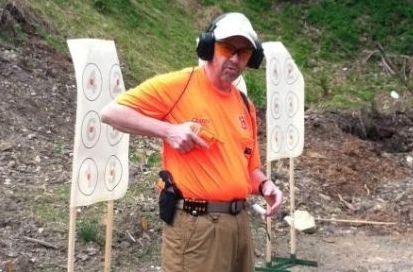
Have an inert gun to do this, where it’s appropriate. If it’s livefire, I use a live gun. If I’m demonstrating gunhandling or tactics, the inert gun comes out. I have both of them on me when I’m teaching.
Most importantly, don’t get complacent about anything. Your skills, safety, communication, etc. need to be at the forefront of your mind whenever you’re teaching. Every story we hear about an instructor having a Negligent Discharge or shooting a student in class has complacency as its root. Complacency is a killer, don’t go there.
Structured shooting is a whole new world for most people. Help them understand it in every way you can.
What is the value of training?
Firearms instructors are periodically asked the question “Why should I take training?” The answer often comes in the form of a list of skills that are taught or the reasoning behind using a certain technique. However, these do not address the underlying fundamental reasons for taking firearms training at all.
- You don’t know what you don’t know.
- Much of what you know is wrong.
- It’s good to have some of the answers to the test before taking it.
These issues relate to both technical competency with using a firearm (gun safety and marksmanship) and the ability to use the firearm correctly in a personal protection situation (legal and tactical).
You don’t know what you don’t know.
Shooters who only take their gun to an indoor range once a year “to sight it in” generally have a highly ‘cocooned’ knowledge of firearms. They know how to operate a firearm in a very restricted set of conditions. As soon as they leave that set of conditions, the stage is set for bad things to happen. Although ‘bad things’ can include unintentional and negligent gunshot wounds, it doesn’t have to be anything that newsworthy. A fellow NRA Instructor was once asked by a long time shooter why the shooter should take the NRA Basic Pistol course. The Instructor responded “Do you wear safety glasses when you’re cleaning your firearms? You do know, of course, that most cleaning fluids can irritate or even damage your eyes, don’t you?” The longtime shooter decided to take the class, after all.
Much of what you know is wrong.
Training can mitigate the Dunning–Kruger effect, which is rampant among the shooting community.
The Dunning–Kruger effect is a cognitive bias in which unskilled individuals suffer from illusory superiority, mistakenly rating their ability much higher than average. This bias is attributed to a metacognitive inability of the unskilled to recognize their mistakes.
–Wikipedia
Almost every firearms instructor has had numerous students who think they are “good” with a firearm but are not. Among these misinformed shooters are most police officers and, even many SWAT units. Typical longtime gunowners are too. When subjected to a standardized skills evaluation, most of these “good” shooters receive a rude awakening.
We’re the best shooters in our department, by far. That’s why we’re the firearms instructors. Then we come here and find out that we suck.
— A police officer attending the elite Rogers Shooting School
Many of these skills evaluations are not even particularly difficult. In one class I taught, the test was to shoot, starting from a ready position, five shots into a 12 inch circle at seven yards in 15 seconds four times in a row. Only one student out of ten was able to do it. And none of those shooters were beginners; most of them were longtime shooters. This test is the baseline level of the NRA Defensive Pistol I Marksmanship Qualification Program.
More advanced, yet still not terribly difficult, competency standards are beyond the ability of 99 percent of self trained shooters, in my experience., For example, the ability to shoot five shots into a five inch circle in five seconds at five yards five times in a row, a drill I call 5^5.
When a friendly competition was held on a local gun forum for the 5^5 drill, no one was able to do it. Several dozen people thought this test would be easy but even after multiple, in some cases, attempts they found out otherwise.
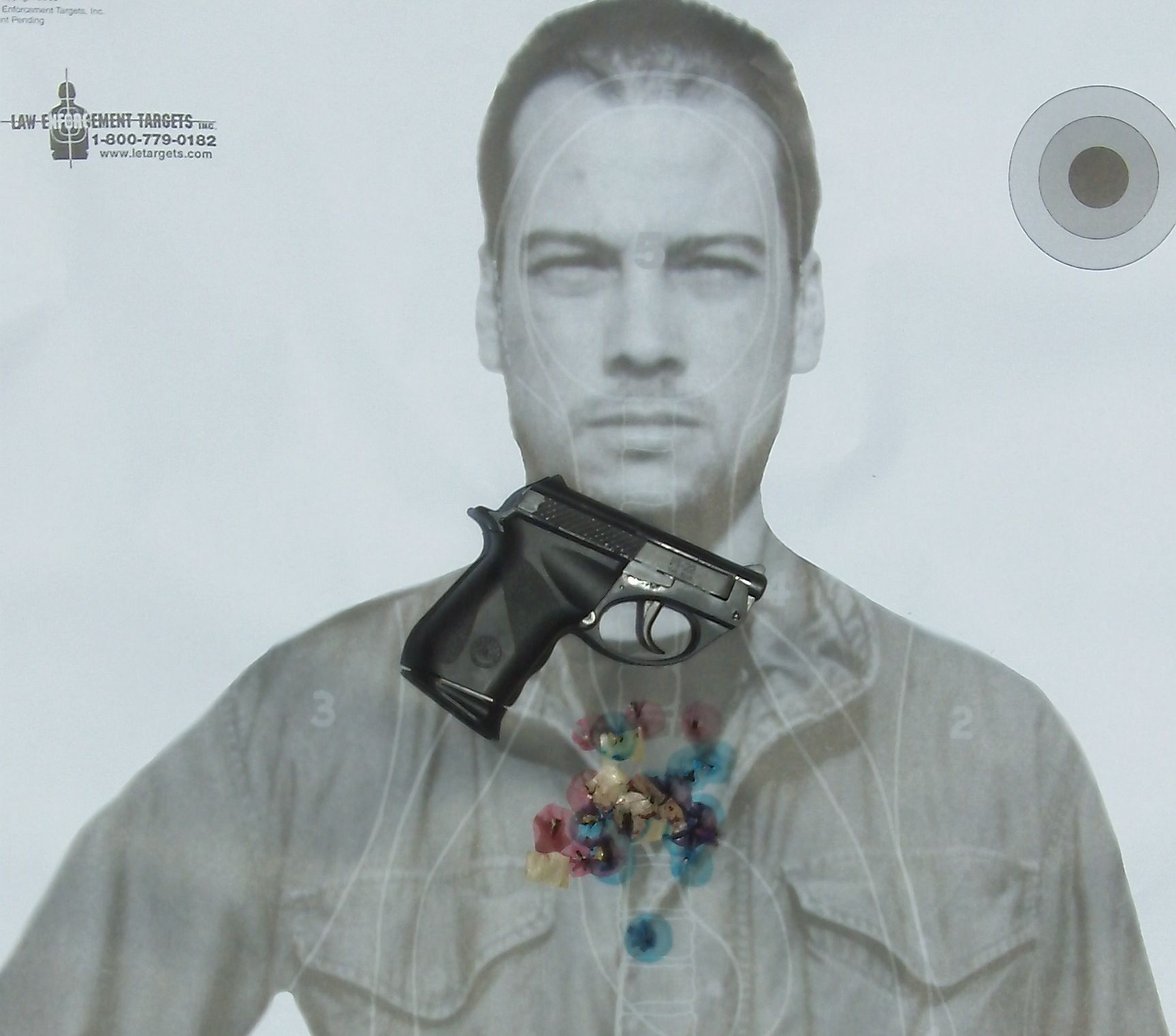
Every round that doesn’t hit is heading straight for a busload of nuns and orphans being followed by a limousine full of personal injury lawyers on a conference call with the District Attorney. At least, that’s the assumption I make and teach. It’s the reason I make my students account for every round they fire in my classes. And I point out the misses as seen in the cover photo of my blog.
It’s good to have some of the answers to the test before taking it.
Any decent class on the legalities of using deadly force will counsel students about things to do and not to do. An example of things not to do would include chasing a fleeing intruder down an alley and shooting at him while he is running away. In that particular incident, the shooter was lucky to only receive 60 days in jail.
The most significant value of training is that it places someone else, the instructor, in control of the flow of events, either physically or mentally. A criminal encounter will not be initiated in the time sequence desired by the would-be victim, which would be NONE. Nor will the skills required to solve the incident be dictated by the defender. However, by definition, self trained individuals control the flow of their actions when they practice, assuming they practice. This is exactly the opposite of criminal encounters. That’s not how it happens in real life. Good instruction will provoke thinking and questions beyond the student’s own expectations and experience. This helps prepare students to make decisions that can and will affect them for the rest of their lives, either positively or negatively.
The conscious mind does not function particularly well under stress. It tends to revert to subconscious background information and patterns, some of which are primeval. Many of these patterns are counterproductive in personal protection situations and require re-programming. Training helps replace them with background knowledge and patterns that are appropriate. Having appropriate knowledge helps avoid negative outcomes.
You don’t fire guns at people’s houses,” [Judge] Ludy said. “You kept saying you really didn’t know what was going on. If that’s the truth, why in the world would you fire a gun? … It really doesn’t matter if it was (at) Mr. Bailey or the mayor of Dunkirk. You just can’t do that.
— Judge Max Ludy Jr.
Shockingly, some people thought this case should not have come to trial. I know I wouldn’t have been too happy had I been the homeowner down the alley who had bullets launched in my direction. “Judge Max Ludy said he found McLaughlin’s firing of a gunshot in the direction of a neighbor’s home especially reprehensible.”
Instructors, as a group, are constantly looking for examples of situations and incidents that went both right and wrong. And other students in the class ask questions about situations that concern them. Inevitably these discussions become class material, either formally or as side conversations. Because training is our vocation, we tend to analyze those incidents in greater detail than does the average gunowner. Our analysis may not necessarily be what the student wants to hear, or even correct, but relating the analysis provides food for thought that merely reading about an incident in the news will not.
The value of training is to make you think and perform outside of the cocoon that most gunowners are in, the same way real life frequently does. It’s not so much that we instructors have all the answers, because we don’t. However, most of us have a good idea of the questions to ask and that’s a strong start.
Shooting yourself by accident
I’m not so sure about the empirical reality of the Farnham [sic] idea: “The person most likely to shoot you is YOU. Why? Because you’re always there.” It just seems incorrect to say, so I am wondering what the broader idea he is conveying is supposed to be.
Since John’s statement generated some incredulity, I will elaborate on it. His comment referred to the often atrocious gunhandling he sees, not people committing suicide. Improper and dangerous gunhandling regularly results in gunowners turning themselves into casualties, although not necessarily fatalities.
The reason I included John’s quote began with a statement he made in the first DTI class I took. The statement was “Eighty percent of police officers who are shot shoot themselves.” Once again, he was not referring to suicide but rather negligent shootings where the officer injured himself or herself. Whether that is still true, I don’t know. I do know that holster manufacturers are sued numerous times each year, unsuccessfully, by police officers who shoot themselves in the process of drawing or holstering. However, given the multiplicity of reports I have about private citizens who accidentally shoot themselves, I wouldn’t be surprised. It happens a lot more often than we like to think. The two casualties I have had on ranges I have been running were self-inflicted non-fatal wounds. One was a highly trained and experienced police officer who had a momentary lapse of concentration and technique.
Here are a few recent examples:
Man shoots himself in hand while driving in Portsmouth
Utah teacher accidentally shoots self in leg at school
Woman Accidentally Shoots Herself While Scaring off Intruder
This is an excerpt from a detailed incident report by the LAPD Board of Police Commissioners.
Incident Summary
Officer A was off-duty and inside his residence. Officer A was seated alone in the living room of the residence cleaning and putting tactical lights on his personally owned handguns. Officer A indicated that he had completed cleaning his .40 caliber Springfield Arms semi-automatic pistol and during this process he had inadvertently seated a partially loaded magazine and released the pistol slide that chambered a round. Officer A mistakenly believed the weapon was not loaded, so he pulled the trigger and caused the weapon to discharge.
Officer A received a through and through bullet wound to his left hand just below the little finger. The bullet traveled through Officer A’s hand, then through the back of a couch [the interior decorator in me thinks it was a sofa and not a couch], and the living room wall adjacent to the couch, entering the garage and striking the metal back of a clothes dryer before falling to the garage floor.
Officer A was treated and released from the hospital the day of the shooting.
The BOPC found that Officer A’s use of force was negligent, requiring Administrative Disapproval.
Unfortunately, some incidents prove fatal. Gunshot wounds to the upper leg can sever the femoral artery, resulting in rapid death. RIP Sgt. Davis, who was an experienced officer with 8 years of service, including on SWAT.
This video of Tex Grebner shooting himself contains explicit language. I give him credit for taking responsibility and showing how easily this can happen.
There is an image I see used on Internet websites that makes me cringe whenever I look at it.
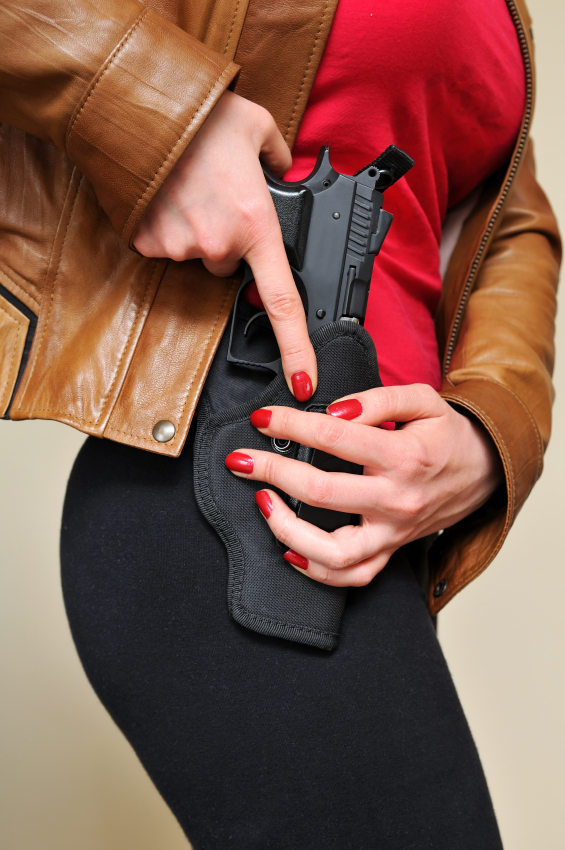
That’s a good way to shoot yourself in the support hand. The number of beginners I see doing this at IDPA matches is legion. I warn them immediately to stop doing that. If your holster doesn’t allow you to draw from it with one hand, then you need to stop using it immediately and get a new holster.
If IDPA and USPSA Production Class do nothing else other than to train people to draw their gun without putting their support hand on the holster, that’s a great contribution to the shooting community. For those who say IDPA isn’t training, I would counter that it’s excellent training in safe gunhandling. There’s nothing like getting disqualified for a safety violation to make the point that someone’s gunhandling needs work.
So the point of John’s Master Lesson is twofold:
- Proper gunhandling has to be at the forefront of our minds anytime we handle a firearm. Firearms are mechanical devices; they do no more and no less than we make them do. Consequently, they are relentlessly unforgiving of carelessness and/or stupidity.
- Pointing your weapon at yourself can have serious consequences. Some holsters force us to point our weapons at ourselves. But placing your hand in front of the muzzle when the pistol is out of the holster is a prescription for an unhappy outcome. One of my personal peeves is the devices that shotguns shooters put on their shoes to rest the muzzle on. I have some really nasty pictures of feet with holes from shotguns in them. Those people are unlikely to ever walk right again. Similarly, taking a high performance anti-personnel bullet in the hand at point blank range is unlikely to enhance your ability to play the piano.
Competition, Practice, Training, and Testing
Driven by hunger, a fox tried to reach some grapes hanging high on the vine but was unable to, although he leaped with all his strength. As he went away, the fox remarked ‘Oh, you aren’t even ripe yet! I don’t need any sour grapes.’ People who speak disparagingly of things that they cannot attain would do well to apply this story to themselves.
–Aesop’s Fables, The Fox and the Grapes,
Periodically, I see comments in the tactical/concealed carry community downplaying the value of competition for someone interested in personal protection. The commentary usually revolves around “the stress isn’t the same as a two way range” or “competition isn’t realistic; the targets don’t move, you don’t move” or some other blah, blah, blah. Oftentimes, the person making the statement is from the ‘tactical training’ side of the house.
In my role as the Georgia/Alabama Area coordinator for IDPA, I was recently reviewing some tweaked stages for the upcoming 2014 GADPA Georgia State Match Championship. As I was doing so, I was struck by the complexity and marksmanship challenges presented in the match. Some of the aspects of the Championship include:
- Moving targets
- Shooting on the move
- Shooting Strong Hand Only with holding something with the Support Hand
- Shooting from inside and around vehicles
- Head shots at distance
- Steel targets with a concealed hit zone that have to be knocked down to count
- Engaging targets while moving through a structure
Those tasks have to be accomplished with a limited supply of ammunition, requiring a minimum hit rate of about 60%, just to finish. To be competitive at all, the hit rate on a torso sized target (-0/-1) better be 100% or you’re out of luck. Rapid reloading is an integral part of each stage, requiring a high degree of weapons manipulation skills.
In short, it’s a very demanding test of one’s ability to effectively manipulate a handgun. Hitting the target with a high degree of regularity, while being confronted by awkward shooting positions and scenarios is an integral part of it.
I think of Preparation for Personal Protection as having three components; Training, Practice, and Testing. Training is something you get from someone else. The other person or group structures your experience, almost always outside your comfort zone. Practice is something you do on your own, hopefully with some kind of structure, based on training or re-creation of actual incidents. Then there’s the nasty little question: “Where is my skill level at?” Testing is the only way that question can be answered. In his book POLICE PISTOLCRAFT, Mike Conti mentions Police Officers who are so intimidated by firearms qualification that they become physically ill, simply from the thought of having to do it. That’s a good example of how daunting the testing process can be. Those of us active in the competition world often look at police qualification courses in a bemused way because they are so simple compared to the tests we are used to.
Bill Rogers once said to me “You and I are from the last generation that is comfortable being tested.” I’m not sure if that’s true, but it is quite obvious to me that there is a great deal of cognitive dissonance and ego defense that goes on when discussions about competition v. ‘training’ start. The next time you hear someone disparaging competition, keep The Fox and The Grapes fable in mind. And for those who make negative statements about competition, I invite you to come out and test yourself and see what it’s like. Firearms competition has evolved a great deal since the original Columbia Conference. One of the most ridiculous statements I have ever heard is “I never saw a timer in a gunfight.” It was there every time; it’s called your lifeclock and it’s running all the time, at least until someone stops it.
Wargaming v. brainstorming (Part II)
Thinking ‘I’ll solve it when I get there’ has gotten a lot of people killed.
My friend and I had a serious disagreement over his tactics. “The cops, Gunsite grads and others, who’ve contacted me over it agreed with what I did.” Contrary to the feedback my friend received, the comments I received were universally negative toward his post-escape actions.
This then leads to a further issue involving his friend, who was in the car with him. What do you do when someone else makes a tactical decision that involves you? I frequently mention that anytime we are with another person, the complexity of decision making goes up seriously.
You, as a passenger or bystander, can be put in a situation by someone else quite easily. Sometimes, it is a situation with possibly severe negative outcomes. Many times in ten years of Force on Force exercises, I saw how easy it is to get dragged into situations and Courses of Action not of your choosing. Not to mention the many times I have personally gotten sucked into situations that I later thought “Wow, I’m glad I got out of that one in one piece.” Other people can get you killed, without asking your permission.
Let’s examine some of the possible options. Even when we are with friends and family, our options remain. Some of them are Flight, Withdraw, Fight, Submit, and Negotiate. We are conscious beings and capable of making our own decisions. Just because someone else makes a decision to place themselves in jeopardy, doesn’t mean we have to go along with it. Nor does it mean that even if we choose to participate we necessarily have to do it in a way that entails maximum risk.
Let’s examine a case from the LAPD files as an example.
Officer Involved Shooting 030-05.
Officer A was watching television when he heard his wife shout that someone was out front. Officer A’s wife also believed she told her husband the people outside were vandalizing the family vehicle.
Officer A, with his pistol held alongside his leg, moved across the front lawn of his residence to obtain a view of the individuals [he suspected of vandalizing his car] in the street. Unknown to Officer A, his wife had followed him from the residence to the curb of the street.
Two things occurred here. 1) Officer A elected to go outside to Confront the vandals. It is unknown whether this was habit as a Police Officer [LAPD discourages its Officers from taking enforcement action off-duty unless life is at risk] or because he felt compelled by the presence of his family. 2) His wife followed in into the Danger Zone, perhaps due to family bonding aspects or because she felt it was appropriate for her to confront the vandals herself.
Officer A directed his wife to return to the residence and to call the police.
Once inside the residence, Officer A’s wife instructed another nephew to call 911. She then returned to the street with her husband [.]
The wife continued to be sucked in the dynamic of the situation, perhaps because of her husband’s presence outside. If he had remained inside and called the police himself, it is less likely she would have gone outside, especially the second time.
Eventually, a scuffle between the vandal and Officer A’s wife ensued and Officer A separated them. The vandal then approached with an ambiguous weapon and Officer A fired a warning shot into the ground. This resulted in the vandal fleeing.
Here’s what the Board of Police Commissioners ruled.
Findings
- Tactics
The BOPC found Officer A’s tactics deficient warranting administrative disapproval.
Basis for Findings
- Tactics
…Officer A elected to confront the subjects… The BOPC observed that Officer A’s tactical decisions left him with few tactical options and placed him at a tactical disadvantage… The BOPC would have preferred that Officer A had remained inside his residence, stayed with his family, [and] personally notified the local law enforcement agency … The BOPC was also concerned that when Officer A exited his residence, his wife accompanied him outside.
The BOPC determined that Officer A’s tactics were seriously deficient warranting administrative disapproval.
The evidence later disclosed that the vandal was ‘armed’ with a dinner fork. While Officer A received only ‘administrative disapproval’ for firing the warning shot, I have little doubt that an Armed Citizen in the same circumstances would have been charged with Aggravated Assault.
Let’s now return to the brainstorming v. wargaming issue. Brainstorming by Officer A gave a rudimentary Course of Action of going outside and Confronting the vandal. I’m not sure that any brainstorming by his wife was involved, other than to accompany him. Wargaming might have resulted considering alternate Courses of Action for either or both of them. He might have elected to Remain In Place and call the police. Even if he went out to Confront, she might have elected to RIP. Even during the Confrontation, after considering all her options, she might have decided to RIP after she had returned to the house, instead of re-inserting herself into the situation.
If my friend’s friend had done some wargaming, he might have considered, and perhaps chosen, some different options. It would be presumptuous of me to say what he was thinking when he chose to join the Pursuit. However, his options were: Pursue, Submit, Withdraw, Flight, and ultimately Fight using deadly force. If he agreed with following the criminals, then the option he chose was Pursue. Fortunately, the situation did not escalate to the Fight option but this has to be considered as a consequence of the Pursuit. If he did not agree with the decision to Pursue, then he chose the Submit option, only he was submitting to my friend’s choice. ‘To take no action is to take an action,’ as the saying goes.
He could have said “I’m not going with you over to their vehicle. Let me out of the car.” That would be the Withdraw option. If the car got into motion before he could say anything, he could have gotten out of the car when it stopped behind the criminals and then he could have moved off. That would be Flight. And if the criminals produced guns, he would have been forced into the Fight using deadly force Course of Action, which at that point is not an option but a necessity. The military term would be Decisively Engaged. Decisive Engagement means we have no other options left, which is never a good position to be in.
All those options have consequences. Withdraw or Flight could have serious repercussions on their friendship. Pursuit, under the wrong set of actions and reactions, could result in an unpleasant encounter with Law Enforcement. Fight using deadly force carries the possible consequence of death, which would affect not only him but all his loved ones and associates.
The choices we make are based on our personal moral values and ties to others. But they should be made with a clear understanding of what our options are and also the possible consequences thereof.
I would have said “I’m not going with you over to their vehicle. Let me out of the car.” But that’s just my choice, you’ll make your own.
Threat management interview on Ballistic Radio
John Johnston of Ballistic Radio and I spoke on the air last weekend about Threat Management.
Threat Management is a topic that is woefully under-represented in most people’s skill set. Going to the range occasionally only helps develop the shooting skills. In contrast, how much time do folks spend on the skills that lead to ‘non-shooting?’ A short list would include, but is not limited to:
Verbalization,
STOP! Don’t come any closer!
Making the shoot/no shoot decision,
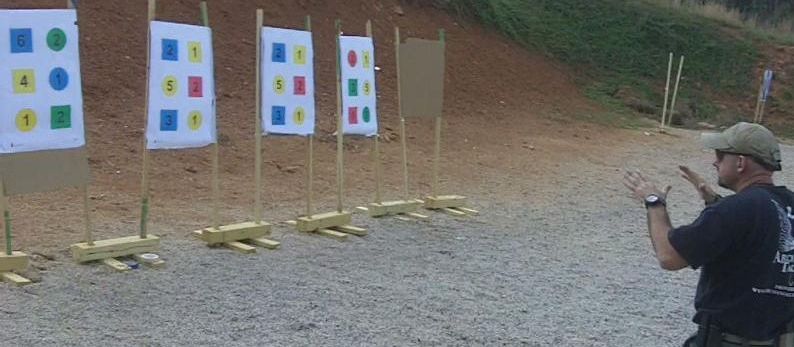
And adversary identification
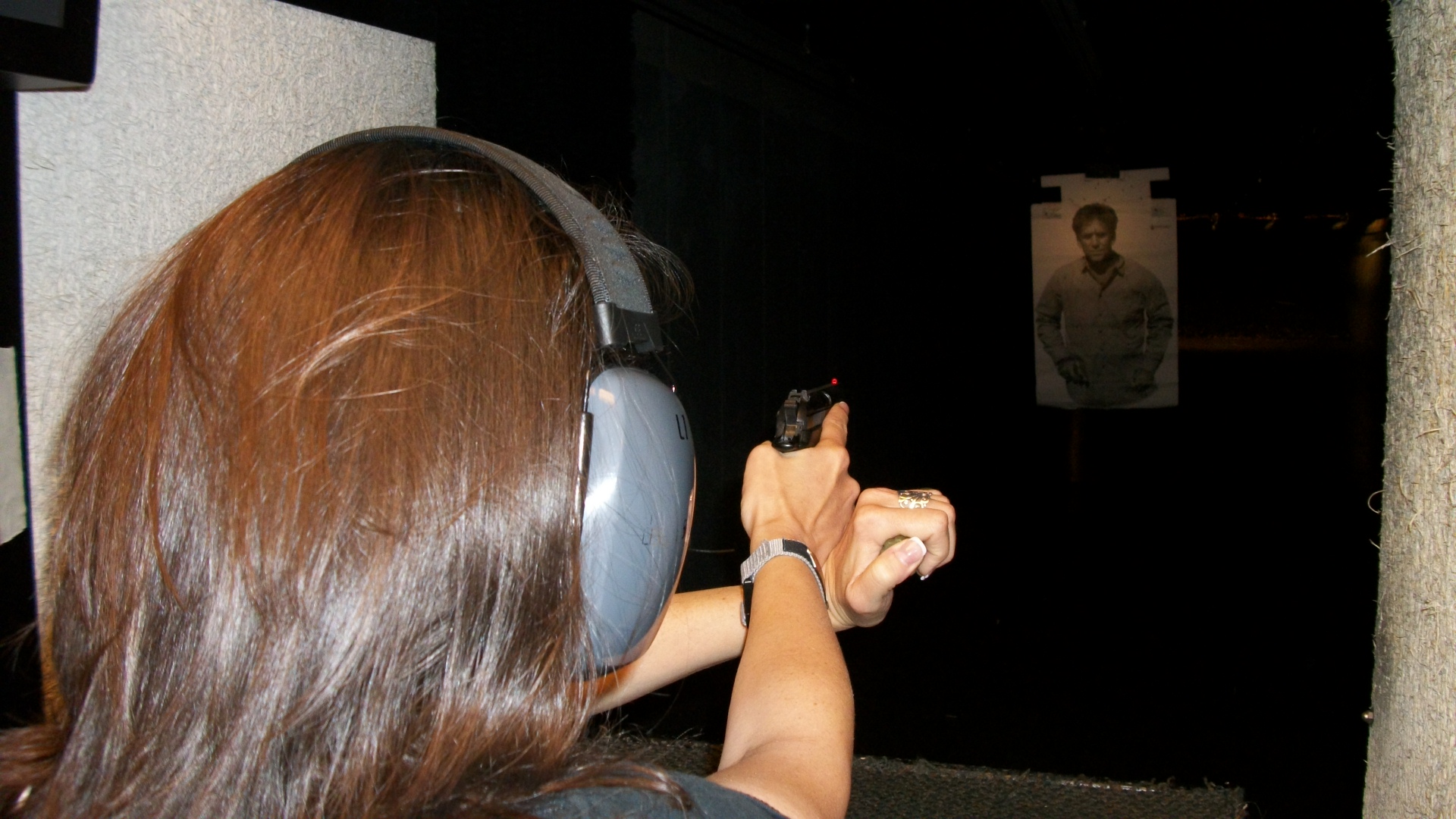
Learning and practicing those skills can help us keep a situation under control before shooting and hopefully prevent a shooting at all.
Here’s the permalink to the interview. http://content.blubrry.com/ballisticradio/140824_BALLISTICS.mp3
Using pepper spray effectively
The second class I attended at Paul-E-Palooza 2 was OC and “less-lethal” for CCW folks given by Lt. Chuck Haggard of the Topeka Police Department. There was a little humor about the class title because to many attendees, ‘OC’ means Open Carry rather than Oleoresin Capsicum. As a result Chuck had to explain he was talking about pepper spray.
Chuck has extensive training and experience with pepper spray. He is a National instructor for the National Law Enforcement Training Center and an Adjunct instructor for Strategos International. He has also been featured as a guest on Ballistic Radio. Chuck stated that he has been sprayed with OC about 60 times, in the training context, and has sprayed somewhere around 1000 people. Most of his sprayees are Police Cadets since his department has a mandatory exposure to OC policy for its officers.
I wanted to take the class because I am a firm believer in carrying what I call ‘Intermediate Force Options.’ Pepper spray is one of those weapons that give us a response to predatory behavior not requiring deadly force. As I state in all my classes “Lacking an intermediate force option while you are armed with a firearm implies that all you are willing to do to protect yourself is kill someone.” That’s not a position most reasonable people would be comfortable in taking, given a little bit of thought.
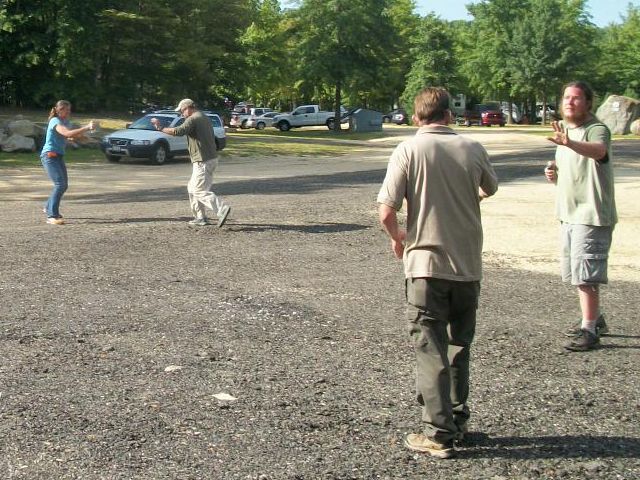
The class began with a lecture including a review of OC history, products, training and best practices. It then moved on to aspects people need to know for effective use, carry and deployment. Once the lecture was completed, the class moved into the open for practical application with inert trainers. No live weapons, ammo or OC were allowed in the practical exercises. Dummy guns and inert pepper spray canisters, which sprayed water only, were furnished. Eye protection was also furnished to the students.
Once again, as at the Rangemaster Tactical Conference, I had the distinct honor and pleasure of beginning the demonstrations by spraying Chuck in the face with an inert container. We demonstrated two scenarios. In the first, Chuck began to encroach on my personal space while I attempted verbal dissuasion. When he continued to advance, I gave him a good dose and then quickly moved away while he simulated remembering a previous appointment. In the second scenario, after I sprayed him, he became irate and threatened me with a training knife. At that point, I transitioned to my dummy gun and gave him a good cowboy “Pow, pow, pow” while maneuvering away.
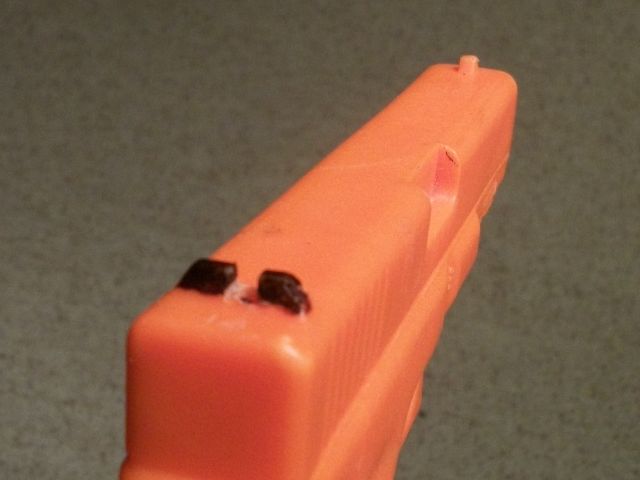
The second scenario was especially interesting for me because I ended up with the pepper spray container in my left hand and my dummy pistol in my right. I shot one handed while maneuvering away from him. I’m not sure how things ended up that way because I started with the can in my right hand. I’m curious whether I transferred the can initially or if I did a ‘Border Shift’ with the can when I started to draw my pistol. I do remember seeing my sights while I was shooting. My dummy pistol has a rear sight notch cut in it because I cannot abide a pistol without sights, even a dummy pistol.
After our demonstrations, the students then split up into two groups. Initially, one group played the predator while the other played the role of the defender. Then the groups switched roles. The students enacted both the non-lethal and lethal scenarios while spraying each other. The class concluded with a critique of spraying and maneuvering.
I don’t practice as much as I would like with my personal OC, a Zombie Spitfire from Sabre. The class gave me a little tuneup, as well as some interesting background on the evolution of pepper spray as an Intermediate Force Option.
Tactical Decision Making (Part II)
There are numerous definitions of Wargaming. Most of them are too elaborate for our use. The definition I am using now is: The process of evaluating your options in light of your situation and the circumstances. Wargaming is a way determining if:
- Your tactics work.
- The tactics employed contribute to your strategic end goal.
- There are significant possible negative outcomes
Wargaming has the following characteristics:
- Evaluates a possible Course of Action against opposing adversary.
- It is an iterative process of action, reaction, and counteraction.
- At a minimum, it should start if you go to Condition Orange. When you’re on the ground, in a pre-contact situation, the wargaming will not be very in depth. But the better your grasp of your end goals, possible options, and negative outcomes, the quicker and simpler it will be.
First, you have to decide what your end goal is. This should be done before you walk out the door of your home each day. Deciding your end goal does not mean saying “I would do this.” That is just one step of the process and not the first.
In my previous post about Tactical Decision Making, I listed some end goals and some possible negative outcomes. Both of those lists, and any additions you may have to them, are worth reviewing from time to time.
It’s extremely important to take into consideration the possible negative outcomes. Failure to consider consequences is a huge gap in most people’s analysis of the situation. Some of the consequences are legal but not all of them are.
Some concrete examples of negative outcomes are:
- Zimmerman shooting – Extensive and costly interaction with legal system ($2.5 million in attorney fees)
- Theodore Wafer shooting, Detroit – Murder conviction
- Jerome Ersland, Oklahoma City pharmacist – murder conviction, life sentence in prison
- Petit murders, Connecticut – Loss of wife and daughters under horrible circumstances
- Joseph Robert Wilcox, Las Vegas – murdered trying to stop an active killer
- Joe Hendrix, Georgia – shot an elderly man with Alzheimer’s – consequences to be discovered in the future
There are three areas you must consider as part of your wargaming. They are your situation, your options, and the circumstances; i.e., your surroundings and the event. We’ll discuss these in the next installment.
Understanding the risk of violent aggression
I couldn’t believe it was happening. It didn’t seem real.
–a common statement by victims of criminal violence
The first presentation I attended at Paul-E-Palooza 2 was The 5 Ws of Risk (of Violent Aggression) given by William Aprill of Aprill Risk Consulting. William is a criminal psychologist who gives the most in-depth look into the criminal mind of anyone in the training industry. Frankly, at times, it’s rather creepy hearing how crazy criminals can be.
His presentation used the classic 5 Ws; Who, What, When, Where, and Why to structure a discussion of how risk can develop and aggregate for the Private Citizen. Using that structure allows us to look at the ways we can put ourselves at risk and, conversely, how we can reduce our risk.
Beginning with Who, he explained the value of “pre-need planning.” Then he explained his concept of a ‘risk envelope.’ This concept describes how varying circumstances we put ourselves in can increase or decrease our risk of being victimized. The levels of aggression displayed by potential Violent Criminal Actors are the flip side of ‘Who.’
What explained the difference between being a target and a victim. The concept of ‘advantaging for dominance’ was also included among various factors.
The key point of When was “not at a time of our choosing.” This unpleasant fact resounds throughout the training community. Sage support for this comes from several sources.
- “When it’s least expected, you’re selected.” –John Farnam
- “You don’t choose when you’ll need your gun; someone else does. And they will typically only inform you at the last moment.” –Tom Givens
- “Initiative Deficit – A criminal will stack the odds in his favor and usually only initiates action when there is a high probability of success.” –SouthNarc
The Where component emphasized that “there are no ‘good’ neighborhoods” where crime does not happen. Criminals prefer to choose the location of ‘highest yield.’ He also discussed the limitations of thinking that by avoiding certain situations or locations we can eliminate our risk.
William’s explanation of Why is where he gets into the inner workings of the criminal mind. He detailed the difference between ‘Instrumental Violence’ and ‘Expressive Violence.’
There were numerous concepts and explanations that he used to expand the 5 Ws explanation.
- Primacy of pre-need decision-making.
- Preparation failures
- Response failures, e.g., “I couldn’t believe it was happening. It didn’t seem real.”
- And my favorite about relying on ‘gut instinct’ “Remember, your gut has shit for brains.”
William and I will be teaching a Decision Shooting Course on September 27, in the New Orleans area. This course will introduce participants to some of the unaddressed realities of violent criminal aggression and effective defensive responses. He will be covering the 5 Ws and their implications for the Armed Citizen. My portion will be about consciously thinking while being armed, which is the exact opposite of ‘muscle memory.’ It consists of: 1) assessing one’s own skills in relation to the situation, 2) weighing the legal justification for using deadly force, and 3) consciously making appropriate decisions in the presence or absence of justification.
For more information and to register, visit the event website.
 tacticalprofessor
You must be logged in to post a comment.