Breaking Contact (Part 3)
#fridayfundamentals
The CCW Safe https://ccwsafe.com/ series about my concept of Breaking Contact continues with Part 3.
https://ccwsafe.com/blog/34532
Part 2 of the series focused on situations where the concealed carrier initiated contact. Part 3 focuses on incidents where the carrier was initially approached and failed to take the opportunity to Break Contact.
I hate platitudes when they’re used in an attempt to simplify a complex topic into a sound bite. “Better to be tried by twelve than carried by six” is one of the most commonly parroted sayings in the firearms community. While many times we are presented with the optometrist’s question, “Which is better, A or B?,” decisions that are made in advance and are going to affect the rest of our lives seldom are binary. I like to think we’re smarter than parrots that have been trained to say one or two things.

As Shawn points out, the decision process has several more options.
When the goal is not necessarily to kill or disable a would-be attacker, a defender is open to other options that carry less legal risk and may produce more positive outcomes.
When breaking contact is the goal, sometimes it is better to disengage rather than attempt to de-escalate.
My personal paradigm is:
- Avoid
- Escape
- Confront
- Resist
Any attempt at de-escalation, even when benign, is a part of Confront. Disengage is part of Escape. Escaping is higher on my priority list than Confronting.
Similarly, in the Gerald Strebendt incident, he unnecessarily moved up the paradigm from Escape to Confront. A confrontation inherently carries more risk associated with it than an escape. As John Hall, former head of the FBI Firearms Training Unit put it:
Any encounter carries with it an element of chance.
My initial post about Breaking Contact (Part I) is located here:
The second is here.
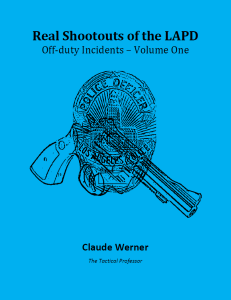
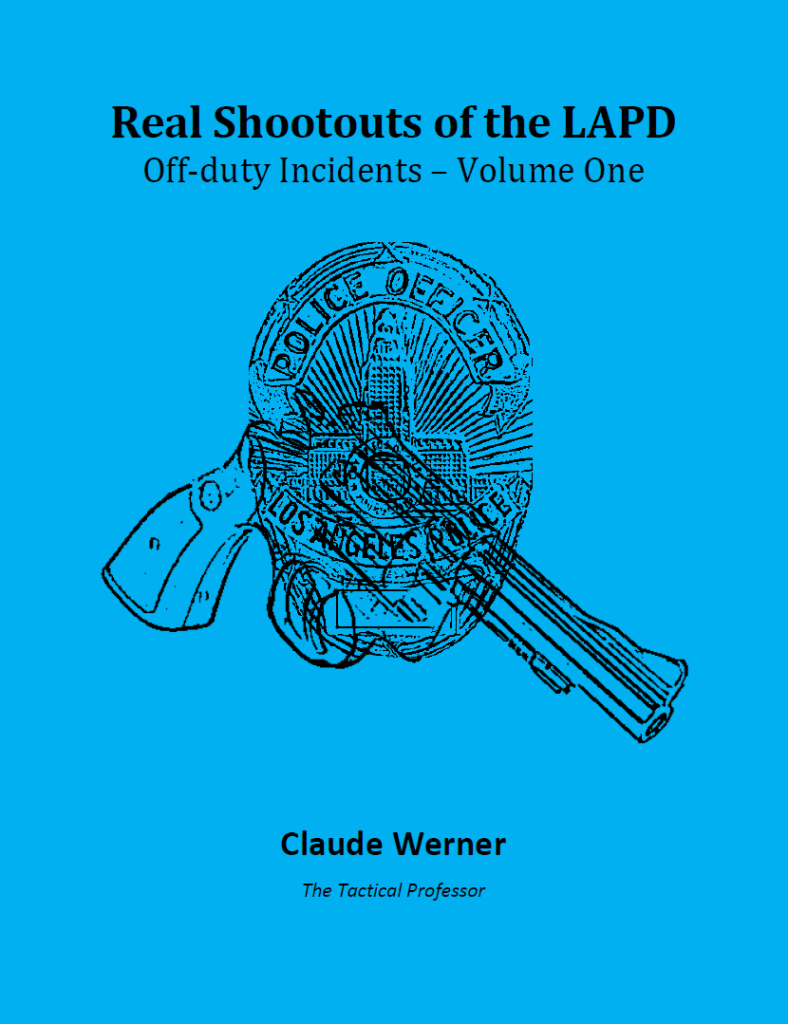
If you would like to purchase my book, click on the image below. The detailed investigations and reports of incidents involving off-duty LAPD officers are very instructional for understanding the differences between Avoiding, Escaping, and Confronting.
Downrange Incident in Rock Hill
This story is about what I call a “downrange incident,” meaning that innocent parties are downrange and in close proximity to the criminal when the shot needs to be fired.
During the initial investigation process, officials learned the 19-year-old allegedly initiated a verbal altercation with others in the apartment. Authorities said the altercation then escalated when the 19-year-old began assaulting those in the apartment and threatened to kill them. The 19-year-old strangled a male who[m] he assaulted, officials said, and was then shot by another person in the apartment in an attempt to stop the attack. Officers said the 19-year-old then turned and started strangling a female in the apartment. He was then shot a second time, then collapsed.
These types of situations happen more often than is commonly thought. Having it happen twice in one incident, such as this one, is rare however. Making a clean close range precision shot should be part of our practice regimen.
From my old YouTube Channel that I can’t access anymore.
Someone thought their car was a holster
Investigators said initial reports indicated the 9-year-old had found a handgun inside the car.
9-year-old believed to have fatally shot 11-year-old boy in car in Pleasant Grove, Dallas police say
My tolerance for this kind of idiocy gets lower and lower with every one of these incidents I read about. Anyone who leaves an unsecured gun in a car is a fool. People who do it can sugar coat their reasons all they want and I’m still going to say:
If you leave an unsecured gun in your car, you’re a fool. If you consider this an acceptable practice, please unsubscribe from this blog; I don’t suffer fools gladly.
When a child gets shot because of an adult’s carelessness about securing a firearm, it’s no different than if the child was killed while the adult was drinking and driving.
Mommy and Daddy, where’s my older brother?
He’s not with us because you killed him when we left you alone in the car with an unsecured loaded gun.
Think about having that conversation any time you feel like leaving your gun in the car.
Breaking Contact (Part I)
CCW Safe is doing a series about our ultimate goal in Personal Protection. I am happy that I have been able to make a contribution to the literature of our Art.
Our goal in personal protection is to force a break in contact [with a criminal attacker]. We want them to go away, or we want to go away. One or the other.
https://ccwsafe.com/blog/breaking-contact-pt-1
This philosophical fundamental is the true meaning of “Get off the X” for the Private Citizen. Sidestepping or whatever method is taught to get off the X isn’t the end or even the important part of the process. Forcing the attacker to withdraw or making our escape is the end objective.
It’s nothing new. Military units have probably been doing this since before the Roman Empire existed. It’s easily overlooked at the moment of an incident, though. For some folks, escaping is a natural response but for others it is counter-intuitive and needs to be practiced.
In some cases, what we’ve learned needs to be unlearned and replaced with a more appropriate tactic. Assaulting through the kill zone of an ambush toward the enemy is a prime example. Infantrymen are taught this from Day 1 of their military training. However, it’s often not a viable response in civilian life. Sadly, the LT Dwain Williams incident https://tacticalprofessor.wordpress.com/2021/02/26/using-cover-effectively/ is an example of how wrong this tactic can go.
As Shawn points out in the Breaking Contact article https://ccwsafe.com/blog/breaking-contact-pt-1, POlice officers are especially vulnerable to falling prey to the subconscious instinct to chase when they are off-duty. Several incidents in Real Shootouts of the LAPD https://realshootoutsofthelapd.com demonstrate this. However, private citizens are vulnerable too and he cites several cases where this occurred.
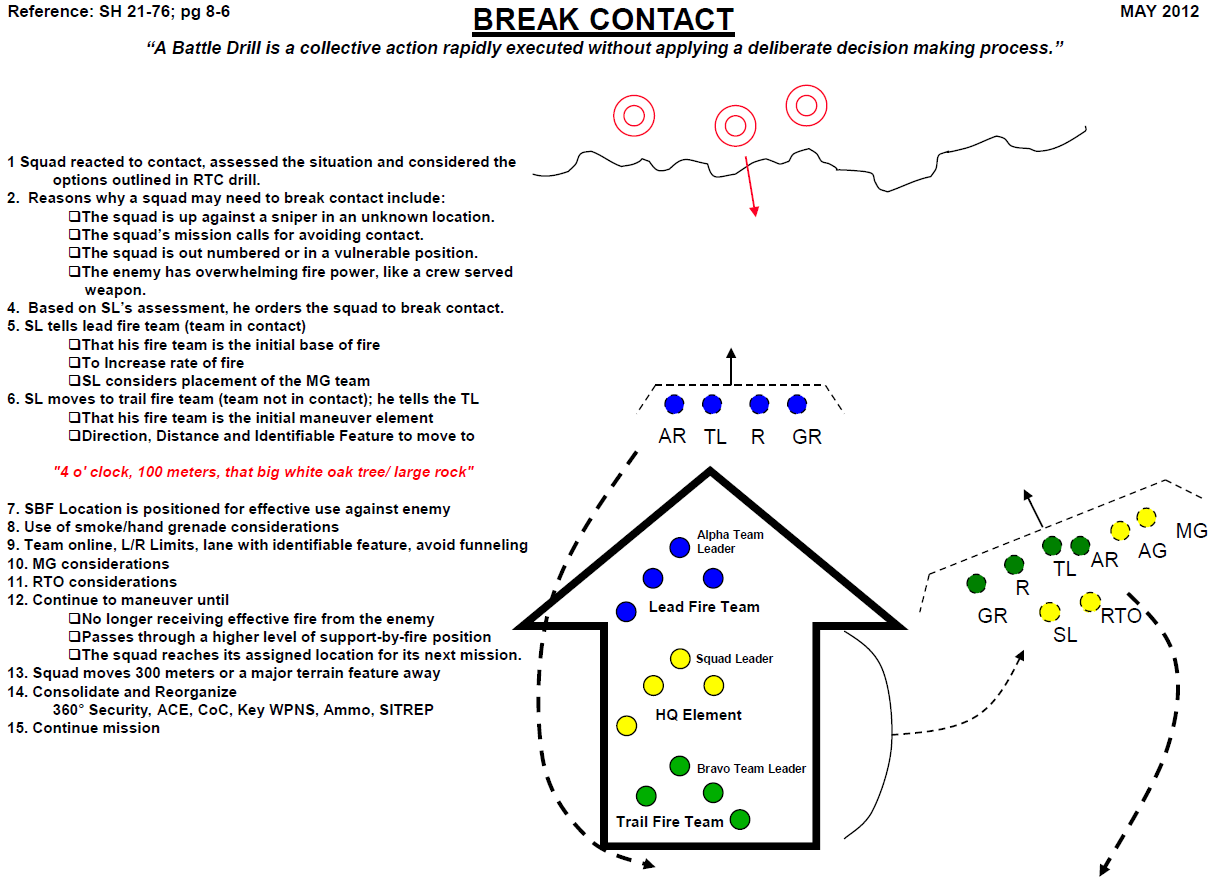
Practicing, using an inert replica of your tool, a simple Battle Drill of Breaking Contact with an attacker is worth actually doing rather than just thinking about. We learn physical skills through repetition.
If you would like to purchase Real Shootouts of the LAPD, click on the image below.
The Importance of the First Shot
#fridayfundamentals
Some principles are just as fundamental as is technique. One of the unintentional themes of the 2021 Tactical Conference was the importance of the first shot. One class even had that as its title. Several other instructors touched on it as part of their classes and presentations.
Rolf Penzel and Mike Treat titled their class Making the First Shot Count.
John Murphy made the comment “It’s not a ‘one shot drill,’ it’s a ‘first shot drill’” in his class.
During his presentation Secrets of Highly Successful Gunfighters, Darryl Bolke stated “training efficiency means using the sights.”
Chuck Haggard used the term “Target Picture” to illustrate the concept of placing the sight picture on the part of the target we want to hit initially.
In his AIWB Skills class, John Daub instructed his clients to “think about where you want the muzzle to end up” at the conclusion of the draw.
Scott Jedlinski’s comment “The original 1911 sights were suggestions” in his class was a humorous illustration of why point shooting was so common in days gone by. Tom Givens has also written about the dismal quality of factory sights on pistols and revolvers of yesteryear and how that affected technique training of a century ago.
One of trends that is apparent in the Categorical Use of Force Reports by the LAPD is how often one or two shots solve the problem. This is true through the entire database of over 1,000 incidents, not just the off-duty incidents chronicled in my first book about LAPD Shootouts. LAPD’s emphasis on marksmanship and frequent scored qualification is no doubt responsible for this difference from other large departments that have minimal standards.
In a gunfight, the shooter who first scores a hit above the diaphragm of his opponent is the one who seizes the initiative in the incident. Making a good hit with the FIRST SHOT fired is key to seizing the initiative and then retaining it until the incident is over. No one’s performance improves after he gets shot in a vital area.
In terms of operationalizing this principle, the fact that most common autoloaders don’t have a second strike capability during dry practice becomes irrelevant to the fundamental of making a good hit with the first shot. Your dry practice should mostly focus on the first shot anyway.
During live fire, the majority of our practice should be ‘first shot drills.’ Do a little recoil management practice but don’t overestimate its priority relative to the first shot in the real world. As John Farnam put it, “Our desired range product is victory.”
If you would like to purchase my book, click on the image below.
Tactical Conference 2021 Shootoff
The Shootoff at the Tactical Conference saw some great shooters competing on a simple but challenging Course of Fire. It was well worth watching.
Most people, including gunowners, really don’t understand the capabilities of the handgun. The Shootoff is a good demonstration of what can be done when you know how.
If you would like to read about some real shootouts and learn from them, please click the image below to purchase my book.
What is the Tactical Conference?
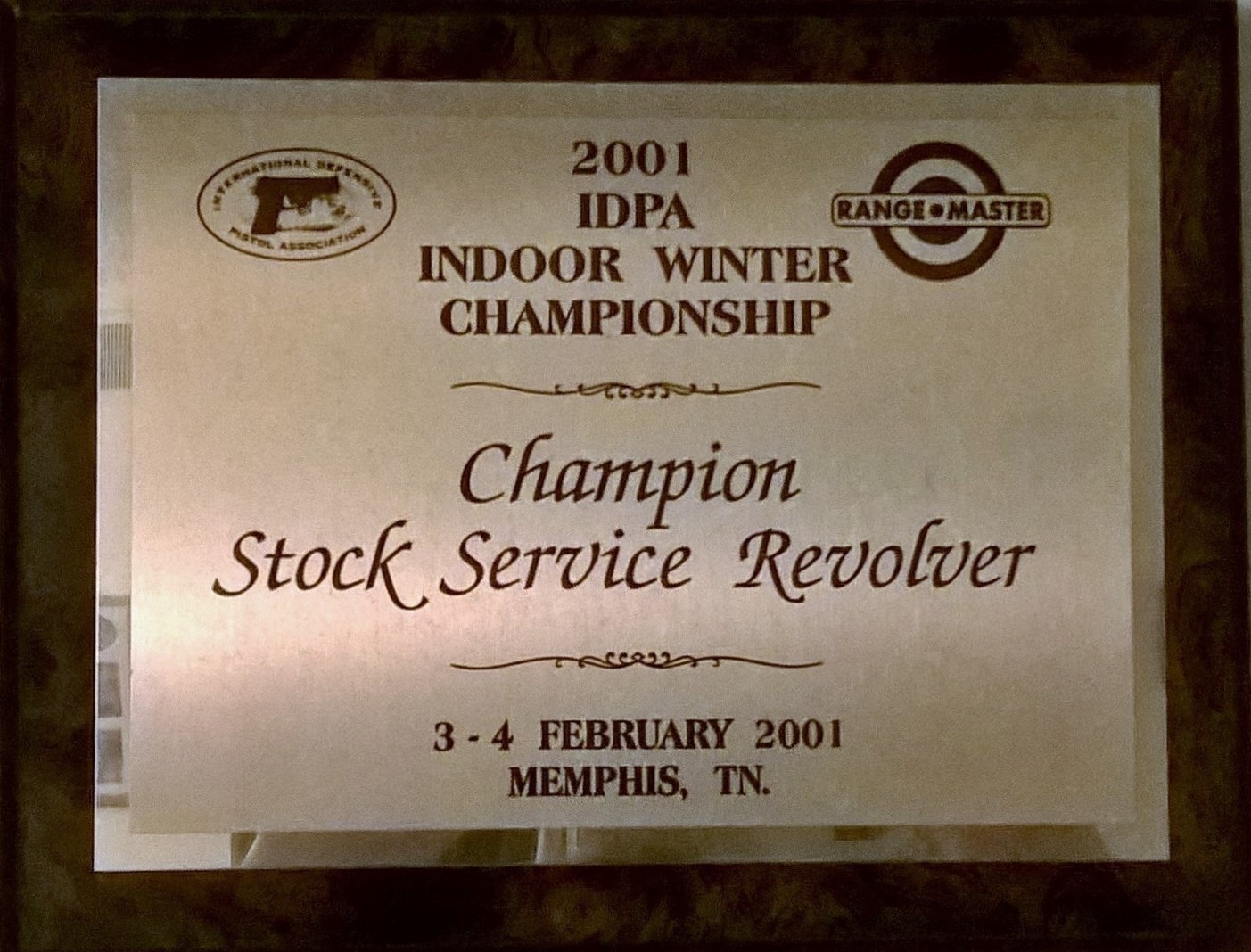
The Rangemaster Tactical Conference started as an International Defensive Pistol Association Major Match in the late 1990s. The IDPA Indoor Winter Championship, as it was then called, was held at Rangemaster’s facility at that time in Memphis, Tennessee. The organizer was Tom Givens, the owner of Rangemaster, a long time pistol competitor, and the leading trainer for Tennessee Concealed Pistol Licenses in Memphis. It was a large enough event to be featured as a segment on Shooting USA.
Typically, a shooting match consists of a few minutes of shooting and hours or days of idle time. However, the Winter Indoor Championship presented a unique opportunity because it was held at an indoor range with classrooms. Tom Givens’ relationship with the training industry meant that he was able to host various trainers who could present concurrent lectures about Self-Defense and Personal Protection. Some of the earliest presenters were well known names such as Massad Ayoob, Marty Hayes, and John Farnam.
The Pistol Match is still an integral part of the Conference. All attendees are invited to shoot the Match to get an idea of the strengths and weaknesses of their skills. Not everyone shoots it, though, because of the wide variety of other training opportunities that are also available during the three days.
Eventually, the demand for the tactical lectures and training necessitated moving to larger venues. The Memphis Police Academy, US Shooting Academy in Tulsa, and DARC in Little Rock have all been sites over the years. The larger venues allowed a wide variety of instructional blocks, including lectures, live fire shooting classes, and unarmed hands-on training. As the Conference grew, trainers held classes such as Managing Post-Shooting Stress and Trauma, Snub Nose Revolver Skills, Tactical Medicine for the Prepared Citizen, and Home Defense Shotgun Skills.The 2021 Conference was held at the excellent Dallas Pistol Club.
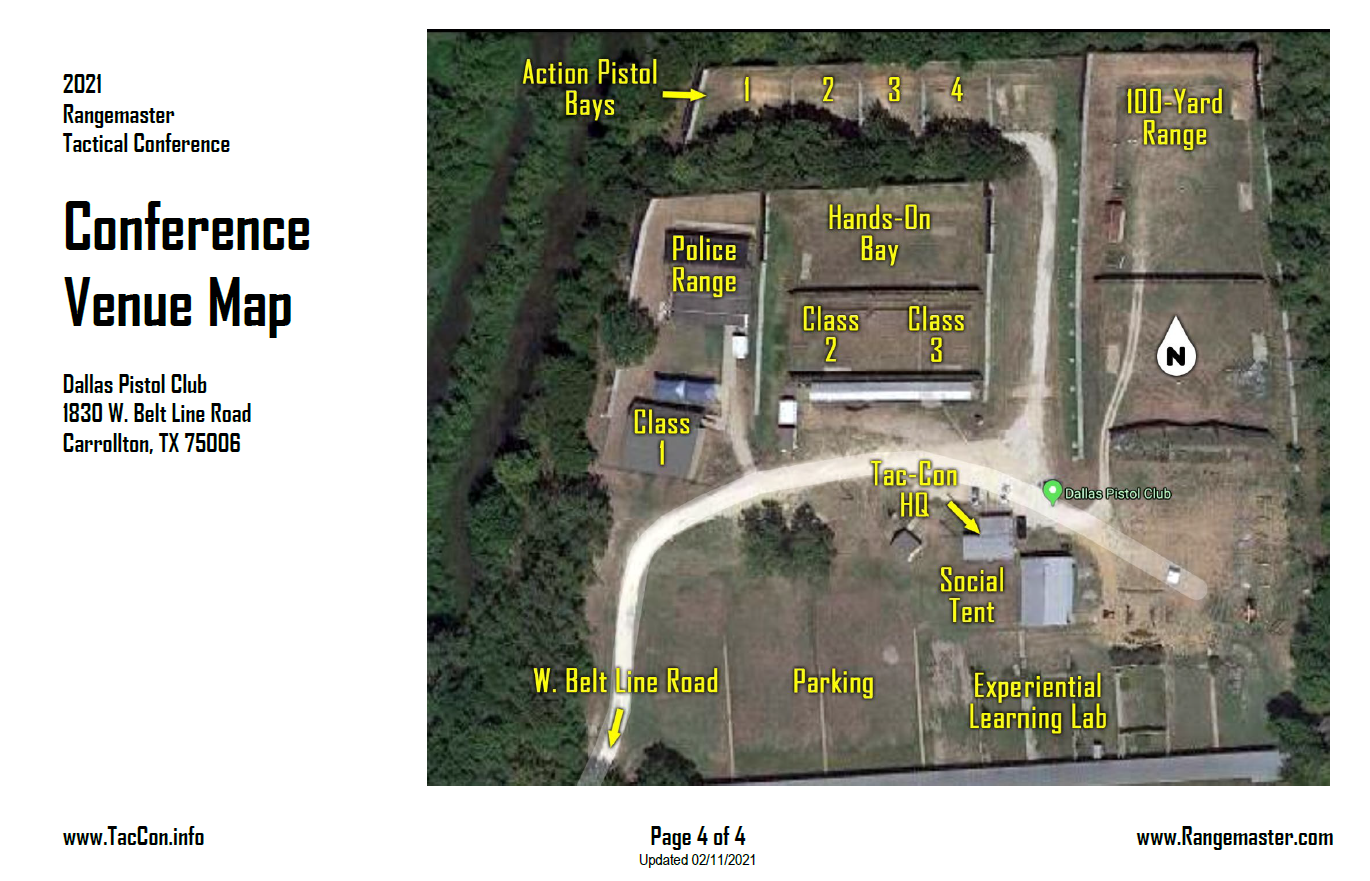
Serious Mistakes Gunowners Make was inspired by lessons learned in an Experiential Learning Laboratory session conducted by Craig Douglas of Shivworks at one year’s Conference. The Experiential Learning Laboratory has become a staple each year as a well-structured Force on Force exercise specifically for Armed Private Citizens.
Starting from just a few lectures at its inception, the Conference has grown to an extravaganza of educational offerings attended by hundreds of people over a period of three days. A vast number of training opportunities are made available for the prepared individual. The 2021 Conference featured 54 different blocks of instruction by dozens of different trainers. Some of the sessions repeated to allow attendees access to them because there is so much going on at the Conference.
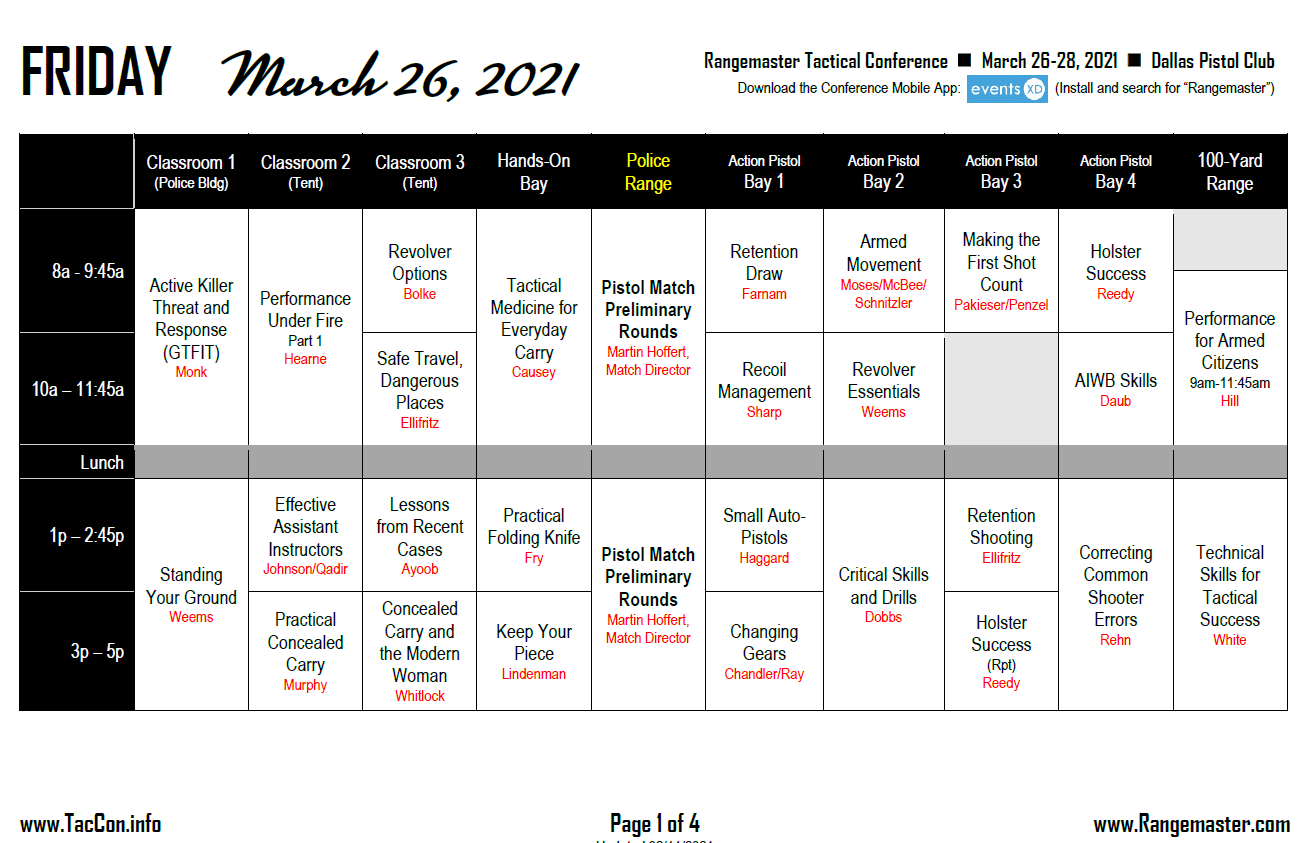
There is no other opportunity like it available for the Armed Citizen who wishes to be prepared to prevent criminal violence against themselves and their families. The Conference is held in late March each year. The 2022 Conference will be held at the Dallas Pistol Club in Dallas, Texas. Registration opens in May and sells out by October every year.
Avoiding Errors
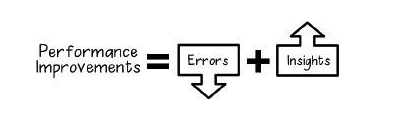
Dr. Gary Klein, one of the world’s foremost authorities on decision-making, created the above model about performance improvement. Since much of my work is helping clients develop physical skills, I add ‘Knowledge and Ability’ to ‘Insights.’ Not enough effort is placed on ‘Avoiding Errors’ in our training despite the fact that Self-defense and Personal Protection are riddled with minefields we have to navigate.
Serious Mistakes Gunowners Make is all about avoiding errors. To gain different perspectives about the topic, I posed a question to several of my colleagues at the 2021 Tactical Conference. “What single piece of advice would you give to new and inexperienced gunowners about ‘avoiding errors’? ” The condition I imposed on their answer was that it couldn’t be a platitude such as ‘Get some/more training’ but had to be something that a gunowner could actually understand and do.
A fight avoided is better than a fight won.
Don’t think you’re better than you are. If you have no metric to measure your performance, you don’t know what you can or can’t do.
Kevin Creighton related his takeaway from John Murphy’s class:
When in doubt, don’t shoot.
Dr. Klein’s little model has stimulated my thinking a great deal lately, so I’m going to be pursuing this line of inquiry more in the near future.
One of my colleagues who has retired from two different POlice agencies made the following comment when he finished reading Real Shootouts of the LAPD.
It’s interesting how even highly trained cops screw up when they get out of their familiar environment.
Thinking ahead about how to Avoid Errors is an important part of our defensive skillset.
Decisions and experience
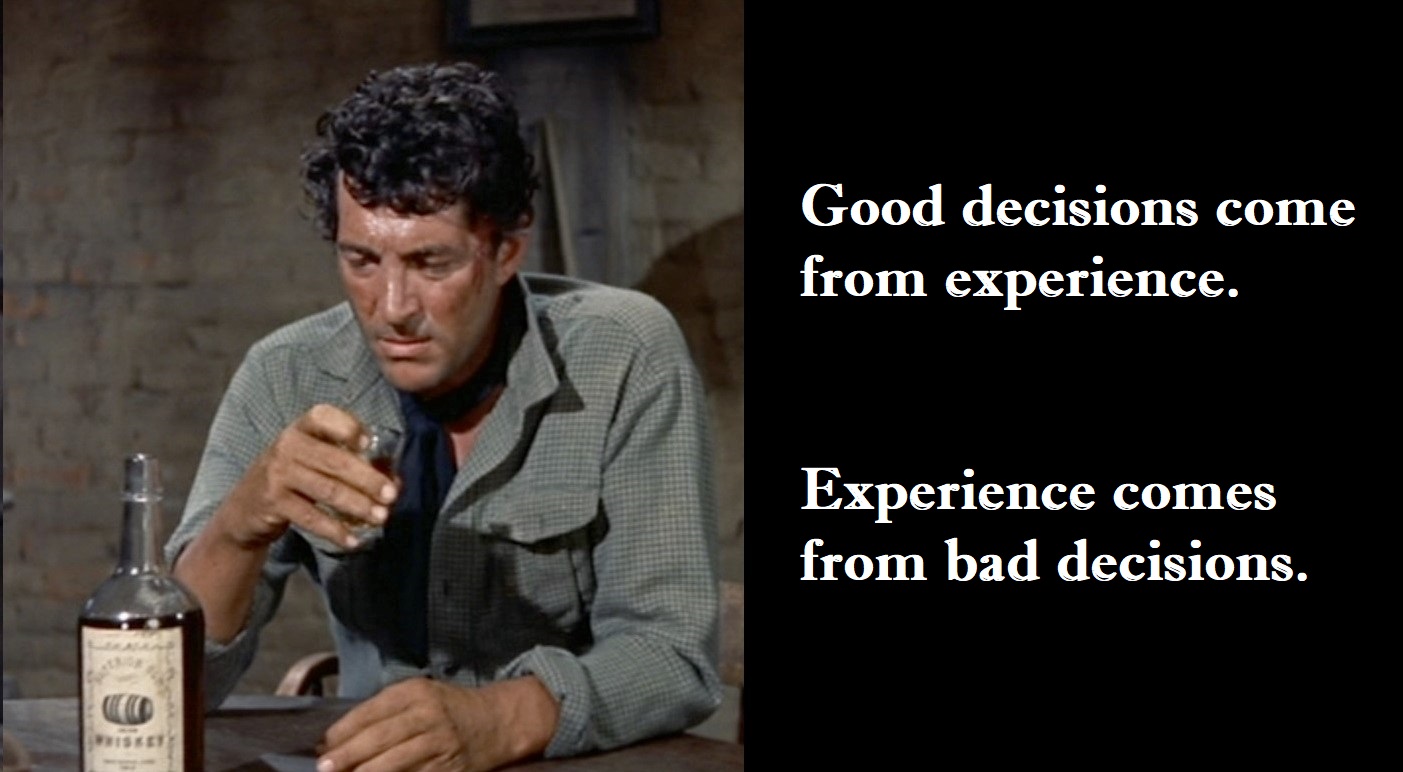
Good decisions come from experience. Experience comes from bad decisions.
Although incorrectly attributed to Will Rogers, the concept of learning from other peoples’ experience rather than our own still has value. We can use the Intelligence community’s technique of ‘walking back the cat’ to de-construct an incident. This allows us to visualize it and learn from the experience of someone else.
The concept of ‘Decision points’ has been emphasized by both Gary Klein, PhD., a noted expert on the decision-making process, and President George W. Bush. Any drama contains not just one, but a sequence of decisions and decision points we can study.
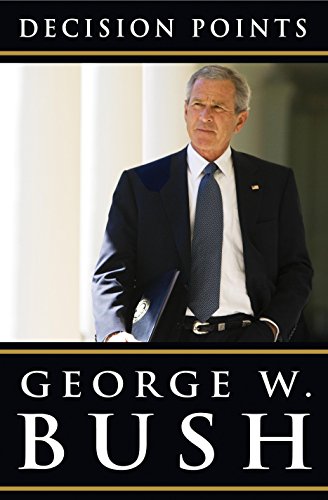
The Don’t Shoot/Shoot decision is the one most commonly focused on the training and firearms communities. However, any Defensive Gun Use, whether shots are fired or not, contains a plethora of decisions and decision points. These occur before, during, and after the shooting or display of a firearm takes place.
A rich source for walking back the cat is the Categorical Use of Force reports by the LAPD Board of Police Commissioners. The following is an analysis of one incident by an off-duty LAPD officer. The analysis will use the phases of an incident as described in my book Real Shootouts of the LAPD. http://realshootoutsofthelapd.com
The incident began as an Aggravated Assault on an LAPD off-duty officer. The full report by the Board of Police Commissioners, including its Findings about Tactics, Drawing and Exhibiting of a Firearm, and Use of Lethal Force can be found here. http://www.lapdonline.org/assets/pdf/011-11_Harbor-OIS.pdf
Incident Summary
The Situation
Officer A, who was off-duty, walked to his vehicle parked in the driveway of a residence. He did not see anyone around at the time. His duty weapon was in the right front pocket of his pants. After driving out of the driveway, he backed his vehicle up and left the lights on. He then walked back to the gate to close it.
- Decision point — Leave home armed with his weapon on his person or at least accessible? Even for POlice officers, this is not as absolute a decision as it would seem, as can be seen in other LAPD off-duty incidents.
- Decision point — Close gate (initial entry barrier to home) or not? As mundane as this decision seems, many people leave their garage doors open when they drive away from their home.
The Buildup
Officer A saw the Subject walking on the sidewalk coming toward him. The Subject then began to run toward Officer A. As the distance to the Subject became closer, Officer A saw the Subject had a handgun in his hand. The Subject pointed the handgun at Officer A.
- Decision point — Maintain awareness of surroundings or focus on telephone or other attention divider?
- Decision point — Maintain surveillance on the suspect or not?
- Decision point — Recognize and accept that an armed attack is imminent or not?
Drawing and Exhibiting
Officer A drew his service pistol from his pocket.
- Decision point — Draw own pistol or not?
The Gunfight
Immediately after drawing his pistol, Officer A fired one round at the Subject.
- Decision point — Don’t Shoot or Shoot?
- Decision point — Fire in place or Shoot on the Move?
- Decision point — Obtain an adequate sight picture to make a hit or fire without visual reference?
The Subject seemed unaffected, so Officer A fired a second round at the Subject.
- Decision point — Don’t Shoot or Shoot a second time?
- Decision point — Fire in place or Shoot on the Move?
- Decision point — Obtain an adequate sight picture to make a hit or fire without visual reference?
After running past Officer’s A car, the subject collapsed on the sidewalk behind a short block wall.
Post Gunfight Actions
Because he could not see him and wanted to wait for responding officers to arrive, Officer A did not approach the Subject.
- Decision point — Approach the suspect or not?
Officer A retreated to cover at the house and called 911.
- Decision point — Hold position or retreat to cover?
- Decision point — Call 9-1-1 or do something else?
While he was calling 911, Officer A observed another male come over to the Subject, squat down, then stand up and adjust his shirt. The second male then walked away.
- Decision point — Interact with/challenge the secondary suspect or not?
Two other males walked to the fallen Subject, leaned over to look at him, and then walked away.
- Decision point — Interact with/challenge the tertiary suspects or not?
There are also implied decision points subsequent in the drama but were not elaborated on by the BOPC.
- Actions on approach of responding officers.
- What statements, if any, should be made to responding officers and then to detectives.
- Whom else to notify about the incident; Significant Other, etc.
- Retain an attorney or call pre-paid legal assistance plan.
At least 21 decisions/decision points are readily discernible in this incident. There are perhaps even more, despite this being a relatively uncomplicated DGU. Also note that of the 21, only six (Don’t Shoot or Shoot [X2]), (Fire in place or Shoot on the Move [X2]), and (Obtain an adequate sight picture to make a hit or fire without visual reference [X2]) can be readily practiced with live fire. Those and another, (Draw own pistol or not) can be practiced dry. The other two-thirds of the decisions are more in the nature of ‘soft skills’ that are best decided upon in advance and then practiced away from the range.
“Best decided upon in advance and practiced away from the range” represents our opportunities during the current ammo shortage. Rather than sit on our hands because ammo has become so precious, we can begin developing and practicing a more complete repertoire of the skills we need for Personal Protection. If you would like to read my analyses of the rest of the incidents described in the book, please subscribe to me on Patreon. Patreon link I will be posting the rest of them there.
CCWSafe Podcast – Serious Mistakes Gunowners Make
The podcast I did with Shawn Vincent, Don West, and Steve Moses of CCWSafe https://ccwsafe.com/ is now available. Here’s the link to the podcast and a transcript. https://ccwsafe.com/blog/34358
For those who have a hard time listening to podcasts, like me, Shawn has provided an excellent transcript that makes the topic very easy to follow.
This is the perspective about the subject that makes it relevant to anyone who owns a gun.
I want to emphasize the fact that they’re actually very rare. There’s 80 million gun owners, and over the past six years I’ve gathered about 2,000 incidents of these Negative Outcomes that occurred. So, actually driving a car is a lot more dangerous, or more likely to cause casualties. But, as my late colleague William April said, ‘It’s not the odds, it’s the stakes.’ Because the nature of the kind of incidents that I describe in the book, in many cases, permanently changes someone’s life. [Almost never for the better.]
To purchase the PDF ebook Click on the cover
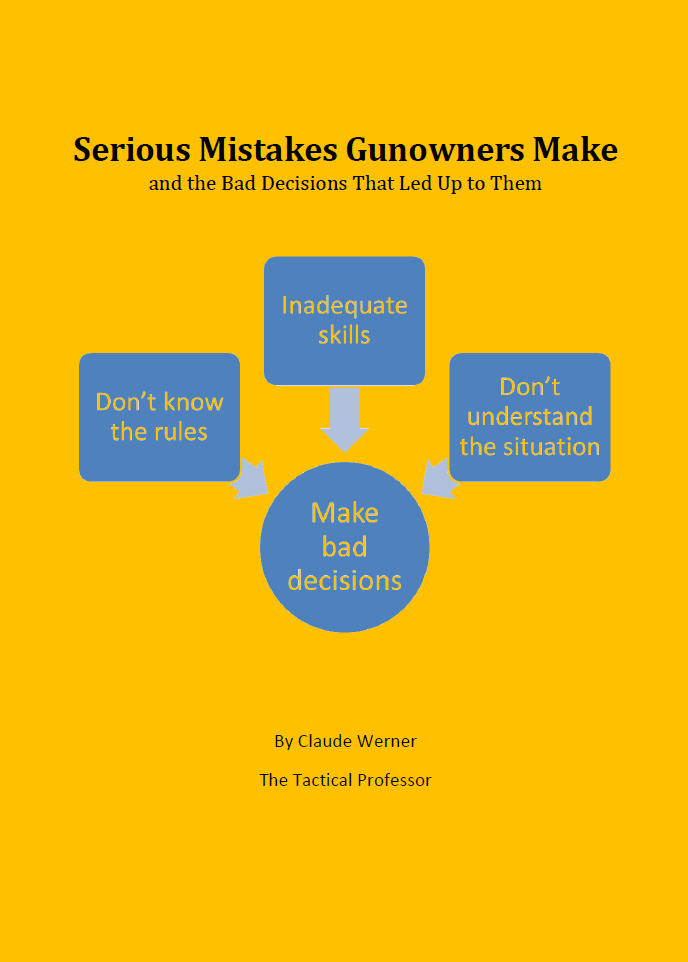
A PDF can easily be uploaded to a Kindle. The instructions are here.
https://tacticalprofessor.wordpress.com/2019/09/02/serious-mistakes-gunowners-make-the-book/


You must be logged in to post a comment.