You are your first responder
Two men were beaten to death and a woman was seriously injured late Thursday [July 30, 2020] during an attack at a home in a gated Windermere community while a 10-year-old boy called authorities while hiding in a bathroom, police said.
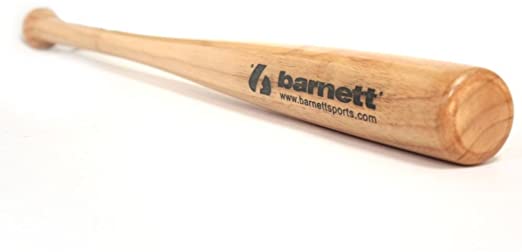
Worthwhile items to note from the article.
- The attacker’s car had been identified as ‘suspicious’ earlier in the evening by the POlice but was not pursued when it sped away, per the Department’s policy.
- It is a gated community.
- The attacker pushed the gate open with his car.
- He was armed with an impact weapon, to wit: a baseball bat.
- The couple confronted him when he tried to steal a vehicle parked at their house.
- After killing the man of the couple and severely injuring the woman, he made entrance to the house and killed another person.
- The first man killed was the grandfather of the boy who hid in a bathroom and called 911.
- The second man killed was the father of the boy who hid in a bathroom and called 911.
- The killer attempted to commit suicide in the house afterward by drinking bleach.
Another version of the story. https://nypost.com/2020/07/31/boy-called-cops-during-home-invasion-that-killed-grandfather-uncle/
A home across the street is listed for sale at $699,000. It’s a ‘nice neighborhood.’ Note also that the crime scene is nearly to the end of the cul-de-sac. It is not the first house in the community the criminal would have encountered.
Initial and cursory analysis
- In every encounter, there is an element of chance
- Going outside your home to investigate a suspected crime is, literally, ‘looking for trouble.’
- If you go ‘looking for trouble,’ you should be prepared, both mentally and physically, in case you find it.
- Your presence will not necessarily deter a criminal.
- Contact and Cover does not apply solely to POlice work.
- Don’t assume that criminals think the same way you do.
If you would be interested in purchasing any of my shooting workbooks for handgun or rifle, they are available from the menu at the top of the page. As the American Insurgency escalates, you may find having a functional knowledge of the weapons you own to be useful.
Private lesson –Training Modules
I had the opportunity to exchange a private lesson for a haircut today. The stylist is an experienced shooter who has taken a number of classes and can run a pistol quite competently. This made the choice of modules for the lesson a little different than might usually be done for a private lesson. Since we were at her home, no live fire was indicated. I used three different learning modules for her lesson.
Image Based Decisional Drills
The first module was using the Image Based Decisional Drills from The Complete Combatant. http://www.thecompletecombatant.com/image-based-decisional-drills.html Only one category of Negative Outcomes relates to marksmanship, the other ten relate to Bad Decisions of one sort of another. IBDD provides a useful method to practice interactive decision-making. Although it was originally developed for live fire purposes, it can easily be done without live fire by using an inert training pistol.
We set up a small training area with a face target.

It took only a few minutes to run through all 25 cards in the deck.

Using IBDD to put context into the manipulation process showed that some supplemental instruction was in order. The supplemental items we covered were:
- Correct grip for pepper spray.
- Trigger manipulation under stress.
- Sequencing of movement, verbal communication, and firing.
- Non-verbal communication techniques for dealing with low life individuals.
- Changing direction quickly (close order drill).
This is an overview of the Image Based Decisional Drill concept, process, and kit.
Using a SIRT pistol is an excellent tool for non-firing sessions with IBDD but even an inexpensive toy gun from WalMart would be an adequate training aid.

NRA Pistol Marksmanship Simulator Training Course
Even with experienced shooters, I am finding value in the NRA Pistol Marksmanship Simulator Training Course. https://www.nrainstructors.org/CatalogInfo.aspx?cid=47
By adjusting the laser dot above the sights of a SIRT pistol, the simulator allows the operator to see the effect of their trigger manipulation and follow-through. The sights on my SIRT have been replaced with real metal sights.

Any NRA Certified Pistol Instructor can conduct the NRA Pistol Marksmanship Simulator Training Course. The Course of Fire is not specified so I use the previous and current versions of the NRA Basics of Pistol Shooting qualification test.
Introduction to Snub Revolver
Finally, we did a quick dry practice introduction to the snub revolver. Since she is an experienced shooter, the introduction focused mostly on the differences between the revolver and an autoloader. The overview consisted of:
- Proper grip for a revolver.
- Trigger finger positioning and manipulation.
- Accessing a downed partner’s weapon from both face up and face down positions.
A great deal can be accomplished in a couple of hours when live fire isn’t required and contextual Learning Objectives are established.
To avoid confusion, I won’t list my books in this post because they’re not free. If you would be interested in purchasing any of my shooting workbooks for handgun or rifle, they are available from the menu at the top of the page. As the American Insurgency escalates, you may find having a functional knowledge of the weapons you own to be useful.
Another ‘Worst Possible Case’ – Interrupting a Murderer
As I have commented before, there is no single ‘Worst Possible Case.’ Several news outlets reported the murder of an entrepreneur and venture capitalist this past Monday (7/13/2020). The murder occurred in his expensive ($2.25 million) high rise condo in New York City. It was a gruesome crime with the apparent intent to ‘disappear’ the victim.
https://nypost.com/2020/07/14/decapitated-dismembered-body-found-in-nyc-apartment/
There are several pertinent points but one that is seldom talked about is our reaction to finding a body. We have no idea what a killer’s timeline is nor even if the killer is still present or nearby.
Another source added it appeared that the killer had been “interrupted.”
A working theory is that because the body parts were still present and the saw still plugged in, the murderer hadn’t finished with the grisly task of dismemberment. Although the victim was attacked and most likely killed early Monday afternoon, his relative (either sister or cousin, the reports conflict) discovered the body on Tuesday afternoon. All things considered, the ‘cleaning up’ may have been going on for over a day.
Probably the best Course of Action upon discovering a body is to RUN the other way as fast as you can and when in a safe place, call the POlice. Secondarily, if you are armed, be prepared to engage the killer without hesitation. If they’ve already killed someone else, they may not think twice about trying to kill you.
Note also the macabre, but most likely unintentional, dark humor of the POlice describing the decapitated victim as “unconscious and unresponsive.”
As is often the case, follow the money to the alleged murderer.
https://www.cnn.com/2020/07/17/us/fahim-saleh-killing/index.html
To avoid any confusion, I won’t list my books in this post because they’re not free. If you would be interested in purchasing any of my shooting workbooks for handgun or rifle, they are available from the menu at the top of the page. As the American Insurgency escalates, you may find having a functional knowledge of the weapons you own to be useful.
Responsibly Armed Radio Podcast
We had a great inaugural episode of Responsibly Armed Radio. Lou Ann Hamblin and I were the guests. Tatiana Whitlock and Judi Wells were the hosts with Special Guest Appearance by Dave Stall.
Our topics were definitions of Use of Force, Critical Decision-Making, Reasonableness, and Next Steps for those new to our Art.
Here is the link to the show: https://responsiblyarmedradio.libsyn.com/responsibly-armed-radio-season-1-episode-1
I wasn’t nearly as serious as the picture looks. 🙂
Tactical Professor books (all PDF)
- Serious Mistakes Gunowners Make http://seriousgunownermistakes.com
- Indoor Range Practice Sessions http://indoorrangepracticesessions.com
- Concealed Carry Skills and Drills http://concealedcarryskillsanddrills.com
- Advanced Pistol Practice http://bit.ly/advancedpistolpractice
- Shooting Your Black Rifle http://shootingyourblackrifle.com
- Package deal of Serious Mistakes, Indoor Sessions, Concealed Carry, and Shooting Your Black Rifle (20% off) https://store.payloadz.com/details/2644448-ebooks-sports-shooting-drills-package.html
Conducting a Defense – Terrain Analysis for the Homeowner
The AR-15 rifle has become popular as a tool for Home Defense. However, there hasn’t been much discussion about how to use rifles to deal with deadly threats outside and yet threatening one’s home. The escalation of Civil Disorder has heightened our awareness of a broader range of necessary home defense. Conceptually, this might be considered FORWARD Home Defense.
One of the first aspects of preparing for such a Forward Defense is to conduct a terrain analysis of the area outside the home. This analysis should consider both the Area of Influence (where a homeowner could actually disrupt an attack) and the Area of Interest (where a homeowner could detect an attacker’s intent outside of the Area of Influence.) We can use the Terrain component of METT-TC as a structure for our terrain analysis. The 1992 edition of Field Manual 7-8 INFANTRY RIFLE PLATOON AND SQUAD https://www13.shu.edu/offices/rotc/upload/FM-7-8.pdf describes the analysis as follows:
(3) Terrain. The leader considers the effect of terrain and weather on enemy and friendly forces using the guidelines below (OCOKA):
(a) Observation and fields of fire. The leader considers ground that allows him observation of the enemy throughout his area of operation. He considers fields of fire in terms of the characteristics of the weapons available to him; for example, maximum effective range, the requirement for grazing fire, and the arming range and time of flight for antiarmor weapons.
(b) Cover and concealment. The leader looks for terrain that will protect him from direct and indirect fires (cover) and from aerial and ground observation (concealment). (Author’s note: Cover and Concealment also applies to what the Enemy might use.)
(c) Obstacles. In the attack, the leader considers the effect of restrictive terrain on his ability to maneuver. In the defense, he considers how he will tie in his obstacles to the terrain to disrupt, turn, fix, or block an enemy force and protect his own forces from enemy assault.
(d) Key terrain. Key terrain is any locality or area whose seizure or retention affords a marked advantage to either combatant. The leader considers key terrain in his selection of objectives, support positions, and routes in the offense, and on the positioning of his unit in the defense.
(e) Avenues of approach. An avenue of approach is an air or ground route of an attacking force of a given size leading to its objective or key terrain in its path. In the offense, the leader identifies the avenue of approach that affords him the greatest protection and places him at the enemy’s most vulnerable spot. In the defense, the leader positions his key weapons along the avenue of approach most likely to be used by the enemy.
(f) Weather. In considering the effects of weather, the leader is most interested in visibility and trafficability.
Some aspects of the terrain analysis may surprise you. For instance, Google Maps can be used to measure distances around your home. You might find that the distance from your front porch to the furthest Avenue of Approach and Point of Likely Cover is 236 feet (79 yards).
Doing a terrain analysis gives you an idea of the area you need to defend and also what tools you might use to defend the approaches to your home.
There will be further explanation on my Patreon page https://www.patreon.com/TacticalProfessor but this is worthwhile food for thought to start.
Tactical Professor books (all PDF)
- Serious Mistakes Gunowners Make http://seriousgunownermistakes.com
- Indoor Range Practice Sessions http://indoorrangepracticesessions.com
- Concealed Carry Skills and Drills http://concealedcarryskillsanddrills.com
- Advanced Pistol Practice http://bit.ly/advancedpistolpractice
- Shooting Your Black Rifle http://shootingyourblackrifle.com
- Package deal of Serious Mistakes, Indoor Sessions, Concealed Carry, and Shoot Yor Rifle (20% off) https://store.payloadz.com/details/2644448-ebooks-sports-shooting-drills-package.html
Mr. Happy/Frowny Face Decisional Drill
For this drill you will need paper plates, a silhouette target, a deck of cards, and a table or platform to put the cards on. The object of this drill is to practice thinking with a gun in hand.
Draw faces on two paper plates. One plate with a happy face (no shoot), one with a frowny face (shoot). Different color markers for each plate, one Red and one Black.
Put the two paper plates on a silhouette.

Place the silhouette at 4 yards
Use only the Ace, Two, and Three cards of all suits from a deck of cards and then shuffle those cards.

Place the cards face down on the table in front of you.
Sequence 1
Turn a card over.
If the card is the color on the frowny face, draw or present the pistol and then shoot the frowny face plate with the number of rounds indicated by the number of the card. I.e., if the card is the 3, then shoot 3 shots. The Ace is one shot.
If the card is the color on the happy face, don’t draw or present, i.e., no shooting.
Pistols having a capacity of less than 12 rounds will require reloading. This is a good opportunity to practice reloading skills under a bit of stress. Pistols with capacities more than 12 rounds can start loaded with less than 12 rounds to gain this additional practice opportunity.
After all 12 cards have been turned over, there should be 12 hits on Mr. Frownyface and NO hits on Mr. Happyface.
This drill can also be done at home using a SIRT pistol, a toy pistol, a water pistol, or some other simulation. The marksmanship might not be measured but the decision-making and thinking skills are the primary purpose of the drill.
The drill has several variations but for most people, this is a good start to work on decision-making.
Tactical Professor books (all PDF)
- Serious Mistakes Gunowners Make http://seriousgunownermistakes.com
- Indoor Range Practice Sessions http://indoorrangepracticesessions.com
- Concealed Carry Skills and Drills http://concealedcarryskillsanddrills.com
- Advanced Pistol Practice http://bit.ly/advancedpistolpractice
- Shooting Your Black Rifle http://shootingyourblackrifle.com
Make Ready speed
Here’s an interesting metric for response time I’ve never seen tested. The question came up because of a Twitter post about two unpleasant people having a confrontation in Philadelphia. The verbal confrontation occurred as a result of a car blocking traffic.
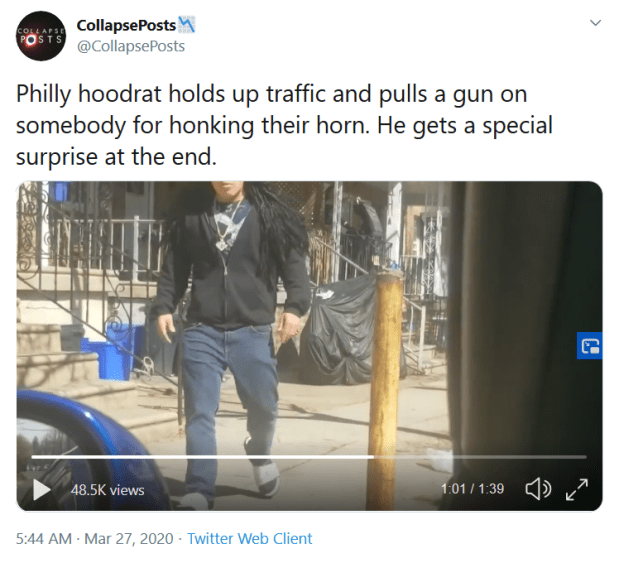
https://twitter.com/CollapsePosts/status/1243473965332541446
Cast of Characters
- Footmobile Personage – Centerline holsterless IWB carry, Browning pattern autoloader in either Condition 2 (hammer uncocked) or, more likely, Condition 3 (hammer down, empty chamber).

- Automobile Personage – Pistol presented in soft IWB holster (Uncle Mikes or Blackhawk) in either chambered or, possibly also, empty chamber carry.

- Automobile Personage’s passenger, who is put in the line of fire as a result of the confrontation.
Possible response time metrics
For the Automobile Personage: if he perceived the Footmobile Personage’s display as an actual deadly threat, how long would it have taken him to get his pistol into action? Within that question, there are numerous different possible start positions; 1) starting with holstered pistol in belt, 2) starting with holstered pistol on seat next to him, or 3) starting with holstered pistol in the console or glove box.
Starting with the holstered pistol in the belt has two variations; 1) holster stays in pants and the draw proceeds normally or 2) the holster comes out of the pants along with the pistol. Then the holster would have to be wiped off the pistol. All three possible starts then have two possible further variations; 1) pistol has a round in chamber, in which case the holster has to be wiped off, necessitating sweeping the Support Hand with the muzzle or 2) the holster has to be wiped off and then the slide cycled to put a round in the chamber.
For the Footmobile Personage: if he perceived the Automobile Personage’s display as an actual deadly threat, how long would it have taken him to get his pistol into action? Start position is with the Primary Hand holding the concealment garment up. The concealment garment is released to draw the pistol. This then has two possible variations; 1) the draw goes as desired with no fouling of the draw by the concealment garment or 2) the concealment garment falls down and fouls the draw, requiring the entire draw sequence to be repeated using the Support Hand to clear the concealment garment. Further variations are; 1) if the pistol is in Condition 2 (hammer down), then the hammer has to be cocked, either with the thumb of the Primary hand or swept to cocked position by the thumb of the Support hand or 2) if the pistol is in Condition 3 (Chamber Empty), then the slide has to be cycled to put a round in the chamber.
For the Automobile Personage’s passenger: how quickly can he exit the Kill Zone if the Footmobile Personage decided to start shooting? There are at least two possible variations; 1) get as low as possible in the car and hope that the car and Automobile Personage absorb any bullets fired by the Footmobile Personage or 2) completely exit the vehicle and take cover outside of it.
Target engagement
From the standpoint of target engagement, the Footmobile Personage is in a much better position to achieve a good firing stance, either for aimed fire or indexed fire (point shooting). The Automobile Personage would probably be forced into an indexed fire stance because of the angle the target is to him. Unfortunately, indexed fire in this position tends to be very erratic because the left eye has a better view of the target and tends to control the movement of the gun.
Fortunately, the entire incident turned out to be an example of social distanced monkey dancing. Nonetheless, we can ask certain doctrinal questions to help our future preparation and Recognition Primed Decision-Making.
Also, is there gun registration in Philadelphia? I thought that was pre-empted by Pennsylvania State law.
Tactical Professor books (all PDF)
Serious Mistakes Gunowners Make http://seriousgunownermistakes.com
Indoor Range Practice Sessions http://indoorrangepracticesessions.com
Concealed Carry Skills and Drills http://concealedcarryskillsanddrills.com
Advanced Pistol Practice http://bit.ly/advancedpistolpractice
Shooting Your Black Rifle http://shootingyourblackrifle.com
Thanks to Gun Free Zone for drawing my attention to the incident.
Know The Rules
#fridayfundamentals
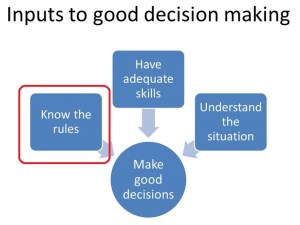
Along with learning gun safety principles and procedures, new gunowners should begin to acquire an understanding of the Rules pertinent to defensive use of firearms. Periodically, long time gunowners should also review them. This is especially true for those who have programmed their Orient Phase with platitudes such as “Better tried by 12 than carried by six, I’ll shoot anyone I find in my home, Don’t draw your gun unless you’re going to shoot,” ad nauseum.
There are two good initial sources for this review. The first is the legal statutes for using Force and Deadly Force of your State. For instance, in the State of Georgia the use of Force and Deadly Force is covered by OCGA 16-3-21, https://law.justia.com/codes/georgia/2010/title-16/chapter-3/article-2/16-3-21, OCGA 16-3-23, and OCGA 16-3-24.
The Statute(s) for every State are available online with a little searching. Some States’ laws are relatively easy to read. Others are confusing tangles of legal gobbledygook. If reading your particular State’s law makes your head hurt, think about what it would be like trying to justify your actions in a criminal court using that miasma.
Keep in mind that there is a significant legal difference between Force and Deadly Force. Discharging a firearm intentionally at another person is a use of Deadly Force, even if the other person isn’t injured. The legal justification for using Deadly Force is very high in every State. Displaying a firearm MAY be a use of [non-deadly] Force in your State or it MAY be a serious felony, such as Aggravated Assault.
The second source is the pamphlet What Every Gun Owner Needs to Know About Self-Defense Law. https://armedcitizensnetwork.org/learn/what-every-gun-owner-needs-to-know It is a general document based on the Model Penal Code that gives an overview of what the process can be like but does not go into the specifics of State laws because they vary so much. The Network will send a free hard copy upon request and a PDF is available at the link.
Normalcy note
I sat on the deck while having my morning coffee today. There were lots of birds out and I like watching them and listening to their calls. A group of three Cardinals flew into a small tree just beyond the deck. At first, I thought one of them was a Sparrow because its plumage wasn’t very colorful but in a little bit it came into better view. The bird had the distinctively colored beak of a Cardinal along with the crest on the head. It must have been immature, although it seemed to be bigger than the two brightly colored one. I’ll have to research the species a little more.
Dale Carnegie note
Please stop berating those who have recently bought guns in a panic, those who don’t have many everyday staples on hand, or who rushed out to buy 27 years’ worth of toilet paper. Doing so is a variation of the psychological game “I told you so.” https://www.tandfonline.com/doi/abs/10.1177/036215377600600306?journalCode=rtaj20
It’s nicer to keep in mind Dale Carnegie’s number One principle from The Golden Book summation of How to Win Friends and Influence People.
Become a Friendlier Person
Don’t criticize, condemn[,] or complain.
Tactical Professor books (all PDF)
Serious Mistakes Gunowners Make http://seriousgunownermistakes.com
Indoor Range Practice Sessions http://indoorrangepracticesessions.com
Concealed Carry Skills and Drills http://concealedcarryskillsanddrills.com
Advanced Pistol Practice http://bit.ly/advancedpistolpractice
Shooting Your Black Rifle http://shootingyourblackrifle.com
Fair Disclaimers:
- I am a member of the Armed Citizens’ Legal Defense Network and a local affiliate trainer. However, I receive no compensation for providing the link to it.
- I am NOT a lawyer and nothing in this post constitutes legal advice.
Stifle yourself
As I sat there, I contemplated Werner’s Pentagon of Performance, particularly the ‘Stifle Yourself’ corner.
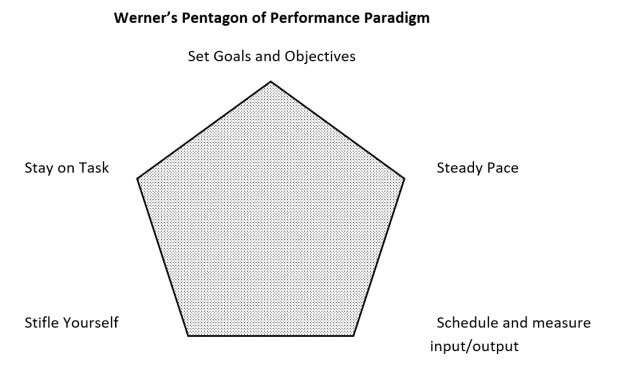
Several times the question came up about what ‘stifle yourself’ means in my Pentagon of Performance.
“Stifle yourself” was a catchphrase used by Archie Bunker in the series All in the Family.
What it means to me is to exercise a bit of conscious self-control. We’ve all experienced situations where we have verbal diarrhea, we allow ourselves to become excited when deep down we know it’s not in our best interest, or we do something that we know we’ll regret. Whenever we say to ourselves “I’ve got to do something [now]!,” it’s often a cue to stifle ourselves.
Numerous examples of where ‘Stifle Yourself’ are applicable to personal protection.
- Talking to the POlice
- Telling others about the extent of our preparations for the Apocalypse
- Rushing the shot
- Not practicing despite knowing our skills are weak
- Chasing criminals after they cease to be a threat
- Closing with predators when we could just as easily move in a different direction
- Intervening in matters that don’t directly affect you and your loved ones
- And many others
Numerous examples of where ‘Stifle Yourself’ are applicable to life in general.
- Buying more paper products than your family can use in a year
- Selling or buying assets when the market isn’t favorable
- Reposting memes about popular topics for the 1000th time
- Talking when we should be listening
- Offering unwanted advice
- Offering unwanted emotions
- And many others
Stifle yourself can apply to both action and inaction. Procrastination is a good example. Procrastinating is merely giving in to the desire to put something off that needs to be done. That desire to procrastinate (inaction) is something else that can be stifled.
Often fear is often at the root of actions and inactions that need to be stifled. Uncertainty is another. My friend and colleague Nick Hughes has a very pertinent question that is often worth spending a second to ask ourselves.
Am I doing [or not doing] this because I need to or because I want to [because it makes me feel better]?

 tacticalprofessor
You must be logged in to post a comment.