Spot shooting
“Do you want it in the belly or in the teeth?” –my father, to a would-be robber, who suddenly remembered a previous appointment.
My dad’s eyesight was pretty bad by then, so he couldn’t aim at the eye. However, the teeth remained a viable aiming point for him. At age 83, he and I took the training to get our Nevada Concealed Handgun Permits. He outshot everyone in the class except me. One reason was he knew to aim at something.
One of the biggest problems I see in current training methods is the concept of “aim for center of mass.” Coupled with the blank targets used, it’s no wonder that people have a hard time learning to hit anything. That’s the equivalent of what’s called an “area target” in the Army. Area targets are best engaged with some form of area weapon, such as a machinegun, grenade launcher, mortar, or artillery. However, we don’t carry area weapons for self-defense.
One of the greatest handgun shooters ever, Ed McGivern, was asked how he could hit playing cards so quickly and with such tight groups. His answer was “I’m not aiming at the card, I’m aiming at a spot on it.” Ed established some speed records that have never been broken, so this is does not have to be a slow process, either. The idea that aiming at a spot on a target is too slow is a common misconception. It does require practice, though.
To facilitate this when I am dryfiring, I have targets with spots on them. The one I am using now has a variety of spots on it. There is a face, a cut out area of the IDPA -0 zone with a spot in it, and a series of circle and dots on the back. When I’m shooting IDPA, I do my best to pick out a spot on the target to aim at, such as a paster or group of pasters. So, I’m not aiming at ‘center of mass,’ I’m aiming at a spot.
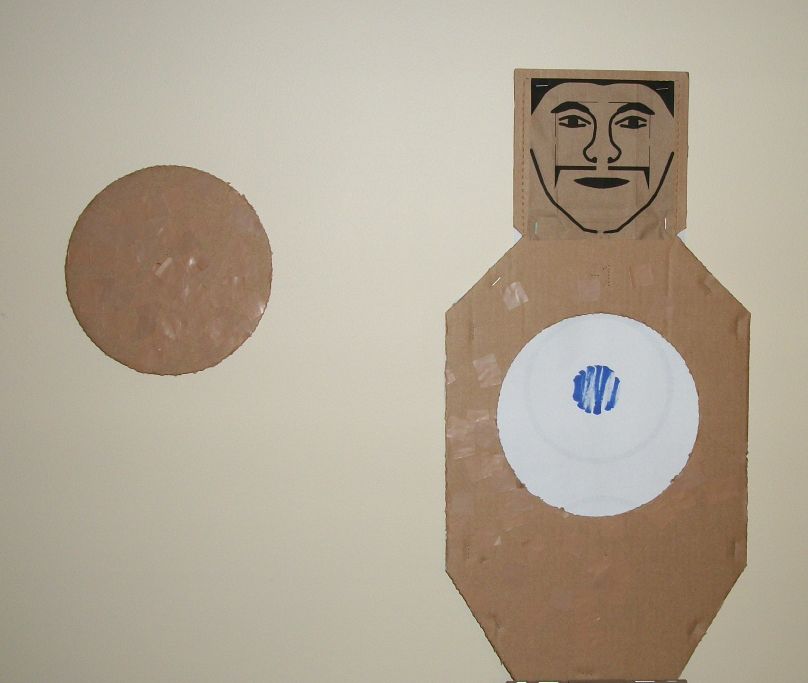
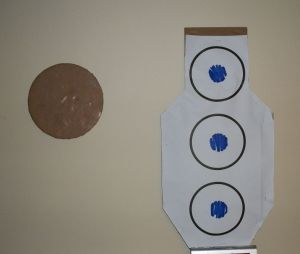
When I explain this concept to students in my Defensive Pistol classes, I reference the Internet meme “Be polite, be professional, but have a plan to kill everyone you meet.” Whenever I hear that meme, I ask “What are the elements of your plan?” I have yet to receive any meaningful response; it’s just a platitude that people repeat to sound like they’re ‘switched on.’ I tell my students that one element of my plan is that as soon as I meet someone, I pick out the spot on their body that I am going to aim at, should it become necessary to shoot them. Then I describe to each person in the class what the aiming point for them would be. This tends to generate considerable discomfort but makes the point very clear. Most of the class is shot on dot targets. Only when the students shoot the qualification course do they shoot at a silhouette, which has a discernible aiming spot on it.
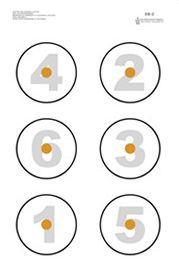
Spot shooting is a fundamental part of the instruction at the elite Rogers Shooting School. There is always a spot on the body plates at the School. When practicing recoil control via the ‘Bill Drill,’ aiming at that spot is key to firing a good group.
What we are trying to achieve when aiming at a spot is not necessarily to hit the spot but rather to get our bullet very close to it. As I explain to my students, our groups are always going to be larger than what we are aiming at. This is true because guns are not generally capable of putting all the bullets in the same hole, nor are we Terminators who can hold and press the trigger exactly the same way every time. However, by aiming precisely, we minimize the amount of error induced by mechanical tolerances and our human fallibilities.
This is the fundamental problem with ‘aiming at center of mass.’ In that philosophy, the entire silhouette is the target. So if the group is larger than the target, misses become an inevitable part of the result. Throw in poor trigger manipulation and you end up with a 20% hit rate.
Try this out the next time you go to the range, I think you will notice a difference.
Stress Inoculation
I was thinking about Trevor‘s comment regarding “keep showing up” today.
I’ve found that there are three rules to successfully getting into a new discipline, and these rules have proven true across martial arts, shooting sports, Crossfit, and other endeavors:
Rule 1: Show up ready to learn and give good effort.
Rule 2: Keep showing up. Show up more than anyone else. If you don’t feel like going, see rule 2.
Rule 3: Put in the work and measure your progress honestly.
One of the ways I used to keep my mind occupied during road marches in the Army was to calculate how times I had done something. For instance, I was marching around Korea in 1980 and calculated I had already spent well over 1000 days in the field. That is one reason I have not the slightest interest in camping. At that point, I was about 1/3rd of the way through my career. I stopped counting after that.
Tonight’s exercise was figuring out the extent of my measured shooting performance when others were watching. There are two quantities I can calculate; IDPA stages shot and demos in front of classes I have taught.
Roughly, I shot about 200 stages a year for the first 12 years I shot IDPA. Quite a bit less per year since then but I’m working on increasing it. So let’s say some 2500 stages where I’m in front of a group.
Demos in classes would be Rogers classes and my FST classes. Rogers demos are grueling because the class oftentimes is looking for the instructor to screw up. I taught roughly 60 or so classes at Rogers. Probably at least 12 to 15, perhaps more, demos per day for 3 of the 5 days. So, let’s say 40 demos per class. That’s another 2400 exercises while I’m being watched and graded.
Then we have my Firearms Safety Training LLC classes and seminars. I believe in demonstrating most of the drills for the students unless the drill is really simple. Over the course of 16 years, I’ve taught 4 to 6 classes per year, plus quite a few seminars. Let’s say 100 total classes and seminars with around 12 demos per, average. So another 1200 evaluations in front of a group.
Overall, it looks like I’ve stepped up to the plate over 6000 times to stand and deliver while people are watching and, in many cases, waiting for me to screw up.
The value of that much experience at problem solving and having to perform to a standard is incalculable to me. I wouldn’t trade it for anything and I feel sorry for those who deprive themselves of that opportunity. It’s a very valuable form of stress inoculation, readily available to anyone who wants it. But you have to be willing to fall on your face for awhile because I certainly did.
What Strategies should we train (or train not to)?
“He that passeth by, and meddleth with strife belonging not to him, is like one that taketh a dog by the ears.” — Proverbs 26:17
In my analysis of The Armed Citizen column, two things that I noticed have broader implications than ‘skills,’ although there are both skills and tactics involved in their execution. To me, they are strategic considerations about what to do vis-à-vis how to do it. I’m not hung up on the strategic/tactical terminology, so call it whatever suits you.
Intervene in another’s situation 15%
Hold at gunpoint until police arrive 12%
As many of my friends know, I’m not a fan of intervention in others’ affairs. I won’t say I would never do it, but I would need a really good reason. Even some police agencies, such as the LAPD, discourage officers from taking ‘enforcement action’ when they are off-duty.
Los Angeles Board of Police Commissioners’ Findings
Although it is preferred that an off-duty officer refrain from taking enforcement action and instead act as a good witness, the rapidly unfolding circumstances warranted immediate intervention to preserve life.
Therefore, it was reasonable for Officer A to take immediate action to safeguard the lives of the public.
Even when the LAPD BOPC finds an officer’s “use of force to be in policy, requiring no action” in such a situation, it sometimes recommends additional training that the officer must undergo to remedy tactical deficiencies noted.
Board of Police Commissioners’ Findings
A. Tactics
The BOPC found that … Officer A (7 years, 8 months service) would benefit from additional tactical training at the Training Division (formal training) level.
In one incident that took place in the Atlanta area 3 years ago, the person who intervened was shot in the back and killed by a seeded backup man in the liquor store. There were a whole series of tactical and marksmanship issues and errors associated with that tragic incident.
In addition to the tactical considerations, Andrew Branca’s excellent book The Law of Self Defense discusses a number of legal considerations about intervention. For example, if a weapons carrier intervenes of behalf of someone who is not innocent in the encounter, then neither is the one who intervenes.
Intervention opens a big can of worms and I’ve never been much interested in fishing. Many years ago, Evan Marshall, a very savvy and experienced Detroit street cop, espoused a philosophy of being a good witness until “they start searching people, making people get down on the floor, or herding people into a back room.” At that point, he felt gunfire was in order. I haven’t come across anything I find more apropos, so that’s the personal strategy I have in mind.
The risk/reward aspect of ‘Hold at gunpoint until police arrive’ is a separate and involved topic that we’ll discuss in the future.
What skills should we train and practice?
“What is the best use of my time right now?” —How to Get Control of Your Time and Your Life by Alan Lakein
As many people know, I like to read The Armed Citizen column of the NRA Journals in detail each month. Years ago, I did a Five Year Analysis of The Armed Citizen to give me an idea of what actual incidents really looked like. Revisiting that concept appealed to me, so I did a short version for the first six months of 2014.
What I was looking for this time was the skills and techniques that were used by The Armed Citizens to solve their problems. Each incident was looked at from the perspective of skills that could or might be taught in an entry level to intermediate level firearms training class. Here’s what the list and usage rates ended up looking like from 10% up and 0%:
- Retrieve from Storage (handgun) 32%
- Move safely from place to place at ready 22%
- Draw to shoot 20%
- Challenge from ready 15%
- Intervene in another’s situation 15%
- Draw to challenge 12%
- Engage from ready (handgun) 12%
- Hold at gunpoint until police arrive 12%
- Retrieve from Storage (unknown) 10%
- Shoot with non-threats downrange 10%
- Retrieve from Storage (rifle) 0%
- Reload 0%
How often do we, as firearms trainers, ask our students to bring their home storage containers to class with them? Probably not 32 percent of the time. Or do we at least provide some kind of drawer for them to get their roscoe out of to show they can do it safely? I know a lot of people keep their chamber, or even the gun, empty when it’s off their person, so do we make them demonstrate loading it safely? Something I really like about the NRA Defensive Pistol I Marksmanship Qualification Program is that it includes those type of skills and incorporates both a time and accuracy standard for performing them.
How about moving safely from place to place with a loaded gun in hand, especially with innocents around? This is one of the biggest challenges that new IDPA and USPSA shooters encounter. Almost inevitably, a new shooter will run around with finger on trigger and then is taken to task about it by the match staff. While they’re not training, those shooting sports are providing a lot more realistic practice on a critical skill than most training classes are. Does that mean that the shooting sports are more relevant, at least in that aspect, than training classes are?
Challenging criminals is another skill I see rarely. John Farnam emphasizes it in his classes but I don’t see verbalization prior to using deadly force in many other classes. I personally think the concept “the gun isn’t coming out until I decide to shoot” is one of the most ill-considered ideas in the firearms community. But I still hear it quite a bit. If we can convince a criminal that the victimization has gone South and turned into a conflict, the chances are quite good they will break off. If they break off the attack without us firing a shot, I consider that a big WIN. Verbalization is another skill that is included in the NRA MQP. But a number of my students have found it hard to do without considerable coaching.
We’ll discuss the other skills in the future, but I want to draw attention to the percentage of reloads involved in these incidents, to wit: ZERO. As I mentioned in a Personal Defense Network interview, I’ve completely de-emphasized reloading in my classes for Armed Citizens. It’s a useful exercise for practicing good gunhandling but as a tactical skill, I just don’t consider it important anymore. Some folks spend a lot of time on thinking about how much spare ammunition to carry, how to carry it, and how to reload quickly. I think that time and effort would be better spent on practicing to make a good first shot, which is a skill many people need a lot of practice on.
Tactical and Operational Relativism
Fortunately, over the course of my life, I have been around and been associated with some of the most dangerous men in the world. Early on, I came to the conclusion that compared to them, I am a Boy Scout. There are no illusions on my part about where I stand in relation to the really focused and competent among them. All of them, in some way, serve as inspirations and examples to me.
The principle in this is that no matter how good a shooter, fighter, or trainer you might think you are, there’s somebody, perhaps a lot of somebodies, better than you. Competency and capability are always relative.
In addition, as SSA John Hall, former head of the FBI Firearms Training Unit put it: “In every encounter, there’s an element of chance involved.”
Situational Awareness and Positioning (part II) The Tueller Principle
place yourself in the best tactical position.
Positioning
In 1983, Dennis Tueller wrote a groundbreaking article entitled How Close is Too Close? As a result, the terms the “Tueller Drill” and the “21 Foot Rule” have become well known. The Tueller Drill is even incorporated into the NRA Personal Protection In The Home Course.
However, in a 2008 interview, Dennis notes that he doesn’t use those terms, instead referring to it as the Tueller Principle. His original article relates the concept of a ”Danger Zone” and the need to “place yourself in the best tactical position.” The revolutionary, for the time, concept he came up with was to measure Distance/Time Relationships of Armed Encounters. By doing so, he brought about a much greater understanding of the concept that distance is your friend.
The article also emphasized using cover and placing obstacles between yourself and an attacker. The context used in the article is what I think of as ‘reactive positioning.’ I.e., you see something that puts you in an alert status and then initiate movement to place an obstacle between you and the attacker. By thinking ahead, we can achieve ‘proactive positioning,’ where the attacker is already at a disadvantage when the encounter begins.
Granted, proactive positioning is not always possible. As a friend of mine put it:
I’m always amused by the ‘I’m never in condition White and never let anyone get within 6 feet of me!’ types. I guess they never wait in line at fast food joints or grocery stores, go to malls or other crowded places, etc.
What we want to do is to minimize our exposure to situations where we have no advantage. This is especially true when our situational awareness is likely to be lowered. Our mental processing power is finite; we need to be aware of the inverse correlation between situational awareness and positioning. When SA is likely to go down, proactive positioning needs to go up.
How does this tie into the LVMPD murders in Cici’s? Since I had never been in a Cici’s, I visited one near my home and took a picture from the back of the room. If the location in Las Vegas is anything like it, it is a positioning nightmare. Like most fast food places, it has a distinctly linear orientation. Sorry folks, but a linear orientation is the most efficient use of space and most real estate is therefore designed that way. The concept of ‘moving off the line of attack’ by ‘buttonhooking,’ maneuvering to an oblique flank, or sidestepping is not viable in a place like that. It’s a ‘square range’ concept, for the most part. Forward or backward, those are your options in most interior spaces and a lot of urban spaces, in general. There also was no option with regard to ‘sitting with your back to the wall.’ The only wall seat available backed up to the restrooms. Anyone wanting to nail you only need go to the restroom door, turn around, and within two steps would have the oblique back of your head for a target.
Moreover, because it was a buffet, people were constantly moving along every aisle in the store. Try maintaining your situational awareness for 20 minutes when someone is going by you every 15 seconds while you’re trying to stuff you piehole. Good luck with that. I counted over 20 people who approached me from three different directions in the first five minutes I sat down. The radar system on an F-35 would have a hard time keeping track of that. I’m not that good and no one else is either.
And then periodically I had to go to the pizza bar and make observations about what was there, what was the staff in the process of bringing out, and then decide what did I want to put on my plate. All the while, people are milling around me doing the exact same thing I was. My situational awareness was non-existent and I was specifically there to test it as an exercise.
One the biggest tragedies of incidents like the Lakewood murders is not critically analyzing the event, its prelude, and its aftermath. Statements like “In reviewing this incident there was not any one thing that we found could have been done that would have prevented the murders” are all too common. Brian McKenna did an analysis of the Lakewood incident that is definitely worth reading. The video reenactment is stark and provides a good visual depiction of how situational awareness can only go so far to make up for being in a position of disadvantage. That incident took place in Lakewood, Washington on November 29, 2009 and echoed in Las Vegas, Nevada on June 8, 2014.
In the next installment of this series, we’ll discuss the military concepts of Terrain Analysis and Intelligence Preparation of the Battlespace and how they relate to positioning.
Practice priorities for the Armed Citizen

“Sometimes it’s hard to see the forest for all the trees.”
First of all, let me say that I distinguish between ‘training’ and ‘practice.’ Training is something you do with someone else’s guidance and, hopefully, observation, if it’s a physical skill. ‘Practice’ is something you do on your own.
Training, therefore, is generally structured by the trainer. However, you as the individual decide what training program you choose to undertake. Practice, on the other hand, is generally structured by an individual, although it may include a program set up by a trainer.
In either case, we have to establish our priorities of what our program is going to be. That can be a more involved process than we realize. It’s easy to be sidetracked either by what we enjoy, regardless of its relevance, or by what others tell us is significant, without establishing its importance in our skillset.
The first shooting by an Illinois Concealed Carry License holder provides an example. It’s great that he was able to run off his attackers. It’s not so great that he launched several bullets that missed the criminals and ended up who knows where in a densely populated urban area. We really can’t hope that the “Big Sky, Little Bullet” concept is going to work out for us. How much different is that than ‘celebratory gunfire’ that sometimes has tragic consequences? Not much, in my opinion.
At the end of a recent Handgun Fundamentals course, I was asked “where do we go from here?” For the person who has recently acquired a pistol for defense, a good start is the NRA’s Defensive Pistol I Courses of Fire. It is a well structured and incremental approach to skill practice. It is self paced and can be shot on your own.
For the person new to carrying a weapon, the NRA Defensive Pistol II Course of Fire is an excellent regimen. Most State Weapons Carry Qualification Course don’t require drawing from a holster and many forbid it. The NRA course provides a standard that those who carry weapons should strive to be able to meet. What I like about it most is that it is a 100 percent standard, not 70 or 80 percent like a qualification course. We need to accustom ourselves to the concept that if we shoot at a criminal, ALL the rounds we fire must hit the target. That’s being responsible.
Most people have to limit their livefire practice to indoor ranges where drawing from the holster is not allowed. This presents an issue to those who carry pistol in holsters. There are solutions, though.
Like many of my colleagues, for a long time I said the hard part of the drawstroke is establishing grip. I’ve changed my opinion on that. The hard part of the drawstroke is getting the pistol indexed on the target enough to get a good hit with the first shot. John Shaw, a World Champion shooter, clued me in to this many years ago. Note that I didn’t say a ‘perfect’ hit.
Indexing the pistol to the target (presentation) is easily practiced from a high ready position starting at the pectoral muscle of the body’s dominant side. Starting this way is not generally a problem at an indoor range. And since I recommend practicing one shot per presentation, the ‘no rapid fire’ limitation at many indoor ranges isn’t an issue either.
The initial NRA DP II standard is to hit within the 8 ring of a D-1 target at seven yards with one shot in five seconds. The Pro-Marksman rating requires this to be done 20 times. The 8 ring is 12 inches in diameter. I personally prefer to tighten the standard to the 10 ring, which is 8 inches in diameter. If practicing from the high ready, the time standard needs to be cut down to something like four seconds, which is still very generous. Once shooters meet the initial level (Pro-Marksman) of the Defensive Pistol courses, they can work their way up the succeeding levels of the Program.
Whatever practice priorities you may choose, NRA DP or other, make a conscious decision about them. Just because you read in a gun magazine, on the Errornet, or I say it’s the thing to do, doesn’t mean it’s right for you. Look at what happens to people in your walk of life and think about your lifestyle. Then adapt your practice priorities to your life.
Downrange Practice
“It’s a downrange world, better get used to it.”
LAPD Officer Involved Shooting 022-12
In this instance, several officers utilized lethal force in order to defend themselves, their fellow officers and bystanders in a vehicle stopped on the side of the freeway from the perceived imminent threat posed by the Subject. While engaging the Subject in order to stop his actions, the two bystanders inside the vehicle were in the foreground.
Any time an officer (or officers) utilizes lethal force, and the [Board Of Police Commissioners] learns that bystanders were in the foreground, the BOPC takes into consideration the totality of the circumstances, including their articulation of the threat and the psychological effects which occur during high stress situations. Here, there were several officers who not only knew the bystanders were in the foreground, but articulated firing in defense of them. For instance, one of the reasons that Officer E fired was due to the Subject approaching Witness A’s vehicle and there being two people observed inside.
Most people don’t often consider the possibility that innocent persons, perhaps family members, will be downrange during a criminal confrontation. I call this “The Myth of the Lone Gunman.” However, it is a fairly common occurrence. Why? Simply because your family members are with you much of the time. This month’s Armed Citizen column relates several such incidents.
The angle of attack chosen by a criminal predator is unlikely to have anything to do with where your family members are in relation to you at the time. What if a family member, and not you, is the victim of the assault? In that case, you are almost guaranteed to have a family member downrange.
Any armed confrontation is going to be a difficult situation. Throw in the stress of having a loved one or innocent bystander downrange and it’s going to get a lot worse.
Something that very few people consider is the human dynamics of a violent home invasion. In such an incident, it’s very common for the male of the house to become involved in a physical struggle with the invaders. The lady of the house then becomes the one having to do the shooting. Meghan Brown’s incident is a good example of how this often plays out.
In that kind of situation, having little or no marksmanship ability could become a problem. The ability to make a good decision about shooting will be essential to a positive outcome. When talking about Decisional Shooting, the discussion almost always revolves around the legal factors such as Ability, Opportunity, and Jeopardy. However, other key components, just as important, will be:
- “Do I have the marksmanship ability to pull this off?”
- “Is my weapon capable of doing this?”
- “Am I in a position to make this shot or do I need to re-position?”
- “What will be the effect of having my bullet perforate (go through both sides) of the target?”
- “Do I have the emotional wherewithal to do this with a loved one downrange?”
Using a shotgun, either long gun or pistol, can greatly complicate that question of weapon capability. There are ways of mitigating the risk with a shoulder fired shotgun but not eliminating it. Except for a contact shot, handheld shotguns, such as ‘The Judge,’ become almost useless when a non-threat is downrange.
The perforation issue has to be considered. In at least one case in Texas, a woman killed her husband, while trying to save him, because of perforation and poor marksmanship. That’s not the outcome she was looking for, I’m sure.
Having the emotional wherewithal is not something that can be taken for granted. I know of students who demonstrated they were perfectly capable of performing the task at the range. When a picture of a friendly face was put on the hostage, they refused to shoot. That’s an issue.
I have watched over 100 iterations of a Force on Force scenario where the defender was deliberately presented with a clear shot on a hostage taker at a range of 10 feet. The hostage was adjacent, at arm’s length, not in front of the attacker. The number of students who chose to take the shot without closing to contact distance could be counted on the fingers of one hand. As Ken Hackathorn says: “You are unlikely to do anything under stress that you are not subconsciously sure you can do well.”
It would probably be wise to practice the obstructed downrange shot regularly. I devised a drill specifically for this.

Even at an indoor range, there are usually hostage targets available. The way to use them is to practice taking one shot at a time, though. Do it for a full magazine, starting each single shot from a ready position. Keep the range short, less than 4 yards, that’s the decision point in terms of proxemics.

Don’t wait to take your practice until the real thing happens. On the Job Training isn’t a ‘best practice’ for this scenario.
Different kinds of experience
There’s a saying among police officers that “Some police have 20 years of experience and some have one year of experience 20 times.” What that means is that some people do the same things over and over again in the same way. They don’t learn from their experiences and they don’t try to expand their experience base or skillset.
That’s not the way my personal approach to life works. In this blog, I am going to relate the things that have broadened my experience and skills. That’s a never ending process for me. Hopefully, you will find something of value in it.
 tacticalprofessor
You must be logged in to post a comment.