3X3X3 – Level One
Three Shots, Three Seconds, Three Yards has been discussed in the context of gunfights since the 1970s. It is the most commonly cited statistic about gunfights.
Practicing to hit the silhouette every time using the 3X3X3 basis is Level One of learning to shoot the drill well. It is a good baseline for entry level shooters and those who have never measured their performance.
Level One – hit a silhouette consistently
Level Two – hit a sheet of paper consistently
Level Three – hit a half sheet of paper consistently
Level Four – hit a quarter sheet of paper consistently
The dry practice drill was discussed in a previous post.
Here’s the live fire version.
When I wrote Real Shootouts of the LAPD, I wasn’t surprised that NYPD Lt. Frank McGee was pretty much on the mark when he first described it. Almost all of the off-duty shootouts fit into that statistic.
A related note is that I fired about 100 .22 Long Rifle rounds through my 317 snub with a standard (8.5 lb) mainspring. There was not one Failure to Fire during the session. Ammunition for my .38 is precious and hard to come by so I used the .22 for demo purposes. For those who think that was cheating, I also shot with my SCCY CPX-2 9mm.

If you would like to purchase my book about actual shootouts that are not a figbar of someone’s imagination, click on the image below.
Practicing the First Shot
This really should be #fridayfundamentals but I feel compelled by some recent conversations to send it.
As I mentioned previously https://tacticalprofessor.wordpress.com/2021/04/09/the-importance-of-the-first-shot/, the importance of the first shot shouldn’t be underestimated. How to practice that remains a bit of mystery when people are shooting. Shooting multiple shot, often full magazine, strings of fire is the most common way people practice. Unfortunately, that masks the result of the first sight picture and trigger press.
For new shooters, we also need to keep in mind the concept of ‘progression,’ which is a fundamental concept of two of the world’s elite shooting schools, the Rogers Shooting School https://rogersshootingschool.com/ and the Mid-South Institute of Self-Defense Shooting https://weaponstraining.com/ .
The concepts of First Shot Drill and progression can be easily combined. Consider a series of Levels for hitting with the first shot. Start out at the 3 yard distance.
- Level 1 – hit a silhouette consistently
- Level 2 – hit a sheet of paper consistently
- Level 3 – hit a half sheet of paper consistently
- Level 4 – hit a quarter sheet of paper consistently
Shoot each Level using a progressively difficult start position; Low Ready, Midpoint of the drawstroke, and from the Holster.
You can use any silhouette you like. Having a face, a weapon, and an aiming point is more important than the type of silhouette used.

For those who don’t have access to or don’t wish to purchase a silhouette, a perfectly acceptable substitute can be made out of posterboard.

Start by doing dry practice. Level 1 would look like this.
My colleague Lee Weems https://thatweemsguy.com/ made an incisive comment at the Tactical Conference.
Enough Force used soon enough means less force used later.
Lee Weems
That could also be paraphrased as ‘a good enough hit with the first shot means less shooting later.’
If you would like to purchase my book about actual shootouts that are not a figbar of someone’s imagination, click on the image below.
Every Day Skills
While there are plenty of posts about ‘Every Day Carry’ for personal protection, there are very few about Every Day Skills for personal protection. Tools are only useful if they are used with some degree of skill. Also many of the skills we use for personal protection don’t involve tools at all, other than the one between our ears.
I am now undertaking a long term project for a Fortune 500 retailer that involves being in their stores. So, I’ve taken my own advice and ‘gotten a real job.’ Dear Instructors, Get a Real Job Being back in ‘The Real World’ is an interesting experience, especially because I’m on the road, working different hours, and staying in motels.
A few of the things I’ve had to work on are:
- Surveillance Detection
- Situational Awareness (consider it in the context of changing a tire in the rain, for instance)
- Securing my tools repetitively
- Camouflage
- and numerous more
Chronicling my experiences with what personal protection for normal people really involves will be quite interesting. I am quite looking forward to it. It will be an adventure.
Breaking Contact (Part I)
CCW Safe is doing a series about our ultimate goal in Personal Protection. I am happy that I have been able to make a contribution to the literature of our Art.
Our goal in personal protection is to force a break in contact [with a criminal attacker]. We want them to go away, or we want to go away. One or the other.
https://ccwsafe.com/blog/breaking-contact-pt-1
This philosophical fundamental is the true meaning of “Get off the X” for the Private Citizen. Sidestepping or whatever method is taught to get off the X isn’t the end or even the important part of the process. Forcing the attacker to withdraw or making our escape is the end objective.
It’s nothing new. Military units have probably been doing this since before the Roman Empire existed. It’s easily overlooked at the moment of an incident, though. For some folks, escaping is a natural response but for others it is counter-intuitive and needs to be practiced.
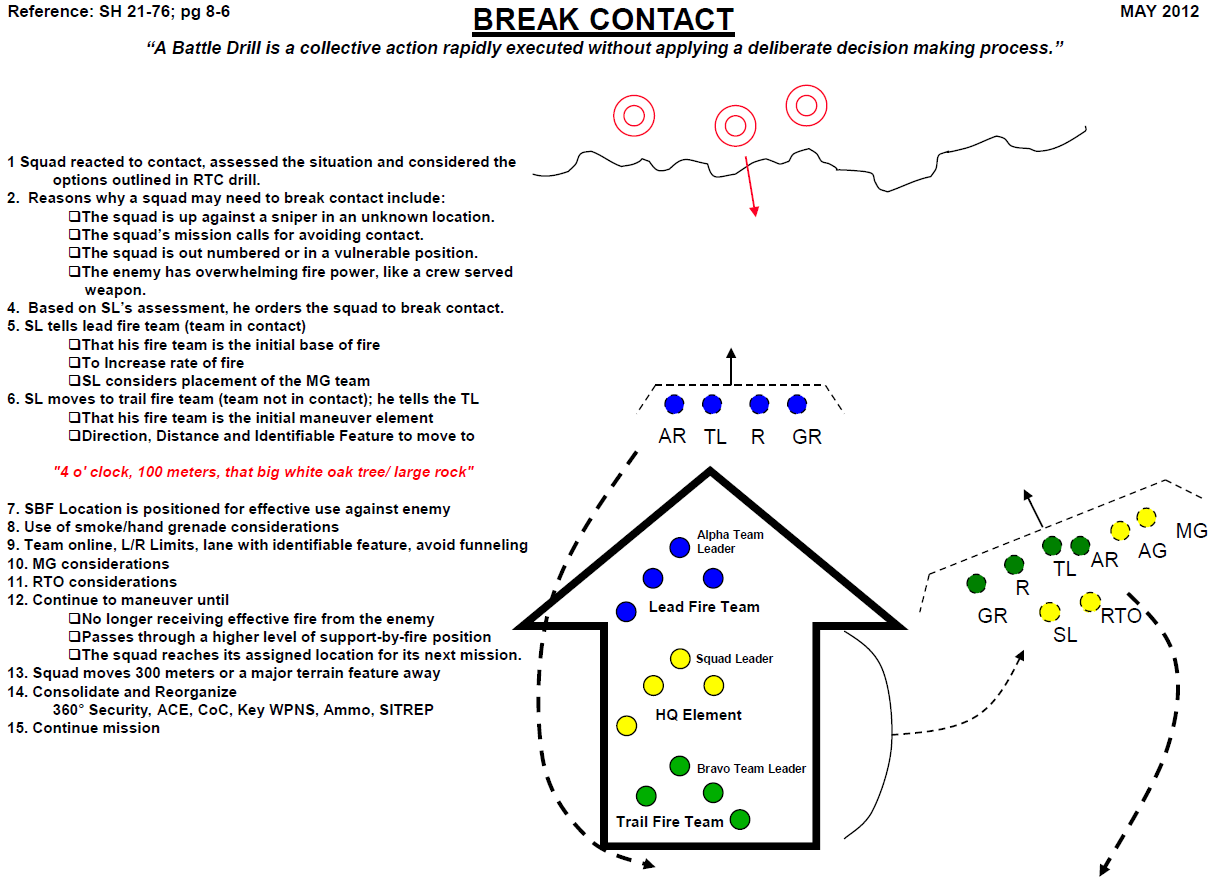
In some cases, what we’ve learned needs to be unlearned and replaced with a more appropriate tactic. Assaulting through the kill zone of an ambush toward the enemy is a prime example. Infantrymen are taught this from Day 1 of their military training. However, it’s often not a viable response in civilian life. Sadly, the LT Dwain Williams incident https://tacticalprofessor.wordpress.com/2021/02/26/using-cover-effectively/ is an example of how wrong this tactic can go.
As Shawn points out in the Breaking Contact article https://ccwsafe.com/blog/breaking-contact-pt-1, POlice officers are especially vulnerable to falling prey to the subconscious instinct to chase when they are off-duty. Several incidents in Real Shootouts of the LAPD https://realshootoutsofthelapd.com demonstrate this. However, private citizens are vulnerable too and he cites several cases where this occurred.
Practicing, using an inert replica of your tool, a simple Battle Drill of Breaking Contact with an attacker is worth actually doing rather than just thinking about. We learn physical skills through repetition.
If you would like to purchase Real Shootouts of the LAPD, click on the image below.
The Importance of the First Shot
#fridayfundamentals
Some principles are just as fundamental as is technique. One of the unintentional themes of the 2021 Tactical Conference was the importance of the first shot. One class even had that as its title. Several other instructors touched on it as part of their classes and presentations.
Rolf Penzel and Mike Treat titled their class Making the First Shot Count.
John Murphy made the comment “It’s not a ‘one shot drill,’ it’s a ‘first shot drill’” in his class.
During his presentation Secrets of Highly Successful Gunfighters, Darryl Bolke stated “training efficiency means using the sights.”
Chuck Haggard used the term “Target Picture” to illustrate the concept of placing the sight picture on the part of the target we want to hit initially.
In his AIWB Skills class, John Daub instructed his clients to “think about where you want the muzzle to end up” at the conclusion of the draw.
Scott Jedlinski’s comment “The original 1911 sights were suggestions” in his class was a humorous illustration of why point shooting was so common in days gone by. Tom Givens has also written about the dismal quality of factory sights on pistols and revolvers of yesteryear and how that affected technique training of a century ago.
One of trends that is apparent in the Categorical Use of Force Reports by the LAPD is how often one or two shots solve the problem. This is true through the entire database of over 1,000 incidents, not just the off-duty incidents chronicled in my first book about LAPD Shootouts. LAPD’s emphasis on marksmanship and frequent scored qualification is no doubt responsible for this difference from other large departments that have minimal standards.
In a gunfight, the shooter who first scores a hit above the diaphragm of his opponent is the one who seizes the initiative in the incident. Making a good hit with the FIRST SHOT fired is key to seizing the initiative and then retaining it until the incident is over. No one’s performance improves after he gets shot in a vital area.
In terms of operationalizing this principle, the fact that most common autoloaders don’t have a second strike capability during dry practice becomes irrelevant to the fundamental of making a good hit with the first shot. Your dry practice should mostly focus on the first shot anyway.
During live fire, the majority of our practice should be ‘first shot drills.’ Do a little recoil management practice but don’t overestimate its priority relative to the first shot in the real world. As John Farnam put it, “Our desired range product is victory.”
If you would like to purchase my book, click on the image below.
What is the Tactical Conference?
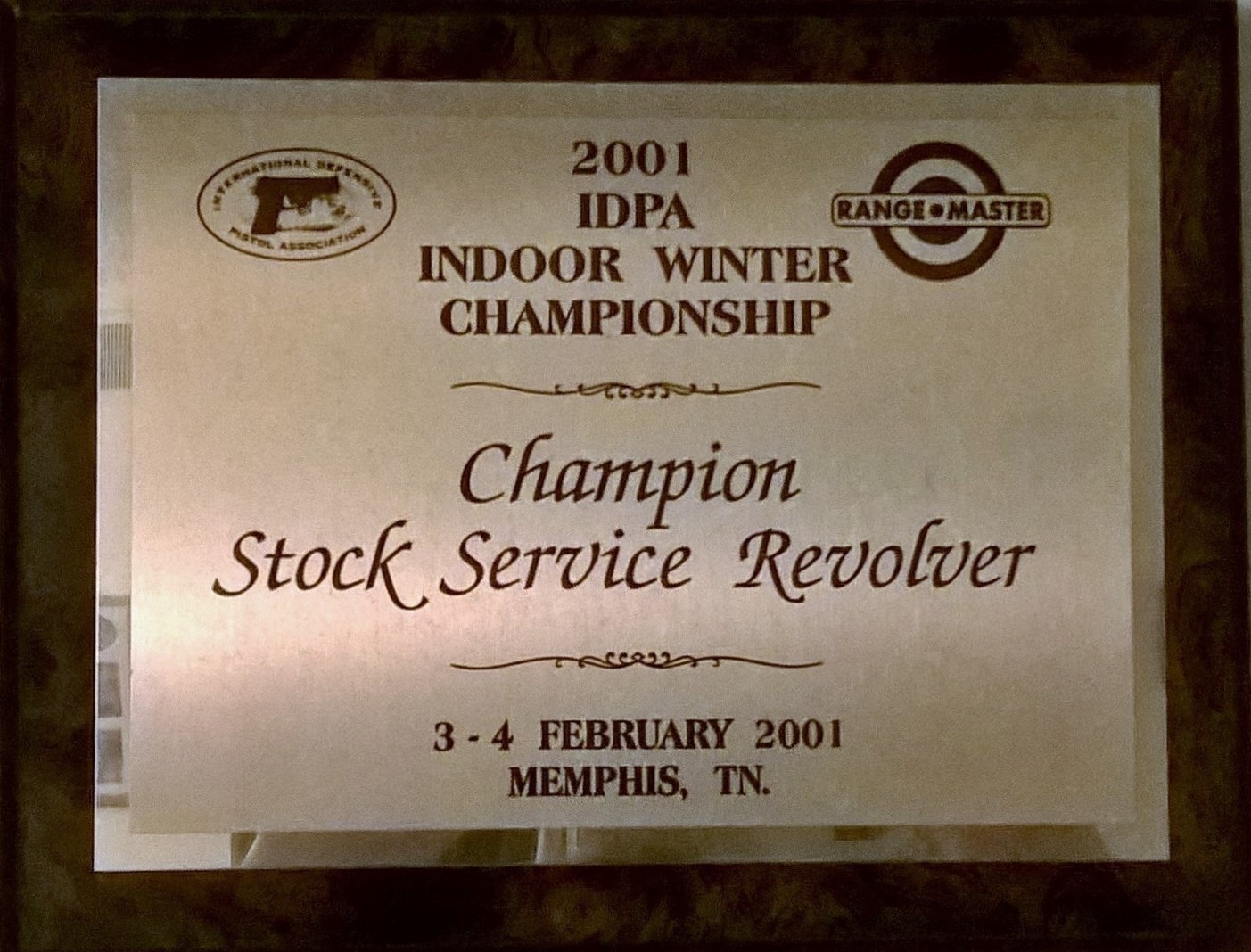
The Rangemaster Tactical Conference started as an International Defensive Pistol Association Major Match in the late 1990s. The IDPA Indoor Winter Championship, as it was then called, was held at Rangemaster’s facility at that time in Memphis, Tennessee. The organizer was Tom Givens, the owner of Rangemaster, a long time pistol competitor, and the leading trainer for Tennessee Concealed Pistol Licenses in Memphis. It was a large enough event to be featured as a segment on Shooting USA.
Typically, a shooting match consists of a few minutes of shooting and hours or days of idle time. However, the Winter Indoor Championship presented a unique opportunity because it was held at an indoor range with classrooms. Tom Givens’ relationship with the training industry meant that he was able to host various trainers who could present concurrent lectures about Self-Defense and Personal Protection. Some of the earliest presenters were well known names such as Massad Ayoob, Marty Hayes, and John Farnam.
The Pistol Match is still an integral part of the Conference. All attendees are invited to shoot the Match to get an idea of the strengths and weaknesses of their skills. Not everyone shoots it, though, because of the wide variety of other training opportunities that are also available during the three days.
Eventually, the demand for the tactical lectures and training necessitated moving to larger venues. The Memphis Police Academy, US Shooting Academy in Tulsa, and DARC in Little Rock have all been sites over the years. The larger venues allowed a wide variety of instructional blocks, including lectures, live fire shooting classes, and unarmed hands-on training. As the Conference grew, trainers held classes such as Managing Post-Shooting Stress and Trauma, Snub Nose Revolver Skills, Tactical Medicine for the Prepared Citizen, and Home Defense Shotgun Skills.The 2021 Conference was held at the excellent Dallas Pistol Club.
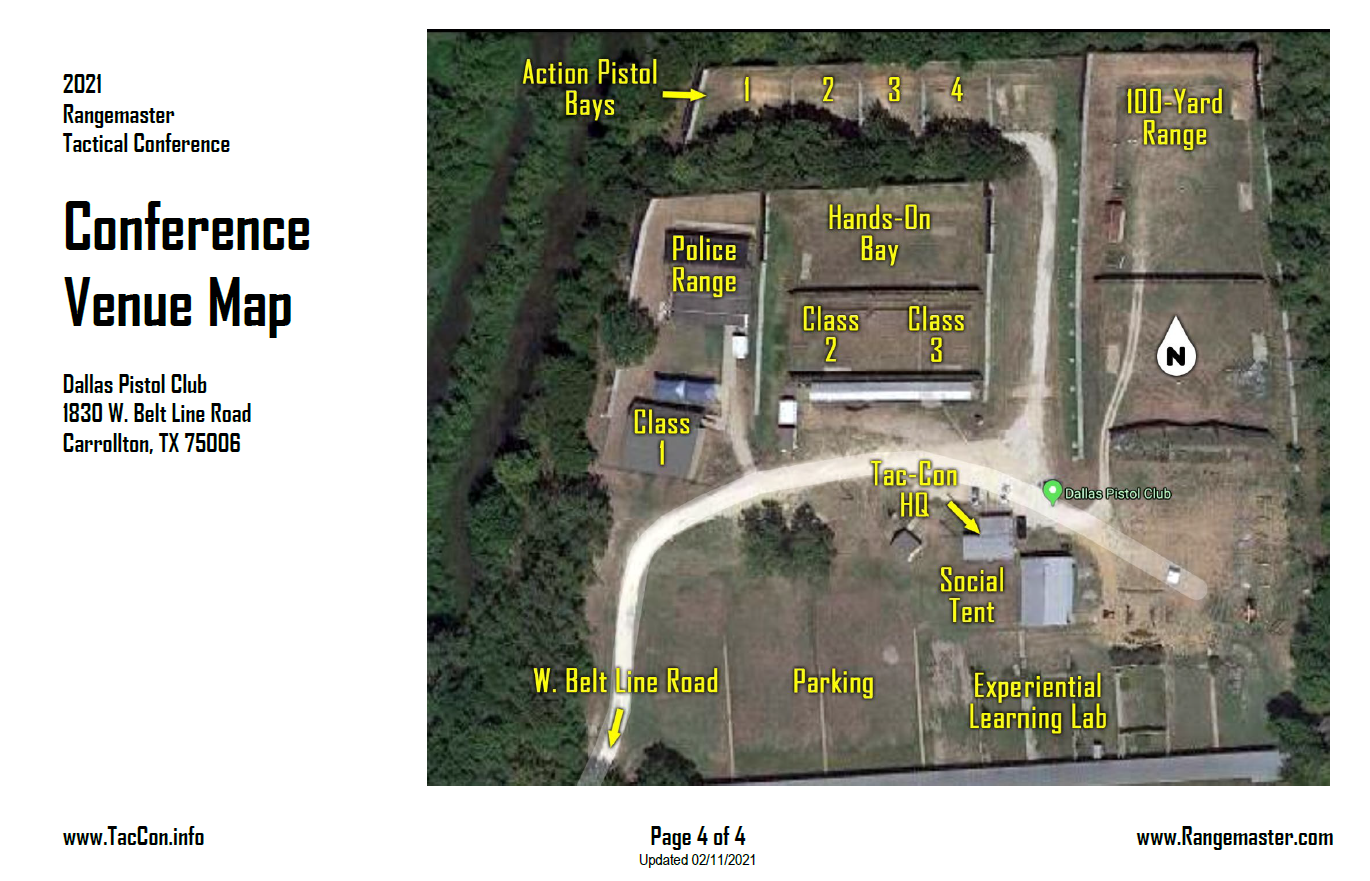
Serious Mistakes Gunowners Make was inspired by lessons learned in an Experiential Learning Laboratory session conducted by Craig Douglas of Shivworks at one year’s Conference. The Experiential Learning Laboratory has become a staple each year as a well-structured Force on Force exercise specifically for Armed Private Citizens.
Starting from just a few lectures at its inception, the Conference has grown to an extravaganza of educational offerings attended by hundreds of people over a period of three days. A vast number of training opportunities are made available for the prepared individual. The 2021 Conference featured 54 different blocks of instruction by dozens of different trainers. Some of the sessions repeated to allow attendees access to them because there is so much going on at the Conference.
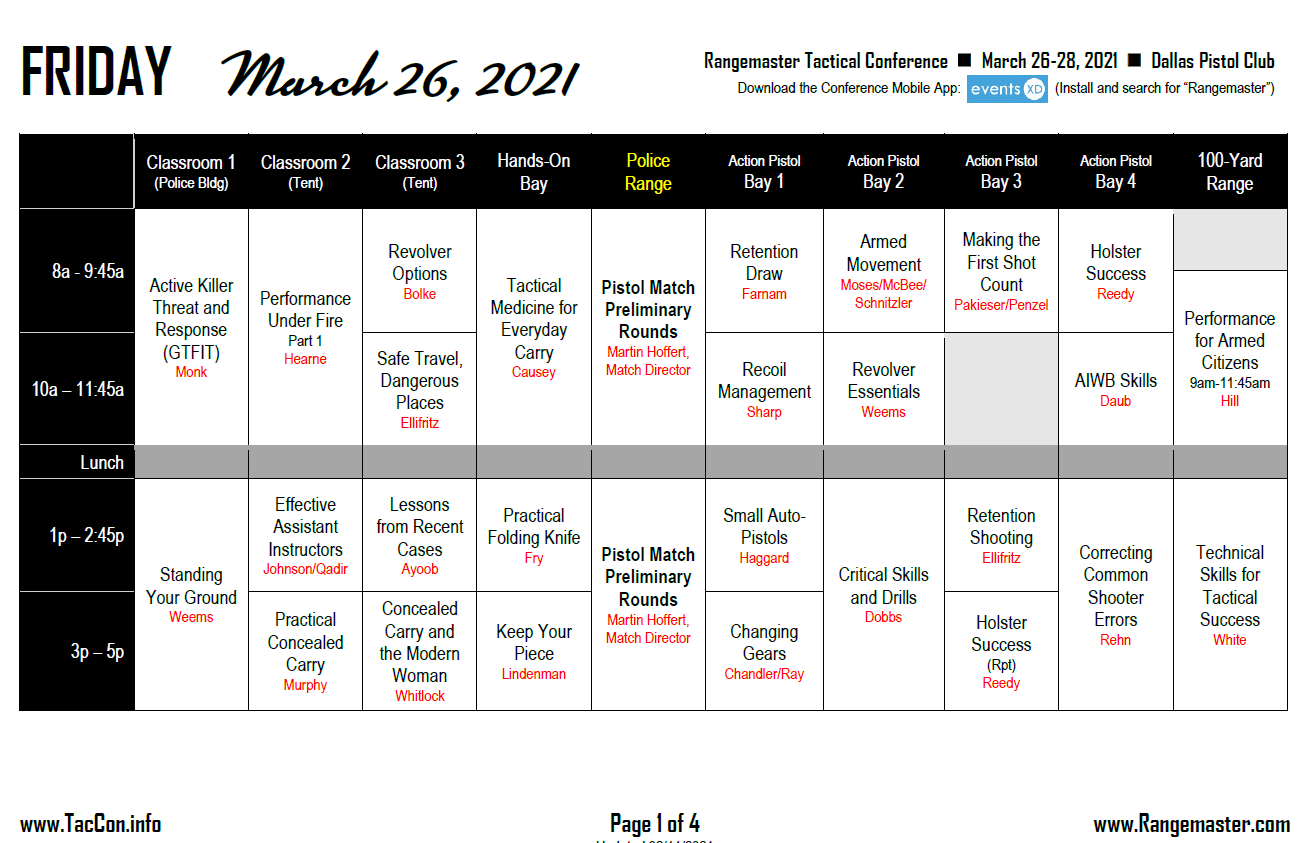
There is no other opportunity like it available for the Armed Citizen who wishes to be prepared to prevent criminal violence against themselves and their families. The Conference is held in late March each year. The 2022 Conference will be held at the Dallas Pistol Club in Dallas, Texas. Registration opens in May and sells out by October every year.
TacCon 2021 Match
The Rangemaster 2021 Tactical Conference is in the books. A small part of the Conference is the shooting match. Of the over 200 attendees, 161 elected to shoot the match. I didn’t bring a gun because of my flight situation, so I borrowed a 642 from a friend and shot with it. Only three of us shot with revolvers.
All shooters have the opportunity to shoot the first two parts of the Course of Fire.
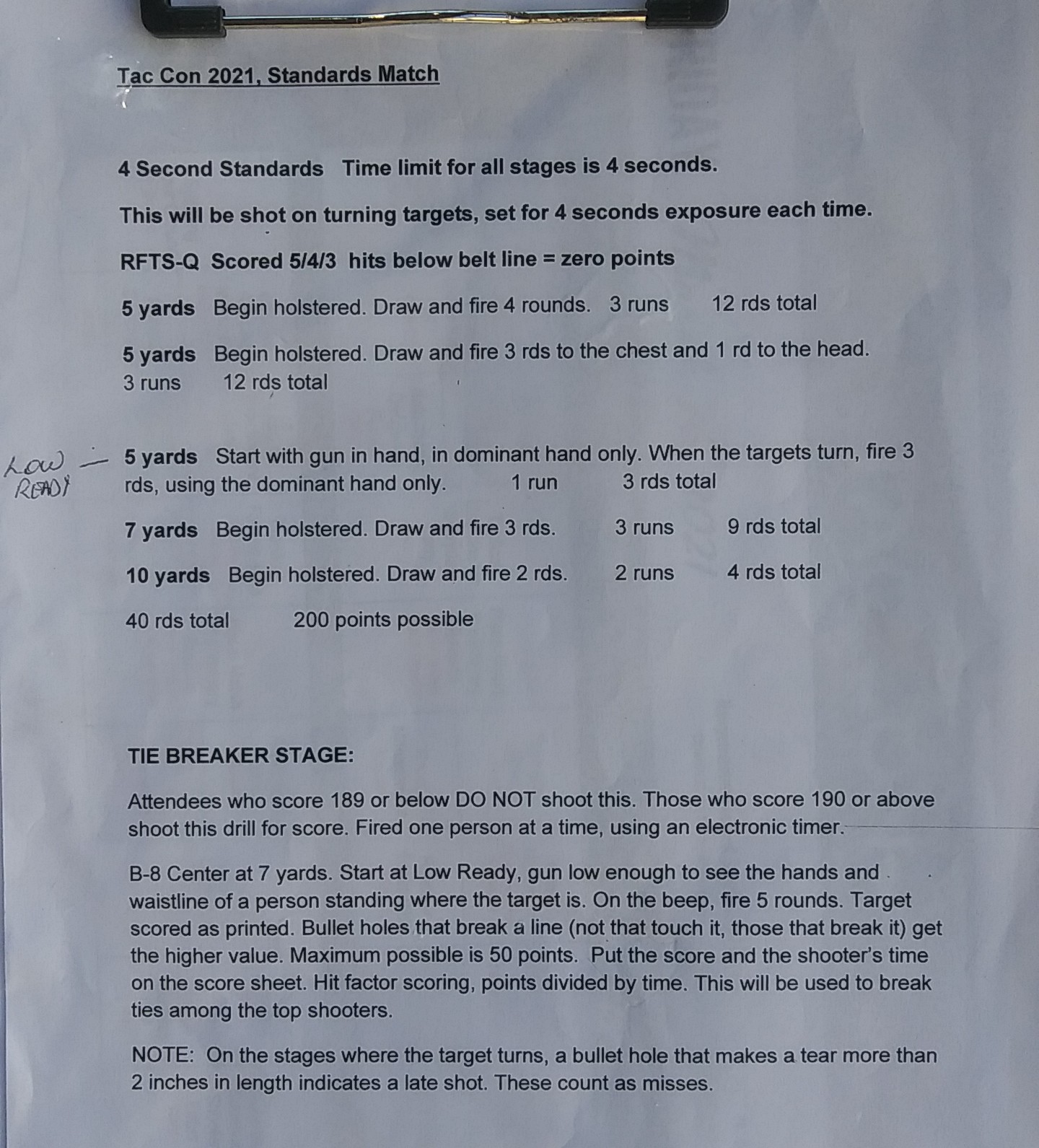
The first part of the match is shot as a standard exercise using turning targets. This was my target for the Standards. My score was 198. The 99 percent score meant I was able to shoot the tiebreaker.

For those who score 95 percent on the standards, a five round tiebreaker is shot on a B-8 target using Comstock scoring (points divided by time). I shot this well, scoring a 49 but using a lightweight snub nose revolver meant I was slower than I needed to be to get into the shootoffs on Sunday.

The top 16 shooters then enter a man v. man shootoff using a double elimination ladder. The shootoff format uses falling steel targets. Each shooter has an array of three clothed steel target with an eight inch steel circle [Correction about the target: The plate is a vertical rectangle, 5.5″ X 6″. If you run a vertical centerline down the mannequin, and a line across at armpit level, the intersection of those lines is the center of the 5.5″X6″ plate] that has to be hit to make the target fall. After knocking down all the shirt targets, the shooter must knock down the mini-popper in back. The popper that ends up on the bottom determines the winner.

It was a fun match and I’m glad I was able to shoot it.
I’ll be recapping the Conference in the next few posts.
Press On!
#mindsetmonday
In 2011, I had heart surgery two weeks before this match and couldn’t move my right arm. The solution for me was to shoot the monthly IDPA match with my Support Hand Only.
Nothing in the world can take the place of persistence. Talent will not; nothing is more common than unsuccessful men with talent. Genius will not; unrewarded genius is almost a proverb. Education will not; the world is full of educated derelicts. Persistence and determination alone are omnipotent. The slogan Press On! has solved and always will solve the problems of the human race.
President Calvin Coolidge
Click anywhere on the cover below to purchase my ebook as a PDF.
Even more about Skill Development
‘three shots, three yards, three seconds,’ https://tacticalprofessor.wordpress.com/2021/02/19/skills-conversation-about-lapd-shootouts/ has generated some good discussion and questions, which makes me happy. Someone posted a question on the Facebook page for Growing Up Guns.
Nothing was said about whether this done from a low or compressed ready, or from concealment, as far as the par time. Being LE based info, I’m assuming this was done from a duty holster. Thoughts?
It’s a progression, just like the size of the target. When someone is first learning to shoot, do it from Low Ready, muzzle below the feet of the target, finger off the trigger. Once a shooter achieves some degree of proficiency, which I would personally define as being able to consistently hit the quarter sheet, then branching can begin. Others might be satisfied with hitting the full sheet consistently as a standard.
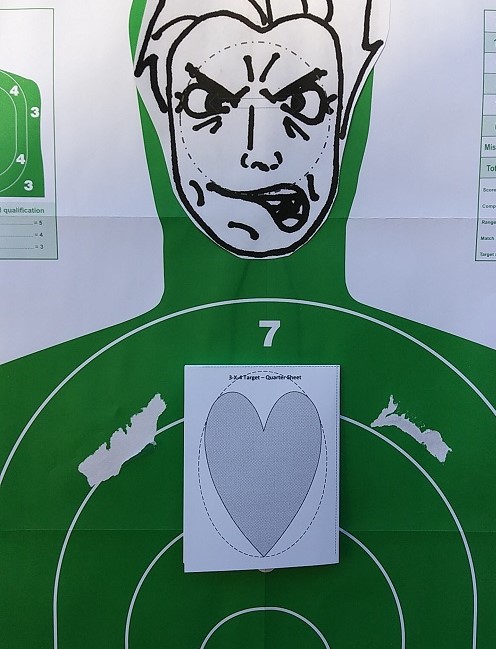
There are numerous possible branching variations.
- From the midpoint of the drawstroke.
- From the holster. Take your pick of open, concealed, or Level III Security.
- Primary Hand Only from Low Ready
- Support Hand Only from Low Ready
- Etc.
I use the term ‘midpoint of the drawstroke’ rather than ‘compressed ready’ because I’m not a fan of muzzling suspects prior to making the SHOOT decision. If the bore is parallel to the ground, there’s almost no way to avoid muzzling others. From that perspective, the idea of having the bore parallel to the ground as a ready position is purely “square range” thinking.
For those who are feeling exceptionally froggy, try stacking all three targets on a single silhouette. Shoot all three targets as one string using three round magazines and reloading between targets. Obviously, your time will be more than three seconds. Keep in mind that the second most missed shot is the first shot after a Stoppage Clearance. Reloading is a Stoppage Clearance so you’ll have two opportunities to maintain your focus.
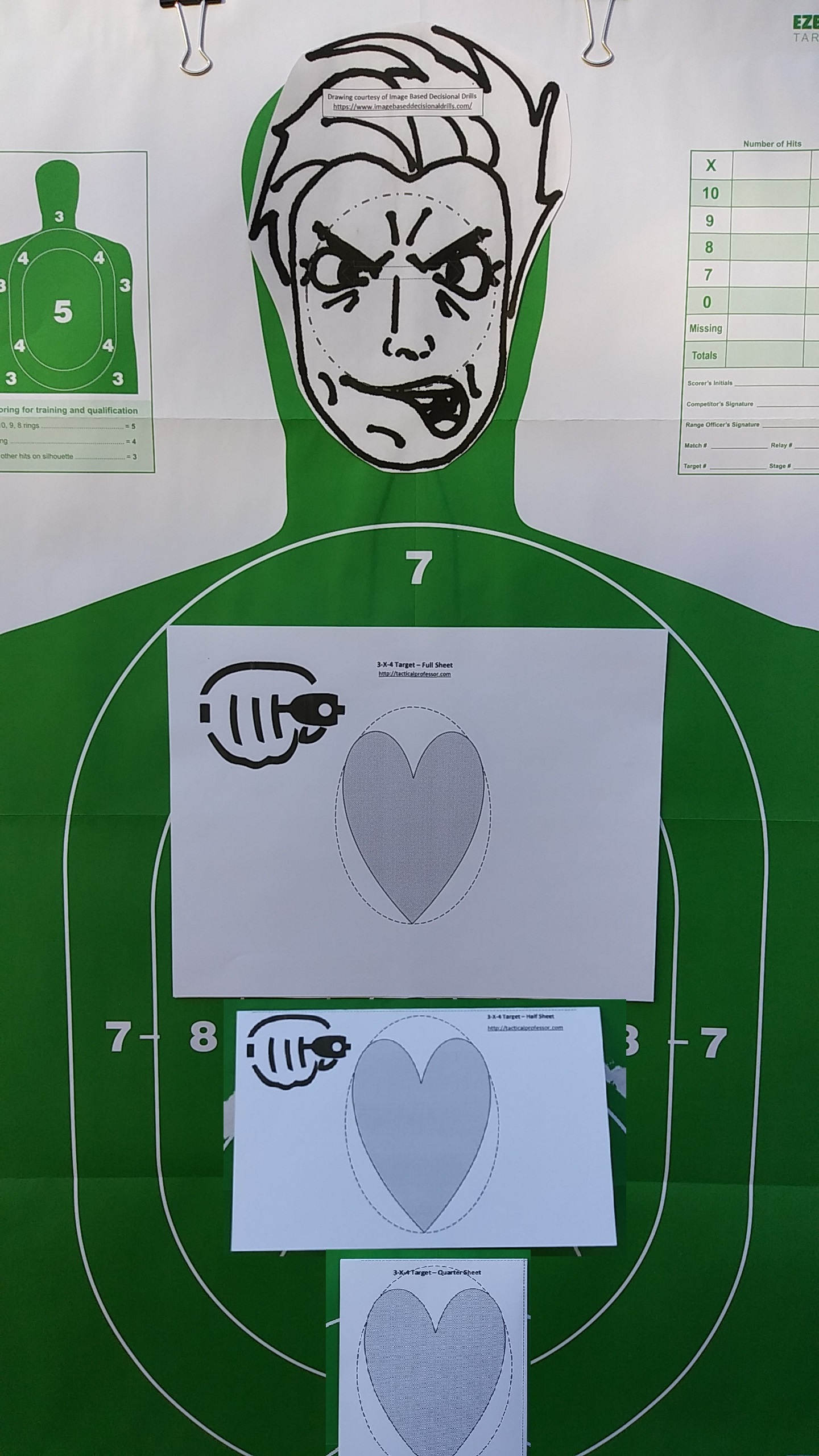
The end outcome, consistent hits on a variable sized target, is the focal point of the drill. There are numerous tasks that can achieve it, most of which have value.
Click on the image below to order Real Shootouts of the LAPD.
Skills conversation about LAPD Shootouts
#fridayfundamentals
I was talking with a friend of mine, who has Been There and Done That (BTDT), about Real Shootouts of the LAPD. He asked:
What was your biggest conclusion after writing the book?
DIA Guy
“When Frank McGee (head of NYPD firearms training in the 70s) said ‘three shots, three yards, three seconds,’ he wasn’t far off the mark” was my response. I still think that on-duty POlice shootouts may be a different story but the off-duty shooting situations are much like those of an Armed Citizen.
We then started talking about the difference between ‘when to shoot’ vis-à-vis ‘how to shoot’ training / practice. He had an interesting take on targets in terms of ‘how to shoot.’
What he tells his students is,
Use a sheet of paper. When you can consistently hit that, fold it in half. When you can consistently hit that, fold it in half again.
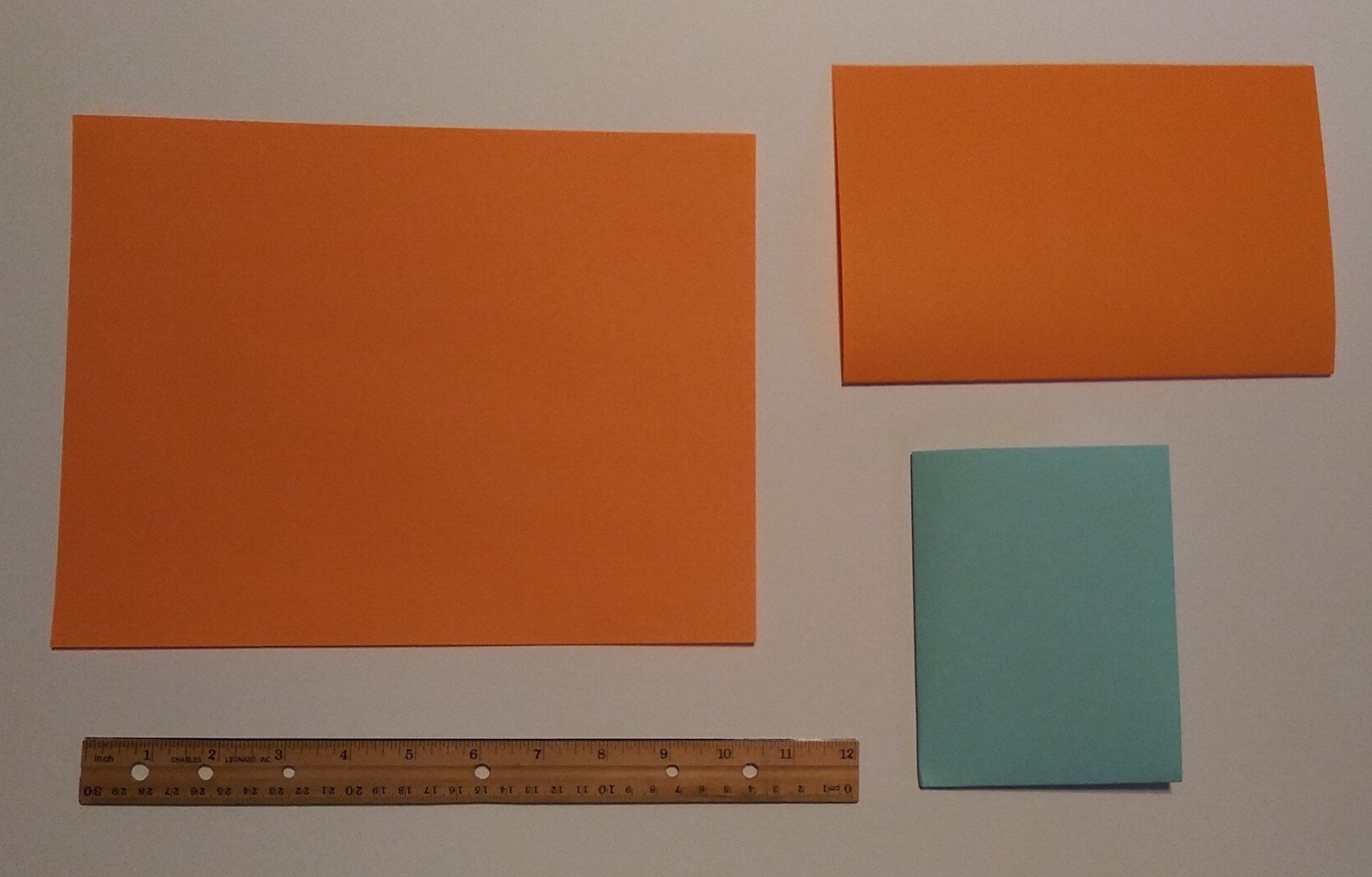
How do we combine that concept with ‘three, three, three?’ Since I am a firm believer in consistency, let’s do it three times in a row. That would make it 3X4. I also think context is important, so let’s put the sheet of paper on a silhouette. Place the silhouette at three yards. Fire three shots at the target. Repeat twice for a total of nine rounds fired in three strings of three. Since it’s a three second Par time exercise, you can use a Par timer app on your phone with your earbuds underneath your hearing protection. I like ‘Dry Fire Par Time Tracker’ but there are others.
If all three strings of three shots hit it, fold another sheet of paper in half. You’ll end up with a target 5.5 x 8.5 inches. Repeat the three strings. You should have nine hits on the half sheet of paper.
Assuming you have all nine hits on the half sheet, fold another sheet of paper in half twice. This time your target will be 4.25 x 5.5 inches. Shoot the three strings again.
Now you’ve done a good 27 round workout that is ‘Reality Based.’
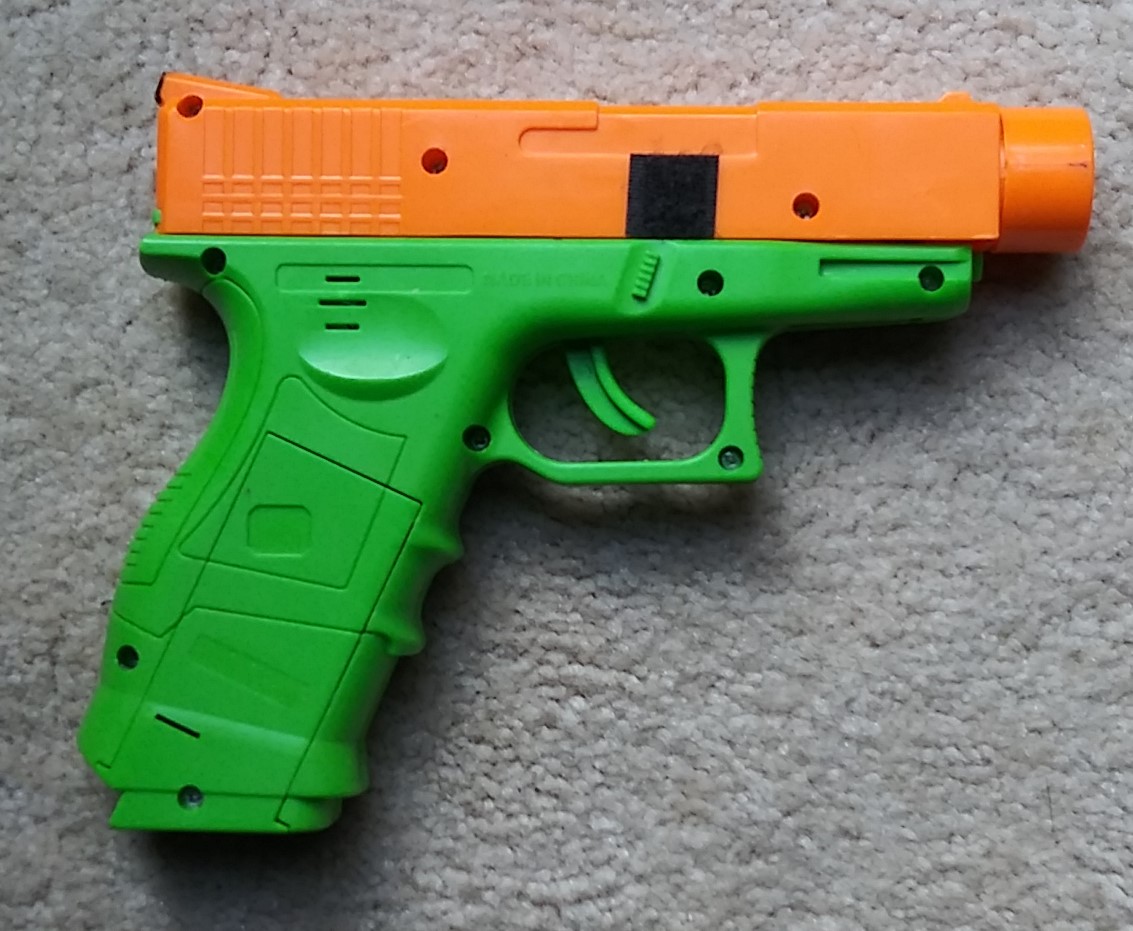
When you get home, put your gun away. Get out your Blue Gun, Nerf gun, or water pistol and do some ‘when to shoot’ exercises.
Click anywhere on the image below to order the book.

 tacticalprofessor
You must be logged in to post a comment.