Double trouble: Media bias and downrange incident
I follow the stories in The Armed Citizen column of the NRA Journals each month. For copyright reasons, the stories have to be re-written. With the more interesting ones, I try to track down the original story to see if there is more detail. A story in the August 2015 issue involves a downrange incident and piqued my interest to find out more about it. The results were interesting. The Armed Citizen entry is as follows:
Breaking up before the big dance carried a price for several people. Two Wisconsin teens had a lovers’ spat before the prom, after the girl’s parents had spent $500 on a dress. The girl’s parents asked the boy to partially reimburse them since he backed out of the date. The Madison boy stewed about the request and became enraged. He returned to his girlfriend’s house in the wee hours of the morning and tried to break in. The girl’s father caught the boy and called him to task, prompting the boy to draw a knife and stab the man seven times. While the two males were grappling, the girl’s mother came out and fired a handgun into the air. The gunfire distracted the youth, and the man wrestled the teen to the ground. The boyfriend faces multiple charges, including attempted homicide. The girl’s father was airlifted to a hospital to have his wounds treated. (Wisconsin State Journal, Madison, Wis., 5/8/15)
One of the first links I found was to the original Wisconsin State Journal article. It did indeed provide more details, such as how the boy attempted to make entry into the house and the fact that he first of all nailed the father with a shovel. Several other links I found, for instance CBS News, referenced the Associated Press edition of the original article. Somehow, the fact that a handgun had been involved in stopping the incident was left out of the AP edition I found at CBS. At first I thought CBS had edited it but I decided to check. I found other outlets carrying the exact same words from AP, so it was the Associated Press that omitted the handgun detail, not CBS. I’m sure that was unintentional due to brevity requirements or somesuch. Yeah, yeah, brevity requirements, that’s the ticket.
There are several things I find worthy of consideration regarding the event itself. First, incidents where there is a family member or other innocent person in between an Armed Citizen and a criminal attacker are what I call downrange incidents. These are much more common than people like to think. The reason is simple. We’re around our families and friends at lot, typically at least half of each day. But the amount of forethought and practice gunowners tend to give this fact tends to be minimal. Part of that represents the way the indoor range practice environment is set up. It doesn’t lend itself well to practicing for downrange incidents. Unless someone is very confident of their skills, downrange incidents are probably going to be resolved at very close range as Meghan Brown did after a man broke into her home and began fighting with her fiance.
The two rolled around, breaking the dining room table and chairs. Planthaber [the fiance] said it lasted about two minutes. Hill [the invader] had a good 80 pounds on him and was winning.
While they were fighting, Brown got her gun from the bottom drawer of her nightstand.
She trained the weapon [a pink .38-caliber revolver] on the man, but was unable to shoot because Planthaber was too close. [I am willing to bet money she positioned herself as close to them as she possibly could.] She followed his movements.
‘I had my gun drawn, focused in on him; as he moved, my gun moved,’ she said. ‘I waited for my shot, and when I saw an opening, I fired.’
Unfortunately, I don’t have a really good answer about how you practice for this, especially in the indoor range environment. If your range will allow you to place a hostage type target at 1 yard, you could practice single shots starting from a ready position off the target. Many ranges will not permit this though, so ask first. You may have to explain what your objectives are and perhaps allow the staff to supervise you.
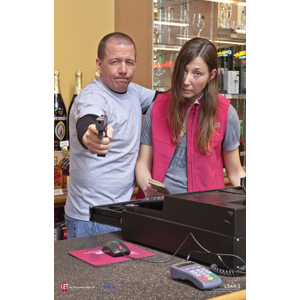
LSAR-2 target from Law Enforcement Targets
At the very least, some mental preparation and mental rehearsal is in order. DO NOT dryfire practice this with a real gun and real people, even if you think the gun is unloaded. That’s a recipe for a Negative Outcome.
If you have access to an outdoor range, here’s a practice drill you could do. If your situation permits it, you could also try this with Airsoft in your backyard.

Another aspect worth considering is the possibility that the male of the household will end up in a physical struggle with a criminal attacker and a female member of the household will end up doing the shooting. Both of the above incidents are examples of that dynamic. I have dozens more in my database. Knowledge of how to operate a firearm and having the will to use it will probably work out better than having a stab a man to death with a butcher knife. Note also that wasp spray didn’t have any effect in this incident.
At some point, ‘the husband was having trouble controlling the suspect and called out to his wife,’ [the Sheriff’s Office spokesperson] said. That’s when the woman ran to the kitchen and retrieved a [butcher] knife, fatally stabbing [the attacking criminal].
For those couples who are serious about personal protection, thinking about it ahead of time may pay off. This is an article I wrote about Protecting Your Family: Training for Mutual Defense.
The Tactical Professor’s Pistol Practice Program
Why a Practice Program and not a training program?
I created the Pistol Practice Program (PPP) to fill a need for many gunowners. Most gunowners are self-taught and generally are not familiar with a structured approach to skill development. There is a great deal of information available now on how to shoot a pistol. However, there is much less information available on how to practice firearms skills over a period of time to achieve greater confidence and proficiency. As Aristotle said:
We are what we repeatedly do. Excellence, then, is not an act, but a habit.
My goal was to create a program that would get gunowners into the habit of shooting well. I created a step by step approach tailored to the needs of the casual shooter but challenging enough to satisfy the enthusiast. Designed as a series of range sessions, you can practice at your own pace as your schedule permits.
In the case of those who have attended training, your instructor probably said that a firearms class only provides a foundation of skills. To maintain those skills and improve, people who own pistols need to practice after training. Having a program also makes shooting more fun because the shooter develops a sense of accomplishment from the practice. This program is not concerned with what particular technique the shooter uses. Over time and by working the PPP, shooters will determine what works best for them.
The vast majority of gunowners only have access to indoor or public ranges where the type of practice they can do is rather restricted. The PPP takes that constraint into account and presents drills that are indoor range friendly and yet relevant to skill development. The livefire range sessions are then supplemented by dryfire sessions that can be done safely at home. Doing so allows you to develop skills that usually cannot be practiced at an indoor range. How to practice at home safely is thoroughly explained.
The PPP is available on CD. Its contents are mobile device friendly so you can copy the drills to your smartphone or tablet. If your device can access a PDF reader, you can easily take the exact drills to the range with you without having to lug along a book or write down the contents of a DVD. You can also put the dryfire audio sessions on your device for maximum convenience.
Those who are teaching a friend or loved one how to shoot a pistol will find the PPP provides a solid structure for their time at the range. For those who have attended a training class, the PPP provides a way to maintain and build the skills they learned in class. Law enforcement officers can use the PPP to keep your shooting skills tuned up in between qualifications and make qualifications less stressful. Put whatever practice ammo you receive from the department to good use instead of frustrating yourself by shooting the qual course over and over.
Contents of the PPP
- A Program Guide to get you started
- A Log Sheet to keep track of your progress
- 12 Primary Livefire Sessions (50 rounds and Indoor range friendly)
- 12 Secondary Livefire Sessions (50 rounds) for those who want more practice activity each time at the range
- 12 Structured scenarios designed to emphasize and train the interactive aspects of personal protection
- 6 audio guided Dryfire sessions (less than five minutes each)
- Tip sheets on firearms safety, interacting with law enforcement, common mistakes, etc.
I have drawn on a wide range of training experience, from teaching NRA Basic Pistol classes to my time as the Chief Instructor of the elite Rogers Shooting School, to create this Program. There is no doubt in my mind that shooters at all levels of skill and experience can benefit from it.
The PPP CD is available on my webstore. At $19.95, it’s about the cost of one box of centerfire ammo. Bonus: the first 100 orders will receive a Rogers Tap-Rack-Training aid, a $5.00 value, at no charge.
Law Enforcement Officers Killed Audio CD
Annually, the FBI publishes the Law Enforcement Officers Killed and Assaulted report. A key part of this report is the written Summaries of the circumstances surrounding the death of each Officer Feloniously Killed.The FBI provides a concise account of the individual incidents where an Officer(s) was killed.
One of the things I have been unhappy about when training LEOs is finding out how few read the Summaries. I ask every LEO class how many have read LEOKA and almost all the hands go up. But when I ask how many have read the Summaries, almost all the hands go down. While the tabular data in LEOKA is interesting, the Summaries give much more insight into the circumstances of how Officer deaths occur and provide context on how to avoid becoming a victim Officer.
In order to make these Summaries more accessible to the Law Enforcement community, I’ve recorded the 2013 Summaries as audio narratives on an audio CD. Each Summary is narrated individually for your listening convenience. In addition, audio narratives of a number Officer killings not reported by the FBI are included. For supervisors, playing a few of the Summaries at roll call could be a sobering way to put your Officers in the right state mind for their shift. For individual Officers, listening to a few of them on the way to work may help you get mentally tuned up.
The LEOKA Narrative audio CD can be purchased on my webstore. There’s also a link at the top of my blog.
Common sense
Isn’t it just common sense to ensure you know what you’re shooting at?
That question was posted on my Claude Werner, Researcher and Analyst page.
It’s an important question that we need to put in perspective.
Not intending to be pejorative but there is no such thing as ‘common sense.’ What we refer to as ‘common sense’ is actually learned behavior based on our past experience.
For instance, as adults, we consider it ‘common sense’ to not stick our hand in a fire. When we were three years old, we didn’t know it would hurt and probably found it out the hard way.
Similarly, we as gun people would consider it ‘common sense’ to not look down the bore of a firearm. If you gave a pistol to an Australian Aborigine, one of the first things they would do is look down the bore because in their worldview, knowing what’s in a hole is really important. Even Al Gore did it when he was searching for the Internet in Viet Nam. That was before he realized he had to invent it.
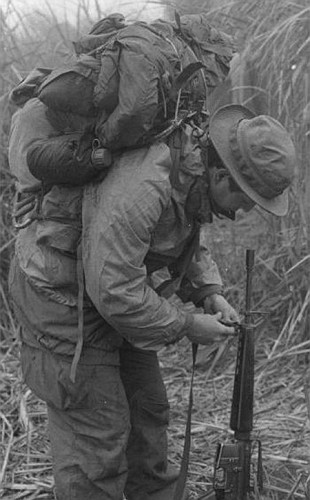
Al Gore looks down bore.
Ninety-nine percent of what most people know about firearms usage they learned from TV and the movies. In those media, there is never any ambiguity about the shoot/no shoot decision. As a result, when people get placed in a real set of circumstances, they do indeed default to their ‘training,’ which is the media programming. So they tend to make mistakes and shoot, even if it’s not appropriate. I once bemoaned to a colleague that my Threat Management classes didn’t sell. His response was “Nobody buys a gun with the idea that they’re not going to use it.” His comment put it in perspective for me.
The Importance of Target Identification
Deputies found a 32-year-old man who said that he and his wife were sleeping when they heard a noise in the kitchen.
The husband took his handgun and walked in the kitchen area, where he shot the victim.
After the shooting the husband recognized the victim as his younger teenage brother.
Man shoots, kills brother thinking he was burglarizing home
Yet another tragic example of why I stress target identification so much. These situations are absolutely preventable. As I’ve said before, if you live with anyone else, my analysis is that there is a 97 percent probability that the ‘bump in the night’ is a member of your own household. With those kinds of numbers, gunowners cannot take the risk of shooting someone at home without establishing a positive ID.
This kind of situation is a further example of why I say we have to be very cautious of what we take of from our training, and even more so, what we read. Much of the good training available is conducted by former law enforcement or military personnel. Just as much as any of us, they are subject to unconscious biases resulting from their experiences and training. Since most reading now is done on the Internet, you have to assume everything you read is wrong because most of it IS wrong.
Responding with a firearm to a noise at night in the home absolutely requires that you visually verify your target before shooting. You probably will need a flashlight for that. And stealth is not your friend, it is your enemy. Therein lies a major divergence from the law enforcement officer or soldier, to whom stealth is an ally. The notions that ‘the light draws fire’ or that criminals will wait in ambush for you if they hear you coming are nonsensical. Those are bad paradigms for us to insert in our thinking. If your background is such that having assassins waiting in ambush for you in your own home is a concern, you need to work on some serious hardening of access points to your home.
If you keep a gun at home, put a flashlight next to your gun; no ifs, ands, or buts about it.
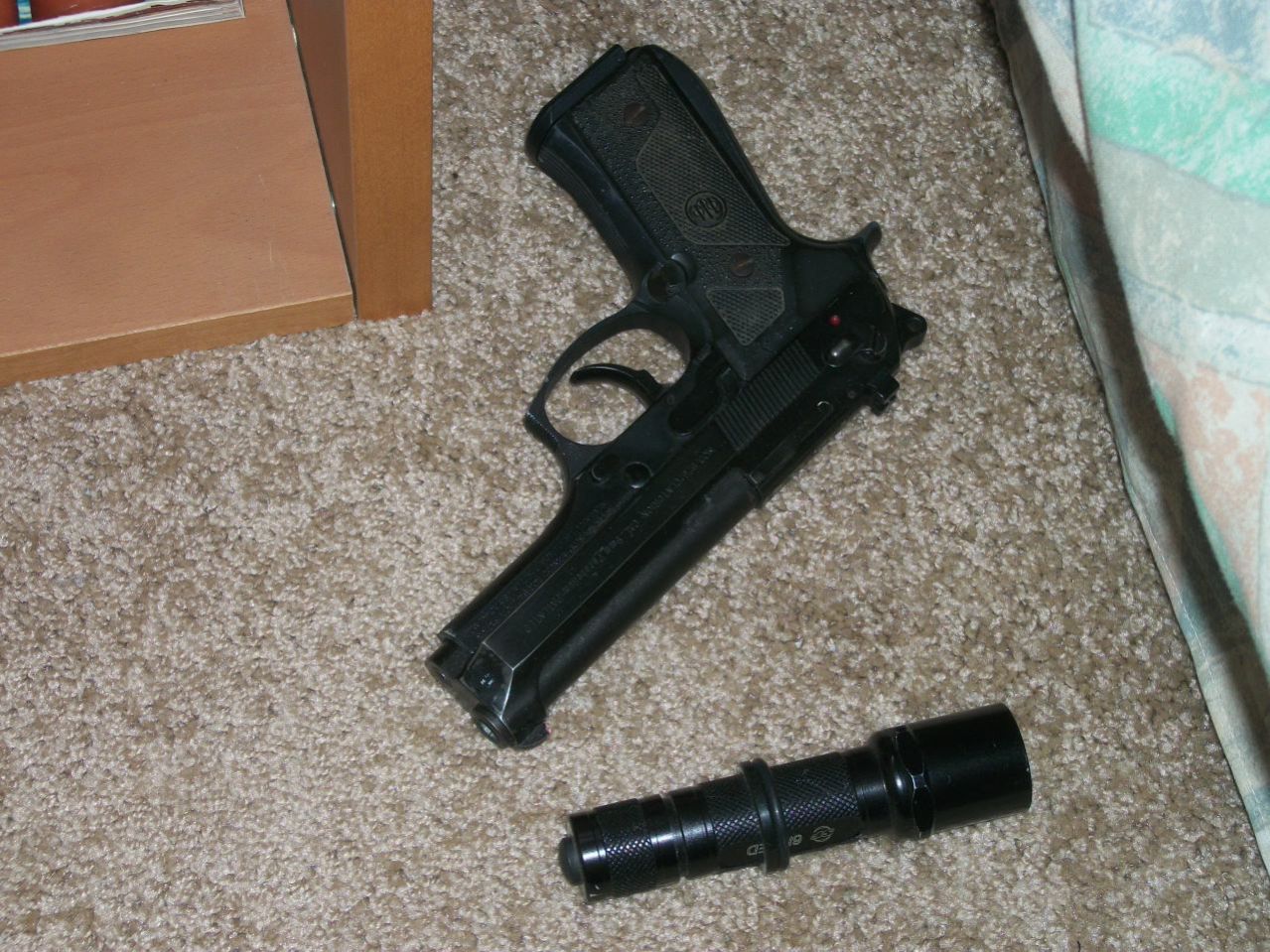
Next time you go to the range, take the flashlight with you. Instead of just blasting 50 holes in a silhouette, shoot two shots at the silhouette 25 times. Sequence is very important in how you do this.
- Have your gun in your shooting hand and your flashlight in your support hand. The gun is not pointing at the target and the light is off.
- Before each two shot string, say out loud “Who’s there?”
- Wait to listen for an answer. If you go to the range with someone, have them stand behind you and sometimes respond with “it’s me, Daddy” or something similar.
- If they say that, immediately put your gun down on the bench and abort that sequence.
- Then illuminate the target without pointing the gun at it.
- Finally, bring the gun up and fire the two shots.
One of the things you will find when using this sequence is that the worthwhile two handed shooting techniques don’t work well for it. Harries is both clumsy and dangerous to assume when you already have the light on the target and are keeping it illuminated while presenting the pistol. The Rogers/Surefire technique takes some time and manipulation skill to assume. What you will discover is that only the Cheek Technique or the FBI Technique work well in this context.
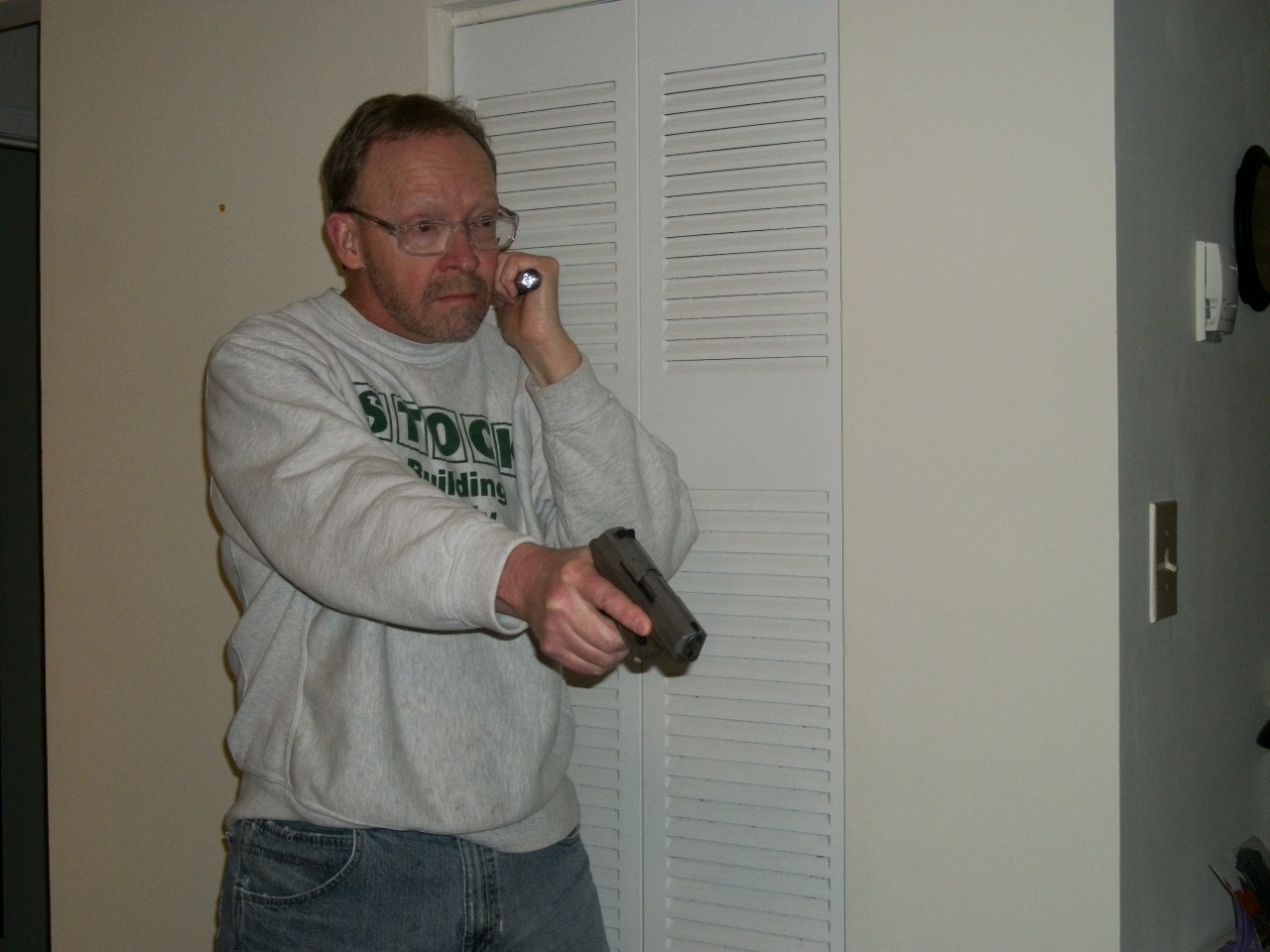
That means you have to learn to:
- Speak while holding your gun.
- Abort the shooting sequence if there is not a threat.
- Do a dissimilar task with the other hand, i.e., orient the flashlight and work the switch, while keeping your gun off target and your finger off the trigger.
- Shoot with one hand only while continuing to perform the dissimilar task.
- Manipulate the safety or decocker of your weapon with one hand while holding something in the other.
For the final 5 repetitions (10 rounds), put up a clean silhouette target and shoot the LAPD Retired Officer Course (10 rounds at seven yards). Measure how well you do. You’re going to find it’s a lot harder than you think.
That sequence is obviously rather involved; practice it before you have to do it for real or you’ll forget to do it or get it wrong. Forgetting to do it is what leads to tragedies.
Summer Special on DVDs
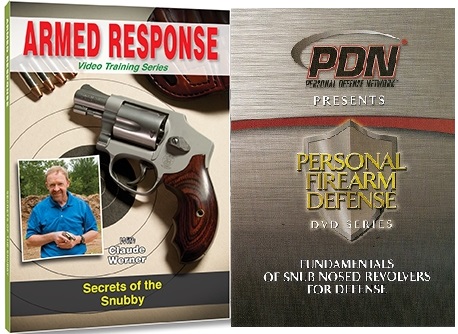
The warm weather is here and I know a lot of folks are going to start carrying snub revolvers for the summer. I love snubs and have spent years learning how to run them well. As far as I know, I’m the only person to ever have won six Sanctioned IDPA Championships with a snub.
At the same time, I acknowledge they’re not the easiest guns in the world to shoot. That’s why I made two DVDs about the best techniques for using snubs and getting the most performance out of them.
To kick off the Summer, I’m offering both DVDs together as a package at a discounted price. Also included is a free bonus CD with two dryfire practice regimens and a reduced scale practice target to help you keep your skills up.
You can get the package on my webstore.
You can tell from the music (DJ Siamey) on this one that I’m a Trance music kind of guy.
Police and Glocks
The Los Angeles Times recently published an Op-ed piece entitled Why the police shouldn’t use Glocks. I find it shortsighted and the author’s reasoning incomplete and faulty.
Although I prefer a Double Action Only or Double Action/Single Action gun for my personal use, I perceive several issues with the article.
The half-inch difference of trigger travel may not sound like much, but it can be the difference between life and death.
The statement is a core issue. There’s no control statement about how many successful uses can be attributed to the GLOCK’s shorter trigger. The first shot is both the most important and, with DA guns, the most often missed. Aside from the possibility of ending the fight sooner, the issue of errant rounds flying around the community is also disturbing.
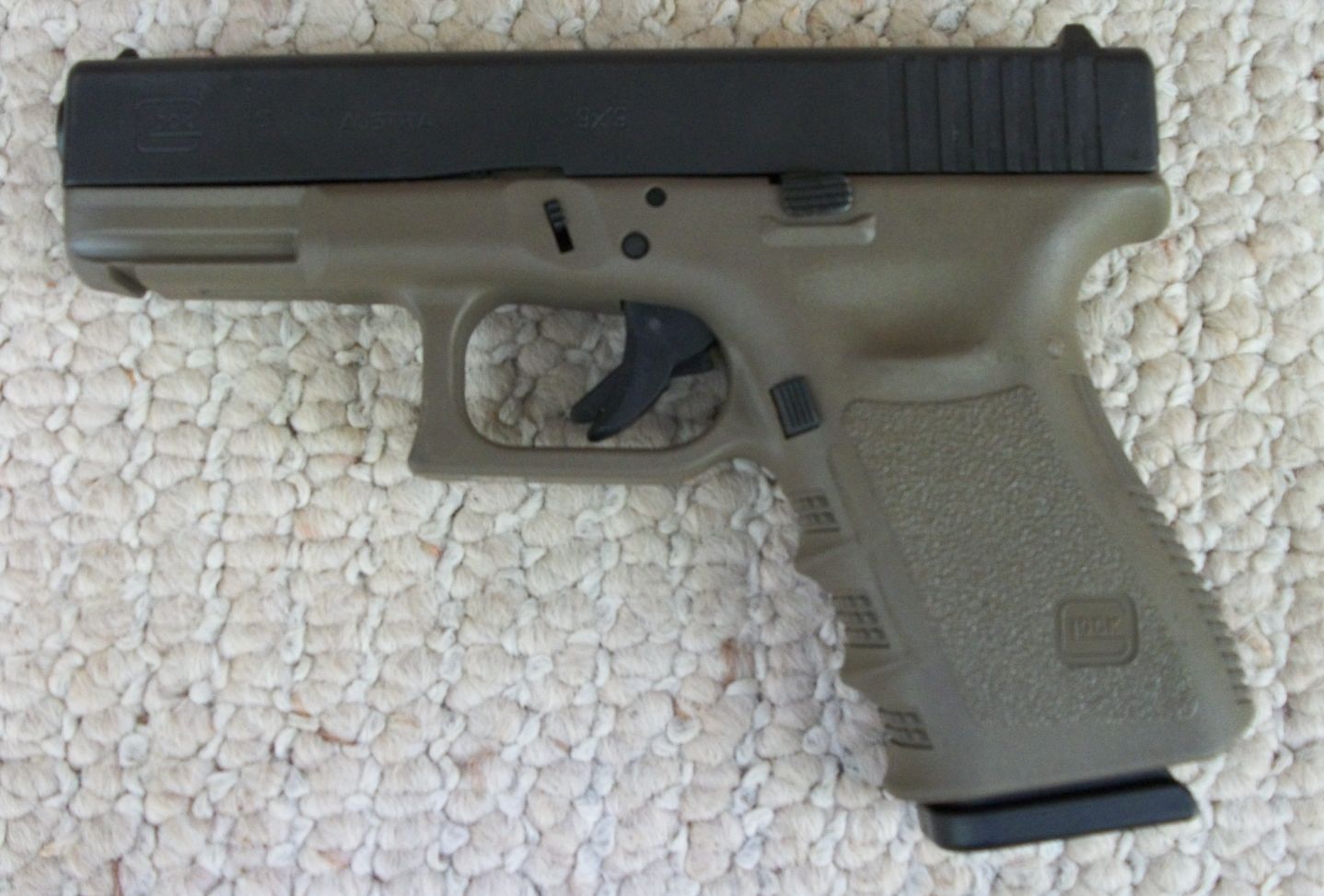
A number of major and minor agencies use guns with much longer double-action triggers that are just as easy to fire deliberately but that are much harder to fire accidentally.
That’s a well couched statement. If we substitute the term ‘hit with’ for ‘fire,’ it completely falls apart. Making the gun go off is just part of the equation; hitting the intended target is equally important.
Much as I like them, double-action triggers are NOT just as easy to hit with deliberately as a Glock’s. If we include shooting in reaction time, vis–à–vis deliberately, the equation shifts even more in the Glock’s favor. For smaller statured officers, it’s sometimes nearly impossible to grip and shoot a double action gun well. Having taught numerous smaller military personnel to use the M9 pistol, I can say unequivocally that grip size and trigger reach can be a major problem.
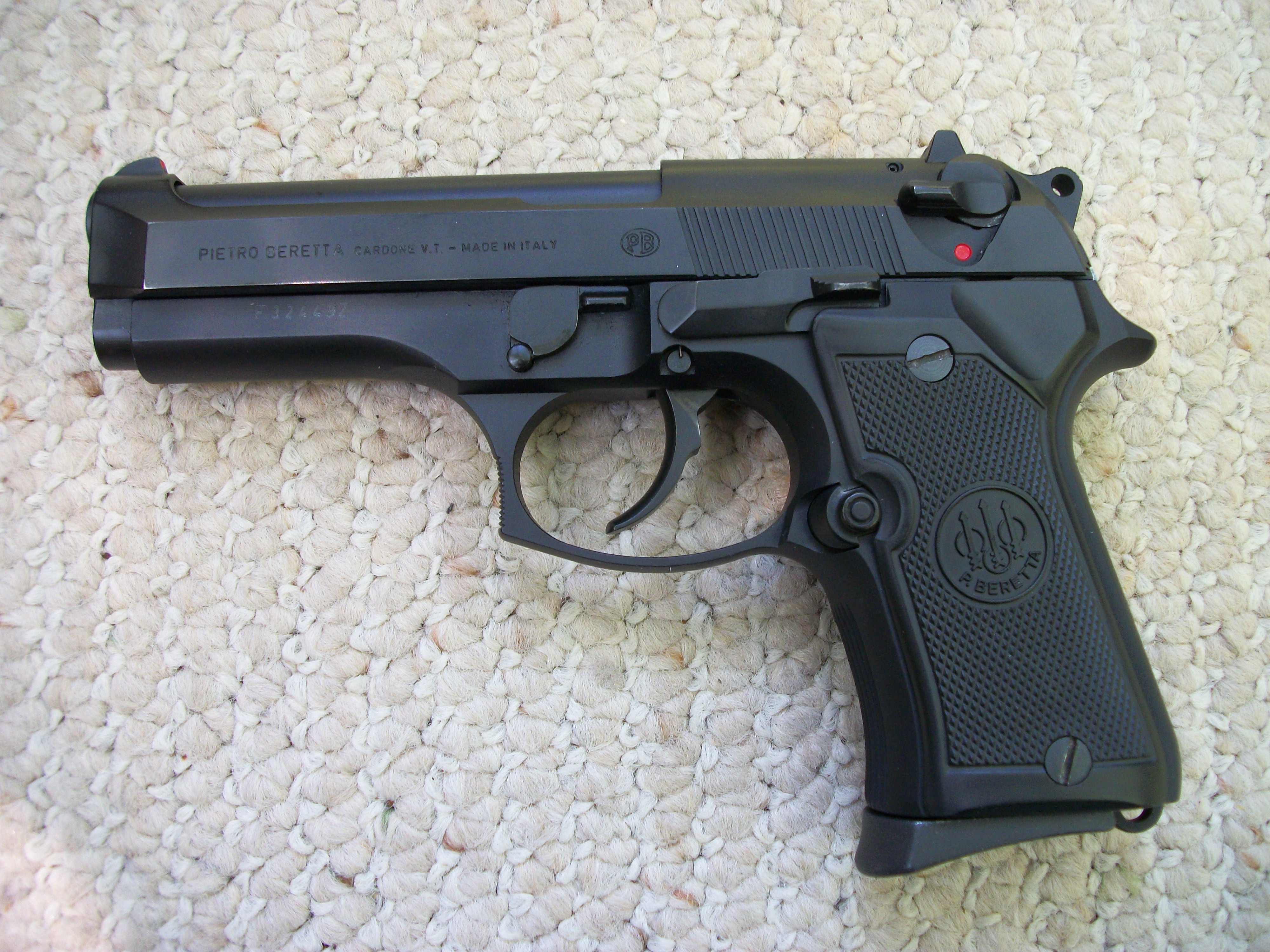
Granted, many officers can learn to shoot a double action gun reasonably well with plenty of training and regular practice. However, that’s not the reality of police administration, either from the hiring or the budgetary perspectives.
What critics should be addressing instead is the brutal reality that short trigger pulls and natural human reflexes are a deadly combination.
In a shootout with a criminal, that’s exactly the point that the author seems to miss. A well-placed source provided some insight to me about the FBI’s decision to issue Glocks years ago, after resisting them for years. “The New Agents could shoot them so much better than the Sigs it was striking.” This from the law enforcement agency with perhaps the most extensive firearms training program in the world.
All equipment has issues associated with it. The accidents cited in the article are tragic and regrettable. However, arguments similar to the author’s could be made for putting speed governors on police vehicles because police officers sometimes get into crashes, with resulting casualties, during pursuits or requests for service. I don’t see any call for that. If avoiding unintentional casualties is the main issue and only criterion, why not just go back to revolvers?
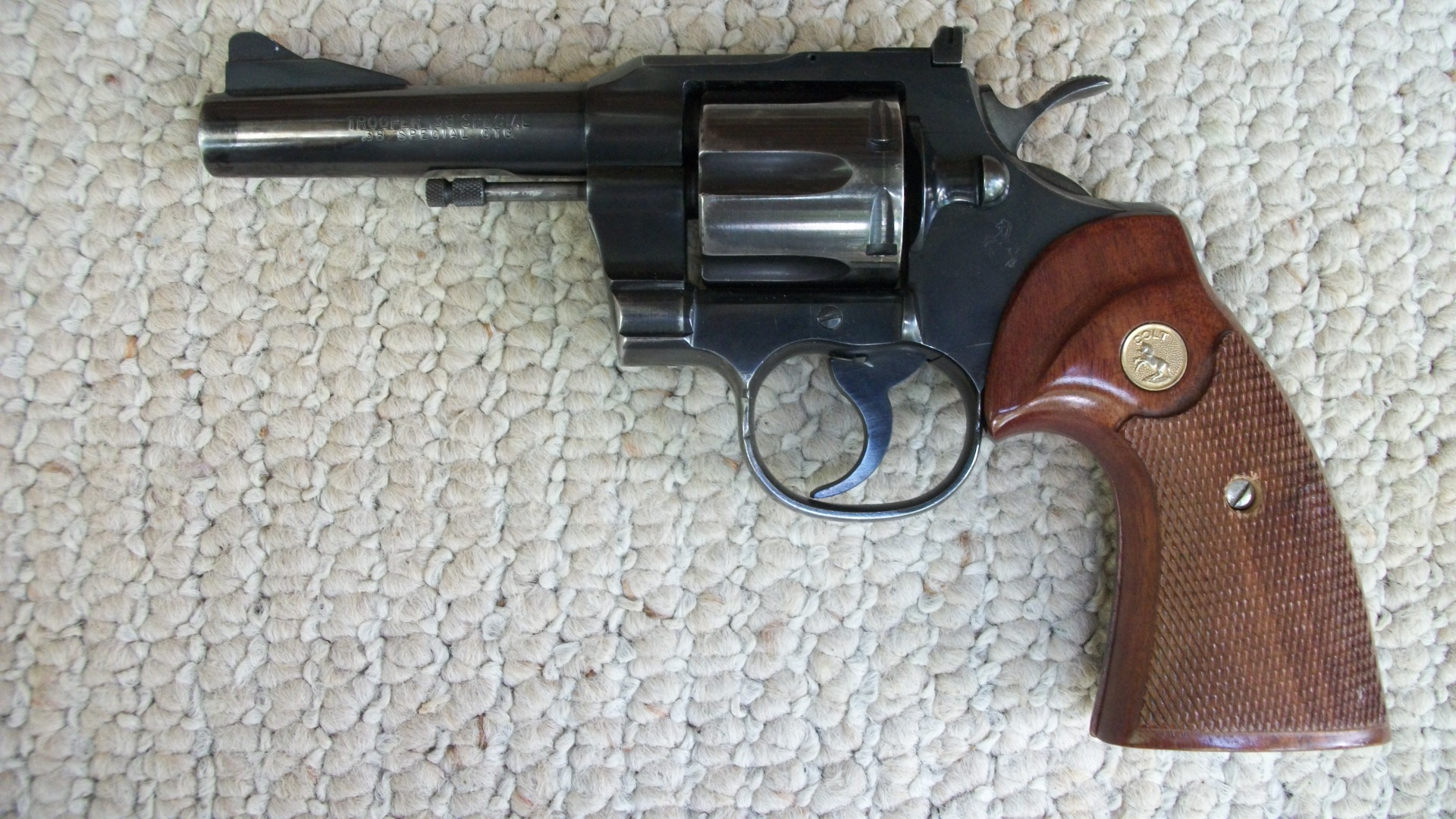
The author didn’t make much of a case for his opinion other than citing a few Negative Outcomes. Without providing the other facets of the decision making process and then weighting the various aspects, it’s a weak argument. The selection of a firearm, whether for police service or individual use, is a complex one. The ability to use it safely is key. However, the ability to use it effectively is just as important.
Why don’t people train?
Owning a handgun doesn’t make you armed any more than owning a guitar makes you a musician.
–Jeff Cooper
Of all the things Jeff Cooper said, the above saying has become the most prevalent mantra within the firearms training community. It has been memed in many ways. The latest I saw was ‘Without training, you are just pretending.’ The original saying and its various memes allude to the need for gun owners to be trained, ‘regulated’ in the sense of the Second Amendment, in order to be able to effectively use their weapons for personal protection. Why, then, don’t more gunowners pursue training beyond the bare legal minimum, where required?
First of all, let’s confront the validity of the statement itself. We should note that there are quite a few capable musicians and singers who are self-trained. With regard to firearms, the firearms training industry has really only existed since the mid-1970s, when Jeff Cooper founded the American Pistol Institute at Gunsite. Before then, even many police officers didn’t receive much in the way of training. There were virtually no venues available for formal training for Private Citizens, other than the Boy Scouts or Camp Perry. Does this mean that in the 200 years of US history preceding the foundation of API, the American people were ‘unarmed?’ Of course not. Americans have a rich history of shooting predatory no-goods without a moment’s hesitation, even before the foundation of the Republic.
On an almost daily basis, we read and circulate reports of Armed Private Citizens defending themselves, their families, and their neighbors with firearms. The vast majority of these incidents are successfully solved by people who have not one bit of formal training. What this means is we trainers can’t have our cake and eat it, too. Every time we celebrate a successful defense, and rightfully so, we essentially invalidate Cooper’s saying.
What are the reasons a gunowner might cite for not taking training, assuming it’s available, which is a separate issue? There are any number of reasons, such as:
- Time
- Expense
- Accessibility
- Scheduling
- Lack of motivation
- Lack of incentive
- Lack of understanding
Time and expense should be discussed together because they are both personal resource constraints. The time demands on most people are extensive, especially in a single parent family. Similarly, money is tight for the majority of Americans. The question “How much is your life worth?,” another popular meme in the training community, is moot when the rent is due tomorrow and your kids want to eat.
Accessibility and scheduling are another pair of related issues. According to the US Census, 80.7 percent of Americans live in urban areas. Where are most training facilities? Out in the boonies, in what the Census describes as ‘rural areas.’ While there is some instruction that goes on at indoor ranges, my experience is that it is best described as ‘familiarization’ rather than training. This is a huge disconnect. The location of training facilities is a factor that impacts the time issue I previous mentioned. If a person has to budget several additional hours or days, just for travel purposes, that becomes yet another resource constraint.
To its credit, the NRA Training Division is trying to address this issue through the use of a ‘Blended Training Model’ of both online and in-person training. The result among the NRA Instructor community has been mostly anger and serious pushback. Much of the dissension is based on pure economics. I’ll let you draw your own conclusions about that.
With regard to scheduling, when do trainers tend to schedule training mostly? I submit that we schedule when it’s convenient for us, not for the students. That’s one reason I have gone exclusively to short evening classes and one day only weekend classes. Asking people to spend both days of a weekend, out in the sticks, is simply an unreasonable demand on their time.
Lack of motivation, incentive, and understanding are allied factors, as well. About them I will say we in the community simply haven’t made a good case for what we teach and why we teach it. This is especially true in light of the regular reports of people who successfully defend themselves and their families without any training. Although we trainers spend a certain amount of time talking about what we teach, we still haven’t made a good overall business case for “What is the value of training?” Until we do, folks just aren’t going to come. I think the training community might benefit from some Dale Carnegie training for itself.
Rangemaster 2015 Tactical Conference (II)
Continuing on about the Rangemaster 2015 Tactical Conference held annually in the Memphis area, I would like to cover the high points of some sessions I attended.
John Hearne’s Performance Under Fire presentation was so packed with information that it’s hard to take it all in. He does a fine job of refuting the pseudo-science that pervades the personal protection training community. His research is thorough, up to date, and can document fully what he says. An aspect of his approach I like is the way he tracks the original science to see if it has subsequently been refuted. John is one of the few people in the community besides myself who has any clue about how to do research. Here’s a clue; taking information from a firearms or martial arts trainer at face value is not a valid approach. I found numerous points in his presentation quite useful.
He stated that there are actually 21 documentable ‘flinch responses,’ most of which do not involve throwing one’s hands up in the air. So if there are a variety of responses, how do you know which one you will exhibit and is it going to be the same one every time? Years ago, Ken Hackathorn told me to watch surveillance video of convenience store robberies to see how many people threw their hands up in the air when they were startled. The answer is ‘not many.’
One of my personal pet peeves is the continuing blathering about Hick’s Law in the community. John made the point that Hick’s Law was largely discredited in the scientific community decades ago. For those unfamiliar, Hick’s Law states that the more options you have, the longer it will take to make a decision, by a square of the number of choices. The original study was sort of iffy anyway and subsequent research has shown that it’s only true in the absence of any familiarity with the task and absent any practice on the decision making.
The subsequent power law of practice states that the more practice you have at making the decision, the faster you get at making it. There’s some question as to whether the practice/speed relationship is logarithmic or exponential but there’s no question about the validity of the power law. Think about it in terms of when you are driving. When you see the brake lights of the car in front of you come on, there’s no conscious decision making about whether you’re going to hit the gas or the brake, unless you’re a 15 year old student driver.
An important point John made was about the career time of when law enforcement officers were feloniously assaulted. The average time was about eight years. I believe John referenced this from the 2006 FBI study Violent Encounters, A Study of Felonious Assaults on Our Nation’s Law Enforcement Officers, but I don’t recall for sure. This was important to me because it highlighted the factor of complacency in Negative Outcomes.
Although I lack the rigorous methodology that the FBI used, it’s my feeling this is also a factor in Negative Outcomes by Armed Private Citizens. Complacency can be a killer. We see it every day at gun ranges, gun shops, and shooting clubs. Complacency is why some people have one year of experience 20 times instead of 20 years of experience and is closely related to the “I know it all” syndrome. We have all had to deal with ‘know-it-alls’ and ‘spring-butts’ and never like it. It’s up to us individually to make sure we don’t fall into the trap and challenge others who have.
Just to show that John can put his money where his mouth is, he won the High Lawman and Second Place overall in the shooting contest.

Photo courtesy of Tiffany Johnson
I’ll have more about the Conference next time.
Rangemaster 2015 Tactical Conference (I)
The Rangemaster 2015 Tactical Conference is over and I am processing the things I observed and learned from it. The Conference has a long history, dating back to the early days of IDPA in 1998, when it was a sanctioned IDPA indoor Championship. Over the years, it has evolved into the foremost tactical training conference for private citizens in the United States. It is held annually, early in the year, in the Memphis area. The venue for the 2015 Conference was the Memphis Police Training Academy, a truly fine and modern facility.
This year, three dozen of the top personal protection trainers in the country, many of whom are referred to as “T-Rexes,” came together to present or conduct training blocks of two to six hours over a period of three days. The agenda has grown so large that it’s not possible to take in all the training that is available, since sometimes five blocks are going on simultaneously. Some of the training is classroom lecture, some is hands-on with sterile weapons, and some is livefire. There is also a shooting match, for those who choose to participate.
There were a wide variety of topics, ranging from psychology and communications to contact based skills to firearms manipulation. I was able to attend nine sessions.
- Yes, I Shoot Like a Girl, Would You Like a Lesson?
- Surviving Lethal Encounters
- The Law of Self-Defense
- Practical Small Knife Principles
- Performance Under Fire
- Rehabilitating the Experienced Shooter
- The Training/Reality Mismatch
- Kneeling Positions and Combining Them with the Use of Cover
- Women’s Holsters and Accessories
In addition, I was able to make two classroom presentations.
- Tactical Communications for Couples, with my co-presenter Linda Hoopes, President of the Resilience Alliance.
- Negative Outcomes of Firearms Ownership
Upon my return, several people have asked me what my most significant takeaways were. As usual, I learned a great deal, so it’s difficult to say what were the most significant, but here are a few that stand out in my mind, in no particular order.
- A conversation with a mentor of mine, John Farnam, elicited from both of us the experience that when approached for help in a parking lot, it’s almost always a scam or criminal ambush. Fellow trainer Melody Lauer pointed out that there are a few legitimate exceptions, but John and I both feel they are the exception rather than the rule. This indicates that a default response should be formed to immediately and firmly decline the invitation to be a victim and then rapidly vacate the area. Exceptions to that rule should be based on specific articulable reasons and conscious decision-making, rather than by default.
- The T-Rexes are constantly working along the path to excellence. That path includes attitude, skills development, tactics, and a host of other areas. Recognizing that there is an element of chance in every encounter, we work hard on stacking the deck in our favor. ‘Doing the work’ means training regularly and practicing on a daily basis. ‘Good enough’ is never good enough for us. That’s probably why we’re regarded as T-Rexes.
- There is an enormous amount of erroneous, misapplied, or misinterpreted information floating around in the broad firearms and personal protection community. This is especially true in relation to prioritization, legal issues, and skills development.
- The community has a lot to learn about integrating women into it. There was a record turnout of female attendees and women trainers at the Conference this year, my co-presenter being one. Conversations with them, as well as the presentations, were highly enlightening. Many male paradigms either don’t apply at all or don’t work particularly well when used by women. My own presentation was an eye-opener to me in that regard. The Women’s Holsters and Accessories presentation, which was presented by a woman, gave several good examples. A pet peeve expressed by several T-Rexes is men who have women shoot excessively powerful firearms and then laugh when they fail. Our universal attitude is along the lines of the desire to give such jerks a knee lift in the crotch followed by a crack in the jaw and then laugh when they fall down writhing in pain.
I have several pages of notes but those jump out at me. Undoubtedly, more will occur to me as I reflect on the event. I will have more thoughts on specific topics in the near future. There is a photo gallery of the Conference training blocks available on the Rangemaster website.
 tacticalprofessor
You must be logged in to post a comment.