How much work and practice?
Linda Ronstadt made the following comments [3:22] in an interview about how hard she worked at the process of learning to sing as well as she did.
In order to get good, you really have to spend 6 or 8 hours a day doing it.
You have to spend hours and hours and hours, day after day, year after year.
It took me about 10 years to learn how to sing, even after I was a professional.
It took me 10 years until I really had some control of my instrument and I could deliberately do what I wanted to do.
Sometimes, as I continue on with 1000 Days of Dryfire, going to the range weekly to livefire, or taking training from someone else several times a year, I wonder whether I work at it too much. Then Linda comes along and basically tells me that actually I’m only spending a minimal amount of time and effort at it compared to how hard people who are really good at their craft work. Thanks for that bit of motivation, Linda.
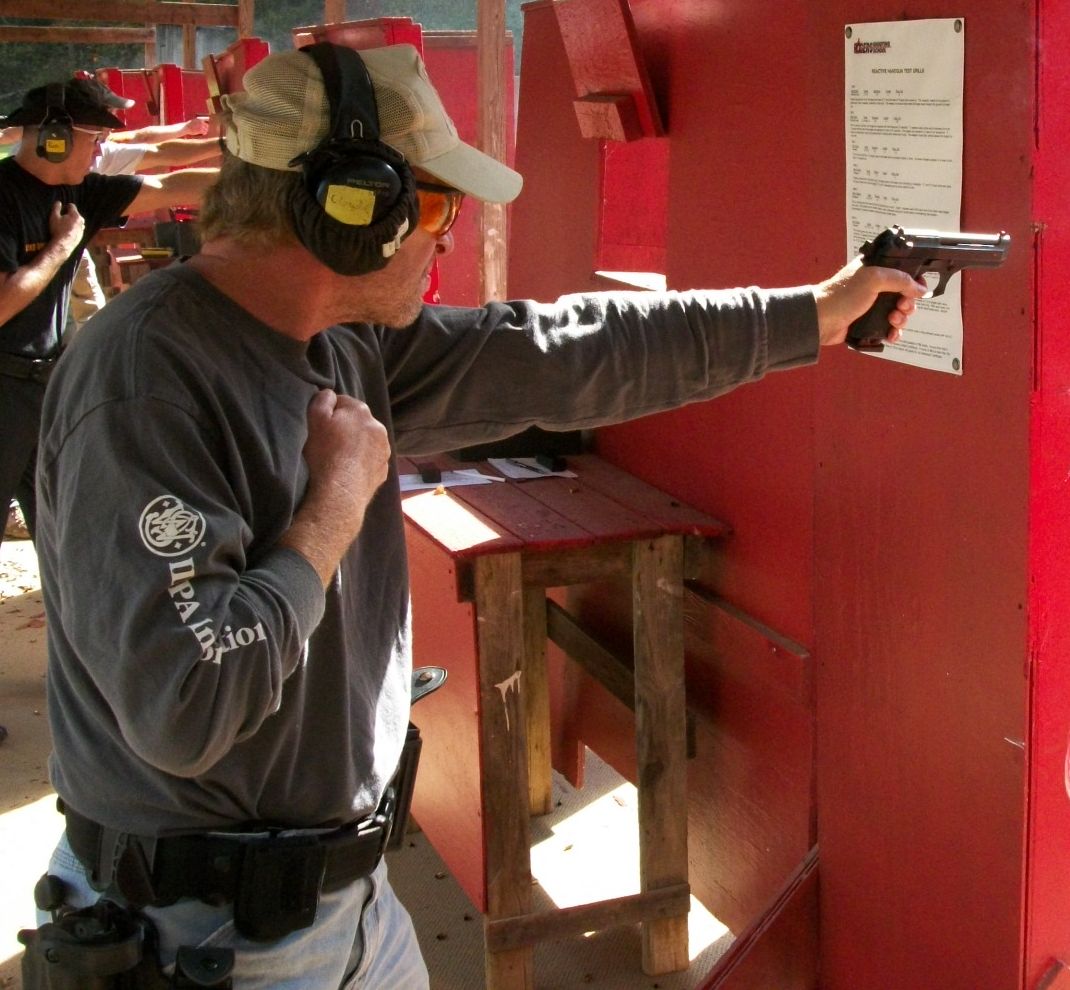
Friday Fundamentals 01 – Establishing Your Baseline
My friend Mark Luell, the author of Growing Up Guns suggested I provide a ‘Friday Fundamentals’ post weekly. We got the idea from my colleague Cecil Burch who wrote a blog post about Fundamentals. It’s a great idea to stay in touch with the basics.
The first installment is Session 01 of my Pistol Practice Program – Establishing Your Baseline. As in any journey, you have to know where you’re starting from before you can get to where you want to go.
The objective of this drill is to determine what distance you can make 100 percent hits on the vital area of a silhouette target. My feeling is that we need to work on achieving 100 percent accuracy because errant rounds in our homes or neighborhoods could be a major problem. Since I also think the first shot is the most important, I structured the session with a lot of first shots but also included multi-shot strings. A lot of people ‘walk their rounds’ into the target even with handguns. This is a huge problem and liability.
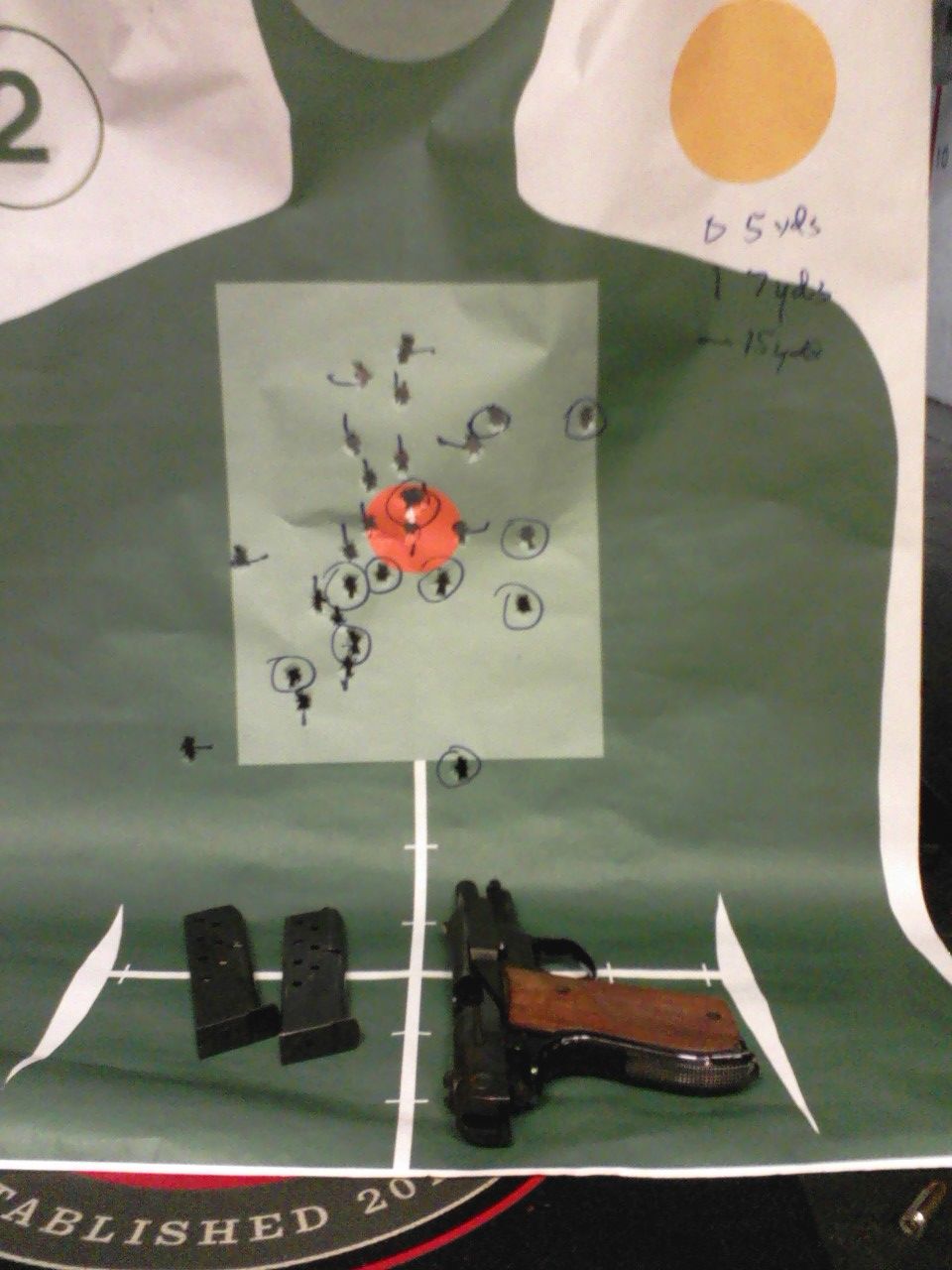 We don’t count hits on the head in this drill because they are actually misses if you are aiming at the body. The head is more than a foot away from the center of the body, if you hit the head when you’re aiming at the body, it’s just a lucky shot and doesn’t count in terms of performance measurement.
Required equipment:
Any silhouette target; B-27, B-21, Q, IDPA, IPSC, etc.
Masking tape (preferred) or magic marker to mark the target.
Pistol, 50 rounds of ammunition
Eye and ear protection
Overview
This drill consists of five (5) Sequences of 10 shots each. The Sequences are untimed.
Setup:
Place target at three (3) yards
Start loaded with five (5) rounds only.
Procedure:
The starting position is Low Ready. This means the pistol is aimed at the floor below the target. For double action pistols, you will decock after each Step.
Sequence 1 (10 rounds)
1) Start with handgun held in both hands, aimed at the floor below the target. Spare magazine loaded with 5 rounds or speedloader with 5 rounds or 5 loose rounds on the bench.
2) Bring the pistol up on target and fire 1 shot at the center of target. Followthrough for one second, then return to low ready. Decock, if appropriate.
3) Bring the pistol up on target and fire 2 shots at the center of target. Followthrough for one second, then return to low ready. Decock.
4) Bring the pistol up on target and fire 3 shots at the center of target. After two shots, the pistol will be out of ammunition. Reload it and fire the third shot. Followthrough for one second, then return to low ready. Decock.
5) Bring the pistol up on target and fire 4 shots at the center of target. After the shots, the pistol will be out of ammunition. Hopefully, the slide has locked back if it’s an autoloader.
6) Place your pistol down on the bench.
7) Bring your target back and mark all the hits, preferably with tape but a marker will do.
8) Write on the target how many hits you made in the body scoring area. I prefer to not count the outer scoring area as I mentioned in Why I hate the -3 zone. Use this format, (3) X/10, X being the number of hits. For this drill, do not count any hits in the head, they are actually misses.
Sequence 2 (10 rounds)
1) Send the target out to 5 yards.
2) Repeat Sequence 1 but with the target at 5 yards instead of 3 yards.
3) When you write on the target how many hits you made in the scoring area, it will be (5) X/10. The number in parenthesis is the distance in yards.
Sequence 3 (10 rounds)
1) Send the target out to 7 yards.
2) Repeat Sequence 1 with the target at 7 yards.
3) Write on the target how many hits you made at 7 yards. (7) X/10
Sequence 4 (10 rounds)
1) Send the target out to 10 yards.
2) Repeat Sequence 1 with the target at 10 yards.
3) Write on the target how many hits you made at 10 yards. (10) X/10
Sequence 5 (10 rounds)
4) Send the target out to 15 yards.
5) Repeat Sequence 1 with the target at 15 yards.
6) Write on the target how many hits you made at 15 yards. (15) X/10
When you finish the drill, record your score for each yardage. Make this a part of your practice record. Shooting this exercise will give you a good idea of what your current proficiency level is. That’s an important starting point.
Double trouble: Media bias and downrange incident
I follow the stories in The Armed Citizen column of the NRA Journals each month. For copyright reasons, the stories have to be re-written. With the more interesting ones, I try to track down the original story to see if there is more detail. A story in the August 2015 issue involves a downrange incident and piqued my interest to find out more about it. The results were interesting. The Armed Citizen entry is as follows:
Breaking up before the big dance carried a price for several people. Two Wisconsin teens had a lovers’ spat before the prom, after the girl’s parents had spent $500 on a dress. The girl’s parents asked the boy to partially reimburse them since he backed out of the date. The Madison boy stewed about the request and became enraged. He returned to his girlfriend’s house in the wee hours of the morning and tried to break in. The girl’s father caught the boy and called him to task, prompting the boy to draw a knife and stab the man seven times. While the two males were grappling, the girl’s mother came out and fired a handgun into the air. The gunfire distracted the youth, and the man wrestled the teen to the ground. The boyfriend faces multiple charges, including attempted homicide. The girl’s father was airlifted to a hospital to have his wounds treated. (Wisconsin State Journal, Madison, Wis., 5/8/15)
One of the first links I found was to the original Wisconsin State Journal article. It did indeed provide more details, such as how the boy attempted to make entry into the house and the fact that he first of all nailed the father with a shovel. Several other links I found, for instance CBS News, referenced the Associated Press edition of the original article. Somehow, the fact that a handgun had been involved in stopping the incident was left out of the AP edition I found at CBS. At first I thought CBS had edited it but I decided to check. I found other outlets carrying the exact same words from AP, so it was the Associated Press that omitted the handgun detail, not CBS. I’m sure that was unintentional due to brevity requirements or somesuch. Yeah, yeah, brevity requirements, that’s the ticket.
There are several things I find worthy of consideration regarding the event itself. First, incidents where there is a family member or other innocent person in between an Armed Citizen and a criminal attacker are what I call downrange incidents. These are much more common than people like to think. The reason is simple. We’re around our families and friends at lot, typically at least half of each day. But the amount of forethought and practice gunowners tend to give this fact tends to be minimal. Part of that represents the way the indoor range practice environment is set up. It doesn’t lend itself well to practicing for downrange incidents. Unless someone is very confident of their skills, downrange incidents are probably going to be resolved at very close range as Meghan Brown did after a man broke into her home and began fighting with her fiance.
The two rolled around, breaking the dining room table and chairs. Planthaber [the fiance] said it lasted about two minutes. Hill [the invader] had a good 80 pounds on him and was winning.
While they were fighting, Brown got her gun from the bottom drawer of her nightstand.
She trained the weapon [a pink .38-caliber revolver] on the man, but was unable to shoot because Planthaber was too close. [I am willing to bet money she positioned herself as close to them as she possibly could.] She followed his movements.
‘I had my gun drawn, focused in on him; as he moved, my gun moved,’ she said. ‘I waited for my shot, and when I saw an opening, I fired.’
Unfortunately, I don’t have a really good answer about how you practice for this, especially in the indoor range environment. If your range will allow you to place a hostage type target at 1 yard, you could practice single shots starting from a ready position off the target. Many ranges will not permit this though, so ask first. You may have to explain what your objectives are and perhaps allow the staff to supervise you.
LSAR-2 target from Law Enforcement Targets
At the very least, some mental preparation and mental rehearsal is in order. DO NOT dryfire practice this with a real gun and real people, even if you think the gun is unloaded. That’s a recipe for a Negative Outcome.
If you have access to an outdoor range, here’s a practice drill you could do. If your situation permits it, you could also try this with Airsoft in your backyard.

Another aspect worth considering is the possibility that the male of the household will end up in a physical struggle with a criminal attacker and a female member of the household will end up doing the shooting. Both of the above incidents are examples of that dynamic. I have dozens more in my database. Knowledge of how to operate a firearm and having the will to use it will probably work out better than having a stab a man to death with a butcher knife. Note also that wasp spray didn’t have any effect in this incident.
At some point, ‘the husband was having trouble controlling the suspect and called out to his wife,’ [the Sheriff’s Office spokesperson] said. That’s when the woman ran to the kitchen and retrieved a [butcher] knife, fatally stabbing [the attacking criminal].
For those couples who are serious about personal protection, thinking about it ahead of time may pay off. This is an article I wrote about Protecting Your Family: Training for Mutual Defense.
The Tactical Professor’s Pistol Practice Program
Why a Practice Program and not a training program?
I created the Pistol Practice Program (PPP) to fill a need for many gunowners. Most gunowners are self-taught and generally are not familiar with a structured approach to skill development. There is a great deal of information available now on how to shoot a pistol. However, there is much less information available on how to practice firearms skills over a period of time to achieve greater confidence and proficiency. As Aristotle said:
We are what we repeatedly do. Excellence, then, is not an act, but a habit.
My goal was to create a program that would get gunowners into the habit of shooting well. I created a step by step approach tailored to the needs of the casual shooter but challenging enough to satisfy the enthusiast. Designed as a series of range sessions, you can practice at your own pace as your schedule permits.
In the case of those who have attended training, your instructor probably said that a firearms class only provides a foundation of skills. To maintain those skills and improve, people who own pistols need to practice after training. Having a program also makes shooting more fun because the shooter develops a sense of accomplishment from the practice. This program is not concerned with what particular technique the shooter uses. Over time and by working the PPP, shooters will determine what works best for them.
The vast majority of gunowners only have access to indoor or public ranges where the type of practice they can do is rather restricted. The PPP takes that constraint into account and presents drills that are indoor range friendly and yet relevant to skill development. The livefire range sessions are then supplemented by dryfire sessions that can be done safely at home. Doing so allows you to develop skills that usually cannot be practiced at an indoor range. How to practice at home safely is thoroughly explained.
The PPP is available on CD. Its contents are mobile device friendly so you can copy the drills to your smartphone or tablet. If your device can access a PDF reader, you can easily take the exact drills to the range with you without having to lug along a book or write down the contents of a DVD. You can also put the dryfire audio sessions on your device for maximum convenience.
Those who are teaching a friend or loved one how to shoot a pistol will find the PPP provides a solid structure for their time at the range. For those who have attended a training class, the PPP provides a way to maintain and build the skills they learned in class. Law enforcement officers can use the PPP to keep your shooting skills tuned up in between qualifications and make qualifications less stressful. Put whatever practice ammo you receive from the department to good use instead of frustrating yourself by shooting the qual course over and over.
Contents of the PPP
- A Program Guide to get you started
- A Log Sheet to keep track of your progress
- 12 Primary Livefire Sessions (50 rounds and Indoor range friendly)
- 12 Secondary Livefire Sessions (50 rounds) for those who want more practice activity each time at the range
- 12 Structured scenarios designed to emphasize and train the interactive aspects of personal protection
- 6 audio guided Dryfire sessions (less than five minutes each)
- Tip sheets on firearms safety, interacting with law enforcement, common mistakes, etc.
I have drawn on a wide range of training experience, from teaching NRA Basic Pistol classes to my time as the Chief Instructor of the elite Rogers Shooting School, to create this Program. There is no doubt in my mind that shooters at all levels of skill and experience can benefit from it.
The PPP CD is available on my webstore. At $19.95, it’s about the cost of one box of centerfire ammo. Bonus: the first 100 orders will receive a Rogers Tap-Rack-Training aid, a $5.00 value, at no charge.
Make the first shot count
This is an article I wrote for beginning shooters on the National Shooting Sports Foundation First Shots blog. That doesn’t mean experienced shooters can’t benefit from it, as well.
The shot that is missed most often in pistol shooting is the very first shot of a string of fire. One of the best ways to correct this is to make first shots the majority of your practice.
For this drill, take any large target at your range and turn it over. Make six dots about 3 inches in diameter on it, spaced roughly evenly apart. If your range carries the bright orange Tar-dots, those are ideal but a magic marker works fine, too. You will also need a magic marker for later in the drill. This drill consists of 48 rounds total. Many people will find that 5 yards is a good place to start. It’s deceptively challenging.
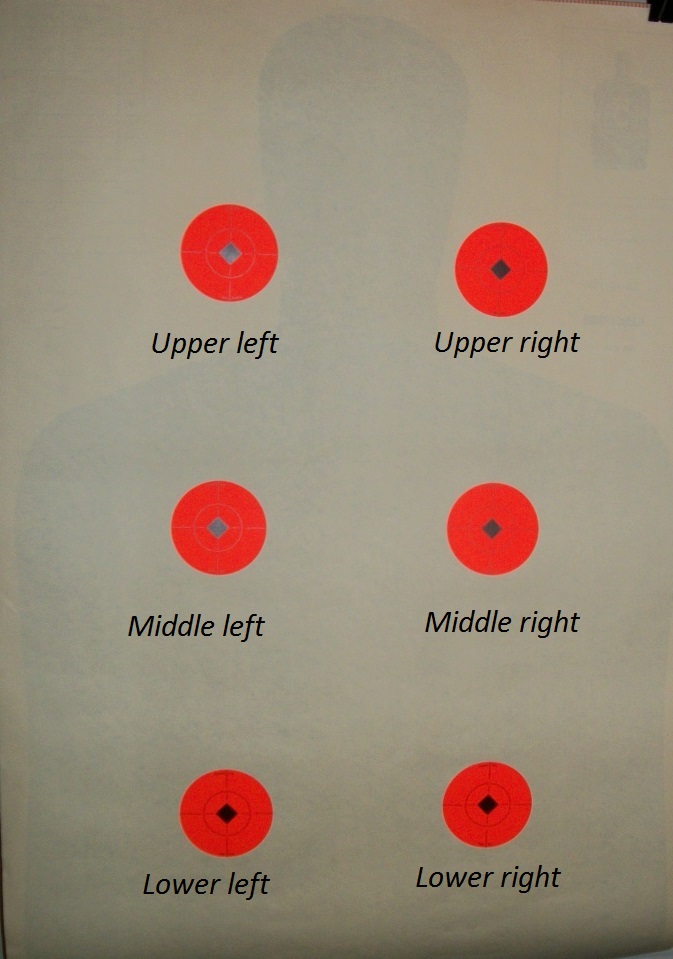
- Starting with pistol aimed at the bottom of target, fire 1 shot on upper left dot. Return to the bottom of target. Decock, if your pistol has a decocker. Repeat five more times for a total of six shots. Starting position for each shot is aimed at the base of the target and you will fire only one shot each time.
- Starting with pistol at a compressed ready, fire 1 shot on upper right dot. Return to compressed ready each time. Decock after every shot, if your pistol has a decocker. Repeat five more times for a total of six shots. Starting position for each shot is compressed ready.
- Starting with pistol aimed at bottom of target, fire 1 shot on middle left dot, then one shot on middle right dot. Return to bottom of target. Decock, if your pistol has a decocker. Repeat twice more for a total of three shots on each dot. Starting position for each string is aimed at the base of the target.
- Starting with pistol aimed at bottom of target, fire 1 shot on middle right dot, then one shot on middle left dot. You are moving in the opposite direction from String 3. Return to bottom of target. Decock, if your pistol has a decocker. Repeat twice more for a total of three shots on each dot. Start position each time is aimed at the base of the target.
- Starting with pistol at compressed ready, fire 1 shot on bottom left dot, then one shot on bottom right dot. Return to compressed ready. Decock, if your pistol has a decocker. Repeat twice more for a total of three shots on each dot. Starting position for each string is compressed ready.
- Starting with pistol at compressed ready, fire 1 shot on bottom right dot, then one shot on bottom left dot. You are moving in the opposite direction from String 5. Return to compressed ready. Decock, if your pistol has a decocker. Repeat twice more for a total of three shots on each dot. Starting position for each string is compressed ready.
- Mark all the hits on your target with a magic marker.
- On the dot where you had the least hits, i.e., your group was the largest/worst, fire six individual aimed shots, resting between each shot.
- On the next worst dot, fire a six shot slow fire group as one string of fire. That concludes the drill.
You will find that your marksmanship improves much faster when you concentrate on your first shot and you can tell where each shot goes.
Here is a PDF of the drill you can take to the range on your SmartPhone.
Law Enforcement Officers Killed Audio CD
Annually, the FBI publishes the Law Enforcement Officers Killed and Assaulted report. A key part of this report is the written Summaries of the circumstances surrounding the death of each Officer Feloniously Killed.The FBI provides a concise account of the individual incidents where an Officer(s) was killed.
One of the things I have been unhappy about when training LEOs is finding out how few read the Summaries. I ask every LEO class how many have read LEOKA and almost all the hands go up. But when I ask how many have read the Summaries, almost all the hands go down. While the tabular data in LEOKA is interesting, the Summaries give much more insight into the circumstances of how Officer deaths occur and provide context on how to avoid becoming a victim Officer.
In order to make these Summaries more accessible to the Law Enforcement community, I’ve recorded the 2013 Summaries as audio narratives on an audio CD. Each Summary is narrated individually for your listening convenience. In addition, audio narratives of a number Officer killings not reported by the FBI are included. For supervisors, playing a few of the Summaries at roll call could be a sobering way to put your Officers in the right state mind for their shift. For individual Officers, listening to a few of them on the way to work may help you get mentally tuned up.
The LEOKA Narrative audio CD can be purchased on my webstore. There’s also a link at the top of my blog.
Lessons from the Pine Ridge Shootout
On June 26, 1975, FBI Special Agents Ronald Williams and Jack Coler were murdered on the Pine Ridge Indian Reservation in South Dakota. While attempting to serve a Federal arrest warrant, a massive gunbattle ensued. The Agents’ cars were hit with 125 bullets and they were severely wounded early on in the gunfight. Eventually, they were overwhelmed and executed.
Details and the sequence of events of the shootout are available in my article on The Tactical Wire.
Be wary of driving or walking into an ambush. The situation the Agents faced in this case was referred to as a ‘firesac’ in Soviet military doctrine. This is an ambush that occurs from multiple simultaneous directions. Initially, they encountered a blocking position. Then, they began to take fire from multiple angles. The only way to escape a situation like that is to retreat as quickly as possible. Retreating is a tactic we don’t practice much but we should.
Look at the pictures of the Agents’ cars. Vehicles are bullet magnets. When rifles are involved, most parts of a vehicle are as bulletproof as a piece of toilet paper. If you’re being shot at while in a vehicle and you can’t drive out of the kill zone, your best bet is probably to get away from it. In a firesac, even if your vehicle is armored, there are no safe angles.

Agent Williams’ car
If you have someone with you, be prepared to drag them away from the car because they may no longer be mobile. Practice this ahead of time because it’s not easy. Wearing flip-flops will make it all the more difficult. Some of my friends weigh 100 pounds more than I do; it’s going to be work for me to move them. Without a decent pair of shoes on, it’s probably not going to happen.
We like to think that reinforcements, aka ‘The Cavalry,’ are always going to be available and quickly. That’s just not always true. At Pine Ridge, approximately five hours passed before the Agents could be reached. This was due to the suppressive fire encountered by the incoming reinforcements. The Agents were long dead before they could be helped. Be mentally prepared for the fact you may have to extricate yourself and anyone with you without any help. You’re not doomed until you give up. Then you’re doomed for sure.
The concept of ‘fight your way to your rifle’ is of dubious worth in actuality. Saying that is probably heresy but it’s true. Once the shooting starts, if all that’s within arm’s reach is a handgun, most likely the handgun is what you will use until the conclusion of the encounter. If you think a fight is coming, better get the long gun out before the first gunshots sound and before you are seen. Notice Coler’s trunk, as soon as you open that trunk, you have targeted yourself. The same thing happened to Gordon McNeil in The Miami Massacre 11 years after Pine Ridge.

Agent Coler’s car trunk
The probability of being stuck with a handgun means that practicing exclusively at zero to seven yards with your sidearm may not be all the practice that you should do. At least know where your pistol hits at extended ranges. Learn to use the prone position with a pistol and practice shooting at 50 yards if you have the facility. A prone target is also a difficult target to hit, even with a rifle. Most indoor ranges are 25 yards, at least practice with a few shots at that distance occasionally.
Williams’ wrapping Coler’s nearly severed arm in an attempt to stop the bleeding underscores the need for medical training such as I took this past weekend from Dark Angel Medical. The nearest law enforcement support to Williams and Coler was 12 minutes away. Any kind of advanced medical care was much further than that. Even if the Agents hadn’t been executed, Agent Coler most likely would have died from a wound generating that much blood loss. Conversely, if the shooters had broken off the attack, had Williams been able to get an effective tourniquet on Coler, he might have lived.
Agent Williams was also wounded. You need to know how to stop your own blood loss. The bad news is you might need to do it one handed, which kind of sucks the first time you try it. Being bloody makes it even harder. It’s another skill you don’t want to have learn On The Job.
The further we are away from a medical facility, the greater our need for the ability to perform self-aid. We need not only the equipment but the knowledge of how to use it. Military personnel on duty will usually have organic medical support; law enforcement and Private Citizens, probably not. The support you are likely to have is in your head and in the med kit you have with you.
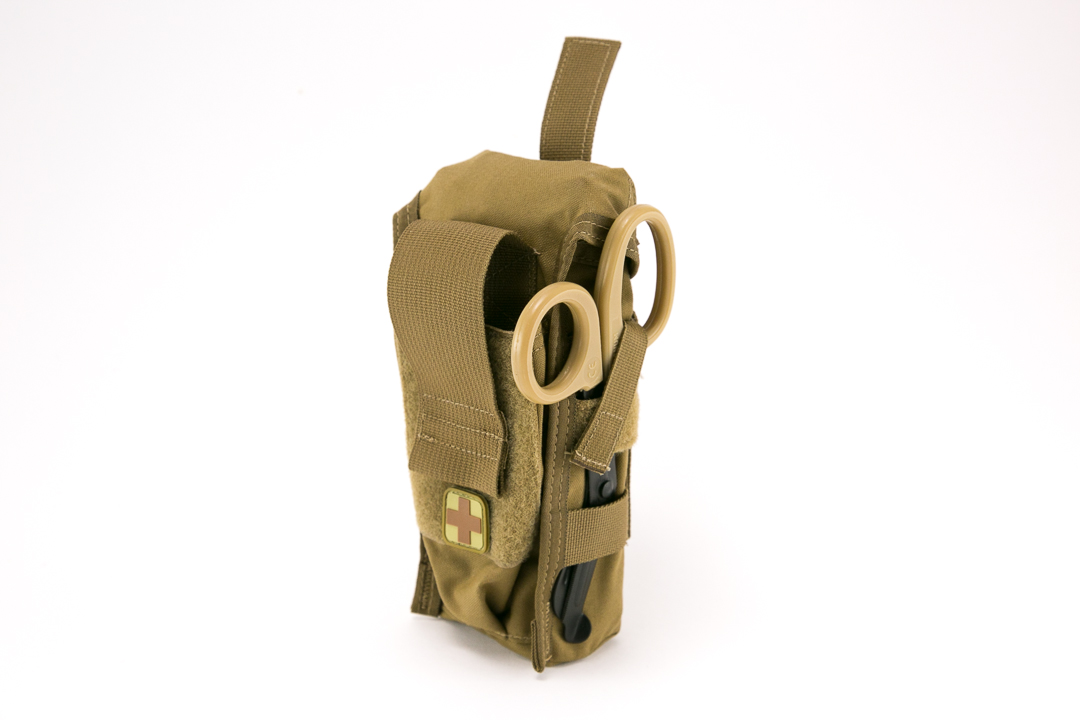
Personal medical kit
Don’t expect people who have fired many magazines of ammunition at you to cut you the slightest bit of slack. If they come for you, they’re coming to finish you off, not to stop your bleeding. If nothing else, play possum and set up an ambush of your own. If all you have is a handgun, wait until they get in range and take someone with you.
That means you have to know what your personal effective range with your weapon is. If you’ve been wounded, assume it’s half or less of what you can usually do on a good day. The good news is that the coup de grâce is usually delivered at close range, so you still might get an opportunity. You’ll probably only have one chance though, so make it good and don’t muck it up.
Closing with the enemy
Soulis had planned to shoot through the back window if Palmer drew a weapon, but for reasons he still doesn’t fully understand, he moved forward and to his right, stopping alongside the passenger door, not more than two feet from the window. Instantly, he realized he’d made a grievous blunder.
Officer Down: The Peter Soulis Incident One of Brian McKenna’s excellent analyses.
Unconsciously closing with an adversary is something I have seen many times in Force on Force. The response was so uniform and so prevalent that it is one of the few things I feel sanguine in saying the probability of people doing it borders on 100%. We need to train ourselves rigorously to hold position or to retreat unless there is a valid purpose for closing. Closing with an enemy needs to always be a conscious decision, never an unconscious one.
When I was an infantryman, the stated mission of the Infantry was to “Close with and destroy the enemy by means of fire and maneuver.” Infantry units consist of numerous men, who are capable of mutually supporting each other with automatic weapons fire and explosive munitions. Private Citizens rarely have those resources available and law enforcement officers generally don’t. Our desired outcome and tactics have to be different.
It’s very common to see in news reports where Armed Citizens have pursued criminals after the criminal has broken off from the crime. Pursuit is fraught with hazards, both legal and tactical. Dependent on the laws of the particular State, pursuing a robber or attacker could result in losing the ‘mantle of innocence.’ This could result in charges being brought against the original victim. It also could put you in a position leading to becoming the victim of a mistaken identity shooting by a responding police officer. Keep in mind that although you know the victim/aggressor roles of the parties involved, the police have to sort that out upon arrival and it’s not always easy.
One of my students was involved in a shooting during the course of an invasion of his home. Despite the fact that he is an excellent marksman, he closed with the invader and the final shot was fired at contact distance. Closing with the enemy causes the defender to give up distance, which favors the marksman, and barriers/cover, which favor whomever is behind them, at least temporarily.
At home or in your place of business, decide ahead of time where your Limits of Advance are located. This is probably no further than your front door, perhaps even further in. The stairwell in your home or the counter in your store may be as far as it is advisable to go.
Palmer flinched as two more rounds hit center mass, and then started backpedaling toward the Toyota. He was still holding his gun, but never raised it to fire.
After reaching the car, Palmer dove over the trunk and dropped out of sight. Soulis paused, and then cautiously started forward again.
Outside the home, pick a spot, preferably something tangible. Then stick to your decision unless a good reason to change it arises. Keep in mind that all cover is temporary until it is defeated by fire and/or maneuver. If there is imminent danger of the cover being defeated, then move. That’s a conscious decision.
You don’t have to make a terrain diagram but making your decisions ahead of time helps you pick better decisions in the moment.
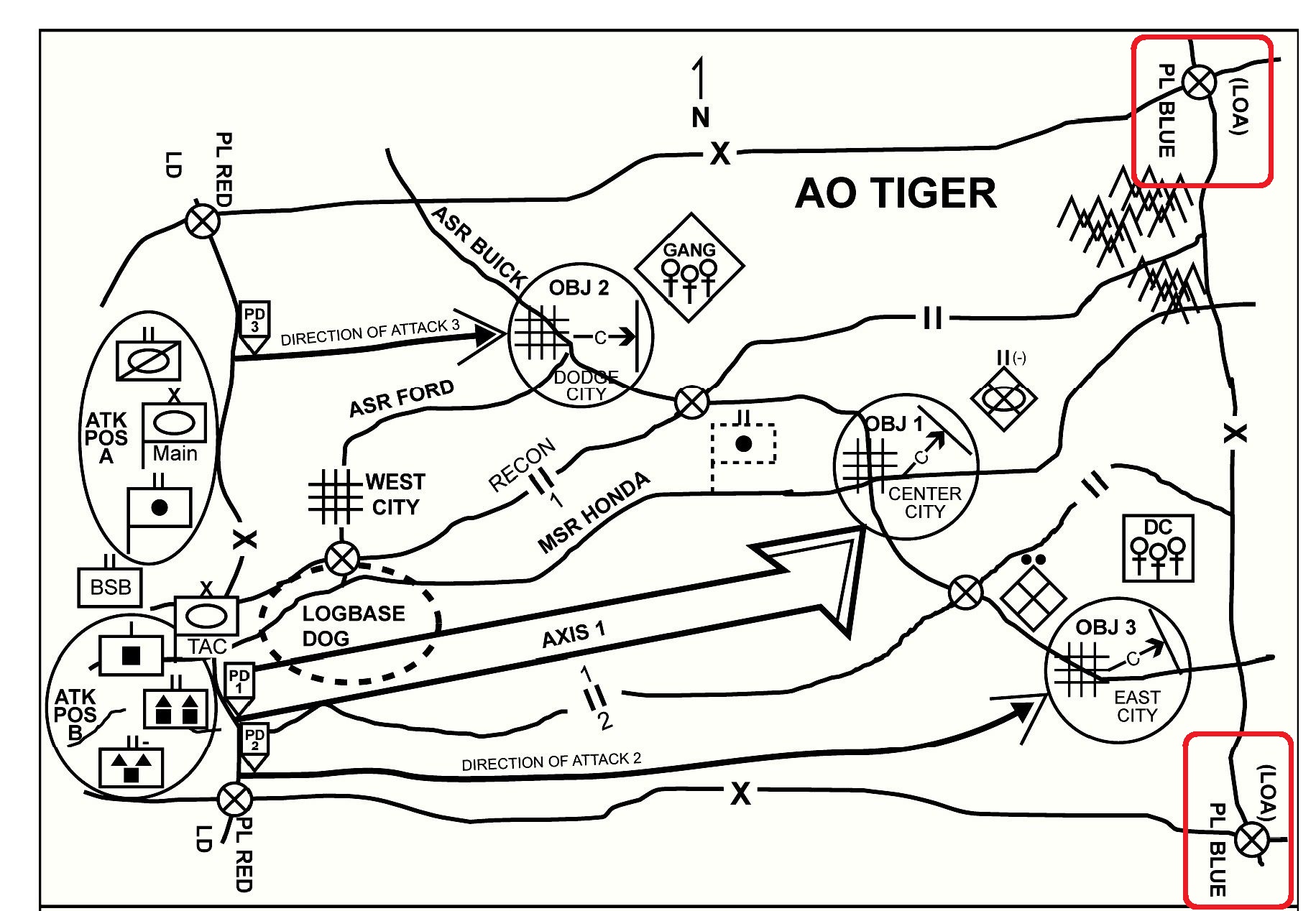
Limit of Advance
Common sense
Isn’t it just common sense to ensure you know what you’re shooting at?
That question was posted on my Claude Werner, Researcher and Analyst page.
It’s an important question that we need to put in perspective.
Not intending to be pejorative but there is no such thing as ‘common sense.’ What we refer to as ‘common sense’ is actually learned behavior based on our past experience.
For instance, as adults, we consider it ‘common sense’ to not stick our hand in a fire. When we were three years old, we didn’t know it would hurt and probably found it out the hard way.
Similarly, we as gun people would consider it ‘common sense’ to not look down the bore of a firearm. If you gave a pistol to an Australian Aborigine, one of the first things they would do is look down the bore because in their worldview, knowing what’s in a hole is really important. Even Al Gore did it when he was searching for the Internet in Viet Nam. That was before he realized he had to invent it.
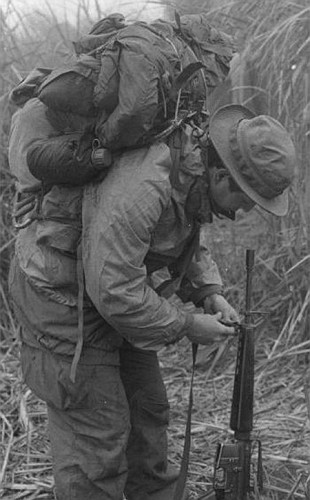
Al Gore looks down bore.
Ninety-nine percent of what most people know about firearms usage they learned from TV and the movies. In those media, there is never any ambiguity about the shoot/no shoot decision. As a result, when people get placed in a real set of circumstances, they do indeed default to their ‘training,’ which is the media programming. So they tend to make mistakes and shoot, even if it’s not appropriate. I once bemoaned to a colleague that my Threat Management classes didn’t sell. His response was “Nobody buys a gun with the idea that they’re not going to use it.” His comment put it in perspective for me.
The Importance of Target Identification
Deputies found a 32-year-old man who said that he and his wife were sleeping when they heard a noise in the kitchen.
The husband took his handgun and walked in the kitchen area, where he shot the victim.
After the shooting the husband recognized the victim as his younger teenage brother.
Man shoots, kills brother thinking he was burglarizing home
Yet another tragic example of why I stress target identification so much. These situations are absolutely preventable. As I’ve said before, if you live with anyone else, my analysis is that there is a 97 percent probability that the ‘bump in the night’ is a member of your own household. With those kinds of numbers, gunowners cannot take the risk of shooting someone at home without establishing a positive ID.
This kind of situation is a further example of why I say we have to be very cautious of what we take of from our training, and even more so, what we read. Much of the good training available is conducted by former law enforcement or military personnel. Just as much as any of us, they are subject to unconscious biases resulting from their experiences and training. Since most reading now is done on the Internet, you have to assume everything you read is wrong because most of it IS wrong.
Responding with a firearm to a noise at night in the home absolutely requires that you visually verify your target before shooting. You probably will need a flashlight for that. And stealth is not your friend, it is your enemy. Therein lies a major divergence from the law enforcement officer or soldier, to whom stealth is an ally. The notions that ‘the light draws fire’ or that criminals will wait in ambush for you if they hear you coming are nonsensical. Those are bad paradigms for us to insert in our thinking. If your background is such that having assassins waiting in ambush for you in your own home is a concern, you need to work on some serious hardening of access points to your home.
If you keep a gun at home, put a flashlight next to your gun; no ifs, ands, or buts about it.
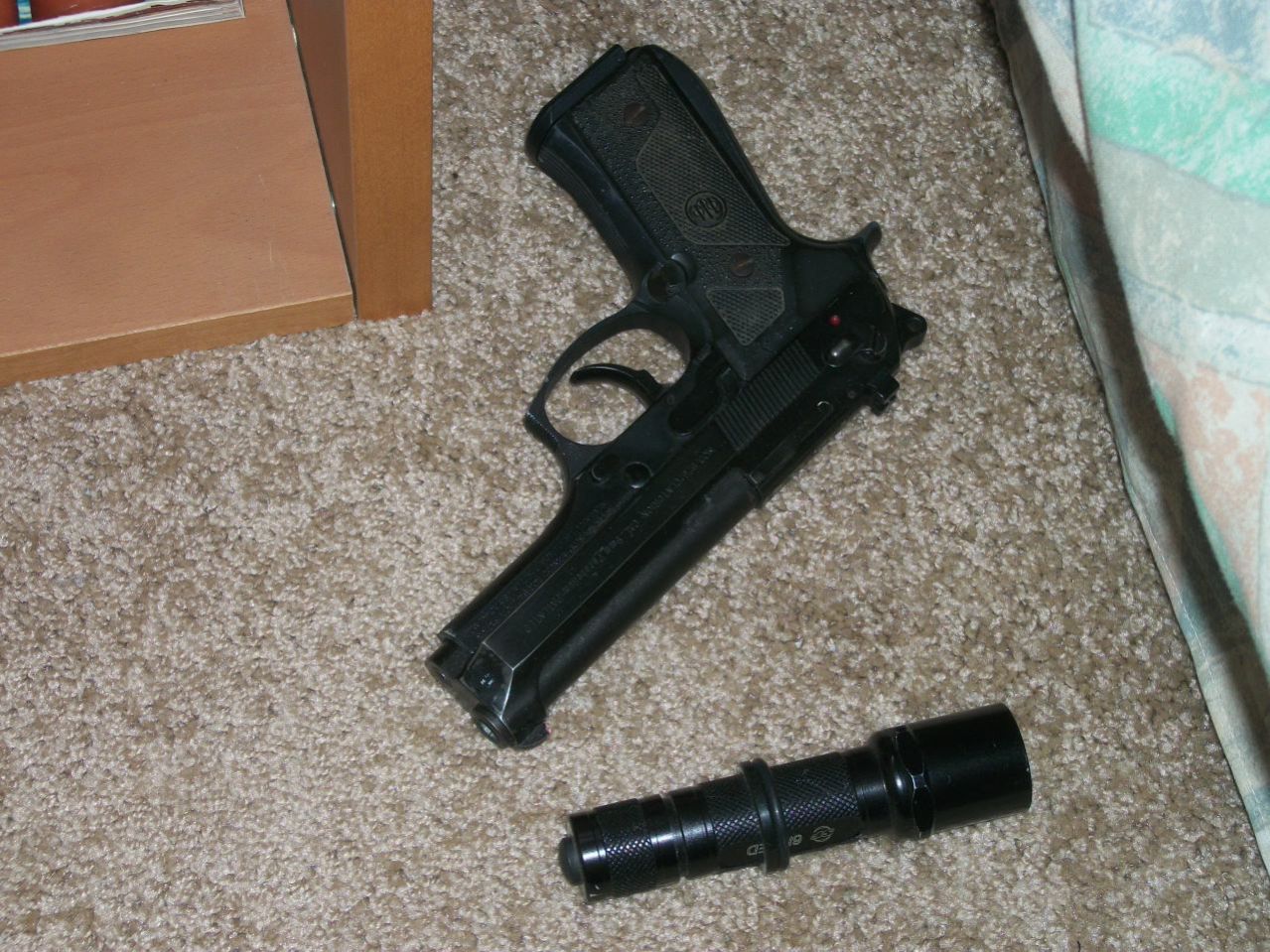
Next time you go to the range, take the flashlight with you. Instead of just blasting 50 holes in a silhouette, shoot two shots at the silhouette 25 times. Sequence is very important in how you do this.
- Have your gun in your shooting hand and your flashlight in your support hand. The gun is not pointing at the target and the light is off.
- Before each two shot string, say out loud “Who’s there?”
- Wait to listen for an answer. If you go to the range with someone, have them stand behind you and sometimes respond with “it’s me, Daddy” or something similar.
- If they say that, immediately put your gun down on the bench and abort that sequence.
- Then illuminate the target without pointing the gun at it.
- Finally, bring the gun up and fire the two shots.
One of the things you will find when using this sequence is that the worthwhile two handed shooting techniques don’t work well for it. Harries is both clumsy and dangerous to assume when you already have the light on the target and are keeping it illuminated while presenting the pistol. The Rogers/Surefire technique takes some time and manipulation skill to assume. What you will discover is that only the Cheek Technique or the FBI Technique work well in this context.
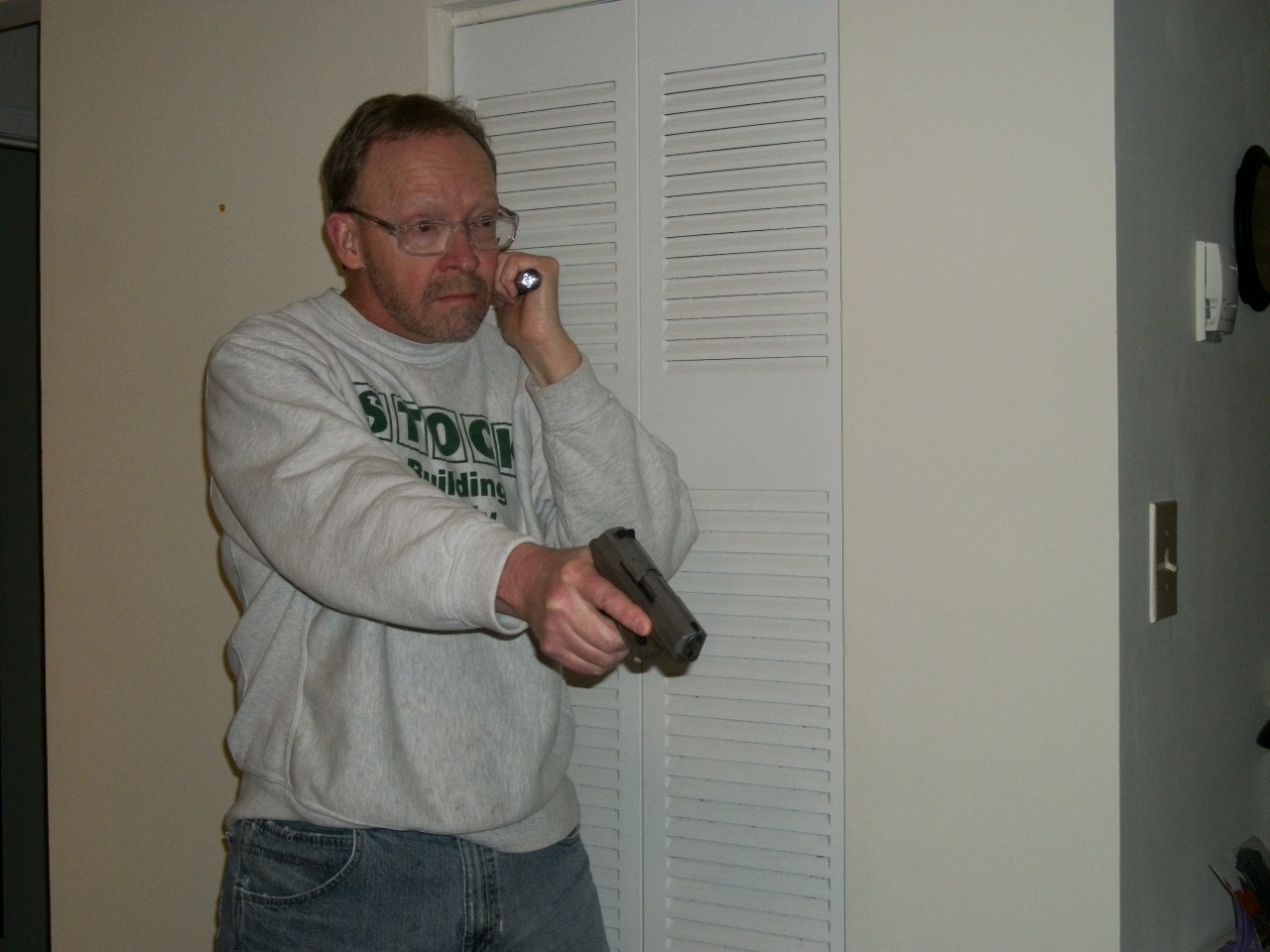
That means you have to learn to:
- Speak while holding your gun.
- Abort the shooting sequence if there is not a threat.
- Do a dissimilar task with the other hand, i.e., orient the flashlight and work the switch, while keeping your gun off target and your finger off the trigger.
- Shoot with one hand only while continuing to perform the dissimilar task.
- Manipulate the safety or decocker of your weapon with one hand while holding something in the other.
For the final 5 repetitions (10 rounds), put up a clean silhouette target and shoot the LAPD Retired Officer Course (10 rounds at seven yards). Measure how well you do. You’re going to find it’s a lot harder than you think.
That sequence is obviously rather involved; practice it before you have to do it for real or you’ll forget to do it or get it wrong. Forgetting to do it is what leads to tragedies.
 tacticalprofessor
You must be logged in to post a comment.