SCCY pistol update
So far, I have 175 rounds through the SCCY CPX-2 that they sent me for T&E. It had a Failure to Chamber on the fourth round I fired but no malfunctions since then.
I shot it at an IDPA match today and was able to do reasonably well (5th overall) against full size service pistols. One of the stages was a true El Presidente (10 yards with targets 2 yards apart). I finished 2nd on that one with an overall time of 11.73 (10.73 with 2 down).
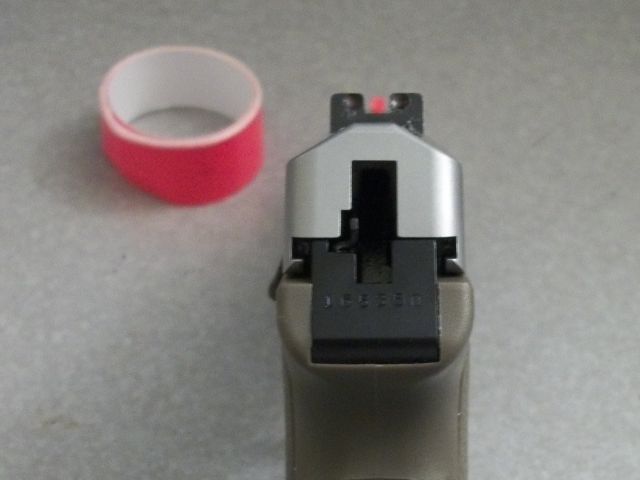
The front sight now has 3M Reflective Tape on it and I was able to remove the horribly distracting white dots from the rear sight. The three dot system does nothing for me, especially the way most manufacturers implement it. One of my friends commented that the front sight is visible from behind the shooting line, i.e., in the peanut gallery.
The trigger takes some getting used to because of the length of pull and reset. Shooters used to riding the reset/catching the link will probably not care for it. Flip and press works well though. I am not wild about it being flat all the way across and may do something about that.
Although the gun has noticeable muzzle flip, as might be expected from a 15 ounce 9mm, it isn’t painful to shoot the way I found the PF-9. It’s definitely more pleasant than shooting an LCP.
I did several tactical reloads and did not get pinched at all.
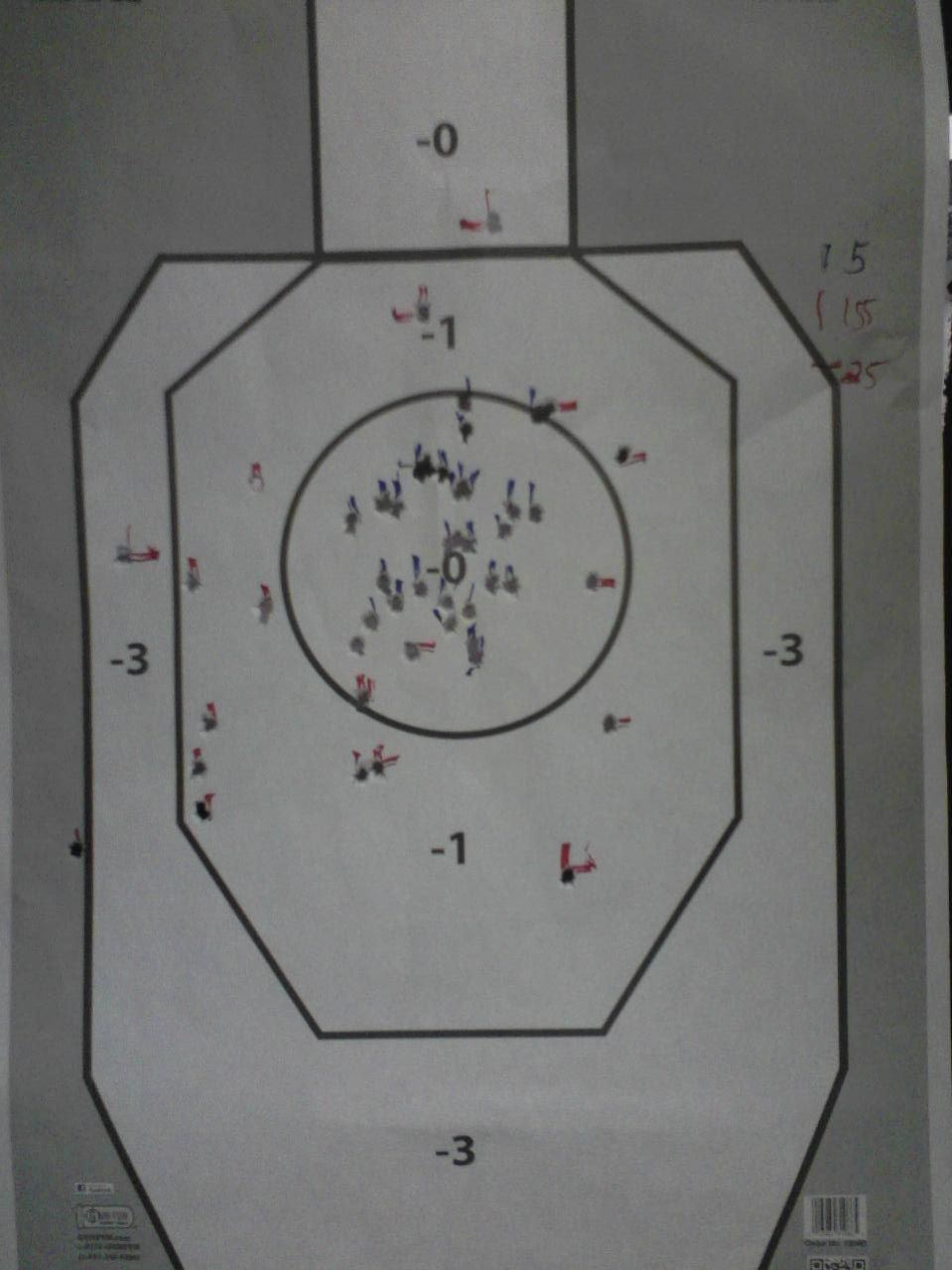
Yesterday, I shot the old FBI Double Action Course with it and was able to make 96%. This is properly shot on a Q target but I used an IDPA -1/-0 scoring zone. The pistol’s accuracy seems to drop off quite a bit past 15 yards. That’s something I will have to verify further.
Most of my shooting with it has been with locally remanufactured ball ammo. However, I shot one stage today with Winchester 147gr SXT and had no problems.
So far, so good.
Competition, Practice, Training, and Testing
Driven by hunger, a fox tried to reach some grapes hanging high on the vine but was unable to, although he leaped with all his strength. As he went away, the fox remarked ‘Oh, you aren’t even ripe yet! I don’t need any sour grapes.’ People who speak disparagingly of things that they cannot attain would do well to apply this story to themselves.
–Aesop’s Fables, The Fox and the Grapes,
Periodically, I see comments in the tactical/concealed carry community downplaying the value of competition for someone interested in personal protection. The commentary usually revolves around “the stress isn’t the same as a two way range” or “competition isn’t realistic; the targets don’t move, you don’t move” or some other blah, blah, blah. Oftentimes, the person making the statement is from the ‘tactical training’ side of the house.
In my role as the Georgia/Alabama Area coordinator for IDPA, I was recently reviewing some tweaked stages for the upcoming 2014 GADPA Georgia State Match Championship. As I was doing so, I was struck by the complexity and marksmanship challenges presented in the match. Some of the aspects of the Championship include:
- Moving targets
- Shooting on the move
- Shooting Strong Hand Only with holding something with the Support Hand
- Shooting from inside and around vehicles
- Head shots at distance
- Steel targets with a concealed hit zone that have to be knocked down to count
- Engaging targets while moving through a structure
Those tasks have to be accomplished with a limited supply of ammunition, requiring a minimum hit rate of about 60%, just to finish. To be competitive at all, the hit rate on a torso sized target (-0/-1) better be 100% or you’re out of luck. Rapid reloading is an integral part of each stage, requiring a high degree of weapons manipulation skills.
In short, it’s a very demanding test of one’s ability to effectively manipulate a handgun. Hitting the target with a high degree of regularity, while being confronted by awkward shooting positions and scenarios is an integral part of it.
I think of Preparation for Personal Protection as having three components; Training, Practice, and Testing. Training is something you get from someone else. The other person or group structures your experience, almost always outside your comfort zone. Practice is something you do on your own, hopefully with some kind of structure, based on training or re-creation of actual incidents. Then there’s the nasty little question: “Where is my skill level at?” Testing is the only way that question can be answered. In his book POLICE PISTOLCRAFT, Mike Conti mentions Police Officers who are so intimidated by firearms qualification that they become physically ill, simply from the thought of having to do it. That’s a good example of how daunting the testing process can be. Those of us active in the competition world often look at police qualification courses in a bemused way because they are so simple compared to the tests we are used to.
Bill Rogers once said to me “You and I are from the last generation that is comfortable being tested.” I’m not sure if that’s true, but it is quite obvious to me that there is a great deal of cognitive dissonance and ego defense that goes on when discussions about competition v. ‘training’ start. The next time you hear someone disparaging competition, keep The Fox and The Grapes fable in mind. And for those who make negative statements about competition, I invite you to come out and test yourself and see what it’s like. Firearms competition has evolved a great deal since the original Columbia Conference. One of the most ridiculous statements I have ever heard is “I never saw a timer in a gunfight.” It was there every time; it’s called your lifeclock and it’s running all the time, at least until someone stops it.
Wargaming v. brainstorming (Part II)
Thinking ‘I’ll solve it when I get there’ has gotten a lot of people killed.
My friend and I had a serious disagreement over his tactics. “The cops, Gunsite grads and others, who’ve contacted me over it agreed with what I did.” Contrary to the feedback my friend received, the comments I received were universally negative toward his post-escape actions.
This then leads to a further issue involving his friend, who was in the car with him. What do you do when someone else makes a tactical decision that involves you? I frequently mention that anytime we are with another person, the complexity of decision making goes up seriously.
You, as a passenger or bystander, can be put in a situation by someone else quite easily. Sometimes, it is a situation with possibly severe negative outcomes. Many times in ten years of Force on Force exercises, I saw how easy it is to get dragged into situations and Courses of Action not of your choosing. Not to mention the many times I have personally gotten sucked into situations that I later thought “Wow, I’m glad I got out of that one in one piece.” Other people can get you killed, without asking your permission.
Let’s examine some of the possible options. Even when we are with friends and family, our options remain. Some of them are Flight, Withdraw, Fight, Submit, and Negotiate. We are conscious beings and capable of making our own decisions. Just because someone else makes a decision to place themselves in jeopardy, doesn’t mean we have to go along with it. Nor does it mean that even if we choose to participate we necessarily have to do it in a way that entails maximum risk.
Let’s examine a case from the LAPD files as an example.
Officer Involved Shooting 030-05.
Officer A was watching television when he heard his wife shout that someone was out front. Officer A’s wife also believed she told her husband the people outside were vandalizing the family vehicle.
Officer A, with his pistol held alongside his leg, moved across the front lawn of his residence to obtain a view of the individuals [he suspected of vandalizing his car] in the street. Unknown to Officer A, his wife had followed him from the residence to the curb of the street.
Two things occurred here. 1) Officer A elected to go outside to Confront the vandals. It is unknown whether this was habit as a Police Officer [LAPD discourages its Officers from taking enforcement action off-duty unless life is at risk] or because he felt compelled by the presence of his family. 2) His wife followed in into the Danger Zone, perhaps due to family bonding aspects or because she felt it was appropriate for her to confront the vandals herself.
Officer A directed his wife to return to the residence and to call the police.
Once inside the residence, Officer A’s wife instructed another nephew to call 911. She then returned to the street with her husband [.]
The wife continued to be sucked in the dynamic of the situation, perhaps because of her husband’s presence outside. If he had remained inside and called the police himself, it is less likely she would have gone outside, especially the second time.
Eventually, a scuffle between the vandal and Officer A’s wife ensued and Officer A separated them. The vandal then approached with an ambiguous weapon and Officer A fired a warning shot into the ground. This resulted in the vandal fleeing.
Here’s what the Board of Police Commissioners ruled.
Findings
- Tactics
The BOPC found Officer A’s tactics deficient warranting administrative disapproval.
Basis for Findings
- Tactics
…Officer A elected to confront the subjects… The BOPC observed that Officer A’s tactical decisions left him with few tactical options and placed him at a tactical disadvantage… The BOPC would have preferred that Officer A had remained inside his residence, stayed with his family, [and] personally notified the local law enforcement agency … The BOPC was also concerned that when Officer A exited his residence, his wife accompanied him outside.
The BOPC determined that Officer A’s tactics were seriously deficient warranting administrative disapproval.
The evidence later disclosed that the vandal was ‘armed’ with a dinner fork. While Officer A received only ‘administrative disapproval’ for firing the warning shot, I have little doubt that an Armed Citizen in the same circumstances would have been charged with Aggravated Assault.
Let’s now return to the brainstorming v. wargaming issue. Brainstorming by Officer A gave a rudimentary Course of Action of going outside and Confronting the vandal. I’m not sure that any brainstorming by his wife was involved, other than to accompany him. Wargaming might have resulted considering alternate Courses of Action for either or both of them. He might have elected to Remain In Place and call the police. Even if he went out to Confront, she might have elected to RIP. Even during the Confrontation, after considering all her options, she might have decided to RIP after she had returned to the house, instead of re-inserting herself into the situation.
If my friend’s friend had done some wargaming, he might have considered, and perhaps chosen, some different options. It would be presumptuous of me to say what he was thinking when he chose to join the Pursuit. However, his options were: Pursue, Submit, Withdraw, Flight, and ultimately Fight using deadly force. If he agreed with following the criminals, then the option he chose was Pursue. Fortunately, the situation did not escalate to the Fight option but this has to be considered as a consequence of the Pursuit. If he did not agree with the decision to Pursue, then he chose the Submit option, only he was submitting to my friend’s choice. ‘To take no action is to take an action,’ as the saying goes.
He could have said “I’m not going with you over to their vehicle. Let me out of the car.” That would be the Withdraw option. If the car got into motion before he could say anything, he could have gotten out of the car when it stopped behind the criminals and then he could have moved off. That would be Flight. And if the criminals produced guns, he would have been forced into the Fight using deadly force Course of Action, which at that point is not an option but a necessity. The military term would be Decisively Engaged. Decisive Engagement means we have no other options left, which is never a good position to be in.
All those options have consequences. Withdraw or Flight could have serious repercussions on their friendship. Pursuit, under the wrong set of actions and reactions, could result in an unpleasant encounter with Law Enforcement. Fight using deadly force carries the possible consequence of death, which would affect not only him but all his loved ones and associates.
The choices we make are based on our personal moral values and ties to others. But they should be made with a clear understanding of what our options are and also the possible consequences thereof.
I would have said “I’m not going with you over to their vehicle. Let me out of the car.” But that’s just my choice, you’ll make your own.
Structured practice (Part I)
What exactly is Claude Werner’s ‘1,000 Day Dry Fire’ program? Is it published anywhere? Anybody tried it? What were the results? Would you do it again?
This question was asked on a forum I visit occasionally. In a narrow sense, the question refers to an idea I had a while ago. About 12 years ago, a friend was working on his Yoga instructor certification and had to do 1000 days straight of meditation. That inspired me, so I decided to do it with dryfire. He said that dryfire is my form of meditation; I will defer to his judgment on that. Another friend of mine wanted to try it last year, so I’m doing it with him now, my second time, his first. We’ll be finished at the end of 2015 but we both agree it’s become such a habit that we probably won’t stop then.
First of all, the ‘program’ is not any particular drill or set of drills. Rather, it’s the commitment to do dryfire each and every day, without fail, for 1000 straight days. If you miss a day, you have to start again at the beginning. The important thing is do some dry practice every single day, even if it’s just a little. My last trigger press is never more than 24 hours in the past. Days that I practice livefire are not exempt from the dryfire requirement. I like to finish each range session with a few dryfire trigger presses.
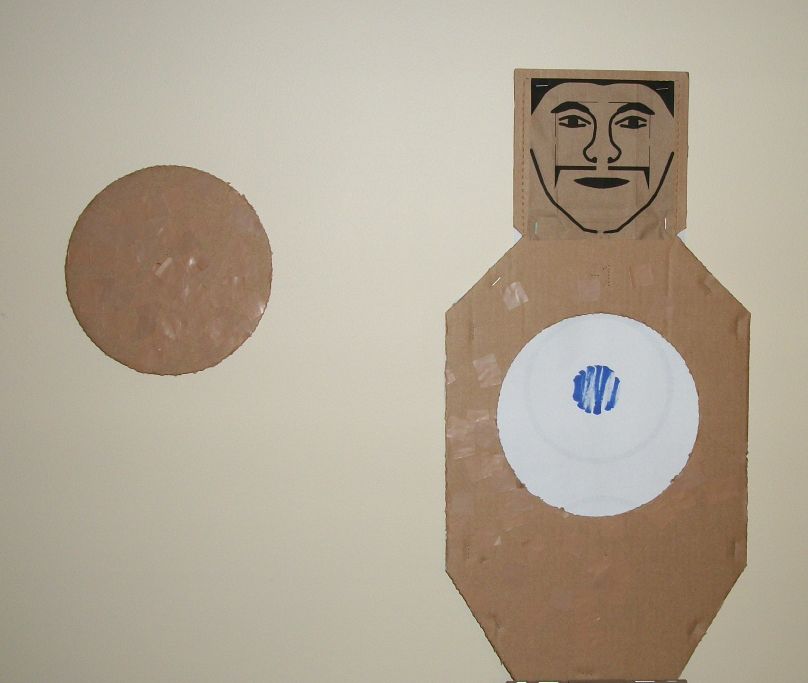
The first time I did the program, when I was at the GF’s house, I’d do it in the bathroom by using the tile intersections as targets. She finally figured out what I was doing and had me set up a little dryfire range in the spare bedroom. The range consisted of a reduced size target behind a picture and a cassette tape I had made with a specific regimen on it. Eight minutes and I was done.
The reason there’s not one drill or set of drills is to avoid boredom. I regularly change up my regimen. Run different qualification courses dryfire, practice bullseye shooting, run the NRA Defensive Pistol I & II, etc. It doesn’t matter. I make different targets and reduced size target arrays from time to time to change things up, as well.
The most important aspect of the program is that it represents a philosophy of practicing our skills on a regular basis. Those skills might be shooting, threat management, surveillance detection, pepper spray, unarmed combat, etc. Any physical skill is perishable, meaning after a length of time, it’s not as easily performed on demand. The ‘riding a bicycle’ analogy does not completely apply. When we get back on a bike after a long time, we have some time to refresh ourselves with those motor skills. If someone is attacking you, a refresher session for your personal protection skills is not an option for you. You need to be on your game at that point. Shooting skills are especially perishable for those who have never become Unconsciously Competent at them in the first place. That’s most people, frankly.
I dryfire even when I shoot an IDPA match. When I go through the “Unload and Show Clear” process, I don’t just do a trigger mash at the hip like most people. I pick out a spot on the berm, aim at it, and do a good dryfire trigger press. What I don’t want to do is to ever program myself to do a motor skill in a sloppy or detrimental way.
As a friend of mine once remarked, “Claude doesn’t do anything that doesn’t have a purpose.” My cardiologist told me “You are a very programmatic person.” Both of those are completely true, to the extent I can make it that way.
Stress Inoculation
I was thinking about Trevor‘s comment regarding “keep showing up” today.
I’ve found that there are three rules to successfully getting into a new discipline, and these rules have proven true across martial arts, shooting sports, Crossfit, and other endeavors:
Rule 1: Show up ready to learn and give good effort.
Rule 2: Keep showing up. Show up more than anyone else. If you don’t feel like going, see rule 2.
Rule 3: Put in the work and measure your progress honestly.
One of the ways I used to keep my mind occupied during road marches in the Army was to calculate how times I had done something. For instance, I was marching around Korea in 1980 and calculated I had already spent well over 1000 days in the field. That is one reason I have not the slightest interest in camping. At that point, I was about 1/3rd of the way through my career. I stopped counting after that.
Tonight’s exercise was figuring out the extent of my measured shooting performance when others were watching. There are two quantities I can calculate; IDPA stages shot and demos in front of classes I have taught.
Roughly, I shot about 200 stages a year for the first 12 years I shot IDPA. Quite a bit less per year since then but I’m working on increasing it. So let’s say some 2500 stages where I’m in front of a group.
Demos in classes would be Rogers classes and my FST classes. Rogers demos are grueling because the class oftentimes is looking for the instructor to screw up. I taught roughly 60 or so classes at Rogers. Probably at least 12 to 15, perhaps more, demos per day for 3 of the 5 days. So, let’s say 40 demos per class. That’s another 2400 exercises while I’m being watched and graded.
Then we have my Firearms Safety Training LLC classes and seminars. I believe in demonstrating most of the drills for the students unless the drill is really simple. Over the course of 16 years, I’ve taught 4 to 6 classes per year, plus quite a few seminars. Let’s say 100 total classes and seminars with around 12 demos per, average. So another 1200 evaluations in front of a group.
Overall, it looks like I’ve stepped up to the plate over 6000 times to stand and deliver while people are watching and, in many cases, waiting for me to screw up.
The value of that much experience at problem solving and having to perform to a standard is incalculable to me. I wouldn’t trade it for anything and I feel sorry for those who deprive themselves of that opportunity. It’s a very valuable form of stress inoculation, readily available to anyone who wants it. But you have to be willing to fall on your face for awhile because I certainly did.
 tacticalprofessor
You must be logged in to post a comment.