Tactical Decision Making (Part I)
What’s more important; keeping your leg or chasing someone and trying to get them to “do the right thing?” Intervention, especially on behalf of a commercial establishment, is rarely the way to set yourself up for success.
Customer says he lost a leg trying to stop thief at NC grocery store. Now he’s suing[sic]
https://news.yahoo.com/customer-says-lost-leg-trying-174917434.html

You keep using that word. I do not think it means what you think it means.
-– Inigo Montoya
My main presentation at Paul-E-Palooza 2 was entitled Tactical Decision Exercises. I wanted to do it because I have come to feel we in the training community concentrate on teaching marksmanship and manipulation skills at the expense of tactics and decision-making skills. As strange as it sounds, coming from someone of my background, I think that’s a problem. When I look at incidents that have had negative outcomes for the Citizen, it’s rarely because of a failure of mechanical skills. Most of the time, the failure is due to a bad decision, poor tactics, or a combination of both.
Trainers often refer to the Holy Grail of achieving ‘unconscious competence.’ However, good decision-making is usually a thoughtful conscious process. Consequently, I’m not sure that focusing our training methodologies on an…
View original post 687 more words
Classic Book Review – Principles of Personal Defense
If one lives through a fight, we will assume that he is better off than if he does not, even though he may be thereafter confronted with legal action.
One of the little jewels in Jeff Cooper’s book Principles of Personal Defense.
My review of the book is a Public post on my Patreon page.
https://www.patreon.com/posts/46379912
If you would like to subscribe to all of my Patreon posts, here is the link.
Your car is not a holster (again)
Someone entered the unlocked vehicle
Gun, other police equipment stolen from Salina officer’s personal vehicle
https://www.ksal.com/police-equipment-stolen-from-unlocked-car/
“Meanwhile, two more unlocked vehicles were broken in to [sic] in Kipp overnight, as well as one parked in front of a rural Kipp residence. “
In case anyone wonders what ‘Kipp Kansas’ (population <500) looks like, here’s a Google satellite view.

Kipp is part of the Salina, Kansas micropolitan area, a Census Bureau area consisting of two COUNTIES of Kansas. https://en.wikipedia.org/wiki/Salina,_Kansas_micropolitan_area The two counties had a total population of 61,697, according to the 2010 Census.
My mother used to tell us “Nice people keep their doors closed and locked.” That includes your car and garage door, too. Please don’t leave your gun in there either, just because you’re too lazy to take it into the house with you. Being a POlice is irrelevant.
Goal Setting for 2021
The book The Practicing Mind https://www.amazon.com/dp/B007C8NRSA/ was written by an accomplished musician and concert piano renovator. It contains the following story about when he started playing golf as an adult. The lesson in the story is well worth considering.
even though they had played golf weekly for many years, they still couldn’t accomplish basic things, such as getting the ball up in the air.
…
What I learned from golf was that all my failures in music had stemmed from my lack of understanding the proper mechanics of practicing, of the process of picking a goal, whatever that may be, and applying a steady effort toward achieving it.

The passage about ‘picking a goal, whatever that may be’ is particularly important in developing competency with firearms. The ‘whatever that may be’ part should be well considered as part of the goal setting process. It’s not uncommon for gunowners to place a high priority on marksmanship tasks. However, in the context of using firearms for Personal Protection, there are many implied tasks that complement or even surpass marksmanship in importance.
- Being aware
- Verbalization
- Accessing a weapon
- Moving from place to place safely (e.g. without having an Unintentional Discharge)
- Making reasonable and appropriate decisions
- Coordinating with friends and loved ones
- Etc.
The ammunition deficit will give us all time to work on non-shooting tasks and skills that are, or at least should be, an integral part of our Personal Protection plan. For those who place a priority on their safety and their loved ones’ safety, range time can be re-prioritized to time to practice other skills. Some of those complementary skills do not even involve handling firearms. Others are easily accomplished with an inert or even toy gun.
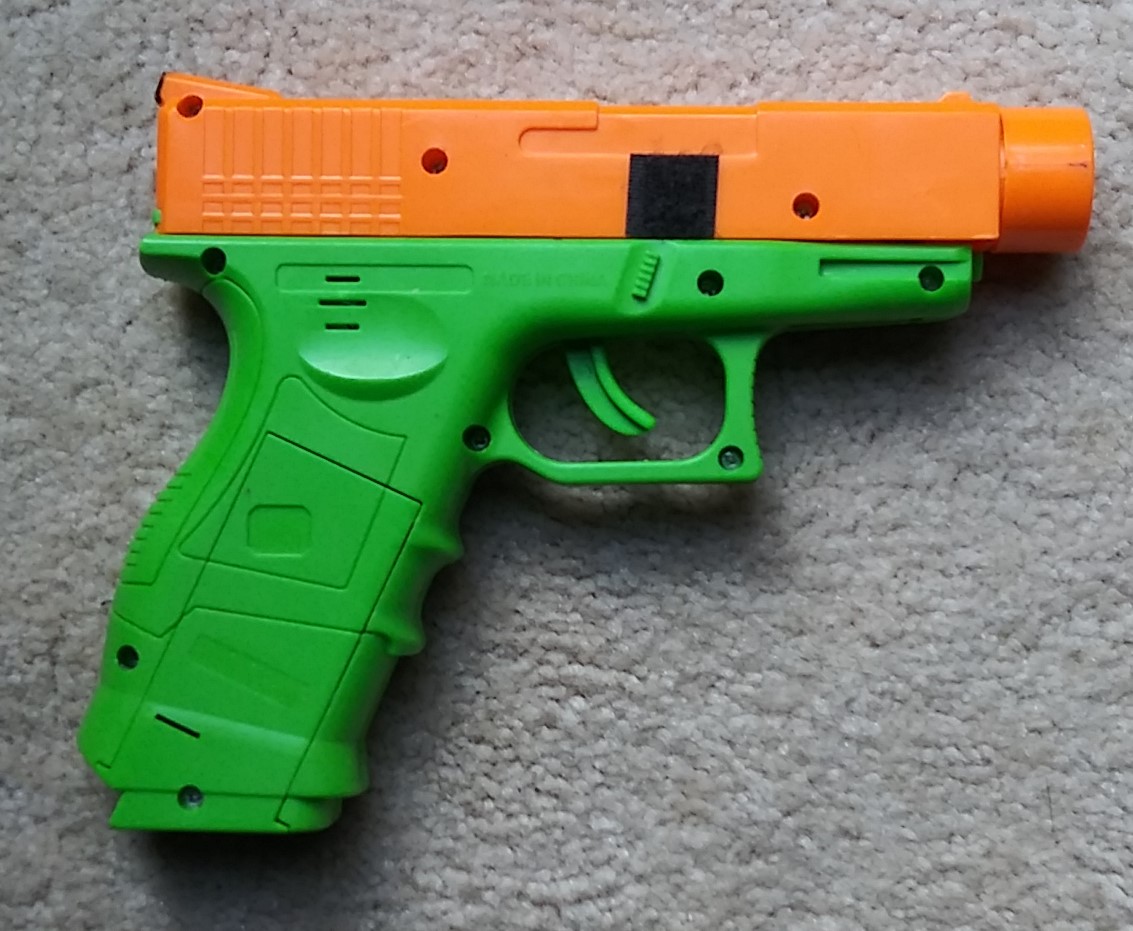
The enjoyment aspect of the shooting sports is another worthwhile goal. My shooting goal this year is to achieve my Distinguished Expert rating in Shotgun from the NRA. Since I already hold two DE ratings, I will become one of the few Triple Distinguished Experts. My gun club is rebuilding our rimfire range, so I’ll also be able to get back into smallbore rifle shooting, a highly disciplined activity.

On the other hand, my interest in ‘Boyd’s Process,’ of which the ‘O-O-D-A Loop’ is part, has been rekindled. I am going to make a concerted effort to delve deeply into the entire process and produce a written piece and presentation for my Patrons about integrating all the parts of Boyd’s thinking into a cohesive paradigm. That falls into the ‘making reasonable and appropriate decisions’ and is only peripherally concerned with firearms, other than as a backup tool.
Think about what your goals are for 2021 for firearms and Personal Protection. Decide what a measurable indicator for reaching each of your goals would be and then make a plan for getting there. That is a different process than ‘New Year’s resolutions,’ which generally are ephemeral and therefore more easily dismissed than a goal with a concrete plan.
FTC notice: I receive no commission for any links mentioned in this post.
Riding Shotgun With Charlie
#mindsetmonday
I almost never listen to podcasts I’ve been a guest on, which is probably a mistake. Since Charlie put the clip of me with my long gun (Zombie MP5) in his intro, I had to listen to this one, though.
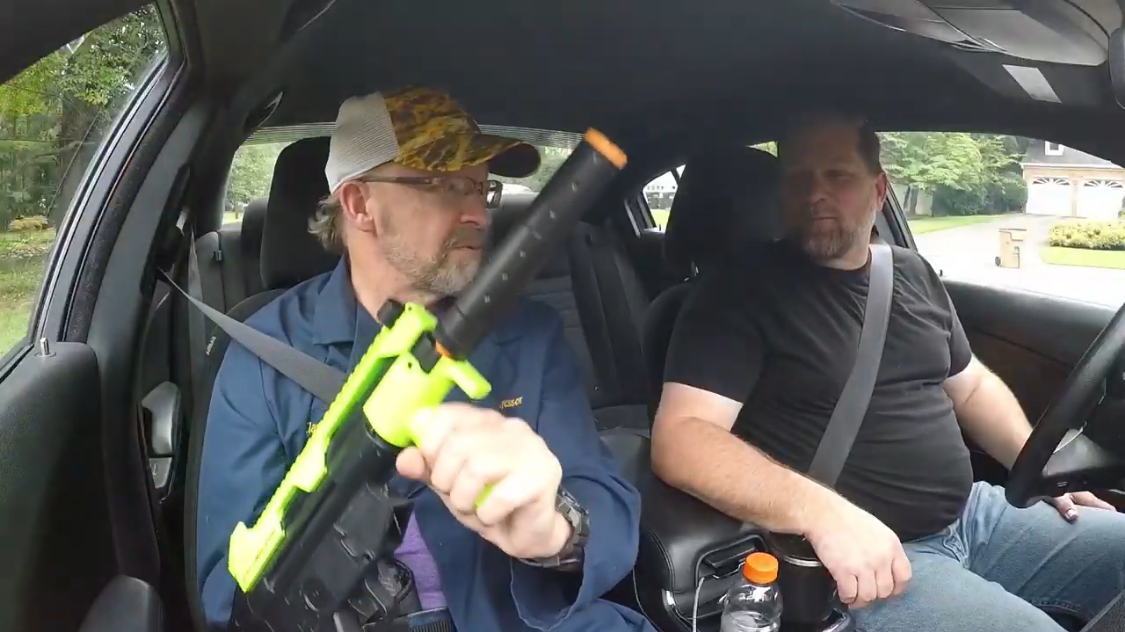
There’s a lot of good information in this episode that doesn’t usually get touched on in the industry. I’m very happy that Charlie gave me the opportunity to share it with the community.
e.g. My father used to say to me ‘son, you’re much more sophisticated about this than I am’ and I want my clients eventually to be more sophisticated about this than I am.
The Negative Outcomes mentioned are detailed extensively in my book Serious Mistakes Gunowners Make http://seriousgunownermistakes.com/ .
The LAPD Retired Officer Course and numerous other courses that can be practiced at both indoor and outdoor ranges is in my book Indoor Range Practice Sessions http://indoorrangepracticesessions.com
What does effective Dry Practice actually look like?
#fridayfundamentals
Since many people have never seen a structured Dry Practice session, here’s an example.
This session uses a State’s (Louisiana) Concealed Handgun Permit Qualification Course as the basis for structuring the session. Having a structured Dry Practice session accomplishes several objectives. Among them are safety, avoiding “grabasstic gun clicking,” and effective time management, among others.
Although the session seems simplistic, the way it is structured provides multiple repetitions of at least 10 different skills that are common in Defensive Gun Uses. In his groundbreaking book How to Win Friends and Influence People, https://www.amazon.com/gp/product/B003WEAI4E/ Dale Carnegie wrote,
“Remember that the use of these principles can be made habitual only by a constant and vigorous campaign of review and application.”
Those words are every bit as true for physical skills as they are for human relations skills. The way we learn to do things competently by practicing them repetitively. As an aside, human relation skills can be very useful in defusing bad situations and Carnegie’s book is well worth reading for general interest.
Skills practiced in the session
- 36 Good First Round Hits.
- Good, for my purposes, means creating a serious enough wound that the shootee has to go to a hospital to seek medical treatment. At that point, the POlice will start asking those uncomfortable questions about how he got the wound. More about that definition in the next #mindsetmonday.
- There are several subsets of getting ‘Good First Round Hits’.
- 36 Presentations into the Eye-Target line
- 36 Sight Acquisitions
- 36 Smooth enough trigger presses
- 36 Follow-throughs
- 33 repetitions of Forming the Grip quickly
- 36 repetitions of Racking the slide in a safe (muzzle downrange) manner.
- 3 Draws to Ready
- 3 ‘Draw but DON’T SHOOT YET’ Decisions
- 3 Safe Re-holsters
- 33 repetitions of Return to Ready
- 3 magazine exchanges
- 1 Reload with Retention
- 2 Tactical Reloads
- 36 Deliberate SHOOT Decisions
- 36 Shot Analyses (Read the Sights)
- 3 Spatial Analyses (6 feet is in the Close Phase of Social space, 10 feet is in the Far Phase of Social space, and 15 feet is in the Close Phase of Public space) https://en.wikipedia.org/wiki/Proxemics and how they affect your shooting.
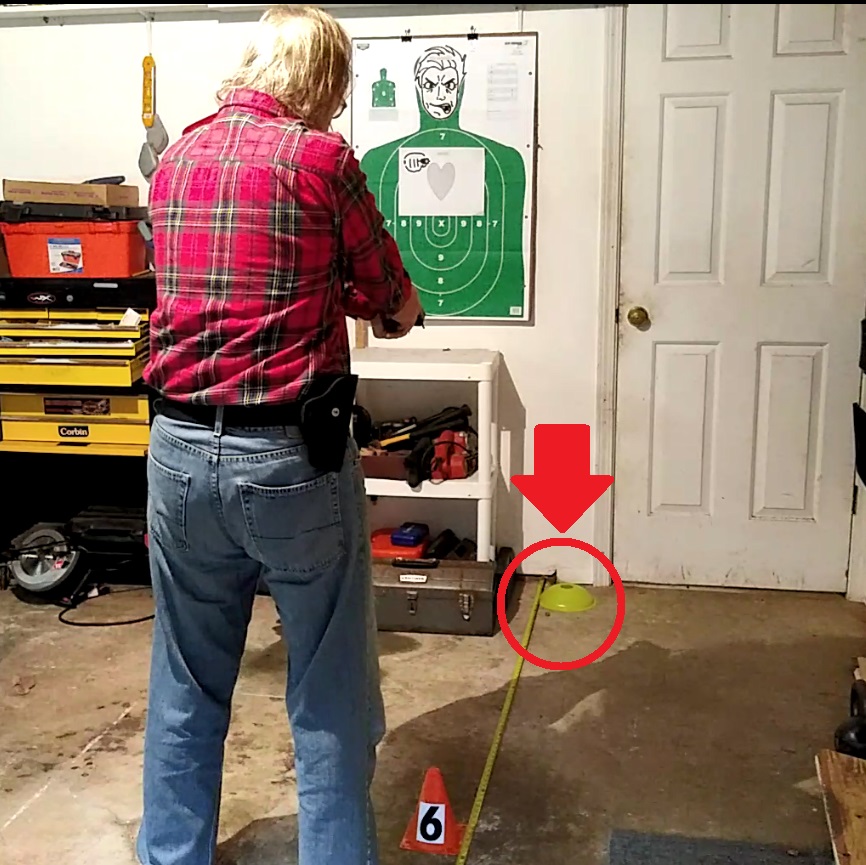
The TRT (Tap-Rack-Training aid) mentioned is available on Amazon https://www.amazon.com/Pack-Safety-Training-Pistol-Magazine/dp/B07CNBDHSB Using it is much easier the making the UN (inert and doesn’t work) magazines that were its inspiration.
Image Based Decisional Drills https://www.imagebaseddecisionaldrills.com/ provided the face on the target. A face is available for download in the Downloadables section of their website.
Using a Qualification Course as the basis for a Dry Practice Session and Regimen is an effective way of maximizing the value of your effort. For those who plan to obtain a Weapons Carry License in a State that has a Qualification requirement, it is also useful as an introduction to the structure of pistol qualification, even if the Course used is not the same.
Today’s Patreon https://www.patreon.com/TacticalProfessor post will go into more detail about structuring Dry Practice for maximum effectiveness.
FTC note: I receive no compensation for the product links in this post.
Chasing and shooting
Chasing a criminal after they have attempted to break contact is not the way to set yourself up for success. Shooting the criminal at the conclusion of the chase is a good way to end up in prison. It’s common enough to be one of the 11 categories of Negative Outcomes in Serious Mistakes Gunowners Make. https://store.payloadz.com/details/2617872-ebooks-true-crime-serious-mistakes-gunowners-make.html
A Miami man who allegedly chased an unarmed burglar and shot him several times as he begged for his life is facing an attempted murder charge.
https://nypost.com/2020/12/04/miami-man-charged-with-attempted-murder-after-shooting-burglar/
Prior planning prevents poor performance. If you have a firearm for Personal Protection, don’t just think about the incident, plan for the aftermath.
Who’s there?
“Who’s there?”
Learn to say it in your sleep.
“When you have a home where you have family members, you have to be even more careful and wait that extra second and do everything you can to make sure you know what you’re dealing with when you’re about to use deadly force,” [Martin County Sheriff] Snyder said.
Well said, Sheriff Snyder.
Many of my colleagues disagree with my assessment that decision-making is far more important than marksmanship and technical proficiency but I’m sticking to my guns on the subject. Every incident like this I read about makes me more of a ‘bitter clinger’ to my opinion.
“Daddy, where’s Mommy?”
“I accidentally killed her before you were even born. I’m so sorry I took your Mommy from you.”
If anyone thinks that man will ever sleep through the night again, they’re wrong. My prediction is that he will also die young, leaving his child without any parents at any early age.
Have a plan
As the late William Aprill was fond of saying,
Spontaneity is overrated.
“That’s what heart surgery is,” he said with a soft laugh. “It’s a script. To you, it probably looked like I was just sewing those collars into Meeko’s chest any old way. But every motion was planned, tested, practiced. Turn my hand eight degrees and poke the needle through; swivel my hand back 22 degrees and draw the needle up four inches; turn my hand back just so and bring it to the left a half inch: a precise number of stitches, pulled just so tight and no tighter. What heart surgery takes is remembering an incredibly long and complicated script and following it exactly, step by step.”
https://getpocket.com/explore/item/no-pulse-how-doctors-reinvented-the-human-heart

The idea of having a script, i.e., a very specific game plan, doesn’t just apply to heart surgery. One of the learned aspects of firearms competition is to develop a plan ahead of time and then follow it through.
The quaint Google translate version of the story’s precis reads:
That’s what it’s about
* On Friday [note that the incident actually occurred the previous Wednesday] night there was an exchange of fire between the owner of a gun shop and burglars who had tried to gain access to his shop in Wallbach AG [Switzerland].
* What the perpetrators did not expect: The owner is a marksman and former Swiss champion in dynamic shooting [IPSC].
* One person was injured in the shooting. The POlice assume that this is one of the perpetrators, as no injuries were found on site.

Whether it’s IPSC, IDPA, GSSF, ICORE or some other form of competition is largely irrelevant. What is important is the concept of having a game plan ahead of time and then putting it into action when you get the ‘GO’ signal.
Once you can shoot…
Some instructors, including myself, had an interesting discussion on Facebook about the phrase “once you can shoot.”
My question to the group was ‘What does that mean?’ I asked it as a serious question. The personal journey I’ve made in answering that question over time has been interesting. My answers to myself about it have changed dramatically as a result of some related research I’ve done. The two most significant areas of research were Negative Outcomes and what higher level thinkers in the POlice community had to say. The discussion was involved enough that I wrote a Patreon post about it.
https://www.patreon.com/posts/43213970
I’m making the Patreon post public because I think it’s a much neglected philosophical discussion. At The Mingle this month, I asked the ladies present to write out their personal policy about when to draw or present a weapon. It was the first time that many of them had ever been asked to do that. We need to realize that ‘Have Adequate [Hard] Skills’ is only one aspect of the issues we face.
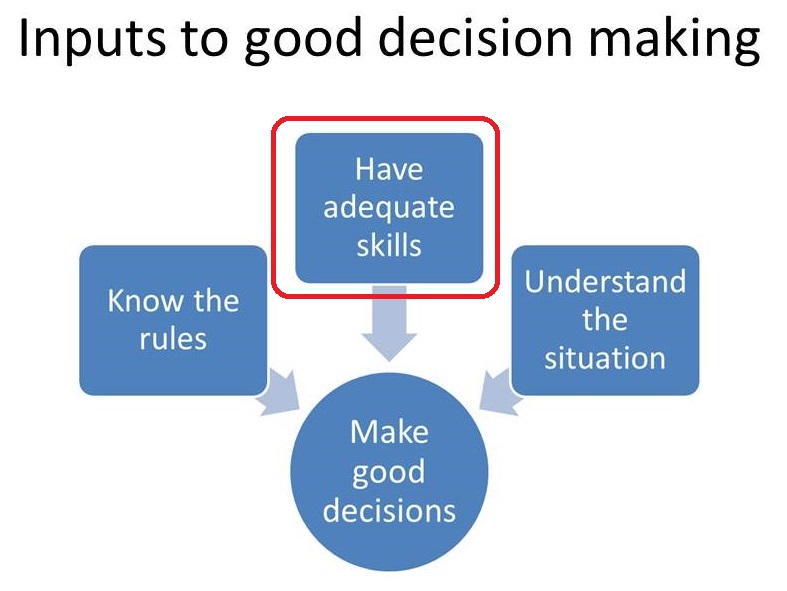
Marksmanship is a hard skill but soft skills are important too.
 tacticalprofessor
You must be logged in to post a comment.