Thinking about what’s important
Man shot in neighbor’s home charged after allegedly undressing in 12-year-old’s bedroom during break-in
Although this incident occurred in April, it recently re-surfaced as an example of a Defensive Gun Use. As is frequently the case, Internet common taters had numerous things to say about it.
- Needs more practice.
- Only six? Should have emptied the magazine!
- Too bad the dirtbag’s not in the morgue.
- Etc.
It’s easy to focus on the unimportant aspects of an incident. All of the commentary focused on feelings, which are unimportant, instead of Lessons to be Learned (LTBL), which are important.
How do we focus on what’s important? One way to start is to identify who was involved by role rather than name. Most the time, news stories use last names but that tends to obscure who did what. Substituting a role for names in the story leads to more clarity about the actions of the participants. For this incident, it would look as follows.
Cast of characters in the drama
Donald Oliver – Intruder
Tina Burton – female of household (Female)
Ali Bracey – male of household (Male)
Daughter
Important aspects of the incident
- The Male knew there was an actual intruder because of the Daughter’s text.
- Despite knowing it wasn’t just a ‘bump in the night,’ the Male went to confront the intruder unarmed.
- The confrontation between the Male and Intruder started verbally and then turned physical.
- It was either an entangled fight or within arm’s length.
- When it went physical, the male employed an improvised weapon, to wit: a broom.
- The broom was apparently ineffective in the confrontation, so the male continued using unspecified improvised weapons.
- They had a gun but didn’t think initially to bring it to the fight.
- The Female eventually brought the gun to the Male to use.
- There was a weapon handoff from the Female to the Male.
- Shooting the gun caused the Intruder to flee.
Unimportant aspects of the incident
- The intruder wasn’t killed.
- The householder didn’t practice enough at the gun range.
Lessons To Be Learned (LBTL) and other important aspects
Guns are not useful if you don’t bring them to the fight. Have a plan ahead of time about how to handle an intrusion.
You can’t practice appropriately for an entangled or close range fight at a gun range anyway. This would most likely have been best handled as a retention shooting situation. Retention shooting is a skill best learned by taking a class from someone who knows what they’re doing. Few instructors are qualified to teach this task. I can recommend Brian Hill of The Complete Combatant, Greg Ellifritz of Active Response Training, and Craig Douglas of Shivworks.
Males of the household will often confront an intruder unarmed. It’s not uncommon for another family member to have to access the firearm and bring it to the fight. A handoff to the Male periodically occurs at that point. This means that several implied Personal Protection tasks for the other family member come into play.
- Know where the gun is.
- Be able to access the gun. Is it in a safe and can the family member open it?
- If the gun is not stored Ready to Fire, be able to place the gun into Ready to Fire condition.
- Move safely from the storage location to the fight location. Having an Unintentional Discharge en route will probably be a Tactical Disaster.
- Either be able to engage the Intruder with the firearm, or
- Safely hand off the firearm to the Male engaged in the confrontation. If the confrontation is physically entangled, a handoff may not be safely possible.
Whether the Intruder is killed or not is completely irrelevant. Let’s keep in mind The Cost of Killing. Achieving a Break In Contact is our objective as Non-Sworn Citizens. Note that in this incident, the Intruder had to be taken to court in a wheelchair. That probably means that he has some serious injuries, perhaps debilitating for his entire life.
We need to focus on the important tasks in Personal Protection incident analysis and not our feelings, which are unimportant. That is what I will be doing in the monthly incident analysis on my Patreon page.
My Patreon page is live
I’ve created a Patreon page and it’s now live. My plan is to create at least four posts monthly about Strategies, Tactics, and Options for Personal Protection.
https://www.patreon.com/TacticalProfessor
I’ll still be posting a few short articles here monthly but the Patreon page will allow me to do some things I wasn’t able to before.
My first article is an evaluation of the H&K VP9SK pistol. My object is to create a more rigorous and standardized evaluation process than I generally see pistols subjected to. I will not be accepting any compensation for the hardware reviews I do. Each month I’ll be reviewing one handgun with an emphasis on subcompact and compact guns because I think those are the real concealed carry pistols.
There’s also a printable trifold brochure that describes the shooting tests I plan to use. It’s a good reference guide for anyone who wants to use it.

Other subjects I’ll be addressing will be things like the decision process, incident analysis, practice drills, non-firearms personal protection topics, surveillance detection, et al.
I hope you’ll subscribe to my Patreon page. I guarantee it will have value for you.
The Basics and Beyond
#Fridayfundamentals
The NRA Basics of Pistol Shooting course qualification has changed in the past few years. The old standard was to be able to hit a paper plate at 15 feet. The new standard is 5 shots/5 hits into a 4 inch circle at 10 feet. It must be done 4 times to qualify at the first (Red) Level. The tries do not have to be consecutive. Additional qualifications at 15 feet (White Level) and 20 feet (Blue Level) are available for those who pass the Red Level. There is no time limit. This is deceptively simple but many people who think they can shoot to this standard cannot.
Here is a target that you can download to try it out for yourself. It’s printable on standard printer paper.
4 inch circles with one inch centers portrait
You should be able to make the five hits in four consecutive tries at all three distances if you consider yourself a proficient shooter. If all the rounds don’t hit the circles in four consecutive tries, then dry practice all 20 cycles at the distance you didn’t make it. The dry practice should help you tune up your sight picture and trigger manipulation. After the dry practice, reshoot the stage at that distance. This totals a minimum of 60 rounds of disciplined fundamental shooting.
Putting the Qualification on Steroids
After you are able to successfully complete all three levels (Red, White, and Blue), you may want to really challenge yourself. Here’s the qualification on steroids using the downloadable target.
Start at 10 feet (Red Level). Shoot one shot into each circle as five separate strings. String one starts on circle one. String two starts on circle two. String three on circle three, etc. Finish with String five starting on circle one.
Putting it on steroids will teach you the visual patience to make sure your sights are well aligned before you break the shot when you are transitioning from target to target. It will also force you to press the trigger smoothly when you make a target transition.
Tactical Professor books (all PDF)
Serious Mistakes Gunowners Make http://seriousgunownermistakes.com
Indoor Range Practice Sessions http://indoorrangepracticesessions.com
Concealed Carry Skills and Drills http://concealedcarryskillsanddrills.com
Advanced Pistol Practice http://bit.ly/advancedpistolpractice
Shooting Your Black Rifle http://shootingyourblackrifle.com
Personal Performance Class Announcement
By popular demand, we’ve opened up our biannual Personal Performance Class to men as well as women. It will be held October 20, 2019 in Dahlonega, Georgia.
The focus of this class is a little different than most. There will be some coaching but the class is more about giving our clients a benchmark of where their shooting is at. From that benchmark, our clients will have a program they can follow after leaving the class to measure their ongoing performance level.
This is probably the only group class I will be teaching for the rest of the year. It is a joint effort between myself and Brian and Shelley Hill of The Complete Combatant.
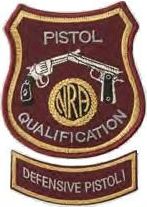
The NRA Defensive Pistol I Marksmanship Qualification Program is the standard we use for the class. I’ve run hundreds of people through the program over the past six years. Having to shoot a Course of Fire that has a 100% hit standard is a quite a surprise for many (90%) of the shooters.
All participants will receive a Patch and rocker at the class. In addition, you will receive Rating rockers for the skill level(s) you achieve during the class. You will also receive a takeaway booklet to help you practice and advance in the Program after you’ve finished this class.
Whether you’re a newer shooter or a more experienced shooter, I think you will find this class to be an eye-opener.
Defense in Depth
#Fridayfundamentals
Stolen pistol leads to reckless endangerment charge for Stamford man
By John Nickerson Published 4:28 pm EDT, Wednesday, October 2, 2019
When I posted the story on my Tactical Professor Facebook page as a Negative Outcome, the following question came up.
Which reminds me: this question is probably been addressed here before but for those of us who haven’t caught it are there any vehicle storage lock boxes that have good non shitty locks that we can buy on Amazon or a brick and mortar store?
I use a lockbox that I bought at Academy Sports for 10 bucks. Any defense can be defeated. Just as in the military, defense in depth is how we prevent a defense from being easily defeated. By using multiple barriers, we encourage a thief to move on before he gets our gun. It’s the opposite of leaving a gun in the door pocket of an unlocked car left outside at night. Here’s how I do it:
1. Think ‘be discreet.’ Visually inspect the area to see who is around.
2. Have your pistol box in the trunk, already secured by its cable to the hinge of the trunk lid. If your vehicle doesn’t have a trunk, place the box in some spot that is accessible to you and out of sight of casual passers-by and has a solid attachment point for the cable.
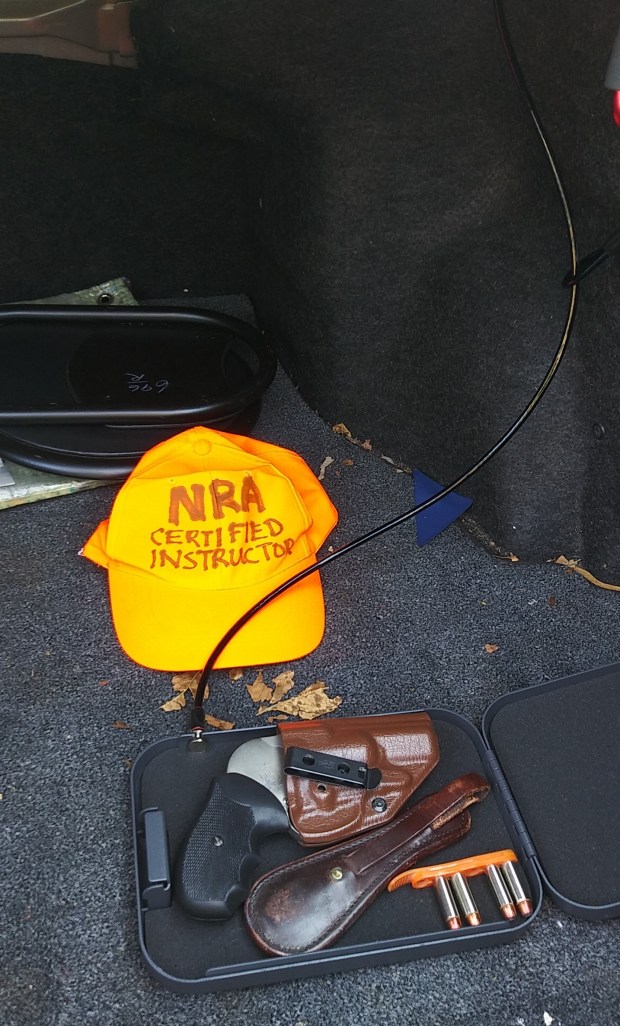
3. Open the trunk.
4. Quickly palm your pistol and put your hand with the pistol into the trunk. This is where having a small pistol really helps.
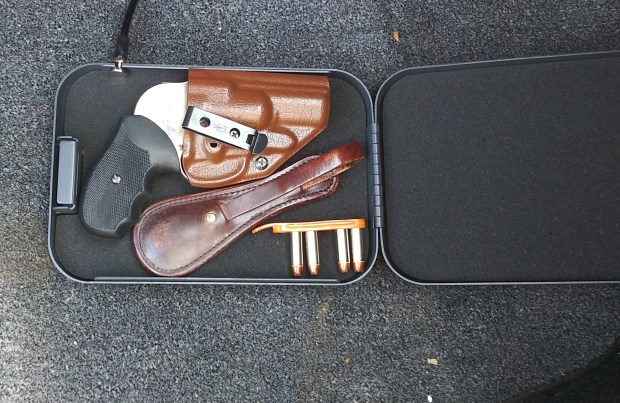
5. Place pistol and any other weapons into the lockbox.
6. Lock the box.
7. If your holster doesn’t fit in the box, place it near the box.
8. Close the trunk.
9. Lock the car doors.
For years, I used a box with a combination lock but I’ve come to the conclusion that, for me, a key lock was faster and more convenient. The key is permanently on my keyring. I’m good at maintaining possession of my keys so I’m not concerned about not having the key to the box.
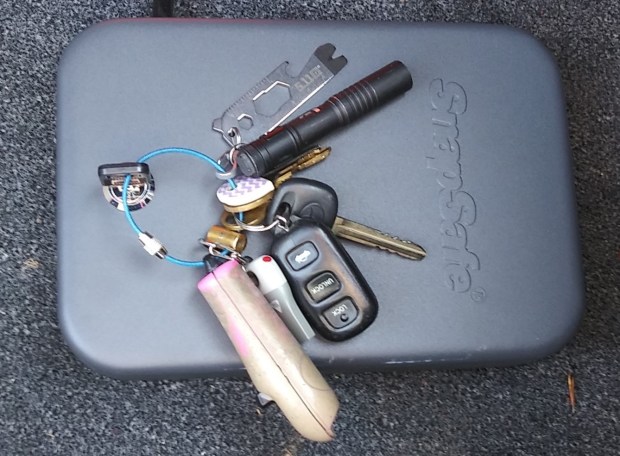
I only leave my revolver in the car when I have a good reason to; going into my home at night is not a good reason. Going into non-permissive environments or perhaps to the doctor are good reasons.
My thanks to the gentleman who asked about the topic. That was a good suggestion for a blog post. He wins free copies of Serious Mistakes Gunowners Make and Concealed Carry Skills and Drills.
Tactical Professor books (all PDF)
Serious Mistakes Gunowners Make http://seriousgunownermistakes.com
Indoor Range Practice Sessions http://indoorrangepracticesessions.com
Concealed Carry Skills and Drills http://concealedcarryskillsanddrills.com
Advanced Pistol Practice http://bit.ly/advancedpistolpractice
Shooting Your Black Rifle http://shootingyourblackrifle.com
What snubs can do
#Smith&WessonSunday
I shot the I’m With Roscoe 2019 Internet Match Friday at a local indoor range. The Match is modeled on the Pocket Revolver Championship of the US Revolver Association, as described in the 1915 edition of the book Pistol and Revolver Shooting by A.L.A. Himmelwright. This Match is an Internet enabled version of Postal Matches that were commonly shot in the 20th Century. The Course of Fire is five strings of five shots each at 50 feet. The time limit for each string is 30 seconds and the shooting is done Primary (Strong) Hand Only.
To time it, I used the Dry Fire Par Timer app, available on Google Play, on my phone with ear buds underneath my muffs. That’s a very workable setup for indoor range work.

The outer 4 Ring of the target measures 7 5/16 inches in diameter. Only two shots went outside the 4 ring, so that’s 23 hits in the largest circle out of 25 shots. I think Inspector Erskine would be satisfied with that.
There’s a common misconception that snubs are “arm’s length guns.” As I periodically remind people, that’s only true for the incompetent. Dry practice can go a long way toward improving our skills.
Tactical Professor books (all PDF)
Serious Mistakes Gunowners Make http://seriousgunownermistakes.com
Indoor Range Practice Sessions http://indoorrangepracticesessions.com
Concealed Carry Skills and Drills http://concealedcarryskillsanddrills.com
Advanced Pistol Practice http://bit.ly/advancedpistolpractice
Shooting Your Black Rifle http://shootingyourblackrifle.com
Training Opportunity
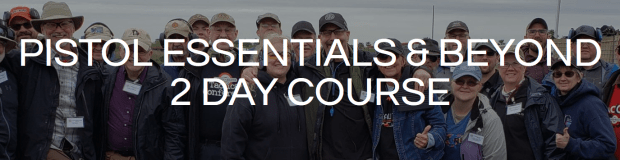
Brian Hill of The Complete Combatant will be conducting Pistol Essentials and Beyond in Raymond MS on Saturday, October 26 & Sunday, October 27, 2019. Raymond is just west of Jackson, MS.
As a Rangemaster Certified Instructor, Brian is one of the up and coming trainers in the firearms community. His block of instruction at the 2019 Rangemaster Tactical Conference was well received by all 20 clients who took it. He is a very thorough and patient trainer; a teacher of my own style.
More information about the format and goals of the class is available here. Note that this particular class is in Raymond MS not in Dahlonega GA.
Registration information is available here. https://www.eventbrite.com/e/boondocks-october-26-27-2019-pistol-essentials-beyond-in-raymond-ms-tickets-59855488377
For those interested in moving to the next level in your skill development, I highly recommend this class.
Civilian Carry Radio Podcast Tonight
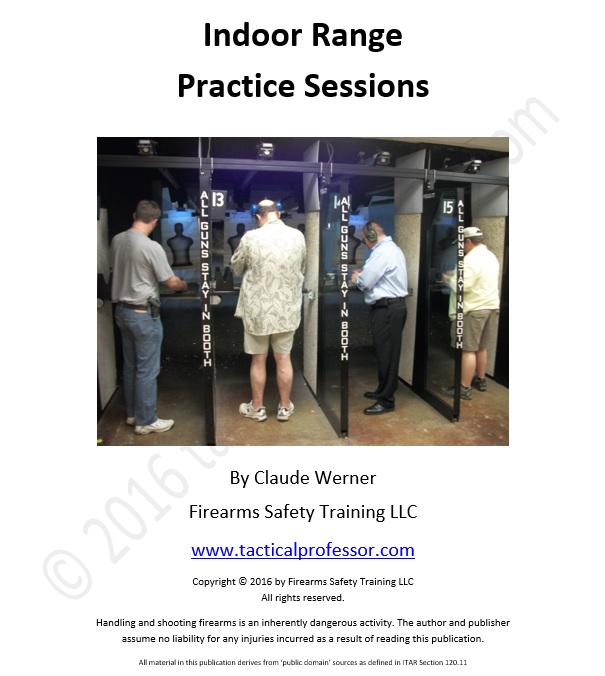
I will be the guest on Civilian Carry Radio tonight. The co-hosts for the show will be Brian Hill of The Complete Combatant and Lee Weems of First Person Safety. Our topic is Effective Practice on an Indoor Range.
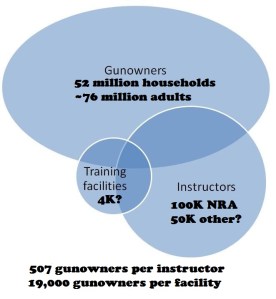
Some of the things we may be discussing include some of Claude’s Numbery Things. Data is frequently better understood in a visual way so here are some infographics and pictures that may help.
Size of the training base.
Access to outdoor ranges in the Atlanta Metro area.

Nature of the indoor range environment.
Ability to do low light shooting.

I think my readers will find it to be an informative discussion.
Bloody weekend in Texas
Five children in North Texas shot themselves or another child this past weekend in four separate incidents. A 4-year-old boy in Fort Worth died and another is in grave condition.
https://dfw.cbslocal.com/2019/09/16/5-children-shot-north-texas-weekend/
In another case being investigated by Arlington Police, an eight year old girl shot in the buttocks continues to recover.
Police say the family told them that the weapon, a nine millimeter semi-automatic Uzi-Mach 10, fired after she sat on it.
Authorities say the weapon was reported stolen in Bastrop near Austin.
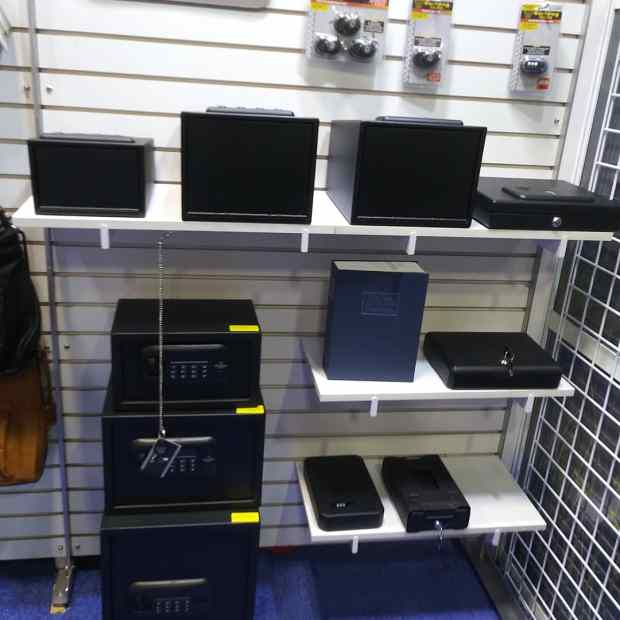
Let’s try to keep weapons out of the hands of kids. Not taking steps to prevent their access is a Serious Mistake. I’m not much for trigger locks or cables but a lockbox or even a toolbox that can be locked isn’t that expensive.
Tactical Professor books
Serious Mistakes Gunowners Make http://seriousgunownermistakes.com
Indoor Range Practice Sessions http://indoorrangepracticesessions.com
Concealed Carry Skills and Drills http://concealedcarryskillsanddrills.com
Advanced Pistol Practice http://bit.ly/advancedpistolpractice
Shooting Your Black Rifle http://shootingyourblackrifle.com/
S&W Revolver Frame Sizes (part II)
#Smith&WessonSunday
Broadly speaking, Smith & Wesson swing out cylinder (Hand Ejector) revolvers come in nine frame sizes. In order of increasing size, they are: M, I, Improved I, J, J Magnum, K, L, N, and X frame.
Perceiving a market for a more powerful pocket sized revolver, S&W introduced the J Magnum frame in 1995. It was created to accommodate the length of the .357 Magnum cartridge in a J frame revolver, having a longer cylinder and larger frame opening. This frame was first introduced as the Model 640-1 in 1995. Since then, other J frames, even .38 Specials, have been offered in this frame size. In 1996, the Model 60 (60-9) and 642 (642-1) were changed to the J Magnum sized frame.
The K frame was the original .38 caliber Hand Ejector frame introduced in 1899 as the Military & Police 1st Model. It served as the service revolver for the US Army in .38 Long Colt caliber until the adoption of the Colt 1911 autoloading pistol. The K frame was the most widely used and issued POlice revolver for nearly a century. The US Air Force continued to issue K frame revolvers to its Security POlice until almost the end of the 20th Century. It has been produced in a wide variety of calibers from .22 Long Rifle up to .357 Magnum but .38 S&W Special was the most popular.
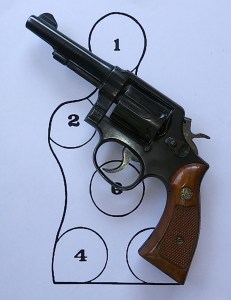
Model 10-5 (K frame) on reduced Langrish Limbless target from the 1930s
Bill Jordan, of the US Border Patrol, convinced S&W to make the K frame size revolver in the .357 Magnum cartridge for POlice service. The .357 had only been produced in N frame revolvers until 1955. His original idea was to practice with .38 Special and only occasionally use .357s. As people started shooting .357 Magnums in quantity, they found that it was hard on a K frame. This led to the introduction of the L frame, which along with the other larger frame sizes will be covered in the next installment.
Tactical Professor books
Indoor Range Practice Sessions http://indoorrangepracticesessions.com
Concealed Carry Skills and Drills http://concealedcarryskillsanddrills.com
Advanced Pistol Practice http://bit.ly/advancedpistolpractice
Shooting Your Black Rifle http://shootingyourblackrifle.com
Serious Mistakes Gunowners Make http://seriousgunownermistakes.com
Part I of the series
https://tacticalprofessor.wordpress.com/2019/09/08/sw-revolver-frame-sizes-part-i/
 tacticalprofessor
You must be logged in to post a comment.