Standards (A Series)
Standards (Part I – Introduction)
While I’ve been on hiatus, I’ve been thinking a great deal about Standards. The Free Dictionary lists the first noun definition of Standard as: An acknowledged measure of comparison for quantitative or qualitative value; a criterion.
In the area of personal protection, standards can apply to many different facets of our skills and body of knowledge. Standards imply measurement, something that many people are deathly afraid of. While ‘public speaking’ is often mentioned as being the most prominent fear, that is merely a subset of a larger body, individual performance measurement.
The most obvious and contentious type of standard regarding Private Citizens who own firearms is the concept of marksmanship standards. The discussion comes up regularly among the training and gun communities without any general consensus about what is appropriate. Generally, the topic revolves around Citizens who have some form of of License to carry a weapon. We should keep in mind that it can also apply to those who keep firearms for home defense.
Opinions vary widely about what standards are appropriate for those who carry weapons. On one end of the spectrum, some people feel there should be no standards at all. Rob Pincus of I.C.E. Training holds this view as do advocates of Constitutional Carry. On the other end of the spectrum, there are very difficult standards such as the FAST Drill developed by the late Todd Green, the Humbler popularized by Larry Vickers, or the Handgun Testing Program developed by Bill Rogers of the elite Rogers Shooting School.
In the middle are the Qualification tests used by many States as one of the prerequisites for obtaining a Weapons Carry License or whatever name the State puts on the card. For those who wish to carry a weapon in those States, the discussion of what standard is appropriate starts with what their State’s requirement is and how to meet it. No two States having a Qualification requirement are alike
The difficulty of these State Qualifications varies quite widely. Anywhere from 10 rounds to 50 rounds have been mandated. The distances shot at fluctuate from six feet to 15 yards. Some are timed but most are not. The targets may be large or much smaller. Interestingly, very few States have a test requirement that includes drawing from a holster. In fact, some States specifically prohibit the Qualification test from including drawing from a holster. While this might seem paradoxical, it is not because of liability and fairness issues.
What this series will explore is the various types of standards that exist, what skills are required to meet them, and how to choose what is appropriate for you, if anything.
How many rounds to carry?
That question came up on a Facebook group I’m a member of recently. In response, I referenced my Armed Citizen database. The question was asked about my methodology, which is a fair question. I’ll address it my forthcoming eBook about the Armed Citizen but I want to first post the Introduction, which addresses the journey I have made about the Armed Citizen and my analyses thereof.
Introduction
This book is the result of the overlap of several very widely different topics and experiences. As is often the case, as more information comes to light over time, perceptions can change.
During my time in the Army, I held several different intelligence (S2) positions. These largely involved information collection and analysis duties, not ‘spyguy’ stuff. The purpose of Intelligence in the military and government is always to facilitate decision-making. Having to provide and defend a cogent analysis of not only the information collected but the conclusions I drew from it was a formative experience for me. Information collection was only the beginning. From there, it had to be processed and turned into a usable product that decisions could be based on.
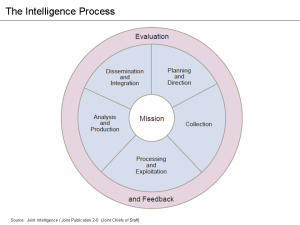
As I wound down my military career and entered the civilian world, I got into the commercial real estate business. As a Research Director for several different real estate firms, my S2 training and manuals were very useful to me. At the same time, the transition from mini-computer (Wang) to PCs in the business world was beginning. My boss was an extremely astute businessman and recognized the value of databasing information early on. Being able to construct my own databases allowed me to do several projects that were particularly influential in the way I looked at information.
One of the projects was to database the contacts that the brokers in our office used to develop business. Our firm’s business model was territorial with each broker having an assigned property type and area. To see how well this worked, my boss had me collect each broker’s contacts by Zip Code and create a map of where the contacts were in relation to the broker’s chosen territory. This process was very similar to the Intelligence Preparation of the Battlefield (now Battlespace) products I had prepared in the Army. The results were surprising to everyone involved. In almost no case were the majority of the broker’s contacts in his or her territory. Some were nearby, which was understandable, but in many cases, they were widely scattered and even far away. The brokers themselves couldn’t believe it until I showed them the actual maps.
What this showed me was how inaccurate conclusions based on data that isn’t properly disaggregated can be. Their information was written down in their Rolodexes with every contact date annotated. That system told them very well what the level of their contact activity was. What it didn’t provide was much information about how well they were following their business plan. Aggregating the data and then disaggregating it by location instead of contact name and date told a much different story.
Another database I had to create was of proposed and completed deals. Creating this database gave me a much better insight into the numerous factors that make up a transaction. Proposed rental rate, length of term, size of the space, etc. were all captured when the brokers proposed a transaction. Eventually we would enter whether the deal closed or died. That database gave our company a firm understanding of what the market was actually doing across the city and in the various submarkets. Instead of speculation about what actual rental rates and terms were, we had a very clear picture.
Training I took impacted my thoughts also. I took Massad Ayoob’s Lethal Force Institute I in 1991. Having a measured and structured component to training was an eye-opening experience. Similarly, when I started training with John Farnam of Defense Training International, I got a lot of good information, both formal and informal. John was kind enough to give me a copy of W. French Anderson’s book about the FBI Miami Massacre. The book provided a superlative example of an in depth analysis of an armed conflict.
The next leg of my experiences developed when I started shooting IDPA in 1998 and then started an IDPA club. A number of Match Directors and I were discussing how to develop stages every month for our matches. Stage development is a constant pressure for any Match Director to keep the matches fresh and interesting. Someone suggested that The Armed Citizen column of NRA’s American Rifleman magazine might be a good place to start. I had been tearing the columns out of the magazine for years but never paid close attention to them. So I dug them out and looked through them in greater detail. My response to the other MDs was that almost all of the incidents were less than five shots and a lot were only one or two. Many of them had no shooting in them at all. The general consensus was the round count wasn’t high enough and the situations weren’t complicated enough to make interesting scenario stages.
My conclusion was different though, so I started designing what I called Armed Citizen Scenarios for my matches. There were several ways to adapt the incidents into stages. One way was to put multiple strings into a stage. For instance, if a Citizen was wounded in the arm in an attack, I would have one string shot with both hands and a second string shot with the Dominant Hand Only. Or, when only one shot was fired at one criminal in the actual incident, I would specify a failure drill (two shots to the body and one to the head) on all the targets.
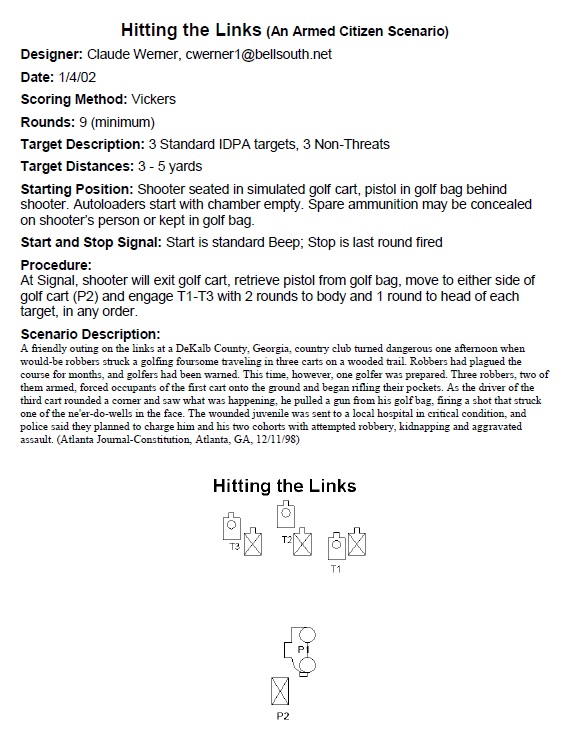
The Armed Citizen topic interested me enough to create a database all 482 of the incidents from the column for the period 1997-2001. The incidents were remarkably devoid of ‘ninjas coming from the ceiling’ and ‘face eating meth-heads.’ As I had done with the deal database, I broke out as many different characteristics (at home, in a business, number of shots fired, etc.) as I could. With the database populated, I ran a series of pivot tables and produced a short study of what the characteristics and outcomes of the incidents were. Although there were methodological issues with it, fifteen years later, it remains the only study of its type I am aware of. Like a vampire that won’t die, it continues to be widely referenced and reproduced on the Internet.
One of the criticisms of my 1997-2001 study was that the NRA ‘cherry-picks’ the incidents to portray the actions of Armed Citizens in the most favorable light. Although the nature of what the Citizens might have done wrong was never really specified, I accept that as a valid critique. Only Positive Outcomes are reported in the Armed Citizen.
Flash forward more than a decade to the 2014 Rangemaster Tactical Conference, where I am an annual presenter. My colleague Craig Douglas threw down a challenge to me. “You should do a presentation on ‘Bad Shootings’ next year.” It was a virgin topic and gave me an opportunity to counteract the ‘cherry-picking’ aspect of the Armed Citizen. I accepted the challenge and casually started gathering information.
Be careful of what you wish for. The broad array of what I came to call Negative Outcomes really surprised me. The categories I broke them out into are:
- Brandishing/threatening
- Chasing after the end of a confrontation
- Downrange failures (shot an innocent while shooting at a threat)
- Intervention (Proverbs 26:17)
- Lost/stolen guns
- Mistaken identity shootings
- Negligent discharges, including self-inflicted gunshot wounds and Unintentional shootings
- Police Involvement, e.g., getting needlessly arrested
- Poor judgement
- Unauthorized access (generally by small children)
- Unjustifiable shootings, including warning shots
The categories are far from being the lurid list of ‘gunfights lost’ that those who objected to the 1997-2001 study probably expected. Rather than being tactical failures, most are simply the result of poor gunhandling, lack of familiarity with the law, or out and out carelessness and negligence. My list of such incidents is shockingly long. The only really noticeable category of tactical failures was what my colleague Tom Givens calls ‘forfeits,’ i.e., not having your gun when you need it.
Chapter takeaways
- There is a process to data collection and analysis.
- Information that isn’t written down and then analyzed in written form is prone to error. The human mind has a remarkable capacity for memory but that capacity can be disorderly and easily misinterpreted.
- Defensive Gun Uses by Armed Citizens tend to be uncomplicated affairs.
- Defensive Gun Uses have discrete characteristics that can be broken out for broad analysis.
- Negative Outcomes rarely consist of ‘gunfights lost’ but more often are negligence related Unintentional Shootings and Unjustifiable Use of Weapons. The exception to that rule being not having a gun when it’s needed.
Chinese Whispers and the FBI (Part I)
Chinese Whispers is the game in which a short message is whispered from person to person and then the beginning and ending stories are compared. Often what begins as “I like that girl’s dress” ends up as something like “her Grandmother slept with Batman!”
The FBI released its annual report Law Enforcement Officers Killed and Assaulted (LEOKA) report on October 17. LEOKA will eventually be the starting point for numerous Chinese Whispers in the firearms and law enforcement communities. Whispers will circulate about statistical data such as distances of ‘gunfights,’ lighting conditions, weapon disarms, etc. Often, these claims will not even be based on current data but ‘commonly cited information,’ ‘well known statistics,’ or other such dubious sources.
What can we actually learn from LEOKA about how to be safer? The best single source in the Report is the Summaries of Officers Feloniously Killed and a recent addition, Selected Summaries of Officers Assaulted and Injured with Firearms or Knives/Other Cutting Instruments. Rather than relying on tabular data, which is interesting but not instructive, reading the Summaries provides us clues about circumstances, positioning, and actions. The FBI uses the term ‘The Deadly Mix’ to describe the combination of officer, offender, and circumstances. Reading the Summaries can give us insight about how that mix occurs and its outcome.
The circumstances of incidents in LEOKA are categorized as:
- Disturbance call,
- Arrest situation, including pursuits
- Civil disorder,
- Handling, transporting, custody of prisoner,
- Investigating suspicious person/circumstance,
- Ambush,
- Unprovoked attack,
- Investigative activity,
- Handling person with mental illness,
- Traffic pursuit/stop,
- Tactical situation.
While LEOs have interest in all the categories, Private Citizens can learn from incidents such as Investigating suspicious persons/circumstances and Handling person with mental illness, too. For those who think intervening in others’ affairs is a good idea (I do not), looking at the incidents in the Arrest category is a worthwhile exercise to see how easily things can go bad.
The West Virginia incident in the Summaries of Officers Assaulted and Injured is an entertaining, if somewhat macabre, example of just how weird and unpredictable the life of a police officer can be. The rookie involved certainly got a baptism of fire that day.
On January 1, a lieutenant and a patrol officer with the Lewisburg Police Department were both shot during a traffic stop at 4:20 p.m. The 36-year old veteran lieutenant, who had 15 years of law enforcement experience, and the 20-year-old patrol officer, who been on the job for 1 month, were both wearing body armor when they stopped a man driving a vehicle that had been reported stolen by a law enforcement agency in Texas.
More about LEOKA in the next Part.
Fun Facts About the AR-15
I don’t even know where this list came from but it contains some important, yet little known, information that people need to be aware of about the AR-15.
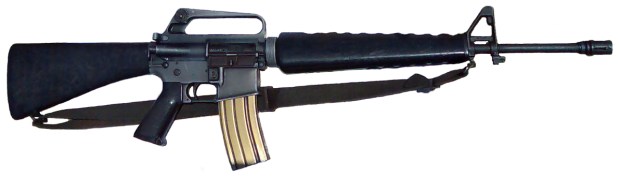
- The inventor of the AR-15 was Satan, though his patent has since expired.
- Scientists have confirmed the deadly effects of an AR-15 by giving it to a chimpanzee who then murdered them.
- Scientists agree that each year the AR-15 will grow more deadly until it kills everyone in the entire world.
- Some believe that both Hitler and Stalin were, in fact, AR-15s in rubber masks.
- In the Garden of Eden, God gave Adam and Eve access to every firearm out there except for the AR-15 which he told them not to touch because it was too evil. But then the NRA, in the guise of a serpent, told Eve that the AR-15 is really fun to shoot. So then Eve took the AR-15 and started shooting all the animals in the garden because she is one awesome chick.
- The part that makes the AR-15 so extra deadly is the handle on top. The AR-15 would be used in less murders if it were more inconvenient to carry.
- It was an AR-15 that told Miley Cyrus to dance like that.
- Bullets that are normally harmless will kill instantly when fired out of the AR-15.
- The reason AR-15s have that prominent handle on them is because the most requested feature for an assault rifle was to be able to carry it like a Hello Kitty lunch box.
- If you find yourself surrounded by AR-15s, know that they will fire automatically if they sense fear.
- The AR-15 is easily concealable and can fit inside a matchbox.
- The AR-15 is the leading cause of global warming from how its bullets shoot holes in the ozone.
- A very small percentage of gun deaths are attributed to the AR-15 because it is very good at disguising itself as other guns to frame them.
- What are the differences between an M16 and an AR-15? Scientists agree that it is something.
- The AR-15 can be rendered harmless by giving it only a 10 round magazine as people always miss with the first ten rounds and an AR-15 takes an hour and a half to reload.
- The AR-15 can shoot through schools.
- In a battle between Aquaman and an AR-15, Aquaman would break down and buy it so people might think he’s more manly.
- There were no shooting deaths until the invention of an AR-15. No one even considered using a gun to shoot another human being until someone saw an AR-15 and said, “I bet I could use this to kill a lot of people.”
- There was an assault musket similar to the AR-15 used by the world’s most evil pirates, but it was pronounced “Arrr-15.”
- The Assault Weapon ban was needed because it is well known that an AR-15 with both a pistol grip and a flash suppressor would be unstoppable by any modern military.
- In Europe there is no such thing as an AR-15 and thus also no such thing as murders. Instead of being violent, people there just drink wine and smoke cigarettes all day.
- If you are shot by an AR-15, you become one and kill others.
- The AR-15 is responsible for 95% of all deaths each year. The rest of the deaths are from obesity and drone strikes.
- Both of the atomic bombs dropped on Japan, Fat Man and Little Boy, are jealous of the destructive power of the AR-15.
- Abraham Lincoln said the AR-15 is the finest battle implement ever devised.
- Viagra is made from ground AR-15 parts.
- The AR-15 is as heavy as 10 boxes that you carry.
- Some AR-15s shoot a .50 caliber bullet “that don’t belong in our streets.” These are known as AR-50s.
A rant about rants
In the past week, friends have pointed me to several rants in the blogosphere about ‘deficiencies’ among gunowners. “They’re not physically fit enough,” “their technique sucks,” “there should be some training requirement before they can carry a gun,” etc. (I had a little they’re, their, there wordplay fun with that. 🙂 ) I’m no different; my Serious Mistakes articles and audios are my own rants about gunowner deficiencies.
The problem with rants is that they immediately turn off the target audience. No one likes to be told they’re a buffoon or inept. Serious Mistakes has been the second poorest selling information product I’ve ever created. So, ranting is just an exercise in futility. This post will be no different; “ranters gonna rant.” But if you’re not part of the solution, you’re part of the problem, so I’m going to offer an alternate viewpoint.
My colleague William Aprill periodically says that I tend to create ‘actionable’ material. That is indeed what I try to generate, material and programs that people can actually do step by step. Indoor Range Practice Sessions and the Pistol Practice Program are examples of that. Even Serious Mistakes has some ideas in it about how to not shoot your finger off or forget your pistol in a public restroom.
For those in the blogosphere who feel like tearing off on a rant, here’s a possible structure for your rant.
- Here’s the problem. (No more than two paragraphs).
- This is a possible solution. (One paragraph)
- The first step to implementing the solution is….
- Further steps in the solution are….
- It’s going to take XXX amount of time and XXX amount of resources to make the solution work long term.
- A journey of 1,000 miles (or 1,000 Days) begins with one step (or one practice session.) –Lao Tsu
While you’re crafting your rant, also keep in mind the limitations your audience has that you might not. If someone’s been overweight all their life, they’re unlikely to drop a bunch of weight just because there’s a rant about them needing to. (More their, they’re, there wordplay fun.) Keep your solution within the realm of reachable reality. (Some alliteration wordplay.)

It’s common to talk about constructive criticism but its implementation is often forgotten. Where our own perceptions are concerned, we’re likely to forget we were beginners or uninformed or not up to snuff at one time, too. (Did it again.) Think that there are ways that you can help your target audience achieve their goals instead of just telling them they’re one of the Three Stooges (there, their, they’re and alliteration wordplay fun all in the same sentence.)

Thanks for reading this. I doubt it will do any good but I had fun writing it. As General of the Armies John J. Pershing said “An officer is responsible for his own morale.” Wordplay and philosophy are two things I don’t get to indulge in very much at the keyboard.

And no, I didn’t have a drink for breakfast. I’m saving that for lunch.
1000 Days of Practice (Part IV)
What have I gained from the second run of 1,000 Days?
Purely on a mechanical level, lots of reps. The average number of repetitions I did each day was somewhere between 30 and 40. Some of the regimens I have used frequently in the final year are:
- My 12 shot drill; two hands, primary hand only, support hand only – 36 reps
- The LAPD Bonus Course – 40 reps
- A two target adaptation of the Federal Air Marshal Tactical Pistol Course (pre-9/11) – 30 reps
- An Enhanced Standard version of the State of Illinois Police Qualification Course – 30 reps
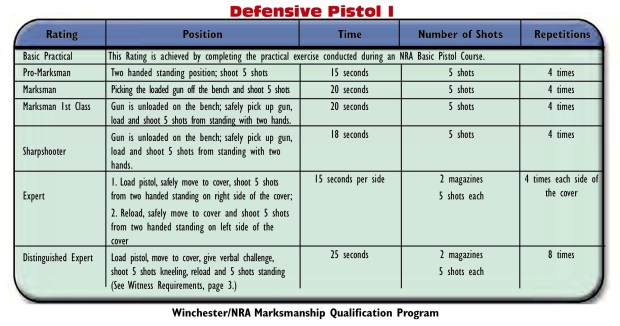
- Defensive Pistol I of the NRA Marksmanship Qualification Program (through Sharpshooter) – 80 reps
- Tactical Performance Center dots – two hands, primary hand only, support hand only – 75 reps
- The Georgia Security Guard Qualification Course – 48 reps
Let’s say the average is 40, which might not seem like a lot on an individual daily basis. However, by the end, I will have seen the sights and pressed the trigger smoothly 40,000 times. Dryfire provides feedback on the quality of those movements in a way that livefire cannot, simply because of recoil. Even if I didn’t already know how to the see the sights and press the trigger smoothly, 40,000 deliberate repetitions of them with quality feedback would go a long way to learning them. Not to mention the difference in cost between firing 40,000 dryfire repetitions ($0) and 40,000 rounds livefire (~$10,000 for the ammunition alone).
Since I religiously check the status of my pistol each day before dryfiring, I will also have completed 1,000 repetitions of correctly determining the load status of my firearm. My procedure for doing that has become completely automatic. I notice it when I go to the range or a gun shop and someone hands me a pistol; I don’t even think about checking it, I just do in a sequence.
On another level, I learned to plan ahead, develop a list of options, and then decide which option to implement in the moment. All of the above regimens have some training aid readily available in my dryfire practice area. For example the TPC dot target and 12 shot drill are two of the targets I have hidden behind a novelty sign in my practice area. The LAPD Bonus Course, Ill-Annoy Police Qual, and FAM TPC are recordings on my phone and in my computer. Defensive Pistol I is a sheet I have on a clipboard in the area.
For each regimen, I developed the material ahead of time. Then I set it up so I had immediate access to the target, the recording/sheet, or both. This is John Boyd’s true legacy to us about tactics, drawn from the Aerial Attack Study, not some nearly incomprehensible diagram and touchy-feely misinterpretation about outwitting our enemies in the moment.
By having an already developed group of options, we can pick from them and execute immediately even when we are tired, stressed, or simply don’t know what else to do. Getting into the habit of thinking ahead of time, developing options, and then simply picking from the list when needed has been a powerful learning experience for me.
Having a list of options doesn’t preclude me from adapting and improvising for the situation. I don’t have a set regimen for practicing with my flashlight. Instead I pick one of my regimens and do it with a flashlight.
Philosophically, making the commitment to follow a daily process of repetition and desire for excellence has been the most valuable part of the 1,000 Days. Periodically, people ask questions like “Are you really planning to do this for 1,000 Days straight? Although I generally respond with a simple ‘Yes,’ there’s a lot more to it than that. Aristotle said:
We are what we repeatedly do. Excellence, then, is not an act, but a habit.

That applies in many areas of life. While I was developing some sales tools for real estate agents and other salespeople, a friend commented that her firm already had a training program and tools for their people. She said that many of the salespeople didn’t use them though and were always looking for something new or ‘cool’ or simply improvised on their sales calls. Doing so tended to produce mediocre results because they were always improvising.
Improvisation is overrated.
–William Aprill
The really successful salespeople followed the company program and used established tools. As a result, they closed a lot more sales using a limited set of tools and techniques. They had practiced extensively (every sales call is a practice) and could use a small set of tools and techniques to a high standard of excellence.
Bruce Lee is reported to have said:
Colonel Boyd provided us with an example of how right Lee was. Boyd’s reputation as ’Forty Second Boyd’ [Coram, p 88] was gained through his ability to perform one single aerial maneuver with the F-100 fighter better than anyone else in the world. During his years as an instructor at the USAF Fighter Weapons School, he was never bested and only was only flown to a ‘dead heat’ once. He had pushed and tested the F-100 to its absolute limit on one aerial braking maneuver over and over again until he could slow the aircraft several hundred miles per hour in a matter of a few seconds. His opponent, unable to replicate or defeat the maneuver, would then unintentionally fly past him. Boyd would then regain his speed and get on the opponent’s tail, radioing the kill signal “Guns! Guns! Guns!”
There’s a lesson for us from ‘Forty Second Boyd.’ The real estate phrase ‘location, location, location’ can also be paraphrased as ‘repetition, repetition, repetition’ when we need to prepare ourselves for action and achievement.
Indoor Range Flashlight Practice Session
Someone who purchased Indoor Range Practice Sessions noticed a discrepancy in Session 11 (shooting with a flashlight).
I’ve updated the downloadable eBook for future purchases, but I want existing customers to have the update also. Accordingly, I created a downloadable file with Session 11 only.
As most of my readers know, using a flashlight to avoid tragedies is one of my hot buttons. It’s important enough information that I am going to make the updated Session 11 only available as a free download to all my blog followers, as well as previous purchasers.
The link to the updated Session 11 is here: Session 11 – Shooting with a flashlight
1000 Days of Practice (Part II)
An implied task, the first time of the 1,000 days, was simply devising a way of getting through it. To avoid boredom and make the process efficient, I recorded cassette tapes of several different regimens. The regimens were all based on my needs at the time, which mostly consisted of improving my competitive performance in IDPA and other shooting sports. I limited them to 10 minutes duration so I had compact practice blocks. When I wanted more practice, I could do more than one in a day, sometimes consecutively and sometimes one in the morning and one in the evening.
Having a specific structure for my practice also helped avoid ‘grabasstic gunclicking,’ which as a friend said, is what dryfire often devolves to. I didn’t realize it at the time, but I had inadvertently incorporated one of fundamentals of tactical decision-making; have a plan ahead of time. My decision-making research of the past few years made the value of having several practice regimens available quite obvious to me. John Boyd’s Aerial Attack Study was instrumental in providing me with this moment of clarity.
My regimens of the second 1,000 Days are considerably different than those of the first. Several of the regimens are based on higher level police qualification courses, such as the Federal Air Marshal Tactical Pistol Course (pre 9/11) and the LAPD Bonus Course. While most police qualification courses are easily cleaned by a competent marksman, a few are much more demanding and I prefer that.
In other cases, I took police quals that had a good basic structure but mediocre standards and enhanced them. My favorite is the State of Illinois Police Qualification Couse. For the armed private citizen, the distances and round allocations are good but the standards are so low that some of my friends in Ill‑Annoy can literally pass it with their eyes closed. The enhancements I made were to make the target smaller, cut the times in half, and do parts of it Primary Hand Only and Support Hand Only.
Being a fan of the NRA Markmanship Qualification Program, I developed dryfire versions of both Defensive Pistol I and Defensive Pistol II. The time limits set for these courses are quite generous but they have an accuracy standard of 100 percent. Since we’re accountable for every round we fire, I like the idea of a strong accuracy standard, in general.
In a defensive encounter, every bullet you fire that doesn’t hit its intended target is headed straight for a bus full of nuns and orphans being followed by a limousine of personal injury lawyers on a conference call with the District Attorney.
There are also some improvisations I like to make. My research into Serious Mistakes and Negative Outcomes made me a believer in the absolute necessity of verbalizing and being able to use a flashlight in conjunctions with a handgun. I usually dryfire something like Defensive Pistol I using a flashlight at least once a week.
One of the concepts I retained from my first 1,000 Days was making a good hit with the first shot. There’s too much emphasis placed on shooting fast in the community and not enough on making sure the first shot counts. Based on the incidents in my databases, I came to the conclusion that making a solid first hit above the diaphragm is the way to gain the initiative in an armed encounter.
Then I told myself, ‘Hey, I need to slow down and aim better.’
What if your situation or job precludes you from having access to a firearm every day? Some thoughts about that in Part III.
1000 Days of Practice (Part I)
As many of you know, I’m currently working on my second set of doing 1,000 consecutive days of dryfire practice. The first set was done during 2000-2002. This second set started on March 3, 2014 and the 1,000 days will be finished on November 27, 2016, during the week after Thanksgiving.
The original inspiration came from a friend who was working on his Yoga instructor certification. His final requirement to complete his certification was to do 1,000 days straight of meditation. This represented true dedication to excellence in my mind. Being a strong believer in the value of dryfire, I decided to make the same commitment to dryfire and immediately started my own 1,000 Days program. Just as with his meditations, it doesn’t have to be any particular drill or set of drills. Rather, it’s the commitment to do dryfire each and every day, without fail, for 1000 straight days. If I missed a day, I had to start again at the beginning.
Reflecting back on both times I’ve done the 1,000 Days, I have to say they were different experiences and I achieved different things from them. This isn’t surprising, given that they started 14 years apart and a lot went on between them.
The first time was largely a mechanical regimen devoted to further development of my skill level at seeing the sights quickly and pressing the trigger smoothly. Those two skills are fundamental to being more than a mediocre shooter. Unfortunately, shooters who insist on doing only livefire practice rarely learn them well. Recoil masks too many flaws in technique, especially when performance measurement, the third key fundamental, is omitted. Dryfire provides a superior method for learning those key fundamentals.
There is no doubt in my mind that doing the 1,000 Days was instrumental in the successes I had in my competitive shooting career at that time. It was also one of the things that led to my becoming the Chief Instructor of the elite Rogers Shooting School because dryfire is an integral part of the School’s program.
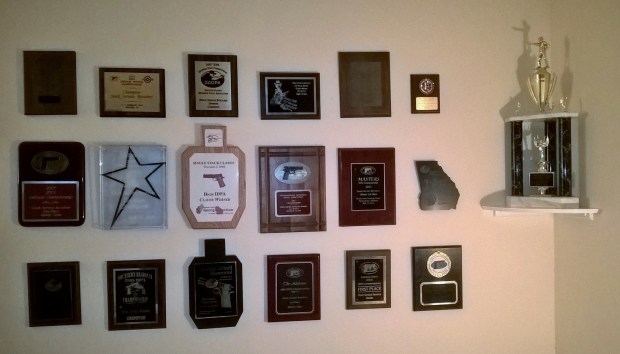
The second run of 1,000 Days had a broader conceptual focus than the first. In between the two runs, I had individually read and created two databases of Armed Citizen and Officer Involved Incidents. Combined, they total over 7,000 incidents. This gave the second run a different perspective on the skills, tactics, and techniques that contributed to success or failure in the context of personal protection.
In addition, I did extensive research about:
- the decision-making process
- instructional design
- performance measurement
- incident analysis
- wargaming and decision exercises
- proxemics, and
- human communication and interaction
These all contributed to my perception of what and how to practice, both dryfire and livefire. Some of the skills I practiced the first time remained important while others became either less significant or even irrelevant.
As I approach the end of the second 1,000 Days, several questions that hadn’t occurred to me the first time arose.
What is the focus of the next 1,000 Days?
Is 1,000 Days necessary?
Am I limited to only one focal point?
Does my focus have even have to relate to personal protection?
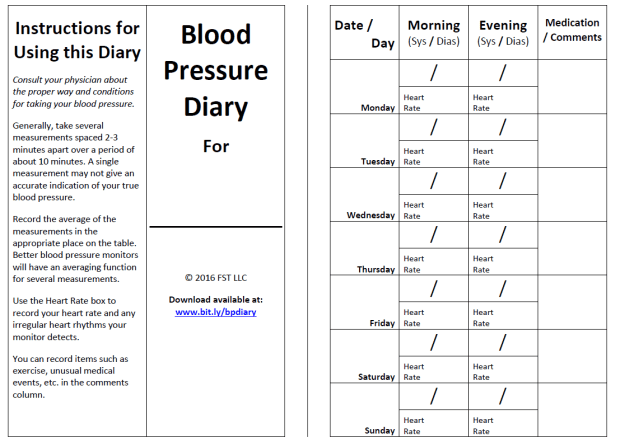
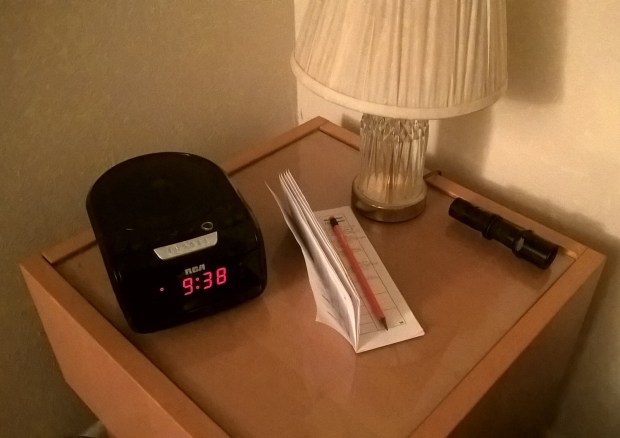
In answer to the last two questions, I resolved to get back on a daily blood pressure monitoring scheme, which I’ve neglected for a while. Since I don’t care much for apps and found the array of paper based products unsatisfactory, I developed my own blood pressure diary. It’s a printable design that’s more compact and organized than the other products available and gives me a better basis for discussions with my cardiologist. For those who are interested, it’s available here.
More in Part II.
Safe Gunhandling Rules
There are several sets of rules regarding safe gunhandling. All the sets of rules emphasize the concerns of their originators. However, many similar things are said but stated in different ways.
Which set of rules you choose to use is less important than picking a set and following it scrupulously. Firearms are instruments of ultimate personal responsibility and can be very unforgiving of even a moment of carelessness. Gunhandling is just as important as marksmanship, but many people are careless about the way they handle firearms, which can result in death or serious injury.
The National Rifle Association’s set. Link
The National Shooting Sports Foundation’s set. Link
Glock has its own set. Link
Like most competitors in the Action Shooting Sports, I use The Four Rules originally developed by Jeff Cooper. Lists of more than three or four items are difficult to memorize, so I still prefer them. There are minor variations but they all follow the same pattern.
- All guns are always loaded.
- Never let the muzzle cover anything you are not willing to destroy.
- Keep your finger off the trigger till your sights are on the target.
- Identify your target, and what is behind it.
When talking about gun safety, we need to be careful about taking our subject matter knowledge for granted, especially nuance. Each of the Four Rules has a given amount of unstated subject matter knowledge inherent in them. I have had this discussion before and I continue to maintain the following: telling people with little experience four sentences and expecting 100 percent positive results is ridiculous.
The Four Rules are a memory aid like OCOKA, not a teaching paradigm. Glibly reciting them and expecting people to understand the depth involved in them is like showing someone a flashcard about algebraic formulas and then expecting the person to understand Mass-energy equivalency. The written explanation I provide my students about the Four Rules is three pages long with multiple (2-7) subsections explaining the nuances of each Rule. In the case of Rule #2, there are seven subsections.
“Never point your gun at something you’re not prepared to destroy,” to someone who doesn’t know much about firearms, can be easily interpreted as “Don’t horseplay around with your gun and act like a toothless buffoon by pointing it at your wife or dog.” There are multiple nuances that are not immediately apparent in a one sentence reading. For instance, here is one subsection of my handout:
“c. In many cases, you will have to choose between pointing the gun at an inanimate object, such as the floor or gun cabinet, or pointing the gun at a person; always choose the inanimate object, never point the gun at a person.”
I speak for no one else but there’s nothing in a gun shop I am prepared to destroy when I handle a gun. However, the choice between shooting a gun cabinet and shooting the person behind the counter is fairly easy to make.
Granted a few people are exceptionally stupid. For instance, the guy who disabled his hand by negligently shooting it and then did it a second time because he insisted the only way he could manipulate the slide was by pushing it against his disabled palm. He posted pictures of the second incident on GlockTalk years ago and almost seemed proud of them. People like that are untrainable.
I think most people would be much more competent if we in the industry didn’t take so much for granted. People who have never operated a handheld device more complicated or dangerous than a coffee maker need an explanation first and the memory aid second to reinforce the explanation.
When explaining the Four Rules, I always include the statement:
In addition to the Four Rules, always store firearms so that they are not accessible to unauthorized persons.
The attached explanation is NOT all inclusive of the implications of the Four Rules. However, it is a starting point to allow shooters to think about the proper way to handle guns safely. Feel free to distribute the PDF to anyone.
 tacticalprofessor
You must be logged in to post a comment.