Laser sights
I have seen too many people forget the basics and rely on finding the laser dot instead of looking down the sights on pistols. They became much slower with the laser.
So began a Facebook thread in a closed group of ‘operators.’ There’s an antinomy, a form of paradox, in this sort of discussions that I always find interesting.
The paradox arises from the often parroted statement that most armed encounters take place at night or in low light. This premise is less than provable, but let’s accept it at face value for purposes of discussion.

Now, let’s follow up that premise with dismissal of a sighting system because ‘it doesn’t work’ during periods when gunfights are LESS LIKELY to take place.
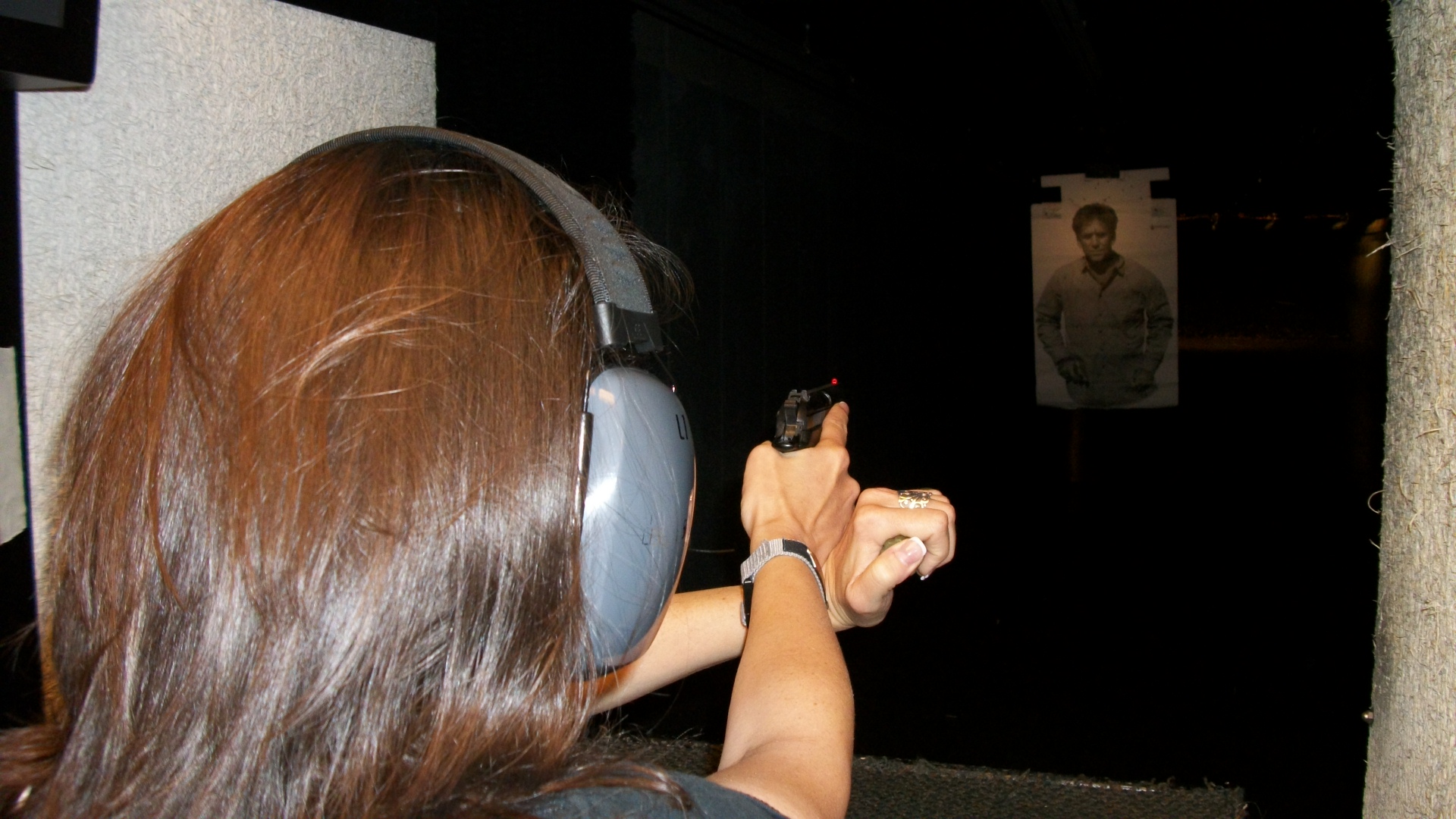
In this particular FB thread, I will put myself in the category of ‘highly trained,’ since that’s what their membership group supposedly consists of. Years ago, it didn’t take me long to figure out that there were things I could do with a laser on a pistol that I simply couldn’t do without them. That held true even during the day, unless I was on a brightly sunlit ‘square range,’ which is so often said to be a poor and ‘non-realistic’ training environment. In any indoor environment, there is no issue with ‘finding the laser dot,’ even in a well lit room in daylight.
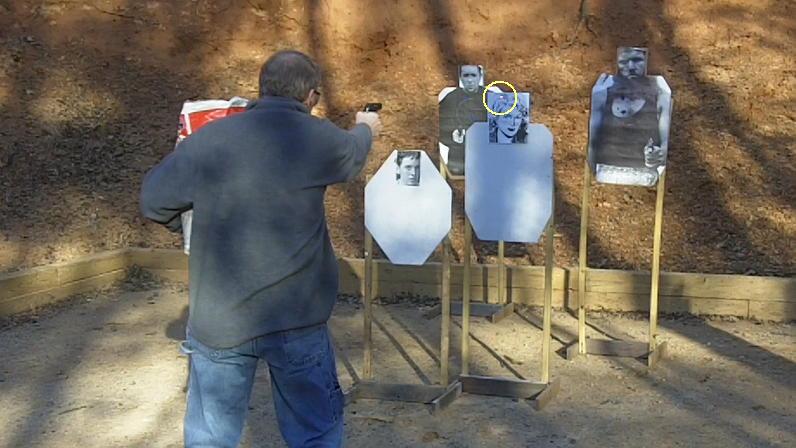
Note visible laser dot.
Once we get into the realm of low light, where the popular mantra says the majority of gunfights occur, most of us will agree that iron sights are fairly useless. We’re largely reduced to point shooting because the sights can’t be seen.
I wondered about the difference between iron sights and lasers during low light. I think of the time frame between sundown and End of Civil Twilight (dusk) as low light. The US Naval Observatory provides specific definitions of these and states
Some outdoor activities may be conducted without artificial illumination during these intervals, and it is useful to have some means to set limits beyond which a certain activity should be assisted by artificial lighting.
Target Acquisition and, to a lesser extent, Target Identification, is still possible during that period. However, between sundown and dusk, night sights aren’t really visible (not bright enough) and neither are the irons (luminous efficacy of the eye’s cones is insufficient).
To establish a quantitative measure for that difference, I chose several parts of the Handgun Testing Program at the elite Rogers Shooting School. The targets were more visible than they show in the video but I couldn’t see the irons. I proceeded to shoot the tests with a laser equipped Beretta. Having taught at Rogers for five years, I’m fairly confident in saying that, without the laser, I would have made the all the body hits (7) and around half of the hits on the number 1 head plate (8) for a score of 15 out of 69 targets. My score with the laser was four missed targets for a score of 65 out of 69.
There’s a reason I have a laser on my house gun.
The issue of parroting something that was heard without questioning, analyzing, or testing is a separate topic that the training community has yet to address adequately. That’s for another time, though.
Grace at Night
[This lady]
“made a list of ten factors that can make an incident traumatic. Eight of the ten happened [in their incident]:1. In your home
2. In the presence of children
3. Prolonged
4. Death and rape threats
5. Guns
6. Theft
7. Beating
8. Shots fired
9. Rape
10. Murder”

One week ago our family went through a harrowing, life-changing experience. This is how my husband described last Tuesday evening in a prayer update:
Last night at about 9:45 pm at our house, Caleb announced to Amy and I as we worked on a paint job in the children’s room that three men had just entered our back door. When I got to the door, I saw two guns brandished among the three criminals. Though we offered all our money and goods to them they beat me and hit Amy twice.
We are praising the Lord that after about 15 minutes wherein they tore the house apart, we were able to chase them away. They took some material possessions, but our lives and honor were spared because of the good hand of our God who placed a wall between our lives and their weapons.
Tomorrow, we are taking a…
View original post 1,710 more words
Negative Outcomes: Unintentionally Shooting Someone Else
It’s a sad fact that people shoot other people unintentionally. I’m not talking about mistaken identity shootings but completely unintentional shootings. Probably the most famous incident was when Vice President Dick Cheney shot his hunting partner. However, that was far from an isolated occurrence. Reading the news reports provides plenty of such incidents.
We absolutely don’t want to shoot someone unintentionally nor let someone get shot unintentionally. A firearm is an instrument of ultimate personal responsibility. It’s not like a car, where sometimes we can blame someone else for negative outcomes. When a firearm we are handling goes off, we have to bear the consequences, period. If we leave it sitting around unsecured and someone else makes it goes off, we have to the bear the consequences, period. Sometimes, the consequences are tragic, in either case.
The Armed Citizen
A writer from Gun Digest contacted me about the Five Year Armed Citizen study TAC 5 year w tables I did a while back. He asked if I would give him a quote about it, so this was my reply.
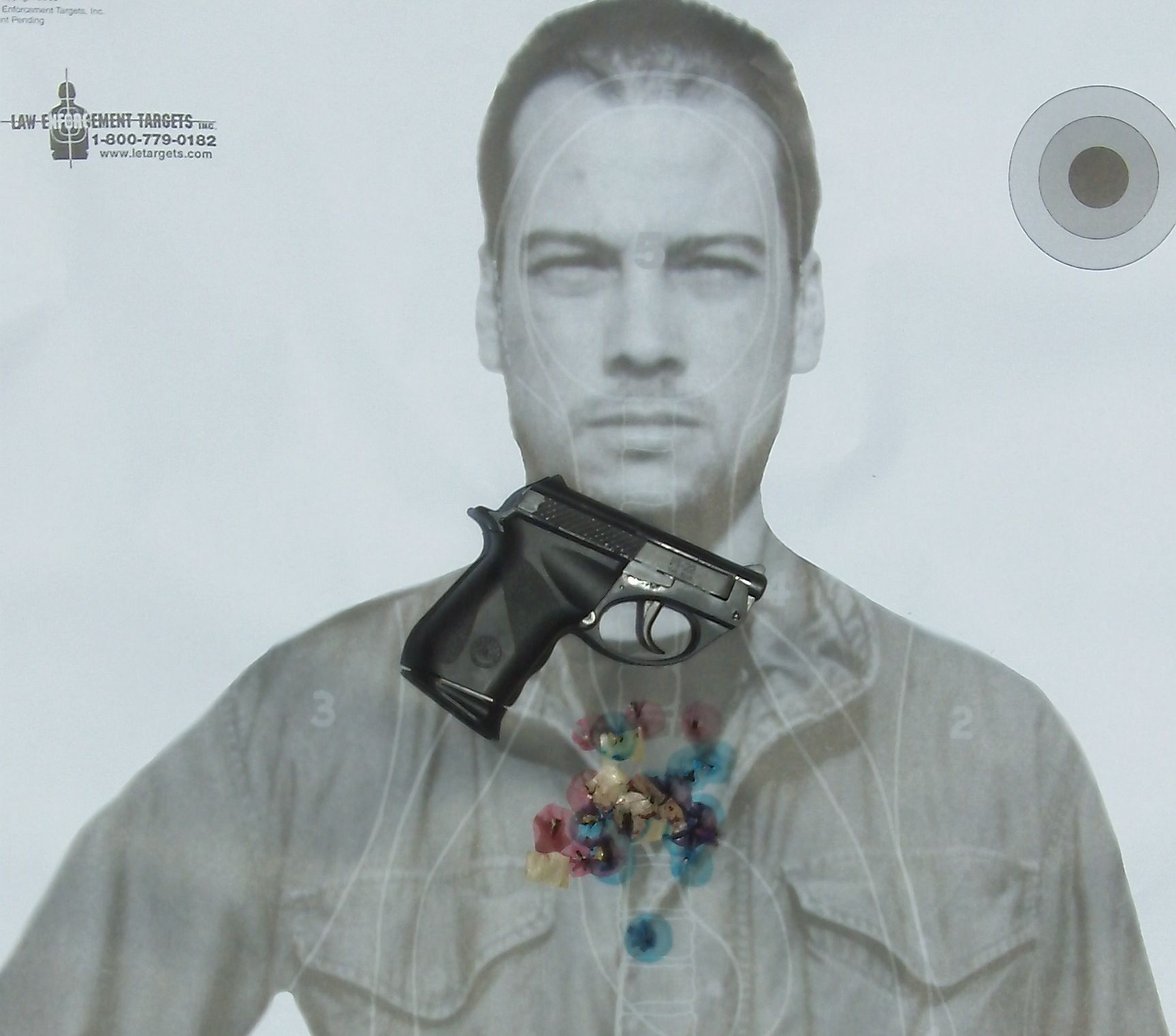
“Analyzing incidents involving Armed Private Citizens, rather than LE/MIL situations, leads to different conclusions. Common discussion topics among Armed Private Citizens, such as equipment and caliber issues, rarely are the cause of Negative Outcomes. Negative Outcomes result from 1) lack of conceptual understanding leading to poor decision-making, and 2) lack of appropriate and necessary skills, techniques, and tactics.
Carrying and being capable of using a small gun adequately will yield much better results than owning a large pistol that isn’t carried or shot well. More criminals have been planted in the ground by .22s that hit than by .45s that miss.”
Legal defense plans
Periodically, I am asked to opine about the various plans available to cover the expenses of a legal defense after a personal protection incident. This article by Marty Hayes covers it in much better detail than I could explain.
The [plans] can be categorized into four types:
1) Insurance
2) Insurance backed
3) Pre-paid legal services
4) The Armed Citizens’ Legal Defense Network, Inc., a membership organization.
http://www.armedcitizensnetwork.org/buyersguide
Fair disclaimer: I am a member of ACLDN and have a relationship with them.
Negative Outcomes: Self-Inflicted Gun Shot Wounds (Part II)
Unfortunately, once we covered up the trigger guard, the path was paved for negligent discharges going back into the holster. Carelessly leaving the finger inside the trigger guard when reholstering will result in the holster helping the finger press the trigger. That’s not the holster’s fault, it’s the user’s.
Gun tests
Taurus Manufacturing has officially released the Curve, a small, polymer .380 pistol with a distinct curved frame, meant to comfortably wrap around your hip or thigh when carrying inside the waistband or in a pocket, respectively.
http://gunsmagazine.com/exclusive-curve-ahead/
Here’s my gripe about ‘range tests’:
First, some quick range notes: After handling and firing the Curve I can straight away can [sic] tell you that the 100 or so rounds I fired through the gun fed well and the empty cases ejected perfectly. The long trigger was decently smooth and the recoil, while sharp, was manageable. And not only was the gun a reliable shooter, it also hit where I aimed, thanks in part to its integrated light and laser.
How much meaningful information does that convey? What distance, what was the target, what speed, what anything? How about putting a trigger pull gauge and ruler to it? Then we might know what ‘long’ means, in a couple of dimensions.
I’m actually interested in doing a comparative test of the Curve. Anything that has generated so much hate without even being seen, handled, or fired deserves a second look. Perhaps I’ll do something even slightly scientific, such as firing it on the same course of fire as a full size gun or perhaps a competitive gun, e.g., an LCP.
If they’re going to fire 100 rounds anyway, why not do something meaningful with it? For example, “I fired the XX State weapons carry qualification course with the Curve and an LCP. With the Curve, I was able to make a score of XX in a time of XX. The LCP gave me a score of XX in XX seconds. So, XX produced better results, for me, than the XX. Then I fired the same course with a Glock 17, which produced XX results. So the smaller guns gave up XX percentage of performance.”
Larry Potterfield, of MidwayUSA, even developed his own analysis protocol for testing handguns. His procedure is not what I would use but I give him credit for doing something original, measured, and somewhat informative.
C’mon guys, this isn’t that hard if you think about it just a bit. You don’t have to put on a Top Gear show to provide some kind of meaningful information for people to use in decision-making.
Rule 4 violations
Firearms Safety Rule #4 – ‘Know your target and what is beyond it.’
Oklahoma City police say a husband accidentally shot and killed his wife thinking she was a home invader early Wednesday morning. There’s no other way to describe this other than a tragedy. It should be noted that their child was in the house, as well. The story is that the child did not witness the incident; I certainly hope that is true.
Sadly, this is not the only incident of this nature in my database. It’s essential that we know what we are shooting at; absolutely essential. There are two possible reasons for this kind of tragic occurrence; 1) lack of forethought and preparation and 2) training scars. I don’t know which one was at fault here but given the small number of people who take any kind of training, my guess is that it’s the former.
Lack of forethought and preparation means when this type of incident occurs, the shooter hadn’t given any thought to the possibility that someone else was home or that a family member might be moving around the house at night. People do get out of bed at night to have a snack, go to the bathroom, or just because they can’t sleep. Anyone who has other people living in their home needs to consider that as a very real possibility. The shooter might not have had a flashlight next to their firearm, either. It’s amazing how many people don’t have any flashlight at all in their home.
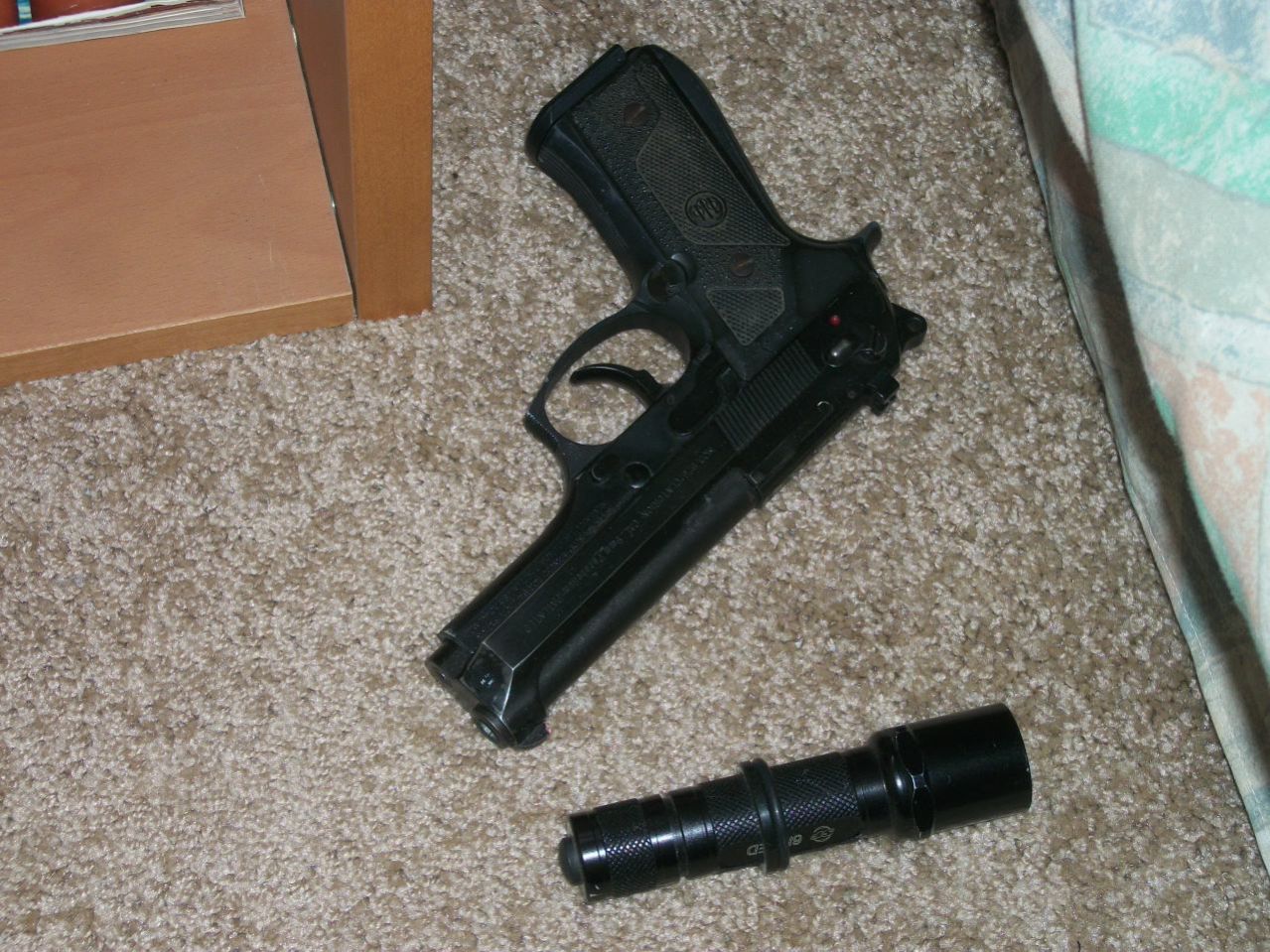
The training scar aspect was made apparent to me by a friend recently. He trains and practices quite a bit. When I mentioned about using a flashlight to identify someone at night, he said something that really disturbed me. “I don’t like to do that because whenever we do it in Force on Force exercises, the light draws enemy fire.” That may be a viable concern in military operations. But in the context of Armed Private Citizens and Law Enforcement Officers, we have an absolute obligation to know who we are shooting. My reply to him was “Show me the incidents where that has happened to an Armed Private Citizen because I can show you several incidents where using a flashlight would have prevented the wrong person from getting shot.”
From the practice standpoint, it means that you have to know how to work a flashlight and a pistol simultaneously. It also means you have to learn to verbalize and challenge an unknown person before shooting. In almost every incident of this type, a simple challenge such as “Who’s there?” would have prevented a tragedy. You don’t have to be in the Bureau to recognize a response like “It’s me, Daddy” as a clue.
Get a flashlight. Decent ones are available for less than 10 dollars. Keep it next to your pistol at night. Don’t pick one up without the other, period. Incorporate a challenge into your range practice, along with learning to operate the flashlight and pistol simultaneously. The life you save might be someone very important to you.
What is the value of training?
Firearms instructors are periodically asked the question “Why should I take training?” The answer often comes in the form of a list of skills that are taught or the reasoning behind using a certain technique. However, these do not address the underlying fundamental reasons for taking firearms training at all.
- You don’t know what you don’t know.
- Much of what you know is wrong.
- It’s good to have some of the answers to the test before taking it.
These issues relate to both technical competency with using a firearm (gun safety and marksmanship) and the ability to use the firearm correctly in a personal protection situation (legal and tactical).
You don’t know what you don’t know.
Shooters who only take their gun to an indoor range once a year “to sight it in” generally have a highly ‘cocooned’ knowledge of firearms. They know how to operate a firearm in a very restricted set of conditions. As soon as they leave that set of conditions, the stage is set for bad things to happen. Although ‘bad things’ can include unintentional and negligent gunshot wounds, it doesn’t have to be anything that newsworthy. A fellow NRA Instructor was once asked by a long time shooter why the shooter should take the NRA Basic Pistol course. The Instructor responded “Do you wear safety glasses when you’re cleaning your firearms? You do know, of course, that most cleaning fluids can irritate or even damage your eyes, don’t you?” The longtime shooter decided to take the class, after all.
Much of what you know is wrong.
Training can mitigate the Dunning–Kruger effect, which is rampant among the shooting community.
The Dunning–Kruger effect is a cognitive bias in which unskilled individuals suffer from illusory superiority, mistakenly rating their ability much higher than average. This bias is attributed to a metacognitive inability of the unskilled to recognize their mistakes.
–Wikipedia
Almost every firearms instructor has had numerous students who think they are “good” with a firearm but are not. Among these misinformed shooters are most police officers and, even many SWAT units. Typical longtime gunowners are too. When subjected to a standardized skills evaluation, most of these “good” shooters receive a rude awakening.
We’re the best shooters in our department, by far. That’s why we’re the firearms instructors. Then we come here and find out that we suck.
— A police officer attending the elite Rogers Shooting School
Many of these skills evaluations are not even particularly difficult. In one class I taught, the test was to shoot, starting from a ready position, five shots into a 12 inch circle at seven yards in 15 seconds four times in a row. Only one student out of ten was able to do it. And none of those shooters were beginners; most of them were longtime shooters. This test is the baseline level of the NRA Defensive Pistol I Marksmanship Qualification Program.
More advanced, yet still not terribly difficult, competency standards are beyond the ability of 99 percent of self trained shooters, in my experience., For example, the ability to shoot five shots into a five inch circle in five seconds at five yards five times in a row, a drill I call 5^5.
When a friendly competition was held on a local gun forum for the 5^5 drill, no one was able to do it. Several dozen people thought this test would be easy but even after multiple, in some cases, attempts they found out otherwise.
Every round that doesn’t hit is heading straight for a busload of nuns and orphans being followed by a limousine full of personal injury lawyers on a conference call with the District Attorney. At least, that’s the assumption I make and teach. It’s the reason I make my students account for every round they fire in my classes. And I point out the misses as seen in the cover photo of my blog.
It’s good to have some of the answers to the test before taking it.
Any decent class on the legalities of using deadly force will counsel students about things to do and not to do. An example of things not to do would include chasing a fleeing intruder down an alley and shooting at him while he is running away. In that particular incident, the shooter was lucky to only receive 60 days in jail.
The most significant value of training is that it places someone else, the instructor, in control of the flow of events, either physically or mentally. A criminal encounter will not be initiated in the time sequence desired by the would-be victim, which would be NONE. Nor will the skills required to solve the incident be dictated by the defender. However, by definition, self trained individuals control the flow of their actions when they practice, assuming they practice. This is exactly the opposite of criminal encounters. That’s not how it happens in real life. Good instruction will provoke thinking and questions beyond the student’s own expectations and experience. This helps prepare students to make decisions that can and will affect them for the rest of their lives, either positively or negatively.
The conscious mind does not function particularly well under stress. It tends to revert to subconscious background information and patterns, some of which are primeval. Many of these patterns are counterproductive in personal protection situations and require re-programming. Training helps replace them with background knowledge and patterns that are appropriate. Having appropriate knowledge helps avoid negative outcomes.
You don’t fire guns at people’s houses,” [Judge] Ludy said. “You kept saying you really didn’t know what was going on. If that’s the truth, why in the world would you fire a gun? … It really doesn’t matter if it was (at) Mr. Bailey or the mayor of Dunkirk. You just can’t do that.
— Judge Max Ludy Jr.
Shockingly, some people thought this case should not have come to trial. I know I wouldn’t have been too happy had I been the homeowner down the alley who had bullets launched in my direction. “Judge Max Ludy said he found McLaughlin’s firing of a gunshot in the direction of a neighbor’s home especially reprehensible.”
Instructors, as a group, are constantly looking for examples of situations and incidents that went both right and wrong. And other students in the class ask questions about situations that concern them. Inevitably these discussions become class material, either formally or as side conversations. Because training is our vocation, we tend to analyze those incidents in greater detail than does the average gunowner. Our analysis may not necessarily be what the student wants to hear, or even correct, but relating the analysis provides food for thought that merely reading about an incident in the news will not.
The value of training is to make you think and perform outside of the cocoon that most gunowners are in, the same way real life frequently does. It’s not so much that we instructors have all the answers, because we don’t. However, most of us have a good idea of the questions to ask and that’s a strong start.
Negative Outcomes: Self-Inflicted Gunshot Wounds (Part I)
This is the second installment of my Negative Outcomes series. I’ve already been taken to task for commenting about imprecise language and I understand where he’s coming from. The fact of the matter is, however, that we, in the instructional community, take a lot of our subject matter knowledge for granted.
Frequently, I hear comments to the effect that NRA courses go too much into depth about things like the individual components of ammunition, etc. I disagree with that completely. The influx of new gunowners requires that we educate them thoroughly. Many of the new owners have never operated any hand held device more complicated than an electric toothbrush.
As I commented to a student last night, I previously had a student in a class who was using a Sig pistol. He had owned and been shooting it regularly for almost two years. When I told him to ‘decock,’ he looked at me and said “What does that mean?” He had never used the decocking lever before and didn’t understand what its function was. He was actually a good shot, too. But elements of the pistol’s manual of arms had never been explained to him.
When dealing with deadly weapons, we can leave nothing to chance, including our vocabulary and students’ understanding thereof.


You must be logged in to post a comment.