Practicing Awareness: An Interview
I’m very pleased to have been interviewed about Practicing Awareness in this month’s Armed Citizens Legal Defense Network Journal.
https://armedcitizensnetwork.org/practicing-awareness
It was an interesting interview that touched on a number of subjects, some old and some new. The interview builds on the series of posts I’ve written about the topic of awareness and positioning.
Bringing worthwhile content like this to its members is yet another reason I’m a member and fan of the Network.
Snubby recommendation
I was emailed the following question. It’s a good question with an involved answer.
Which snubby do you recommend?
This was my reply:
It depends on the person, their ability, their needs, and their desire to achieve an acceptable standard of performance. The S&W 642 and Ruger LCR .38 Special have become the default purchases for people who want to carry a snub. They work for some people but not everyone.
The ‘Wizard Drill’ and the J Frame
Ken Hackathorn created a very simple skill evaluation drill that he calls the ‘Wizard Drill.’ It only requires five rounds of ammo and can be shot on any range that allows work from the holster
Take an IDPA or IPSC (USPSA) target and place a 4 inch circle centered in the head of the target. You will shoot 4 strings of fire at 3, 5, 7, and 10 yards. Each string of fire has a time limit of 2.5 seconds with 2.7 allowable because of the length of the buzzer’s beep. The drill is shot from a concealed holster. If you use a pocket holster, you may start with the gun in your pocket and your hand on the gun. Otherwise, hands normal at sides, not touching the gun until the buzzer.
Why think ahead and why practice?
Today’s news contains an article with several lessons in it for the Armed Private Citizen.
Police: Man outside Walmart shot [his gun] in self-defense
The lessons cut across an array of topics relevant to Personal Protection. Let’s use the CAN/MAY/SHOULD/MUST paradigm as a basis for the discussion.
Caveat Emptor
Know what you’re buying. This is even more important when you can’t see it in person. When it’s an intangible, such as information, you must be especially careful.
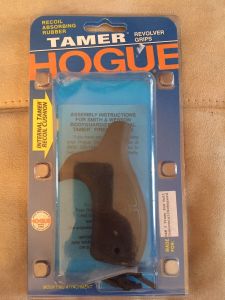
As part of my research for The J Frame Project, I was perusing eBay last night for J Frame stocks. One of the items I came across was a ‘Hogue Tamer‘ for a very low price. It didn’t look quite right (a color I didn’t recognize Hogue ever making) so I czeched into it a bit further. I realized that someone had replaced the stock on their Polymer Bodyguard with the Tamer and then put the Bodyguard stock back in the Tamer package.
Friday Fundamentals – Ball and Dummy
What is ball and dummy?
Sometimes, we instructors take our subject matter knowledge for granted. A friend posted that she was pulling a few of her shots low and left. She’s right handed. My reply was ‘ball and dummy.’ She then asked me what that meant.
Ball and dummy means interspersing dummy (inert) ammunition among your live ammunition during a practice session. It’s a key training tool at the elite Rogers Shooting School. The dummies can be random, e.g., three or four dummies in a 15-17 round magazine. They can also be alternating; i.e., live, dummy, live, dummy, live, dummy, etc. for the entire magazine.
The purpose of ball and dummy is to watch the sights when the dummy round is clicked on to learn how smoothly, or not, you are pressing the trigger. Ball and dummy for marksmanship training is NOT the same as an Immediate Action Drill. For an IAD, you want to clear the malfunction as quickly as possible. With ball and dummy, you want to observe the sights for at least 300 milliseconds (about 1/3 of a second) after the hammer or striker falls to see what your trigger press was like and THEN clear the malfunction. A useful benchmark is to count ‘One thousand’ after the hammer/striker fall and then clear the malfunction. That’s called ‘followthrough.’
Alternating ball and dummy is both the most soul crushing and, at the same time, the most productive marksmanship drill you can do. You’ll see just exactly how smoothly you’re pressing the trigger when you do this drill. For most people, the answer is about as smoothly as Stephen Hawking, the genius theoretical physicist who has had ALS for decades.
With a revolver, for instance the iconic J frame, this exercise is extremely easy. Load a cylinder of ammo. After each shot, followthrough for one second. After you have completed your followthrough, open the cylinder, spin it, and then close it. Press the trigger smoothly until another round fires. Then open, spin, close, and repeat. Do this until you have fired all the rounds in the cylinder. Continue doing this for about four cylinders.
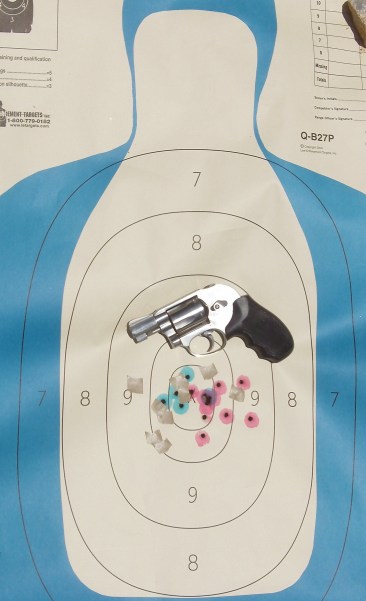
Whether using a revolver or autoloader, you gain useful visual feedback about what a good trigger press feels like. There’s a reason we refer to ‘hand-eye coordination.’ The visual process teaches the tactile process as to what works and what doesn’t. After a while, you will become annoyed with seeing the sights nosedive and begin to press the trigger smoothly. That’s the point where you start to become a marksman.
Tactical Professor Information Products
STOPP Presentation at Rangemaster Tactical Conference
https://tacticalprofessor.wordpress.com/2021/09/14/stopp-presentation-now-available/
https://www.payloadz.com/go?id=3381307
Books (all PDF)
- Thinking Clearly about Self-defense and Personal Protection https://www.payloadz.com/go?id=3377208
- Real Shootouts of the LAPD https://realshootoutsofthelapd.com/
- Serious Mistakes Gunowners Make http://seriousgunownermistakes.com
- Indoor Range Practice Sessions http://indoorrangepracticesessions.com
- Concealed Carry Skills and Drills http://concealedcarryskillsanddrills.com
- Advanced Pistol Practice http://bit.ly/advancedpistolpractice
- Shooting Your Black Rifle http://shootingyourblackrifle.com
- Package deal of Thinking Clearly about Self-defense and Personal Protection, Serious Mistakes, Indoor Sessions, Concealed Carry, and Shooting Your Black Rifle (50% off) https://store.payloadz.com/details/2644448-ebooks-sports-shooting-drills-package.html
A Day at the Range – I
As always, a good day at the range erases the ennui generated by Internet goofiness.
As I mentioned in my post about Structured Practice (Part II), many people have no plan and use no structure when they go to the range. That’s only because they’ve never been introduced to the concept of structured practice in any activity. I always have two or three objectives in mind for a range trip and I write them down to help me keep on track.
Yesterday, I had two principal themes for the trip.
- Test the CMMG .22 Conversion Unit I bought for my AR.
- Test the functionality of the Model 30 Improved I Frame revolver I bought. It had been abused at one time and subsequently reblued so I wasn’t 100% sure of its mechanicals.
For the CMMG unit, I had three things in mind.
- Zero it.
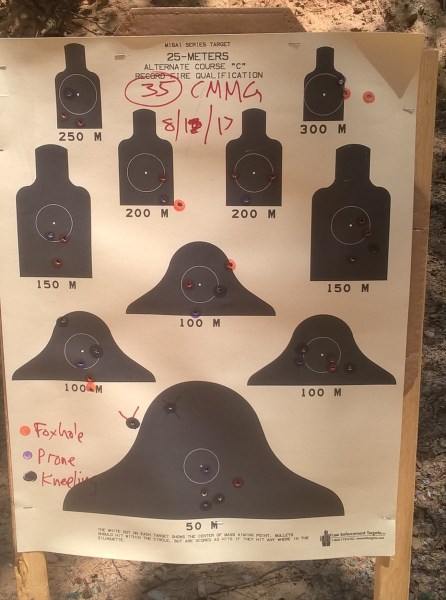
- Shoot the US Army Alt-C Qualification Course with it.
- Shoot the NRA Marksmanship Qualification Program Tactical Rifle Course at the Pro-Marksman level. My gun club rules don’t allow me to shoot the Program with a centerfire rifle caliber so I’m going to use a .22.
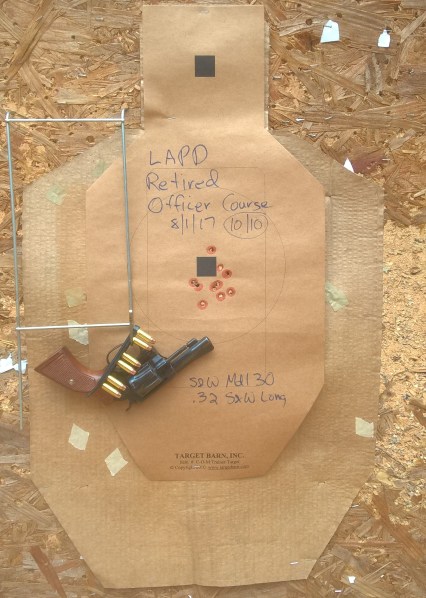
Testing the Model 30 was a little simpler. My plan was to shoot the LAPD Retired Officer Qualification Course. The Course isn’t extensive but it allowed me to test the revolver’s reliability and see if it shot to the sights.
Fortunately, the CMMG shot fairly close to the rifle’s current zero. It just shot a little low, so I fixed that. The Alt-C course is a precision course shot at 25 meters. The targets are scaled from 50 meters to 300 meters.
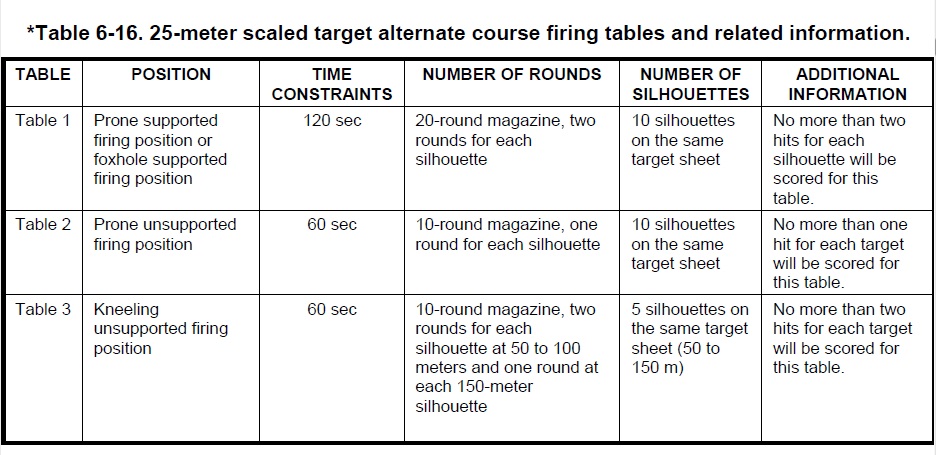
Foxhole supported is simply a benchrest shooting position. There are benchrest positions available at my club so that’s how I shot Table 1. Even though I was using the iron sights, I was still able to shoot Sharpshooter. That made me happy because I haven’t fired a rifle in almost a year.
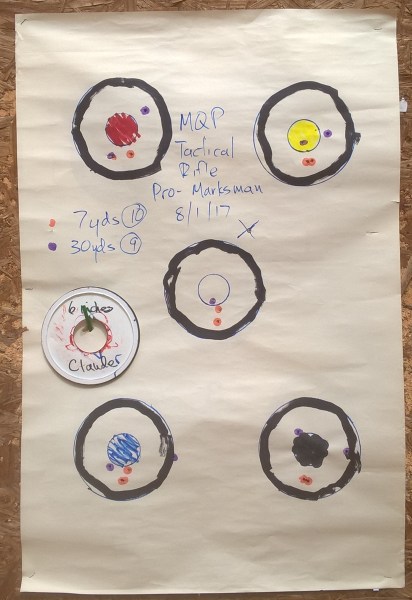
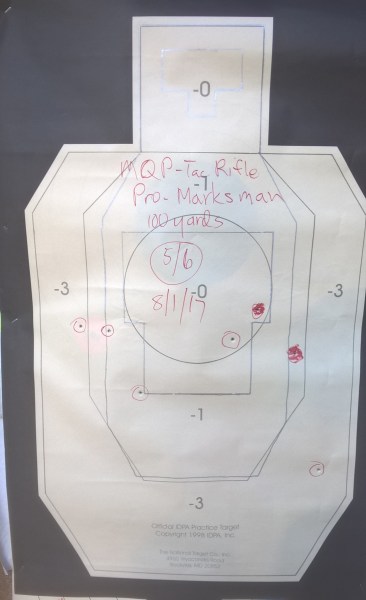
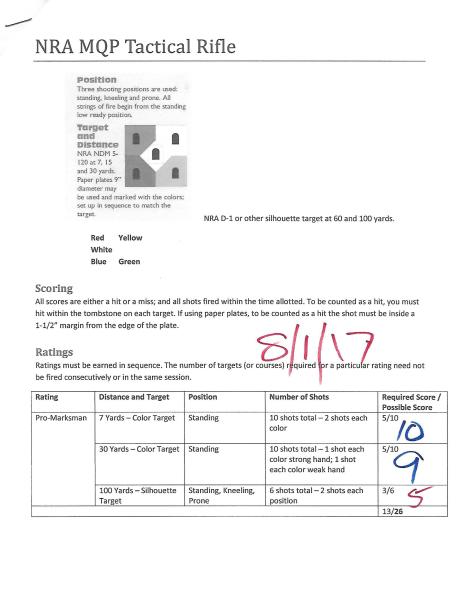
Next, I shot the MQP Tactical Rifle Pro-Marksman. My plan for that is to shoot one level each time I go to the range. Pro-Marksman has three stages; 7, 30, and 100 yards. The targets are expensive and hard to find but six inch circles are an acceptable substitute for the Program. The lid from a Cool Whip container happens to be six inches.
This was my 7 and 30 yard target. I like to mark the hits with different markers for each distance.
This was my 100 yard target. Any silhouette can be used for the 100 yard stage. The sun was in my eyes during the kneeling and prone shots so I was glad I hit as well as I did.
I write my scores on the sheet and scan it for record and future reference.
Finally, I shot the LAPD course with the Model 30.
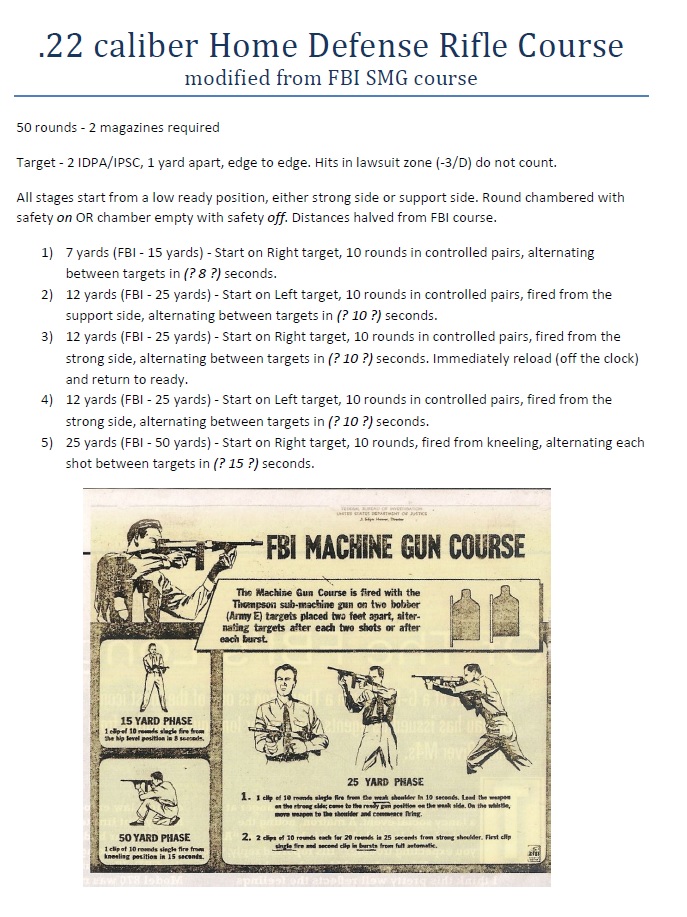
Having a plan when I go to the range helps me stay on task while I’m there. It also gives me a feeling that I’ve accomplished something when I leave. Next time, I’ll probably shoot the MQP Marksman level and the .22 Home Defense Course that I based on the old FBI [Sub]Machine Gun Course.
NRA Personal Protection Courses
Last weekend, I traveled to Florida to take the NRA Instructor Basics of Personal Protection Outside The Home Course (PPOTH). I was asked by several people why I would want this particular “Basic” Certification in light of my background and training experience. It’s simple,
I like training new shooters.
My colleague Grant Cunningham made a pertinent blog post about this shortly after I took the PPOTH Student Basic and Advanced Student Course. Experienced instructors often shy away from training the newest students. There has been a massive increase in people licensed to carry firearms over the past few years. In addition, several States have adopted Constitutional or Permitless Carry. That market base probably needs experienced trainers and coaches.
And I don’t feel the need to reinvent the wheel. It’s unfortunate that the NRA Training Department’s best marketing statement for its Personal Protection training is contained in the PPOTH Instructor manual. “The NRA Basic Personal Protection Series is based on the building-block approach, moving from the simple to the complex.” The most effective training courses I have taken over the past two decades have used a step by step approach to skill building.
The Training Department sees the progression of the courses for new gun owners interested in learning how to defend themselves and their loved ones as follows.
- NRA Basics of Pistol Shooting Course, the first course, develops the basic skills of handling, shooting, and cleaning the firearm, as well as a thorough grounding in firearm safety.
- NRA Basics of Personal Protection In The Home Course, the second course, teaches:
- the defensive or flash sight picture,
- firing single shots and/or aimed pairs from various shooting positions
- shooting using a center-of-mass hold,
- effectively using cover and concealment,
- employing point-shooting and multiple target engagement techniques.
- techniques for improving awareness and promoting mental preparation,
- methods of enhancing home safety without a firearm, and
- legal aspects of the use of deadly force in self-defense.
- NRA Basics of Personal Protection Outside The Home, the third course in the series, covers:
- Introduction to Concealed Carry Safety and The Defensive Mindset,
- Introduction to Self Defense and Concealed Carry,
- Legal Aspects of Concealed Cary and Self-Defense,
- Carry Modes and Handgun Concealment,
- Presenting the Handgun from Concealment, and
- Presentation, Position and Movement.
- Another offering in the series is the NRA Defensive Pistol Course. This is a shorter course than PPOTH. It teaches:
- How to apply the NRA Rules for Safe Gun Handling when carrying a concealed firearm,
- basic principles of concealment,
- drawing from a hip holster
- levels of mental awareness,
- developing the proper mindset when using a pistol for personal protection,
- flash sight picture
- reloading
- clearing common stoppages,
- shooting a qualification course,
- use of pocket pistols,
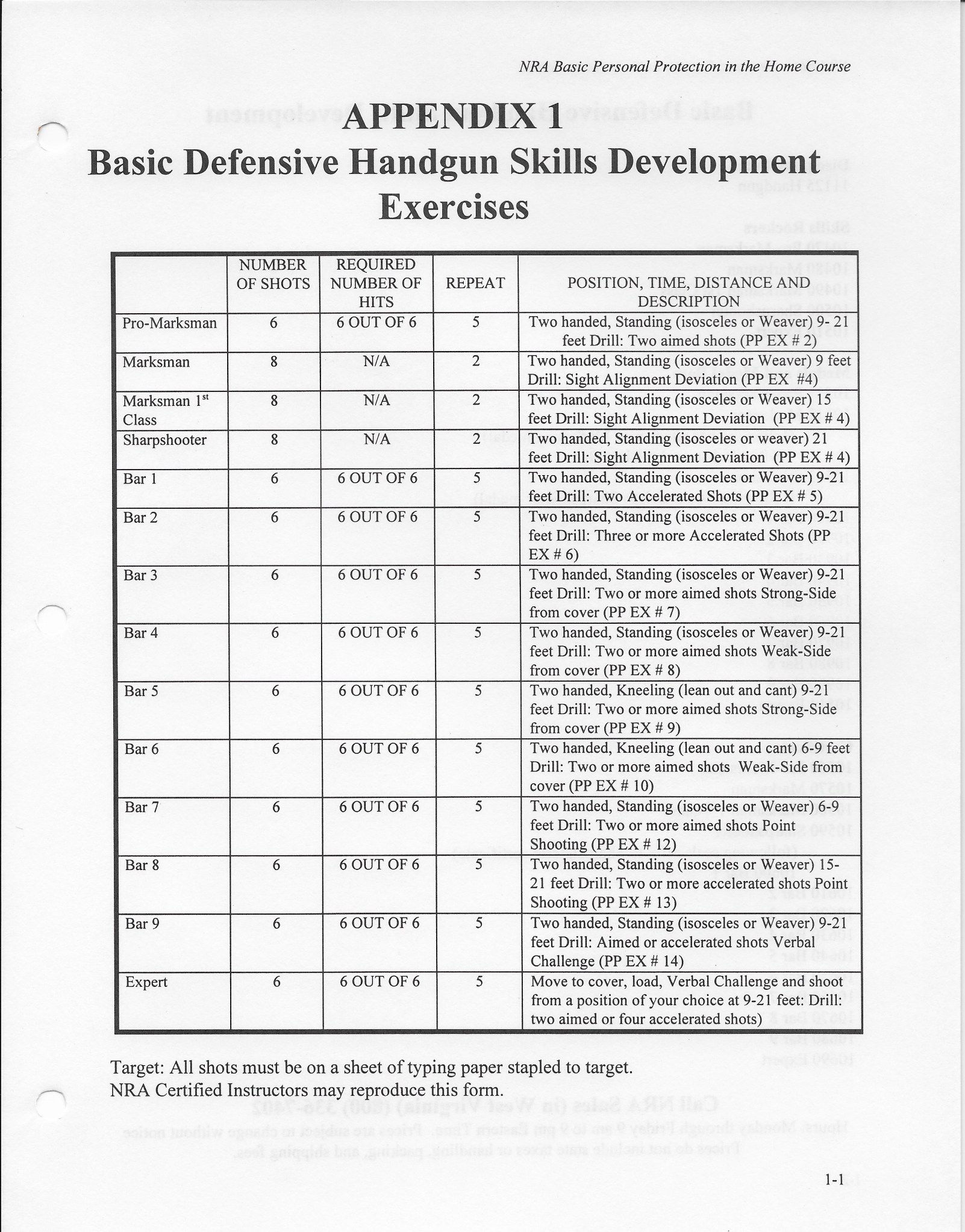
In addition to the Courses themselves, the Training Department provides additional Skill Development Exercises for NRA Instructors to use with students after PPITH and PPOTH.
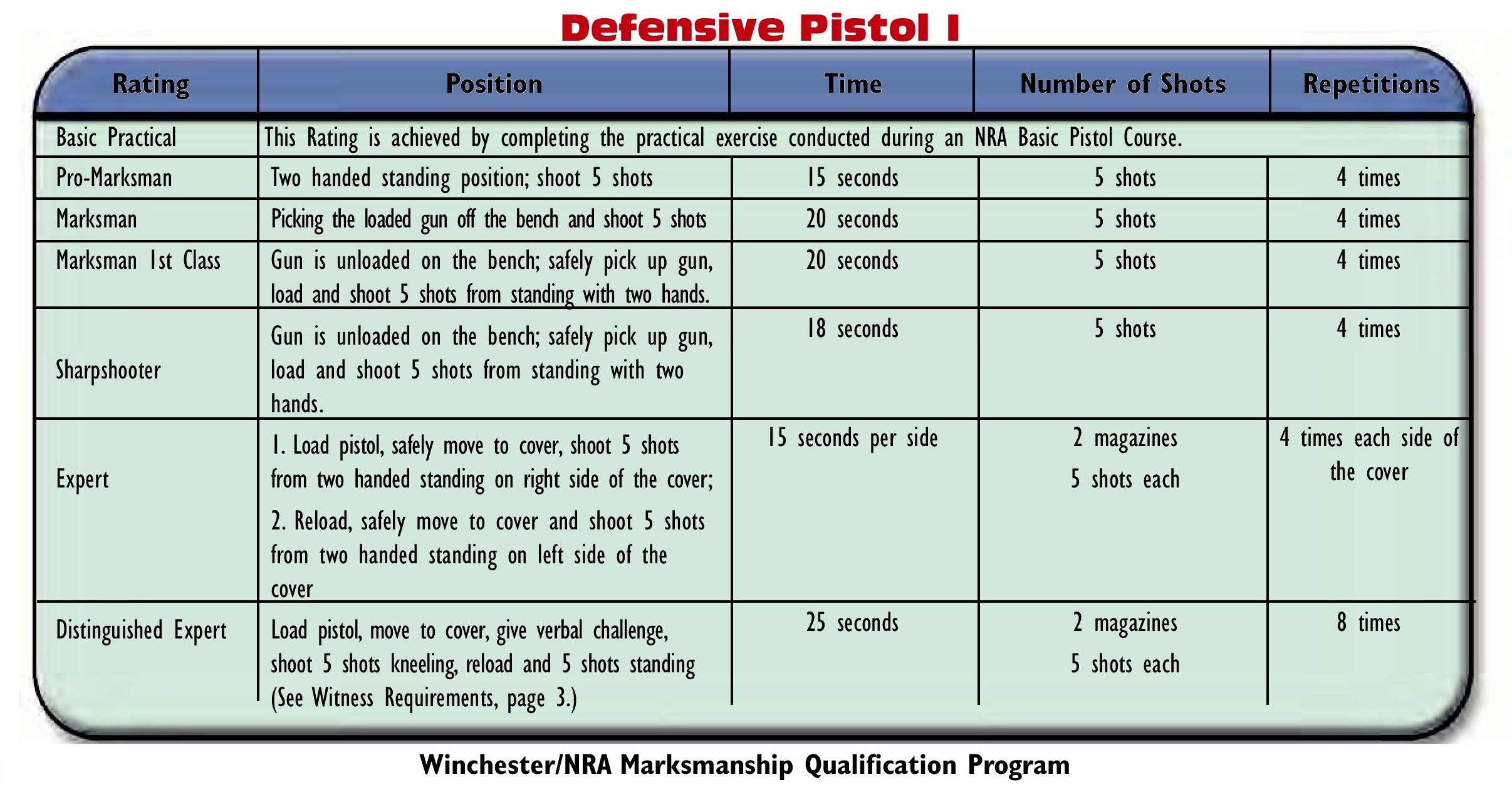
And the NRA Marksmanship Qualification Program has even more exercises that interested shooters can use to increase their skills and earn awards from the NRA.
Looking at all the topics covered, that’s a really comprehensive training program. Those who are interested in a defensive firearm as more than a talisman to ward off evil can really get a lot out of such a “Basic” program.
There are a number of aspects of the NRA’s series that I really like. First of all, the classes are between 4 to 9 hours long. Because they’re constructed in modules, even the 9 hour classes don’t have to be conducted in a single day. Most people’s lives are quite busy and asking new shooters to take an entire weekend or even week of training is both difficult and sometimes counter-productive.
The NRA’s program is really the only one in the industry that is built around the student’s capabilities and time constraints rather than a trainer’s weekend convenience. Mea culpa; I’ve done both the traveling trainer and hosting trainer routines, so I’m as guilty of it as any of my colleagues. It’s something I want to try a different approach to.
There’s a place for both newer trainers and experienced trainers in the NRA’s Personal Protection Series. I’m very much looking forward to seeing how I can implement that.
Standards (Part VII – Fundamental Marksmanship and Gunhandling for Weapons Carry)
I’m taking the NRA Personal Protection Outside The Home Course this week. Taking the Course is a prerequisite to becoming a PPOTH Instructor but I also like to get back to Basics periodically.
Yesterday, I did the Range Exercises for the Basic level of the Course. PPOTH has Basic Level range exercises of 100 rounds. The Advanced Level range exercises total 112 rounds. The exercises are detailed in a Condensed Reference Guide available from the NRA.
The exercises are nothing fancy or ‘high speed’ but they emphasize fundamental skills that everyone who carries a weapon should be able to execute flawlessly. Most are shot at seven yards.
- Presenting the pistol and firing one shot (that hits) while not wearing a concealment garment
- Presenting the pistol and firing one shot (that hits) while wearing a concealment garment
- Presenting the pistol and firing two shots (that hit) while not wearing a concealment garment
- Presenting the pistol, moving to a position of cover and firing two shots (that hit)
- Presenting the pistol and firing one shot (that hits) using the Shooting (Dominant) Hand Only
- Presenting the pistol and firing two shots (that hit) at close range (2 yards)
The exercises are done dryfire first and then live fire. Generally, 10 to 20 repetitions of each exercise are done. Accountability for the rounds is stressed. I like that. I’ve used the NRA Marksmanship Qualification Program in a number of classes. What my students found was that getting 100% hits on a 12 inch circle at seven yards wasn’t as easy as they thought it would be.
Repetition and performance measurement are the midwives of skill development.
The standard I established for myself yesterday to get all my hits in the 10 ring of the NRA AP-1 target. This is an eight inch circle, which is a relatively well established standard for defensive accuracy among those who can shoot.
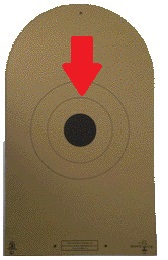
I’m looking forward to taking PPOTH and doing the exercises with someone else watching. That’s another of my standards; being able to perform on demand while others observe what my results are.


You must be logged in to post a comment.