Even more about Skill Development
‘three shots, three yards, three seconds,’ https://tacticalprofessor.wordpress.com/2021/02/19/skills-conversation-about-lapd-shootouts/ has generated some good discussion and questions, which makes me happy. Someone posted a question on the Facebook page for Growing Up Guns.
Nothing was said about whether this done from a low or compressed ready, or from concealment, as far as the par time. Being LE based info, I’m assuming this was done from a duty holster. Thoughts?
It’s a progression, just like the size of the target. When someone is first learning to shoot, do it from Low Ready, muzzle below the feet of the target, finger off the trigger. Once a shooter achieves some degree of proficiency, which I would personally define as being able to consistently hit the quarter sheet, then branching can begin. Others might be satisfied with hitting the full sheet consistently as a standard.
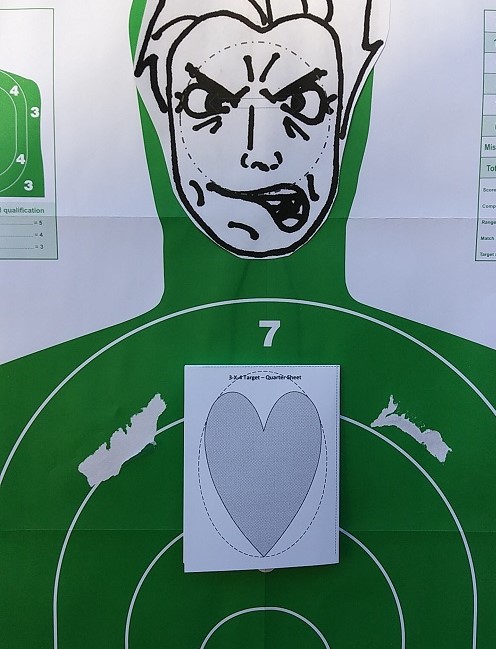
There are numerous possible branching variations.
- From the midpoint of the drawstroke.
- From the holster. Take your pick of open, concealed, or Level III Security.
- Primary Hand Only from Low Ready
- Support Hand Only from Low Ready
- Etc.
I use the term ‘midpoint of the drawstroke’ rather than ‘compressed ready’ because I’m not a fan of muzzling suspects prior to making the SHOOT decision. If the bore is parallel to the ground, there’s almost no way to avoid muzzling others. From that perspective, the idea of having the bore parallel to the ground as a ready position is purely “square range” thinking.
For those who are feeling exceptionally froggy, try stacking all three targets on a single silhouette. Shoot all three targets as one string using three round magazines and reloading between targets. Obviously, your time will be more than three seconds. Keep in mind that the second most missed shot is the first shot after a Stoppage Clearance. Reloading is a Stoppage Clearance so you’ll have two opportunities to maintain your focus.
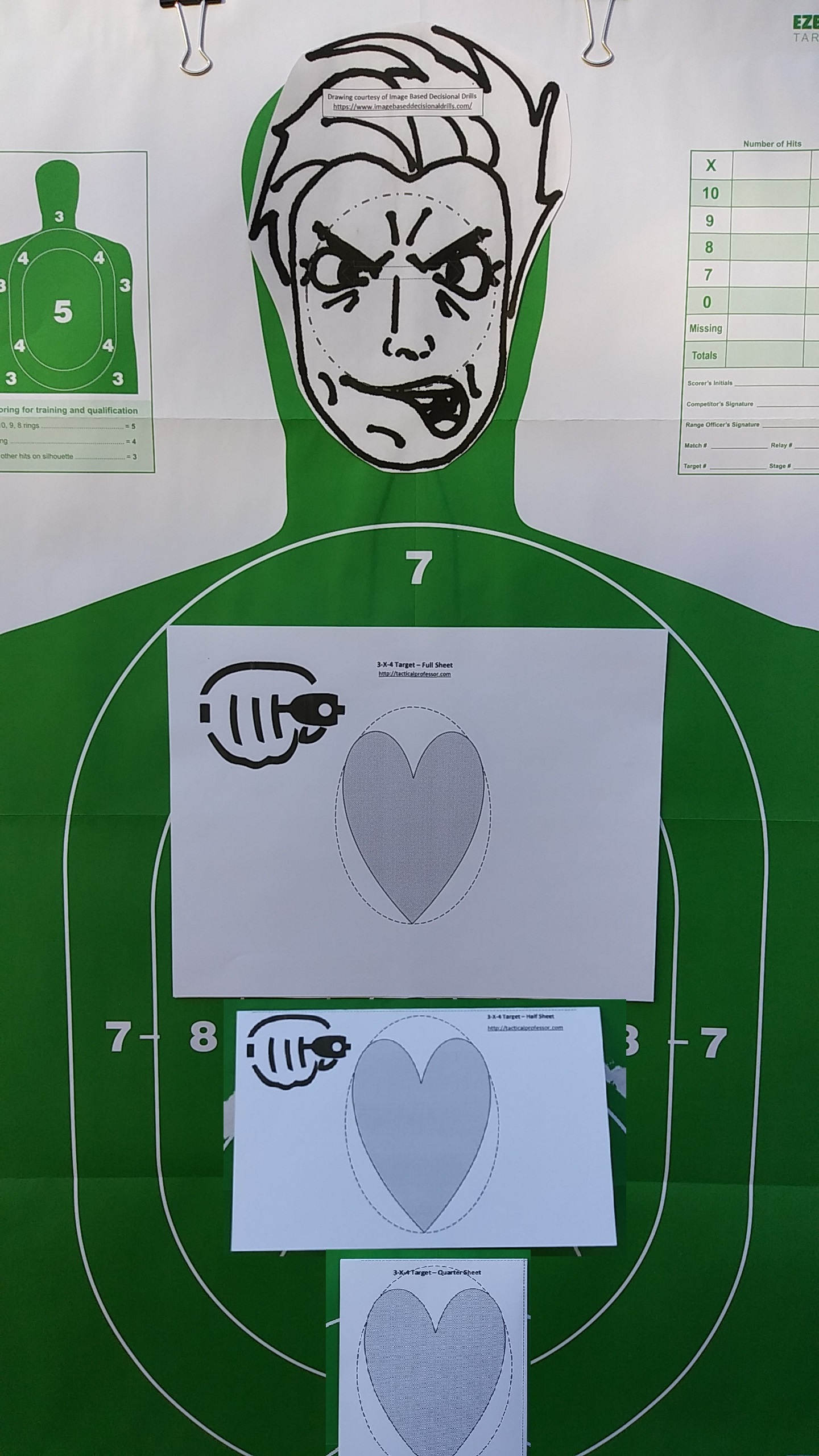
The end outcome, consistent hits on a variable sized target, is the focal point of the drill. There are numerous tasks that can achieve it, most of which have value.
Click on the image below to order Real Shootouts of the LAPD.
Skills conversation about LAPD Shootouts
#fridayfundamentals
I was talking with a friend of mine, who has Been There and Done That (BTDT), about Real Shootouts of the LAPD. He asked:
What was your biggest conclusion after writing the book?
DIA Guy
“When Frank McGee (head of NYPD firearms training in the 70s) said ‘three shots, three yards, three seconds,’ he wasn’t far off the mark” was my response. I still think that on-duty POlice shootouts may be a different story but the off-duty shooting situations are much like those of an Armed Citizen.
We then started talking about the difference between ‘when to shoot’ vis-à-vis ‘how to shoot’ training / practice. He had an interesting take on targets in terms of ‘how to shoot.’
What he tells his students is,
Use a sheet of paper. When you can consistently hit that, fold it in half. When you can consistently hit that, fold it in half again.
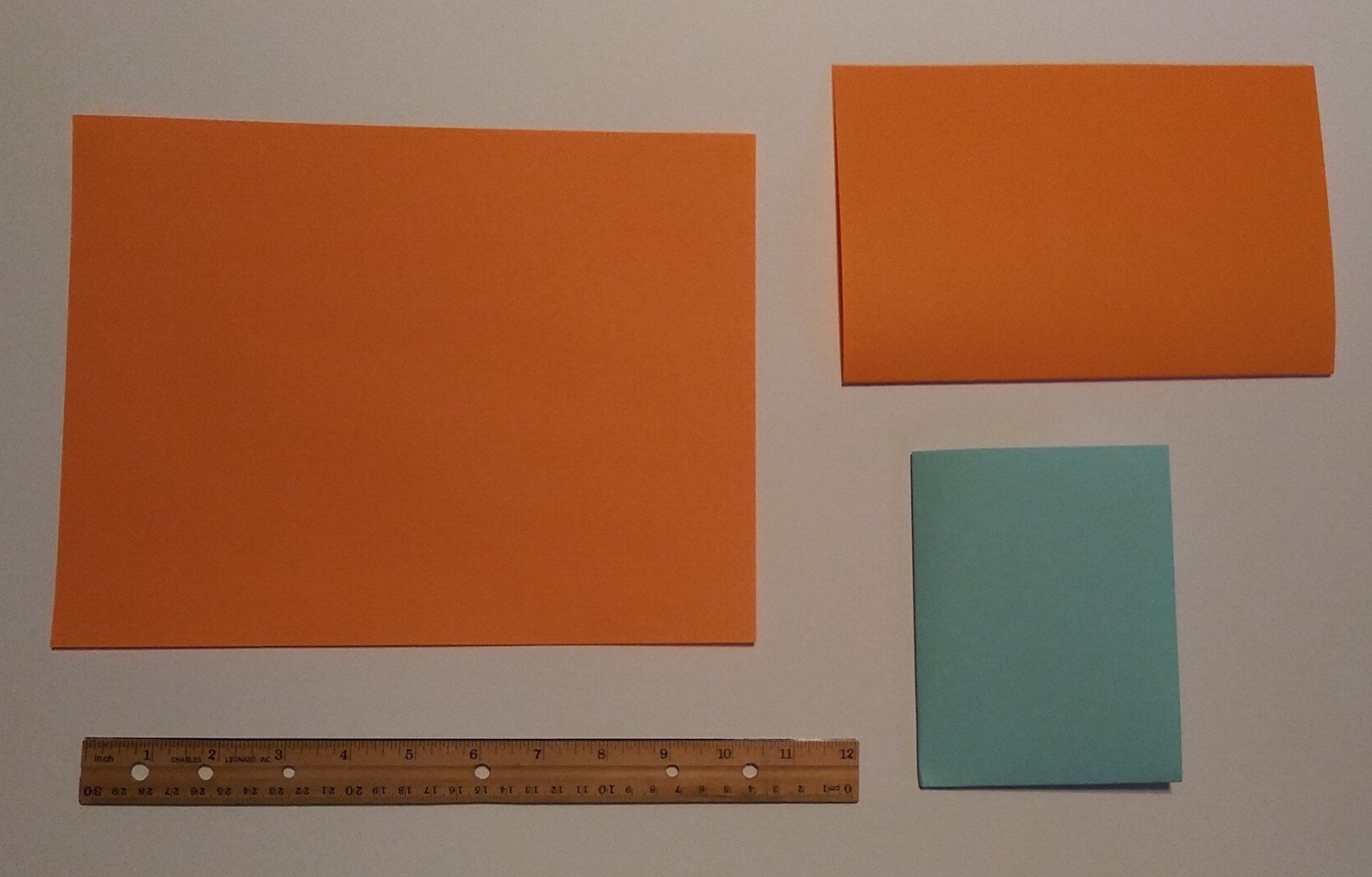
How do we combine that concept with ‘three, three, three?’ Since I am a firm believer in consistency, let’s do it three times in a row. That would make it 3X4. I also think context is important, so let’s put the sheet of paper on a silhouette. Place the silhouette at three yards. Fire three shots at the target. Repeat twice for a total of nine rounds fired in three strings of three. Since it’s a three second Par time exercise, you can use a Par timer app on your phone with your earbuds underneath your hearing protection. I like ‘Dry Fire Par Time Tracker’ but there are others.
If all three strings of three shots hit it, fold another sheet of paper in half. You’ll end up with a target 5.5 x 8.5 inches. Repeat the three strings. You should have nine hits on the half sheet of paper.
Assuming you have all nine hits on the half sheet, fold another sheet of paper in half twice. This time your target will be 4.25 x 5.5 inches. Shoot the three strings again.
Now you’ve done a good 27 round workout that is ‘Reality Based.’
When you get home, put your gun away. Get out your Blue Gun, Nerf gun, or water pistol and do some ‘when to shoot’ exercises.
Click anywhere on the image below to order the book.

Friday Fundamentals 01 – Establishing Your Baseline
Having a solid idea of where you’re starting from is important if you want to get anywhere. Otherwise, you’re just wandering around in the wilderness.

My friend Mark Luell, the author of Growing Up Guns suggested I provide a ‘Friday Fundamentals’ post weekly. We got the idea from my colleague Cecil Burch who wrote a blog post about Fundamentals. It’s a great idea to stay in touch with the basics.
The first installment is Session 01 of my Pistol Practice Program – Establishing Your Baseline. As in any journey, you have to know where you’re starting from before you can get to where you want to go.
The objective of this drill is to determine what distance you can make 100 percent hits on the vital area of a silhouette target. My feeling is that we need to work on achieving 100 percent accuracy because errant rounds in our homes or neighborhoods could be a major problem. Since I also think the first shot is the most important, I structured the session with a…
View original post 643 more words
More surreal than I thought
I rewatched the video of the Snow murders. It was even more surreal than I initially realized.
Lisa Goy got her phone out of her pocket after Spaide re-emerged from his home. Once she had the phone out, she said “Go ahead” three times as she closed the distance toward Spaide. She held the phone up in the air. Between Spaide’s sixth and seventh shots, she said, “You’re on video.”
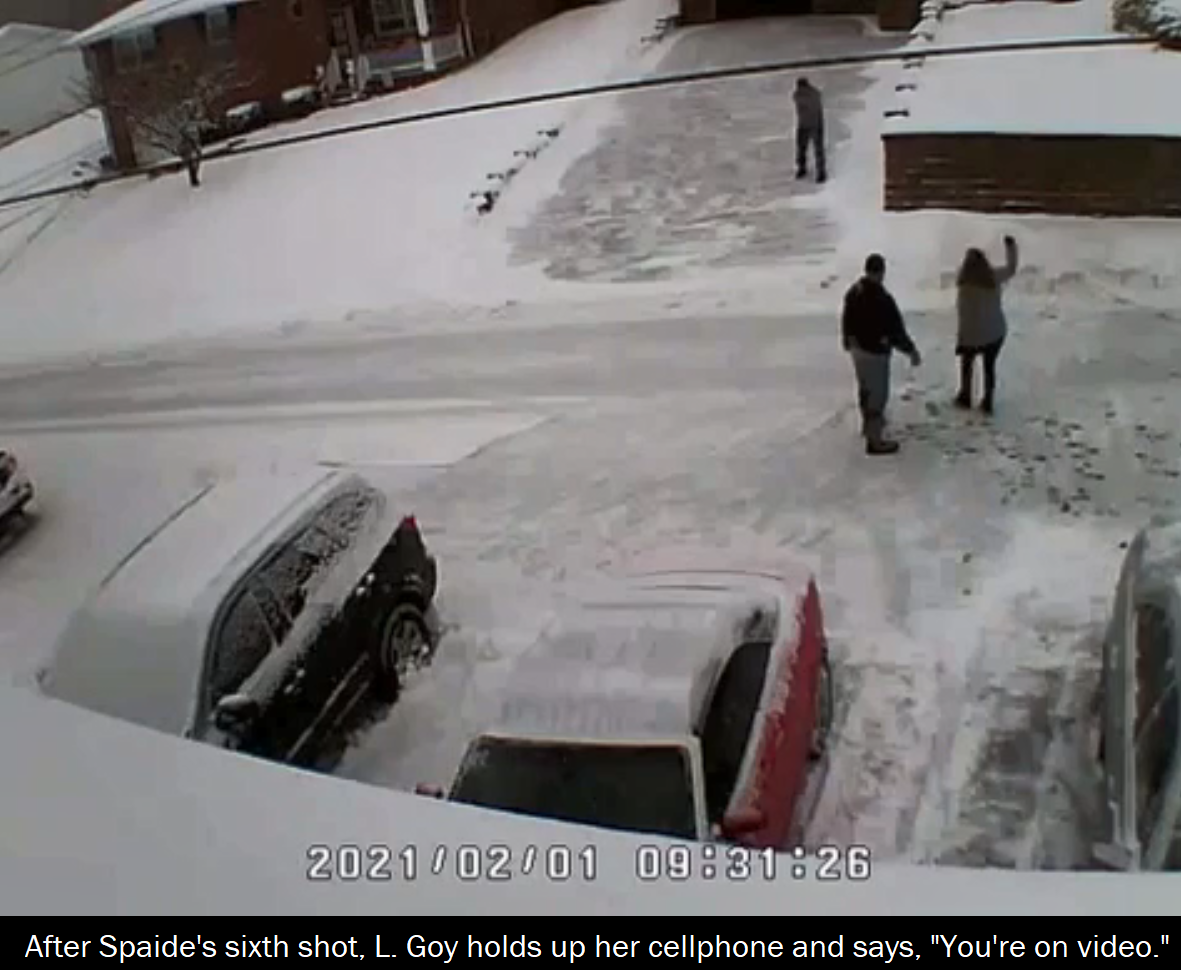
Spaide then fired his seventh shot, which hit James Goy. Lisa Goy then holds the phone even higher as she takes another step toward Spaide. Note her foot placement as compared to just before her husband was shot.
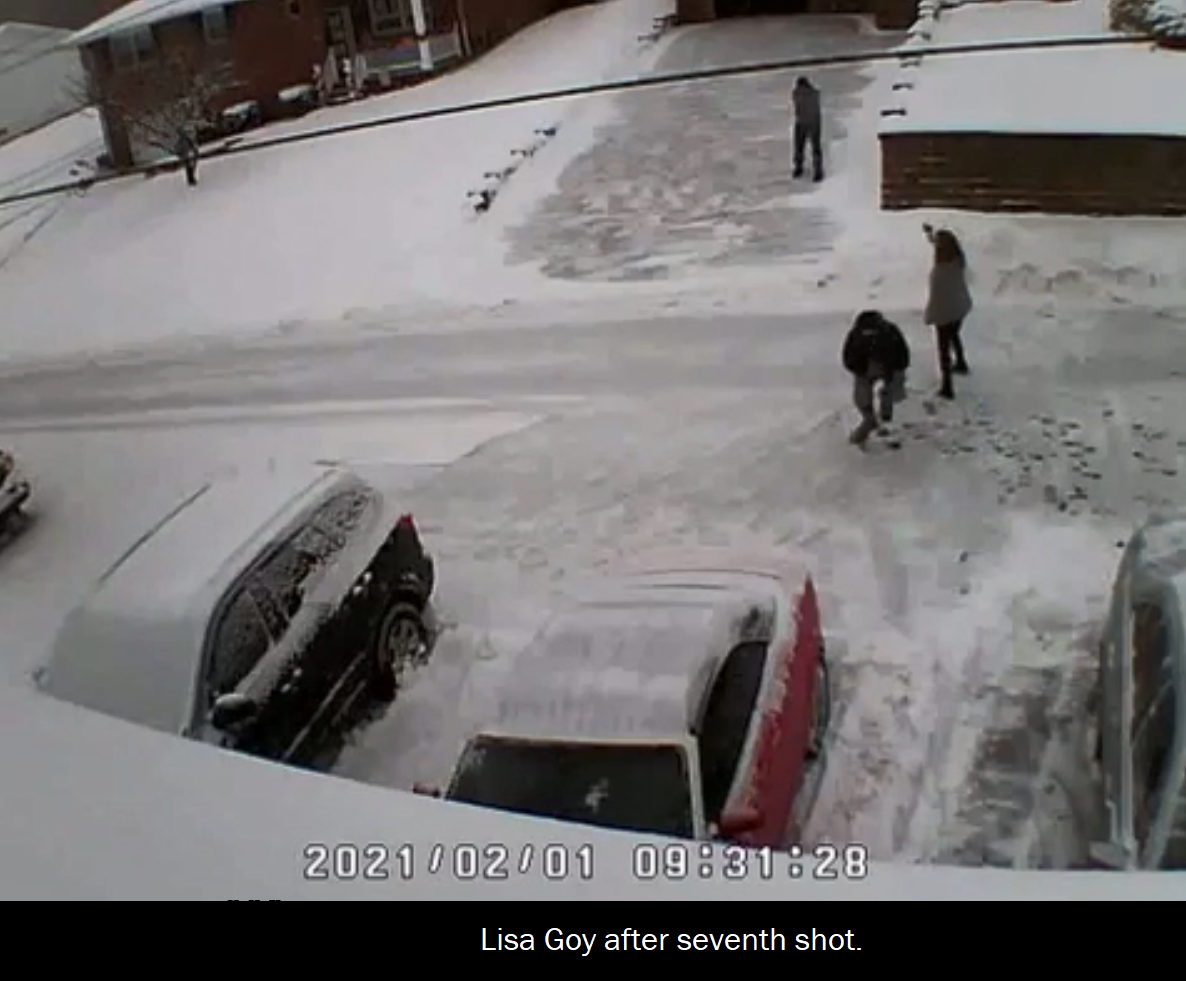
Spaide then shoots her with his eighth shot.
As someone said, it’s like they were in separate realities at the moment. Sort of like Tenet.
Someone correctly commented on my Facebook post, “Your last words shouldn’t be ‘Go Ahead!'” To which I added, “Or ‘You’re on video.'”
Don’t encourage people
If someone threatens (to kill) you with a gun, don’t encourage them. We saw that in the Duel at the Dumbster also.
“Lisa Goy at one point returns to her shoveling, but stops again to call Spaide ‘scum’ in the seconds before he returns with a handgun.
‘Go ahead,’ she urges her armed neighbor. ‘Go ahead.’
The group continues to shout until Spaide opens fire on the couple, striking them both several times.”
https://www.aol.com/news/surveillance-video-shows-pennsylvania-couple-160733616.html
Classic Book Review – Principles of Personal Defense
If one lives through a fight, we will assume that he is better off than if he does not, even though he may be thereafter confronted with legal action.
One of the little jewels in Jeff Cooper’s book Principles of Personal Defense.
My review of the book is a Public post on my Patreon page.
https://www.patreon.com/posts/46379912
If you would like to subscribe to all of my Patreon posts, here is the link.
Working with .22s
#ttptuesday
Yesterday’s post mentioned the M&P 22 Compact pistol. It’s an excellent pistol and worked well on the range. Once we found the ammo it liked, it worked flawlessly. I suspect it may have had a dirty chamber that caused the initial functioning issues.
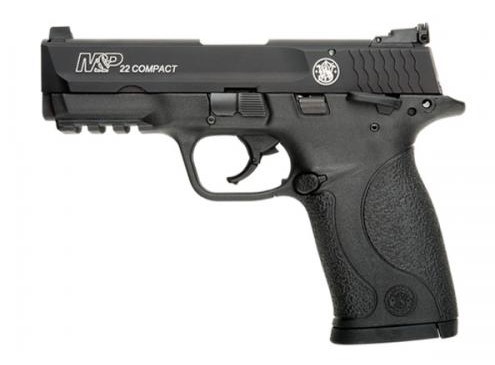
Here are some tips about working with .22 caliber pistols, in general.
First of all, keep them clean. The .22 Long Rifle round is dirty. The small size of the ammunition and guns make the gun’s tolerances more critical and dirt in the process isn’t helpful. The gun doesn’t need to be as clean as a dinner plate but gobs of goo certainly don’t help functioning.
Helpful accessories when shooting .22 LR firearms
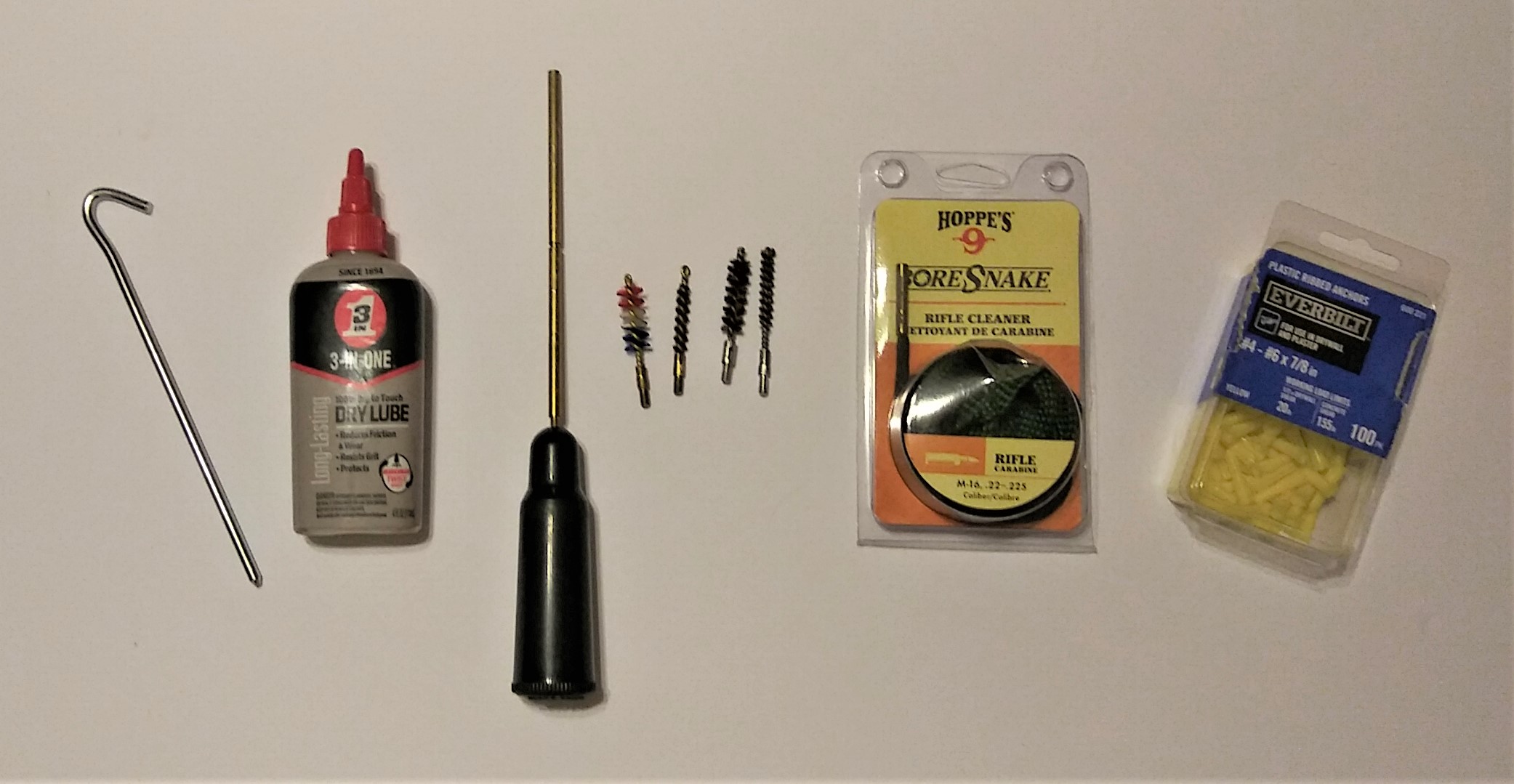
- Coghlan’s Aluminum Hooked Tent Peg, 7 inch (69 cents at Walmart)
- Dry lube
- Portable cleaning rod and brushes
- Bore snake
- #4 drywall anchors ($3.99 at Home Despot)
The tent peg is for pushing out cases or rounds that don’t eject and the extractor won’t pull out. You could use the cleaning rod but the tent peg is stiffer. It’s aluminum so it’s not going to harm your bore. Until you find the ammo your gun prefers or you’re shooting cheap bulk ammo for practice, this is a good tool for clearing stuck cases. Make sure you lock the gun open before inserting it in the bore.
Using a dry lube for .22 firearms goes a long way to keeping them from getting so dirty. The carbon and unburnt powder doesn’t stick to the dry lube the way they do to oil. .22 firearms don’t get very hot so the extra lubrication provided by oil is unnecessary.
When you get finished shooting, run a brush through the bore and chamber a few strokes. Follow up by pulling the bore snake through. Even if you don’t clean the rest of the gun, doing those two things will keep it running for quite a while.
The #4 drywall anchors are to protect the firing pin and breech face when dry practicing. Most .22s need this protection. Snap caps of the centerfire type are not desirable for dry practicing with .22s, they’re for czeching feeding and extraction. Use a new drywall anchor each session and then throw it away. Rotate it slightly in the chamber periodically during each session.
There are magazine loading tools for .22 magazines that make the task of loading the magazine much less of a thumb buster. I don’t have one for the 22 Compact yet but there are two different types I will be trying in the near future.
Test different types of ammo to see which functions best in your gun. Guns will usually work better with some brands than others. CCI Mini-Mags are a good all-purpose ammunition but even they need to be tested in your gun. If you, or someone you know, keeps a .22 for Personal Defense, use good quality ammo in it for that purpose. Don’t use the cheapest bulk ammo you can find and then say the gun is unreliable.
The pros and cons of using a .22 for Personal Defense have been endlessly debated, so let’s not do that here. The fact is that people do, so let’s do it right. Keep the gun clean, lube it, and use good ammo. Odds are that if the ammo comes in a plastic box with individual rounds separated it will work. Ammo that comes in paper boxes tends to be suspect. That’s okay for practice but use good ammo for Defense.
Shooting a .22 can be a lot of fun. If you have a few accessories; it will be even easier. For some segments of the population, they’re the only viable choice.
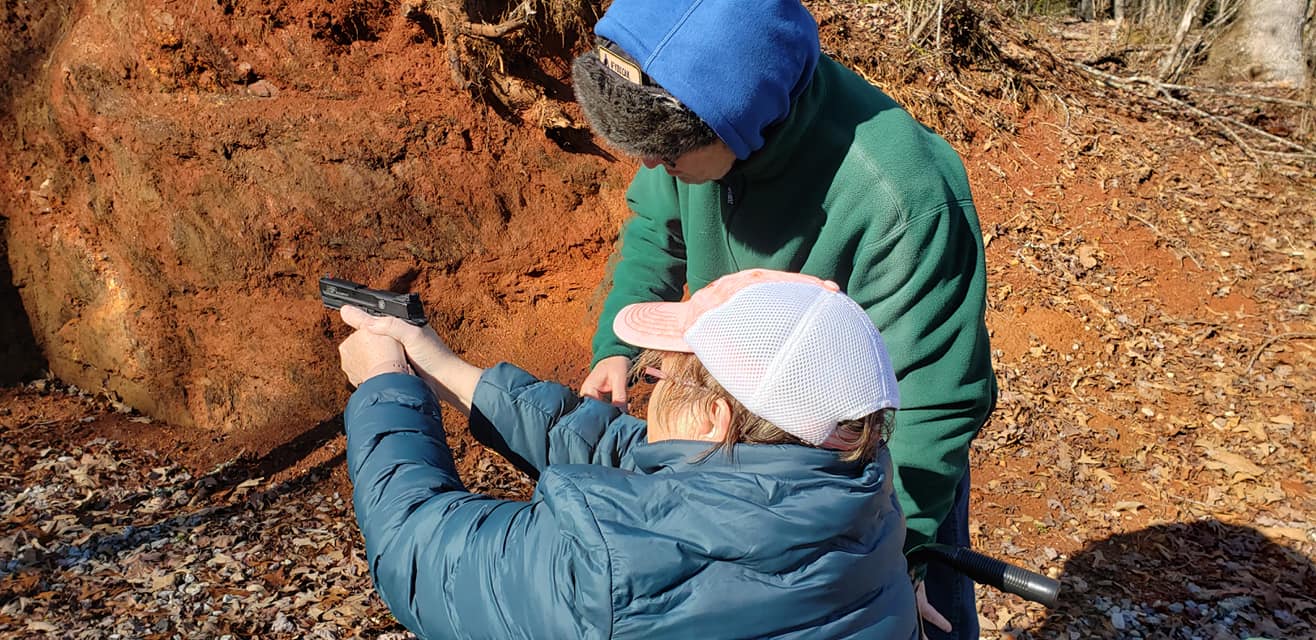
FTC Notice: all the products in this article were purchased and no compensation is received for mentioning them.
Positive people are a joy to be around
#mindsetmonday
Saturday, I went to a range dedication. Without going into a lot of detail, Corky’s Day, which was the inaugural event for the Hamilton Steel Range in Dahlonega, was a great example to me of how nice it is to be in the company of positive people. In the troubled times that are coming, we all will need to surround ourselves with positive people as much as possible.
The rest is on my Patreon page for Public viewing.
https://www.patreon.com/posts/46101857
Your car is not a holster (again)
Someone entered the unlocked vehicle
Gun, other police equipment stolen from Salina officer’s personal vehicle
https://www.ksal.com/police-equipment-stolen-from-unlocked-car/
“Meanwhile, two more unlocked vehicles were broken in to [sic] in Kipp overnight, as well as one parked in front of a rural Kipp residence. “
In case anyone wonders what ‘Kipp Kansas’ (population <500) looks like, here’s a Google satellite view.

Kipp is part of the Salina, Kansas micropolitan area, a Census Bureau area consisting of two COUNTIES of Kansas. https://en.wikipedia.org/wiki/Salina,_Kansas_micropolitan_area The two counties had a total population of 61,697, according to the 2010 Census.
My mother used to tell us “Nice people keep their doors closed and locked.” That includes your car and garage door, too. Please don’t leave your gun in there either, just because you’re too lazy to take it into the house with you. Being a POlice is irrelevant.
Goal Setting for 2021
The book The Practicing Mind https://www.amazon.com/dp/B007C8NRSA/ was written by an accomplished musician and concert piano renovator. It contains the following story about when he started playing golf as an adult. The lesson in the story is well worth considering.
even though they had played golf weekly for many years, they still couldn’t accomplish basic things, such as getting the ball up in the air.
…
What I learned from golf was that all my failures in music had stemmed from my lack of understanding the proper mechanics of practicing, of the process of picking a goal, whatever that may be, and applying a steady effort toward achieving it.

The passage about ‘picking a goal, whatever that may be’ is particularly important in developing competency with firearms. The ‘whatever that may be’ part should be well considered as part of the goal setting process. It’s not uncommon for gunowners to place a high priority on marksmanship tasks. However, in the context of using firearms for Personal Protection, there are many implied tasks that complement or even surpass marksmanship in importance.
- Being aware
- Verbalization
- Accessing a weapon
- Moving from place to place safely (e.g. without having an Unintentional Discharge)
- Making reasonable and appropriate decisions
- Coordinating with friends and loved ones
- Etc.
The ammunition deficit will give us all time to work on non-shooting tasks and skills that are, or at least should be, an integral part of our Personal Protection plan. For those who place a priority on their safety and their loved ones’ safety, range time can be re-prioritized to time to practice other skills. Some of those complementary skills do not even involve handling firearms. Others are easily accomplished with an inert or even toy gun.
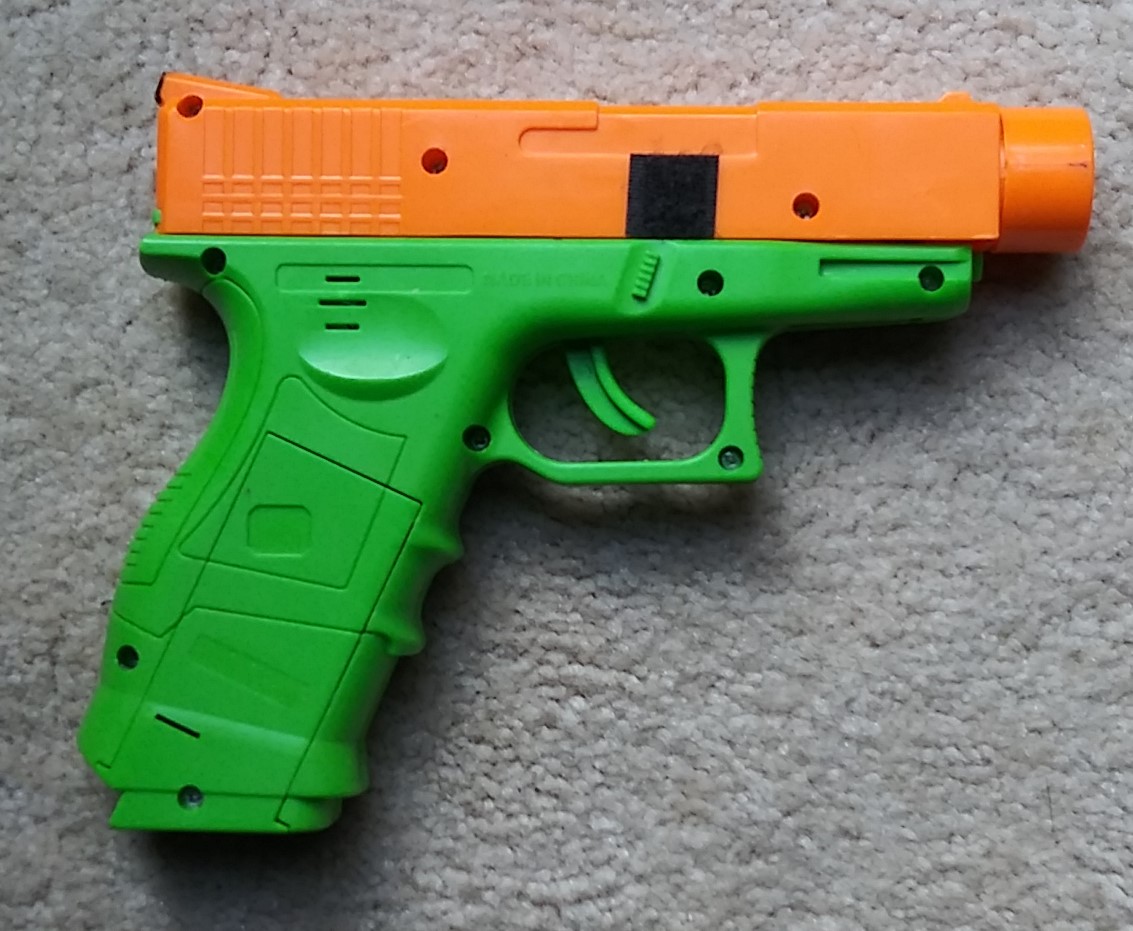
The enjoyment aspect of the shooting sports is another worthwhile goal. My shooting goal this year is to achieve my Distinguished Expert rating in Shotgun from the NRA. Since I already hold two DE ratings, I will become one of the few Triple Distinguished Experts. My gun club is rebuilding our rimfire range, so I’ll also be able to get back into smallbore rifle shooting, a highly disciplined activity.

On the other hand, my interest in ‘Boyd’s Process,’ of which the ‘O-O-D-A Loop’ is part, has been rekindled. I am going to make a concerted effort to delve deeply into the entire process and produce a written piece and presentation for my Patrons about integrating all the parts of Boyd’s thinking into a cohesive paradigm. That falls into the ‘making reasonable and appropriate decisions’ and is only peripherally concerned with firearms, other than as a backup tool.
Think about what your goals are for 2021 for firearms and Personal Protection. Decide what a measurable indicator for reaching each of your goals would be and then make a plan for getting there. That is a different process than ‘New Year’s resolutions,’ which generally are ephemeral and therefore more easily dismissed than a goal with a concrete plan.
FTC notice: I receive no commission for any links mentioned in this post.


You must be logged in to post a comment.